
Of the 102 films I’ve seen that were released in the United States in 2024, these are my top ten. I’ll reveal my top eleven through twenty in a “part 2” post in the next few days.
Although I typically draw spiritual, theological, or liturgical connections with the art I feature on this website, here I do not do that. I’ve chosen these films not based on any kind of Christian messaging or interpretive possibilities but because they are beautifully made films that resonated with me. They address themes such as family, friendship, simplicity and awe, repressive governments, growing up, grief, mortality, addiction, trauma, joy, disability, identity.
One thing I love about cinema, as holds true with all the arts, is how it can connect us more fully to God, others, the world, and our own selves. So while I don’t think you need to watch movies with a purpose in mind, if you find yourself hesitant to invest the time, perhaps you might consider that connective capacity.
If the film is currently streaming for free with a subscription service, I’ve noted that at the bottom of the entry. Otherwise, check your local theaters or online rental platforms.
[Top 20 from 2023] [Top 20 from 2022] [Top 20 from 2021] [Top 20 from 2020]
Cautionary note: Different viewers have different sensitivities. If there’s a particular type of content you want to avoid, I’d advise you to check out the “Parents’ Guide” section of the film’s IMDb webpage, to which I’ve linked each film title.
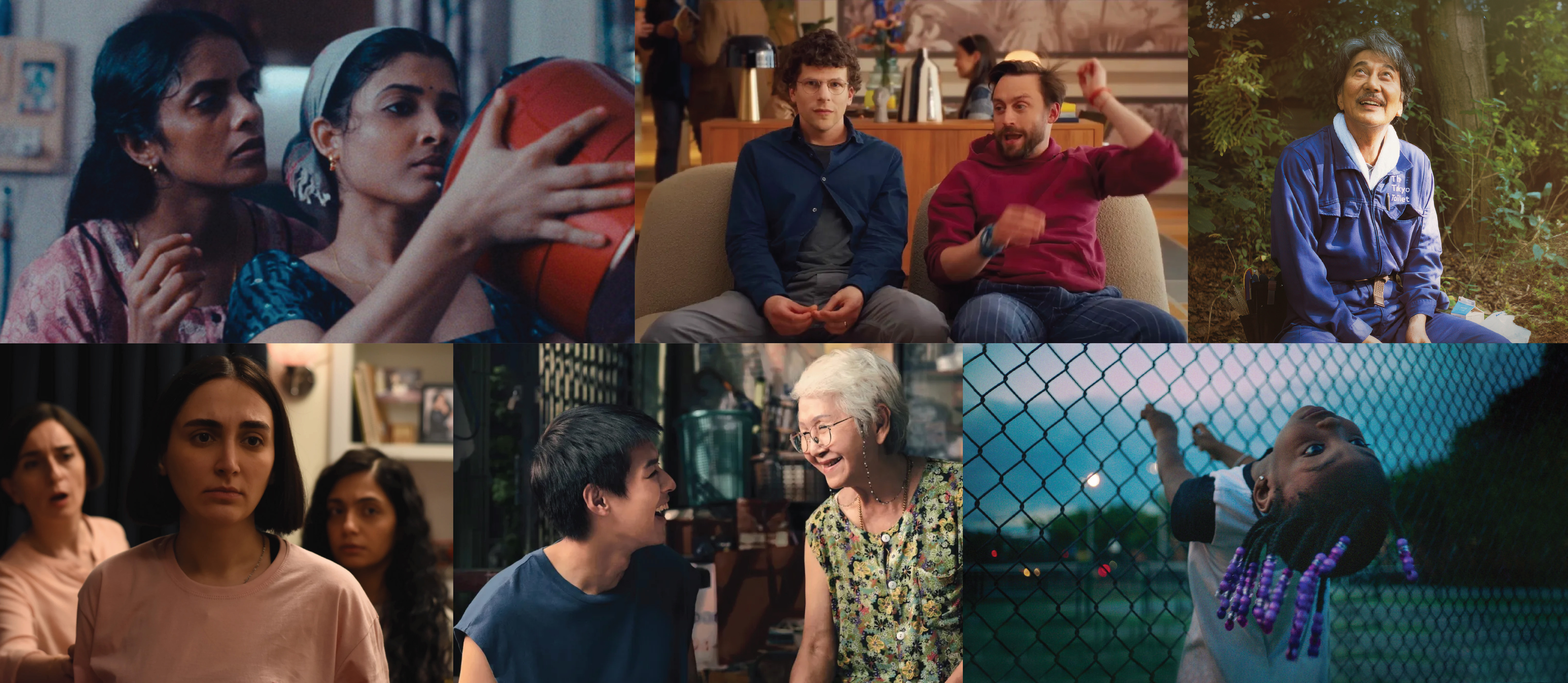
1. How to Make Millions Before Grandma Dies, dir. Pat Boonnitipat: From Thailand comes this tender story of a late teenage boy, M (Putthipong “Billkin” Assaratanakul), who quits his job as a video game streamer to become the live-in caretaker of his ailing amah (maternal grandmother) (Usha Seamkhum) in the hopes of inheriting her house when she dies. While initially motivated by self-interest, M develops genuine affection and gratitude for his grandma the more time he spends with her—getting up early with her each morning to make and sell congee at the street market, bringing her to the temple to pray, sitting with her during chemotherapy sessions (one of the most moving scenes is when he picks off the loose hairs she’s been shedding, one by one, from her sweater while she rests in her chemo chair). The balance of humor—conveyed especially through Amah’s feistiness—and sadness—loneliness, familial hurt and estrangement, terminal illness—is deftly handled and the emotional climax well earned.
2. Daughters, dir. Angela Patton and Natalie Rae. Pursuing the initiative of a group of young Black girls at Camp Diva Leadership Academy (now merged with Girls For A Change), Virginia-based community activist Angela Patton has helped organize a series of daddy-daughter dances in US prisons, a chance for K–12 girls to connect in person and make memories with their incarcerated fathers. This documentary captures one of those dances from 2019, following Aubrey, Santana, Raziah, and Ja’Ana over the course of eight years—before, during, and after the event. These girls and their fathers speak their sorrows, fears, insights, disappointments, and hopes, shedding light on the impact of parental incarceration and especially the rise, since 2014, of no-touch and even screen-only prison visits.
I appreciate that the film shows the complexity of the father-daughter bond, avoiding a simplistic portrait of that bond as either wholly resilient or frankly unmendable. The dance is not a triumph for all participants. While all at least have a desire to show up for each other, forgiveness and trust don’t always come easily. Nor does conversation, when you’ve been separated from someone for so long and barely know them.
Surely a contender for scene of the year is when the girls come down the hallway in their dresses, hand in hand and proud but nervous, to greet their fathers, who sit in a row of folding chairs in borrowed suits and ties. The men’s reactions are precious.
Streaming on Netflix.
3. Dìdi, dir. Sean Wang. Dìdi means “little brother” in Mandarin, and Chinese parents also use the term as an endearment for their younger sons. In this semiautobiographical dramedy from writer-director Sean Wang, it references the lead character Chris (Izaac Wang), a thirteen-year-old Taiwanese American boy growing up in Fremont, California. It’s 2008, the summer before high school, and all the awkwardness and anxieties of adolescent boyhood are upon him. He’s trying to fit in with a skater crowd and to figure out how to flirt with girls, and he’s navigating turbulent relationships with his mom (Joan Chen), who he feels is ashamed of him, and his sister (Shirley Chen), his only sibling, who’s getting ready to leave for college. Also living in the house is his nai nai (paternal grandmother) (Zhang Li Hua), played by Sean Wang’s actual grandma. The film is cringey in all the right ways, capturing that pubescent period we’ve all gone through of insecurity, immaturity, pressure, and desperation. Izaac Wang’s is one of my favorite performances of the year, especially for the vulnerability he lets us see in his character.
Streaming on Peacock.
4. Perfect Days, dir. Wim Wenders. This serene drama contains little plot, dialogue, or conflict and yet is absorbing to watch. It’s built around the daily routine of Hirayama (Kôji Yakusho), a custodial worker in Tokyo whose job is to clean public toilets. We watch him wake up, fold his bedding, water his plants, brush his teeth, put on his royal blue jumpsuit, and walk outside to greet a new day. He sanitizes toilet bowls, sweeps floors, and wipes mirrors, taking great pride and care in his work. He occasionally pauses to appreciate moments of beauty: children playing in the park, leaves glimmering in sunlight. He eats dinner at a restaurant where he’s friends with the proprietor. Then he reads at home by lamplight before falling asleep. His is a quiet life and a full one. His attentiveness and gratitude call us to the same.
Streaming on Hulu.
5. Sing Sing, dir. Greg Kwedar. Rehabilitation Through the Arts (RTA) is a program at New York’s Sing Sing Correctional Facility in which professional teaching artists lead year-round workshops inside the prison in theater, dance, music, creative writing, and visual arts. The drama Sing Sing spotlights the acting troupe as they put on a production of Breakin’ the Mummy’s Code, a time-traveling epic they helped come up with that involves an Egyptian prince, gladiators, pirates, cowboys, Robin Hood, and Hamlet. Starring Colman Domingo as the real-life John “Divine G” Whitfield (who was a founding member of RTA and who makes a cameo appearance), Clarence “Divine Eye” Maclin as himself, and an ensemble cast of other formerly incarcerated RTA participants, the film celebrates the transformative, therapeutic power of the arts, as the men find vulnerability, agency, creativity, confidence, connection, and release. It’s a real heart-warmer!
6. Nickel Boys, dir. RaMell Ross. Based on the Pulitzer Prize–winning novel by Colson Whitehead, this lyrical film is set in the Jim Crow era primarily at Nickel Academy, a state-run juvenile “reform school” (essentially a prison farm) in Florida, inspired by the real-life Dozier School for Boys that operated from 1900 to 2011, where hundreds of students were subjected to forced labor and physical and/or sexual abuse. The remains of several dozen boys have recently been unearthed from unmarked graves on the school grounds, many presumed to be victims of excessive punishment.
Nickel Boys centers on Elwood (Ethan Herisse), a high-achieving high schooler who gets sent to Nickel after hitching a ride in, unbeknown to him, a stolen car. There he becomes friends with Turner (Brandon Wilson). Despite the harrowing backdrop of their relationship, the boys share moments of leisure and joy, and for any violence that occurs, the director made the deliberate choice to portray it offscreen.
The film is shot almost entirely in double first-person POV, switching between the perspectives of Elwood and Turner. I had heard this beforehand and was skeptical that it would work for an entire movie, worried that it might come across as gimmicky, but on the contrary, it worked beautifully. I was mesmerized by the compositional poetics from the very beginning, by how the use of what the director calls “sentient perspective” allows us to get inside moments in a new way. (Shout-out to cinematographer Jomo Fray for, alongside director RaMell Ross, developing and executing such an evocative visual language; for an enthusiastic, in-depth conversation Fray has on his process, approach, and choices for the film, see here.) Before we meet Turner, a decade-plus earlier in the timeline, we see young Elwood’s face only in reflections—in the chrome plating of his grandma’s iron as he watches her do house chores, or through a window display of televisions that are broadcasting King’s “Our God Is Marching On” speech, before which Elwood stands transfixed. Then later we get to see him through Turner’s eyes. That characters look straight into the camera when they address the two mains creates an atypical intimacy and directness.
7. The Seed of the Sacred Fig, dir. Mohammad Rasoulof: Shot in secret and smuggled out of Iran, this thriller is about a family of four in Tehran who become increasingly divided as the Woman, Life, Freedom movement takes hold in 2022, demanding the end of compulsory hijab laws and other forms of oppression against women. Because the protest and crackdown scenes could not be re-created without attracting scrutiny, the director spliced in documentary footage that had been captured on various anonymous cellphones, some of which, I’ll warn, graphicly depicts police brutality and its aftermath.
In the film, the head of household, Iman (Missagh Zareh), works as an investigator in the country’s Islamic Revolutionary Court, signing death warrants against those who have violated sharia law, much to the chagrin of his daughters, Rezvan (Mahsa Rostami) and Sana (Setareh Maleki), who sympathize with the antigovernment protestors. Their mom, Najmeh (Soheila Golestani), tries to run interference between them and Iman and maintain normalcy, tradition, and respect in the home. But when Iman’s gun goes missing, chaos ensues; he becomes increasingly paranoid and unhinged.
Writer-director Mohammad Rasoulof has served jailtime before for his criticism of the Iranian government, and to avoid his latest eight-year prison sentence, he escaped the country illegally in 2024 and currently resides in self-exile in Berlin.
8. A Real Pain, dir. Jesse Eisenberg. After the recent death of their grandmother, a Holocaust survivor, two Jewish American cousins embark on a tour of Poland to visit her childhood home and connect with their heritage. David (Jesse Eisenberg) is straitlaced, shy, and anxious, whereas Benji (Kieran Culkin) is loud, uninhibited, fly-by-the-seat-of-his-pants, devil-may-care. This clash of personalities makes for a funny film, but we also come to see that behind Benji’s bluster there is, as the title gestures toward, “a real pain.” (The more frivolous meaning, of course, is that Benji is exasperating!) Both comedic and serious, the film succeeds in pulling off its dual tone while exploring relational dynamics and different ways of dealing with pain and trauma.
Streaming on Hulu.
9. All We Imagine as Light, dir. Payal Kapadia. Prabha (Kani Kusruti) and Anu (Divya Prabha) live together as apartment mates in multicultural Mumbai and work as hospital nurses. Prabha’s husband lives in Germany and rarely communicates with her, and Anu is dating a young Muslim man, against her Hindu parents’ wishes. When their friend Parvaty (Chhaya Kadam) becomes widowed, she is evicted from her shantytown, and they help her move back to her home village by the sea. The film is about sisterhood and longing—about these three women of different ages each pursuing a light-filled future in their own way.
10. Nowhere Special, dir. Uberto Pasolini. This warm, affectionate, tragic film set in Belfast was inspired by a newspaper headline: “Father dying of cancer spent his final months finding family for son.” When John (James Norton), a single dad who’s thirty-three, is diagnosed with brain cancer, he starts looking for a home for his four-year-old boy, Michael (Daniel Lamont). He partners with social workers to interview potential parents and tries to prepare Michael for what’s coming. A dead beetle in the park becomes an opportunity to teach him about death.
A premise like this could easily become over-the-top sentimental, but much to the film’s credit, and owing in part to the contained performances of the two leads, it does not. There’s both a sweetness and a sadness to it, as we watch father and son build ordinary memories before their imminent separation: they take naps together, wash their respective vehicles, enjoy ice cream cones in the park, watch dump trucks in action. As John becomes progressively weaker, Michael notices: he observes how his dad now needs to use two hands to pour a cup of OJ; he sees him wincing in pain when he thinks he’s not looking. Despite the heartbreaking scenario, the film is ultimately hopeful.
Streaming on Kanopy.
 Art & Theology
[…] Read part 1 here. […]
LikeLike
[…] some of my movie recommendations, see my Top 20 Films of 2024 list and “Five Films about Finding […]
LikeLike
[…] is my sixth consecutive year of sharing my top twenty newly released films—see my favorites from 2024, 2023, 2022, 2021, and 2020. My criterion for qualifying as a 2025 release is the film had to have […]
LikeLike