
SPOTIFY PLAYLIST: February 2025 (Art & Theology): I put these monthly playlists on pause for December and January, since I’ve already published long, dedicated playlists for the seasons of Advent, Christmas, and Epiphany, but now I’m picking back up my usual smorgasbord routine. Enjoy two hours of songs handpicked by me!
+++
PODCAST EPISODE: “Nadia Bolz-Weber: From Fundamentalism to Stand-Up Comedy to Ordained Pastor,” No Small Endeavor, January 27, 2025: “Christian Fundamentalism is often looked down upon for its dualistic, black-and-white outlook, which is often used for policing behavior. But, Nadia Bolz-Weber explains, these are the same extreme tendencies that she found in secular activism after she left the church. Later in life, after working as a comedian and entering recovery, Nadia began to untangle the mindset that had taken her from one extreme to the other. Her long journey has since led her to becoming a Lutheran pastor and a three-time bestselling author. In this episode, she tells her story.”
In conversation with host Lee C. Camp, Bolz-Weber [previously] discusses some of the gifts and wounds from her Church of Christ upbringing; how comedy prepared her for preaching; the influence of AA’s Twelve-Step Program on her life, especially her necessary reckoning with her powerlessness (“it doesn’t mean you don’t have access to power; it’s just that it doesn’t all come from you”); moving through the grief of losing her nephew; and her Red States Revival tour, which since the date of recording has been actualized!
+++
SUBSTACK POST: “Why go to church, anyway” by Amy Peterson, Making All Things New, November 20, 2024: Amy Peterson is an Episcopal priest from Asheville, North Carolina, and the author of one of my favorite books from 2020, Where Goodness Still Grows: Reclaiming Virtue in an Age of Hypocrisy. In this Substack post from last November, she shares some responses from when she asked on Instagram, “Why did you stop going to church?” and, to a different set of respondents, “Why do you go to church?” Then she answers the second question for herself, giving fourteen reasons why she would still go to church even if it wasn’t her job. I (a regular churchgoer who has been hurt in the past by the church, though not to the degree that many others have been) find these reasons so compelling and encouraging.
+++
SONG: “Good Trouble” by Thomas Keesecker: This choral work was inspired by the catchphrase of the civil rights icon John Lewis (1940–2020), who repeatedly called on Americans to “get in good trouble”—to agitate for liberty and justice for all. For example, on June 27, 2018, he tweeted, “Do not get lost in a sea of despair. Be hopeful, be optimistic. Our struggle is not the struggle of a day, a week, a month, or a year, it is the struggle of a lifetime. Never, ever be afraid to make some noise and get in good trouble, necessary trouble.” Similarly, on December 4, 2019, at the opening of the Library of Congress exhibition Rosa Parks: In Her Own Words, Lewis said, “Rosa Parks inspired us to get in trouble. And I’ve been getting in trouble ever since. She inspired us to find a way, to get in the way, to get in what I call good trouble, necessary trouble.”
Lewis was a crucial leader of the civil rights movement, chairing the Student Nonviolent Coordinating Committee (SNCC) from 1963 to 1966, participating in sit-ins and Freedom Rides, co-organizing the 1963 March on Washington, and, on March 7, 1965, physically leading, with Hosea Williams, some six hundred peaceful marchers across the Edmund Pettus Bridge from Selma to Montgomery to protest the disenfranchisement of African Americans, an action that erupted into what’s known as Selma’s Bloody Sunday. When the marchers refused to disperse, Alabama state troopers attacked them with billy clubs and teargas, fracturing Lewis’s skull. He survived and continued his political activism and advocacy for another half century, serving in the US House of Representatives for Georgia’s Fifth Congressional District from 1987 until his death in 2020.
To learn more about John Lewis and his remarkable Christian witness, see the documentary John Lewis: Good Trouble, which is streaming for free on Kanopy (ask your local library if they subscribe). Here’s a trailer:
+++
NEW ALBUM: Sacred Songs Suite by Du’Bois A’Keen: Last month I had the privilege of seeing Sacred Songs, a new dance work choreographed by Matthew Rushing and scored by Du’Bois A’Keen, performed by Alvin Ailey American Dance Theater. It was phenomenal! Both a visual and aural experience. The music was performed live with four vocalists (A’Keen sang lead) and a four-piece band, and throughout the evening, the verbal responses from the audience—“Mmmm” and “Amen” and “Yes, Lord!”—made me feel much more like I was in church than in a performing arts center.
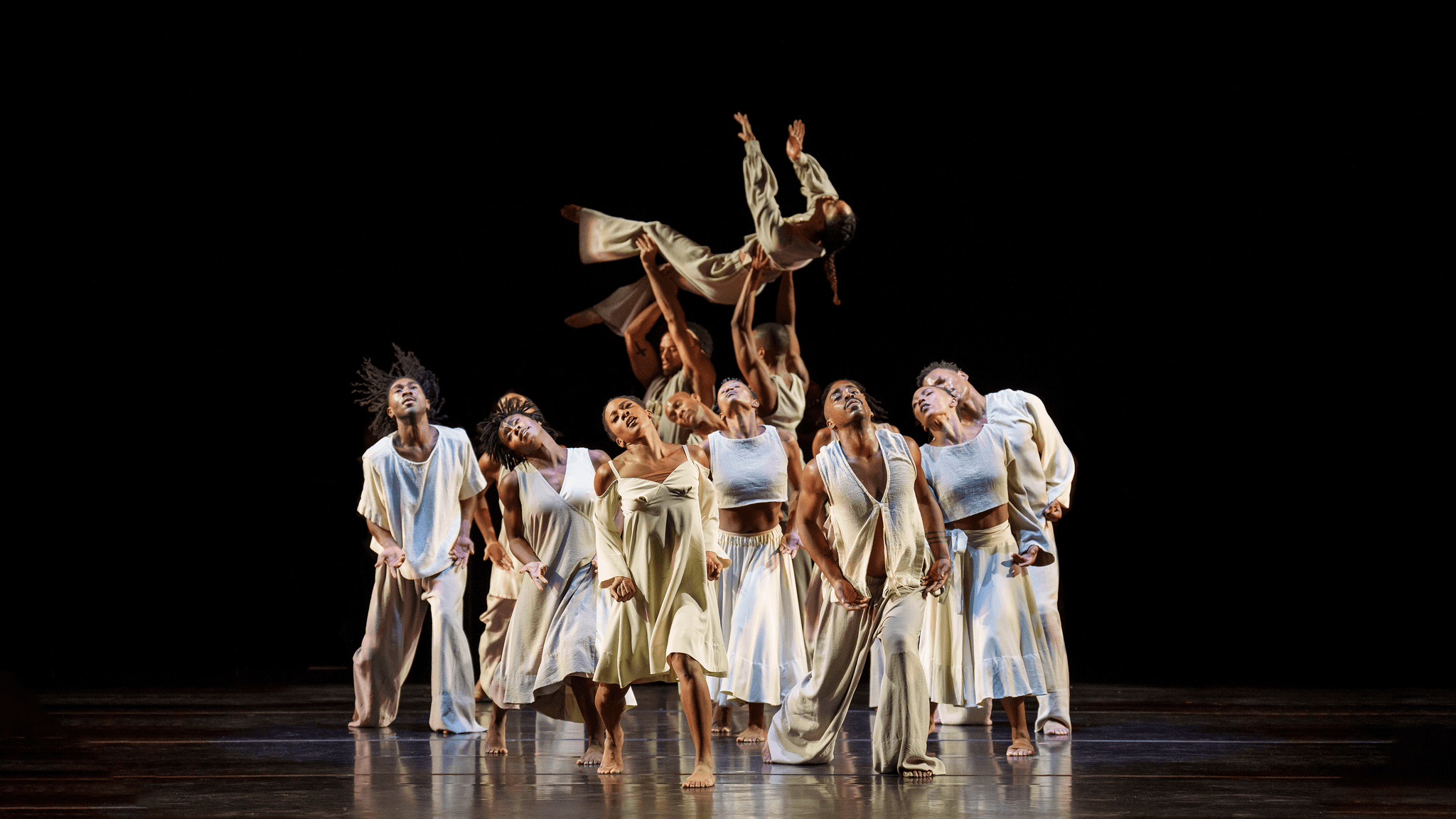
Featuring original arrangements of nine spirituals, Sacred Songs “brings together and reimagines the sounds of jazz, West African drums, gospel, hip-hop, calypso, and more to call on the past, engage our present, and invite the listener into a magical, hopeful, and musical future.” A’Keen released the music, plus a few bonus tracks, on his album Sacred Songs Suite on January 18. “By the Waters” is one of the most memorable sections for me.
+++
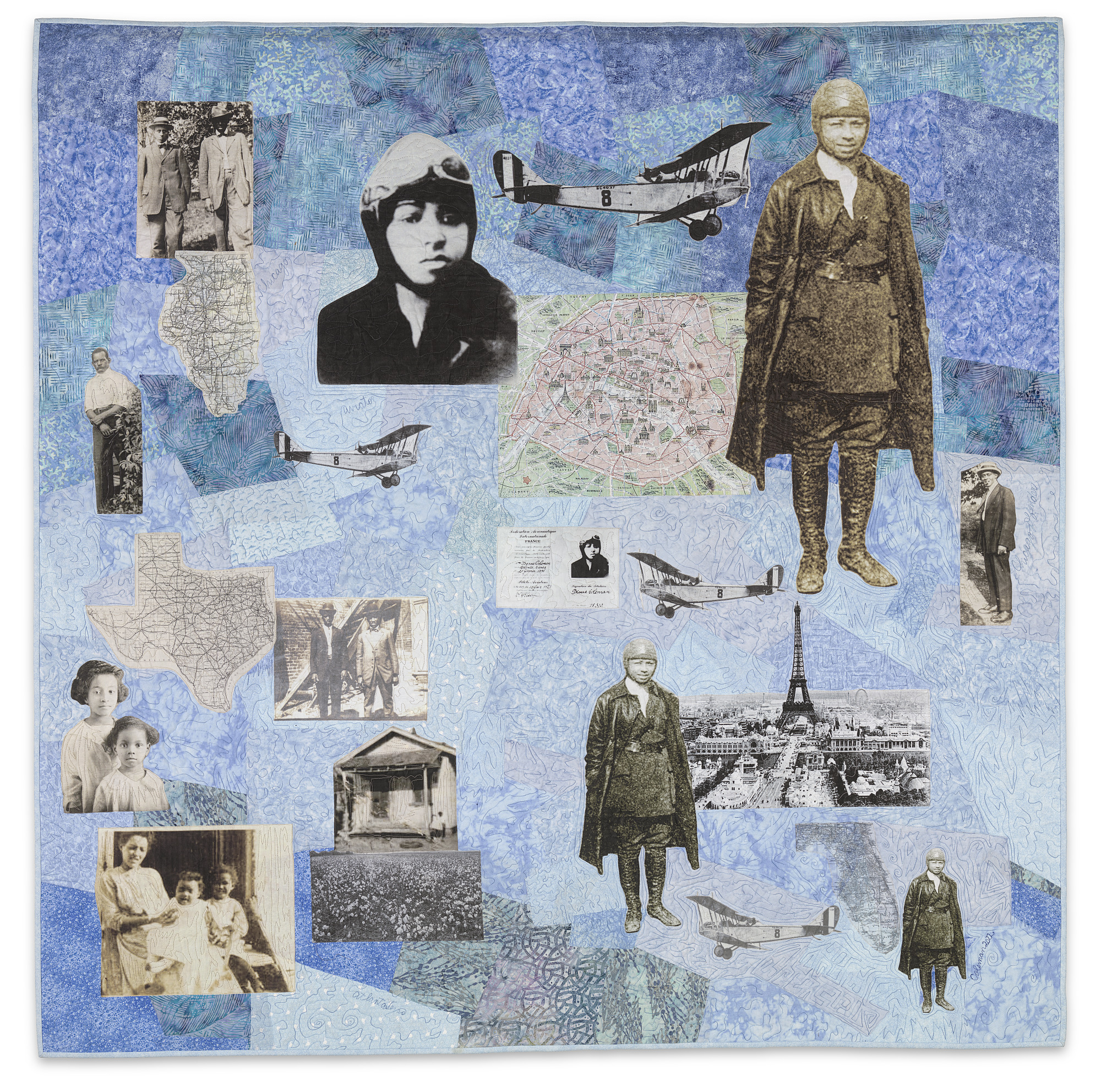
VIDEO PROFILE: “NEA National Heritage Tribute Video: Marion Coleman”: I learned about the quilter and NEA National Heritage Fellow Marion Coleman last year when perusing the book Visioning Human Rights in the New Millennium: Quilting the World’s Conscience at the Subversive, Skilled, Sublime: Fiber Art by Women exhibition at the Renwick Gallery in Washington, DC. (The book is not a catalog of the exhibition but was complementary in nature and thus was left on one of the gallery tables.) Her work is amazing! Here’s a video that provides a nice snapshot:

 Art & Theology
Thank you for all these excellent suggestions.
LikeLike
Thank you for this. I’m so grateful for your work on this site — I use it frequently when I’m looking for art to use in Bible study! Amy
LikeLike