
Rejoice greatly, O daughter Zion!
Shout aloud, O daughter Jerusalem!
See, your king comes to you;
triumphant and victorious is he,
humble and riding on a donkey,
on a colt, the foal of a donkey.—Zechariah 9:9
In German-speaking lands from the tenth to sixteenth centuries, many Christian communities would celebrate Palm Sunday by processing through the streets with a painted wood sculpture of Christ astride a donkey, called a Palmesel (pronounced PALM-ay-sul), German for “palm donkey.” Mounted on a wheeled cart and often escorted by children, the sculpture would move around town through crowds who had gathered from nearby villages and hamlets for the inauguration of Holy Week, the period of the Christian liturgical year that commemorates Jesus’s last days. The procession included the singing of hymns and the strewing of palm branches and outer garments along the Christ figure’s path, in imitation of the crowds that greeted Jesus when he entered Jerusalem for his (unbeknown to them) final Passover.
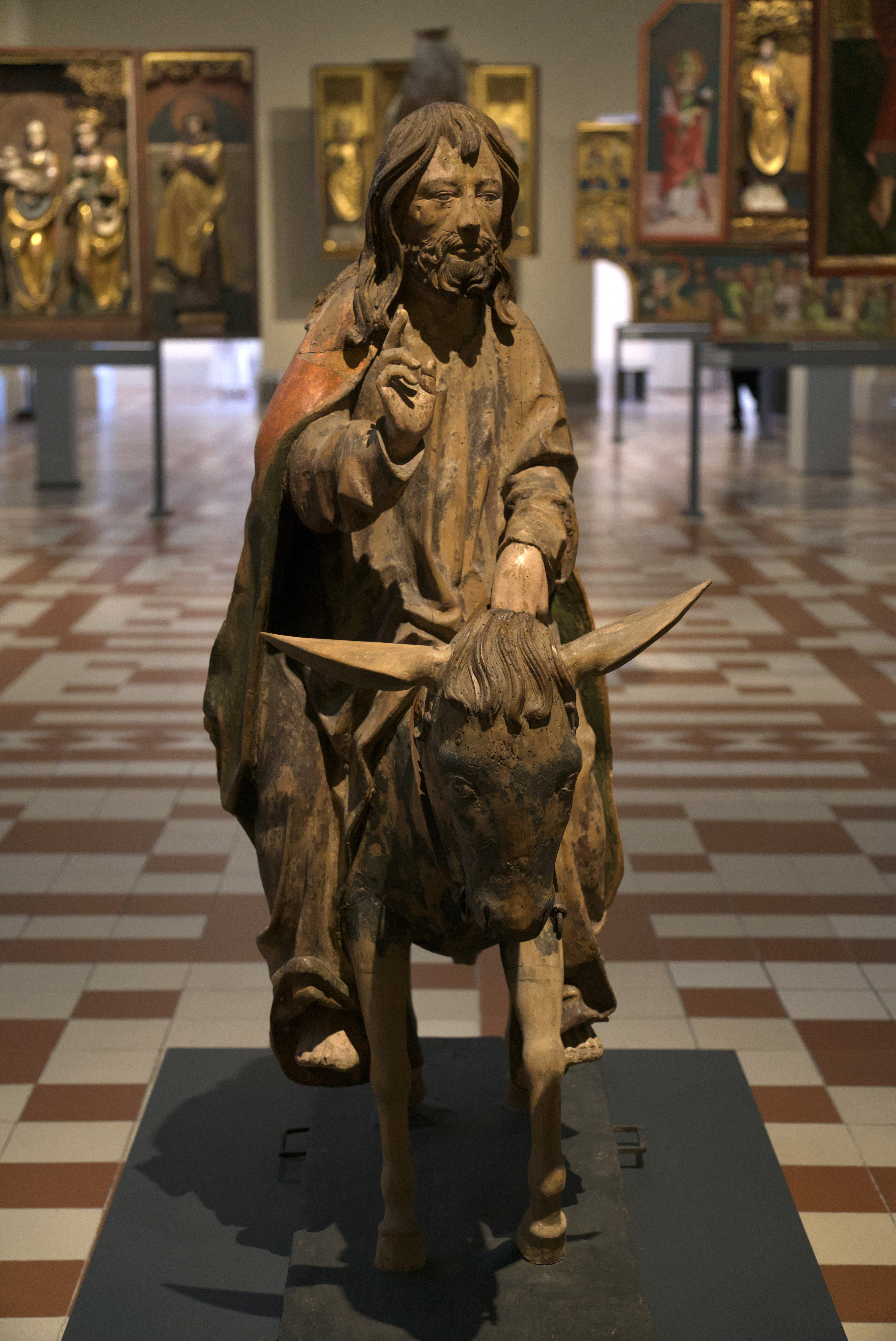

Generally, the Protestant Reformers, with their emphasis on sola scriptura (scripture alone), didn’t like religious pageantry or images, as they believed they promoted idolatry. So when the Reformation swept through Germany in the 1500s, it destroyed many Palmesels. Another wave of destruction hit in the late eighteenth century when, influenced by the Enlightenment, temporary episcopal and synodal decrees in some localities banned “theatrical representations” of liturgical events, including Palmesel processions. Nevertheless, some 175 late medieval and Renaissance Palmesels, either partial or whole, have survived to the present day. The vast majority are in museum collections, no longer in active use.
A Frankenschau broadcast news segment from 2024 (see video below) reports on the Palmesel tradition, opening and closing with a Palmesel from ca. 1470 Nuremberg that’s on display year-round in the Rieterkirche St. Marien und Christophorus (Rieter Church of St. Mary and St. Christopher) in Kalbensteinberg, Germany—surprisingly, not a Catholic church but an Evangelical Lutheran one! The segment also looks at the Miltenberger Palmesel at the Stiftsmuseum Aschaffenburg and the Palmesel at the Met Cloisters in New York City. Press the CC button on the video player for closed captioning in English.
Palmesel sizes range from half-size (more intimate, and more navigable by children) to life-size. Christ is usually dressed in a simple tunic and mantle, and his feet hang bare. Sometimes he wears a crown. Typically his right hand is raised in blessing, while his left hand holds the reins—though in the first example below, it clutches a book.
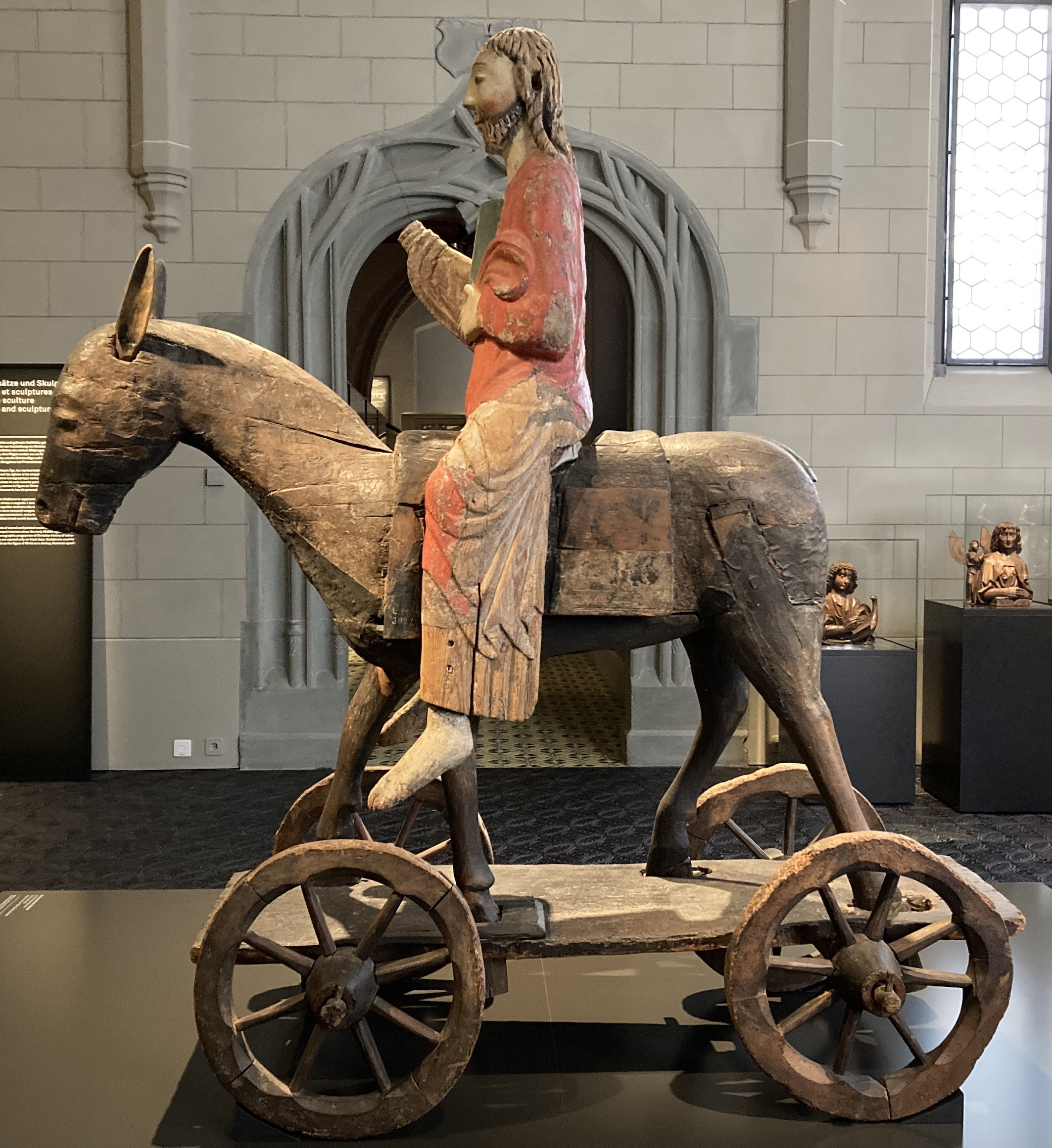
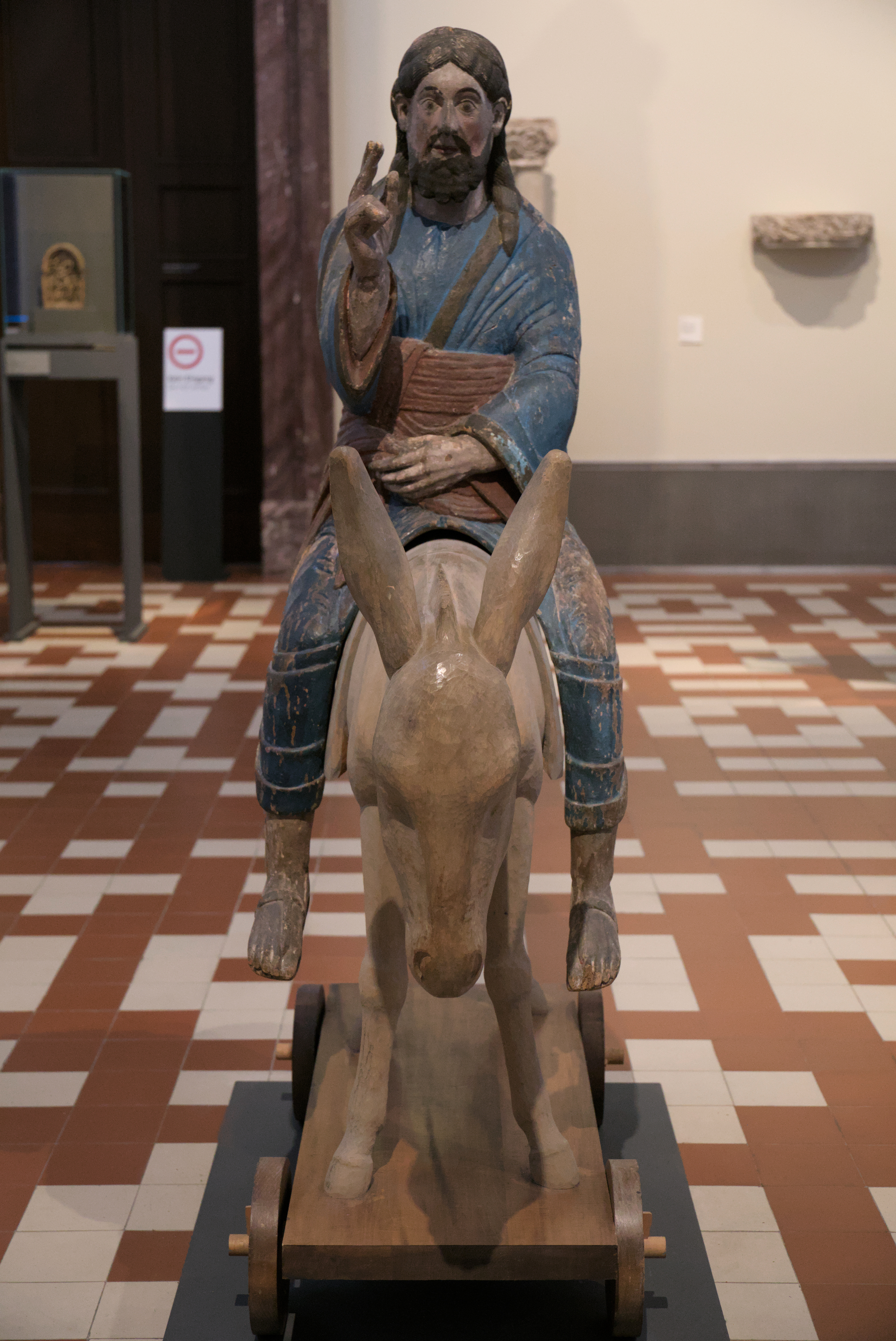

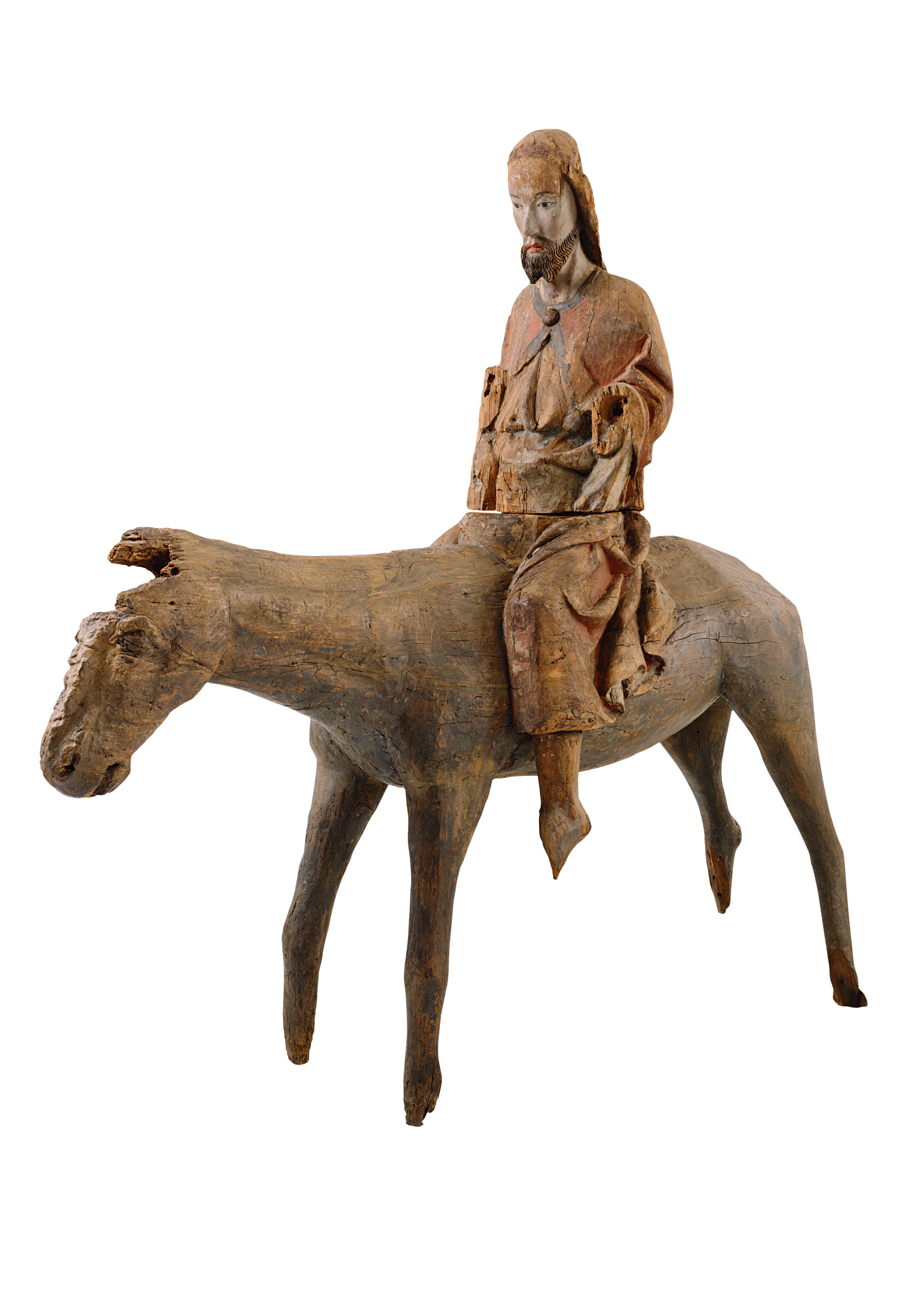
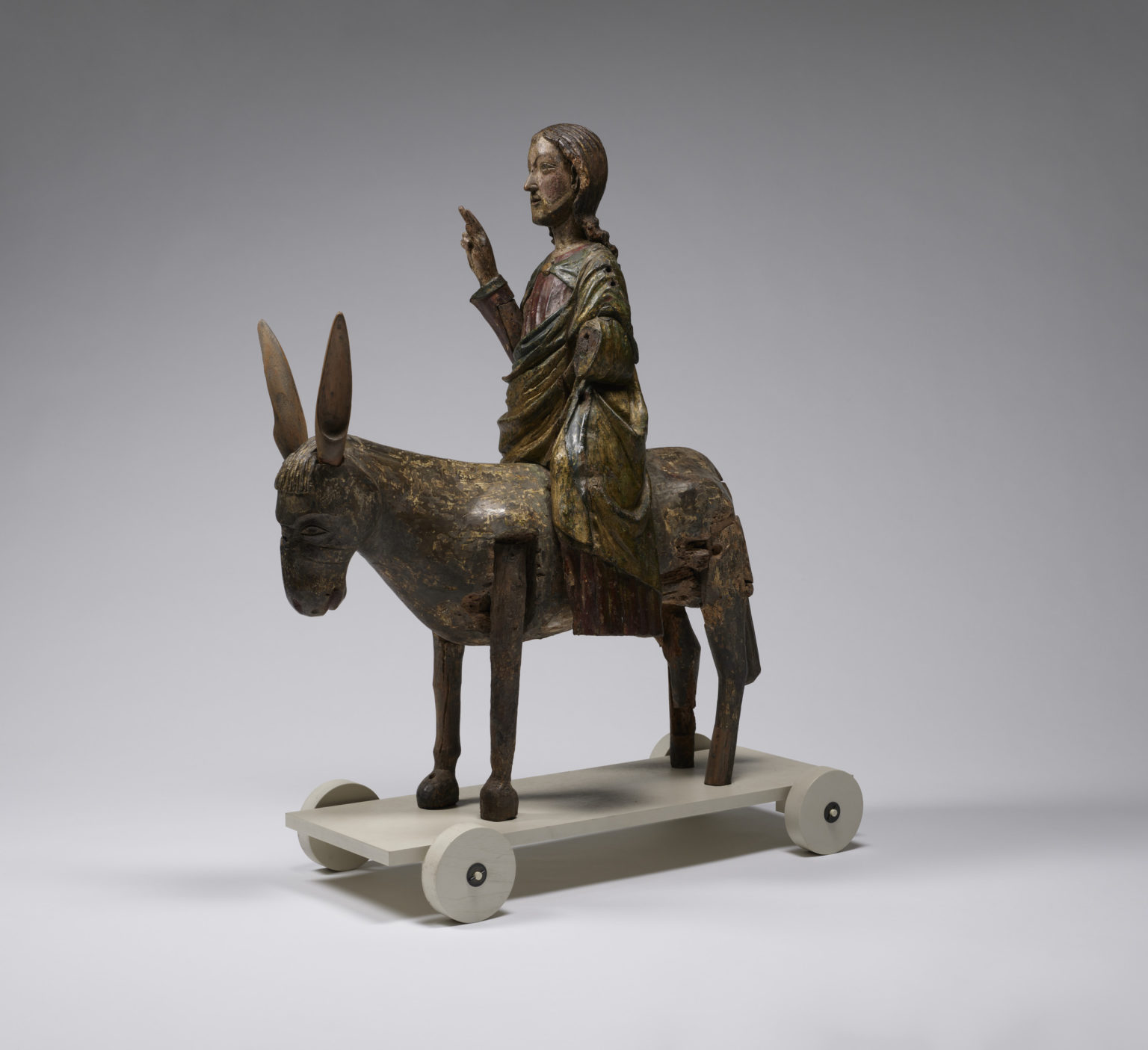
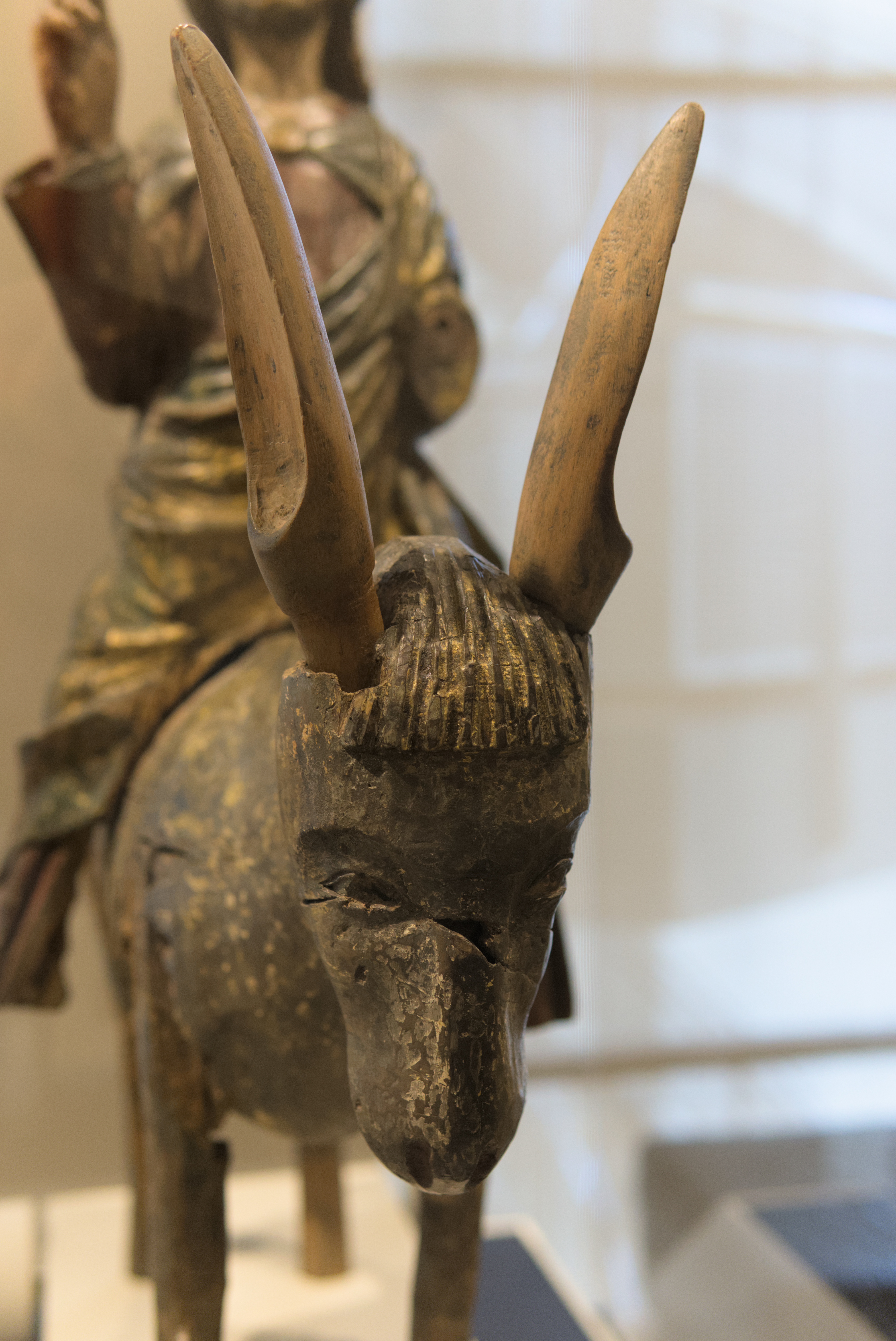
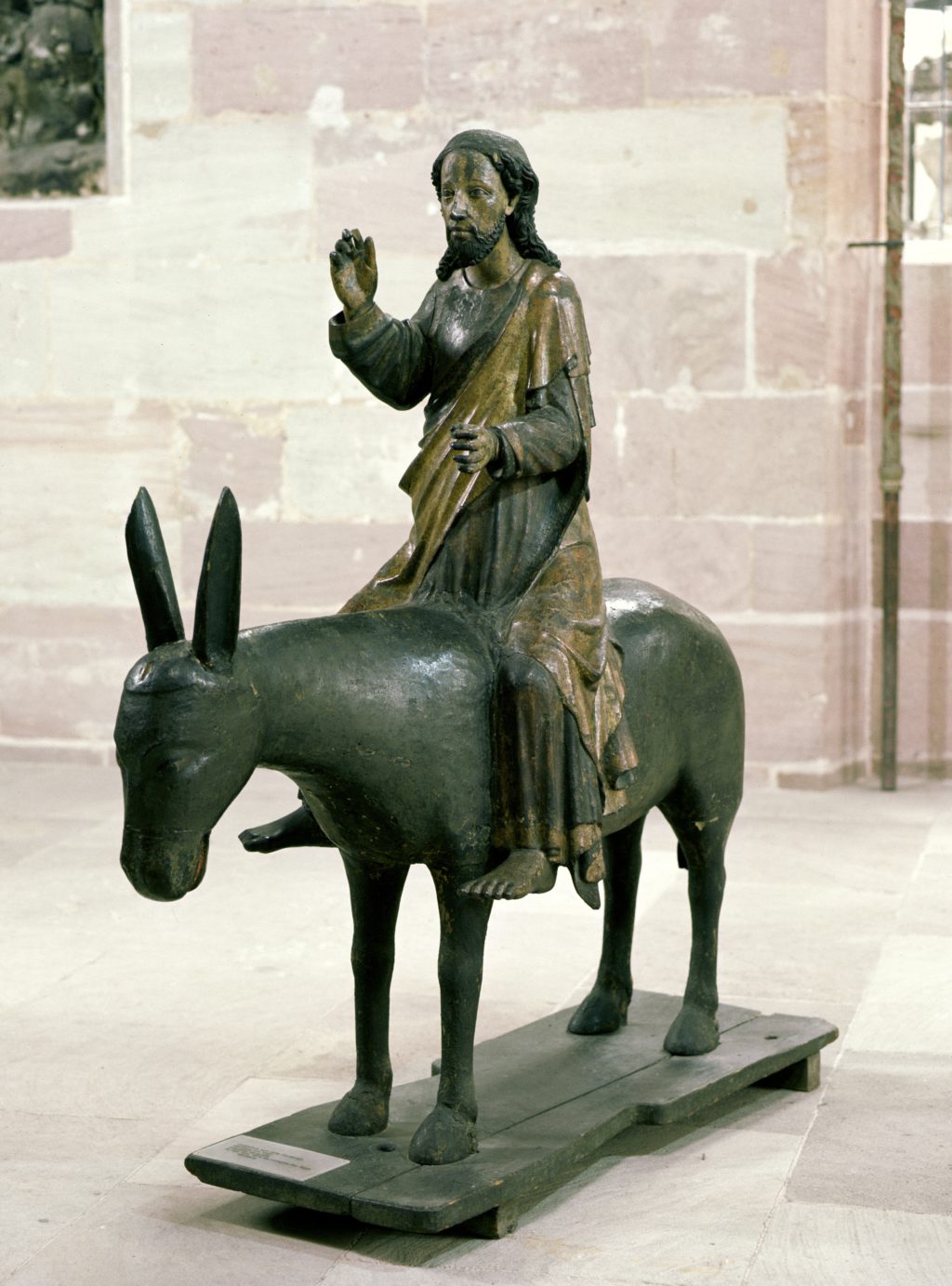


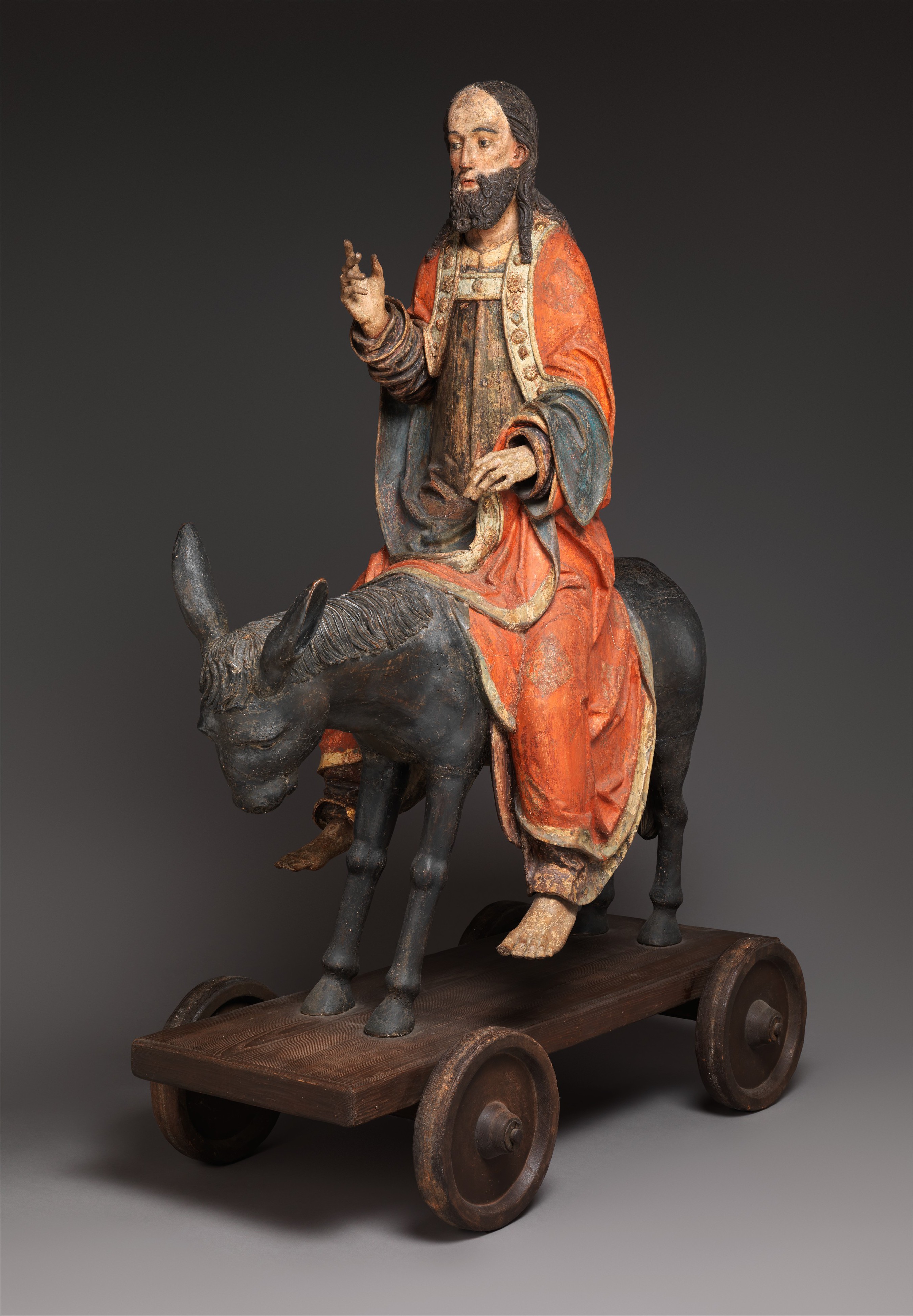
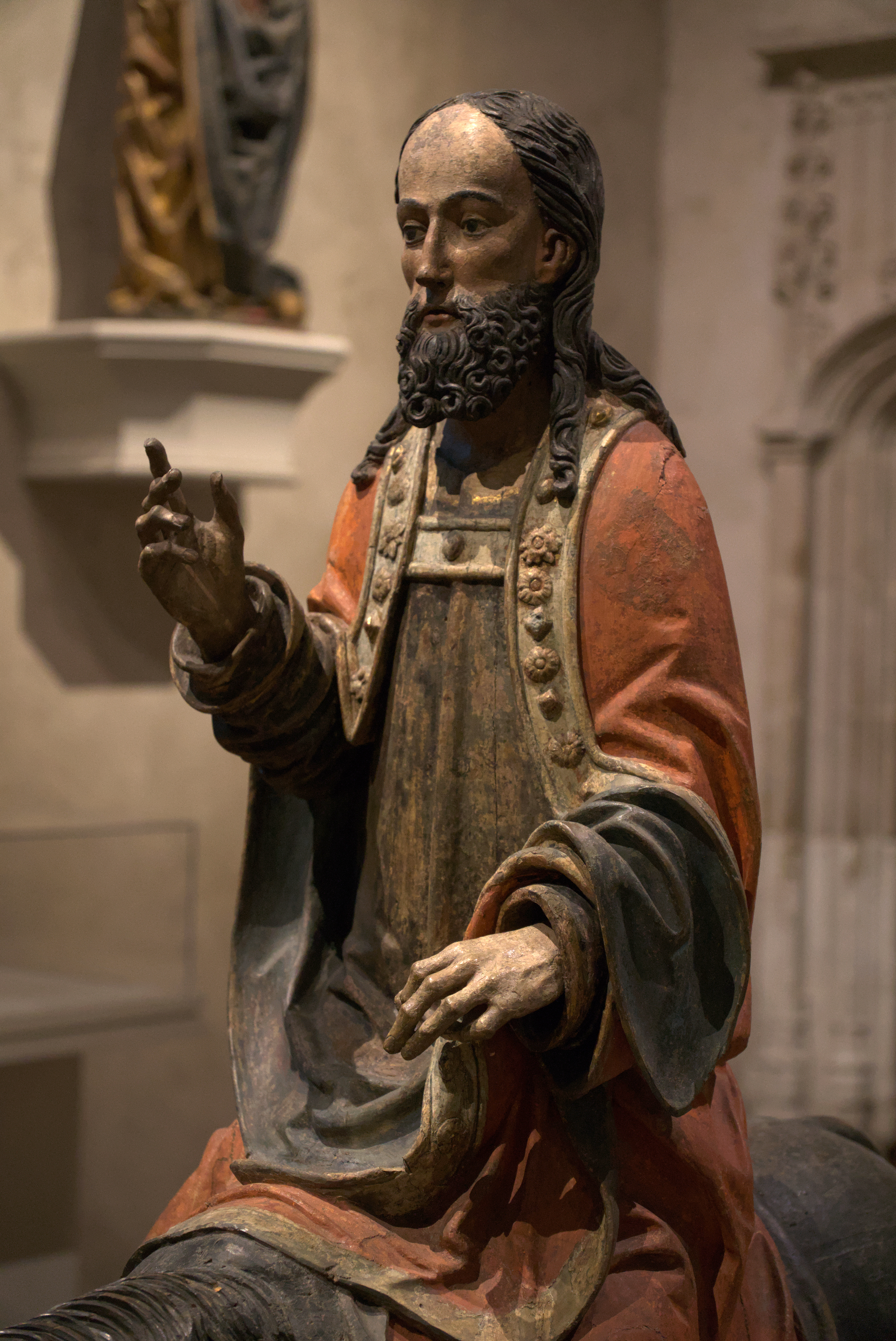
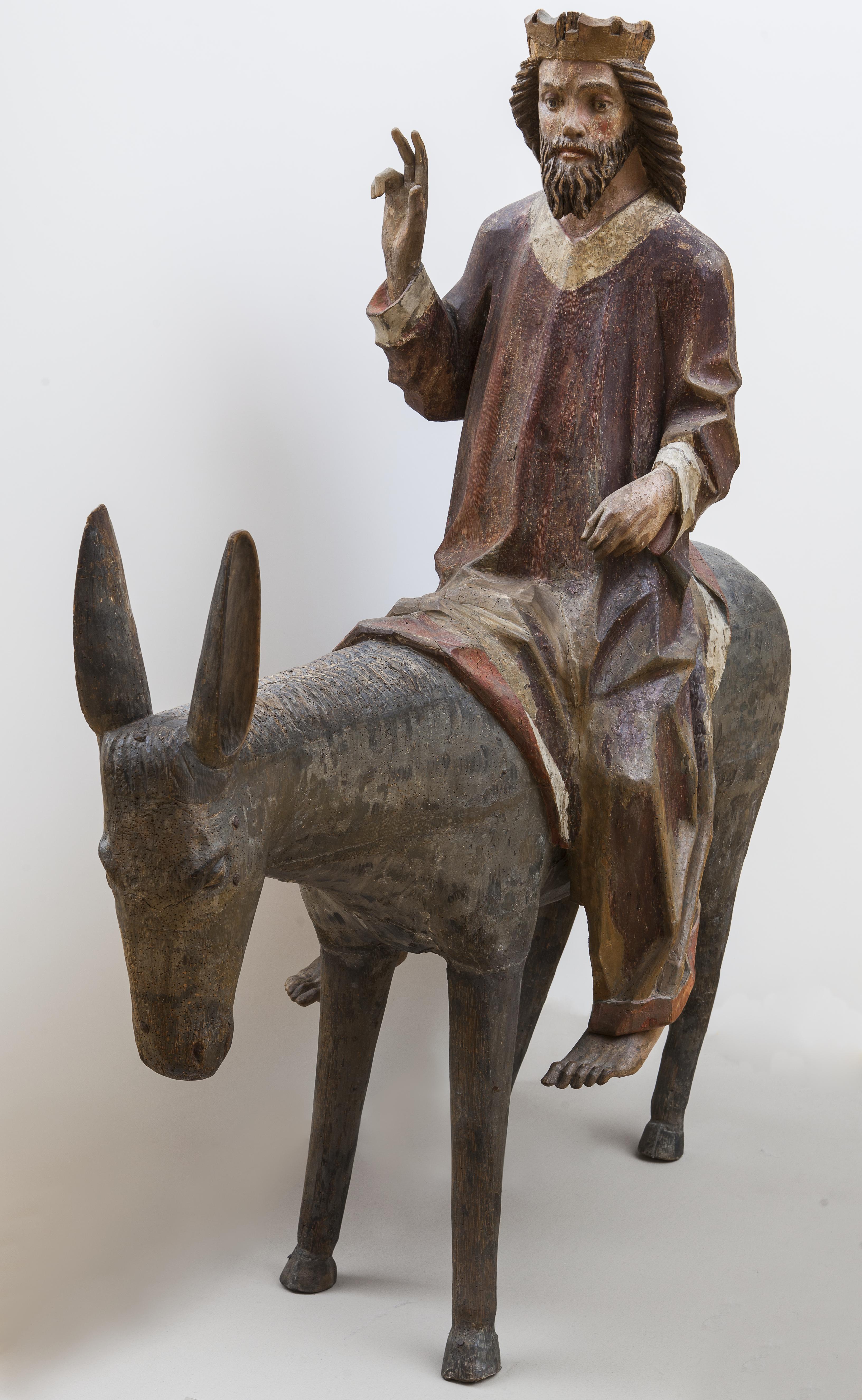
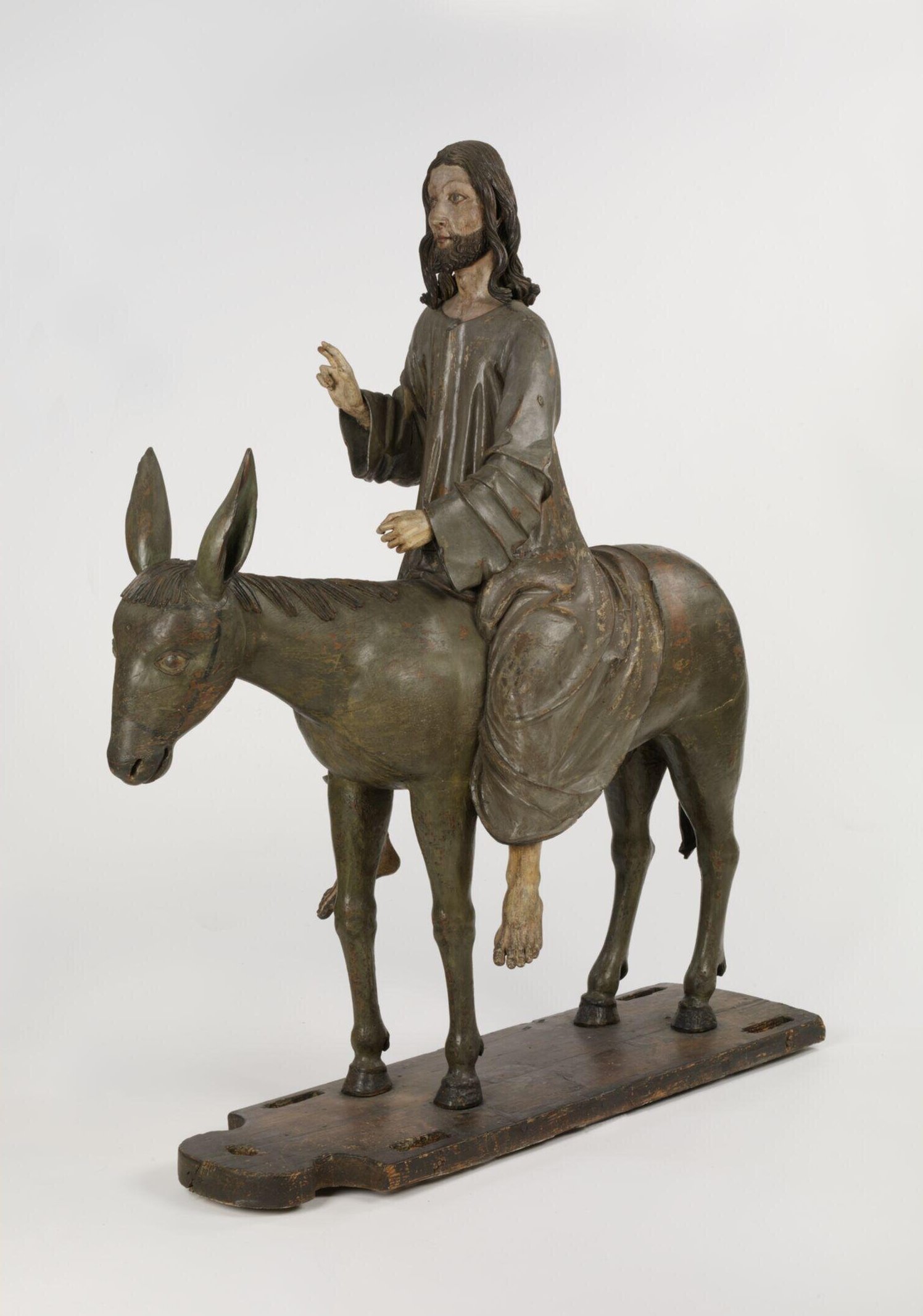
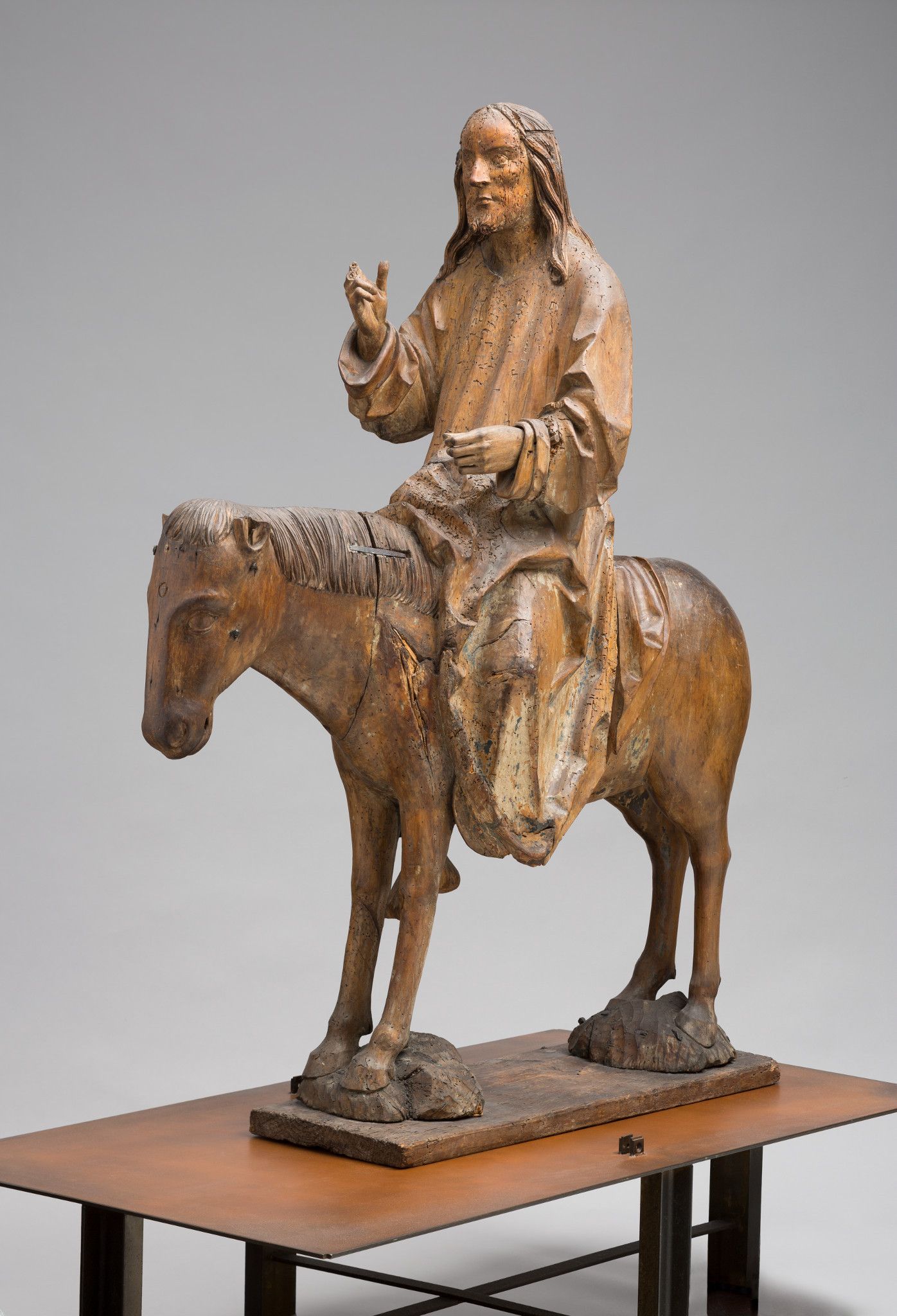

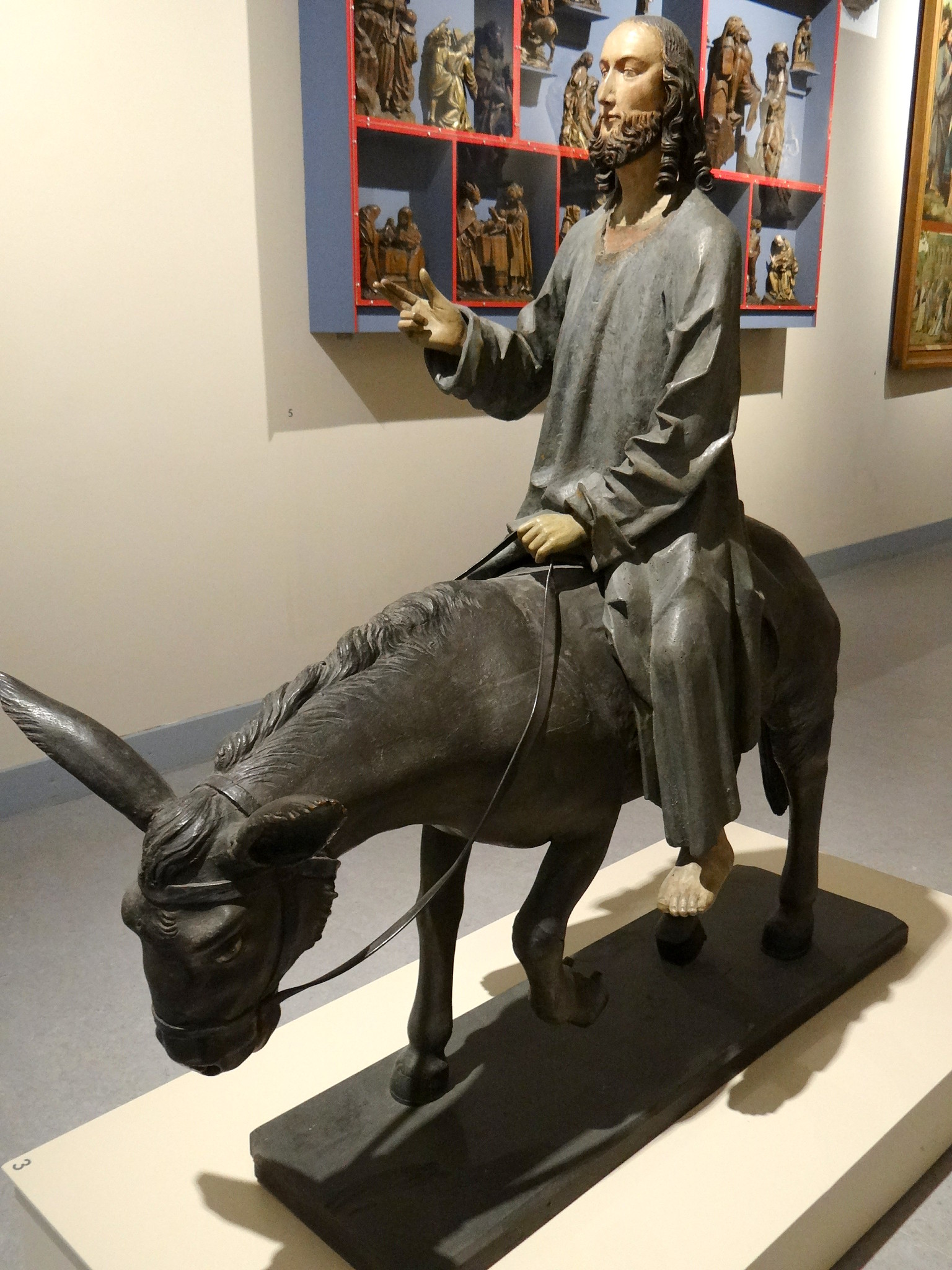
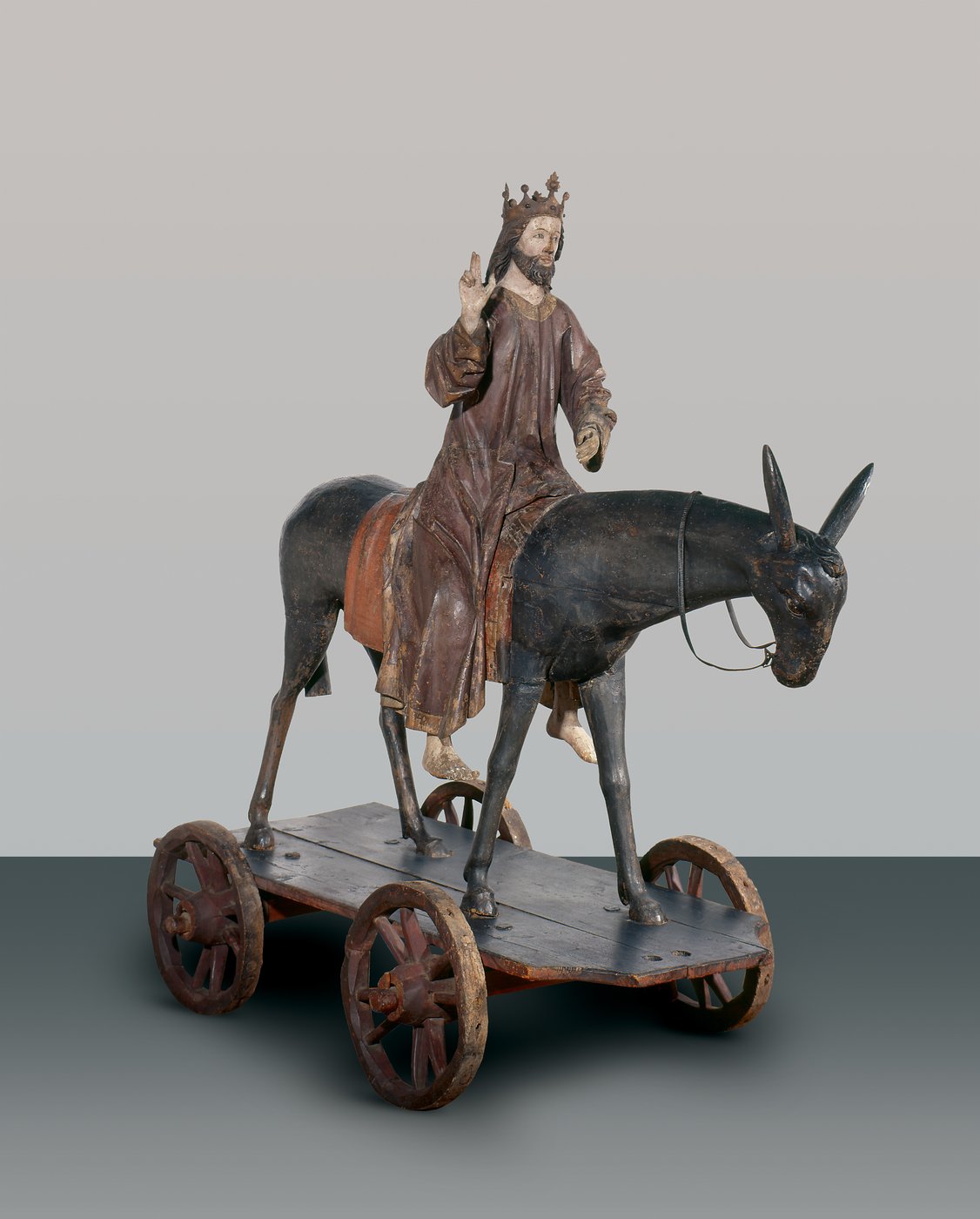

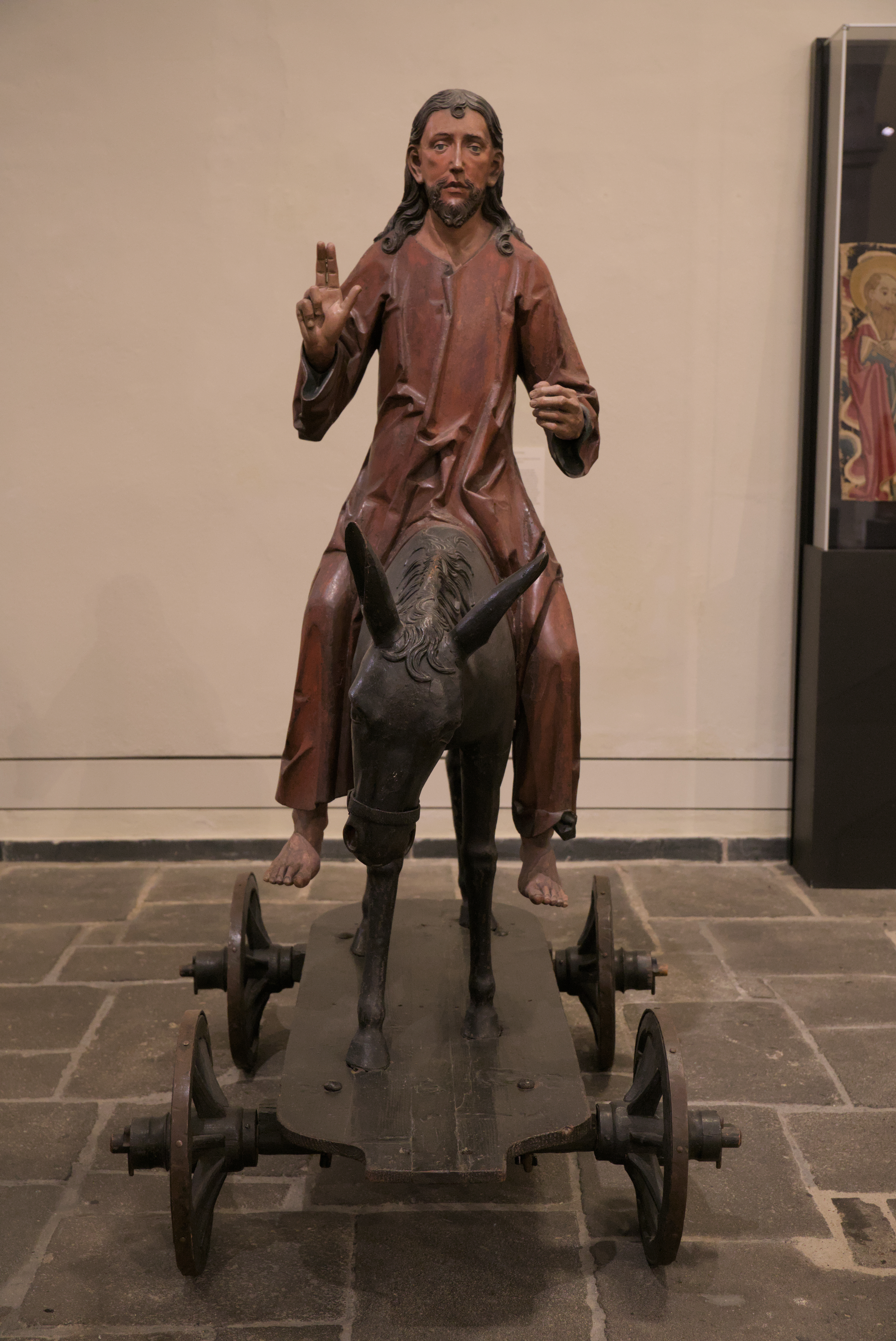
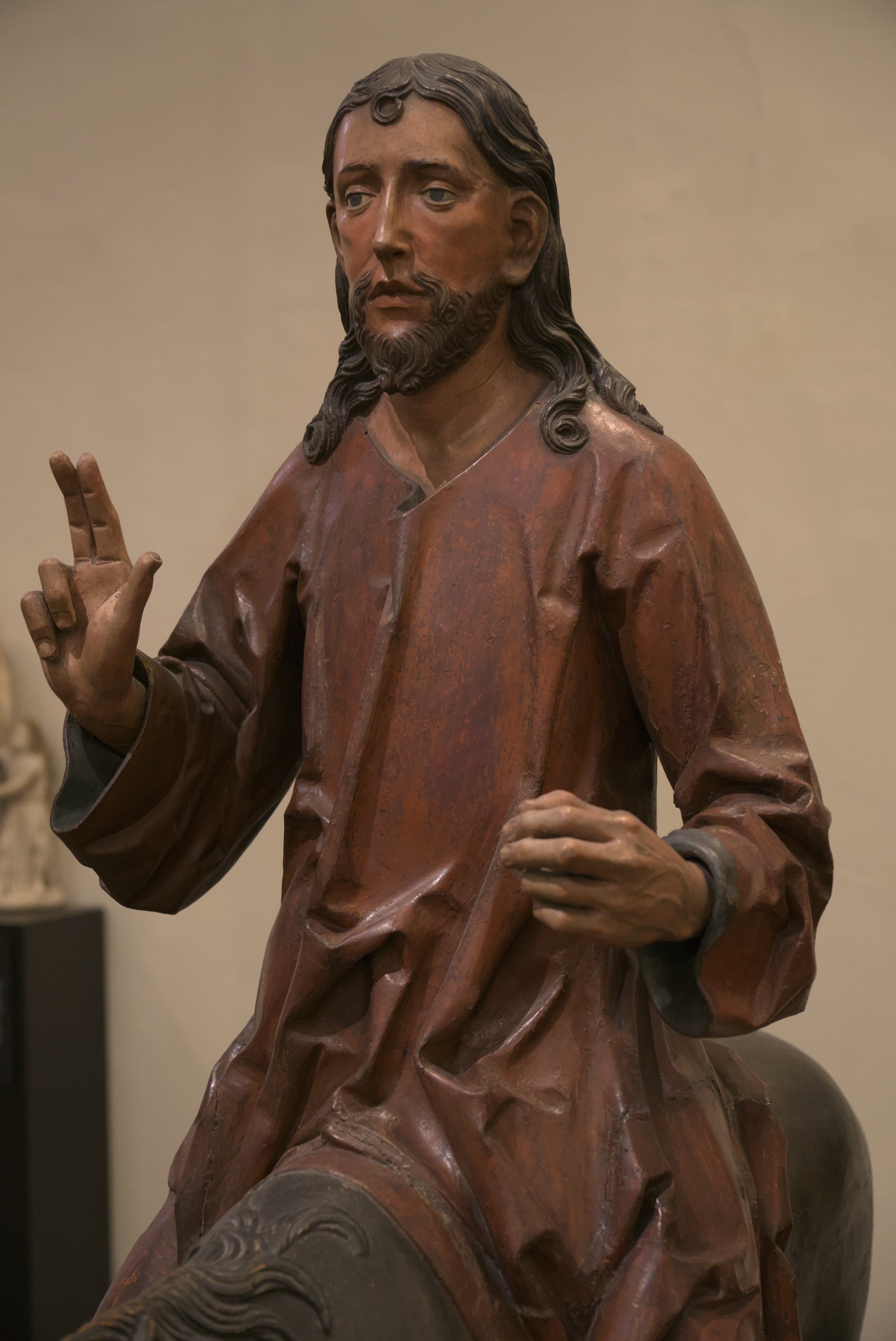
Palmesels were living art objects engaged by people of all classes. “Unlike many museum objects from the Middle Ages,” writes a Walters Art Museum curator, “the Palmesel was accessible not just to the wealthy elite and the clergy but to all levels of society. It moved among the laypeople so that they could participate in an immersive experience of a significant event from Christ’s life in their own time and place.”
The following edited video shows a 2018 Palmesel procession, led by choirboys, wending its way through an Alpine landscape from Thaur to Rum. It’s the last of its kind in the Austrian state of Tyrol. The sculpture is modern.
 Art & Theology
So lovely to think of joining a procession to worship the Lord! Thanks for sharing.
LikeLike
Thank you for sharing!
Despite being close to 70% German or Swiss German in ancestry I had never heard of nor seen this beautiful artwork before.
There is a small town not far from my home where there is a Palm Sunday Procession–with a live donkey–sponsored jointly by the local Lutheran and Roman Catholic parishes.
LikeLike
Dear Victoria, thank you! What a gift to receive this morning. The Palmesel is completely new to me and is now a source for a new painting or drawing.
LikeLike
[…] Palm Donkey […]
LikeLike
[…] Then a post on the “Palmesel – the statues of Jesus on a donkey, set on wheels, used in Palm Sunday processions: […]
LikeLike