Kolumba and KMSKA: Medieval and contemporary art in conversation (part 1)

One of the delightful surprises of my recent trip to Germany and Belgium was to find, in two of the museums I visited, an integration of the old and new in the curated galleries. Typically, art museums choose to arrange their collections chronologically, grouping together artworks from a particular era, and within each era, like styles. But in Kolumba museum in Cologne and the Koninklijk Museum voor Schone Kunsten Antwerpen (KMSKA) in Antwerp, medieval art from each museum’s collection (and in the case of KMSKA, Renaissance and Baroque art too) is displayed alongside contemporary pieces, creating a vibrant dialogue.

With the exception of the exterior shot of Kolumba, all photos in this post are my own.

Kolumba Kunstmuseum, Cologne

Originally called the Diözesanmuseum (Diocesan Museum), Kolumba was founded in 1853 by the fledgling Christlicher Kunstverein für das Erzbisthum Köln (Christian Art Association for the Archbishopric of Cologne), making it the city’s second oldest museum after the Wallraf-Richartz-Museum. Its collection focus for the majority of its history was late medieval art from Cologne and the Lower Rhine.

Kolumba’s first permanent home, just south of Cologne Cathedral, was a former sugar factory, but the building was destroyed in World War II, though much of the art had been safely evacuated beforehand. After the war, Kolumba relocated its art to a grammar school, then to rented rooms in the Gereonstraße, then to the Curia building at Roncalliplatz 2. But the limited space was an issue.

In 1989, ownership of the museum was transferred to the Archdiocese of Cologne, who decided to expand the collection to include modern and contemporary art, not only by German artists but by international artists as well. The museum shifted its approach from displaying traditional sacred works only, to placing those works in juxtaposition with newer ones by artists who aren’t necessarily Christian but whose works can converse fruitfully with their core collection. They also secured funding to construct a new permanent building.

In 2004, the museum’s name was changed to Kolumba in honor of the history of the site on which the new (and current) building would stand: atop the ruins of the medieval St. Kolumba church, destroyed in an air raid in 1943. St. Columba of Sens was a third-century virgin martyr who was born in Spain but lived mostly in France. The church dedicated to her in Cologne once housed Rogier van der Weyden’s St. Columba Altarpiece (now at the Alte Pinakothek in Munich), a triptych with scenes of the Annunciation, the Adoration of the Magi, and the Presentation in the Temple.

Kolumba museum
Kolumba museum, Cologne. Photo: HP Schaefer / Wikimedia Commons.

Kolumba museum’s permanent home opened in 2007 at Kolumbastraße 4. Designed by the Swiss architect Peter Zumthor (view more architectural photos here), the building encapsulates the bombed-out Gothic ruins of St. Kolumba with forty-foot-high, porous concrete walls, above which sit the floors of the museum.

It also incorporates the Madonna in den Trümmern (Madonna in the Ruins) chapel, an octagonal tent-like structure built by Gottfried Böhm in 1947–50 to house a late Gothic statue of the Madonna and Child that miraculously survived the Allied bombings and for the liturgical use of the small Kolumba parish, which continues today.

Ruins of St. Kolumba
The ruins of St. Kolumba church, which dates back to the tenth century (with subsequent expansions and a Gothic-style rebuilding), are integrated into the architecture of Kolumba museum.

Madonna in the Ruins chapel
Exterior of the “Madonna in the Ruins” chapel, dedicated 1950, underneath Kolumba museum in Cologne, with stained glass designed by Ludwig Gies (1887–1966), installed 1954.

The postwar chapel is not accessible from inside the museum; it has its own separate entrance, which, as I found out after I had already left, is on the south side of the building, along Brückenstraße.

But I did cross over the excavation site of St. Kolumba to which the written museum guide directs visitors (it’s labeled “room 3”), and through which a walkway has been constructed. As I took in the war-wrought devastation, I wondered about the sounds I was hearing from an audio system. Turns out it was a sound installation called Pigeon Soundings by the American artist Bill Fontana. In 1994, he made a series of eight-channel sound map recordings of the pigeons that were inhabiting the St. Kolumba ruins at the time, particularly the rafters of the temporary wooden roof that had been erected. The recordings picked up not just the birds’ cooing and flapping, but also the ambient sounds outside.

Above this darkened space, Kolumba has sixteen exhibition rooms. The museum reinstalls its collection annually, each fall opening a new exhibition. I was there for the first day of “make the secrets productive!” Art in Times of Unreason, which runs from September 15, 2025, to August 14, 2026. The lack of art signage throughout is deliberate, to promote a more meditative experience; instead, visitors are given a (German-language) booklet, organized by room, that identifies the pieces on display and provides commentary for some.

Room 8 features a fifteenth-century sculpture of Christ at Rest—“at rest” not in the sense of being at peace in mind or spirit (he is visibly troubled), but rather in a bodily state of motionlessness or inactivity. Sometimes also called Christ in Distress, Christ on the Cold Stone, or Pensive Christ, the iconography shows an interior moment during Christ’s passion in which, having just been flogged, he sits awaiting his final torture: crucifixion.

Christ at Rest (Upper Rhine)
Christus in der Rast (Christ at Rest), Upper Rhine, ca. 1480. Linden wood with visible primer and remnants of colored paint. Kolumba museum, Cologne.

Christ at Rest (detail)

Though the Gospels don’t mention a moment of seated pause in the narrative, artists were influenced by the figure of Job, an innocent sufferer who in that way prefigured Christ, and in particular the description in Job 2:8 of him sitting on a dung heap. The image of Jesus preparing to meet his death was meant to inspire feelings of pity. Isolated from the action and from all the other characters, the lone figure invites viewers to enter empathetically into the emotional anguish he suffered on his way to the cross.

At Kolumba, this sculpture is surrounded by large-scale, black-and-white photographs from the Transzendentaler Konstruktivismus (Transcendental Constructivism) series by the collaborative duo of German neo-dadaist artists Anna and Bernhard Blume. In the series the couple is threatened by white geometric objects that are unleashed on them in a blur of motion.

Christ at Rest and Transcendental Constructivism
Foreground: Christ at Rest, Upper Rhine, ca. 1480. Background: Anna Blume (1936–2020) and Bernhard Blume (1937–2011), photograph from the Transcendental Constructivism series, 1992–94.

The diptych that hangs behind the Christ sculpture appears to show a man carrying a cross, disoriented by its weight.

One of the other resonant pairings at Kolumba is in room 21, which stages a fifteenth-century Ecce homo sculpture across from a colored chalk drawing on a three-paneled blackboard.

Ecce Homo and Plumed Serpent

The title Ecce homo, Latin for “Behold the man,” comes from John 19:5, where the Roman governor Pilate presents a scourged, thorn-crowned Jesus to a mob that demands his execution. Like Christ on the Cold Stone, this too is a devotional image intended to stir the affections of the viewer, who is called, like the crowds on that fateful day, to gaze upon the wounded God-man. His hands are bound in front of him, evoking a sacrificial sheep tied up for slaughter. What have we done?

Ecce Homo
Ecce Homo
Ecce Homo, Cologne, ca. 1460–1500. Linden wood. Kolumba museum, Cologne.

Ecce Homo
Ecce Homo
Ecce Homo

While I instantly recognized this subject, the drawing was more of a mystery.

Thek, Paul_Plumed Serpent
Paul Thek (American, 1933–1988), Plumed Serpent, 1969. Colored chalk on blackboard, 110 × 358 cm. Kolumba museum, Cologne.

Plumed Serpent (detail)

Not having any wall text to clue me in, I had to simply observe and intuit. I saw a winding chute, rainbow-colored, with a few white feathers sticking out of it. And is that water in the background?

I noticed, too, that it’s a triptych, a common format for altarpieces.

Water, birds, rainbows—those all play into the story of Noah’s flood, in which the rainbow signifies God’s promise to never again destroy the earth and all its inhabitants. It’s a symbol of grace and reconciliation.

There are also two prophetic texts in scripture that associate the rainbow with Christ and his glory: Ezekiel’s and John’s recorded visions of the divine throne (Ezek. 1:28; Rev. 4:3).

The curator has positioned Jesus facing the rainbow road, across a fairly large gap. Since, as the museum states, the artworks are arranged to interpret each other, at least in part, then it’s possible this room conveys Jesus following the path of promise, even as it takes dark turns. Or choosing to endure the judgment of the cross to secure a glorious inheritance for his beloveds.

After these ruminations, I looked up the work in the booklet: Plumed Serpent by Paul Thek.

Hmm. In the Christian tradition serpents are often associated with the devil. However, in Numbers 21:1–9, Moses lifts one up on his staff in the wilderness and it becomes an agent of healing and even a symbol of Christ himself, lifted up on the cross for the salvation of the world (John 3:14–15).

The description in the booklet informed me that “plumed serpent” is the English translation of the Nahuatl name Quetzalcoatl, an Aztec creator-god. I don’t know much about pre-Columbian mythologies, so I looked him up when I got home. Apparently he represents the union of earth (reptile) and sky (feathers), and he is also known as the god of the morning star. (Jesus also calls himself the bright morning star!) Although he was initially portrayed as a large snake covered in quetzal feathers, from 1200 onward, he often appeared in human form, wearing shell jewelry and a conical hat. What I find most striking about his story is that he gave new life to humankind by gathering their bones from the land of the dead, grinding them down, and mixing them with his own blood from self-inflicted wounds.

I also did some research on the artist, of whose work Kolumba has the most comprehensive holdings. Paul Thek was a devout Catholic, an identity complicated by the fact that he was also gay. He rose to fame in the 1960s with his “Technological Reliquaries,” hyperrealistic wax sculptures depicting severed body parts and chunks of flesh in vitrines, inspired by his visit to the Capuchin catacombs in Palermo. Much of his art deals with death and rebirth, divinity and decay, mystical transformation.

Feathers feature in another piece of his from the same year as Plumed Serpent: Feathered Cross. (See it against the wall in a photo from the 2021 exhibition Paul Thek: Interior/Landscape at the Watermill Center in Water Mill, New York.) The feathers’ softness, their weightlessness, seem to contradict the reality of crucifixion. But I think it’s Thek’s way of conveying the transcendent meaning of that act of self-giving. I also think of how down feathers fill pillows on which we rest. “Come to me, all you who are weary,” Christ says (Matt. 11:28); we can rest on his finished work.

But back to Plumed Serpent. Chalk is its material—its ephemerality must be a nightmare for conservators, and indeed it seems like some of the drawing has partially rubbed away. But this choice of material plays into the artist’s interest in the enduring versus the perishable, and the transitory dimensions of death.

On the right side of room 21, against the wall, are three identical offset-printed artist’s books by Bernhard Cella titled Ein Jahrhundert der verletzten Männer (A Century of Injured Men). Published in 2022, the 152-page book contains photographs of convalescent men over the course of the twentieth century, questioning heroic images of masculinity. I’m assuming many of the injuries were caused by the two world wars.

I neglected to get a photo of the book, but here’s the cover image, and you can view sample pages here and here, as well as two photos of the books in situ at Kolumba on Cella’s Instagram page:

A Century of Injured Men

Vulnerability, injury, sacrifice, healing, the transmutation of pain, new life—these are the themes I gathered from this room.

The current Kolumba exhibition features much more contemporary art than medieval—there are some 175 contemporary works on display, compared to six from the Middle Ages—and I suspect that is now their modus operandi. So, the cross-temporal dialogue isn’t happening in every room, at least not explicitly.

I appreciate the uniqueness of this ecclesiastically run museum, acquiring and showing contemporary works by artists from a range of backgrounds while not shunning its own history as collectors and preservers of medieval German religious art.

As a Christian, I found myself latching on to the imagery that was familiar to me, like Jesus as the Man of Sorrows, and interpreting the surrounding works in light of that. But it seems to me the interpretive process could also move in the other direction, and I wonder how a visitor who doesn’t share my Christian vantage point would respond to the two rooms I’ve highlighted.

For two additional artworks I photographed at Kolumba, an ivory crucifix and an installation with coat, hat, and oil lamp, see my Instagram shares here and here.

Part 2, my reflections on my KMSKA visit, will be published tomorrow.

“The Dream” by Paul J. Pastor (poem)

I woke, and all the kingless world was bleak.
I slept, and earth was governed by the meek.

I woke, and there was roaring from the south.
I slept, and children stopped the lion’s mouth.

I woke, and saw the locust eat the wheat.
I slept, and wept before the mercy seat.

I know I sojourn in the land of seem.
But which is real, my God? And which the dream?

From The Locust Years (Wiseblood, 2025). Used by permission of the publisher.


Gottlieb, Adolph_Duet
Adolph Gottlieb (American, 1903–1974), Duet, 1962. Oil on canvas, 84 × 90 in. High Museum of Art, Atlanta, Georgia. Photo: Victoria Emily Jones.

In his succinct poem “The Dream,” Paul J. Pastor reflects on the dissonance between our earthbound reality—marked by misrule, violence, and famine—and the new-earthly reality that awaits us when Christ returns. Which is truer, more ultimately solid? This present bleakness, or the long-dreamt-of future that we see glimpses of throughout the scriptures, in the visions of prophets and the words and deeds of Jesus?

The poem reminds me of these lines from George MacDonald’s Diary of an Old Soul:

Lord, in the land of things that swell and seem,
Help me to walk by the other light supreme,
Which shows thy facts behind man’s vaguely hinting dream.

And Samwise Gamgee’s oft-quoted question from Tolkien’s Return of the King, which Christian eschatology answers in the affirmative: “Is everything sad going to come untrue?”

“The Dream” comes from Pastor’s latest collection, The Locust Years, most of which was written from 2020 to 2024, a time of pandemic, increasingly intense political polarization in the US, and, as Pastor mentions in the opening, for him, personal grief. The book’s title is a reference to Joel 2:25, where God promises his people, “I will restore to you the years that the locust hath eaten . . .”


Paul J. Pastor is a poet, writer, and editor whose work uncovers the inner life of the world as experienced in nature, literature, and the rich traditions of historic Christian spirituality. In addition to two volumes of poetry—The Locust Years and Bower Lodge—he is also the author of A Kids Book About God, The Listening Day, and The Face of the Deep. He is an executive editor for Nelson Books, an imprint of HarperCollins, and he lives in Oregon’s Columbia River Gorge with his wife and three children.

Roundup: “Poetry for All” podcast, startling Crashaw poem, despair and grace, and more

SPOTIFY PLAYLIST: October 2025 (Art & Theology)

+++

PODCAST: Poetry for All, hosted by Joanne Diaz and Abram Van Engen: Poetry for All “is for those who already love poetry and for those who know very little about it. In this podcast, we read a poem, discuss it, see what makes it tick, learn how it works, grow from it, and then read it one more time.” I’ve consistently enjoyed this podcast since its launch in 2020, having learned about it through cohost Abram Van Engen [previously], an academic who often writes and speaks about poetry for general Christian audiences. Here are some of my favorite episodes of the ninety-seven that have been released to date:

  • Three haiku by Kobayashi Issa, translated from the Japanese by Robert Hass: The first: “The snow is melting / and the village is flooded / with children.” Learn the characteristics of what Joanne Diaz calls “the perfect poetic form.”
  • “spring song” by Lucille Clifton: One of my favorite poems by one of my favorite poets. “This joyful poem caps a sequence of sixteen poems called ‘some jesus,’ which walks through biblical characters (beginning with Adam and Eve) and ends on four poems for Holy Week and Easter. [Clifton] wrote other poems on the Bible as well, including ‘john’ and ‘my dream about the second coming,’ which reimagine a way into biblical characters to make their stories fresh.”
  • “Elegy for My Mother’s Mind” by Laura Van Prooyen: This episode is unique in that it has the poet herself on to read and discuss the poem, which in this case navigates the complexities of memory, loss, and familial relationships.
  • “View but This Tulip” by Hester Pulter: Ashamedly, I had never heard of this seventeenth-century female poet before listening to this episode, so I’m grateful to guest Wendy Wall, cocreator of the award-winning Pulter Project website, for introducing me to her! “In this episode we discuss [Pulter’s] work with emblems, her scientific chemistry experiment with flowers, and her wonderment (both worried and confident, doubtful and awestruck) about the resurrection of the body and its reunification with the soul after death.”
  • “From Blossoms” by Li-Young Lee: A much-anthologized poem ostensibly about eating summer peaches, but more deeply, it’s about joy. “One of the things that draws me to this poem,” says Van Engen, “is that joy is actually very hard to write about . . . without it sounding naive or sentimental or withdrawn or unaware.”
  • “Primary Care” by Rafael Campo: Dr. Rafael Campo is both a poet and a practicing physician. Here he uses blank verse to explore the experience of illness and suffering.

+++

POEMS:

>> “For V. the Bag Lady, Great in the Kingdom of Heaven,” “Damascus Road,” “The Sower,” and “Crosses” by Paul J. Pastor: The Rabbit Room received permission to reproduce four poems from Paul J. Pastor’s [previously] new poetry collection, The Locust Years, which “explores a world of mystery and sorrow, desolation and love. Rooted in the Pacific Northwest, these poems offer readers an invitation to walk along a path pebbled with profound joy and deep loss.” I’ll be sharing another on the blog next week, courtesy of Wiseblood Books.

>> “Undone” by Michael Stalcup: The rise of blogging in the aughts and its descendant, Substacking, in the last few years has meant that poets and other writers can share their work directly with their reading publics and give them insight into their creative process if they wish. On his Substack, the Thai American poet Michael Stalcup [previously] recently shared one of his new poems that’s based on the story of the woman caught in adultery in John 8:1–11. He explains how the poem’s form, a blend of the Petrarchan sonnet and the chiasmus, contributes to its meaning.

Jayasuriya, Nalini_Go, Sin No More
Nalini Jayasuriya (Sri Lankan, 1927–2014), Go, Sin No More, 2004. Mixed media on cloth, 23 × 19 in. Published in The Christian Story: Five Asian Artists Today, ed. Patricia C. Pongracz, Volker Küster, and John W. Cook (Museum of Biblical Art, 2007), p. 119.

+++

POEM COMMENTARY: “The Crèche and the Brothel: The Poetic Turn in Crashaw’s Infamous Epigram” by Kimberly Johnson, Voltage Poetry: The seventeenth-century Anglican-turned-Catholic poet Richard Crashaw [previously] was a master of the epigram, and this is one of my favorites of his:

Blessed be the paps which Thou hast sucked.
    —Luke 11:27

Suppose he had been Tabled at thy Teats,
Thy hunger feels not what he eats:
He’ll have his Teat ere long (a bloody one).
The Mother then must suck the Son.

Scholar Kimberly Johnson [previously] unpacks these four lines about the body of Christ, who as an infant drank milk from his mother’s breast, and whose sacrificial death opened up his own breast whence flows the blood that nourishes us all. Johnson teases out the overlap of physical and spiritual in the poem, highlighting the maternal sharing of one’s own substance that links both couplets. At the eucharistic table, we are bidden to come and eat; or, in the stark metaphorical language of Crashaw, come and suck Christ’s bloody teat.

I plan to write an essay sometime about Christ as a nursing mother, as I’ve seen the image pop up in medieval writings and some visual art, including from Kongo and Ethiopia. In the meantime, here’s an illumination of the sixth vision in part 2 of Hildegard of Bingen’s Scivias (Know the Ways), painted under the supervision of Hildy herself. It shows the crucified Christ feeding Ecclesia (his bride, the church) with blood from his breast.

Hildegard of Bingen_Crucifixion
“The Crucifixion and the Eucharist,” from Scivias (Know the Ways) II.6, Rupertsberg Abbey, Germany, before 1179. Rupertsberg Codex, fol. 86r, Hildegard Abbey, Eibingen, Germany. The original manuscript from Hildegard’s lifetime was lost in 1945, but a faithful copy was made in 1927–33, which is the source of the color reproductions now available.

+++

ESSAY: “Only One Heart: The Poetry of Franz Wright as Emblem of God’s Grace” by Bonnie Rubrecht, Curator: “Are You / just a word? // Are we beheld, or am I all alone?” These three lines typify the poetry of Franz Wright (1953–2015), the Pulitzer Prize–winning author of Walking to Martha’s Vineyard, God’s Silence, and other collections. “Wright’s work is often described as confessional, colored by irony and humor. His irreverence, juxtaposed with honesty and humility, make his poetic voice unique in addressing God. Writers and poets often traffic in spiritual themes, but few modern poets echo the prophetic Old Testament tradition of crying out, approaching God with the concision and raw emotion that Wright does. He excels in voicing the concerns and ruminations of the human experience of suffering, while simultaneously shifting towards his own embodiment of grace.”

Flemish Tapestry with Scenes of the Passion

This month I traveled to parts of Germany and Belgium to experience some of the art of those countries, with a focus on medieval religious art. In Brussels, besides exploring the famous Oldmasters Museum (part of the Royal Museums of Fine Arts of Belgium), I visited the lesser-known Art and History Museum, whose collection includes not just western European art from prehistoric times through the nineteenth century, but also art from Asia (China, Korea, India, Pakistan, Afghanistan, Sri Lanka, Tibet, Nepal, Turkey, Iran, Cambodia, Thailand, Burma), Oceania, the pre-Columbian Americas, and ancient Egypt, Greece, and Rome.

Art and History Museum, Brussels

I spent the most time with the medieval European art on the ground floor—wooden statuettes, ivory and alabaster carvings, stained glass, paintings, metalworks, and tapestries. With the Google Translate app open, I hovered my phone over the Dutch and French descriptive labels to read them in English.

My favorite tapestry I saw, from fifteenth-century Tournai, portrays three scenes from the passion of Christ: Christ Carrying the Cross, the Crucifixion, and the Resurrection. The museum gallery it’s displayed in also houses a large medieval loom, which is what’s protruding at the bottom right corner of the following photo.

Tapestry of the Passion
Scenes from the Passion, Tournai, ca. 1445–55. Tapestry of wool and silk, 424 × 911 cm. Art and History Museum, Brussels, Belgium, Inv. 3644. All photos by Victoria Emily Jones.

Tapestries made in the Flemish city of Tournai were among the most sought after in the fifteenth century. These large-scale wall hangings were bought by royalty, nobles, and high-ranking clergy to decorate their palaces. This one, nearly thirty feet long, is the second of a two-part hanging whose first part (portraying Christ’s Entry into Jerusalem, the Last Supper, and the Arrest of Christ) is in the collection of the Vatican.

Below are some detail shots.

First, Christ carries his cross. A soldier pulls him forward by a rope tied to his wrists, while tauntingly standing on the vertical wood beam and hitting him with a baton. On a less serious note, those are some spiffy face-shaped shoulder scales on the right.

Sept2025_DSC1508

Christ crucified:

Sept2025_DSC1509

A group of four women mourn—the Virgin Mary up front in the blue mantle, backed by three other Marys—alongside a curly-haired apostle John in green.

Sept2025_DSC1515

On Christ’s right (the viewer’s left), the penitent thief, with his last breaths, says, Memento mei, Domine, dum ven[eris in regnum tuum] (Remember me, Lord, when you come into your kingdom) (Luke 23:42).

Sept2025_DSC1512

The pointing man below the cross to Christ’s left, our right, is the Roman centurion (officer in command of one hundred soldiers) who, when Jesus died, proclaimed, Vere filius Dei erat iste (Truly this man was the Son of God!) (Matt. 27:54; Mark 15:39; cf. Luke 23:47).

Sept2025_DSC1513

On the other side of the cross, a Roman spearman, to whom tradition gives the name Longinus, points to his eyes. That’s because according to a medieval legend, Longinus was blind, but when he pierced Jesus’s side to verify his death, some of the blood from the open wound fell into Longinus’s eyes and restored his sight, after which he confessed allegiance to Christ.

Sept2025_DSC1516

Despite these three stories—two biblical, one apocryphal—of Christian conversion at the cross, Christ’s death did not move all the hearts of those present. At the base of the cross, two men fight with knives over Christ’s garment, their greed and aggression a foil to Christ’s selflessness and gentleness, and an example of the sin he came to redeem us from.

Sept2025_DSC1514

And again, pacifist though I am, I can’t help but remark on the fine-looking armor in the crowd:

Sept2025_DSC1519

The right-most third of the tapestry portrays vignettes of the Resurrection.

Sept2025_DSC1525

At the bottom, Christ emerges triumphant from his tomb, holding a banner in one hand and bestowing blessing with the other.

Sept2025_DSC1521

In the middle ground, the three Marys arrive at the empty tomb, ointments in hand, where they meet an angel who informs them that Christ has risen from the dead. Mary Magdalene is the one with her hair uncovered.

Sept2025_DSC1520

The risen Christ appears again at the top right, harrowing hell, a realm that is represented as a turreted fortress from whose windows fiery red demons glower and smirk. Christ has come to break down the doors and release the Old Testament saints being held captive—that is, those who died trusting in Yahweh and who were awaiting Christ’s redemption in the netherworld.

Sept2025_DSC1522

Let’s zoom in closer, shall we?

Sept2025_DSC1523

This is just one of the many artistic treasures, woven and otherwise, at Brussels’ Art and History Museum. I highly recommend a visit! I easily spent several hours there.

Roundup: “Heaven and Earth” performance for Psalms-based exhibition, pay-what-you-can film seminar, Doris Salcedo’s “A Flor de Piel,” and more

EXHIBITION: Sing a New Song: The Psalms in Medieval Art and Life, Morgan Library and Museum, New York, September 12, 2025–January 4, 2026: Sing a New Song traces the impact of the Psalms on people in medieval Europe from the sixth to sixteenth centuries, showing how this poetic book of the Bible suffused daily life, church liturgies, and art. The exhibition features, of course, numerous illuminated Psalters, as well as other art objects influenced by the Psalms, culled from the Morgan’s own collection and some two dozen institutions around the world.

Monaco, Lorenzo_David
Lorenzo Monaco (Italian, ca. 1370–ca. 1425), David, ca. 1408–10. Tempera on wood, gold ground, 22 3/8 × 17 in. (56.8 × 43.2 cm). Metropolitan Museum of Art, New York.

To coincide with the exhibition, on October 10 at 2 p.m. and 3 p.m., the Beijing-based artist Bingyi will be premiering a site-specific performance work in the Morgan’s garden (free with museum admission), made possible in part by the Foundation for Spirituality and the Arts. Titled Heaven and Earth: The Garden of Cosmos, the processional performance is “inspired by Psalm 104 and its reverence for creation, divine order, and cosmic harmony that transcend cultural boundaries.” Drawing on her longstanding engagement with both Abrahamic scriptures and Chinese philosophical traditions, Bingyi will be clad in a flowing, ink-painted garment and be joined by the Tibetan ritual master Nanmei and the Yi singer Aluo.

Bingyi_Heaven and Earth
Rehearsal for Heaven and Earth: The Garden of the Cosmos by Bingyi, to premiere October 10, 2025, at the Morgan Library and Museum in New York City

+++

ONLINE FILM SEMINAR: Dreaming the World: Looking at the World through the Eyes of the Other with Gareth Higgins, September 30–November 11, 2025: “We live in anxious times, with our vision often limited to suspicion of others, concern about the future, and withdrawing into enclaves of the familiar. It can become a self-fulling prophecy, a vicious cycle which does not nurture the security, never mind the happiness we seek. It’s becoming clearer by the day that we need to be dislodged from the narrow circles of self-oriented, tribal thinking. There is a more expansive universe, characterized by connection, sharing, and taking responsibility for co-creating the next good day.”

Sponsored by Image journal and The Porch, Dreaming the World is a seven-week course in which participants will watch seven movies—one from each continent—and learn a more global way of thinking. Leader Gareth Higgins [previously] will share a short video introduction and written essay for each film, and registrants are invited to join a members’ Facebook page for conversation, as well as a weekly video call to discuss the movie and its implications for how we might live better. Those video calls will take place on Tuesdays from 7:00 to 8:15 p.m. ET on September 30, October 7, October 14, October 21, October 28, November 4, and November 11, 2025, but will also be recorded for asynchronous viewing.

The seminar is valued at $195, but the organizer is generously allowing registrants to pay what they can. I will be participating. Join me?

+++

CALLS FOR PAPERS:

>> From the Association of Scholars of Christianity in the History of Art: ‘And Who is My Neighbor?’: Refuge, Sanctuary, and Representation: “The parable of the Good Samaritan (Luke 10:25–37) endures as a powerful meditation on compassion, hospitality, and the boundaries of moral responsibility. In an age marked by geopolitical instability, mass displacement, and deepening social divides, the question ‘And who is my neighbor?’ acquires renewed urgency. We welcome proposals that consider the ways in which visual culture has interpreted, challenged, or reimagined the ideals of refuge and hospitality within religious and intercultural frameworks. How have artistic practices responded to religious calls to welcome the stranger? In what ways do images negotiate the tensions between inclusion and exclusion, faith and politics, identity and alterity? How do modern and contemporary artworks embody, resist, or reinterpret Christian and other religious conceptions of community, care, and obligation? Proposals that engage Catholic visual cultures or interpretive frameworks, perspectives from the Global South, or comparative interreligious approaches are especially encouraged.” To be presented February 17, 2026, at ASCHA’s day-long symposium at DePaul University Chicago, or February 18–21 2026, at the 114th annual CAA Conference. Proposal submission deadline: October 15, 2025.

>> From the Raclin Murphy Museum of Art at the University of Notre Dame: The Art of Encounter: Exploring Spiritual Engagement with Art Objects”: This museum is seeking papers exploring the relationship between art, spirituality, and museum spaces, to be presented April 24, 2026, at the museum’s spring symposium. Proposals that investigate how encounters with art can shape spiritual understanding, foster theological insight, or deepen contemplative practice are all welcome. Proposal submission deadline: November 3, 2025.

+++

SONGS:

September 15 through October 15 is Hispanic Heritage Month. One of the many ways Latinos have contributed to Christian artistic culture has been through the writing and singing of coritos: short, rhythmic, Spanish-language choruses used in worship. Here are two examples, the first one traditional and the second one new.

>> “Montaña” (Mountain), led by Josue Avila: Recorded live on November 29, 2020, from Calvary Orlando’s Unity Sunday Service, this corito is based on Matthew 17:20. The lyrics translate to: “If you have faith like a mustard seed, thus says the Lord: you can tell the mountain, ‘Move, move,’ and that mountain will move!”

Watch another performance, from a concert context, by the Austin, Texas–based band Salvador.

>> “Sal 22 / Te Amo” (Psalm 22 / I Love You) by Israel and New Breed with Aaron Moses: These two coritos, which released this summer as a single track, were written by Israel Houghton, Meleasa Houghton, Ricardo Sanchez, Aaron Lindsey, Rene Sotomayor, and Aaron Moses. The first is based on Psalm 22:3, which says that God is enthroned on the praises of his people, and is sung by Moses on lead; Houghton sings lead on the second.

Aaron Moses, of Dominican and Ecuadorian descent, is best known for his work with Maverick City Música.

Israel Houghton is not himself Latino (his mother is white, his biological father Black), but he was significantly influenced by his upbringing in a Hispanic neighborhood and church, a culture reflected in his musical output and that he remains connected to, not least through his wife, Adrienne Bailon (whom I know from The Cheetah Girls!).

+++

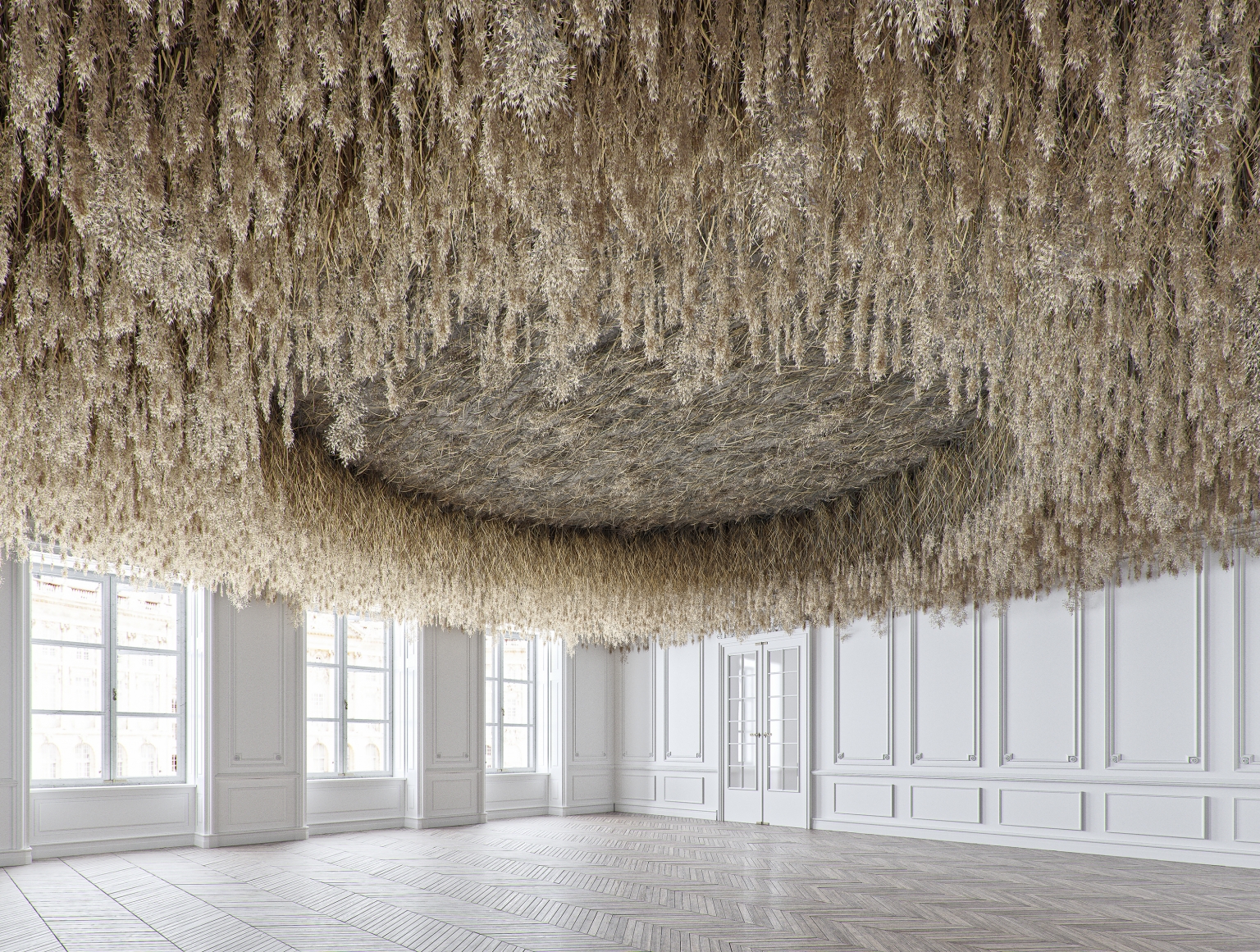
VIDEO: “In the Studio: Doris Salcedo making ‘A Flor de Piel’”: Produced by White Cube, this fourteen-minute documentary charts the collaborative, scientifically informed, labor-intensive process of making Doris Salcedo’s A Flor de Piel, an enormous shroud made of real rose petals as a memorial for a nurse who was brutally captured and murdered in Colombia. (“The title,” explains Lauren Hinkson, “is a Spanish idiomatic expression used to describe an overt display of emotions.”) The film includes footage from Salcedo’s Bogotá studio as well as interviews with the team of people who produced the work. I found this peek into the technical aspects of the piece fascinating.

Salcedo, Doris_A Flor de Piel
Doris Salcedo (Colombian, 1958–), A Flor de Piel, 2011–12. Rose petals and thread, approx. 246 7/8 × 433 1/8 in. (627 × 1100 cm). Photo © Solomon R. Guggenheim Foundation, New York, from the work’s installation at the Guggenheim in 2015.

However, the video doesn’t venture into the inspiration behind or meaning of the work. For a bit of that, see this audio clip from the Guggenheim (where A Flor de Piel was exhibited in 2015), and also Jonathan A. Anderson, The Invisibility of Religion in Contemporary Art, pages 123–24.

Cristo de la Encina (Christ of the Oak): A miraculous appearance in colonial Chile

I came across the following strange image in a book on Christian art at the British Museum, where it appears without any explanation other than that it is part of a group of popular religious prints with Spanish texts that were made in Europe for export to the Spanish-speaking South American market.

Christ of the Oak (British Museum)
Cristo de la Encina (Christ of the Oak), 1750–60. Etching, 35.5 × 23.6 cm. Published by André Basset, Paris. Collection of the British Museum, London.

I was intrigued! I had seen art images before where Jesus is crucified on a living tree, his body sometimes melding into the trunk and branches. The motif of the cross as tree of life connects the beginning and the end of time, Eden and the eschaton, placing Christ’s act of self-giving at the crux and communicating its generative impact. But in this particular etching published in Paris, who is the Indigenous man at the base? The caption suggests that the image illustrates a miraculous appearance of Christ (or at least his form) in Latin America—so what’s the story behind it?

The answer is found in the Histórica relación del reyno de Chile (Historical Account of the Kingdom of Chile), a book by the Chilean Jesuit chronicler Alonso de Ovalle (1601–1651), published in Rome in 1646. Ovalle was serving in Rome as procurator for his order and wanted to teach Europeans about his homeland. He was glad to relate a supernatural occurrence, from just a decade prior, of Christ manifesting himself in nature, the subject of chapter 23, titled “En que se da fin a esta materia y se trata el prodigioso árbol que en forma de crucifixo nació en na de las montañas de Chile” (In which this subject is concluded and the prodigious tree that grew in the form of a crucifix in one of the mountains of Chile is discussed).

In 1636, Ovalle writes, an “Indian” in the valley of Limache near Valparaiso in Chile—he would have been Mapuche, though the artist of the Paris print shows him as a Tupi man of Brazil—went to cut down some trees for construction purposes. After striking an ax blow to one, he was astonished to realize that the tree was in the shape of a cross with a man on it. He immediately stopped hacking. The artist shows the ax flying out of the woodcutter’s hands as he throws them up in amazement. The caption reads, “El Santisimo Christo de la Ensina que se aparecio en el Campo de alcantara” (The Most Holy Christ of the Oak that appeared in the Alcántara countryside).

A variation of the legend, according to the blog El Señor de Renca, El Señor de los Milagros by Alejandro Caggiano, says the Mapuche woodcutter was blind, and that when he first struck the tree trunk, a few drops of sap got into his eyes, restoring his sight. It’s then that he saw Christ’s image.

Ovalle does not say whether the man converted to Christianity, but regardless, Ovalle considered the appearance of Christ’s form in the native plant life of Chile as a blessing and an encouragement—Christ taking root in the Americas. He says it should cause the reader to “admire the divine wisdom of our God and his most high providence in the means and motives that he has given us even in natural and insensible things for the confirmation of our faith and the increase of the piety and devotion of his faithful.”

Word spread of the miraculous tree, and pilgrims flocked to see it. Soon, as Orvalle recounts, a noblewoman had the tree uprooted and built a church nearby to house it, placing it behind the altar. That’s the building in the right background of the Paris print.

Sometime after Ovalle’s publication, the Jesuits relocated the tree to Renca, San Luis, in Argentina, just a few miles from Chile’s capital, and veneration continued. A fire destroyed most of the tree in 1729, but its charred remains were incorporated into a new wooden crucifix that is still in Renca. “The Lord of Renca, as the crucifix is now known, is a firm part of the regional religious folklore,” writes Georg T. A. Krizmanics, “and in a song called ‘Zamba del Señor de Renca,’ devoted parishioners and pilgrims cheerfully haunt the Mapuche soul by chanting ‘Christ, you were born Araucanian.’”

The Paris print in the collection of the British Museum is not the first artistic depiction of Christ of the Oak; that credit goes to an anonymous engraving published with Ovalle’s 1646 textual account of the miracle. No Indigenous person appears in this initial version—just the gnarled corpus of Christ crucified, embedded in a tree.

Christ of the Oak (1646)
The Limache Cross, engraving from Alonso de Ovalle’s Histórica relación del reyno de Chile (1646)

The caption reads, Vera effigies cuiusdam arboris quae in hunc modum et figuram crucis et crucifixi inventa est in Regno Chilensi in America, ubi in Valle Limache colitur magna populi devotione ab anno Domini 1634 (“A true image of a certain tree that was found in this manner in the shape of a cross and a crucifix in the Kingdom of Chile in America, where it has been venerated in the Valle Limache with great devotion by the people since the year 1634”).

Here are some other, later examples of the subject, which attained popularity in Spain.

Christ of the Oak
Cristo de la Encina, 1753. Oil on canvas. Capilla de San Juan Bautista (Chapel of St. John the Baptist), Iglesia de San Mateo, Cáceres, Spain. The next photo shows this painting in situ.

Christ of the Oak (in context)
Christ of the Oak
Cristo de la Encina, 18th century. Oil on canvas. San Vicente de Alcántara, Badajoz, Spain. Photo: Isidro Álvarez / Tecnigraf.

I’m delighted by the parrots perching on the branches! The tree of crucifixion was a site of both death and life. Christ endured its agony so that we, like those birds that are so at home, could find welcome and rest.

Christ of the Oak
El Señor de la Ensinia se apareció en Alcántara (The Lord of the Oak Appeared in Alcántara), late 18th century. Oil on paper. Private collection, Medellín, Colombia. Photo: Gustavo Adolfo Vives Mejía / PESSCA Archive.

One late eighteenth-century painting of Christ of the Oak shows, opposite the woodcutter, a kneeling woman in a black robe. The inscription identifies her as Doña Josefa Posadas. It looks to me like she is holding up a milagro (literally “miracle”), also known as an ex-voto, a small tinplate charm shaped like a body part that is or was in need of healing. Historically in many Hispano-Catholic communities, milagros are pinned to crosses and wooden statues of Christ and the saints, or are hung with ribbons from altars and shrines, to petition the Divine for a cure from a physical ailment or to offer thanks for healing received. Given the shape of Doña Josefa’s milagro, she likely suffered from a heart condition.

Or, it’s possible that it’s not the literal organ that’s referred to in what she holds, but rather the heart as the center of the emotions, will, understanding, and soul, which she offers to Christ.

Christ of the Oak
Cristo de la Encina, 18th century. Wood, polychrome. Santuario de Nuestra Señora del Encinar (Sanctuary of Our Lady of the Oak), Ceclavín, Cáceres, Spain.

Christ of the Oak (altarpiece)
Cristo de la Encina, 19th century. Wood, polychrome, 79 × 52 × 28 cm. Museo Monseñor Juan Sinforiano Bogarín, Asunción, Paraguay. Photo: Laura Mandelik.

Christ of the Oak with Muslim and Jew
Cristo de la Encina, 18th century. Oil on canvas. Ermita de Nuestra Señora de la Hermosa, Fuente de Cantos, Badajoz, Spain.

This last example is interesting: in a revision of characters, it shows a Muslim (right) and a Jew whose leg shackles are falling off at the sight of Christ. The painting seems to be an aspirational extension of the Limache legend—a prayer that Christ would reveal himself not only to Indigenous populations but also to those of other religious backgrounds.

I share these images not to affirm or disaffirm the appearance of Christ of the Oak, and not to comment on the colonizing undertones of such images or the cult that sprung up around them, but instead merely to inform you of an iconography that I found curious and compelling and wanted to find out more about. So now if you ever come across an image of Christ crucified on a tree with his bloody knees poking through the bark and an Indigenous, ax-wielding man reacting with surprise, you’ll know a bit about its context!


FURTHER READING

Francisco Javier Pizarro Gómez, “Extremadura en el viaje iconográfico del Cristo de la Encina entre Europa y América” (Extremadura in the iconographic journey of the Christ of the Oak between Europe and America), Quiroga no. 12 (July–December 2017): 72–83.

“Go to the Limits of Your Longing” (Book of Hours I, 59) by Rainer Maria Rilke

Guzman, Juan_Espíritu sin Medida
Juan Guzmán (Guatemalan, 1954–), Espíritu sin Medida (Spirit Without Measure), 2012. Oil on canvas, 103 × 102 cm. © missio Aachen.

God speaks to each of us as he makes us,
then walks with us silently out of the night.

These are the words we dimly hear:

You, sent out beyond your recall,
go to the limits of your longing.
Embody me.

Flare up like flame
and make big shadows I can move in.

Let everything happen to you: beauty and terror.
Just keep going. No feeling is final.
Don’t let yourself lose me.

Nearby is the country they call life.
You will know it by its seriousness.

Give me your hand.

From Rilke’s Book of Hours: Love Poems to God (Riverhead, 1996, 2005), translated by Anita Barrows and Joanna Macy. The original German is in the public domain.

Rainer Maria Rilke (1875–1926) was a primarily German-language lyric poet, playwright, and short story writer. Born of Catholic parents in Prague, then part of the Austro-Hungarian empire, he came to reject church dogma as an adult, though he maintained a lifelong fascination with Christian imagery and biblical stories. His volumes of poetry include Das Stunden-Buch (The Book of Hours) (1899–1903), about the search for God; Das Buch der Bilder (The Book of Images) (1902–6); Das Marienleben (The Life of Mary) (1913), a thirteen-poem cycle about the Virgin; the Duineser Elegien (Duino Elegies) (1922), which weigh beauty and existential suffering; and Sonette an Orpheus (Sonnets to Orpheus) (1922). After Rilke’s death from leukemia, a young mentee of his, Franz Xaver Kappus, compiled ten of the letters Rilke had written to him about creativity, the poetic vocation, and the inner life; published as Briefe an einen jungen Dichter (Letters to a Young Poet) (1929), this correspondence has influenced generations of writers and other artists.

Anita Barrows (born 1947) is a clinical psychologist, political activist, poet, and translator from German, French, and Italian. She lives in the Bay Area of California.

Joanna Macy (1929–2025) was a scholar of Buddhism, general systems theory, and deep ecology. A respected voice in movements for peace, justice, and environmentalism, she wove her scholarship with decades of activism.

Roundup: Pitjantjatjara picture Bible, “Feeling Through” short film, the reconciling Eucharist, and more

SPOTIFY PLAYLIST: September 2025 (Art & Theology): A new monthly playlist featuring a range of faith-based songs, including “Day by Day” by Lowana Wallace and Isaac Wardell of the Porter’s Gate (especially apt for Labor Day!), sung below by Kimberly Williams; “Jesus of Nazareth” by the early twentieth-century hymn writer Hugh W. Dougall, performed in a bluegrass style by the Lower Lights; and a fantastic instrumental jazz arrangement by Alice Grace of the classic children’s song “Jesus Loves Me,” performed by the Indonesian group Bestindo Music (Grace is at the keys).

+++

VIDEO: “The Apostles’ Creed”: This video presentation of the Apostles’ Creed, one of the oldest statements of Christian belief, used across denominations, was created in 2016 by Faith Church in Dyer, Indiana, using twenty-one of its members to voice the lines. [HT: Global Christian Worship]

+++

CHILDREN’S PICTURE BIBLE: Godaku Tjukurpa (God’s Story): Nami Kulyuru, a long-serving Pitjantjatjara Bible translator and artist from Central Australia, had the vision to pass on the stories of the Bible to her grandchildren and other young Pitjantjatjara readers using traditional Anangu paintings, compiled in book format. She began the artistic work in 2021 but shortly after was diagnosed with a malignant brain tumor. Following her death in 2022, her friends and colleagues rallied together to complete the project, which was published last November by Bible Society Australia. [HT: Global Christian Worship]

Godaku Tjukurpa
Kulyuru, Nami_Woman by the Well
Nami Kulyuru (Pitjantjatjara, 1964–2022), The Woman at the Well (John 4), 2021, from the bilingual book Godaku Tjukurpa (God’s Story) (Bible Society Australia, 2024)

Spanning the Old and New Testaments, Godaku Tjukurpa (God’s Story) features fifty-four Bible illustrations by Pitjantjatjara artists, along with descriptions in Pitjantjatjara and English. It is available for purchase through the Koorong website, but it appears that it can ship only to Australia or New Zealand.

+++

SHORT FILM: Feeling Through, dir. Doug Roland (2019): Nominated for an Academy Award in 2021, this eighteen-minute film is about a homeless teen (played by Steven Prescod) who encounters a DeafBlind man (played by Robert Tarango) on the streets of New York City. It was inspired by an actual experience writer-director Doug Roland had some years earlier. He partnered with the Helen Keller National Center to make the film, including casting a DeafBlind actor as co-lead, the first film to ever do so. You can watch Feeling Through for free on the film’s website, along with a “making of” documentary. Here’s a trailer:

+++

FEATURE FILM: Places in the Heart, dir. Robert Benton (1984): Set in Jim Crow Texas during the Great Depression, this film centers on the recently widowed Edna Spalding (Sally Field), a middle-age white woman who is struggling to run the cotton farm she inherited from her late husband and to make ends meet for herself and her two small children. To earn some cash, she takes in a boarder, Mr. Will (John Malkovich), a bitter World War I vet who is blind, and she hires Moze (Danny Glover), a Black drifter who is being harassed by the Ku Klux Klan, to teach her how to plant and harvest cotton. The three are thrown together out of necessity and help each other survive.

It’s a pretty good movie overall—and it won Sally Field her second Oscar for Best Actress—but what leads me to recommend it is its theologically profound closing scene, which shows the ordinance of Communion being celebrated at the local country church. First Corinthians 13:1–8, the famous “love” passage, is read from the pulpit, and the choir launches into “In the Garden” (a hymn inspired by the risen Christ’s appearance to Mary Magdalene on Easter morning) as the plates of bread and grape juice are passed down the pews. The camera zooms in close on each congregant as they receive the elements, starting with a couple whose marriage had suffered due to infidelity but who, in this scene, silently reconcile.

On my first watch, what signaled to me that we had entered the realm of the imaginary (the mystical? the aspirational?) was the presence of Moze, who had left town the previous night after having been beaten by Klansmen; he’s here, with no visible wounds, in this conservative white church in the 1930s that very likely would not have welcomed him, being served the body and blood of Christ by a deacon. I believe that some of the white men in the pews in front of him are repentant Klansmen who, when Mr. Will identified them under their hoods by their voices the previous night, mid-assault, slinked away in shame. Within the row, too, is the mortgage collector who was in conflict with Edna, insisting that she sell the farm.

After Edna receives the elements, she passes them to her husband, Royce, who was dead before but here is very much alive. He then passes the elements to the young Black teen, Wylie, who had shot and killed him in a drunken accident, whom vigilantes then lynched. “Peace of God,” they say to each other—a traditional Christian greeting expressing love and reconciliation. The final frame lingers on Royce and Wylie, sharing the meal together, and I’m intrigued by the actors’ choices of expression: Wylie is serene, grace-filled, whereas Royce appears befuddled, perhaps recognizing for the first time the blessed tie that binds him to his Black neighbor, his brother in Christ.

This scene speaks powerfully of the invitation of the Lord’s Table—open to all, even the most morally odious, who would come in humble confession of (and turning from) sin and reliance on God’s mercy through Christ, which heals and transforms. Partaking of the meal are various people from the community—people who have cheated on their spouses; people with ornery dispositions; people with narrow economic interests, who fail in compassion; people who have stolen; people who have committed cruel, racist, violent acts; people driven to drink, leading to fatal harm; people who have silently allowed racial terror to reign in their town. All these sinful, forgiven people make up the body of Christ, are united under his cross. They’ve often hurt one another, but the Holy Spirit is at work making them a new creation. I see this final scene as a picture of heaven, where wrongs are redressed, and of the “beloved community” Martin Luther King Jr. talked about.

Places in the Heart is streaming for free on Tubi (no account required).

Adam and Eve at the Forge: Partners in Labor in Byzantine Ivories

For the past month I’ve been working on an essay that brings together a selection of over three dozen art-historical images of Adam and Eve at Labor—a subject that appeared as early as the fifth century—and provides theological commentary. I wanted to publish it shortly before Labor Day on September 1. Unfortunately, it won’t be finished in time. Whenever I researched a particular image, it opened up further avenues of research, and I’ve realized that I need to spend much more time reading and reflecting on the topic, including consulting more commentaries on Genesis 3 and medieval theologies of work, before writing.

Instead, allow me to simply share a Byzantine ivory panel that amazed me when I encountered it on the website of the Metropolitan Museum of Art a few years ago, which I saw in person on my last visit in January—a small little thing, just a few inches wide, and easy to miss in the large glass case in Gallery 300, except that I was specifically looking for it.

Adam and Eve at the forge
Adam and Eve at the Forge, panel from a small box made in Constantinople, 10th or 11th century. Ivory, gilt, polychromy, 2 9/16 × 3 7/8 × 3/16 in. (6.5 × 9.9 × 0.5 cm). Metropolitan Museum of Art, New York.

It shows Adam hammering iron over an anvil while Eve operates the bellows! Husband and wife co-laboring in a forge—she supplying strong blasts of air to the furnace, he shaping the metal.

This panel struck me because one, I had never seen a medieval image of a female blacksmith before (other than as a personification of Nature, from The Romance of the Rose), and two, the vast majority of images of Adam and Eve at work after the fall show Eve spinning wool or flax and/or breastfeeding while Adam tills the soil, reflecting gendered ideas about the division of labor. Occasionally Eve is shown working the land or harvesting its fruits alongside Adam, as in the Ripoll Bible, a Salerno ivory, a relief carving on the facade of Modena Cathedral, and another ivory panel from this same box—work that men and women in agricultural societies definitely shared then as now. But more often the primordial couple is shown participating in separate spheres of work—the fields versus the home—albeit side by side.

In the Middle Ages, blacksmithing was the domain of men. Sometimes the daughters or wives of male smiths worked alongside them in family-run forges, but they were not permitted to join the guilds.

The Met ivory is a rare egalitarian picture of husband and wife engaged together in a muscular, creative task that contributes to their mutual survival and the betterment of society. Their resourcefulness, ingenuity, hard work, and cooperation are highlighted.

The detached panel is from a luxury box made for an elite Christian client in Constantinople for storing coins, jewelry, or other valuables. A small group of such boxes depicting scenes from the lives of Adam and Eve survives from the tenth and eleventh centuries. It’s possible the box that this smithing panel comes from was a wedding gift, as it espouses the virtue of teamwork in marriage. “Such caskets could have belonged to young couples embarking on a new life together,” writes Ioli Kalavrezou in The Glory of Byzantium: Art and Culture of the Middle Byzantine Era, A.D. 843–1261. “The story of Adam and Eve could have reminded them of the difficulties they would encounter but at the same time spurred them on to an industrious and, it was to be hoped, prosperous existence.”

In the essay “The Origin of the Crafts According to Byzantine Rosette Caskets,” historian Justin Wilson examines Byzantine views about the origin of the primordial crafts (technai) of farming and metallurgy, especially by looking at select scenes from three related ivory boxes: from the Cleveland Museum of Art in Ohio in the United States, the State Hermitage Museum in Saint Petersburg, Russia, and the Hessisches Landesmuseum Darmstadt in Germany. All three contain a scene of Adam and Eve at the forge.

Adam and Eve blacksmithing (Cleveland casket)
Right (short) side of a rosette casket with scenes of Adam and Eve, Constantinople, ca. 975–1025. Ivory, wood, overall 5 5/8 × 18 3/8 × 8 in. (14.3 × 46.7 × 20.3 cm). Cleveland Museum of Art, Ohio.

Adam and Eve blacksmithing (Saint Petersburg casket)
Right (short) side of a rosette casket with scenes of Adam and Eve, Constantinople, ca. 975–1025. Ivory, wood, traces of gilding, overall 5 × 18 5/16 × 7 9/16 in. (12.7 × 46.5 × 19.3 cm). State Hermitage Museum, Saint Petersburg.

Adam and Eve blacksmithing (Darmstadt casket)
Right (short) side of a rosette casket with scenes of Adam and Eve, Constantinople, ca. 1000–1025. Wood, ivory, overall 5 × 18 × 7 1/2 in. (12.5 × 46 × 19 cm). Hessisches Landesmuseum Darmstadt, Germany. Photo: Wolfgang Fuhrmannek.

For the anonymous artists of these boxes, Wilson writes, “blacksmithery symbolizes how human labor reshapes the world.”

The scene on the Darmstadt casket features a third figure between the couple: Plutus, the Greek god of wealth and abundance, holding a moneybag. In his 1899 study of the Adam and Eve chests, the classical archaeologist Hans Graeven proposed that Plutus signifies the valuable contents presumably kept inside the chest; art historian Josef Strzygowski agreed, suggesting that the god was meant to be read in relation not to Adam and Eve but to the chest’s lock (now missing), under which he was placed.

Wilson adds that Plutus, traditionally associated with good fortune, signals the prosperity of postlapsarian life—that although we lost Eden and must sweat and toil for our bread, humanity can still thrive. In the words of the late pastor Tim Keller in his book Every Good Endeavor, “Whenever we bring order out of chaos, whenever we draw out creative potential, whenever we elaborate and ‘unfold’ creation beyond where it was when we found it, we are following God’s pattern of creative cultural development,” and there’s blessedness in that.

Roundup: Trilingual antiwar song, rock-hewn churches of Ethiopia, “Sacred Harp Singing in the Age of AI,” and more

PRAYER: “God, I Wake” by Rev. Maren Tirabassi: A morning prayer for Ordinary Time.

+++

SONG: “Sólo le pido a Dios” (I Only Ask of God), performed by the Alma Sufí Ensamble: This is a cover of a 1978 song written in Spanish by the Argentine folk rock singer-songwriter León Gieco—a personal prayer that he would not be unfeeling, not numb to injustice. In a November 2023 collaboration with the Alma Sufí Ensamble, Gieco joined the Argentine Jewish cantor Gastón Saied (also a guest artist) and the ensemble’s own Nuri Nardelli, a practicing Sufi (Muslim mystic), in singing the song in Spanish, Hebrew, and Arabic, respectively. “Three languages, one heart. And one prayer for peace in the Middle East,” they write. View the original Spanish lyrics and English translation here.

+++

VIDEOS:

The following videos are two of thirteen—the ones focusing on the continent’s Christian heritage—from the docuseries Africa’s Cultural Landmarks, produced by the Metropolitan Museum of Art in collaboration with the World Monuments Fund and directed by Sosena Solomon. The series was commissioned to coincide with the reopening of the museum’s Arts of Africa galleries this May, after being closed for four years as part of a major redesign and renovation of the Michael C. Rockefeller Wing.

>> “Rock-Hewn Churches of Lalibela, Ethiopia”: “Stepping into one of the rock-hewn churches of Lalibela is an experience unlike any other. Carved directly from volcanic rock, from the top to bottom, unlike traditional buildings built from the ground up, the eleven wondrous churches of Lalibela are monumental expressions of devotion and symbols of Ethiopia’s spiritual heartland. Visually captivating and rich with personal insights from priests entrusted with care of the churches, this documentary reveals how these sanctuaries—both magnificent and fragile—face the constant threat of erosion. Meet the dedicated guardians balancing conservation and sacred duty, to ensure Lalibela’s living pilgrimage tradition thrives for generations to come.”

Bete Giyorgis, Lalibela, Ethiopia
Bete Giyorgis (Church of Saint George), Lalibela, Ethiopia, 13th century

>> “Rock-Hewn Churches of Tigray, Ethiopia”: “High in Ethiopia’s Northern Highlands, the rock-hewn churches of Tigray stand as breathtaking sanctuaries of faith carved into sandstone cliffs. For centuries, some 120 rock-hewn churches, and the paintings and artifacts preserved within their walls, were protected by their remote locations. However, during the 2020–2022 war in Tigray, some churches were targeted, and the use of heavy weapons resulted in vibrations that caused cracks in the stone. Through evocative imagery and intimate testimonies, this documentary explores the endurance of these remarkable sites of devotion, as local priests reflect on the spiritual and cultural legacies at risk.”

Madonna and Child (Abuna Yemata, Ethiopia)
Virgin and Child wall painting, 15th century, inside Abuna Yemata Guh (The Chapel Near the Sky) in Tigray, Ethiopia, which contains the best-preserved medieval paintings in the region

+++

ESSAY: “Shaped for People: Sacred Harp Singing in the Age of AI” by Mary Margaret Alvarado: From Image journal’s summer 2025 issue: “What is that, I thought, when I first heard shape note singing. It was groaning, and some voices keened. It was loud. It was muscular, this music. There was glory, but it was not pretty. The voices did not blend, and the sound was not nice. All I knew was that I wanted to hear it again. Maybe it seemed to me like an aesthetic that does not lie? I feel surrounded, often, by aesthetics that do lie. . . . So there’s a contrarian appeal to a song that sounds sung by humans in their (young, old, crooked, fat, gorgeous, hairy, halt, jacked, sexy, bald, injured, hale) human bodies . . .”

Writer Mary Margaret Alvarado reflects on her experiences participating in shape-note hymn sings, a democratic form of communal music making using the “sacred harp” of the human voice. She provides an abridged history of such singing, which developed in late eighteenth- and early nineteenth-century New England but is now carried on throughout the US and in the UK and Germany. I’d love to take part in a shape-note hymn sing someday, as I’ve long been drawn to the sound and tradition, which I know only from recordings. Besides the small gatherings organized by local communities, there are also large conventions, and I’ve been intrigued to learn that, despite the hymns’ deep rootedness in Christianity, non-Christians are often among the attendees.

Below are a few of the hymns Alvarado mentions in her essay: “Youth like the Spring Will Soon Be Gone” (MORNING SUN), “David’s Lamentation” over the death of his son Absalom, and “I’m Not Ashamed of Jesus” (CORINTH). Traditionally, the singers start by singing through an entire verse using only the four syllables of the Sacred Harp notation system (fa, sol, la, mi) as their lyrics, to orient themselves to the tune.

To browse previous Art & Theology posts that have featured hymns from the Sacred Harp tradition—albeit not all performed in a traditional manner; several are arranged for soloists or otherwise stylistically adapted—see https://artandtheology.org/tag/sacred-harp/.

+++

NEW ALBUM: Radiant Dawn by the Gesualdo Six: Released August 1 by the British vocal ensemble the Gesualdo Six, this album features “an ethereal combination of trumpet and voices to explore different shades of light . . . from the soft, golden glow of a summer evening as shadows lengthen to the shimmering of moonlight on calm waters,” writes director Owain Park. “Some texts contrast the terror of darkness with the brilliance of dazzling sunlight; others explore the blurred boundaries between heaven and earth. Plainchant threads this programme together . . .” A range of composers are represented, from the Middle Ages to the present day.

Several of the songs are based on biblical episodes—Simeon’s response to having held the Christ child in the temple, the transfiguration of Christ on Mount Tabor, the arrival of the holy women at Jesus’s tomb on Easter morning, the walk to Emmaus—or passages such as Psalm 5:2 (“O hearken thou . . .”) and Revelation 21:23 (“And the city had no need of the sun . . .”). There are bedtime prayers, a meditation on the glory of the angels, an O Antiphon for the approach of Christmas, and settings of contemporary poems, like “Grandmother Moon” by the Mi’kmaq poet Mary Louise Martin and “Aura” by Emily Berry, about the death of her mother. View the track list at https://www.hyperion-records.co.uk/dc.asp?dc=D_CDA68465.

Below, from the album, is the Gesualdo Six’s performance of “Night Prayer” by Alec Roth, a setting of the Te lucis ante terminum, featuring Matilda Lloyd on trumpet. “The stark setting reminds me of the ravages of war,” one YouTube user remarks. “The singing, of a prayer sent out over the carnage, blessing those who have suffered. Sacred space indeed.”