Emil Nolde (German, 1867–1956), Dark Red Sea, ca. 1938. Watercolor. Nolde Museum, Seebüll, Germany.
Mon Dieu, protégez-moi, mon navire est si petit et votre mer si grande!
Lord, help me . . . Because my boat is so small, And your sea is so immense.
This anonymous prayer collected from a Breton sailor—or fisherman, as some anthologies cite—is found in Émile Souvestre, Les derniers Bretons (The Last Bretons), vol. 1 (Paris: Charpentier, 1836), page 121. The English translation is by Robert Bly and is from the anthology The Soul Is Here for Its Own Joy: Sacred Poems from Many Cultures (New York: Ecco, 1995), which Bly edited. He identifies the prayer as “French medieval” but doesn’t provide a source. The prayer also appears as #422 in The Oxford Book of Prayer and on page 80 of 2000 Years of Prayer; the latter places it in the “Celtic Christianity” section, as Bretons are descendants of the Celts who emigrated from the British Isles to Armorica, the northwestern extremity of Gaul (now called Brittany, part of France), after the Anglo-Saxon invasions.
Though “boat” and “sea” were likely meant first and foremost literally, there is a long tradition of boats being used as metaphors for our fragile selves, afloat the vicissitudes of life, or carried about by the divine will. Living outside a maritime context, I pray this prayer in that metaphoric sense.
I’m one of the artistic directors of the Eliot Society, a faith-based arts nonprofit in Annapolis. I’m really looking forward to our next two events this fall! If you’re in the area, I’d love for you to come out to these talks by a musician and a medievalist. They’re both free and include a time of Q&A and a small dessert reception afterward.
>> “A Place to Be: Gospel Resonances in Classical Music” by Roger Lowther, October 26, 2024, Redeemer Anglican Church, Annapolis, MD: “At its most basic, music is a collection of sounds. How those sounds are organized varies by country and culture and reflects their values, history, and heart-longings. Join Tokyo-based American musician Roger W. Lowther on a journey through the landscapes of Western and Japanese classical music and explore their unique and fascinating differences. Roger will lead from the piano as he demonstrates the musical languages of each tradition and show how they contain hidden pointers to gospel hope in a world full of suffering and pain.”
I’ve heard Roger speak before, and he’s very Jeremy Begbie-esque in that he does theology through instrumental music. As a bicultural person, a New Englander having lived in Japan for almost twenty years (ministering to and through artists of all disciplines), he brings a unique perspective. In addition to discussing the defining features of the Western versus Japanese classical traditions, he’ll be performing a few piano pieces from each.
>> “Christ Our Lover: Medieval Art and Poetry of Jesus the Bridegroom” by Dr. Grace Hamman, November 23, 2024, St. Paul’s Anglican Church, Crownsville, MD: “If there was a ‘bestseller’ book of the Bible in the European Middle Ages, it would be the Song of Songs. When read allegorically, in the manner of medieval theologians like St. Bernard of Clairvaux, the book tells the story of the romance between Christ and the soul that culminates in Christ’s love shown on the cross. This is a story of mutual pursuit, the pain of desire and sacrifice, sensual delight, and true union. The idea of Jesus as a longing lover of each individual soul appeared everywhere by the later medieval period, in art, poetry, sermons, and the devotional writings of men and women alike.
“These themes and images can strike us as strange, even uncomfortable. An illustrated poem for nuns depicted the Song of Songs like a cartoon strip. Prayer books of wealthy nobles portrayed Christ’s wounds intimately. Poets wrote Christ in the role of a chivalric, wounded knight weeping and waiting for his lady. And yet, examining this ancient imagery of Jesus our Lover together can challenge us to greater vulnerability with our Savior, to refreshed understandings of God’s hospitality, and, in the words of Pope Gregory the Great, can set our hearts ‘on fire with a holy love.’”
Grace is a fabulous teacher of medieval poetry and devotional writing, one whom I’ve mentioned many times on the blog before. Her Jesus through Medieval Eyes was my favorite book of 2023; read my review here. She has encouraged me to move in toward the strange and imaginative in medieval theology and biblical interpretation, because there’s often beauty and wisdom to be found there if we give it a chance. She has a keen awareness of the body of Christ across time and an appreciation for the gifts they’ve bequeathed the church of today, be they words, art, or whatever else.
+++
VIDEO: “Poet and Pastor: Christian Wiman and Eugene Peterson”: In this four-minute video from Laity Lodge, poet and essayist Christian Wiman and pastor and spiritual writer Eugene Peterson (best known for his Bible translation The Message) talk about prayer and spirituality. They each share a poem they’ve written: Wiman’s “Every Riven Thing” and Peterson’s “Prayer Time.” “People who pray need to learn poetry,” Peterson says. “It’s a way of noticing, attending.”
ARTICLE + PLAYLIST: “Latin American Fiesta!” by Mark Meynell: I always appreciate the selections and knowledge Mark Meynell [previously] brings to his 5&1 blog series for the Rabbit Room, each post exploring five short pieces and one long piece of classical music. This Latin American installment features Kyries from Peru and Argentina, a candombe air, a four-part Christmas anthem in Spanish creole from Mexico (I found an English translation!), an Argentine tango, and a dance chôro (Portuguese for “weeping” or “cry”) from Brazil. What diverse riches!
“Classical music, as conventionally understood, is not often associated with Latin America,” Meynell writes, “though, as we will see, this is a situation that needs rectifying. Some extraordinary soundworlds were being created long before the Conquistadores arrived from European shores, and together with the cultural impact of the transatlantic slave trade from Africa, the musical mix that resulted is unique. To put it at its most simplistic, we could say that the two key musical influences were the Catholic Church and the complex rhythms of percussion and dance; and often, it’s hard to tell where one ends and the other begins.”
ARTWORK: The Old Man and Death by Pedro Linares: Last month I visited the Wadsworth Atheneum Museum of Art in Hartford, Connecticut, for the first time and was delighted to stumble upon an exhibition that had just been put up, Entre Mundos: Art of Abiayala. On view through December 15, it highlights collection works made by artists with personal or ancestral ties to Mexico, the Caribbean, and Central and South America. The title translates to “Between Worlds,” and “Abiayala,” I learned, is a Guna (Kuna) word that means “land in its full maturity” or “land of vital blood”; it’s used by the Guna and some other Indigenous peoples to refer to the Americas.
Pedro Linares (Mexican, 1906–1992), El viejo y la muerte (The Old Man and Death), 1986. Papier-mâché and mixed media. Wadsworth Atheneum Museum of Art, Hartford, Connecticut. Photo: Victoria Emily Jones.
For me the standout piece from the exhibition is The Old Man and Death by Pedro Linares, a dramatic tableau in the medium of cartonería (papier-mâché sculpture), a traditional handcraft of Mexico. Commissioned by the Wadsworth in 1986 for the artist’s MATRIX exhibition, it reinterprets Joseph Wright of Derby’s 1773 painting of the same name, one of the most popular works in the museum’s collection.
Joseph Wright of Derby (English, 1734–1797), The Old Man and Death, 1773. Oil on canvas, 40 × 50 1/16 in. (101 × 127 cm). Wadsworth Atheneum Museum of Art, Hartford, Connecticut. Photo: Victoria Emily Jones.
masterfully combines Wright’s ability to depict a literary narrative with his skill in rendering a natural setting with accuracy and keenly observed detail. The subject of this painting is based on one of Aesop’s Fables or possibly a later retelling by Jean de la Fontaine. . . . According to the tale, an old man, weary of the cares of life, lays down his bundle of sticks and seats himself in exhaustion on a bank and calls on Death to release him from his toil. Appearing in response to this invocation, Death arrives. Personified here as a skeleton, Death carries an arrow, the instrument of death. Illustrating the moral of the tale that it is “better to suffer than to die,” the startled old man recoils in horror and instinctively waves him off, reaching for the bundle as he clings to life.
The Linares piece and its inspiration are placed side-by-side in the gallery, which also displays an alebrije by the same artist, papel picado, painted skulls, an ofrenda, and Diego Rivera’s Young Girl with a Mask.
The Destruction of Sodom, 1175–90, mosaic, Monreale Cathedral, Palermo, Sicily
Even to the nameless dog I said farewell.
Madness took him long since,
but I remember his sharp bark,
how he warmed my feet on cool evenings.
I nursed my father in that city,
raised a cup to his lips the night he died.
We laid him near the fig tree,
its twisted trunk his monument.

Now ash marks his place, and Mother’s too,
and all the others whose bread sometimes burnt,
whose clay pots shattered, who wept with me.
They were not good people, and yet . . .
Lot’s back was not enough to see.
I turned. One sign, one glance
for all we left behind.
My faith is strong—
yea, stronger even than salt.
I wait for God to forgive my love.
From To Love Delilah: Claiming the Women of the Bible by Mary Cartledgehayes (San Diego: LuraMedia, 1990). Used by permission of the author.
Lot’s wife, unnamed and unvoiced in scripture, was probably a native of Sodom, the thriving city where Abraham’s nephew had settled. But the people there harbored sin. They were prideful, and did not share their wealth with the poor (Ezek. 16:49–50). To say they lacked hospitality is an understatement: they tried to gang-rape two visitors (Gen. 19:1–11; cf. Jude 1:7). For their persistence in doing evil, God destroyed them.
Genesis 19:12–29 records the story of Lot’s family’s escape. Two angels warn them of the coming judgment, tell them to run and not look back. But in their sudden flight, as the fire and brimstone are raining down behind them, wiping out the life they’ve known together, Lot’s wife turns to see. In an instant, she’s transmogrified into a pillar of salt.
This narrative is often preached as a lesson against looking back on one’s old (preconversion) life with longing, or clinging to the things of this world. Typically Lot’s wife’s reason for turning, disregarding the angels’ instruction, is interpreted as unbelief or covetousness.
But in this poem Mary Cartledgehayes cuts through the moralistic framing of the story and taps into its human emotional component. She suggests that the backward look of Lot’s wife was her taking a moment to mourn the loss of the people she loved and the only home she ever knew—could this be wrong? In To Love Delilah Cartledgehayes writes, “I don’t think she was motivated by greed or stupidity but by love: the love she felt for others, the love of a hometown that was a place of relationship, the love of the security in seeing the same faces at the well day after day, of sharing the births and deaths of children, of hearing the same chickens scratching in the dirt and the same dogs barking for a bite of food” (34).
For Cartledgehayes, Lot’s wife was a pillar of faith, strength, and compassion. Anna Akhmatova (“Lot’s Wife”) and Natalie Diaz (“Of Course She Looked Back”) imagine similar qualities in their poems on the subject. I’ve heard at least one commentator suggest that the salt Lot’s wife becomes is metaphoric, representing the salty tears she shed for her city, her being encrusted by grief, a monument of grief.
It’s common for those displaced by disasters to look back on their hometowns, both literally and in remembrance, and grieve the destruction, the loss of life, property, and possessions, and all the memories held there. In the case of Lot’s wife, God explicitly tells her and her family, through two angels, not to look back, so it’s her disobedience that’s punished. There’s no indication in the story that she engaged in the unrighteous behaviors of her Sodomite neighbors and relatives, or that a prior life of indulgence is what she yearns for. And yet because the punishment seems harsh, many of us try to read some kind of nefarious motive into her looking back. Or else we receive this simply as a cautionary tale about the severe consequences of defying God’s word.
Because Lot’s wife is given no backstory or dialogue (external or internal) in Genesis, nor does the narrator explain, we don’t know why she looked behind her as she fled. (The Polish poet Wisława Szymborska provides a whole list of options in “Lot’s Wife”!) I’m thankful to poets, like Cartledgehayes and others, who poke the trope of the “worldly” wife of Lot in an attempt to find the multidimensional woman beneath.
Mary Cartledgehayes is a writer and an ordained minister in the United Methodist Church, living in Louisville, Kentucky. Possessing an MFA in creative nonfiction from Goucher College and an MDiv from Duke University, she has led workshops across the US on writing and spirituality and enjoys mentoring other writers. In addition to numerous essays, poems, and sermons, she is the author of Grace: A Memoir (Crown / Random House, 2003), about love, death, praxis, fury, and entering pastoral ministry as a middle-aged woman.
Have you been delighted or inspired by the Art & Theology blog this year or its Instagram offshoot, @art_and_theology? If so, please consider donating to the work through a secure online form or PayPal, or by buying me a book from my Amazon wish list (my address is privately stored). Thank you to my five regular monthly supporters, and others who have blessed me with one-off donations of funds and books. These gifts not only provide important material assistance but also serve as an emotional boost, a validation that my work has value and is worth continuing.
My blog-related expenses this year have included a replacement of my old laptop, a conference registration and travel fees, a trip to New York, museum admissions, books, licensing fees for two images (I occasionally pay for images when good photos are not available online), and the yearly WordPress Premium fee to keep this site ad-free and mapped to a custom domain. Donations will go toward covering these, and if there is any left over, toward a new camera lens that will enable me to take wider shots, great for cathedrals and for larger artworks in tight quarters.
SPOTIFY PLAYLIST: October 2024 (Art & Theology): Every month I create a digital mixtape of Christian and Christian-adjacent music that deserves attention, consisting of old and brand-new recordings alike. Two hours of beautiful, soulful expressions of praise, prayer, and lament for your ears and heart.
+++
VIDEO: Animal Service at Ely Cathedral: On September 22, Ely Cathedral in England held its annual animal service, attended by some 450 animal lovers and their pets and service animals, mainly dogs. “Our annual Animal Service is an opportunity to give thanks for the animal companions with whom we share our lives and our planet, to bring them into our Cathedral, to ponder how best to care for animals and to ask God to bless them.” Marley the donkey, from the Donkey Sanctuary, led a procession up the nave. The liturgy was led by Canon James Garrard, and, in addition to several congregational hymns, including “All Creatures of Our God and King,” the cathedral’s children’s choir, the Ely Imps, sang “The Barnyard Song” by Rhonda Gowler Greene and “Look at the World” by John Rutter.
In addition to a special prayer of confession, act of commitment, and benediction, the service included this litany from the Book of Common Prayer:
God said, “Let the waters bring forth living creatures, and let birds fly across the sky.”
We thank you for the teeming life of the seas, And the flight of the birds. Help us to protect the environment So that all life may flourish. God of life: Hear our prayer.
God said, “Let the earth bring forth living creatures of every kind.”
We rejoice in the variety of animal life. Grant us grace to treat all animals with respect and care; To protect endangered species, To preserve the variety of habitats, And to honor the delicate balance of nature. God of life: Hear our prayer.
Heavenly Father, you have filled the world with beauty. Open our eyes to behold your gracious hand in all your works, That, rejoicing in your whole creation, We may learn to serve you with gladness, For the sake of him through whom all things were made, Jesus Christ our Lord. God of life: Hear our prayer.
Two volunteer representatives from the charity Medical Detection Dogs were invited to share about the work of dogs who are trained to detect the odor of human disease.
Several churches worldwide hold animal services around this time of the year, the Feast of St. Francis (known for his love and care of animals) being on October 4. These are usually in addition to the regular Sunday morning worship service and are not eucharistic. UMC’s Discipleship Ministries provides a sample liturgy for “A Service for the Blessing of Animals.” Many such services are held outdoors, such as the one organized annually by Washington National Cathedral, which is taking place this Sunday, October 6, at 2 p.m.
>>“There’s a Special Providence”by Seth Wieck, Texas Poetry Assignment:Seth Wieck [previously] is a writer from Amarillo, Texas. Published the week of the last US presidential inauguration, this poem muses on the impermanence of earthly empires, contrasting such with the steady, indifferent labor of birds, which continues on through administration changes and the passing of generations. The title and opening line are a clever rhyming twist on a line from the final act of Shakespeare’s Hamlet, “There’s a special providence in the fall of a sparrow.” For the poetic speaker, there’s a sense of comfort in God’s sovereignty and an orientation toward Christ’s lordship that puts election poll results, though not negligible, in proper perspective.
In a Substack post from February 2021, Wieck wrote, “I am no politician’s acolyte; they’re public servants, not saviors. I catch some heat in private conversation when I say that I couldn’t care less about national politics. That’s not a true statement, but the tense conversations in which I claim my ambivalence usually leave me no room for nuance. Those conversations demand my total wide-eyed attention to the firehouse of information being created by national elections. But as Mary Oliver said, ‘The beginning of devotion is attention.’ Forgive me if I am unwilling to develop devotion for those people whose only interest in my community is the exploitation of our devotion and resources.”
>> “Jesus Heals a Paralytic” by Ryan Keating, Reformed Journal: Ryan Keating is a pastor on the Mediterranean island of Cyprus (he preaches in Turkish and English), an academic writer and poet, and the owner of Exile Coffee and Wine. This poem retells the miracle from Mark 2:1–12 in the voice of the paralyzed man whom Jesus heals. Whereas many artists depict the episode with ropes used as a lowering mechanism, Keating says it’s much more likely, given the typically low ceilings of Middle Eastern homes, that the man would have been received by “a net of hands” raised up by the people in the room.
The poem repeats the word “temple” three times, remarking how the man was “suspended / in a temple by a temple / and landed on holy ground / as a temple . . .” The temple is the place where the crowd is gathered because Jesus is in it, and the four faith-filled friends who bring the paralyzed man there themselves constitute a temple, and the man too becomes a temple, a dwelling-place of God, after being made whole by Jesus. Drawing on Old Testament imagery of the garden of Eden and the exodus, the final stanza is one of restoration. The sea of people parts as the man steps outside into a garden, his friends buoyed by amazement.
+++
ARTWORK: Intra-Venus by Marina Vargas: October is Breast Cancer Awareness Month, so I wanted to share an artwork I encountered on the subject this summer at the New Worlds: Women to Watch 2024 exhibition at the National Museum of Women in the Arts. Intra-Venus is a nude self-portrait in marble by Spanish artist and breast cancer survivor Marina Vargas, frankly depicting her body after a mastectomy, chemotherapy, and radiation. Owning her scars and her baldness, she uses the language of classical sculpture to monumentalize a common female experience. (The chance of a woman in the US getting breast cancer in her lifetime is 1 in 8, and more than 100,000 US women undergo some form of mastectomy each year; global statistics are harder to come by.) Vargas lost the use of her left arm for a time during treatment, but here she shows herself with her left arm raised in triumph. The sculpture highlights the heroism of women who endure breast cancer and the dignity of their changed form.
Marina Vargas (Spanish, 1980–), Intra-Venus, 2019–21. Carrara marble, 77 1/2 × 26 3/4 × 26 in. Photo: Victoria Emily Jones.
Christianity has had a long and deep presence in Egypt. The art historical record is one means of exploring that.
From mid-thirteenth-century Egypt there survives an illuminated New Testament written in Bohairic Coptic with glosses in Arabic. It was copied in Cairo in 1249–50 by Gabriel III (born al-Rashīd Farajallāh), who would serve as patriarch of Alexandria from 1268 to 1271, for the private use of a prosperous lay patron of the Coptic Church. The images are most likely the work of a single artist and his assistant.
This Coptic-Arabic New Testament is divided between two locations: the Four Holy Gospels in Paris (Institut Catholique, Ms. Copte-Arabe 1), and Acts of the Apostles and the Epistles in Cairo (Coptic Museum, Bibl. 94). In this post I will showcase the art from the Gospels portion.
Drawing on Byzantine and Islamic artistic influences, Copte-Arabe 1 “represents the culmination of painting in Egypt and the allied territory of Syria for the Ayyubid period [1171–1260] as a whole,” writes art historian Lucy-Anne Hunt. [1] The manuscript contains fourteen full-page miniatures and four Gospel headpieces. A later hand clumsily retouched in black ink some facial details that had become abraded over the years—so no, those marks most noticeable on folios 56v and 178v are not intended as mockery.
Of the fourteen full-page miniatures, four are portraits of the Evangelists (i.e., Gospel-writers): Matthew, Mark, Luke, and John. These are the most refined and celebrated paintings in the manuscript.
fol. 1v: Portrait of Matthew the Evangelistfol. 65v: Mark the Evangelist Receiving the Gospel from Peterfol. 105v: Portrait of Luke the Evangelistfol. 174v: Portrait of John the Evangelist
Each Evangelist is shown under a cusped arch—Matthew copying his Gospel in Arabic, Luke seated in front of a pulled-back curtain with a lotus design pattern, and John uniquely reclining, a pose adapted from secular models.
But the most interesting of the four Evangelist portraits is Mark’s, because there’s another figure with him. The owning institution labels the page “Marc l’évangéliste; Pierre lui donnant l’Evangile” (Mark the Evangelist; Peter giving him the Gospel). I had to look into this!
Traditionally, a man named John Mark is credited as the author of the Gospel that begins, “The beginning of the good news of Jesus Christ.” (It came to be called the Gospel of Mark by the end of the second century.) John Mark was a disciple of Peter, whom he is believed to have used as his primary source in composing his Gospel. The two were close companions, and Peter even refers to him as a son (1 Pet. 5:13). John Mark’s mother, Mary, hosted a house church that Peter was connected with (Acts 12:12). John Mark was also a cousin of Barnabas of Cyprus (Col. 4:10) and accompanied Paul in some of his apostolic travels (Acts 12:25; 13:1–5; 15:36–39).
Papias of Hierapolis, Irenaeus, Justin Martyr, Clement of Alexandria, Eusebius, Tertullian, and Origen—church fathers of the first two centuries of Christianity—all mention in their writings that Mark wrote his Gospels based on Peter’s eyewitness testimony and teachings. [2]
So folio 65v of Copte-Arabe 1 shows Peter passing on his intimate knowledge of Christ to Mark. As a sign of respect, Mark’s hands are covered with a cloth, ready to receive Peter’s notes.
Examining artistic precedents of this pair of men, Hunt writes:
Middle Byzantine iconographic sources can . . . be suggested for the Copte-Arabe 1 portrait of Mark with Peter (fol. 65v), which relates to the broad category of Evangelist portraiture with a second, usually inspiring figure. Mark appears seated, with Peter, who stands before him bearing the Gospel. More frequent are portraits of Peter dictating to Mark, the earliest known being that in the mutilated Greek New Testament in Baltimore (Walters Art Gallery W. 524) in which both are seated. Greek manuscripts with such portraits would have been accessible through the Syrian and Armenian communities. Two such twelfth century Gospels today in Jerusalem are the Greek Taphou 56 and the Armenian Theodore Gospels (Armenian Patr. 1796), showing the standing Peter dictating to the seated Mark. It has often been pointed out that secondary figures, either inspiring or presenting, are particularly common in Coptic and other oriental Christian art. [3]
Now let’s take a look at the narrative images. I went through them all and attempted to identify each scene as best I could (I can’t read the Arabic inscriptions), which I label in the caption along with the scripture passage it illustrates. These descriptive titles are preceded by the folio number. Note that in manuscript studies, “fol.” or “f.” stands for “folio” (page), “v” stands for “verso” (a left-hand page), and “r” stands for “recto” (a right-hand page).
The first narrative scene in the manuscript, a header to the Gospel of Matthew, is a Nativity, with Mary reclining in the hollow of a cave and the Christ child lying swaddled beside her, adored by an ox and ass. An angel with folded hands peers reverently over a rocky outcrop, while shepherds approach from the left and magi from the right. Joseph is seated near his wife, eyeing the coming visitors.
fol. 2r: The Nativity (Matt. 1:25; 2:9–11; cf. Luke 2:1–7)
Later there follow six pages illuminating various stories from the Gospel of Matthew—the largest image sequence in the manuscript. As in the Gospels of Luke and John (there are none for Mark), these scenes are arranged on a grid system of six small squares to a page.
fol. 4v: The Magi before Herod (Matt. 2:7–8); The Flight to Egypt (Matt. 2:13–15); The Massacre of the Innocents (Matt. 2:16–18); John the Baptist Baptizes Converts (Matt. 3:1–12); Jesus Heals a Man with Leprosy (Matt. 8:1–4); A Centurion of Capernaum Seeks Healing for His Servant (Matt. 8:5–13)fol. 5r: The Healing of Peter’s Mother-in-Law (Matt. 8:14–15); Jesus Restores Two Demon-Possessed Men (Matt. 8:28–24); The Healing of the Paralytic (Matt. 9:1–8); The Calling of Matthew (Matt. 9:9–13); The Healing of the Woman with the Issue of Blood (Matt. 9:20–22); The Raising of Jairus’s Daughter (Matt. 9:18–19, 23–26)fol. 18v: Messengers from John the Baptist (Matt. 11:2–5); The Beheading of John the Baptist (Matt. 14:1–12); The Feeding of the Multitudes (Matt. 14:13–21); The Transfiguration (Matt. 17:1–13); Jesus Heals a Demon-Possessed Boy (Matt. 17:14–20); The Mother of James and John Requests a Favor (Matt. 20:20–28)fol. 19r: Jesus’s Disciples Fetch a Donkey (Matt. 21:1–6); Christ’s Entry into Jerusalem (Matt. 21:7–11); The Parable of the Wise and Foolish Virgins (Matt. 25:1–13); The Anointing at Bethany (Matt. 26:6–13); Jesus Washes His Disciples’ Feet (John 13:1–17); The Last Supper (Matt. 26:20–29)
From having seen other similar compositions, I know that the man holding the scroll and gesturing toward the donkey on folio 19r/1 is the prophet Zechariah, and that his scroll contains a portion of Zechariah 9:9: “Rejoice greatly, O daughter Zion! Shout aloud, O daughter Jerusalem! See, your king comes to you; triumphant and victorious is he, humble and riding on a donkey, on a colt, the foal of a donkey.”
fol. 56v: The Agony in the Garden (Matt. 26:36–46); The Kiss of Judas (Matt. 26:47–49); The Arrest of Christ (Matt. 26:50–56); Christ before Caiaphas (Matt. 26:57–66); The Denial and Repentance of Peter (Matt. 26:69–75); Christ before Pilate (Matt. 27:11–23)fol. 57r: Judas Returns the Blood Money and Hangs Himself (Matt. 27:1–10); Pilate Washes His Hands (Matt. 27:24–26); Christ Carries His Cross (Matt. 27:31); The Crucifixion (Matt. 27:33–56); The Deposition (Matt. 27:57–59); The Entombment (Matt. 27:59–61)
Strikingly, all the figures in this manuscript are given halos around their heads, not just holy figures—for example, King Herod, antagonistic Pharisees, Judas, the Roman soldiers who arrest and taunt Jesus, and the foolish virgins. I’m not sure the reason for this; it’s possible it marks the imago Dei in each and every human, even those who oppose Christ. I welcome the input of scholars better versed in Coptic art than I.
The headpiece to the Gospel of Mark portrays the Baptism of Christ. Fully nude, he is submerged in the Jordan River. John the Baptist stands on the bank and touches Christ’s head, while the hand of God the Father emerges from the heavens, pronouncing blessing over the Son, and the Holy Spirit as dove hovers above. Again, the manus velatae (veiled hands) motif appears, this time with the angels, signaling their reverence. On the left an ax cuts into the base of a tree, a reference to John the Baptist’s stark warning to the Sadducees and Pharisees who observe the baptisms: “Even now the ax is lying at the root of the trees; therefore every tree that does not bear good fruit will be cut down and thrown into the fire” (Matt. 3:10).
fol. 66r: The Baptism of Christ (Mark 1:9–11)
The next illumination is folio 106r, which opens the Gospel of Luke. It shows three scenes from Luke 1: the angel Gabriel announcing to the priest Zechariah that his wife, Elizabeth, will bear a son named John; Gabriel announcing to the virgin Mary that she will bear a son named Jesus; and Mary and Elizabeth rejoicing together in the unexpected news of their pregnancies and the divine deliverance they signal.
fol. 106r: The Annunciation to Zechariah (Luke 1:5–23); The Annunciation to Mary (Luke 1:26–38); The Visitation (Luke 1:39–56)
In the first full-page miniature from Luke (below), the third scene confuses me a bit. I’m fairly sure it’s supposed to be the twelve-year-old Jesus sitting among the doctors of the law in the temple at Jerusalem, as narrated in Luke 2:41–51; this episode is typically included in image cycles on the Life of Christ. But here he’s shown as a full-grown adult. The arch above the group is similar to the one shown in the previous frame where the infant Christ is presented in the temple forty days after his birth, suggesting that this is the temple, not a synagogue.
fol. 109v: The Birth of John the Baptist (Luke 1:57–58); The Presentation in the Temple (Luke 2:22–38); Christ Disputing with the Doctors in the Temple (Luke 2:46–47); Jesus Teaching in the Synagogue at Nazareth (Luke 4:16–20); The Religious Leaders Attempt to Push Jesus Off a Cliff (Luke 4:28–30); Jesus Raises the Son of the Widow of Nain (Luke 7:11–17)
Regardless, the next episode, portrayed on folio 109v/4, is one of my favorites in Luke’s Gospel: Jesus interpreting the Isaiah scroll at his hometown synagogue, announcing himself as the long-awaited Messiah and thereby launching his ministry.
When he came to Nazareth, where he had been brought up, he went to the synagogue on the Sabbath day, as was his custom. He stood up to read, and the scroll of the prophet Isaiah was given to him. He unrolled the scroll and found the place where it was written:
The Spirit of the Lord is upon me, because he has anointed me to bring good news to the poor. He has sent me to proclaim release to the captives and recovery of sight to the blind, to set free those who are oppressed, to proclaim the year of the Lord’s favor.
And he rolled up the scroll, gave it back to the attendant, and sat down. The eyes of all in the synagogue were fixed on him. Then he began to say to them, “Today this scripture has been fulfilled in your hearing.” (Luke 4:16–20; cf. Isa. 61)
When asked to expound, Jesus emphasizes how God’s plan of salvation is for all people, recounting two stories from the Hebrew scriptures in which God showed favor to Gentiles—namely, the widow of Zarephath and the Syrian general Naaman. Well, this really raises the ire of his Jewish audience, who believed the Messiah should act exclusively on their behalf. The artist of Copte-Arabe 1 shows on folio 109v/5 the culmination of this contentious encounter between the up-and-coming Jewish teacher making his way through Galilee and the old guard: an attempted murder!
When they heard this, all in the synagogue were filled with rage. They got up, drove him out of the town, and led him to the brow of the hill on which their town was built, so that they might hurl him off the cliff. But he passed through the midst of them and went on his way. (Luke 4:28–30)
On the following page, in the fifth frame, the Rich Man and Lazarus is one of Jesus’s three parables depicted in the manuscript. (The other two are of the Ten Virgins and the Good Samaritan.) The artist depicts not the impoverished, sore-laden Lazarus begging outside the wealthy Dives’s door in this life, but the afterlife. Lazarus, now whole, sits comfortably in Abraham’s bosom, while Dives, who lacked mercy on earth, is denied it in hell; he languishes in flames.
fol. 110r: Jesus Is Anointed by a Sinful Woman (Luke 7:36–50); The Parable of the Good Samaritan (Luke 10:25–37); The Healing of the Woman with a Bent Back (Luke 13:10–17); The Healing of the Man with Edema(?) (Luke 14:1–6); The Rich Man and Lazarus (Luke 16:19–31); The Healing of the Ten Lepers (Luke 17:11–19)
I’m not sure what the center right scene depicts, but given its placement in the sequence, its setting in a lavish interior, and Jesus’s clear presence at the left (as indicated by the cross in his halo; which I’d say precludes the figures being characters in a parable), my best guess is it represents the healing of the man with edema (dropsy), which takes place in the house of a prominent Pharisee.
Further into the manuscript, our anonymous artist commences the fourth and final Gospel, John, with a depiction of the descent of the Holy Spirit on the apostles at Pentecost—an event described not in John’s Gospel but in the book of Acts.
fol. 175r: The Descent of the Holy Spirit (Acts 2:1–13)fol. 178v: The Wedding at Cana (John 2:1–12); Jesus Teaches Nicodemus (John 3:1–21); The Woman at the Well (John 4:1–26); The Healing at the Pool of Bethesda (John 5:1–15); The Woman Caught in Adultery (John 8:1–11); The Healing of the Man Born Blind (John 9:1–12)fol. 179r: The Raising of Lazarus (John 11:1–44); The Holy Women at the Tomb (Mark 16:1–8); The Road to Emmaus (Luke 24:13–27; cf. Mark 16:12); The Incredulity of Thomas (John 20:24–29); The Miraculous Catch of Fish (John 21:1–14); The Ascension (Luke 24:50–53)
Folio 179r also contains scenes whose scriptural referents are from other Gospels: four women arriving at Christ’s empty tomb on Easter morning (John mentions only Mary Magdalene, Matthew mentions two women, Mark mentions three, and Luke speaks generally of “the women”); the risen Christ meeting two pilgrims on the road to Emmaus; and Christ’s ascent into heaven. I suppose it’s because this final full-page miniature is Resurrection-themed, so the artist harmonizes the four Gospels, pulling relevant highlights from each.
NEW ALBUM: By Babylon’s River by the Pharaoh Sisters: A folk band from the foothills of North Carolina, the Pharaoh Sisters [previously] are Austin Pfeiffer, Jared Meyer, Kevin Beck, and John Daniel Ray. On September 13 they released their second album, By Babylon’s River, unveiling a new genre they call “saloon Christian.” The title track is a western waltz adaptation of Psalm 137. Also included on the album are a version of Psalm 81 (“Sing, Oh Sing”); bluegrass arrangements of the gospel standards “Leave It There” and “Hold to God’s Unchanging Hand”; retunes of the hymns “All Things Bright and Beautiful” by Cecil Frances Alexander and “’Tis Finished” by Charles Wesley; a cheeky take on the story of Samson, and more.
I was introduced to Hurt over a decade ago through his recording of the African American spiritual “I Shall Not Be Moved,” based on Psalm 1. The songs he sang were a mix of sacred and secular.
+++
ARTISTS’ PROFILE: “Sunny Taylor / Jack Baumgartner,”Artful, season 3, episode 6: The BYUtv docuseries Artful, which is available to watch freely online, profiles a variety of artists of faith—many of them Latter-day Saints, but some (non-LDS) Christian or Jewish.
The first half of episode 6, season 3, highlights the work of Sunny Taylor, who lives in Wilton, Maine, and engages with painting’s geometric tradition. She values process over product and wants viewers to observe the surface and textures of her paintings, built up through meticulous layering techniques that involve scraping and grinding. She sees beauty in imperfection, and sorrow and joy as bound up together. Follow her on Instagram @sunnytaylorart.
Sunny Taylor (American, 1979–) Connections, 2024. Acrylic on panel, 24 × 12 in. [for sale] [artist’s statement]
Beginning at the 13:38 time stamp, the second half is on multidisciplinary artist Jack Baumgartner of Kansas. Baumgartner, who has a Presbyterian background, is a printmaker, painter, farmer, woodworker, puppeteer, and musician. He raises sheep, goats, and chickens, builds furniture, plays the banjo, and cohosts the podcast The Color of Dust with two poet friends, “exploring the seen and unseen in the soil of art and agriculture.” He is also a husband and a father of five. I first learned about Baumgartner through an Image journal profile; and Plough published an article about him in 2018. I really enjoyed this twelve-minute video segment that shows him at work and at play in and around his home—especially his puppet theater performance of The Two Deaths of John Beartrist Laceroot! Follow him on Instagram @baumwerkj.
Jack Baumgartner (American, 1976–), Go On, Adam, Breathe, 2023. Linocut, 14 × 18 in. [for sale]
+++
PODCAST EPISODE: “Grief and Poetry, with guest Kim Langley,”Faith and Imagination, October 4, 2021: Kim Langley is a certified spiritual director and retreat leader from Ohio; she is also the founder of WordSPA (acronym for “Spirituality Poetry Appreciation”) and author of Send My Roots Rain: A Companion on the Grief Journey (Paraclete, 2019), a compilation of sixty poems interwoven with narrative and commentary, in preparation for which she interviewed some three dozen chaplains, pastors, grief counselors, hospice workers, funeral directors, and bereaved people. She wrote the book after the death of her parents. “I found such comfort in the poems,” she writes, “written by a host of people just like us, picking up their pain, juggling it awkwardly in their arms at first—or maybe for a long time—then gradually finding the resilience to carry it, to know when and how to put it down, when to pick it up, and how to develop strong muscles for the long haul. They helped me carry my pain, and I think they will help you to survive, and maybe even thrive a little.” In this podcast episode, she and the host read and discuss four poems from the book: “Let Evening Come” and “Otherwise” by Jane Kenyon, “Those Winter Sundays” by Robert Hayden, and “Stillbirth” by Laure-Anne Bosselaar.
Launched in 2020, Faith and Imagination [previously] is the podcast of the BYU Humanities Center, hosted by founding director Matthew Wickman. It features interviews with a range of writers, scholars, clergy, and others. View the full archive at https://humanitiescenter.byu.edu/podcast/. And in addition to the Langley episode, let me turn your attention to an excellent recent release with an author I’ve mentioned before: “On Deepening Our Religious Experience: An Invitation to Poetry for the Church, with Abram Van Engen.” You may have heard Van Engen discuss his new book elsewhere, but this interview brings some great insights to the fore.
+++
CREATIVE COLLABORATION: Ordinary Saints, a project by artist Bruce Herman, poet Malcolm Guite, and composer J.A.C. Redford: When Bruce Herman’s parents died unexpectedly in 2009, three months apart, painting their portraits was a key way in which he moved through his grief. Poet Malcolm Guite saw Herman’s portrait of his father exhibited at a Christians in the Visual Arts conference in 2011 and, struck by its sheer sense of presence, wrote a sonnet about it. This act of ekphrasis then developed into a three-way collaboration when their mutual friend J.A.C. Redford, a composer, responded by setting Guite’s poem to music.
Bruce Herman (American, 1953–), Portrait of the Artist’s Father: William C. Herman, 2010. Oil and alkyd on wood, 30 5/8 × 51 in. Collection of the artist.
The basis of Ordinary Saints is a series of portraits Herman painted of family and friends throughout the 2010s, which spawned a series of poems by Guite, which in turn spawned a suite of instrumental music and a song cycle by Redford. The first public presentation of the multidisciplinary project was at a Laity Lodge retreat in the Texas Hill Country on October 26–28, 2018, and it has since traveled to Nashville and Oxford.
The project attempts “to render . . . a glimpse of the glory of our mortal faces when turned toward God . . . faces that point toward the one Face we all must seek,” Herman says. Or, as Guite puts it: “to explore what it means to be truly face to face with one another, how we might discern the image of God in our fellow human beings, and how that discernment might ready us for the time when, as we are promised, we will no longer see ‘through a glass darkly’ but really see God and one another face to face in the all-revealing, and all-healing light of Heaven.”
Here is the title poem, followed by Redford’s title composition for voice, piano, cello, and clarinet:
Ordinary Saints
by Malcolm Guite
The ordinary saints, the ones we know, Our too-familiar family and friends, When shall we see them? Who can truly show Whilst still rough-hewn, the God who shapes our ends? Who will unveil the presence, glimpse the gold That is and always was our common ground, Stretch out a finger, feel, along the fold To find the flaw, to touch and search that wound From which the light we never noticed fell Into our lives? Remember how we turned To look at them, and they looked back? That full- Eyed love unselved us, and we turned around, Unready for the wrench and reach of grace. But one day we will see them face to face.
>> “Ordinary Sugar” by Amanda Gunn: Pádraig Ó Tuama reads and comments on this food poem in the July 10, 2023, episode of Poetry Unbound. “How can russet potatoes be made to taste of sugar and caramel? By dedication, love, and craft. Amanda Gunn places her poetry in conversation with the farming and culinary skills of her forebears: women who cultivated land, survival, strength, and family bonds.”
>> “Given”by Anna A. Friedrich: This poem by Anna A. Friedrich is a beautiful tribute to her grandmother, Juanita Powell Alphin, who died this June. Friedrich imagines all the gifts her memama ever gave—jump ropes, stuffed animals, homemade fudge, thrift-store doodads, five-dollar bills, a kitten, a plane ticket, etc.—tumbling out onto the golden streets of heaven, a testimony to her generous, loving spirit.
John Linnell (British, 1792–1882), Wheat, ca. 1860. Oil on canvas, 94.2 × 140.6 cm. National Gallery of Victoria, Australia.
Summer ends now; now, barbarous in beauty, the stooks arise
        Around; up above, what wind-walks! what lovely behaviour
        Of silk-sack clouds! has wilder, wilful-wavier
Meal-drift moulded ever and melted across skies?

I walk, I lift up, I lift up heart, eyes,
        Down all that glory in the heavens to glean our Saviour;
        And, eyes, heart, what looks, what lips yet gave you a
Rapturous love’s greeting of realer, of rounder replies?

And the azurous hung hills are his world-wielding shoulder
        Majestic—as a stallion stalwart, very-violet-sweet!—
These things, these things were here and but the beholder
        Wanting; which two when they once meet,
The heart rears wings bold and bolder
        And hurls for him, O half hurls earth for him off under his feet.
The beauty of Christ suffuses the landscape in “Hurrahing in Harvest” by Gerard Manley Hopkins, written September 1, 1877, while he was studying theology at St Bueno’s College in the Vale of Clwyd, Wales. A hurrah is a jubilant shout, an exclamation of joy, and in this poem the object of that joy is the kingdom of God manifest in a late summer day during the wheat harvest. Hopkins wrote to his friend and fellow poet Robert Bridges—the man who championed his work and is responsible for its being known at all—that “the Hurrahing Sonnet was the outcome of half an hour of extreme enthusiasm as I walked home alone one day from fishing in the Elwy.”
Stooks are bound sheaves of wheat, and Hopkins describes them as savage-looking (“barbarous in beauty”), perhaps suggesting their resemblance to an unkempt head of hair. In their wonderfully wild way, when propped up, they point to the clouds, which glide along moving aerial sidewalks—the wind (“wind-walks”). Through metaphor, Hopkins refers to the clouds as “silk-sack[s]” (they’re bulky yet smooth, substantial yet wispy) and not snowdrift but “meal-drift” (mounds of coarsely ground white grain). The clouds are willful and wavy; they mold together and melt into sky.
Hopkins lifts up his eyes and heart—language reflecting the Sursum corda of the liturgy—to behold the day’s glory. “Down” in line 6 can be read as an adverb or verb: Hopkins looks down across the valley, or he “downs” the scene, takes it all in. And seeing the freshly reaped fields, he “glean[s]” Christ. He likens the rapture he feels to receiving a kiss of greeting from a lover, real and round. Addressing his eyes and heart, he says that no adoring human gaze nor tender human lips have ever imparted such pleasure as Christ imparts through nature.
In the final stanza Hopkins perceives the hills as the majestic shoulders of Christ supporting the sky. He compares Christ to a stallion (wild, strong) and a violet (delicate, humble).
The image of a stallion returns in the second-to-last line, where he says his own heart “rears” (raises upright) wings, which enable him to launch himself upward, his legs pushing off the ground. It’s a leaping of the spirit, an ascent of the soul—an intimate meeting of self and Savior in the goodness of the cloudy-blue afternoon. The Divine is always here, he says, “and but the beholder / Wanting”; that is, lacking awareness.
Throughout the poem there’s a strong sense of propulsion, carried in part by all the alliteration: “barbarous in beauty,” “wind-walks,” “silk-sack,” “wilder, wilful-wavier,” “meal-drift moulded . . . melted . . . ,” “glory . . . glean,” “realer, rounder replies,” “hung hills,” “world-wielding,” “stallion stalwart,” “heart . . . hurls.”
Hopkins’s eyes have been oriented to perceive the spiritual in the material, and the result is ecstasy.
Gerard Manley Hopkins (1844–1889) was a preeminent English poet and a Jesuit priest, whose most famous works include “The Wreck of the Deutschland,” “Pied Beauty,” “God’s Grandeur,” and “The Windhover.” In 1866 he converted from Anglicanism to Roman Catholicism, a decision that estranged him from his family; then he entered the Jesuit novitiate in 1868 and was ordained to the priesthood in 1877. He spent the last five years of his life as a classics professor at University College Dublin, struggling with depression, during which time he wrote the “terrible sonnets,” so-called because of their expression of deep anguish and desolation. Very few of his poems were published during his lifetime, and widespread recognition didn’t come until nearly three decades after his death, in 1918, when his friend Robert Bridges edited the first collection of his poems. Hopkins was the most innovative poet of the Victorian era, his “sprung rhythm” creating new acoustic possibilities and anticipating the modernist movement.
>> Live On by the Good Shepherd Collective: The fourteen songs on this seventh full-length album by the Good Shepherd Collective are a mix of gospel, pop, and indie covers (Natalie Bergman, Harry Connick Jr., Aaron Frazer, Joni Mitchell, the Alabama Shakes, Celine Dion, Valerie June, Toulouse, Wilder Adkins) and two originals. Here’s “Look Who I Found” by Harry Connick Jr., sung by Charles Jones, followed by “Peace in the Middle” by Dee Wilson, Asaph Alexander Ward, and David Gungor, sung by Wilson, Gungor, and Rebecca McCartney. For more video recordings of songs from the album, see the Good Shepherd New York YouTube channel, which also features weekly digital worship services. Released July 12.
>> Facing Eden by Hope Newman Kemp: I heard Kemp perform at last year’s Square Halo conference and was compelled by her style, spirit, and songwriting. So I’m excited to see that several of the songs she shared live have now been recorded and released on her brand-new album! Produced by Jeremy Casella and tracked with a session band at the storied Watershed Studio in Nashville, Facing Eden leans toward café jazz but also bears influences from the Jesus Folk music of the 1960s that she was immersed in growing up. “Encompassing expansive sonic territory, the record isn’t afraid to wander into blue cocktail hours (‘My Inflatable Heart’), gospel riversides (‘Mercy,’ ‘Come Home,’ ‘Let It Rise’), ballad-style acoustic hymnody (‘Maria’s Song’), and even the free rubato motion of a musical theatre sound (‘Take Them Home’).” Released August 30.
+++
ARTICLE:“Apache Christ icon controversy sparks debate over Indigenous Catholic faith practices” by Deepa Barath, Associated Press: In 1989, a new icon by the Franciscan artist-friar Robert Lentz was installed behind the altar of St. Joseph Apache Mission church in Mescalero, New Mexico. According to the artist’s statement, the painting shows Christ as a Mescalero holy man, standing on the sacred Sierra Blanca (White Mountains). A sun symbol is painted on his left palm, and in his right hand he holds a deer hoof rattle. A basket at his feet holds an eagle feather, a grass brush, and bags of tobacco and cattail pollen, items used in Native rituals. Behind him flies an eagle, the guide who led the nomadic hunter-gatherer Apaches to their “promised land” of the Tularosa Basin in southern New Mexico some seven hundred years ago. The inscription at the bottom reads, “Bik’egu’inda’n,” Apache for “Giver of Life.” The Greek letters in the upper corners are an abbreviation for “Jesus Christ.”
Br. Robert Lentz (American, 1946–), OFM, Apache Christ, 1989. Egg tempera and gold leaf on gessoed panel, 8 × 4 ft. St. Joseph Apache Mission Church, Mescalero, New Mexico. Photo: Colin Archibald.
Fr. Dave Mercer, a former priest at St. Joseph’s, describes the image and its significance:
When Franciscan Br. Robert Lentz painted his Apache Christ icon, he did so with great care for Apache traditions and sacred customs and with dialogue with tribal spiritual leaders, the medicine men and women. With their approval, he painted Jesus as a medicine man, including symbols and sacred items for which our Apache friends needed no explanation. They understood the message that our Lord Jesus had been with them all along and that he is one of them as he is one with the people of every land.
But on June 26, the church’s then-priest, Father Peter Chudy Sixtus Simeon-Aguinam, who had been installed in December 2023, removed the icon and a smaller painting depicting a sacred Indigenous dancer. Also taken were ceramic chalices and baskets given by the Pueblo community for use during the Eucharist. Neither Father Chudy nor the Diocese of Las Cruces, which oversees the mission, have provided a statement, but in July Father Chudy departed and, due to the demands of the congregation, the icon and other objects were returned. Presumably the removal was due to a fear of syncretism.
I’m not able to address that complicated charge in this roundup format, but I wanted to put this news item out there to show how art so often shapes religious communities—in this case affirming the Apache Christian identity (contrary to the claims of some, the two are not mutually exclusive) and conveying a sense of God-with-us and God-for-us. Click here to watch a five-minute video interview with the artist from 2016, who says the icon of the Apache Christ is an effort to heal the wounds that Christian missionaries inflicted on Native people in the past.
+++
NEW BOOK: The Bible in Photography: Index, Icon, Tableau, Vision by Sheona Beaumont: Artist and scholar Sheona Beaumont [previously] is a visiting research fellow at King’s College London and cofounder of Visual Theology. In this book published by T&T Clark, she discusses, with critical depth, a range of “photographs that depict or refer to biblical subject matter, asking how the reception of the Bible by photographers and their audiences reveals their imaginative interpretation,” she writes. “I hope to show that, far from being an outdated, idiosyncratic or dead referent, the Bible’s many afterlives in photographs are uniquely qualified to show up the workings of a modern religious imagination” (1).
In preparation for this project, Beaumont comprehensively scoped the representations of biblical characters, scenes, and texts through the whole of photographic history, from Fred Holland Day and Julia Margaret Cameron to Gilbert & George and Bettina Rheims. For the book she chose fifty-five such images and interviewed twenty living photographers. In addition to fine-art photography, she covers documentary photography, advertising photography, propaganda, diableries, and spirit photography.
The Bible in Photography is highly academic; nonscholars will probably find part 1, where the author establishes the conceptional and methodological footing for her inquiry, too dense (it’s in dialogue with Hans-Georg Gadamer, Marshall McLuhan, Walter Benjamin, and Anthony Thiselton). For me, the highlight of the book is the selection of images and the grappling with the literal and the spiritual—the difficulties of representing historically real persons using contemporary models, and of conveying a “something more” beyond the surface, an element of transcendence. Some of the photographic pieces I’ve never encountered before, such as Corita Kent’s arrangement of journalistic photographs as Stations of the Cross from the Spring 1966 issue of Living Light. There’s much to savor here!
My research interests center on the figure of Christ, a figure that, Beaumont notes, still has cultural currency in fine-art photography. “Even if our predominantly secular culture has largely abandoned its inheritance of a (Christian) hermeneutic tradition, the heritage-infused currents of visual culture in combination with the return of religion in global terms, demands its voice” (225). She encourages us to consider where and how and why Jesus is showing up in the medium of photography.
Left: Lewis Hine (American, 1874–1940), A Madonna of the Tenements, 1904. Gelatin silver print, diameter 10 in. Right: Raphael (Italian, 1483–1520), Madonna of the Chair, 1513–14. Oil on panel, diameter 28 in. Palazzo Pitti, Florence.Adi Nes (Israeli, 1966–), Untitled (Ruth and Naomi), 2006. C-print, 140 × 177 cm.David Mach (Scottish, 1956–), The Money Lenders – Barcelona, 2011. Press print collage, 10 × 18 ft.
+++
VIDEO: Deer in a Church: This short clip is one of the test scenes filmed on July 23, 2014, at the Église Saint-Eustache (Church of Saint Eustace) in Paris in preparation for a site-specific video installation commissioned for the church from Leonora Hamill, a photographic artist born in Paris and based in London and New York. The church is named after a Roman general who converted from paganism to Christianity during a hunt, after the stag he was pursuing turned to him and a cross appeared between its antlers, and he heard God speak, commanding him to be baptized. Eustace was martyred for his faith by Emperor Trajan in AD 118. His feast day is celebrated on September 20 in the Catholic Church and November 2 in the Orthodox Church.
The magnificent red deer (Cervus elaphus) in the video, a trained stag, is named Chambord. The installation he was filmed for, which was on view from December 4, 2014, to January 18, 2015, is titled Furtherance; a “making of” video can be seen here, and Hamill has posted another test scene on Instagram. Her director of photography for the project was Ghasem Ebrahimian.
From the artist’s website: “Shot on 35mm, the work weaves together traces of everyday activities within the church, unusual architectural points of view and a live stag . . . wandering through the space. Hamill transcribes the collective energy specific to this place of worship by retracing the steps of the church’s various occupants: priests, parishioners, tourists, soup-kitchen volunteers (on duty at the West Entrance every evening during winter) and their ‘guests’. These crossing paths constitute the social essence of the site. Their minimalist and precise choreography merges the human and spiritual sap of St Eustache.”
The footage of the majestic deer inside the majestic seventeenth-century sacred space—looking curiously around the high altar, the soaring candles reminiscent of trees in a forest—is breathtaking! Reminds me of Josh Tiessen’s Streams in the Wastelands painting series. Even nonhuman creatures praise the Creator.
Leonora Hamill (French, 1978–), Furtherance, installation view, St. Eustache Church, Paris, 2014. Two-channel HD projection, color. 35 mm transferred to 2K. Duration: 8 mins, 26 secs. Commissioned by the Rubis Mécénat cultural fund. Photo: Liz Eve.Production still from Furtherance by Leonora Hill
Walter Rauschenbusch (1861–1918) was a Baptist minister, theology professor, and pioneer of the Social Gospel movement, which dominated American Protestant thought in the late nineteenth and early twentieth centuries. This movement sought to apply the ethical principles Jesus taught and the theological vision he espoused to pressing social concerns, such as poverty, pollution, alcoholism, unjust wages, unregulated factories, child labor, inadequate schools, women’s suffrage, racism, and violence. The son of German immigrants, Rauschenbusch pastored a congregation in the congested and impoverished neighborhood of Hell’s Kitchen in New York City from 1886 to 1897, where he witnessed firsthand, in the lives of his congregants, the misery of exploited workers. Adults and children alike worked ten- to twelve-hour days, six days a week, and lived in unsafe and unsanitary tenements.
This pastorate was deeply formative for him as he went on to teach in academic settings and to write. From 1897 until his death he taught courses in church history and Christian ethics at Rochester Theological Seminary and published a handful of books: Christianity and the Social Crisis (1907), Prayers of theSocial Awakening (1910), Christianizing the Social Order (1912), Dare We Be Christians? (1914), The Social Principles of Jesus (1916), and A Theology for the Social Gospel (1917). Christianity Revolutionary, which he wrote in 1891, was published posthumously as The Righteousness of the Kingdom in 1968.
In some Christian circles, “social gospel” is a dirty word, as some think it overemphasizes material concerns and detracts from what they see as Jesus’s core message of the salvation of souls. The sermons and writings of Social Gospelers did swing that way, focusing on the this-worldly social implications of the good news of Jesus and not as much on the spiritual, but that’s because at the turn of the century there was a relative dearth in preaching and writing about social issues from an informed Protestant theological perspective that they sought to rectify. Christians were already well versed in the narrative of personal sin and redemption. But the notion of societal sin and societal redemption was underdeveloped territory, so Rauschenberg, Josiah Strong, Washington Gladden, Richard T. Ely, and others moved in to articulate this neglected aspect of the gospel.
The Social Gospel movement makes the kingdom of God its central doctrine. Adherents believe the mission of the church is to propagate God’s kingdom, aka the kingdom of heaven, on earth. It’s a mischaracterization that the movement is concerned only with fixing society and not people. People make up society, and change starts with them—with personal repentance. Social Gospelers would say that as people turn to Christ and are spiritually transformed by him into new creations, those transformed people, in the power of the Holy Spirit, can then, and indeed are called to, “renew the face of the earth” (Ps. 104:30).
Rauschenbusch calls out the passivity of those Christians who say they are waiting for Christ to return to set all things right but don’t participate in the Christ-spirited renewal, the setting right, that is already underway. Of course he still believed in Christ’s second coming; he just also believed it a Christian duty to anticipate that coming with acts of charity and justice. Addressing the complaint that humans are powerless to solve the world’s overwhelming social problems and can never achieve the kind of sweeping regeneration Christ will bring, he wrote in Christianity and the Social Crisis:
We know well that there is no perfection for man in this life: there is only growth toward perfection. . . . We shall never have a perfect social life, yet we must seek it with faith. We shall never abolish suffering. . . . At best there is always but an approximation to a perfect social order. The kingdom of God is always but coming.
But every approximation to it is worthwhile. . . . Everlasting pilgrimage toward the kingdom of God is better than contented stability in the tents of wickedness.
He highlights the horizontal dimension of Christ’s mission and the apostle Paul’s institution of it, claiming that “the essential purpose of Christianity was to transform human society into the kingdom of God by regenerating all human relations and reconstituting them in accordance with the will of God.” He sees the Lord’s Prayer as key, in which we pray for God’s will to be done on earth as it is in heaven. “There is no request here that we be saved from earthliness and go to heaven, which has been the great object of churchly religion,” he writes. “We pray here that heaven may be duplicated on earth through the moral and spiritual transformation of humanity, both in its personal and its corporate life.” God’s salvation is not a salvation from this world but a salvation in and for this world.
The 1892 statement of the Brotherhood of the Kingdom, drafted by Rauschenbusch, Nathaniel Schmidt, and Leighton Williams, comments on the all-too-common truncated view of the gospel:
Because the individualist conception of personal salvation has pushed out of sight the collective idea of a Kingdom of God on earth, Christian men seek for the salvation of individuals and are comparatively indifferent to the spread of the spirit of Christ in the political, industrial, social scientific, and artistic life of humanity, and have left these as the undisturbed possessions of the spirit of the world. Because the Kingdom of God has been understood as a state to be inherited in a future life rather than as something to be realized here and now, therefore Christians have been contented with a low plane of life here and have postponed holiness to the future.
While I wouldn’t say I’m part of the Social Gospel movement, I’ve definitely been positively influenced by it—I’m not in the bandwagon of denigrators—even as I try to integrate and balance its wisdom with Jesus’s other proclamations.
Martin Luther King Jr. was an appreciator too. He wrote in Stride toward Freedom (1958),
Rauschenbusch had done a great service for the Christian church by insisting the gospel deals with the whole man, not only his soul but his body; not only his spiritual well-being but his material well-being. It has been my conviction ever since reading Rauschenbusch that any religion which professes to be concerned about the soul of men and is not concerned about the social and economic conditions that scar that soul, is a spiritually moribund religion waiting for the day to be buried.
(King was killed, remember, at a workers’ rights rally.)
The Social Gospel movement advocated social change, seeking the betterment of industrialized society through the application of biblical principles. It contributed to the New Deal and other progressive governmental programs in the US and Canada in the 1930s and ’40s and prefigured elements of liberation theology, which emerged in Latin America in the late 1960s.
My entrée to Rauschenbusch’s thought was through his published prayers. I had been conditioned to treat as suspect any products of the Social Gospel movement, so I was not expecting to be as moved as I was by his petitions and thanksgivings to God, which convey his deep and wide concern for the world, and which I’ve found meaningful to lift up in my own prayer time.
His collection includes prayers for employers, homeless children, immigrants, consumers, judges, legislators, artists, doctors and nurses, journalists, the environment, and so on, as well as prayers for morning, evening, and mealtime.
The following is a selection of prayers from Walter Rauschenbusch, Prayers of the Social Awakening (Boston and Chicago: The Pilgrim Press, 1910), which is in the public domain. I have lightly edited them, mainly for gender inclusivity. All headings, save for the fourth one (which I updated the language of), are Rauschenbusch’s.
Grace before Meat
“Our Father, thou art the final source of all our comforts, and to thee we render thanks for this food. But we also remember in gratitude the many men and women whose labor was necessary to produce it, and who gathered it from the land and afar from the sea for our sustenance. Grant that they too may enjoy the fruit of their labor without want, and may be bound up with us in a fellowship of thankful hearts.”
Prayer for This World
“O God, we thank thee for this universe, our great home; for its vastness and its riches, and for the manifoldness of the life which teems upon it and of which we are part. We praise thee for the arching sky and the blessed winds, for the driving clouds and the constellations on high. We praise thee for the salt sea and the running water, for the everlasting hills, for the trees, and for the grass under our feet. We thank thee for our senses by which we can see the splendor of the morning, and hear the jubilant songs of love, and smell the breath of the springtime. Grant us, we pray thee, a heart wide open to all this joy and beauty, and save our souls from being so steeped in care or so darkened by passion that we pass heedless and unseeing when even the thornbush by the wayside is aflame with the glory of God. Enlarge within us the sense of fellowship with all the living things, our kin, to whom thou hast given this earth as their home in common with us. We remember with shame that in the past we have exercised dominion with ruthless cruelty, so that the voice of the earth, which should have gone up to thee in song, has been a groan of travail. May we realize that they live not for us alone but for themselves and for thee, and that they love the sweetness of life even as we, and serve thee in their place better than we in ours. When our use of this world is over and we make room for others, may we not leave anything ravished by our greed or spoiled by our ignorance, but may we hand on our common heritage fairer and sweeter through our use of it, undiminished in fertility and joy, that so our bodies may return in peace to the great mother who nourished them and our spirits may round the circle of a perfect life in thee.”
Prayer for Employers
“We invoke thy grace and wisdom, O Lord, upon all people of goodwill who employ and control the labor of others. Amid the numberless irritations and anxieties of their position, help them to keep a quiet and patient temper, and to rule firmly and wisely, without harshness and anger. Since they hold power over the bread, the safety, and the hopes of the workers, may they wield their powers justly and with love, as older siblings and leaders in the great fellowship of labor. Suffer not the heavenly light of compassion for the weak and the old to be quenched in their hearts. When they are tempted to follow the ruthless ways of others, and to sacrifice human health and life for profit, do thou strengthen their will in the hour of need, and bring to naught the counsels of the heartless. Save them from repressing their workers into sullen submission and helpless fear. May they not sin against the Christ by using people’s bodies and souls as mere tools to make things, forgetting the human hearts and longings of these their brothers and sisters.”
Prayer for the Unemployed
“O God, we remember with pain and pity the thousands of our brothers and sisters who seek honest work and seek in vain. For though unsatisfied wants are many, and though our land is wide and calls for labor, yet these thy sons and daughters have no place to labor, and are turned away in humiliation and despair when they seek it. O righteous God, we acknowledge our common guilt for the disorder of our industry which thrusts even willing workers into the degradation of idleness and want, and teaches some to love the sloth which once they feared and hated. We remember also with sorrow and compassion the idle rich, who have vigor of body and mind and yet produce no useful thing. Forgive them for loading the burden of their support on the bent shoulders of the working world. Forgive them for wasting in refined excess what would feed the pale children of the poor. Forgive them for setting their poisoned splendor before the thirsty hearts of the young, luring them to theft or shame by the lust of eye and flesh. Forgive them for taking pride in their workless lives and despising those by whose toil they live. Forgive them for appeasing their better self by pretended duties and injurious charities. We beseech thee to awaken them by the new voice of thy Spirit that they may look up unto the stern eyes of thy Christ and may be smitten with the blessed pangs of repentance. Grant them strength of soul to rise from their silken shame and to give their brothers and sisters a just return of labor for the bread they eat. And to our whole nation do thou grant wisdom to create a world in which none shall be forced to idle in want, and none shall be able to idle in luxury, but in which all shall know the health of wholesome work and the sweetness of well-earned rest.”
Prayer for Artists and Musicians
“O thou who art the all-pervading glory of the world, we bless thee for the power of beauty to gladden our hearts. We praise thee that even the least of us may feel a thrill of thy creative joy when we give form and substance to our thoughts and, beholding our handiwork, find it good and fair. We praise thee for our brothers and sisters, the masters of form and color and sound, who have power to unlock for us the vaster spaces of emotion and to lead us by their hand into the reaches of nobler passions. We rejoice in their gifts and pray thee to save them from the temptations which beset their powers. Save them from selfish ambition and the vanity that feeds on cheap applause, and from the dark phantoms that haunt the listening soul. Let them not satisfy their hunger for beauty with mere tricks of skill, devoid of spirit. Teach them that they are but servants of their fellow beings, and that the promise of their gifts can fulfill itself only in the service of love. Give them faith in the inspiring power of a great purpose and courage to follow to the end the visions of their youth. Kindle in their hearts a compassion for the joyless lives of the people, and make them rejoice if they are found worthy to hold the cup of beauty to lips that are athirst. Make them reverent interpreters of you, they who see thy face and hear thy voice in all things, so that they may unveil for us the beauties of nature which we have passed unseeing, and the sadness and sweetness of humanity to which our selfishness has made us oblivious.”
Prayer for Lawyers and Legislators
“O Lord, thou art the eternal order of the universe. Our human laws at best are but an approximation to thine immutable law, and if our institutions are to stand, they must rest on justice, for only justice can endure. We beseech thee for the men and women who are set to make and interpret the laws of our nation. Grant to all lawyers a deep consciousness that they are called of God to see justice done, and that they prostitute a holy duty if ever they connive in its defeat. Fill them with a high determination to make the courts of our land a strong fortress of defense for the poor and weak, and never a castle of oppression for the hard and cunning. Save them from surrendering the dear-bought safeguards of the people for which our foreparents fought and suffered. Revive in them the spirit of the great liberators of the past that they may cleanse our law of the inherited wrongs that still cling to it. Suffer not the web of outgrown precedents to veil their moral vision, but grant them a penetrating eye for the rights and wrongs of today and a quick human sympathy with the life and sufferings of the people. May they not perpetuate the tangles of the law for the profit of their profession. Aid them to make its course so simple, and its justice so swift and sure, that the humblest may safely trust it and the strongest fear it. Grant them wisdom so to refashion all law that it may become the true expression of the fairer ideals of freedom and brotherhood which are now seeking their incarnation in a new age. Make these our brothers and sisters the wise interpreters of thine eternal law, the brave spokespersons of thy will, and in reward bestow upon them the joy of conscious fellowship with thy Christ in saving people from the bondage of ancient wrong.”
Prayer against War
“O Lord, since first the blood of Abel cried to thee from the ground that drank it, this earth of thine has been defiled with human blood shed by the hand of siblings, and the centuries sob with the ceaseless horror of war. Ever the pride of kings and the covetousness of the strong have driven peaceful nations to slaughter. Ever the songs of the past and the pomp of armies have been used to inflame the passions of the people. Our spirit cries out to thee in revolt against it, and we know that our righteous anger is answered by thy holy wrath. Break thou the spell of the enchantments that make the nations drunk with the lust of battle and draw them on as willing tools of death. Grant us a quiet and steadfast mind when our own nation clamors for vengeance or aggression. Strengthen our sense of justice and regard for the equal worth of other peoples and races. Grant to the rulers of nations faith in the possibility of peace through justice, and grant to the common people a new and stern enthusiasm for the cause of peace. Bless our soldiers and sailors for their swift obedience and their willingness to answer to the call of duty, but inspire them nonetheless with a hatred of war, and may they never for love of private glory or advancement provoke its coming. May our young men and women still rejoice to die for their country with the valor of their parents, but teach our age nobler methods of matching our strength and more effective ways of giving our life for the flag. O thou strong Father of all nations, draw all thy great family together with an increasing sense of our common blood and destiny, that peace may come on earth at last, and thy sun may shed its light rejoicing on a holy kinship of peoples.”
Prayer for Conferences and Conventions
“We praise thee, O God, for our friends and fellow workers, for the touch of their hands and the brightness of their faces, for the cheer of their words and the outflow of goodwill that refreshes us. Grant us the insight of love that we may see them as thou seest, not as frail mortals, but as radiant children of God who have wrought patience out of tribulation and who bear in earthen vessels the treasures of thy grace. May nought mar the joy of our fellowship here. May none remain lonely and hungry of heart among us. Let none go hence without the joy of new friendships. Give us more capacity for love and a richer consciousness of being loved. Overcome our coldness and reserve that we may throw ajar the gates of our heart and keep open house this day. Lift our human friendships to the level of spiritual companionship. May we realize thee as the eternal bond of our unity. Shine upon us from the faces of thy servants, thou all-pervading beauty, that in loving them we may be praising thee. Through Christ, our Lord.”
Evening Prayers
“O Lord, we praise thee for our sister, Night, who folds all the tired folk of the earth in her comfortable robe of darkness and gives them sleep. Release now the strained limbs of toil and smooth the brow of care. Grant us the refreshing draught of restfulness that we may rise in the morning with a smile on our face. Comfort and ease those who toss wakeful on a bed of pain, or whose aching nerves crave sleep and find it not. Save them from evil or despondent thoughts in the long darkness, and teach them so to lean on thy all-pervading life and love, that their souls may grow tranquil and their bodies, too, may rest. And now through thee we send Good Night to all our brothers and sisters near and far, and pray for peace upon all the earth.”
“Our Father, as we turn to the comfort of our rest, we remember those who must wake that we may sleep. Bless the guardians of peace who protect us against those of evil will, the watchers who save us from the terrors of fire, and all the many who carry on through the hours of the night the restless commerce we require on sea and land. We thank thee for their faithfulness and sense of duty. We pray for thy pardon if our covetousness or luxury makes their nightly toil necessary. Grant that we may realize how dependent the safety of our loved ones and the comforts of our life are on these our brothers and sisters, that so we may think of them with love and gratitude and help to make their burden lighter.”
“Accept the work of this day, O Lord, as we lay it at thy feet. Thou knowest its imperfections, and we know. Of the brave purposes of the morning only a few have found their fulfillment. We bless thee that thou art no hard taskmaster, watching grimly the stint of work we bring, but the father and teacher of people who rejoices with us as we learn to work. We have naught to boast before thee, but we do not fear thy face. Thou knowest all things and thou art love. Accept every right intention however brokenly fulfilled, but grant that ere our life is done we may under thy tuition become true master workers, who know the art of a just and valiant life.”
“Our Master, as this day closes and passes from our control, the sense of our shortcomings is quick within us and we seek thy pardon. But since we daily crave thy mercy on our weakness, help us now to show mercy to those who have this day grieved or angered us and to forgive them utterly. Suffer us not to cherish dark thoughts of resentment or revenge. So fill us with thy abounding love and peace that no ill will may be left in our hearts as we turn to our rest. And if we remember that any brother or sister justly hath aught against us through this day’s work, fix in us this moment the firm resolve to make good the wrong and to win again the love of our sibling. Suffer us not to darken thy world by lovelessness, but give us the power of the children of God to bring in the reign of love among people.”
CONCERT RECORDING: “Found in Translation: Cross-Cultural Musical Explorations of the Bible” with John Pfumojena and Delvyn Case: “In this unique concert, acclaimed Zimbabwean musician John Pfumojena and award-winning American pianist Delvyn Case reinterpret traditional sacred music by drawing upon traditions from Africa, Western Europe, and the Americas. Featuring one-of-a-kind arrangements for voice, mbira, and piano of gospel songs, African American spirituals, and hymns, the concert celebrates the unique power of sacred music to foster Christian unity—while simultaneously challenging us to consider the ways the church has fallen short of its ideals. Presented in June 2024 in historic Exeter College chapel at the University of Oxford.”
The program includes, among other selections, a medley of the nineteenth-century hymn “Abide with Me” from the UK and the nineties Zimbabwean song “Iwe Nesu” (Lord God, Be with Your Children) by Chiwoniso Maraire and Chirikure Chirikure; a powerful performative reading of Psalm 22 in English and Ndebele; and perhaps my favorite, the closer, the gospel song “Precious Lord, Take My Hand” with a verse in Shona.
To inquire about bringing this concert to your church, school, or organization in the UK, contact Deus Ex Musica.
+++
CONCERT TOUR:Tafod Arian (Silver Tongue), a.k.a. theLost Welsh Folk Hymns, a project by Lleuwen Steffan: This year the progressive Welsh folk artist Lleuwen Steffan has been traveling to chapels and other venues across the UK to present a trove of little-known Welsh folk hymns that she uncovered from the sound archive of St Fagans National Museum of History. (The field recordings were made by folklore and oral history expert Robin Gwyndaf in 1964.) Mostly dating from the eighteenth century, these hymns were passed down orally and never made it into church hymnals.
“They’re conversational and the lyrics feel so current,” Steffan says. “There were committees who would choose what hymns would go into the hymn books. These were the unchosen ones, the ‘canceled’ ones, if you like. Many of them are about addiction, mental illness, the dark side of the psyche. You have one that talks of drunkenness and alcoholism that is transformed into drinking the wine from God’s cellar.”
In addition to showcasing her own contemporary arrangements of the hymns, Steffan is also performing electronic renditions of nineteenth-century “hwyl” (spirit) sermons. Here’s an April 17, 2024, performance of hers at Drygate Brewing in Glasgow, part of the Celtic Connections festival:
What a strange and interesting soundscape! I’m eager to hear more of these hymns, and I’d love to see at least some of them translated into English.
+++
DOCUMENTARY: “The Canaan Hymns,” part 4 of The Cross: Jesus in China, dir. Yuan Zhiming (2003): Lu Xiaomin (吕小敏) (b. 1970) is China’s most prolific and beloved Christian hymn-writer, having written over 1,800 hymns since 1990, published in Canaan Hymns (迦南诗选). She didn’t finish junior high school, and she’s had no musical education (at least not at the time the documentary was filmed two decades ago, a full decade into her hymn-writing endeavors), but despite her inability to read music or notate it, she has had a tremendous impact on the development of indigenized Christian worship in her home country. To set down the hymns she composes, she’ll sing them, either in person or into a recorder, and someone else transcribes them.
This documentary tells Lu’s story and features many of her beautiful hymns. It’s the final (fifty-minute) segment of the four-part documentary The Cross: Jesus in China (2003), made by the China Soul for Christ Foundation, and it’s been translated into fifteen languages: English, Arabic, Tamil, French, German, Polish, Dutch, Finnish, Norwegian, Swedish, Russian, Japanese, Korean, and Spanish. See https://www.chinasoul.org/en_US/the-cross.
+++
HYMNS:
I’m always finding new-to-me hymns from YouTube’s recommendations algorithm. Here are two that popped up in that sidebar recently that I particularly enjoyed.
>> “The Rock That Is Higher Than I,”performed by Hannah Fridenmaker: Written in 1871 by Erastus Johnson (words) and William Fischer (music), this hymn is based on Psalm 61:2b–3a: “Lead me to the rock that is higher than I, for you have been my refuge . . .” The video is from the Folks and Hymns YouTube channel of Hannah Fridenmaker, whose tagline is “Creating simple, singable versions of hymns and folk songs for family worship and connection, and for the joy of singing together.”
>> “I’m Not Ashamed to Own My Lord,”performed by Nathan Clark George and family: This 1707 hymn by the great Isaac Watts is set to the early American melody PISGAH from Kentucky Harmony (1817). (I love a good shape-note tune!) The phrase “to own God” in the opening line sounds odd to modern ears, as we typically equate that word with possession or mastery over, but here it’s used in the sense of to profess, to claim, to acknowledge to be true or valid. The hymn is an elaboration of Romans 1:16 (“For I am not ashamed of the gospel; it is the power of God for salvation to everyone who has faith, to the Jew first and also to the Greek”) and Matthew 10:32 (“Everyone, therefore, who acknowledges me before others, I also will acknowledge before my Father in heaven”).
Check out the other songs on George’s YouTube channel, and on Spotify!
+++
ALBUM: Cross Culture: Songs of Faith from Near and Far (2003): Consisting of Mary Preus, Donna Peña, ValLimar Jansen, Tom Witt, and José Antonio Machado, Cross Culture was an ecumenical group originally formed to lead music and worship for Lutheran Global Mission events around the US. “While at these events and listening to the many stories and testimonies that were coming from the various countries that this music was born in,” they write in the liner notes, “we could not help but bond with the song, the stories, the spirit, and the heart of those who live in these realities, be they joyous or be they of struggle. We found ourselves forming a deep love and commitment to carry on their truths to you, the musicians and the listeners, so you too may develop a love and understanding that goes way beyond our parish doors.”
This album of theirs brings together nineteen songs from South Africa, Mozambique, Cameroon, Tanzania, Pakistan, Palestine, Taiwan, Sweden, Argentina, Nicaragua, Arapaho Nation, Cherokee Nation, and the US. You can listen to full album on YouTube or Spotify, or buy a digital download from GIA Music; or, like me, you can buy a used physical copy from Amazon. I wanted to have the liner notes. Unfortunately they don’t include most of the original lyrics, but they do provide English translations or paraphrases as well as info about the source and performance of each song.
Let me share just three. The medley “Nzamuranza / African Processional” opens with a traditional Xitswa song from Mozambique, arranged by Patrick Matsikenyiri, who roughly translates it to “Be joyful! We are made in the image of God,” or alternatively, “I worship Jesus. There is no one like him!” (Those meanings are quite different, so it’s possible those are two different verses; it’s not clear from the liner notes which words are sung.) At 2:16, “African Processional” enters; this song was adapted from “Praise, Praise, Praise the Lord,” written by a group of women from Cameroon and collected by Elaine Hanson. Mary Preus is the caller:
The CD also includes a beautiful arrangement of “Amazing Grace” with bombo and Native American flute and rain stick, sung in Cherokee by Donna Peña, who is of Mexican and Cherokee descent:
One of the two featured songs from Palestine is “Yarabba Ssalami,” a traditional chant in Arabic that’s well known by Christians there and in Lebanon, and that’s led on the album by Jim Rolland. The liner notes provide the translation “God of peace, rain peace upon us. Fill our hearts with peace. God of peace, rain peace upon us. Give our land peace.” But let me instead share this “virtual choir” rendition of the song made earlier this year for the World Day of Prayer, amid Israel’s still-ongoing war on Gaza, which in addition to an English translation of the Arabic also features sung Spanish, French, German, Taiwanese, and Mandarin translations:

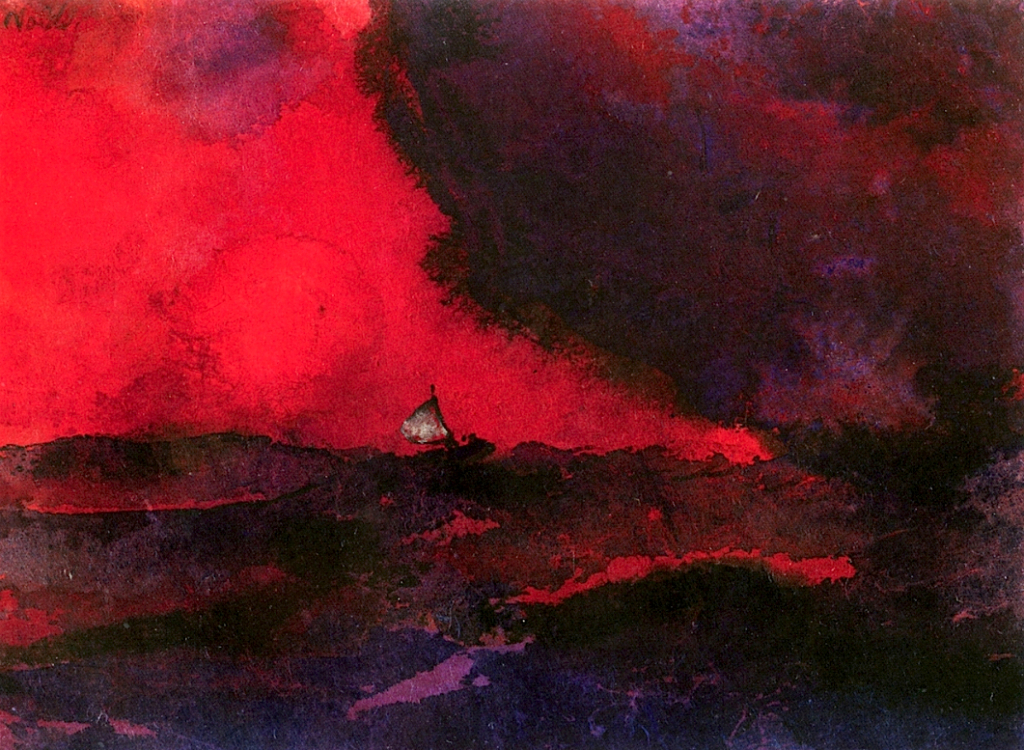
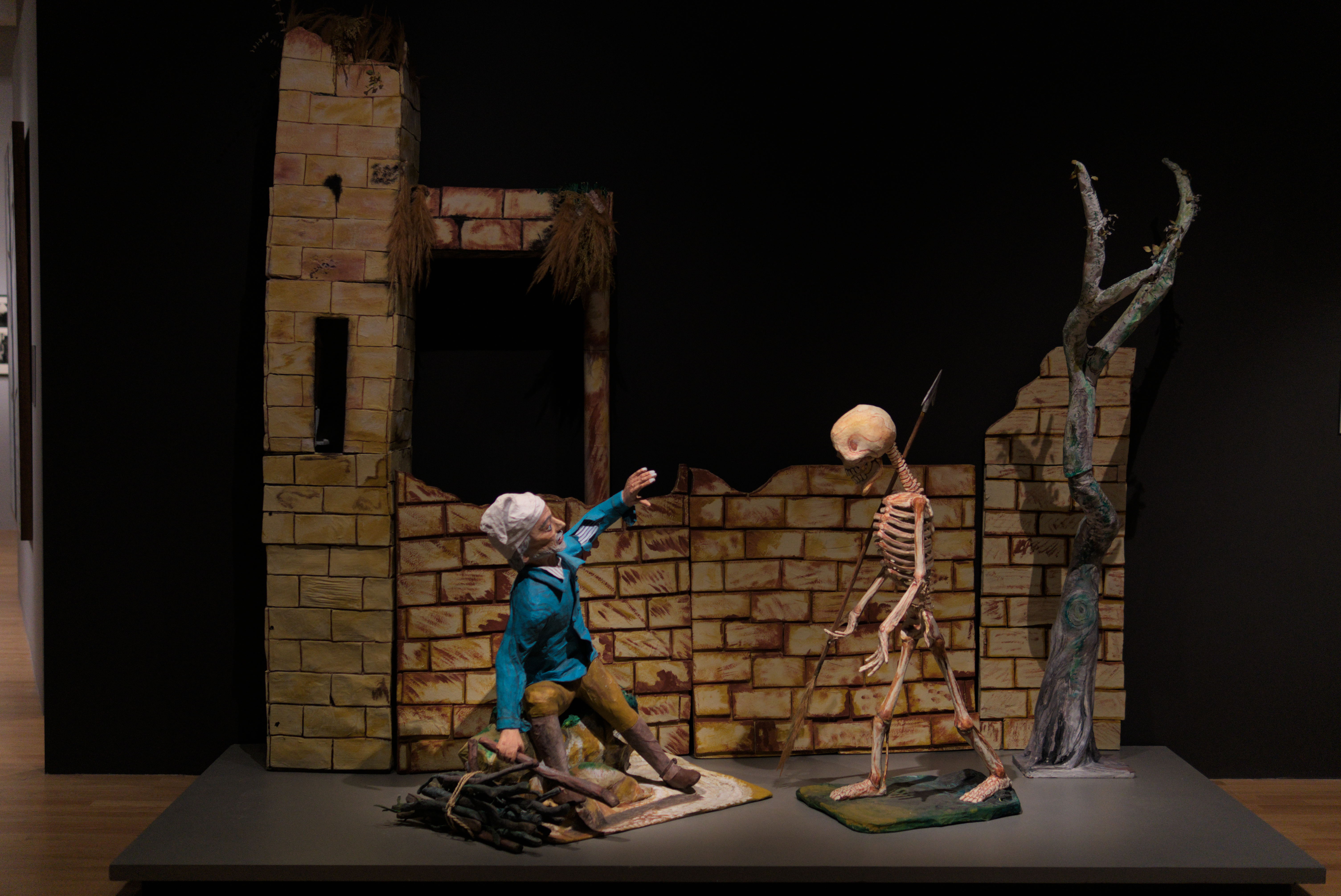
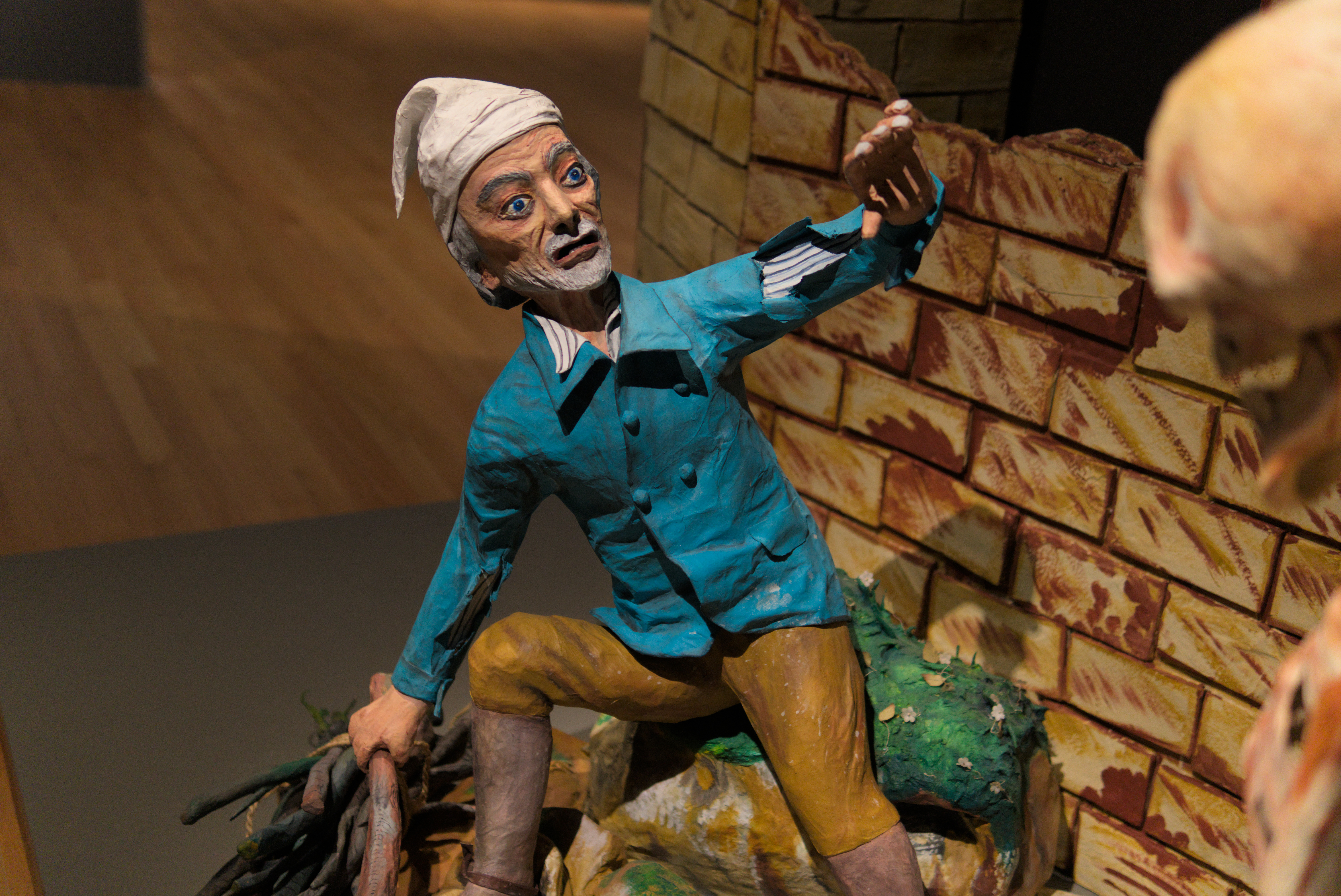
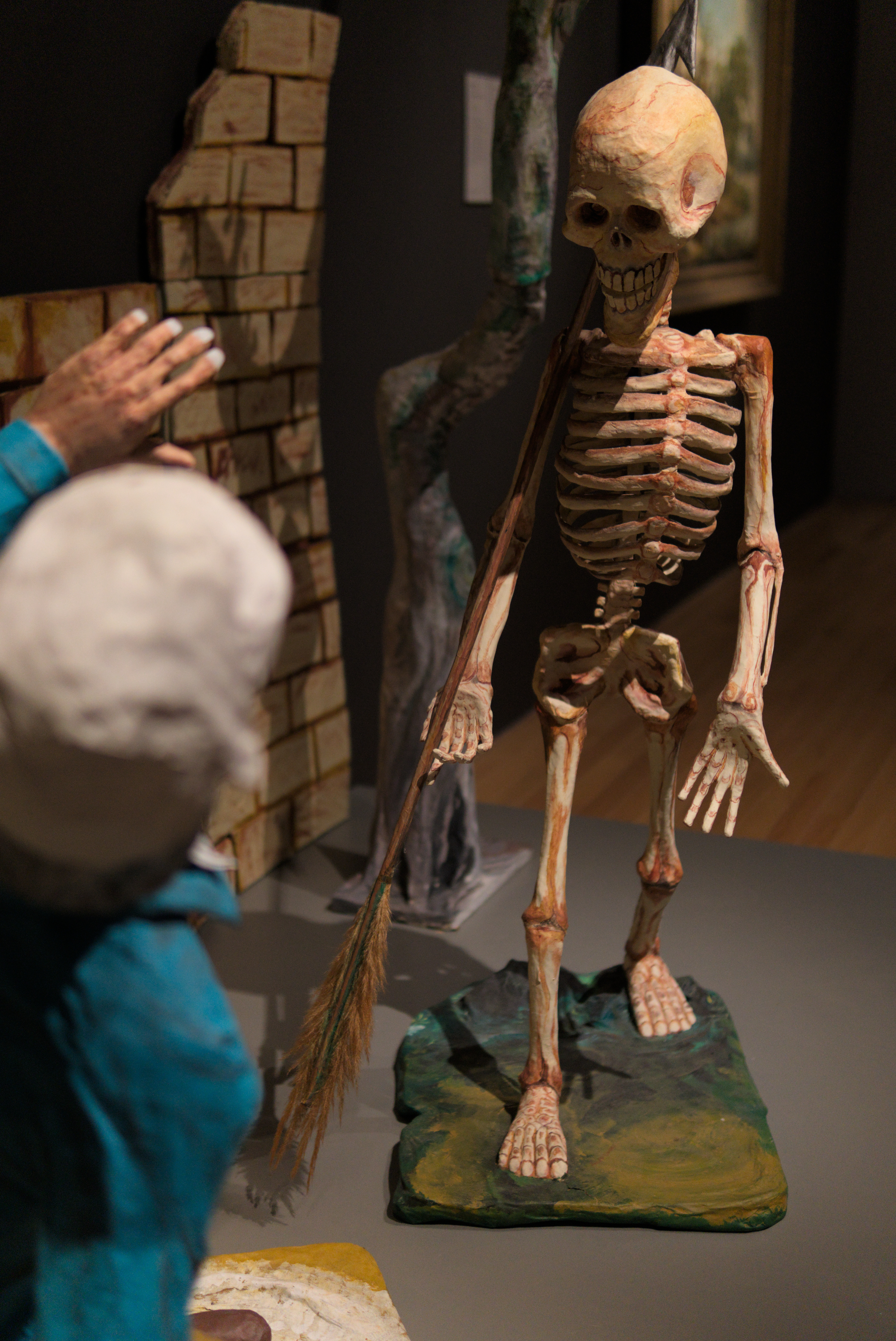
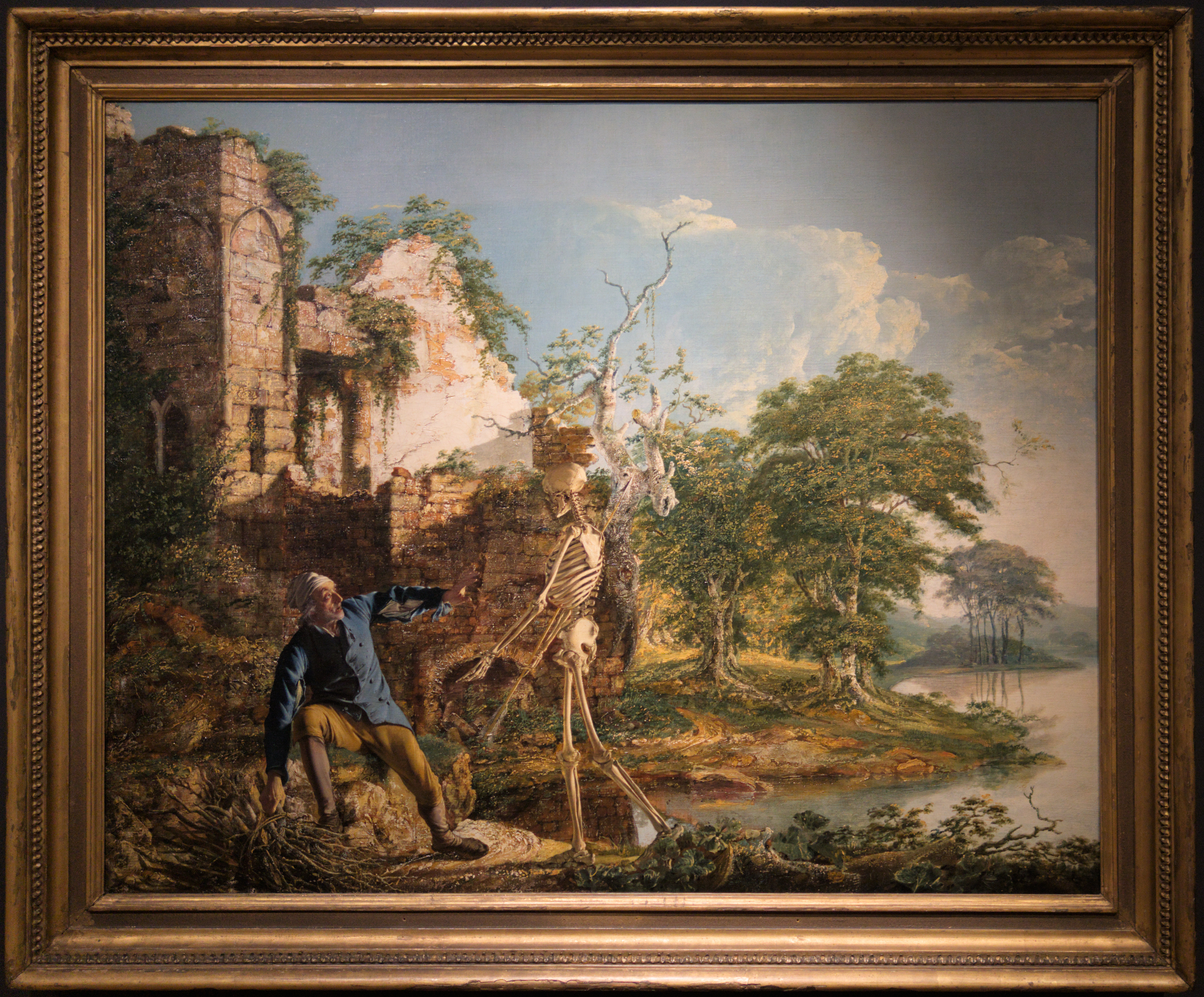
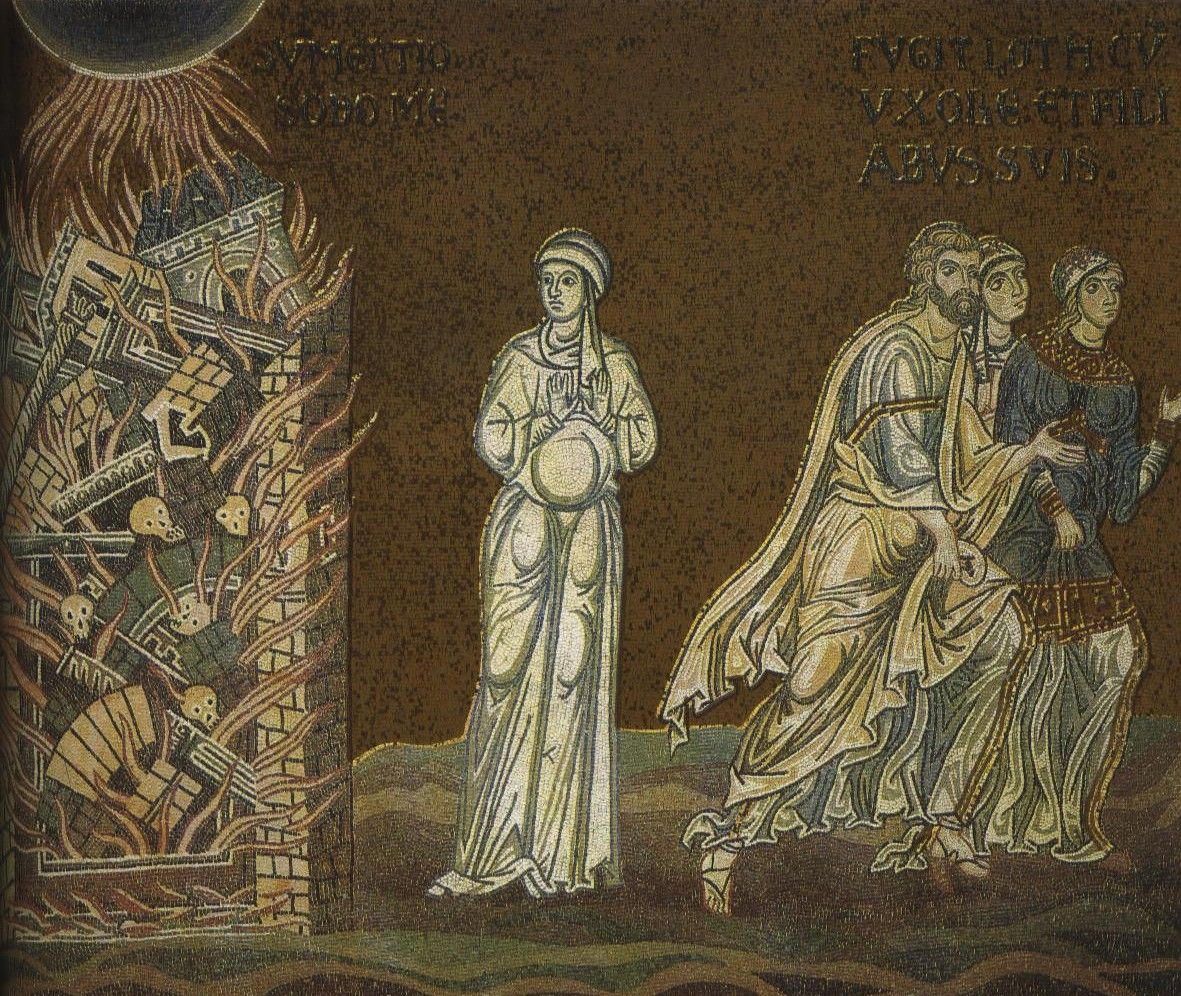
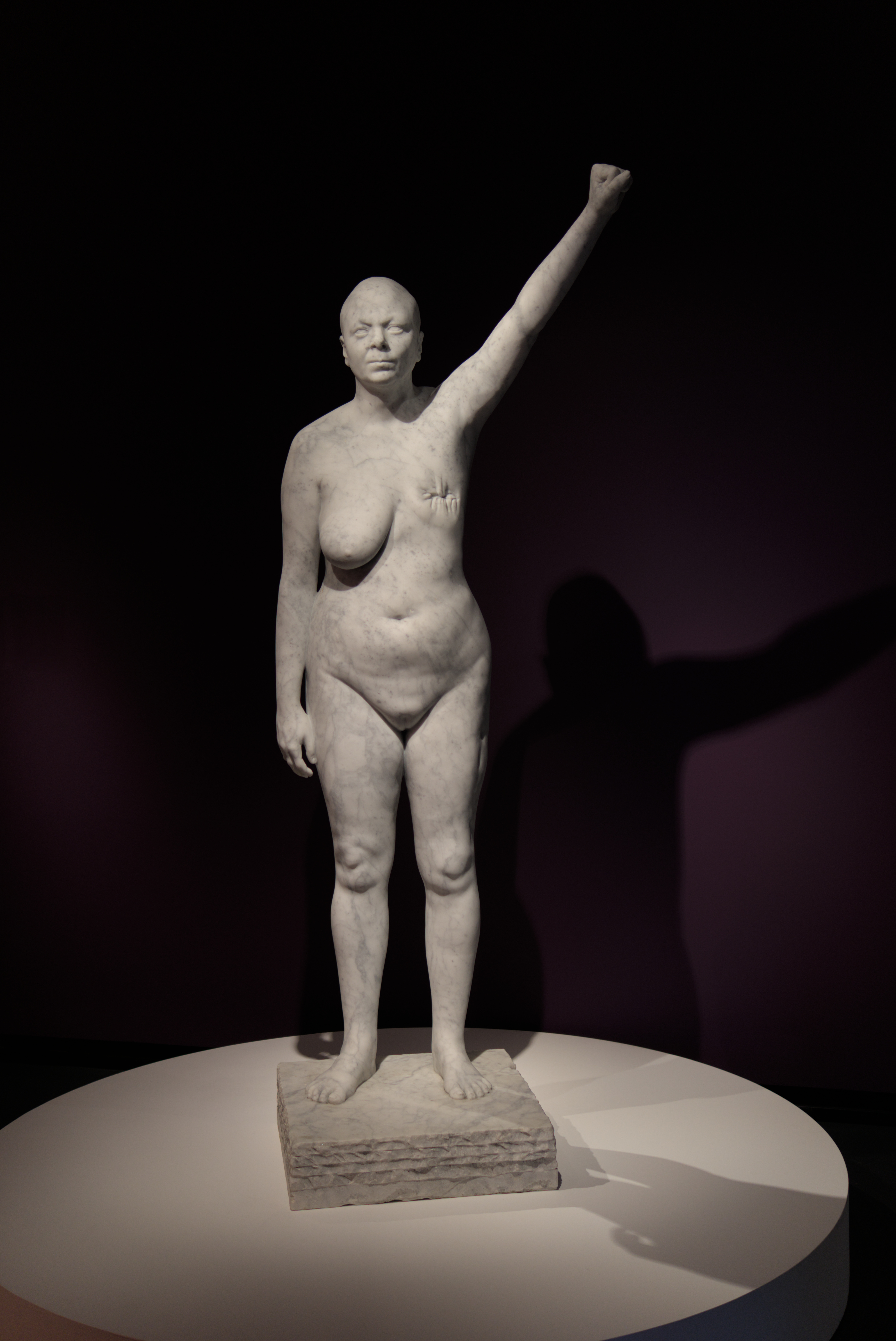
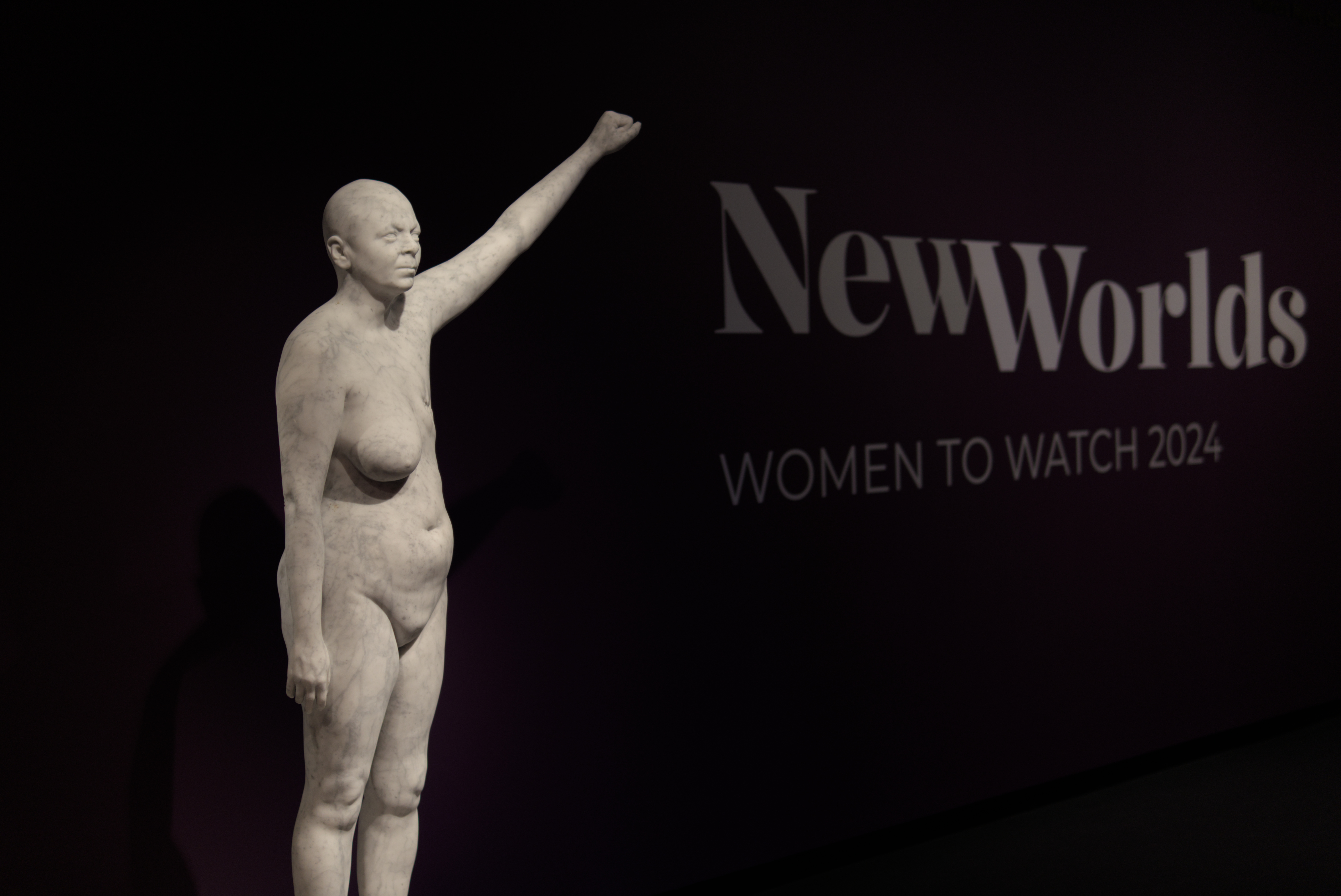

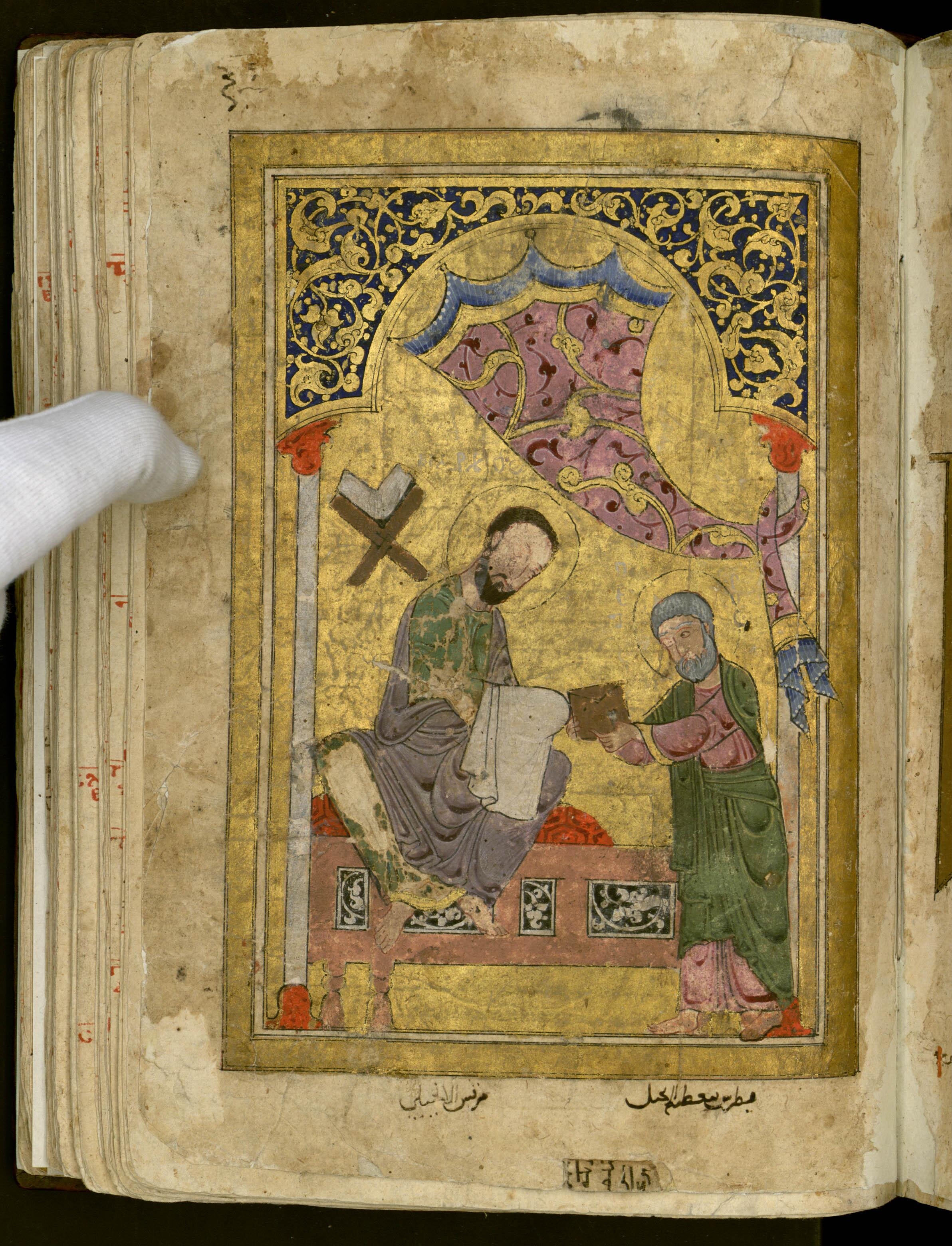

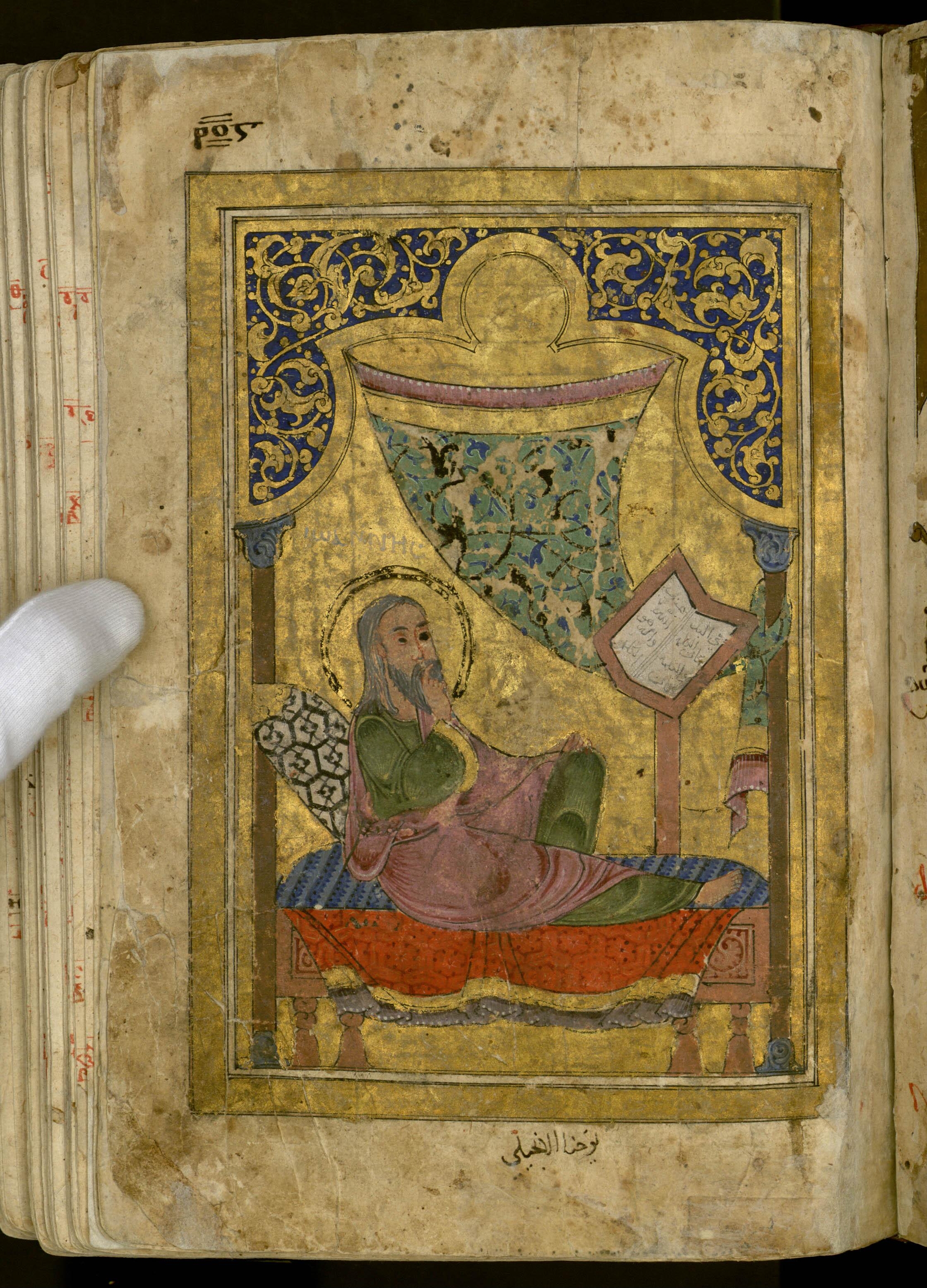

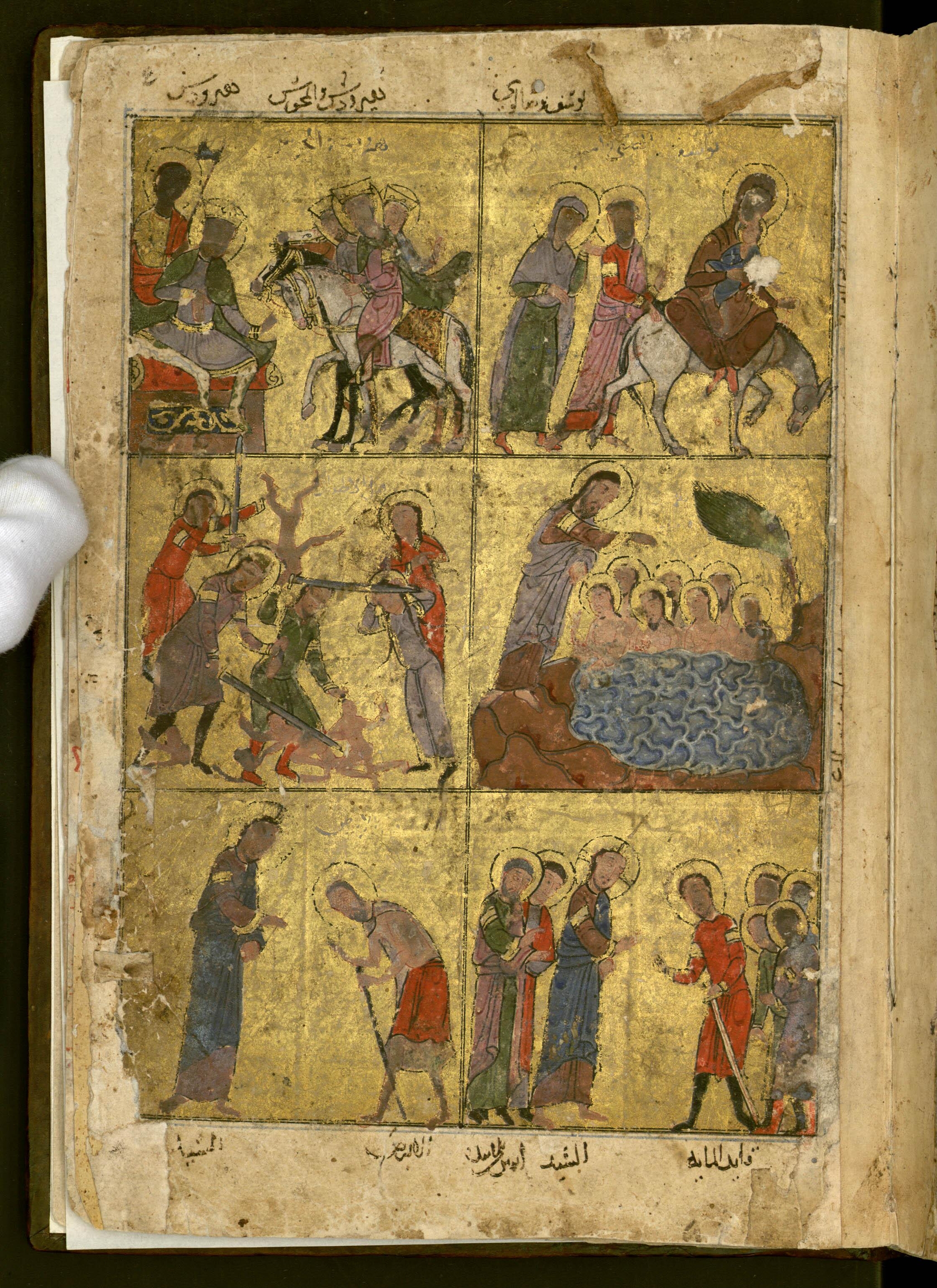
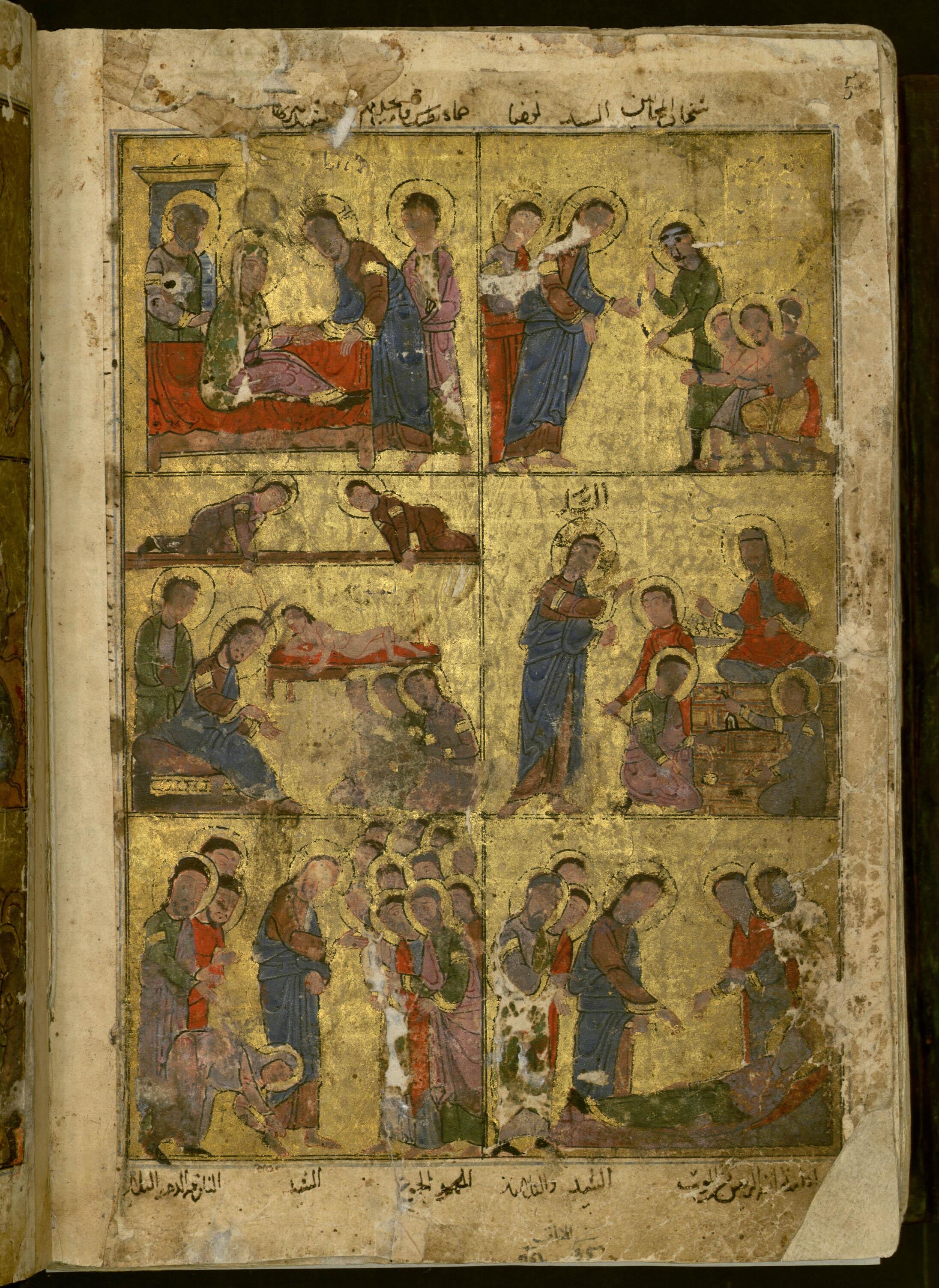


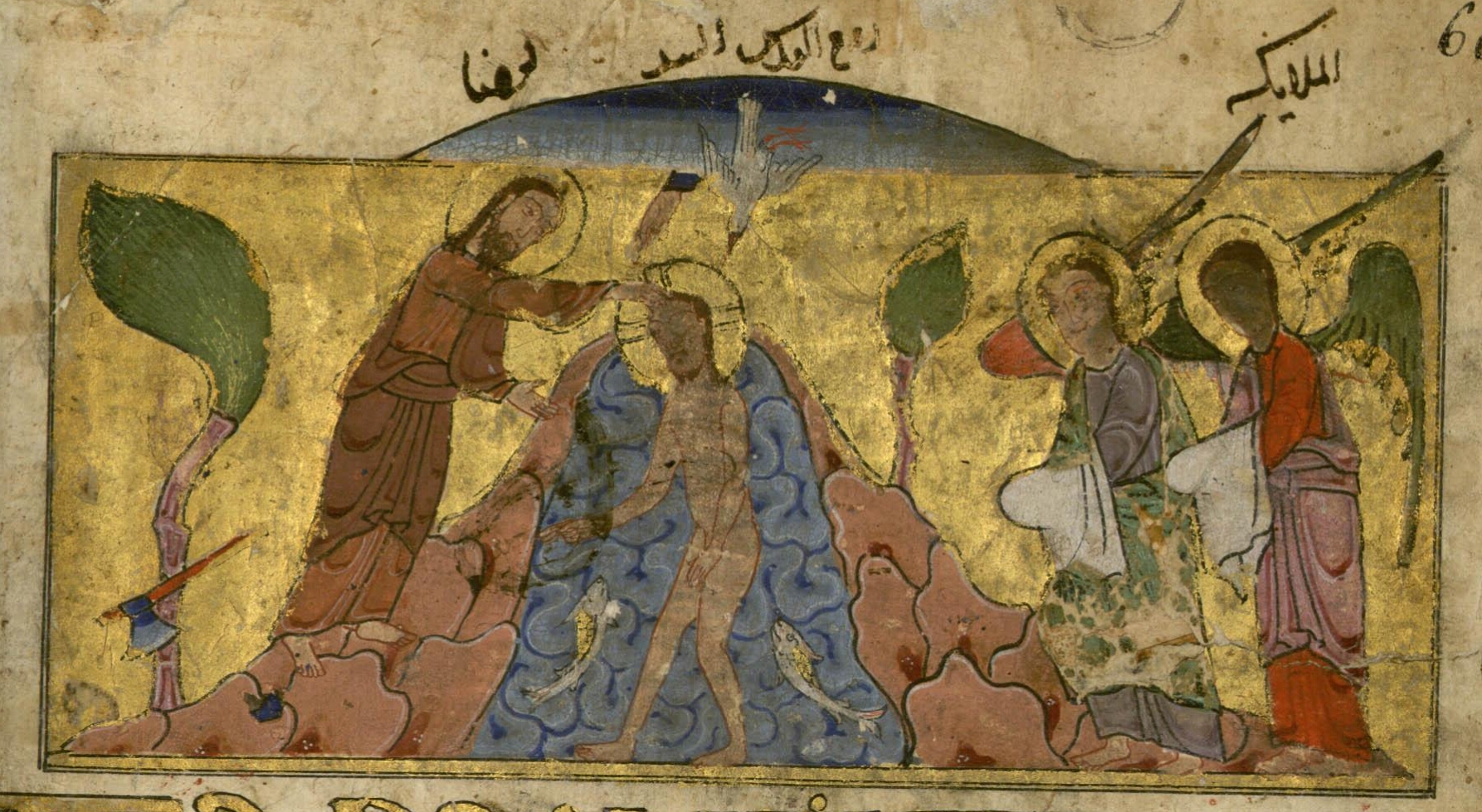


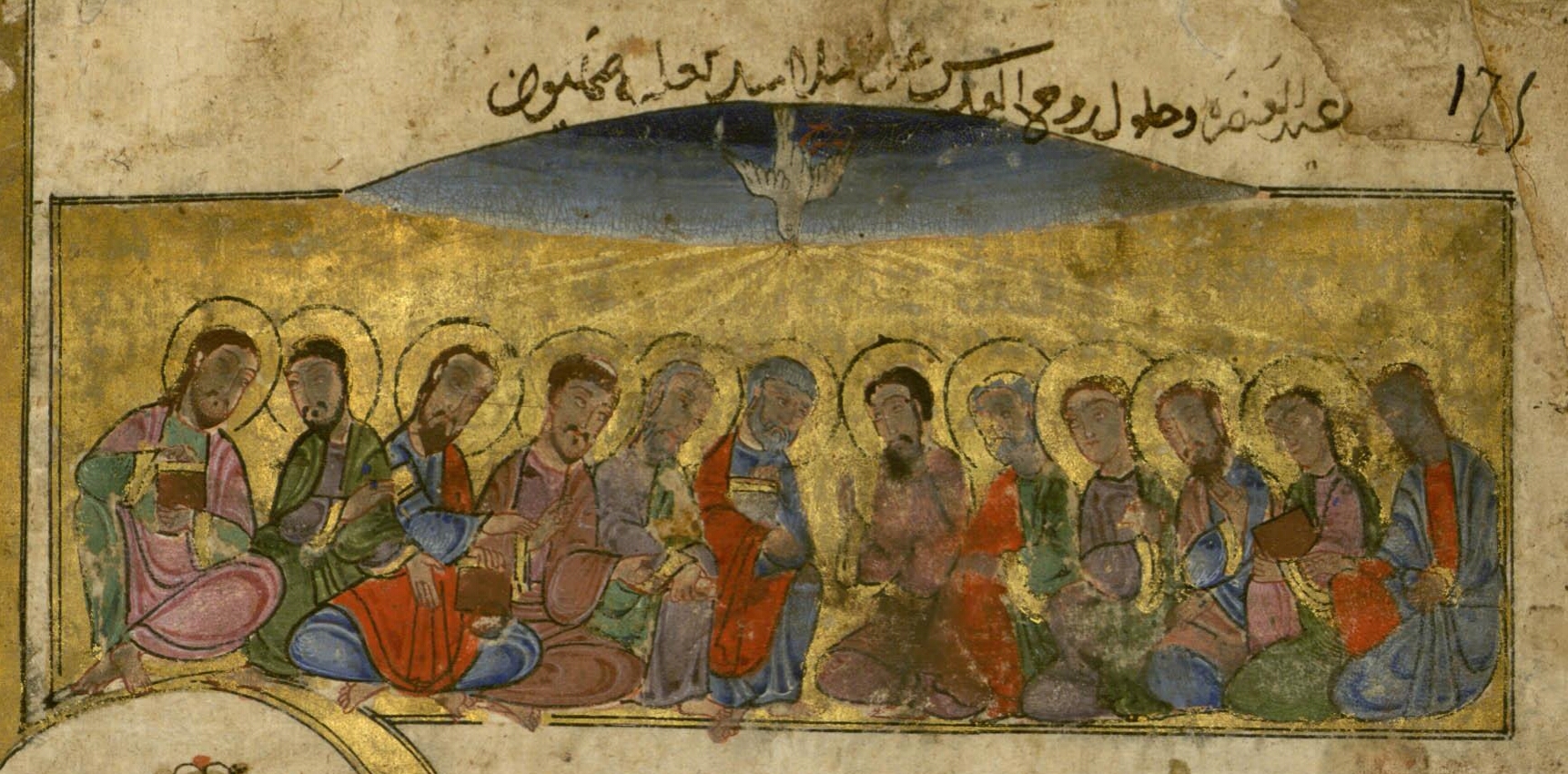
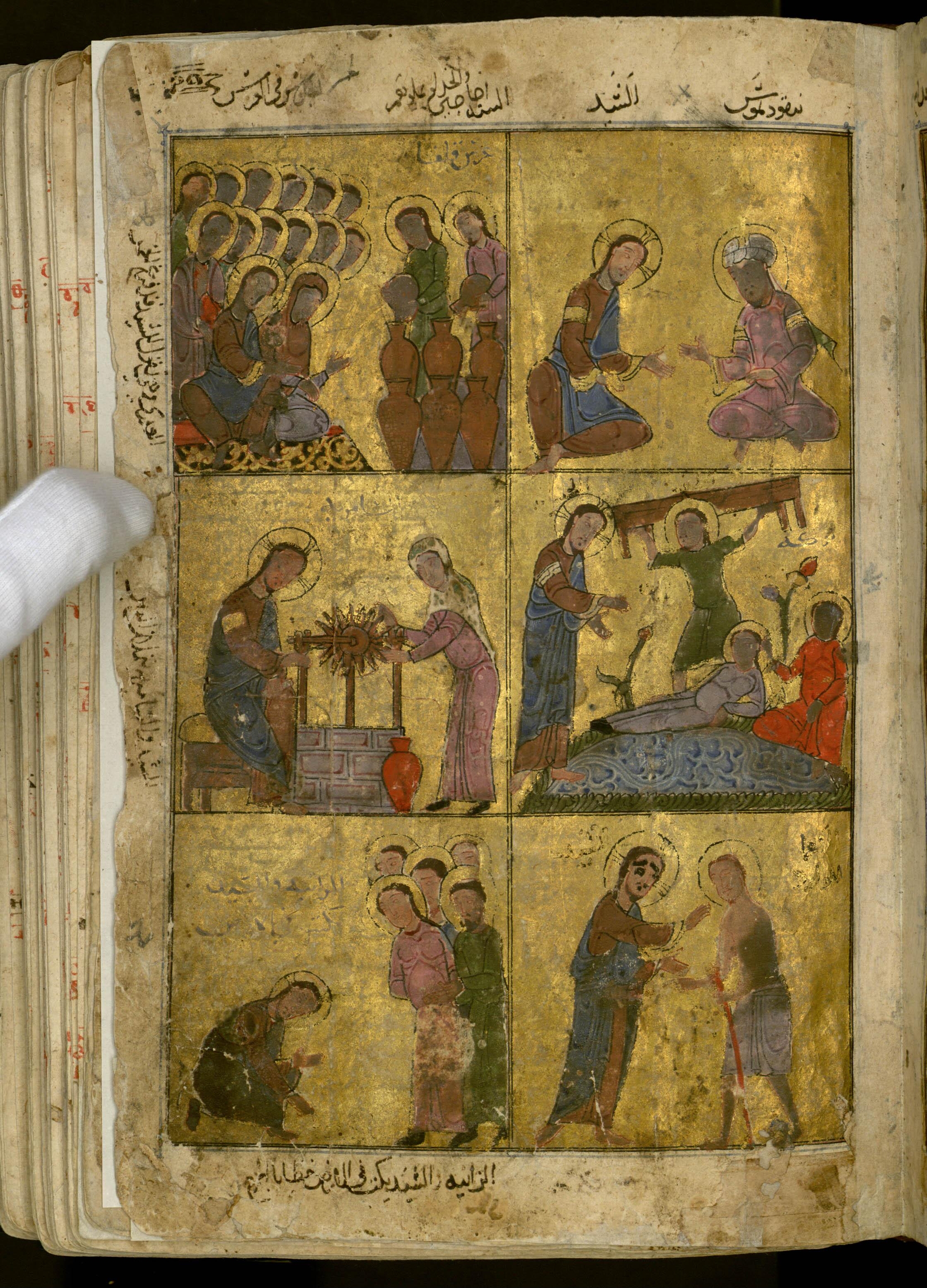

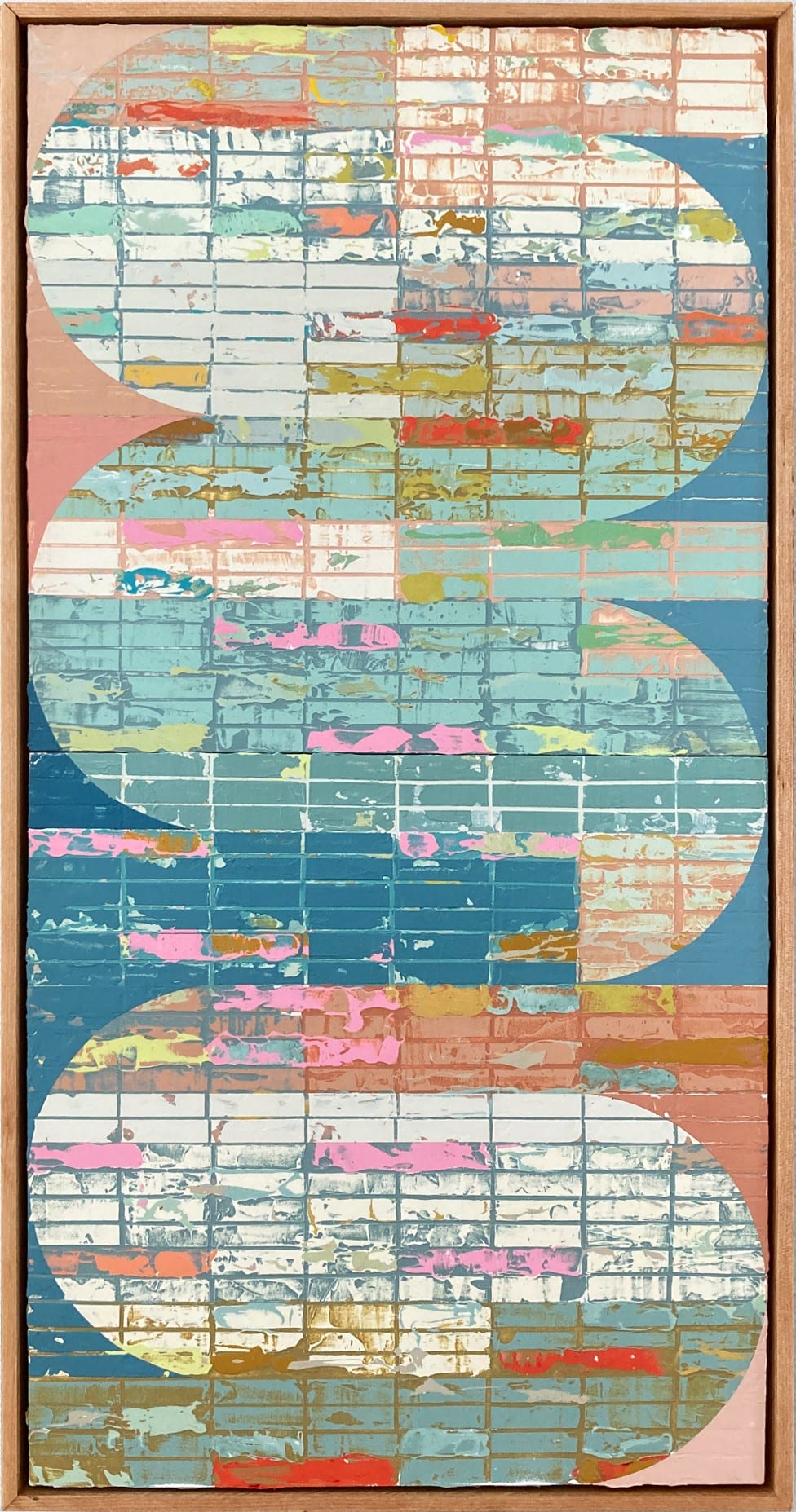
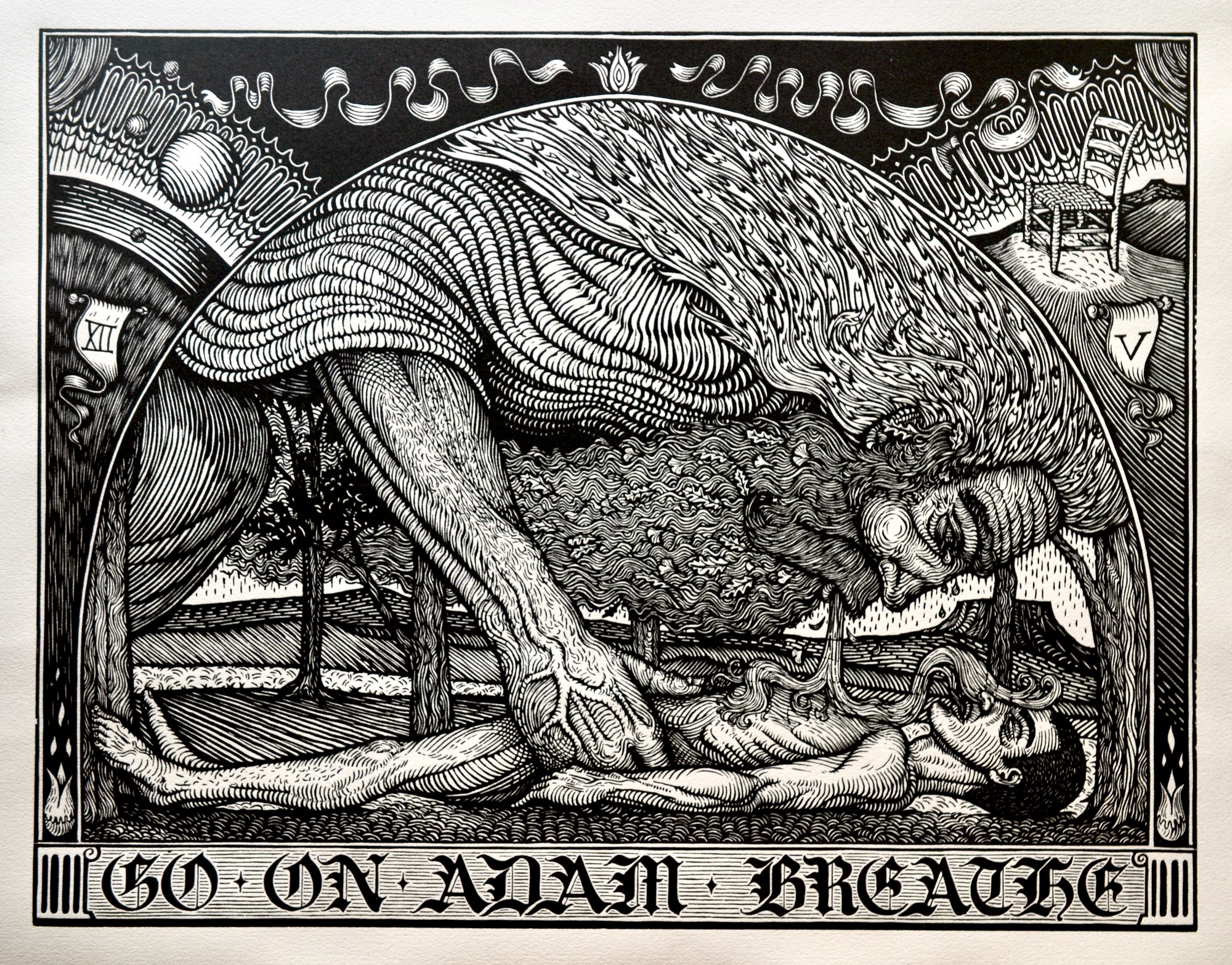
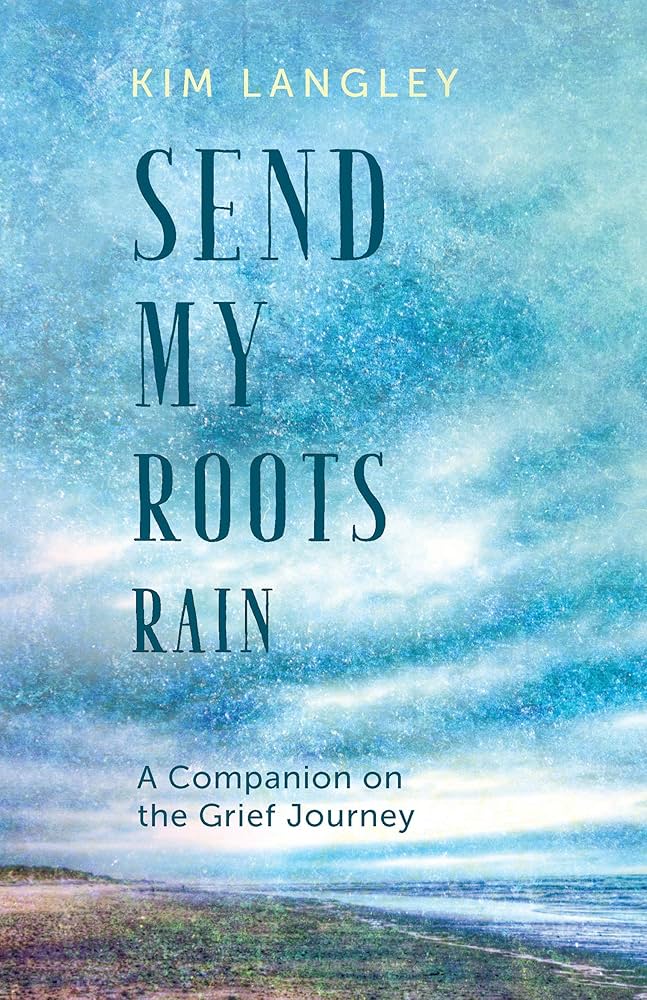
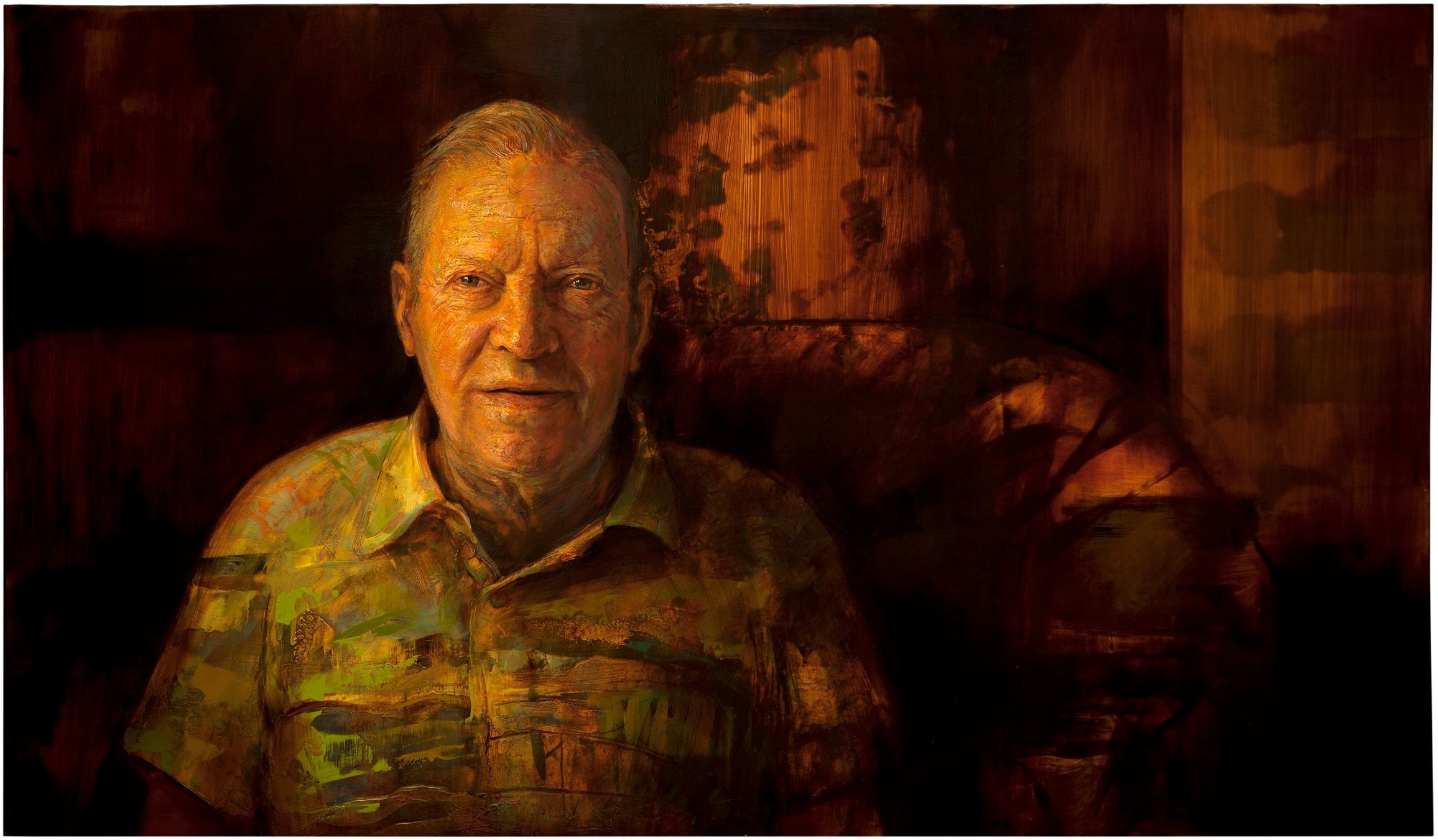

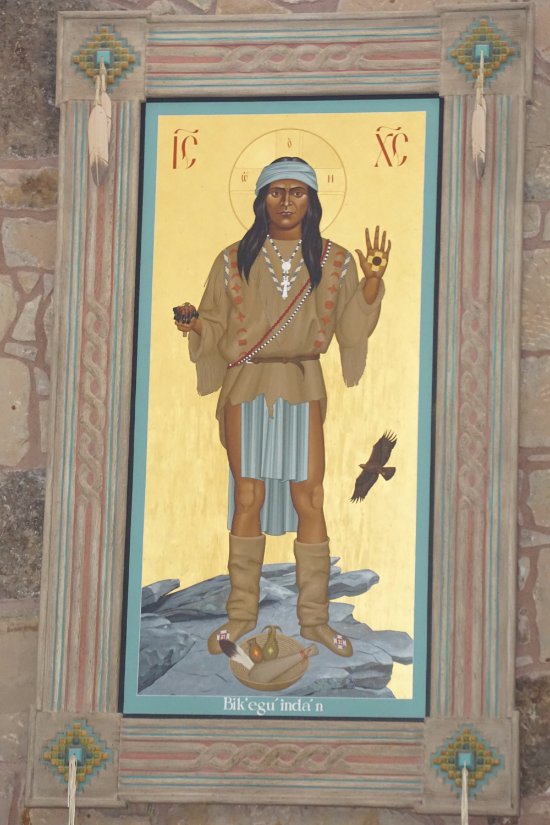
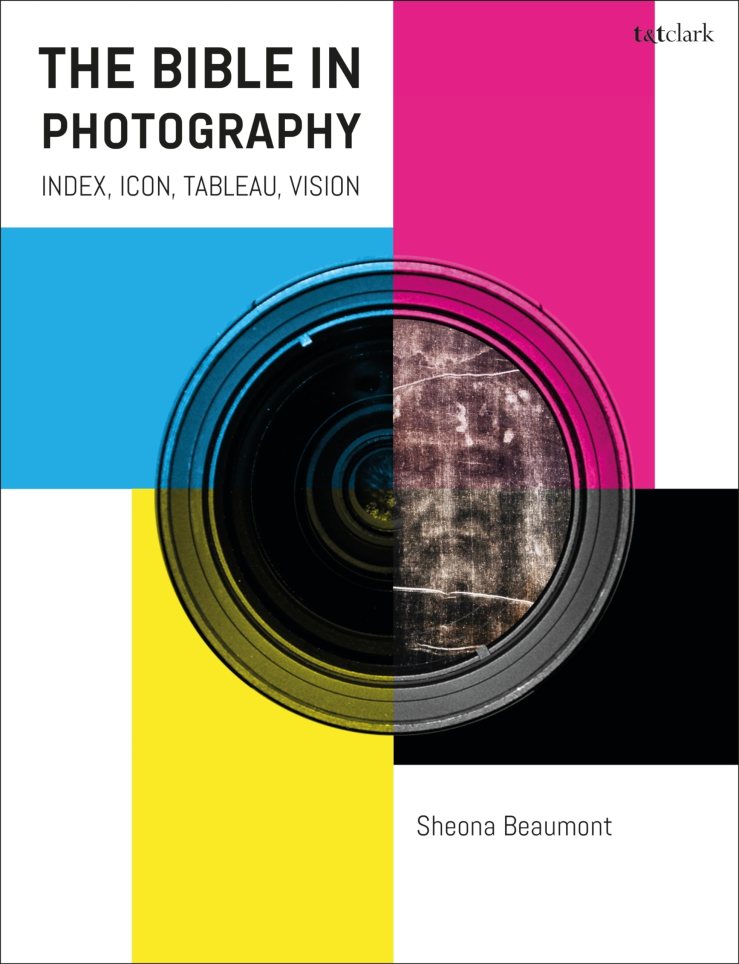
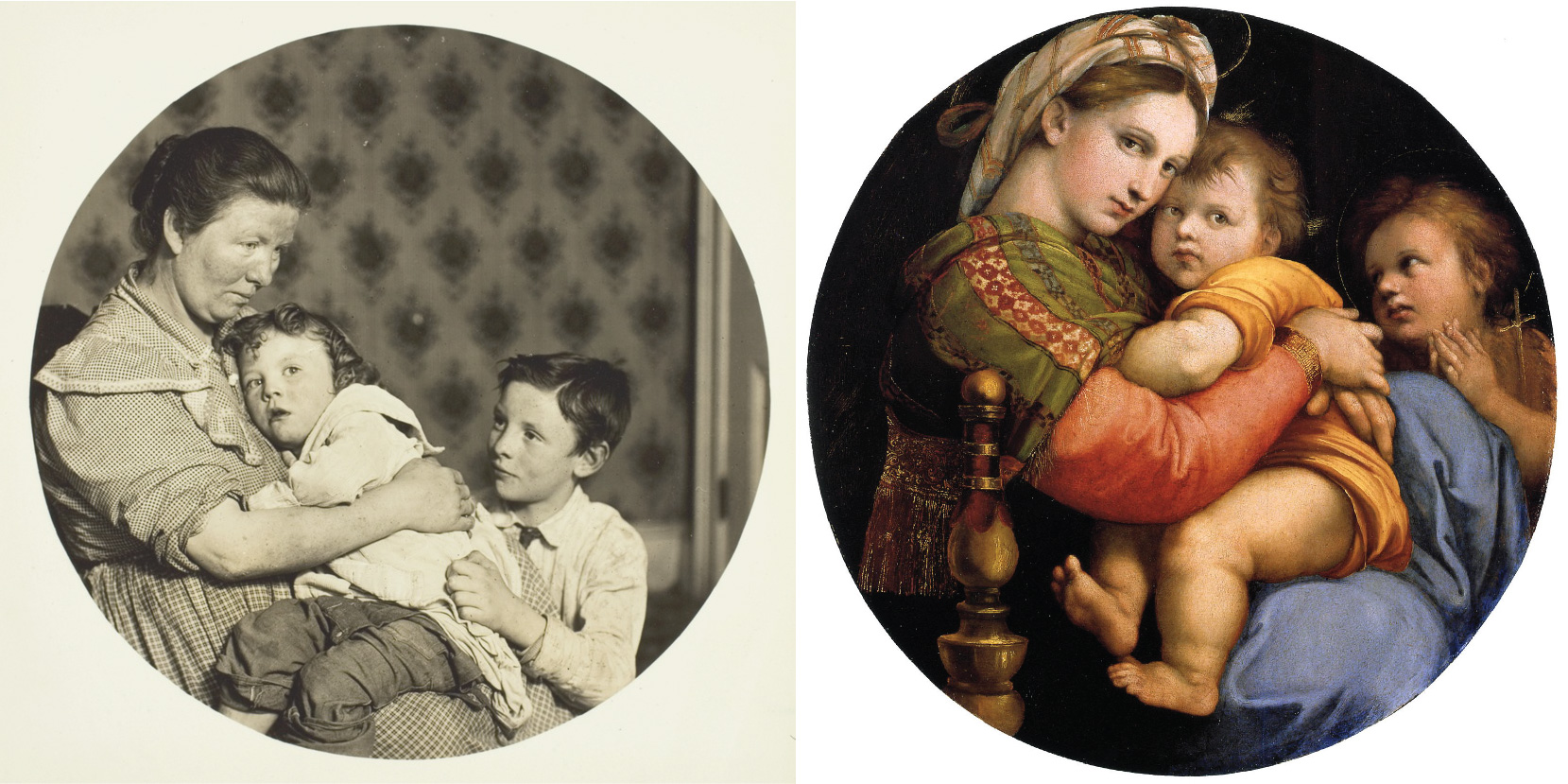

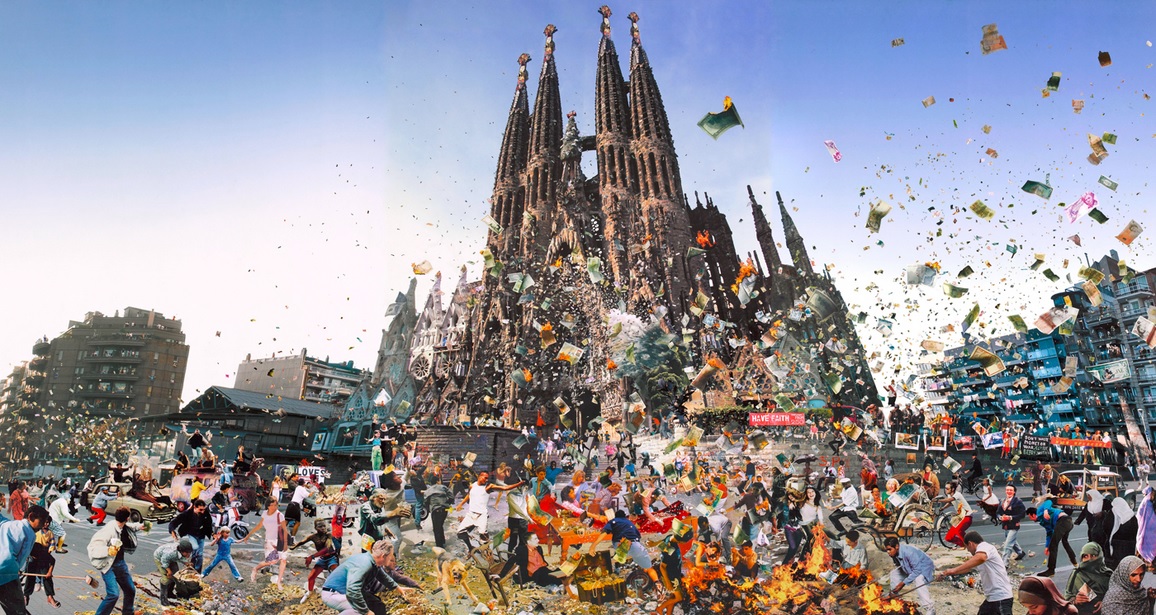
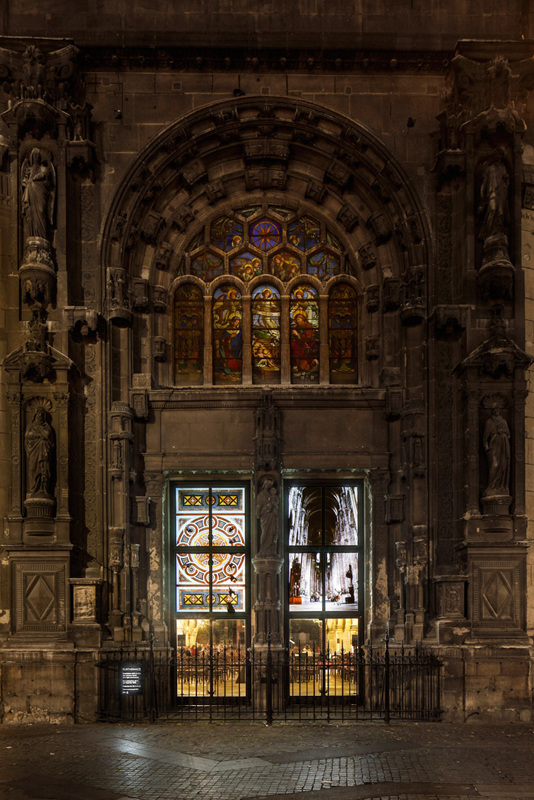
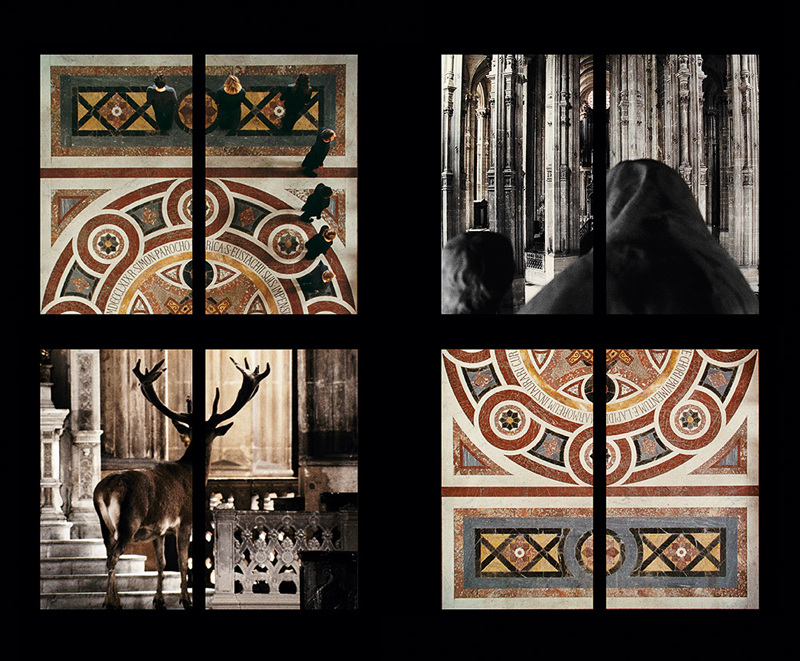
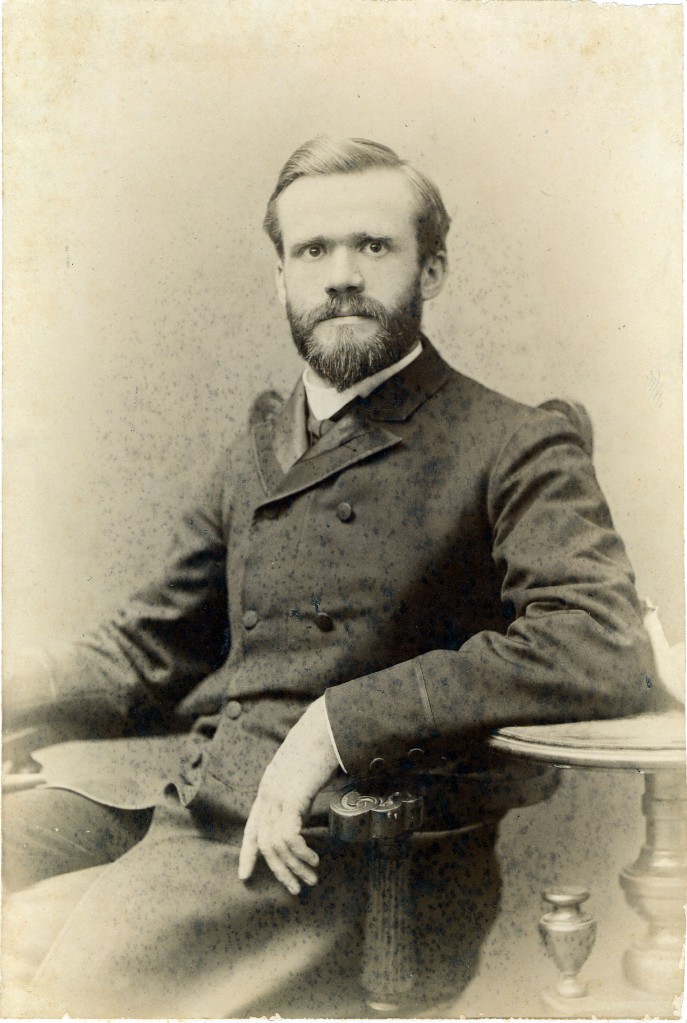
 Art & Theology