There are many great movies that spotlight the positive role of family, friendship, and community, showing how humans are built for interdependence. For this article of recommendations, I’ve chosen a narrower subset of that theme: movies about a character or characters who don’t have community at the beginning, or who aren’t receptive to it, but who find it throughout the course of the story. That may sound cliché, but I promise, all five selections are nonsappy and bring something new to the table.
What movie(s) would you add to the list? Also, what other thematic film lists would you like to see on this website?
Will (Hugh Grant) sits through an uncomfortable Christmas dinner at Fiona’s house (the main course: nutloaf), having been invited by her son, Marcus, in this scene from About a Boy.
1. About a Boy (2002), dir. Chris Weitz and Paul Weitz. In general, my favorite type of movie is one that makes me both laugh and cry. About a Boy hits that spot. Based on a novel of the same name by Nick Hornby, it stars Hugh Grant as Will, a thirty-something single man who lives a carefree life in a swanky apartment—with no responsibilities, no commitments—subsisting off the royalties of a hit song his late father wrote many years ago. He prides himself in this unattached, “island living.”
Sleazeball that he is, he joins a Single Parents Alone Together group for access to vulnerable single women, despite his not having kids. It’s through that group that he meets a nerdy twelve-year-old named Marcus (Nicholas Hoult), whose mom, Fiona (Toni Collette), has depression. Marcus strategizes to make Will a part of their life so that they have a bigger support network as his mom navigates her mental illness. (“Two people isn’t enough; you need a backup,” he reasons.) Will is resistant at first. He doesn’t want the complexity or inconvenience that come with relationships. But Marcus’s persistence wears him down, and as he warms up to Marcus’s friendship and later Fiona’s, he learns to care for people and things other than just himself. His autonomy breaks down the more he allows his behaviors and decisions to be influenced by those around him whom he’s grown fond of and invested in, and he eventually realizes that, as the poet John Donne famously wrote, “no man is an island.”
(Not currently streaming for free through any subscription services but can be rented digitally. If you’re a local friend, you can borrow my Blu-ray copy—or come over and watch it with me!)
2. Lars and the Real Girl (2007), dir. Craig Gillespie. Twenty-seven-year-old Lars Lindstrom (Ryan Gosling) lives in a small Wisconsin town in his brother Gus (Paul Schneider) and sister-in-law Karen’s (Emily Mortimer) garage. Conversation and physical contact make him anxious, so he generally keeps to himself. But then one day a sex doll named Bianca arrives at his house, and he develops a chaste relationship with her. He gives her a backstory—she’s a half-Brazilian, half-Danish missionary with nurse’s training who was orphaned as a baby—and starts introducing her around town as his girlfriend.
Bianca, at right, waits for her doctor’s appointment in Lars and the Real Girl. (“She loves kids,” Lars says.)
The beauty of this film is in how Lars’s family, his church (one of the rare positive portrayals of Christianity in contemporary cinema), his coworkers, and local retailers all compassionately care for Lars as he experiences this delusion, not judging or teasing—although there is some initial resistance—but instead welcoming Bianca into the community, as his psychiatrist advised. Bianca attends worship, gets her hair done at the salon, volunteers at the hospital, leads story time at the elementary school, even gets elected to the school board! Karen bathes and dresses her; a work colleague dances with her at a party; her new friends drive her to a girls’ night out. As the people in Lars’s life embrace Bianca, Lars becomes more open to human interaction, more sociable, until he no longer needs the delusion. Waiting in the wings is Margo (Kelli Garner), the “real girl” of the title, who works in Lars’s office and sings in the church choir—and who has a crush on him. The love and support of his community as he works through psychological issues is what enables him to eventually pursue healthy relationships with real-life people.
Streaming on Tubi (no account necessary).
3. Shoplifters (2018), dir. Kore-eda Hirokazu. My favorite film by one of my favorite writer-directors, Shoplifters is a preeminent onscreen example of “found family.” It follows a band of outsiders living together in a small house on the outskirts of Tokyo. Each of them has suffered some form of abuse or neglect, having been cast off by their biological families or spouses. None of them are blood-related, and yet they’ve formed bonds of love and loyalty. They support each other emotionally and financially: Hatsue (Kirin Kiki), aka “Grandma,” contributes funds allegedly from her deceased husband’s pension; Nobuyo (Sakura Andô) works for an industrial laundry service, while her husband, Osamu (Lily Franky), works as a day laborer; Aki (Mayu Matsuoka) works at a sex parlor; and the boy Shoto (Jyo Kairi) engages in petty theft.
Nobuyo, Aki, Lin, Shota, and Osamu take a day off from their workaday lives to spend time together at the beach in the found-family film Shoplifters—Kore-eda’s best, in my opinion.
The conflict is introduced when the family finds a little girl named Yuri/Juri (Miyu Sasaki), dirty and hungry, left alone on a front porch, and they decide to take her. They rename her Lin, and she becomes part of their family. But now they are guilty of kidnapping. The film explores themes of belonging and of being unwanted versus wanted—that is, chosen. It also asks, What is a mother or a father? What is a sibling? Kore-eda deftly folds together the delicate layers of the various relationships, most movingly (to me) Grandma and Aki’s, and Shoto’s with his new younger sister, Lin.
Sakura Andô is outstanding as Noboyu—the best performance of any of the films on this list, and of 2018. She delivers a zinger during the interrogation scene, and the nuances of her voice and body language throughout bear so much of the film’s complexity and meaning.
Streaming on Hulu.
4. A Man Called Ove (2015), dir. Hannes Holm. Based on the best-selling Swedish novel En man som heter Ove by Fredrik Backman, this movie centers on Ove (pronounced “oo-vah”) (Rolf Lassgård), a grumpy old widower and retiree obsessed with enforcing block association rules no one cares about and still mourning the death of his wife. When a lively young couple and their two kids move in next door, the commotion interrupts Ove’s suicide attempt. He is called on to help out with increasing frequency—lend his ladder, watch the girls, teach the wife, Parvaneh (Bahar Pars), to drive—which outwardly annoys him but, he subconsciously realizes, gives him purpose and opportunities for meaningful human connection. He gradually learns also to receive acts of care and outreach, like a chicken and rice dinner, and to interact with others in modes other than just criticism and judgment.
In A Man Called Ove, the titular character becomes disgruntled when a boisterous family moves in next door, but they ultimately draw him out of his suicidal ideation and help him let go of his bitterness over the hand he’s been dealt in life.
Through flashbacks, we learn about Ove’s childhood and his romance and married life with Sonja (Ida Engvoll) and begin to better understand the bitterness he holds. It’s beautiful to see that bitterness fade, even if it doesn’t entirely go away, as he begins to let his guard down and open himself to small joys.
The film was remade in English in 2022 as A Man Called Otto, set in Pittsburgh and starring Tom Hanks, but the original Swedish adaptation is the better of the two.
Streaming on Amazon.
5. The Station Agent (2003), dir. Tom McCarthy. When his only friend dies, Fin (Peter Dinklage), a train enthusiast, inherits an abandoned train depot in rural New Jersey, which he moves into, intent on living in solitude. But situated just outside his new digs is a chatty hot dog vendor, Joe (Bobby Cannavale)—in town indefinitely from Manhattan to care for his sick father—whose stand is frequented by Olivia (Patricia Clarkson), a discombobulated woman who, we later find out, is grieving the death of her son and the fraying of her marriage. Fin gradually surrenders to the uninvited companionship. He also befriends a local elementary school girl who plays alone and likes trains, and a librarian with an abusive boyfriend.
In The Station Agent, Fin’s deliberate life of solitude is interrupted by Olivia and Joe, who adopt his hobby of train watching not so much for their interest in trains as for their desire for companionship.
Fin had chosen a solitary life to protect himself from the taunts he receives because of his dwarfism. But he finds that vulnerability—putting yourself out there—is ultimately the better way to live, even though it means greater unpredictability and susceptibility to hurt. He forges a community from an unlikely bunch, people with whom he learns to enjoy comfortable silences and talk both small and large. The movie is punctuated by long walks along railroad rights-of-way and ends with a meal around a table.
SPOTIFY PLAYLIST: July 2024 (Art & Theology): This month’s “mixtape” includes a worship song by Daniel P. Cariño from Baguio, the Philippines; a 1954 recording from the streets of New Orleans of the itinerant preacher, singer, and guitarist Elder David Ross; a piano-violin arrangement of “Amazing Grace” by Carlos Simon; a nineteenth-century American folk hymn; an excerpt from Mendelssohn’s oratorio Elijah; a Jesus bhajan in Hindi from Toronto; a one-word song by choral-pop composer Michael Engelhardt; a brand-new Porter’s Gate single; and more.
+++
NEW BOOKS:
>> Diary of an Old Soul: Annotated Edition by George MacDonald, with introduction and notes by Timothy Larsen: At last, a keepsake edition of George MacDonald’s devotional poetry collection Diary of an Old Soul! Last week InterVarsity Press released a cloth-bound hardcover with ribbon bookmark, an introduction and sparing notes by the modern British religious history scholar Timothy Larsen, and, as MacDonald stipulated in the book’s first printing in 1880, a blank page facing each page of verse for readers to continue the conversation. C. S. Lewis gave a copy of Diary of an Old Soul to his future wife, Joy Davidman, as a Christmas gift in 1952, and it would make a wonderful Christmas gift still. For each day of the year MacDonald offers a seven-line poem that voices his spiritual longings, struggles, or joys; the Victorian tastemaker John Ruskin extolled the collection as proof that worthy religious poetry could still be written in the modern age. I highlighted my favorite selections from the book in a blog post last year, but on reading this new edition, new lines are standing out to me.
>> Word Made Fresh: An Invitation to Poetry for the Church by Abram Van Engen: Several Christians have told me they want to read more poetry and learn to better appreciate it but don’t know where to start. I usually recommend starting with an anthology, to get a taste of a wide range of styles and eras, and see if there are particular kinds they gravitate to. But now I’m thrilled I can recommend Abram Van Engen’s Word Made Fresh: An Invitation to Poetry for the Church, with a foreword by Shane McCrae. (Full disclosure: I was the copyeditor!) Endorsed by such luminaries as Christian Wiman and James K. A. Smith, the book is an excellent introduction to how and why to read poetry. Van Engen discusses sixty-two distinct poems, almost all of them reproduced in full, ranging from John Donne, Ben Jonson, and Frances Ellen Watkins Harper to Gwendolyn Brooks, Richard Wilbur, and Li-Young Lee and including, too, church hymns and biblical psalms, two forms of poetry with which Christian readers are likely already familiar. In part 1 he demonstrates six ways to read poetry: personally, for pleasure, inquisitively, like it’s a friend, considering form, and through erasure. In part 2 he answers the question “Why read poetry?”: to name creation, to tell the truth, to rejoice with those who rejoice, and to weep with those who weep. Van Engen insists that poetry is for everyone, and Word Made Fresh substantiates the claim.
PRINT INTERVIEW: “Through the Rent, Eternity Enters: A Conversation with Marilyn Nelson and Christian Wiman,” moderated by Abram Van Engen, Hedgehog Review: In December 2023, The Carver Project at Washington University in St. Louis brought together award-winning poets Marilyn Nelson and Christian Wiman for a discussion of poetry, faith, love, perception, ambition, humility, prayer, and grace, moderated by Abram Van Engen. Poets, I’ve noticed from attending conferences and reading or listening to interviews with them, tend to have an immense storehouse of wise quotes from other poets and thinkers at the ready, as this interview corroborates. There’s so much here to chew on!
+++
ESSAY: “Christianity and Poetry” by Dana Gioia, First Things: “This brief and inadequate historical survey,” writes poet and literary critic Dana Gioia, “is offered to demonstrate the powerful continuity of Christian poetry in English. Our literary canon is suffused with religious consciousness, which has expressed itself in ways beyond the imagination of theology and apologetics. Milton boasted that his Paradise Lost would ‘justify the ways of God to men,’ but his masterpiece was only one of countless poems that engaged, enlarged, and refined the spirituality of the English-speaking world. Christianity went so deeply into the collective soul of the culture that its impact continues even in our secular age.”
He proposes, “All that is necessary to revive Christian poetry is a change in attitude—a conviction that perfunctory and platitudinous language will not suffice, an awareness that the goal of liturgy, homily, and education is not to condescend but to enliven and elevate. We need to recognize the power of language and use it in ways that engage both the sense and the senses of believers.”
+++
CANTATA: Rejoice in the Lamb by Benjamin Britten, performed by VOCES8 and the VOCES8 Foundation Choir & Orchestra, dir. Barnaby Smith: “Rejoice in the Lamb (Op. 30) is a cantata for four soloists, SATB choir and organ composed by Benjamin Britten in 1943 and uses text from the poem Jubilate Agno by Christopher Smart (1722–1771). The poem, written while Smart was in an asylum, depicts idiosyncratic praise and worship of God by different things including animals, letters of the alphabet and musical instruments. Britten was introduced to the poem by W. H. Auden whilst visiting the United States, selecting 48 lines of the poem to set to music with the assistance of Edward Sackville-West. The cantata was commissioned by the Reverend Walter Hussey for the celebration of the 50th anniversary of the consecration of St Matthew’s Church, Northampton. Critics praised the work for its uniqueness and creative handling of the text.” (Wikipedia)
I know this poem from its famous passage about Jeoffry the cat, in which Smart celebrates his cat’s relationship with God: “For I will consider my Cat Jeoffry. / For he is the servant of the Living God duly and daily serving him. / For at the first glance of the glory of God in the East he worships in his Way. / For this is done by wreathing his body seven times round with elegant quickness. / For then he leaps up to catch the musk, which is the blessing of God upon his prayer. . . .” See 3:52 of the video.
SONG: “Wild Strawberries” by Nick Chambers: This song from 2020 expresses yearning to know the God whose beauty is revealed in nature and who is mysterious, “divinely robed in dark and radiant haze.” It’s based on a 1819 Swedish hymn by Johan Olaf Wallin that was quoted by the aging professor Isak Borg in Ingmar Bergman’s multi-award-winning film Wild Strawberries.
“In the gospel narratives,” Chambers writes, “the risen Jesus is always one step ahead, beckoning us further. We follow after tangible touches and traces he leaves behind—folded grave clothes and broken bread. He travels with us but isn’t always recognizable, still teaching his friends how to fish, readying breakfast on the beach. Wherever he appears and withdraws, the background becomes the foreground, inviting us to see and seek him everywhere. Resurrection cannot be confined; all creation is drawn into its trajectory.” Read more from Chambers in the YouTube video description.
NEW SONG + CALL FOR SUBMISSIONS: Sing the Prayer from BibleProject: To cap off their five-part podcast series on the Lord’s Prayer this month, BibleProject commissioned singer-songwriters Brian Hall (of the family band TENTS) and Liz Vice to write and record a new setting of the Lord’s Prayer, using the translation by Tim Mackie and the BibleProject Scholar Team:
Our Father who is in the skies, may your name be recognized as holy. May your kingdom come and may your will be done as it is in the skies, so also on the land. Our daily provision of bread, give to us today. And forgive us our debts, just as we also have forgiven those indebted to us. And don’t lead us to be tested, but deliver us from the evil one. Amen. (Matt. 6:9–13; cf. Luke 11:2–4)
(You may be wondering, as I did, where’s the final line, “For thine is the kingdom, and the power, and the glory, for ever.” As Mackie explains, that line is not in the earliest manuscripts of Matthew or Luke; the addition first appeared in the Didache, an early Christian teaching manual.)
You can listen to and download Hall and Vice’s new setting of the Lord’s Prayer, which Vice sings to Hall’s guitar accompaniment, at the “Sing the Prayer” link above. In addition, the Good Shepherd Collective video-recorded a more fully instrumented arrangement for a digital worship service; see here. And here are links to the recent Lord’s Prayer episodes of the BibleProject podcast:
All you composers out there can get involved too! Through September 15, 2024, BibleProject is accepting submissions of musical settings of the Lord’s Prayer. You can sing the text verbatim using a translation of your choice, or you can rephrase it or write a song based on the prayer’s themes. Purely instrumental responses are also welcome. Send in a song file using their online form, and they will select some of their favorites to host on their website (for streaming, not download). View the early selections at https://bibleproject.com/singtheprayer/all.
+++
TV SHOW EXCERPT: Opening montage from season 3, episode 4 of The Chosen, “Clean, Part 1”: Several people have asked for my opinion of The Chosen, a television adaptation of the Gospels created by Dallas Jenkins. I think it’s great! Creatively (not woodenly, as is too often the case) written, culturally and historically immersive, high production values, and humanizing—it portrays the disciples (the Twelve and others, including the women) as complex, rounded characters with backstories, families, and distinct personalities. Jonathan Roumie is fantastic as Jesus; so is Liz Tabish as Mary Magdalene. If I were to identify a weakness in the series, it would be the portrayal of the Roman soldiers and rulers, especially Quintus, as cartoonish, one-dimensional—although that begins to shift with at least one Roman in season 3—and the occasional awkward dialogue that’s used to explain to the audience ancient Jewish practices and law codes with which we’re likely to be unfamiliar.
I’m in the middle of season 3 right now and was particularly struck by the opening montage of episode 4, a narrative embellishment of Luke 10:1, which says that Jesus “sent them [his appointed followers] on ahead of him in pairs to every town and place where he himself intended to go.” In the series, this is the first time the disciples perform healings. They’re surprised and confused by, and even a little fearful of, the power working through them; they don’t understand it and aren’t always sure how to wield it. This eight-minute segment shows them growing into their roles as they bring the gospel in word and deed throughout the region, preparing the way for Jesus.
This coming Sunday’s Gospel reading in the Revised Common Lectionary is Mark 5:21–43, which recounts the Healing of the Woman with an Issue of Blood and the Raising of Jairus’s Daughter. Here are two poems based on that passage. (As a side note related to the previous item: The Chosen, season 3, episodes 4–5 center on these two healing narratives; “Veronica’s” arc is especially cathartic!)
>>“Haemorrhoissa”by Leila Chatti: In her early twenties, the poet Leila Chatti [previously] had uterine tumors and suffered from severe bleeding and pain for two and a half years. She explores the shame, discomfort, isolation, and trauma of that condition as well as cultural taboos surrounding women’s bodies in her debut collection, Deluge (Copper Canyon Press, 2020), influenced by her dual Islamic-Christian heritage. In this poem she finds kinship with the unnamed hemorrhaging woman in the Synoptic Gospels and admires her boldness in touching Jesus’s hem. The title of the poem, a transliteration of “ἡ αἱμοῤῥοοῦσα,” is the Greek term used in the New Testament to refer to this woman, often translated as the “woman with an issue of blood” or “bleeding woman.”
>>“Jairus” by Michael Symmons Roberts: The poetry collection Corpus by Michael Symmons Roberts (Jonathan Cape, 2004) also centers on the body, especially on the relationship between corporeality, death, and resurrection. This poem from it, in which the speaker (a disciple of Jesus’s, perhaps?) addresses Jairus, celebrates physical appetite, an instinctive desire that helps keep us alive and that here also represents the hunger for living.
NEW DOCUMENTARY: God and Country, dir. Dan Partland: Released earlier this year, this documentary produced by Rob Reiner “looks at the implications of Christian Nationalism and how it distorts not only the constitutional republic, but Christianity itself. Featuring prominent Christian thought leaders, God & Country asks this question: What happens when a faith built on love, sacrifice, and forgiveness grows political tentacles, conflating power, money, and belief into hyper-nationalism?”
If you are an American Christian, you need to see this film. White Christian nationalism is becoming an increasingly larger threat in the US as it becomes more mainstream, and we need to be aware of it and denounce it. God and Country features interviews with several folks whom I’ve followed for years and deeply respect, including historians and best-selling authors Jemar Tisby and Kristin Kobes Du Mez, Holy Post podcaster and VeggieTales creator Phil Vischer, political commentator David French, and ethicist Russell Moore. Some of the footage from worship services is disturbing, to say nothing of the attack on the Capitol on January 6, 2021.
God and Country is currently available on Kanopy, an on-demand streaming service that many public and academic library patrons have free access to.
Detail of the 6th-century apse mosaic in the Basilica of Sant’Apollinare in Classe, Ravenna, Italy. Photo: Fr. Lawrence Lew, OP.
The kingdom of heaven is like a merchant in search of fine pearls; on finding one pearl of great value, he went and sold all that he had and bought it.
—Matthew 13:45–46
Jag nu den pärlan funnit har,
Som är min själs begär.
Du frågar: Vad? Hör då mitt svar:
Min Frälsare det är!
I have found the pearl of great price, Which is the desire of my soul. You ask, “What?” Here is my answer: “It is my Savior!”
Whenever hymns are translated from their original languages, modifications to the text are often made to accommodate the meter and end rhyme in the new language. That’s why I’ve provided William Jewson’s literal translation of the Swedish—taken from the liner notes.
Isn’t this song just lovely? I’ve paired it with a Late Antique mosaic from a basilica in northern Italy, showing Jesus’s head at the center of a golden, bejeweled cross. He’s framed by (tesserae-rendered) pearls, suggesting that he is the “pearl of great price” from Matthew 13. This detail is part of a larger Transfiguration scene of sorts (see below).
The parable of the pearl of great price comes from a longer teaching of Jesus’s that compares the kingdom of heaven to a field sown with wheat, a mustard seed, yeast, a buried treasure, and a fisher’s net—images of growth, expansion, value, or ingathering.
To say the kingdom of heaven is like a fine pearl for which a merchant sells all he has is not to suggest that we can buy our way into God’s kingdom; it simply emphasizes the supreme value and desirability of that kingdom. It’s worth everything. We have to go all in—heart, mind, and soul. Sometimes that does mean relinquishing material goods and assets. Wealth can be an impediment to following Jesus if it’s where we place our ultimate love, loyalty, identity, or trust.
Jesus is a gem who wants to be found and cherished. May we be like the merchant, searching and finding, and rejoicing in finding, and willing to give up all to gain Christ.
Apse of Sant’Apollinare in Classe, Ravenna, Italy. Photo: Berthold Werner.
Juneteenth is a federal holiday that commemorates the end of slavery in the United States. It is celebrated annually on June 19, the date on which, in 1865, the Union army finally arrived in the nation’s farthest reaches—Texas—to enforce the proclamation Lincoln had signed more than two and a half years earlier. While the holiday is marked predominantly by joy, it also calls on celebrants to reflect on the complicated meaning of freedom—“freedom that came at the end of the bloodiest war on the American soil where more than 700,000 lives were lost, freedom that came at the death of many enslaved people who never lived to see it, and freedom that people still fight for today,” historian Daina Ramey Berry told Life & Letters. In the words of another historian, Mitch Kachun, Juneteenth is a time “to celebrate, to educate, and to agitate.”
Donate to the MAAFA Redemption Project to support the promise and genius of Chicago’s Black and Brown youth. Or choose another Black cause, publication, individual, or business to invest in.
Watch the documentary All These Sons to learn about how two Chicago organizations are loving and transforming their neighborhoods, seeking to free residents from cycles of violence and help them reclaim their self-worth.
Spend ten minutes looking at and meditating on each of the three rose windows at New Mount Pilgrim. Think of them as visual prayers that you can enter into.
“Read” (that is, view, as it’s almost entirely a picture book) The Middle Passage by Tom Feelings, pausing at each illustration to really feel the weight of the atrocities perpetrated during the transatlantic slave trade. Practice lament.
Watch the groundbreaking miniseries Roots, based on Alex Haley’s novel, which traces the saga of a Mandinka family for three generations, before, during, and after slavery. It originally aired on ABC over eight consecutive nights in 1977, and later that year on BBC One; it’s streaming for free on Tubi (no account needed) in the form of six ninety-minute episodes.
For a firsthand account of slavery written by someone who was himself enslaved, read Olaudah Equiano’s autobiography, or passages from it.
Read the poet Lucille Clifton, who writes about Black womanhood, history, family, and religion. A good place to start would be her National Book Award–winning Blessing the Boats.
Peruse the Adinkra Symbol Index, put together by web designer Jean MacDonald, to learn more about this West African writing system and some of the concepts and proverbs represented in it.
+++
YOUTUBE PLAYLIST: Juneteenth 2024, compiled by Victoria Emily Jones: As a follow-up to the Juneteenth Playlist I published on YouTube in 2022, I’ve put together a brand-new one of nineteen songs, including a ring shout from South Carolina, a Sam Cooke cover, a virtuosic performance by the Trinidadian pianist Hazel Scott, a song-turned-children’s-book by Rhiannon Giddens, some seventies funk, and more. Here are two selections from the list:
>> “Feelin’ Good”: Written in 1964 by English composers Anthony Newley and Leslie Bricusse for the musical The Roar of the Greasepaint – The Smell of the Crowd, this song became a classic when Nina Simone recorded it the following year for her album I Put a Spell on You. In 2021, Dove, Verve Records, UMe, and the Nina Simone Charitable Trust teamed up to create the first-ever music video for Simone’s version of the song. Directed by Sarah Lacombe and featuring dancer Raianna Brown, the new music video “aims to continue Simone’s important legacy by telling a story of Black female empowerment . . . follow[ing] four generations of Black women living their truths, loving each other, celebrating their hair, and feeling good,” according to the press release.
>> Soul Force by Jessie Montgomery: “Soul Force is a one-movement symphonic work which attempts to portray the notion of a voice that struggles to be heard beyond the shackles of oppression,” writes composer Jessie Montgomery. “The music takes on the form of a march which begins with a single voice and gains mass as it rises to a triumphant goal. Drawing on elements of popular African-American musical styles such as big-band jazz, funk, hip-hop and R+B, the piece pays homage to the cultural contributions, the many voices, which have risen against aggressive forces to create an indispensable cultural place.” It’s performed here by the national youth ensembles NYO-USA, NYO2, and NYO Jazz, established by Carnegie Hall.
The title of the work comes from Rev. Dr. Martin Luther King’s “I Have a Dream” speech, in which he states, “We must not allow our creative protest to degenerate into physical violence. Again and again, we must rise to the majestic heights of meeting physical force with soul force.”
I live about an hour north of DC in Central Maryland, so I try to take advantage of some of the many cultural offerings of that city. If you, too, live nearby and don’t already have plans for Juneteenth, here are two ideas of things to do outside the house.
>> STEPPING PERFORMANCE: “Step Afrika! The Migration: Reflections on Jacob Lawrence,” Arena Stage, running through July 14: I’ll be going tomorrow, thanks to an invite from a friend! “Using its hallmark style of percussive dance-theater, Step Afrika!’s The Migration: Reflections on Jacob Lawrence tells the story of one of the largest movements of people in United States history, when millions of African American migrants moved from the rural South to the industrial North in the 1900s to escape Jim Crow, racial oppression, and lynchings. Inspired by Jacob Lawrence’s iconic 60-panel The Migration Series (1940-41), this signature work from the award-winning dance company uses the images, color palette, and motifs in the painting series to tell this astonishing story through pulsating rhythms and visually stunning movement.” The performance fuses body percussion, tap, and contemporary dance with live gospel, jazz, and blues.
Here’s a video promo made by New Victory Theater when the show toured there a few years ago:
Jacob Lawrence (American, 1914–2000), “From every southern town migrants left by the hundreds to travel north,” panel 3 from The Migration Series, 1940–41. Casein tempera on hardboard, 12 × 18 in. Phillips Collection, Washington, DC. Photo: Victoria Emily Jones. [object record]
Browse all sixty panels from The Migration Series at https://lawrencemigration.phillipscollection.org/. Lawrence pictures different aspects of the northern migration story, such as crowded train stations, rotting crops, lynchings, urban housing, educational opportunity, and church life.
>> ART EXHIBITION: Fighters for Freedom: William H. Johnson Picturing Justice, Smithsonian American Art Museum, March 8–September 10, 2024: Another African American artist who was working around the same time as Jacob Lawrence is William H. Johnson (1901–1970). Last weekend I saw his Fighters for Freedom series of paintings at the SAAM—the first time the works have been shown together since 1946. He painted the series in the mid-1940s as a tribute to African American activists, scientists, teachers, and performers as well as international leaders working to bring peace to the world. Interactive kiosks identify the many historical figures. I learned so much! I can picture this exhibition being a good teaching tool for children as well. Spending time with every painting would be overwhelming for them, but choosing a few select artworks as entry points into talking about the freedom fighters depicted and the larger freedom story they’re a part of should work well.
William H. Johnson (American, 1901–1970), Harriet Tubman, ca. 1945. Oil on paperboard, 28 7/8 × 23 3/8 in. (73.5 × 59.3 cm). Smithsonian American Art Museum, Washington, DC.
At the exhibition there are also signs and photos that inform viewers of related artifacts at other Smithsonian museums in the city, including:
(Click on the links for short video features about these objects, made specially for this exhibition.)
+++
POEMS:
>> “Paul Robeson”by Gwendolyn Brooks: Though in popular culture he is best remembered as an international star of stage and screen, the bass-baritone singer and actor Paul Robeson was also a prominent activist who graduated from law school and fought for civil rights. In this poem, Gwendolyn Brooks celebrates that latter legacy of his, his commitment to seeing the Black community in America, as well as other oppressed people groups around the world, flourish. The powerful final lines—“we are each other’s / harvest: / we are each other’s / business: / we are each other’s / magnitude and bond”—communicate the wisdom that we reap the good fruit that grows from seeds sown by others. She references Robeson’s most famous song, “Ol’ Man River,” sung by the character Joe in the musical Show Boat; the song laments the hardships faced by African Americans and expresses envy of the carefree Mississippi River, which just keeps rolling along, free from toil. But Brooks was happy to see Robeson move beyond the despondency embodied by Joe the deck hand, to take a much more empowered stance in public life.
>>“Juneteenth”by Marilyn Nelson: Here Nelson reflects on the childhood of her mother, Johnnie, who grew up in the all-Black pioneer town of Boley, Oklahoma. In Boley, then as now, June 19 is a “second Easter,” a time of food, family, games, and celebration. After several stanzas spent recounting the lighthearted festivities, the last line lands with a thud, a brutal reminder of the terror these community members fled to establish a place of their own. The poem is ultimately about overcoming, but even as the Black residents of Boley have built a new life for themselves and their families, racism is still a wound they bear. “Juneteenth” can be found in the excellent collection The Fields of Praise: New and Selected Poemsby Marilyn Nelson (Louisiana State University Press, 1997).
New Mount Pilgrim commemorates the Maafa, the Great Migration, and martyrs of urban violence and instills hope with trilogy of rose windows, which include an African Christ
Designed by Charles L. Wallace and built in 1910–11, the French Romanesque–style church at 4301 West Washington Boulevard in Chicago’s West Garfield Park neighborhood was originally home to one of the largest Irish Catholic parishes in the city: St. Mel’s (named after Mél of Ardagh, a nephew of St. Patrick from the fifth century). They had the interior decorated with stained glass windows made by the studio of F. X. Zettler in Munich, portraying biblical figures and other saints—all as Caucasian, as was customary at the time and, frankly, still is. St. Mel’s, which merged with Holy Ghost Catholic Church in 1941 (whose parishioners were mainly of German descent), was a flourishing congregation. But in the late 1960s, white people began leaving the neighborhood as Black people moved in, and St. Mel’s membership waned until eventually the church closed its doors in 1988.
After the building had stood vacant for several years, in 1993, the Catholic Archdiocese of Chicago sold it to New Mount Pilgrim Missionary Baptist Church, a local Black congregation founded in 1950. The church leaders found that, due to lack of maintenance, the three large rose windows had structural issues that needed to be addressed. Rather than repairing the windows, they decided to replace them with new ones that better reflected the faith stories of their own parishioners—their history, heritage, and aspirations as a community. Rev. Dr. Marshall E. Hatch Sr., who had become the church’s pastor just a month after they moved into the new building and still serves in that role, developed the concepts for the windows with input from the congregation and started fundraising. All three were fabricated by Botti Studio of Architectural Arts in nearby Evanston, Illinois.
The Maafa Remembrance Window
The most striking and theologically profound of the three new windows, and the one I flew to Chicago to see last summer, is the Maafa Remembrance window on the wall to the left of the front altar. Because the church is oriented south rather than the traditional east, this is, directionally speaking, the East Rose Window; it purposefully faces the Atlantic Ocean. It was dedicated December 17, 2000, the church’s fiftieth anniversary year. It replaced an image of the Assumption of Mary (which you can view here); read more about the church building’s original windows on the website of art historian Rolf Achilles.
Maafa Remembrance, 2000, based on an illustration from The Middle Passage by Tom Feelings. Stained glass, diameter 25 feet. New Mount Pilgrim Missionary Baptist Church, West Garfield Park, Chicago. Photo: Victoria Emily Jones.Six of the twelve apostles are pictured in these stained glass windows inherited by New Mount Pilgrim from the building’s former owner, St. Mel’s Catholic Church. They appear beneath the newer Maafa Remembrance window, commissioned to counterbalance the preponderance of sacred white personages with sacred Black ones and to tell a narrative of liberation. Photo: Victoria Emily Jones.
Maafa (mah-AH-fah) is a Swahili word meaning “great disaster” or “great tragedy.” Since the late 1980s it has been used to refer to the transatlantic slave trade of the sixteenth through nineteenth centuries, during which an estimated 12.5 million African men, women, and children were kidnapped from their homes and forcibly brought to the Americas to work plantations without pay (by and large), building the wealth of their white enslavers. Some scholars prefer the term “African Holocaust” or “Black Holocaust” to describe this historic atrocity.
Based on an illustration by Tom Feelings from his extraordinary book The Middle Passage: White Ships / Black Cargo (Dial, 1995), the East Rose Window commemorates the Maafa through an evocation of the Middle Passage, the second leg of the triangular trade route. On this harrowing two- to three-month voyage across the Atlantic Ocean, which ships made many times over chattel slavery’s multicentury duration, at least two million enslaved Africans died of malnutrition, dehydration, disease, captor-inflicted violence, or suicide.
The closeness of the place, and the heat of the climate, added to the number in the ship, which was so crowded that each had scarcely room to turn himself, almost suffocated us. This produced copious perspirations, so that the air soon became unfit for respiration, from a variety of loathsome smells, and brought on a sickness among the slaves, of which many died, thus falling victims to the improvident avarice, as I may call it, of their purchasers. This wretched situation was again aggravated by the galling of the chains, now become insupportable; and the filth of the necessary tubs, into which the children often fell, and were almost suffocated. The shrieks of the women, and the groans of the dying, rendered the whole a scene of horror almost inconceivable.
In Feelings’s image, an African Christ figure stretches his chained arms out, as if on the cross. His body is constituted by the famous schematic representation of the crowded lower deck of the Brookes slave ship’s human cargo hold, first created in England in 1788 and widely disseminated throughout the nineteenth century. The perspective is such that we’re looking down on a body-as-slave-ship gliding through the waters—but it’s also a crucifixion. The Son of God carries the suffering of the sons and daughters of God, feeling it in his own body. He wears the slave ship like a giant wound that will forever mark him because it has marked his ecclesial body, the church.
The window functions, on one level, as a lament. Consider it in light of the following poem by Lucille Clifton, which draws out the cruel irony of the actual names some ostensibly Christian slave ship owners gave their vessels.
“slaveships” by Lucille Clifton
loaded like spoons into the belly of Jesus where we lay for weeks for months in the sweat and stink of our own breathing Jesus why do you not protect us chained to the heart of the Angel where the prayers we never tell and hot and red our bloody ankles Jesus Angel can these be men who vomit us out from ships called Jesus Angel Grace Of God onto a heathen country Jesus Angel ever again can this tongue speak can these bones walk Grace Of God can this sin live
The speaker of the poem, an enslaved African, addresses Jesus, questioning why he allows them to be so brutally treated—stolen from their homeland, marched to the coast in chains, claustrophobically packed in ship holds for maximum profitability, and spat out onto auction blocks in a barbarous country that appears to practice the devil’s ways more than God’s. How can God abide such sin? What kind of grace is it that transports them into oppression?
Christian Wiman brilliantly unpacks this poem, noting Clifton’s cunningly subtle tweak of a prophetic passage from Ezekiel that promises resurrection, both of individuals and of a nation. Underneath its acerbity, there’s a certain hopefulness to the poem—a hope that this sin will die, this suffering be transformed. In both Ezekiel’s vision of the valley of dry bones and Clifton’s poem, Wiman writes,
the Word comes streaming again through, and by means of, the word. In terms of the poem, Jesus (the man) is on board Jesus (the ship), but he is in the hold, just as, when the worship services took place above the captured slaves on the Gold Coast of Africa, God, if he was anywhere, was underneath it all, shackled and sweating and merged with human terror.
Emmanuel, God-with-us.
Clinging to this truth, the psalmist declares, “If I make my bed in hell, behold, thou [God] art there” (Psalm 139:8b). In his great compassion, God descends with us into the depths, and bears us up.
The Maafa Remembrance window plays with the themes of descent and ascent. As Emmanuel, Jesus was below deck, in the miserable belly of the thousands of slave ships that traversed the Atlantic, suffering with those chained inside. Christ’s arms are draped with chains, notes Marshall Hatch Jr., the pastor’s son and cofounder and executive director of the MAAFA Redemption Project (more on that below), “but he’s rising. And at some point those chains will break. That’s the hopefulness that shines through.”
Thus, the window commemorates both tragedy and triumph. It honors those who died on the Middle Passage and through the institution of slavery more broadly while also honoring those who persevered all the way to freedom. Hatch Jr. says this Christ is “carrying within himself the memories of those who lost their lives on the journey to America. But also he’s carrying the legacy of those who survived. And we are that living legacy,” descendants of the Middle Passage.
The border around the window’s central image calls parishioners to “REMEMBRANCE.” They must remember their history, the Great Catastrophe their ancestors endured, and, having faced the truth, commit to ending slavery’s legacy of racism in America’s civic, social, and religious spheres and in their own psyches.
Two of the roundels in the bottom border show a map of Africa and a Communion table laid with kente cloth, a loaf of bread, and a flask of wine. The roundel between these two displays the open word of God, which guides Christians forward in our work of justice and reconciliation.
Art historian Cheryl Finley features New Mount Pilgrim’s Maafa Remembrance window in her book Committed to Memory: The Art of the Slave Ship Icon (Princeton University Press, 2022), which traces the origins of the Brookes schematic and its proliferation in mass culture and art. She identifies the window, twenty-five feet in diameter, as the largest example of the “slave ship icon” in the world and writes that, like the cross of Christ, the slave ship embodies both death and rebirth. It is “a site of death, of dying Africans, and of new life, of a people who would persevere in the face of slavery and unspeakable cruelty to become a free people who helped define the modern era” (6).
“The children will need to know that this symbol, this window, is a representation of not only the pain but also the possibilities of a great and mighty God,” Rev. Dr. Gregory Thomas told the Chicago Tribune in 2000. Thomas was a theology professor at Harvard Divinity School, where Hatch Sr. served a fellowship sabbatical semester in 1999 and first encountered Feelings’s Middle Passage book.
In the window, slavery is interpreted in light of the paradox of the cross. Theologian James H. Cone famously interpreted another, later icon of Black suffering—the lynching tree—in light of the same in his essential book The Cross and the Lynching Tree (Orbis, 2011). He opens the book by explaining why and how the cross has held such power for the Black church:
The cross is a paradoxical religious symbol because it inverts the world’s value system with the news that hope comes by way of defeat, that suffering and death do not have the last word, that the last shall be first and the first last.
That God could “make a way out of no way” in Jesus’ cross was truly absurd to the intellect, yet profoundly real in the soul of black folk. Enslaved blacks who first heard the gospel message seized on the power of the cross. Christ crucified manifested God’s loving and liberating presence in the contradictions of black life—that transcendent presence in the lives of black Christians that empowered them to believe that ultimately, in God’s eschatological future, they would not be defeated by the “troubles of this world,” no matter how great and painful their suffering. Believing this paradox, this absurd claim of faith, was only possible through God’s “amazing grace” and the gift of faith, grounded in humility and repentance. There was no place for the proud and the mighty, for people who think that God called them to rule over others. The cross was God’s critique of power—white power—with powerless love, snatching victory out of defeat. (2)
A powerful reclamation of Christian iconography, New Mount Pilgrim’s Maafa Remembrance window weds Black history and Christian theology to offer its predominantly African American congregation a communal symbol that honors what they’ve been through as a people and reminds them that they worship a risen Christ who breaks chains and brings life out of death.
The North Star / Great Migration Window
The East Rose Window covered in the previous section is narratively the first in the trilogy of newly commissioned windows, but the first of the three to be fabricated and installed, earlier in 2000, was the North Rose Window, called the North Star or Great Migration window. It commemorates those who traveled north on the Underground Railroad to escape slavery, and, a few generations later (from about 1910 to 1970), as part of a mass movement to escape Jim Crow oppression.
North Star / Great Migration, 2000. Stained glass, diameter 25 feet. New Mount Pilgrim Missionary Baptist Church, West Garfield Park, Chicago. Photo: Victoria Emily Jones.
The North Star window shows a Black family unit, the father, in purple robe, lifting his newborn up to the heavens in a gesture of gratitude and pride. The child is backlit by the North Star, a beacon to freedom. The scene recalls the famous naming ceremony in the 1977 Roots miniseries, based on the best-selling novel by Alex Haley, in which Omoro Kinte, a Mandinka man living in The Gambia, carries his firstborn son, Kunta Kinte, to the edge of the village, raises him into the starry night sky, and exclaims, “Behold, the only thing greater than yourself!” This declaration affirms the child’s inherent worth and directs him toward worship of his Creator God.
During New Mount Pilgrim’s baby dedication ceremonies, the pastor raises the child in like manner while the parents vow to bring up the child in the nurture and admonition of the Lord and the congregation vows to support them in this task. This physical gesture of lifting up signifies surrender to God and hope that the next generation will carry the flame of faith out into the city of Chicago and the wider world. Because the North Star window is situated across from the pulpit, over the choir loft and organ, it is in full view of the dedicants.
Baby dedication ceremony, New Mount Pilgrim Missionary Baptist Church. Photo courtesy of Partnering for Community Impact.View from the pulpit of New Mount Pilgrim, facing the North Star window and the main entrance to the church. Photo courtesy of the church.
The inscription below the family in the window reads, “Lift holy hands,” a phrase taken from 1 Timothy 2:8, and the roundels in the border spell out the name of the church. The three portraits at the bottom are of the church’s longest-serving pastors: (from right to left) Rev. J. H. Johnson, the church’s first elected pastor; Rev. James R. McCoy, who served from 1965 to 1993; and Rev. Dr. Marshall Hatch Sr., who has served since 1993. Hatch Sr.’s father and McCoy both participated in the Great Migration, having moved to Chicago from Aberdeen, Mississippi, and so did the majority of the church’s founding members.
The North Star window fills the space previously occupied by a window depicting Saint Cecilia, a Roman virgin martyr.
The Sankofa Peace Window
The West Rose Window, known as the Sankofa Peace window, was the final one to be installed, replacing the clear panes that were there for over two decades. (New Mount Pilgrim sold the original window depicting Mary and the Christ child blessing and accepting the rosary from a male and female saint, to raise funds for the new one.) The Sankofa Peace window was dedicated on February 24, 2019 (watch the service here and view photos here), the year that marked the four hundredth anniversary of race-based slavery in America.
Sankofa Peace, 2019. Stained glass, diameter 25 feet. New Mount Pilgrim Missionary Baptist Church, West Garfield Park, Chicago. Photo: Victoria Emily Jones.
Sankofa is a Twi word from the Akan people of Ghana that means “go back and retrieve it,” a phrase that encourages learning from the past to inform the future. It comes from the proverb “Se wo were fi na wosan kofa a yenkyiri”—“It is not wrong to go back for that which you have forgotten,” to return to one’s roots to reclaim lost identity. The concept of Sankofa is traditionally symbolized by a mythical bird with its head turned backward while its feet face forward, carrying a precious egg in its mouth, which represents the knowledge of the past on which wisdom is based.
The Sankofa bird appears in the top center roundel of the window.
Hatch Jr., who preached at the window’s dedication service, discussed Sankofa as a spiritual discipline, highlighting how it can refer not only to returning to one’s cultural roots, but also to God, our Source. “Sankofa is the process of training my soul to reach back and remember the grace and the glory of God,” he says, which can fuel us for the forward journey. He quotes the famous gospel hymn that says, “My soul looks back in wonder how I got over.” We must regale one another with stories of where we’ve been and how far God has brought us, and remind ourselves and each other where we’re heading.
Besides the Sankofa bird, the other four adinkra symbols that New Mount Pilgrim chose to include in the window’s border are:
These are key guiding principles of the church, part of their missional purpose and identity. They seek liberation and peace for all, through the power of God, following the path of the Savior who is Love, who brings us back to who we most truly are.
One way the Sankofa Peace window looks backward while moving forward is through the memorialization of murdered Black American youth, from the civil-rights-era South and twenty-first-century Chicago. The portraits at the top depict the four girls who were killed by the Sixteenth Street Baptist Church bombing in Birmingham, Alabama, in 1963: Carole Robertson (age fourteen), Addie Mae Collins (fourteen), Denise McNair (fourteen), and Cynthia Wesley (eleven).
The five teens at the bottom, selected by members of New Mount Pilgrim’s youth leadership committee, were victims of Chicago violence from the previous decade or so. From left to right, they are:
Derrion Albert(1994–2009), age sixteen. On his way home from school, he got caught in the middle of a brawl between two rival factions of students and was beaten to death with a railroad tie. The crime was captured on cellphone video.
Laquan McDonald (1997–2014), age seventeen. He was shot sixteen times by a police officer while he was walking away.
Hadiya Pendleton (1997–2013), age fifteen. She was killed by a stray bullet while hanging out in a park with friends after her final honors exams.
Blair “Bizzy” Holt (1990–2007), age sixteen. He was fatally shot on a CTA bus while shielding his friend from gang gunfire.
Demetrius “Nunnie” Griffin Jr. (2000–2016), age fifteen. A lifelong member of New Mount Pilgrim, he was burned to death in a trash can in a West Side alley. His death was ruled a homicide, but his killer(s) have not been found. He had told his mother that a gang had been trying to recruit him.
All nine children are dressed in traditional African headwear.
Even as the window laments these unjust deaths, it also provides a vision of restoration. The central scene shows Jesus as the Good Shepherd, leading his children to green pastures and still waters lined with thatched-roof homes—an Edenic place of peace and rest. One might view this as the afterlife (Hatch Sr. told me the children are “going back to the Father’s estate”); but it could also be seen as a picture of Christ leading us into a future on this side of the parousia, where all God’s children are safe and thrive on earth as it is in heaven.
Hatch Sr. told me the window is about recovering a village mentality right in the heart of the city, embracing values like hospitality, family, mutual support, elder respect, and the protection and uplift of children. Whereas the North Star window visualizes the literal lifting up of a child, the Sankofa Peace window calls parishioners to do it metaphorically, through the building of strong community and advocacy for policies that prevent violence and tragedy.
The MAAFA Redemption Project
As a tangible outworking of the communal values expressed in its three rose windows, in 2017 New Mount Pilgrim established a workforce, social, and spiritual development program for young Black men in West Garfield Park, which is still running strong. (It graduated its seventh cohort last month!) Called the MAAFA Redemption Project, it is predicated on the belief that redemption and transformation must begin with the individual, and then that personal transformation can effect family and community transformation. The program emphasizes the importance of, as its website says, “remembering the past in order to create a more just and verdant present and future.”
Marshall Hatch Jr., director of the MAAFA Redemption Project (a ministry of New Mount Pilgrim MB Church), speaks with a group of participants about their experiences as young Black men living in West Garfield Park.
Using a dual direct-service and community-building approach, the program provides housing, job training, educational opportunities, psychotherapy, counseling, and wrapround social services to the young men who enroll. These supports are supplemented with programming that focuses on the arts, cultural identity development, spiritual enrichment, transformative travel, civic empowerment, and life coaching and mentoring.
The square-mile neighborhood of West Garfield Park has the highest rate of gun violence in Chicago and is one of the most crime-dense populations in the nation. The MAAFA Redemption Project seeks to recruit men between the ages of eighteen and thirty who are a part of this gun culture or at risk of becoming so, recognizing that young people are a neighborhood’s greatest resource for change. The project affirms the dignity and promise of the neighborhood’s Black and Brown youth and aims to instill hope in them, empowering them in activism against gun violence and the conditions that create it.
“The young people who come to us are tired of the subculture that only produces death, despair, and falling into the trap of the criminal justice system,” says Marshall Hatch Jr., the cofounder and executive director of the MAAFA Redemption Project. “They want something different for themselves and their loved ones.”
He continues, “We want to create the space for young men to see themselves differently, to reimagine themselves as men and leaders, pillars of this neighborhood. And so our goal is to embrace the truths that they give us of their experience but also challenge them to overcome, just as their ancestors overcame; to develop the inner resources to persevere and to challenge the system so that their sons, their daughters, don’t have to fight the same fights.”
The video storytelling unit NBC Left Field ran a wonderful segment in November 2018 that features the work of MAAFA Redemption Project:
I also recommend the feature-length documentary All These Sons (2021), directed by the Oscar-nominated Bing Liu and Joshua Altman (Minding the Gap) and streaming for free on Tubi, Amazon, and other services. MAAFA Redemption Project is one of the two Chicago antiviolence programs profiled, the other being the South Side’s Inner-City Muslim Action Network (IMAN) run by Billy Moore.
Most recently, MAAFA Redemption Project has partnered with other groups to build and share ownership of the Sankofa Wellness Village, a series of interconnected capital projects and social enterprises sited along the Madison and Pulaski corridor in West Garfield Park. Winner of the Chicago Prize awarded by the Pritzker Traubert Foundation, the village will be a sprawling, $50 million campus that will bring critical health, financial, and recreational resources back into the disinvested neighborhood, including a wellness center, a credit union, an art center, a business incubator and entrepreneurial support center, and pop-up fresh food markets.
The Sankofa Wellness Village breaks ground later this summer and is expected to open in late 2025.
Having identified the arts as an unmet need and desire of West Garfield Park residents, MAAFA Redemption Project has taken the reins on what will be called the MAAFA Center for Arts and Activism. They are working to restore the old St. Barnabas Episcopal Church to provide a space where residents can engage in intergenerational art making, relationship building, community organizing, political education, and civic empowerment.
Rendering of the future MAAFA Center for Arts and Activism in West Garfield Park, Chicago. Credit: Moody Nolan/Bureau Gemmel
“We’re part of a continuum of that liberation narrative of God,” Hatch Sr. says, referring to his church’s commitment to see their neighborhood flourish.
When in the nineties they inherited a grand church full of Eurocentric stained glass and other decoration from the Irish Catholic community that worshipped there previously, New Mount Pilgrim Missionary Baptist Church had some decisions to make. How would they honor the history of that sacred space while also making room for their own histories? What adjustments would have to be made to accommodate their different ecclesial and theological tradition? They made a few changes to the sanctuary, but they left most of it intact. The most significant change is the three new rose windows they commissioned to replace the old ones that were buckling. Once the first two were installed, Pastor Marshall Hatch Sr. told me, the space really started to feel like home.
Hatch Sr. spoke to me about “the power of art to reclaim an identity” for youth involved in or susceptible to gang violence. For sure, many local youth have been inspired by the Maafa Remembrance image in particular, which MAAFA Redemption Project uses as its logo, and thus it’s been widely visible throughout the neighborhood. And yet while the “under thirty” demographic is a particular focus of the church’s outreach efforts, the identity-forming power of art holds true for folks of any age. When a West Garfield Park resident enters the New Mount Pilgrim sanctuary for whatever reason—prayer, worship, respite, connection, religious education, compulsion from a family member—they can hopefully see themselves reflected in the imagery of the rose windows, and, in conjunction with the church’s music and preaching ministries, experience healing and revival.
Their culture, their history, their stories are sacralized in stained glass and integrated into the larger story of redemption God is telling.
Perhaps, from viewing the windows, they feel a deep identification with Christ in his crucifixion, or a sense of God’s presence with them in their suffering; perhaps they are dazzled by the dignity and endurance of their ancestors, or are compelled by the freedom Christ offers; perhaps that was one of their friends whose face shines down from the wall, or the niece or nephew of a friend, and they are turned toward somber remembrance of the lost life and moved to concrete action to reduce the city’s violence; perhaps they’re emboldened by the reminder that Christ goes with them as they seek transformation, as they bring to bear the gospel in this present age, in their own lives and the life of their community.
Visit the Church
Address: New Mount Pilgrim Missionary Baptist Church 4301 W. Washington Blvd. Chicago, IL 60624 (To see the windows in the sanctuary, I made a weekday appointment ahead of time with office manager Rochelle Sykes by calling the church at 773-287-5051. She let me in through the side door.)
The Middle Passage: White Ships / Black Cargo by Tom Feelings (Dial, 1995). This is an important work that every American should own a copy of. It consists of fifty-four powerful grayscale drawings that tell the story of the transatlantic slave trade’s Middle Passage. There’s no written narrative, but there is a brief introduction by the historian John Henrik Clarke. The book caught the attention of Marshall Hatch Sr. while he was a scholar-in-residence at Harvard Divinity School in 1999 and led him to reach out to Feelings for permission to have a stained glass window made based on one of the illustrations.
Committed to Memory: The Art of the Slave Ship Icon by Cheryl Finley (Princeton University Press, 2022). Thank you to Marshall Hatch Sr. for recommending this book to me. Finley, an art historian, explores how an eighteenth-century engraving of a slave ship became a cultural icon of Black resistance, identity, and remembrance, its radical potential rediscovered in the twentieth century by Black artists, activists, writers, filmmakers, and curators who have used it as a medium to reassert their common identity and memorialize their ancestors. It’s heavily illustrated and an insightful read, academic in tone but very accessible.
Painting the Gospel: Black Public Art and Religion in Chicagoby Kymberly N. Pinder (University of Illinois Press, 2016). This is where I first found out about the Maafa Remembrance window at New Mount Pilgrim. It’s one of sixty-some Black-affirming religious images from Chicago churches and their neighborhoods made between 1904 and 2015 that Pinder, an art historian, features, focusing on their intersection with the social, political, and theological climates of the times. Read my review here.
“Voices from Chicago’s Most Violent Neighborhood” by Andy Grimm, Chicago Sun-Times, 2023. The Sun-Times spent months last year talking to residents of West Garfield Park about why they’ve chosen to stay despite the rampant violence, and they’ve presented some of these stories in a well-designed, interactive web feature. One of the remarks that stands out to me is: “The most dangerous residents of the neighborhood are also the most endangered.”
>> “Ennil Adanga Sthothiram” (எண்ணிடலங்கா ஸ்தோத்திரம்) (Of Many Blessings I Will Sing Forever), performed by Zanbeni and Benny Prasad: On February 10, 2019, at Trinity Worship Center in Chennai, Zanbeni Prasad Odyuo, who is from Nagaland in northeastern India, sang a popular Tamil Christian praise song, accompanied on guitar by her husband, Dr. Benny Prasad. Tamil is not her native language (Lotha is), but she learned the words phonetically and worked with Tamil-speaking friends on pronunciations. The song expresses gratitude for God’s goodness and enjoins all of creation—dwellers on land and in the seas and skies—to praise him. I love this jazz waltz arrangement and Zanbeni’s gorgeous vocals.
>> “Tlotlo le be ho Modimo” (Glory to God in the Highest): A song from the Catholic Mass in the Sesotho language of South Africa, with a Latin refrain taken from Luke 2:14.
Here are the lyrics, with a rough English (auto)translation on the right:
Tlotlo le be ho Molimo
Ea busang maholimong
Khotso e be teng lefatsheng
Ho batho ba lokileng
Re u boka ka thabo
Re phehella thorisong
Gloria! Gloria! in excelsis Deo!

Re ntse re u khumamela
Ka tumelo e phelang
A re rosiseng Molimo
Tebohong e sa feleng
U mohloli e moholo
Ea busang maholimong
Gloria! Gloria! in excelsis Deo!

Jesu mora oa Molimo
U konyana e tlosang
Libe tsa lefatshe lohle
Re batla ho u rata
U re hauhele bohle
Ba llang mona lefatsheng
Gloria! Gloria! in excelsis Deo!
Glory be to God
Who reigns in the heavens
Peace be on earth
To righteous people
We praise you with joy
We pursue praise
Gloria! Gloria! in excelsis Deo!

We continue to worship you
With living faith
Let us praise God
In eternal gratitude
You are a great source
Who reigns in the heavens
Gloria! Gloria! in excelsis Deo!

Jesus, Son of God
You are the Lamb who takes away
The sins of the whole world
We want to love you
You have mercy on all
Who cry here on earth
Gloria! Gloria! in excelsis Deo!
+++
PRINT INTERVIEW (heavily illustrated!): “The Architecture of Prayer” with Amanda Iglesias, Comment: For his latest Material Mysticism column in Comment magazine, art historian Matthew J. Milliner talks with architect Amanda Iglesias, who curated the traveling exhibition The Architecture of Prayer to showcase the best of contemporary church architecture across a variety of cultures, denominations, and budgets. She discusses traditional versus modernist architecture, the church as the longest and richest of architectural experiments (even today, Christianity remains a generative influence on architecture, she says), examples of churches as conversations with history or as an exegesis of scripture, architecture’s redemptive capacity, why church projects are desirable for an architect, advice for congregations with modest means seeking to work with an architect, advice for those looking to enter the field of architecture, and book recommendations.
Bosjes Chapel in South Africa, designed by Steyn Studio, completed 2016. Photo: Adam Letch. The sinuous, winged form of this building was inspired by Psalm 36:7: “All people may take refuge in the shadow of your wings.”Christian prayer pavilion, or “gathering hut,” on the campus of the University of the Nations, Battambang, Cambodia, designed by 100 Fold Studio, completed 2017. Photo courtesy of 100 Fold Studio.
The Architecture of Prayer is on display at the Brauer Museum of Art at Valparaiso University in Indiana through September 28. (I saw the exhibition last year at Calvin University, and it’s great! Take a virtual walk-through, and view the gallery booklet.) You can follow Iglesias on Instagram @iglesiasproject.
+++
ARTICLE: “Inuce designs Mountain Church of Julong as ‘more than just a place of worship’” by Tom Ravenscroft, Deezen: The construction of a remarkable new church has recently been completed in Julong, China. It’s the first church in the city, and one of several churches in China designed by the international architecture studio Inuce (including a pink pebbledash church in Fuzhou and a church wrapped in 100,000 panes of stained glass in Luoyuan). “Located at the foot of a mountain surrounded by forest and with views across the town, the Mountain Church of Julong references both the form and representation of an ark,” Ravenscroft writes in the article. Inuce founder Dirk U. Moench told him that “biblical archetypes were fundamental in our design process. . . . As a powerful symbol for shelter and new beginnings, the ark of salvation, safely landed on a foundation of rock, became the crystallisation point for our design.” [HT: Mark Meynell]
The Mountain Church of Julong near Quanzhou, China, designed by the architecture studio Inuce and completed in 2024, evokes the form of an ark resting on a rock, as in Genesis 8:4.
+++
VIDEO PODCAST INTERVIEW: “Dr. David Taylor on Worship, Embodiment, and the Value of Beauty in Church Buildings,”Making Space: Sara Joy Proppe is the founder of Proximity Project, which helps churches discover real estate and placemaking solutions that fit their mission in the neighborhood. Here she presents a recent Barna poll result in which, when asked, “Which do you feel are the most important to having a meaningful experience at a church?,” 64 percent of Christians and 65 percent of non-Christians responded “art and beauty in the building.” She then speaks with liturgical theologian and author W. David O. Taylor on how we’re shaped by the physical spaces we worship in. I appreciate the charitable attitude of Taylor, who is Anglican, toward a variety of Christian traditions and aesthetic expressions, not holding any single one up as the only right way but rather inviting us to consider how our notion of “church” plays out in the buildings we construct and how we use them. The conversation with Taylor starts at the 11:48 timestamp. (There are overlaps with a podcast interview of his that I recommended in 2021.)
“I love church architecture, I love how it can tell the story of God’s creative and recreative work, I love how our bodies are integrally attuned to spaces and can come alive (or go dead) in particular spaces, and I love how architects invite us to pray with our whole beings in order that we might be both re-habituated and re-sensitized to our calling to be Christ’s ‘little tabernacles’ wherever we may go,” Taylor wrote on social media when sharing this interview.
VISUAL COMMENTARY ON SCRIPTURE: “The Earthly Tent (2 Corinthians 5:1–10)” by Sarah White: For this coming Sunday’s New Testament lectionary reading from Paul’s second letter to the church at Corinth, Sarah White, a visual arts program curator and artist mentor at Morphē Arts, has curated a VCS mini-exhibition of three contemporary artworks that speak obliquely to that text: a performance art piece in a Manhattan cathedral by Eiko Otake; a forest diorama by Alyssa Coffin, meant to be “read” and “seen” through touch; and a giant hand-sewn jute sack sculpture by Ibrahim Mahama, which is draped over buildings. “Internal to this section of 2 Corinthians is a series of accumulating metaphors of architecture, clothing, geography, and time,” White writes. “The dynamics of these allusions are accentuated and shifted as we consider the performance of materials, bodies, and spaces in all three of these artworks.”
Eiko Otake (Japanese, 1952–), Eiko at St John the Divine, 26 November 2016, No. 1374, 2016. Photographed dance performance. Photo: William Johnston.
For example, at the Cathedral of Saint John the Divine in New York, Otake articulated both a personal and collective mourning through “the contortions and contractions of her body and face” and “moments of stumbling, falling, and lying down,” evoking Paul’s line about our groaning and longing. Her performance came out of her time as artist in residence at Saint John’s. I’m always intrigued by how artists respond to church spaces and help awaken worshipping communities (and curious publics!) to aspects of God’s story and our own—and I’m thrilled when churches invest in artists’ work. I wish that were more normative.
Leigh Palmer (American, 1943–), Striped Tablecloth with Two Apples, 1983. Oil on linen, 36 1/8 × 50 in. (91.8 × 127.1 cm). Smithsonian American Art Museum, Washington, DC.
It is a kind of love, is it not?
How the cup holds the tea,
How the chair stands sturdy and foursquare,
How the floor receives the bottoms of shoes
Or toes. How soles of feet know
Where they’re supposed to be.
I’ve been thinking about the patience
Of ordinary things, how clothes
Wait respectfully in closets
And soap dries quietly in the dish,
And towels drink the wet
From the skin of the back.
And the lovely repetition of stairs.
And what is more generous than a window?
This poem is from The Patience of Ordinary Things (Amherst Writers & Artists Press, 2003) and is compiled in Another River: New and Selected Poems (Amherst Writers & Artists Press, 2005).
Pat Schneider (1934–2020) was a poet, playwright, librettist, and leader of writing workshops who in 1981 founded the nonprofit organization Amherst Writers & Artists to help people discover their deepest stories through writing. The AWA grew out of a writing method Schneider developed, described in her book Writing Alone and with Others (Oxford University Press, 2003), which is used by an international network of workshop leaders. This is one of over a dozen books she’s published, which include six collections of poetry, a spiritual autobiography, and How the Light Gets In: Writing as a Spiritual Practice (Oxford University Press, 2013). She and her husband, Peter, a Methodist minister, devoted many years to community-based social justice ministry, fueled in part by Schneider’s having grown up in an impoverished single-parent home (and later orphanage). She had four children.
SPOTIFY PLAYLIST: June 2024 (Art & Theology): Here are thirty selections of good, true, and beautiful music for your listening this month, spanning genres but leaning heavily into folk and gospel. The first song is written by my friend and Daily Prayer Project colleague Joel Littlepage!
+++
TV SERIES: Fargo, season 5: The latest season of the dark comedy anthology series Fargo, written by Noah Hawley and streaming on Hulu, has been my favorite so far, in part because of its subversive (i.e., redemptive) ending. (I also recommend seasons 1 and 2!) Set in the American Midwest, the series is inspired by the 1996 Coen brothers’ film of the same name but has all-new characters and plots, and each season is self-contained (though those who watch all the seasons will find Easter eggs). Viewer beware: the show contains graphic violence, and season 5 centers on domestic violence.
Debt is a major theme in Fargo’s season 5. In the first episode, two men invade main character Dorothy “Dot” Lyon’s (Juno Temple) home, having been sent by someone in her past who is collecting a debt, revealing her to be a hardcore survivalist. (We gradually learn more of her backstory, especially through a fantastic puppet sequence in episode 7.) Dot is married to the kindest man, Wayne (David Rysdahl), whose billionaire mother, Lorraine (Jennifer Jason Leigh), is the CEO of a debt collection agency. Both women eventually come to heads with Roy Tillman (Jon Hamm), an extreme alt-right Christian nationalist running for the office of police chief. One of his lackies is Ole Munch (pronounced “oo-lah moonk”) (Sam Spruell), a mysterious man from Wales via Scandinavia who we learn is a “sin-eater” wandering the earth without hunger, rest, or hope, taking on himself the sins of the powerful and privileged.
Injuries are inflicted back and forth in a seemingly unending cycle of violence and retaliation. How can the cycle be broken? When should a debt be forgiven? In its final twenty minutes, which at first feels like a coda but actually moves the story someplace new, Hawley explores the power of love and empathy, of baking and breaking bread together. The last shot (which is not the one pictured here; I don’t want to spoil it) is perfect.
Juno Temple as Dot in the finale of Fargo’s season 5, “Bisquik”
>> “Amazing Grace,” performed by Tori Kelly and Jon Batiste:Tori Kelly and Jon Batiste are both multiple-Grammy-winning artists who are unabashed Christians working in secular spaces. Here they perform a classic Christian hymn together on late-night television—unrehearsed!—with Kelly on vocals and Batiste on piano. The video was recorded live at Steinway Hall in New York City in August 2019 for The Late Show with Stephen Colbert. Kelly’s voice is gorgeous, and Batiste—my oh my, his talent blows me away. Listening to Kelly sing, he improvises a piano arrangement that follows and responds to her lead, weaving into and around those tones, providing ornamentation and support.
+++
ARTICLE: “12 Easy Ways to Improve Your Listening” by Blake Glosson: “True listening isn’t just hearing words but selflessly seeking understanding,” writes MDiv student Blake Glosson in this recent Gospel Coalition article. It’s not a fixed trait that you either have or you don’t, but rather a habit that can be formed with practice. He offers twelve tips for improving your listening so that those you converse with are heard and loved. These may seem obvious, but I found it helpful to have them listed all in one place, as I never really thought about listening in a systematic way. The “Ask engaging questions” and “Ask clarifying questions” is something I always appreciate when others do it for me and that I need to improve myself.
Two women, both pregnant, greet each other—and an instantaneous bond is formed between and deep within them, confirming their identities as bearers of life. In this astonishing moment of communion, each is strengthened in her calling.
This is the story of Mary and Elizabeth, but it is also the story of each of us. Truth always encompasses both the particular and the universal—which is why the ancient biblical account stirs such deep chords when women hear it.
In Luke’s description of Mary’s visit to Elizabeth, profound joy is predicated upon fear. The angel has just announced to the younger woman that she is to give birth; and she has accepted God’s calling to a pregnancy out of wedlock, in ancient Judea a crime of adultery against one’s betrothed. The punishment for such a sin, as Mary would have known, was death by stoning. This cultural background gives pointed meaning to the report that Mary “went with haste into the hill country . . .” The image is not so much Christendom’s traditional view of a young mother-to-be paying a visit to a beloved kinswoman but of a terrified, unmarried woman (perhaps, indeed, only a teenager) fleeing for her life to the temporary asylum of a “safe house” in the hills. The aged Elizabeth, the woman whom Mary seeks out for comfort, protection, and advice, is herself caught up in tenuous circumstances: well advanced in years and beyond the biological age of childbearing, Elizabeth must certainly have had her own collection of fears and hopes about her forthcoming delivery.
Both are women on the fringe of their society. The stirring words recalling their encounter and the spark of Life that it caused to leap within them weave a story of hope overcoming deathly fear. It is a reaffirmation of the importance of our mutual support, our community as women, in enabling us to continue bearing life into the world.

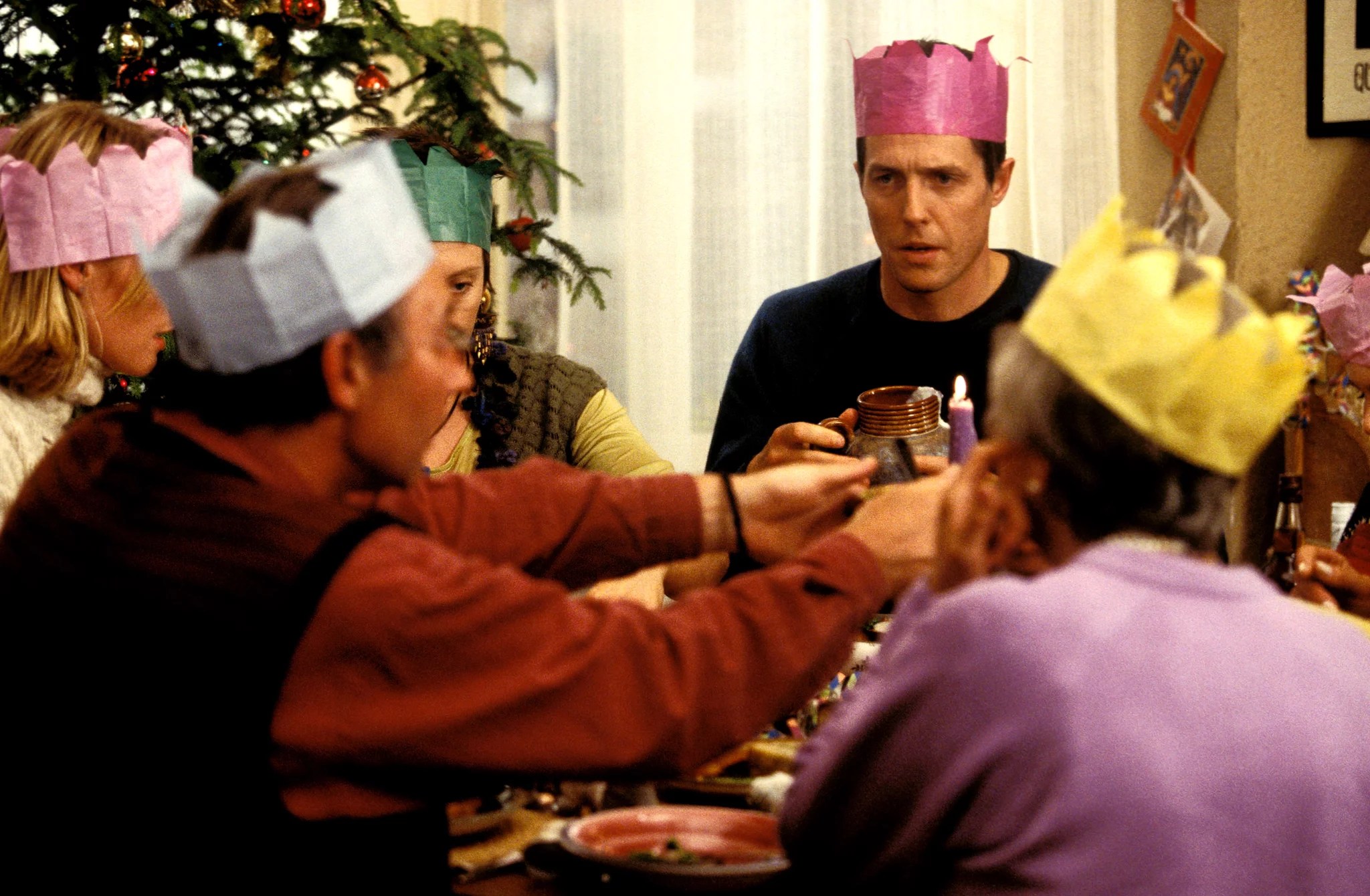
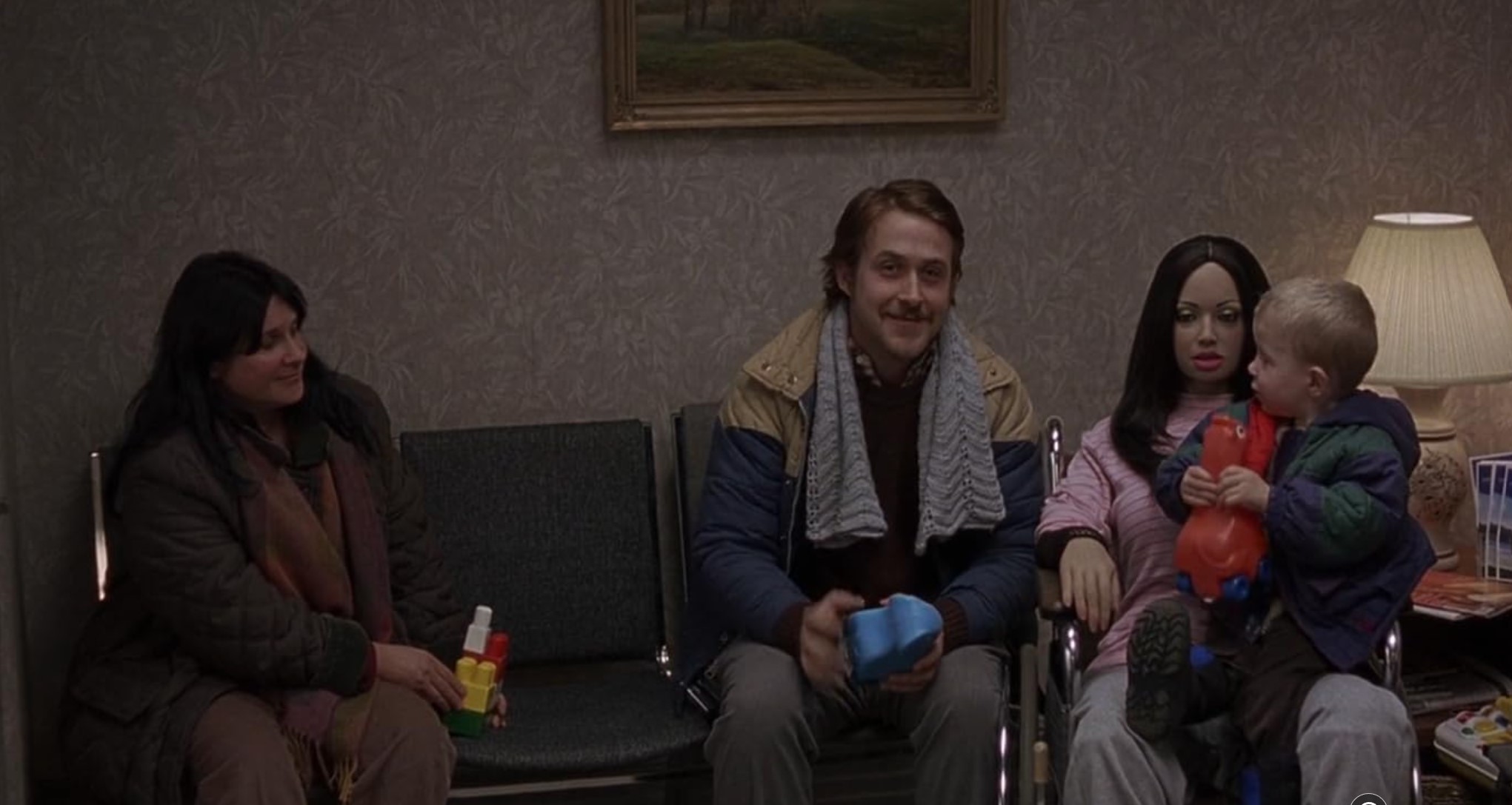
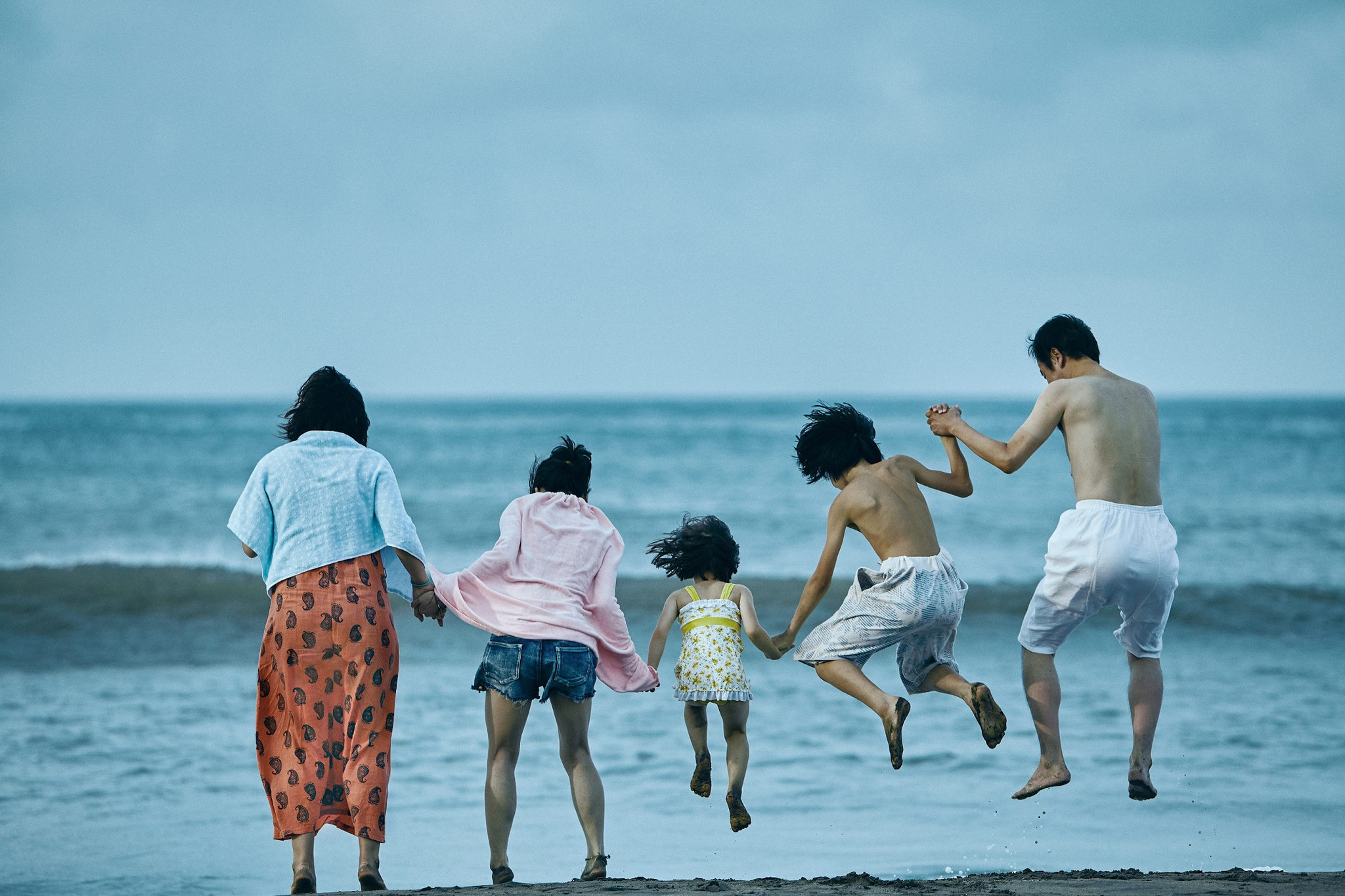
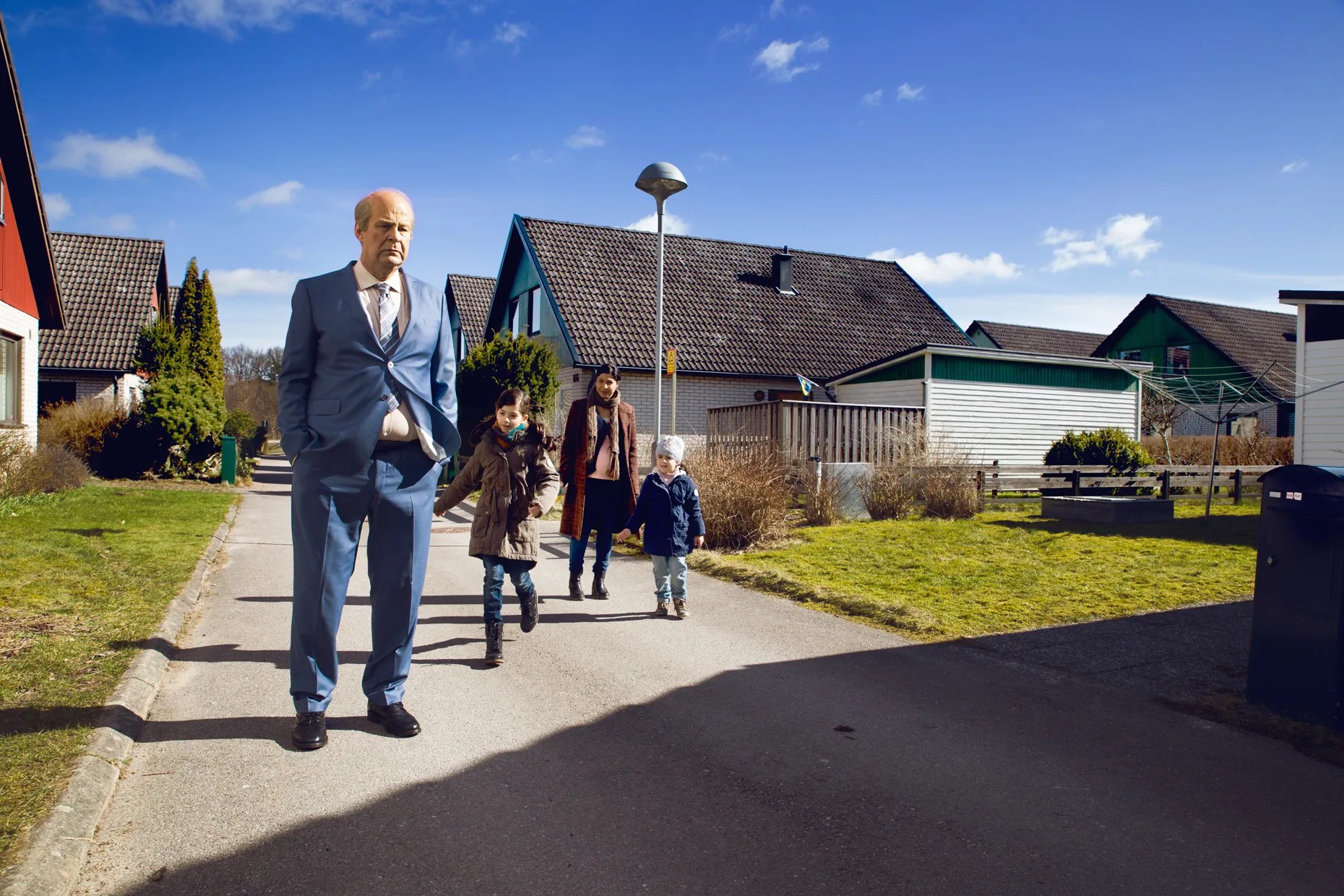
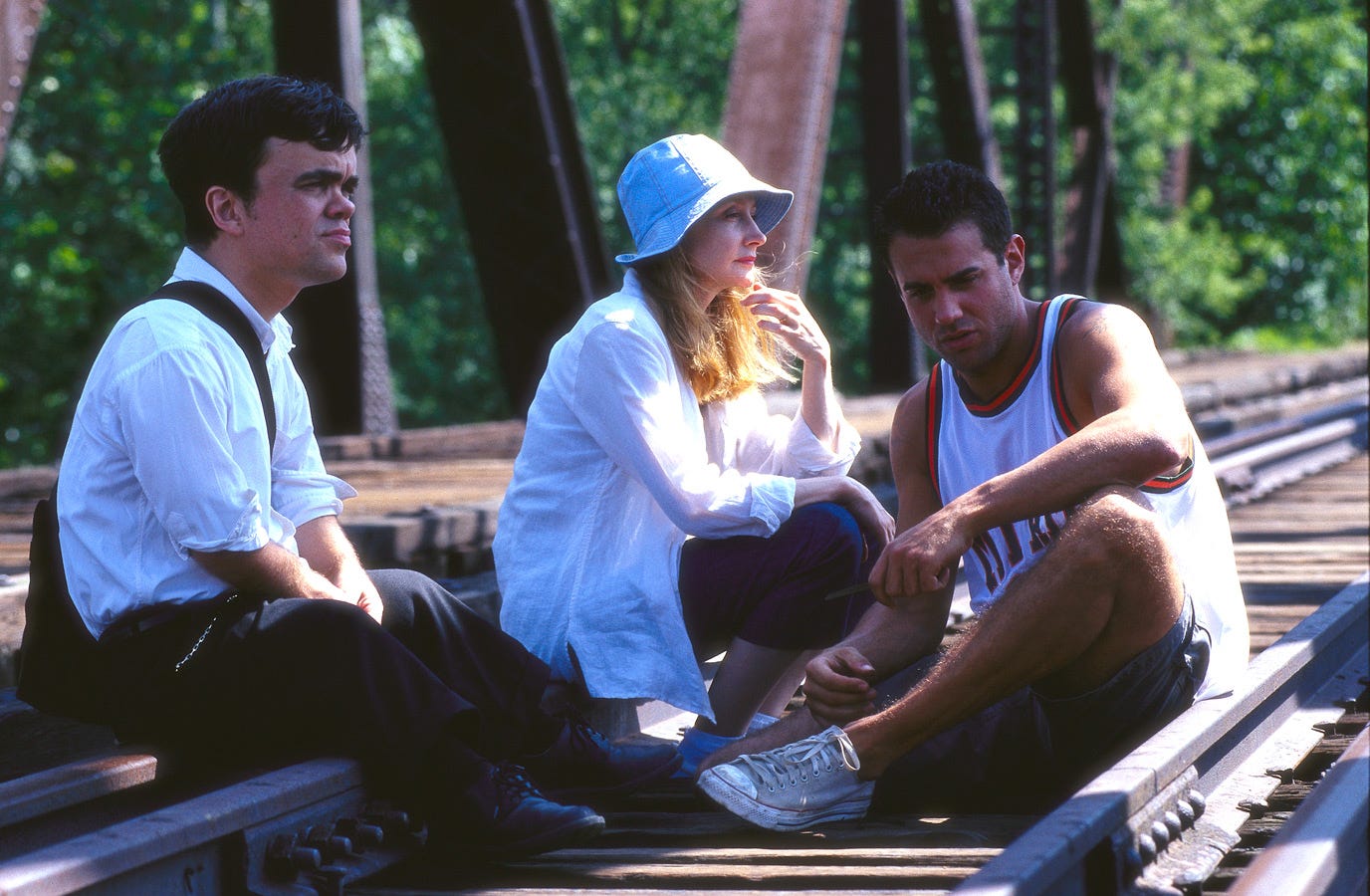


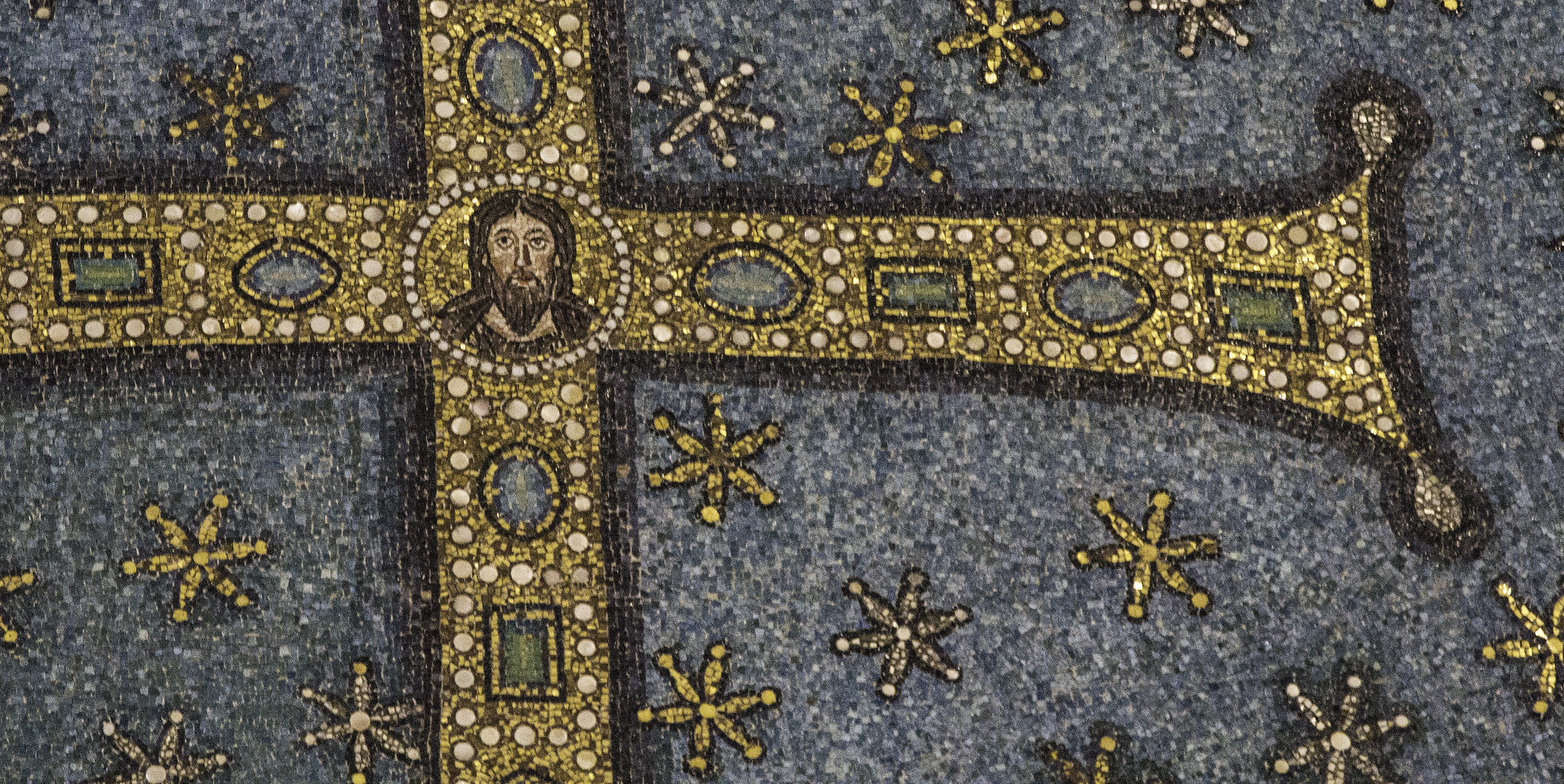

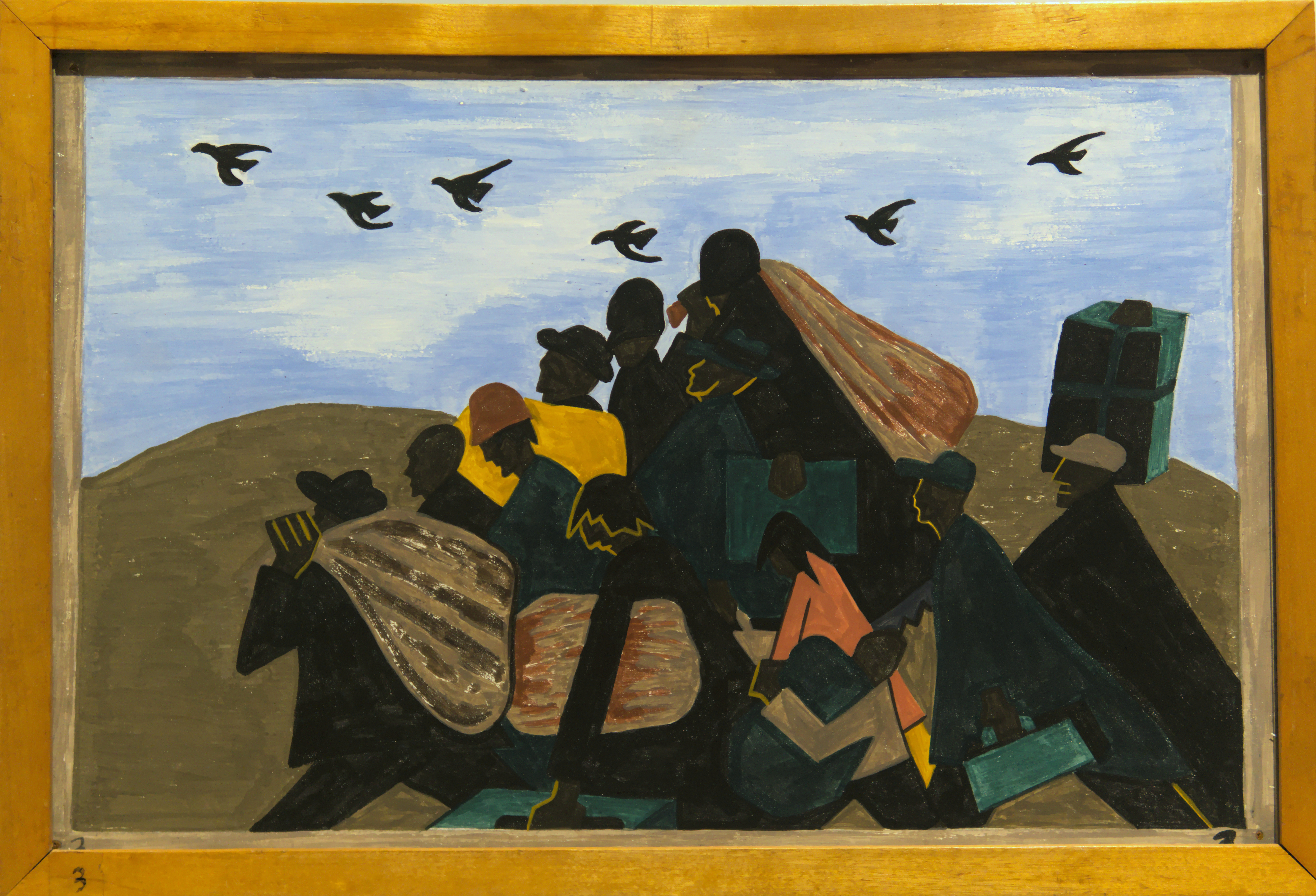
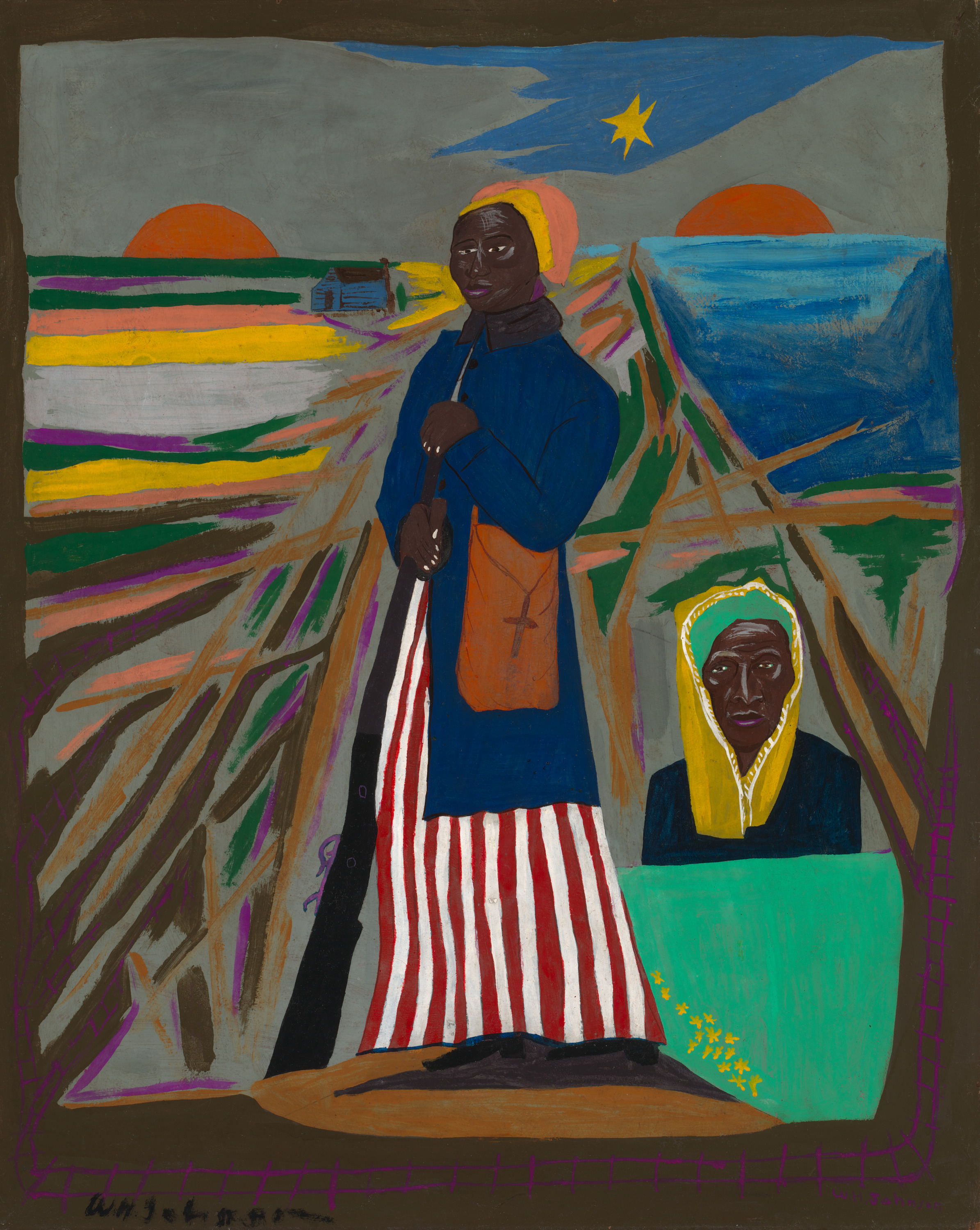
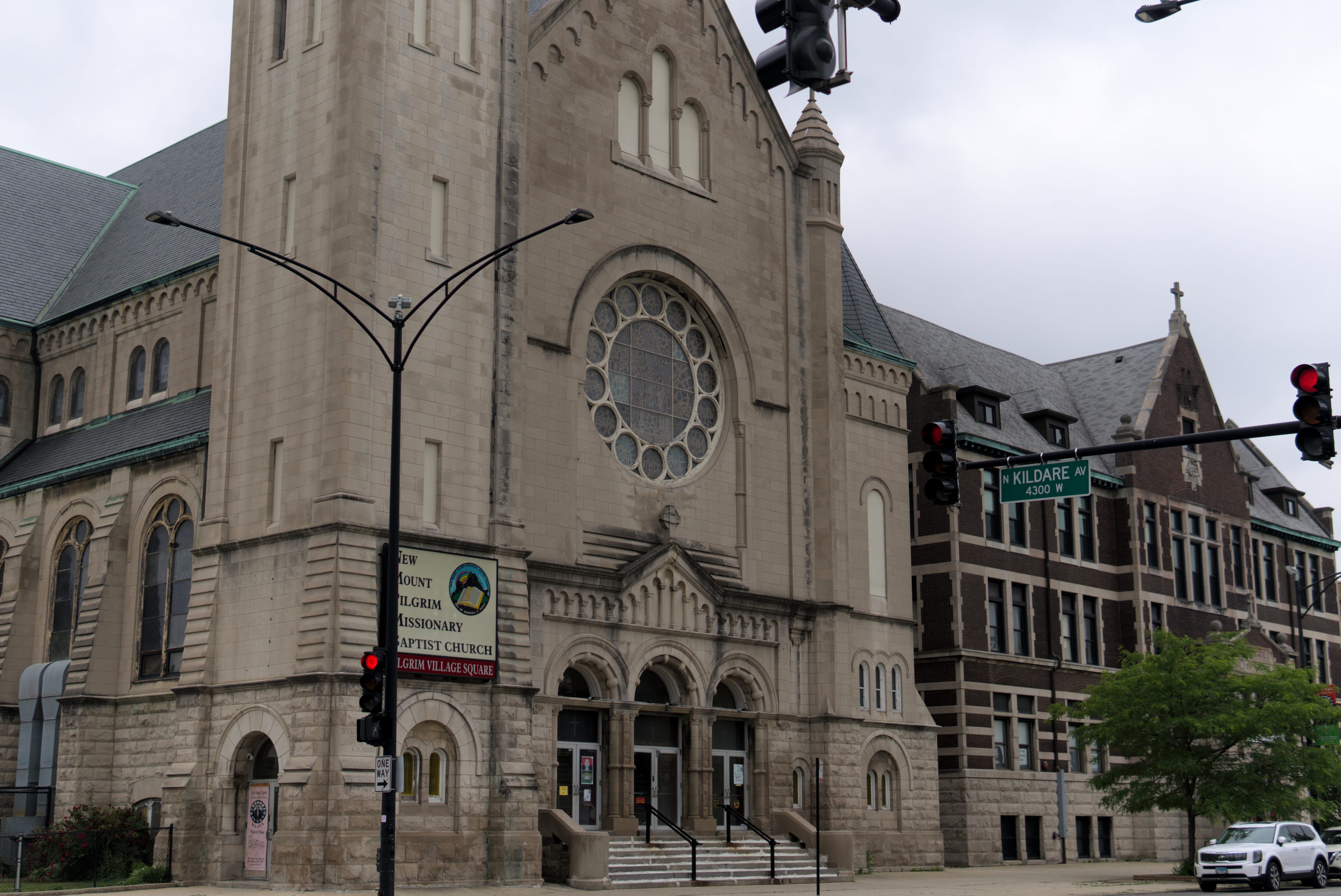


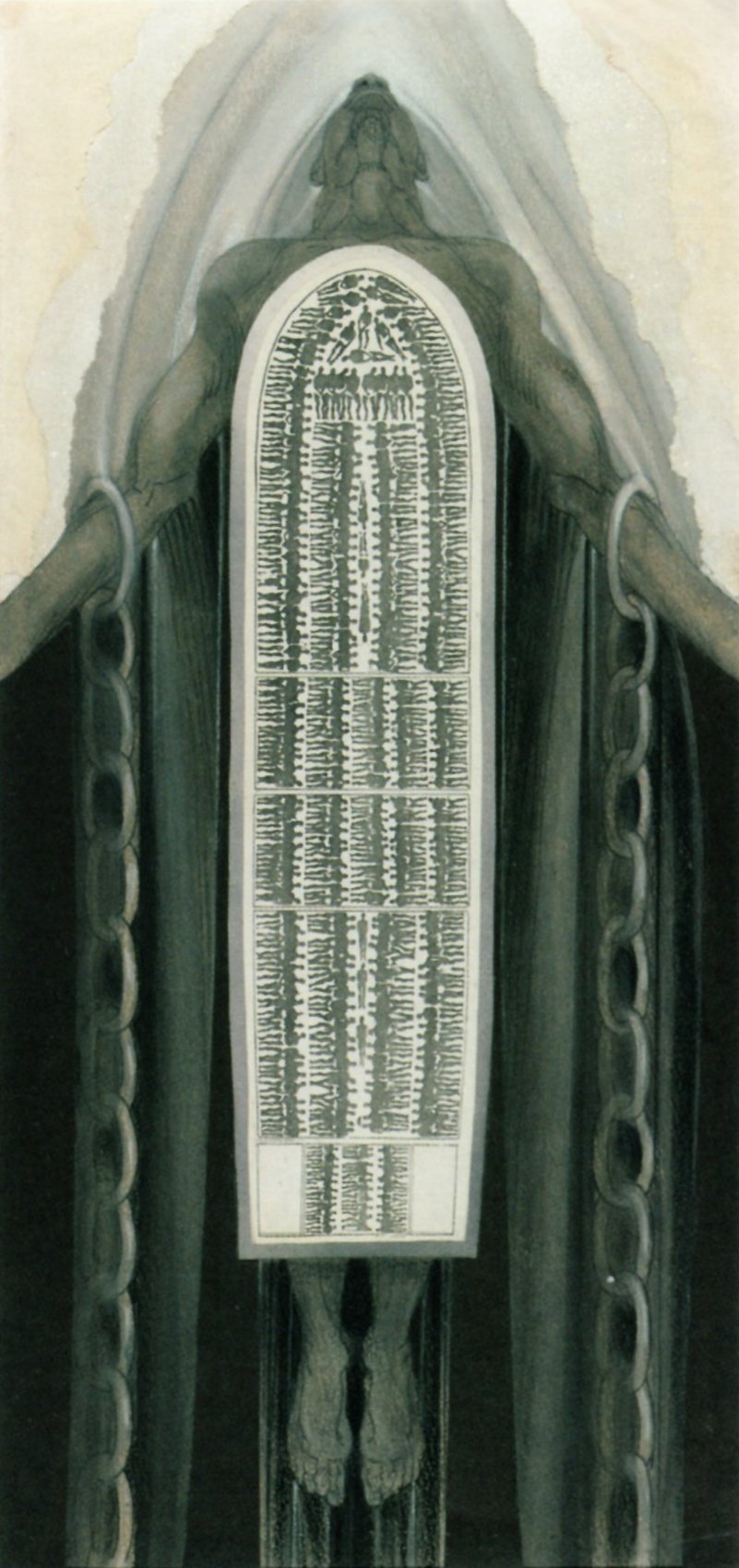


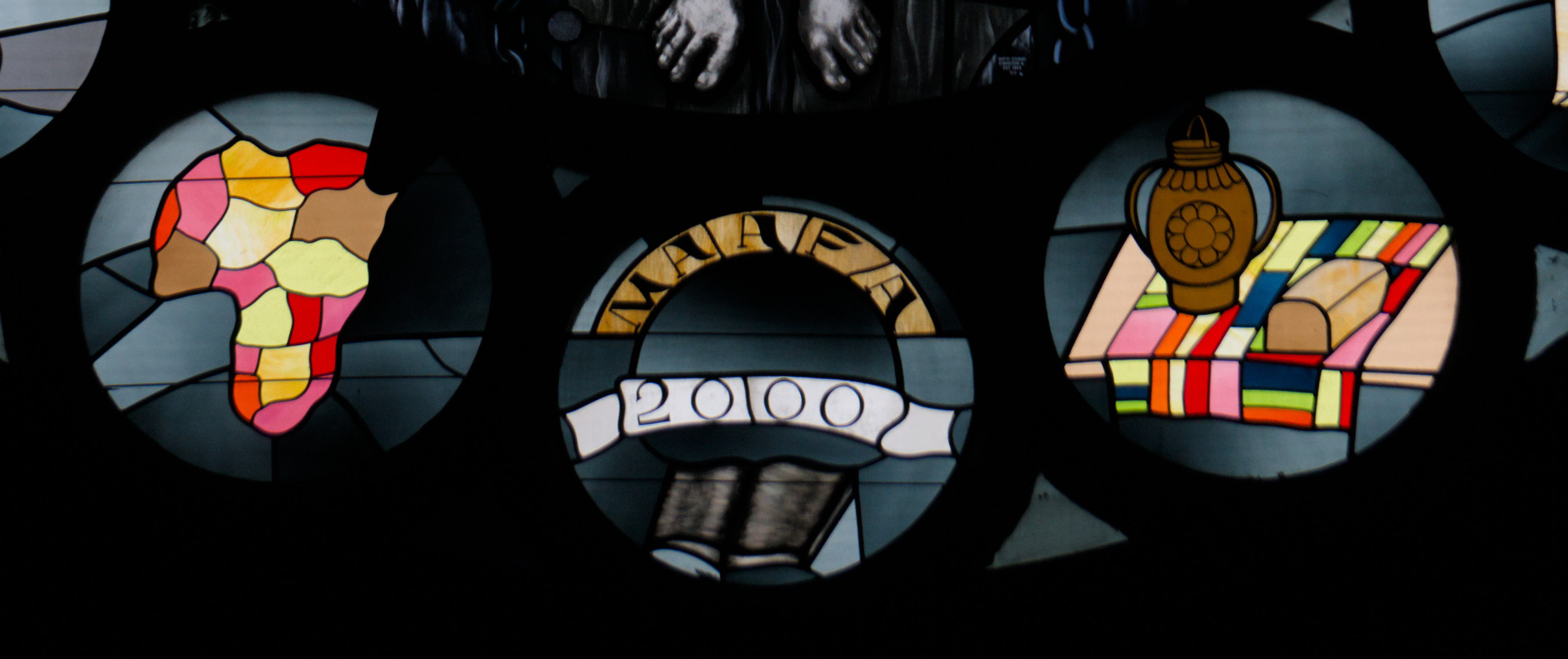


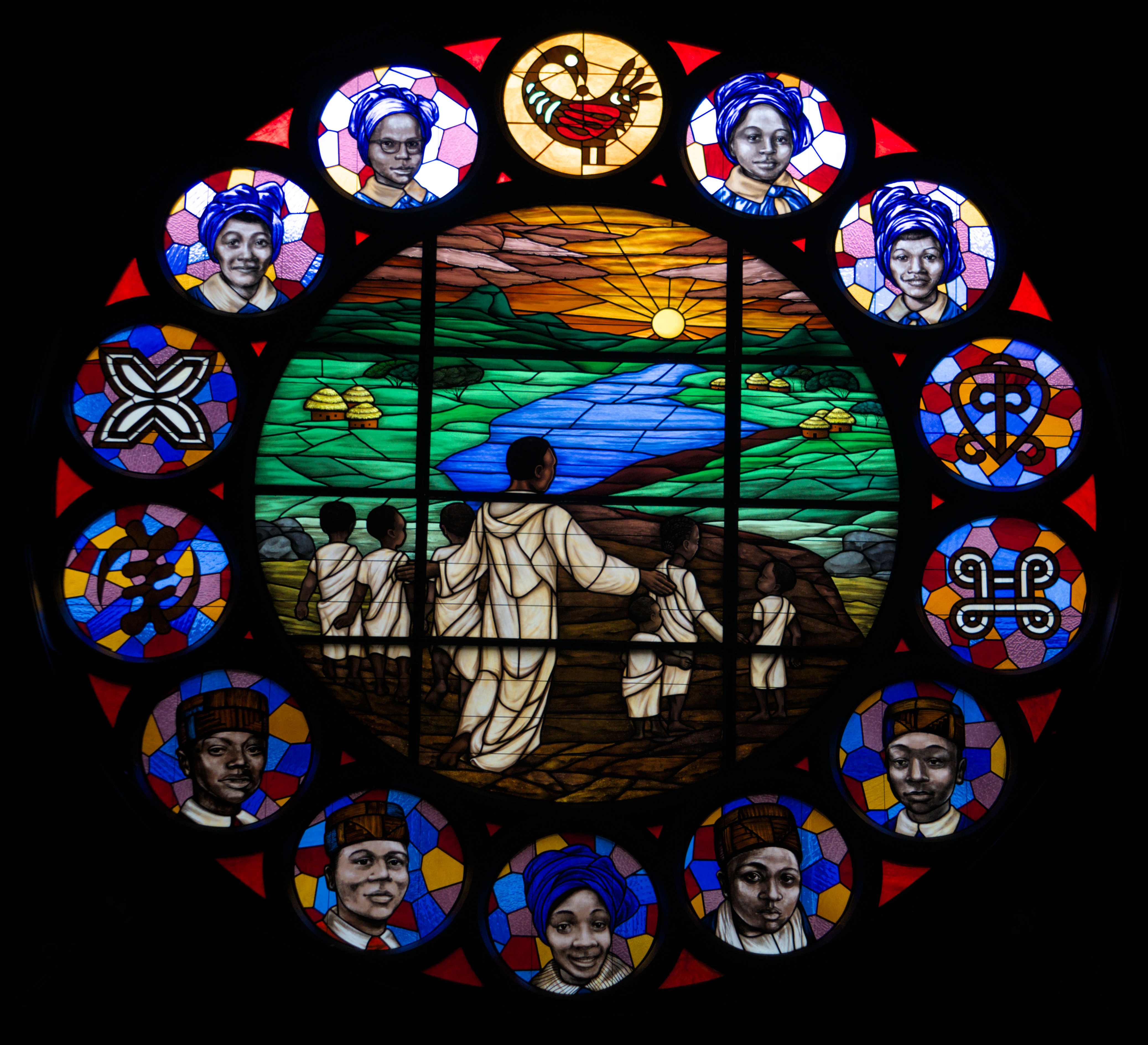



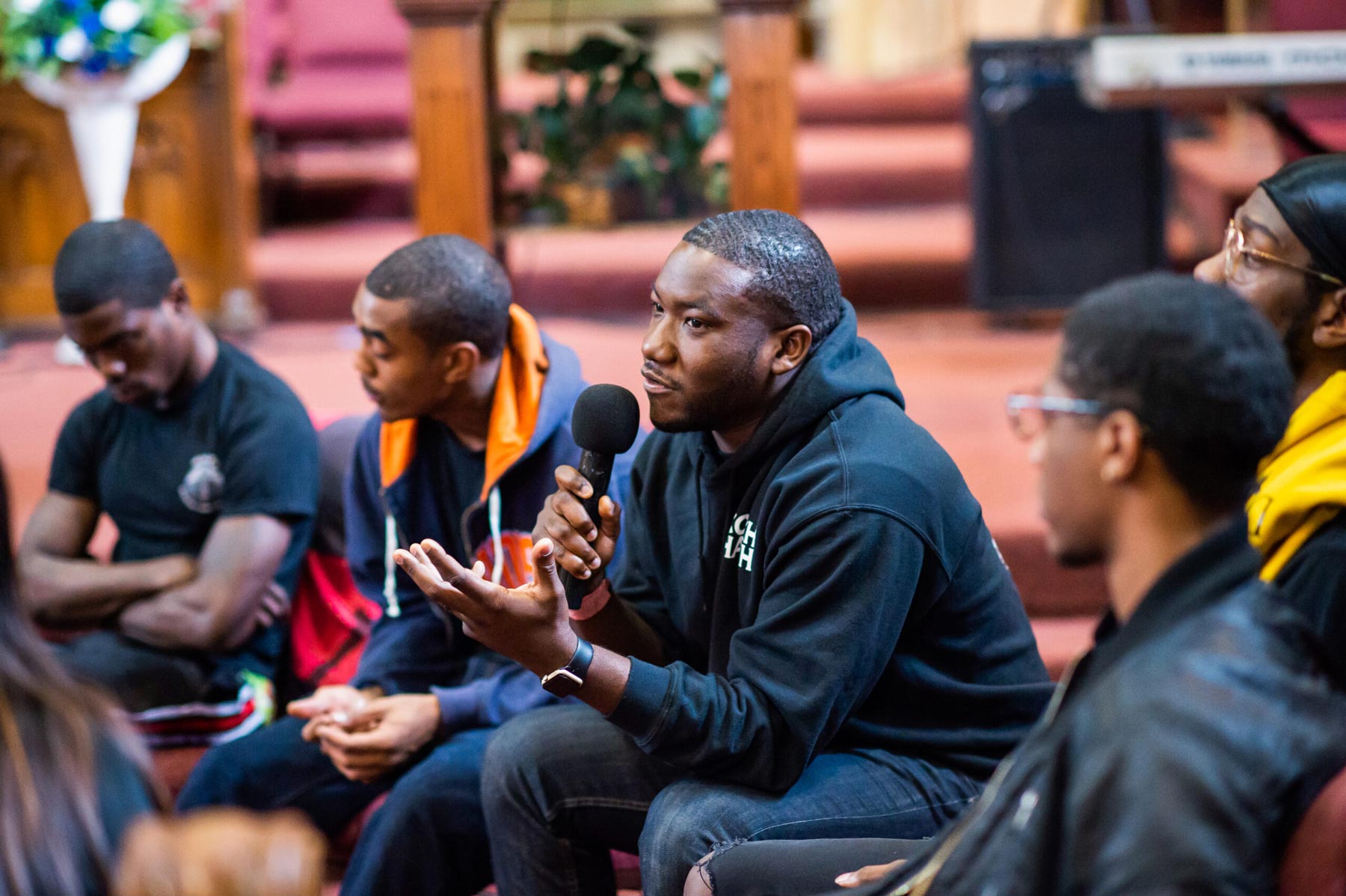


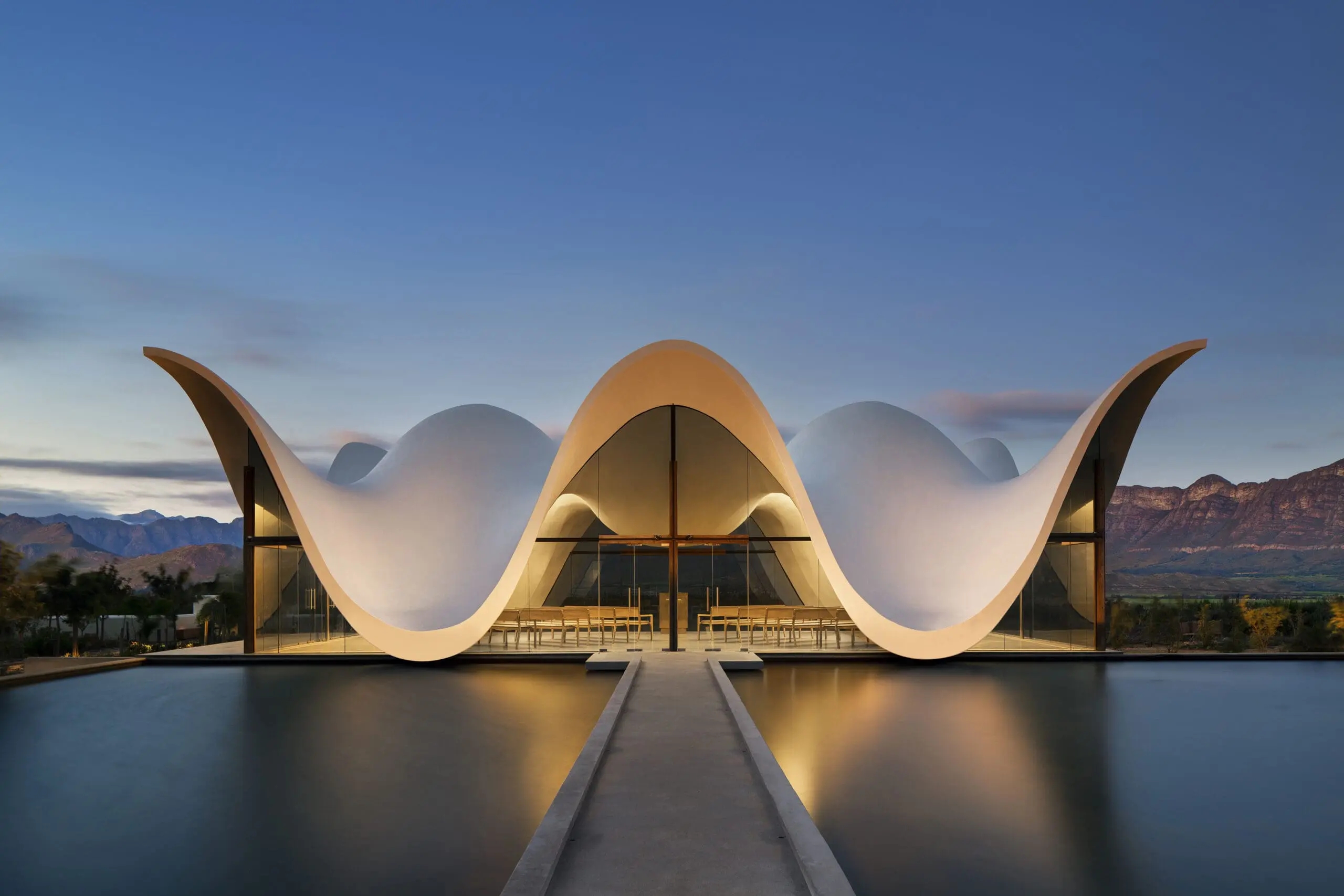
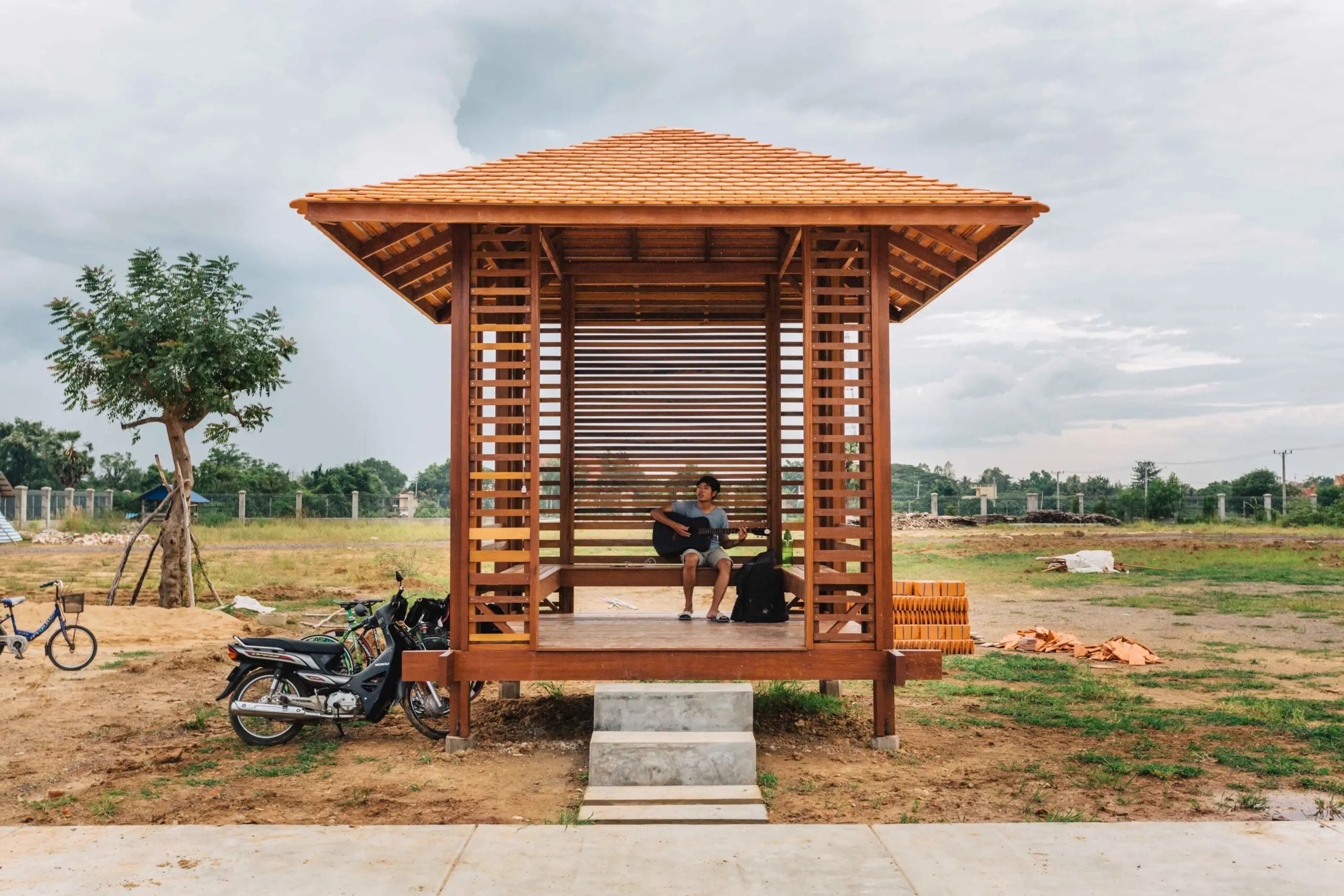


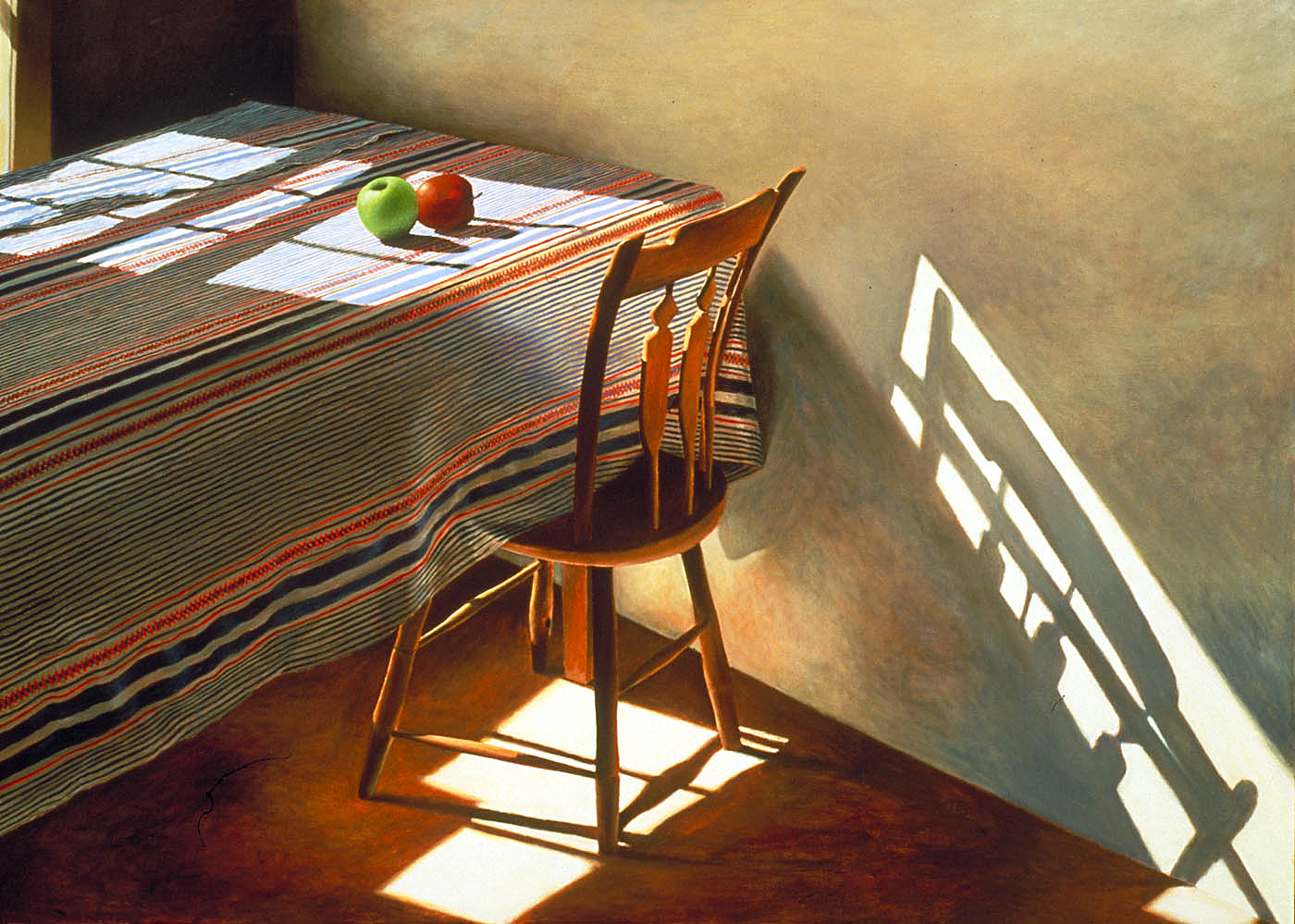


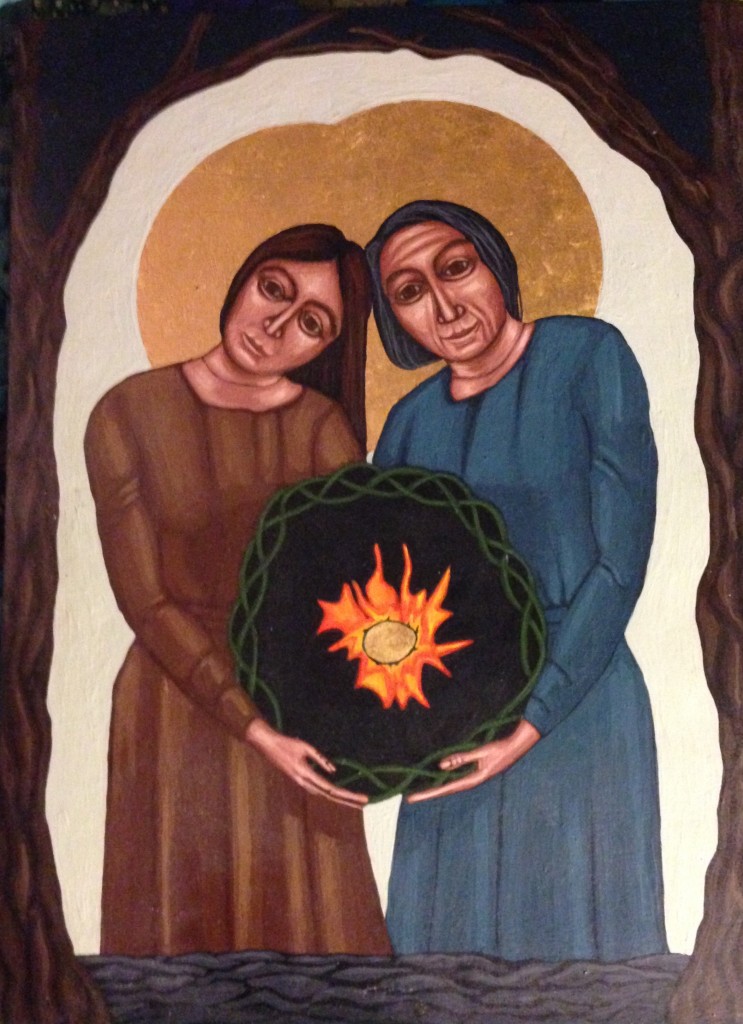
 Art & Theology