Watch therefore: for ye know not what hour your Lord doth come.
—Matthew 24:42 (KJV)
LOOK: Quote-Unquote, Hyphen, and The Point of Intersection by Kay Sage
There’s a wistful quality to the paintings of the midcentury American surrealist artist Kay Sage [previously], which often feature tenuous, draped structures and a distant light in the vast dark. The first work of hers I saw in person was Quote-Unquote, which shows a ragged, exposed architectonic form—is it fallen into disrepair, or incomplete?—whose vertical wood beams pierce the dreary gray sky.
The museum label at the Wadsworth Atheneum reads in part: “Sage’s later paintings featured vertical architectural structures, such as walls and scaffolding, set in otherwise deserted landscapes. These inanimate forms were often draped with plain fabric, as if to suggest a human presence or absence.” The title Quote-Unquote provides little interpretive help. What is being quoted here? Is irony intended?
Painted the same decade, Sage’s Hyphen shows a towering structure of open doors and windows.
And ThePoint of Intersection shows a series of wooden boards and frames standing, slightly diagonal to the viewer, on a ground that recedes into infinity. In the bottom left corner a rumpled sheet or garment lies on a squat platform.
Is the “intersection” of the title between time and eternity, or . . . ?
LISTEN: “Not Knowing When the Dawn Will Come” | Words by Emily Dickinson, ca. 1884 | Music by Jan Van Outryve, 2018 | Performed by Naomi Beeldens (voice) and Jeroen Malaise (piano) on Elysium, Emily Dickinson Project, 2018
Not knowing when the Dawn will come, I open every Door, Or has it Feathers, like a Bird, Or Billows, like a Shore –
This is one of twelve musical settings of Dickinson poems for piano and voice by the Belgian composer Jan Van Outryve. It’s sung by soprano Naomi Beeldens, with Jeroen Malaise on keys.
I’ve always read “Not knowing” as an Advent poem, as promoting a posture of readiness for the coming of Christ—he who is, as we call out in the O Antiphons of late Advent, our Oriens, Rising Sun, Dayspring. Will he come softly, rustling, avian-like, or will he come crashing onto earth’s shore like a wave?
Expecting Dawn’s imminent arrival, the speaker of the poem opens every door, welcoming its light.
From Augustine (Confessions) to Teresa of Ávila (The Interior Castle), the picture-making nunsof St. Walburga’s Abbey in Eichstätt to C. S. Lewis (Mere Christianity), the human heart has long been compared to a house. To open the windows or doors of the heart to Christ is to invite him to come in and dwell there and to transform the place.
Advent commemorates threecomings of Christ: his coming in “history, mystery, and majesty,” as one priest put it. That is, Christ’s coming (1) as a babe in Bethlehem, (2) in the Spirit, to convert, illuminate, equip, and console, and in the bread and wine of the Eucharist, and (3) at the end of time.
Have you opened every door to him? Do you eagerly expect him to arrive—this Christmas (are you telling, singing, enacting the story of his nativity?); into your struggles and brokenness, to companion you and to heal and strengthen; and again on earth, to unite it with heaven and establish, fully and finally, his universal reign?
This is the first post in a daily Advent and Christmastide series that will extend to January 6.I hope you follow along!
“One of poetry’s great gifts is to slow us down,” writes Peggy Rosenthal in Praying the Gospels through Poetry. “We’re used to racing ahead as we read, whether it’s a newspaper or an email memo or even an essay: language in these forms propels us forward, urging us to grab up its main points. But poetry doesn’t press ahead so much as hold us still—in the wonder of words crafted to open into another dimension.”
Below are twenty-five poems to “hold us still” this holiday season.
I’ve collected hundreds of Advent and Christmas poems over the past decade, but for this feature one of the selection criteria was that the poem must be freely available online. I chose the number twenty-five because that is standard in most Advent calendars—tools for counting down the days to Christmas. This way, you can choose, if you wish, to bookmark this page and read just one poem a day from December 1 to 25, each one a little treat.
The order progresses, in general, from Advent longing and anticipation to Christmas joy and wonder to post-nativity moments like the presentation in the temple and the visit of the magi.
1. “Advent Madrigal” by Lisa Russ Spaar: I’m not sure I understand this poem, but I like it. A madrigal is a part-song, and this is a song of waiting in simultaneous belief and doubt, of being irresistibly attracted to God’s story while also skeptical of aspects. The speaker compares the moon to a flashlight that a theater usher shines down the aisle to escort folks to their seats. What does it mean that “the treetops sough // & seize with” escape? Escape from what? And that the earth has been purloined? I don’t know, but the final couplet really lands for me—about how in the dark night of our not-knowing, we make our Advent wreaths, decking them with evergreens, their round shape an O of lament and awe before the yet-to-be-seen.
Source: University of Virginia Office of Engagement
2. “Prayer” by John Frederick Nims: The first in a sequence of five poems, “Prayer” expresses a sense of emptiness and desire, beckoning an unnamed one whom I read as Christ to come and fill. “Come to us, conceiver, / You who are all things, held and holder. / . . . / Come, infinite answer to our infinite want.”
3. “how he is coming then” by Lucille Clifton: This poem is part of a sequence on the life of Mary; it appears between “mary’s dream” (on the Annunciation) and “holy night” (on Mary’s ecstatic birthing experience). In answer to the title, Clifton gives three similes.
4. “Advent 2” by Anna A. Friedrich: This poem is the second in a series of Advent villanelles commissioned by the poet’s church in Boston last year to converse with one or more of the lectionary readings for each week of the season. Malachi 3:1–4 is the primary touchstone here, a formidable prophetic passage that compares God in the day of his coming to a blazing fire that refines metal. Stanza 3 references the fiery repentance-preaching of John the Baptist from Luke 3:1–6, and then Friedrich draws in another, unexpected “fire” text: Daniel 3, in which three young Hebrew men are thrown into a furnace by a Babylonian king for their refusal to worship his gods but are preserved from harm when a mysterious fourth person appears with them in the flames. Friedrich connects this story to the promise that the earth and its inhabitants will not be wholly consumed in the fire of God’s judgment—only the impurities, the dross, will be destroyed, so that all may be restored to their truest selves. Hence why, in Friedrich’s words, “We pray for His fire. We trust this flame.”
5.“Desert Blossoming” by Amit Majmudar: A reflection on the messianic promise of Isaiah 35:1–2, this poem celebrates how, through the deserts of Israel, Jesus “scattered his verses on the secretly gravid ground,” causing the wilderness to blossom. Majmudar mentions red, the color of fire (an image he connects to the light of faith), rhyming it with “bled.” Although he uses this final word in the sense of spreading into or through—oases bleeding into one another as dry land becomes water—one can’t help but think of Jesus’s sacrificial death, his blood extraordinarily fertile, producing life.
Joseph Stella (American, 1877–1946), Tree, Cactus, Moon, ca. 1928. Gouache on paper, 104.1 × 68.6 cm. Reynolda House Museum of American Art, Winston-Salem, North Carolina.
6.“Name One Thing New”by Seth Wieck: This six-line poem takes the Teacher of Ecclesiastes to task, responding to his cynical claim that “there is nothing new under the sun” (Eccles. 1:9) with a counterexample.
7.“For My Mother at Advent” by Brian Volck: The poet recalls a simple Advent tradition his mother established in his childhood and reflects on her spiritual legacy, her lifetime of Christ-inspired kindnesses that continue to pillow him. How might we soften the hardness of the world for others?
8. “Advent” by Suzanne Underwood Rhodes: This stunning poem makes unlikely intertextual connections, bringing Matthew 19:24 (one of Jesus’s hard sayings regarding wealth) to bear on John 1. Its unique angle on the Incarnation and its evocative imagery have inspired an experimental jazz composition and several paintings.
9. “An Hymn to Humanity” by Phillis Wheatley: “Lo! for this dark terrestrial ball / Forsakes his azure-pavèd hall / A prince of heav’nly birth!” So begins this poem on the Incarnation by Phillis Wheatley (ca. 1753–1784), the first African American to publish a book of poetry. In stanzas 2 and 3, God the Father dispatches the Son to establish his throne on earth, “enlarg[ing] the close contracted mind, / And fill[ing] it with thy fire.” The “languid muse” in stanza 5 refers to Wheatley herself, whereas the “celestial nine” are the ancient Greek inspirational goddesses of literature, science, and the arts. The “smiling Graces” is another classical reference.
Michael Wolgemut (German, 1434–1519), The Father sending the Son into the world, 1491. Hand-colored woodcut from the Schatzbehalter (published by Anton Koberger, Nuremberg), 43.7 × 27.5 cm. British Museum, London.
10. “In My Hand” by Sarah Robsdottir: Mary remembers the moment she conceived Jesus, one ordinary day when sitting down to a bowl of lentil stew.
Source: Aleteia, April 9, 2018
11. “The Risk of Birth, Christmas, 1973”by Madeleine L’Engle: Best known for her children’s novel A Wrinkle in Time, Madeleine L’Engle was also a poet. Here she compares our era to the one in which Jesus was born—both are characterized by violence and hate, and yet Jesus, the embodiment of divine love, willingly entered the peril.
12. “On Another’s Sorrow” by William Blake: Through the Incarnation, God lovingly, humanly, entered the world of human woe to experience it firsthand. “He doth give His joy to all,” Blake writes: “He becomes an infant small, / He becomes a man of woe, / He doth feel the sorrow too.” I featured this poem about Emmanuel, God-with-us, in a musical setting by singer-songwriter David Benjamin Blower in 2023 but was surprised that Blower omitted Blake’s final stanza, whose closing couplet I find striking, as it conveys Jesus’s continued identification with and compassion for humanity, how he moans alongside us in our suffering. For a different musical interpretation, also in an acoustic indie folk mode, see the one by Portland-based artist Michael Blake, from his 2021 album Songs of Innocence and Experience:
Source: Songs of Innocence and Experience (London, 1794). Public Domain.
13.“Missing the Goat”by Lorna Goodison: An immigrant from Kingston, Jamaica, to Toronto, Ontario, Goodison writes of the heightened feeling of exile but also of creative adaptations during the holidays as she tries to carry out the food traditions of her native country on a foreign soil where some of the ingredients are in more limited supply. For the sorrel wine, traditionally made with roselle (Hibiscus sabdariffa) petals, tropically grown, she has to make do with redbuds. And the local shops have run out of goat meat—“the host of yardies” (people of Jamaican origin) who’ve moved to the area have already bought it all up—so “we’ll feast then on curried some-other-flesh.” Despite the differences from home, Christmas is still Christmas, and she raises her “hybridized wassail cup” to her new place, her new neighbors (many of them, like her, also recent arrivals from the Caribbean), and the creation of new rituals in multicultural Toronto.
Source: Controlling the Silver (University of Illinois Press, 2010); compiled in Collected Poems (Carcanet, 2017)
14. “Word Made Flesh”by Kathleen Raine: Awarded the CBE (Commander of the Order of the British Empire) for her significant contributions to literature and culture, Raine has been described as a mystical and visionary poet. Here is her revoicing of John 1. What a powerful last two lines!
15.“Nativity”by Barbara Crooker: In the heavy dark, in the windy cold, “love is born in the world again” every December when we retell the story of Christ’s birth.
Gary Kuehn (American, 1939–), Straw Pillow, 1963. Straw, plaster. Ludwig Museum, Cologne, Germany, Inv. ML/SK 5185. Photo: Victoria Emily Jones.
16. “First Miracle”by A. E. Stallings: The first miracle Jesus performed, according to the Gospel of John, was turning water into wine. Stallings reflects on an earlier miracle performed by his mother’s body, and all birth-giving mothers’: turning nutrients from her blood into milk.
17.“What Sweeter Music Can We Bring” (or “A Christmas Carol, sung to the King in the Presence at Whitehall”)by Robert Herrick: “The Darling of the world is come”! Originally written as a song for soloists (each number corresponds to a different singer) and chorus, this poem reverses the typical seasonal imagery of Christmas, remarking how, at Jesus’s birth, “chilling Winter’s morn / Smile[s] like a field beset with corn” and “all the patient ground [is turned] to flowers.” The original music by Henry Lawes is lost, but many contemporary composers have written settings of the text, most famously John Rutter.
Source: Hesperides: Or, Works Both Human and Divine (London, 1648). Public Domain.
18.“Sharon’s Christmas Prayer”by John Shea: A five-year-old recounts the Christmas story, and when she reaches the clincher, she can’t hold back her glee.
19.“God”by D. A. Cooper: Riffing on Williams Carlos Williams’s “The Red Wheelbarrow,” this spare poem attends to the birth and death of the incarnate God, upon which so much depends.
Source: Reformed Journal, September 3, 2024
Katarzyna Malinowska (Polish, 1989–), Juxtapose (diptych), 2021. Digital painting, 20 × 30 cm.
20. “Lullaby after Christmas”by Vassar Miller: The speaker wishes sweet sleep for the newborn Christ child, wishes to keep him innocent of his fate for as long as possible—for “even God has right to / Peace before His pain.” Consisting of four sestets whose second, fourth, and sixth lines rhyme, the poem has a sing-songy quality that is jarring for the juxtaposition of words like “soft,” “warm,” and “tinkling” with the likes of “blood,” “gore,” and “die.”
21. “Journey of the Magi”by T. S. Eliot: Eliot wrote this poem shortly after his conversion to Christianity in 1927. Opening with a passage from a Christmas sermon by the seventeenth-century Anglican bishop Lancelot Andrewes, it is from the perspective of one of the magi, who made a long, toilsome journey in search of the meaning of a mysterious guiding star. After the magi’s encounter with the Christ child, they would never be the same; their paganism would no longer satisfy. The poem is about the transformative impact Christ has on those with humility enough to see him for who he is (having followed the light of revelation) and to worship him accordingly. And that transformation is in some ways painful, as it involves giving up some of the things one once held dear.
“Were we led all that way for / Birth or Death?” the magus asks. Jesus’s wasn’t the only birth they witnessed; they, too, were (re)born in Bethlehem. But spiritual rebirth is also a sort of death—the magi died to their old selves and false loves and loyalties. Thus, when they returned to Babylon, they felt like strangers in a strange land. They were now citizens of a different kingdom, and filled with a longing for its consummation.
Source: Journey of the Magi (Ariel Poems) (Faber & Gwyer, 1927). Public Domain.
Jörg Länger (German, 1964–), The Three Kings, 2013. Linocut and gesso on aluminum dibond, 38 × 38 cm. The linocut is after a 12th-century illumination from the St Albans Psalter, held at the Dombibliothek, Hildesheim, Germany.
22. “Twelfth Night”by Sally Thomas: (Scroll to second poem.) As the Christmas season draws to a close, holly berries shrivel and drop, the “candles drown themselves in waxen lakes,” “the tree’s a staring corpse,” and a spider has built a web across the mantel nativity. Thomas uses the passing of the season to reflect more broadly on the passing of time and our own dustiness and desiccation—and by contrast, the unchangeability of God.
23. Untitled poemby S. E. Reid: Most reflections on the New Year are full of enthusiastic goal-setting and go-getting, but Reid, gardening in her greenhouse in the crisp cold of January, describes a “fall[ing] backwards,” “dropping into the dark,” “shivering,” herself a seed, latent in the soil, trusting God that growth will come.
24. “Anna the Prophetess” by Tania Runyan: Forty days after Jesus’s birth, Mary and Joseph presented him in the Jerusalem temple. Runyan imagines this event from the perspective of Anna, a woman who was widowed young and thenceforth lived at the temple into old age, devoted to prayer, fasting, praise, and prophecy.
25. “The Work of Christmas”by Howard Thurman: Drawing on Jesus’s mission statement in Luke 4, the great African American theologian and civil rights leader Howard Thurman urges us to continue the work of Christmas—finding, healing, feeding, etc.—throughout the year. Listen to the simple yet vigorous choral setting by Elizabeth Alexander.
ADVENT SERIES: Restful Advent by Tamara Hill Murphy:Tamara Hill Murphy [previously] is one of my favorite spiritual writers, her thoughtful words and curation of resources having served as a well of inspiration for me over the years. Each year, similar to Art & Theology but with the sensibilities and expertise of an Anglican spiritual director, she publishes a new daily Advent and Christmastide guide through her Substack, Restful, running this year from November 30 to January 5. Each post in the series includes lectionary readings, art, music, a prayer, and a simple practice to help us notice God’s presence during these waiting days. This time around, the Daybook will feature excerpts from Claude Atcho’s new book Rhythms of Faith along with ideas from The Liturgical Home by Ashley Tumlin Wallace and some of my own formerly published art commentaries.
“The Daybook is a way to pay attention to Christ’s three arrivals—then, now, and still to come—and to walk through December with a quieter heart and a stronger hope,” Murphy writes.
Murphy is offering Art & Theology readers a 50% discount to Restful using this link, which brings the subscription cost down to $4/month (let it run for two months if you want to receive the full Christmastide Daybook) or $32/year, which will give you access to her year-round content. The offer expires January 5, 2026.
+++
BLOG POST: “The Sacred Journey of Advent” by Ashley Tumlin Wallace, The Liturgical Home: “Advent,” writes Wallace, “is a season of preparation, for the coming of Christ at Christmas, and also for His return in glory at the end of time.” This is a great introduction to the season that kicks off the new church year.
+++
SONGS:
One of the scripture texts of Advent is Isaiah 40:3–5:
A voice cries out: “In the wilderness prepare the way of the LORD; make straight in the desert a highway for our God. Every valley shall be lifted up, and every mountain and hill be made low; the uneven ground shall become level, and the rough places a plain. Then the glory of the LORD shall be revealed, and all flesh shall see it together, for the mouth of the LORD has spoken.”
The Gospel-writers Matthew (3:3), Mark (1:3), and Luke (3:4) all see this exclamatory figure as John the Baptist, who told people to prepare for God’s coming by repenting of sin, since holding on tightly to ways of unlove erects barriers to God’s entry into one’s life. Here are two songs based on this Advent passage.
>> “Prepare the Way” by Maverick City Music and Tribl, feat. Chandler Moore and Siri Worku, on Tribl I (2021): This song repeats, again and again, the Advent mantra “Prepare the way,” embedding John the Baptist’s invitation deeply into hearts and minds. Its tag beseeches Christ to come with the fire of purging, the rain of refreshment, and the oil of blessing. To welcome this coming, this transformation and growth, we need to decenter ourselves, ceding to God the place of primacy, from which he works our good and his glory.
>> “Prepare the Way” by Christopher Walker, on Rise Up and Sing, 3rd ed., vol. 3 (2009): This 1991 song is by Christopher Walker, a church music composer, lecturer, and choral conductor originally from the UK but now living in Santa Monica, California. Published by OCP (Oregon Catholic Press), it would make a great song for a children’s Advent choir.
+++
2018 SERIES: Advent Caravan: Walking with the Holy Family by Sarah Quezada: I learned about Sarah Quezada’s work at the intersection of faith, justice, and culture through Tamara Hill Murphy (see first roundup item) in 2018, when Quezada published a five-part series reflecting on the likelihood that Mary and Joseph traveled to Bethlehem for the census not alone but in a caravan. Interweaving personal story, biblical interpretation, and current events, Quezada considers how the holy couple’s experience in the final months of Mary’s pregnancy connects to the reality of people on the move seeking hope, peace, joy, and love today.
While the series is not hosted online, I received permission from Quezada to reproduce it here.
On Instagram, Quezada also shared a photo of her friend’s Advent mantel, where she combined figurines from her various nativity sets to form a “caravan” of travelers.
Photo via @sarahquezada
+++
YOUTUBE PLAYLIST: Jouluradion Hoosianna: Jouluradio is a Finnish radio station that broadcasts annually from November 1 to January 6, playing all Advent and Christmas music. Since 2012, every year they premiere a new arrangement and video performance of the popular Scandinavian Advent hymn “Hoosianna” (Hosanna, an Aramaic expression meaning “Save now!”), which Lutheran and Catholic churches in Finland sing on the first Sunday of the season. Based on Matthew 21:9, its lyrics greet the approaching Christ, affirming his identity and craving the deliverance only he can bring:
Hoosianna, Daavidin Poika,
kiitetty olkoon hän!
Kiitetty Daavidin Poika,
joka tulee Herran nimeen.
Hoosianna, hoosianna,
hoosianna, hoosianna!
Kiitetty Daavidin Poika,
joka tulee Herran nimeen.
Hosanna, Son of David,
Most blessed Holy One,
Hosanna, Son of David,
Who comes in the name of the Lord!
Hosanna, hosanna, hosanna
In the highest!
Hosanna, Son of David,
Who comes in the name of the Lord!
This hymn was written by the German composer, educator, and piano and organ virtuoso Georg Joseph Vogler in 1795 while working in Sweden as court conductor as well as tutor to the crown prince Gustav IV Adolf.
The Jouluradio commissions, which the station has compiled in a YouTube playlist, encompass a range of genres, including jazz, hip-hop, choral, pop, and electronic. Below is a list of previous years’, of which I’ve embedded the two asterisked ones on this page. Jouluradio typically releases their annual “Hoosianna” the day before Advent, so 2025’s will likely be posted this Saturday. [HT: Gracia Grindal]
*2015: Sointi Jazz Orchestra, arr. Jukka Perko (I don’t really understand the narrative in the video. I think the man is remembering a time in his childhood when he got lost in the woods, and then was found by his mother?)
As important as she is in the Christian tradition, the Bible doesn’t give us a whole lot of details about the life of Mary, especially prior to her conception of Jesus. To give her a backstory and fill in some gaps, the Protoevangelium of James (aka the Gospel of James) was written in the second century, probably in Syria. The author purports to be the apostle James, the brother of Jesus (by an earlier marriage of Joseph’s, according to the text), but the actual author is unknown. While parts of it are based on the canonical Gospels of Matthew and Luke, most of the material is legendary, developed to satisfy people’s curiosity about Jesus’s parentage and some of the events of his infancy.
The Protoevangelium of James was, and remains, immensely popular in Eastern Christianity, having been translated early on from its original Greek into Syriac, Ethiopic, Coptic, Armenian, and Arabic. On how the Orthodox Church views the text today, I found this Reddit thread interesting.
A later version of it, with additions and modifications, emerged in Latin by the seventh century under the name the Gospel of Pseudo-Matthew (aka the Infancy Gospel of Matthew), popularizing its stories in the West.
None of the three branches of Christianity regards these gospels as scripture—the Gelasian Decree of circa 495 officially classified the Protoevangelium as apocryphal, meaning not inspired or authoritative—but nonetheless, they have heavily influenced (in Catholicism and Eastern Orthodoxy) Christian art and Mariology.
Trying to interpret Christian artworks depicting unfamiliar scenes or details is how I first brushed up against the Protoevangelium of James and the Gospel of Pseudo-Matthew.
One such scene, which is rare but sometimes appears between images of the Visitation (or the Annunciation to Mary, or the First Dream of Joseph) and the Journey to Bethlehem, is of Mary standing before a priest, holding a cup. This, I learned, depicts the so-called trial by bitter water, or sotah ritual, an ancient Hebrew method for dealing judicially with women who were suspected of adultery. Outlined in Numbers 5:11–31, in this ritual, a suspicious husband was to bring his wife to the tabernacle to subject her to a trial by ordeal. After receiving a grain offering from the husband, the priest would mix a concoction of holy water, dust from the tabernacle floor, and curses scraped off from the parchment they were written on. The wife would be compelled to swear her innocence and then drink the cup. If she was guilty of marital unfaithfulness, she would suffer painful reproductive affliction;1 but if not, she would be unharmed and thus exonerated.
Trial by ordeal was a common legal recourse in patriarchal cultures across the ancient Near East, reflecting distrust of women’s sexuality and reinforcing husbands’ domination over their wives. That it was a sanctioned practice in the Old Testament is troubling, to say the least—but let’s sidestep that discussion for now. Let me simply commend to you the Numbers 5 visual commentary by Maryanne Saunders (Master of Studies, History of Art, Oxford), which examines three artworks based on this passage, including a feminist Jewish one.
Fresco, 11th century, Church of the Dormition of the Virgin Mary, Ateni, Georgia. (See a wider shot below.)
According to the Protoevangelium of James, sometime after the angel had appeared to Joseph convincing him of Mary’s fidelity, a Jewish scribe named Annas saw Mary’s pregnant belly and reported both her and Joseph to the priest for sexual sin, for they were not yet married. They maintained their innocence and were made to drink a potion that would have no effect if they were telling the truth but that would make them ill if they were indeed guilty. Of course, they came out scot-free. Their chastity was divinely confirmed.
This account of the Jewish ritual of sotah is unique in that (1) it is initiated by a third party, and (2) the male partner is also accused and made to drink the potential curse. Traditionally, the ritual could be initiated only by a husband. Scholars cite the Protoevangelium author’s apparent unfamiliarity with Jewish practices—this and others—as evidence that he was not Jewish (as the historical James was).
The Protoevangelium was written at a time when opponents of Christianity were decrying the virgin birth. The pagan philosopher Celsus, for example, insisted that while pledged to Joseph, Mary had an affair with the Roman soldier Panthera, and that Jesus was the illegitimate fruit of that union. The story of the trial by bitter water was an attempt to defend Mary against the charge of adultery and Jesus against the charge of ignoble origins. It also—if one believes God was indeed the moral adjudicator in the trial—corroborates the message Mary and Joseph claimed to have received separately from an angel, that Jesus was the Son of God.
I’m sharing this episode from the Protoevangelium not because I think it actually happened but so that you have more context for an image that occasionally crops up in cycles on the life of Mary. Also, perhaps its elaboration on the scandal and consequences of alleged adultery in ancient Jewish culture helps better situate us in Mary’s time and place.
Before I quote the relevant excerpt, a little further background is in order, to explain some of what’s mentioned in the dialogues. Earlier in the Protoevangelium, we read that as an expression of gratitude, Mary’s parents dedicated her to the service of God, and that she lived in the temple in Jerusalem from age three until puberty, where she was fed by angels. When her first menstruation loomed, the priests consulted on what to do with her, lest she defile the temple with her blood. They decided to give her over to the care of Joseph, an elderly widower with grown children.
OK, so now, here are chapters 15 and 16 of the Protoevangelium of James, as translated by Alexander Walker, courtesy of New Advent (I’ve added paragraph breaks):
15. And Annas the scribe came to him [Joseph], and said: “Why have you not appeared in our assembly?”
And Joseph said to him: “Because I was weary from my journey, and rested the first day.”
And he [Annas] turned, and saw that Mary was with child. And he ran away to the priest, and said to him: “Joseph, whom you vouched for, has committed a grievous crime.”
And the priest said: “How so?”
And he said: “He has defiled the virgin whom he received out of the temple of the Lord, and has married her by stealth, and has not revealed it to the sons of Israel.”
And the priest answering, said: “Has Joseph done this?”
Then said Annas the scribe: “Send officers, and you will find the virgin with child.” And the officers went away, and found it as he had said; and they brought her along with Joseph to the tribunal.
And the priest said: “Mary, why have you done this? And why have you brought your soul low, and forgotten the Lord your God? You that wast reared in the holy of holies, and that received food from the hand of an angel, and heard the hymns, and danced before Him, why have you done this?”
And she wept bitterly, saying: “As the Lord my God lives, I am pure before Him, and know not a man.”
And the priest said to Joseph: “Why have you done this?”
And Joseph said: “As the Lord lives, I am pure concerning her.”
Then said the priest: “Bear not false witness, but speak the truth. You have married her by stealth, and hast not revealed it to the sons of Israel, and hast not bowed your head under the strong hand, that your seed might be blessed.” And Joseph was silent.
16. And the priest said: “Give up the virgin whom you received out of the temple of the Lord.” And Joseph burst into tears. And the priest said: “I will give you to drink of the water of the ordeal of the Lord, and He shall make manifest your sins in your eyes.”
And the priest took the water, and gave Joseph to drink and sent him away to the hill-country; and he returned unhurt. And he gave to Mary also to drink, and sent her away to the hill-country; and she returned unhurt. And all the people wondered that sin did not appear in them.
And the priest said: “If the Lord God has not made manifest your sins, neither do I judge you.” And he sent them away.
And Joseph took Mary, and went away to his own house, rejoicing and glorifying the God of Israel.
Here’s how that episode is adapted in chapter 12 of the Gospel of Pseudo-Matthew—again, translated by Walker, and in the public domain:
After these things [the angelic announcements to Mary and Joseph] there arose a great report that Mary was with child. And Joseph was seized by the officers of the temple, and brought along with Mary to the high priest. And he with the priests began to reproach him, and to say: “Why have you beguiled so great and so glorious a virgin, who was fed like a dove in the temple by the angels of God, who never wished either to see or to have a man, who had the most excellent knowledge of the law of God? If you had not done violence to her, she would still have remained in her virginity.”
And Joseph vowed, and swore that he had never touched her at all.
And Abiathar the high priest answered him: “As the Lord lives, I will give you to drink of the water of drinking of the Lord, and immediately your sin will appear.”
Then was assembled a multitude of people which could not be numbered, and Mary was brought to the temple. And the priests, and her relatives, and her parents wept, and said to Mary: “Confess to the priests your sin, you that wast like a dove in the temple of God, and received food from the hands of an angel.”
And again Joseph was summoned to the altar, and the water of drinking of the Lord was given him to drink. And when anyone that had lied drank this water, and walked seven times round the altar, God used to show some sign in his face. When, therefore, Joseph had drunk in safety, and had walked round the altar seven times, no sign of sin appeared in him. Then all the priests, and the officers, and the people justified him, saying: “Blessed are you, seeing that no charge has been found good against you.”
And they summoned Mary, and said: “And what excuse can you have? Or what greater sign can appear in you than the conception of your womb, which betrays you? This only we require of you, that since Joseph is pure regarding you, you confess who it is that has beguiled you. For it is better that your confession should betray you, than that the wrath of God should set a mark on your face, and expose you in the midst of the people.”
Then Mary said, steadfastly and without trembling: “O Lord God, King over all, who know all secrets, if there be any pollution in me, or any sin, or any evil desires, or unchastity, expose me in the sight of all the people, and make me an example of punishment to all.” Thus saying, she went up to the altar of the Lord boldly, and drank the water of drinking, and walked round the altar seven times, and no spot was found in her.
And when all the people were in the utmost astonishment, seeing that she was with child, and that no sign had appeared in her face, they began to be disturbed among themselves by conflicting statements: some said that she was holy and unspotted, others that she was wicked and defiled.
Then Mary, seeing that she was still suspected by the people, and that on that account she did not seem to them to be wholly cleared, said in the hearing of all, with a loud voice, “As the Lord Adonai lives, the Lord of Hosts before whom I stand, I have not known man; but I am known by Him to whom from my earliest years I have devoted myself. And this vow I made to my God from my infancy, that I should remain unspotted in Him who created me, and I trust that I shall so live to Him alone, and serve Him alone; and in Him, as long as I shall live, will I remain unpolluted.”
Then they all began to kiss her feet and to embrace her knees, asking her to pardon them for their wicked suspicions. And she was led down to her house with exultation and joy by the people, and the priests, and all the virgins. And they cried out, and said: “Blessed be the name of the Lord forever, because He has manifested your holiness to all His people Israel.”
Some of the differences from the Protoevangelium of James are:
Mary and Joseph’s accusers are a group of unnamed religious officials rather than the scribe Annas.
It’s specified that Mary and Joseph are brought before the high priest, and he’s named Abiathar. (In the Protoevangelium, the high priest, from the time of Mary’s presentation in the temple as a child to just after the birth of Christ, is Zechariah, Elizabeth’s husband.)
The sotah ritual involves the accused circling the altar seven times rather than going away to the hill country and returning.
Most notably, Mary vows to remain celibate for life. This passage lent power to (or derived power from?) the developing doctrine of Mary’s perpetual virginity—considered dogma by the Roman Catholic Church, as formally declared at the Lateran Council of 649, and taught, too, by the Eastern Orthodox Church, who accept the title “ever-virgin” for Mary, as recognized at the Second Council of Constantinople in 553.
One of the earliest known appearances of the trial by bitter water in visual art is on one of the twenty-seven surviving ivory plaques set into the cathedra (episcopal throne) of Archbishop Maximian of Ravenna.
Throne of Maximian (detail), Constantinople or Alexandria, ca. 545–53. Ivory. Archiepiscopal Museum, Ravenna, Italy. [view full throne]
Standing at the right, Mary holds a vessel in one hand and a skein of wool in the other. (The Protoevangelium says she was among the young women who wove a new veil for the holy of holies.) Joseph stands across from her with a staff in hand, and behind her stands an angel, indicating divine intervention to determine guilt or innocence.
Around the same time, the trial by bitter water appeared in another ivory made in the Eastern Mediterranean—possibly Syria.
Detail of an ivory band depicting the Trial by Bitter Water, Eastern Mediterranean (Syria?), 550–600. Musée du Louvre, OA 11149. [view full artwork]
And in a sequence of Marian scenes on a carved ivory Gospel-book cover from France.
Ivory panel from the back cover of the Lupicin Gospels, France, 6th century. Bibliothèque nationale de France, Paris. [view full cover]
The scene is found painted inside several of the cave churches of Cappadocia from the ninth through eleventh centuries, including St. Eustathios, Tokalı (see below), Kılıçlar, Bahattin Samanlığı, Aynalı, Eğritaş, and Pürenli Seki, as the art historian Yıldız Ötüken has pointed out.
In Old and “New” Tokalı Kilise (Buckle Church), the latter built as an extension forty years after the original, Joseph drinks the bitter water as well as Mary, as the apocryphal gospels state but which is rarely shown.
Fresco, ca. 920, south wall, Old Tokalı Kilise (Buckle Church), Göreme Open Air Museum, Cappadocia, Turkey [view wider shot]Fresco, ca. 960, New Tokalı Kilise (Buckle Church), Göreme Open Air Museum, Cappadocia, Turkey
So, too, at Çavuşin Church:
Fresco, mid-10th century, Çavuşin Church, Göreme National Park, Cappadocia, Turkey [view wider shot]
But not at Pancarlik Church:
Fresco, 11th century, Pancarlik Church, Cappadocia, Turkey [view wider shot]
The trial by bitter water also appears elsewhere in the Balkans, such as in Georgia and North Macedonia.
Fresco, 11th century, Church of the Dormition of the Virgin Mary, Ateni, GeorgiaI’m not able to confirm, but blogger Marina Golubina says this is a 13th-century fresco from Sušica (near Skopje) in North Macedonia.Michael Astrapa and Eutychius, Joseph’s Reproach, the Trial by Bitter Water, and Joseph’s Dream, 1295. Fresco, north wall, Church of the Virgin Mary Peribleptos, Ohrid, North Macedonia.Fresco, 1330, Church of the Presentation of the Virgin in the Temple, Kucevište, North Macedonia
In that second image in the above grouping, Mary is accompanied to the temple by her five (four?) virgin companions, named in the Gospel of Pseudo-Matthew as Rebecca, Sephora, Susanna, Abigea, and Cael.
Due to overlapping content, the Protoevangelium of James is illustrated in detail in the twelfth-century manuscript Six Homilies on the Life of the Virgin by James of Kokkinobaphos, which was made by a prominent atelier in Constantinople and is held at the Vatican Library. The trial by bitter water is divided into two separate scenes: one of Joseph drinking the cup and being escorted up the mountain, and one of Mary doing the same.
Joseph drinks the cup from Zechariah, Constantinople, first half of 12th century. From a manuscript of the Six Homilies on the Life of the Virgin by James of Kokkinobaphos. Rome, Biblioteca Apostolica Vaticana, Vat. gr. 1162, fol. 184r. [object record]Mary drinks the cup from Zechariah, Constantinople, first half of 12th century. From a manuscript of the Six Homilies on the Life of the Virgin by James of Kokkinobaphos. Rome, Biblioteca Apostolica Vaticana, Vat. gr. 1162, fol. 188r. [object record]
Other scenes in the sequence portray Joseph’s dream, Joseph consulting with his sons, Joseph apologizing to Mary, Annas the scribe confronting Joseph and the pregnant Mary, Annas reporting the couple to the high priest Zechariah, Mary and Joseph being brought to the temple, Zechariah talking with Joseph, Zechariah talking with Mary, and after the drink, Mary returning unharmed and Zechariah proclaiming her innocence, and then Mary, Joseph, and Joseph’s sons leaving Jerusalem.
On occasion, the trial by bitter water appears in Russian icons, such as on the walls of St. Sophia Cathedral in Vologda.
Fresco, 1685–87, St. Sophia Cathedral, Vologda, Russia
I first encountered it, though, in my studies of Ethiopian art, where it appears in a handful of illuminated manuscripts.
The Trial by Bitter Water, from an Ethiopian Gospel-book, late 14th–early 15th century. Metropolitan Museum of Art, New York.Painting from a Miracles of Mary manuscript, Ethiopia, probably 18th century. Dimā Giyorgis Monastery, Goğğām Province, Ethiopia. Shelfmark: G2-IV-2.
The trial by bitter water is almost nonexistent in Western art. One exception is a fresco inside the Church of Santa Maria foris portas (Church of St. Mary Outside the Gates) in Castelseprio, Italy. All the frescoes there, which are some of the most sophisticated and expressive to have survived from the early medieval period, exhibit a strong Byzantine influence.
Fresco, first half of 9th century, Church of Santa Maria foris portas (Church of St. Mary Outside the Gates), Castelseprio, Italy. Photo: Francesco Bini.
A mosaic at the Basilica of San Marco (Saint Mark’s) in Venice could easily be mistaken for the trial by bitter water, as Mary appears to be taking in hand the same pitcher with which she draws water from the well in the adjacent Annunciation scene.
The Annunciation at the Spring and the Handing Over of Purple to Mary, detail of transept mosaic in the Basilica of San Marco, Venice, 12th century
But the Latin inscription, Quo tingat vela paravit, indicates that the priest is handing Mary a vase of dye. This is another reference to the Protoevangelium: Chapter 10 says that after her betrothal to Joseph but before their marriage, Mary was one of seven virgins from the house of David selected by a council of priests to remake the temple veil (presumably to replace the old worn one). By lot, she was chosen to spin and weave the scarlet and purple.
Other comparable images, such as the mosaic at the former Chora Church (now Kariye Mosque) in Istanbul, show the priest handing Mary a skein of wool instead.
According to the Protoevangelium, Mary was spinning wool for this project when she was interrupted by the angel Gabriel with news of an even greater task she had been chosen for.
Those who disbelieved her about how her pregnancy came to be insisted she be brought to the temple for a trial by bitter water. Sometimes in image cycles on the life of Mary, such as the one on the Carolingian-era Werden Casket, she is shown on her way to the trial rather than at it, being led to the temple by an angel, priest, or moral police to verify her account before God.
When Christians claim that the Bible opposes abortion, some people point to Numbers 5:11–31 as a counterexample, since, for the woman who has conceived a child out of wedlock, the “bitter water” is essentially an abortifacient; “if you have gone astray while under your husband’s authority, if you have defiled yourself and some man other than your husband has had intercourse with you, . . . now may this water that brings the curse enter your bowels and make your womb discharge, your uterus drop!” the priest pronounces (Num. 5:20, 22 NRSV). There’s ambiguity in the Hebrew text as to whether this curse involves loss of a fetus or only infertility. ↩︎
BLOG SERIES: Three excellent, brief musings on the season of Advent by W. David O. Taylor, published last year on his blog:
“Advent is for singing not-Christmas songs”: “This is, of course, easier said than done. Hymnals fail to supply a decent list of options and congregants often clamor for the ‘traditional’ carols, the songs of triumphant appearance and glorious coming. Yet this insistence fights against the dominant concern of the Gospels. Luke especially spends the bulk of his story anticipating Christ’s birth rather than narrating his arrival. The dramatic tension lies in what’s to come—not in what’s happened already . . .”
“Advent is about the goodness of divine interruptions”: “The entire story of Advent is a story of interruptions. . . . May we, like the actors in God’s divine nativity drama, have eyes to see and hearts to welcome his interrupting work in our lives. May we trust that he wills our deepest good in these interruptions. May we be blessed in our trust in him.”
+++
ESSAY: “O Come, O Come, Emmanuel: Dark Good News” by Linda Gregerson, Image: Poet Linda Gregerson reflects, in prose, on the quintessential Advent hymn, which dates back to the Middle Ages. She grew up singing it in her Methodist church every December. “It’s ironic, really—it quite betrays me—to realize that I must have loved this hymn for its whiff of the monastery: chalice and incense smuggled in by way of the minor chord. There’s a moment, a breathtaking moment, when the meter defies expectation. Everything has been steady-as-you-go, four-four time, all quarter notes and dotted halves. But during that remarkable refrain, just when you expect to dwell on the last syllable of the holy name for a count of three, as every verse before this has prepared you to do, the hymn leaps forward and anticipates itself by half a measure. No breath, no stately pause: Emmanuel / Shall come to thee, as though rushing to arrival. Those missed beats never fail to stop my heart.”
I didn’t know what Gregerson was talking about until I looked up the notation in TheUnited Methodist Hymnal no. 211, and sure enough, in measure 15 there are two extra beats. In all the other hymnals I have (and all the recordings of the song I’ve heard), that measure is divided into two and the regular meter sustained, with “el” held out for three beats. Interesting! It does feel unnatural to me to sing it the way she suggests, but she offers a compelling theological reason for why the arranger made that decision.
This is the standard way (as far as I’m concerned) of singing “O Come, O Come, Emmanuel.” Sheet music excerpt from Majesty Hymns, the hymnal of my youth.Sheet music excerpt from The United Methodist Hymnal, showing the unusual (but significant, Gregerson claims) shift from 4/4 meter to 6/4 in one of the measures of the refrain
Here’s an example of a congregation (First United Methodist Houston) singing the refrain the way Gregerson so fondly remembers:
+++
NEW BOOKS:
>> The Art of Living in Advent: 28 Days of Joyful Waiting by Sylvie Vanhoozer: A retired French teacher and a botanical artist, Sylvie Vanhoozer was born and grew up in Provence and now lives in Illinois with her husband, the theologian Kevin Vanhoozer. In this little illustrated book, she introduces readers to the tradition of Provençal crèches, localized nativity scenes populated by santons (“little saints”). Made from the land’s clay, the santons resemble nineteenth-century villagers, who offer up gifts from their vocations—olives, bread, wine, wood, sheep, hurdy-gurdy music, herbal remedies. (Reminds me of the presepe from southern Italy that I encountered some years ago!) The crèches are also traditionally decorated with native vegetation, such as thyme, juniper, lavender, and rosemary, freshly harvested on the first weekend of Advent. This is one of the ways in which Provençals embrace Christ’s presence in their own time and place.
“I am not inviting readers to leave their place and go to some distant land in a distant past,” Vanhoozer writes. “The invitation is rather to transpose this Provençal scene into one’s own place, to live the same story in a different context. . . . The question is not ‘Did Jesus really come to Provence?’ but rather ‘Could Jesus really come here, to me?’ Could my home, my neighborhood, my church, become a crèche scene, with Christ right here beside me, in me?”
I think this book would have worked better as a literary essay, as it feels padded out to make its ninety-page count, with redundancies and somewhat arbitrary divisions. But I love how Vanhoozer draws us into this cherished and still-living tradition from her childhood and calls us to see and participate in the story of God’s coming where we live, in all its particularities.
>> Advent: 24 Kunstwerke zur Bibel aus aller Welt by Christian Weber: Rev. Dr. Christian Weber [previously] is the director of studies for Mission 21, an international mission agency of the Protestant Reformed Churches in Switzerland. His work brings him into contact with religious art from diverse parts of the globe. I’m delighted by this new (German-language) book of his, whose title translates to Advent: 24 Bible-Inspired Artworks from Around the World. Organized into four parts (“Words of Prophecy,” “Parables of Jesus,” “John the Baptist,” and “Mary”) and printed in full color, the book features twenty-four primary artworks (plus some supplementary) from twenty-two countries, providing background on and interpretations of each, as well as information about the artists and a bibliography.
Sample page spread from Advent: 24 Kunstwerke zur Bibel aus aller Welt, showing a woodcut by the Ghanaian artist Kwabena (Emmanuel) Addo-Osafo
A church mural from Zimbabwe, a kalamkari from South India, a gourd carving from Peru, a manuscript illumination from Armenia—these are among the artworks Weber highlights. Some of the works are of higher quality than others, but the emphasis is on how the scripture texts of the Advent season have prompted artistic responses in a variety of places outside Europe, which is the continent that has most shaped the popular imagination when it comes to the biblical story. Weber’s Advent encourages us to widen those imaginations. Despite my fifteen or so years spent researching global Christian art, Weber is always bringing new artists to my attention! You can view sample pages from the book on the publisher’s website.
The cover image is a detail of For Those in Darkness by the American artist Lauren Wright Pittman.
Weber is looking for a North American publisher to release an English-language edition of the book.
+++
ARTICLE/VIDEO: “Five Films to Help You Observe Advent” by Abby Olcese, Think Christian: Abby Olcese, author of Films for All Seasons: Experiencing the Church Year at the Movies, provides five movie suggestions for Advent, corresponding to the themes of Hope, Faith, Joy, Peace, and Christ. (Other churches and families, like mine, substitute “Faith” with “Love” on their Advent wreaths; Olcese’s fifth pick, for Christmas Eve, would fit the “Love” theme perfectly, but see also my suggestion below.) You can read the content as an article or watch it in video format, which includes a few film clips:
ALSO: Allow me to add one of my own suggestions: American Symphony, a 2023 documentary about musical artist Jon Batiste, whose meteoric rise to fame coincided with the return of his partner Suleika Jaouad’s leukemia. Directed by Matthew Heineman, the film follows a year in the life of the married couple, as Batiste prepared for the premiere of his boundary-breaking American Symphony composition at Carnegie Hall in September 2022 while Jaouad endured chemotherapy. It has a very Advent-y feel, by which I mean its calling on God in the darkness (Batiste is a devout Christian) and its orientation around faith, hope, and love. It’s a beautiful, intimate portrait of a marriage, of creativity, courage, and care.
+++
ART: Advent Wreath by Beach4Art: Beach4Art is a family of four who create beach art inspired by beautiful nature in Devon, UK. (Follow them on Facebook, Instagram, or TikTok, and see their Etsy shop.) Below are some photos of the Advent wreath they made out of twigs, stones, and shellson Sandymere beach for the first Sunday of Advent in 2023.
Standing at the threshold of another Advent, we hear the invitation of Christ: ‘Come away to a deserted place and rest a while.’ And so we begin our season of growth and expectation—a time to secret ourselves with Mary, to join our hearts with hers, and to grow pregnant with God together. God invites us to a quiet place of reflection and bounty. This Advent, choose some time for silence. Make space within yourself to grow large with the abundance of God’s favor. Make this a time to fill your lungs deeply with God so that you can breathe Christ into the world.
Waiting does not diminish us, any more than waiting diminishes a pregnant mother. We are enlarged in the waiting. We, of course, don’t see what is enlarging us. But the longer we wait, the larger we become, and the more joyful our expectancy.
Want to receive a daily pairing of art and music in your inbox during this Advent and Christmas season? Sign up here. (If you already subscribe to the blog, you’re all set.) Posts will run from November 29, the day before the first Sunday of Advent, to Epiphany on January 6. I have also planned a few poems and roundups to go out during that time.
Advent is my favorite season of the church year because it taps into the deep yearning I feel for this world to be set right, for God’s beauty to burst into it with an irrefutable finality—no more sin, no more sorrow. The season is a chance to practice hope, something I sometimes struggle with, as I tend to lean more cynical.
The readings, art, and music of Advent sweep me up into the grand narrative of scripture, attuning me to the ways God has always been coming to us, but fixing me especially on how in Bethlehem of Judea, he came in a very special way—as a human being—and nurturing my excitement for his imminent return to earth to wed it to heaven.
Advent themes include:
Lament and longing
Hope, peace, joy, love
Promise
John the Baptist, especially his call to repentance in preparation for the coming kingdom
The second coming of Christ (individual judgment, cosmic renewal)
The parable of the ten bridesmaids
The new heavens and the new earth
Isaiah’s messianic prophecies: a virgin conceiving, swords into plowshares, a peaceable kingdom, a great light shining on a people in darkness, a flowering branch from the root of Jesse, etc.
Pregnancy
Mary’s song
God with us
Based on these, I’ve curated dozens of visual and musical selections that I hope will make God’s story come alive to you in fresh ways. A thread installation, a soil-based performance, quilted detritus, a photograph from a war zone, confetti skies, stained glass oracles, a sixth-century apsidal mosaic from a Roman basilica, a medieval German New Year’s greeting by and for nuns, a Jemez Pueblo nativity in clay, a site-specific dance before a mural in Atlanta . . . these are some of the artworks that will be featured.
As for music, you’ll hear a classical setting of an Emily Dickinson poem, an adaptation of Psalm 27 by a Ugandan worship collective, a contemporary “Mass for Peace,” a Latin American song of the Annunciation, a dialogue between Mary and the infant Christ from Renaissance England, a responsory by the medieval polymath Hildegard of Bingen, offerings from many different singer-songwriters, and more.
Many of the songs will be drawn from my Advent playlist on Spotify, which I first published in 2020 but have been adding to each year:
If you know of anyone else who might be interested in an arts-based approach to Advent and Christmas devotions, please share with them the link to this post. You can peruse previous years’ entries to get a flavor:
I’m looking forward to sharing what I’ve curated for the start of this new liturgical year, as time unfolds across four hallowed weeks of expectant waiting and then Twelve Days of festivity and wonder.
ONLINE COURSE: Studying the novel Demons by Fyodor Dostoevsky with Brian Zahnd, January 3–March 9, 2026: This ten-week online course led by Pastor Brian Zahnd (a Christian writer and preacher I admire) will explore Dostoevsky’s “darkest and most prophetic novel”: Demons (aka The Possessed or The Devils), a social and political satire, psychological drama, and large-scale tragedy inspired by the true story of a 1869 political murder in Russia. The course sounds intriguing to me, and I’m contemplating whether I can invest the time in a seven-hundred-page book—but I did buy a copy just in case! It’s the only one of the literary master’s four novels I haven’t read.
“Dostoevsky’s Demons changed me,” Zahnd writes on Substack. “From it I learned the danger of giving oneself to an ism instead of to Christ. Isms are idols and they often become demonic. Admittedly Demons is a difficult novel, but it’s also prophetic and timely. . . . As you read Demons, expect to be horrified, but also expect to laugh—you are meant to. During the course we will be horrified and warned, but we will also laugh and learn together.”
The live Q&As will take place the first ten Mondays of 2026 at 5 p.m. CT (6 p.m. ET).
+++
SEMINAR (VIDEO):“How to Watch a Movie (as a Christian)” with Chris Retts and Morgan Jefferson: On his FootnotesSubstack, historian Jemar Tisby recently hosted a teach-in with two team members from the Los Angeles Film Studies Center, a nonprofit educational program designed to give undergraduate students at Christian colleges and universities meaningful experience in the film industry during a semester “abroad” in Los Angeles. Chris Retts is the director of the center, and Morgan Jefferson is an instructor.
Before discussing how to watch a movie, they discuss why Christians should watch movies in the first place, beyond the obvious (enjoyment):
Because general revelation can happen anywhere, even at the movies (Rom. 1:20).
Because movies generate empathy, which is central to the greatest commandment (Matt. 22:37–40).
Because every movie has a theology, and media literacy makes it conscious and discernable (1 John 4:1).
They also discuss the four modes of meaning that filmmakers work with; cinematic language; and four steps for exegeting (“drawing out”) a film.
How does film relate to Dr. Tisby’s work at the intersection of faith, history, and justice? He has written for years about the dangers of white Christian nationalism. He says adherents of that ideology, or any, are not evaluating a list of propositions but are buying into a narrative; and “you can’t meet a narrative with logical reasoning,” he says. “You have to invite them into a counter-narrative—a more beautiful story.” Story is why he’s interested in film, as film is an engaging, and probably the most popular (in the US), storytelling medium. “Stories shape our sense of what’s true, what’s possible, and who belongs. That’s as true for political movements as it is for movies.”
DOCUMENTARY SHORT: The Quilters (2024), dir. Jenifer McShane: This thirty-minute documentary on Netflix follows a group of men in a maximum-security prison in Missouri who design and sew custom quilts for children in foster care using donated fabrics and old machines. They care deeply about the quality of their work—they’re proud of what they make—and are emotional about the recipients, some of whom send thank-you cards. The film is about creating beauty and meaning within strict confines, not letting destructive choices from your past stymie you from making constructive ones in the present.
+++
TEMPORARY INSTALLATION: To Breathe—Mokum by Kimsooja, Oude Kerk (Old Church), Amsterdam, May 23–November 9, 2025: Sorry I didn’t get this out while the installation was still up (it wrapped on Sunday), but please do explore the photographic documentation. Kimsooja’s To Breathe—Mokum explores themes of migration, belonging, and the transient nature of home; the Yiddish word in its subtitle means “safe haven.” “At the work’s heart are Kimsooja’s iconic bottari—colorful textile bundles inspired by traditional Korean wrapping cloths,” designboom writes. “Spread across the [medieval] stone floor of the church, these bundles are filled with clothing donated by members of Amsterdam’s diverse communities. Each piece of clothing represents the lives and stories of the people who contribute to the city’s rich multicultural fabric. These textile bundles serve as symbols of both personal and collective journeys, embodying the arrival and departure of individuals who have shaped the identity of the city” over its 750 years.
Kimsooja (Korean, 1957–), To Breathe—Mokum (partial view), 2025. Site-specific installation at Oude Kerk, Amsterdam. Photo: Natascha Libbert.
+++
POEMS:
>> “On the Staten Island Ferry” by A. E. Stallings, Plough, July 1, 2025: Liberty is an American ideal—but for many in this country, an illusory one. Riding in New York Harbor with a boatload of commuters and tourists, Stallings lets settle what a young girl, pointing to the Statue of Liberty, exclaims.
>> “The Pillar of Cloud and Fire”by Anna A. Friedrich, Monafolkspeak (Substack), October 29, 2025: The poet reflects on her confusion as a child about this manifestation of God from the Old Testament, which leads her to surprising insights.
. . . each day a misery and a marvel, each person also.
—Rachel E. Hicks, from “Accumulated Lessons in Displacement”
A white American born in the foothills of the Himalayas to international school educators, Rachel E. Hicks is a second-generation third-culture kid (TCK) whose writing reflects decades of living as a global nomad, exploring themes of memory, connection, suffering, exile (both physical and spiritual), hospitality, and hope. She grew up in six countries—India, Pakistan, the United States, Jordan, the Democratic Republic of the Congo, and Hong Kong—and spent seven years as an adult in Chengdu, China, where she worked for the relief and development organization Food for the Hungry.
In 2013, she, her husband, and their two kids repatriated to the US, settling in Baltimore, where they live today. Hicks has lived in Baltimore longer than in any other city. But even with this rootedness, “the soil of each place in which I’ve lived still clings,” she says.
In her debut poetry collection, Accumulated Lessons in Displacement (Wipf & Stock / Resource Publications, 2025), Hicks grapples with the experience of being a “perpetual pilgrim”—on her way to a particular place but also attuned to the significance of each moment along the way. “Pilgrims learn to walk a life of paradox: even though their hearts are set on their final destination, they walk through each day alive to its possibilities, people and lessons,” she wrote in a 2014 blog post.
What is “home”? How can we bear to leave home, whether forced to do so by war, famine, or natural disaster, or we choose to for opportunity or ministry? What do we do with feelings of alienation when we find ourselves in a culture not our own or in which we don’t fit well? How do we live cross-culturally? How do we make a home where we’re at? What are our responsibilities to place? Who is our neighbor?
“I believe that many—all?—of us live our lives with some sense of exile,” Hicks writes on her blog. “We experience it and are aware of it to varying degrees, but it’s there. So many of our quests, our longings, our purpose-seeking, and the stories we create and tell are about trying to find our way home. Home being that place—literal or figurative—in which we feel wholeness and true belonging.”
Accumulated Lessons is divided into two parts: “Bright Sadness, Bitter Joy” and “A Deeper Knowing.” The term “bright sadness”—a translation of the Greek word charmolypê—comes from the Eastern Orthodox tradition, and it describes the paradoxical state of mourning over sin while rejoicing in God’s grace. It can also describe the paradox of living a life of joy amid suffering.
I was trying to learn the word for joy
that settles awkwardly in grief’s nest, an oversized bird. I didn’t want to scare it away.
So says the speaker in the book’s title poem, “Accumulated Lessons in Displacement.” Unfolding over eight sections, this persona poem draws on Hicks’s own experience of abrupt displacement from Kinshasa as a teenager, as well as the experiences of Bosnian refugee friends, and Syrian refugees she had only read about in the news.
It opens with a reflection on “home” in all its ordinariness—the yellow coffee cup, the dusty houseplant, the sunlit window seat—and laments that “no footpath exists leading back to these things,” which, the reader is led to presume, have been destroyed by armed conflict, or its residents blocked from returning by threat of death.
The poem contains several arresting images, like the green threads of a sweater on barbed wire tracing a path across miles. A boy who collects bullet casings to make a necklace for his sister. Charred diary pages dancing around a blown-out living room, “ma[king] a strange poem in my heart.”
Hicks wrestles with the savage violence humans are capable of:
It makes no sense that a soldier can press a button
and somewhere a baby ignites into flame. And he goes home and brushes his teeth.
What we do to each other, to other created souls. Always I carry this burden like a child on my hip.
Another powerful poem in the collection is “Visit to Sarajevo,” where Hicks describes visiting the Bosnian-Herzegovinan capital with her friend Dragan, who was forced to flee it as a young married adult with a child in the 1990s after the city was besieged by Serbian forces. Hicks had met Dragan and his family in 2000 through her husband, Jim, who worked alongside him at a refugee resettlement agency in Phoenix, Arizona, and the families became close. Meeting up years later in Dragan’s hometown, Dragan leads Hicks through the once-familiar streets “in a haze of pride, nostalgia, nightmare,” giving her a tour of sites both historically significant and deeply personal.
Hicks’s passport country too has its national traumas, one of which was precipitated by 9/11, when in 2001, terrorists flew planes into the World Trade Center in New York City, killing almost three thousand people. In “Disaster Chaplaincy Training,” she describes a course she took, taught by a Ground Zero worker, to become further equipped for her work in China, which was focused on disaster preparedness and response. In the course, she learned how to “loiter with intent” in zones of disaster, “acclimat[ing] to [suffering’s] pungency.” Make sure, said the instructor, to “let them see you cupping a small ball / of hope—toss it up, catch it.”
Nationwide crisis struck the US again when on April 12, 2015, a young Black man from Baltimore, Freddie Gray, died of a spinal cord injury while in police custody, allegedly due to police brutality—though none of the six involved officers was ultimately held responsible. Gray’s death led to civil unrest in Baltimore (which Hicks had recently made her home) and throughout the country, as citizens demanded recognition, in word and practice, that “Black lives matter.”
Hicks wrote “The Morning After Freddie Gray’s Funeral” while Baltimore was on lockdown. Fumbling for words, she tries to explain to her children what’s going on as she, too, tries to educate herself more deeply about the history of racism in America and the longstanding grievances of the Black community she lives in. In the poem, she harvests mint from her garden to brew a gallon of black mint tea to share with her neighbor—
as what? An offering, apology?
A way to say I’m trying—learning about all that fuels these fires still smoldering this hushed morning?
The staining of the clear water as the tea steeps becomes a metaphor.
Accumulated Lessons in Displacement addresses global suffering, more localized suffering, as well as personal and family suffering.
One example of the latter has to do with Hicks’s daughter’s diagnosis, following an ankle sprain, with complex regional pain syndrome (CRPS), Ehlers-Danlos syndrome (EDS), and postural orthostatic tachycardia syndrome (POTS), chronic conditions that cause extreme nerve pain. “Bright Sadness” describes a return car ride from a fruitless medical visit, her daughter crying and gasping in agony in the back seat, when offhandedly, Hicks insists, “Turn your cries into opera!” This unexpected and ridiculous suggestion defuses, if for just a moment, the intense situation, resulting in “joy-laughing” amid plaintive contralto tones all the way home.
“Post-Miracle (I)” celebrates her daughter’s miraculous healing, holds the strange, tentative, empty-handed feeling of a fervent prayer request graciously granted. But then comes “Post-Miracle (II),” written when, after two months of her daughter being pain-free, the CRPS returned. Hicks wrestles with gratitude for the brief reprieve and anger at God’s “undoing” the miracle. She wonders about some of the healings Jesus performed in the Gospels, and whether they stuck.
“Post-Miracle (II)” is one of the few poems in the collection with end rhyme, each quatrain following an abba pattern. Perhaps the choice to work with a rhyme scheme for this particular subject represents, consciously or subconsciously, her attempt to make things rhyme again, to harmonize the reality of chronic pain with a good and loving God, to impose structure on the chaos.
Several of Hicks’s poems engage with biblical stories: the Suffering of Job, the Parable of the Prodigal Son, the Massacre of the Innocents, Zacchaeus encountering Jesus, the Walk to Emmaus. She performs poetic midrash, imaginatively interpreting and expanding the texts to connect with them on a deeper level.
Besides the biblical authors, some of her literary conversation partners in this collection are Frederick Buechner, Henri Nouwen, Simone Weil, Czesław Miłosz, Dostoevsky, G. K. Chesterton, Gregory of Nyssa, Paul Kingsnorth, and Karen Blixen.
Although there’s a heaviness to much of the material, it’s not overwhelming, as small graces are woven throughout: complimentary walnuts from a fruit shop owner on a winter Sunday; laughter over language barriers; refreshment from a water hose; the scent of turmeric and cardamom at a Punjab store in Baltimore, reminders of the poet’s birthplace; “the comfort of the priest’s thick thumb / upon my forehead, the signature of / Jesus,” on Ash Wednesday; dandelions and buttercups brushing ankles; a cairn at West Clear Creek; the monks at Great Lavra, Greece, making room for the dispossessed; bundles of sheep ascending limestone slopes at dawn in the Cotswolds; the delightful word cusp; her son’s euphoria upon gliding down a mountain on skis; the slow labor of opening a pomegranate and obtaining its ruby-red seeds for her daughter to eat.
The book is shot through with joy—a joy that coexists with suffering and that is sustained through faith.
“These are poems to live by—to help you stay human, love people, find joy in sorrow, pay attention to the world around you, open yourself to God, welcome mystery, and understand our times at a deeper level,” Hicks wrote in an email announcing the launch of the book. “You’ll journey all around the world and find it—in spite of its sorrow—full of beauty and worth loving.”
One of my favorite poems is “Just Before,” a perfect reading for the upcoming Advent season. It spans four cities of the world—places where people work, play, pray, and rest; places of economic disparity, of spiritual longing as well as mundane concerns—in each imagining the moment just before Jesus returns. In the midst of our threshing corn or lighting a lamp or settling a legal dispute or herding sheep, Jesus will come with a beauty that blossoms all the way out to the horizon, calling all nomads home.
“Just Before” by Rachel E. Hicks
When Jesus comes again in all his glory, somewhere in the Sichuan mountains tires will crackle over corn spread out on the road— easy threshing—while a small child urinates in the gutter, absorbed in watching the car shoot by.
As the first rent opens a fingernail tear in the hazy sky, a woman in the foothills above Rishikesh will lay down her firewood burden and light the clay Diwali lamp in the chilling dusk, circling her cupped hands in blessing.
In the pause before the clamor of heaven’s trumpets, the jurors’ waiting room in Baltimore’s civic court will throb with the quiet turning of pages, a buzzing phone in the hand of a tired man, berating himself for forgetting to bring coffee.
Just before we are aware of him, Jesus will pause to survey the view; two shepherd boys amidst boulders in the Wadi Rum hills south of Amman wipe sleep from their eyes and stand amazed at the blood-red poppies at their feet stretching to the eastern horizon.
Purchase Accumulated Lessons in Displacement here. (Update, 11/14/25: Wipf & Stock is offering a 50% discount through November 30, 2025; use code CONFSHIP at checkout. Media mail shipping is free.)
“Just Before” is reproduced with permission from Wipf and Stock Publishers, www.wipfandstock.com.
Among this month’s thirty spiritual songs of note are three by Indigenous artists of Turtle Island (North America):
>> “Ambe Anishinaabeg” from Cree composer Andrew Balfour’s Nagamo project, which explores the intersections of Indigenous song and Anglican choral music. The Ojibway text of “Ambe Anishinaabeg” was gifted to Balfour by Cory Campbell: “Ambe Anishinaabeg / Biindigeg Anishinaabeg / Mino-bimaadiziwin omaa” (Come in, two-legged beings / Come in, all people / There is good life here). On the album (and the playlist), the text is set to the “Gloria in excelsis Deo” by the late English Renaissance composer Thomas Weelkes; but in another iteration, captured in the following video, Balfour pairs the text with the music of William Byrd’s “Sing Joyfully” (itself a setting of Psalm 81:1–4). (Balfour has also written original music for Campbell’s text.) See the third roundup item for more about Nagamo.
>> “Jesus I Always Want to Be Near to You,” a solo by Doc Tate Nevaquaya (1932–1996) on Native American flute. Nevaquaya, who was Comanche, played an important role in the revival of the Native American flute in the 1970s, expanding the repertoire and playing techniques. This instrumental is one of twelve from the album Comanche Flute Music, originally released in 1979 by Folkway Records, which also includes Nevaquaya’s adaptations of non-Comanche flute melodies, his own compositions, and one piece by his son Edmund. As he states in his introduction to this track, “Jesus I Always Want to Be Near You” is an original Christian hymn written by the Comanche people. I couldn’t find the lyrics, but to listen to some more Comanche hymns, with words, see this video by Comanche Nation tribal members Anthony Nauni and Chad Tahchawwickah, and this recorded gathering at Lawton Indian Baptist Church in Oklahoma.
>> “naká·yè·ʔr sihskę̀·nęʔ (may it be that you have peace)” by Tuscarora singer Jennifer Kreisburg, a song of blessing from the new Yo-Yo Ma EP Our Common Nature. According to Sony Classical, the song expresses “hope for a future where humanity and nature coexist in harmony.” I just started listening to the album’s wonderful companion podcast, for which four of the seven episodes have been released.
+++
Also for November: See my Thanksgiving Playlist [introduction], comprising a hundred-plus songs of gratitude, with a few recent additions at the bottom; and my Christ the King Playlist [introduction], which I made for the final feast of the church year, celebrated Sunday, November 23, this year.
+++
ALBUM: Nagamo by Andrew Balfour: In May and June 2022, the Vancouver-based vocal ensemble musica intima teamed up with composer Andrew Balfour to create Nagamo (Cree for “sings”), a concert and CD recording that reimagines the Anglican choral tradition through an Indigenous lens. A child of the Sixties Scoop, Balfour was born in 1967 in the Fisher River Cree Nation near Winnipeg but at six weeks old was forcibly removed from his birth family by child welfare authorities of Manitoba and adopted by white parents. He says his childhood was happy, and that he was fortunate to have been put in a men and boy’s choir from a young age, where he received a musical education and international travel opportunities; but of course, the sudden rupture from his culture of origin left wounds.
With Nagamo, Balfour seeks to bring together his identities as Cree and as the son of Anglicans of Scottish descent, who raised him in the church (his father was a minister); his love of Renaissance choral music, much of which voices polyphonic praises to the God of Abraham, Isaac, and Jacob, and an Indigenous spiritual sensibility. The album comprises two original compositions (including one in Scots Gaelic), five Renaissance songs retexted (not translated) in Cree or Ojibway, and five unaltered works by William Byrd and Alfonso Ferrabosco. “The concept mines the fantastical question of what might have happened musically should Indigenous and European musics and cultural expressions come together in a manner collaborative and respectful, rather than divisive,” writes music journalist Andrew Scott for The WholeNote.
Examples of the adaptations include “Four Directions,” a recitation in Ojibway of the four cardinal directions—Ningaabiianong (West), Giiwedinong (North), Wabanong (East), Zhaawanong (South)—set to Thomas Tallis’s “Te lucis ante terminum” [previously], a prayer for protection through the night. And “Ispiciwin” (Journey), whose musical basis is Orlando Gibbons’s “Drop, drop, slow tears,” a Christian hymn of contrition, but whose Cree lyrics make reference instead to a smudging ceremony, a sacred cleansing ritual practiced by many Indigenous peoples. Here’s a mini-documentary about the Nagamo project:
Balfour “re-imagines how settler and Indigenous spiritualities can interact with one another. In essence, Balfour imagines a new system of power relations where both spiritualities can co-exist and engage in dialogue without the power imbalances of colonization,” Lukas Sawatsky writes in his master’s thesis Converging Paths: Settler Colonialism and the Canadian Choral Tradition, the final chapter of which explores Nagamo as a case study of “the reclaiming of settler-originated aesthetic models and genres by Indigenous people for their own storytelling purposes.” Sawatsky continues, “Through the lens of the Anglican choral tradition, Balfour synthesises his Indigenous cultural identity into music that proudly celebrates both parts, without resolving their differences. Through this, Balfour looks towards a world where the settlers and Indigenous people can exist without settler colonialism.”
+++
EVENT RECORDING:“A Timbered Choir: The Witness of Creation,”Wheaton College, Illinois, October 28, 2025: Last week the Marion E. Wade Center and the Conservatory of Music at Wheaton College presented “A Timbered Choir: The Witness of Creation,” an evening of music and poetry inspired by J. R. R. Tolkien’s and Wendell Berry’s love of creation and visions of stewardship. Readings and reflections by Wheaton professors from across the disciplines of biology, literature, and art culminated in the world premiere of a new Wade Center commission, a fifteen-minute choral cycle by Josh Rodriguez called A Timbered Choir, which sets to music three poems by Berry. “It was my aim to create a work which captures a sense of awe: at the trees which play such an important role in our fragile ecosystem, at the beauty and life-giving pleasure they provide for us, and at our urgent responsibility to care for them,” Rodriguez explains. “In this three-part tale on the life of trees, the audience is invited to witness an opening lullaby about the birth of the forest, followed by a desperate lament on the destruction of nature’s life-giving biodiversity, and a concluding celebration of nature’s resilience.”
The Wade Center is dedicated to promoting the study of seven British Christian writers: Owen Barfield, G. K. Chesterton, C. S. Lewis, George MacDonald, Dorothy L. Sayers, J. R. R. Tolkien, and Charles Williams. Wendell Berry—an American poet, novelist, and farmer especially known for his “Sabbath poems,” an expansive series he wrote over decades during his Sunday walks in the woods—is not part of their archive. But Wade Center Director Jim Beitler says they built this recent event around Berry because they want to encourage learners not just to look at the seven authors but to look with them, at the things they cared about. The center identified particular resonance between Berry and Tolkien.
Here are the time stamps from the video recording. The songs are performed by the Wheaton College Concert Choir under the direction of John William Trotter:
Opening remarks by Jim Beitler, director of the Wade Center
Also, the Armerding Center for Music and the Arts, where the event was held, is hosting tree-related art in the lobby: Cross of the Feast by Sung Hwan Kim (a crucifix in wood and mixed media made for a past KOSTA [Korean Students All Nations] Conference at Wheaton), permanently installed; and a set of graphite drawings by David Hooker, on display through Christmas break.
ARTICLE: “Regarding the Face of God: On the Paintings, Drawings, and Notebooks of Paul Thek” by Wallace Ludel, Triangle House Review:Last month I wrote about a chalk drawing by Paul Thek that the Archdiocese of Cologne curated for its latest exhibition at Kolumba museum. In preparation for writing, I did some basic research about the artist, who’s best known for his “Meat Pieces,” and was led to this fascinating article that focuses instead on his paintings, drawings, and notebooks, especially the religiosity and contradictions they are charged with.
Writer Wallace Ludel describes Thek’s “Diver” paintings of 1969–70, speculated to have been inspired by an ancient fresco inside the Tomb of the Diver in Paestum, Italy, as “at once ebullient and lonesome, womb-like and deathly.”
Thek identified as a “predominately gay” Catholic man and was even accepted as a novice by a Carthusian monastery in Vermont shortly before he died of AIDS in 1988. From 1970 onward, he kept notebooks where he copied long passages from spiritual texts and wrote his own devotional musings, as well as made drawings and watercolors and recorded various diaristic thoughts and mantras. One set of the pages, for example, titled “96 Sacraments,” enumerates ninety-six activities—“to breathe . . . to pee . . . to do the dishes . . . to forget bad things . . .”—each followed by the refrain “Praise the Lord.” This list evinces the spiritual influence of Brother Lawrence, who talked about “practicing the presence of God” in all things, which Thek remarked on in a 1984 letter to the Carthusians.
Thek is an artist I had never heard of prior to seeing his work exhibited at Kolumba. Visiting art museums, taking note of the works that intrigue you, and following up afterward with online searches to see and learn more is a great way to develop knowledge of the art that’s out there and to start to identify some of your own personal favorites—which is one of the primary questions I get asked. (“Where do you find all this art?”)

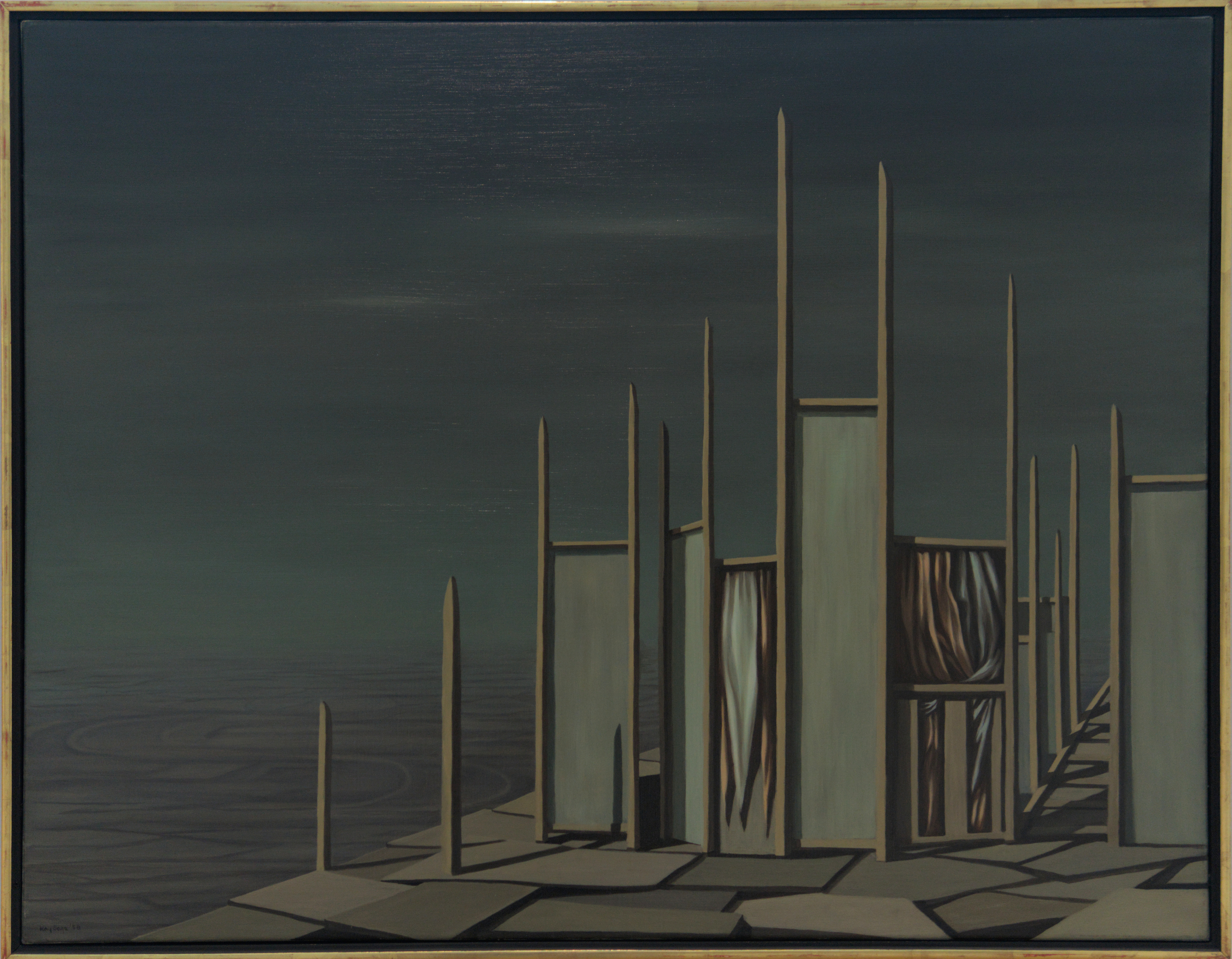
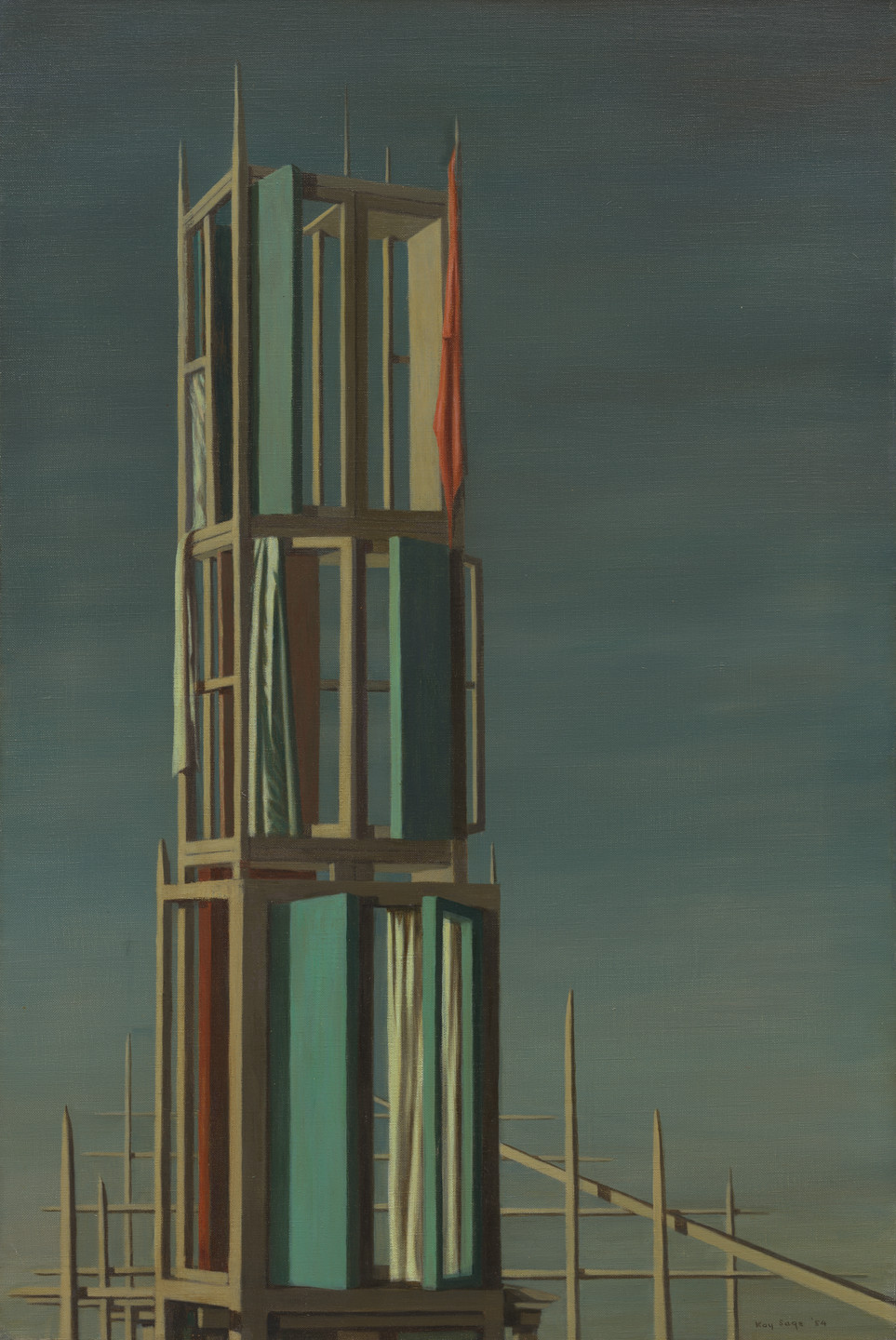

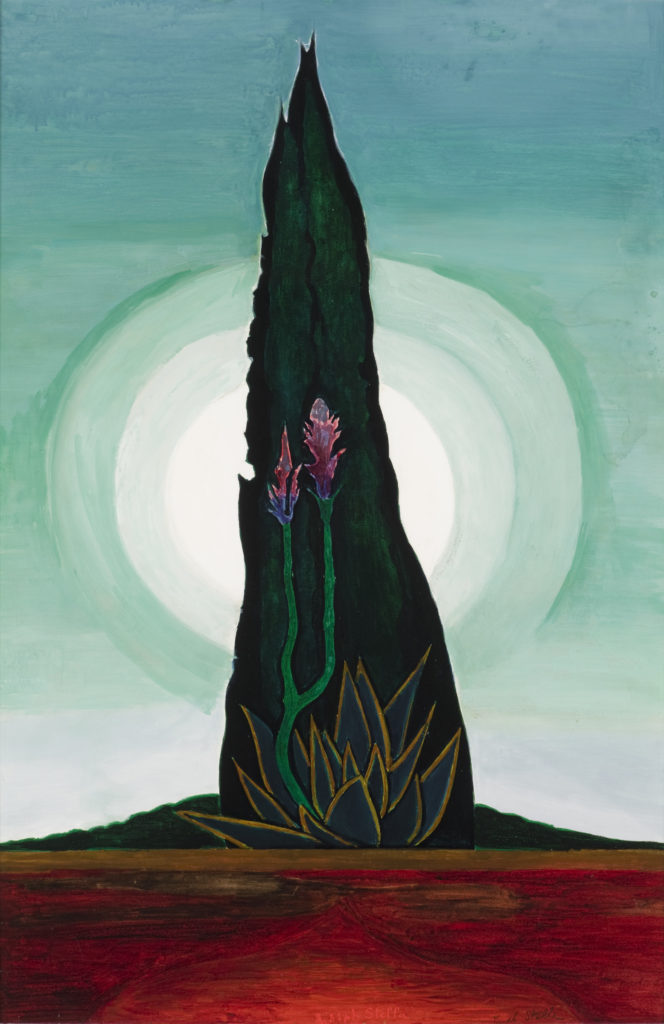
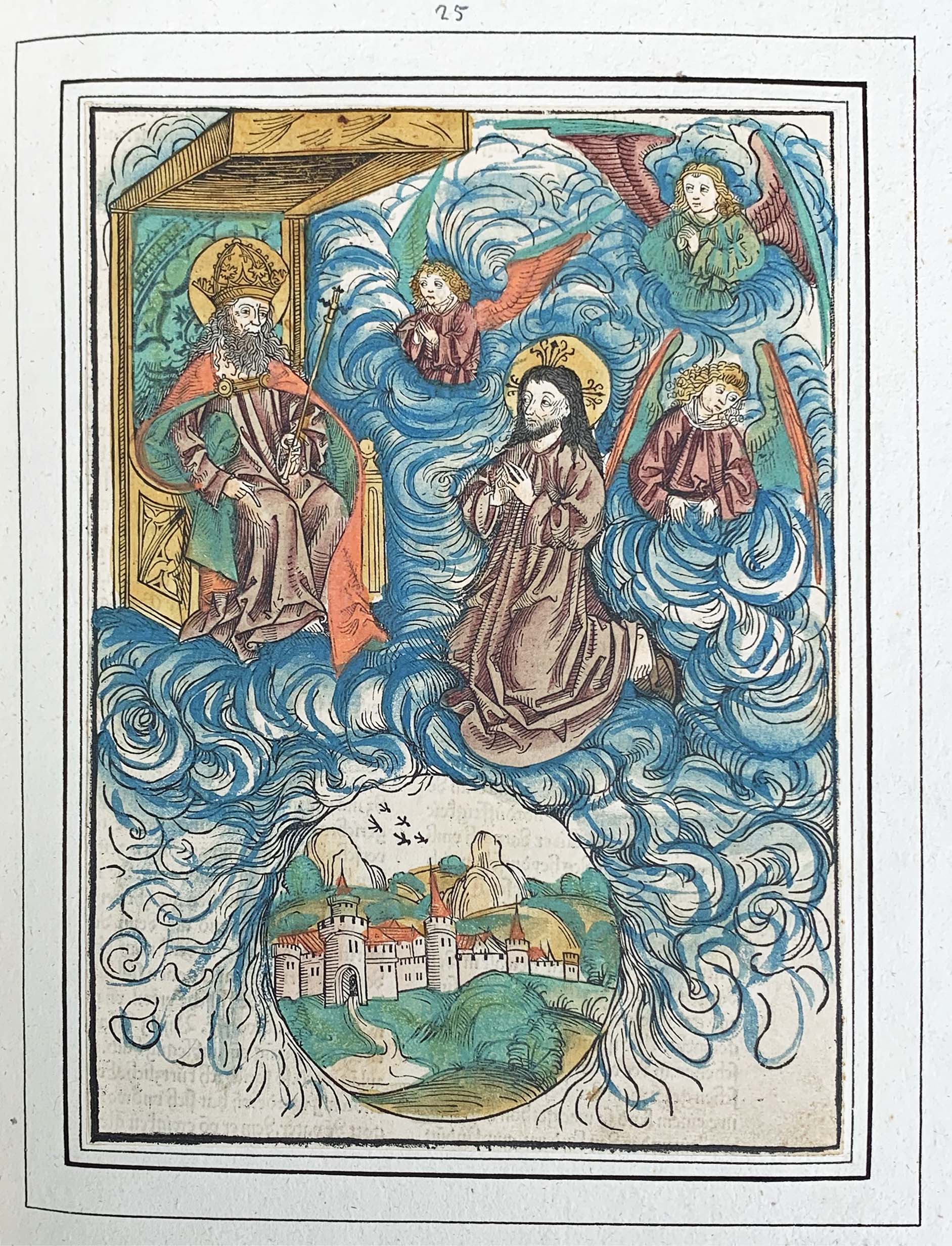
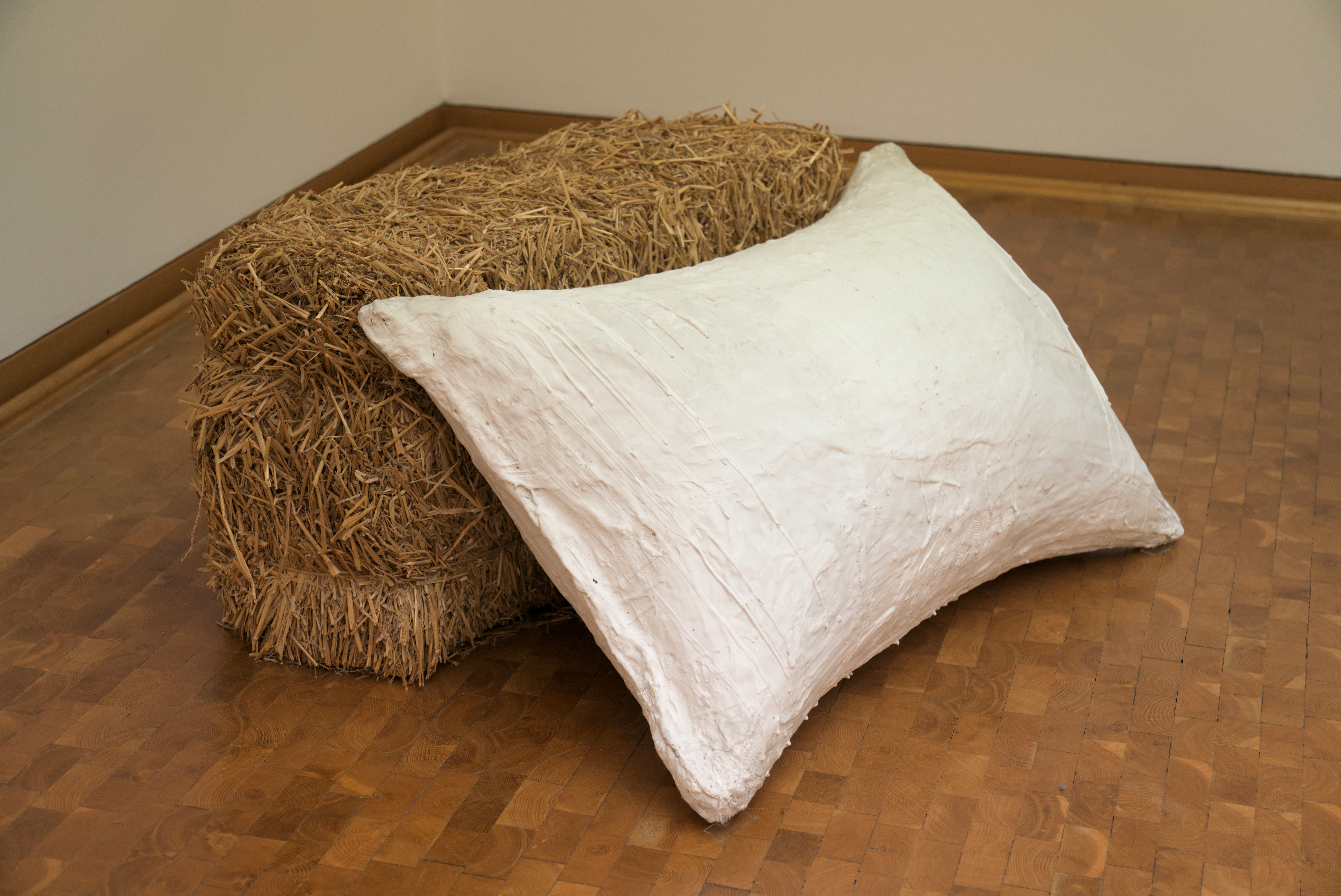
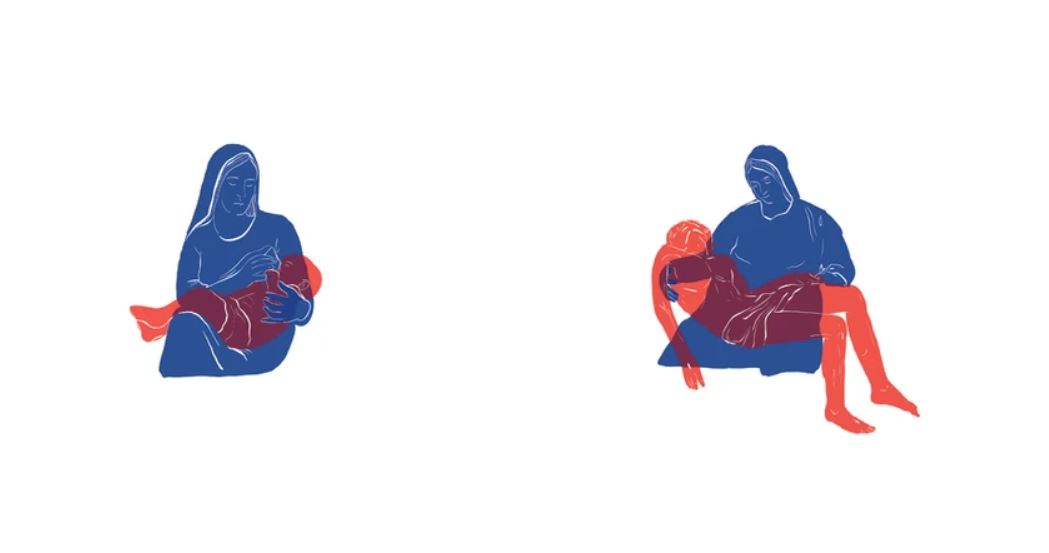
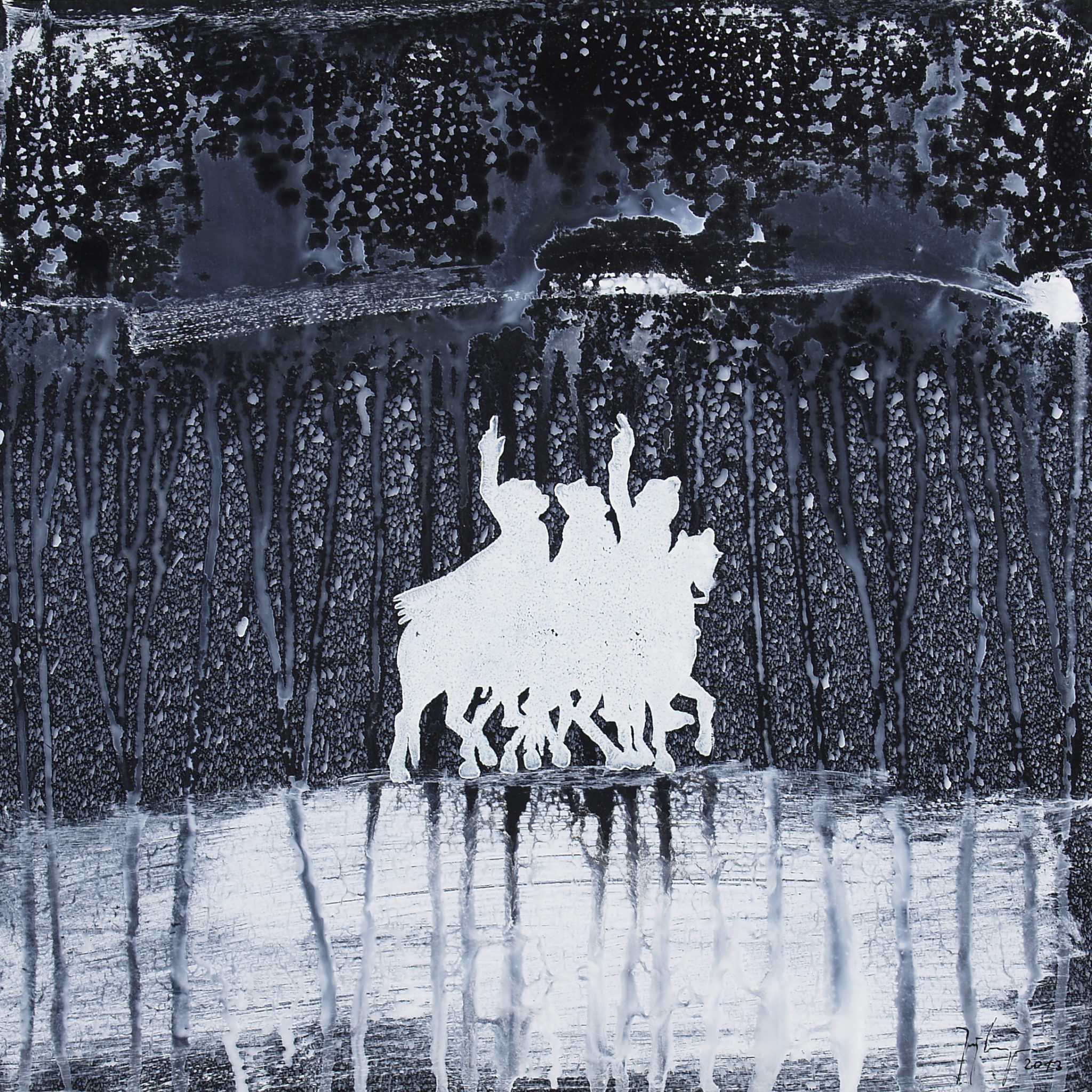
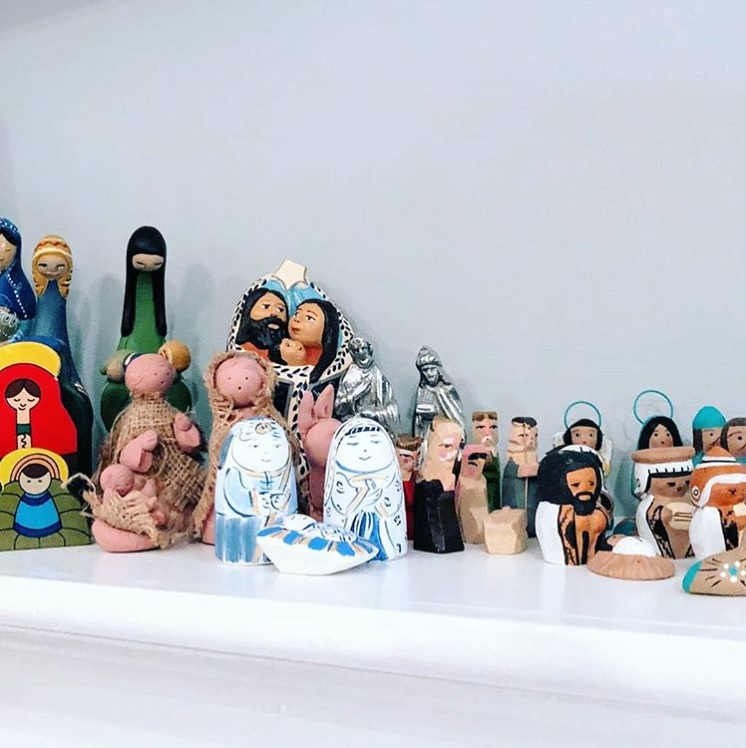
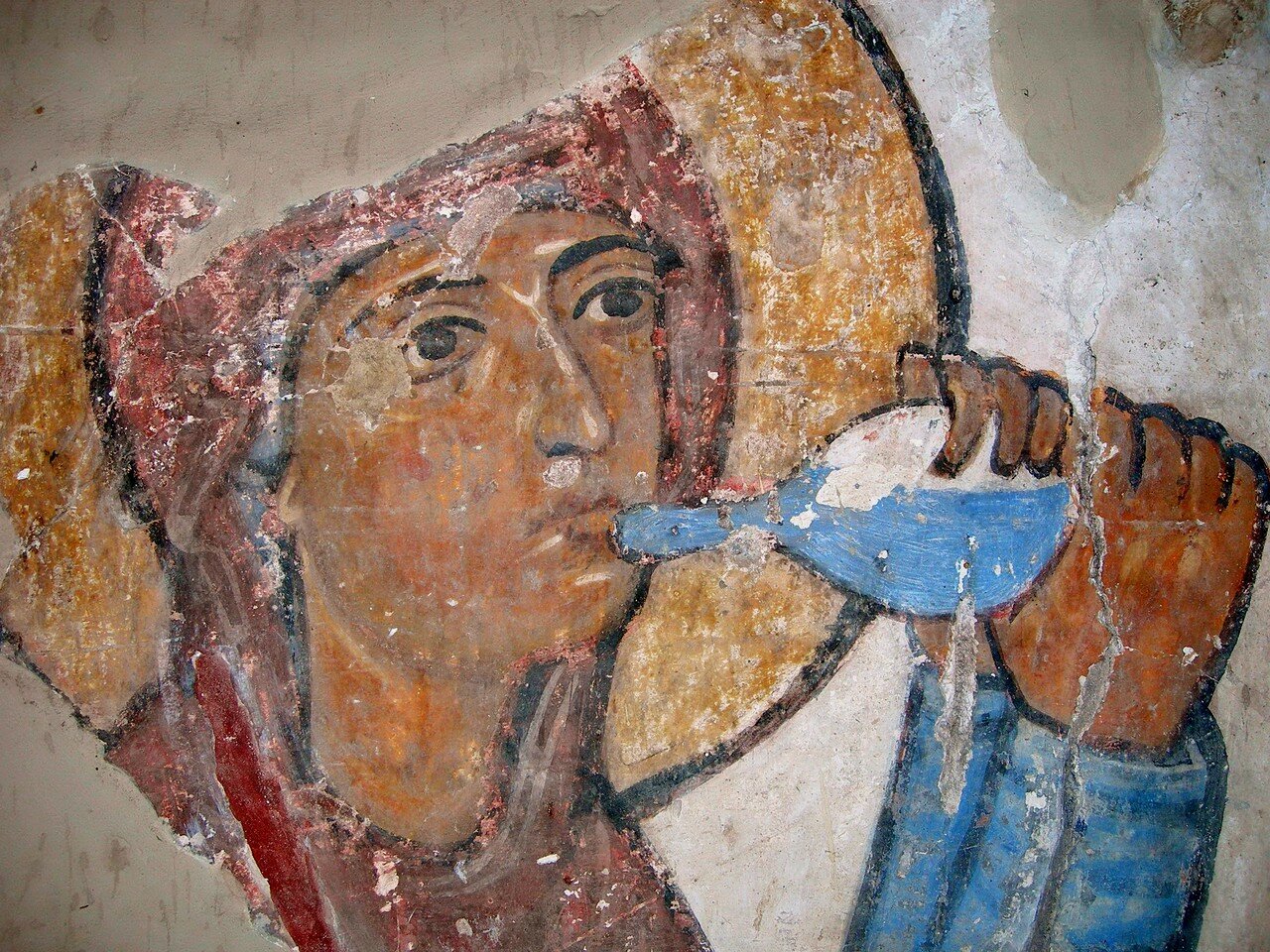
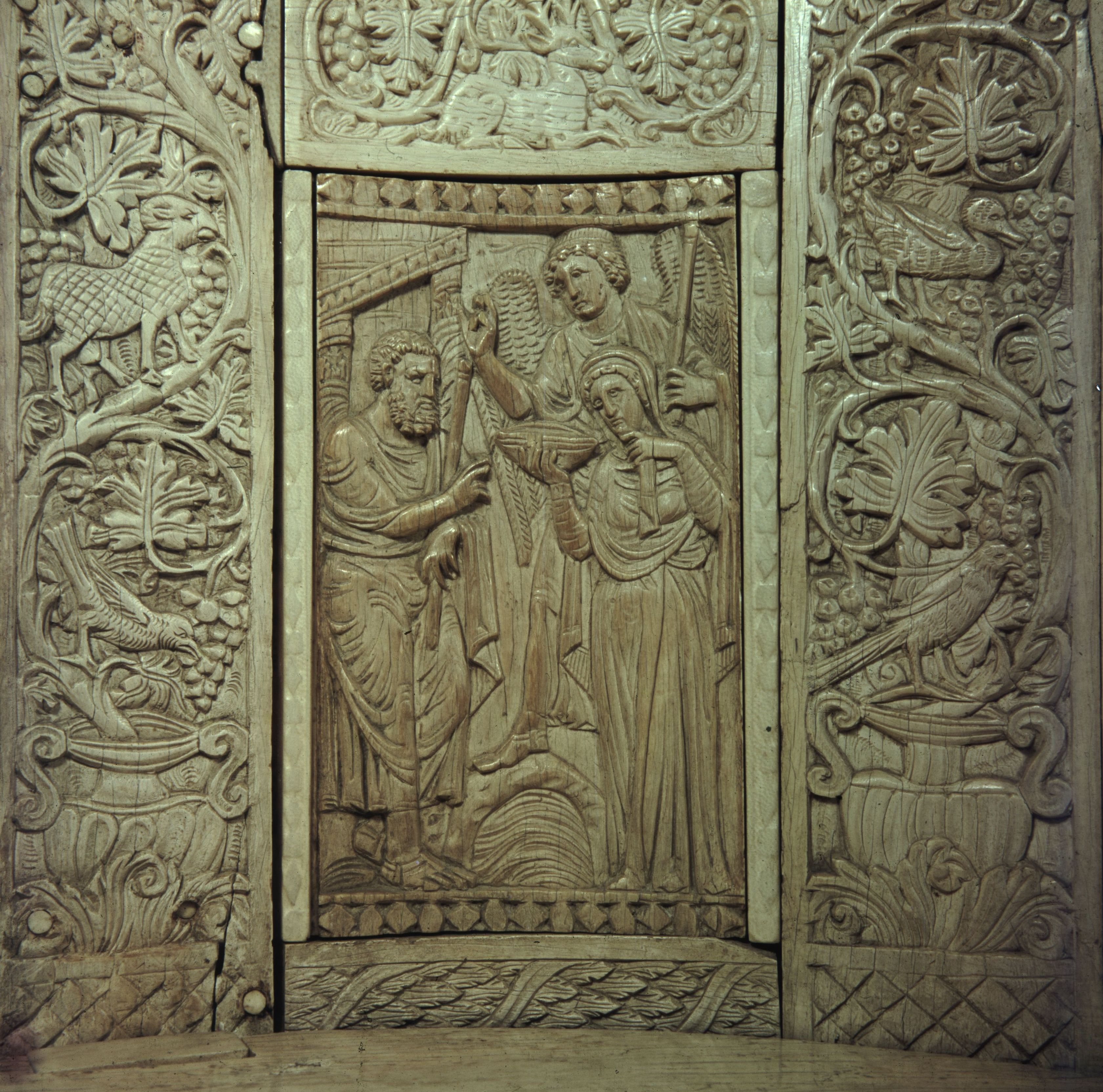
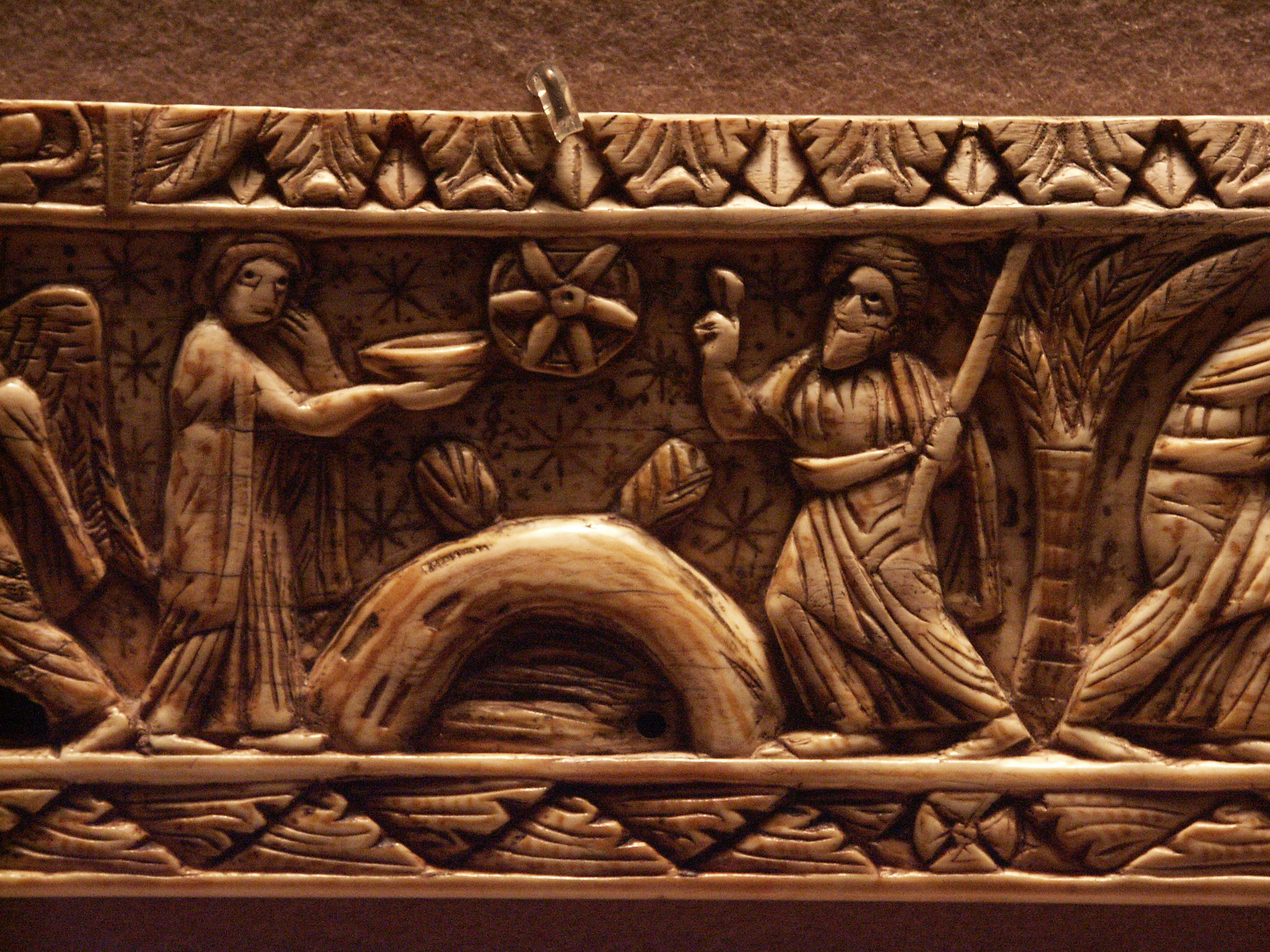
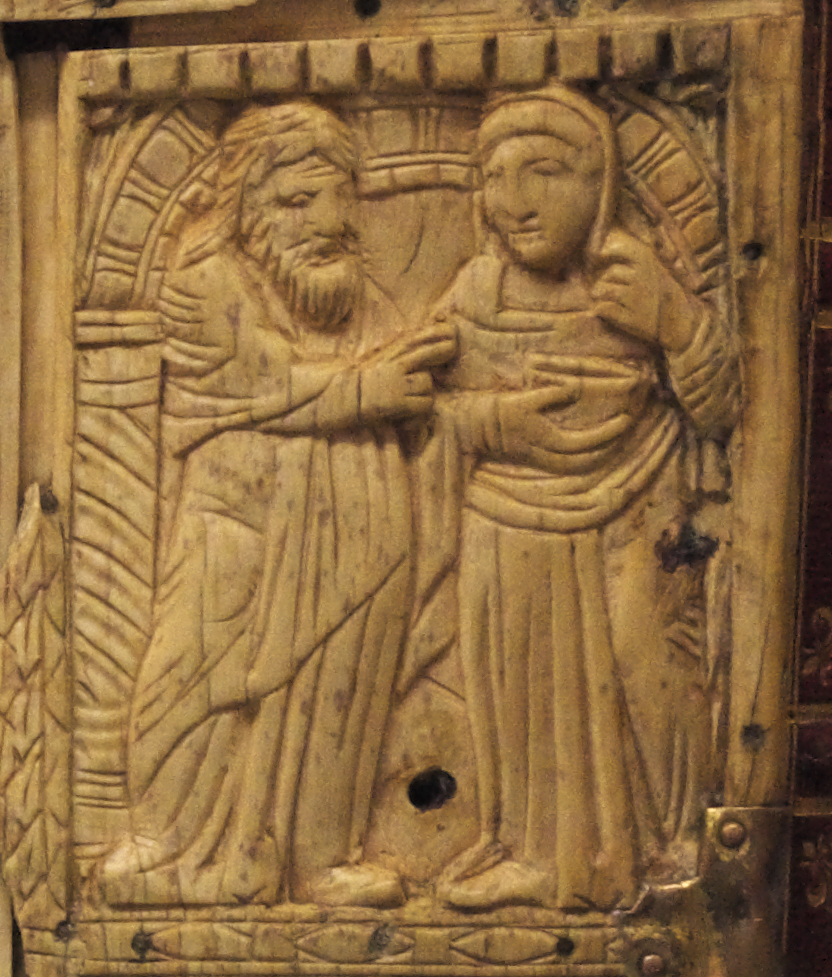
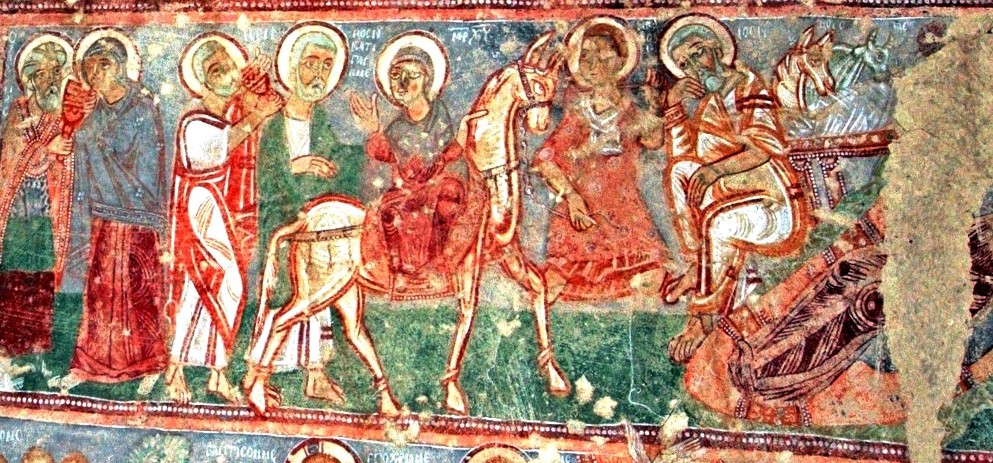
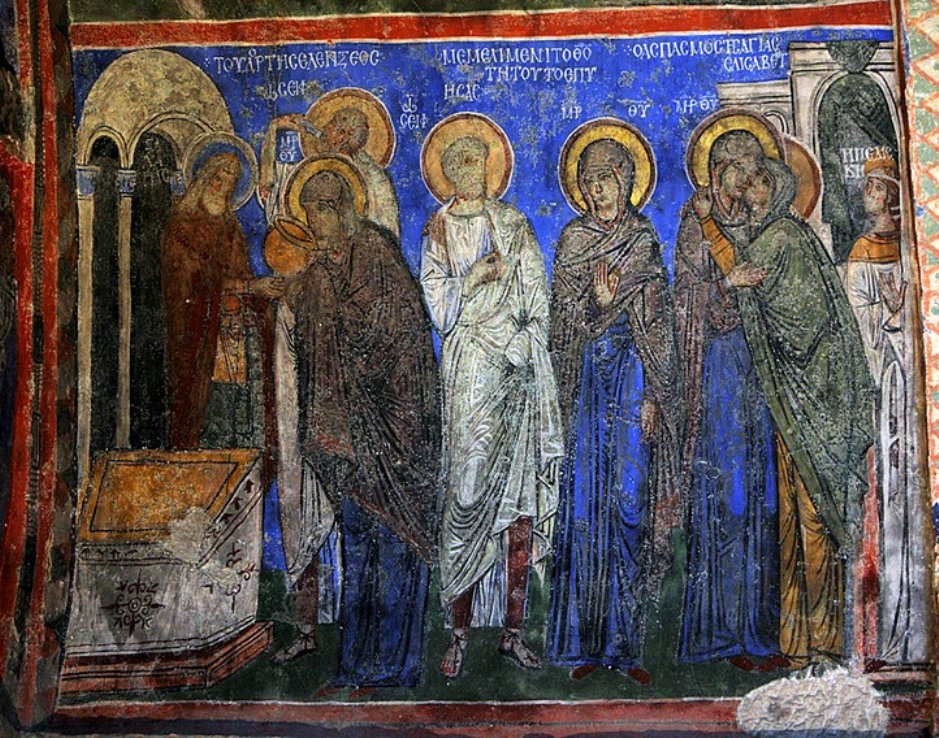
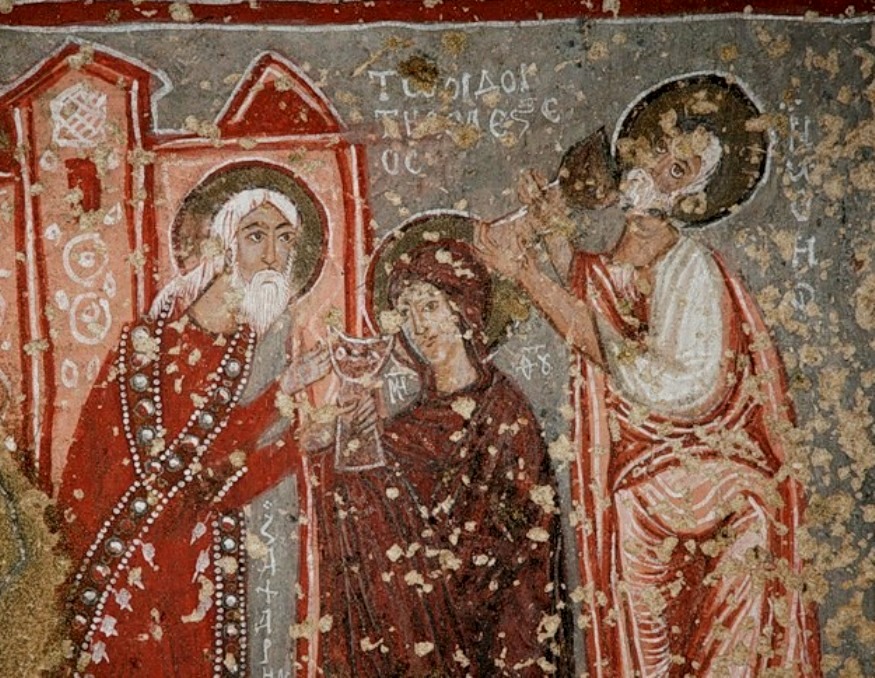
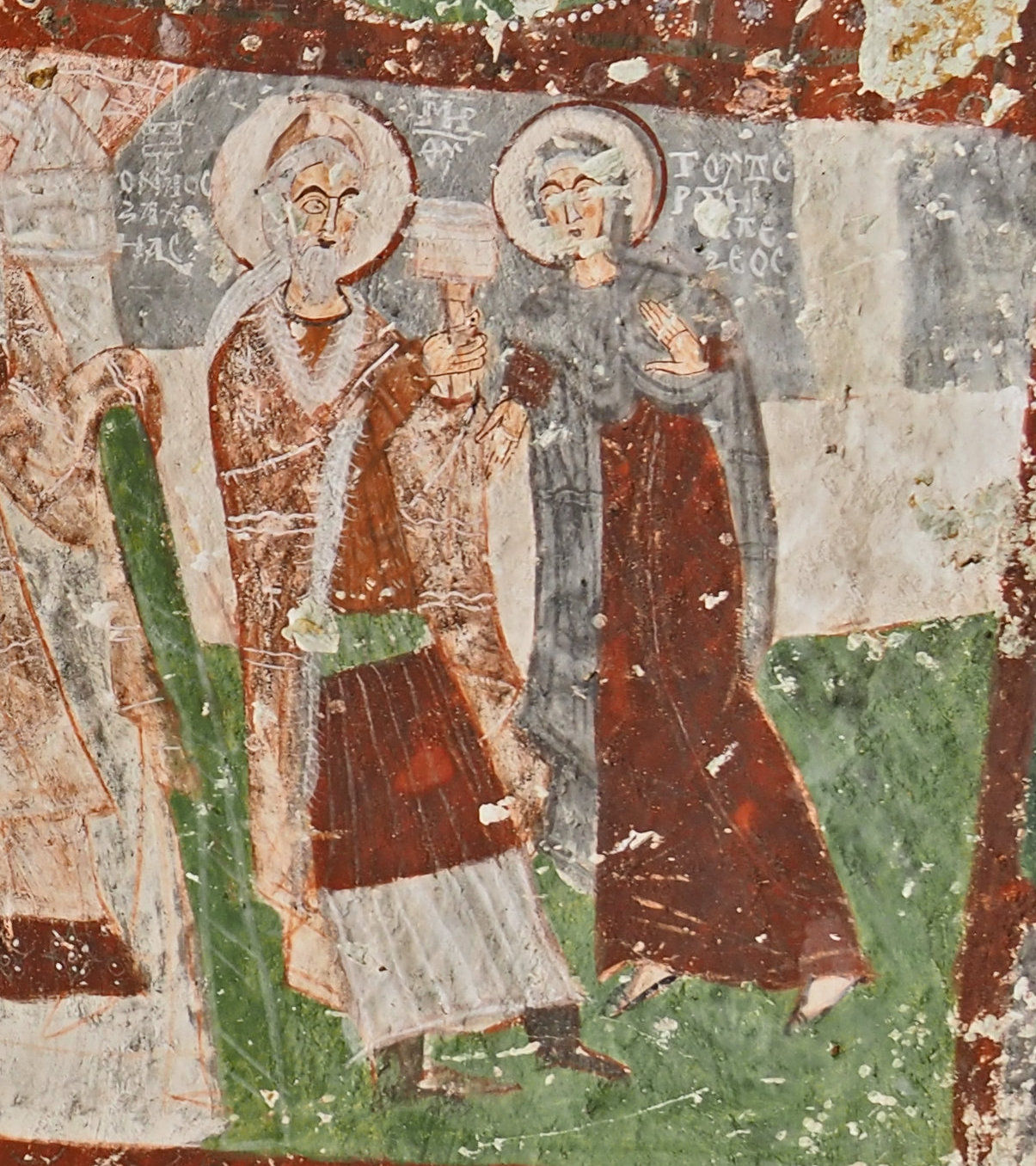
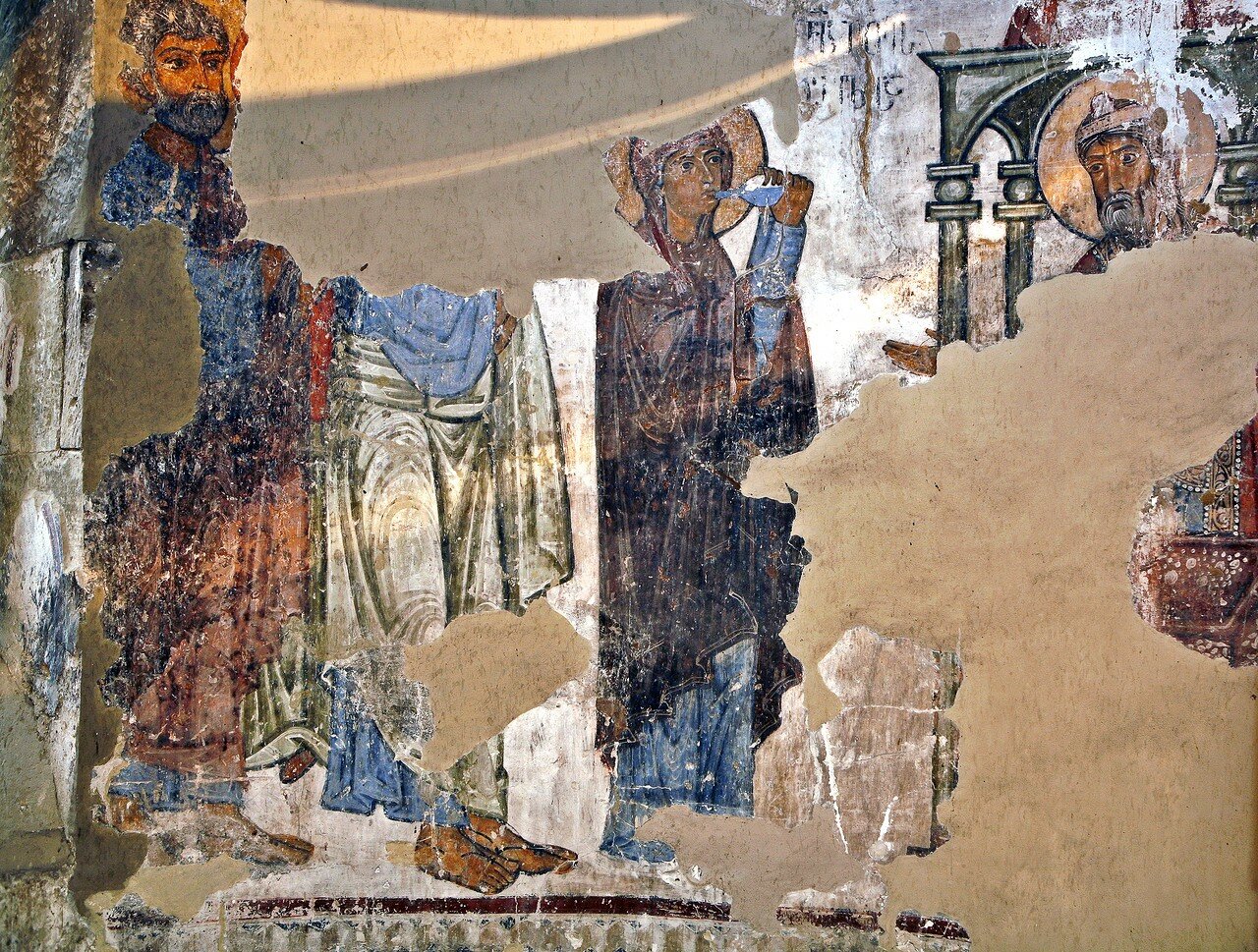
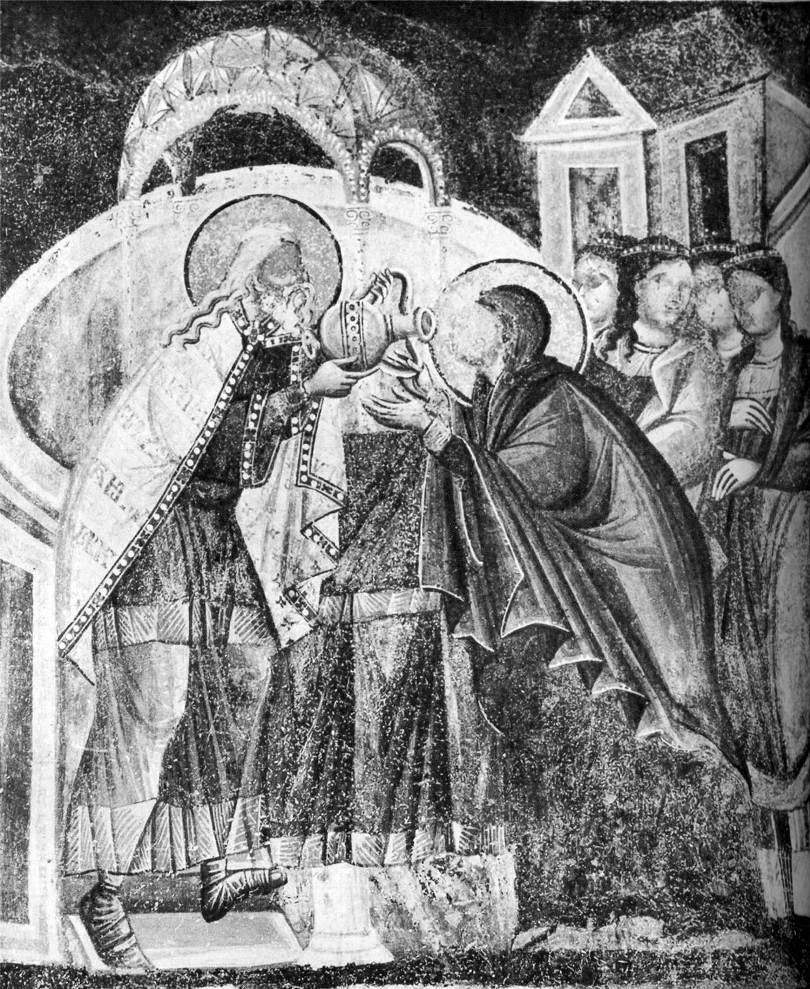
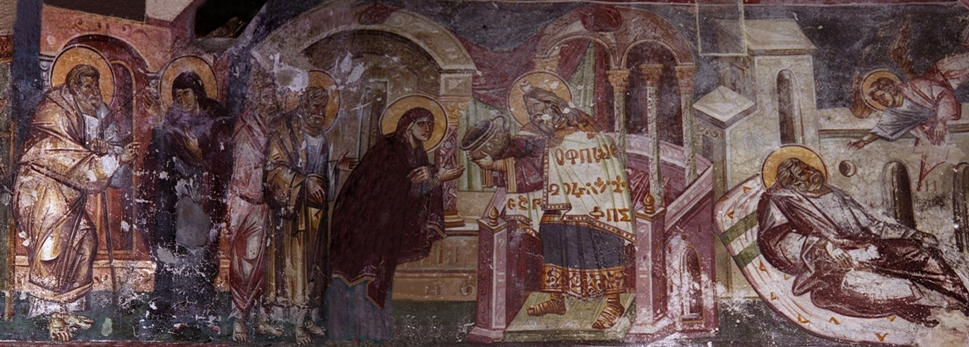
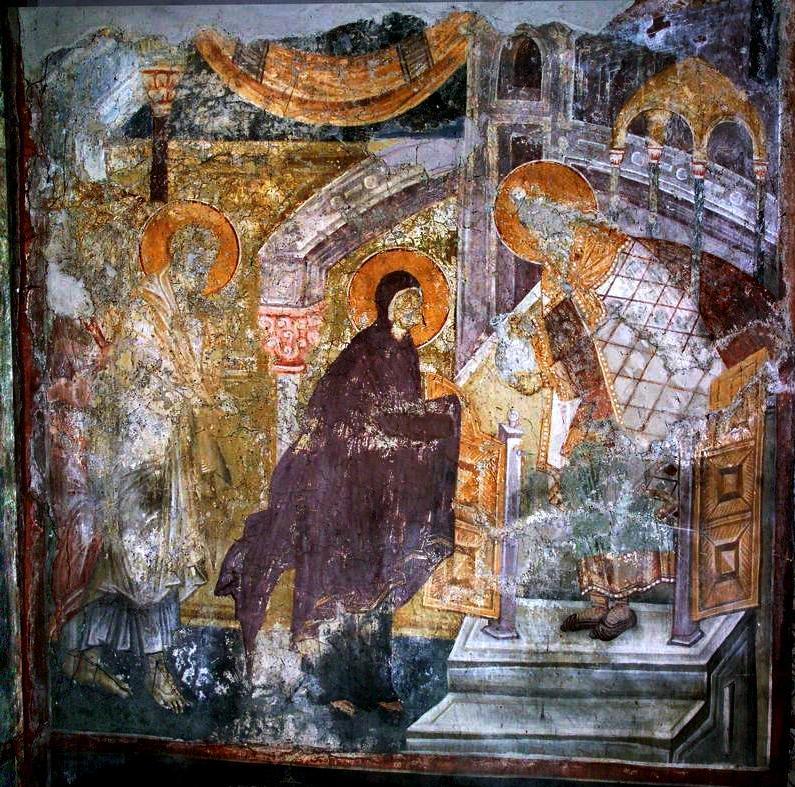
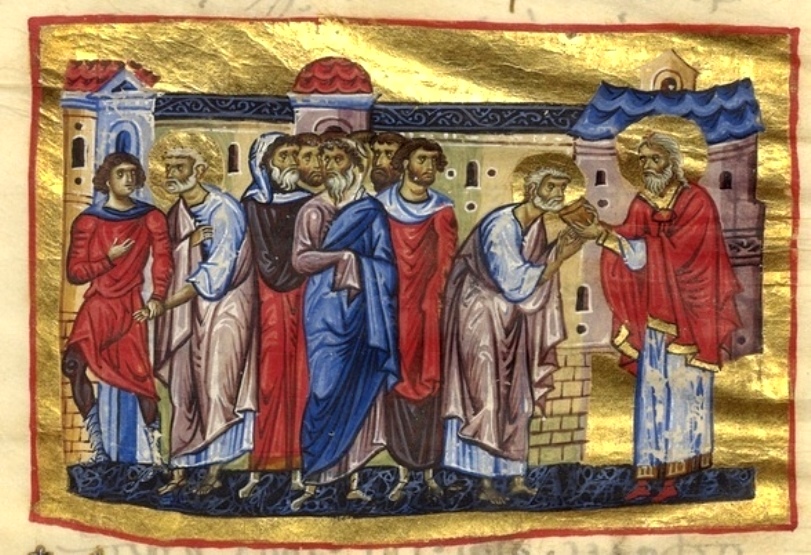
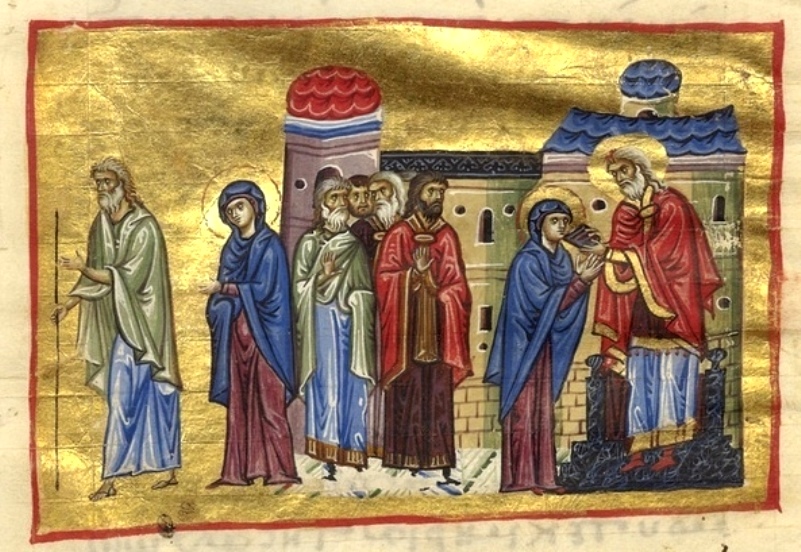
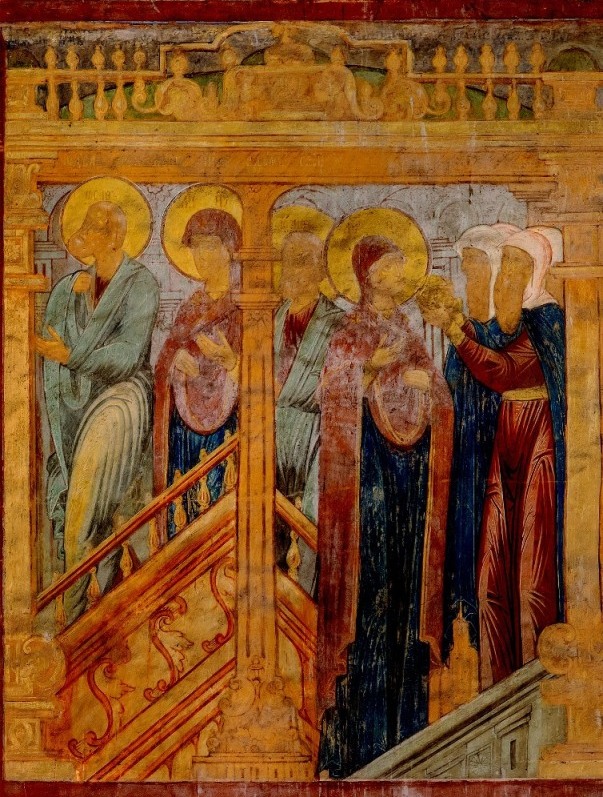
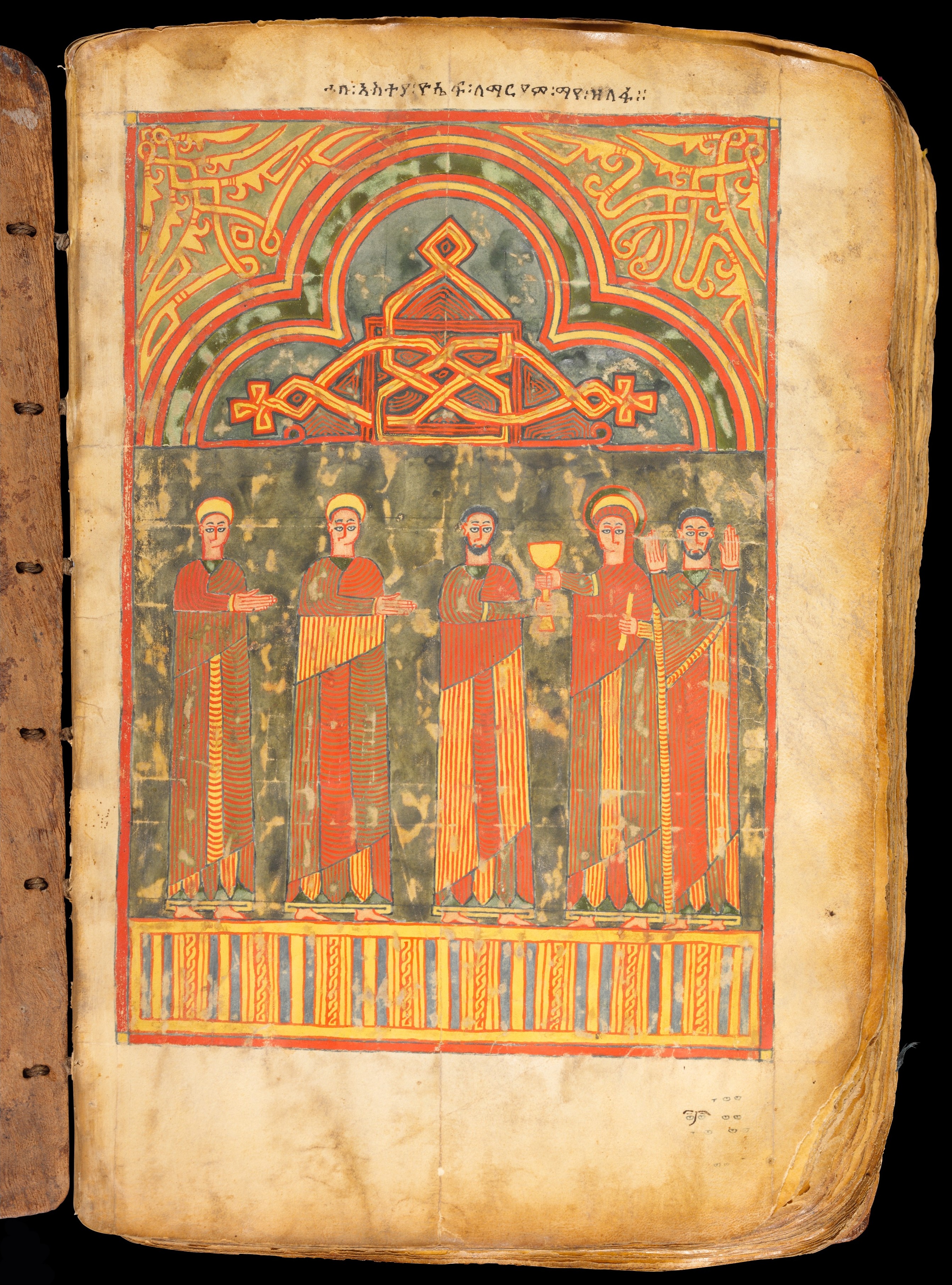
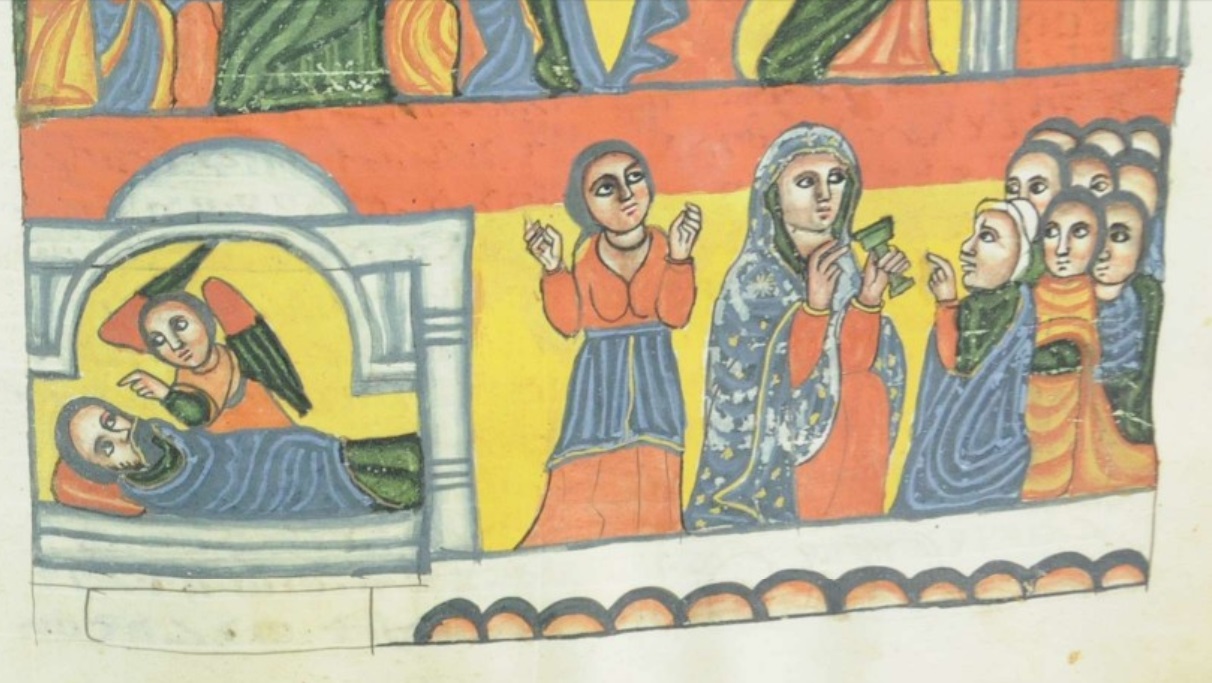
#/media/File:Maestro_di_castelseprio,_storie_dell'infanzia_di_cristo,_datazione_incerta_tra_l'830_e_il_950_dc_ca.,_12_prova_delle_acque_1.jpg)
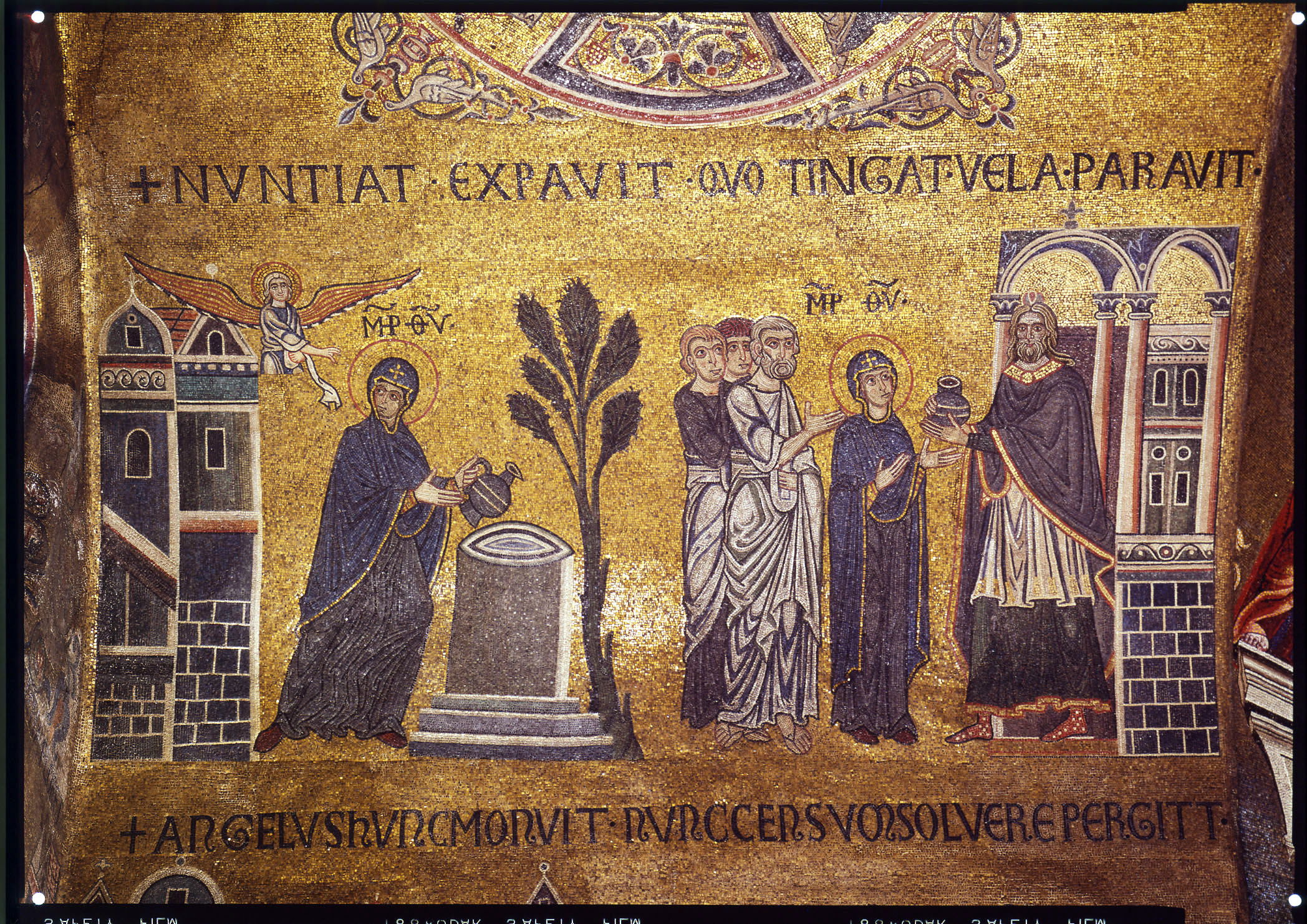
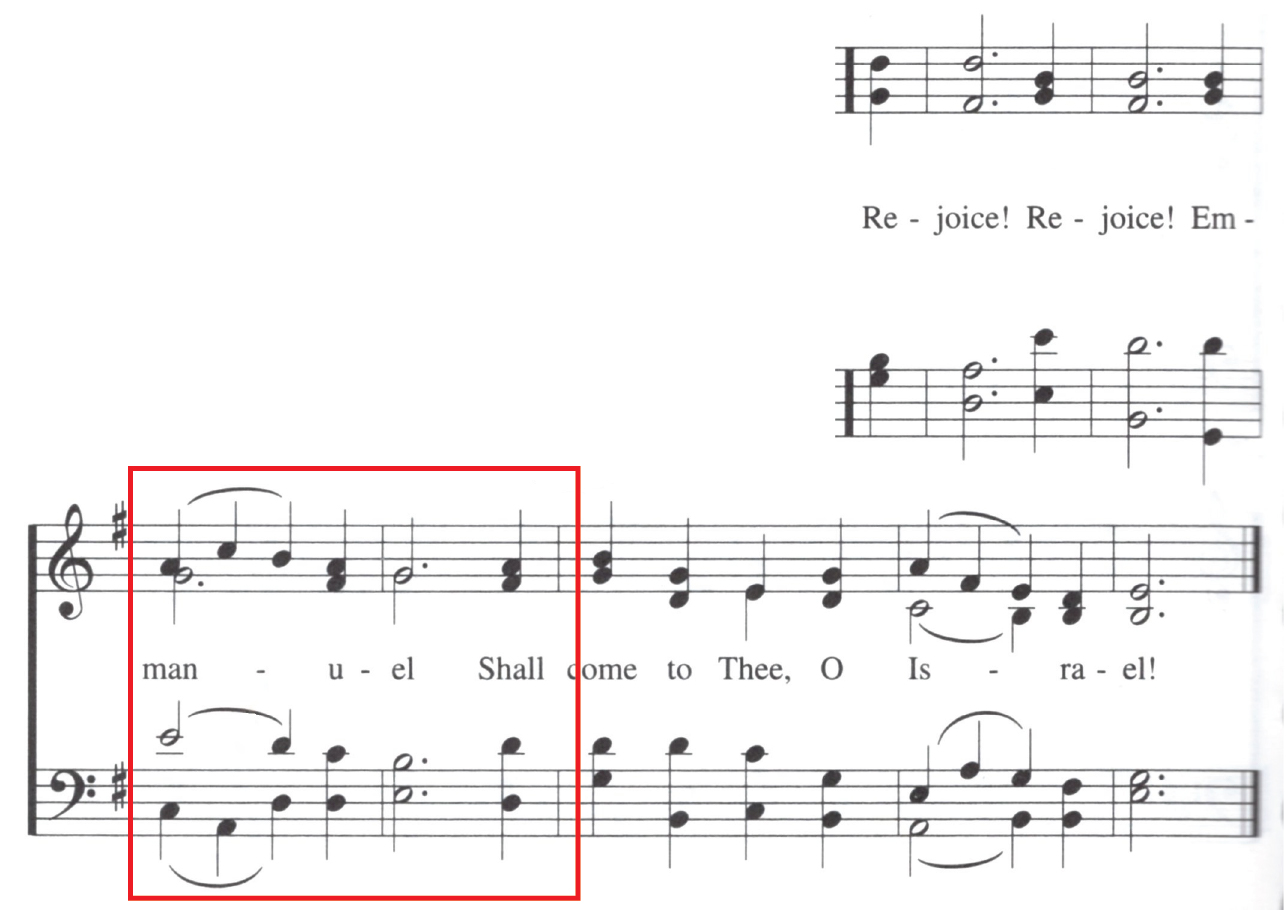
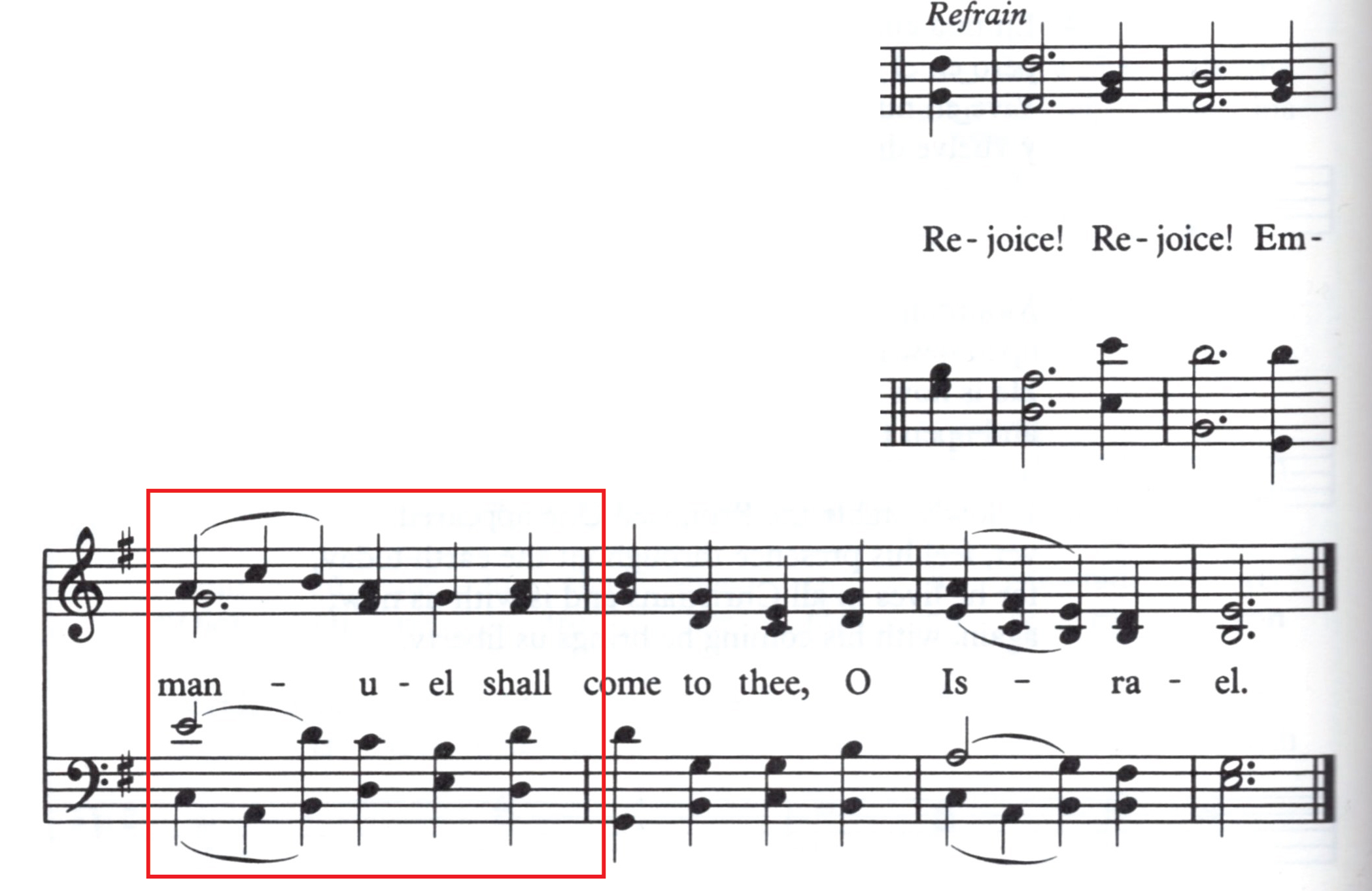
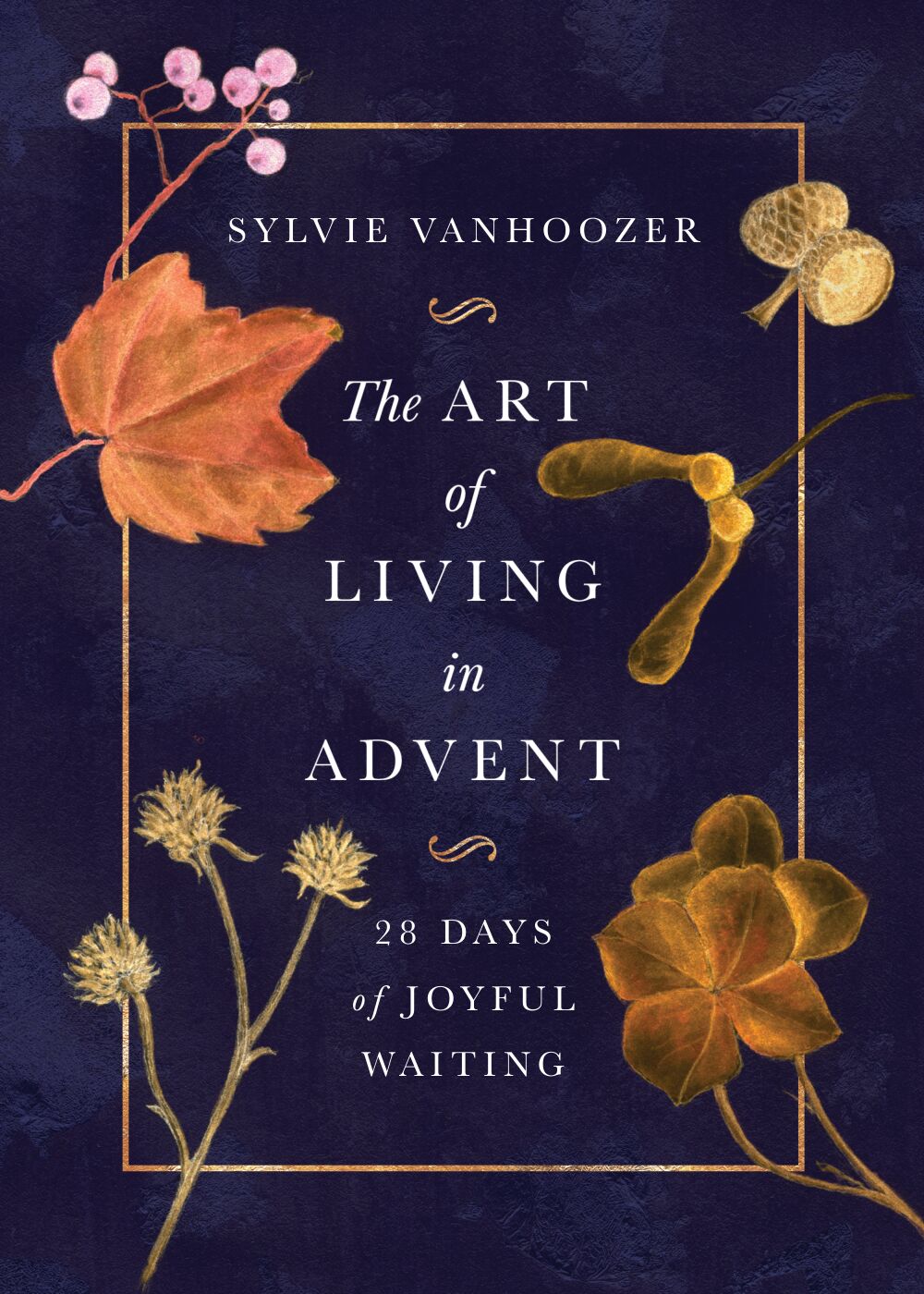
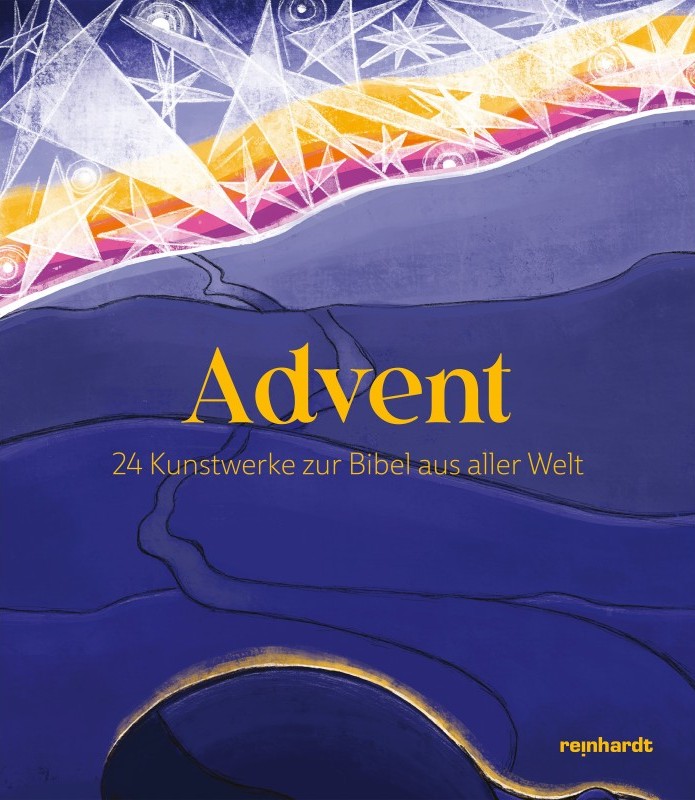
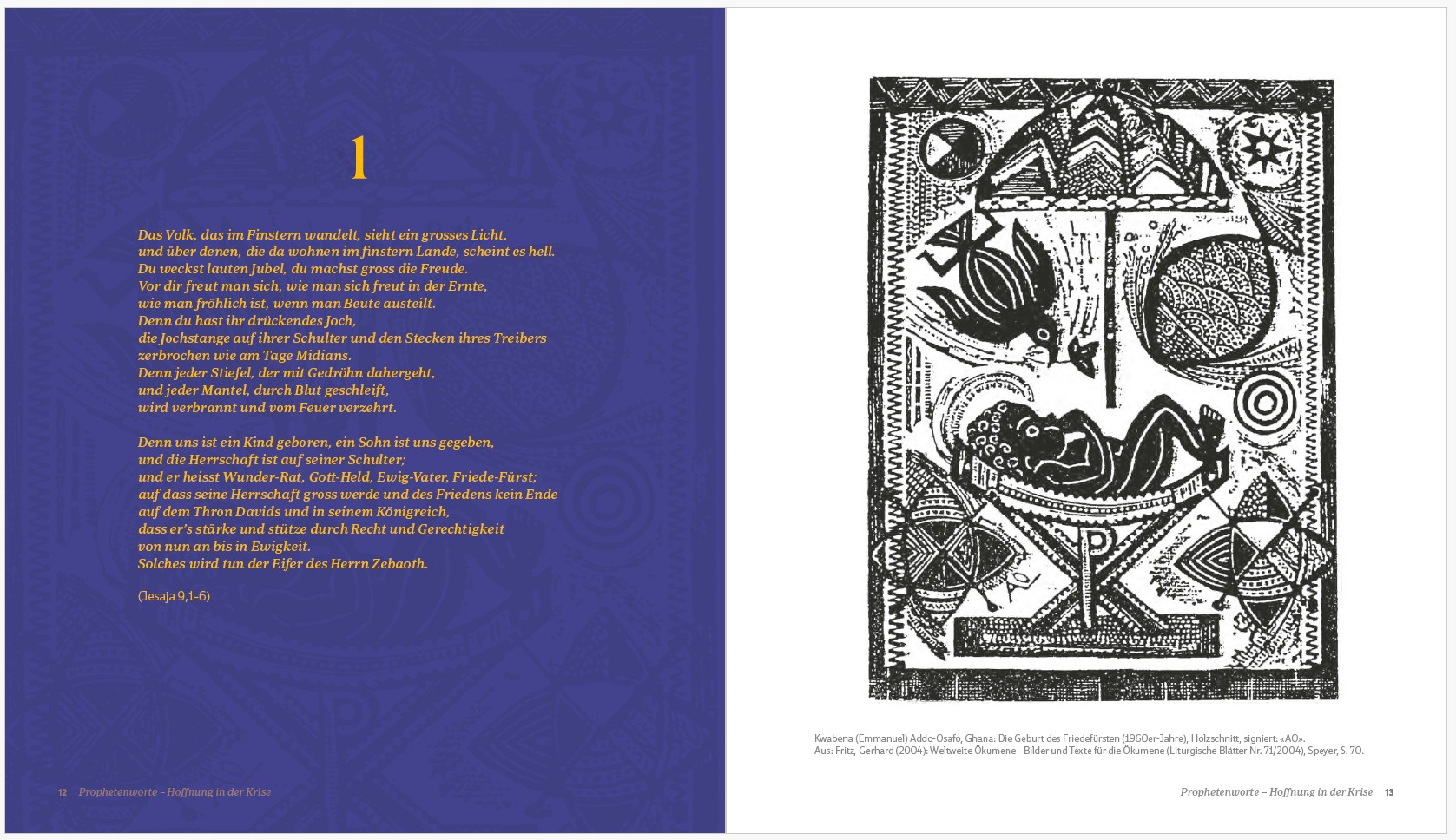
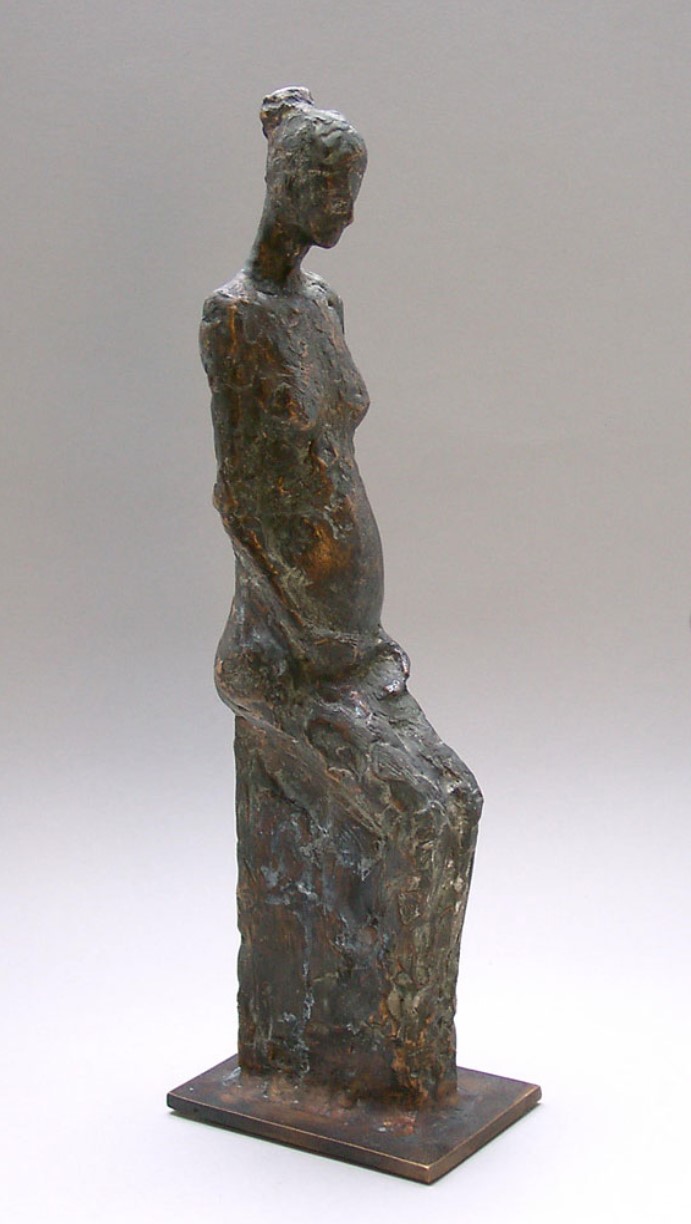
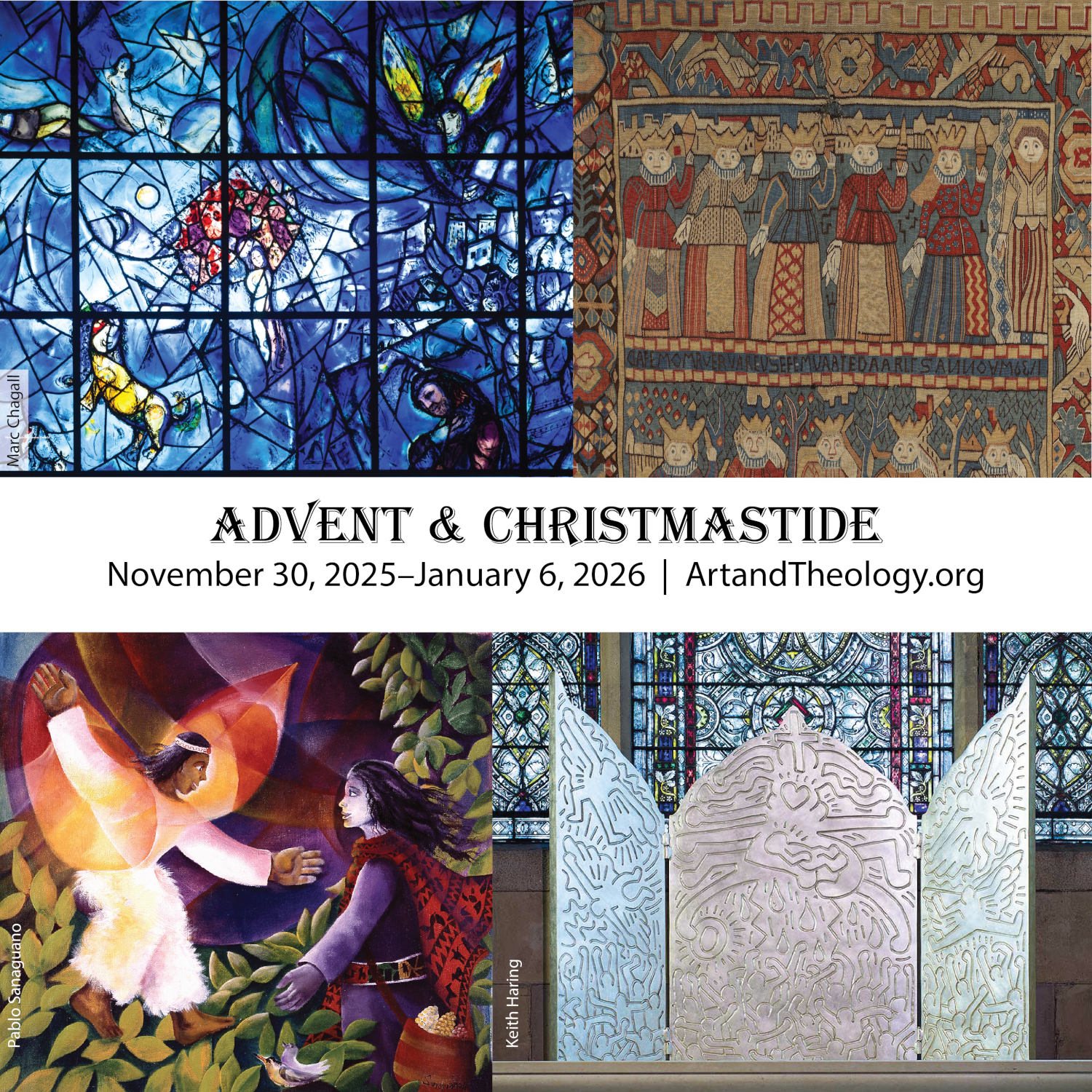
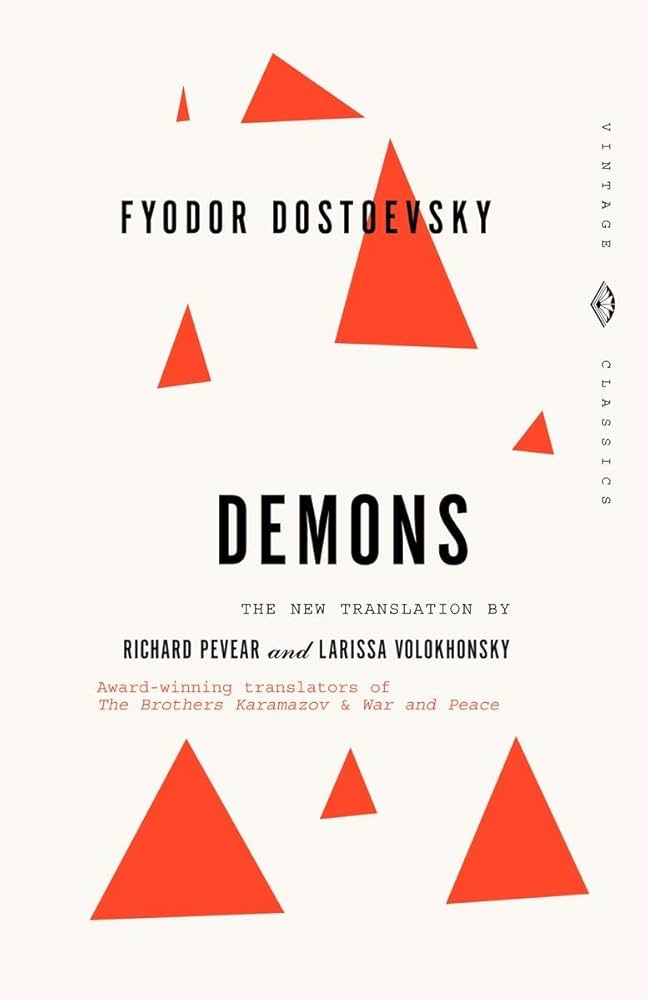
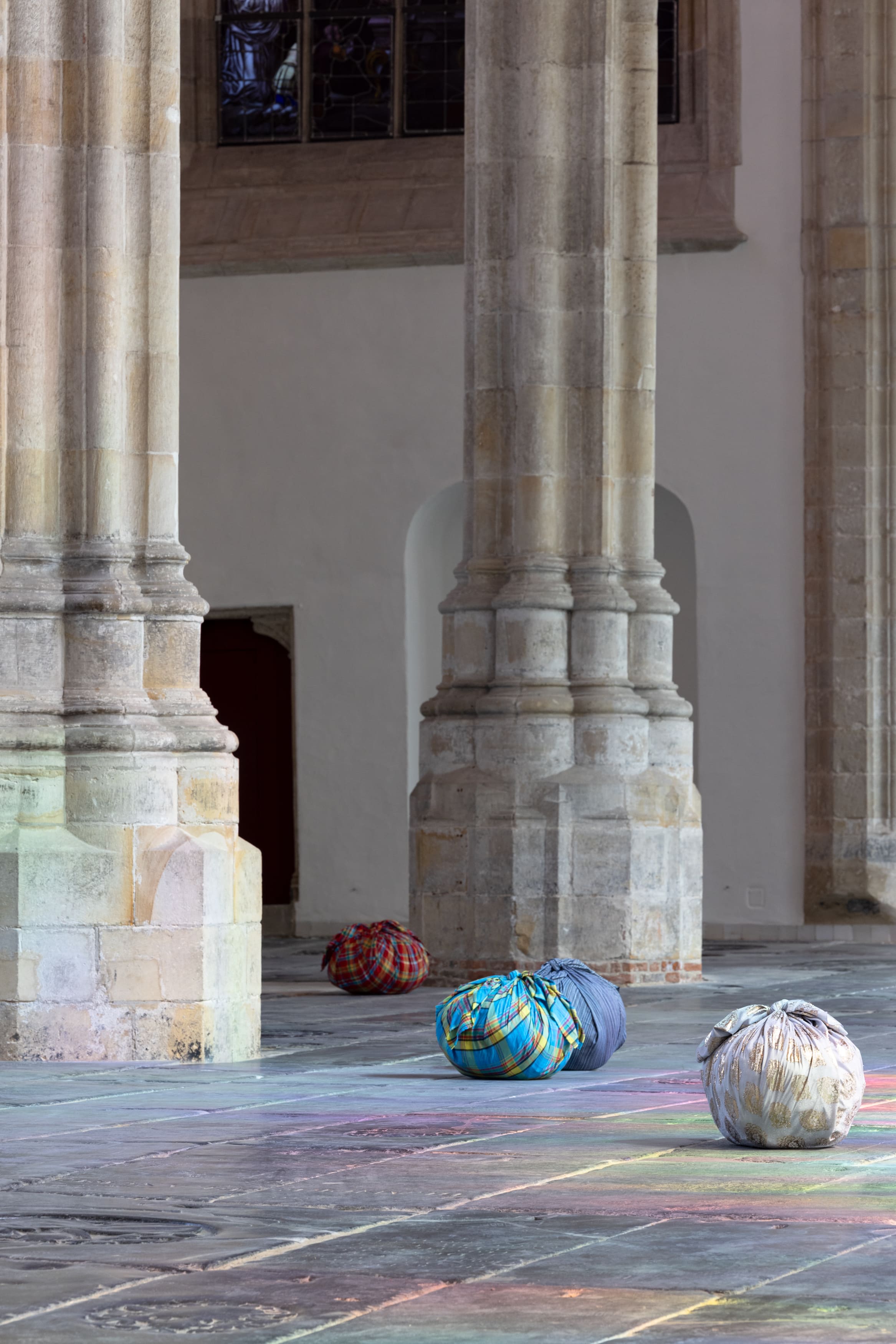
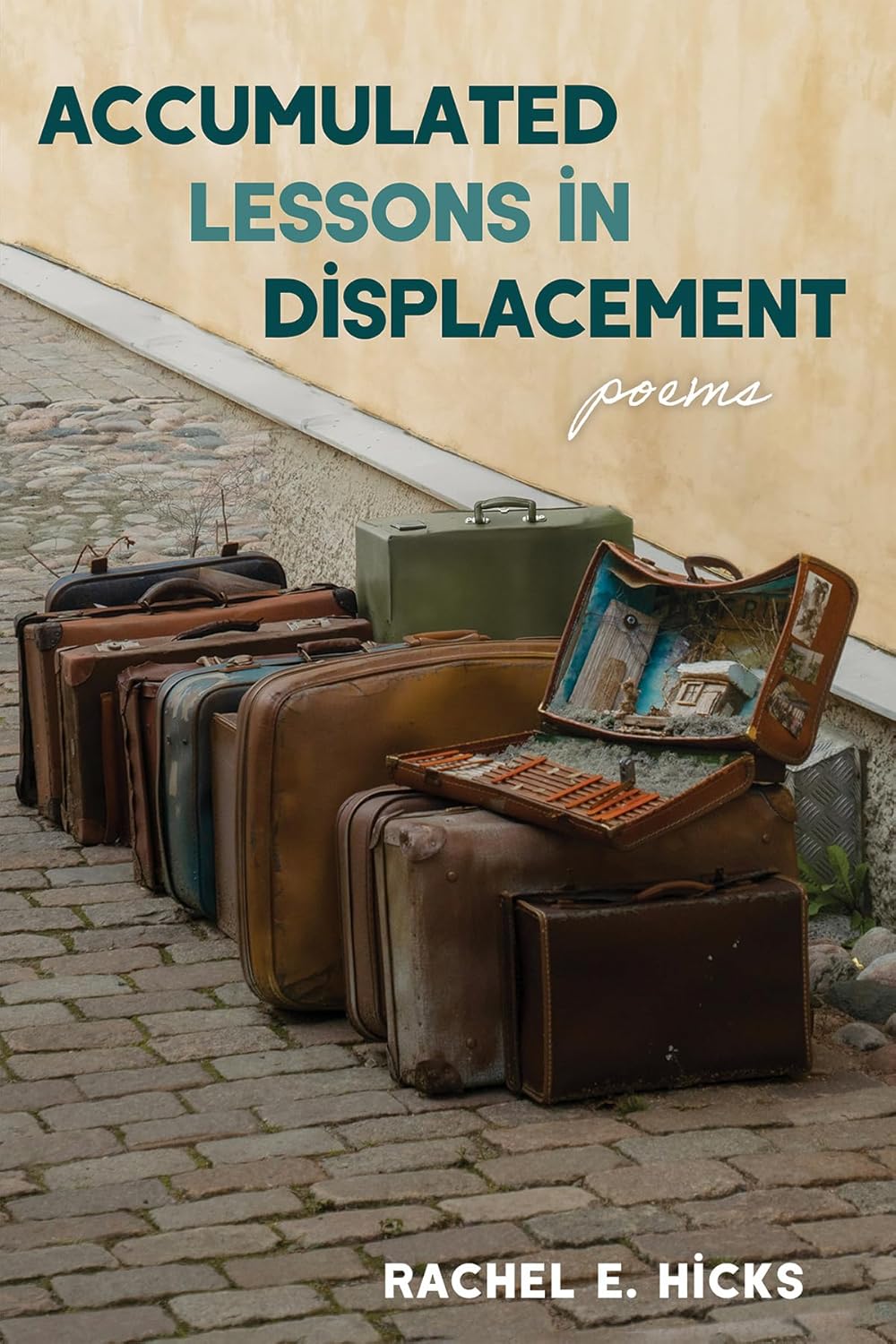
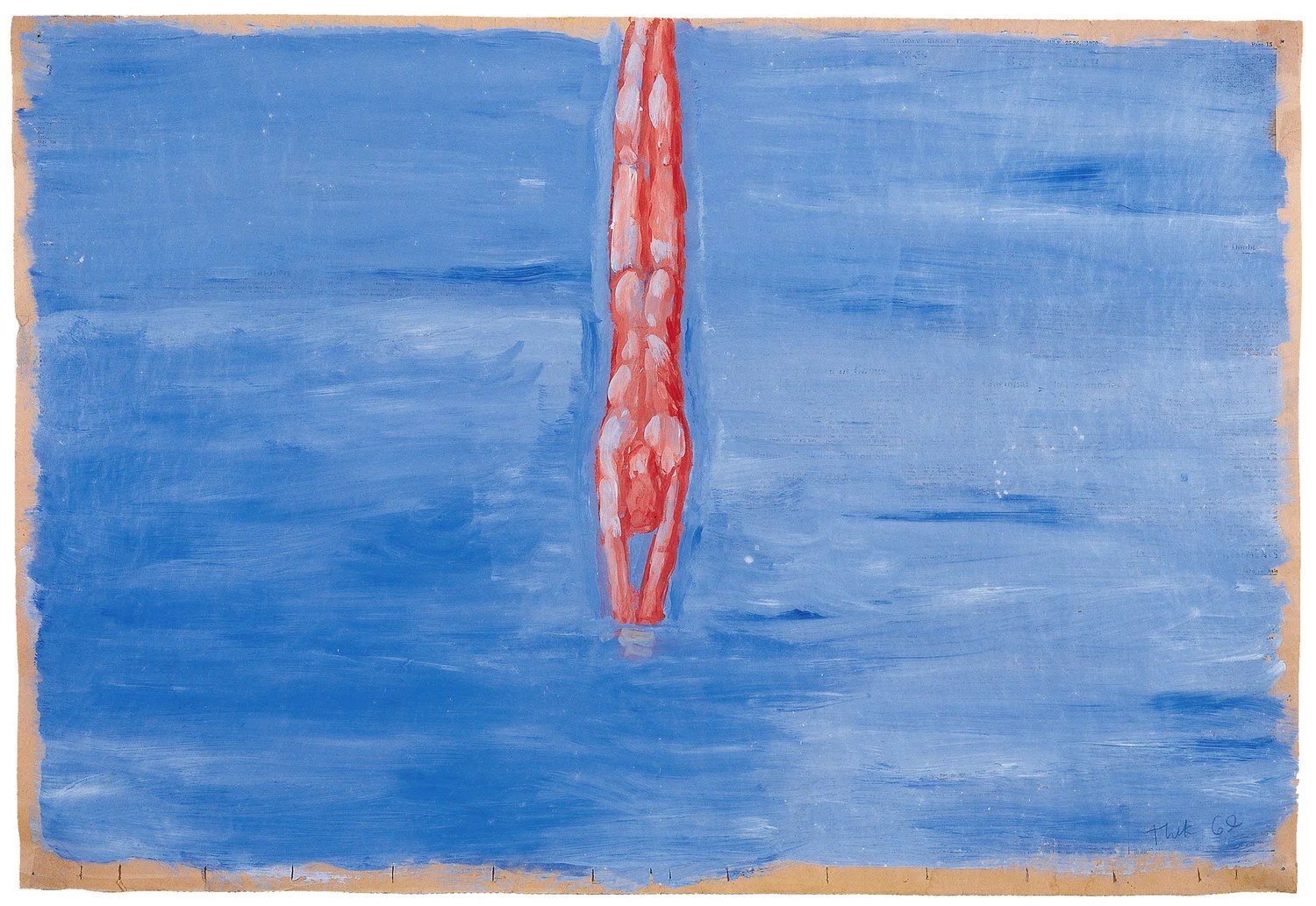
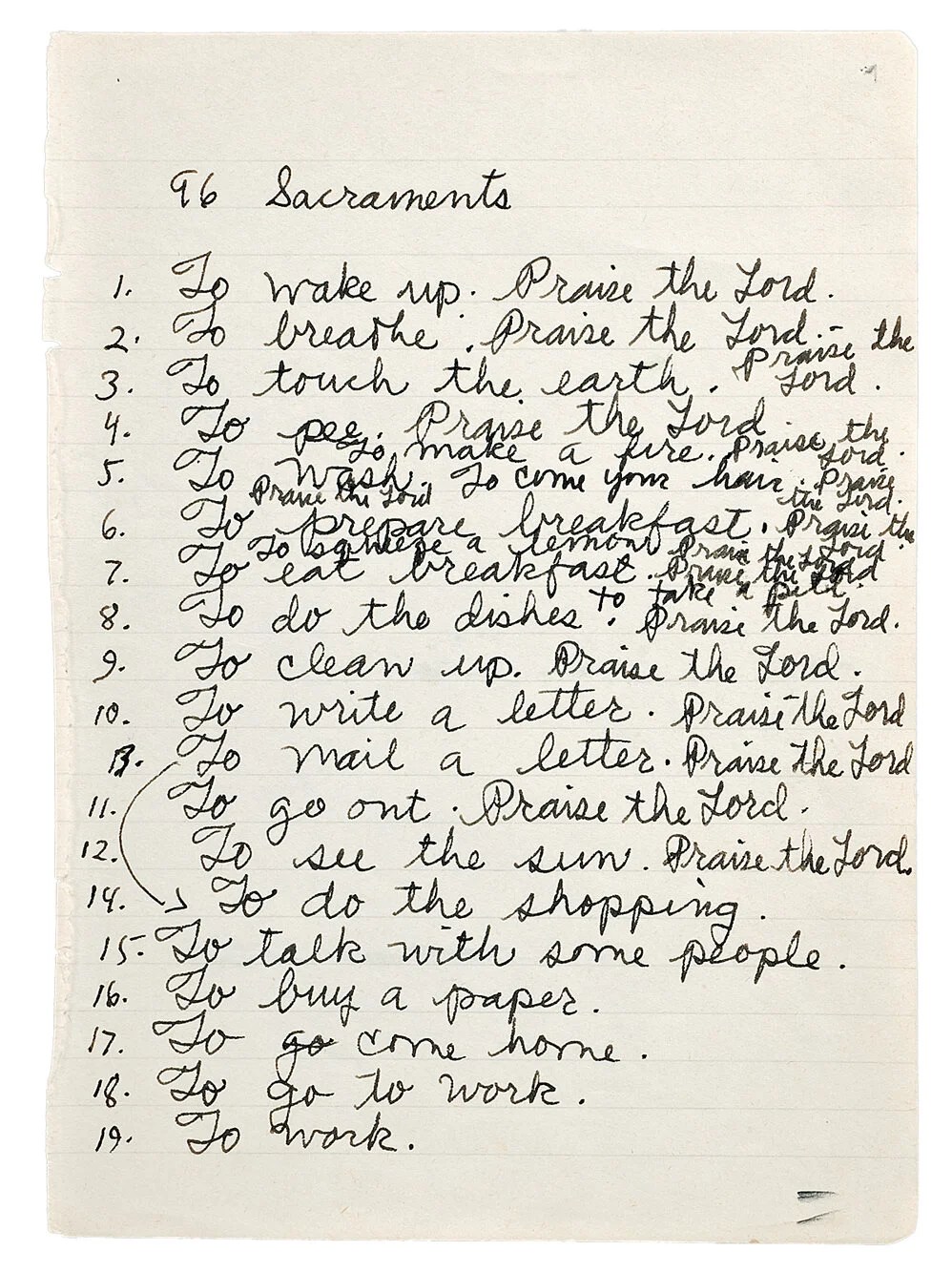
 Art & Theology