Roundup: The body as sacred offering; rest as resistance; “Amazing Grace”

I’m late in notifying you about my June 2025 playlist (a random compilation of faith-inspired songs I’ve been enjoying lately), but be sure to check it out on Spotify.

See also my Juneteenth Playlist, which I’ve added six new songs to since originally releasing it two years ago, including a cover of Roberta Slavitt’s protest song “Freedom Is a Constant Struggle,” “Black Gold” by Esperanza Spalding, and “The Block” by Carlos Simon, a short orchestral work based on a six-panel collage by Romare Bearden celebrating Harlem street life.

Romare Bearden, The Block
Romare Bearden (American, 1911–1988), The Block, 1971. Cut-and-pasted printed, colored, and metallic papers, photostats, graphite, ink marker, gouache, watercolor, and ink on Masonite, 4 × 18 ft. (121.9 × 548.6 cm). Metropolitan Museum of Art, New York. Photo: Victoria Emily Jones.

+++

PODCAST EPISODE: “The Body as Sacred Offering: Ballet and Embodied Faith” with Silas Farley, For the Life of the World, April 30, 2025: An excellent interview! “Silas Farley, former New York City Ballet dancer and current Dean of the Colburn School’s Trudl Zipper Dance Institute, explores the profound connections between classical ballet, Christian worship, and embodied spirituality. From his early exposure to liturgical dance in a charismatic Lutheran church to his career as a professional dancer and choreographer, Farley illuminates how the physicality of ballet can express deep spiritual truths and serve as an act of worship.”

I was especially compelled by Farley’s discussion of turnout, the rotation of the leg at the hips—foundational to ballet technique. It gives the body an “exalted carriage” and allows for “a more complete revelation of the body,” he says, because you see more of the leg’s musculature that way. This physical positioning, he says, reflects the correlative “spiritual turnout” that’s also happening in dance, and that Christians are called to in life—a posture of openness and giving. He cites the theological concept of incurvatus in se, coined by Augustine and further developed by Martin Luther, which refers to how sin curves one in on oneself instead of turning one outward toward God and others.

Farley also discusses how liturgical dance is like and unlike more performative modes of dance (“liturgical dance . . . is a kind of embodied prayer . . . a movement that goes up to God out of the body”); how discipline and freedom go together; the body as instrument, and how dancers cultivate a hyperawareness of their bodies; the two basic design elements of ballet, the plié and the tendu, and their significance; his formation, from ages fourteen to twenty-six, under the teaching of Rev. Dr. Tim Keller at Redeemer Presbyterian Church; the Four Loves ballet he choreographed on commission for the Houston Ballet, based on a C. S. Lewis book (see promo video below, and his and composer Kyle Werner’s recent in-depth discussion about it for the C. S. Lewis Foundation); Songs from the Spirit, a ballet commissioned from him by the Metropolitan Museum of Art (see next roundup item); Jewels by George Balanchine, a three-act ballet featuring three distinct neoclassical styles; “Hear the Dance” episodes of City Ballet the Podcast, which he hosts; and book recommendations for kids and adults.

+++

SITE-SPECIFIC BALLET: Songs from the Spirit, choreographed by Silas Farley: Commissioned by MetLiveArts [previously], Songs from the Spirit by Silas Farley is a three-part ballet for seven dancers that interprets old and new Christian spirituals, having grown out of an offertory Farley gave at Redeemer Presbyterian Church based on the song “Guide My Feet, Lord.” Staged in the museum’s Assyrian Sculpture Court, the Astor Chinese Garden Court, and the glass-covered Charles Engelhard Court of the American Wing, the ballet progresses from “Lamentation” to “Contemplation” to “Celebration.” Here’s a full recording of the March 8, 2019, premiere:

For the project, Farley solicited new “songs (and spoken word poetry) from the spirit” from men who were currently or formerly incarcerated at San Quentin State Prison in California, whose creative talent he learned about through the Ear Hustle podcast. Recordings of these contributions form about half the score, while the other half consists of traditional spirituals sung live by soprano Kelly Griffin and tenor Robert May. My favorite section is probably “Deep River” at 26:54, a duet danced by Farley and Taylor Stanley, picturing a soul’s “crossing over” to the other side, supported by an angelic or divine presence, or perhaps one who’s gone before.  

In his artistic statement, Farley says he wanted to invite viewers “to accompany us [dancers] on this journey: from darkness to light, bondage to freedom, exile to home.”

I am struck by how a contemporary work that is, in Farley’s words, so “unequivocally Christ-focused and Christ-exalting” was welcomed, even made financially possible, by a prestigious secular institution. I find apt Farley’s response when asked by Macie Bridge from the Yale Center for Faith & Culture about his consideration of his audiences (see previous roundup item):

All the people coming to the performance are hungry in different ways. Some are longing for beauty. Some are longing for a prophetic image of a better world. Some are longing to see something reflected back to them from their own lives. And I’m just trusting that as I offer the artwork as an act hospitality, and as I offer the artwork as an act of adoration and worship back to God, that in his own beautiful, winsome, totally personalized way, he’ll meet each of the audience members in the way they need to be met.

+++

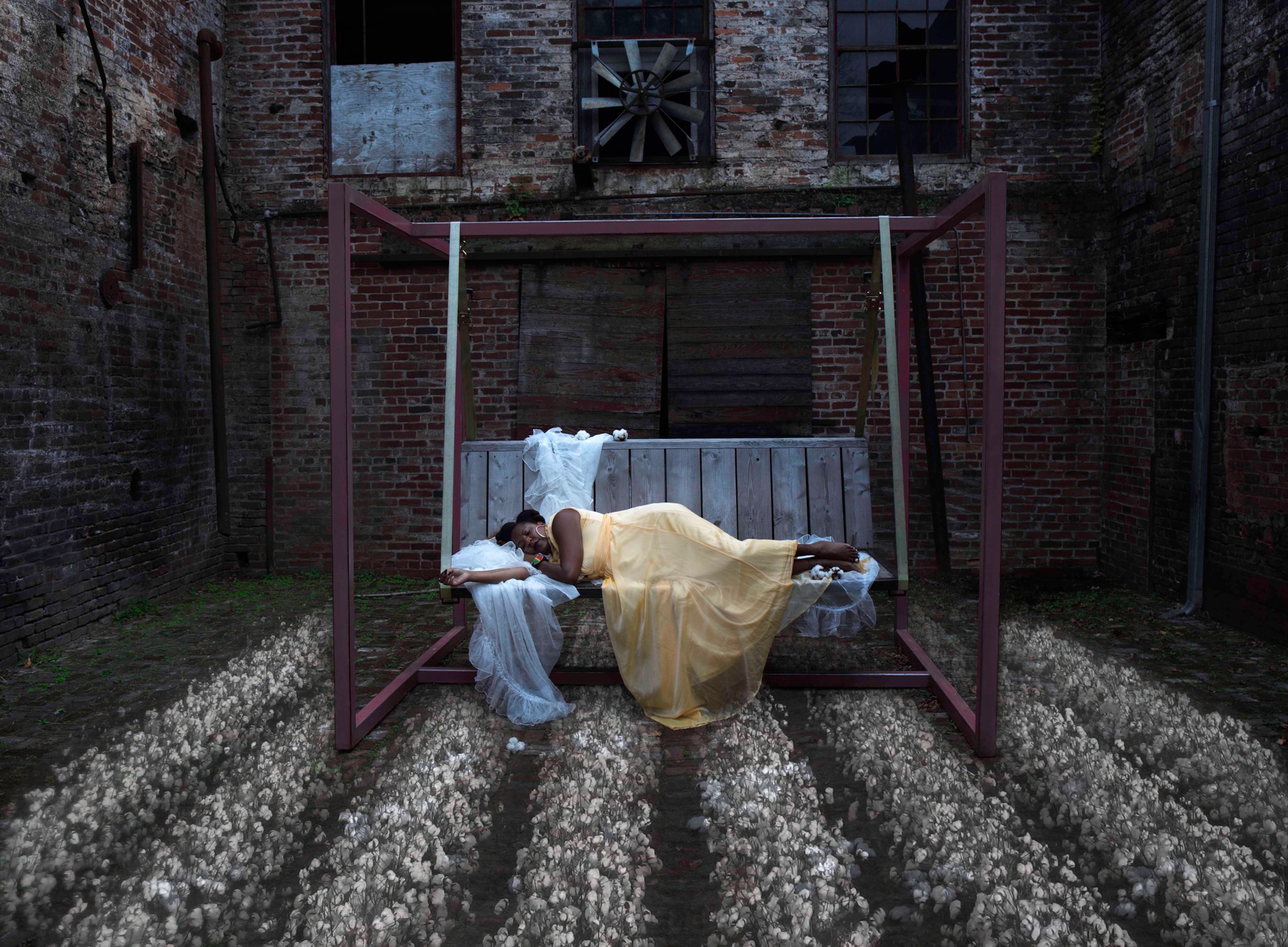
ARTWORK: Dreaming with the Ancestors by Charlie Watts and Tricia Hersey [HT: Visual Commentary on Scripture]: Tricia Hersey is a poet, performance artist, spiritual director, and community organizer living in Atlanta, Georgia. She is the founder of The Nap Ministry, an organization that promotes rest as a form of resistance against capitalism (which fuels contemporary grind culture) and white supremacy, and the author of the New York Times best-selling Rest Is Resistance: A Manifesto (2022) and We Will Rest! The Art of Escape (2024). She pursued graduate research in Black liberation theology, womanism, somatics, and cultural trauma, earning a master of divinity degree from Candler School of Theology at Emory University.

Watts, Charlie_Dreaming with the Ancestors
Charlie Watts and Tricia Hersey, Dreaming with the Ancestors, 2017. Archival digital print photograph, 76.2 × 101.6 cm.

The photograph Dreaming with the Ancestors, taken by Charlie Watts, portrays Hersey reclining on a wooden bench inside an open brick enclosure and above rows of cotton plants. Dressed in a soft yellow gown, she closes her eyes in rest, practicing what she calls “the art of escape”—from the incessant demand of productivity and overwork, from oppression of body and spirit, from noise that drowns out voices of wisdom.

In We Will Rest!, Hersey advises:

Every day, morning or night, or whenever you can steal away, find silence. Even if for only a few minutes. Look for quiet time, quiet breathing, quiet wind, quiet air. It is there. Even if it’s cultivated in your body by syncing with your own heart beating. Guilt and shame will be a formidable and likely opponent in your resistance. We expect guilt and shame to surface. Let them come. We rest through it. We commit to our subversive stunts of silence, truth, daydreaming, community care, naps, sleep, play, leisure, boundaries, and space. Be passionate about escape. (107)

+++

ALBUM: Grace Will Lead Me Home by Invisible Folk (2024) [HT: Jonathan Evens]: An Arts Council England grant awarded to singer-songwriter Jon Bickley in 2022 enabled him to conduct a research and songwriting project that culminated in the album Grace Will Lead Me Home, which engages with the hymn “Amazing Grace,” its author’s biography, and its legacy. Bickley partnered with the Cowper and Newton Museum in Olney and enlisted the collaboration of fellow folk musicians Angeline Morrison (The Sorrow Songs: Folk Songs of Black British Experience) and Cohen Braithwaite-Kilcoyne (creator of the “Black Singers and Folk Ballads” resource for secondary educators, and concertina player on Reg Meuross’s Stolen from God). Here’s the title track, written and sung by Morrison:

The album also includes a cover of Zoe Mulford’s “The President Sang Amazing Grace,” written in response to the racially motivated mass shooting at Mother Emanuel AME Church in Charleston, South Carolina, on June 17, 2015 (its ten-year anniversary is next Tuesday). In his eulogy at the funeral of one of the nine victims, Rev. Clementa Pinckney, President Barack Obama chose “the power of God’s grace” as his theme, and he closed by singing the first stanza of “Amazing Grace,” a moving gesture that Mulford’s song remembers.

Other songs on Grace Will Lead Me Home address John Newton’s love for his wife Polly, his impressment into naval service, and his friendship with William Cowper. There are also songs that grapple with the harm and suffering Newton inflicted on others through his involvement in the slave trade, and that wonder at his hymn’s being so mightily embraced not only by the Black church, many of whose members are descendants of enslaved Africans, but also by other traumatized communities, who insist amid all the wrongs and afflictions they’ve suffered that God is amazingly gracious.

It’s a myth that John Newton (1725–1807), who converted to Christianity in 1748 after surviving a turbulent sea voyage, immediately gave up his employment as a slave trader upon embracing Christ. In fact, he was soon after promoted from slave ship crew member to captain and sailed three more voyages to Africa as such, trafficking human beings for profit until 1754, when his ill health forced him to retire. But he continued to invest in slaving operations for another decade, until becoming a priest in the Church of England. It wasn’t until 1788, in the pamphlet Thoughts Upon the African Slave Trade, that he publicly denounced slavery and confessed his sin of having participated in that evil institution, and this was the start of his abolitionism.

+++

SONG: “Amazing Grace,” performed by the Good Shepherd Collective: This adaptation of “Amazing Grace” premiered at Good Shepherd New York’s digital worship service on June 1. Listen via the Instagram video below, or cued up on YouTube. The vocalists are, from right to left, Charles Jones on lead, Solomon Dorsey (also on bass), Jon Seale, Dee Wilson, and Aaron Wesley. James McAlister is on drums, Michael Gungor is on electric guitar, and Tyler Chester is on keys.

Roundup: Upcoming webinars and conferences

ONLINE LECTURES organized by the Centre for Marian Studies at St Mary’s University in Twickenham:

If you’d like to register for either of these (they’re free), email Catherine O’Brien at info@marianstudies.ac.uk. View additional online lecture offerings at https://www.marianstudies.ac.uk/post/research-seminar-schedule.

>> Annual Candlemas Lecture by Ayla Lepine, February 3, 2025, 7 p.m. GMT (2 p.m. ET): Rev. Dr. Ayla Lepine, who is the associate rector at St James’s Piccadilly in London and an art historian and theologian, “will explore two works of art featured in her forthcoming book, Women, Art, God. In the series entitled The Annunciation (A Study), Julia Margaret Cameron reimagined and reconfigured paintings by Renaissance artists including Perugino and Lippi. In her photography, blurred and hazy aspects of the image are suggestive of the Holy Spirit in this new technology.

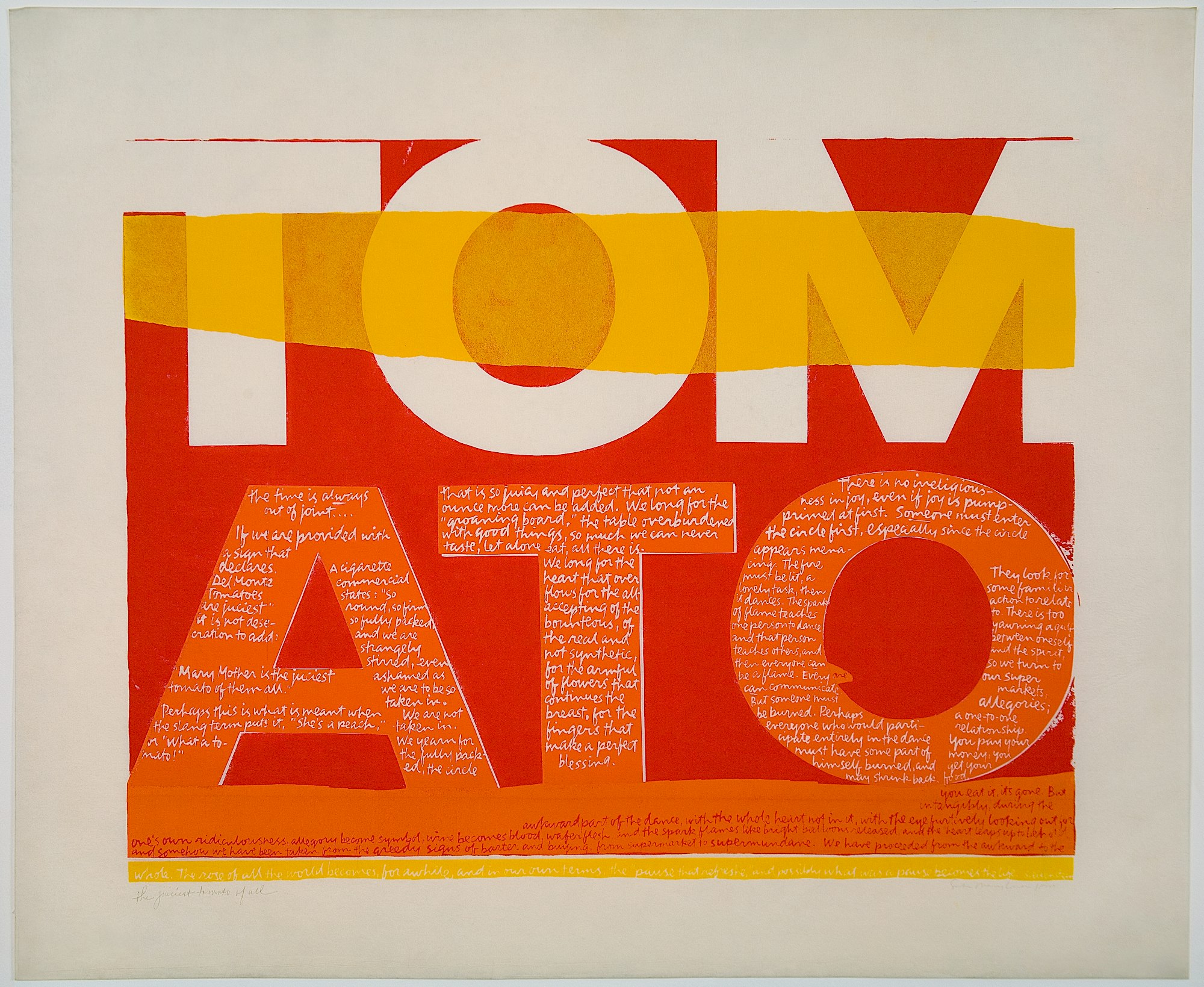
“A century later, the American nun Sister Corita Kent produced a groundbreaking silkscreen print, The Juiciest Tomato of All. This artwork compared the Virgin Mary to a ripe fruit, with a title inspired by Del Monte tinned fruit and vegetable slogans from her local supermarket. By considering these two artworks by women from the nineteenth and twentieth centuries as a pair, new ways of encountering Mary in art history, theology, and prayer can emerge with unexpected resonance for the twenty-first century.”

Cameron, Julia Margaret_Annunciation
Julia Margaret Cameron (British, 1815–1879), After Perugino / The Annunciation, 1865. Albumen print from wet collodion glass negative, 19 1/2 × 15 in. Victoria and Albert Museum, London.

Kent, Corita_the juiciest tomato of all
Corita Kent (American, 1918–1986), the juiciest tomato of all, 1964. Serigraph, 29 3/4 × 36 in. © Estate of Corita Kent / Immaculate Heart Community.

>> “The Annunciation in Theology and Art: Shedding New Light on an Old Doctrine” by Tina Beattie, March 26, 2025, 3 p.m. GMT (10 a.m. ET): No details other than the title have been given about this lecture. But the speaker is a leading Marian theologian and writer whom I’ve been familiar with for some time, and an emerita professor of Catholic studies at the University of Roehampton. Her research is in the areas of gender, sexuality, and reproductive ethics; Catholic social teaching and women’s rights; theology and the visual arts, especially images of Mary; and the relationship between medieval mysticism, sacramental theology, and psychoanalytic theory.

+++

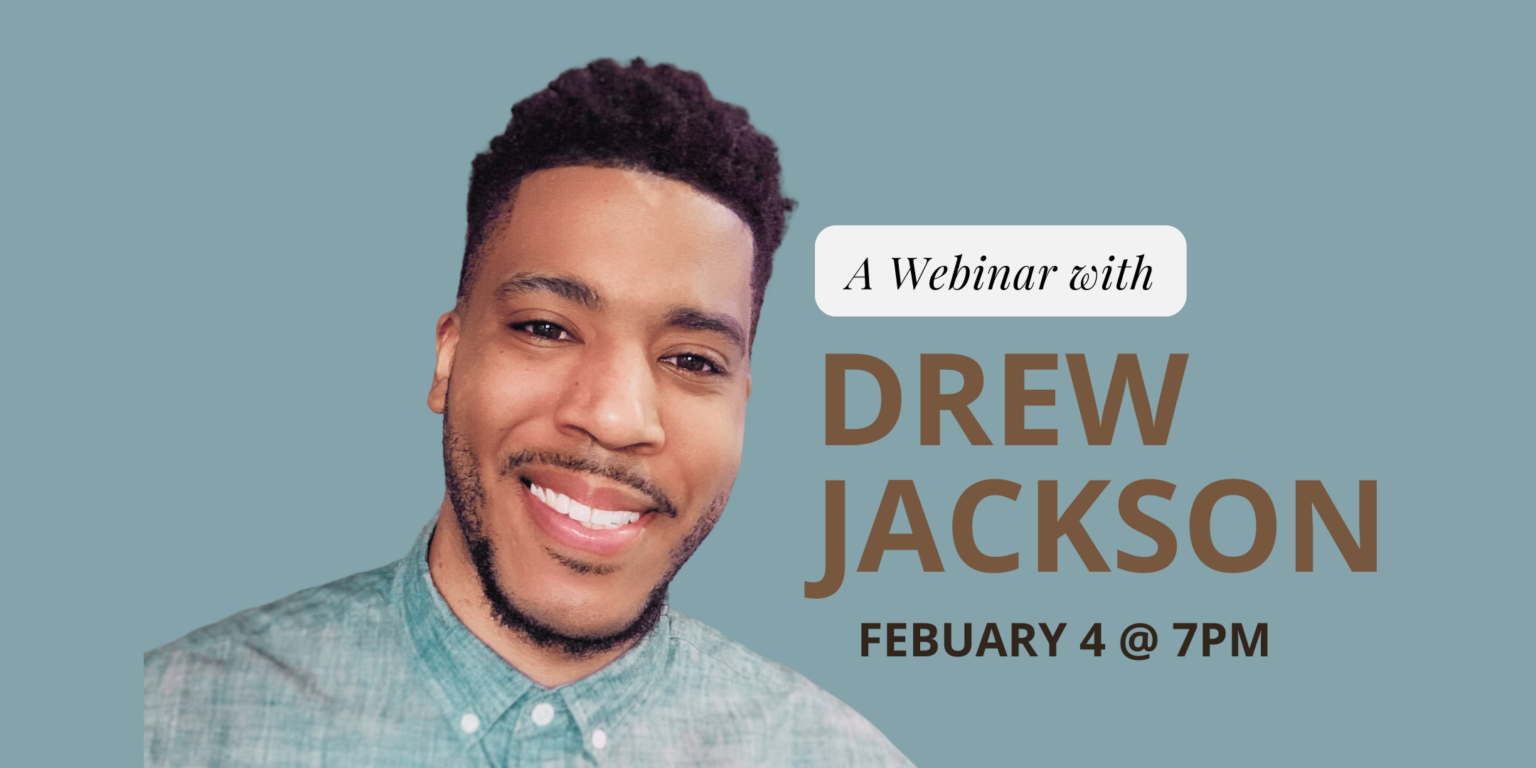
WEBINAR with Drew Jackson, Eugene Peterson Center for Christian Imagination, February 4, 2025, 7 p.m. ET: A conversation on the intersection of poetry, ministry, and Christian imagination. Registration is free. “Drew Jackson is a poet, speaker, and public theologian. He is author of God Speaks Through Wombs: Poems on God’s Unexpected Coming and Touch the Earth: Poems on the Way. . . . Drew received his B.A. in Political Science from the University of Chicago and his M.A. in Theology from Fuller Theological Seminary. He currently works as the Managing Director of Mission Integration for the Center for Action and Contemplation, and lives in Brooklyn, NY, with his wife and daughters.”

Webinar with Drew Jackson

+++

CONFERENCES/SYMPOSIA:

>> Calvin Symposium on Worship, Calvin University, Grand Rapids, Michigan, February 5–7, 2025: “An ecumenical conference dedicated to worship and learning, bringing together people in a variety of roles in worship and leadership from across the country and around the world.”

>> Contemporary Art as/in Pilgrimage, Columbia University, New York, February 11, 2025: Organized by the Association of Scholars of Christianity in the History of Art, this one-day symposium “will explore such questions as: Are galleries, museums, art expos, and art installations the new ‘slow spaces’ for spiritual sustenance and transcendent experiences? How are temples, churches and other ‘religious’ sites transformed by artist installations intended to invoke deep spiritual encounter and healing? And how is the art of contemporary artists working in a diversity of media and practice seen through the lens of pilgrimage?”

The keynote speaker is Kathryn R. Barush, author of Imaging Pilgrimage: Art as Embodied Experience (Bloomsbury, 2021). She will be joined by eleven other presenters. Plus, Elissa Yukiko Weichbrodt, author of Redeeming Vision: A Christian Guide to Looking at and Learning from Art, will lead attendees in the practice of intentional looking at the Cathedral of Saint John the Divine.

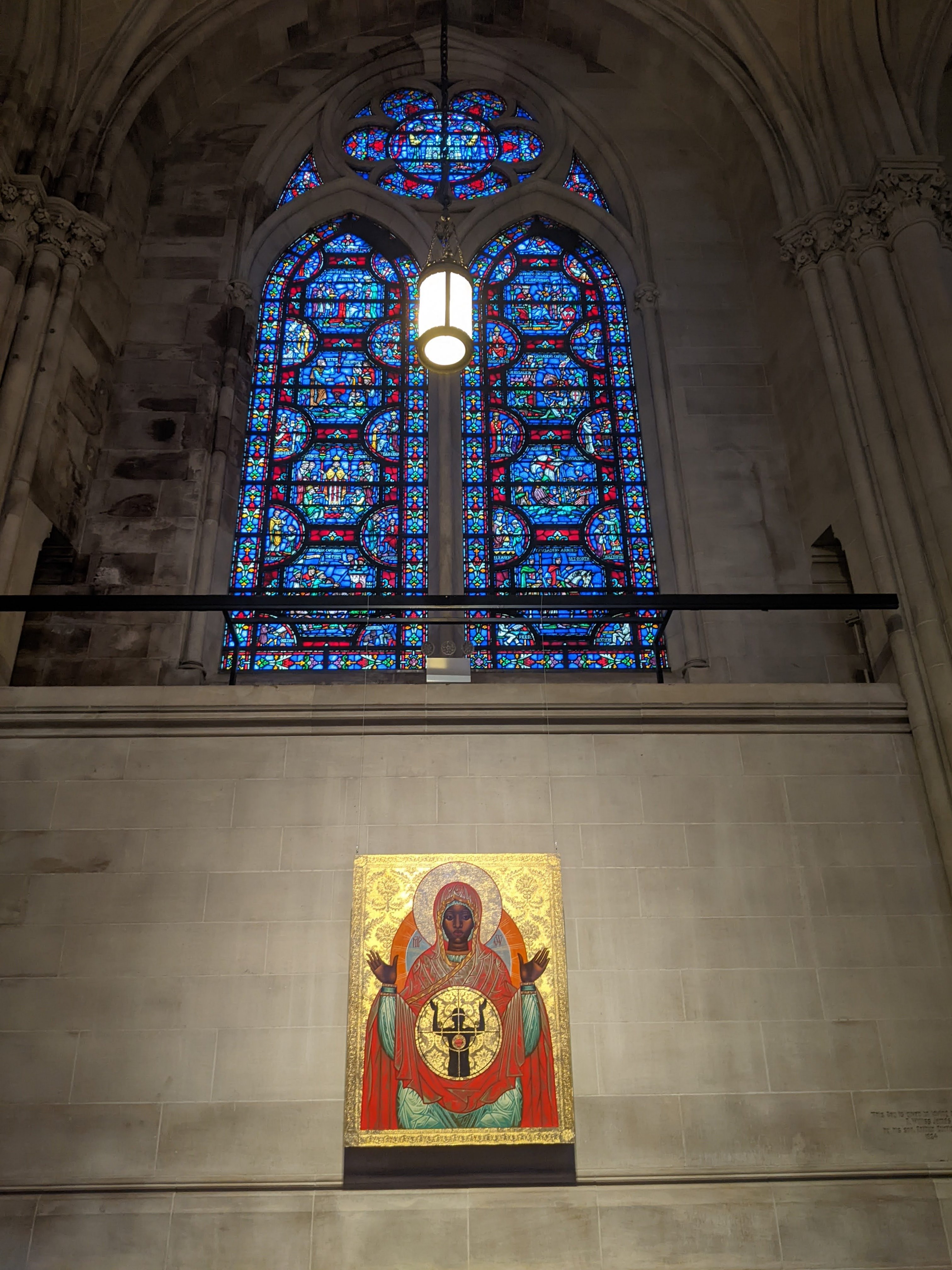
Our Lady of Ferguson
Mark Doox (American, 1958–), Our Lady, Mother of Ferguson and All Those Killed by Gun Violence, 2016. Acrylic and gold leaf on wood, 48 × 36 in. Cathedral of Saint John the Divine, New York. Photo: Victoria Emily Jones, 2022.

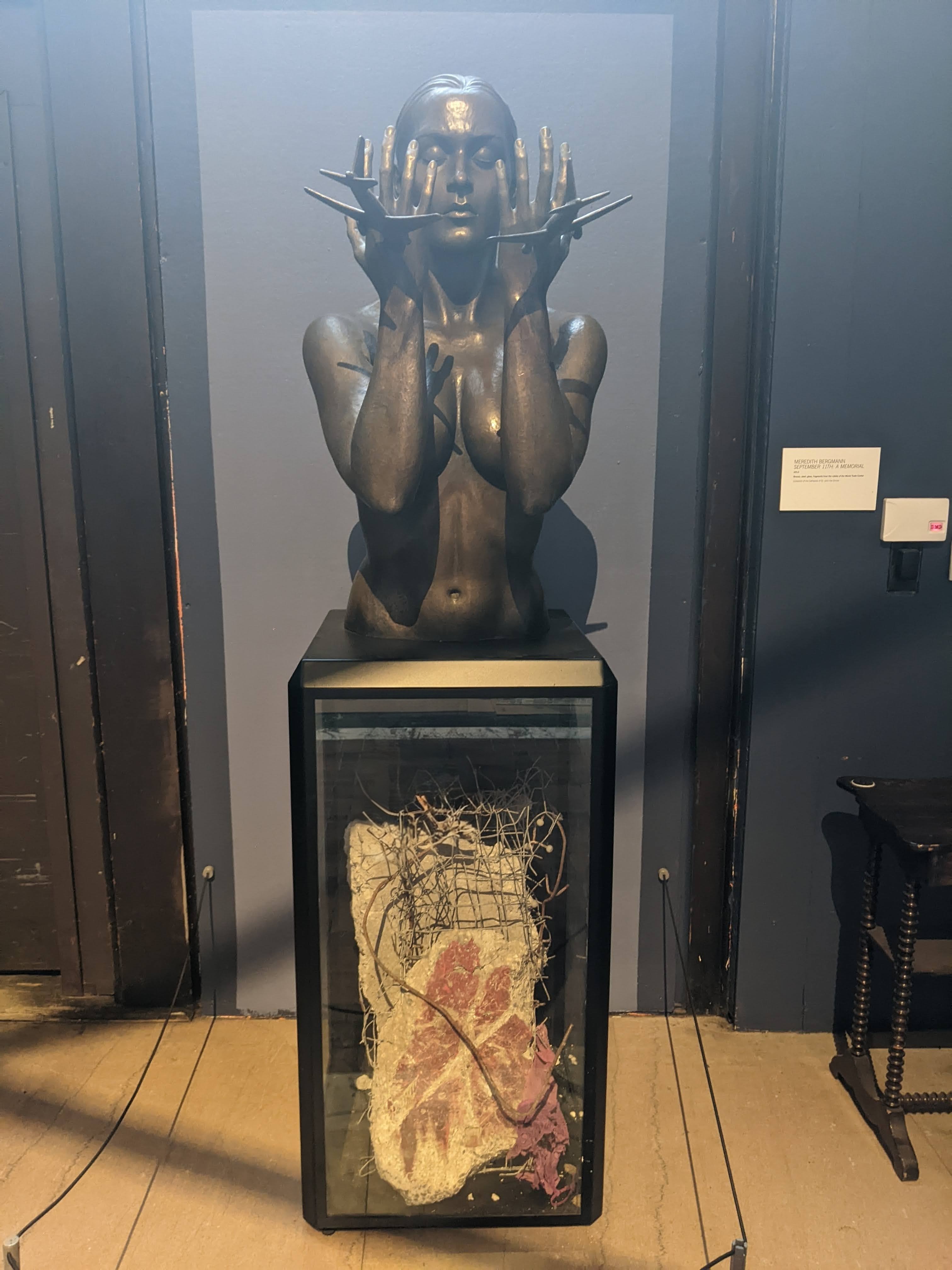
Bergmann, Meredith_September 11th
Meredith Bergmann (American, 1955–), September 11th: A Memorial, 2012. Bronze on pedestal of steel and glass, containing reinforced concrete and brick from the rubble of the World Trade Towers, 78 × 22 × 24 in. Cathedral of Saint John the Divine, New York. Photo: Victoria Emily Jones, 2022.

>> Square Halo Conference, Trust Performing Arts Center, Lancaster, Pennsylvania, March 7–8, 2025: “The Square Halo conferences have offered times not only of fascinating and inspiring ideas in a high caliber of wide and varied presentations, but also of rich, meaningful interactions, dialogue, and (in a deep sense of this word) fellowship. Creativity, collaboration, and community . . . an apt description of what [takes] place” (Matthew Dickerson).

The keynote speaker is Diana Pavlac Glyer, who teaches literature, history, theology, and philosophy in an integrated Great Books curriculum at Azusa Pacific University, and the Saturday-night concert will feature Thomas Austin and Skye Peterson.

>> The Breath and the Clay, Winston-Salem, North Carolina, March 21–23, 2025: “This year we will explore how the light gets in through the fragments of our stories, our lives and our art. We are each built of broken pieces, a mosaic of joys and sorrows, of mundane and miraculous happenings. When we surrender the full spectrum of our human experience, even our pain, doubts and sorrows can heal into art. Through our workshops, keynote talks, immersive gallery and performances, we will explore various facets of the creative life and how everything from inspiration to the everyday, from family to vocation and community coalesce to reveal a hidden wholeness.”

Presenters include Sho Baraka, Vesper Stamper, Justin McRoberts, Cheryl Bridges Johns, Elissa Yukiko Weichbrodt, and more.

>> Illuminate: Art and Faith, Southern Adventist University, Collegedale, Tennessee, March 31–April 1, 2025: “Author and theologian Frederick Buechner famously wrote, ‘Pay attention to the things that bring a tear to your eye or a lump in your throat because they are signs that the holy is drawing near.’ Paintings, poetry, music, and other creative mediums hold strong potential to do just that—to indirectly communicate powerful truths, many of which have eternal consequences. Are we open to what they’re telling us? Will we utilize these tools to share important stories (including The Story) with others? Join us for two rich days of education, inspiration, and community! . . .

“This year’s conference will include a variety of hands-on workshops (flash fiction, drawing, songwriting), as well as sessions exploring fascinating figures, including C. S. Lewis, Madeleine L’Engle, Eugene Peterson, Kurt Vonnegut, Dorothy Sayers, Vincent van Gogh, Norman Rockwell, Ludwig van Beethoven, Duke Ellington, and many more.”

Among the session leaders and performers are art historian Elissa Yukiko Weichbrodt (Redeeming Vision), writer Douglas McKelvey (Every Moment Holy), film and literature scholar Mary McCampbell (Imagining Our Neighbors as Ourselves), pastor Russ Ramsey (Van Gogh Has a Broken Heart; Rembrandt Is in the Wind), illustrator John Hendrix (The Mythmakers; Go and Do Likewise!), and singer-songwriter Andy Gullahorn.

>> Visible and Invisible: Surprising Encounters in Theology and the Arts (DITA 2025), Duke University, Durham, North Carolina, September 4–7, 2025: I’ll be attending this one! Organized by Duke Initiatives in Theology and the Arts. “How can the arts help us open up the very heart of the Christian faith, celebrated at the Council of Nicaea in 325, that Jesus Christ is ‘one in being’ with God? Featuring world-class academics, artists, musicians, and clergy from around the globe and a robust range of programming, DITA2025 is a four-day symposium at Duke University celebrating Nicaea and the myriad surprises the Creed holds in store for artists, academics, clergy, and parishioners today. . . .

“By pairing theologians with poets, clergy with novelists, dancers with liturgists, musicians with scholars, the symposium will generate a series of meetings rarely offered in academic and artistic settings. Including interactive keynotes, plenary presentations, seminar lectures, applied workshops, an evening concert, and more, DITA2025 is a unique opportunity to experience the arts and the academy in action.”

Leah Glenn
Dancer and choreographer Leah Glenn performs an original work, The Youngest of Nine, at DITA 2019.

Speakers include Rowan Williams, Chigozie Obioma, Natalie Carnes, Sandra McCracken, James K.A. Smith, Malcolm Guite, Amy Peeler, and Josh Rodriguez. Early-bird registration ends February 15.

Roundup: Adoration ’N Prayze, “Elogio all’Innocenza,” and more

DANCE: “I Wanna Be Ready”: The African American spiritual “I Wanna Be Ready” forms the soundtrack to this iconic solo from Alvin Ailey’s contemporary ballet Revelations. The dancer in this first video is Amos Machanic:

In 2018, in honor of the Alvin Ailey American Dance Theater’s sixtieth anniversary, Matthew Rushing, who is currently the company’s interim artistic director, traveled to Ailey’s birthplace of Rogers, Texas, to dance “I Wanna Be Ready” at Mount Olive Baptist Church, one of the few landmarks of Ailey’s childhood that’s still standing in Rogers. He was accompanied live by five local singers. The performance was filmed, edited, and released on YouTube.

I’m so excited that in January, for the first time, I’m going to see AILEY live in New York! The company will be performing three pieces, including the brand-new Sacred Songs, choreographed by Rushing.

+++

SONGS:

>> “Time Is Running Out” by Adoration ’N Prayze: Adoration ’N Prayze was a female gospel quartet from Detroit that was active in the early nineties, consisting of Damita Bass, Marguerita Bass, Pamela Taylor, and Shontae Graham (later replaced by Audra “Dodi” Alexander). This original song is the title track of their first and only album, released in 1991. The live recording is from a concert they gave at Clowes Memorial Hall in Indianapolis in 1992.

>> “Oil in My Vessel,” traditional gospel song performed by Rani Arbo & daisy mayhem: Rani Arbo & daisy mayhem are a New England–based folk quartet made up of Rani Arbo (fiddle, guitar), Andrew Kinsey (bass, banjo, ukulele), Anand Nayak (electric and acoustic guitars), and Scott Kessel (percussion). This song they perform is based on a recording by Joe Thompson (1918–2012), who was raised in a Holiness Church in Alamance County, North Carolina. Thompson said the song was in his church hymnal, and that he learned it from his mom when he was about five years old (in the 1920s). Its refrain is a statement of intent to “be ready when the Bridegroom comes,” and its stanzas are taken from the seventeenth-century hymn “Must Jesus Bear the Cross Alone?” by Thomas Shepherd and, from the eighteenth century, “Amazing Grace” by John Newton.

+++

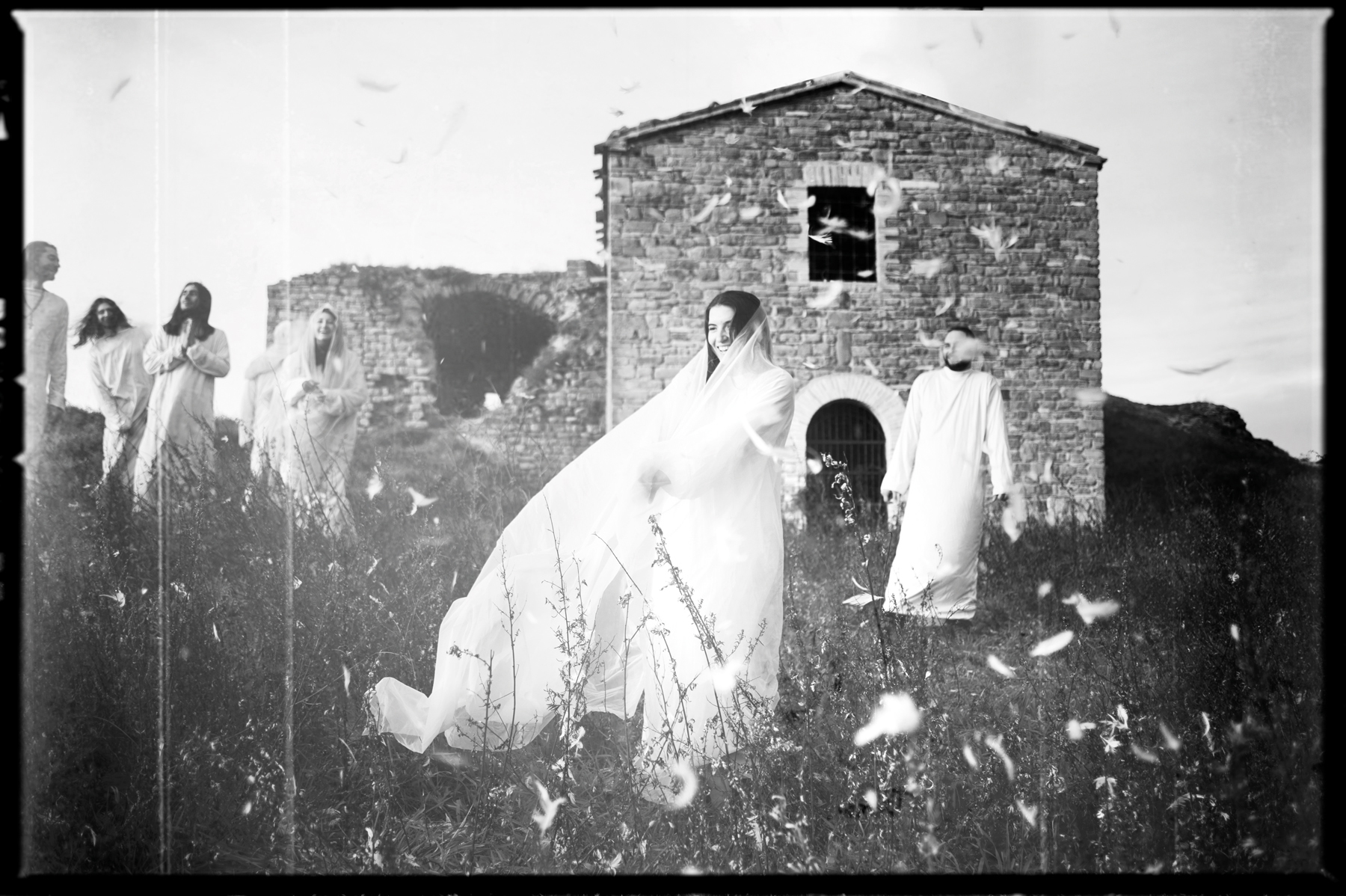
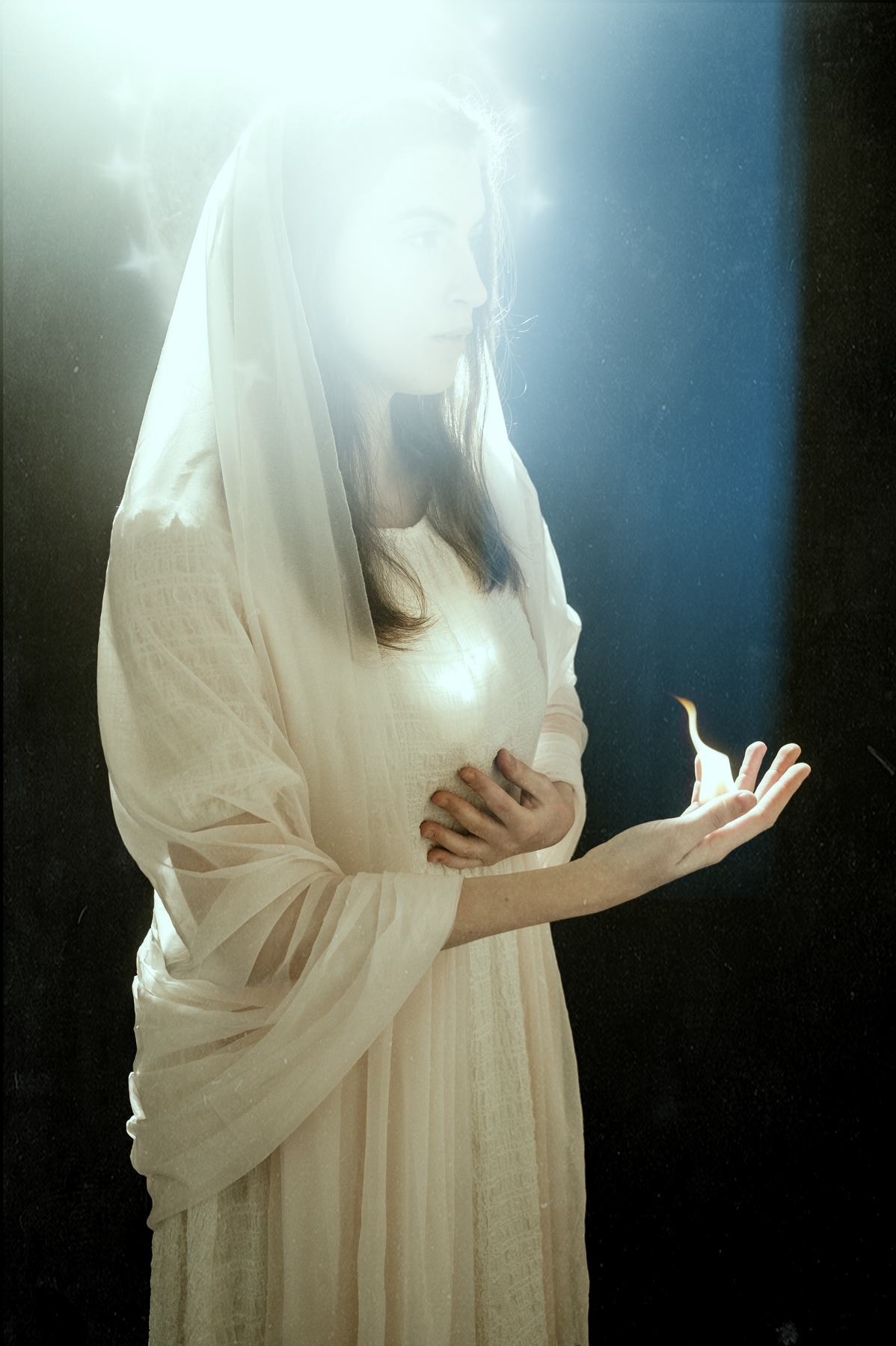
PHOTOGRAPH SERIES: Elogio all’Innocenza (In Praise of Innocence) by Gloria Mancini: Gloria Mancini is an Italian artist working mainly in photography. One of her recent series, divided into three parts, is based on Revelation 3:1–6 (Gli Innocenti, or The Innocents), 12:1 (La Donna Vestita di Sole, or The Woman Clothed with the Sun), and 5:1–7 (L’Agnello, or The Lamb). “Becoming small to become great has been the aim of my exploration of the Book of Revelation,” she writes in her artist’s statement. “Inspired by the visionary and magnetic power of the Kyrios (the Christ, the Lamb), I chose to focus my reflection on innocence as a fundamental and revolutionary value of being, reaffirming its virtue.” She says she is compelled by how in Revelation, it is a meek and vulnerable lamb who defeats evil.

Jesus’s message to the church in Sardis, a wealthy city in west-central Asia Minor, is so seldom (or not at all?) visualized in art history—I’m grateful to Mancini for drawing attention to this passage through her thoughtful work! Jesus tells the church to “wake up,” to “remember . . . what you received and heard; obey it and repent,” following the example of the few there “who have not soiled their clothes.” Those people, he says, “will walk with me, dressed in white, for they are worthy.” He admonishes the Sardis Christians to be watchful and to strengthen and perfect their good works so that they might conquer evil and their names be preserved in the book of life.

Mancini pictures the faithful remnant at Sardis praying, keeping watch, persevering in purity, and gamboling about in the life of the Spirit.

Mancini, Gloria_In Praise of Innocence
Gloria Mancini (Italian, 1992–), photograph from the Elogio all’Innocenza series, 2023

Mancini, Gloria_In Praise of Innocence
Gloria Mancini (Italian, 1992–), photograph from the Elogio all’Innocenza series, 2023

The Woman Clothed with the Sun from Revelation 12, on the other hand, is widely represented in art, and since the twelfth century has been associated with the Virgin Mary, because the woman gives birth to a son who is pursued by the Dragon. In church tradition Mary is also likened to the burning bush in Exodus, because she bore the fire of divinity—God in Christ—within her but was not consumed. Mancini plays on both associations, showing Mary cautiously holding a flame, bringing it closer to her breast: she accepts the Incarnation and is set alight.

Mancini, Gloria_In Praise of Innocence
Gloria Mancini (Italian, 1992–), photograph from the Elogio all’Innocenza series, 2023

+++

ART SPOTLIGHT: “Yellow Silence: Miniature from the Silos Apocalypse (ca. 1100),” Public Domain Review: One of the most dramatic pauses in scripture comes about a third of the way through the book of Revelation. John has just described the nations’ loud and jubilant praises around the throne of God, and then he opens the next chapter, “When the Lamb broke the seventh seal, there was silence in heaven for about half an hour” (Rev. 8:1). This is the calm before the next storm of judgment breaks with the blowing of the seven trumpets, through which God purges the earth of evil.

While artists have historically relished the chance to visualize the rain of blood, fire, locusts, and such initiated by the trumpet blasts, the anonymous artist of a twelfth-century copy of an Apocalypse commentary from Spain saw fit to also visualize the sonic absence that preceded these spectacular occurrences. He did so with a rectangular swath of yellow.

Silence in Heaven (Silos Apocalypse) (detail)
Miniature from the Silos Apocalypse, northern Spain, 1091–1109. British Library, Add MS 11695, fol. 125v.

This swath calls readers to somber, speechless awe and reflection. God’s earlier word spoken to and through the prophet Zephaniah is appropriate here: “Be silent before the Sovereign LORD, for the day of the LORD is near” (Zeph. 1:7).

Click here to browse more images from the Silos Apocalypse.

Juneteenth roundup: Songs, poems, two painting series, and Step Afrika! performance

Juneteenth is a federal holiday that commemorates the end of slavery in the United States. It is celebrated annually on June 19, the date on which, in 1865, the Union army finally arrived in the nation’s farthest reaches—Texas—to enforce the proclamation Lincoln had signed more than two and a half years earlier. While the holiday is marked predominantly by joy, it also calls on celebrants to reflect on the complicated meaning of freedom—“freedom that came at the end of the bloodiest war on the American soil where more than 700,000 lives were lost, freedom that came at the death of many enslaved people who never lived to see it, and freedom that people still fight for today,” historian Daina Ramey Berry told Life & Letters. In the words of another historian, Mitch Kachun, Juneteenth is a time “to celebrate, to educate, and to agitate.”

Yesterday I published a long-form article on the three twenty-first-century stained glass windows at New Mount Pilgrim Missionary Baptist Church in Chicago, which explore America’s stained past, Black communities’ resilience, present-day gang violence, and “the values of the village.” The article provides ample fodder for possible ways to honor Juneteenth, such as these:

  • Donate to the MAAFA Redemption Project to support the promise and genius of Chicago’s Black and Brown youth. Or choose another Black cause, publication, individual, or business to invest in.
  • Watch the documentary All These Sons to learn about how two Chicago organizations are loving and transforming their neighborhoods, seeking to free residents from cycles of violence and help them reclaim their self-worth.
  • Spend ten minutes looking at and meditating on each of the three rose windows at New Mount Pilgrim. Think of them as visual prayers that you can enter into.
  • “Read” (that is, view, as it’s almost entirely a picture book) The Middle Passage by Tom Feelings, pausing at each illustration to really feel the weight of the atrocities perpetrated during the transatlantic slave trade. Practice lament.
  • Watch the groundbreaking miniseries Roots, based on Alex Haley’s novel, which traces the saga of a Mandinka family for three generations, before, during, and after slavery. It originally aired on ABC over eight consecutive nights in 1977, and later that year on BBC One; it’s streaming for free on Tubi (no account needed) in the form of six ninety-minute episodes.
  • For a firsthand account of slavery written by someone who was himself enslaved, read Olaudah Equiano’s autobiography, or passages from it.
  • Read the poet Lucille Clifton, who writes about Black womanhood, history, family, and religion. A good place to start would be her National Book Award–winning Blessing the Boats.
  • Peruse the Adinkra Symbol Index, put together by web designer Jean MacDonald, to learn more about this West African writing system and some of the concepts and proverbs represented in it.

+++

YOUTUBE PLAYLIST: Juneteenth 2024, compiled by Victoria Emily Jones: As a follow-up to the Juneteenth Playlist I published on YouTube in 2022, I’ve put together a brand-new one of nineteen songs, including a ring shout from South Carolina, a Sam Cooke cover, a virtuosic performance by the Trinidadian pianist Hazel Scott, a song-turned-children’s-book by Rhiannon Giddens, some seventies funk, and more. Here are two selections from the list:

>> “Feelin’ Good”: Written in 1964 by English composers Anthony Newley and Leslie Bricusse for the musical The Roar of the Greasepaint – The Smell of the Crowd, this song became a classic when Nina Simone recorded it the following year for her album I Put a Spell on You. In 2021, Dove, Verve Records, UMe, and the Nina Simone Charitable Trust teamed up to create the first-ever music video for Simone’s version of the song. Directed by Sarah Lacombe and featuring dancer Raianna Brown, the new music video “aims to continue Simone’s important legacy by telling a story of Black female empowerment . . . follow[ing] four generations of Black women living their truths, loving each other, celebrating their hair, and feeling good,” according to the press release.

>> Soul Force by Jessie Montgomery:Soul Force is a one-movement symphonic work which attempts to portray the notion of a voice that struggles to be heard beyond the shackles of oppression,” writes composer Jessie Montgomery. “The music takes on the form of a march which begins with a single voice and gains mass as it rises to a triumphant goal. Drawing on elements of popular African-American musical styles such as big-band jazz, funk, hip-hop and R+B, the piece pays homage to the cultural contributions, the many voices, which have risen against aggressive forces to create an indispensable cultural place.” It’s performed here by the national youth ensembles NYO-USA, NYO2, and NYO Jazz, established by Carnegie Hall.

The title of the work comes from Rev. Dr. Martin Luther King’s “I Have a Dream” speech, in which he states, “We must not allow our creative protest to degenerate into physical violence. Again and again, we must rise to the majestic heights of meeting physical force with soul force.”

Click here to access all nineteen songs on Art & Theology’s YouTube playlist for Juneteenth 2024. (See also my Juneteenth playlist on Spotify.)

+++

WASHINGTON, DC, EVENTS:

I live about an hour north of DC in Central Maryland, so I try to take advantage of some of the many cultural offerings of that city. If you, too, live nearby and don’t already have plans for Juneteenth, here are two ideas of things to do outside the house.

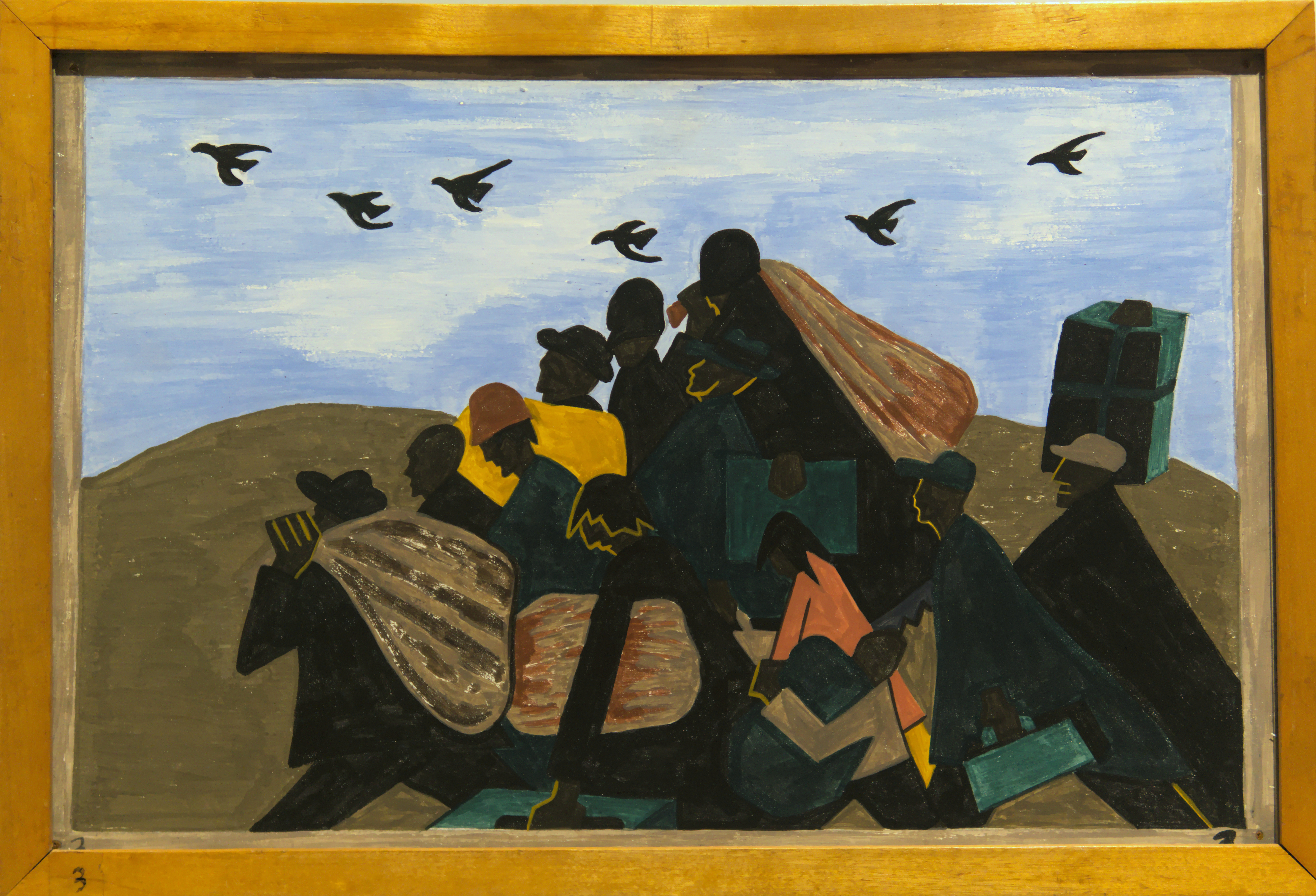
>> STEPPING PERFORMANCE: “Step Afrika! The Migration: Reflections on Jacob Lawrence,” Arena Stage, running through July 14: I’ll be going tomorrow, thanks to an invite from a friend! “Using its hallmark style of percussive dance-theater, Step Afrika!’s The Migration: Reflections on Jacob Lawrence tells the story of one of the largest movements of people in United States history, when millions of African American migrants moved from the rural South to the industrial North in the 1900s to escape Jim Crow, racial oppression, and lynchings. Inspired by Jacob Lawrence’s iconic 60-panel The Migration Series (1940-41), this signature work from the award-winning dance company uses the images, color palette, and motifs in the painting series to tell this astonishing story through pulsating rhythms and visually stunning movement.” The performance fuses body percussion, tap, and contemporary dance with live gospel, jazz, and blues.

Here’s a video promo made by New Victory Theater when the show toured there a few years ago:

Lawrence, Jacob_Migration Series 3
Jacob Lawrence (American, 1914–2000), “From every southern town migrants left by the hundreds to travel north,” panel 3 from The Migration Series, 1940–41. Casein tempera on hardboard, 12 × 18 in. Phillips Collection, Washington, DC. Photo: Victoria Emily Jones. [object record]

Browse all sixty panels from The Migration Series at https://lawrencemigration.phillipscollection.org/. Lawrence pictures different aspects of the northern migration story, such as crowded train stations, rotting crops, lynchings, urban housing, educational opportunity, and church life.

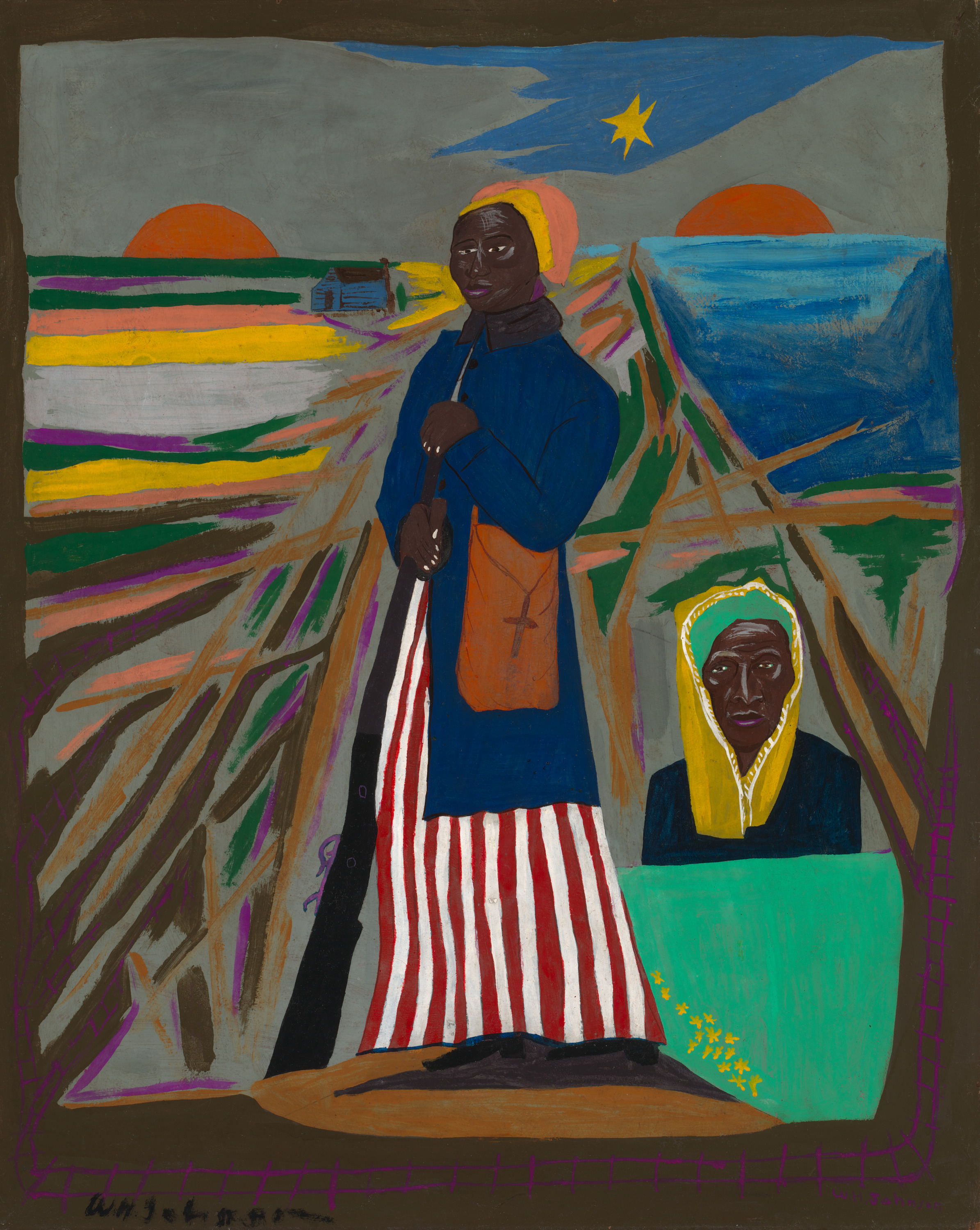
>> ART EXHIBITION: Fighters for Freedom: William H. Johnson Picturing Justice, Smithsonian American Art Museum, March 8–September 10, 2024: Another African American artist who was working around the same time as Jacob Lawrence is William H. Johnson (1901–1970). Last weekend I saw his Fighters for Freedom series of paintings at the SAAM—the first time the works have been shown together since 1946. He painted the series in the mid-1940s as a tribute to African American activists, scientists, teachers, and performers as well as international leaders working to bring peace to the world. Interactive kiosks identify the many historical figures. I learned so much! I can picture this exhibition being a good teaching tool for children as well. Spending time with every painting would be overwhelming for them, but choosing a few select artworks as entry points into talking about the freedom fighters depicted and the larger freedom story they’re a part of should work well.

Johnson, William H._Harriet Tubman
William H. Johnson (American, 1901–1970), Harriet Tubman, ca. 1945. Oil on paperboard, 28 7/8 × 23 3/8 in. (73.5 × 59.3 cm). Smithsonian American Art Museum, Washington, DC.

At the exhibition there are also signs and photos that inform viewers of related artifacts at other Smithsonian museums in the city, including:

(Click on the links for short video features about these objects, made specially for this exhibition.)

+++

POEMS:

>> “Paul Robeson” by Gwendolyn Brooks: Though in popular culture he is best remembered as an international star of stage and screen, the bass-baritone singer and actor Paul Robeson was also a prominent activist who graduated from law school and fought for civil rights. In this poem, Gwendolyn Brooks celebrates that latter legacy of his, his commitment to seeing the Black community in America, as well as other oppressed people groups around the world, flourish. The powerful final lines—“we are each other’s / harvest: / we are each other’s / business: / we are each other’s / magnitude and bond”—communicate the wisdom that we reap the good fruit that grows from seeds sown by others. She references Robeson’s most famous song, “Ol’ Man River,” sung by the character Joe in the musical Show Boat; the song laments the hardships faced by African Americans and expresses envy of the carefree Mississippi River, which just keeps rolling along, free from toil. But Brooks was happy to see Robeson move beyond the despondency embodied by Joe the deck hand, to take a much more empowered stance in public life.

>> “Juneteenth” by Marilyn Nelson: Here Nelson reflects on the childhood of her mother, Johnnie, who grew up in the all-Black pioneer town of Boley, Oklahoma. In Boley, then as now, June 19 is a “second Easter,” a time of food, family, games, and celebration. After several stanzas spent recounting the lighthearted festivities, the last line lands with a thud, a brutal reminder of the terror these community members fled to establish a place of their own. The poem is ultimately about overcoming, but even as the Black residents of Boley have built a new life for themselves and their families, racism is still a wound they bear. “Juneteenth” can be found in the excellent collection The Fields of Praise: New and Selected Poems by Marilyn Nelson (Louisiana State University Press, 1997).

Roundup: “Art and Religion Now” symposium, landscape of the body, and more

SYMPOSIUM: “Kunst en religie nu” (Art and Religion Now), October 20, 2023, 1:30–4:30 p.m., Museum Catharijneconvent, Utrecht, Netherlands: A week from Friday, attend a free afternoon of talks (in Dutch) on the topic of religion in modern and contemporary art. The speakers are Lieke Wijnia, who will present the results of her past two years of research on religious themes that crop up in modern and contemporary artworks in the Collectie Nederland (Netherlands Collection); Rozanne de Bruijne, on religion in art of the interwar period (1918–1940), the topic of a spring 2025 exhibition she’s curating; Wouter Prins from the Museum Krona, on the state of religious art in the post-Nietzsche era; and Joost de Wal on contemporary art in church spaces. Here’s the autotranslated description:

“The more modern the art, the smaller the presence of religion.” This frequently heard approach appears to be anything but justified. In fact, at the beginning of the twenty-first century, spirituality seems to be on the rise in the visual arts, resulting in a multitude of artistic interpretations. What does this say about the relationship between religion and art?

This symposium focuses on the multifaceted and sometimes unexpected presence of religion in visual art. For example, how does contemporary (religious) art relate to ongoing secularization on the one hand and to flourishing international religious communities on the other? What does the growing interest in spirituality mean for the arts? And what about the use of religious symbolism in visual art, both inside and outside the church? The speakers also shed light on how the wealth of (religious) stories and images can provide guidance in times of social uncertainty and uprooting.

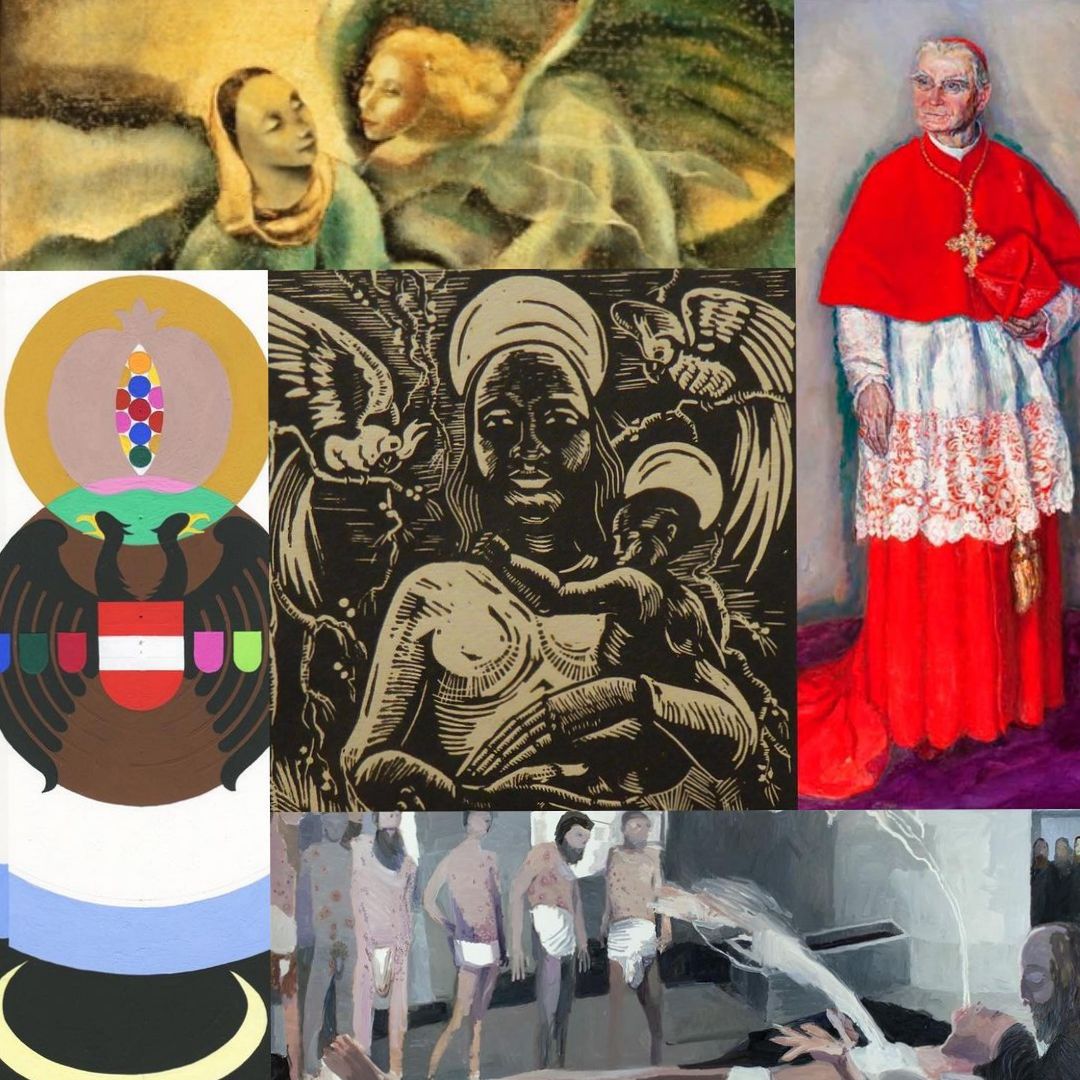
Clockwise from top left: Annunciation by Mariette Lydis (1931); Portrait of Cardinal W.M. van Rossum by Jan Sluijters (1927); The Exorcism of Mary Magdalene by Helen Verhoeven (2020); Path and Puddle, panel 4, by Kasper Bosmans (2022); Black Madonna by Genia van der Grinten-Lücker (1934)

+++

ONLINE WORKSHOP: “Deep Dive into Poetry Comics,” led by Madeleine Jubilee Saito, November 2, 9, 16, 30, 5–7 p.m. Pacific (8–10 p.m. Eastern): Madeleine Jubilee Saito [previously] is a cartoonist from Seattle who makes “poetry comics” about the environment and the sacred—and in four virtual sessions offered through Push/Pull, she’ll teach you how to make your own on topics of your choice!

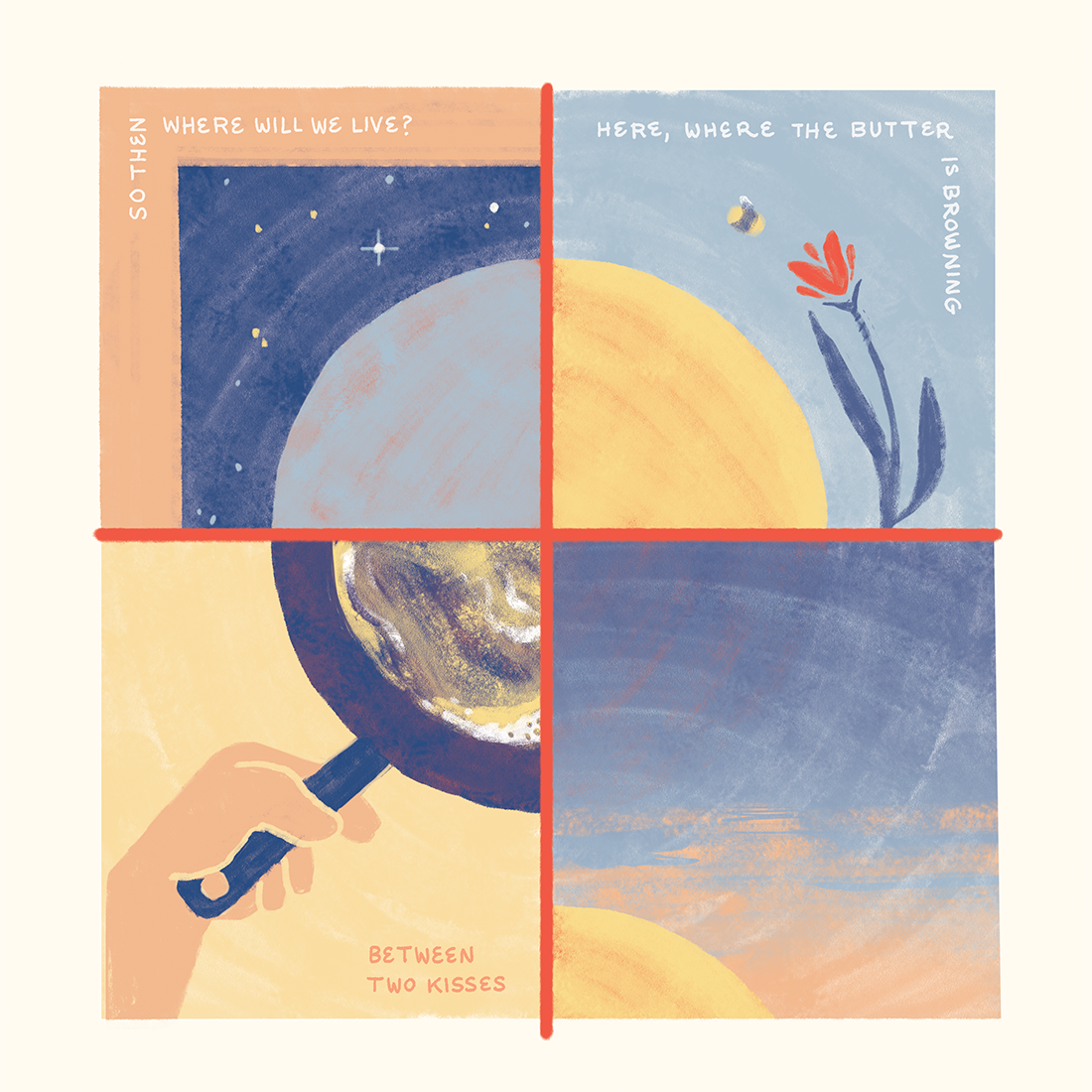
Saito, Madeleine Jubilee_Love Poem
Madeleine Jubilee Saito, Love Poem, 2019

“In this online course, you’ll practice exercises to explore your own voice and interests in drawing and text, creating poetry comics in a variety of styles. You’ll learn about minicomics, how to do basic layout for printing, and how to print a quarter-page minicomic. We’ll end the course with a celebratory comics reading for friends and family on Zoom. Students need to either be comfortable drawing digitally (Procreate, Photoshop, etc.) or have access to a scanner. Students will be also need access to a printer or local print shop for the last phase of the course.”

If you don’t have time to commit to four classes, there’s a single one offered on October 27.

+++

NEW ALBUM: You Don’t Carry It Alone by Leila Way: Leila Way is a singer-songwriter from Austin, Texas, writing songs for the church. Her first full-length album, “You Don’t Carry It Alone is a collection of songs for hard times. Some of these are old hymns; some were written during a period of intense grief and loneliness, while others grew out of prayers for friends. The album was created to comfort those who mourn; to remind God’s people that He is always faithful, always present and at work, even when we can’t see what He’s up to.”

The album consists of four original songs, two original instrumentals, a cover of “Be Still, My Soul,” and new retunes of George Matheson’s “O Love That Wilt Not Let Me Go” (one of my favorite hymns) and James Montgomery’s “I cannot call affliction sweet.”

+++

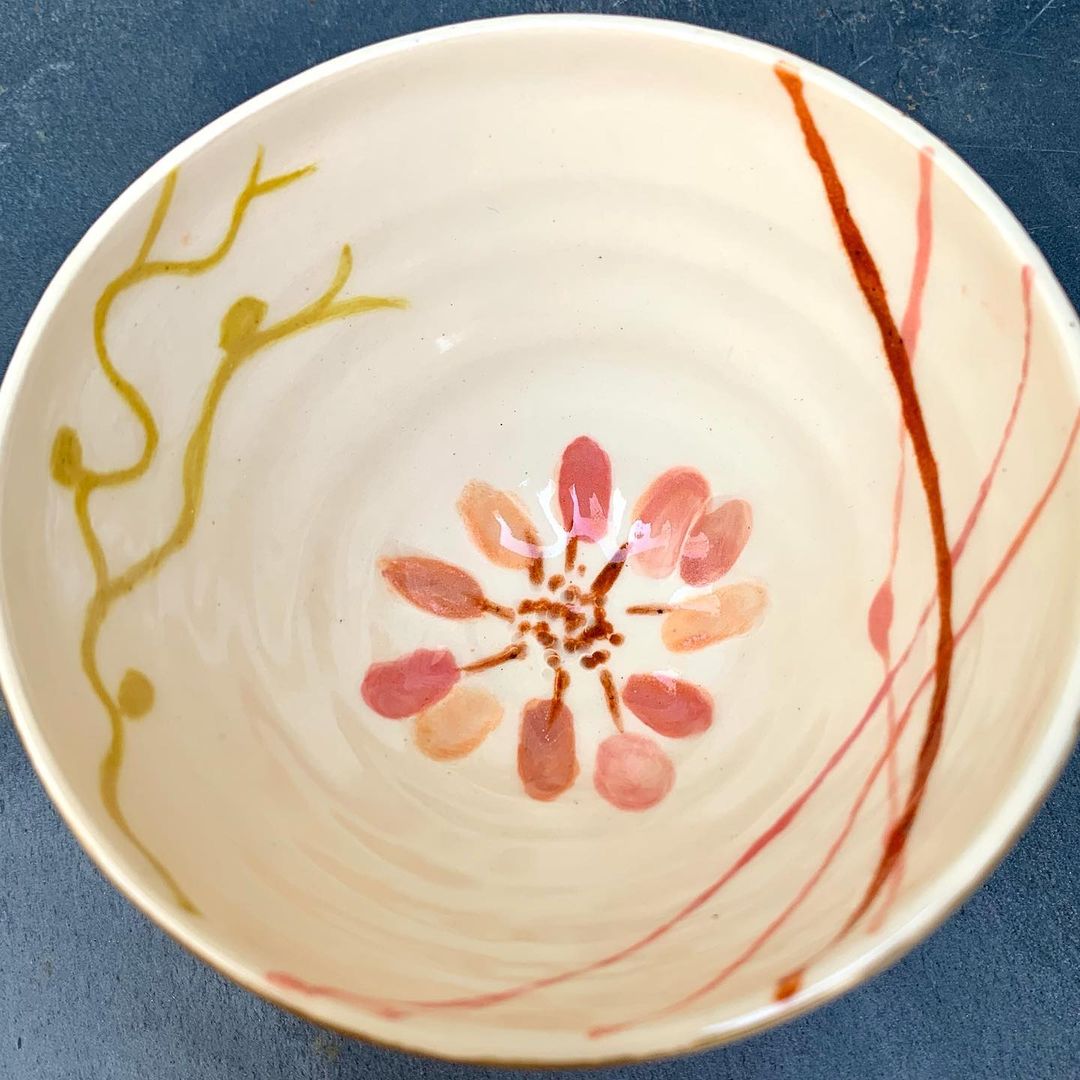
CERAMIC BOWLS: Nurture Collection by Jane Boutwell: I met artist Jane Boutwell at a Christians in the Visual Arts (CIVA) conference in 2021 after she presented this body of work that really moved me—a collection of ceramic bowls that take as their three design elements anatomical features of the female breast: lymph nodes (gold, river-like), mammary glands (pink and blooming), and musculature. She started the Nurture Collection after having one of her milk ducts surgically removed in 2019 for a biopsy (it turned out not to be cancer), as a meditation on the strength and inner beauty of this part of the body that is so often objectified or shamed. She recommends the bowls as a gift for a woman in your life who has had a tender year with regard to her breasts—cancer, nursing, etc.—to honor her journey.

Boutwell, Jane_Mammary bowl
Bowl from the Nurture Collection by Jane Boutwell, 2020

I share these now because October is Breast Cancer Awareness Month. Below is an eight-minute video explanation by the artist, followed by a short “making of” montage:

There are five Nurture bowls currently for sale in Boutwell’s online shop: Joan, Tracy, Colleen, Rita, and Wendy. Each is named after a woman she knows with breast cancer.

+++

PODCAST EPISODES:

>> “Landscape of the Body with David Taylor,” Makers & Mystics, September 13, 2023: Constructing a cogent theology of the body, theologian W. David O. Taylor discusses why it’s important that we honor and understand our bodies, and why having a right relationship to our bodies is imperative to the quest of art. Christians have often feared, distrusted, or despised the body; sin has meant that we’ve become alienated from our own bodies and the bodies of others, that we harm our bodies and others’, and that we often flee from our bodies, dissimulate. But Jesus wants us to be at home in our bodies, Taylor says—in worship, and in day-to-day life. He talks about Jesus as an icon of care-filled touch and the implications of that.

>> “On Being in a Body,” On Being with Krista Tippett, September 21, 2023: At the 2023 Aspen Ideas Festival, Krista Tippett interviewed Kate Bowler, author of Everything Happens for a Reason (and Other Lies I’ve Loved), a reflection on how she moved through learning at age thirty-five that she had Stage IV colon cancer. “From the new reality in our time of living with cancer as a chronic illness, to the telling of truths to our young as we face precarity in our collective body, this conversation is full of the vividly-whole humanity that Kate Bowler singularly embodies.” I heard Kate in person at Duke University a few years ago talking on a panel about suffering. She’s full of wisdom, wit, and raw tenderness and so, so endearing, and even though I’ve heard her story many times, every conversation with her brings up something new.  

+++

DANCE PERFORMANCE: Chroma, Grace, Takademe, and Revelations, performed by Alvin Ailey American Dance Theater: I’ve shared a video of Alvin Ailey’s Revelations here before. Well, this rebroadcast from 2015 includes that, plus performances of three other works by the prestigious Alvin Ailey American Dance Theater. I especially enjoyed Chroma, with music by Joby Talbot and choreography by Wayne McGregor—it’s the first twenty-six minutes of the video.

Roundup: Feast of Mary Magdalene; holiness of people and place; black squares

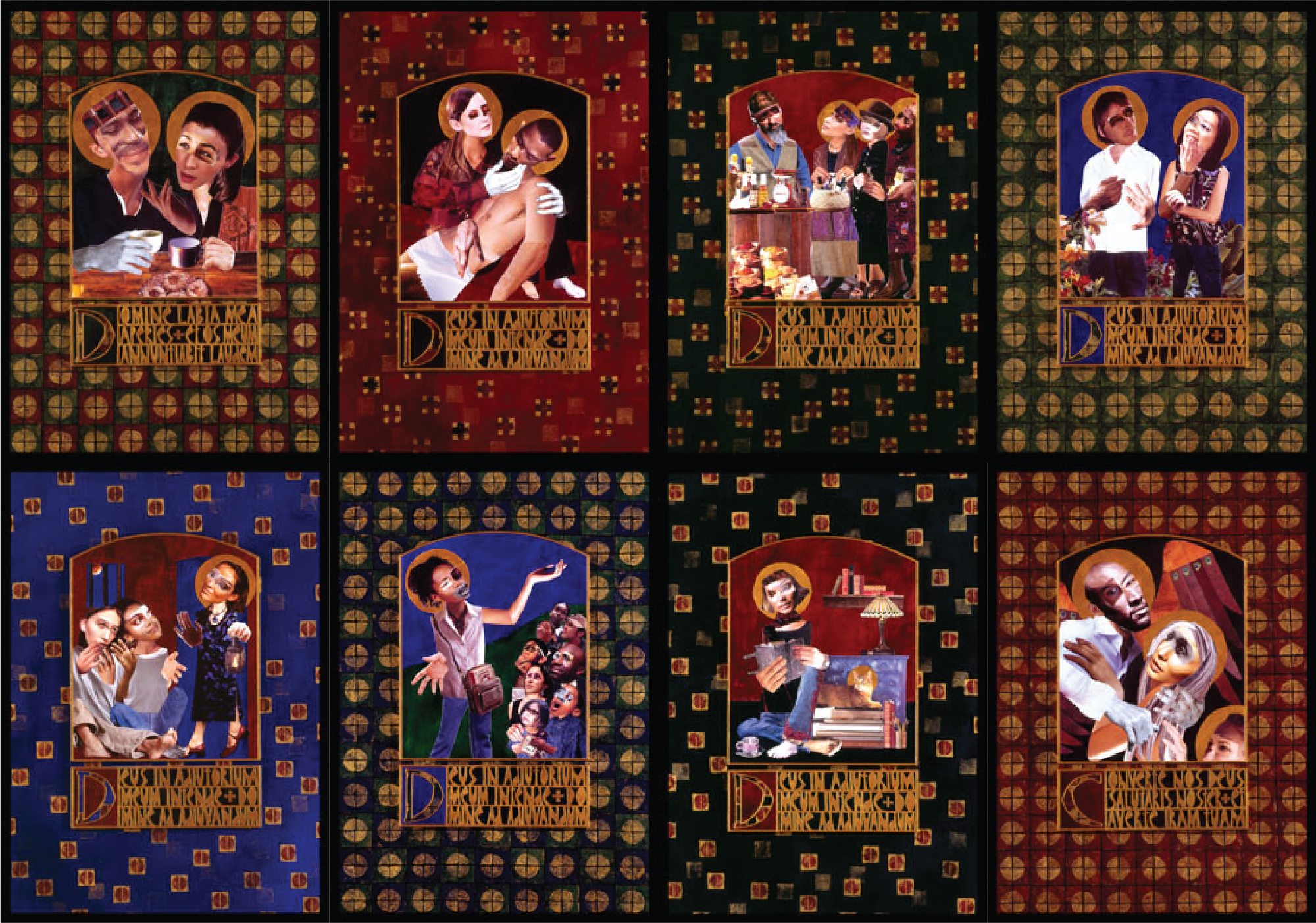
Richardson, Jan_The Hours of Mary Magdalene
The Hours of Mary Magdalene by Jan L. Richardson

ART CYCLE: The Hours of Mary Magdalene by Jan L. Richardson: July 22 is the feast day of Mary Magdalene, one of Jesus’s closest disciples and the first witness and preacher of the Resurrection. American artist, writer, and minister Jan L. Richardson created a sequence of collages picturing events from her life, drawing on both the biblical narratives and medieval legends. The structure and presentation (decorative borders, Latin script) were inspired by medieval books of hours, used for the praying of the Divine Office. The text below each image reads, Deus, in adiutorium meum intende; Domine, ad adiuvandum me festina (“O God, come to my assistance; O Lord, make haste to help me”), the first verse of Psalm 70, which is prayed at the start of each of the canonical hours.

According to legend, after Jesus’s ascension Mary Magdalene moved to southern France, where she preached the gospel and performed miracles. The last thirty years of her life she lived as a hermit in a cave. Each time she prayed the hours, she was lifted up to heaven by angels, then brought back down at the end of her devotions.

Richardson put together a delightful little video showcasing the art cycle as well as the song “Mary Magdalena” by her late husband, Garrison Doles.

You can purchase these images as digital downloads from Richardson’s website:

  1. Matins: The Blessing Cups: Mary Magdalene and Jesus at Tea
  2. Lauds: After the Cross: The Magdalene’s Farewell
  3. Prime: Shopping for Spices: The Three Marys on Holy Saturday
  4. Terce: Touch Me Not: Resurrection Morning
  5. Sext: Release: Mary Magdalene Freeing Prisoners
  6. None: L’Evangeliste: Mary Magdalene Preaching in France
  7. Vespers: At Her Prayers: Mary Magdalene with a Book of Hours
  8. Compline: Magdalene Ascending: The Divine Hours

+++

DANCE: “Holy, Holy, Holy”: Choreographed by Betsey Beckman to a song by Karen Drucker, this dance number affirms the sacredness of every human being. It was filmed inside St. Gregory of Nyssa Episcopal Church in San Francisco, a church that “invites people to see God’s image in all humankind, to sing and dance to Jesus’ lead, and to become God’s friends.” Beckman dances with Dawon Davis and Corey Action throughout the worship space, which comprises a rectangular room where the Liturgy of the Word is celebrated and an octagonal rotunda for the Liturgy of the Table. The Dancing Saints icon that covers the walls is by Mark Doox. [HT: Global Christian Worship]

+++

MUSIC:

>> “Locus iste” by Anton Bruckner, performed by VOCES8: The British vocal ensemble VOCES8 performs Anton Bruckner’s sacred motet “Locus iste” (This Place) at Les Dominicains de Haute-Alsace in Guebwiller, France. Bruckner composed it in 1869 for the dedication of the Votivkapelle (votive chapel) at the New Cathedral in Linz, Austria, where he had been a cathedral organist. The text—a Latin gradual for church dedications and their anniversaries—is informed by Jacob’s saying, after his dream of the ladder uniting heaven and earth, that “surely the Lord is in this place; and I knew it not” (Gen. 28:16), and by the story of the burning bush where Moses is told to “put off thy shoes from off thy feet, for the place whereon thou standest is holy ground” (Exod. 3:5).

Locus iste a Deo factus est,
inaestimabile sacramentum;
irreprehensibilis est.

This place is made by God,
a priceless sacrament;
it is without reproach.

(Or, alternatively:)
This dwelling is God’s handiwork;
a mystery beyond all price,
that cannot be spoken against.

>> “Tabernacle” by Josh Rodriguez, performed by Mary Vanhoozer: A modernist piano composition inspired by Psalm 19, dedicated to the composer’s father-in-law, the theologian Kevin Vanhoozer.

Tabernacle is a musical triptych shaped by the drama of Psalm 19. While this word, tabernacle, is loaded with religious affection within both Jewish and Christian traditions, some modern readers may not be familiar with its implications. Merriam-Webster offers three related definitions: “a house of worship, a receptacle for the consecrated elements of the Eucharist, or a tent sanctuary used by the Israelites during the Exodus.” By extension, it has come to represent a “dwelling place” or a “temporary shelter.” In short, this is no ordinary space, rather it is a place that is set apart, made holy for a terrifying transformative encounter with the Divine.

Fragments of a prayerful hymn-like melody appear underneath this canopy of sounds. Shifting metric changes, polyrhythms, and percussive primal-sounding harmonies climax in a loud, noisy quote from the 16th-century Genevan Psalter.

More extensive program notes can be found in the YouTube video description.

+++

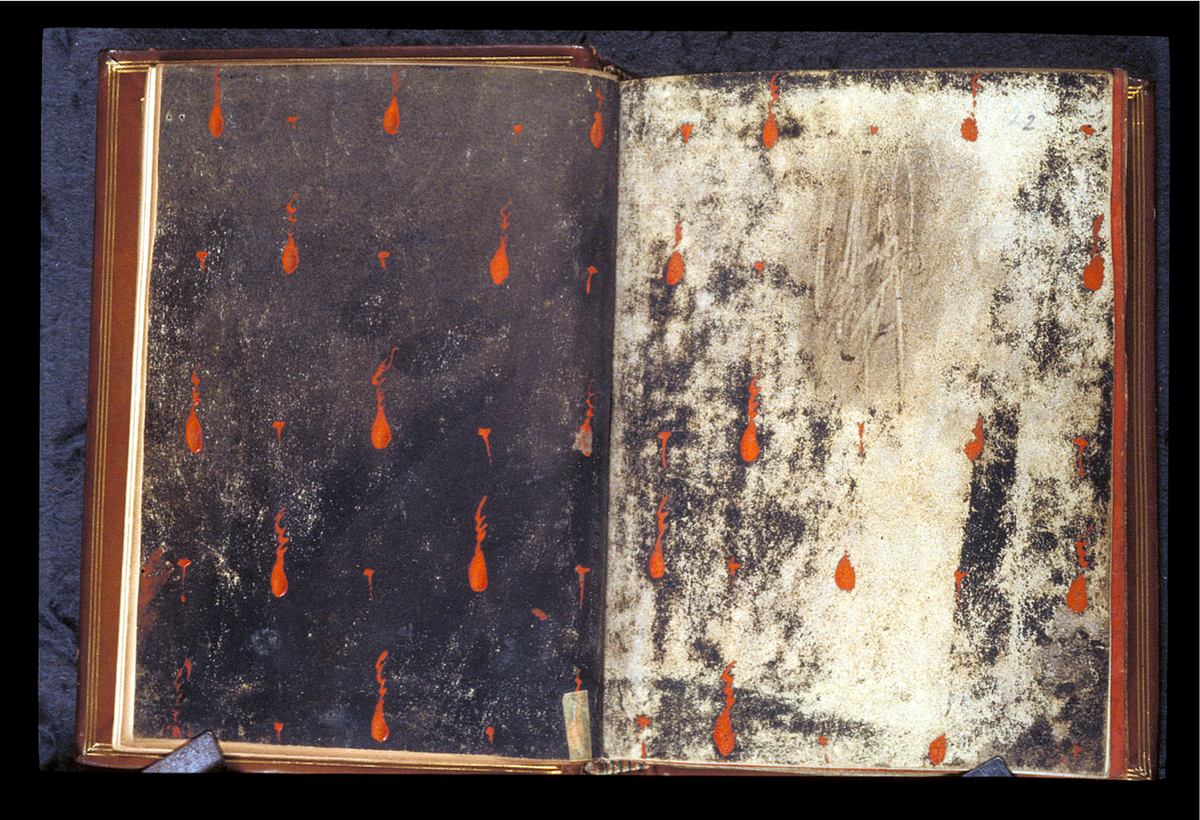
ESSAY: “Precedents of the Unprecedented: Black Squares Before Malevich” by Andrew Spira, Public Domain Review: Considered one of the seminal works of modern art, Kazimir Malevich’s Black Square (1915) has been cast as a total break from all that came before it. Yet searching across more than five hundred years of images related to cosmology, religious devotion, mourning, humor, politics, and philosophy, art historian Andrew Spira uncovers a slew of unlikely foreshadows to Malevich’s radical abstraction.

Et sic in infinitum
Robert Fludd’s black square representing the nothingness that was prior to the universe, from his Utriusque Cosmi (1617). On each side of the square is written “Et sic in infinitum…” (“And so on to infinity…”).

Blood of Christ
Black pages with red drops of blood, signifying the wounds of Christ, from a psalter and rosary of the Virgin, ca. 1500. The recto is worn from devotional engagement, damaged through kissing and rubbing, perhaps.

For a much more extensive treatment of the topic, see Spira’s Foreshadowed: Malevich’s “Black Square” and Its Precursors, published this month. And for a faith-positive (non-nihilistic) reading of Malevich’s Black Square that honors the artist’s own views, see pages 209–25 of Jonathan A. Anderson and William A. Dyrness’s Modern Art and the Life of a Culture, where they discuss the work in relation to the Russian icons tradition and “apophatic or ‘negative’ theology—a mode of theology that meditates on the absolute Fullness and Otherness of God by way of negating the verbal, visual and conceptual forms used to signify (and to ‘grasp’) God” (220).

Juneteenth roundup: Documentary, playlists, Alvin Ailey’s Revelations

DOCUMENTARY: Juneteenth: Faith and Freedom, dir. Ya’Ke Smith: Released June 7 by Our Daily Bread Ministries, this film follows Where Ya From? podcast host Rasool Berry to Texas to talk with pastors, historians, activists, artists, and elected officials about the spiritual significance of America’s newest federal holiday, and to visit historic sites associated with it. You can watch the full seventy-five-minute film for free on YouTube. Here’s the trailer:

The interviewees, in order of appearance, are:

  • Dr. Michael W. Waters, pastor, Abundant Life African Methodist Episcopal Church
  • Sam Collins, president, Juneteenth Legacy Project
  • Lisa Fields, founder, Jude 3 Project
  • DJ Norman-Fox, historian, author of Juneteenth 101: Popular Myths and Forgotten Facts
  • Lawrence Thomas, Juneteenth organizer
  • Dr. Carey Latimore, history professor, Trinity University
  • Sharon Batiste Gillins, genealogist, Institute of Genealogy and Historical Research
  • Diane Henderson-Moore, member, Reedy Chapel AME
  • Deborah Blacklock-Sloan, historical researcher and genealogist, Rutherford B. H. Yates Museum
  • Jacqueline W. Bostic, chairman, Fourth Ward Redevelopment Authority
  • Jacqueline Bostic-McElroy, assistant district attorney, Fort Bend County
  • Rev. Art McElroy, senior pastor, Antioch Missionary Baptist Church
  • Opal Lee, civil rights activist and “grandmother of Juneteenth”
  • Lecrae, hip-hop artist

+++

SPOTIFY PLAYLISTS by Lara Downes (with commentary!):

>> Songs for Freedom: A Juneteenth Playlist (2021): Award-winning pianist and NPR radio host Lara Downes curated an excellent Spotify playlist for Juneteenth last year—a mix of jazz, classical, and soul. It is full of wonderful surprises, introducing me to the work of several African American composers, new and old, such as Wynton Marsalis’s The Democracy! Suite for jazz ensemble; a symphony by William Grant Still titled “Song of a New Race”; “Adoration” by Florence Price (originally written for organ but arranged here for violin and piano); “Fanfare on Amazing Grace” by Adolphus Hailstork; and “Startin’ Sumthin’” by Jeff Scott, a French hornist who performs “urban classical chamber music.”

There are also several well-known names—Billie Holiday, Mahalia Jackson, Aretha Franklin, Nina Simone, Duke Ellington, John Coltrane, Stevie Wonder—and more recent popular artists like Jon Batiste and Rhiannon Giddens. Batiste’s arrangement of “What a Wonderful World” is gorgeous, and the music video—wow (see below). It features a group of Black nuns having fun around London—picnicking on a park bench, traversing monkey bars, sharing the gospel with passersby, eating cotton candy, riding bumper cars. It captures the tone of the song perfectly.

From Downes’s list I also really like the blues song “I Knew I Could Fly” by Allison Russell and Leyla McCalla, excerpted in the following featurette. It’s from the album Songs of Our Native Daughters, which sheds light on African American women’s stories of struggle, resistance, and hope.

Be sure to read the NPR article that introduces the playlist. Downes calls out nine of the musical selections with blurbs that provide some background, and throughout there is a smattering of historical photographs of Black flourishing in and around Washington, DC, from 1904 onward, taken by the Black-owned Scurlock Studio.

YWCA camp for girls
YWCA camp for girls. Highland Beach, Maryland, 1930. This photo is from the Scurlock Studio Collection at the Smithsonian National Museum of American History.

>> Songs to Believe In: A Juneteenth Playlist (2022): As I was formatting this post I realized that Downes just published a brand-new playlist for Juneteenth 2022. I haven’t had time to listen yet, but it looks awesome. “I offer you a collection of music that insists on the promise of freedom, however long in coming,” she writes. “Music that counters the shrieking dissonance of conflict with the radiant warmth of its harmonies, that offers us comfort in our sorrow and sustenance in our struggle. Songs that ground us with the steadiness of their rhythms and embrace us in the lines of their melodies. Music that brings us hope and faith and even joy, urging us to stand and fight another day, reminding us that what we are celebrating on this holiday is our freedom to believe, even in the hardest of times.”

+++

YOUTUBE PLAYLIST: Juneteenth Playlist by Victoria Emily Jones. Nineteen songs of freedom and faith—gospel, pop, funk, R&B, and spirituals. I wanted to choose all live performances or music videos so that there’s a visual element to engage.

One of the songs is “Clap Praise” by Diane White-Clayton, performed by Selah Gospel Choir. It’s a setting of Psalm 47, which opens, “Clap your hands, all you peoples; shout to God with loud songs of joy!”

Dr. Diane White-Clayton is a composer, conductor, pianist, and lecturer in ethnomusicology specializing in Black sacred music. I love the exuberance and all the body percussion in this widely performed piece of hers. I learned about Selah Gospel Choir through Bridge Projects, an art gallery in Los Angeles where they recently performed. The choir was founded in 2007 “as a space for people who want to sing gospel music birthed by the spirit of the Black church and the ancestry of Black community but are either unable to find it in their home place of worship or do not identify with being in a church at all.”

+++

DANCE WORK: Revelations, choreographed by Alvin Ailey: This classic thirty-six-minute work choreographed by the pioneering Alvin Ailey premiered in New York in 1960 and since then has been performed continually around the globe. This particular performance at Lincoln Center premiered online on December 6, 2020, as part of Alvin Ailey American Dance Theater’s virtual season during the pandemic. “Using African American spirituals, song-sermons, gospel songs, and holy blues, Revelations fervently explores the places of deepest grief and holiest joy in the soul.” Ailey said it was born of the “blood memories” of his childhood in rural Texas and his affection for the Baptist church that nurtured him.

All the numbers are great, but my favorite is “Wade in the Water” (part of the “Take Me to the Water” sequence that begins at 9:41). Second favorite: “Fix Me” (5:22).

Roundup: Georges Rouault, “The Exultant Leper,” and more

LECTURE: “Georges Rouault and the Art of Sacred Engagement” by Fr. Terrence Dempsey, SJ: “From his earliest works, Georges Rouault [1871–1958] selected subjects that combined a strong religious conviction together with a concern for suffering humanity. This lecture by MOCRA Director Terrence Dempsey, S.J., offers an overview of Rouault’s work, including his paintings, prints, and stained glass. Dempsey presents Rouault as an artist who, from his early work through his mature work, remained concerned about the disadvantaged, the outsiders, and the victims of war, and who linked all of these people to the suffering of Christ. In this way, Rouault’s engagement with the world was not so much political (although one can find political tones in his work) as it was sacred. It involved the totality of who we are—corporeal and spiritual.”

Rouault is a favorite artist of mine. I got to see his entire Miserere et Guerre (“Have mercy,” a quotation from Psalm 51, and “War”) series of etchings in person a few years ago, and it’s phenomenal. Every Christian needs to know this series. I recommend a copy of This Anguished World of Shadows: George Rouault’s Miserere et Guerre for all bookshelves.

+++

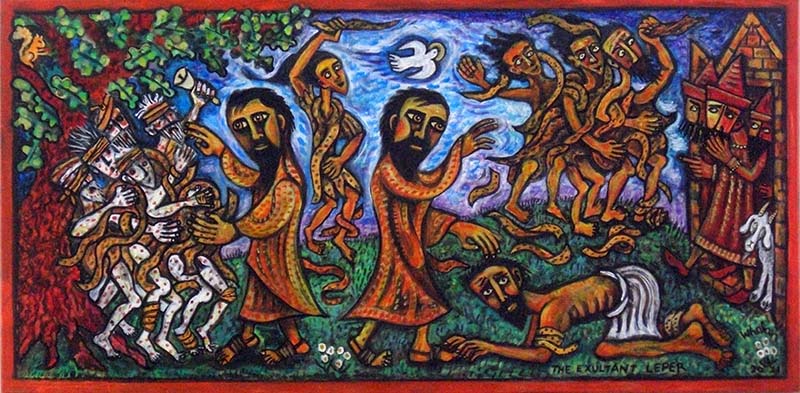
ART VIDEO: “The Story About the Painting Called The Exultant Leper: Wilder Adkins shared this video with me of his uncle Les Smith interpreting a painting he owns before his congregation last summer at Trinity Episcopal Church in Martinsburg, West Virginia. He commissioned it from artist Brian Whelan, to depict the story of Jesus healing the ten lepers from Luke 17:11–19. Sadly, Smith passed away last month.

Whelan, Brian_The Exultant Leper
Brian Whelan (Irish, 1957–), The Exultant Leper, 2021. Mixed media on canvas. Private collection.

Smith said he requested the title “The Exultant Leper” and asked that it appear on the painting itself. “I am the exultant leper,” he says, pointing to the figure at the bottom right. “I am the guy who better always be at the feet of Jesus giving thanks.”

While I have certainly seen and shared plenty of academic presentations on art (such as the one on Rouault above), there is something so special about hearing ordinary folks (that is, nonspecialists) share with others art that is personally meaningful to them—and more than that, in this case, that they helped bring to fruition. Smith’s enthusiasm was such that even his neighborhood trash collectors have been invited into his home to enjoy the piece! I love that he took the step of supporting a living artist by commissioning an original artwork, and that he integrated that art into his home life, displaying it above his mantle, where he would see it daily and be reminded of his own story of transformation through Christ.

(P.S. Last fall on Instagram and Facebook I shared a standout painting of Whelan’s from the 8th Catholic Arts Biennial at the Verostko Center for the Arts at Saint Vincent’s College in Latrobe, Pennsylvania: https://www.instagram.com/p/CVS6tlagy8s/; https://www.facebook.com/artandtheology/posts/1582166995476777.)

+++

CROSS-DISCIPLINARY VIDEO PRESENTATION: “Psalms in Dialogue: (Be)Holding the Broken Pieces”: I shared Duke’s first “Psalms in Dialogue” in October 2020. Here’s their second offering in the same vein. “In this online presentation [which premiered October 2, 2021], Duke University Chapel and the Duke Chapel Choir will welcome visual artist Makoto Fujimura, theologian Dr. Ellen Davis, Tap Legacy Foundation co-founder Andrew Nemr, Ekklesia Contemporary Ballet, and dancer Paiter van Yperen for an evening of creativity and conversation inspired by the biblical Psalms. In the program, artists, musicians, theologians, singers, and dancers will present performances and works inspired by five Psalms: 46, 88, 90, 91, and 92.” I particularly enjoyed the teen ballet number choreographed by Elisa Schroth to Karl Jenkins’s “Healing Light: A Celtic Prayer” at 52:18 (lyrics below).

Deep peace of the running wave to you
Deep peace of the flowing air to you
Deep peace of the quiet earth to you

Amen

Deep peace of the shining stars to you
Deep peace of the gentle night to you
Moon and stars pour their healing light on you

Amen

Deep peace of Christ, the light of the world, to you
Deep peace of Christ to you
Deep peace of Christ, the light of the world, to you

Amen

+++

SONGS:

>> “Fill My Cup” by Thad Cockrell, feat. The New Respects: This song appears on Cockrell’s album If in Case You Feel the Same (2020); an older version is on Alone Together (2016) under the title “Walking to a City.”

>> “Victory of Christ” by Cory Dauber: Cory Dauber is a member of the Deeper Well Gospel Collective, a group of musicians and songwriters in the Portland, Oregon, area who are connected to Door of Hope church. Last year Dauber released his second full-length album, May All Times Go to You. This song appears on his debut album, Turn into a Mountain (2016).

Roundup: Facing up to our faults, “How Prayer Works,” and more

Sundays are not counted toward the forty days of Lent (as they are feast days, not fast days), so I’m taking a break from my usual Lenten format today and for the next four Sundays to offer some supplemental content, such as a roundup of video, article, podcast, and event links, or a poem. Tomorrow I’ll resume with “Day 5” of the music-art pairings.

+++

DANCE VIDEO: “Lord, Forgive Me,” choreographed by Keone Madrid: A short dance number to a penitential song by hip-hop/R&B artist Mali Music, choreographed by Keone Madrid. The dancers embody stumbling, floundering, aching, weakness, shame, and pleading, as well as openness, humility, surrender, and peace—various postures/feelings associated with the act of confession. Starting at 42 seconds in, a succession of individuals stand or kneel in relative stillness at the right side of the frame, as if receiving the forgiveness they seek, while their dancing form is visible in the mirror.  

Keone, the man in the maroon shirt in the opening shot of the video, is one-half of the choreo, dancing, and directing duo Keone and Mari [previously], whose other recent work includes choreographing the adorable (!) 2021 Disney animated short Us Again (see trailer). Storytelling is at the root of their work, with themes including marriage, family, faith, and struggle.

+++

NEW SONG: “No More Hiding” by Ben Thomas: For the past few years singer-songwriter and spiritual teacher Ben Thomas has been writing what he calls “Mantrasongs,” songs “infused with intention” that are meant to get stuck in our head and connect us more fully to ourselves, others, and the Divine. Inspired by Fr. Richard Rohr’s book Breathing Under Water: Spirituality and the Twelve Steps, this January Thomas started releasing a series of Mantrasongs on YouTube based on the Twelve Steps of Recovery, a tool developed in 1938 for Alcoholics Anonymous. “The 12 Steps of Recovery aren’t just for those addicted to substances,” Thomas writes. “They’re for all of us learning how to create lives of health and wholeness, free of the addictive patterns of thinking, seeing, and being that keep us living at a fraction of our capacity.”

“No More Hiding” is the fifth song in Thomas’s Twelve Steps series. It corresponds to step 5 of the twelve-step program: “Admit to God, to yourself, and to another human being the exact nature of your wrongs.” Christians would call this process “confessing our sins.” It can be a scary thing to do. It requires tremendous vulnerability and honesty. But oh, what freedom comes from confession! He sings here with Jenny Miller. The preceding songs in the series are:

  1. “A New Level of Let Go” (Admit that you are powerless over your addiction—that your life has become unmanageable.)
  2. “Make Me Whole Again” (Believe that a Power greater than yourself can restore you to sanity.)
  3. “To Know What Is” (Make a decision to turn your will and your life over to the care of God.)
  4. “Freedom in the Light” (Make a searching and fearless moral inventory of yourself.)

Look out for a new Mantrasong each week. You can receive free song downloads from Ben Thomas by becoming a Patreon supporter.

+++

VIRTUAL EVENT: “Writing on Music, Meaning, and the Ineffable,” March 24, 2022, 6 p.m. ET: It’s been said that writing about music (or visual art, for that matter) is as pointless and impossible as dancing about architecture. Music and art need only be experienced; studied analysis or explanation lessens their impact and is reductive. While I can see the reasoning behind this assertion, and I often debate whether to comment on specific pieces that I post here versus let the art do its work without my intervention, I do (obviously!) feel that there is value in writing about the arts, and music writer Joel Heng Hartse does too. In this virtual launch event for his new book Dancing about Architecture Is a Reasonable Thing to Do, Hartse will be joined in conversation with poet Mischa Willett and musician John Van Deusen about art, faith, and criticism. Organized by Image journal.

+++

POETRY UNBOUND PODCAST EPISODES:

Poet and theologian Pádraig Ó Tuama hosts these wonderful fifteen-minute immersive readings of contemporary poems selected from diverse sources. Here are two from last season that I particularly appreciated.

>> “How Prayer Works” by Kaveh Akbar: Kaveh Akbar is an Iranian American Muslim poet and scholar. In this narrative prose poem of his, two brothers, seven years apart, turn to face east in their small shared room when their prayer is interrupted by a surprising noise, setting off an eruption of laughter. “This poem holds the idea of prayer, which can often be an abstract one, with the physical sensation of what’s right in front of you, what’s happening, who’s right in front of you, how are you being with each other, what’s going on, how can you be drawn towards each other—and that that itself is the answer to prayer.”

>> “The Only Cab Service of Farmington, Maine” by Aria Abner: “This is a poem, really, that’s an exploration of place and all of the emotion and pain and beauty that can be gathered into memory of place,” Ó Tuama says. “A poem about conversation and about how you reach the edge of conversation.” Poet Aria Abner was born in Germany to Afghan parents but has lived in the United States since age eighteen. She writes about being picked up in a cab by a man who served in Afghanistan in the US Marines, and how he tries to connect with her through that geographic commonality but to little avail. “She is feeling estranged by the ways foreigners are speaking about a place that she’s from but hasn’t been able to grow up in.”

Greg Pennoyer on why the arts matter

The arts don’t just fill our time with uplifting stories and pretty pictures. They don’t just distract us with things to look at; they teach us how to look. They train our vision, down to the level of our souls.

Art can teach us to see the tiny gradations in a field of green—or how to see a suffering world in the context of grace. How to recognize the humanity of a character who seems like an irredeemable villain. How to slow down. How to pay attention not just to the notes but the silences between the notes. How to hear the echo of divine music in human speech. How to look at our own failures and successes with perspective, even laughter. The arts ask us to use the full range of our senses. And they can restore us to our full, God-given humanity.

—Greg Pennoyer, executive director of Image journal [source]