JULY PLAYLIST: The songs I’ve compiled this month on Spotify include Audrey Assad’s rewrite of a classic patriotic hymn [previously], a Bach partita with added words by Alanna Boudreau inspired by Dante’s Inferno, a Sotho interpretation of Psalm 23 by the Soweto Gospel Choir, a celebration of God as artist written and sung by a Franciscan friar from the Bronx, a song of testimony performed by blues musician Elizabeth Cotten and her great-granddaughter Brenda Evans, a multilingual song setting of Matthew 5:9 (“Blessed are the peacemakers . . .”) (again, with multigenerational participation!), Psalm 103 sung in Hebrew with ancient Middle Eastern instruments, and more.
+++
KICKSTARTER CAMPAIGN: Great Cloud by Nick Chambers: This is one of the creative projects I donated to this week. Chambers writes, “For over a decade, I have written music for the Church without much concern for the songs reaching beyond the particular place and people to which I belong. Now I want to release and share this music more widely. And you can help.
“I write songs to help give voice for people to pray, question, confess, doubt, lament, give thanks, and praise. Because I owe so much in this to the many faithful voices of history of the Church, this first record will be a collection of prayers of the saints—faithful voices such as Ephrem the Syrian, Teresa of Avila, Howard Thurman, and more.
“I have been planning with producer Isaac Wardell (The Porter’s Gate, Bifrost Arts) to record in early September in Paris near where he is currently based. The Porter’s Gate will be recording the same week, which means your support toward my $15k goal will go toward my record and travel costs, as well as allowing me to contribute in person to the next Porter’s Gate project.”
Here’s an example of Chambers’s singing-songwriting—a setting of Psalm 22:
+++
TED TALK: “Give yourself permission to be creative” by Ethan Hawke: I could listen to actor Ethan Hawke talk about any subject; he’s so interesting and passionate. (His recent conversation with the American Cinematheque on his new limited series The Good Lord Bird, for example, about abolitionist John Brown, was fascinating!) In this video he was asked to talk about creativity and the arts. He says,
There’s a thing that worries me sometimes whenever you talk about creativity, ’cause it can have the feel that it’s just nice, you know; or it’s warm or it’s something pleasant. It’s not. It’s vital. It’s the way we heal each other. In singing our song, in telling our story, . . . we’re starting a dialogue. And when you do that, healing happens. And we come out of our corners. And we start to witness each other’s common humanity. We start to assert it. And when we do that, really good things happen.
+++
TRANSPOSITIONS ESSAYS:
>> “‘Stop Working Me’: Jesse Pinkman as Child-Prophet in Vince Gilligan’s Breaking Bad” by Mary McCampbell: Jesse Pinkman from Breaking Bad, played by Aaron Paul, is one of my favorite TV characters of all time; I think I can truly say I’ve never been more emotionally invested in, or rooted harder for, any other. Mary McCampbell, author of the forthcoming book Imagining Our Neighbors as Ourselves: Empathy, the Arts, and the Religious Imagination (Fortress, 2021), writes about Jesse’s role as “child-prophet,” who sees and exposes with increasing clarity and conviction the amoral decay of the empire he helped Walt build. (Note: the article contains some series spoilers.)
>> “Revealing the Father: L. M. Montgomery, Dorothy L. Sayers, and Doctrine in Art” by Alicia Pollard: This article examines how the doctrine of God the Father shows up in Lucy Maud Montgomery’s novel Anne of Green Gables and Dorothy Sayers’s play The EmperorConstantine. The former chooses “the way of whimsical unorthodoxy”; the latter, “the way of passionate orthodoxy and reenchanted dogma as a living agent of truth.”
+++
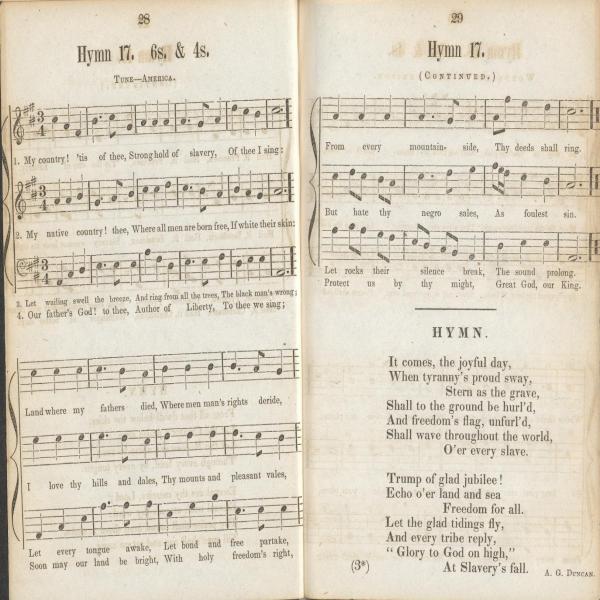
SONG: “My Country ’Tis of Thee” (abolitionist version by A. G. Duncan, 1843): I wanted to post this for Juneteenth, but alas, I’m two weeks late. Just twelve years after Samuel Francis Smith wrote “My Country ’Tis of Thee,” a scathing rewrite by abolitionist A. G. Duncan was published in Massachusetts in the book Anti-Slavery Melodies. Exposing the hypocrisy of a nation that proclaimed life and liberty for all and yet perpetuated the evil institution of race-based chattel slavery, it’s a call to lament—“let wailing swell the breeze”—as well as an anticipation of coming liberation, God be praised. (Again, this was 1843, almost two decades before the Civil War.) This vocal arrangement and performance using Duncan’s alt lyrics is by Chase Holfelder, who sings the song in a minor key. [HT: Global Christian Worship]
My country, ’tis of thee, Stronghold of slavery, of thee I sing; Land where my fathers died, Where men man’s rights deride, From every mountainside thy deeds shall ring.
My native country, thee, Where all men are born free, if white’s their skin; I love thy hills and dales, Thy mounts and pleasant vales, But hate thy negro sales, as foulest sin.
Let wailing swell the breeze, And ring from all the trees the black man’s wrong; Let every tongue awake; Let bond and free partake; Let rocks their silence break, the sound prolong.
Our father’s God! to thee, Author of Liberty, to thee we sing; Soon may our land be bright, With holy freedom’s right, Protect us by thy might, great God, our King.
It comes, the joyful day, When tyranny’s proud sway, stern as the grave, Shall to the ground be hurl’d, And freedom’s flag, unfurl’d, Shall wave throughout the world o’er every slave.
Trump of glad jubilee! Echo o’er land and sea freedom for all. Let the glad tidings fly, And every tribe reply, “Glory to God on high,” at Slavery’s fall!
Organized by Image journal every summer, the Glen is equal parts craft workshop, arts festival, and spiritual retreat. It’s framed by the Christian tradition but welcomes spiritual wayfarers of all stripes. This year, due to the pandemic, it’s entirely online, with twelve different classes on offer, taught by renowned artists, writers, and critics. Visit https://imagejournal.org/the-glen-workshop-2021/ for more information.
“The last year has invited many of us into a thicker relationship with place: with the homes where we quarantine, the public spaces we navigate with new caution, the vacation destinations we dream about, and the neighborhood streets we walk to avoid going stir-crazy in the meantime. Even our computers have transformed from objects to places, ushering us into the homes of loved ones, yoga studios, concert halls, museums, and countless other virtual gatherings, including the 2021 Glen Workshop! This year we’ll be exploring the ways in which our surroundings feed our creative vision. And we’ll also consider how art—both making it and sitting with it—sharpens our capacity for attention to the places we live and move and have our being.”
Each class costs $950 and is open to all experience levels. The schedule is such that attendees can choose just one. Registration to any class gives you full access not only to five days (about three hours each) of expert instruction, in-depth conversation, and practice, but also to additional programming that includes faculty presentations, “experiments with poetry and place” with artist in residence Billy Mark, chapel services led by musician Charles Jones and chaplain Marilyn McEntyre, coffee hours, open-mic nights, centering prayer sessions, and yoga sessions. Again, it’s all online.
If you don’t want to register for a class but want access to the other content or just a sneak peek, there are “retreat registration” and “festival pass” options. Click here to view registration options. You can get a 25% off discount if you register in a group of three or more.
What follows is a full list of the workshops (hands-on, craft-based classes) and seminars (immersive, discussion-based classes). I’m considering registering for either the Rosen seminar on contemporary biblical art or the Overstreet seminar on film. The cost is reasonable, but it’s still high, so I have to see if I can make it work.
Workshops
“Poetic Text as Provocation” with Scott Cairns: “We will embrace an approach to poetry that privileges poetic text as a scene of meaning-making, distinct from any approach that would understand the poem as a site of meaning already made. We will begin most days with a reading of a great and provocative poem and discuss the provocations each of us registers in response to that poem. Then, we will share our works-in-progress, and each of us will offer our ideas about what might make each draft a richer, more suggestive, provocative occasion for the reader.”
“The Attention We Owe Each Other”with Shane McCrae: “It is important to almost every poet to find a community of fellow poets with whom they can share their work, and from whom they can expect serious and good-humored attention, and honest and direct critiques. Together, we will make that community. Our poetry workshop will not operate according to any particular idea save the idea that poetry is serious—that it is, in fact, among the most serious things in our lives—and that, consequentially, we owe each other seriousness, and intelligence, and sensitivity when we workshop each other’s poems. We will read and critique each other’s poems closely; we will prioritize whatever particular issues each poem asks us to prioritize while keeping in mind the issues its author has asked us to consider; and we will have fun together, the highest seriousness being joy.”
“Writing the Moveable Feast” with Alissa Wilkinson: “Food is what binds us together as humans. We all eat it. We all make it, or someone makes it for us. We all have opinions about it and preferences for it, which often come from the things that make us, well, us: our families of origin, our nationalities and ethnicities, our individual tastes, our beliefs about God and ethics, and our access to it. Food is the gateway to every aspect of human life; when we eat it, we’re participating in history, culture, and the economy.
“Feasting is one of the most important activities we can do as people. It’s an act of community-building, celebration, and even resistance to the forces that try to tear us apart. Many religious and spiritual traditions are built around feasting; the Bible ends at a wedding feast.
“So in this class, we’re going to talk about food, think about food, make food, and eat food. We’ll talk about how writers have interacted with food and food writing. We will try to understand what it might mean to feast together even when we can’t actually be together. And then we’ll do our own food writing, with the goal of exploring that common experience through our writing (in any genre).”
“Strange Countries: Writing the Inner and Outer Journey” with Fred Bahnson: “In sixth-century Ireland, groups of monks began the practice of peregrinatio, “going forth into strange countries.” The peregrini set off alone or in small groups in tiny coracles made of willow and animal hide, abandoning themselves to the winds and currents of the North Atlantic. A journey into the unknown.
“We moderns find it difficult to grasp the enormity of such an undertaking. Given how frequently we travel, we barely notice the existential threshold crossed upon leaving home. The peregrini remind us that we go on pilgrimage not to consume experience, but to be consumed. To feel again the porous borders between our inner and outer lives. If our rational age has obscured what Seamus Heaney called ‘a marvelous or magical view of the world,’ pilgrimage helps us find it again.
“In this class we will take a very ancient metaphor—the journey—and use it to explore our lives in the age of climate change, pandemics, and fragile democracies. We’ve all gone forth into a strange country, a journey in which we measure distance in time and cortisol levels rather than miles. Setting off in our coracles of narrative—essay, memoir, literary journalism, travel writing, nature writing—we’ll use our peregrinations to map our inner lives against the great stories of our age. We will write our physical journeys (working from memory), and we will write about shelter, intimacy with place, our yearning to be at home. As we traverse the continuum between pilgrimage and place-making, we will discuss various craft topics of literary nonfiction: form, character development (including place-as-character), narrative arc, and, perhaps most important, how to create the fictional ‘I’ that is your nonfiction narrator.”
“The Landscape of the Lyric Essay” with Molly McCully Brown: “The lyric essay combines the density, muscle, and music of the poem with the expansiveness, narrative momentum, and overt desire to engage with information of the essay form. Tied to the original notion of an essay as an effort, a trying, an attempt at making sense, its combined allegiances to the fragment and the whole, the actual and the imaginative, the image and the story, make it the perfect form for exploring and charting the landscapes—both exterior and interior—that make and mark our lives.
“Designed as an opportunity for poets craving a little space to move around, for essayists hungry to drill down to the core of language, or for any writer longing for a chance to experiment, investigate, and attempt, this generative workshop will serve as an introduction to the associative logic of the lyric essay and a chance to try your own hand at the form.
“In class we’ll read and unpack lyric essays from a variety of writers; work together to identify some unique features and possibilities of the form; write in response to prompts designed to help us explore a variety of geographical, sociological, emotional, and intellectual landscapes; and share and discuss our work as it develops. My hope is that you leave the workshop with many attempts and beginnings which might prove fertile ground for later work, and with at least one piece that feels more complete, or further along in its development.”
“Writing Research-Based Narratives for Young Adults” with Marilyn Nelson: “Our curiosity can nourish our reading and our writing, which can nourish the curiosity of our young readers and encourage them to ask questions and follow their own research paths. In this class we will examine some books recently published for middle-grade and young adult readers and based to varying degrees on historical events, asking what questions led to the necessary research, how the research was conducted, and how the material was organized and presented so it is appropriate for younger readers. How do we write for younger readers? How might an author write over their heads? How might an author write down to them? What questions does an author allow to linger? How much information is too much? How does an author find the right voice?”
“Developing Your Authentic Voice” with Charles Jones: “This workshop will focus on teaching artists how to bring their authentic selves to the craft of songwriting and successfully communicate what they want their audiences to hear and feel. We will listen to the music of some of the greatest songwriters of all time and examine what we feel when we listen back. We will explore why we connect deeply with some music, look at the connective tissue these masters created in their songs, and learn how we apply these techniques and tools to our own craft in service of our own unique stories and voices.”
“The Creative and Spiritual Practice of Calligraphy” with David Chang: “From the practical to the ethereal, writing a letter by hand offers a deeper connection to the text and to the viewer. We will cover both aspects of the art form of calligraphy as we learn the basics—including developing your own personal handwriting style—and learn to use handwriting as a creative practice that can also forge a deeper spiritual practice. Through meditational writing we will explore the art of handwriting as a tool for personal expression and as a means to connect with ourselves and also with others.”
“Landscapes and the Art of Seeing” with Suzanne Dittenberg: “In Sargy Mann’s article ‘On Cezanne’ he opposes the popular notion that Paul Cezanne was intentionally distorting the landscape through superimposed affectated abstraction, re-tooling visual information to titillating effect. Instead, Mann makes the case that Cezanne’s painting practice was more straightforward. He describes Cezanne as a relatively unremarkable draftsman who gave himself intensely to the act of looking. ‘As dedicated a realist as you could ever find.’ In Cezanne’s letters, we are given a window into his motivations when painting. He writes, ‘Now the theme to develop is that, whatever our temperaments or power in the presence of nature may be, we must render the image of what we see, forgetting every-thing that existed before us. Which, I believe, must permit the artist to give his entire personality whether great or small.’
“This is a class about seeing. Observational painting serves as a means to explore one’s individual spirit when encountering nature. Each day we will gather together on Zoom and also venture out to work en plein air in our own vicinities. Painting and drawing will serve as a mechanism for finding a new lens with which to view the natural world. A better understanding of nature’s underlying frameworks will result.
“Through daily discussion of drawing and painting techniques, we will cover basic strategies for seeing relative proportions, identifying values structure and understanding color in context. We will also address the use of limited palettes, strategies for achieving harmonious color and methods of paint application. Each afternoon will include time for reflection on the day’s process, experience and results.”
Seminars
“Contemporary Visual Artists Read the Bible” with Aaron Rosen: “The mere mention of a contemporary artist reading the Bible summons competing stereotypes. On one side stands the artist as clamoring missionary, producing pious kitsch. On the other sits the talented but godless iconoclast, scorning the Bible to the applause of intellectuals. It’s high time to get beyond these stereotypes, rooted in the culture wars of the 1980s, yet sadly back in fashion. There are brilliant artists of faith working with the Bible who have the power to challenge even the most ardent atheists, aesthetically and theologically. And there are artists without a spiritual bone in their bodies who engage scripture in ways that can teach devout viewers a thing or two about faith.
“In this seminar, we will see the Bible with fresh eyes, with the help of cutting-edge art across multiple media, from painting to video to virtual reality. Not only will they look at art, they’ll talk to top-notch artists themselves, who will join us by video from their studios around the world, from Los Angeles to London to Lahore. As one of the world’s foremost experts on religion and art, as well as a practicing curator, Dr. Rosen brings together scholarly and practical insights. And as a Jew married to an Episcopal priest, he has a special interest in how art can help us see difference more clearly and creatively at the same time.”
“How Place Becomes Poetry in Cinema” with Jeffrey Overstreet: “For most filmmakers, place is just a backdrop. But great artists of cinema know that place is as influential and as eloquent as any character. Whether he’s in the heat of Texas or the despair of a divided Berlin, director Wim Wenders is listening to what his location has to say. Martin Scorsese and Spike Lee both read New York City closely, but they see very different cities and zones defined by differing forms of prejudice. We’ll consider how one story, told by both Yasujiro Ozu and Claire Denis in different locations, is transformed by the context in which it is told. And we’ll watch the world opened up by the cinematographers of Terrence Malick as well as the animators Tomm Moore and Martin Rosen. A variety of special guests—filmmakers, film critics, and scholars—will join us for these journeys as we watch how human beings are shaped by the ground beneath their feet. The current guest list [subject to change] includes Scott Derrickson (Doctor Strange, Sinister), Justin Chang (film critic for the Los Angeles Times), Dr. Yelena Bailey (author of How the Streets Were Made: Housing Segregation and Black Life in America), and Doug Strong (My Angel Larry, River Road).”
“The Art of Contemplative Reading” with Richard Chess: “In this seminar, we’ll explore reading practices (poetry and prose) that may help us cultivate a contemplative mind. As we practice directing our attentions to different aspects of our experiences as readers—noting our physical experience, quieting our inner voices to enable us to hear more clearly the voice of a text, discerning the difference between noting elements of the text itself and commenting on, reacting to, or interpreting the text—we may also discover ways of engaging with texts (mostly literary) that will help us with our practice as artists and/or our spiritual practices. We’ll also do some writing—reflective writing and generative creative writing—to explore writing itself as a contemplative practice.”
PLAYLIST: I can’t keep up with all the quality Christian (or, for artists who eschew that label, spiritually inflected?) music recordings that are out there—recent releases as well as back catalogs dating as far back as the thirties. There really is a breadth, and I sometimes get frustrated when I hear people claim otherwise. (Yes, there’s a lot of really crummy Christian music too . . . but that doesn’t mean the entire genre should be dismissed!) During this season of Ordinary Time I’m going to endeavor to release a monthly Spotify playlist consisting of a random assortment of thirty psalms, hymns, and spiritual songs, each by a different artist. Here’s June’s:
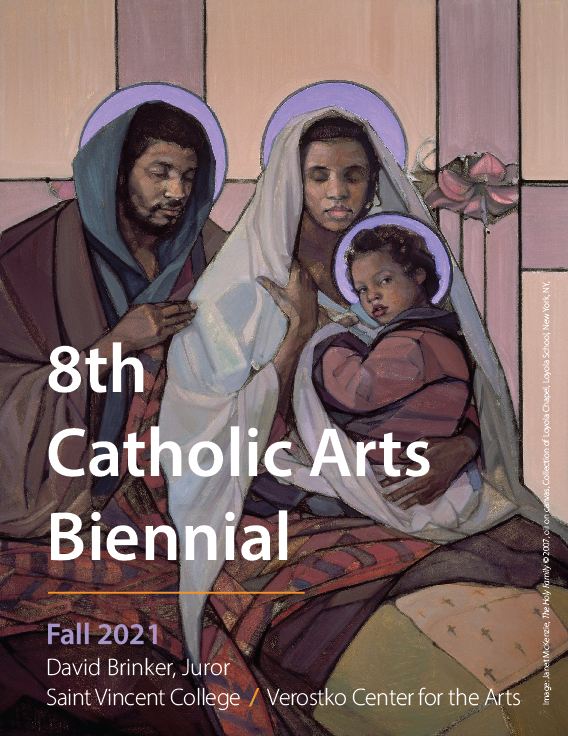
CALL TO ARTISTS:8th Catholic Arts Biennial: Saint Vincent College in Latrobe, Pennsylvania, has issued a call for submissions for its eighth biannual juried exhibition of Christian-themed art. “This Biennial encourages submissions that expand representations of Christ, the Virgin Mary, biblical narratives, and the lives of the saints beyond Eurocentric presentations. Artwork made by women and persons of color is strongly encouraged. In addition to depictions of traditional Christian subjects, artists are urged to submit works that address social concerns from perspectives of faith pertinent to the contemporary moment. Works investigating the diversity of the human experience enlivened by Gospel values are also desired.”
Artists can be of any religious or denominational affiliation and can submit up to three works by the deadline of June 25. In addition to being exhibited September 6–October 29, 2021, at the Verostko Center for the Arts, the finalists will also be eligible for a top prize of $1,000, plus other cash prizes. The juror this year is David Brinker, director of the Museum of Contemporary Religious Art at Saint Louis University. (The painting on the promotional poster is The Holy Family by Janet McKenzie, a previous winner.)
+++
SONGS:
>> “Prarthana Kelkaname” (Hear Our Prayer): Jijo Hebron, a Christian worship leader from Kerala, India, and his wife Niveda Jijo released this YouTube recording on Sunday, in which they sing to God in the Malayalam language. The song’s English meaning is below. [HT: Global Christian Worship]
Hear our prayer and supplication, oh Lord It is the promise in your Son’s name: Whatever we ask, it will be granted. There is no one to take care of my worries apart from you Who stands as my father and mother
>> “Morning Prayer” by Langhorne Slim: From the album Strawberry Mansion, released this January.
+++
ANIMATED SHORT: If Anything Happens I Love You: “In the aftermath of tragedy, two grieving parents journey through an emotional void as they mourn the loss of a child.” Written and directed by Will McCormack and Michael Govier and animated by Youngran Nho and team, this thirteen-minute film won Best Animated Short at the 2021 Oscars. It’s amazing how much I feel for these characters after such a short time of getting to know them. Streaming on Netflix.
+++
ARTICLE: “Art and Interfaith Conversation” by Andrew Smith: Birmingham, England, is a religiously diverse city, home not only to Christians but also to Muslims, Sikhs, Hindus, Buddhists, Jews, and others. The Church of England recognizes this rich presence and has on staff a director of interfaith relations for the bishop of Birmingham, Canon Dr. Andrew Smith. Smith is interested in how art and artifacts can be used to develop conversations between people of different faiths and to create new conversations, and here he discusses a Birmingham Conversations project he led along that vein: multifaith group tours at the Birmingham Museum and Art Gallery and St. Philip’s Cathedral. These he embarked on with a posture primarily of learning, not teaching. [HT: Still Life]
Smith served as a consultant for the museum’s faith gallery, which highlights religious objects from various traditions. He discusses the importance of honoring the integrity of each object’s spiritual significance, and some of the difficulties of creating a space that’s welcoming to people of all faiths when certain faiths regard certain imagery as problematic or even forbid it. He also shares some of the responses of non-Christian participants to specific works of Christian art, in both the museum and the cathedral. Some from the latter are recorded in the following video:
The Birmingham Conversations also commissioned two local artists, Jake Lever and Mandy Ross, to produce work informed by their visits over a yearlong period to different places of worship around Birmingham.
Jake Lever (British, 1963–), Dance, 2016. Ink and gouache on paper.
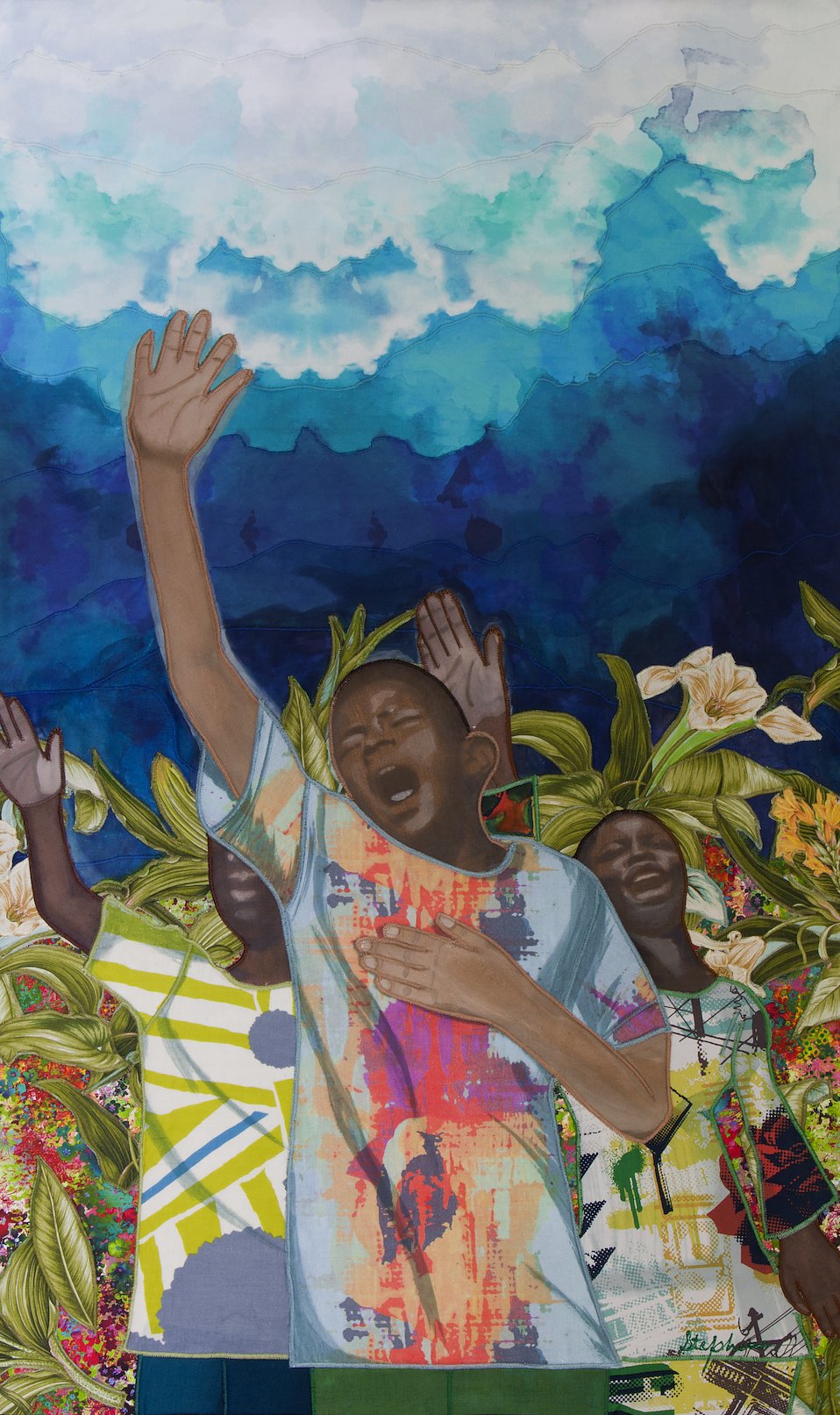
EXHIBITION: Otherwise/Revival, Bridge Projects, Los Angeles, April 9–June 26, 2021: Curated by Jasmine McNeal and Cara Megan Lewis, this group exhibition visualizes the impact of the historic Black church—specifically the Black Pentecostal movement—on contemporary artists. Included are several artists I’ve featured on the blog before—Lava Thomas [here], Kehinde Wiley [here], Clementine Hunter [here], Letitia and Sedrick Huckaby [here]—plus twenty-six others.
Phyllis Stephens (American, 1955–), High and Lifted Up, 2020. Cotton fabric, 57 × 33 in. Private collection. Courtesy of the artist and Richard Beavers Gallery, New York.Kenturah Davis (American, 1984–), Namesake I, 2014. Incense ink on rice paper, applied with rubber stamp letters, 39 × 36 in. Courtesy of the artist and the Petrucci Family Foundation, New Jersey.
I regret that I won’t be able to see the exhibition in person, but there’s a wealth of relevant content available on the gallery’s website, including photos, artist bios and statements, and commentaries. I haven’t fully delved in yet, but some of the artist names are new to me, and I look forward to jumping over to their websites to learn more. There’s also a series of free events that have been scheduled. The premiere of the virtual music performance yes! lord by Ashton T. Crawley and a symposium on the Azusa Street Revival have already passed (both are archived online for on-demand viewing), but here are some upcoming opportunities you can reserve a spot for:
May 1: “Jazz and the Gospel” with Daniel E. Walker, Ashon T. Crawley, Dario Robleto, Norman Teague, Lava Thomas, and Folayemi (Fo) Wilson
ARTICLE: “5 Films About the Beauty of Resurrection” by Brett McCracken: “Resurrection’ tropes are so familiar in certain genres that they can numb us to the jarring beauty and bracing surprise of resurrection. But other films capture the magic and shock of resurrection by situating it within more mundane realities and contexts. Here are five of my favorite examples of this kind—movies that capture resurrection in all of its miraculous, unsettling, hope-giving glory.” One of his selections is Happy as Lazzaro, which I saw last year and enjoyed:
+++
NEW ALBUMS:
>> Hymns I by Lovkn: Steven Lufkin is a singer-songwriter from Phoenix, Arizona, recording under the name Lovkn. His latest EP, a collection of eight acoustic hymn covers, was released April 2. (Also, he’s currently raising funds to record an album of original songs, to be released later this year: kickstarter.com/projects/lovkn/new-album-2021.)
>> Prayers for the Time of Trial by Joel Clarkson: Released April 7, this EP comprises five original SATB choral compositions by Joel Clarkson, which he recorded with his sister Joy Clarkson. My favorite is the first, “Lighten Our Darkness,” a setting of the Book of Common Prayer’s Collect for Aid Against Perils: “Lighten our darkness, we beseech thee, O Lord; and by thy great mercy defend us from all perils and dangers of this night; for the love of thy only Son, our Savior, Jesus Christ. Amen.”
The other four are “Sub Tuum Praesidium” (Beneath Thy Protection), a third-century hymn to the Virgin Mary as Theotokos; “Hail King,” a poem by Joel’s other sister, Sarah Clarkson, that marvels at how rocky cliffs and sea waves and herring gulls sing God’s praises in their own way; “Ubi Caritas,” an ancient hymn centered on the theme of Christian charity; and the simple benediction “May the peace of the Lord be with you now and always.”
ORTHODOX CHANT: Russian Kontakion of the Departed: At Prince Philip’s funeral service at St. George’s Chapel at Windsor Castle on April 17, a choir of four sang, among other pieces, the Russian Kontakion of the Departed, translated into English by William John Birkbeck and arranged by Sir Walter Parratt. “The Russian Kontakion of the Departed is an ancient Kiev chant with its origins in the Russian Orthodox liturgy. This moving chant expresses the sorrow of grief but reminds us of the Christian hope of everlasting life; in the face of sadness, we sing Hallelujahs.” [HT: Global Christian Worship]
Give rest, O Christ, to thy servant with thy saints: where sorrow and pain are no more; neither sighing but life everlasting. Thou only art immortal, the creator and maker of man: and we are mortal formed from the dust of the earth, and unto earth shall we return: for so thou didst ordain, when thou created me saying: Dust thou art und unto dust shalt thou return. All we go down to the dust; and weeping o’er the grave we make our song: Alleluia, alleluia, alleluia.
+++
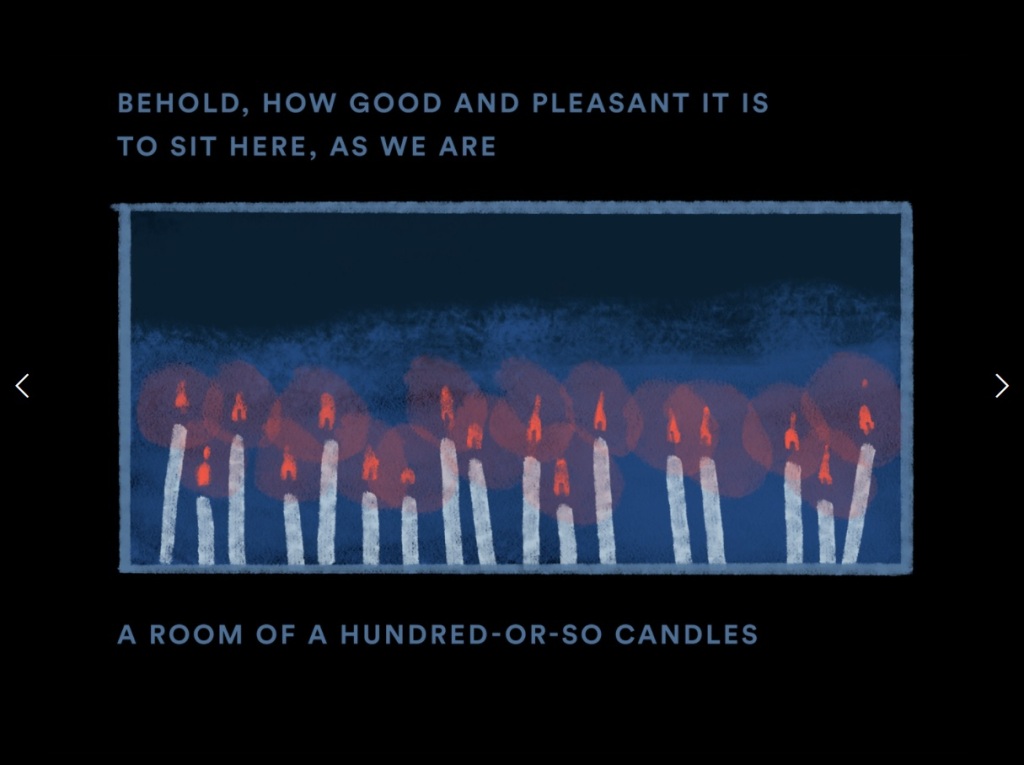
VISUAL LITURGY: “After Ezekiel” by Madeleine Jubilee Saito: Remember those flip books you probably encountered as a kid—the ones with a series of images that gradually change from one page to the next, giving the illusion of animation when viewed in quick succession? Well, this is a digital version of that. In 2019 cartoonist and illustrator Madeleine Jubilee Saito created an image sequence intended to be swiftly clicked through as part of the Easter Vigil at a church in Boston. It was inspired by the story of Ezekiel in the valley of dry bones (Ezek. 37). Very compelling!
Here’s the second half of my top-twenty list of 2020 films; view part 1 here.
11. The Forty-Year-Old Version, written and directed Radha Blank: Radha plays a fictionalized version of herself in this feature debut of hers, a thoughtful blend of comedy and drama that’s intricate and fresh. Her character is a New York City playwright who, desperate for a breakthrough before turning forty, decides to reinvent herself as rapper RadhaMUSPrime. The film addresses the arts industry’s sometimes stifling expectations of Black artists, which has in its mind what the Black experience (as if there were only one) needs to look like. Producers, for example, want Radha’s Black characters to talk and act a certain way and to fit into a particular storyline, and they try to convince her to make adjustments to her writing to make her plays more palatable to white audiences, who comprise the bulk of ticket sales.
With humor and insight, Blank explores this struggle along with, more broadly, middle-age Black womanhood, which includes for her, in addition to navigating career roadblocks, the experiences of losing a parent, finding human connection, and learning a new art form.
Stream on Netflix.
12. Promising Young Woman, written and directed by Emerald Fennell: I have mixed feelings about revenge thrillers, which ask viewers to root for vindictive outcomes. But this one, though it takes up certain tropes of the genre, subverts others. “We’re used to the idea of a violent journey, but I wanted to look at how a real woman might take revenge, and I had an idea that it would be kind of tricky and malevolent and existentially threatening, rather than something more run-of-the-mill and AK-47 based,” said first-time writer-director Emerald Fennell (who I know as Patsy from Call the Midwife, and you might know as Camilla from The Crown!).
Having dropped out of medical school following the rape of her best friend Nina, Cassie (Carey Mulligan) has developed a compulsive desire to teach “nice guys” who take advantage of women a lesson. She feigns drunkenness in clubs on a regular basis, and when a man inevitably takes her back to his home and gets handsy, he is in for a harrowing confrontation. A critique of rape culture, in which having nonconsensual sex with drunk women is normalized, trivialized, and excused, the film shows how not all rapists are obvious creeps; a lot of them are “normal,” seemingly caring individuals who are thus almost always given the benefit of the doubt over their accusers.
13. Soul, directed by Pete Docter and Kemp Powers; written by Pete Docter, Mike Jones, and Kemp Powers: Joe Gardner (voiced by Jamie Foxx) is a part-time middle-school band teacher in New York City who does side gigs as a jazz pianist. Music is his passion. At the beginning of the film, though, he dies suddenly and then inadvertently stumbles off the skyway escalator to the Great Beyond, landing in the “Great Before,” where preincarnate souls are waiting to be born. There he’s enlisted to mentor an ornery soul named 22 (voiced by Tina Fey), who doesn’t want to go to Earth, which she imagines is just all dirty and bad. But when she mistakenly ends up in Joe’s body and lives his life for a day, she finds such wonder in it—a fresh haircut, twirling maple seeds, the smell and taste of pizza, the thrill of riding the subway or of putting on a sharp-looking suit, laughter and camaraderie. I’m reminded in some ways of Wim Wenders’s Wings of Desire (1987), in which an angel longs to experience life in the physical world.
Soul is a celebration of the inherent goodness of life, despite its challenges and disappointments; it’s about finding joy in the ordinary, and purpose wherever we’re at. It subverts the cultural narrative that every human being has a single defining “purpose in life,” that each one is “born to (fill in the blank).” Instead, it acknowledges that passions can evolve and change (for example, the barber Dez used to want to be a veterinarian), and that several can coexist alongside one another. And while passions can fuel us, they alone are not our reason for living.
Stream on Disney+.
14. Another Round, directed by Thomas Vinterberg; written by Thomas Vinterberg and Tobias Lindholm: In this dramedy from Denmark, four middle-age men who teach at a high school test the hypothesis that maintaining a constant blood alcohol concentration of 0.05% will improve their quality of life by making them more relaxed, self-confident, open, fun to be around, and better at their jobs. But when their experiment gets out of hand, there are consequences on marriage and career.
Though centered on intoxication and male friendship, this is no slapstick buddy comedy, nor is it a one-note cautionary tale against the perils of excessive drinking. It both celebrates the joys of losing yourself in drink and also shows how punishing regular overindulgence can be. Still, the finale is amazingly exuberant and life-affirming—and gives a chance for Martin’s (Mads Mikkelsen) “jazz ballet” to finally come out!
Stream on Hulu.
15. Driveways, directed by Andrew Ahn; written by Hannah Bos and Paul Thureen: I’m a sucker for the “unlikely friendships” genre, and this one is so well done. When single mom Kathy (Hong Chau) and her shy eight-year-old son Cody (Lucas Jaye) move into the house of her recently deceased sister, Cody befriends an elderly white war veteran and widower named Del (Brian Dennehy), who lives next-door. They bring each other out of their shells.
Stream on Showtime.
16. The Invisible Man, written and directed by Leigh Whannell: The Invisible Man is based loosely on the classic H. G. Wells sci-fi horror novel of the same name, in which an optical scientist invents chemicals capable of rendering bodies invisible and then uses this discovery to execute a reign of terror. Whannell brings the story into our present time and centers it on the terror of domestic abuse and its machinations—financial, physical, and emotional control—and especially of not being believed about said abuse. In Whannell’s version, Cecilia (Elisabeth Moss) finally succeeds, it would seem, in escaping her abusive live-in boyfriend, multimillionaire tech genius Adrian Griffin (Oliver Jackson-Cohen). She then learns of his suicide and feels immense relief but soon starts to suspect it is a hoax. Her suspicions are confirmed when she is repeatedly stalked and tormented by an “invisible man.” Because the police and even her friends and family think she’s crazy, she’s forced to take matters into her own hands.
Stream on HBO Max.
17. Blow the Man Down, written and directed by Bridget Savage Cole and Danielle Krudy: Set in a New England coastal town, this dark comedy crime thriller follows sisters Mary Beth (Morgan Saylor) and Priscilla (Sophie Lowe) Connolly in their attempt to cover up a gruesome run-in with a dangerous man. Along the way they are exposed more and more to the town’s underbelly, which includes, as I heard one reviewer refer to it as, a “beauty parlor mafia”!
Stream on Amazon Prime.
18. Mank, directed by David Fincher; written by Jack Fincher: I’m a huge fan of Citizen Kane, so this drama about the writing of its first draft by the witty Herman J. Mankiewicz (Gary Oldman) was really enjoyable for me, not least because it’s full of visual references to Kane! Orson Welles is officially credited as cowriter of Kane, as he heavily revised Mankiewicz’s script, but Mank argues that Welles’s screenwriting contributions were negligible, and that Mankiewicz deserves more credit for the success of Kane than he has typically been given.
The film gives a glimpse into the 1930s Hollywood studio system in all its glamor and corruption and shows the real-life inspirations for the characters of Charles Foster Kane and Susan Alexander Kane: newspaper tycoon William Randolph Hearst (Charles Dance) and his young mistress, the actress Marion Davies (Amanda Seyfried).
Stream on Netflix.
19. His House, written and directed by Remi Weekes: This haunted-house film uses the supernatural to explore the specters of the refugee experience. Married couple Bol and Rial Majur (played by Sope Dirisu and Wunmi Mosaku) have made a harrowing escape from war-torn South Sudan, but they struggle to adjust to their new life in England, as ghosts have followed them there.
Stream on Netflix.
20. Young Ahmed, written and directed by Jean-Pierre Dardenne and Luc Dardenne: Under the influence of a radical imam, a Belgian teenager (Idir Ben Addi) embraces an extremist interpretation of the Quran, which spurs him to a heinous act. He is taken to a rehabilitation center, where staff try to loosen the grip of his zealotry and help him develop a truer, healthier practice of Islam.
I’m a big cinephile, but because I’m not sure how to write about films for an Art & Theology audience, you may not know that about me! Anyway, I wanted to share my top twenty films from last year (all released in the US in 2020). For each I’ll give a brief description and comments, followed by the trailer. If they’re streaming for “free” through a subscription service, I’ve noted which one; otherwise, most are available for online rental, or you might also check to see if your local library has a DVD copy. A few are showing in select theaters.
Because so many big-budget blockbuster films had their releases delayed because of COVID (reliant, as they are, on theatrical releases), it has given the chance for smaller-scale, quieter films to come to the fore—which are usually the type I enjoy most anyway. I like films that are character-driven and/or that make me feel something. As I’ve said before, watching films grows our capacity for empathy, as we encounter characters from different backgrounds and in different situations and are given the opportunity to see things through their eyes.
In this list, which I will complete in a second post tomorrow, the characters include a new member of the deaf community who’s struggling to come to terms with his disability, a Midwestern farmer of Korean vegetables and a pair of entrepreneurial Pac Northwest settlers (new homes, new ventures), a widow who’s out of work and houseless, a survivor of domestic violence, a daughter walking with her dad through a debilitating illness, a London teenager forced to take on adult responsibilities but bolstered up by a strong sisterhood, a crime victim whose forgiveness of her perpetrator initiates healing in multiple directions, a young employee let down by her company and debating whether to make moral compromises to keep her job, a middle school teacher with other career aspirations, a struggling playwright whose race pigeonholes her in the industry, and a refugee couple settling into a new country with a huge weight of grief. Whether the contexts are near or far from our own, we bear witness to these characters’ journeys, attending to their fears and traumas, their stresses and disappointments, their joys and triumphs.
As you’ll see, it’s been a fantastic year for women filmmakers!
1. Sound of Metal, directed by Darius Marder; written by Darius Marder and Abraham Marder: When Ruben (Riz Ahmed), a thrash-metal drummer, loses his hearing, he’s in danger of relapsing into substance abuse, so with the support of his girlfriend (Olivia Cooke), he checks in to a home for deaf people recovering from addiction. Ruben is a fixer and is obsessed with control, and his immediate and persistent impulse upon experiencing hearing loss is to pursue an expensive corrective surgery so that he can return to life as usual. The film’s sound design, which lets us hear the muffled noises Ruben is hearing, helps us better feel his frustration.
The film is about Ruben learning how to be deaf. It’s about disappointment, acceptance, and self-knowledge, and the crucial role community plays in helping us cope with or achieve those things. Against his wishes, Ruben enters a world completely alien to him. He has to learn sign language and how to make new relationships. It’s beautiful to see Ruben’s perspective slowly shift as he learns to regard deafness not as a handicap but as a way of life, a culture.
Stream on Amazon Prime.
2. Minari, written and directed Lee Isaac Chung: In this semiautobiographical film set in the 1980s, a Korean immigrant family moves from California to Arkansas, where the father, Jacob (Steven Yeun), wants to break out of the chicken sexing industry and start his own produce farm. (He says he wants his children to see him succeed at something.) As the Yis put down roots in the rugged Ozarks and prepare and plant the large plot of land they’ve bought, they encounter typical struggles, on top of which is the heart condition of their young son, David (played by the adorable Alan Kim, whose interviews light me up every time!). They end up flying in grandma Soonja (Yuh-Jung Youn) from Korea to help with childcare, and David has difficulties connecting with her because she doesn’t match his idea of an American grandma.
The American Dream, biculturalism, marriage, and family are key themes in Minari.
3. Nomadland, written and directed by Chloé Zhao (based on the nonfiction book by Jessica Bruder): When the gypsum plant in the company town of Empire, Nevada, shuts down during the Great Recession in 2011, the entire town is shuttered, its zip code discontinued, and its residents displaced. Fern (Frances McDormand), a recent widow in her sixties, is one of them. She sells most of her possessions and heads west in her van, searching for work wherever it’s available, and finding connection—with people, with the land—along the way.
The film explores the growing subculture of “workampers,” or, as they more commonly call themselves, nomads—people who, either for a sense of adventure or because of deteriorated economic circumstances, lead itinerant lives, following temporary work. It blurs the line between drama and documentary, as most of the cast, including Linda May and Charlene Swankie, are nonactors playing versions of themselves. Their real-life stories heavily informed the script.
Stream on Hulu.
4. Dick Johnson Is Dead, directed by Kirsten Johnson: A joyous and uplifting documentary in which the filmmaker confronts the impending death of her father, who has dementia. I wrote about it here.
Stream on Netflix.
5. First Cow, directed by Kelly Reichardt; written by Jon Raymond: I’m not typically a fan of westerns, but this one hooked me. Set in the Oregon Territory of the 1820s, it follows Otis, known as Cookie (John Magaro), a lowly cook for a band of trappers, and King-Lu (Orion Lee), a Chinese immigrant wanted for murder. The two meet at a trading post, and a friendship develops, which constitutes the core of the film. (Its epigraph is a quote by William Blake: “The bird a nest, the spider a web, man friendship.”)
The film is also a subtle critique of capitalism. When a local official buys a cow, the first in the territory, the enterprising King-Lu hatches a plan for him and Cookie to steal milk from it each night so that they can make “oily cakes” (fried dough) to sell. It’s either exploit or be exploited, King-Lu reasons.
6. Never, Rarely, Sometimes, Always, written and directed by Eliza Hittman: At the beginning of the film, seventeen-year-old Autumn (Sidney Flanigan) learns she is pregnant, but she can’t obtain an abortion in Pennsylvania without parental consent. So her cousin Skylar (Talia Ryder) accompanies her to New York City, where the abortion can be performed without that restriction, to support her through the trauma.
When Autumn is interviewed by a counselor at the Planned Parenthood clinic in New York about an hour into the film, it’s one of the first times we see her, usually so reserved, exhibit emotion—and laudably, Flanigan plays this moment without an ounce of melodrama. “Has a partner ever refused to use protection?” “Has a partner ever been violent?” “Have you ever been forced into a sexual act?” (She is asked to respond to each question with one of the four answers in the film’s title.) Here we learn how little of her sexual history has been in her control.
Though reviews of and promotions for the film have tended to focus on the importance of “a woman’s right to choose,” you don’t have to be an abortion supporter (I’m not) to appreciate this film. It’s not very polemical. It’s simply a portrait of one girl’s experience, and it’s painted with such tenderness and realism.
Stream on HBO Max.
7. The Painter and the Thief, directed by Benjamin Ree: A documentary about the unlikely friendship between a Czech artist and the man who stole two of her paintings and then lost them on the black market. I wrote about it here.
Stream on Hulu.
8. The Assistant, written and directed by Kitty Green: One of several to come out in the wake of the #MeToo movement, this film is uncomfortable from start to finish—intentionally so. It’s a different kind of thriller, the dread building every banal scene after the next as Jane (Julia Garner), a recently hired assistant to a Hollywood studio executive, goes about her daily work routine and starts discovering some serious abuses of power in the company that target young women. The monster boss, who is never seen, is clearly modeled after Harvey Weinstein. Not much “happens” in The Assistant, but it succeeds in conveying a sense of being trapped in a corrupt system of misogyny, and it reveals how easy it is for those who witness particular offenses to keep quiet in order to protect their careers.
Stream on Hulu.
9. Emma, directed by Autumn de Wilde; written by Eleanor Catton, based on the novel by Jane Austen: “In 1800s England, a well-meaning but selfish young woman meddles in the love lives of her friends”—and learns a lesson. I loved the 2009 film adaptation of this classic novel that stars Romola Garai (she is still my favorite Emma), and the 1996 version with Gwyneth Paltrow is also much celebrated, so I didn’t think there was need for another attempt. But I thoroughly enjoyed this, with Anya Taylor-Joy (of The Queen’s Gambit) playing the title role. Austen was a humorist, and her comedic flair comes across with great effect here. A few things that stand out to me when compared to previous adaptations are the excellent soundtrack (which includes English folk hymns) and the likability of Harriet (Mia Goth), who is given a little more dimensionality than usual.
Stream on HBO Max.
10. Rocks, directed by Sarah Gavron; written by Theresa Ikoko and Claire Wilson: A celebration of young female friendship that’s tested when one in the group, nicknamed Rocks (Bukky Bakray), is abandoned by her mother, her only parent, leaving her to care for her little brother. Rocks struggles to take care of meals, bills, apartment upkeep, and childcare while still attending high school, and she also struggles, initially, with letting anyone in, with accepting help. She eventually confides in her best friend Sumaya (Kosar Ali), and she and others then rally around Rocks to offer support, though they disagree on what is best, and it leads to some fallout. The film shows the resilience of the plucky and determined Rocks and the immense value of having friends to see you through hard times. The relationship between Rocks, a Nigerian Christian, and Sumaya, a Somali Muslim, is especially poignant; the actors’ chemistry is a joy to watch.
Organized by Mount Tabor Ecumenical Centre for Art and Spirituality:
>> April 10, 11 a.m.–12:30 p.m. EDT: “The Victory of Life (Easter in Renaissance Art)”: “The most important event of New Testament belief, Christ’s Resurrection, is not described in the Scriptures. That has not prevented artists however from imagining it. As we celebrate Eastertide, we invite you to join Monsignor Timothy Verdon as he reflects on a number of works focused on this theme.”
>> April 15, 11:30 a.m.–1 p.m. EDT: “In the Shadow of Your Wings: Musical Bible Study on the Psalms”:Deus Ex Musica presents this interactive event in which participants watch prerecorded live performances of three brand-new vocal settings of Psalm 57, each set to music by a composer representing a different Christian tradition. After viewing the performances, participants will engage in moderated small-group discussions. No musical expertise is required.
Deus Ex Musica is an ecumenical organization of musicians, educators, pastors, and scholars that promotes the use of sacred music as a resource for learning and spiritual growth.
>> April 26, 3–4 p.m. EDT: “Art and the Liturgical Year: Bringing the Church Calendar to Life”: Organized in partnership with the CEEP Network. “This workshop explores ways of engaging artists with churches/congregations using the church calendar. What might inspire artists in engaging with the patterns that underpin the life of many churches, and how might engaging with artists open up understandings of faith in new ways for congregations? Examples of the kind of projects we will explore include initiatives using the visual arts in dialogue with scripture or exhibitions/installations in particular seasons such as Advent or Lent. Fundamentally, though, this workshop seeks explore a range of ideas and approaches and to hear about the benefits both for artists and congregations.”
Panelists:
Janet Broderick, Beverly Hills, California: Rector, All Saints Beverly Hills
Paul-Gordon Chandler, Casper, Wyoming: Bishop, Diocese of Wyoming; and Founding President of CARAVAN Arts (moderator)
Catriona Laing, Brussels: Chaplain, St. Martha & St. Mary’s Anglican Church Leuven; Associate Chaplain, Holy Trinity Brussels
Ben Quash, London: Professor, Christianity and the Arts & Director, Center for Arts and the Sacred, King’s College London; Director, Visual Commentary on Scripture Project
Aaron Rosen, Washington, DC: Professor, Religion and Visual Culture; Director, Henry Luce III Center for the Arts and Religion, Wesley Theological Seminary; Cofounder, Stations of the Cross Public Art Project
>> June 4, 11, 18, 25, 11:30 a.m.–1 p.m. EDT: “Jesus Is Just Alright: What Pop Songs About Jesus Can Teach Christians Today”: Led by composer, musician, and educator Delvyn Case of Deus Ex Musica. “For over fifty years, pop musicians in all genres have explored the meaning and significance of Jesus in their music. The result is a rich collection of songs that consider important spiritual questions like faith, doubt, and prayer in unique and often provocative ways. Through a combination of listening and discussion, this four-part series invites participants to explore a different spiritual topic each week. Join us to listen to great music that asks tough questions about our faith and our lives as Christians.”
>> April 21, 1–2 p.m. EDT: “Exhibiting Faith in the Museum and Beyond”: World-leading experts Ittai Weinryb, Neil MacGregor, and Jennifer Sliwka will discuss the joys and difficulties of introducing to the general public art that builds on a faith tradition. “They will discuss what has become a major concern for teachers, lecturers and museum curators in many countries. How do you encourage a largely secular audience to step inside a work of art, in such a way that its religious meaning is felt and understood, and the artistic experience can become immersive? . . . Among the topics to be explored are:
The opening up of museums and galleries to enhanced audiences during the pandemic.
How certain objects are altered by their move from a sacred space into a museum, yet how they also ‘live on’ beyond the museum plinth or computer screen.
The need to understand secular inhibitions and the loss of interest in Christianity and to find ways in which works of art can readdress this situation.”
>> April 29, 2–3:30 p.m. EDT: “Coventry Cathedral: Icon and Inspiration”: “Join Alexandra Epps [an Accredited Lecturer for The Arts Society and Guide and Lecturer at Tate Modern, Tate Britain and the Guildhall Art Gallery] for the extraordinary story of the rebuilding of Coventry Cathedral as a symbol of peace and reconciliation and its inspiring commitment to the modern. Experience the artistic journey that is the Cathedral discovering the work of many of the world-class artists associated with its many treasures including Jacob Epstein, Elisabeth Frink, John Piper, Graham Sutherland and more.”
>> May 5, 5–6 p.m. EDT: “The Art of Criticism: The People’s Madonna”: “Filmmaker Lucia Senesi grew up in Arezzo, Italy, within walking distance of several Old Master Madonnas. But it wasn’t until she was older—and viewing films by Andrei Tarkovsky and Valerio Zurlini, who were both captivated by the Madonna del Parto in Monterchi—that she saw these paintings with fresh eyes. Her essay in the spring issue of Image describes the fascinating history of a Madonna commissioned by peasants, executed by a Renaissance master, condemned by popes, and preserved through wars and social upheaval. She’ll talk with culture editor Nick Ripatrazone about film, the populism of sacred art, and the scandal of a woman pregnant with God.”
>> May 26, 5–6 p.m. EDT: “The Art of Imagery: You Are What You Contemplate”: “Artist Scott Erickson wanted to design a series of Stations of the Cross that people in his Portland neighborhood could encounter without the barrier of having to enter a church building—and he wanted to make them accessible to all. The result is a series of downloadable, printable images that have appeared all over the globe. His most recent book is Honest Advent: Awakening to the Wonder of God-with-Us Then, Here, and Now. He’ll speak with Image editor in chief James K.A. Smith about church, art, and ‘spiritual formation through image contemplation.’”
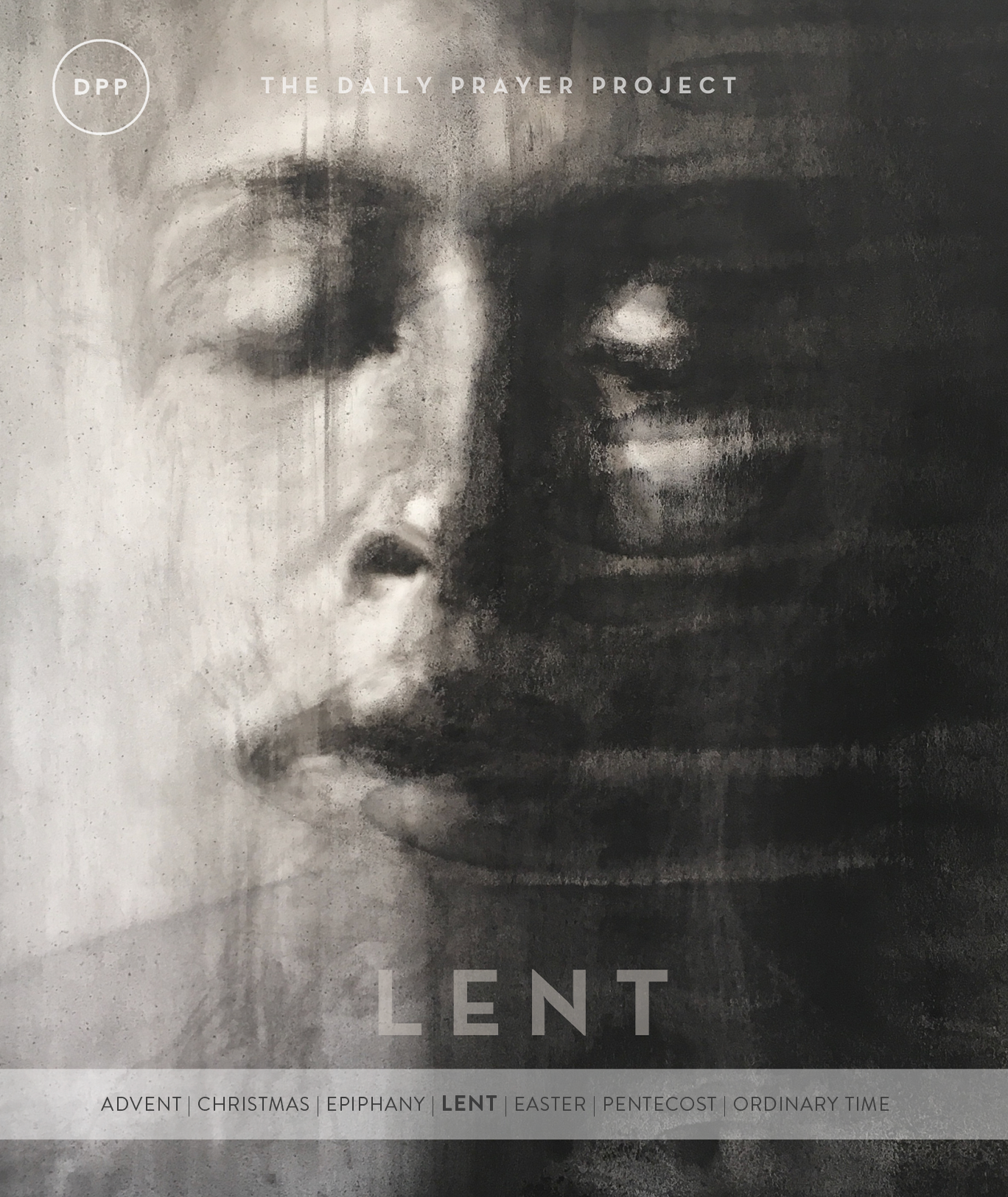
The Lent 2021 edition of the Daily Prayer Project prayerbook is now available, covering February 17–April 3. (I serve as curator.) The stunning cover image is Prayers of the People I by Meena Matocha, who works in charcoal, ashes, acrylic, and wax. You can purchase the booklet in either digital or physical format.
In the opening letter, Project Director Joel Littlepage writes, “Lent is a season that disturbs many people. Maybe that includes you. Among Protestant Christian communities that I have been a part of over the years, Lent can either be seen as a ‘graceless,’ ‘harsh,’ ‘legalistic’ part of the Christian year or, on the other hand, trivialized into a time to ‘pick something to give up,’ like a seasonal spiritual diet plan. Both these characterizations miss the mark.” He goes on to describe the bidirectionality of the Lenten journey: downward, as we are crucified with Christ, and upward, toward the victory of resurrection and new life. “It is a season to sense again the path of the Christian life.”
+++
NEW CHILDREN’S BOOK: Pippy the Piano and the Very Big Wave by Roger W. Lowther, illustrated by Sarah Dusek: My friend Roger Lowther [previously], director of Community Arts Tokyo and host of the Art Life Faith podcast, has written his first children’s book, which released in December. It’s inspired by the story of a church in Kamaishi, who after the 2011 tsunami found their beloved piano upside down and covered in mud and debris but, rather than discard it, decided to spend enormous amounts of time and money to restore it—a picture of God’s love for his precious creation, and the lengths he went to to demonstrate that love. Hollywood and Broadway actor Sean Davis reads the book in the video below. [Available on Amazon]
+++
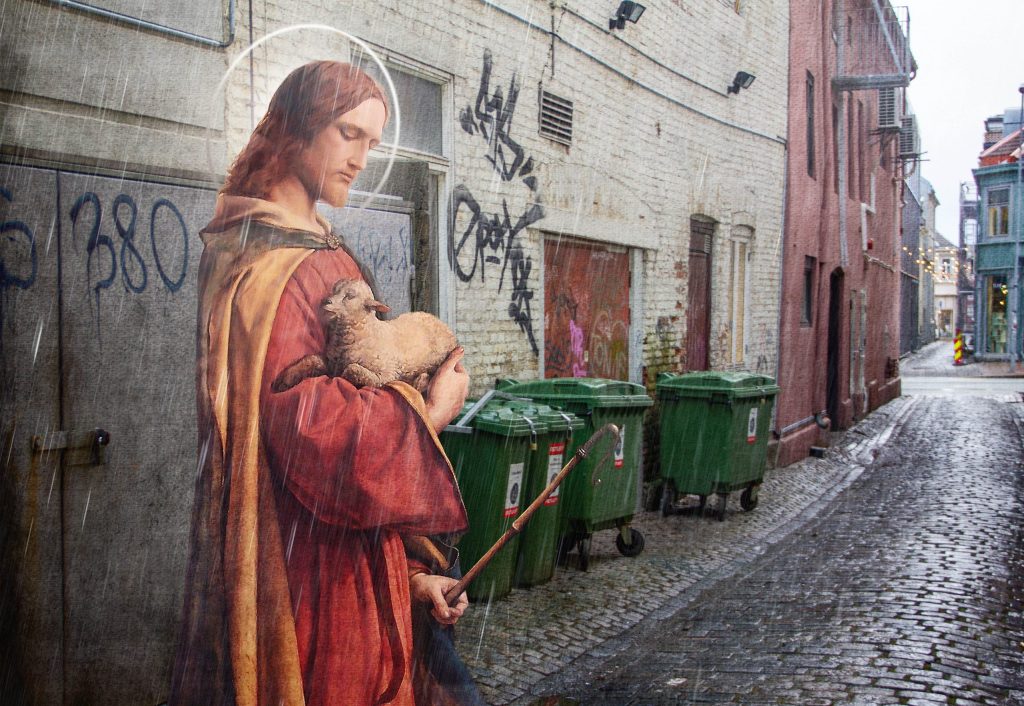
EXHIBITION: The Cobblestone Gospel by Trygve Skogrand, Vår Frue Kirke (Our Lady Church), Trondheim, Norway, July 2020–April 2021: “An exhibition of collages of historic low-church art merged with photographs of our own contemporary surroundings. The essence of the works is the meeting. Between painting and photography, the mystical and the mundane, and how the meeting makes both worlds renewed and re-visibled.” The original advertising says the exhibition is open Mondays through Saturdays from 12 to 3 p.m., but I’m not sure whether COVID has changed that; you can contact the church here.
Trygve Skogrand (Norwegian, 1967–), Found, 2020. Collage / pigment print on paper.Trygve Skogrand (Norwegian, 1967–), The Beloved, 2020. Collage / pigment print on paper.
When I was a child, I went to a Christmas party at our local church. At the end of the party, every child got a small bag of gifts to take home. In the bag: a pack of raisins, a small orange, some sweets – and a prayer card showing Jesus in paradise. Oh, how beautiful I thought the small prayer card was! Jesus and butterflies and a sunset and flowers AND a golden glittery border. A wonder of loveliness and holiness!
Move on twenty years. I was 30, had started working as an artist, and found the bible card again. I had changed, and the card too. Instead of seeing loveliness, I found the card rather sad. It looked to me as if Jesus was imprisoned in a dusty and suffocating make-believe paradise.
Then it struck me: What if I remove the paradise?
I have now been working with the merging of high and low historical Christian art with our contemporary surroundings for twenty years. For me, this process not only binds together what nowadays normally is shown as sundered but also re-actualizes the classical art and infuses the everyday, modern surroundings with holiness.
+++
MUSIC VIDEO: “Fear Thou Not” by Josh Garrels: This beautiful new setting of Isaiah 41:10 by Josh Garrels appears on Garrels’s 2020 album Peace to All Who Enter Here [previously]. “Fear thou not; for I am with thee: be not dismayed; for I am thy God: I will strengthen thee; yea, I will help thee; [and] I will uphold [you] with the right hand of my righteousness” (KJV).
+++
SHORT FILM: A Colorized Snowball Fight from 1896 Shows Not Much Has Changed in the Art of Winter Warfare: This is pure joy! “A short clip, originally captured by Louis Lumière in 1896, documents a rowdy snowball fight [bataille de boules de neige] on the streets of Lyon, France. Thanks to Saint-Petersburg, Russia-based Dmitriy Badin, who used a combination of the open-source software DeOldify and his own specially designed algorithms to upscale and colorize the historic footage, the video of the winter pastime is incredibly clear, revealing facial features and details on garments.”
PANEL DISCUSSION: “Religious Art,” organized by the Forum for Philosophy: I posted about this live online event a month ago, and now that it’s passed, I want to share the video recording. Theologian Ben Quash (King’s College, London), curator Lieke Wijnia (Catharijneconvent Museum, Utrecht), and art historian Mehreen Chida-Razvi (Khalili Collections, London) discuss the relationship between art and religion, how art can function within religious practice, how to exhibit religious art in a museum, and artworks as sites of conversation across religious traditions.
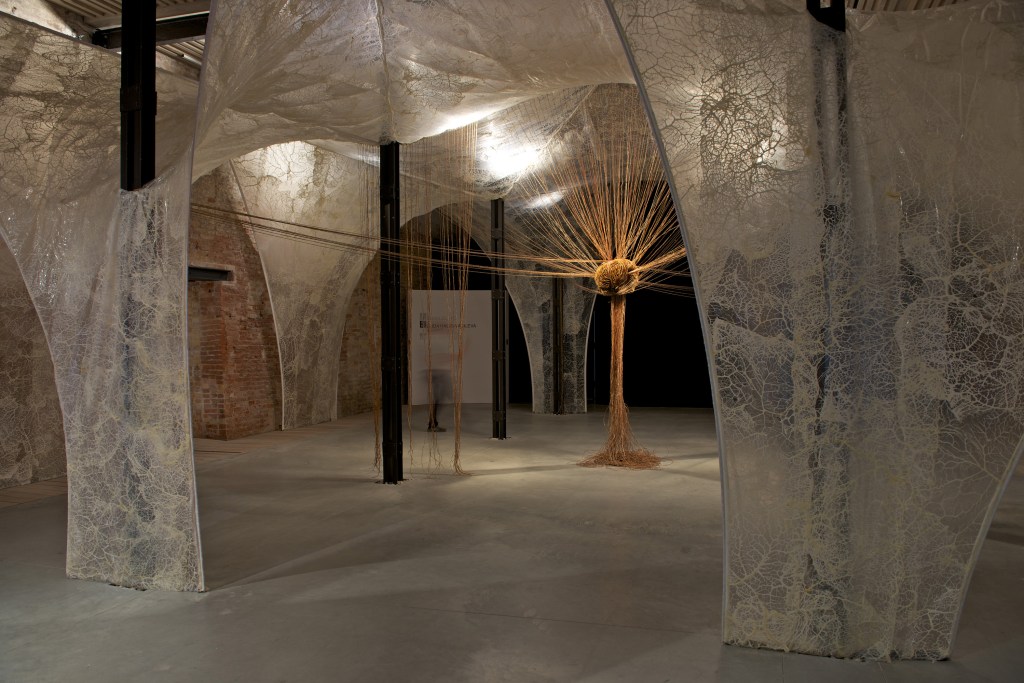
Quash opens by proposing different categories of “religious art”: art for religion, art about religion, art with religion, and art instead of religion. The three unpack those a bit, discussing the intentions of the artist or patron versus how the artwork is perceived by the viewer. Quash mentions Haruspex by Elpida Hadzi-Vasileva (a fascinating installation commissioned by the Vatican for the 2015 Venice Biennale, a contemporary artist’s response to “In the beginning . . . the word became flesh”; read Quash’s essay and an artist interview), the East Window at St Martin-in-the-Fields by Shirazeh Houshiary, the Raphael Cartoons, and Aaron Rosen’s 2016 Stations of the Cross exhibition throughout the city of London, which shows the permeability of the boundaries between sacred and secular. (I participated, as viewer/pilgrim, in a 2019 iteration of the Stations project in Amsterdam.)
Elpida Hadzi-Vasileva (Macedonian, 1971–), Haruspex, 2015. Organic materials. Installation at the Pavilion of the Holy See at the 56th Venice Biennale.
In reference to Hadzi-Vasileva’s canopy of pig’s caul fat, Quash says that challenge or provocation can be a meaningful thing to happen in a religious context:
Works that ambush you are also religiously important, because a sort of religious art that only gives you what you already expect and want quickly becomes kitsch. It’s just a reward of your expectations. And that shouldn’t be what religious art does, it seems to me. It should actually want to take you somewhere else, just as good religion should—it should be transformative, not merely confirming where you already are. So there’s a role for these sorts of artworks within religion as well as outside it.
Chida-Razvi shares slides of Islamic architectural spaces, devotional objects, and manuscript illuminations, including a Mughal painting that exemplifies the interfaith dialogue going on at the court of Akbar in Lahore, and Wijnia shares her experience curating objects people pray with for museum display and (forthcoming) an exhibition on Mary Magdalene. Such great content!
+++
ADVENT SONGS:
“He Comes,” words by Kate Bluett, music by Paul Zach: A lovely new Advent hymn, performed here by Paul Zach.
“The Heavens Shake” by Reindeer Tribe:Reindeer Tribe is a group of friends based in Los Angeles who get together each year to make a live Christmas album, a mix of originals and traditional, sometimes retuned, carols. They bring their voices, instruments, and arrangements and jam together for a long weekend in a big living room. (COVID-19 put the kibosh on this year’s gathering.) This original song, perfect for Advent, is on their 2014 album, A Great Light. “For thus says the LORD of hosts: Yet once more, in a little while, I will shake the heavens and the earth . . .” (Haggai 2:6).
+++
ARTICLE: “We don’t need to be afraid of the Christmas tree’s pagan roots” by Damian Costello, America: Dr. Damian Costello specializes in the intersection of Catholic theology, Indigenous spiritual traditions, and colonial history. In this article he considers how the Christmas tree pictures Christ as the new Yggdrasil (the giant ash tree at the center of the Norse cosmos), and the spiritual character of nature. The second half—about “the hidden agency of trees”—stretches my categories for sure, and I wonder if it’s a bit overwrought, but I’m intrigued by the links Costello draws between the Psalms, Anishinaabe spirituality, and the theology of the Catholic saint John Henry Newman. The article reminds me of Luci Shaw’s poem “Perfect Christmas Tree.”
+++
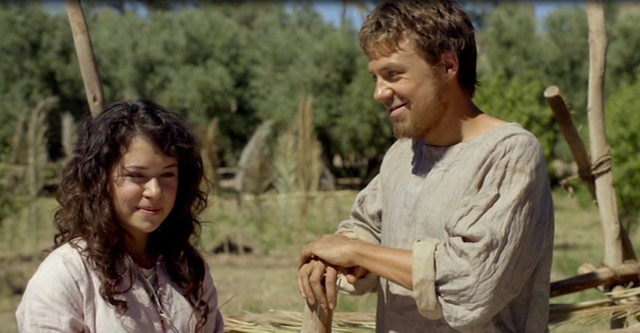
FILM: The Nativity (2010), written and directed by Tony Jordan: I’m always skeptical of film adaptations of the Bible because so many are poorly done. But I gave this four-part BBC miniseries (streaming on Amazon Prime) a shot, and, other than a really cheesy moment during the birthing scene, I thought it was quite good! Writer-director Tony Jordan is not a Christian but approaches the story with the reverent curiosity of a dramatist. He said he never connected with the nativity story until he worked on this project and started to see the very real humans beneath the auras tradition has given the “holy couple”—he saw their earthiness and complexity and began to imagine their emotional lives, especially their reactions to the disruptions they encountered. He said the relationship between Mary and Joseph was key to him. Many storytellers assume that because the marriage was arranged (or because, according to apocryphal sources, Joseph was an old man), there was no passion in their relationship, that they were bound together more by duty than by love, but Jordan, without overly romanticizing, imagines otherwise. The warmth between Mary and Joseph in the first half, which they have to work to regain after news of Mary’s pregnancy hits Joseph like a ton of bricks, is a hallmark of the movie.
Tatiana Maslany (Orphan Black) is probably my favorite Mary I’ve seen onscreen. (I also like Andrew Buchan [Broadchurch] as Joseph.) Jordan says most people see Mary as “a one-dimensional character with a halo round her head,” but actually, “she’s not saccharine. Just a nice kid—real but fallible.” He shows her as virtuous but not a goody-goody, fun-loving and confused and scared and courageous all at once, stepping into her new role by faith without seeing the full picture and even discipling Joseph into that faith. Maslany plays the part brilliantly, endearingly. The film addresses the isolation Mary felt, being rejected not only by her fiancé at first but also by the synagogue leadership and disbelieved, too, by the community she had grown up in. I’ve seen many actors portray Mary as detached, transcending all her difficult circumstances with calm, unshaken resolve. This Mary, by contrast, experiences hurt and fear and yet endures, which, I suspect, is closer to the historical reality. This in no way undermines her faith.
I was delighted by the Annunciation scene, where Gabriel comes to Mary as an ordinary man, much like the angels who visited Abraham generations earlier. He is not wearing ermine or carrying a scepter or standing on a rock above Mary with a booming voice and a heavenly glow. He’s simply a stranger who startles her, even more so when he relays his news. He speaks gently, colloquially. The moment of conception is portrayed as sudden and visceral; Mary feels Light enter her and reacts with a sort of joyful shock.
The trailer and posters, I will say, make the film seem pretty conventional. It does follow some conventions, but it’s also fresh, and while it has some flaws, I think it’s a very worthy use of two hours—it brings this ancient story to life in compelling ways.
BLOG POST: “Jesus as Dancer: Jyoti Sahi’s ‘Lord of Creation’” by Victoria Emily Jones: I wrote a guest post for the Sojourn Arts blog about a gouache I own by Indian artist Jyoti Sahi, which shows Jesus leading the dance of new creation. On one side he pounds a drum, and on the other he emerges from a lotus. The painting brings together Jyoti’s interests in Christian and Hindu theologies and folk symbolism.
Jyoti Sahi (Indian, 1944–), Lord of Creation, 1982. Gouache on paper, 14 3/4 × 20 in. Collection of Victoria Emily Jones.
Sojourn Arts is a ministry of Sojourn Church Midtown in Louisville, Kentucky, that seeks to support artists and build up the church through the arts. They have organized and/or hosted numerous exhibitions over the years and have commissioned temporary installations for their sanctuary, as well as coordinated community art projects. Visit www.sojourn-arts.com.
+++
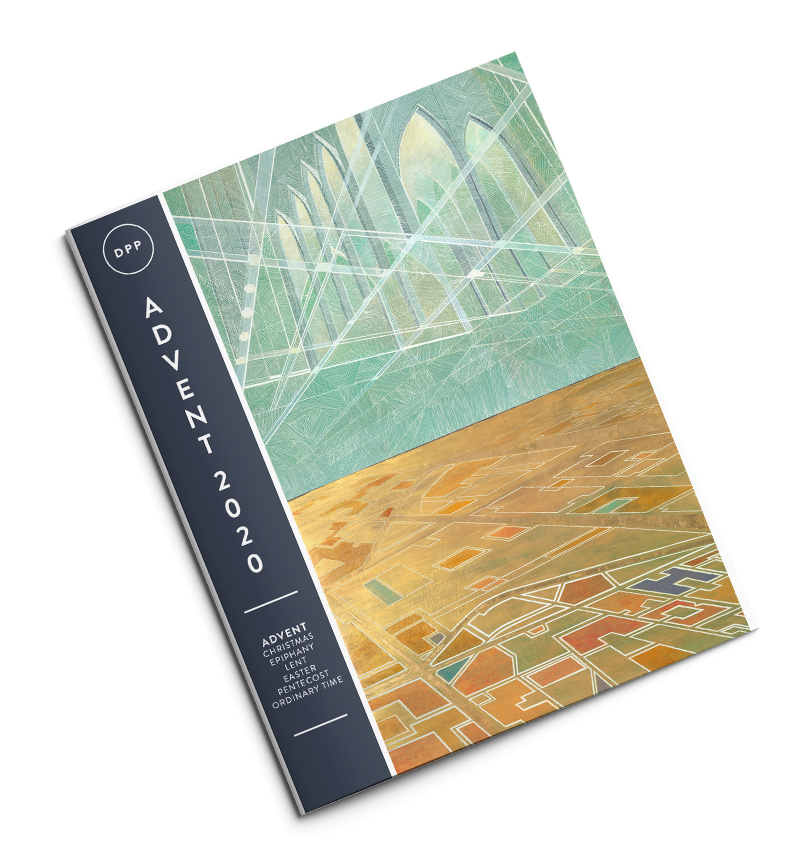
THE DAILY PRAYER PROJECT: This fall I joined the team at the Daily Prayer Project as curator of visual art. The Daily Prayer Project is a periodical that covers every season of the Christian year with robust, rooted, and cross-cultural liturgies for use in congregations, households, workplaces, small groups, or other gatherings. Released in seven editions per year, it features daily morning and evening prayer guides for the week, which include Psalm, Old Testament, and New Testament readings; short prayers sourced from around the globe and from different eras; specific prayer prompts; and songs (including lead sheets). In addition to the cover image, there is a mini-gallery of two art images inside, reproduced in full color, to serve as visual prompts for further contemplation and prayer. There is also a section called “The Practices,” with two page-long seasonal reflections by staff members or guest contributors.
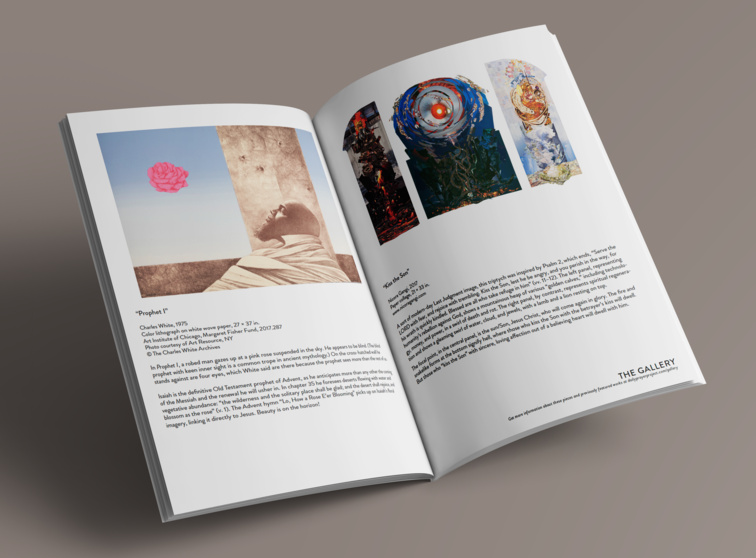
The Advent 2020 issue of the DPP, covering November 29 through December 24, was released last week. It features prayers by African American civil rights leader Fannie Lou Hamer, the tenth-century English saint Ethelwold, and others; a Hebrew folk song, a Taizé chant, and an Argentine hymn by Federico J. Pagura; a striking cover image by Hilary Siber, which shows heaven coming down to earth; Charles White’s Prophet I, which resonates with passages from Isaiah; and an apocalyptic paper collage by Nicora Gangi.
The periodical is available as a physical booklet or as a PDF download. Visit the website for more information. If you are an artist and are interested in having your work considered for publication in a future prayerbook, email team@dailyprayerproject.com.
+++
VIDEO: “Local Riches: Ethnoarts and Sumba”: A workshop for churches on the island of Sumba in Indonesia, led by Yayasan Suluh Insan Lestari in July 2019, reinforced that God is best honored, and the global body of Christ built up, when people worship God using their unique cultural and linguistic gifts, bringing their whole, authentic selves before him in praise. [HT: Global Christian Worship]
For centuries many Christian missionaries to other countries brought with them Western hymns and images, presenting them as definitive—as forms that alone are good and pleasing to God. (For example, a woman in the video mentions how she had previously thought that worship songs had to be based on Western scales and performed using certain instruments to be acceptable.) But in the last fifty or so years especially, at least from what I’ve noticed, many missionaries have recognized the falsity of this line of thinking and seek to undo negative conditioning by promoting the use of indigenous artistic expressions (sometimes called “ethnoarts”) in Christian worship, be it dance, drama, music, storytelling, carving, or what have you. I found it interesting that the interviewees seem to suggest that now it’s the forces of modernism that most threaten the survival of traditional cultures, whereas it used to be that the church was largely blamed (missionaries did undeniably play a large part, banning this and that, though in every era there were exceptions to the rule). Now the church is at the forefront of trying to preserve not only traditional languages but also traditional art forms.
“Everything we have was created by God, and we need to return to it with gratefulness because this is how God made us!” says Rev. Herlina of the Christian Church of Sumba. “With whatever we already have, we can be a blessing to our people.”
+++
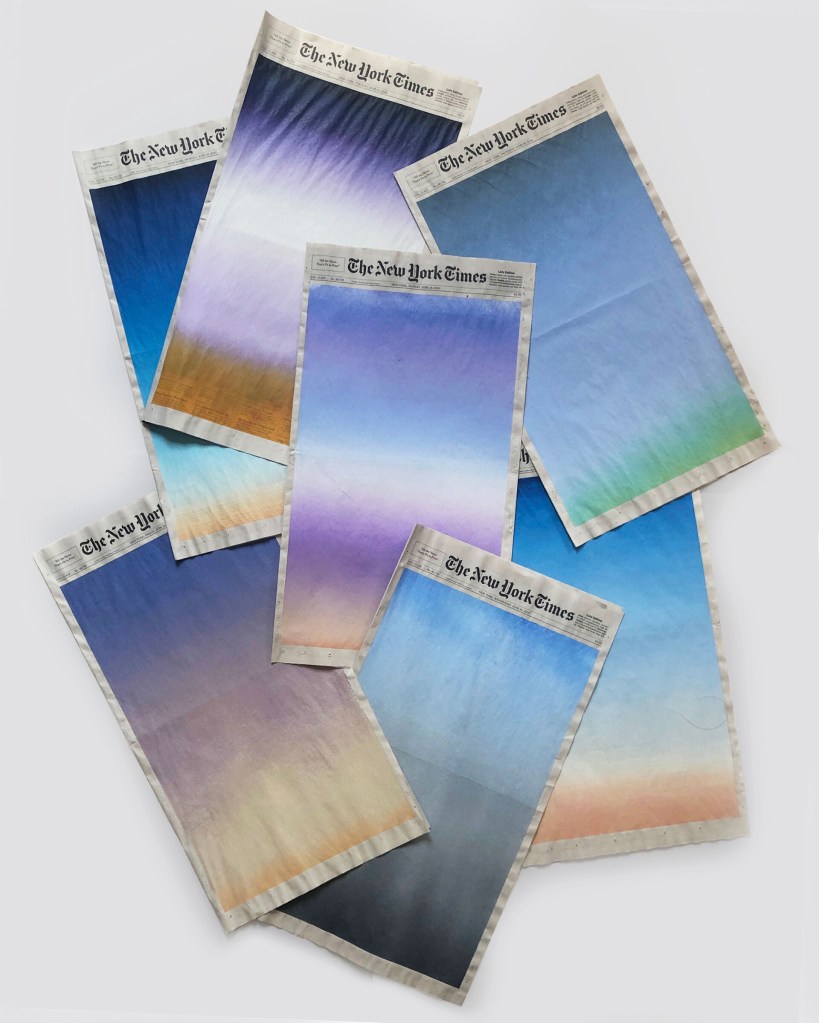
NEW ART SERIES: “Organic, Sunrise Gradients Mask Front Pages of the New York Times by Artist Sho Shibuya”: Since the lockdown started in March, Brooklyn-based artist and graphic designer Sho Shibuya has been painting color gradients in acrylic over the front pages of the New York Times, inspired by each morning’s sunrise. He calls the series “Sunrises from a Small Window.” I love how he’s able to express gratitude for a beautiful new day and to access calm amid dire news cycles. Shibuya is still reading those headlines and articles; he’s just putting them in a larger perspective. (As for myself, call me escapist, but I’ve found that actually blocking out the news—turning down the noise—for certain periods can be a helpful spiritual practice.)
Sho Shibuya, Sunrises from a Small Window, June 22–28, 2020. Acrylic on newsprint.
“I started . . . contrasting the anxiety of the news with the serenity of the sky, creating a record of my new normal,” Shibuya says. “Their front page has always been a time capsule of a day in history, so it made sense to use history as the canvas because the paintings are meant to capture a moment in time. . . . The spirit of the project is that maybe, even after the pandemic subsides, people can continue some of the generosity and peace we discovered in ourselves and that the sky reminds us of every day with a sunrise through a small window. If one thing the news has made clear, we need generosity and peace for all people now more than ever.”
+++
TWO FILMS: “Death on Netflix: I’m Thinking of Ending Things and Dick Johnson Is Dead” by Mitch Wiley: I really liked both these cinematic reflections on mortality, but they’re completely different, as this short Gospel Coalition article bears out. Dick Johnson Is Dead is the more “Christian” of the two because of its hopeful perspective—the human subject of the film is a Seventh-Day Adventist, so death for him is not a final end. After her father was diagnosed with dementia, filmmaker Kirsten Johnson asked her dad if he’d be interested in a collaborative film project where, to help them both face the inevitable, she would stage his death in inventive and comical ways. Relishing the opportunity to spend more time with his busy daughter, he enthusiastically agreed.
The documentary shows them preparing and carrying out these stunts but also interacting in other contexts—birthday parties, trick-or-treating, looking through old photo albums, cleaning out Dick’s office, Dick’s being asked to give up driving, and so on. It made me laugh and cry—films that can do both tend to rate highly on my favorites list. There’s so much love and warmth and heartache and whimsy in it as father and daughter confront death together, talking very openly about it, which I found, strange as it may seem, refreshing. Oh, and the heaven sequences just may be the best I’ve ever seen.
For a more cynical take on death, here’s the trailer to I’m Thinking of Ending Things (Charlie Kaufman isn’t for everyone, but I’m still thinking about this movie after watching it a month ago, which means it made an impression!):
Seeing and Believing, a Christ and Pop Culture podcast, covered Ending Things and Dick Johnson in episodes 264 and 266, respectively, as have most other film podcasts and reviewers, with Dick Johnson being uniformly lauded as one of the best movies of the year.
+++
SONG: “Hodu” (Give Thanks), performed by the Platt Brothers: The Platt Brothers [previously] singing scripture to me? Yes, please. The text of this song is Psalm 118:1–4, and the music is by Debbie Friedman (1951–2011), a Jewish singer-songwriter whose songs are used widely in Reform and Conservative Jewish liturgies in North America. Friedman’s “Hodu” was originally released on her 1981 album And the Youth Shall See Visions. (Find sheet music here.)
In this video from earlier this month, Henry, Jonah, and Ben Platt sing “Hodu” to a guitar accompaniment by Al Seller.
Hodu l’Adonai kitov Ki l’olam chasdo, ki l’oam chasdo Yomar na, yomar na, Yisraeil Ki l’olam chasdo, ki l’olam chasdo Yomru na, yomru na veit Aharon Ki l’olam chasdo, ki l’olam chasdo
Let all who revere G-d’s name now say Ki l’olam chasdo Give thanks to the Lord for G-d is good Ki l’olam chasdo
The first time the Platt Brothers performed in public as a trio was this April, when they appeared in a virtual Yom Ha’atzmaut celebration at the request of the Jewish Federations of North America, singing “Ahavat Olam.” Ben and Jonah are musical theater performers: Ben originated the title role in Broadway’s Dear Evan Hansen and won a Tony for it, and Jonah is best known for playing Fiyero in Wicked on Broadway from 2015 to 2016. Henry is a senior at the University of Pennsylvania, where’s he’s a member of the a cappella group Counterparts.



 Art & Theology