“Thanksgivings for the Body” by Thomas Traherne (excerpt)

Owunna, Mikael_Lébé and His Articulations
Mikael Owunna (Nigerian American, 1990–), Lébé and His Articulations, from the Infinite Essence series, 2019. Dye sublimation print, 60 × 40 in. (152.4 × 101.6 cm). Edition of 3 + 1AP. [for sale]

                                O Lord!
        Thou hast given me a body,
Wherein the glory of thy power shineth,
Wonderfully composed above the beasts,
Within distinguished into useful parts,
Beautified without with many ornaments.
        Limbs rarely poised,
                And made for heaven:
        Arteries filled
                With celestial spirits:
        Veins, wherein blood floweth,
                Refreshing all my flesh,
                                Like rivers.
        Sinews fraught with the mystery
            Of wonderful strength,
                Stability,
                Feeling.
        O blessed be thy glorious Name!
That thou hast made it
            A treasury of wonders,
                Fit for its several ages;
                    For dissections,
                    For sculptures in brass,
                    For draughts in anatomy,
        For the contemplation of the sages.
                Whole inward parts,
                        Enshrined in thy libraries,
        Are:
                The amazement of the learned,
                The admiration of kings and queens,
                The joy of angels,
                The organs of my soul,
                The wonder of cherubims.
        Those blinder parts of refined earth,
                        Beneath my skin,
            Are full of thy depths,
            For:
                        Many thousand uses,
                        Hidden operations,
                        Unsearchable offices.
        But for the diviner treasures wherewith thou hast endowed
            My brains,
            My heart,
            My tongue,
            Mine eyes,
            Mine ears,
            My hands,
O what praises are due unto thee,
        Who has made me
                    A living inhabitant
                            Of the great world,
                    And the centre of it!
        A sphere of sense,
                            And a mine of riches,
Which when bodies are dissected fly away.
        The spacious room
                    Which thou has hidden in mine eye;
        The chambers for sounds
                    Which thou has prepar’d in mine ear;
        The receptacles for smells
                    Concealed in my nose;
        The feeling of my hands;
                    The taste of my tongue.
        But above all, O Lord, the glory of speech,
whereby thy servant is enabled with praise to
celebrate thee.
                                    For
        All the beauties in heaven and earth,
        The melody of sounds,
        The sweet odours
                            Of thy dwelling-place.
        The delectable pleasures that gratify my sense,
                            That gratify the feeling of mankind.
        The light of history,
                            Admitted by the ear.
        The light of heaven,
                            Brought in by the eye.
        The volubility and liberty
                            Of my hands and members.
        Fitted by thee for all operations,
                            Which the fancy can imagine,
                            Or soul desire:
        From the framing of a needle’s eye,
                            To the building of a tower;
        From the squaring of trees,
                            To the polishing of kings’ crowns.
        For all the mysteries, engines, instruments, wherewith the world is filled, which we are able to frame and use to thy glory.
        For all the trades, variety of operations, cities, temples, streets, bridges, mariner’s compass, admirable pictures, sculpture, writing, printing, songs and music, wherewith the world is beautified and adorned.
        Much more for the regent Life,
            And power of perception,
                Which rules within.
        That secret depth of fathomless consideration
            That receives the information
                Of all our senses,
That makes our centre equal to the heavens,
    And comprehendeth in itself the magnitude of the world;
        The involved mysteries
                            Of our common sense;
        The inaccessible secret
                            Of perceptive fancy;
        The repository and treasury
                            Of things that are past;
        The presentation of things to come;
            Thy Name be glorified
                For evermore.
    For all the art which thou hast hidden
            In this little piece
                Of red clay,
    For the workmanship of thy hand,
        Who didst thyself form man
            Of the dust of the ground,
        And breathe into his nostrils
            The breath of life.
    For the high exaltation whereby thou hast glorified every body,
                Especially mine,
        As thou didst thy servant
                Adam’s in Eden.
    Thy works themselves speaking to me the same thing that was said unto him in the beginning,
                WE ARE ALL THINE.

This poem excerpt is from A Serious and Pathetical Contemplation of the Mercies of God, in Several Most Devout and Sublime Thanksgivings for the Same by Thomas Traherne, published posthumously in 1699. It is in the public domain.

Thomas Traherne (1636/37–1674) was a country priest from England whose devotional writings, both prose and verse, are remarkable for their spiritual intensity. He wrote rapturously about the goodness, love, and mercy of God and the glories of God’s creation. He is sometimes classed as a Metaphysical poet, though his poems read more like Walt Whitman, with their long catalogs and ebullient joy. Traherne is most celebrated for his Centuries of Meditations, a collection of theological reflections that wasn’t published until 1908.

“Field Preaching” by Phoebe Cary (poem)

Greenwood, Phil_Blossom
Phil Greenwood (Welsh, 1943–), Blossom, 2003. Etching and aquatint, 67 × 59 cm. Edition of 150.

I have been out today in field and wood,
Listening to praises sweet and counsel good
Such as a little child had understood,
              That, in its tender youth,
Discerns the simple eloquence of truth.

The modest blossoms, crowding round my way,
Though they had nothing great or grand to say,
Gave out their fragrance to the wind all day;
              Because his loving breath,
With soft persistence, won them back from death.

And the right royal lily, putting on
Her robes, more rich than those of Solomon,
Opened her gorgeous missal in the sun,
              And thanked him soft and low,
Whose gracious, liberal hand had clothed her so.

When wearied, on the meadow-grass I sank,
So narrow was the rill from which I drank,
An infant might have stepped from bank to bank;
              And the tall rushes near,
Lapping together, hid its waters clear.

Yet to the ocean joyously it went,
And, rippling in the fulness of content,
Watered the pretty flowers that o’er it leant;
              For all the banks were spread
With delicate flowers that on its bounty fed.

The stately maize, a fair and goodly sight,
With serried spear-points bristling sharp and bright,
Shook out his yellow tresses, for delight,
              To all their tawny length,
Like Samson, glorying in his lusty strength.

And every little bird upon the tree,
Ruffling his plumage bright, for ecstasy,
Sang in the wild insanity of glee;
              And seemed, in the same lays,
Calling his mate and uttering songs of praise.

The golden grasshopper did chirp and sing;
The plain bee, busy with her housekeeping,
Kept humming cheerfully upon the wing,
              As if she understood
That, with contentment, labor was a good.

I saw each creature, in his own best place,
To the Creator lift a smiling face,
Praising continually his wondrous grace;
              As if the best of all
Life’s countless blessings was to live at all!

So with a book of sermons, plain and true,
Hid in my heart, where I might turn them through,
I went home softly, through the falling dew,
              Still listening, rapt and calm,
To Nature giving out her evening psalm.

This poem was originally published in Poems of Faith, Hope, and Love by Phoebe Cary (Hurd and Houghton, 1867) and is in the public domain.

Phoebe Cary (1824–1871) was an American poet whose verse focuses on themes of religion, nature, and feminism. She grew up on a farm near Cincinnati, Ohio, the sixth of nine children. She was particularly close with her older sister Alice, also a writer, with whom she copublished a volume of poetry in 1849 before going on to publish books of her own. Buoyed by the recognition they received from such luminaries as Edgar Allan Poe and John Greenleaf Whittier, in 1850 the two sisters moved to New York City together, where they contributed regularly to national periodicals and hosted a weekly Sunday evening salon attended by East Coast literati. Phoebe was active in the early days of the women’s rights movement, serving as an assistant editor for The Revolution, Susan B. Anthony’s suffrage newspaper. She died of hepatitis at age forty-six, just six months after Alice.

“I cannot dance, O Lord” by Mechthild de Magdeburg

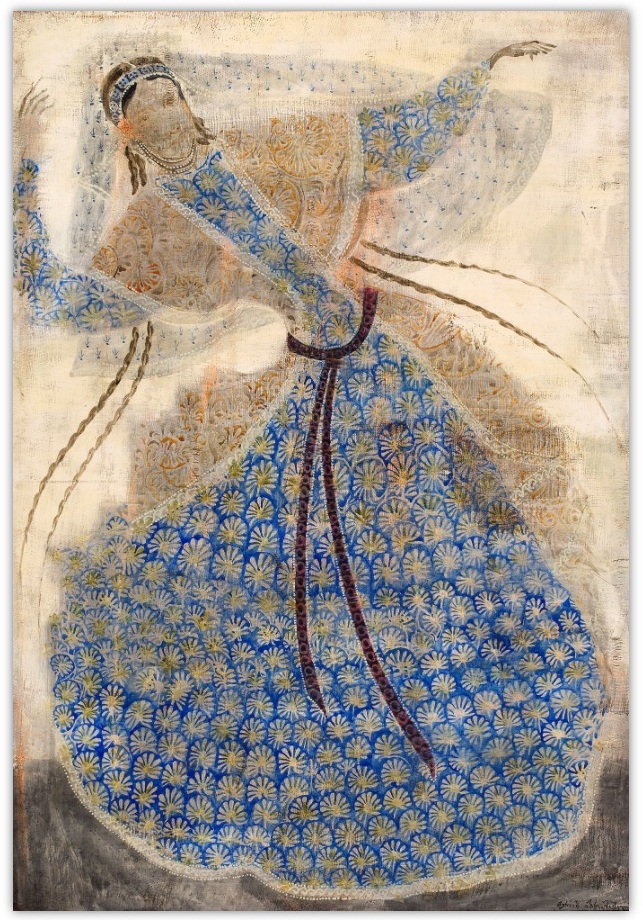
Abramishvili, Merab_Dancer
Merab Abramishvili (Georgian, 1957–2006), Dancer, 2006. Tempera on plywood, 76 × 52 cm.

I cannot dance, O Lord, 
Unless You lead me.
If You wish me to leap joyfully,
Let me see You dance and sing—

Then I will leap into Love—
And from Love into Knowledge,
And from Knowledge into the Harvest,
That sweetest Fruit beyond human sense.

There I will stay with You, whirling.

from The Flowing Light of the Godhead I.44, trans. Jane Hirshfield, in Women in Praise of the Sacred: 43 Centuries of Spiritual Poetry by Women (HarperCollins, 1994)

Mechthild de Magdeburg (ca. 1207–ca. 1297) was a medieval Christian mystic from a wealthy German family. In 1230 she entered a local house of the Beguines, independent communities of laywomen devoted to leading a life of good works, poverty, chastity, and spiritual practice; and around 1272 she joined the Cistercian convent at Helfta, where she lived until her death. Her seven-volume book Das fließende Licht der Gottheit (The Flowing Light of the Godhead), written in Middle Low German over the course of three decades, is a compendium of visions, prayers, and dialogues that centers on her experience of God as lover. Her feast day is November 19.

Jane Hirshfield (b. 1953) is an American poet, essayist, and translator whose nine collections of poetry have won multiple awards. Her work encompasses a large range of influences, drawing from the sciences as well as the world’s literary, intellectual, artistic, and spiritual traditions. She lives in California.

Addendum, 9/5/22: Composer Thomas Keesecker has just alerted me to a choral setting he wrote of this passage, “Unless You Lead Me, Love.” Lovely!

Roundup: “Incarnation and Imagination” lecture, Planet Drum, and more

PODCAST EPISODE: “Incarnation and Imagination (with Malcolm Guite),” Imagination Redeemed: On March 28, 2015, the Anglican poet-priest Malcolm Guite from Cambridge, England, gave a talk in Colorado Springs for the Anselm Society, an ecumenical Christian organization whose mission is a renaissance of the Christian imagination. They have just released it on their podcast.

Guite discusses how the job of the arts is to link earth and heaven, heaven and earth; where a poem or other work of art stays on only one of those planes, it typically fails. He unpacks Theseus’s monologue from Act 5, scene 1 of Shakespeare’s A Midsummer Night’s Dream, focusing on these six lines: “The poet’s eye, in fine frenzy rolling, / Doth glance from heaven to earth, from earth to heaven. / And as imagination bodies forth / The forms of things unknown, the poet’s pen / Turns them to shapes and gives to airy nothing / A local habitation and a name.”

Shakespeare, Guite says, is riffing on the prologue to John’s Gospel.

The Logos . . . is bodied forth perfectly and beautifully in the living, walking poem of Jesus Christ, in whom everything eternal is made particular, and who invites everybody to come towards him . . . because he is a habitation with open doors. So of course in John’s Gospel he says, ‘I am the door’! . . . Open up, walk in! (48:51)

And one more quote from Guite!

The church . . . is founded by one who is himself artistically embodied meaning—meaning made visible, meaning made beautiful, meaning made habitable and hospitable and welcoming in the touch of the body and in the physical event, which is then transfigured, because it is also a meaningful event, because earth and heaven meet. (55:34)

It’s a brilliant and inspiring talk, and it integrates other poetic verse besides Shakespeare’s.

+++

MUSIC:

>> “More Love, More Power” by Paul Livingstone and Benny Prasad: This sitar-guitar duet is performed by Paul Livingstone (a multi-instrumentalist and composer of “ragajazz chamber music” who was one of the few American disciples of the late Ravi Shankar) and gospel musician Benny Prasad [previously]. The performance took place June 11 at Chai 3:16, a four-hundred-seat café and community space that Prasad founded in Bengaluru to reach out to college students. (Chai is Hebrew for “life,” and “3:16” refers to the famous verse in the Gospel of John about God’s love.) [HT: Global Christian Worship]

>> “King Clave” by Planet Drum: In 1991 Mickey Hart (best known as a drummer of the Grateful Dead) and Zakir Hussain (a classical tabla virtuoso from Mumbai) formed the Grammy-winning global percussion ensemble Planet Drum, bringing together the world’s greatest rhythm masters into a one-of-a-kind improvisational supergroup. Prompted by ongoing international strife, Planet Drum reconvened over the past two years to record their third album, In the Groove, which released August 5. It features six unique compositions led by Hart, Hussain, Sikiru Adepoju of Nigeria, and Giovanni Hidalgo of Puerto Rico.  

The centerpiece of the album is “King Clave” (the clave is a rhythmic pattern), created in partnership with Playing for Change and with funding from the United Nations Population Fund. The four core musicians mentioned above are joined by other percussionists and dancers from around the world. The music video uses the “Alternate Version” of the performance, released separately as a single.

Learn more about the Planet Drum project in this six-minute video:

+++

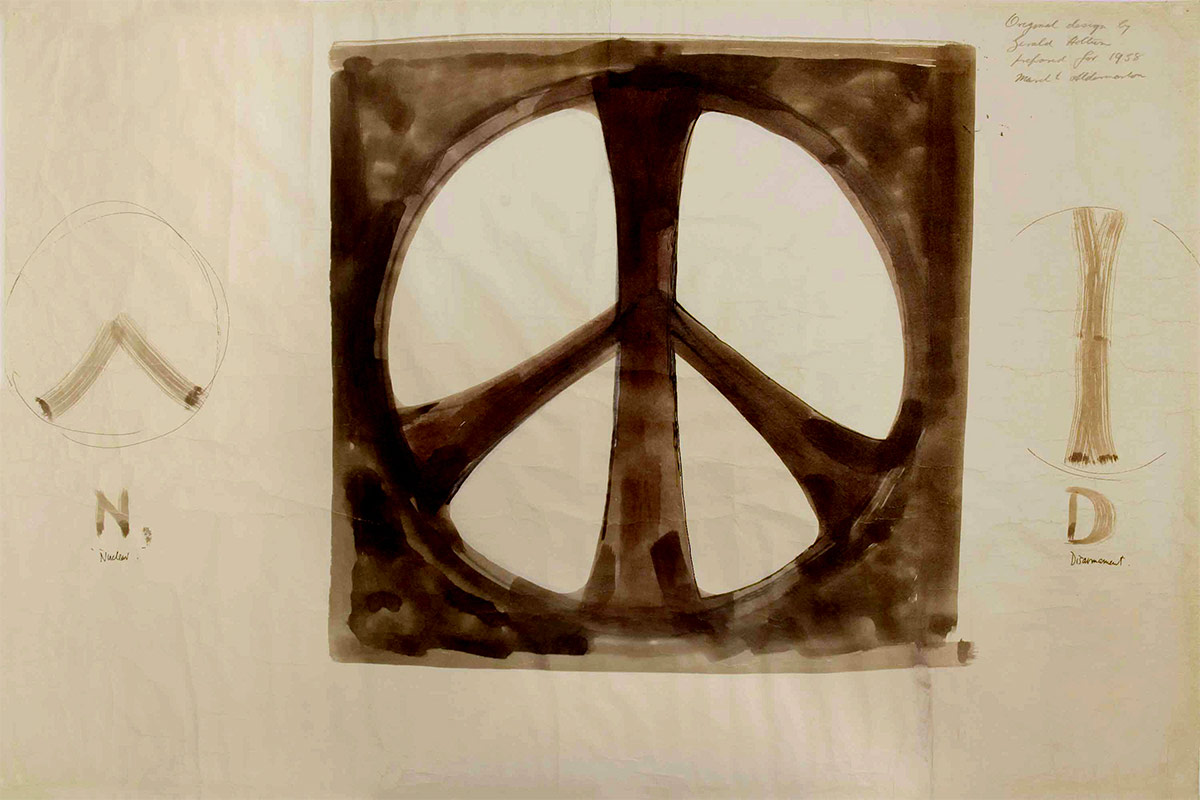
STILL LIFE EDITION: “The History of the Peace Symbol” by Michael Wright: Did you know that the peace symbol that spread worldwide during the 1960s was designed by a Christian from the UK? (Christian pacifism was one of the underappreciated drivers of the nuclear disarmament and antiwar movements.) Learn more about the symbol’s history and art historical and nautical influences in the August 15, 2022, edition of Michael Wright’s weekly letter on art and spirit, Still Life. Also included is the poem “Wildpeace” by Yehuda Amichai, and four weblinks of interest, such as an article on how the patristic tradition agrees with cognitive neuroscience, and a video of FKA Twigs performing in a church!

Holtam, Gerald_Peace
Sketch of nuclear disarmament symbol by Gerald Holtom, created for the first Aldermaston March in 1958. © Commonweal Collection, University of Bradford, England.

+++

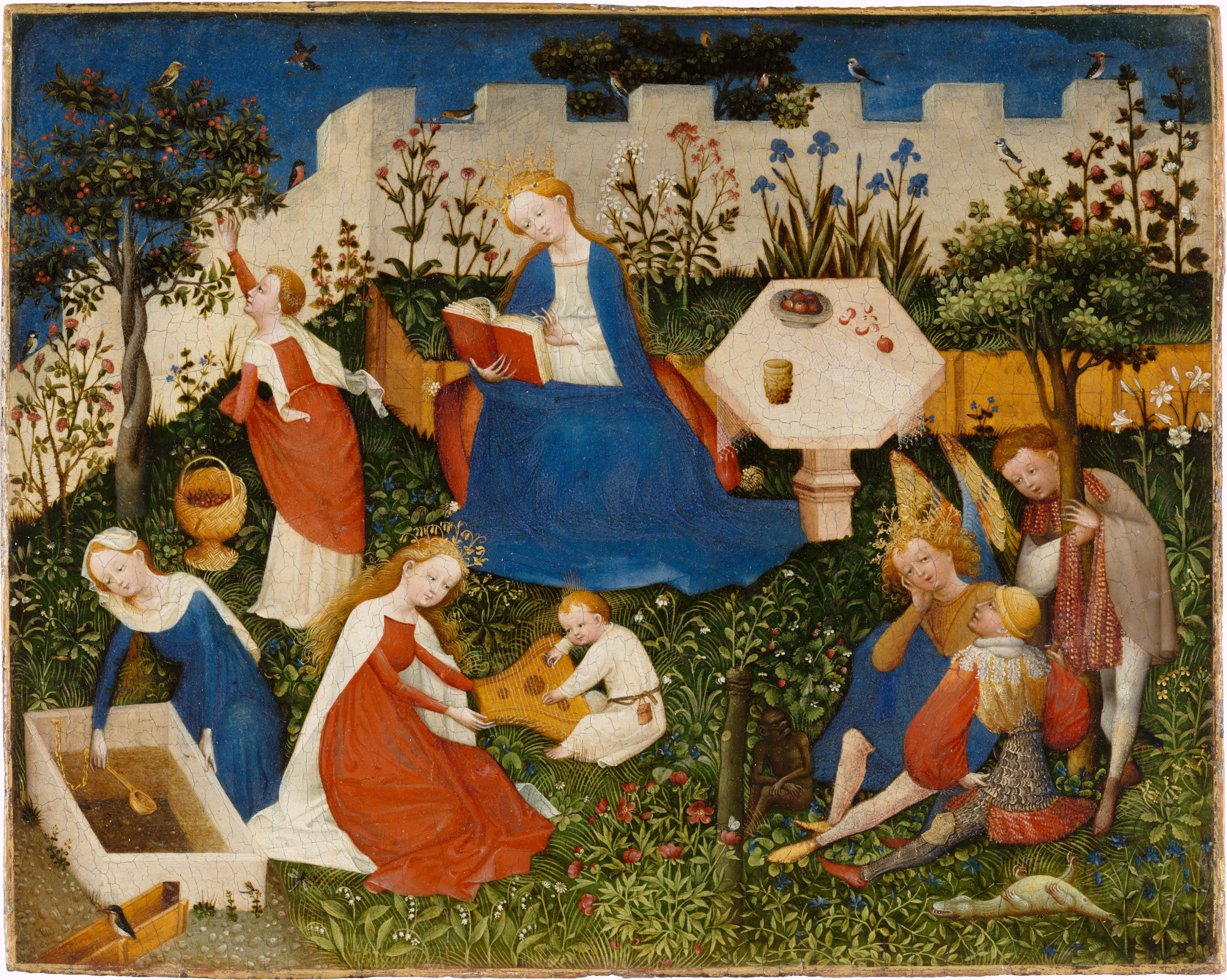
VIDEO LECTURE: “Symbolism and Sacramentality in Art: Medieval and Postmodern Representations of the Little Garden of Paradise” (Religion and Art Talks) by Tina Beattie: Dr. Tina Beattie is a professor emerita of Catholic Studies at the University of Roehampton whose research is at the intersections of art, gender, and theology. In this talk she explores the sacramental imagination of the medieval world through a Late Gothic painting from the Rhineland known as The Little Garden of Paradise. (You can zoom in in tremendous detail on the Städel Museum’s website.) It shows Mary reading in an enclosed garden in the company of saints, her little boy Jesus playing a psaltery at her feet. “Christ retunes the cosmos,” Beattie says. “The harmonies of creation were disrupted by sin. But all of creation is brought back into harmony through the Incarnation.”

Symbolism and allegory abound in medieval religious paintings, encoding profound meanings that can be discerned if we would but take the time to look and to meditate and to understand the world from which these images arose. “The visual image can say things that the theological text can’t,” Beattie asserts. “It can play with the doctrinal truth in ways that allow other meanings to emerge discreetly.”

Though many interpretations of hortus conclusus imagery focus on Mary’s virginity, and indeed that was a primary aspect motivating the creatives who developed such imagery, Beattie draws out themes of new creation and discusses the garden as the human soul.

The Little Garden of Paradise
The Little Garden of Paradise, Upper Rhine, ca. 1410–20. Mixed media on oak, 26.3 × 33.4 cm. Städel Museum, Frankfurt am Main, Germany.

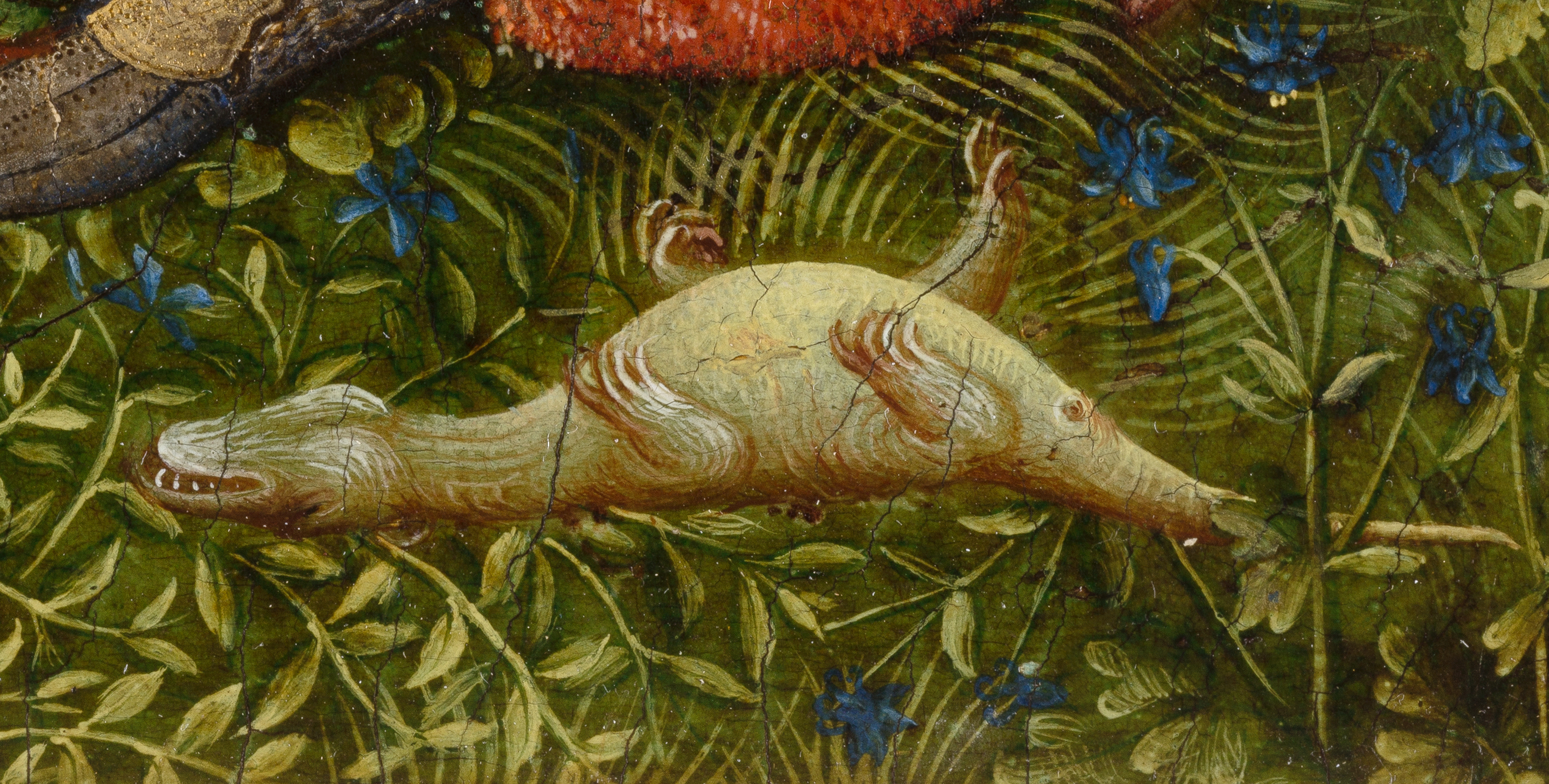
The Little Garden of Paradise (detail, dragon)
A small, slain dragon lies belly-up beside a man in greaves and chain mail, probably Saint George.

The other artworks she glosses are:

The last half hour of the video features audience engagement.

“O Christ, Thou Art Within Me Like a Sea” by Edith Lovejoy Pierce (poem)

Parlar, May_Salt IV
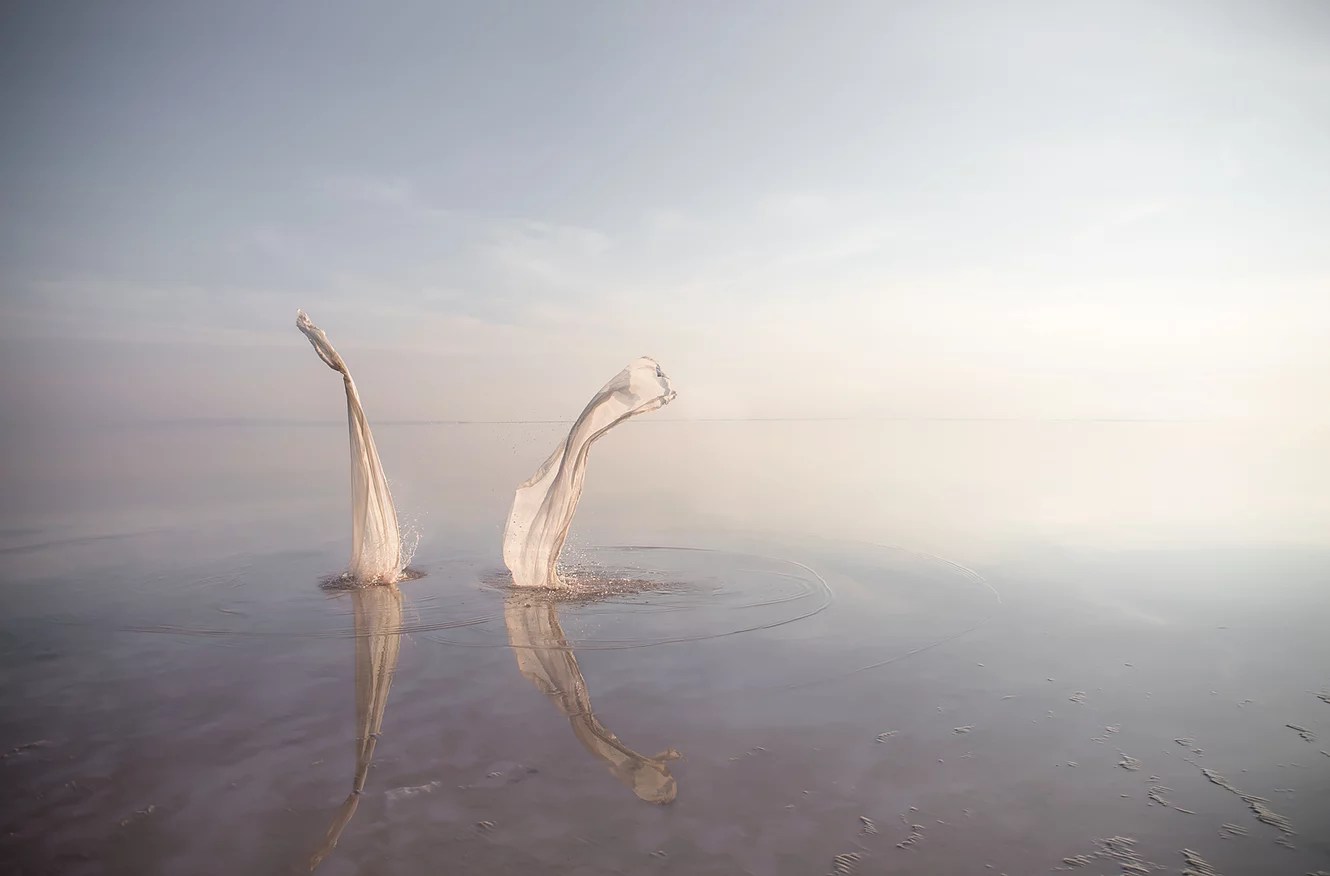
May Parlar (Turkish, 1981–), Salt IV, 2018. From the photograph series Once I Fell in Time.

O Christ, thou art within me like a sea,
Filling me as a slowly rising tide.
No rock or stone or sandbar may abide
Safe from thy coming and undrowned in thee.

Thou dost not break me by the might of storm,
But with a calm upsurging from the deep
Thou shuttest me in thy eternal keep
Where is no ebb, for fullness is thy norm.

And never is thy flood of life withdrawn;
Thou holdest me till I am all thy own.
This gradual overcoming is foreknown.
Thou art within me like a sea at dawn.

This poem appears in Therefore Choose Life by Edith Lovejoy Pierce (Harper and Brothers, 1947).

Edith Lovejoy Pierce (1904–1983) was a Christian poet and pacifist. Born in Oxford, England, she married an American in 1929 and moved to the US the same year, settling in Evanston, Illinois. In her writing she drew inspiration from the Bible, Gandhi’s philosophy of nonviolent resistance, music, history, and mysticism, among other sources.

Roundup: West African praise medley, reading poetry and fiction, and more

SPOTIFY PLAYLIST: August 2022 by Victoria Emily Jones: Most months I compile thirty songs and other musical selections into a nonthematic playlist as a way to share good music, mostly from the Christian tradition but otherwise Christian-adjacent. This month’s list includes a traditional Black gospel song performed by Chris Rodrigues and professional spoon player Abby Roach (featured here); a Zulu song from South Africa about holding on to Jesus (bambelela = “hold on”); a song in the voice of Christ Our Mother by Irish singer-songwriter Sinéad O’Connor, from her album Gospel Oak; a portion of Barbados-born Judy Bailey’s Caribbean-style setting of the Anglican liturgy; a brass arrangement of a Golden Gate Quartet classic; Palestrina’s beautiful multivoiced setting of a Latin hymn by Bernard of Clairvaux; a future-looking song of celebration by country artist Naomi Judd, who passed away in April; a condensation of “In Christ Alone” by Texas soul artist Micah Edwards; and more.

The two videos below are from the list: a medley of the Twi praise chorus “Ayeyi Wura” (King of Our Praise) from Ghana and “Most High God” from Nigeria, led by Eric Lige at the 2018 Urbana missions conference, and a new arrangement by Marcus & Marketo of “I’ve Got a River of Life,” a song that I have fond memories of singing in children’s church as a kid (with hand motions!) (you can hear a more standard rendition here). The first line is derived from Jesus’s saying in John 7:38 (“Out of the believer’s heart shall flow rivers of living water”), and the refrain “Spring up, O well!” comes from Numbers 21:17, where the Israelites praise God for providing them water in the desert.

+++

Reading books is a key way that I grow intellectually and spiritually, and books are often where I find content to highlight on the blog, be it poems, visual art, people, or ideas. Because I’m not affiliated with an academic institution, I don’t have easy access to a lot of the books I need for my research, and I rely heavily on my personal library (as well as the Marina interlibrary loan system). If you’d like to support the work of Art & Theology, buying me a book from my wish list is a great way to do that! I’ll consider it a birthday gift, as my birthday is Saturday. 😊

+++

ESSAYS:

>> “Poetry’s Mad Instead” by Abram Van Engen, Reformed Journal: “I believe that poetry has a particular place in the church. I think it responds directly to the call and the invitation of God to ‘sing a new song,’” says Abram Van Engen, chair and professor of English at Washington University in St. Louis and cohost of the podcast Poetry for All. “And in the singing of poetry, the faithful can begin to understand and experience and engage God’s world afresh.” He adds, “Poets often invite us to practice thinking and noticing at a different pace. It is only at a slower speed of processing that we can begin to observe what we have too often missed or ignored.”

In this essay, Van Engen walks readers through the sonnet “Praise in Summer” by Richard Wilbur, which is what he begins with whenever he teaches poetry at church. He teaches you some of the poet’s tools so that you can feel more confident in approaching poems on your own.

>> “In Defense of Fiction: Christian Love for Great Literature” by Leland Ryken: An excellent article, by a professor emeritus of English at Wheaton College and author of The Christian Imagination: The Practice of Faith in Literature and Writing, A Complete Handbook of Literary Forms in the Bible, and more. “With so many valuable nonfiction books available to Christians, many wonder if reading fiction is worth the time. Others view fiction as a form of escapism, a flight from reality and the world of responsibility. But rightly understood, reading fiction clarifies rather than obscures reality. The subject of literature is life, and the best writers offer a portrait of human experience that awakens us to the real world. Fiction tells the truth in ways nonfiction never could, even as it delights our aesthetic sensibilities in the process. Reading fiction may be a form of recreation, but it is the kind that expands the soul and prepares us to reenter reality.”

+++

VISUAL MEDITATION: On Christ and the Samaritan Woman by Jacek Malczewski, by William Collen: William Collen introduced me to this unusual painting on the subject of Christ’s meeting with the woman at the well from John 4—a subject the artist painted several times (e.g., here, here, and here). Whereas Christ is traditionally shown pontificating to the woman with an air of formality, here there is an appealing casualness to their interaction, and the woman dominates the composition.

Malczewski, Jacek_Christ and the Samaritan Woman
Jacek Malczewski (Polish, 1854–1929), Christ and the Samaritan Woman, 1912. Oil on plywood, 92 × 72.5 cm. Borys Voznytskyi Lviv National Art Gallery, Ukraine.

Collen is an art writer and researcher from Omaha, Nebraska, who is a Christian and who blogs at Ruins. I’ve enjoyed following his posts, which include “The proper response to an art of sorrow”; “Dikla Laor’s photographs of the women of the Bible”; how household chores are approached differently by Koons, Picasso, Degas, and Vermeer; “Good art / bad art / non-art”; and “Artists and agency: assumptions and limits.” He writes in a conversational manner that’s really refreshing.

Emily Dickinson on heaven

I’ve been working my way through Emily Dickinson’s complete poems and falling in love with her all over again.

Dickinson wrote a lot about death, eternity, immortality, the afterlife. Most people are familiar with “This World is not Conclusion,” “Because I could not stop for Death –,” and “I heard a Fly buzz – when I died –,” to name a few—all mainstays of middle school English curricula in the US. Below I’ve selected three of her lesser-known poems about heaven, which she describes as: Being truly known. Full sight. Day. The quenching of a deep thirst that nothing on earth can satisfy. Permanence.

I’ve reproduced them as they appear in Emily Dickinson’s Poems: As She Preserved Them, edited by Cristanne Miller (The Belknap Press of Harvard University Press, 2016). Dickinson did not title her poems, so scholars refer to them by their first line.

Hong, Seonna_World Without End
Seonna Hong (American, 1973–), World Without End, 2015. Acrylic and oil pastel on canvas, 48 × 60 in. (121.9 × 152.4 cm). [artist’s website]

At last – to be identified –
At last – the Lamps upon your side –
The rest of life – to see –

Past Midnight – past the Morning Star –
Past Sunrise – Ah, what leagues there were –
Between Our feet – and Day!

Late 1862 (revised from the 1860 version)

We thirst at first – ’tis Nature’s Act –
And later – when we die –
A little Water supplicate –
Of fingers going by –

It intimates the finer want –
Whose adequate supply
Is that Great Water in the West –
Termed Immortality –

Second half of 1863

It is an honorable Thought
And makes One lift One’s Hat
As One met sudden Gentlefolk
Upon a daily Street

That We’ve immortal Place
Though Pyramids decay
And Kingdoms, like the Orchard
Flit Russetly away

Late 1865

“Miracles” by Walt Whitman

Potthast, Edward_Beach Scene, Coney Island
Edward Henry Potthast (American, 1857–1927), Beach Scene, Coney Island, 1915–18. Oil on wood panel, 11 7/8 × 16 in. (30.2 × 40.6 cm). Brandywine River Museum of Art, Chadds Ford, Pennsylvania. Photo: Victoria Emily Jones. [object record]

Why! who makes much of a miracle?
As to me, I know of nothing else but miracles,
Whether I walk the streets of Manhattan,
Or dart my sight over the roofs of houses toward the sky,
Or wade with naked feet along the beach, just in the edge of the water,
Or stand under trees in the woods,
Or talk by day with any one I love—or sleep in the bed at night with any one I love,
Or sit at table at dinner with my mother,
Or look at strangers opposite me riding in the car,
Or watch honey-bees busy around the hive, of a summer forenoon,
Or animals feeding in the fields,
Or birds—or the wonderfulness of insects in the air,
Or the wonderfulness of the sun-down—or of stars shining so quiet and bright,
Or the exquisite, delicate, thin curve of the new moon in spring;
Or whether I go among those I like best, and that like me best—mechanics, boatmen, farmers,
Or among the savans—or to the soirée—or to the opera,
Or stand a long while looking at the movements of machinery,
Or behold children at their sports,
Or the admirable sight of the perfect old man, or the perfect old woman,
Or the sick in hospitals, or the dead carried to burial,
Or my own eyes and figure in the glass;
These, with the rest, one and all, are to me miracles,
The whole referring—yet each distinct, and in its place.
  
To me, every hour of the light and dark is a miracle,
Every cubic inch of space is a miracle,
Every square yard of the surface of the earth is spread with the same,
Every foot of the interior swarms with the same;
Every spear of grass—the frames, limbs, organs, of men and women, and all that concerns them,
All these to me are unspeakably perfect miracles.
  
To me the sea is a continual miracle;
The fishes that swim—the rocks—the motion of the waves—the ships, with men in them,	 
What stranger miracles are there?

“Miracles” by Walt Whitman was originally published in the second edition of Leaves of Grass (Fowler & Wells, 1856). It is in the public domain.

“Resurrection Psalm” by Kristina Erny (poem)

Barker, Keith_Stone of Help
Keith A. Barker (American, 1968–), Stone of Help, 2013–20

Lord of empty bowl and thrift store spoon,
of soil, of paint-flecked arms.
Lord of the mossed live oak, of blank paper, of lobe.
You are gingko leaf, its yellow tone,
an egg feather-stuck, a room.
The lingering scent of myrrh, of aloe, folded strips
of linen, cast light across the sandy floor of a tomb.

You live deep in ginger’s bite, snow’s precision,
the seed the wildflower’s thrown.
You are the Lord of all expectant
breath: height, cloud, vapor, mist.
You are the Lord of what’s been bitten down,
what’s dormant, the remaindered, the paused.

Molecule’s God, salamander’s God, ragweed’s
God, Lord of stones. Lord of green-bellied toad’s
burble and spit. Of broad-winged hawks,
of weather and wings, of wood mites’ burrows,
of whistles, of small things.

We balk, Lord, at how you nestle deep: our bulb, our bee,
juice, the Spirit of pear, the shadow of the dimple,
what’s under every ripple of the creek.

Lord of the hitch, the lob, the blink, the kiss, the shake.
Lord who rose, who wakes;
who lets us sleep, who satiates.
In our palms, cerebrum, nostrils, wrists,
your Spirit lives. What we miss,
forgive. 

In our liminal lives, Great and Patient Mystery,
bless us, and if you will,
share with us your margins today.

“Resurrection Psalm” by Kristina Erny, reproduced here with her permission, was originally published in the catalog for Again + Again (2021), a CIVA-organized photography exhibition that invites contemplation of the ordinary and extraordinary through the seasons of the Christian liturgical year. In the exhibition, as here, the poem is presented with Keith Barker’s photographic collage Stone of Help.

Kristina Erny is a third-culture person—an American raised in Seoul, who has spent much of her career teaching abroad. Most recently she has served as an assistant professor of English and the director of the creative writing program at Asbury University in Wilmore, Kentucky. Her poetry has appeared in the Los Angeles Review, Tupelo Quarterly, Rattle, Yemassee, Bluestem, and elsewhere, and her manuscript Wax of What’s Left was a multi-award finalist. She and her family are currently preparing to move to Shanghai, where they will continue their journey as international school educators.

“Tambourines” by Langston Hughes

Thomas, Lava_Clouds of Joy
Lava Thomas (American, 1958–), Clouds of Joy, 2021. Tambourines, leather, suede, acrylic mirror, blue acrylic discs, ribbon, 48 × 137 in. Photo courtesy of the artist and Rena Bransten Gallery. [HT]

Tambourines!
Tambourines!
Tambourines
To the glory of God!
Tambourines
To glory!

A gospel shout
And a gospel song:
Life is short
But God is long!

Tambourines!
Tambourines!
Tambourines
To glory!

This poem was originally published in Selected Poems of Langston Hughes (Knopf, 1959), and it appears in The Collected Poems of Langston Hughes, ed. Arnold Rampersad (Knopf, 1994; Vintage Books, 1995).