Holy Week starts this Sunday. Per usual, I’ll be publishing daily art and music pairings during that period (so, too, during the Easter Octave), but here is some additional art and music, and a theological reflection, for the occasion. You might also consider spending time with the Holy Week Playlist I curated on Spotify.
TENEBRAE SERVICE: Good Friday, April 2, 2021, Good Shepherd New York: Not all churches host a service on Good Friday, but for me, it is one of the most meaningful services of the year and helps make Easter all the more potent and celebratory. It wasn’t until 2011 that I attended my first Good Friday service—of the Tenebrae variety, Latin for “darkness,” meaning we started with multiple lit candles, and they were gradually extinguished throughout the evening, symbolizing the Light of the World dying out. If you’re curious about what such a service might look like, here’s a great example from 2021, from Good Shepherd New York. Filmed during the pandemic, it was a digital-only offering. As is typical, it combines song and scripture readings to tell the story of Christ’s death. Some Tenebrae services include a brief homily, but this one does not. I’ve included a list of time stamps to the songs below.
1:15: “When I Survey the Wondrous Cross” by Isaac Watts and Lowell Mason
6:26: “I Need Thee Every Hour” by Annie Hawks and Robert Lowry
24:28: “How Deep the Father’s Love for Us” by Stuart Townend
31:08: “Remember Me” by Paul Zach
35:50: “Were You There?,” African American spiritual (with a watercolor by Soyoung L Kim, inscribed with Isaiah 53:11a: “Out of the anguish of his soul he shall see and be satisfied”)
+++
INSTRUMENTAL MUSIC FOR GOOD FRIDAY: The one Facebook group I belong to is Liturgy Fellowship; I joined when I was a worship planner and stick around because of the many great resources, especially musical ones and ideas for marking holy days as a congregation, that are shared by Christians across denominations. One post I made note of is from Andrew Kerhoulas, the associate pastor at Grace Mills River in Mills River, North Carolina. As a prelude for their 2023 Good Friday service, he said, Grace Mills River musicians played an excerpt from the fifth movement of Olivier Messiaen’s Quartet for the End of Time. Here’s the full movement, performed by cellist Bingxia Lu and pianist Jackie Tu:
“The piece is avant-garde and not a little abrasive to those with pop music sensibilities,” Kerhoulas wrote to the group. “But once you know that it was written in 1941 by a French prisoner of war while in a German prison and first performed for fellow prisoners, it takes on depths of meaning. So too the cross: It is grotesque and horrific, but it becomes meaningful and even beautiful when you know the occasion—the deeper story—in which Jesus gave up his life.”
The church concluded its Good Friday service with a string quintet postlude, “On the Nature of Daylight” by Max Richter, played to the dimming of lights. Again, the following performance is not from Grace Mills River, but rather by Louisa Fuller, Natalia Bonner, John Metcalfe, Chris Worsey, and Ian Burdge for the fifteenth anniversary edition of The Blue Notebooks album.
Some people think that music used in Christian worship as a focal piece (i.e., not in the background) needs to have words to be worshipful and productive. I strongly disagree. Instrumental music conveys beauty and sets a mood and, yes, even communicates—often that which is difficult to express verbally. I love Grace’s thoughtful inclusion of these two modern and contemporary pieces from the classical tradition in their community’s observance of Good Friday.
+++
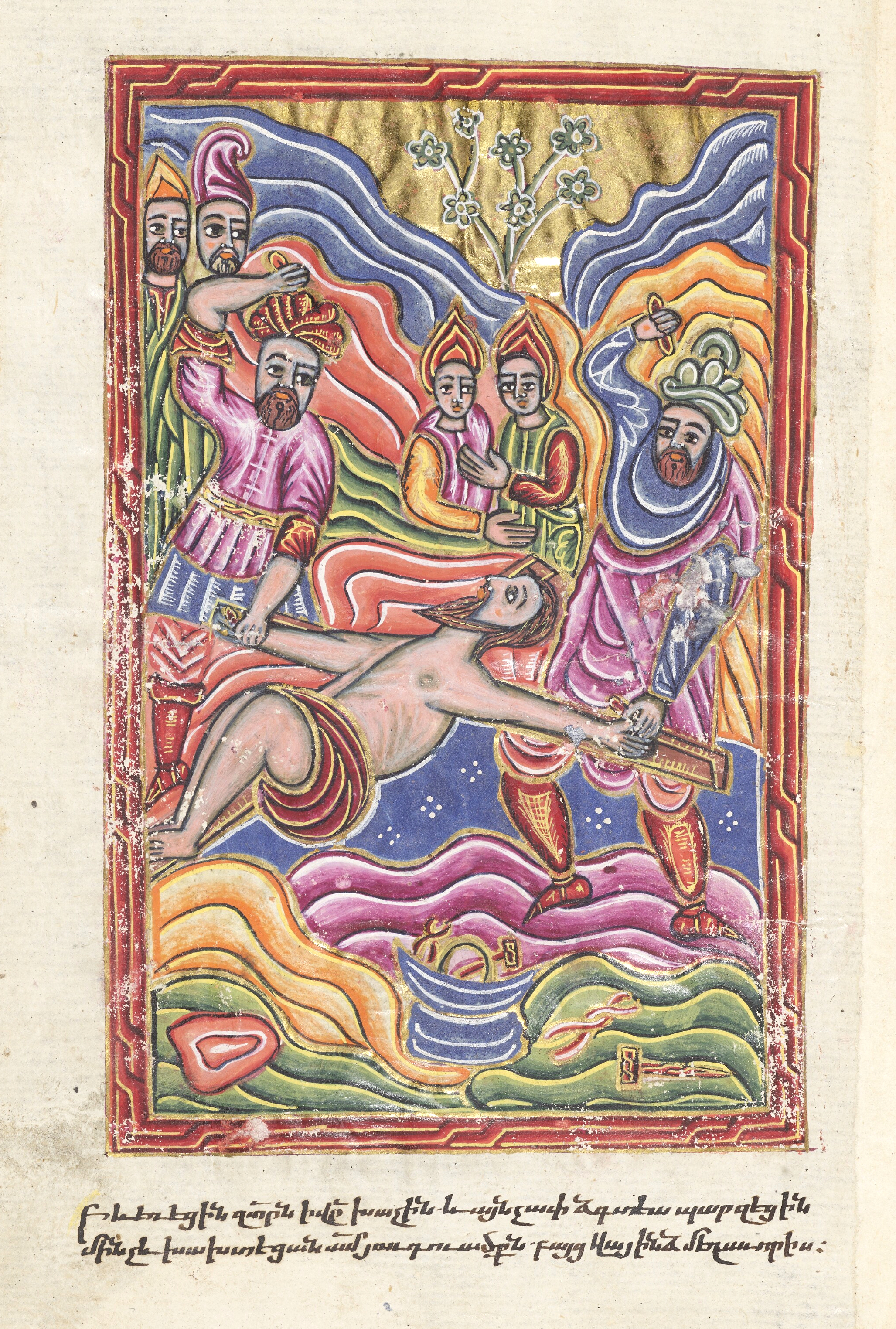
ART COMPILATION: “Crucifixion: Armenian Illuminated Manuscripts” by Levon Ounanian: This compilation brings together thirty-one Armenian miniatures of Christ’s passion. (Miniatures are painted illustrations in a manuscript, so called not because they’re small, though they usually are, but because artists often sketched them using a red lead pigment called minium.) According to the author, of the 31,000 Armenian manuscripts currently listed around the world, about 6,000 of them contain miniatures, not to mention the many more that contain non-narrative decoration.
Mesrop of Khizan (Armenian, active in Persia, ca. 1560–ca. 1652), The Nailing on the Cross, from an Armenian Gospel book, 1609. Oxford, Bodleian Library, MS. Arm. d.13, fol. 13v. Click to view the fully digitized manuscript.
+++
SONG: “Saare Paap” (सारे पाप) (All Sins), performed by James Bovas: In this video, James Bovas [previously] performs a Hindi version of a Malayam song about the Crucifixion. The Hindi lyrics and English translation were supplied to me by the Indian gospel media production company Sarah Creation.
सारे पाप और दाग ममटाकर, मुक्क्त देने के मलए मुक्क्त दाता ने बहाया, खून अपना क्रूस से खून के प्यासे भेडियों ने, आके घेरा यीशु को मारे कोिे टोकी कीले, धारे ननकली ज़ख्मों से मेरे मन तू याद कर ले, क्यों सहे दुुःख यीशु ने तेरा खानतर जान देकर, दी ररहाई यीशु ने श्राप सारे लेके मेरे, दे दी मुझको आमशषे यीशु के पावन लहू से, भाग्य मेरे खुल गए
To remove all the stains and sin, and to give salvation The Redeemer shed his blood on the cross Bloodthirsty wolves surrounded Jesus He was scourged, nailed, and a stream of blood issued forth from his wounds O my soul, never forget why Jesus suffered! He gave his life to set you free He took all my curses and gave me all the blessings By the holy blood of Jesus, my destiny changed forever
+++
ESSAY: “The Path from Death to Life” by Kurt Koch, Plough, March 30, 2024: A Catholic cardinal reflects on the dark side and the bright side of Holy Saturday. “As the day Jesus rested in the grave, Holy Saturday is the day of God’s concealment and silence in history,” Koch writes. “And yet, Holy Saturday also has a hopeful and joyful aspect. . . . [On this day] Jesus traveled to [Hades,] the place of greatest loneliness – a place completely bereft of any human relationships – and stirred the souls and limbs trapped by rigor mortis with the warming love of God. He transformed their grave into a place of new life.” This essay is anthologized in the revised and expanded edition of Bread and Wine: Readings for Lent and Easter (Plough, 2026).
There are hundreds of creative works I could feature on the topic of Christ’s wounds. Here are just a few of note.
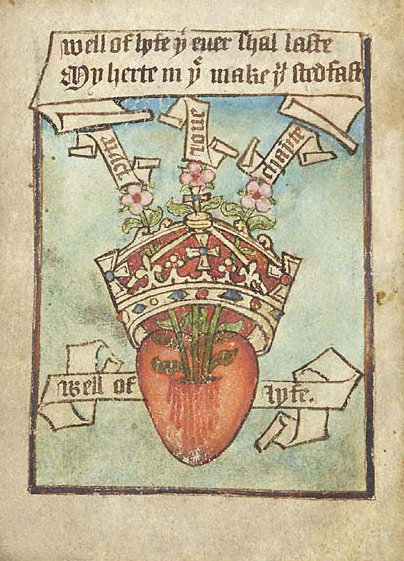
ARTICLE: “‘Your body is full of wounds’: references, social contexts and uses of the wounds of Christ in Late Medieval Europe” by Johanna Pollick, Emily Poore, Sophie Sexon, and Sara Stradal: In this three-part collaborative essay, I was most intrigued, in part because of its newness to me, by the first section, “The flowering wound: Christ’s heart in Princeton University, MS Taylor 17,” in which Dr. Johanna Pollick explores a small English illuminated devotional book, dating from around 1500, that portrays Christ’s wounds as wells. For help in interpreting these images, she turns to medieval literary traditions as well as to the Carthusian Miscellany.
Wounded Heart of Christ as the Well of Lyfe, England, ca. 1500. Princeton University Library, MS Taylor 17, fol. 10v.
Dr. Grace Hamman writes about MS Taylor 17’s extraordinary “well of lyfe” page in Jesus through Medieval Eyes (and for InterVarsity’s The Well), which is what brought me to this essay. The hand-colored image shows flowers—labeled “pyte” (pity), “loue” (love), and “charyte” (charity)—springing forth from the wounded heart of Jesus. The verse prayer at the top reads, “Well of lyfe that ever shall laste / My herte in thee make it stedfast.”
The same theme shows up in another late fifteenth-century English lyric in MS Arundel 286 at the British Library, which appears in modern compilations under the title “The Wounds, as Wells of Life” or “The Wells of Jesus’ Wounds”:
Ihesus woundes so wide
Ben welles of lif to the goode,
Namely the stronde of his syde
That ran ful breme on the rode.
Yif thee list to drinke
To fle fro the fendes of helle,
Bowe thu doun to the brinke
And mekely taste of the welle.
Jesus’s wounds so wide
Are wells of life to the good,
Namely the stream from his side
That ran fiercely on the rood.
If thou list to drink,
To flee from the fiends of hell,
Bow thou down to the brink
And meekly taste of the well.

Trans. Victoria Emily Jones
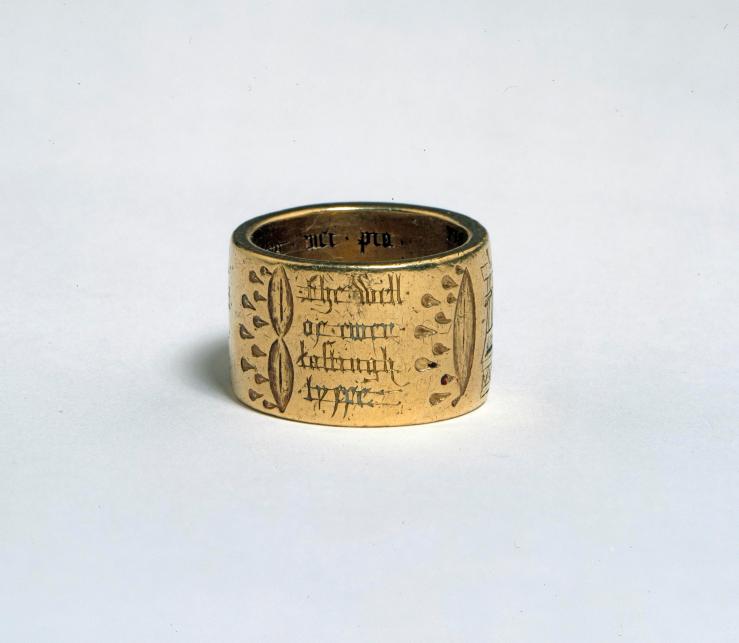
And in a late fifteenth-century gold ring, also from England, engraved with a Man of Sorrows image and hieroglyphs of Christ’s five wounds, labeled “The well of pitty, the well of merci, the well of confort, the well of gracy, the well of everlastingh lyffe”:
SONG: “Deep Were His Wounds” by William Johnson, 1953: This midcentury hymn is composed of three simple stanzas: The first half of each meditates on Jesus’s cruel death on the cross, whereas each second half (“But . . .”) celebrates the healing, freedom, and eternal life that death wrought.
>> Music by Leland B. Sateren, 1958: I like this tune, called MARLEE, but it’s difficult to sing congregationally. Here’s a soloist, Sarah Gulseth, singing it for her church’s 2011 Good Friday service, accompanied on organ by Luther Gulseth:
>> Music by Vito Aiuto, 2008: I was first introduced to “Deep Were His Wounds” through the Welcome Wagon’s debut album, Welcome to the Welcome Wagon, “a ramshackle singalong enterprise of a Presbyterian pastor (the Rev. Vito Aiuto) and his wife (Monique) wrestling out the influences of folk music, religion, popular culture, and church tradition.” Mood-wise, Aiuto’s tune wouldn’t work as well for Good Friday—even given the paradox of that day, it’s too bright, in my opinion, for that somber observance. But it’s great for throughout the year, especially for churches that favor a contemporary/folksy style of music.
+++
CANTATA CYCLE:“Membra Jesu Nostri” (The Limbs of Our Suffering Jesus) by Dieterich Buxtehude: Dieterich Buxtehude (ca. 1637–1707) was a Danish German organist and composer of the mid-Baroque period. For Good Friday 1680, he composed a cycle of seven concerto-aria cantatas. The texts of the aria sections are taken from the medieval Latin hymn “Salve mundi salutare” (Hail, the World’s Salvation) by the Cistercian abbot Arnulf of Leuven (ca. 1200–1250), whereas the concerto section texts are Old Testament quotations. The following video is a 2004 performance from Payerne, Switzerland; see the YouTube video description for further credits. The video includes English subtitles, but you can also read the lyrics (with translation) here.
The cycle begins by paying homage to Christ’s wounded feet (“Ad Pedes” = “To the Feet”), and then progresses upward to his knees, hands, side, breast, heart, and finally, face/head. Traditionally, Christ’s wounds are enumerated as five: a hole in each foot, a hole in each hand, and a hole through his side/heart (from the centurion’s spear). But Arnulf meditates on seven distinct body parts of Christ’s that were injured on Good Friday.
+++
ARTWORKS:
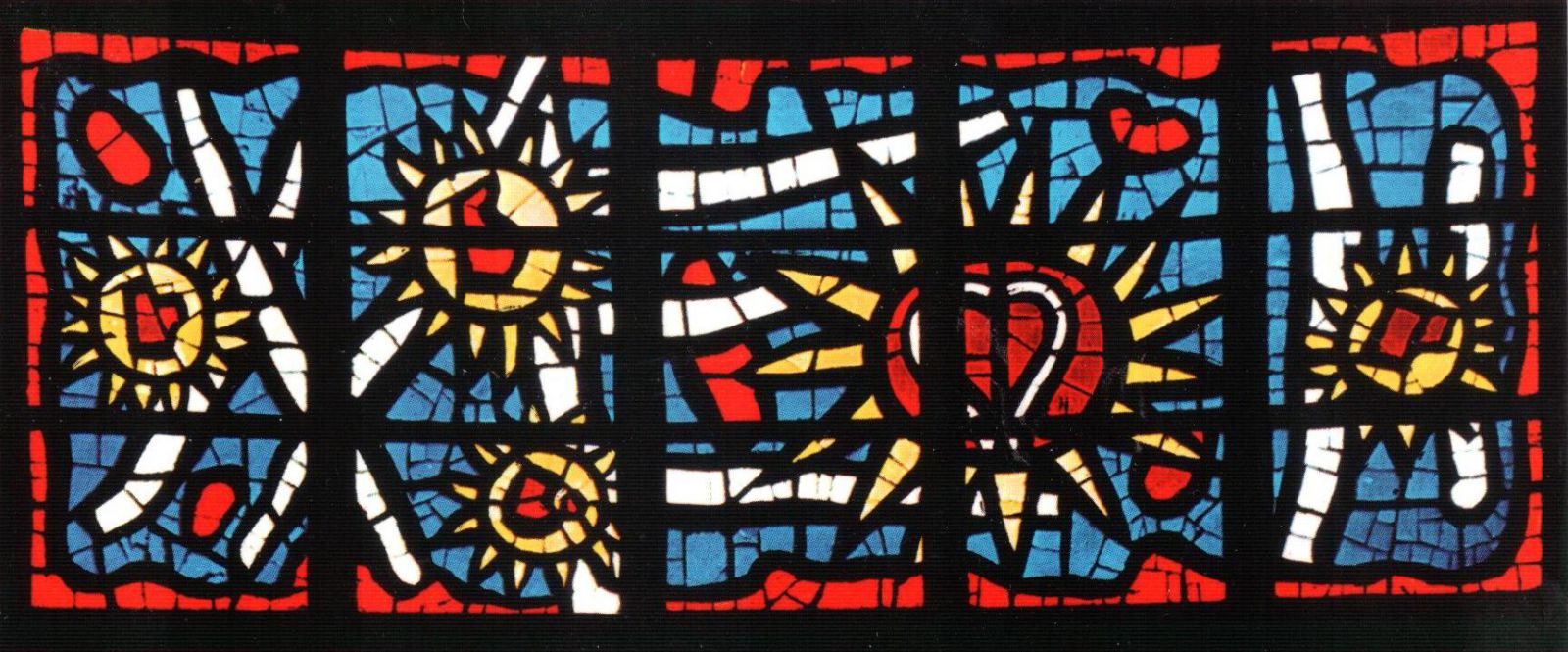
>> The Five Wounds of Christ by Fernand Léger | Commentary by Albert Hengelaar: This visual meditation is about the architecture and interior decoration of the Sacré-Coeur in Audincourt, France, a product of the Art Sacré movement, a Catholic art renaissance spearheaded by the French Dominican Order from 1919 to the 1950s. The centerpiece of the church, sited above the high altar, is a stained glass window depicting the five wounds of Christ shining like suns—one of seventeen windows the artist Fernand Léger designed to encircle the space in a strip.
Fernand Léger (French, 1881–1955), The Five Wounds of Christ, 1950–52. Stained glass window, Église du Sacré-Cœur (Church of the Sacred Heart), Audincourt, France.
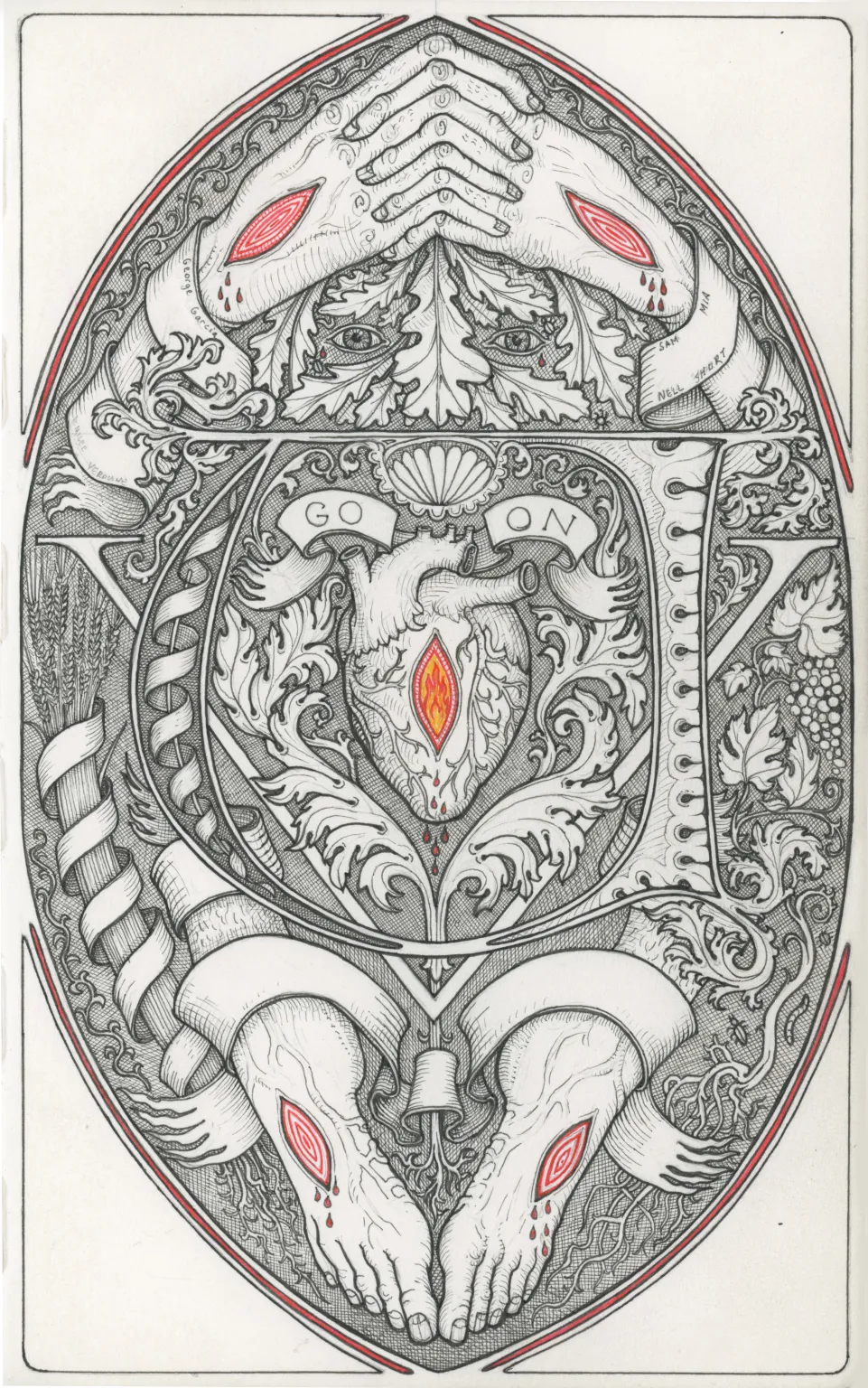
>> The Great Wound, aka Go On, Wounded Healer by Jack Baumgartner | Commentary by Sam Kee: In this Substack post, Sam Kee unpacks a drawing by his friend Jack Baumgartner [previously], which shows that “there is life in His [Christ’s] wounds, and He pours His life into our wounds.” The drawing started with the roman numeral V, which stands for the five wounds of Christ. The circumference is one large wound that encompasses five smaller wounds, eye-like, each one weeping blood. Other symbols that Kee analyzes in the drawing are wheat, grapes, fig leaves, seashell, fire, heart, and womb. “Go on” is a refrain that Baumgartner uses often in his work, a mantra for persevering in the faith, for continuing on the path.
Jack Baumgartner (American, 1976–), The Great Wound, 2024. Drawing from the series The Diary of a Tree Standing on Its Head.
Kee concludes with an original ekphrastic poem.
You can purchase an archival reproduction of The Great Wound from Baumgartner’s online shop. I encourage you to explore his website as well. I admire how his work is somehow both mystical and earthy, rooted.
Rejoice greatly, O daughter Zion! Shout aloud, O daughter Jerusalem! See, your king comes to you; triumphant and victorious is he, humble and riding on a donkey, on a colt, the foal of a donkey.
—Zechariah 9:9
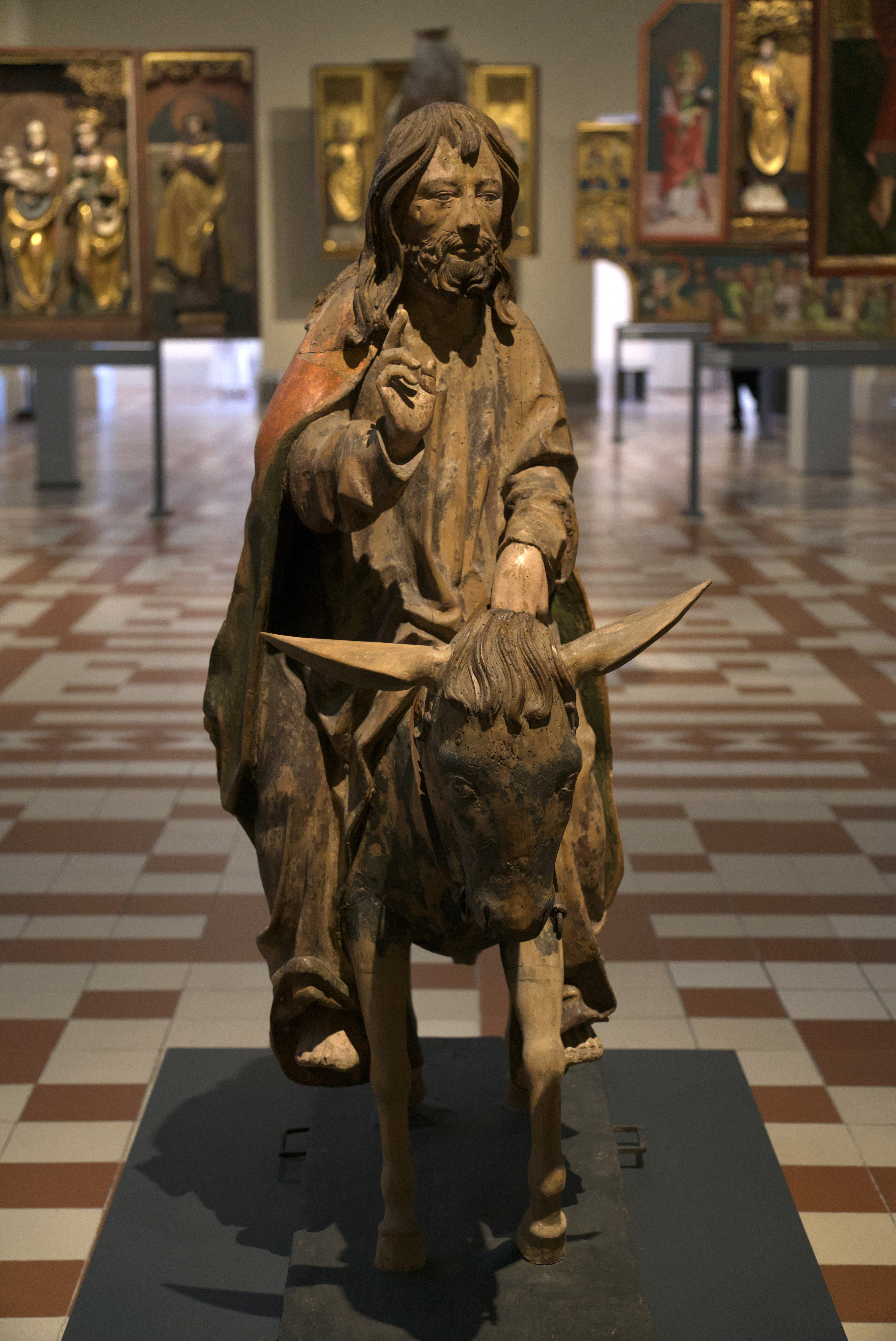
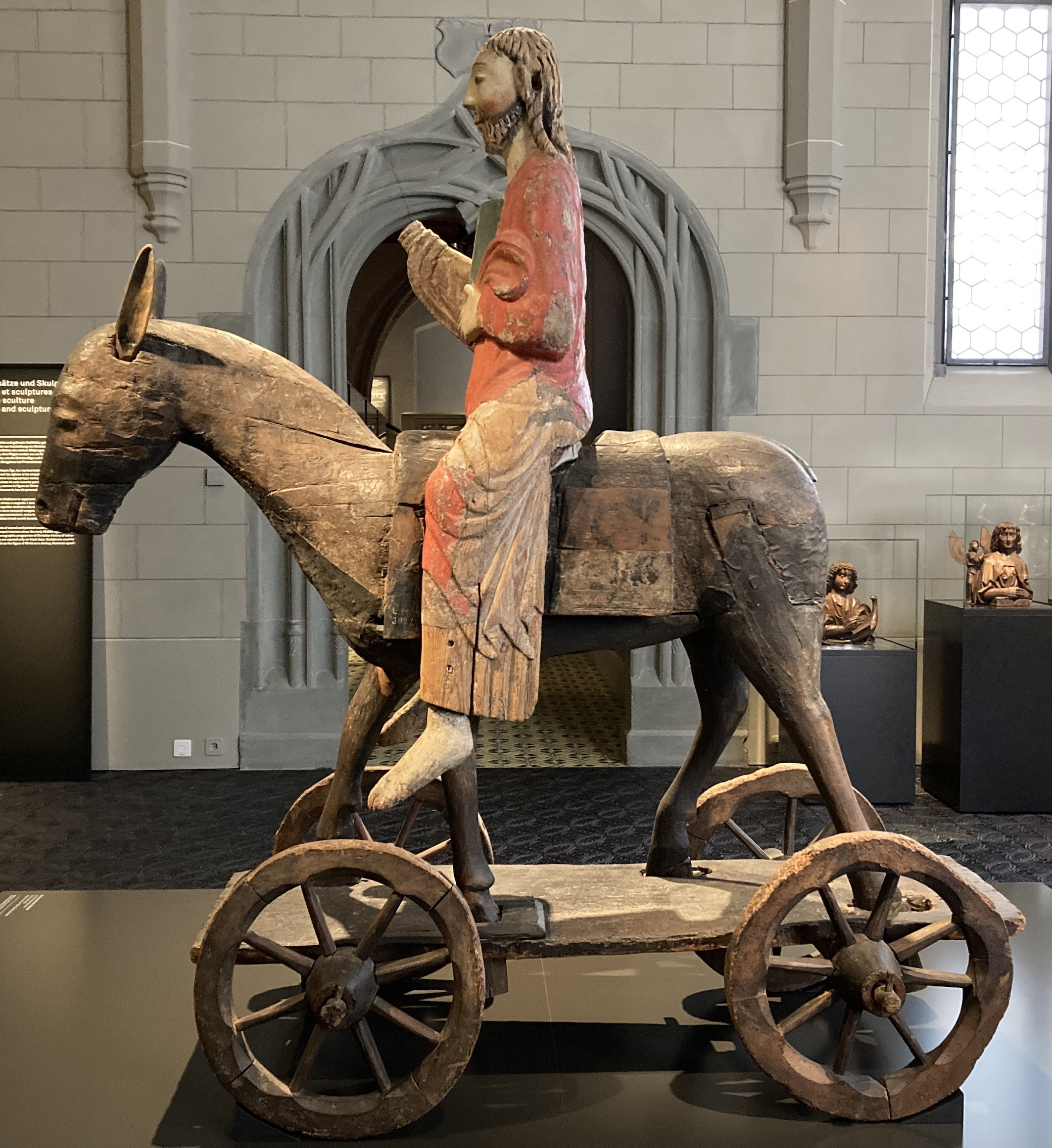
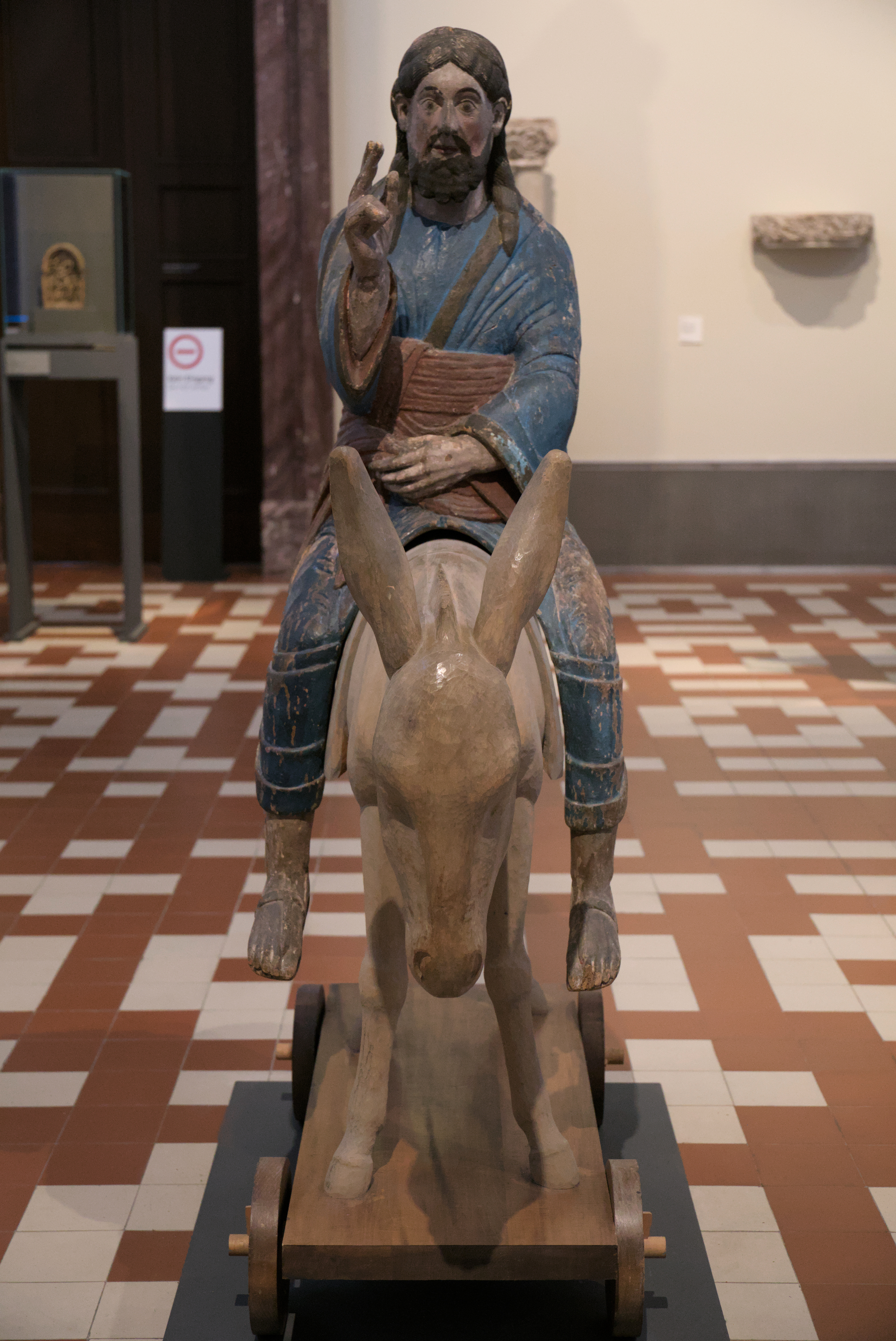
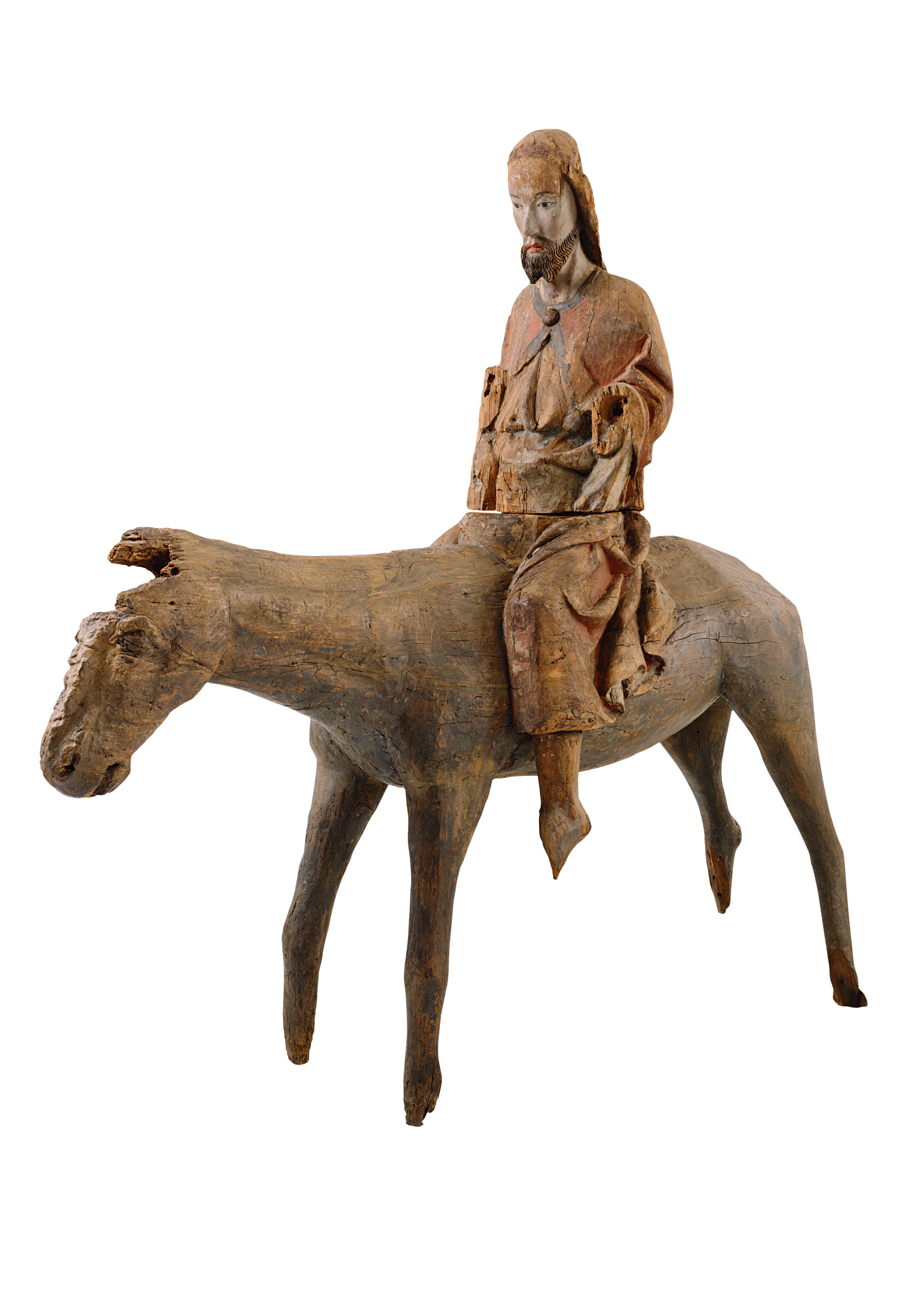
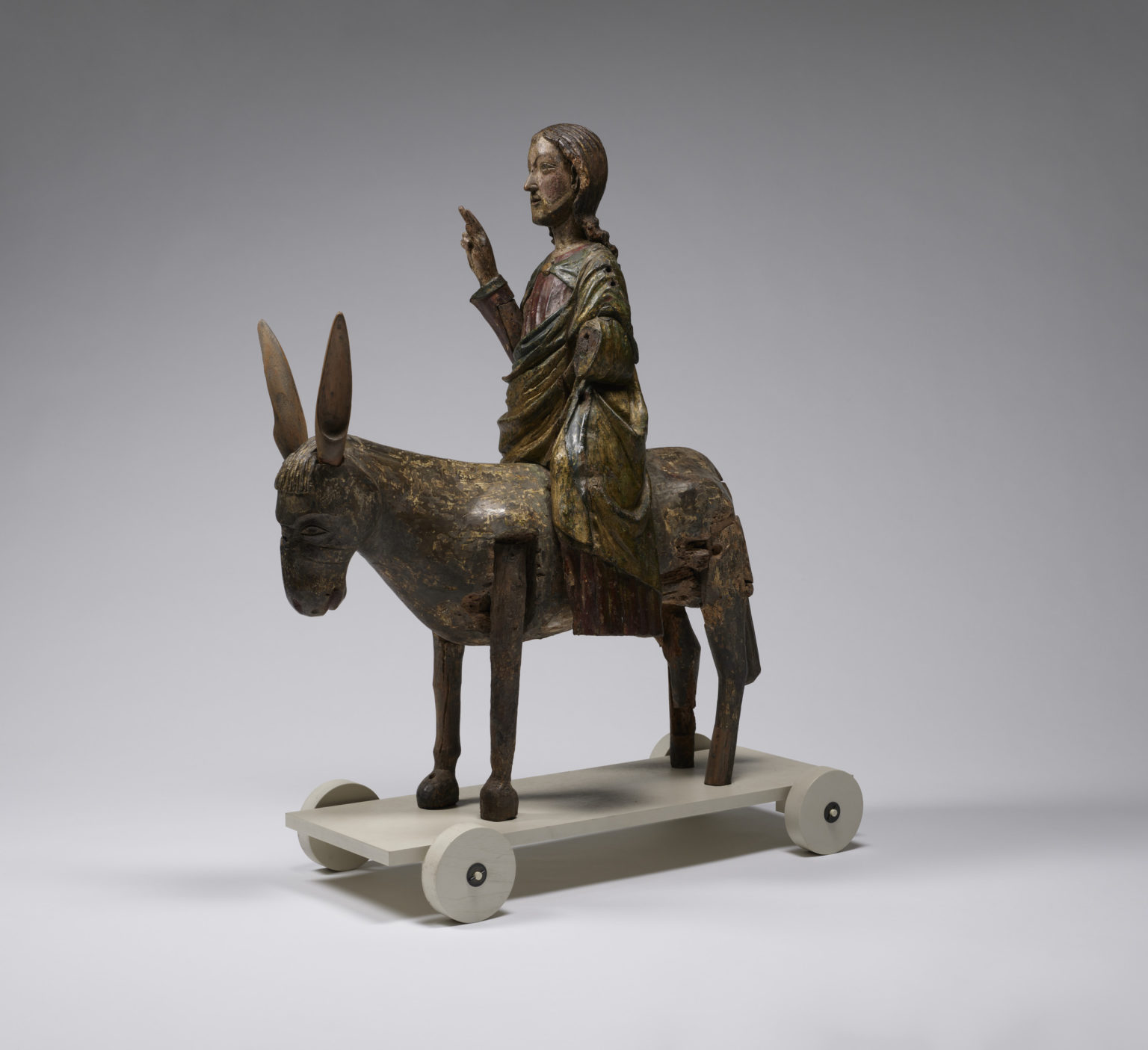
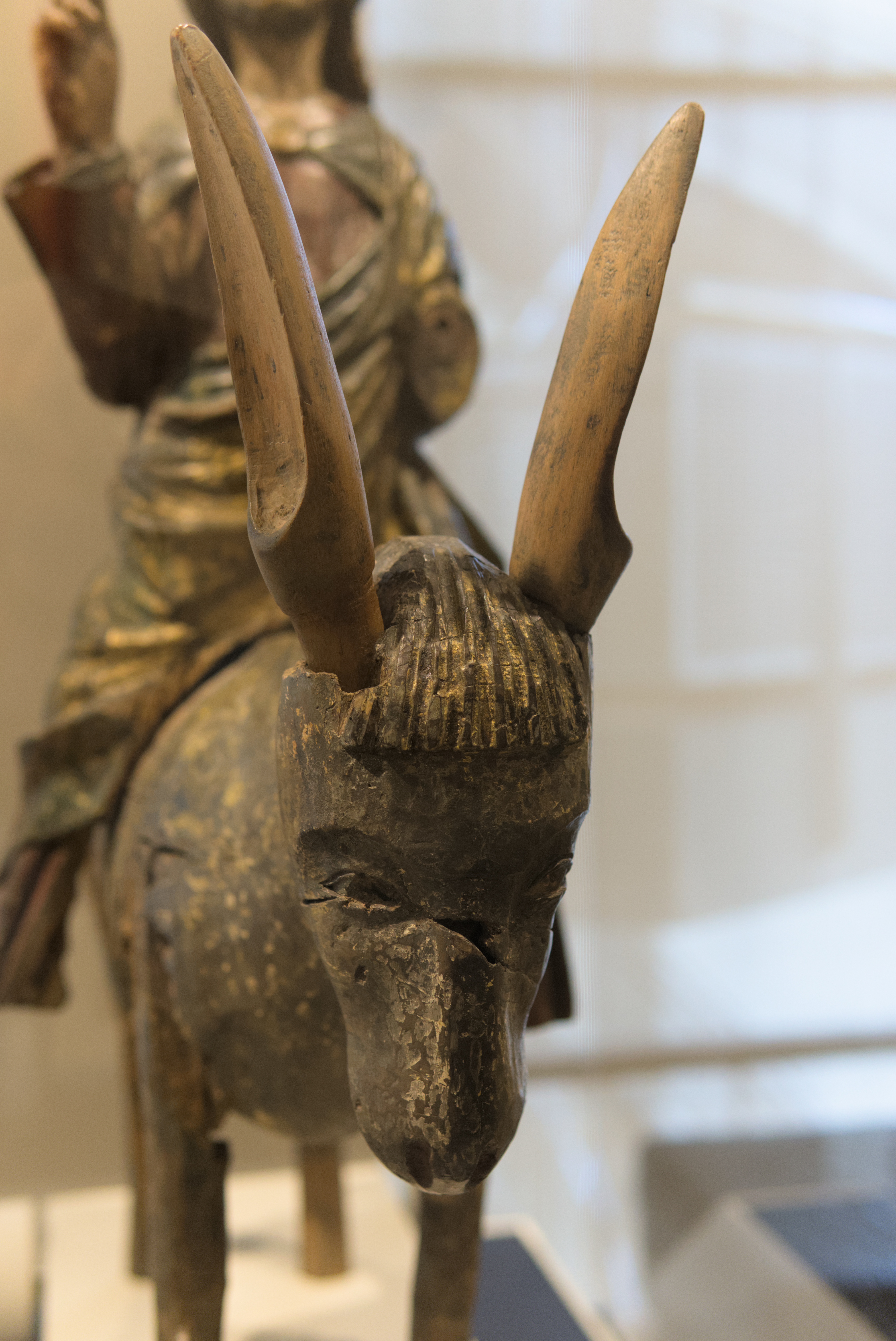
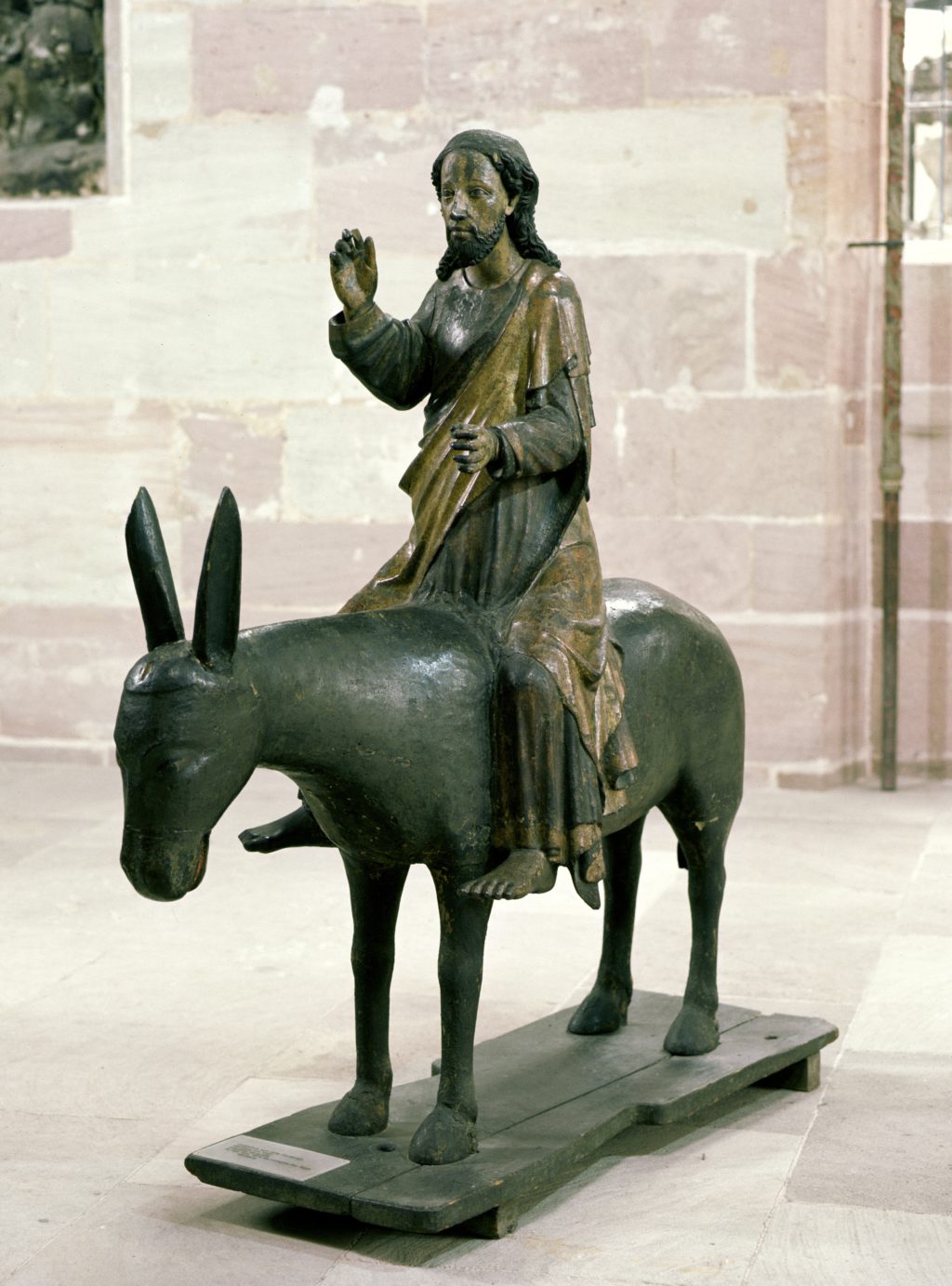
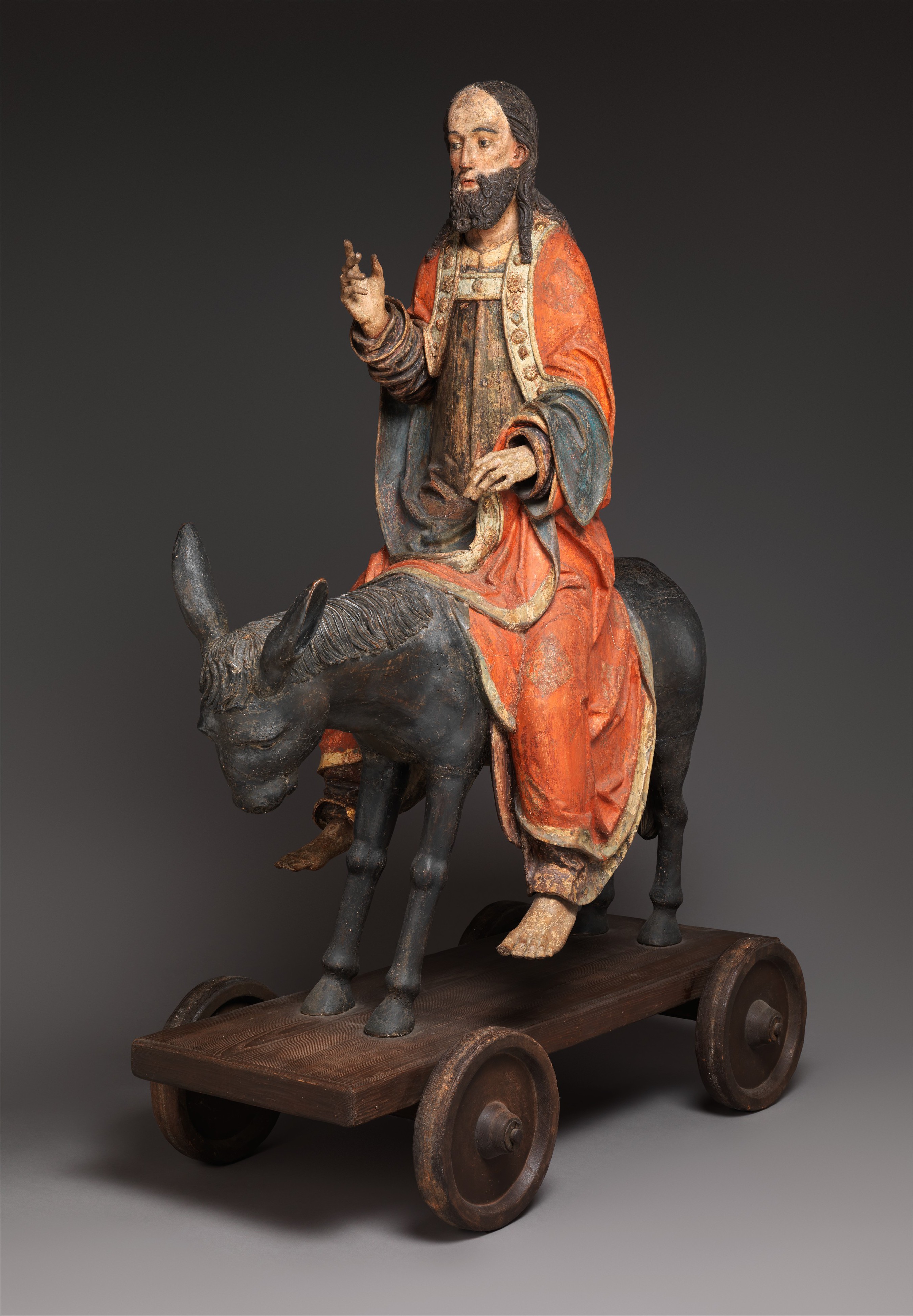
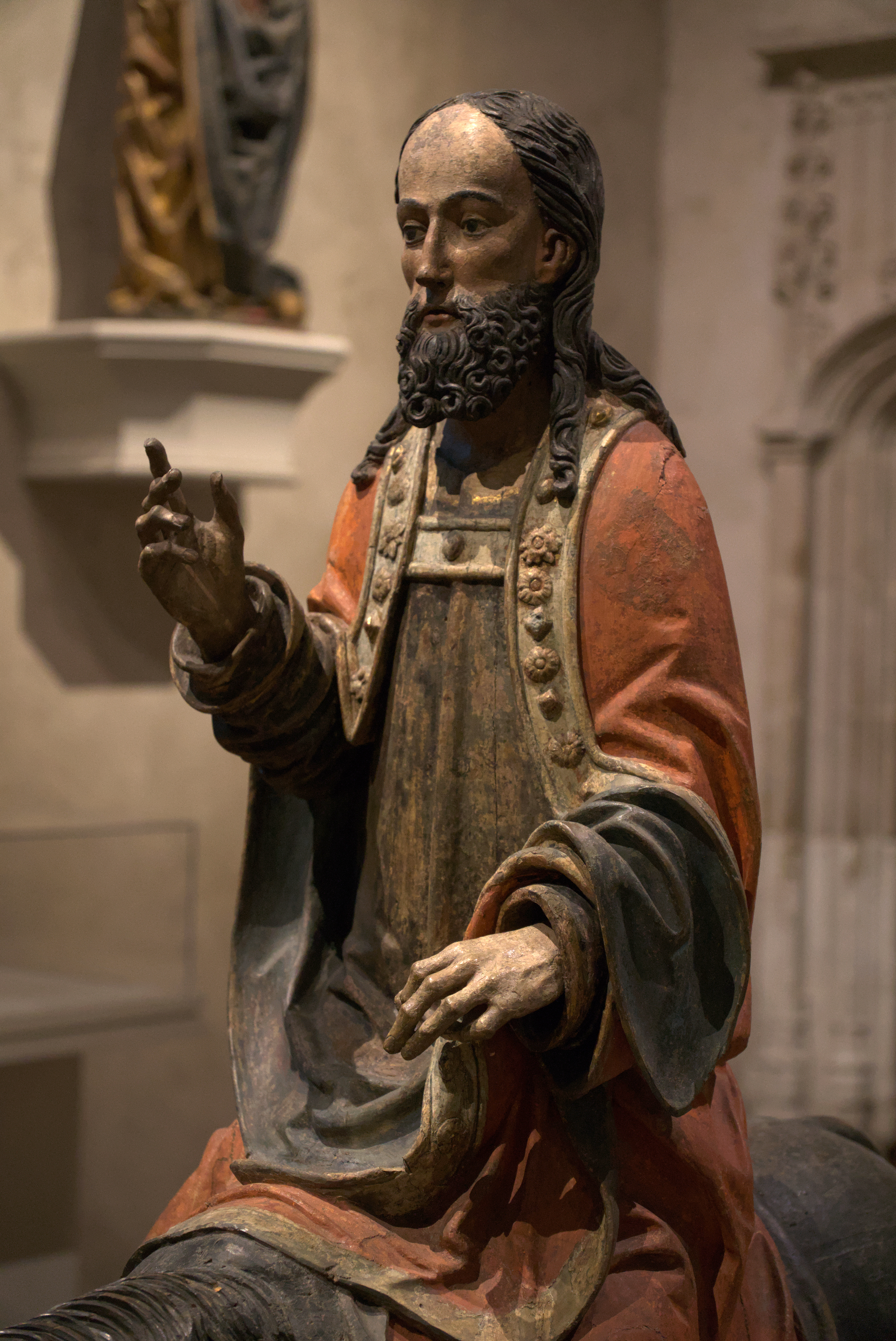
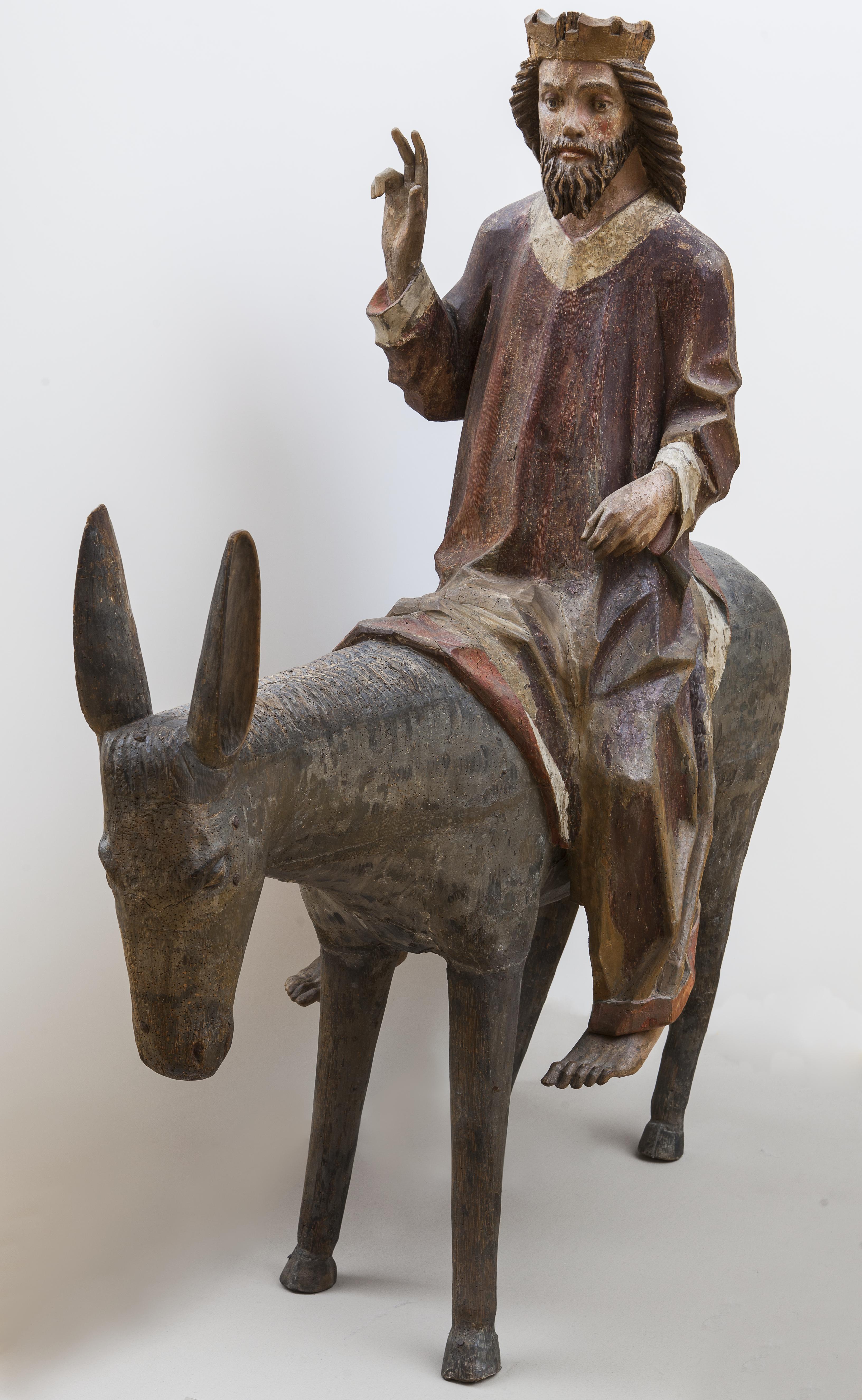
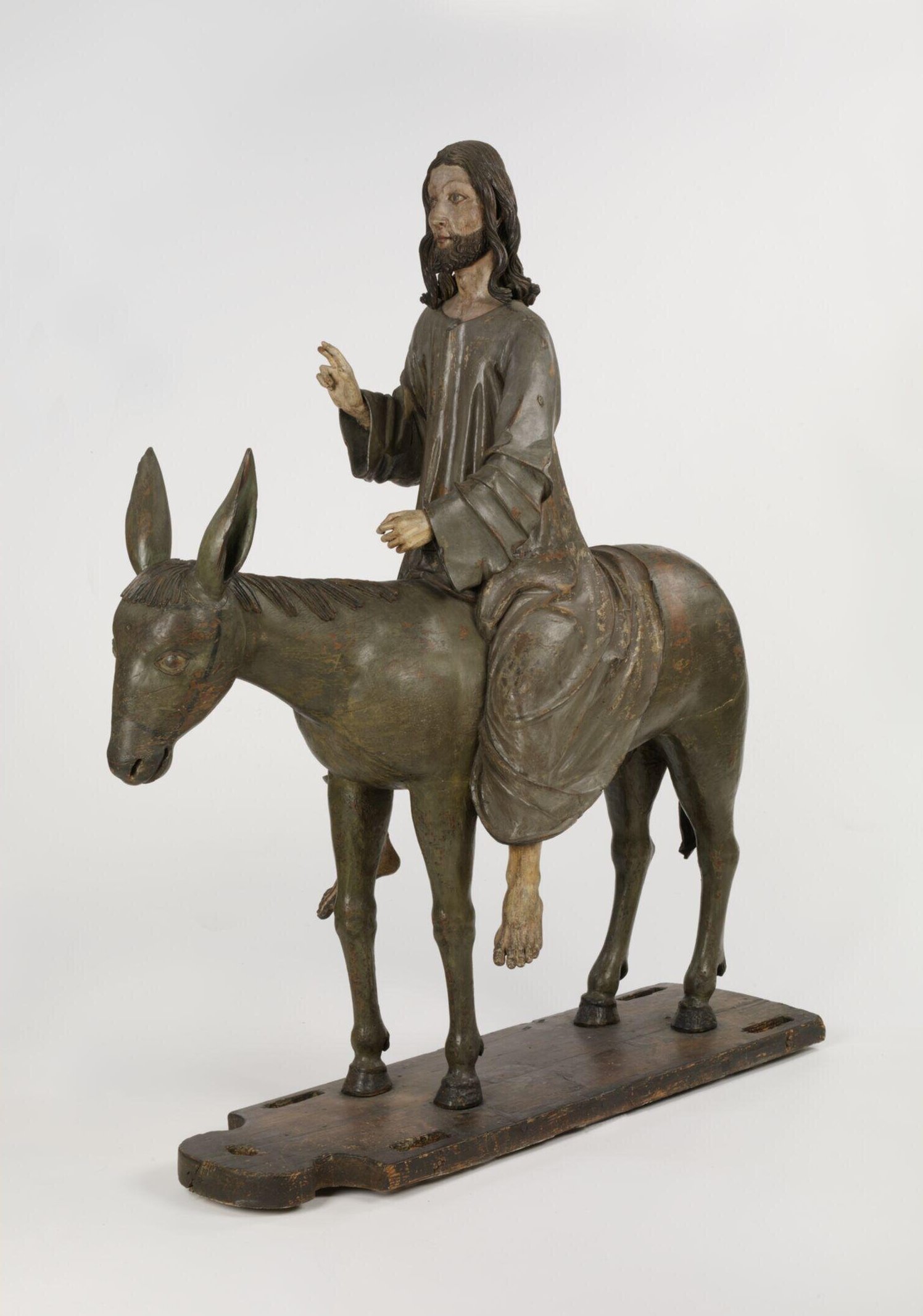
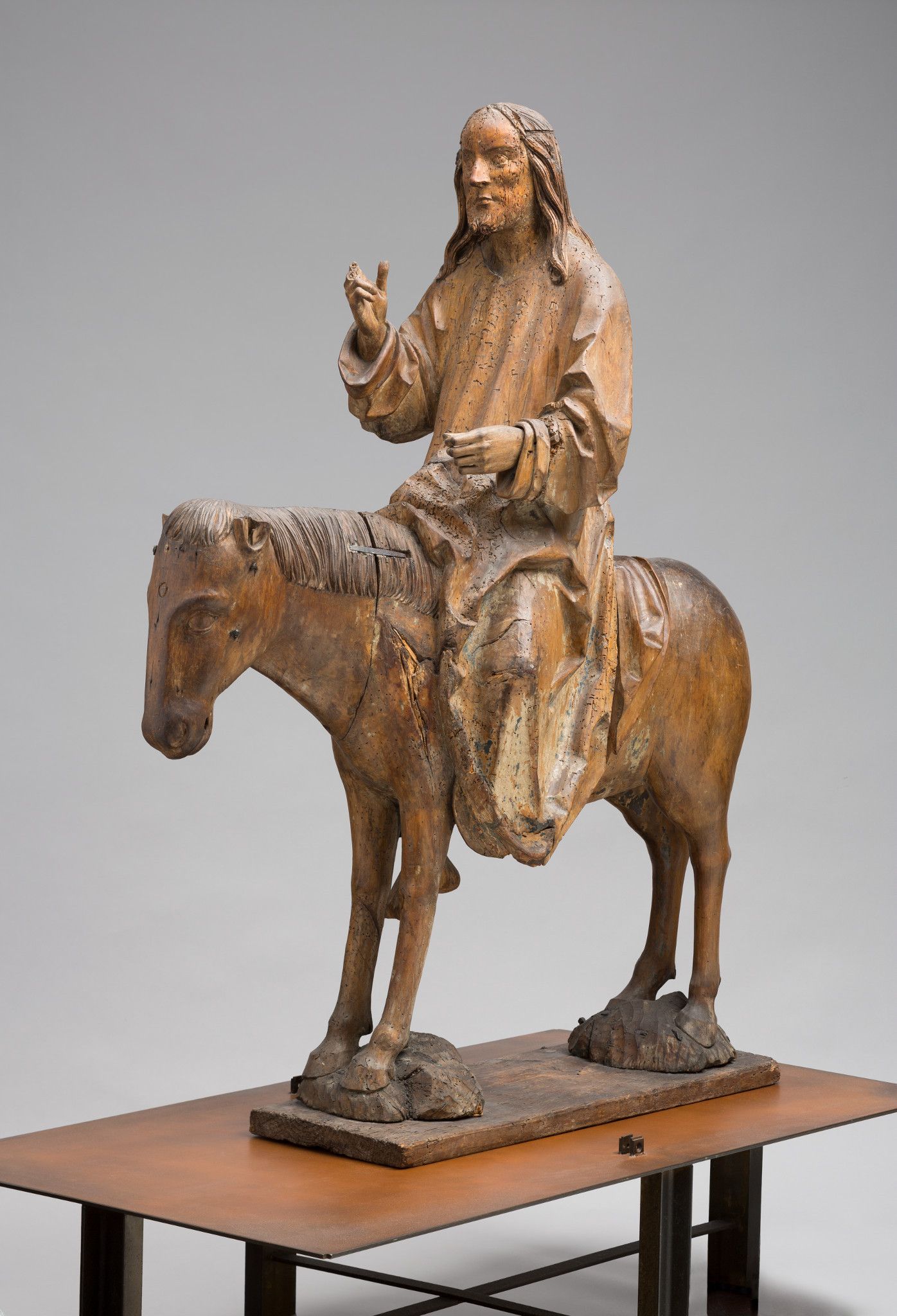
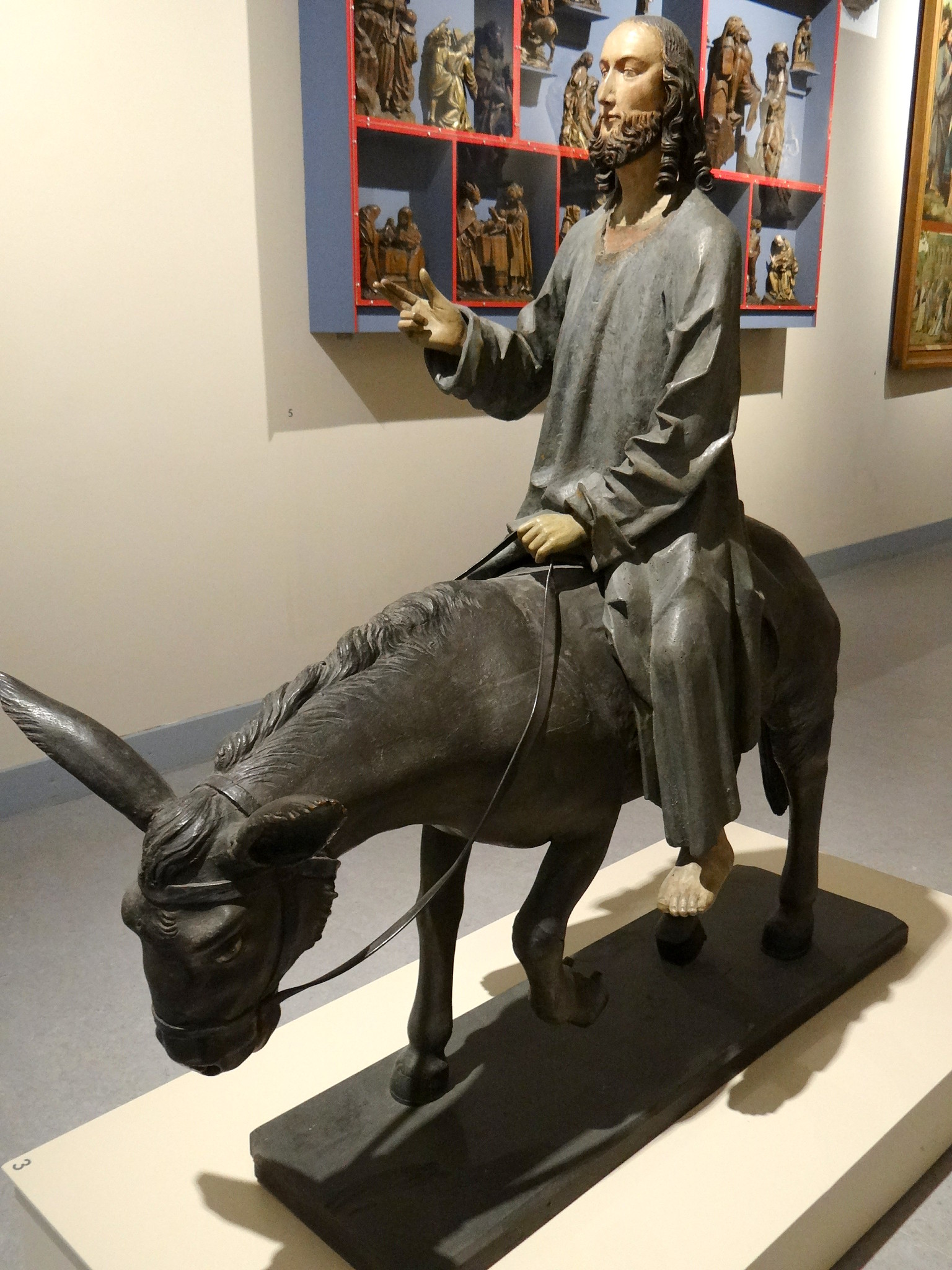
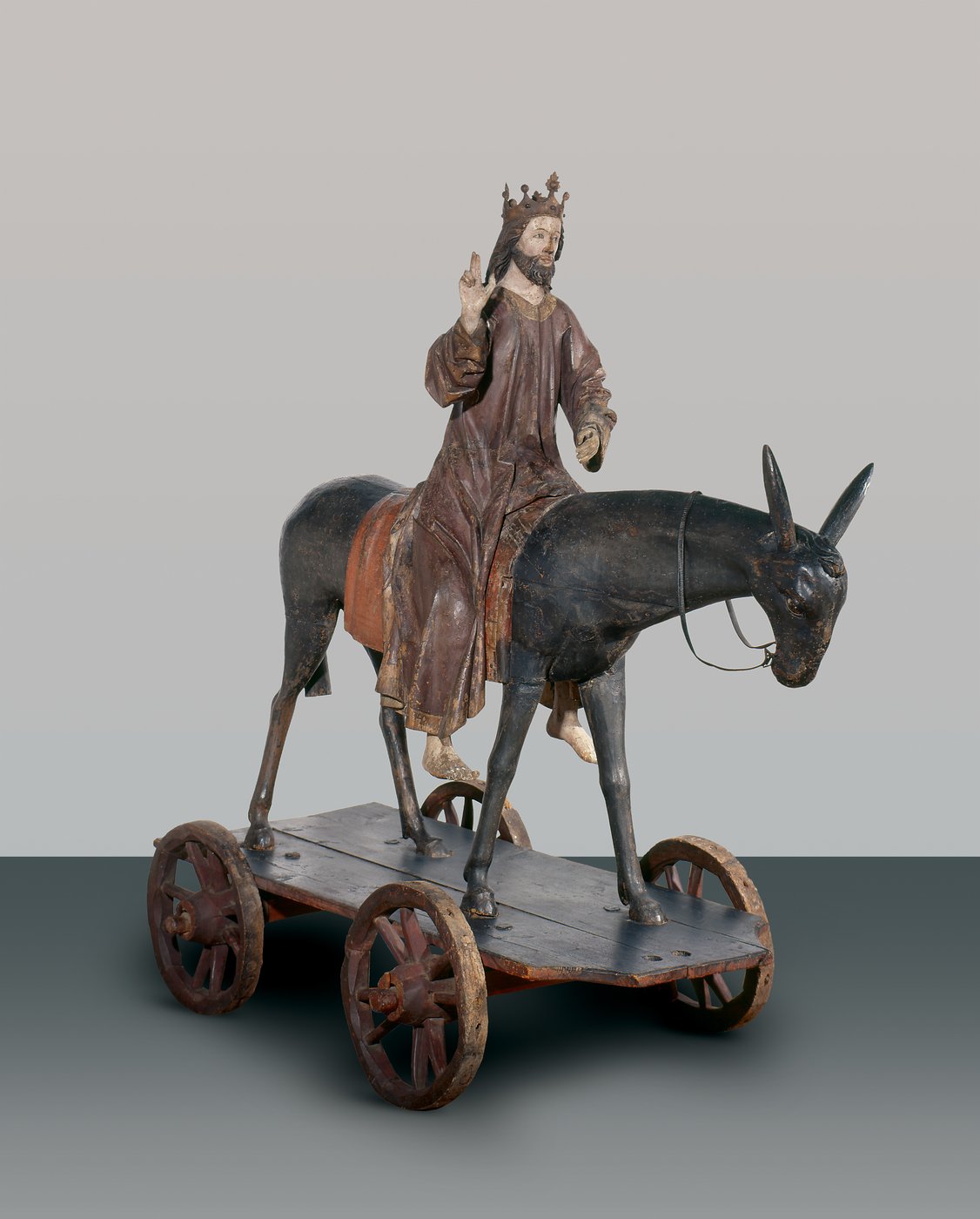
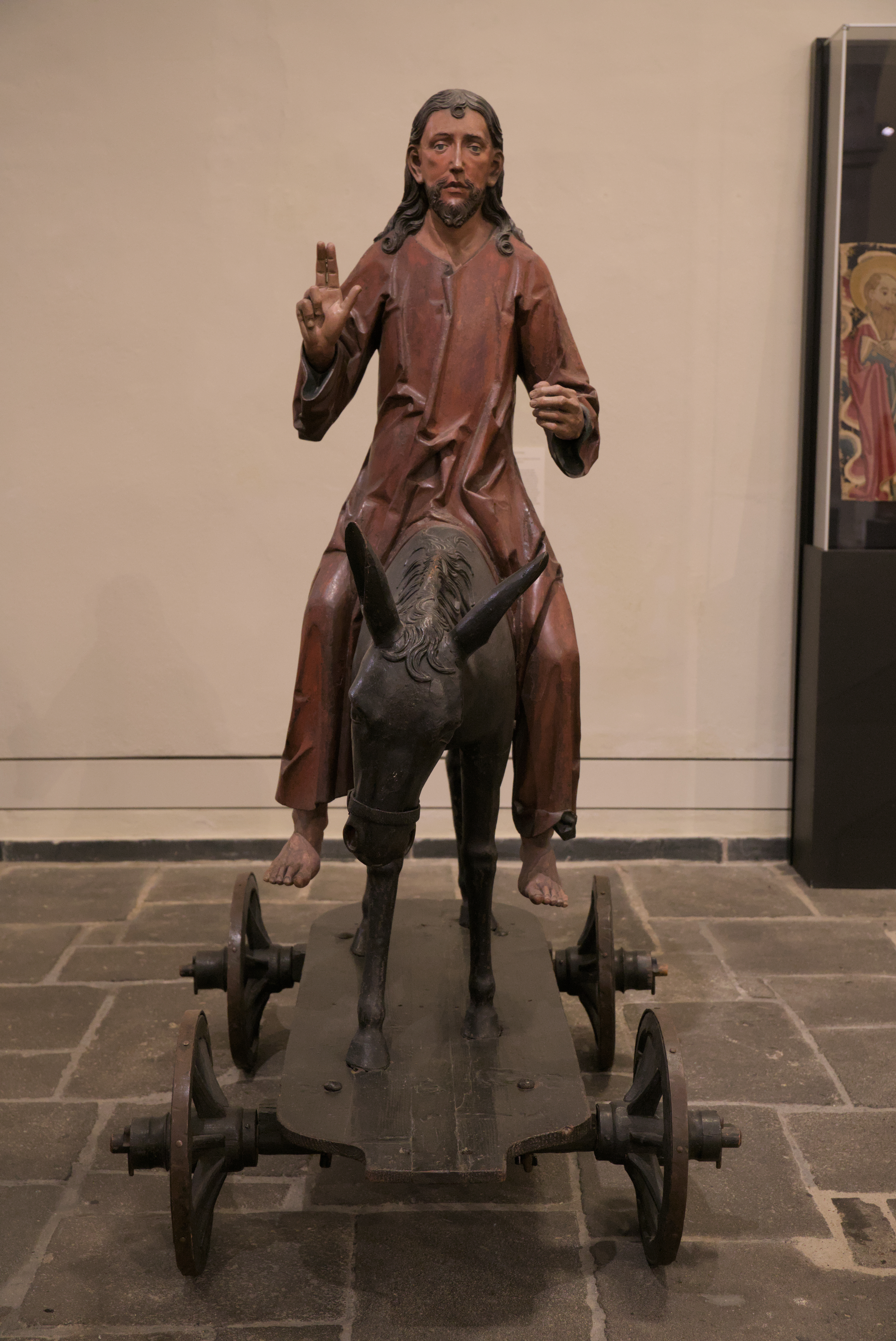
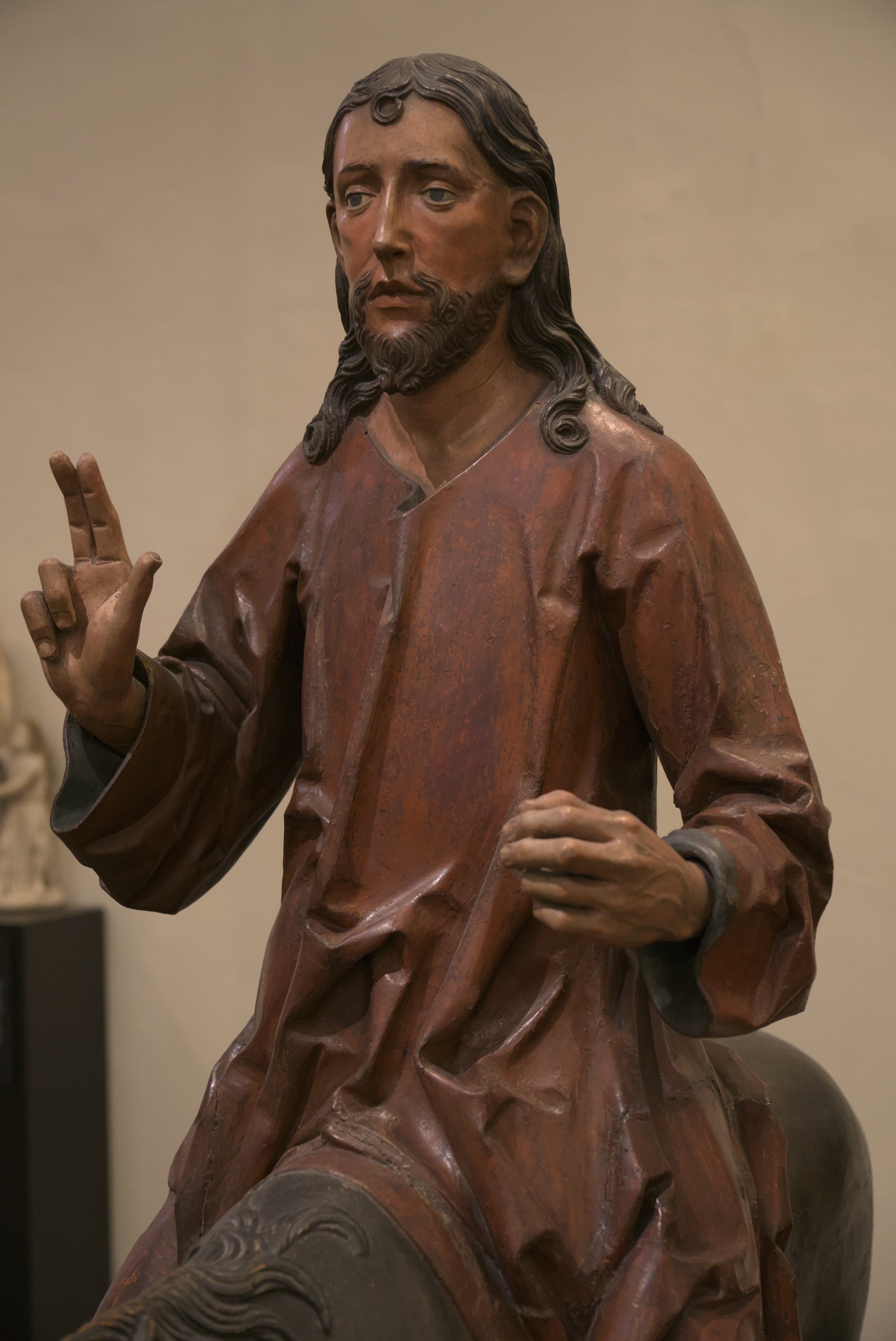
In German-speaking lands from the tenth to sixteenth centuries, many Christian communities would celebrate Palm Sunday by processing through the streets with a painted wood sculpture of Christ astride a donkey, called a Palmesel (pronounced PALM-ay-sul), German for “palm donkey.” Mounted on a wheeled cart and often escorted by children, the sculpture would move around town through crowds who had gathered from nearby villages and hamlets for the inauguration of Holy Week, the period of the Christian liturgical year that commemorates Jesus’s last days. The procession included the singing of hymns and the strewing of palm branches and outer garments along the Christ figure’s path, in imitation of the crowds that greeted Jesus when he entered Jerusalem for his (unbeknown to them) final Passover.
Christus auf dem Palmesel (Christ on the Palm Donkey), Franconia, ca. 1520–30. Polychrome linden wood, 148.5 × 166 × 54 cm. Skulpturensammlung, Bode-Museum, Berlin, Inv. 7710. Photo: Victoria Emily Jones. [object record]Palmesel illustration by the German chronicler Dominikus Debler, ca. 1800
Generally, the Protestant Reformers, with their emphasis on sola scriptura (scripture alone), didn’t like religious pageantry or images, as they believed they promoted idolatry. So when the Reformation swept through Germany in the 1500s, it destroyed many Palmesels. Another wave of destruction hit in the late eighteenth century when, influenced by the Enlightenment, temporary episcopal and synodal decrees in some localities banned “theatrical representations” of liturgical events, including Palmesel processions. Nevertheless, some 175 late medieval and Renaissance Palmesels, either partial or whole, have survived to the present day. The vast majority are in museum collections, no longer in active use.
A Frankenschau broadcast news segment from 2024 (see video below) reports on the Palmesel tradition, opening and closing with a Palmesel from ca. 1470 Nuremberg that’s on display year-round in the Rieterkirche St. Marien und Christophorus (Rieter Church of St. Mary and St. Christopher) in Kalbensteinberg, Germany—surprisingly, not a Catholic church but an Evangelical Lutheran one! The segment also looks at the Miltenberger Palmesel at the Stiftsmuseum Aschaffenburg and the Palmesel at the Met Cloisters in New York City. Press the CC button on the video player for closed captioning in English.
Palmesel sizes range from half-size (more intimate, and more navigable by children) to life-size. Christ is usually dressed in a simple tunic and mantle, and his feet hang bare. Sometimes he wears a crown. Typically his right hand is raised in blessing, while his left hand holds the reins—though in the first example below, it clutches a book.
Steiner Palmesel, ca. 1055. Polychrome linden wood, 176.5 × 135 cm. Landesmuseum (Swiss National Museum), Zurich, Inv. LM 362. Photo: Linda Safran. [object record]Christus auf dem Palmesel, ca. 1200. Poplar wood with renewed finish, 138 × 55.5 × 52 cm. Skulpturensammlung, Bode-Museum, Berlin, Inv. 2766. Photo: Victoria Emily Jones. [object record]Christus auf dem Palmesel, ca. 1310. Church of Saints Peter and Paul, Petersthal, Germany.Christus auf dem Palmesel, Upper Rhine, 1350–60. Polychrome poplar wood, 159.5 × 52.5 × 16.1 cm. Augustinermuseum, Freiburg, Germany, Inv. 10079. Photo: Hans-Peter Vieser.Palmesel, Franconia, ca. 1350–1400. Wood with paint and gilding, 96 × 34 × 82 cm. Walters Art Museum, Baltimore.Photo: Victoria Emily JonesChristus auf dem Palmesel, Franconia, ca. 1370–80. Polychrome alderwood, willow, 172.5 × 61.5 × 169 cm. Germanisches Nationalmuseum, Nuremberg, Inv. PI.O.153.Christus auf dem Palmesel, Poltringen, Germany, ca. 1380. Hohenzollerisches Landesmuseum, Hechingen, Germany.Christus auf dem Palmesel, Swabia, late 14th century. Polychrome linden wood. Landesmuseum Württemberg, Stuttgart, Germany.Christus auf dem Palmesel, Ulm, Germany, 15th century (statue), 18th century (wagon). Zeppelin Museum Friedrichshafen, Germany.Palmesel, Franconia, 15th century. Polychrome linden wood, 156.2 × 60.3 × 138.4 cm. Cloisters Collection, Metropolitan Museum of Art, New York.Photo: Victoria Emily JonesPalmesel, Austria, ca. 1450. Polychrome wood, 154.9 × 144.1 × 50.2 cm. Chazen Museum of Art, University of Wisconsin, Madison, Inv. 1977.2.Christ on an Ass, ca. 1480. Linden wood and pine, painted and gilded, 147.4 × 47.8 × 133.5 cm. Victoria and Albert Museum, London.Christofel Langeisen, Palmesel (Christ Entering Jerusalem on the Back of a Donkey), 1480–90. Polychrome linden wood, 143.5 × 40.6 × 110.5 cm. Detroit Institute of Arts, Detroit, Michigan.Christus auf dem Palmesel, southern Germany, perhaps Swabia, late 15th century. Polychrome linden wood, 122 × 100 × 44 cm. Musée de Cluny, Paris. Photo: Marie-Lan Nguyen.Christus auf dem Palmesel, southern Germany (circle of Erasmus Grasser), ca. 1500. Suermondt-Ludwig Museum, Aachen, Germany. Photo: Rex Harris.Christus auf dem Palmesel, Lake Constance, ca. 1500. Polychrome linden wood, height 190 cm. Historisches Museum, Basel, Switzerland, Inv. 1898.275.Christus auf dem Palmesel, Nuremberg, ca. 1505. Polychrome linden wood, 82 × 31.5 × 88 cm. Germanisches Nationalmuseum, Nuremberg, Germany.Christus auf dem Palmesel, Cologne, ca. 1520. Polychrome linden wood, softwood. Museum Schnütgen, Cologne, Germany, Inv. A 124. Photo: Victoria Emily Jones.Photo: Victoria Emily Jones
Palmesels were living art objects engaged by people of all classes. “Unlike many museum objects from the Middle Ages,” writes a Walters Art Museum curator, “the Palmesel was accessible not just to the wealthy elite and the clergy but to all levels of society. It moved among the laypeople so that they could participate in an immersive experience of a significant event from Christ’s life in their own time and place.”
The following edited video shows a 2018 Palmesel procession, led by choirboys, wending its way through an Alpine landscape from Thaur to Rum. It’s the last of its kind in the Austrian state of Tyrol. The sculpture is modern.
In honor of Women’s History Month, here are a few creative works by and/or (in the case of Kinloch’s “Some Women” poems) about women.
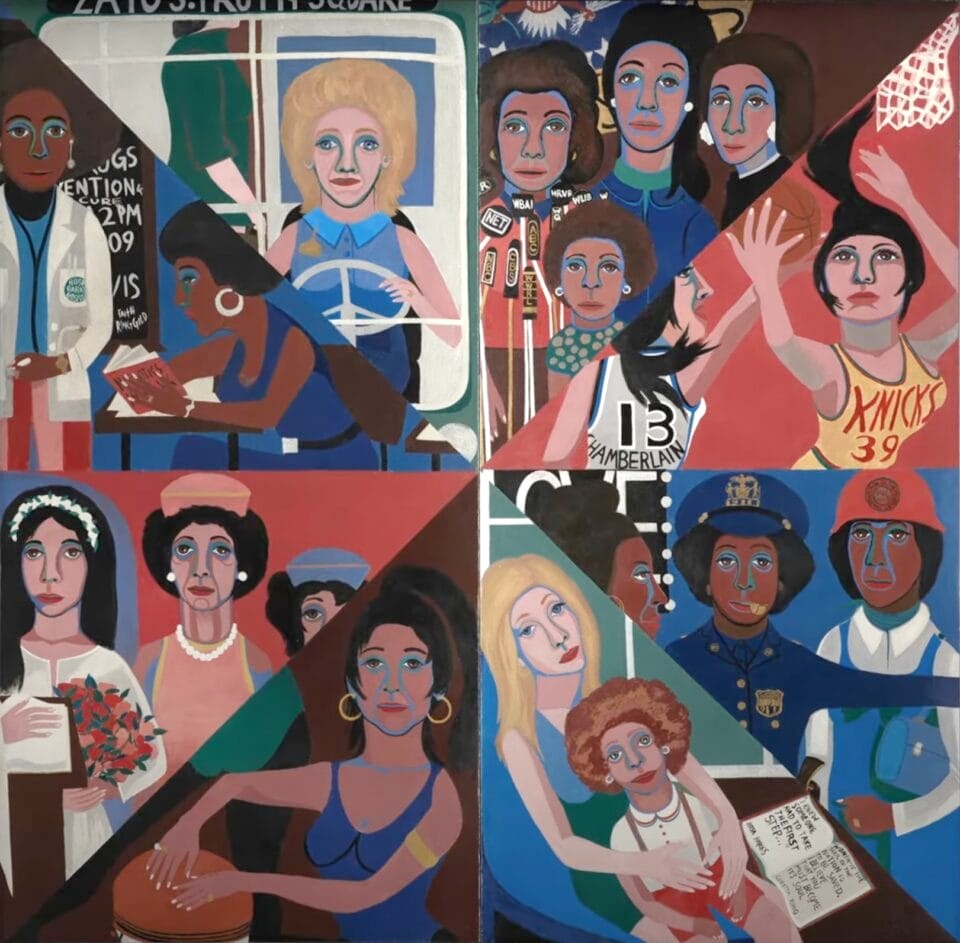
ARTICLE: “A New Documentary Traces How a Faith Ringgold Mural at Rikers Island Helped Women Break Free,”Colossal: Directed by Catherine Gund, the documentary Paint Me a Road Out of Here (2025) tells the story of Faith Ringgold’s For the Women’s House (1971), a mural commissioned by the New York State Council on the Arts for the Correctional Institution for Women on Rikers Island. When Ringgold asked the incarcerated women what they wanted her to paint, they said, “I want to see a road leading out of here.”
Faith Ringgold (American, 1930–2024), For the Women’s House, 1971. Oil on canvas, 96 × 96 in. Commissioned by the New York State Council on the Arts for the Correctional Institution for Women on Rikers Island; on loan to Brooklyn Museum.
Organized into eight triangular sections, the painting portrays women of various races (Black, white, Latina, Asian) in professional roles “that have not traditionally been theirs,” Ringgold says: doctor, bus driver, US president, basketball player, police officer, construction worker, drummer, priest. At the bottom, a white mother reads to her multiracial daughter words by Rosa Parks and Coretta Scott King, and in another scene, a bride is given away by her mother.
When Rikers Island transitioned to housing men in 1988, the women were moved to the Rose M. Singer Center, and the prison staff painted over Ringgold’s mural. Gund’s documentary chronicles the fight—by Ringgold and other artists, activists, politicians, and correctional officers—to have the mural restored, relocated, and preserved, but more deeply, the film is a “parable for a world without mass incarceration.”
Paint Me a Road Out of Here is not currently available on VOD, but here’s a list of public screenings: https://paintmearoadfilm.com/watch.
+++
LECTURE: “Re-Valuing Women Hymn Writers” by Dr. Lyn Loewi, St. John’s Church, Lafayette Square, Washington, DC, June 11, 2023: “Women have always been making sacred music, but they are underrepresented in our hymnals. Their contribution lies in the stories they tell from the margins, away from the narratives of dominant power. In this talk, Lyn Loewi will look at the poetry women have brought to our understanding of the Sacred. From the 9th-century Greek Orthodox nun Kassia to newly written hymns, women have expanded our language for God, remembered the stories of biblical women, and spoken for other discounted voices in society.”
Loewi, who has a doctorate in musical arts, has been an organist and church choir director for over forty years. She is currently the director of music ministries at Christ Church Capitol Hill, as well as the president of the Women’s Sacred Music Project. In this talk she discusses:
The Hymn of Kassiani
“The first one ever, oh, ever to know” by Linda Wilberger Egan
“Healing River of the Spirit” by Ruth Duck (text)
“Down by the Riverside” by Sister Rosetta Tharpe (arrangement)
“Balulalow” by Elizabeth Poston (music)
“Beyond the hopes and dreams of all creation” by Fr. Robert Easton (text) and Ghislaine Reece-Trapp (music)
The last few minutes of the recording, starting at 38:33, comprise audience Q&A; don’t miss the last question (41:29), where a woman expresses exasperation with all the “he/him” pronouns used for God in hymns—Loewi’s response is helpful.
+++
HYMNS:
When I was responsible for choosing songs for my church’s worship services, I made sure that every week I was on, at least one of the five songs we sang was written by a woman. Here are just three female-authored hymns that were part of my rotation—one (likely) from the tenth century, one from the eighteenth century, and one from the twenty-first century.
>> “Bí Thusa Mo Shúile” (Be Thou My Vision), Anon., trans. Mary Elizabeth Byrne, vers. Eleanor Hull: I can’t believe I’ve never featured this hymn on the blog before; it’s one of my all-time favorites. Its precise origins are not known. Most scholars date the original Early Middle Irish text, a lorica (prayer recited for protection), to the late tenth or eleventh century. It was translated into English in 1905 by Mary Elizabeth Byrne and then versified in 1912 by Eleanor Hull—meaning she adapted Byrne’s translation to fit a meter so that the words could be more easily sung. The music is a traditional Irish folk tune.
In this video, the hymn is sung in modern Irish by Madelyn Monaghan, a New York City–based soprano specializing in Irish traditional (Sean-nós) singing. It was for her friend’s wedding Mass. And wow, is her voice gorgeous!
>> “Dear Refuge of My Weary Soul” by Anne Steele (text) and Kevin Twit (music): Anne Steele was a Baptist hymn writer, poet, and essayist from Georgian England who published under the pen name Theodosia. Coming from a well-off family, she was educated and chose to remain single (she rejected several marriage proposals) so that she could focus on her writing, which she considered a calling. Rev. Kevin Twit, a Reformed University Fellowship pastor in Nashville and the founder of Indelible Grace, says Steele was the first significant female Christian hymn writer and the first, of either sex, to write lament hymns; over half her oeuvre, he says, deals with suffering and doubt.
Twit has set several of Steele’s hymns to music, most famously “Dear Refuge of My Weary Soul,” which Steele wrote in 1760. The solo performance above is from the January 24, 2021, worship service at Second Presbyterian Church in Memphis, Tennessee. The names of the singer and accompanist are not given. You can also listen to the song on Indelible Grace’s 2008 album.
>> “We Will Feast in the House of Zion” by Sandra McCracken and Joshua Moore:Sandra McCracken is one of today’s leading Christian singer-songwriters, and this hymn, which she wrote with Josh Moore, is the most popular of her congregational songs. From her 2015 album Psalms, it paints a vision of the eschaton, of the new heavens and the new earth, marked by restoration, shalom, and celebration. One thing I noticed as a church music leader is how many hymns and other worship songs use first-person singular pronouns (I/me/my) and emphasize one’s personal relationship with God; those are fine and even necessary, as the book of Psalms models, but I always made sure, when making a song list, to balance them with songs that use first-personal plural (us/we/our) and that convey a more communal picture of the Christian life and of the gospel, which is at least but also much more than what Jesus did for me. This is perhaps my favorite hymn about heaven, a place of safety and rest, yes, but also where all of creation is redeemed, made new; where everyone and everything flourishes in harmony under the benevolent reign of Christ.
“We Will Feast” works well during Communion (a ritual that anticipates the marriage supper of the Lamb) or as a closer, as it sends worshippers out with a benediction, a good word—a promise of the restorative beauty to come.
+++
VIDEO: “Poetry Unbound: A Conversation with David Kinloch and Pádraig Ó Tuama,” Washington National Cathedral, April 26, 2021: The On Being Project in partnership with Washington National Cathedral presents Pádraig Ó Tuama in conversation with the Scottish poet David Kinloch, part of a series of interviews with contemporary poets whose work demonstrates an artistic and literary engagement with biblical narratives and characters. They primarily discuss Kinloch’s extensive “Some Women” sequence of poems from his collection In Search of Dustie-Fute (Carcanet, 2017), voiced by women of the Bible (or, in the case of the first, Jewish folklore): Lilith, Cain’s wife, Adah and Zillah, Sarah, Lot’s wife, Rebekah, Zipporah, Deborah, Rahab, the Levite’s concubine, Ruth, Bathsheba, the daughters of Job, King David’s concubines, Hannah, Martha, the Virgin Mary, Mary Magdalene, and the Jewish women followers of Jesus responding to the apostle Paul’s teachings.
(The conversation starts at 7:55.)
Kinloch reads three poems from “Some Women”: “First Letter of the Hebrew Women to St Paul” (15:36), “Ruth” (23:49), and “Cain’s Wife” (29:58). He also reads two additional poems from the same volume, from the sequence “Joseph’s Dreams”: “St Joseph’s Dream” (40:44) and “Another Dream” (1:08:53).
This conversation impelled to check out In Search of Dustie-Fute from the library. I like the “Some Women” sequence overall—Kinloch’s creative engagement with the stories of these women, some very little known (e.g., I had to look up “Adah” and “Zillah”!) or little thought about (like the unnamed victims of sexual abuse)—though I will warn you that it contains some profanity and crude sexual language. In the Q&A that starts at 49:09, one of the questions is about the role of shock and humor in his poetry. (Kinloch says if his poems offend, they fail.) Other questions are about the biblical literacy that he does or does not presuppose, his editing process, a character from the Bible that he wants to write about but hasn’t yet, and why he, a man, feels justified in writing from the perspective of women.
Kinloch is an agnostic, so his relationship with biblical texts is different from that of one who is devout. But the Bible is not the exclusive domain of believers; Kinloch can just as well help us inhabit these stories and can derive questions or insights from them. I really appreciated hearing from him. Here’s what he had to say on the vernacular of everyday human experience:
It seems to me that there’s such distance—in terms of time, in terms of culture—between us in the twenty-first century and the people of those [ancient Near Eastern] communities. You need to find common ground so that some kind of dialogue can open up, so that you can shrink that distance. And therefore, the emphasis in all of these poems, really, is on the humanity of the people. I’m not writing sermons, I’m not writing homilies; I’m writing little dramatic monologues, mostly, and trying to make these people as believable, as real, as possible in the present moment of reading about them. My hope, I suppose, is that if people have enjoyed the poems, then maybe they might go back to those stories in the Bible. And it’s at that point that there will be an encounter with the divine, with the extraordinary. I don’t really feel that I have access to those moments of extraordinariness. All the extraordinariness is in the Bible, and I can only offer an avenue of approach to that.
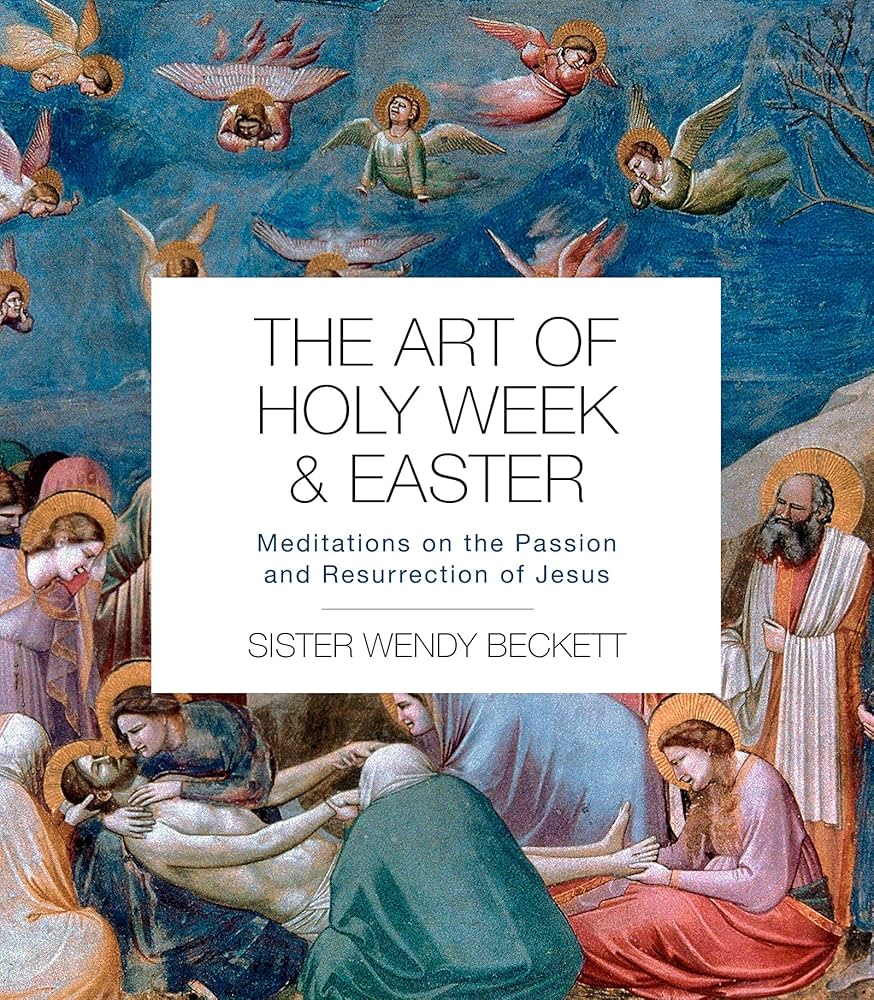
BOOK: The Art of Holy Week and Easter: Meditations on the Passion and Resurrection of Jesus by Sister Wendy Beckett (2021): Sister Wendy Beckett, a British Catholic nun and art enthusiast who died in 2018, is the one who first got me interested in art history. We watched clips from her BBC series Sister Wendy’s Story of Painting in my studio art class in high school, and I was so drawn to the way she looked at art and talked about it. Enthusiastic, warm, inquisitive, spiritually sensitive and theologically astute, and interested not just in the technical qualities of a work but also in its content—though I know I lack the same flair, my own voice and approach when it comes to art are indebted to hers.
So I was delighted to see that SPCK (and IVP in North America) has published two church calendar–based art devotionals by Sister Wendy: one for Lent, and one for Holy Week and Easter. I was disappointed with The Art of Lent: It has an admirable diversity of art selections, but Sister Wendy’s reflections are short and basic, and most don’t shine in the way I’ve come to expect from her; there were only two standouts for me. I also found it thematically confusing (for example, a section on “Confidence”?), unfocused, and redundant (especially in the “Silence” and “Contemplation” sections). I will grant that Lent is a more difficult season to structure for a project like this than Advent is, as I found the one year I published a daily Lent series; it can mean many things to many people.
Sister Wendy’s The Art of Holy Week and Easter, on the other hand, I did enjoy and recommend, even though I wish it had the same variety as the Lent book. (There’s only one modern/contemporary painting.) I care for only about half the featured artworks—two favorites are below—but even for the ones I was disinclined toward, her commentary helped me appreciate them.
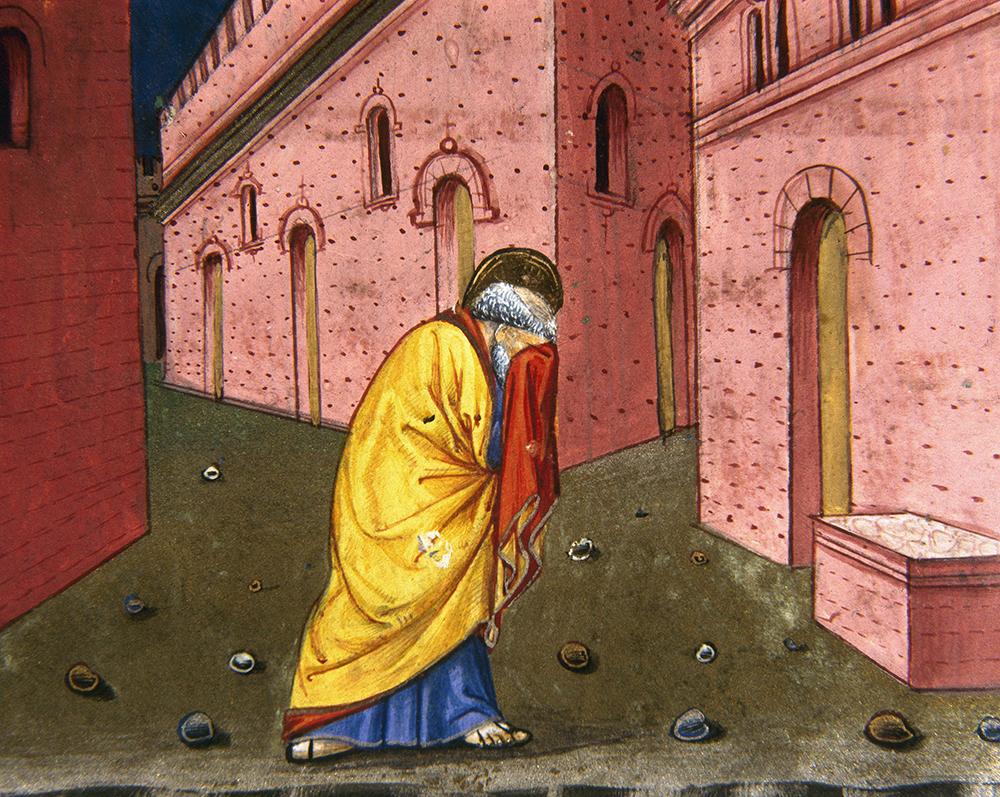
Cristoforo de Predis (Italian, 1440–1486), “Saint Peter realizing he has thrice betrayed Jesus,” from the Leggendario Sforza-Savoia, 1476. Codice Varia 124, Biblioteca Reale (Royal Library), Turin, Italy.
About a medieval manuscript illumination of Peter weeping by Cristoforo de Predis, Sister Wendy writes:
This magical little picture presents an unforgettable image of grief. It is that most painful kind of grief, lamenting of our own folly. Here we see Peter with his shamed face covered, stumbling blindly forward from one closed door to the next. There are ways out behind him, but Peter is too lost in misery to look for them. This claustrophobic despair, this helpless anguish, this incapacitating sense of shame: these are the result of a sudden overturn of our own self-image.
Peter had honestly seen himself as one who loved and followed Jesus, priding himself, moreover, on how true his loyalty was in comparison with that of others. ‘Even if all should betray you, I will never betray you’ – it was a boast, but he had meant it. Now he sees, piercingly, that he is fraudulent. He has been unmasked to himself, he has lost his self-worth.
The crucial question is: What next? Will he hide his face forever, destroyed by self-pity? Will he lose all heart, perhaps even kill himself, as Judas did? But while Judas felt only remorse, Peter feels contrition, a healing sorrow that will lead to repentance and a change of heart. Now that he knows his true weakness, he will cling to Jesus as never before. He will cling in desperate need and not in false strength, and will in the end become truly Peter, the ‘rock’, on which the Church, likewise dependent on Christ, will be built. (26)
El Greco (Greek Spanish, 1541–1614), Christ Crucified with Toledo in the Background, 1604–14. Oil on canvas, 111 × 69 cm. Fundación Banco Santander, Madrid.
About El Greco’s Christ Crucified, she mentions how “Jesus . . . dies looking upwards, his determination set upon his Father’s will and its consummation. . . . His body spirals upwards like a white flame, radiating out as he spreads his arms to share the light with the defeated shadows” (38).
+++
HYMNS:
>> “O Love, How Deep, How Broad, How High”: I’ve enjoyed learning a few new-to-me hymns from the YouTube channel of Josh Bales. Attributed to the fifteenth-century German-Dutch Catholic mystic Thomas à Kempis, this hymn text was translated from Latin into English by Benjamin Webb in 1871. It appears in the Episcopal hymnal with the tune EISENACH by Bartholomäus Gesius, as adapted by Johann Hermann Schein in 1628, which is what Bales sings. It’s rare among hymns for emphasizing that our salvation was won not just by Christ’s death but also by his life—his faithful obedience to the Father.
>> “I Stand Amazed (How Marvelous)”: A favorite from my childhood, this 1905 gospel hymn by Charles H. Gabriel is performed here by the Imani Milele Choir, made up of orphaned and/or vulnerable children and youth from Uganda.
>> “Come Let Me Love”: I recently learned of this shape-note hymn from a book I’m reading by J. R. Watson. Written by the late great Isaac Watts, the text was first published in the 1706 edition of Watts’s Horæ lyricæ with the title “Christ’s Amazing Love and My Amazing Coldness.” I especially love verses 4 and 5, reproduced below. The tune in the following video, LAVY, is actually a new one (from 1993) that sounds old, by John Bayer Jr.
Infinite grace! Almighty charms! Stand in amaze, ye rolling skies! Jesus, the God with naked arms, Hangs on a cross of love and dies.
Did pity ever stoop so low, Dress’d in divinity and blood? Was ever rebel courted so, In groans of an expiring God?
+++
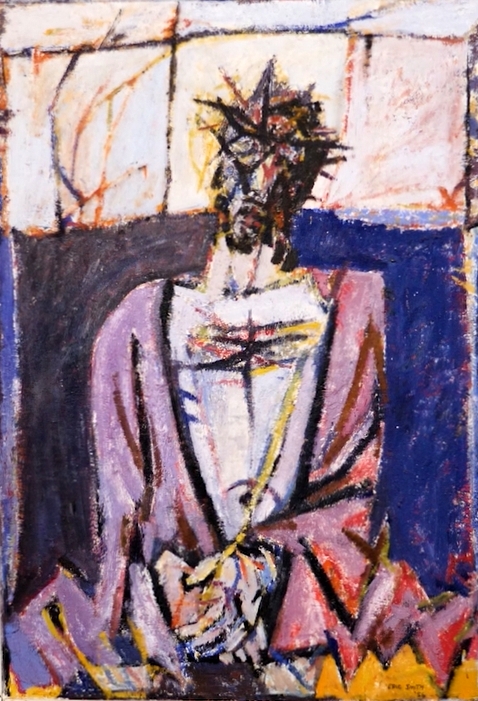
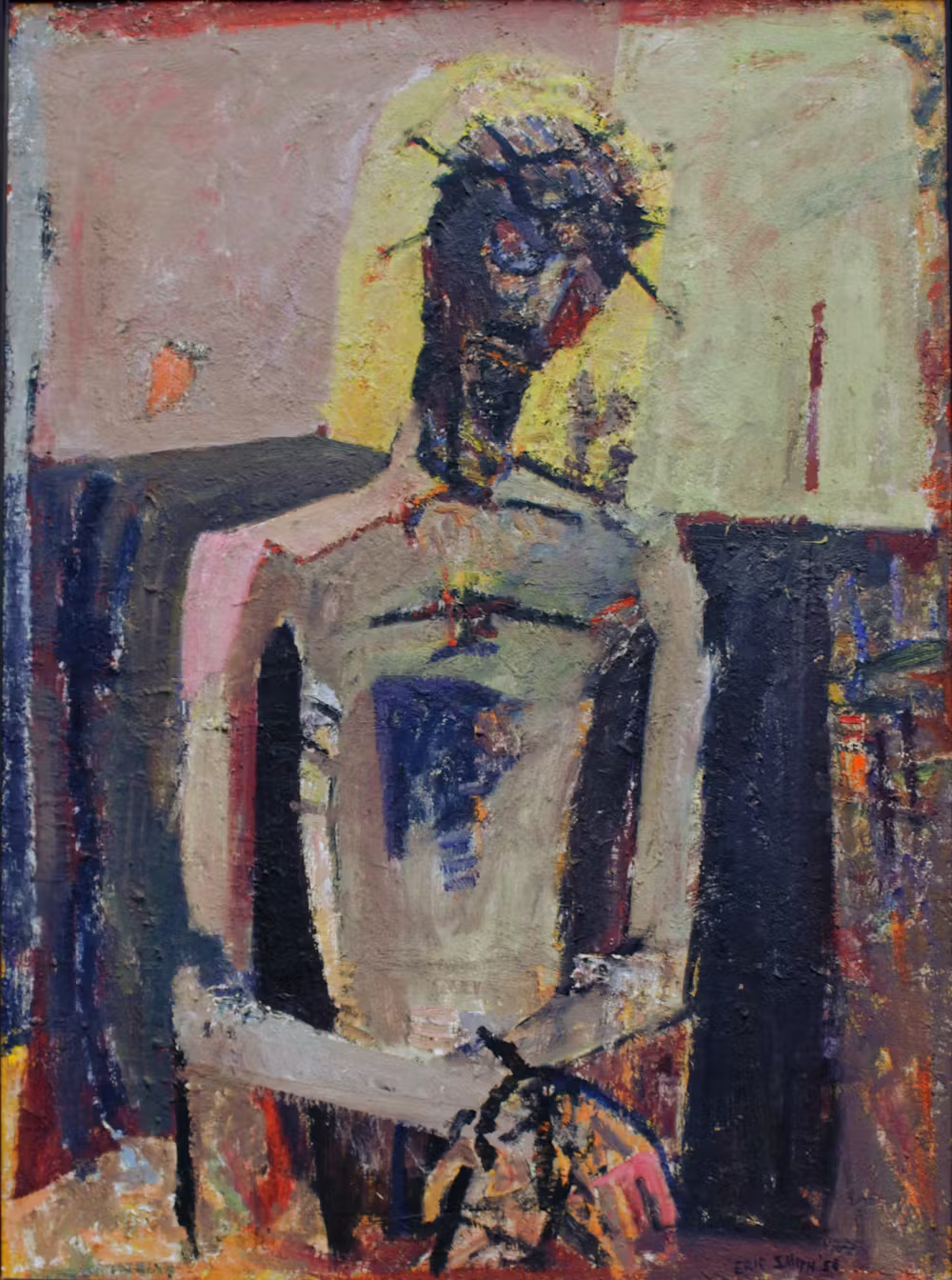
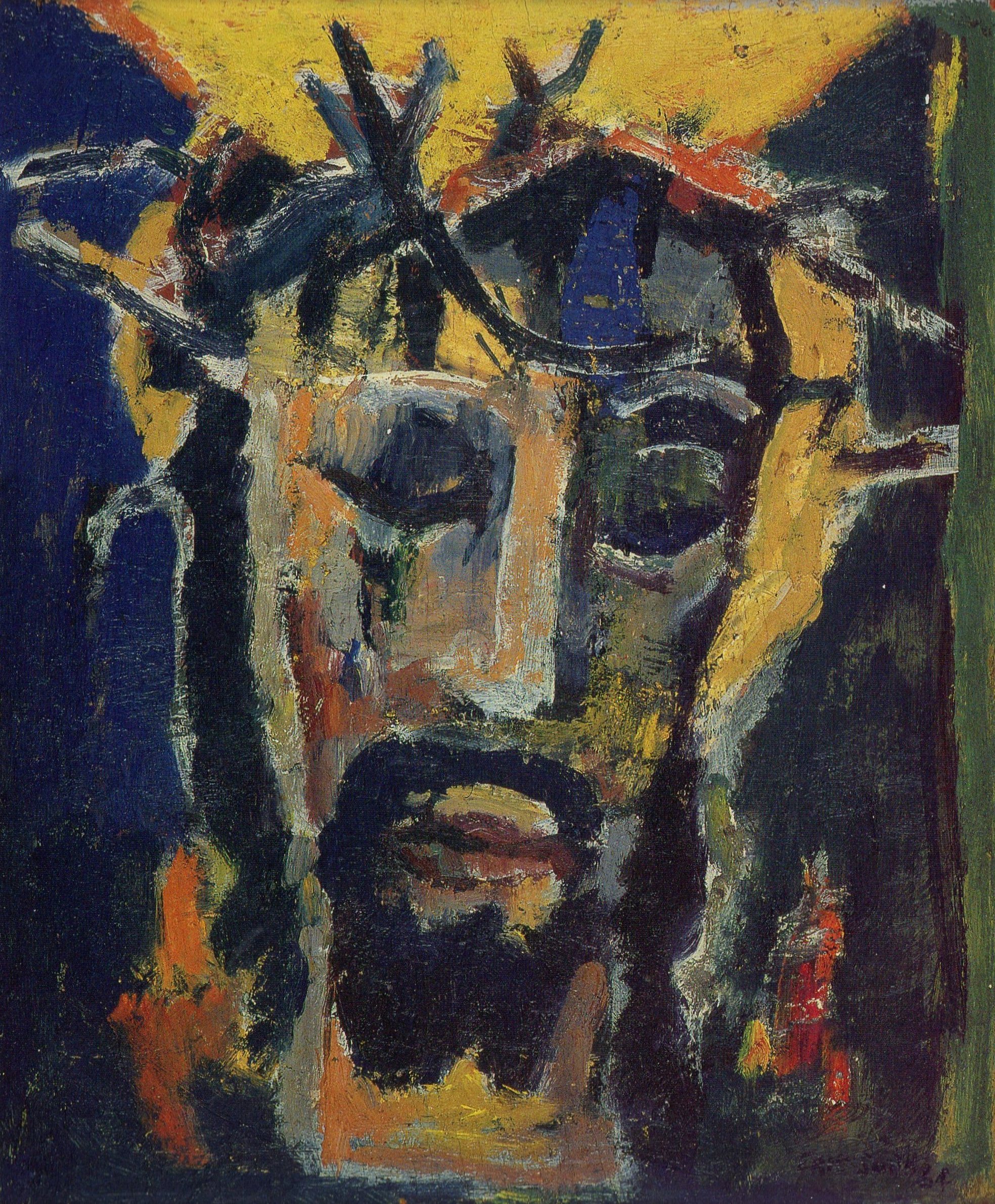
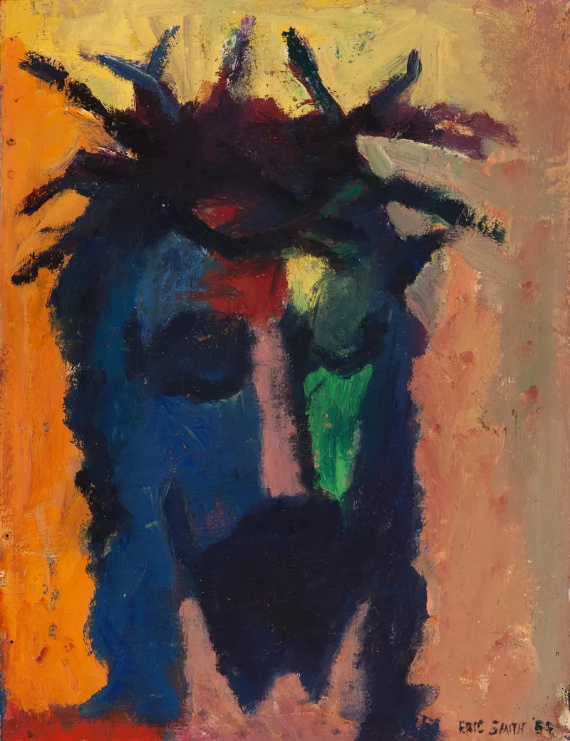
VIDEO:“Christ by Eric Smith”: This is the first video in the (Catholic) Archdiocese of Brisbane’s four-part Art Aficionados series from 2022. In it, Archbishop Emeritus Mark Coleridge, theology professor Maeve Heaney, and Rev. Dr. Tom Elich of Liturgy Brisbane discuss the semiabstract Ecce homo painting Christ by the modern Australian artist Eric Smith—its pathos, calm, and double irony. This Christ is crushed yet composed, Coleridge says. Smith won the prestigious Blake Prize for Religious Art six times, including, in 1956, for a painting similar to this one (see second image in slideshow below). I’d love to see more dioceses releasing videos like this!—close looking at art.
Eric Smith (Australian, 1919–2017), Christ, 1956. Oil on Masonite, 138 × 95 cm. Collection of Holy Spirit Seminary (Queensland Provincial Seminary), Banyo, Brisbane, Australia. Photo courtesy of Tom Elich.
Eric Smith (Australian, 1919–2017), The Scourged Christ, 1956. Oil on Masonite, 116 × 85 cm. Penrith Regional Gallery, Emu Plains, Australia.
Eric Smith (Australian, 1919–2017), Head of Christ, 1954. Oil on wood, 47 × 39.4 cm. Collection of Newman College, University of Melbourne, Australia.
Eric Smith (Australian, 1919–2017), Head of Christ, 1954. Oil on Masonite, 40.5 × 32.6 cm. Art Gallery of South Australia, Adelaide.
+++
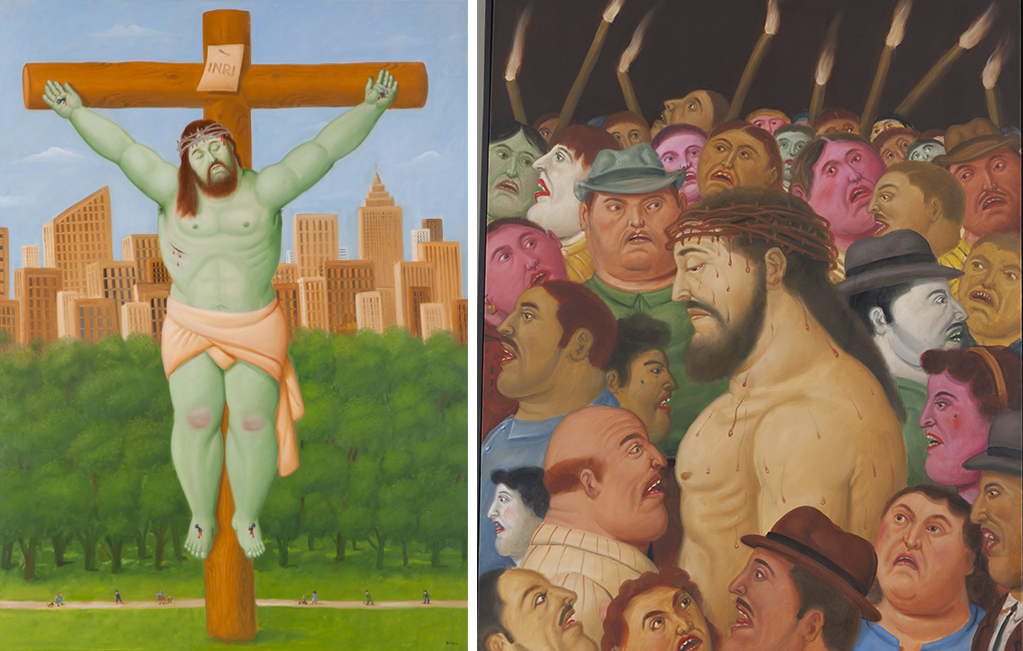
ART SERIES: Via Crucis: La pasión de Cristo (Way of the Cross: The Passion of Christ) by Fernando Botero: Executed in 2010–11, Via Crucis is a series of twenty-seven oil paintings and thirty-four mixed-media drawings by Colombia’s most famous artist, Fernando Botero (1932–2023) [previously]. Botero said he turned to the subject of Christ’s passion not because he’s religious, but out of admiration for the great works of art on the subject; he approached it with “a spirit of great respect,” aiming to portray God as a tortured man. The artist donated the series to the Museo de Antioquia in Medellín for his eightieth birthday. I can’t find a compilation of the whole series (the museum has digital records of the Boteros in its collection, but not all the images are showing up for me)—but you can view fourteen of the paintings in this article, and here’s a quick little Facebook reel.
Marlborough Gallery in New York offers a catalog of the series for $75, and Artika offers a much more expensive one (a gorgeous product, but $9,500!):
Here’s a news segment, in English, about the series’ exhibition at Lisbon’s Palacio de Ajuda in November 2012 (unfortunately, the video quality is low):
Fernando Botero (Colombian, 1932–2023), Crucifixión (Crucifixion), 2011, and Jesús y la multitud (Jesus and the Crowd), 2010. Oil on canvas. Museo de Antioquia, Medellín, Colombia.
+++
I have thematic playlists on Spotify for Lent and Holy Week—for the latter, don’t miss “From the Garden to the Tomb” by The Soil and The Seed Project, one of several recent additions.
But, by popular request, I also have a brand-new March 2026 playlist, a somewhat random assortment of songs I’ve been enjoying—some new releases, some not.
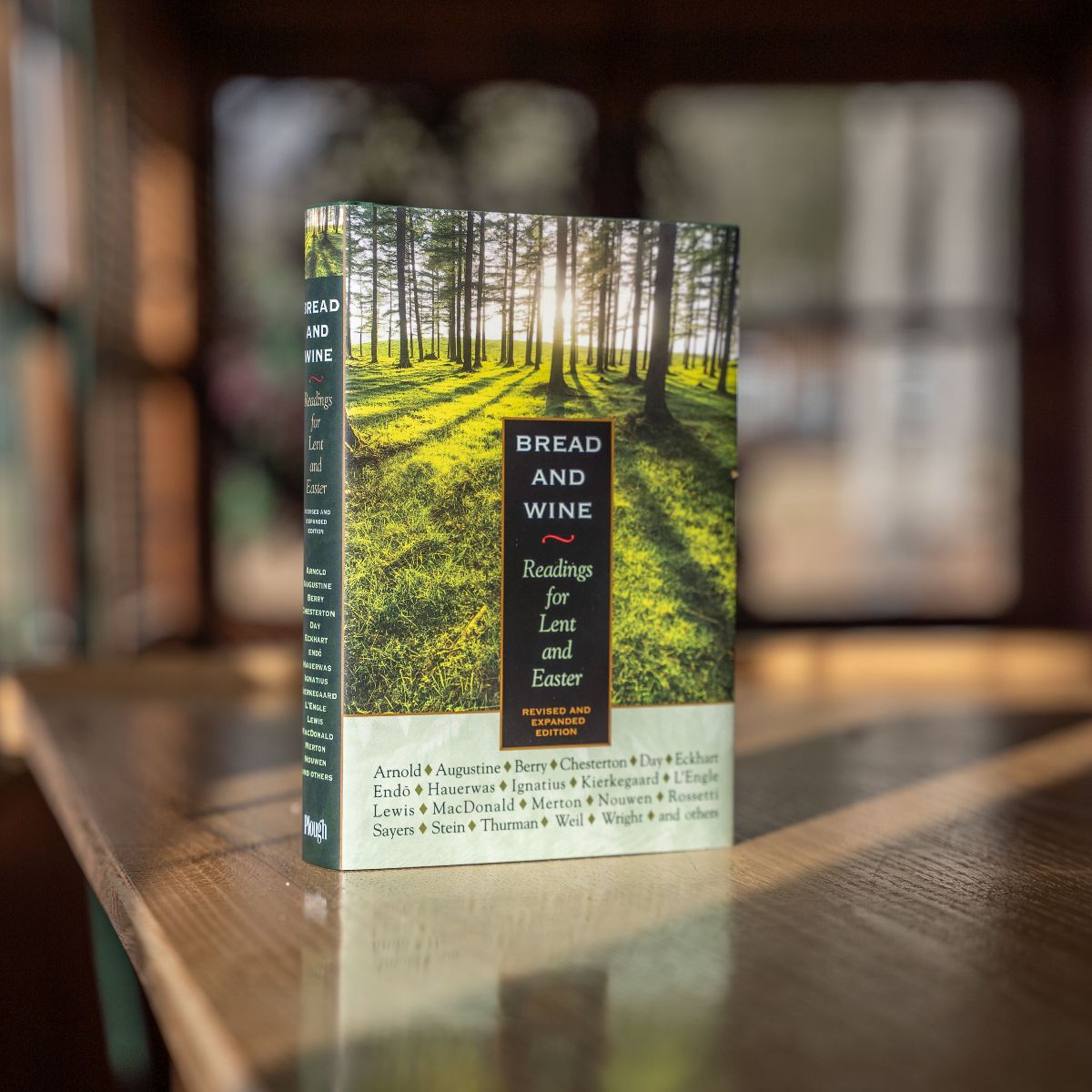
NEW BOOK: Bread and Wine: Readings for Lent and Easter, Second Edition: Plough is the publishing house of the Bruderhof, an international Anabaptist communal movement. This year they released a revised and expanded edition of their popular Lent and Easter devotional, increasing the original seventy-two entries to ninety-six to cover the full fifty days of Easter—although the last section is themed around Pentecost. The selections are all from previously published material, but what a treasure-house has been curated here from across denominations, countries, and eras, from early church fathers to medieval mystics to modern saints. Clement of Rome, Julian of Norwich, Kahlil Gibran, Watchman Nee, Gonzalo Báez Camargo, Thomas Merton, Simone Veil, Howard Thurman, Toyohiko Kagawa, Barbara Brown Taylor, Jürgen Moltmann, Tish Harrison Warren—these are some of the many voices included here that reflect on and expound the beautiful truths of the Lent and Easter seasons. Each reading is just a few pages long, so it’s easy to pick up with your morning coffee or just before bed.
Besides the expansion, other changes I’ve noticed in this edition are:
Thinner pages, which, despite the additional content, reduce the overall thickness of the book
The epigraph at the beginning of each reading was removed, as these were not the authors’.
Thirteen of the original readings were replaced, possibly due to permissions costs, but maybe also just to get in some fresh voices or content, and in one case, to remove an accused sex abuser.
A misattribution in the original to Mother Teresa was corrected to Joseph Langford, who founded the Missionaries of Charity Fathers with her.
There is a slight reordering of readings so that pertinent meditations appear during Holy Week.
I’ve provided a link to the Plough book page above, but you can also purchase through Amazon or your retailer of choice.
+++
SONGS:
I grew up in an independent Baptist church, ignorant of most of the historic prayers of the church at large. The first time I ever heard the phrase “Kyrie eleison” [previously] was on track 5 of the Christian recording artist Mark Schultz’s 2001 album Song Cinema, which is a cover of an eighties rock song by Mr. Mister. I was in middle school, and I had to look up what it meant. Derived from a prayer found in multiple places in the Psalms and the Gospels, “Kyrie eleison” (pronounced KEER-ee-ay eh-LAY-ee-sohn) is Greek for “Lord, have mercy,” and it’s traditionally followed by “Christe eleison”—Christ, have mercy. An inheritance from early Eastern Christian liturgies, it has been part of the Ordinary of the Catholic Mass since the fifth century, which means it’s recited or sung in every eucharistic service regardless of the liturgical season, and it’s used in many other Christian traditions as well. I’ve never been part of a church that sings the Kyrie, but I occasionally sing it in my personal devotions. It’s been set to music by hundreds of composers, for choirs, contemporary bands, and more. Here are two settings that I’ve recently come across and enjoy, followed by a song that entreats (God’s?) mercy on father, brother, church, country, and every living thing.
>> “Kyrie (Lord, Have Mercy)” by Robert Alan Rife: This song was written by Robert Alan Rife [previously], a minister with the Evangelical Covenant Church, serving in Edinburgh. It’s performed here by worship musicians at Great Road Church (formerly Highrock Covenant Church) in Acton, Massachusetts. The lead vocalist is Caelyn Jarrett Poetz; she’s accompanied on guitar by her dad, Travis Jarrett, the church’s music pastor, and Hannah Moulton provides backing vocals. Rife tells me you can purchase the sheet music here, and that other songs of his can be streamed on Spotify, Apple Music, etc.; he has not yet recorded this one, but it’s in the works.
>> “Kyrie” by Paul Smith: This peaceful, resonant setting of the Kyrie was composed by Paul Smith, cofounder of the Grammy-nominated British vocal ensemble VOCES8, who perform it here. The song appears on Smith’s 2025 album Revelations.
>> “Mercy Now” by Mary Gauthier: In this video from the 2010 Americana Music Festival in Nashville, folk singer-songwriter Mary Gauthier (last name pronounced go-SHAY) performs her most famous song, “Mercy Now,” originally released on her 2005 album of the same title. It doesn’t directly invoke God, but it feels like a prayer, asking for mercy (forgiveness, relief, compassion, lovingkindness) first for two family members—her father on his deathbed, and her drug-addicted brother—and then for the institutions of church and state, both in need of repair, and then for everyone: “We all could use a little mercy now / I know we don’t deserve it / But we need it anyhow,” and “only the hand of grace” can give it, can intervene to save us from our self-destructive ways. In response to the song’s being listed as “one of the saddest 40 country songs of all time” by Rolling Stone in 2014, Gauthier said, “It is not a sad song. It is about hope.”
+++
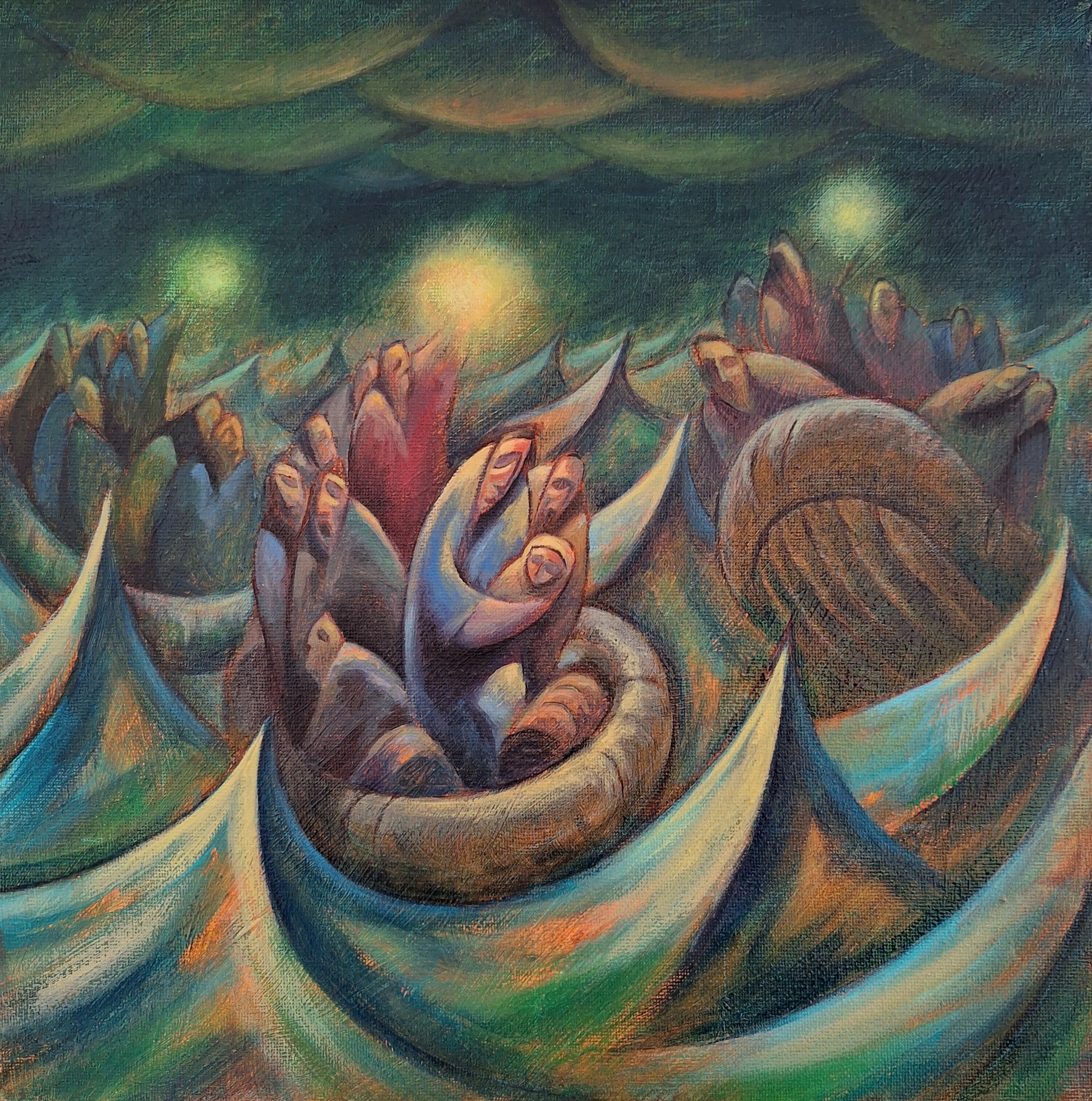
EXHIBITION: Sanctuary by Nicholas Mynheer, February 18–April 12, 2026, Portsmouth Cathedral, UK: One of my favorite artists, Nicholas Mynheer, has a show that opened on Ash Wednesday at Portsmouth Cathedral, aka the Cathedral of the Sea, and that will continue for the duration of Lent plus some. “The exhibition features paintings and sculptures that explore the experiences of refugees, both ancient and contemporary. The story of Jesus, Mary and Joseph fleeing to Egypt sits alongside the realities faced by people crossing the English Channel today. Mynheer’s work doesn’t offer easy answers – instead, it asks questions. What would we do if our home were no longer safe? How do we respond to those seeking refuge? What does it mean to hope for a better life when the risks are so great?”
Nicholas Mynheer (British, 1958–), The Holy Family Cross the English Channel, 2025. Oil on canvas, 30 × 30 cm.
As an artist, one of the themes that I’ve been drawn to repeatedly is that of the Holy Family on the Flight to Egypt. The fact that even Jesus, Mary and Joseph became refugees to escape the wrath of Herod reminds us that it could happen to any one of us.
Over the past years we have become increasingly aware of the plight of refugees; from Syria, Afghanistan, Ukraine, Somalia, along with daily reports of refugees attempting to cross the English Channel. Whether they flee from war, persecution, famine, political instability or for economic reasons, the risks are the same; all driven by hope, the hope of a better life.
I often wonder what I would do if I lived in a country ravaged by war? What would I do if I was persecuted for my faith, my colour or my culture? What would I do if scrolling on my phone, others’ lives seemed easier, happier, and all I had to do was get there?
It is my hope that these meditations in paint and stone might draw us in to question how we might respond if we, like Jesus, Mary and Joseph, were forced to seek refuge; to be refugees . . . to search for Sanctuary.
Starting February 25, Portsmouth Cathedral is offering a free four-week Lent course (classes are in person on Wednesday evenings) inspired by the exhibition. The first class will be a talk by Mynheer himself, and the other three will be led by clergy, exploring biblical themes of journey, rescue, and redemption through the art on display.
+++
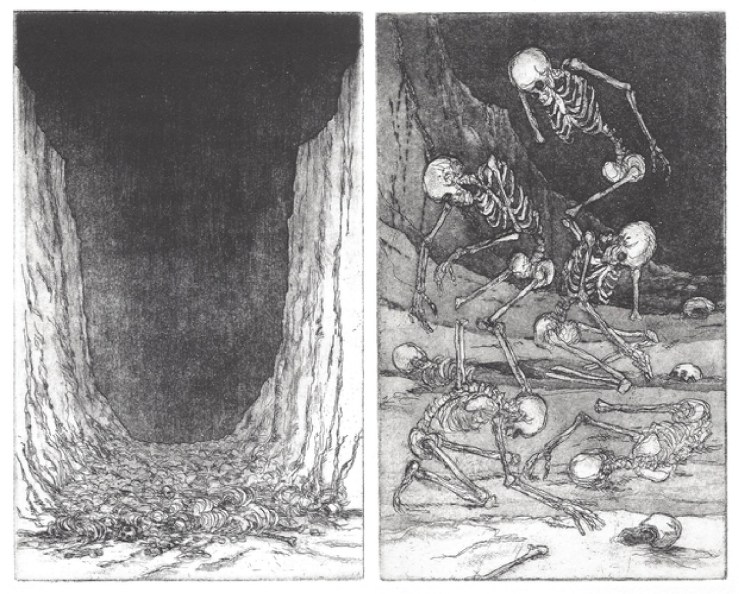
CALL FOR ART: The Valley of Dry Bones, Museum of the Bible, Washington, DC: “The Valley of Dry Bones art invitational seeks to inspire the creation of new artwork based on Ezekiel 37:1–14, the biblical vision in which God brings life, renewal, and restoration to a valley of dry bones. Museum of the Bible invites Christian and Jewish artists residing in the continental United States to create original pieces in a variety of media that show their personal and spiritual reflections on this powerful theme. The goal is to show how the Bible can shape modern art and give visitors a meaningful way to connect with biblical themes through creativity. Museum of the Bible will choose 15 artists through a national call and design a professional exhibition to showcase their art from May 7–November 7, 2027. The museum will also help promote the artists and their work through talks, social media, and special events. Each artist chosen will be paid a stipend of $3,000 to cover the costs of creation, travel, and shipping.” Entry deadline: April 24, 2026.
Margaret Adams Parker (American, 1948–), Ezekiel 37, from The Vigil Etchings, 2013–14. Etching with roulette and aquatint on Somerset velvet white paper, each 8 1/2 × 5 1/2 in. Edition of 15.
+++
SHORT FILM:Forevergreen(2025), dir. Nathan Engelhardt and Jeremy Spears: With the announcement of the 2025 Academy Award nominations last month, I learned that Forevergreen is one of five nominees for Best Animated Short Film! Written and directed by two Christians in the animation industry (employed by Disney but working independently here) and executed by a team of over a hundred, Forevergreen is a thirteen-minute gospel-oriented film in which “an orphaned bear cub finds a home with a fatherly evergreen tree, until his hunger for trash leads him to danger.” I found out about it last November through the music artists who wrote the soundtrack, Josh Garrels and Isaac Wardell, and am delighted to see it recognized in such a huge way. I really dig its unique animation style, which uses whittled wood figures. The movie is currently streaming for free on YouTube (see embed below), but if you want to see it on a big screen, check your local theater listings.
All flesh is like grass and all its glory like the flower of grass. The grass withers, and the flower falls, but the word of the Lord endures forever.
—1 Peter 1:24–25
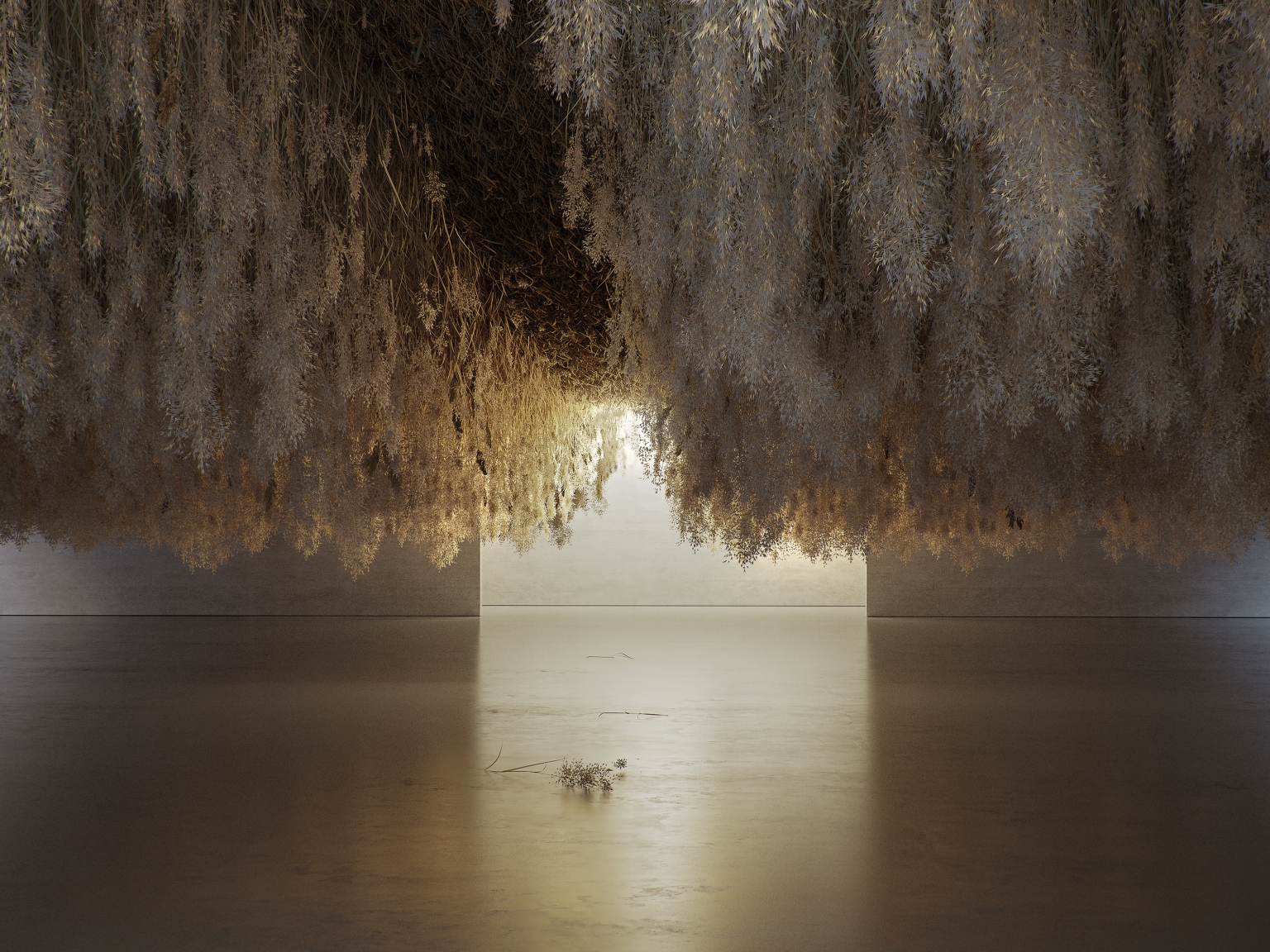
LOOK: French Exit by Tadao Cern
Tadao Cern (Lithuanian, 1983–), French Exit, 2020. Installation of dried grass.
In this installation by Tadao Cern, hundreds of thousands of dried grass stalks are suspended from the ceiling, creating a dense cloud under which viewers can walk. It’s an organic memento mori, a reminder of death. The title, French Exit, refers to the act of leaving a social gathering or a date without saying goodbye. The artist said he wanted viewers to consider their farewells.
Throughout the duration of the installation, some of the dead grass falls from the hovering field onto the floor, to be swept away.
Lent starts next Wednesday, February 18, so I want to remind you about my Lent Playlist on Spotify. There are plenty of songs for contemplative listening throughout the season. I periodically add new entries to the bottom. Recent additions include a song by Amanda Held Opelt about being in the belly of a whale; “Living Water” by Sr. Miriam Therese Winter of the Medical Mission Sisters; Paul Zach’s cover of Johnny Cash’s “The Beast in Me”; and a setting of Matthew 4:17 by Seth Thomas Crissman of The Soil and The Seed Project, whose parallel verse, Mark 1:15, is commonly recited with the imposition of ashes on Ash Wednesday.
+++
VIDEO ART: Quarta-Feira de Cinzas / Epilogue(Ash Wednesday / Epilogue) by Rivane Neuenschwander with Cao Guimarães: When visiting the Museum of Modern Art in New York last month, I encountered a video work from Brazil that I found mesmerizing. The Perez Art Museum Miami describes it this way:
In Rivane Neuenschwander’s video Quarta-Feira de Cinzas / Epilogue (Ash Wednesday / Epilogue), made in collaboration with artist Cao Guimarães, ants become the protagonists of a captivating journey. Shot on Ash Wednesday, after the end of Brazilian Carnival, the video follows a colony of leafcutter ants as they traverse the rough terrain of a forest floor, transporting pieces of colored confetti to their underground nest. The video is set to a digitally composed soundtrack that blends ambient natural sounds with the sound of matchsticks dropping onto the floor. At the video’s end, we watch the ants descend into the darkness of their nest, intent, perhaps, on furnishing a celebration of their own.
Rivane Neuenschwander (Brazilian, 1967–) with Cao Guimarães (Brazilian, 1965–), Quarta-Feira de Cinzas / Epilogue (Ash Wednesday / Epilogue), 2006. High-definition video (color, sound), 5:44 min. Photo courtesy of Tanya Bonakdar Gallery, New York.
Originating in the Middle Ages, Carnival—from the Latin carve vale, meaning “flesh, farewell!” (flesh = meat)—is a period of merrymaking before the solemn restraints of Lent. It’s primarily a secular folk custom, celebrated by many with hedonistic parties involving excessive drinking. But Carnival need not be debauched, and some Christians celebrate it with social gatherings, games, parades, and/or food traditions. A Polish Catholic coworker of mine would always bring pączki (jelly donuts) to the office on Fat Tuesday (Mardi Gras in French), the day before Ash Wednesday. Some churches host a pancake supper on that evening, using up eggs, milk, and sugar, ingredients that were historically forbidden during Lent, along with bacon and sausage. At The Liturgical Home, Ashley Tumlin Wallace describes Fat Tuesday as a transition day moving God’s people out of Epiphanytide.
Neuenschwander and Guimarães’s Ash Wednesday / Epilogue is, first and foremost, fun and playful. We don’t tend to think of insects having parties! I wonder what the ants are doing with those vibrant little metallized discs. But the video also, for me, captures something of the tone of the first day of Lent—a quiet sweeping up after the previous day’s festivities, the humans of this place having left their revelries to go to church, where they enter a time of penitence.
+++
BLOG POST: “Ash Wednesday” by Libby John: I really appreciated these four guided journal prompts that Libby John, founder of the Vivid Artistry creative collective, gave last Lent:
What is something in my life I am seeking for God to renew and restore?
What rhythms in my life need to be interrupted and reoriented to God’s heart for me?
What are some ways I can surrender my schedule to help attune my senses to more of God’s presence?
Am I bringing my whole self to God or do I divide and keep parts of my life from him?
+++
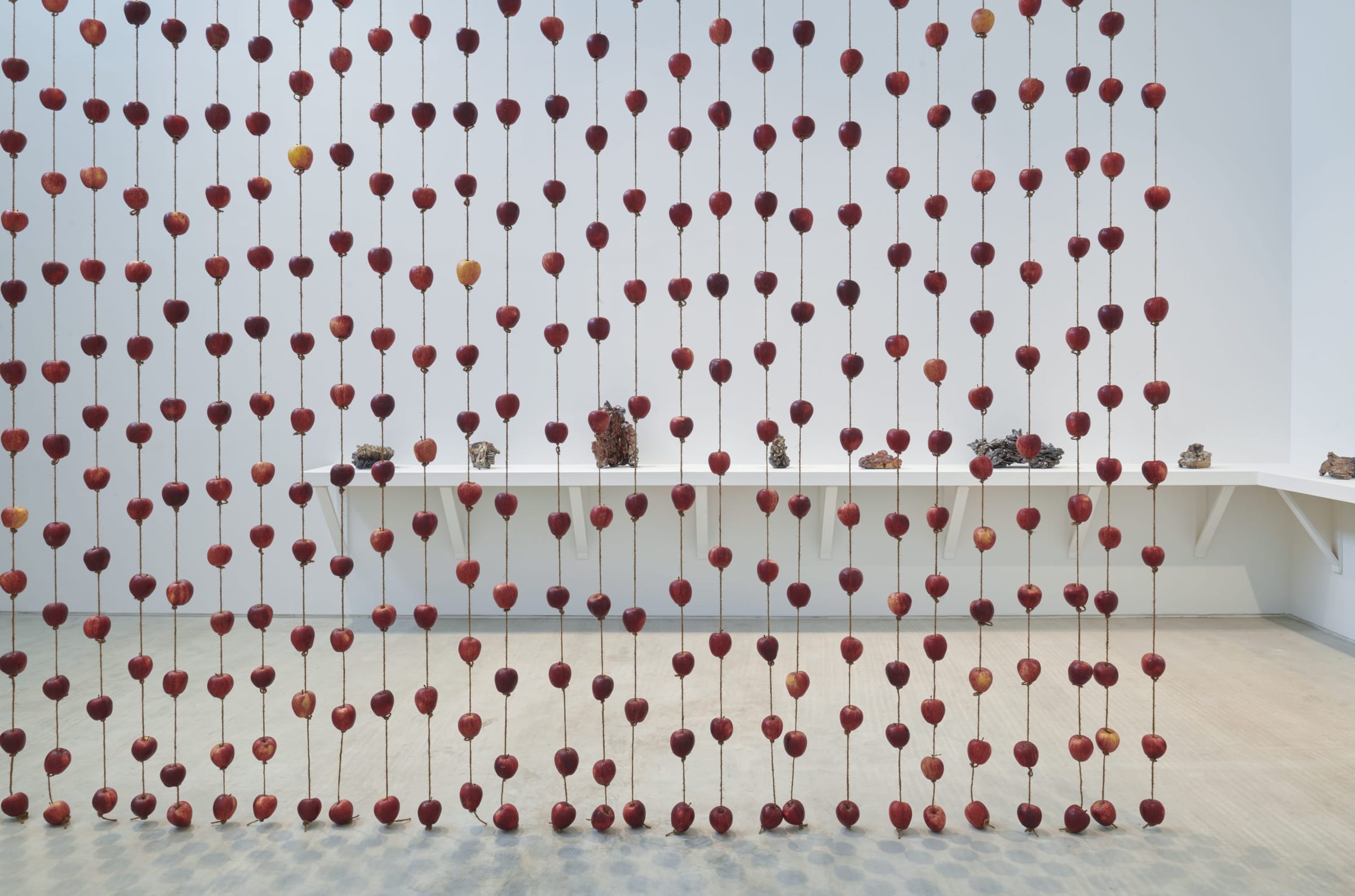
ARTICLE: “Anya Gallaccio’s Organic Mementos Mori” by Eliza Goodpasture, Hyperallergic: Rotting apples threaded with hanging twine, shriveling red daisies pressed between plexiglass, burning candles creating waxen landscapes on aluminum foil, a hundred-plus-year-old ash tree stricken with ash dieback disease—these were among the memento mori (reminders of death) installed at artist Anya Gallaccio’s exhibition preserve at Turner Contemporary in Margate, England, in fall 2024. “The potency of the transient works is so magnetic,” writes reviewer Eliza Goodpasture. “The Christian motif of dust to dust undergirds it all. . . . The artist reminds us that decay is full of energy—not just an ending, but part of an endless circle of life.”
Anya Gallaccio (Scottish, 1963–), Falling from grace, 2000. 2,700 Gala apples, hop twine. Installation view at Turner Contemporary, Margate, 2024. Photo: Jo Underhill, courtesy of the artist.
+++
SONGS:
>> “Turning” by Deanna Witkowski:Deanna Witkowski is a jazz composer and pianist living in Chicago. She wrote this choral piece for Lent, a season in which the liturgies call us to turn away from sin and toward God. That’s what repentance means: changing direction. The first verse is taken from Psalm 119:36–40. “Turn our hearts, O Lord, from selfish gain to your commandments . . .”
>> “Miraculous Salvation” by Tenielle Neda: This song by the Australian singer-songwriter Tenielle Neda praises God for the grace he lavishes on us and for his great love. Backing vocals are provided by Chris Cho.
+++
CAROL TEXT: “Revert, revert” by James Ryman, ca. 1492: Medievalist Eleanor Parker shares this Lenten carol text by the fifteenth-century Franciscan friar James Ryman, from Cambridge University Library MS Ee 1.12. The burden (repeated stanza) is “Revert, revert, revert, revert; / O sinful man, give me thine heart”—an echo of Isaiah 44:22, “Return to me, for I have redeemed you.” Written in Christ’s voice, it calls us to remember how he took on our flesh, was baptized, and was flogged and crucified for our sakes. I think the shield in stanza 3 refers to the cross; the Via Dolorosa was a battlefield on which Christ fought the devil, and paradoxically, the instrument of his execution was the means of victory.
February is Black History Month, and while I endeavor to showcase Black art year-round, today’s post gives it dedicated attention.
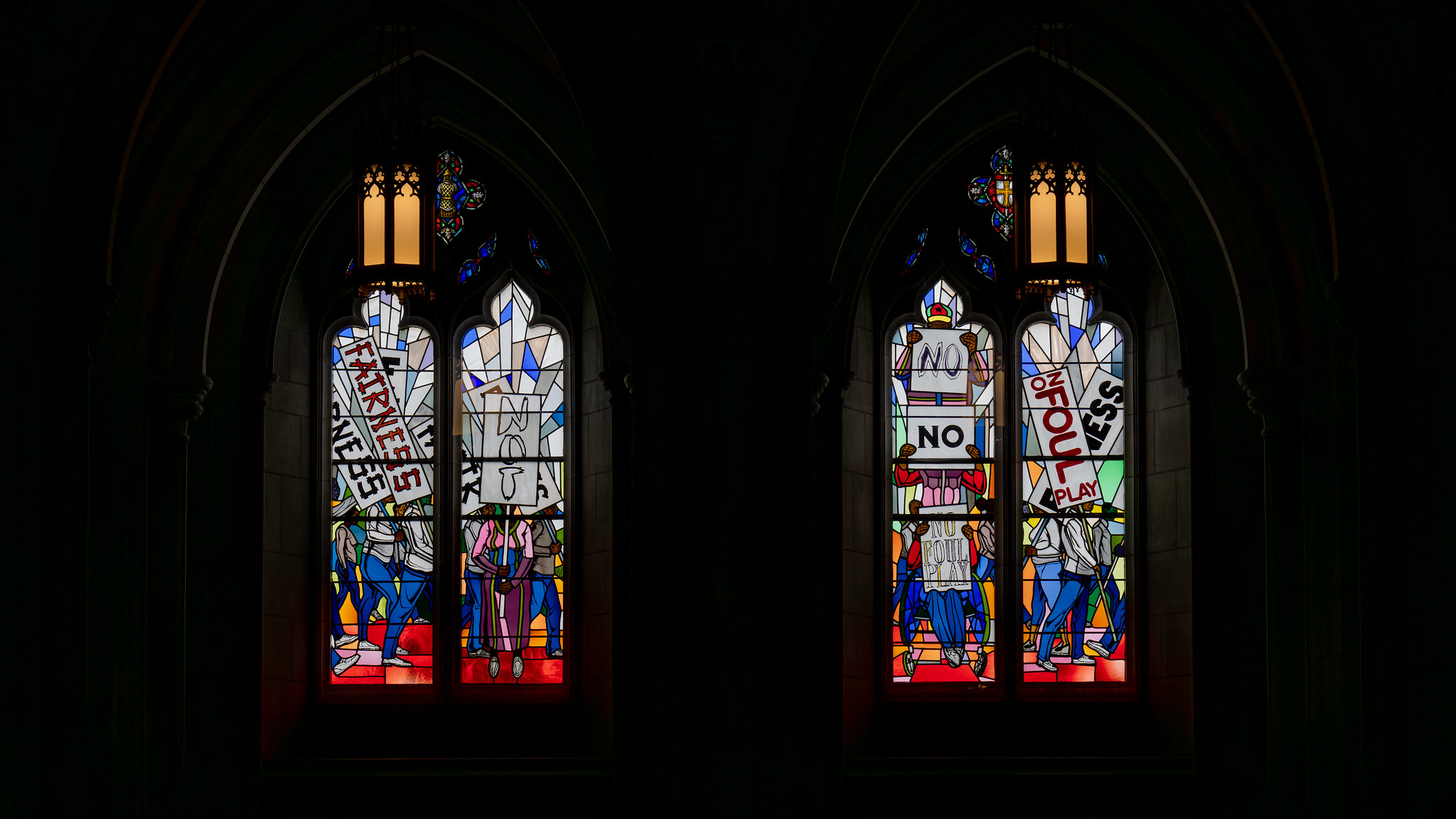
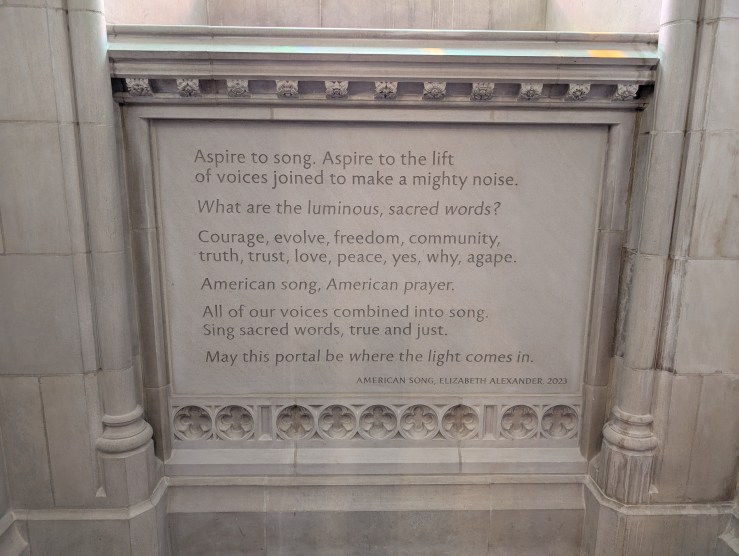
VIDEO: “Kerry James Marshall, Now and Forever; Elizabeth Alexander, ‘American Song,’ Washington National Cathedral,” Smarthistory, January 22, 2024: Art historian Beth Harris and Kevin Eckstrom, former chief public affairs officer of Washington National Cathedral, explore the latest artwork to be permanently installed in the US capital’s “house of prayer for all people”: two Now and Forever stained glass windows by Kerry James Marshall, depicting a march for racial justice. Unveiled on September 23, 2023, these replace windows that memorialized Confederate generals Robert E. Lee and Stonewall Jackson, which had been donated by the United Daughters of the Confederacy and installed in 1953. (For my international readers: The Confederacy was a group of eleven Southern US states that seceded from the Union in 1860 and 1861 to preserve the institution of race-based chattel slavery on which their plantation economies relied; its government was dissolved in 1865 following the end of the Civil War, but its legacy continued.)
In 2015, when a white supremacist, who touted the Confederate flag as symbolic of his ideology, murdered nine Black churchgoers in Charleston, South Carolina, Washington National Cathedral’s dean at the time, the Very Rev. Gary Hall, called for the removal of the Lee-Jackson windows, which initiated a two-year discernment process involving ample community discussions. The cathedral finally took down the windows in 2017 following a white nationalist rally in Charlottesville, Virginia, that claimed yet another life. The Very Rev. Randolph Hollerith, then the dean, said the windows “were a barrier to our mission, and an impediment to worship in this place.” Their removal and the installation of the Now and Forever windows in their place were funded by private foundations.
Kerry James Marshall (American, 1955–), Now and Forever, 2023. Fabricated by Andrew Goldkuhle. Stained glass windows, south outer aisle, bay 7, Washington National Cathedral, Washington, DC. Photo: Steven Zucker.
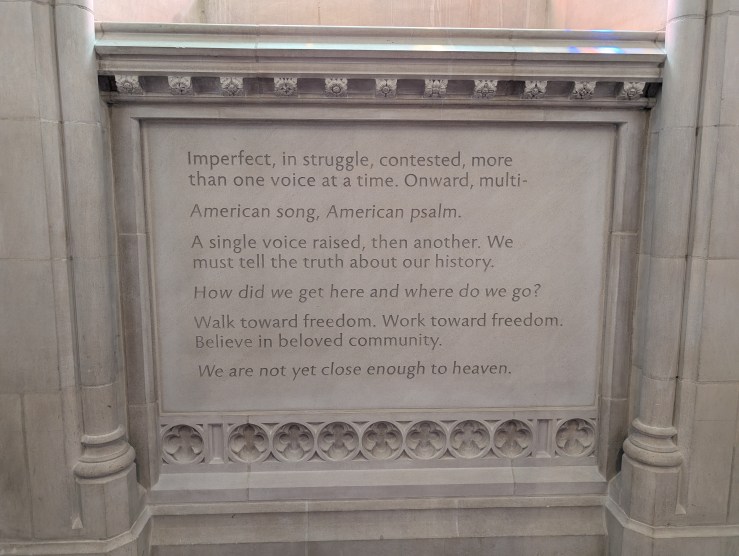
“American Song” by Elizabeth Alexander, commissioned by Washington National Cathedral and inscribed below Kerry James Marshall’s Now and Forever windows in bay 7. Photo: Victoria Emily Jones.
In addition to commissioning Marshall to design new windows, the cathedral commissioned the Pulitzer-nominated poet Elizabeth Alexander, who wrote and read “Praise Song for the Day” for President Barack Obama’s 2009 inauguration, to write a poem for this occasion. Titled “American Song,” it is inscribed on two limestone tablets beneath Marshall’s windows. The Windows Replacement Committee gave both artists this assignment:
We seek to tell a story of resilience, endurance, and courage that gives meaning and expression to the long and arduous plight of the African American, from slavery to freedom, from alienation to the hope of reconciliation, through physical and spiritual regeneration, as we move from the past to present day. The artist will capture both darkness and light, both the pain of yesterday and the promise of tomorrow, as well as the quiet and exemplary dignity of the African American struggle for justice and equality and the indelible and progressive impact it has had on American society. Each artist should respond in his or her own creative way to these ideals and aspirations, framing both the earthly and the divine, within the sacred space of the Washington National Cathedral.
When I was there last year, I asked the guide why the signs the figures hold don’t bear any of the more familiar slogans of our historical moment, such as “Black Lives Matter.” She said the artist deliberately did not want to tether the protest to a particular time period, in order to emphasize that the struggle for racial equality is ongoing. “Fairness,” “No Foul Play,” “No,” “Not”—these are expressions of demand and defiance that could apply to a number of justice-related issues and that encompass people of all races.
DANCE: “Still I Rise,” choreographed by Sean Cheesman: I really miss the TV show So You Think You Can Dance, which had aspiring dancers train across genres—contemporary, hip-hop, ballroom, jazz, etc.—with renowned choreographers, performing to compete for the title of “America’s favorite dancer.” It was entertaining, impressive (the athleticism!), and often moving. Here’s a contemporary routine choreographed by Sean Cheesman to spoken word artist Alexis Henry’s reading of a classic poem by Maya Angelou about Black strength and defiance. It’s danced by Koine “Koko” Iwasaki, Kiki Nyemchek, Taylor Sieve, and Mark Villaver. It’s from season 14, episode 12, which aired September 4, 2017.
(Another memorable Cheesman-choreographed dance from season 14 is an African jazz duet to Sheila Chandra’s “Speaking in Tongues II,” which unfortunately, I cannot find online.)
+++
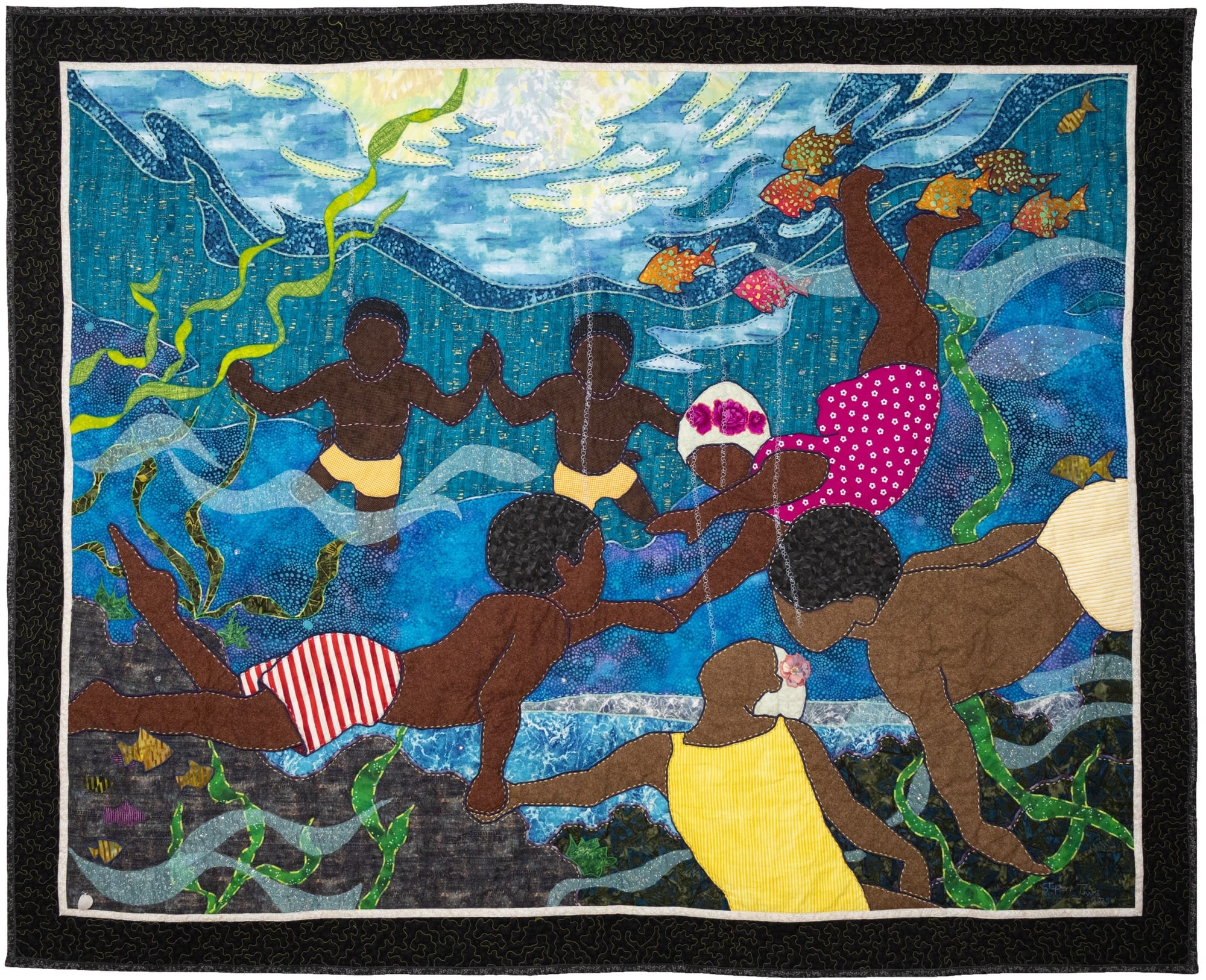
ARTICLE: “Stephen Towns’ Quilted Works Emphasize Black Joy as Resistance in ‘Safer Waters’” by Kate Mothes: Through June 14, the Wichita Art Museum in Kansas is hosting the exhibition Safer Waters: Picturing Black Recreation at Midcentury, featuring eleven quilts and six paintings by the Baltimore-based artist Stephen Towns [previously]. Black history has always been an important aspect of Towns’s work, and in this series he was inspired by historic photographs (by Bruce Mozert) of Paradise Park, a segregated attraction in Silver Springs, Florida, that operated from 1949 to 1969 and that was popular among Black vacationers, providing a space for leisure and togetherness away from Jim Crow.
Stephen Towns (American, 1980–), All We Knew Was Joy, 2025. Natural and synthetic fabric, polyester and cotton thread, cubic zirconia, glass beads, and shell, 55 × 65 1/2 in.
Towns began his Paradise Park series in 2022 after reading Remembering Paradise Park by Cynthia Wilson-Graham and Lu Vickers, and this show is a continuation of it, for which he made seven new quilts (pictured in Mothes’s article). His art is displayed alongside some of Mozert’s photographs and related objects from Florida archives and collectors. See an exhibition walk-through on the artist’s Instagram page; see also photos from the opening on January 16–17.
Gospel music is one of the many gifts the Black church has given the world. Here are two songs from that distinctive choral tradition.
>> “Perfect Praise (How Excellent)” by Brenda Joyce Moore, performed by the Sunday Service Choir: Written in 1989 based on Psalm 8, this song gained recognition through its performance on the 1990 album This Is the Day by Walt Whitman and the Soul Children of Chicago, featuring Lecresia Campbell. It has since become a gospel choir standard, though often with the lead vocals eliminated (and that part taken by the full choir). It’s performed in this video by Sunday Service at the Théâtre des Bouffes du Nord in Paris on March 1, 2020.
>> “He’s a Wonder” by Jamel Garner, performed by the Chicago Mass Choir, feat. Cornelius Owens: This song about Jesus’s miracles is from the Chicago Mass Choir’s 2024 album Greater Is Coming.
+++
PODCAST EPISODES:
>> “Artist Archetypes with Jakari Sherman,”Be. Make. Do., January 21, 2025: I really enjoyed this conversation with Jakari Sherman on the soul|makers podcast hosted by Rev. Lisa Cole Smith, where he describes his journey as an artist and a believer. Sherman is a choreographer within the tradition of stepping, a percussive dance practice in which dancers use primarily their hands and feet to create music. Stepping comes from the African American Greek letter organizations and has roots, Sherman explains, in the antebellum South, where enslaved people had their drums taken away and thus had to find ways to express the rhythms they felt using just the floor and their own bodies. (Tap evolved largely for the same reason.)
Sherman is the creative director of [Jk]creativ, a multidisciplinary company developing purpose-driven and truth-seeking cultural works. From 2007 to 2014 he served as the artistic director of Step Afrika! and has continued to develop and direct works for them, such as Drumfolk and The Migration (which I saw in 2024 and was excellent). To establish a foundation for his scholarly research on the history of stepping, he completed a master of arts program in ethnochoreology at the Irish World Academy of Music and Dance in 2015. Below is a trailer for one of Sherman’s latest works, Our Road Home, an interactive rhythmic production that meditates “on what is means to find freedom—and to live it fully in body, soul, and spirit”; it premiered last June as part of a year-long collaboration with the Houston Freedmen’s Town Conservancy.
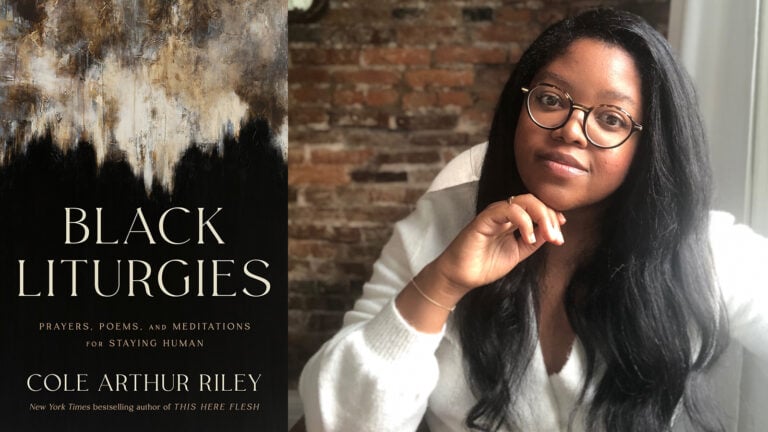
>> “Cole Arthur Riley – Black Liturgies,”Nomad, February 9, 2024: Tim Nash interviews Cole Arthur Riley, the best-selling author of Black Liturgies: Prayers, Poems, and Meditations for Staying Human(which grew out of her popular Instagram account @blackliturgies) and This Here Flesh: Spirituality, Liberation, and the Stories That Make Us. She is a wise, feeling, richly spiritual and embodied writer and speaker whose work I’ve appreciated. In this conversation she discusses her hang-ups with the Book of Common Prayer; battling chronic illness; balancing the active and contemplative lives; the revival of lament; self-sacrifice versus self-care; her experience of white people engaging with her work (“I like to think that there’s something mysterious that’s healed in us when we encounter each other’s interior worlds; when we hear words written by a Black woman toward God, that that could somehow move someone in some way, and move us closer to each other”); and what hope means to her and where she sees signs of it.
Even though I, as a white person, am not the intended audience for the book Black Liturgies, in reading it, I found it meaningful to listen to the cries of Riley’s heart. While many of the prayers are particular to the experience of being Black, still many others are general enough that they could be prayed by anyone. Part 1, organized thematically, consists of chapters such as “Dignity,” “Wonder,” “Doubt,” “Lament,” “Rage,” and “Rest,” whereas part 2 contains prayers for dawn, day, and dusk as well as for the liturgical year, secular holidays, and life occasions. I like the names for God with which she opens each prayer—e.g., “God of the shadows,” “God who expands,” “Divine Labyrinth,” “God aware,” “God of locked doors,” “God who reclaims,” “God our home,” “God of delight,” “God of the art that will never be seen,” “God who whispers”; it has prompted me to consider the names and descriptions I use for God and how they influence how I pray.
To give you a flavor of Black Liturgies, here are two prayers from the book (and note that prayers are only one component; also included are letters, quotes, questions for contemplation, confessions and assurances of pardon, and benedictions):
For Marveling at Your Own Face
God of the flesh, When we consider what is worthy of our wonder, it is easy to forget our own faces, our bodies. The world is relentless in indoctrinating us into self-hatred—into anti-Blackness, into transphobia, into misogyny in all forms. We are slowly and steadily brainwashed to despise our own faces from the time we’re tall enough to stare up at ourselves in the mirror. How can we resist this? Let the tyranny of the mirror be no more. May it instead become a portal—to delight, to pleasure, and to love. These noses, these hips, the way our hair rises and falls. The memories etched into our hands and faces. Remind us of the miracle of flesh that grows back, of blood that pulses warm beneath the skin that holds us. Of bodies, these holy beautiful bodies, that are working a thousand unseen miracles just so that we can read these lines, breathe this air, cry or not cry. As we peer into the face before us, remind us that we are something to behold. We believe; forgive our unbelief. Ase.
For Those Who Doomscroll
Still God, We confess that we are addicted to pessimism. Although we rarely name it as such, so much of our attention is devoted to negativity. Show us how we use technology to soothe and stir the aches in us. Keep us from turning control over to our anxiety, that it would no longer feed itself with news of tragedy and impending disaster. It is easy to become lost, buried in the quicksand of digital catastrophe. Draw our attention upward. Guide us to look away habitually; and not just away, but up at the sky, the grass, the table. Guide us inward as well. Acquaint us with goodness again. In the world, and in ourselves. Let us follow the children, freed from the grip of seriousness. Renew our playfulness. Lead us into wise rhythms of engagement, retreating to rest and breathe. Remind us that there is much the world needs, including our attention to atrocity—but if we watch the world burn for long enough, the fire will become our only reality. Amen.
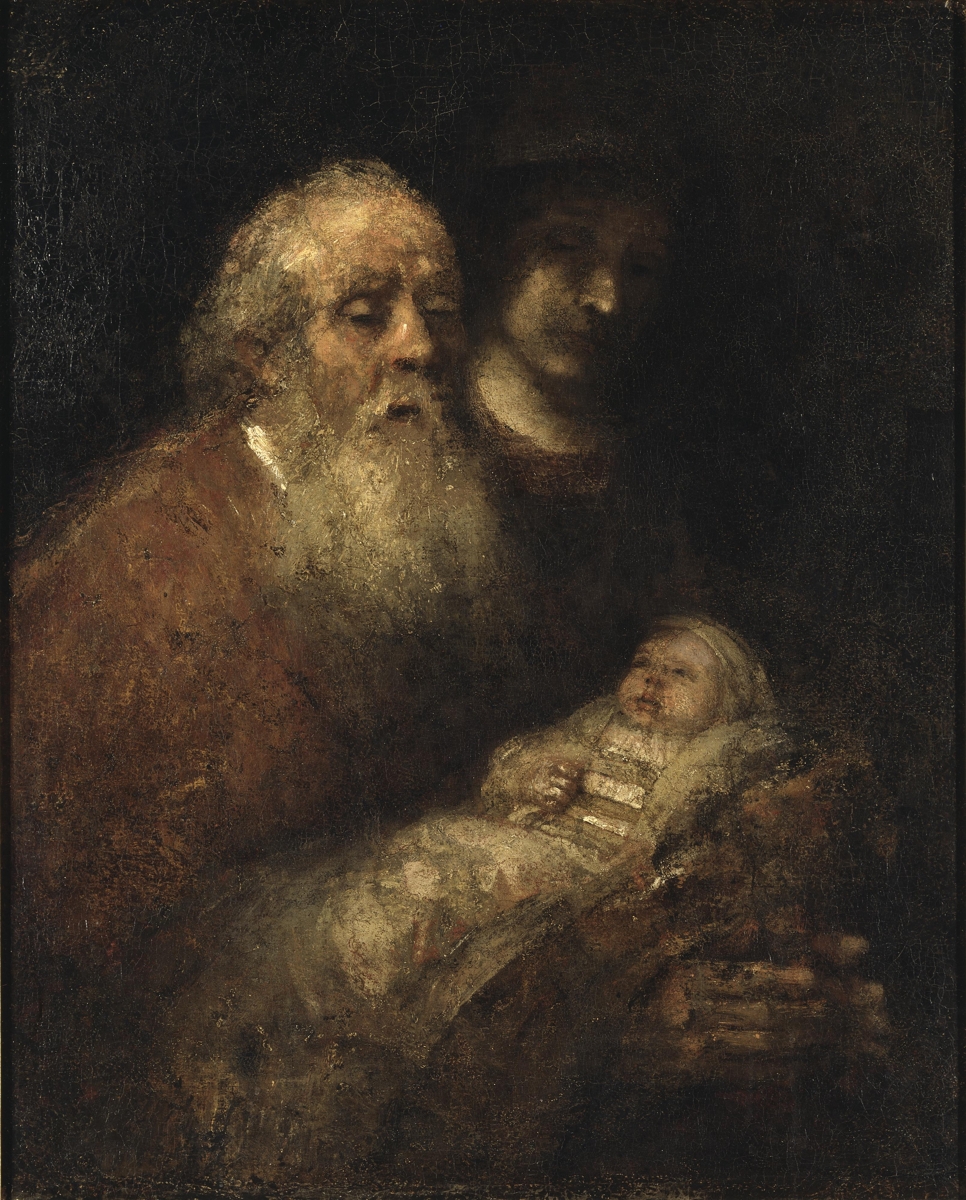
Rembrandt Harmensz. van Rijn (Dutch, 1606–1669), Simeon in the Temple, 1669. Oil on canvas, 98.5 × 79.5 cm. Nationalmuseum Stockholm, Sweden. Photo: Erik Cornelius.
after Simeon in the Temple, Rembrandt, 1669
Fingers stretch as if supplicating hands are interrupted— the answer placed in his waiting arms.
Light glistens on his temple— the mind consoled by consolation’s burden.
Death takes the prophet; takes the artist before his painting is complete; takes the one already bearing sin’s stripes.











 Art & Theology