“Very truly, I tell you, unless a grain of wheat falls into the earth and dies, it remains just a single grain, but if it dies it bears much fruit.”
—John 12:24
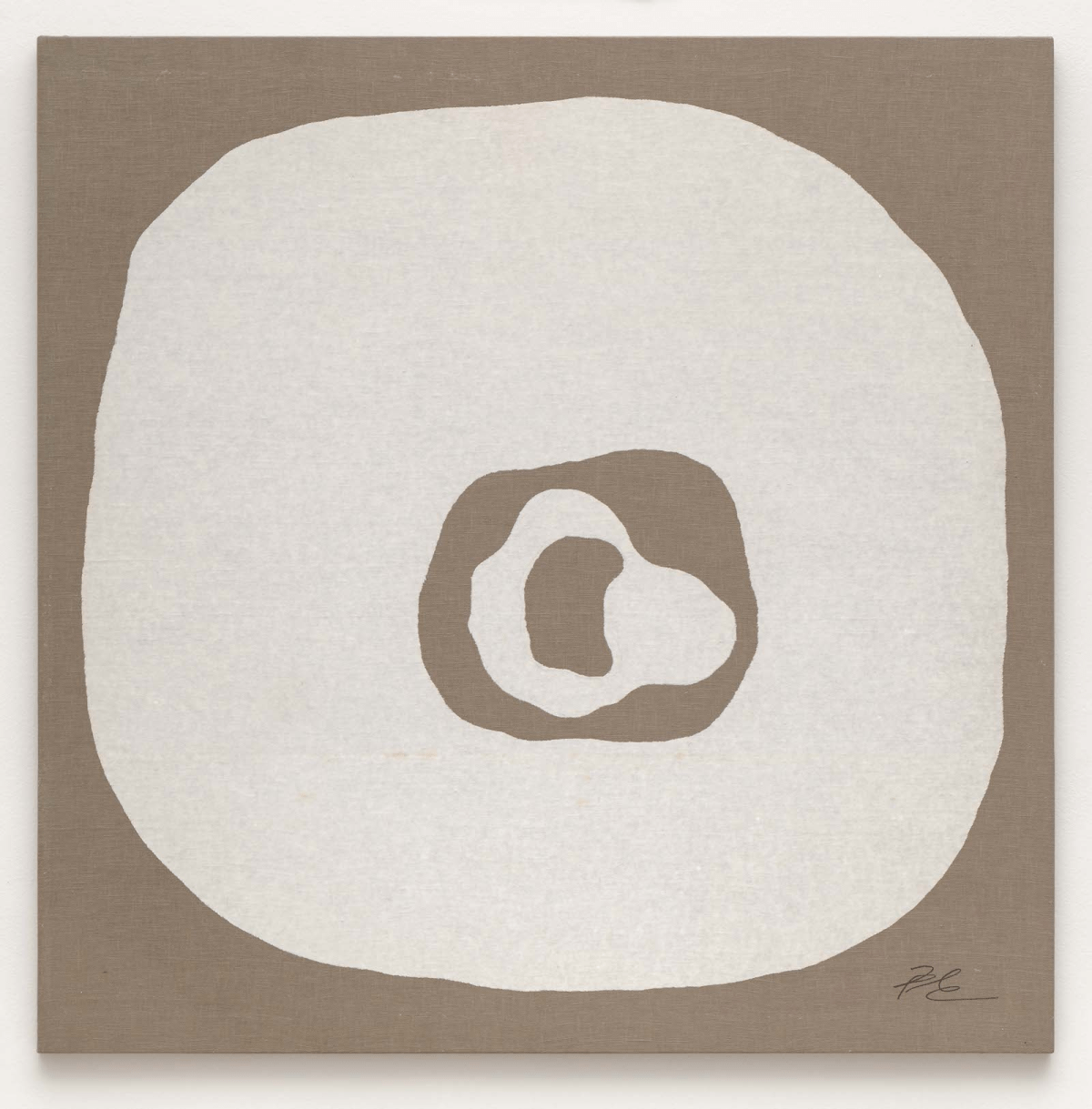
LOOK: Untitled by Kwon Young-Woo
Kwon Young-Woo (Korean, 1926–2013), Untitled, 2002. Korean paper on canvas, 51 3/16 × 51 3/16 in. Photo: Chunho Ahn, courtesy the artist’s estate and Kukje Gallery.
Before the fruit is ripened by the sun, Before the petals or the leaves uncoil, Before the first fine silken root is spun, A seed is dropped and buried in the soil.
Before the Easter alleluias ring, Before the massive rock is rolled aside, Before the fear of death has lost its sting, A just and loving man is crucified.
Before we gain the grace that comes through loss, Before we live by more than bread and breath, Before we lift in joy an empty cross, We face with Christ the seed’s renewing death.
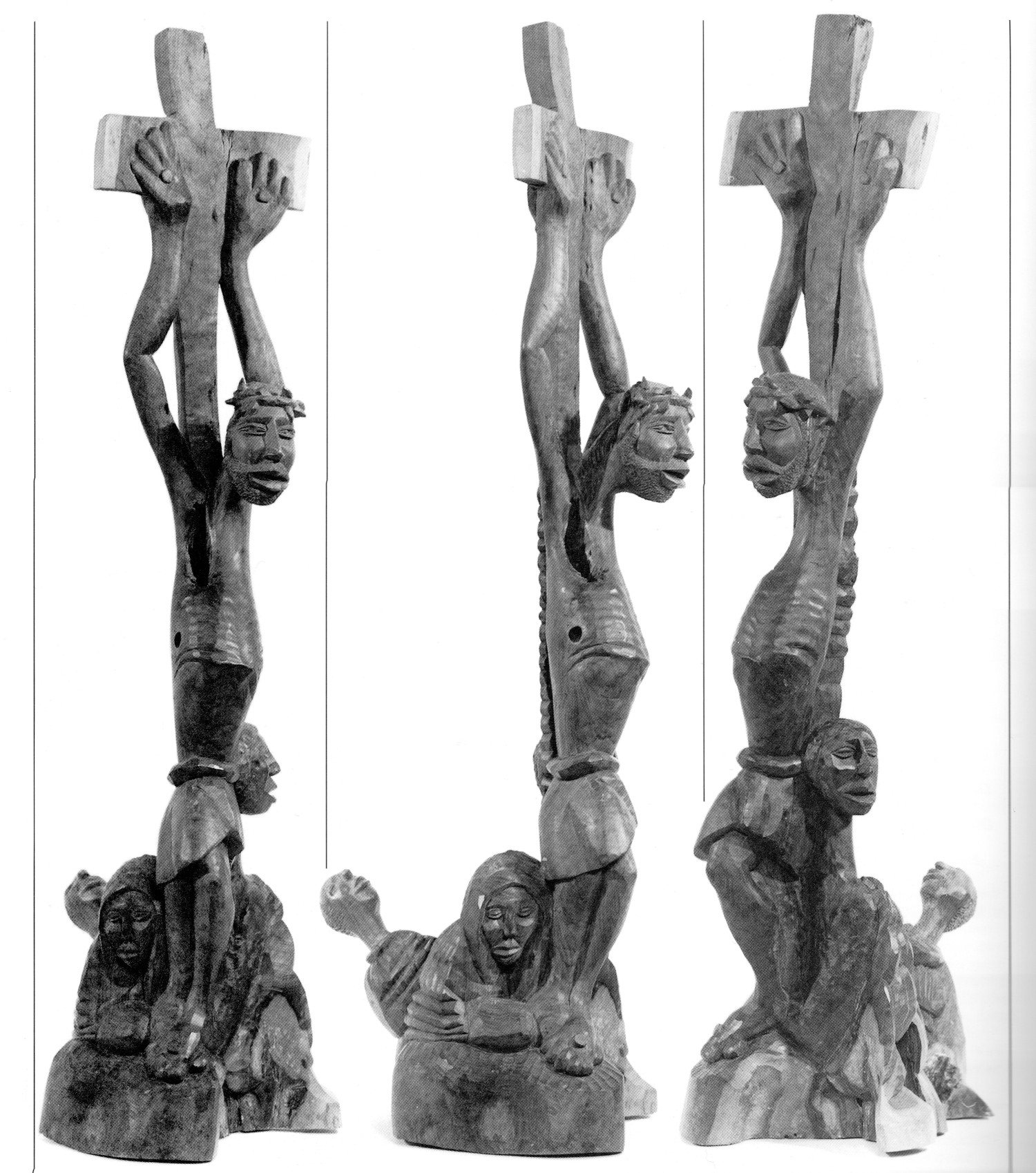
Olivewood crucifix, South Africa, 1978. Source: Christliche Kunst in Afrika, p. 263
LISTEN: “Indodana” (Son), traditional isiXhosa song from South Africa | Arr. Michael Barrett and Ralf Schmitt, adapt. André van der Merwe, 2014 | Performed by the Stellenbosch University Choir, 2014
You took your own son
Who lived among us [wailing]
(Repeat)

The Son of God
Was crucified [wailing]
(Repeat)

Oh Father! Father, Father Jehovah!
Father! [wailing]
(Repeat)

[source]
This song so well captures the mood of mourning that characterizes Good Friday, when the Son of God was slain. “Hololo” and “helele” are wordless expressions of grief. So is the “Zjem zjem zja” sung by the basses, like heaving sobs, on the title word in verse 2. One soprano who performed this piece said that singing the “Oh’s” above the melody felt like singing tears.
Then Jesus went with his disciples to a place called Gethsemane, and he said to them, “Sit here while I go over there and pray.” He took Peter and the two sons of Zebedee along with him, and he began to be sorrowful and troubled. Then he said to them, “My soul is overwhelmed with sorrow to the point of death. Stay here and keep watch with me.”
Going a little farther, he fell with his face to the ground and prayed, “My Father, if it is possible, may this cup be taken from me. Yet not as I will, but as you will.”
Then he returned to his disciples and found them sleeping. “Couldn’t you men keep watch with me for one hour?” he asked Peter. “Watch and pray so that you will not fall into temptation. The spirit is willing, but the flesh is weak.”
He went away a second time and prayed, “My Father, if it is not possible for this cup to be taken away unless I drink it, may your will be done.”
When he came back, he again found them sleeping, because their eyes were heavy. So he left them and went away once more and prayed the third time, saying the same thing.
Then he returned to the disciples and said to them, “Are you still sleeping and resting? Look, the hour has come, and the Son of Man is delivered into the hands of sinners. Rise! Let us go! Here comes my betrayer!”
—Matthew 26:36–46 NIV, emphasis added
LOOK: Agony in the Garden by Fra Angelico [HT: John Skillen]
Fra Angelico (Italian, ca. 1387–1455), Agony in the Garden, ca. 1450. Fresco, 177 × 147 cm. Cell 34, Convent of San Marco, Florence.
This fresco is from one of the forty-four cells in the Dominican convent of San Marco in Florence whose walls Fra Angelico and his assistants painted with religious scenes in the mid-fifteenth century. The friars who lived at San Marco—of which the artist, whose nickname means “Angelic Brother,” was one—used these paintings for private meditation.
Here we see Jesus in the garden of Gethsemane pleading with God the Father to let the cup of suffering, held out by an angel, pass him by. As he prays in agony, his disciples James, John, and Peter nod off just a stone’s throw away. Jesus had asked them to stay awake and pray with him, but their tiredness gets the better of them. In their friend’s hour of deepest need, they fail him.
By contrast—and this is unique!—Mary and Martha, two sisters from Bethany who are also followers of Jesus, are awake and alert under an open loggia, diligently praying and studying God’s word. Perhaps Mary points, in the book in her lap, to the passage of the Suffering Servant in Isaiah 53, recognizing Christ in it, or to the book of Exodus, where the Israelites celebrate their first Passover by smearing the blood of a lamb over their doors. Perhaps Martha prays that the Father would grant Jesus discernment of his will and the strength to follow through with it—that he would sustain him all the way to the cross and beyond.
While the male disciples on the other side of the wall fall asleep, heads in hands, the women watch and wait through the night, exemplars of faithfulness. They trust the prophecies and keep vigil, supporting their Lord in his suffering.
LISTEN: “Stay with Me” by Jacques Berthier, 1984 | Performed by the Taizé Community Choir on Songs of Taizé: O Lord, Hear My Prayer & My Soul Is at Rest, 1999
Stay with me Remain here with me Watch and pray Watch and pray
The words from this Taizé chant come from Jesus’s words in Matthew 26:38, 41 (cf. Mark 14:34, 38). He and his disciples have just finished the Passover Seder, and with full bellies, three of them follow Jesus up to an olive grove, which was perhaps a favorite prayer spot. But they neglect his instruction to stay awake and pray with him.
How can we remain with Christ this Maundy Thursday?
To “keep vigil” this night is to be fully present to Christ’s suffering and spiritually awake to his will and way.
Julia Stankova (Bulgarian, 1954–), Portrait of Judas, 2004. Tempera, gouache, watercolor, and lacquer technique on wood, 45 × 60 cm.
In this painting by Julia Stankova, Judas presses in for his infamous kiss, identifying Jesus to his captors. Stankova portrays the moment as one of double woe, leading to the death of both Jesus and Judas. To heighten the emotional impact, she tightly crops the composition, eliminating all other figures besides the two. Jesus closes his eyes to receive with grace what has been a long time coming. Judas keeps his open. With one arm, he embraces his former friend; with the other, he holds a branch that’s ornamented, forebodingly, with his own dangling corpse. The Bulgarian inscription names the painting: Portrait of Judas.
LISTEN: “Gallows of My Desire” by Kris MacQueen, on Good Morning. Happy Easter. 3 (2014)
Tonight we ate together Bread and the wine cooked rare You looked so disappointed When I took off down the stairs We took the road together But I just exited right I’ll see you in a little while And again on the other side
Refrain: I stood above you Like a conqueror And you stood beside me like a friend I kissed you goodbye At the gates of hell But you’ve always called my bluff Yeah, you know my every tell
Tonight I’m taking matters Into my guilty hands Just sold the Prince of Peace out For a little stretch of land There’s nothing like the yoke Of the innocent when they die It came upon me like a stone When I saw the deed was mine [Refrain]
Now I’m swinging in the gallows Of my own desire My spirit is departing to God knows where Is there a grace sufficient To receive this broken soul? You bled out for the whole wide world How ’bout your very own? [Refrain]
But I always knew I’d bow to you in the end
Kris MacQueen is a singer-songwriter and former pastor from Kitchener, Ontario. Since 2019 he has been recording music with his wife, Liv, under the name The MacQueens. It is their voices on “Gallows.” This song was released in 2014 on a little six-song compilation album of Passion-Easter-Pentecost music put out by Morning and Night Music, which is no longer available. I asked MacQueen if he’d be willing to post his contribution online so that you all can enjoy it, and he obliged!
The song is in the voice of Judas, who is feeling the full weight of his betrayal—the innocent Christ’s death a yoke or a millstone around his neck. Many Christian interpreters think that Judas gave Jesus up to the authorities as a way to force his hand; impatient with Jesus’s not seizing power from Rome, Israel’s political oppressors, he thought that an arrest would be just the inciting event Jesus needed to finally unleash the forces of heaven against the empire, obtaining vindication and freedom for God’s people. Judas, according to this theory, was genuinely shocked and horrified when Jesus submitted to the capture and then the death sentence.
By asserting his own plans and desires counter to God’s, Judas effectively builds his own death trap, as the guilt over the consequences of his betrayal leads him to suicide. But before tying that noose, maybe, we can only hope, he sought redemption for his wrongdoing. His return of the blood money seems to indicate as much. He was clearly remorseful. MacQueen’s Judas prays from the gallows, pleading the blood of Jesus. If Jesus’s blood can save even the most odious of sinners, he reasons, then surely it avails for me. But he’s not so sure; he poses it as a question, a challenge, even.
The final line of the song suggests that in the end, perhaps Judas was finally able to see the rightness of Jesus’s way and was able to bow not to the king he imagined or wanted him to be, but to the king he was—the Prince of Peace, the servant-Christ, the sacrificial Lamb.
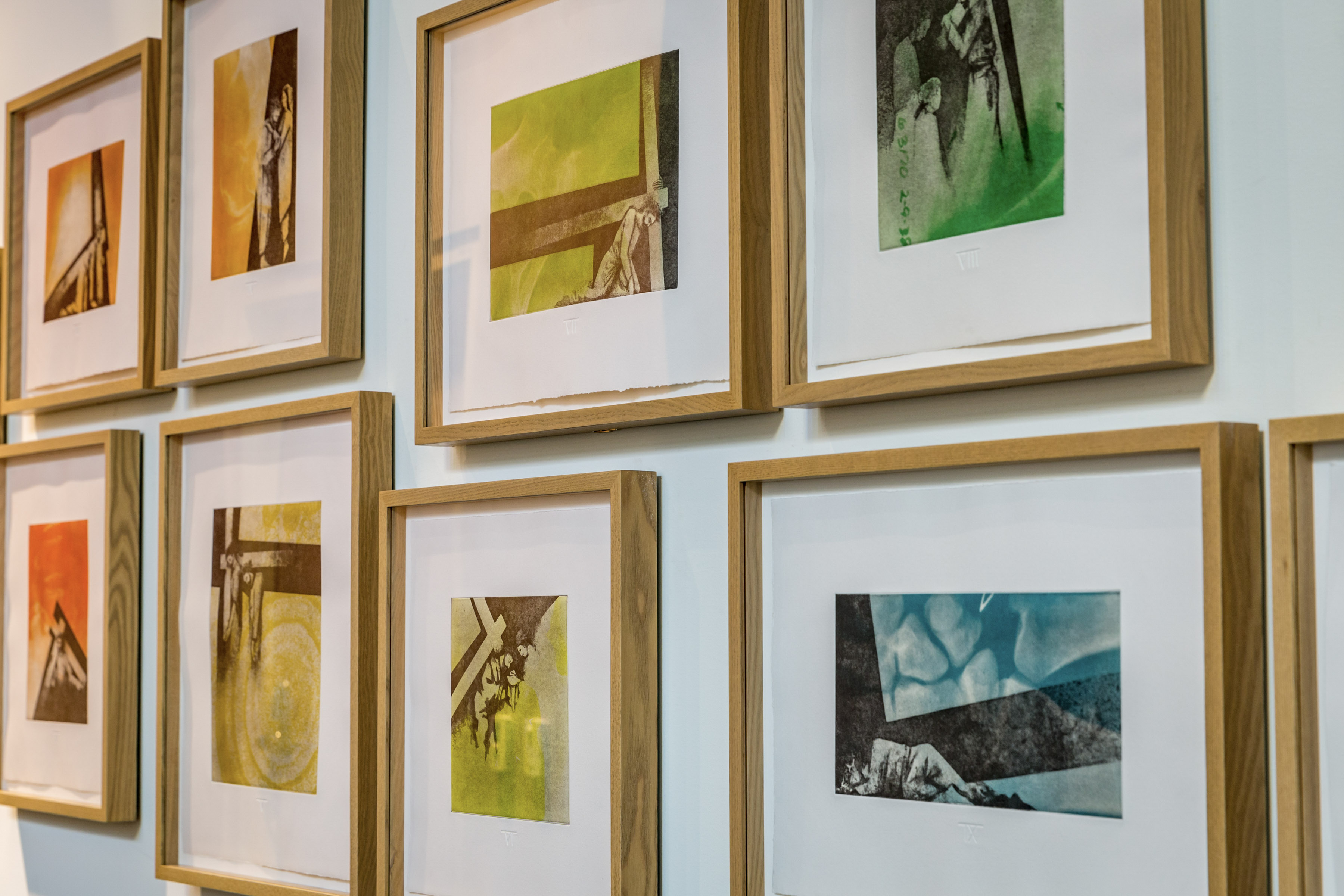
PRINT SUITE: Via Dolorosa by William Frank: Commissioned by SSM Saint Louis University Hospital for their chapel, this set of Stations of the Cross prints by William Frank combines depictions of Christ’s passion with diagnostic X-ray imaging of patients from the hospital’s archives. “The human body, and the community, act as the landscape,” he told me. A bullet in the spine, a kidney stone, a wrist fracture, a tumor, tuberculosis of the bones—Jesus’s suffering unfolds against the backdrop of these specific, tangible forms of suffering. But the rainbow color scheme transforms the stark black-and-white medical images into something a little less scary, suggesting hope and promise—maybe healing, maybe not, but at the very least, divine accompaniment along the path of sorrow.
William Frank (American, 1984–), Via Dolorosa (installation detail), 2020. Etching, archival inkjet, chin collé, with embossment, suite of fourteen prints, overall 4 × 16 ft. SSM Saint Louis University Hospital Chapel, St. Louis, Missouri. Photo: Lisa Johnston, courtesy of the artist.
This year, the Catholic Health Association of the United States created a set of video reflections around Frank’s Stations, one for each piece, which you can find at https://www.chausa.org/prayers/lent-reflections. They also shot a video conversation with the artist:
NEW SONG: “Spooling” by Rev. Matt Simpkins: Diagnosed with stage 4 skin cancer, the Rev. Matt Simpkins [previously] of Lexden in Colchester, an Anglican vicar and a rock musician, said the only way he could calm his nerves enough to get through his next MRI scan was by writing a song from inside the machine. He composed some words and harmonies in his head to the “groovy,” sonorous beeps of the scanner, recording the song afterward using sampling, thus turning a typically threatening, antiseptic medical sound into a party vibe. He was interviewed on the BBC about it last month:
And here’s the bizarre music video, with special effects!
“I’m in a difficult situation with stage 4 cancer, but again, you’ve got a choice, and this song is a good example of that—how you can take something up into song and live,” he says. He hopes the song will minister to those who are undergoing cancer treatment or facing a possible diagnosis—that it is a small oasis, a source of silly laughter, comfort, and strength, for those in dire health.
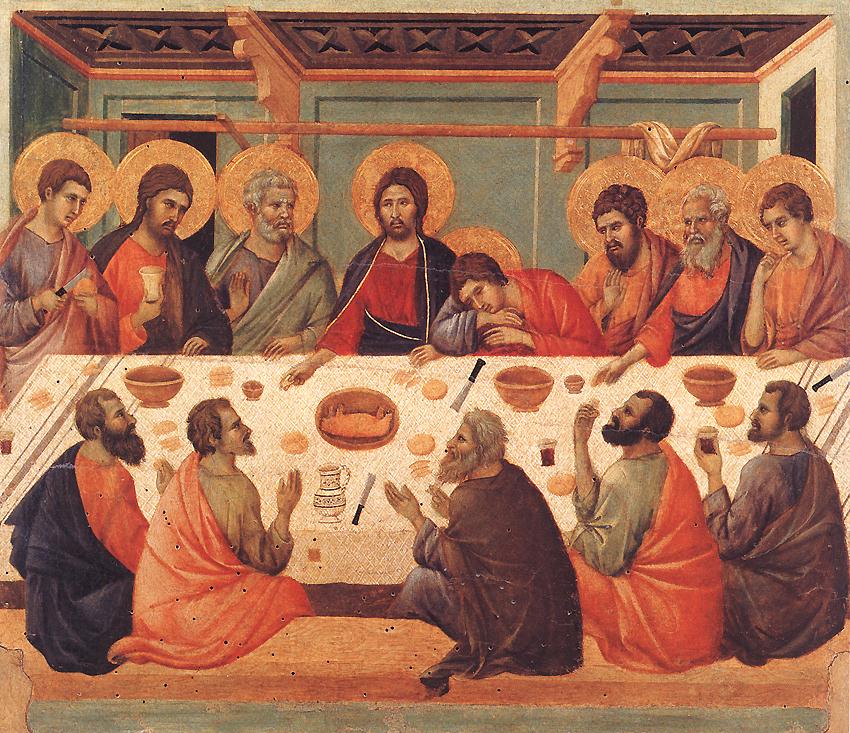
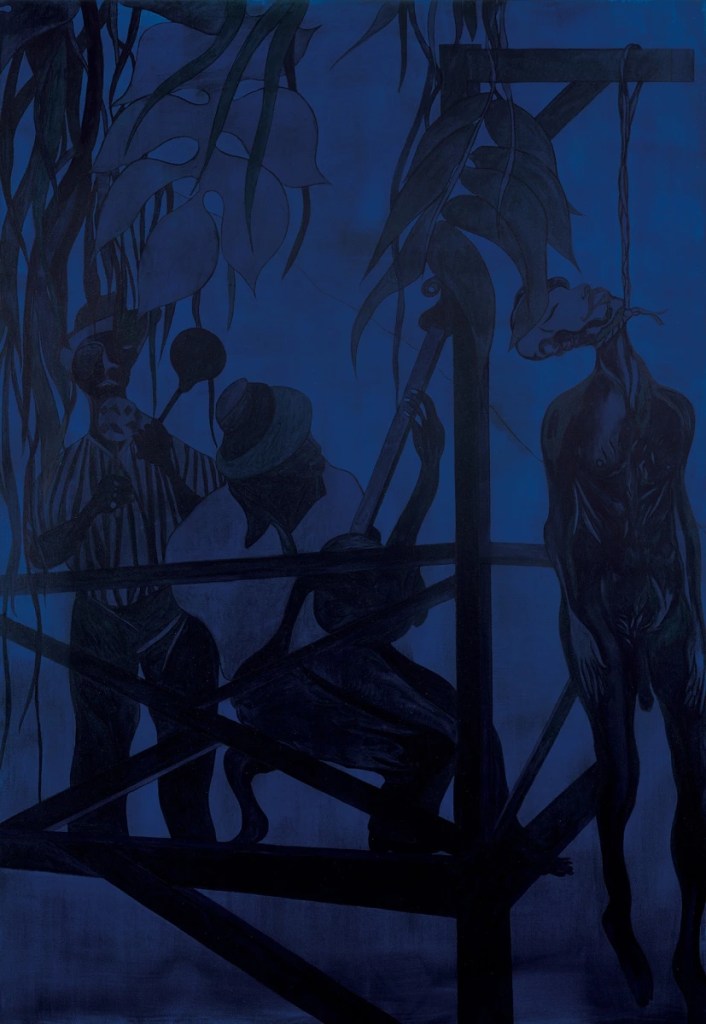
ART COMMENTARY: The Apostle Judas by Adrienne Dengerink Chaplin: As part of the Visual Commentary on Scripture project, Dr. Adrienne Dengerink Chaplin has selected three artworks that in some way interpret Matthew 26:20–25 (and parallel passages), when at the Last Supper Jesus announces that someone there will betray him. Rather than featuring the more common portrayals of Judas as malevolent, halo-less, and/or segregated from the group at the far end of the table, Dengerink Chaplin has chosen works that show him integrated and indistinct, one of twelve betrayers, whose treachery, she boldly proposes, we might construe as “a happy fault.”
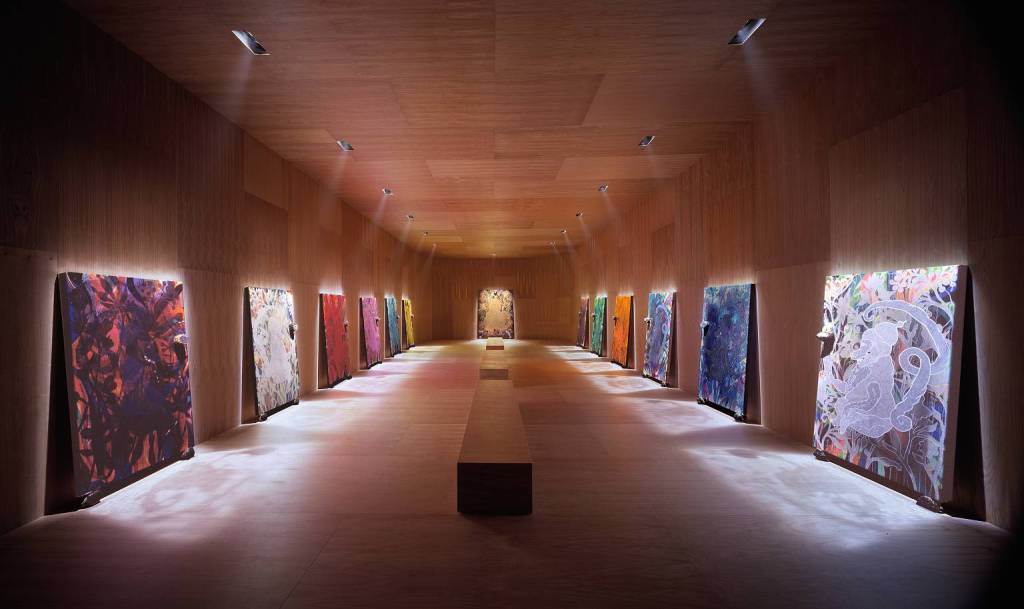
Chris Ofili (British, 1968–), The Upper Room, 1999–2002. Oil paint, acrylic paint, glitter, graphite, pen, elephant dung, polyester resin, and map pins on 13 canvases, each 183.2 × 122.8 cm, except head canvas, 244.2 × 183 cm. Installation at Victoria Miro Gallery, London. Collection of Tate, London.
Duccio di Buoninsegna (Italian, d. 1318), The Last Supper, from the Maestà Altarpiece, 1308–11. Tempera and gold on panel, 50 × 53 cm. Museo dell’Opera del Duomo, Siena, Italy.
Chris Ofili (British, 1968–), Iscariot Blues, 2006. Oil and charcoal on linen, 281 × 194.9 cm. Photo courtesy of Victoria Miro and David Zwirner.
With the Duccio panel, she points out something I’ve often contemplated as well: that Jesus feeds Judas with the element he calls his body, keeps communion with him, and is there not a preemptive forgiveness implicit in that act?
+++
SONG: “In the Night” by Andrew Peterson: At a Laity Lodge retreat in 2015, Andrew Peterson of Nashville performed one of the songs from his album Counting Stars (2010) with fellow musicians Buddy Greene, Jeff Taylor, and Andy Gullahorn. “In the Night” rehearses “dark night” stories from scripture: Israel wrestles with God, is enslaved by Egypt, is pressed in by Syria; a prodigal son must resort to eating pig slop; the Son of Man is beaten and killed. But in each of these stories, deliverance comes. Hence the refrain: “In the night, my hope lives on.”
+++
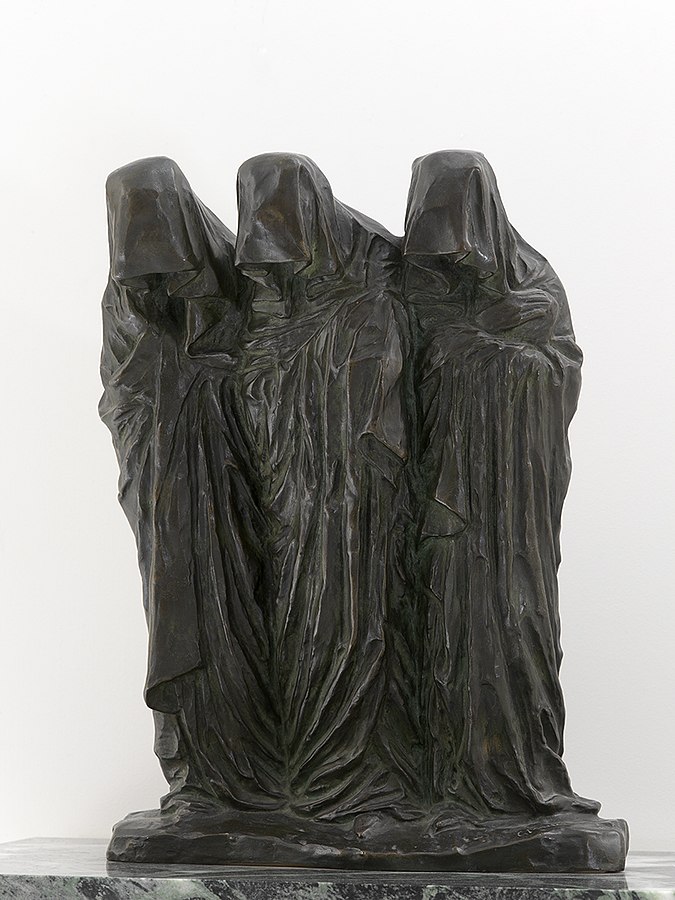
VISUAL MEDITATION: On TheHoly Women at the Tomb by George Minne, commentary by Marleen Hengelaar-Rookmaaker: Marleen Hengelaar-Rookmaaker, the creator of ArtWay, writes about a nineteenth-century bronze sculpture by the Belgian artist George Minne, which shows the three women who went to Jesus’s tomb on Easter morning in an attitude of grief—bent backs, bowed heads—drawing on the gothic pleurants, or weepers, of late medieval tombs. The women are “totally enwrapped in mourning their beloved,” Hengelaar-Rookmaaker writes. “This is in fact the very last moment of the passion, the last moment of suffering past the Pietà and the burial of Christ. It will only be a minute before their hoods will come off and the news of the resurrection will enter their numbed minds.”
George Minne (Belgian, 1866–1941), Les saintes femmes au tombeau (The Holy Women at the Tomb), 1896. Bronze, 44.5 × 62 × 20.5 cm. Groeningemuseum, Bruges, Belgium.
This composition by Minne also exists in granite, wood, and plaster versions.
+++
NEW PLAYLIST: April 2023 (Art & Theology): Includes an excerpt from the psychedelic rock–style Mass in F Minor by the Electric Prunes, “The Outlaw” by Jesus Movement icon Larry Norman, a chuckle-inducing bluegrass song first recorded in 1926 by Gid Tanner and Faith Norris and covered here by the Local Honeys, a choral setting of Psalm 128 (“Happy is everyone who fears the Lord, who walks in his ways . . .”) by the Italian Jewish Renaissance composer Salomone Rossi, Whitney Houston’s rendition of “His Eye Is on the Sparrow,” and a short Kiowa Apache church song that translates to “Son of our Father will set up a cedar tree / Now he is calling to us / He’s going to heal our minds / That’s why he is calling to us.”
And at midnight there was a cry made, Behold, the bridegroom cometh; go ye out to meet him.
—Matthew 25:6 KJV
In the Orthodox Church, observances of Holy Monday, Tuesday, and Wednesday (which in that tradition take place next week) focus on the end times, “remind[ing] us of the eschatological meaning of Pascha,” says Alexander Schmemann.
The Gospel reading for the Liturgy of the Presanctified Gifts on Holy Tuesday is Matthew 24:36–26:2, which covers the need for watchfulness, the parable of the ten bridesmaids, the parable of the talents, and the Last Judgment. These passages constitute the latter half of Jesus’s Olivet Discourse, or Little Apocalypse, which, according to the chronology of Mark’s Gospel, Jesus preached the Tuesday before his death.
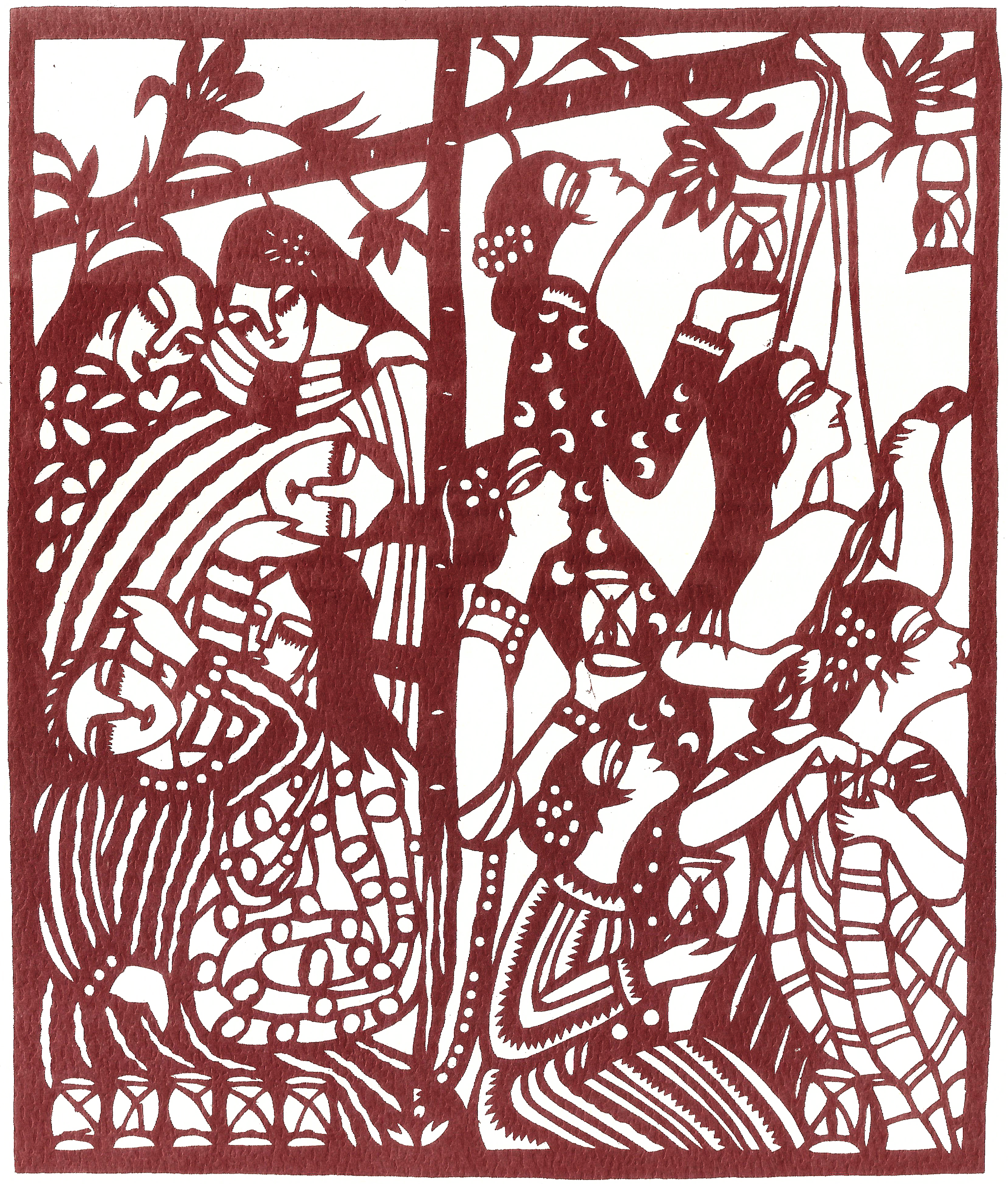
So, informed by the Matthew 25:1–13 reading, today I’ve selected a papercut by Chinese artist Fan Pu and a Black gospel song from the southern US that both engage with Jesus’s call to keep our metaphoric oil lamps burning in expectation of the return of the Bridegroom, who died and rose for love of us, and who has gone to build us a home.
LOOK: Ten Bridesmaids by Fan Pu
Fan Pu (Chinese, 1948–), Ten Bridesmaids, 2001. Papercut. Collection of the Asian Christian Art Association.
(Note: This artwork has changed since the original publication of this post. I learned that the previous artist did not want her work featured or her name mentioned on the website.)
LISTEN: “The Bridegroom’s Coming,” traditional gospel song | Recorded August 6, 1940, by Mitchell’s Christian Singers, on Mitchell’s Christian Singers, vol. 3 (1938–1940) (released 1996)
I couldn’t find lyrics for this song online, so I transcribed them myself the best I could. I’m not positive about the second line in the refrain, and I couldn’t make out the second half of the last line of verse 2.
Refrain: And behold (and behold), lo, the Bridegroom’s coming Lift up (lift up), I heard the voices cryin’ out loud And be ready (and be ready) when the Bridegroom’s coming To meet him in the air
Ever seen such a man as this? Jesus was sent, he came down to die Jesus was sent, he came down to die Came to save my soul from the burning fire [Refrain ×2]
Ever seen such a man as this? Jesus was sent, he came down to die Jesus was sent, he came down to die I want to meet . . . (?) [Refrain ×2]
Mitchell’s Christian Singers [previously] were an influential early gospel group from Kinston, North Carolina.
The Kentucky Jubilee Four recorded an earlier version of this song for OKeh in St. Louis, Missouri, in 1927.
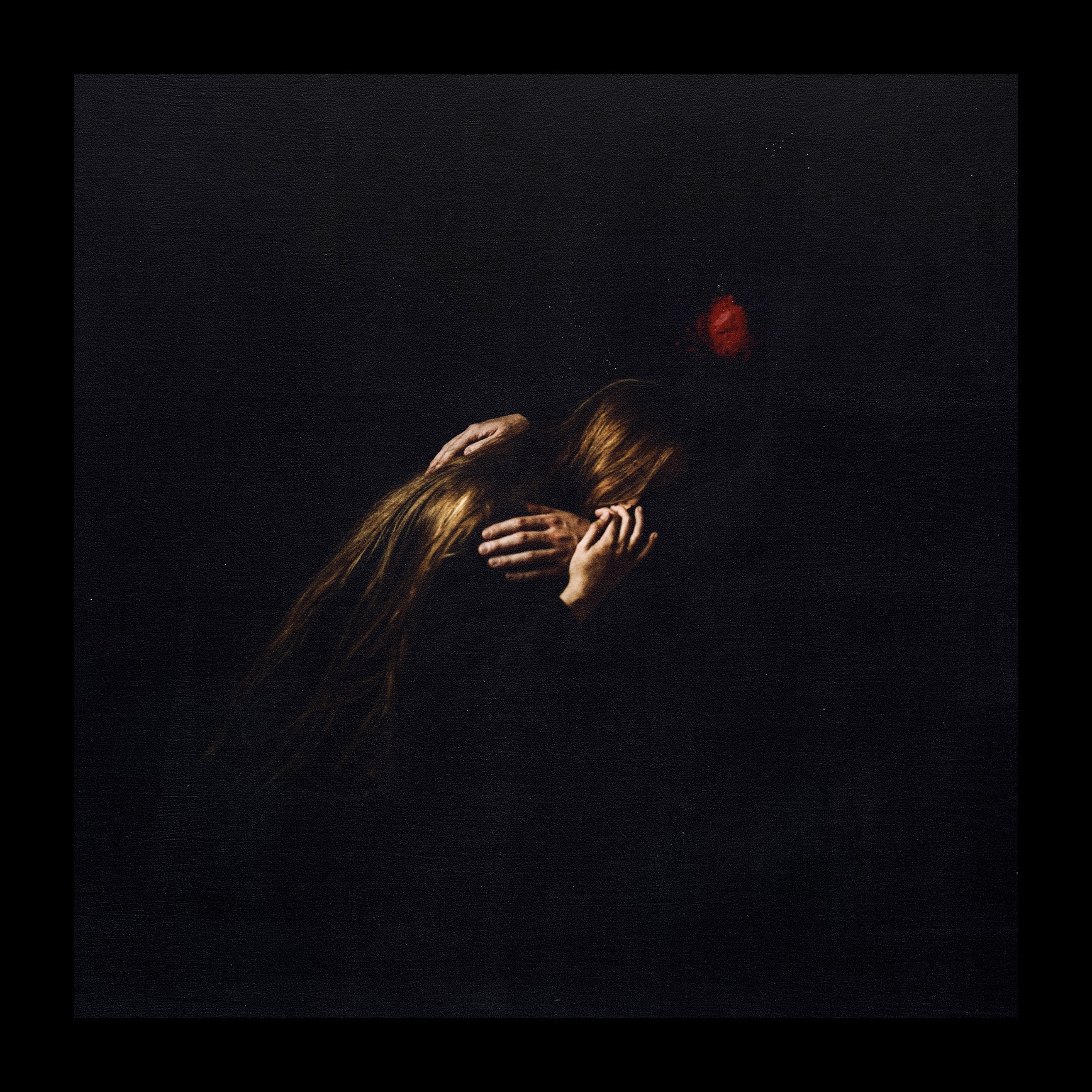
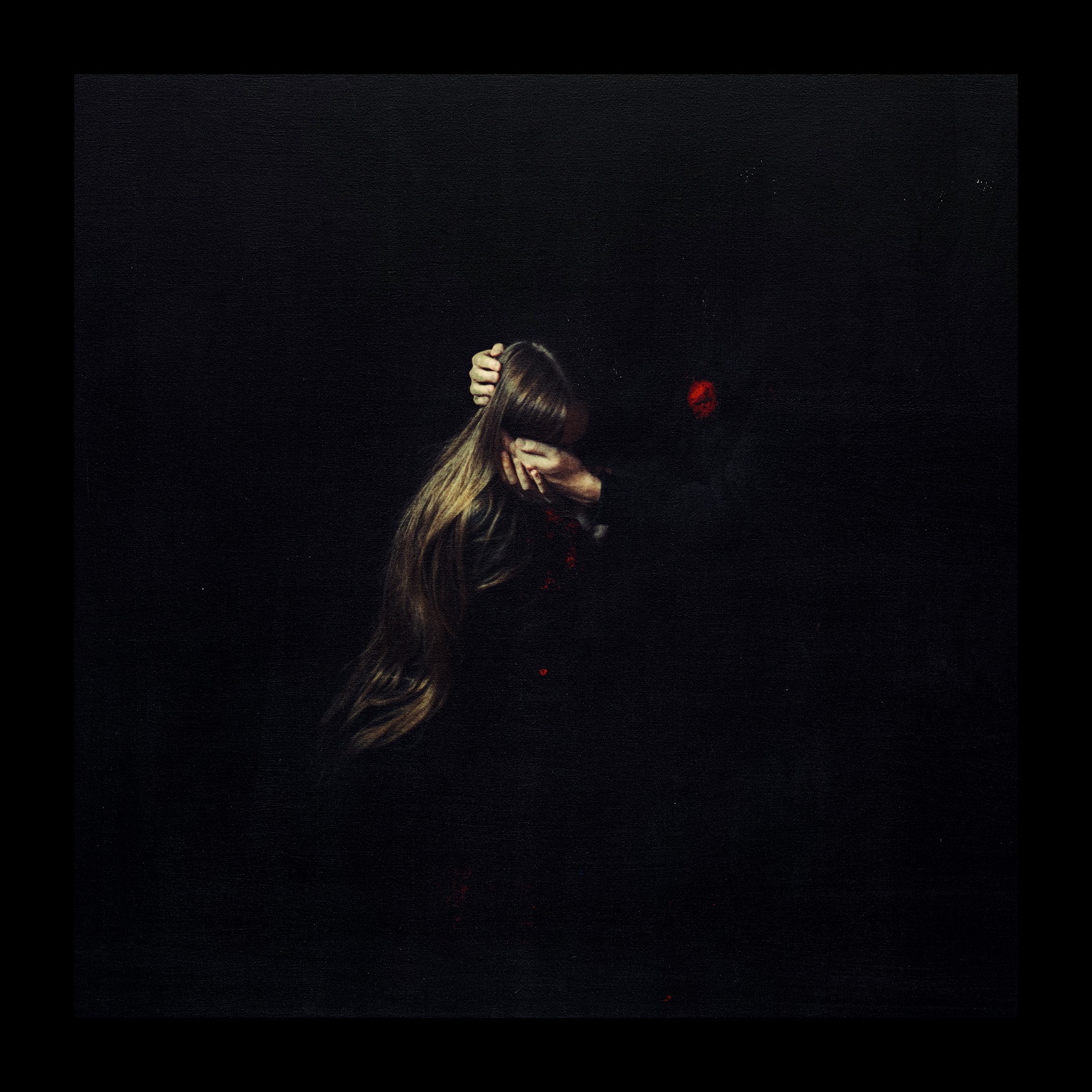
Laura Makabresku (Polish, 1987–), Intimacy of the Heart (7), 2020Laura Makabresku (Polish, 1987–), Intimacy of the Heart (8), 2020
LISTEN: “Mary” by the Brothers of Abriem Harp, on Last Days (2015) [reviewed here]
Mary, my dear, come over here Tell me, is it true what they say? Mary, my dear, let go of your fear And bring your gift to me, I pray Let your heart rest with mine I don’t have much time So break your fragrance free, my dear
Let your tears fall on me Brush your hair on my feet Let your alabaster tears fall on me Fall on me
Overflow, overflow And go where you go Let this fragrance fill the air with love divine Love divine
Fill the air, fill the air Let your heart beat with mine Let this fragrance fill the air with love divine Love divine
Mary, my dear, bring yourself near Let your heart beat with mine, my dear
Laura Makabresku (Polish, 1987–), Intimacy of the Heart (10), 2020
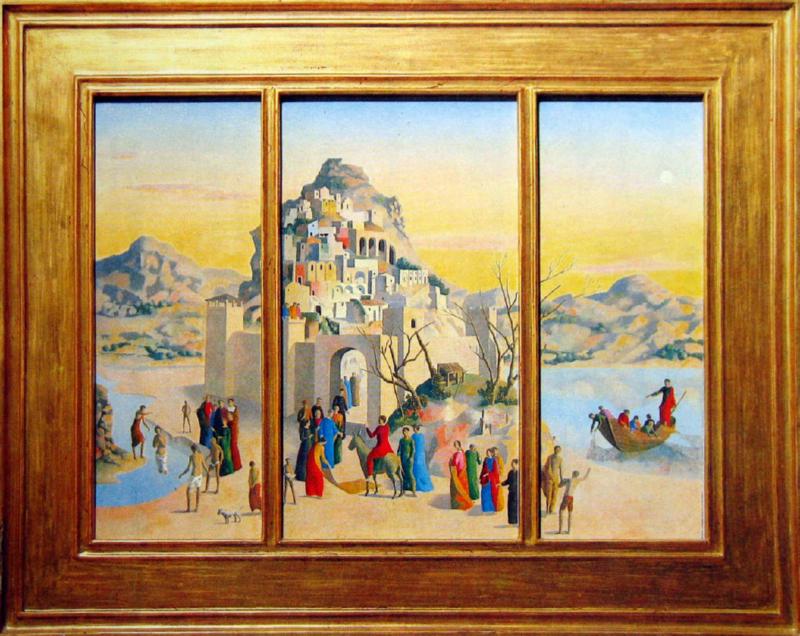
Justin O’Brien (Australian, 1917–1996), Palm Sunday, 1962. Oil on canvas, 45.5 × 62 cm.
This triptych (three-paneled artwork) by Australian artist Justin O’Brien portrays three scenes from the life of Christ. On the left wing is the Baptism of Christ, where he’s anointed by God’s Spirit for his messianic role, and on the right is the Miraculous Draught of Fishes, a story of miraculous abundance. The center panel shows Jesus about to enter the gates of a hilltop city representing Jerusalem. He rides a donkey and is dressed in red, the color of martyrdom. One man lays down his cloak before Jesus’s dusty path as a sign of reverence. Now the people welcome him in, but in just a few short days many will turn on him.
O’Brien grew up in a Catholic household in Sydney. In 1948–49 he visited Italy and fell in love with the work of the Proto- and Early Renaissance painters from Tuscany, like Duccio and Piero della Francesca. Most of O’Brien’s paintings are on religious subjects, despite his renunciation of Catholicism in 1954. Though he self-identified as agnostic for the second half of his life, he continued to be artistically inspired by the stories of the New Testament. He moved to Rome in 1967 and spent the remainder of his days there, returning to his home country of Australia every few years for exhibitions.
LISTEN: “Jerusalem Interlude,” excerpted from “The Holy City” | Words by Frederick E. Weatherly, 1892 | Music by Stephen Adams (pseudonym of Michael Maybrick), 1892; arr. Noble Caine, 1946 | Performed by the Aeolians of Oakwood University on Aeolianology Acappella, vol. 2, 2015
Jerusalem, Jerusalem Lift up your gates and sing Hosanna in the highest Hosanna to your king
This is the refrain of the Victorian choral ballad “The Holy City” by the English lawyer, author, lyricist, and broadcaster Frederick E. Weatherly (best known for writing “Danny Boy”) and his regular collaborator, the English composer Michael Maybrick, who published under the pen name Stephen Adams. The song became hugely popular in the UK and the US at the beginning of the twentieth century, and is even mentioned in James Joyce’s Ulysses (1920). It is sung by early Hollywood musical superstar Jeanette MacDonald in the 1936 film San Francisco.
Lyrics to the complete song are below, as is a video performance by the Aeolians from 2020:
Last night I lay a-sleeping There came a dream so fair I stood in old Jerusalem Beside the temple there I heard the children singing And ever as they sang Methought the voice of angels From heav’n in answer rang
“Jerusalem, Jerusalem! Lift up your gates and sing Hosanna in the highest Hosanna to your king!”
And then methought my dream was chang’d The streets no longer rang Hush’d were the glad Hosannas The little children sang The sun grew dark with mystery The morn was cold and chill As the shadow of a cross arose Upon a lonely hill
“Jerusalem, Jerusalem! Hark! how the angels sing Hosanna in the highest Hosanna to your king!”
And once again the scene was chang’d New earth there seem’d to be I saw the Holy City Beside the tideless sea The light of God was on its streets The gates were open wide And all who would might enter And no one was denied No need of moon or stars by night Or sun to shine by day It was the new Jerusalem That would not pass away
“Jerusalem, Jerusalem! Sing, for the night is o’er! Hosanna in the highest! Hosanna for evermore!”
The song’s speaker has a dream about Christ’s celebrated entry into Jerusalem, with crowds surrounding him and shouting his praises. But then the mood turns dark and hushed as a cross is erected on Golgotha and the newly hailed king is crucified. However, the mood revolves back to one of celebration in the final verse as the New Jerusalem comes down, permanently displacing all sorrow, its gates thrown open wide in universal welcome and the wounded but victorious Jesus seated on the throne.
The Aeolians’ isolation of the first refrain for their “Jerusalem Interlude,” which echoes Psalm 24:7–10 [previously], makes a perfect antiphon for Palm Sunday. Though the words are exultant, the music has an aching quality that foreshadows the suffering that is soon to come and that matches the tone of Jesus’s lament over Jerusalem on this day: “As he came near and saw the city, he wept over it, saying, ‘If you, even you, had only recognized on this day the things that make for peace! But now they are hidden from your eyes’” (Luke 19:41–42; cf. Matt. 23:37–39).
The American jazz composer Duke Ellington used the refrain’s melody as the basis of the opening of his “Black and Tan Fantasy” (1927), in which a cornet and trombone play dolefully in parallel harmony. Can you hear the clopping donkey?
Addendum, 4/23/25: Here’s another arrangement of the song I like, by African Vocals, an a cappella group from Namibia. The following video shows one of the performances from their 2019 Germany tour. Soloist Reinhard Kungairi Kahambuee (who doesn’t come into frame until fifty seconds in) is wonderful! Note that at 1:40, the tempo becomes bright, lively, and more rhythmic, with the addition of hand claps.
In the thirteenth century, a new subject emerged in painted Passion cycles in both East and West: Christ resolutely climbing a ladder to the cross. He ascends willingly, even enthusiastically, demonstrating a heroic acceptance of death. In taking those steps up onto the instrument of his martyrdom, he exercises agency. As he tells a gathered crowd in John 10:18, “No one takes [my life] from me, but I lay it down of my own accord. I have power to lay it down . . .” Out of love for the world, he gives himself as a sacrifice, bringing about reconciliation between God and humanity.
The iconography of the Ascent of the Cross (alternatively referred to as “Christ Mounts the Cross”) is of Byzantine origin and can be found in Macedonian and Serbian church frescoes.
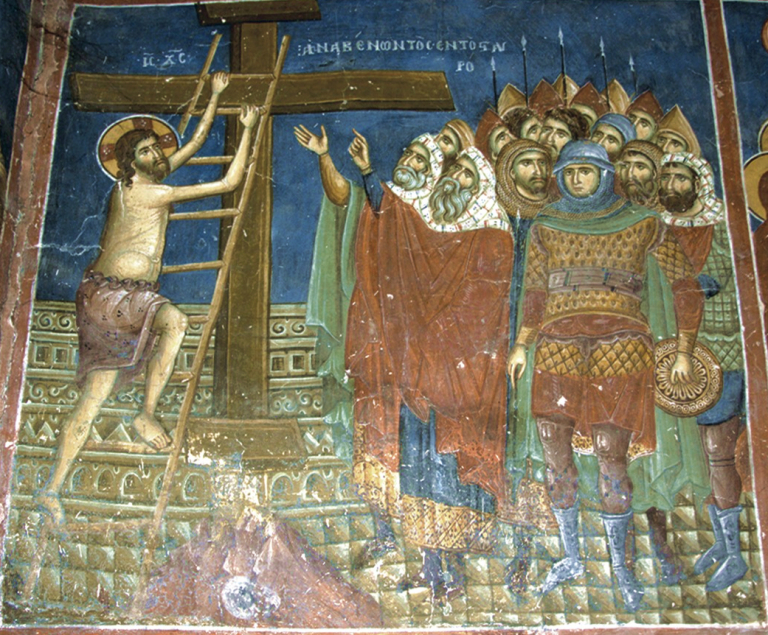
Michael Astrapas and Eutychios, Ascent of the Cross (at right), 1295. Fresco, Church of the Holy Mother of God Peribleptos (aka Church of Saint Clement), Ohrid, North Macedonia. Photo: Vera Zavaritskaya.Ascent of the Cross, 1298. Fresco, Church of St. Nicholas, Prilep, North Macedonia. Photo: P. S. Pavlinov.Ascent of the Cross, 1317. Fresco, Church of St. George, Staro Nagoričane, North Macedonia.Ascent of the Cross, 1343–45. Fresco, Church of St. George, Pološko, North Macedonia.
In a fresco from the Church of St. George at Staro Nagoričane, a small Roman military detachment has just led Jesus to the site of his execution. A young enslaved Roman fixes the cross into the ground, instructed by an older slave who holds a basket of nails, while a third stands on the suppedaneum and waits to nail Jesus’s hands into place. Caiaphas, the Jewish chief priest, points to the cross, indicating to Christ to ascend it. Christ grabs hold of the rungs and climbs, while at the top left, from behind a rock, the Virgin Mary and John look on in grief.
Byzantine painting greatly influenced the Italian painters of the thirteenth and early fourteenth centuries. Many of them adopted Byzantine models, of which the Ascent of the Cross is one example.
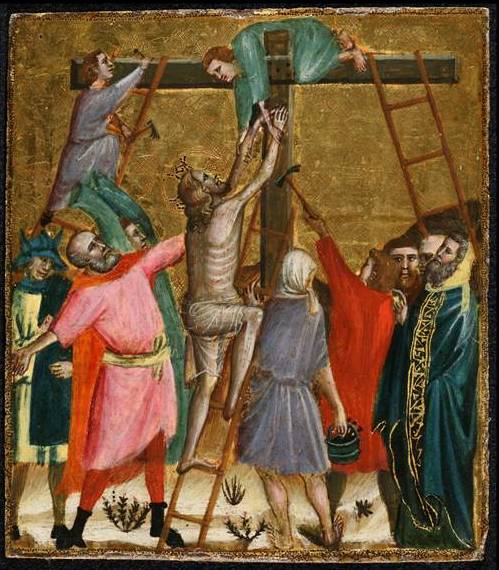
Pacino di Bonaguida (Italian, Florentine, 1280–1340), Ascent of the Cross, from the picture-book Scenes from the Life of Christ and the Life of the Blessed Gerard of Villamagna, ca. 1320. Tempera and gold leaf on parchment, 9 5/8 × 6 7/8 in. (24.5 × 17.6 cm). Pierpont Morgan Library, New York, M. 643, fol. 12r.
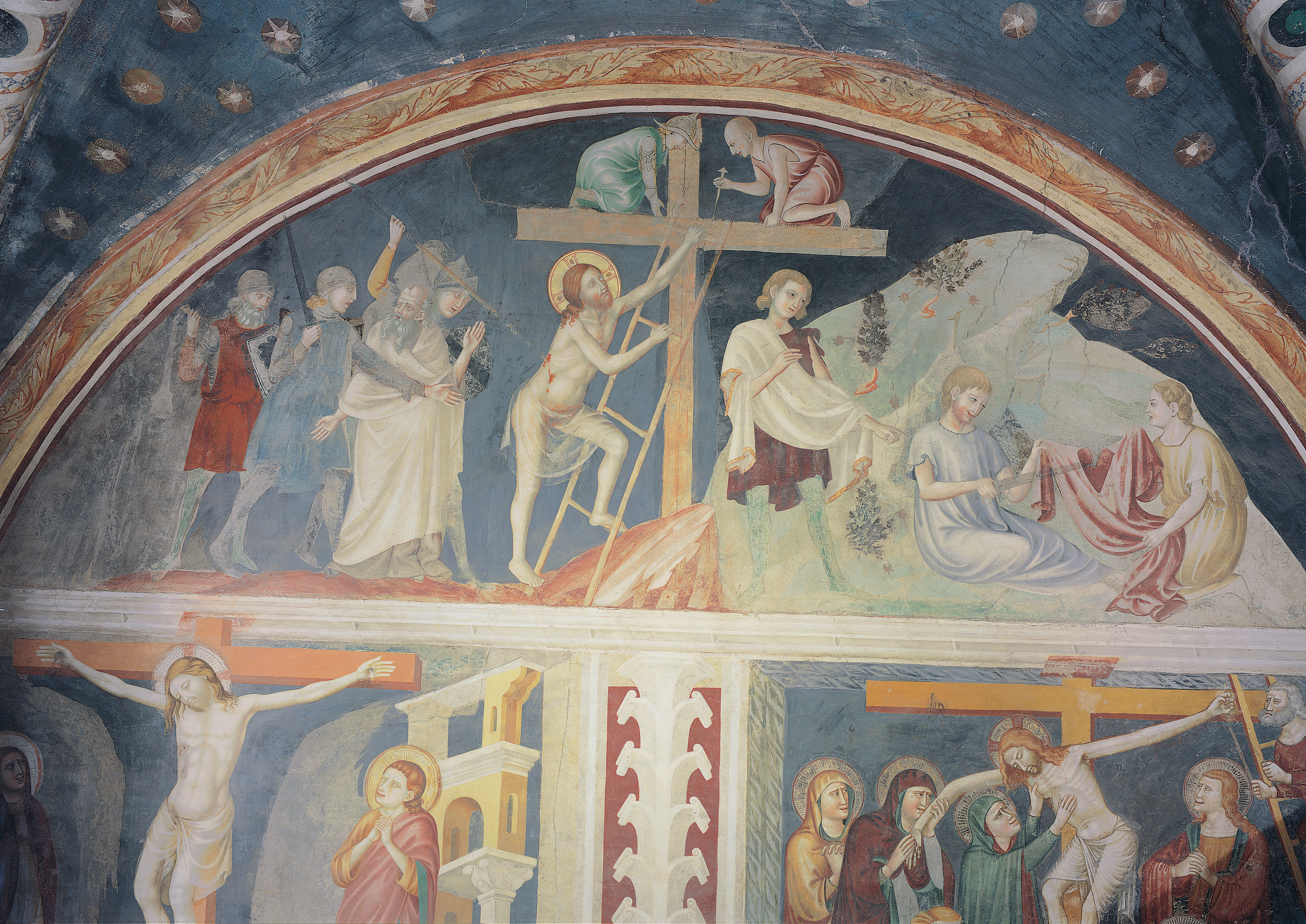
In a Ferrarese church lunette fresco in the Benedictine nuns’ monastic complex of Sant’Antonio in Polesine, two men kneel on the cross’s patibulum as Christ mounts the ladder propped against it. He wears a translucent loincloth, emphasizing his nakedness and humiliation. Knowing Christ’s innocence, an elderly Jewish man tries to intervene to prevent the brutality, but he is restrained by soldiers. On the right, a group of Romans argues over who will get to keep Christ’s cloak, a souvenir from this regional celebrity.
Christ Mounts the Cross on a Ladder, 14th century. Fresco, Monastery of Sant’Antonio in Polesine, Ferrara, Italy.
In some versions of the Ascent of the Cross, Jesus is pushed or pulled into position, or at least aided, by soldiers, with whom he readily cooperates. Such is the case in the earliest identified instance of the subject, from an eleventh-century Armenian Gospel-book. (Armenians were the largest non-Greek ethnicity in the Byzantine Empire.)
Ascent of the Cross, from the Vehapar Gospels, Armenia, early 11th century. Matenadaran, Yerevan, MS 10780, fol. 125v.
Art historian Thomas F. Mathews says that in the Armenian tradition, Golgotha is identified with the place where the Jewish patriarch Jacob had a vision of angels trafficking a ladder connecting heaven and earth. “How awesome is this place! This is none other than the house of God, and this is the gate of heaven,” Jacob exclaimed, dubbing it Bethel, Hebrew for “house of God” (Gen. 28:10–22). In Armenian manuscript illuminations, Mathews argues, the subject of Christ ascending the cross, very often followed by a depiction of Christ’s dead body descending from the cross, was thus interpreted as an extension of Jacob’s vision, as by climbing up and down the ladder of the cross, Christ opened heaven’s gate.[1]
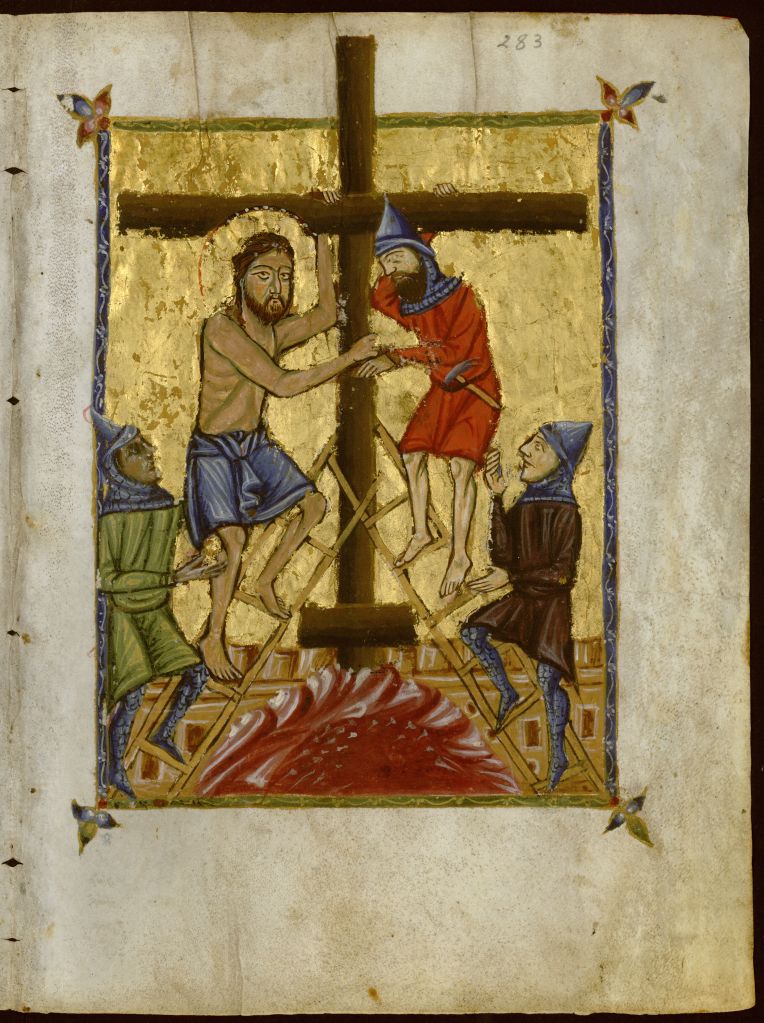
Another Armenian Gospel-book miniature of the subject, from the early fourteenth century, is particularly striking in how it shows Christ turning, mid-climb, toward the viewer, his direct gaze engaging our pity and love.
T‘oros Taronec‘i, Ascent of the Cross, from the Gladzor Gospels, Armenia, 1300–1307. UCLA Library Special Collections, Los Angeles, Armenian MS 1, p. 283.
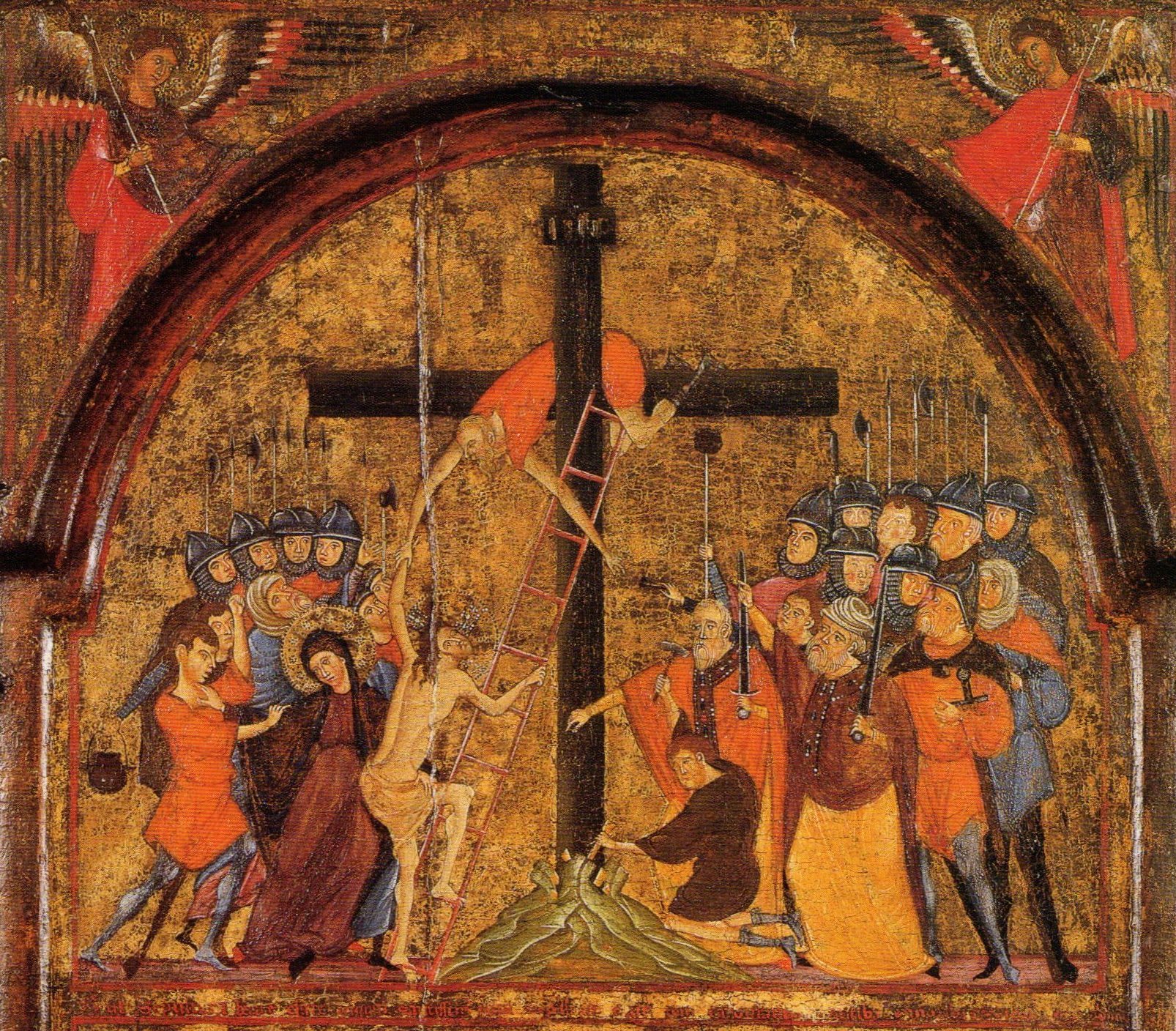
In some versions from Italy, Mary grabs her son around the waist, trying to prevent him from experiencing further torture. Take, for example, the panel painting by Guido da Siena that was originally part of the Madonna del Voto altarpiece in Siena’s cathedral. Her mama-bear instinct kicking in, Mary pushes away one of her son’s tormentors with one arm and with the other protectively encircles her son, unable to let him go.
Guido da Siena (Italian, Sienese, 1230–1290), Ascent of the Cross, ca. 1265–74. Tempera on poplar wood, 34.5 × 46 cm. Museum Catharijneconvent, Utrecht, Netherlands.
Some Christians are wary of suggesting that the Mother of God would seek to deter God’s plan, but let’s remember that, devout as she was, Mary was not superhuman. The death sentence passed against her son and the violence that followed naturally unleashed a flood of emotion in her and an impulse to resist. What mother wouldn’t do everything in her power to save her child from harm? No matter how much she believed in her son’s mission, what mother wouldn’t reach out for one last embrace, if only to delay the inevitable?
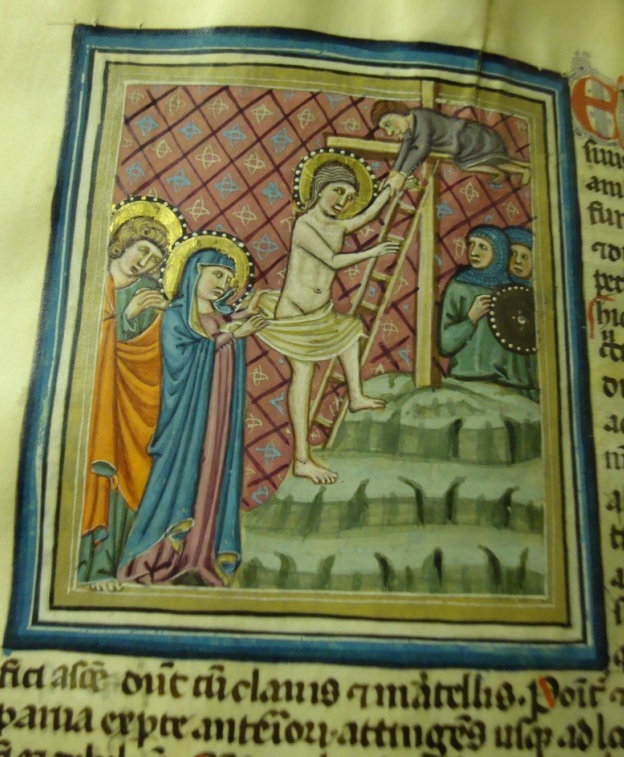
That said, Mary’s gesture here may be one of attempting not to impede his ascent but to cover his nakedness. In the widely influential Meditations on the Life of Christ, a text that originated in early fourteenth-century Tuscany and circulated in Latin and all the major European vernaculars,[2] Mary responds in agony to Jesus’s being shamefully stripped for all to see, and she intervenes with a small mercy:
Oh what anguish this was to his mother, to see her most sweet son naked like this, standing like a lamb among these wicked wolves!
Then the mother, full of sorrow, went up close to her most sweet son and took the veil from her head and wrapped it around Lord Jesus Christ with bitter sorrow. And I do not know how she did not fall dead to the earth.[3]
Closely related to the Guido panel is one by an anonymous artist from Umbria or Tuscany that was the central panel of a portable altarpiece with two wings, possibly painted for the Basilica of Santa Chiara in Assisi. It depicts the Ascent of the Cross—again, with the Virgin Mary interceding—above a scene of the Funeral of Saint Clare (d. 1253), a close follower of Saint Francis and the founder of the Poor Clares religious order.
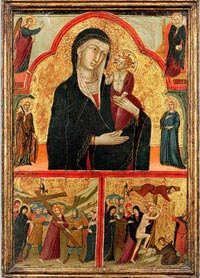
Christ Mounting the Cross and the Funeral of Saint Clare (detail), Umbria or Tuscany, 1290s. Tempera and silver leaf on panel, overall 31 1/4 × 20 3/8 in. (79.4 × 51.8 cm). Davis Museum, Wellesley College, Wellesley, Massachusetts.
For the iconography of the Ascent of the Cross, art historian Anne Derbes identifies a possible literary source as Pseudo-Bede’s De meditatione passionis Christi: “Then, when the cross had been prepared, they [the people] cry: ‘Ascend, Jesus, ascend.’ O how freely He ascends, with what great love for us He bore everything, with what patience, what gentleness!”[4]
Terser references to this episode, Derbes points out, appear in Pseudo-Anselm’s Dialogus, which mentions that Christ “ascends the wood of the cross,”[5] and in Ambrose’s commentary on Luke, in which Ambrose remarks that “it was not his cross that Christ ascended, but ours,” and that Christ ascended the cross “as a victor ascends a triumphal chariot.”[6]
Derbes also notes the possible influence of the adoratio crucis (adoration of the cross) ritual, known in Jerusalem from the fourth century and in the West from the seventh or eighth, which states, “O Lord Jesus Christ, I adore you climbing onto the cross.”[7]
[In the tiled gallery below, click on the image to view the caption and source URL.]
The long Latin version of the Meditations, which, from the mid-fourteenth century, postdates most of the paintings shown here, also mentions the Ascent of the Cross, perhaps itself influenced by trecento visual culture:
Now diligently behold the process of Crucifixion. Two ladders are accustomed to be placed, one on the one side, the other on the other; upon these, wicked men go up, with nails and hammers; while another ladder is placed in front, reaching to that part of the Cross where the feet are to be nailed. Contemplate now each event Our Lord may have been compelled by means of this small ladder to ascend the Cross, for He does whatsoever they bid Him, humbly, without resistance or complaint. Having reached the top of the ladder, He turns Himself round, it may be, opens His arms, and extends His Hands—so royal and beautiful—and yields Himself up to His crucifiers.
. . . Some there are who think that this was not the method of Crucifixion, i.e. by making our Lord ascend a ladder before the nailing of His Body to the Cross; but that they fastened Him to the Cross when it was laid on the ground before it was raised.[8]
Interestingly, the writer, as he does elsewhere in the manuscript, allows for the possibility that the action may have occurred in one of two ways. Actually, probably neither of the two options he describes for how Christ was nailed to the cross is accurate. Ancient historians think it most likely that Jesus was nailed to the horizontal crossbeam while it lay on the ground, which was then lifted up, his body attached, and dropped into a notch in the permanently fixed vertical post.[9]
However, the Ascent of the Cross isn’t so much meant to be a literal portrayal of what happened historically as it is an expression of the theological truth that Christ went to his death voluntarily. He was not forced onto the cross against his will. The Ascent suggests divine initiative and purpose. Even in those images where Christ is being prodded by his executioners, he does not resist. Instead, he bounds onward and upward to his chosen end.
In medieval English literature, the freedom and strength of Christ in his death is often emphasized. In the Old English poem “The Dream of the Rood” from the eighth century, the cross says, “Then I saw mankind’s Lord / hasten with great zeal, as though he wanted to climb on me.”[10] In Middle English religious lyrics, which come down to us mainly through preaching manuscripts, Christ mounts the cross much like a knight does his steed, prepared for battle, but of a spiritual kind.[11]
One anomalous example of the Ascent of the Cross that I found comes from Reformation Germany. A copperplate engraving by Augustin Hirschvogel[12] shows a muscly Christ mounting the cross with three figures slung over his shoulder: a clawed, beaked, horned creature representing the devil; a skeleton representing death; and what looks like a bloated corpse, probably representing sin. The tone is triumphant, as Christ’s death defeats this formidable trio. They are nailed to the cross with him, but unlike him, never to rise.
Augustin Hirschvogel (German, 1503–1553), Christ Ascending the Cross with Sin, Death, and the Devil, 1547. Etching, 11.8 × 14.8 cm (image) / 15.1 × 14.8 cm (sheet). National Gallery of Art, Washington, DC.
Christ Ascending the Cross with Sin, Death, and the Devil is one of a group of over one hundred etchings of biblical scenes commissioned by the Hungarian aristocrat and politician Peter Perényi (1502–1548) for his Concordance of the Old and New Testaments, first published in Vienna by the printer Aegidius Adler in 1550. Perényi selected the scenes and wrote the letterpress captions beneath them. This one reads,
Noch mer Christus am creutz uberwand Desshalben von Gott war selb gesandt Und den teueffel Hell alles band Drumb er unser erlöser ist genannt. Luc. 23e. Corinth.5f.
On the cross, it says, Christ overcame hell and the devil, and that’s why we call him “Redeemer.” The biblical citations are to the Crucifixion account in Luke 23 and to 2 Corinthians 5:14–21, which begins, “For the love of Christ urges us on, because we are convinced that one has died for all; therefore all have died. And he died for all, so that those who live might live no longer for themselves but for the one who for their sake died and was raised” (NRSV).
A follower of Martin Luther and a friend of Philip Melanchthon, Perényi was an influential protector of Protestant preachers in the kingdom of Hungary. But his shifting political allegiances got him into trouble when in 1542 he was imprisoned by Ferdinand I, a Habsburg prince, for disloyalty. It was from a prison in Vienna that he worked on his concordance project.
All these artworks of Christ ascending the cross show his bravery, dignity, and poise in the face of persecution, his heroic self-giving that wins the world’s salvation. Despite his mother’s tearful entreaties, and despite the pain he knows is coming, he remains steadfast, his eyes fixed on the prize that will be attained on Easter morning.
As an independent scholar, I rely on your donations to keep publishing articles like this, as they require a large time investment, and in this case, a photo licensing fee (for the Ferrara fresco). If you appreciate having access to researched, illustrated articles on theological art, would you consider making a donation to support my work, either monetarily (via PayPal or the secure form below) or by buying me a book? Thank you!
1. Thomas F. Mathews and Avedis K. Sanjian, Armenian Gospel Iconography: The Tradition of the Glajor Gospel (Washington, DC: Dumbarton Oaks Research Library and Collection, 1990), 131–32.
2. This text is traditionally attributed to a Franciscan friar known as Pseudo-Bonaventure and believed to have originated in Latin (title: Meditationes de vitae Christi), but Sarah McNamer has persuasively argued that its originator was a woman, a Poor Clare from Pisa, who wrote it in Italian for her fellow nuns sometime between 1300 and 1325. Within the next decade and a half, McNamara proposes, a Franciscan friar expanded and altered it to make it more didactic, creating first another Italian version (the “testo minore”) and then translating this into Latin to “authorize” it and make it more disseminatable. The long Latin text has become canonical but is, McNamara argues, inferior to the base text, compromising its narrative pacing and emotional impact. See Sarah NcNamer, Meditations on the Life of Christ: The Short Italian Text (Notre Dame, IN: University of Notre Dame Press, 2018).
3. Translated by Sarah McNamer from Oxford, Bodeleian Library MS Canonici Italian 174 (the “testo breve”), in Meditations, 141.
4. “Deinde parata cruce dicunt ei, ascende, Jesu, ascende. O quam libenter ascendit, o quanto amore ista omnia pro nobis sustinuit, o quanta patientia, o quanta mansuetudo!”(PL 94:565). Translated by Anne Derbes in Picturing the Passion in Late Medieval Italy: Narrative Painting, Franciscan Ideologies, and the Levant (Cambridge, UK: Cambridge University Press, 1996), 154.
6. “Non enim suam, sed nostram crucem christus ascendit” (PL 15:1923); “currum suum triumphator ascendit” (PL 15:1924). Qtd. Derbes, 242n56.
7. “Domine Ihesu Christi, adoro te in cruce ascendentem,” qtd. Derbes, 242n56, from Karl Young, The Drama of the Medieval Church, vol. 1 (Oxford: Clarendon, 1933), 117–19.
8. S. Bonaventure, The Life of Christ, trans. and ed. Rev. W. H. Hutchings (London: Rivingtons, 1881), 267, xiii–xiv. Sarah McNamer says that while (what she argues is) the original Meditations text describes a crucifixion method known as jacente cruce—Christ nailed to the cross as it lies prone on the ground—the Italian recension and subsequent translations and versions that came soon after privilege the erecta cruce method, in which Christ ascends a ladder to an upright cross and thus is nailed from an elevated position (Meditations, 228n126).
9. Martin Hengel, Crucifixion in the Ancient World and the Folly of the Message of the Cross (Philadelphia: Fortress, 1977), 25; Robin Jensen, The Cross: History, Art, and Controversy (Cambridge, MA: Harvard University Press, 2017), 10.
10. “Geseah ic þā Frēan mancynnes / efstan elne micle, þæt hē mē wolde on gestīgan.”
11. The metaphor of Christ’s cross as a horse that he bravely mounts as if for battle occurs in MS Balliol 149 (cf. MSS Magdalen 93 and Trinity Dublin 277), Nicolas Bozon’s poem “Sa sele fu trop dure, et mout l’ad anguise,” MS Bodley 649, and MS Harley 2316. See Rosemary Woolf, Art and Doctrine: Essays on Medieval Literature (London: The Hambledon Press, 1986), 113–15.
12. Hirschvogel was trained as a stained-glass painter in the workshop of his father, but when his hometown of Nuremberg accepted Luther’s Protestant teachings, the workshop lost its church commissions. Hirschvogel thus pivoted to designing maps and fortification plans and, in his final decade, making landscape etchings as part of the Danube School. Richard Manly Adams Jr., “One Acquisition, Two Great Traditions at Pitts,” Reformation Notes no. 56 (Summer 2021): 5.
VIDEO: “Waiting with Christ: An Artful Meditation for Holy Week”: A collaboration between Duke Initiatives in Theology and the Arts in Durham, North Carolina, and City Church in Cleveland, Ohio, this half-hour video from 2021 presents a small collection of scripture readings, poems, visual art, and music for Holy Week, interspersed with reflections by theologian Jeremy Begbie. The artistic selections are a spoken word performance by Paul Turner, Malcolm Guite’s sonnet “Jesus Meets His Mother,” the Adagio movement of Schubert’s String Quintet in C Major, the painting Riven Tree by Bruce Herman, and Bifrost Arts’ “Our Song in the Night,” performed by Salina Turner, Allison Negus, and Joel Negus [previously].
+++
ARTICLE: “6 Musical ‘Passions’ Beyond Bach” by Josh Rodriguez: Composer, professor, and Deus Ex Musica cofounder Josh Rodriguez is an excellent classical music curator and guide. In this article he introduces us to six modern large-scale musical works about Jesus’s final week: The Passion of Yeshua by Richard Danielpour, La Pasión Según San Marcos by Osvaldo Golijov, The Passion of the Christ Symphony by John Debney, Johannes-Passion by Sofia Gubaidulina, Simeron by Ivan Moody, and the St. John Passion by James MacMillan. He interweaves composer biography, musical analysis, and meaning in concise ways, with nods to music history. Stylistic influences for these diverse selections range from Byzantine chant to salsa! Audio/video excerpts are provided, such as the cued-up “¿Por qué?” from Golijov’s Pasión (see below), a movement centering on the woman who anointed Jesus’s feet with perfume (Mark 14:3–9).
+++
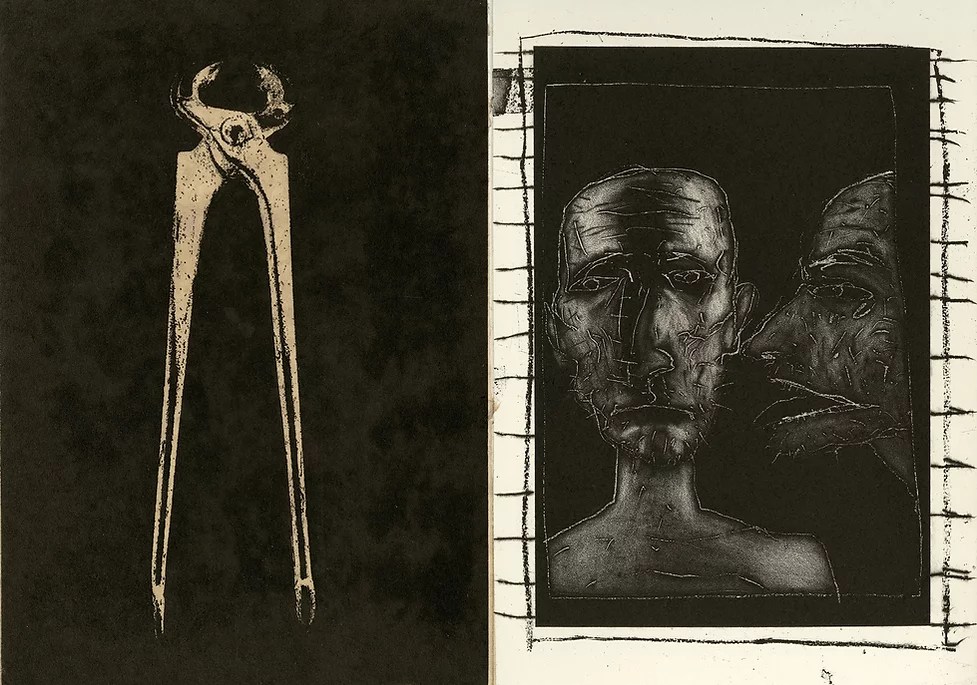
PRINT SERIES: The Passion and Its Objects (after Dürer) by Marcus Rees Roberts: “The Passion and Its Objects (after Dürer) is a series of etchings and monotypes by Marcus Rees Roberts. The images derive from fragments from Albrecht Dürer’s series of woodcuts The Small Passion (1511). Images of the Passion – and of the crucifixion in particular – are so embedded in Western consciousness that we forget that it is a depiction of betrayal, prejudice, and torture. In this version of the Passion by Dürer, one of several he made, small, everyday objects lie scattered within the images – a jug, pliers, a hammer, a coil of rope. Even five hundred years later, we recognise these objects as our own; we can identify with them. But in so doing, we enter the depicted space, and we become complicit in the cruelty. This is one reason why Dürer’s Small Passion is both so powerful and so uncomfortable.”
Marcus Rees Roberts (British, 1951–), The Passion and Its Objects (after Dürer) I, 2019. Diptych etching and aquatint with chine collé printed on Somerset Satin soft white 300gsm, each plate 29.5 × 21 cm (overall 29.5 × 42 cm). Edition of 15.
+++
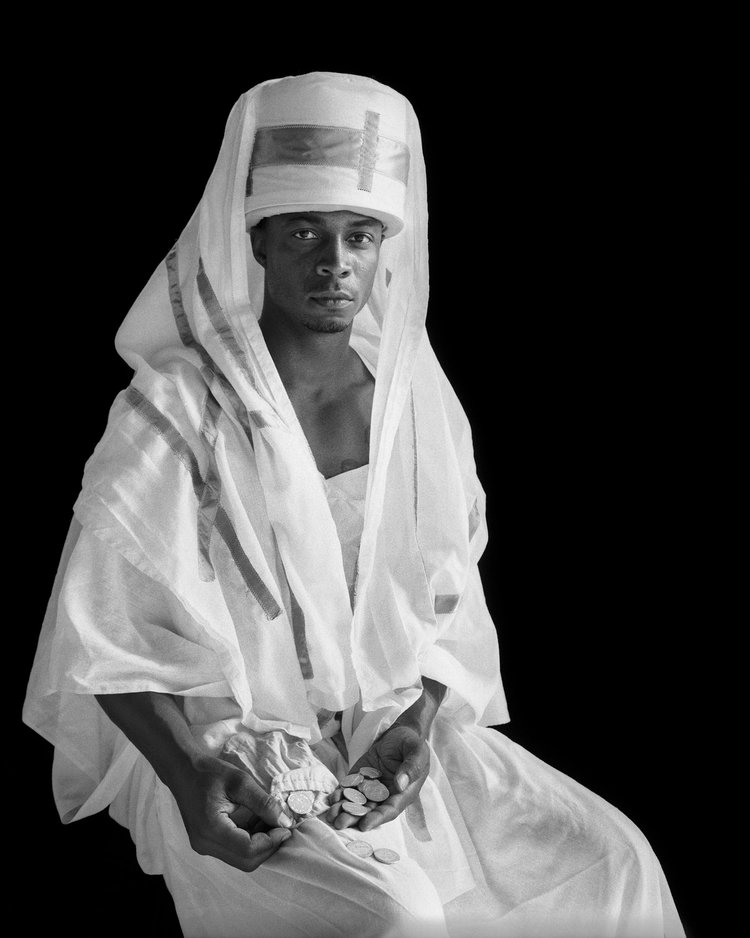
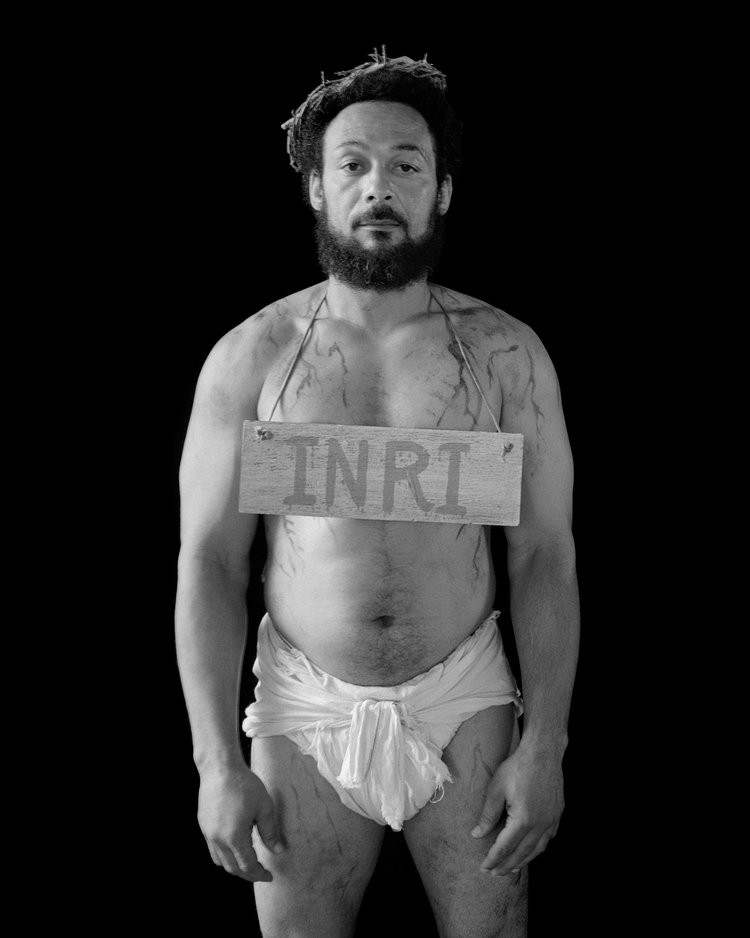
PHOTOGRAPHY SERIES: Passion Play by Deborah Luster: “There are more than 5,300 inmates at the Louisiana State Penitentiary at Angola. Nearly 4,000 of them are serving life without parole. In 2012 and 2013 the Angola Prison Drama Club staged a play unlike any other in the prison’s experience. The Life of Jesus Christ featured 70 inmates, men and women acting together for the first time—in costume, with a real camel, performing for the general public. For the untrained actors, this production held special meaning as they saw pieces of their own lives revealed in the characters they played.”
Layla “Roach” Roberts (Inquisitor), sentenced to LIFE, Angola Prison, Louisiana. Photograph by Deborah Luster, from the Passion Play series, 2013.Bobby Wallace (Jesus), Angola Prison, Louisiana. Photograph by Deborah Luster, from the Passion Play series, 2013.
+++
SONGS:
>>“May I Go with You” by January Lim: This Maundy Thursday song was written in 2020 in the voice of Jesus in Gethsemane, speaking to God the Father. In the first stanza, it seems to me that Jesus is asking to be taken up to heaven, like Elijah—just whisked away back to glory, and spared tomorrow’s cruelties and pain. But in the second stanza that same request seems to shift in meaning as Jesus expresses a desire to go with God’s plan and asks for the strength to follow through. The song was released on the EP Gathered Sighs (2021), put out by Evergreen Baptist Church of Los Angeles, where Lim serves as worship arts pastor. [HT: Global Christian Worship]














 Art & Theology