Roundup: Trilingual antiwar song, rock-hewn churches of Ethiopia, “Sacred Harp Singing in the Age of AI,” and more

PRAYER: “God, I Wake” by Rev. Maren Tirabassi: A morning prayer for Ordinary Time.

+++

SONG: “Sólo le pido a Dios” (I Only Ask of God), performed by the Alma Sufí Ensamble: This is a cover of a 1978 song written in Spanish by the Argentine folk rock singer-songwriter León Gieco—a personal prayer that he would not be unfeeling, not numb to injustice. In a November 2023 collaboration with the Alma Sufí Ensamble, Gieco joined the Argentine Jewish cantor Gastón Saied (also a guest artist) and the ensemble’s own Nuri Nardelli, a practicing Sufi (Muslim mystic), in singing the song in Spanish, Hebrew, and Arabic, respectively. “Three languages, one heart. And one prayer for peace in the Middle East,” they write. View the original Spanish lyrics and English translation here.

+++

VIDEOS:

The following videos are two of thirteen—the ones focusing on the continent’s Christian heritage—from the docuseries Africa’s Cultural Landmarks, produced by the Metropolitan Museum of Art in collaboration with the World Monuments Fund and directed by Sosena Solomon. The series was commissioned to coincide with the reopening of the museum’s Arts of Africa galleries this May, after being closed for four years as part of a major redesign and renovation of the Michael C. Rockefeller Wing.

>> “Rock-Hewn Churches of Lalibela, Ethiopia”: “Stepping into one of the rock-hewn churches of Lalibela is an experience unlike any other. Carved directly from volcanic rock, from the top to bottom, unlike traditional buildings built from the ground up, the eleven wondrous churches of Lalibela are monumental expressions of devotion and symbols of Ethiopia’s spiritual heartland. Visually captivating and rich with personal insights from priests entrusted with care of the churches, this documentary reveals how these sanctuaries—both magnificent and fragile—face the constant threat of erosion. Meet the dedicated guardians balancing conservation and sacred duty, to ensure Lalibela’s living pilgrimage tradition thrives for generations to come.”

Bete Giyorgis, Lalibela, Ethiopia
Bete Giyorgis (Church of Saint George), Lalibela, Ethiopia, 13th century

>> “Rock-Hewn Churches of Tigray, Ethiopia”: “High in Ethiopia’s Northern Highlands, the rock-hewn churches of Tigray stand as breathtaking sanctuaries of faith carved into sandstone cliffs. For centuries, some 120 rock-hewn churches, and the paintings and artifacts preserved within their walls, were protected by their remote locations. However, during the 2020–2022 war in Tigray, some churches were targeted, and the use of heavy weapons resulted in vibrations that caused cracks in the stone. Through evocative imagery and intimate testimonies, this documentary explores the endurance of these remarkable sites of devotion, as local priests reflect on the spiritual and cultural legacies at risk.”

Madonna and Child (Abuna Yemata, Ethiopia)
Virgin and Child wall painting, 15th century, inside Abuna Yemata Guh (The Chapel Near the Sky) in Tigray, Ethiopia, which contains the best-preserved medieval paintings in the region

+++

ESSAY: “Shaped for People: Sacred Harp Singing in the Age of AI” by Mary Margaret Alvarado: From Image journal’s summer 2025 issue: “What is that, I thought, when I first heard shape note singing. It was groaning, and some voices keened. It was loud. It was muscular, this music. There was glory, but it was not pretty. The voices did not blend, and the sound was not nice. All I knew was that I wanted to hear it again. Maybe it seemed to me like an aesthetic that does not lie? I feel surrounded, often, by aesthetics that do lie. . . . So there’s a contrarian appeal to a song that sounds sung by humans in their (young, old, crooked, fat, gorgeous, hairy, halt, jacked, sexy, bald, injured, hale) human bodies . . .”

Writer Mary Margaret Alvarado reflects on her experiences participating in shape-note hymn sings, a democratic form of communal music making using the “sacred harp” of the human voice. She provides an abridged history of such singing, which developed in late eighteenth- and early nineteenth-century New England but is now carried on throughout the US and in the UK and Germany. I’d love to take part in a shape-note hymn sing someday, as I’ve long been drawn to the sound and tradition, which I know only from recordings. Besides the small gatherings organized by local communities, there are also large conventions, and I’ve been intrigued to learn that, despite the hymns’ deep rootedness in Christianity, non-Christians are often among the attendees.

Below are a few of the hymns Alvarado mentions in her essay: “Youth like the Spring Will Soon Be Gone” (MORNING SUN), “David’s Lamentation” over the death of his son Absalom, and “I’m Not Ashamed of Jesus” (CORINTH). Traditionally, the singers start by singing through an entire verse using only the four syllables of the Sacred Harp notation system (fa, sol, la, mi) as their lyrics, to orient themselves to the tune.

To browse previous Art & Theology posts that have featured hymns from the Sacred Harp tradition—albeit not all performed in a traditional manner; several are arranged for soloists or otherwise stylistically adapted—see https://artandtheology.org/tag/sacred-harp/.

+++

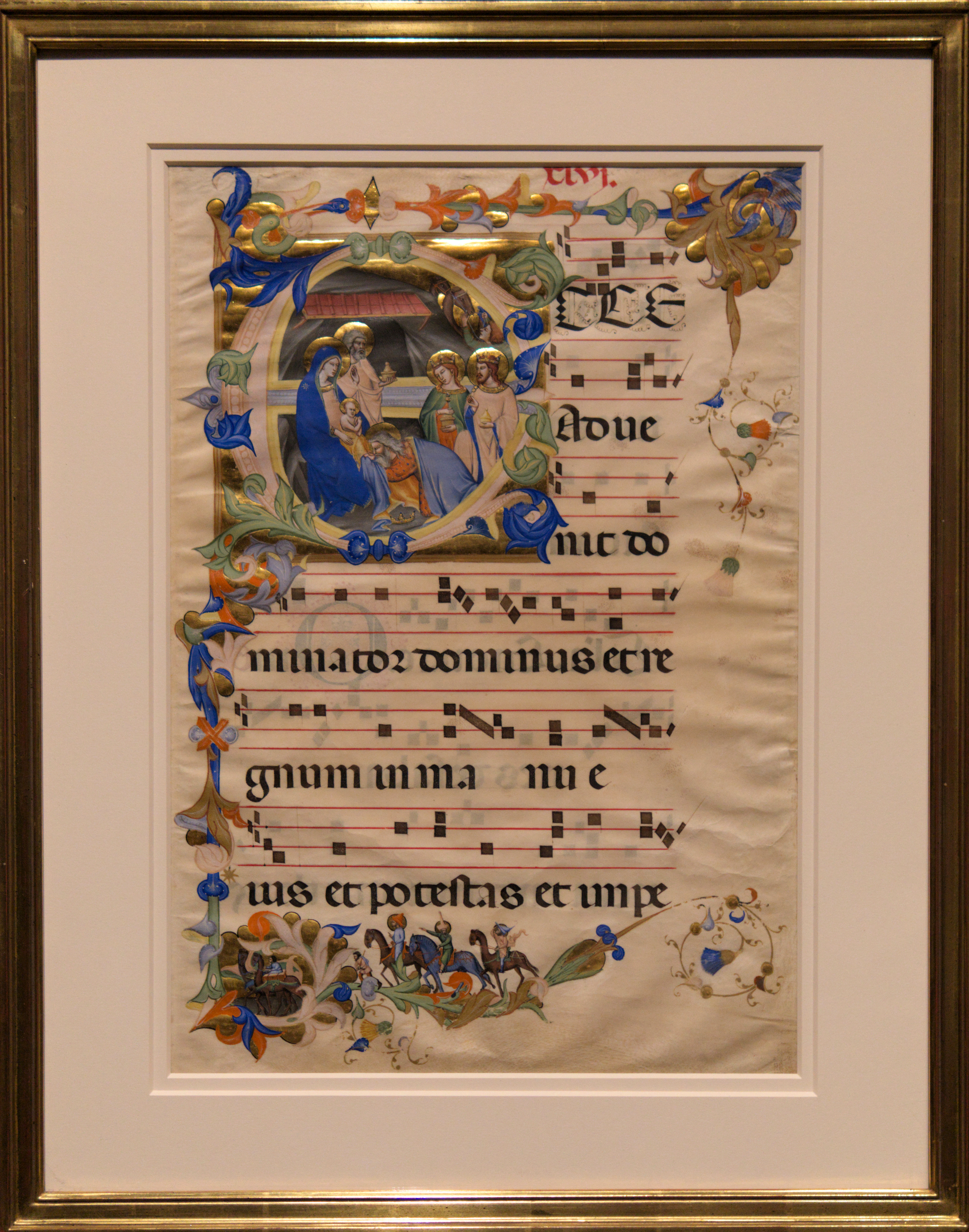
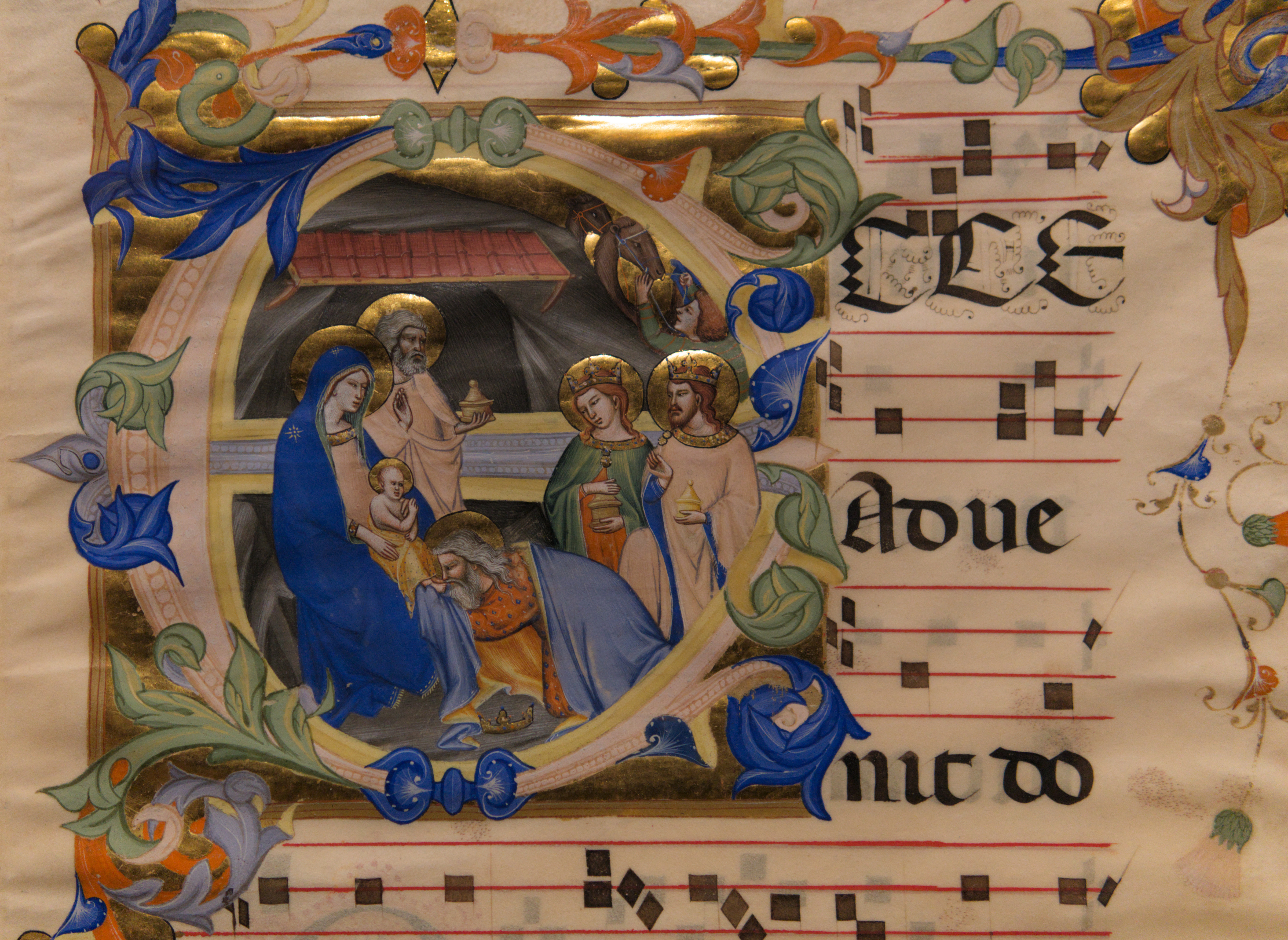
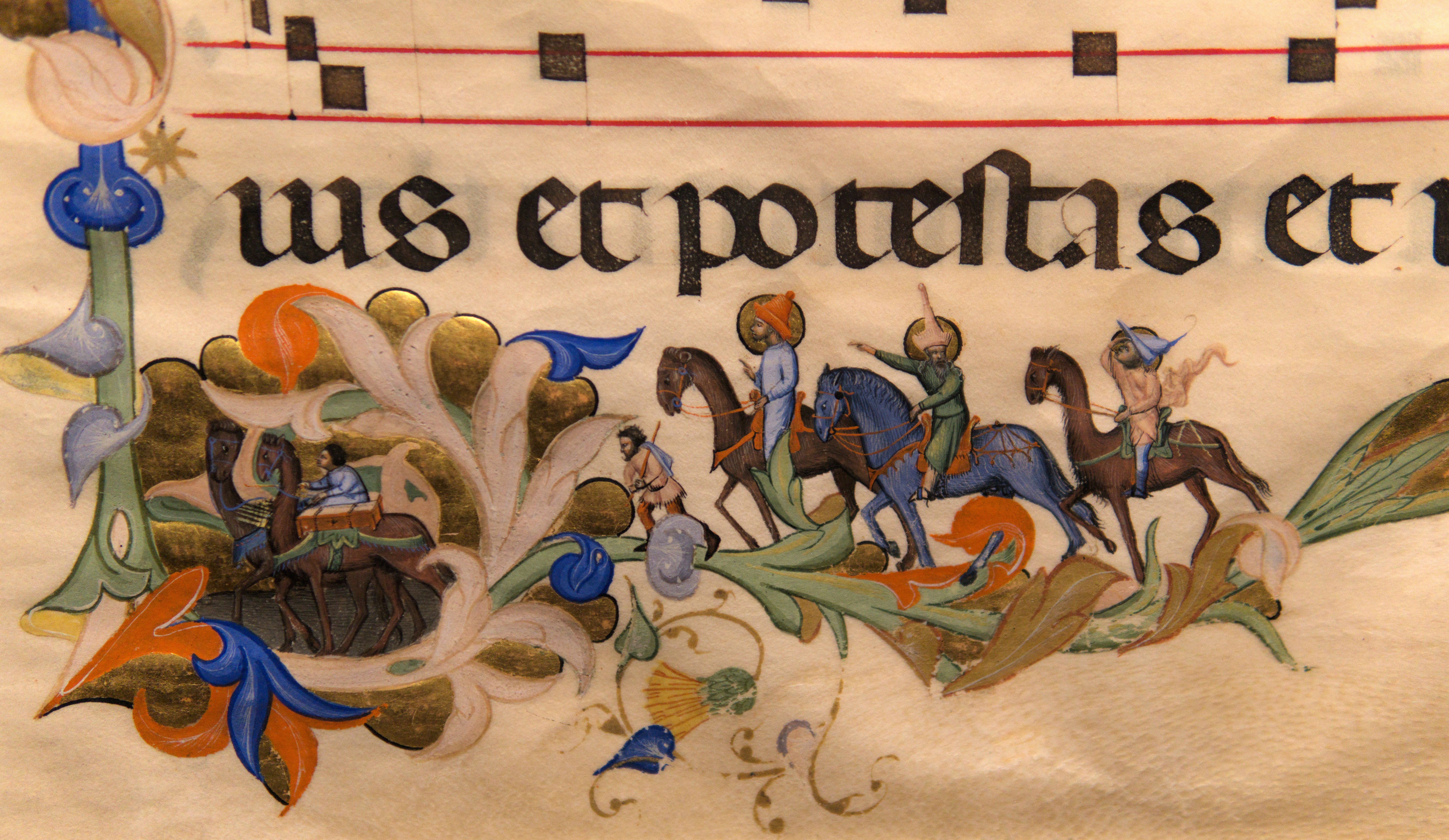
NEW ALBUM: Radiant Dawn by the Gesualdo Six: Released August 1 by the British vocal ensemble the Gesualdo Six, this album features “an ethereal combination of trumpet and voices to explore different shades of light . . . from the soft, golden glow of a summer evening as shadows lengthen to the shimmering of moonlight on calm waters,” writes director Owain Park. “Some texts contrast the terror of darkness with the brilliance of dazzling sunlight; others explore the blurred boundaries between heaven and earth. Plainchant threads this programme together . . .” A range of composers are represented, from the Middle Ages to the present day.

Several of the songs are based on biblical episodes—Simeon’s response to having held the Christ child in the temple, the transfiguration of Christ on Mount Tabor, the arrival of the holy women at Jesus’s tomb on Easter morning, the walk to Emmaus—or passages such as Psalm 5:2 (“O hearken thou . . .”) and Revelation 21:23 (“And the city had no need of the sun . . .”). There are bedtime prayers, a meditation on the glory of the angels, an O Antiphon for the approach of Christmas, and settings of contemporary poems, like “Grandmother Moon” by the Mi’kmaq poet Mary Louise Martin and “Aura” by Emily Berry, about the death of her mother. View the track list at https://www.hyperion-records.co.uk/dc.asp?dc=D_CDA68465.

Below, from the album, is the Gesualdo Six’s performance of “Night Prayer” by Alec Roth, a setting of the Te lucis ante terminum, featuring Matilda Lloyd on trumpet. “The stark setting reminds me of the ravages of war,” one YouTube user remarks. “The singing, of a prayer sent out over the carnage, blessing those who have suffered. Sacred space indeed.”

Open-Access Image Archive of Middle Eastern Art, Architecture, and Archaeology

Based at the Faculty of Classics at the University of Oxford, the Manar al-Athar (“Guide to Archaeology”) digital archive provides high-resolution photographs of archaeological sites, buildings, and art from the Levant, North Africa, the Caucasus, and the Balkans, covering the time of Alexander the Great (ca. 300 BCE) through the Byzantine and early Islamic periods, with special emphasis on late antiquity. All the images are freely downloadable, made available for teaching, research, and academic publication under a Creative Commons Attribution-NonCommercial-ShareAlike 2.0 UK (CC BY-NC-SA 2.0) license.

Manar al-Athar was established in 2012 by Dr. Judith McKenzie (1957–2019) and since 2020 has been directed by Dr. Ine Jacobs. It is in continuous development. The photos are cataloged by geographical region and are labeled in both English and Arabic. They picture a range of historical structures—some intact, others in ruins; both interiors and exteriors, where applicable—including mausoleums, churches, mosques, khanqahs (Sufi lodges), hammams (public bathhouses), palace complexes, madrasas (colleges for Islamic instruction), forums, fountains, cisterns, aqueducts, civic buildings, theaters, markets, fortifications, and hostels.

Of primary interest to me is the Christian art from churches and tombs, from countries such as Egypt, Syria, Turkey, Armenia, Georgia, and Serbia, and Jewish art that pictures stories from the Hebrew Bible.

Unfortunately, the subjects of the artworks aren’t labeled and there’s no commentary or transcription/translation of inscriptions, nor are the buildings or artworks dated. Inevitably, many of the frescoes and mosaics have degraded with age, sometimes making the iconography difficult to read. There’s also no way to filter by religion; Christianity accounts for only a portion of the images, with others coming from Jewish, Islamic, or pagan traditions, and a number are from nonreligious contexts. I’d love to see a more robust tagging system and advanced searchability functions as the archive continues to evolve.

The archive is by no means comprehensive, but I hope it will encourage further scholarship and attract more digital image donations.

Below is a sampling of the hundreds of images you can find on the Manar al-Athar website.


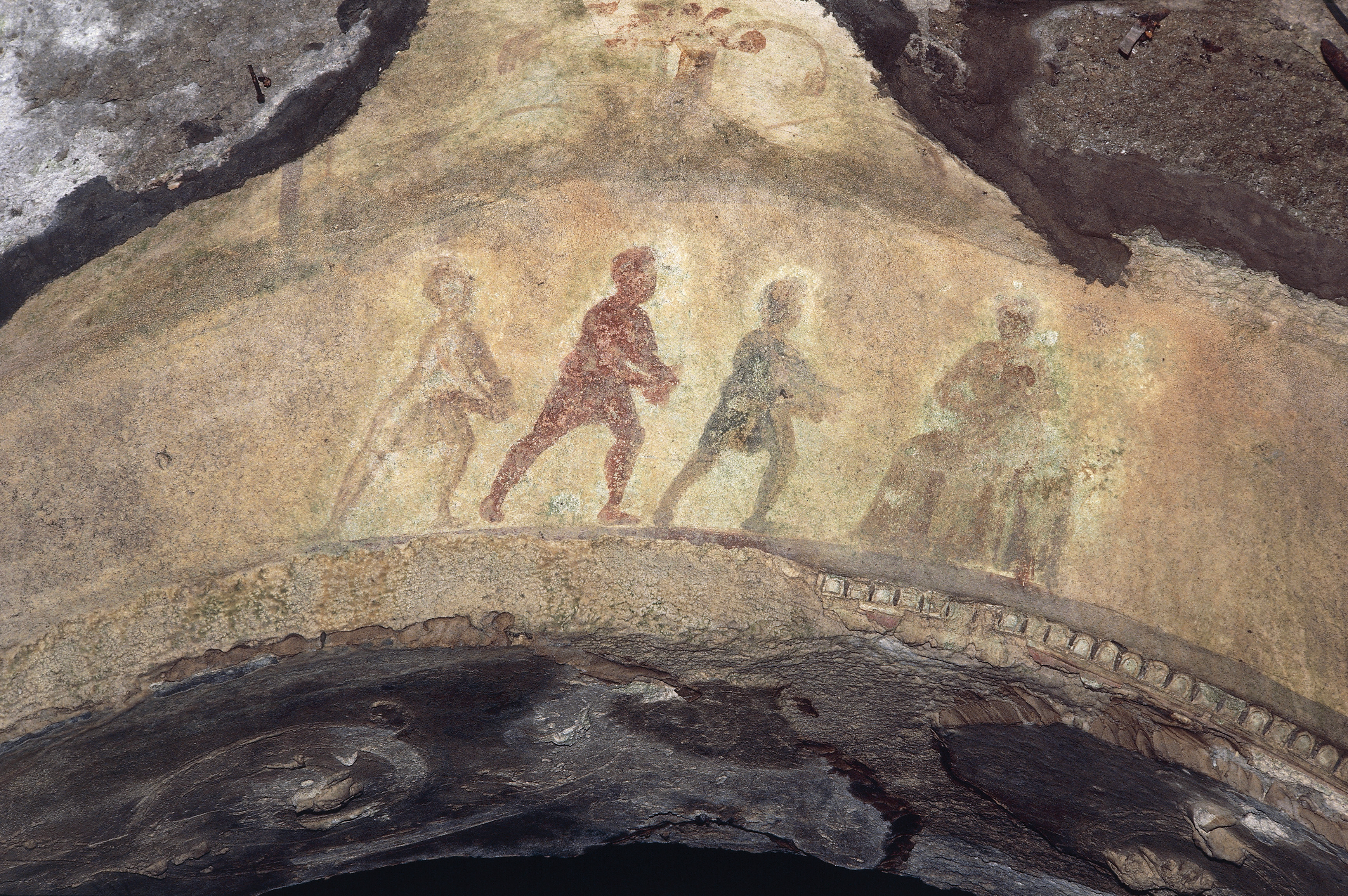
One of the earliest surviving and best-preserved Christian cemeteries in the world, used by Christians from the third to eighth centuries, is Bagawat Necropolis in the Kharga Oasis in Egypt’s Western Desert. The Chapel of Peace is one of 263 mud-brick funerary chapels in the cemetery, celebrated for the painting of biblical, early Christian, and allegorical figures inside its dome.

Chapel of Peace (Bagawat, Egypt)
The Chapel of Peace, a monumental Christian tomb at Bagawat Necropolis, Kharga Oasis, Egypt, built 5th or 6th century. Photo: Mohamed Kenawi / Manar al-Athar.

Paul and Thecla (Chapel of Peace)
Dome fresco detail from the Chapel of Peace at Bagawat Necropolis in Kharga Oasis, Egypt, 5th or 6th century. Photo: Mohamed Kenawi / Manar al-Athar.

The detail pictured above shows the female saint Thecla (Θέκλα), a first-century Christian preacher and martyr, learning from the apostle Paul (Παῦλος), as described in the ancient apocryphal Acts of Paul and Thecla. They both sit on stools, Thecla holding open a book on her lap, pen in hand, while Paul points out a particular text.

In addition to Paul and Thecla, the dome fresco also depicts, clockwise from that pair: Adam and Eve; Abraham about to sacrifice his son Isaac, with Sarah stretching out her hand (it’s unclear whether this gesture signifies her surrender to God’s will or an attempt to stop her husband’s act); Peace, holding a scepter and an ankh; Daniel in the Lions’ Den; Justice, holding a cornucopia and balance scales; Prayer; Jacob; Noah’s Ark; and the Virgin Annunciate, the New Eve, who heard the word of God and obeyed it and thus brought forth life, unlike her ancestor, who listened to the lies of the Evil One and brought forth death (the snake and dove at the women’s respective ears emphasize this contrast). View a facsimile of the full dome here.

Also in the Egyptian folder are photos of one of Byzantine Egypt’s most glorious encaustic-painted sanctuaries, that of the Red Monastery Church, a triconch (three-apse) basilica that’s part of the (Coptic Orthodox) Monastery of Apa Bishuy near Sohag.

Red Monastery Church
North apse (Virgin Galaktotrophousa, aka the Nursing Madonna) and east apse (Christ Pantocrator), painted 6th–7th or 8th century, Red Monastery Church, near Sohag, Egypt. Photo: Mohamed Kenawi / Manar al-Athar.

Here’s a video that presents a 3D reconstruction and fly-through of the basilica:

Moving northeast into Israel, we come to the sixth-century Bet Alpha (sometimes rendered as Beit Alfa) Synagogue, located in the Beit She’an Valley. The excavation of Jewish sacred sites like this one reveal that, contrary to what is popularly alleged, Judaism is not a strictly aniconic religion. Many Jewish communities have understood the prohibition against graven images in Exodus 20:3–6 and Leviticus 26:1 as a prohibition against idol worship, not figurative art (art that depicts people and animals) in general. Thus several ancient synagogues, not to mention Jewish manuscripts, portray episodes from the biblical narrative, such as the Akedah (Binding [of Isaac]), told in Genesis 22.

Sacrifice of Isaac (Bet Alpha mosaic)
The Binding of Isaac, early 6th century. Mosaic pavement, Bet Alpha (Beit Alfa) Synagogue, Heftziba, Israel. Photo: Sean Leatherbury / Manar al-Athar.

Rendered in a primitive style, this scene is one of three from the mosaic pavement in the central hall of Bet Alpha. It shows Abraham, sword in hand, about to throw his son Isaac onto a fiery altar, when God, represented by a hand from the sky, intervenes, telling him to stop; it’s then that Abraham notices a ram tangled up in a nearby thicket, which he sacrifices instead. The Hebrew inscriptions read, from right to left, “Yitzhak” (Isaac), “Avraham” (Abraham), “al tishlakh” (Do not lay [your hand on the boy]), and “v’hineh ayil” (Here is a ram). Stylized palm trees line the top of the scene.

Here is video footage of the full floor mosaic in its space, showing wide views as well as details, including of the remarkable zodiac wheel in the center:

Mosaic was a common form of late antique decoration in places of worship. Here are two examples from Syria:

Tell Aar church mosaics
Mosaics from the ancient Tell Aar church, including a chi-rho monogram with an alpha and omega (foreground) and peacocks flanking an amphora (background), housed in the Maarat al-Numan Museum, Syria. Photo: Sean Leatherbury / Manar al-Athar.

Deer drinking water
Deer drinking from a stream, 5th century. Mosaic, Church of the Martyrs, Taybat al-Imam, Syria. Photo: Jane Chick / Manar al-Athar.

To the north of Syria in Turkey—cataloged by Manar al-Athar under “Anatolia,” the ancient name for the peninsula that comprises the majority of the country—there are the Cappadocian cave churches, hewn out of volcanic tufa. They began to be built in the fifth century, with a boom happening in the ninth through eleventh centuries, which is the period to which almost all the surviving paintings can be dated. There are over a thousand such churches, some very simple inside, and others elaborately painted. The architecture has been described as eccentric and enchanting. I like to imagine the monks, nuns, and other Christians who worshipped there all those centuries ago.

Rock-hewn chapel, Cappadocia
Middle Byzantine cave church, Göreme Open Air Museum, Cappadocia, Turkey. Photo: Marlena Whiting / Manar al-Athar.

Crucifixion and Transfiguration
Frescoes depicting the Crucifixion and the Transfiguration, from a rock-cut chapel at the Göreme Open Air Museum, Cappadocia, Turkey. Photo: Marlena Whiting / Manar al-Athar.

Christ in Glory (Turkey)
The Ascension of Christ, 10th century. Dome fresco, Church of the Evil Eye (El Nazar Kilise), Göreme, Cappadocia, Turkey. Photo: Marlena Whiting / Manar al-Athar.

One of the cave churches in Cappadocia, part of an ancient monastic settlement, is Pancarlik Church, home to an impressive fresco cycle on the Life of Christ that’s painted mainly in rusty red and bean green.

Adoration of the Magi (Turkey)
Adoration of the Magi fresco and Greek cross relief carving, probably early 11th century. Pancarlik Church, Cappadocia, Turkey. Photo: Marlena Whiting / Manar al-Athar.

Baptism of Christ (Pancarlik Church, Turkey)
The Baptism of Christ, probably early 11th century. Fresco, Pancarlik Church, Cappadocia, Turkey. Photo: Marlena Whiting / Manar al-Athar.

Beyond Cappadocia but also in Turkey is Hagia Sophia (Holy Wisdom) in Trabzon, not to be confused with the more famous Hagia Sophia in Istanbul, 650 miles away. Originally a Greek Orthodox church, it was converted into a mosque following the conquest of Trabzon (then called Trebizond) by Mehmed II in 1461. During prayer the frescoes in the nave, made by Christians who built and previously occupied the space, are covered by curtains to honor the Islamic prohibition against images—the veils are pulled aside during tourist hours—while the frescoes in the narthex remain uncovered at all times.

Breakfast on the Shore (Hagia Sophia, Trabzon)
The Incredulity of St. Thomas (top) and The Risen Christ Appears on the Shore (bottom), late 13th century. Frescoes, Hagia Sophia (Aya Sofya Mosque), Trabzon, Turkey. Photo courtesy of Manar al-Athar.

One of the frescoes shows Christ appearing to his disciples after his resurrection on the shore of the Sea of Galilee. He hands a fish and a loaf of bread to Peter, who stands at the front of the group, so that they can all share a joyous breakfast together after the tragic, upending events of the previous week.

Tetramorph (Hagia Sophia, Trabzon)
Frescoed narthex, late 13th century, Hagia Sophia (Aya Sofya Mosque), Trabzon, Turkey. Photo: Matthew Kinloch / Manar al-Athar.

Another fresco, on the vaulted ceiling of the narthex, shows the four living creatures of Revelation 4—long interpreted by Christian artists as symbols of the Four Evangelists—situated along the four sides of the canopy of the heavens, each holding a golden Gospel-book and surrounded by seraphim and blazes of rainbow light.

In the Caucasus region, Armenia has a long and rich tradition of Christian art, especially relief carving and painting, as the faith took root there early on in the fourth century.

Virgin and Child
Momik Vardpet, Virgin and Child, ca. 1321. Carved tympanum, west portal, Church of St. Astvatsatsin (Holy Mother of God), Areni, Armenia. Photo courtesy of Manar al-Athar.

Overlooking the village of Areni on the eastern bank of the river Arpa is the Church of St. Astvatsatsin, which has a beautiful relief carving in the tympanum above the west portal by the Armenian architect, sculptor, and manuscript illuminator Momik Vardpet (died 1333). It depicts the Christ child seated on the lap of his mother, holding a scroll in one hand and raising the other in blessing. Decorative vines rise up behind and around the pair, suggesting verdancy.

The most distinctive Christian art form in Armenia is the khachkar, a carved memorial stele bearing a cross and often botanical motifs, and only occasionally a Christ figure. In the village of Sevanavank, at a different Church of St. Astvatsatsin, there’s a particularly striking khachkar that portrays the crucified Christ in the center, and below that, a scene of the Harrowing of Hell.

Harrowing of Hell (Armenia)
The Harrowing of Hell, detail of a khachkar from the Church of St. Astvatsatsin (Holy Mother of God) in Sevanavank, Armenia. Photo: Matthew Kinloch / Manar al-Athar. [view full khachkar]

Holding aloft his cross as a scepter, the risen Christ breaks down the gates of death and rescues Adam and Eve, representatives of redeemed humanity, while serpents hiss vainly at his heels. I’m struck by the uniqueness of Christ’s hair, which flows down in two long braided pigtails. Was this a common hairstyle for males in medieval Armenia? I have no idea.

The last artwork from Armenia that I’ll share is an icon of paradise from the Church of St. Astvatsatsin (yes, it’s a popular church name in that country!) at Akhtala Monastery.

Paradise (Armenia)
Paradise, 1205–16. Fresco, west wall, Church of St. Astvatsatsin (Holy Mother of God), Akhtala Monastery, Akhtala, Armenia. Photo courtesy of Manar al-Athar.

In the center is the Mother of God flanked by two angels. On the left is Abraham with a child, representing a blessed soul, sitting on his lap (Luke 10:22 describes how the righteous dead go to “Abraham’s bosom,” a place of repose). On the right is Dismas, the “good thief” who repented on the cross of his execution, and to whom Jesus promised paradise (Luke 23:39–43); he is venerated as a saint in the Catholic and Orthodox churches.

The image is part of a larger Last Judgment scene that covers the entire west wall. A few panels above, at the very top, Christ is enthroned on a rainbow.

The neighboring country of Georgia has also cultivated a tradition of Christian icon painting. The main church of Gelati Monastery, founded in 1106, is richly decorated with painted murals dating from the twelfth through seventeenth centuries. One of them is the Lamentation over the Dead Christ: The Virgin Mary gently cradles the head of her son and Mary Magdalene throws her arms up in grief while the apostle John leans in close to mourn the loss and Joseph of Arimathea begins to wrap the body in a shroud.

Lamentation (Georgia)
Lamentation over the Dead Christ, fresco, Church of the Blessed Virgin, Gelati Monastery, near Kutaisi, Georgia. Photo courtesy of Manar al-Athar.

Another Georgian icon painting, from the central dome of the Church of St. Nicholas in Nikortsminda, shows angels bearing aloft a jeweled cross, surrounded by the twelve apostles.

Georgian church dome
Central dome, Church of St. Nicholas, Nikortsminda, Georgia. Photo: Ross Burns / Manar al-Athar.

Lastly, from the Balkans, I want to point out Decani Monastery in Kosovo, a Serbian Orthodox monastery built in the fourteenth century in an architectural style that combines Byzantine and Romanesque influences. The tympana of its katholicon (main church) lean into the Romanesque. The one over the south entrance portrays John baptizing Jesus in the river Jordan, and the Serbian inscription below describes the monastery’s founding.

Baptism of Christ tympanum (Decani)
The Baptism of Christ, 1327–35. Carved tympanum, south portal, Christ Pantocrator Church, Decani Monastery, near Deçan, Kosovo. Photo: Mark Whittow / Manar al-Athar.

Decani’s katholicon is the largest and best-preserved medieval church in the Balkans and due to continuing ethnic strife in the region is under international military protection. The Blago Fund website has more and better photos of the extensive frescoes inside, from the fourteenth through seventeenth centuries.

It’s important to note that this is one of a number of churches from the Manar al-Athar archive that are still active sites of Christian worship, where communities of believers are nurtured through word, image, and sacrament.


If you are interested in volunteering with Manar al-Athar—helping with image processing, labeling, fundraising, or web building—or if you have taken any photographs that may be of interest to the curatorial team, email manar@classics.ox.ac.uk.

Website: https://www.manar-al-athar.ox.ac.uk/

Roundup: Free e-book on church art galleries, Hagar in art, Dramatic Encounters film series, and more

SPOTIFY PLAYLIST: August 2025 (Art & Theology)

+++

FREE E-BOOK: Seeing the Unseen: Launching and Managing a Church Art Gallery by Sandra Bowden and Marianne Lettieri: I own a copy of the original 2015 edition of this book written by two wise, experienced friends of mine and published by the now-defunct Christians in the Visual Arts; this revised edition, published this year by Square Halo Books, includes all-new images and other updates. It’s an excellent resource for churches looking to start an art gallery, covering the logistics of defining the gallery program, designing the gallery space, funding the gallery, organizing exhibits and juried shows, handling art, engaging viewers, and more. The authors and publisher are generously making it available for free download!

Seeing the Unseen

+++

New this summer, the popular artist Laura James [previously], who frequently paints biblical subjects, now has a simple form on her website through which you can license digital image files of hers for use in publications, presentations, or websites: https://shop.laurajamesart.com/product/image-licensing/.

James, Laura_5000 Fed
Screenshot from laurajamesart.com: Laura James (American, 1971–), 5000 Fed, 1999

Also, folks often ask me where they can purchase affordable art: Check out James’s online store, as she sells giclée prints of many of her paintings.

+++

ESSAY: “Toward a Genuine Dialogue between the Bible and Art” by J. Cheryl Exum: J. Cheryl Exum (1946–2024) was a Hebrew Bible scholar renowned for her work on the Song of Songs, feminist biblical studies, and the reception of the Bible in culture and art history. In much of her writing and teaching she staged a dialogue between biblical texts and biblical art, the latter of which, she said, constitutes a form of exegesis. She argued “for adding visual criticism to other criticisms (historical, literary, form, rhetorical, etc.) in the exegete’s toolbox—for making visual criticism part of the exegetical process, so that, in biblical interpretation, we do not just look at the text and the commentaries on the text but also at art as commentary.” More than simply enhancing our appreciation of a biblical text, art “can point to problematic aspects of the text and help us ‘see’ things about the text we might have overlooked, or enable us to see things differently.”

In this paper from 2012, Exum examines two episodes from the life of Hagar: the Expulsion of Hagar and Ishamel (Gen. 21:8–14), and Sarah Presenting Hagar to Abraham (Gen. 16:3–4). I found the second section particularly illuminating in how it addresses a narrative gap in Genesis 16, which is Hagar’s being raped (made to have sex without her consent) by Abraham at Sarah’s behest. Customary in many ancient patriarchal societies, the use of slaves to bear children for one’s family line is what is dramatized in the popular novel-turned-TV series The Handmaid’s Tale. Exum looks at six seventeenth-century paintings of Sarah leading a reluctant and sometimes humiliated Hagar, who tries in vain to cover her nakedness, into Abraham’s bed. “These paintings,” Exum writes, “require us to consider what assumptions about women and slaves and their rights to their bodies lie behind the biblical narrator’s simple ‘he went in to her and she conceived’, assumptions commentators too readily ignore.”

Salomon de Bray_Hagar Brought to Abraham by Sarah
Salomon de Bray (Dutch, 1597–1664), Hagar Brought to Abraham by Sarah, 1650. Oil on panel, 31.2 × 23.5 cm. Agnes Etherington Art Centre, Queen’s University, Kingston, Ontario.

In the final section of the paper, Exum considers a disturbing verse in the Song of Songs that has stumped commentators but that the artist Gustave Moreau chose to visually interpret.

+++

POEM: “He Who Sees Hagar” by Michelle Chin: “She buys me for my birth canal / but beats me for the birth. / I despise her . . .” Published in Reformed Journal.

+++

VIDEO SERIES: Dramatic Encounters (proof of concept pilot), created by Martin J. Young: Martin J. Young, a UK-based speaker, writer, and mentor to church leaders and creatives, is developing a film series with writer-director Ethan Milner of Cedar Creative that explores people’s dramatic encounters with Jesus in John’s Gospel. Inspired in part by David Ford’s The Gospel of John: A Theological Commentary (Baker Academic, 2021), the series will adapt particular gospel stories to screen and, uniquely, will include a documentary component that highlights the creative process from start to finish.

Each episode will consist of four primary elements (expanded from the three showcased in the pilot):

  1. The Roundtable, a conversation with theologians, pastors, and artists about the given gospel story, examining its form, meaning, themes, and interpretations
  2. The Rehearsal, in which the actors, informed by the roundtable discussion, work out how to perform the story, choosing facial expressions, postures and movements, vocal tones and inflections
  3. Behind-the-Scenes, exploring the various cinematographic choices made by Milner and his filmmaking team (e.g., sets, lighting, framing, editing, scoring)
  4. The Film, a roughly ten-minute drama that brings the gospel story to life

The proof of concept pilot episode below is based on John 12:1–8, in which Mary of Bethany anoints Jesus with expensive perfume, much to Judas’s chagrin. The short starts at 24:13. I’m impressed by the quality! And the “voyage of discovery” approach of the overall episode—wrestling with scripture in preparation for inhabiting its characters, and translating it into a filmic narrative—pays off, as viewers are granted insight into the crafts of acting, filmmaking, and literary adaptation.

Young is seeking funding to produce and distribute a season of eight to ten episodes. (None have been made yet.) If you’re interested in helping out financially, visit https://www.cedarcreative.net/encounters, and click “Donate Today.” Explore more at https://this-is-that.com/.

“Miriam” by Alison Leonard (poem)

Zwerger, Lisbeth_Miriam relinquishes Moses
Watercolor illustration by Lisbeth Zwerger, from Stories from the Bible (NorthSouth Books, 2016)

Hush my mother’s infant lusty
hush my fear-born brother nigh
rock you still in paper’s cradle
cry you not, or you will die

Rushes taller than your manhood
hide you now from club and sword
neighbours’ howls forget, and slumber
on the swaying water-sward

Rose a king who knew not Joseph
feared our numbers, feared our poise
feared our strength within his nation
spoke the killing of our boys

Cunning she who bore you quietly
cunning midwife I must be
cunning now to rock you, rock you
on the river tenderly

Hush, and hear not my heart beating
for the story that’s to come
mist-enfolded seeps toward me
in a howl that must be dumb

Silent children, silent women
silent men and silent bones
silent shoes in piles unnumbered
silent dust among the stones –

Here’s the woman with her women
with her barren sorrow bowed
jewels, gold and slaves unnumbered
cannot soothe her field unploughed

Cunning I, my mother’s daughter
cannot hush you, but can save
but can lift you from the water
king’s son make from son of slave

Running now to fetch my mother
running now to lose the sight
of the silent dust unslumbered
mist-encroaching through my flight

Mother, Mother, run and feed him –
of his origins be dumb –
close your ears against the howling
of the mothers still to come

This poem, inspired by Exodus 1–2, is published in The Poetic Bible, ed. Colin Duriez (Hendrickson, 2001).

Alison Leonard (born 1944) is a writer from the UK whose works include children’s and adult fiction, stage and (BBC) radio plays, poetry, and spiritual nonfiction. She is a Quaker and is deeply committed to interfaith dialogue and learning.

(Related posts: “Bithiah’s defiance: Kelley Nikondeha and poet Eleanor Wilner imagine Pharaoh’s daughter”; “Miriam,” a poem by Rachel Barenblat)

Roundup: New online community for poetry lovers and learners; Christians in the movies; etc.

ONLINE COURSE: The Good, the True, the Beautiful: Reading Literature to Restore the Soul with Karen Swallow Prior, October 29–December 17, 2025: Offered through the Free to Be Faithful initiative of the Institute of Christian Studies in Toronto, this eight-week online course taught by literature scholar Karen Swallow Prior (author of On Reading Well and other books) “invites students into the sacred act of reading—exploring how classic and contemporary works of fiction and poetry can reawaken moral imagination, deepen empathy, and cultivate spiritual resilience. Together we will reflect on the formative power of beauty and goodness through the written word, guided by voices both timeless and timely.”

The class will meet Wednesdays from 6:30 to 8:30 p.m. ET and will include lectures and discussion. The cost for first-time ICS students, not for credit, is $289 USD. (To take it for credit costs about $1,110 USD.) Read the ICS’s course introduction on Substack, and view additional course offerings at https://f2bf.icscanada.edu/#courses.

+++

ONLINE POETRY COMMUNITY: Versed~, founded and led by Dr. Adam Walker: A recently minted Harvard PhD grad and award-winning educator, Adam Walker is a scholar of English and American literature specializing in Romantic poetry. I’ve really been enjoying his “Close Reading Poetry” YouTube channel, where he has posted such videos as “6 Poets Tolkien Fans Should Read,” “The Theological Aesthetics of Gerard Manley Hopkins,” “Mary Sidney Herbert, the Mother of English Devotional Poetry,” “Reading John’s Gospel as Visionary Literature,” and many, many more. He seeks to make great poetry accessible to everyone. I love the combination of erudition and warmth that he exudes.

This March, Walker launched Versed~, “a space where the serious love and study of poetry is available beyond the paywalls of the universities—a place where readers can talk about books, make friends, compare notes, and share their writings with other readers.” He continues:

Our meetings blend the rigor of the classroom with the warmth of a living room. . . . Versed offers a wide range of learning opportunities, including live classes, a library of past courses, exclusive access to unpublished courses, and resources designed for everyone from beginners to advanced readers. At Versed, students can sharpen their literary skills, master various techniques in the art of close reading, and encounter works of great literature with other readers. Here, you’ll find all the insight of a university course, without the pressure, just good books and better company.

You can join for just $20/month.

+++

PODCAST EPISODES:

These are both available for listening wherever you get your podcasts.

>> “How to Read a Poem” with Ben Myers, The Artistic Vision, July 15, 2025: Dr. Benjamin Myers [previously], the 2015/16 poet laureate of Oklahoma and author of four books of poetry, kicks off a new “how to” lecture-style series for The Artistic Vision, providing tips on how to read (and listen to) poetry. “The purpose of poetry is the cultivation of attention,” he says. He urges readers to resist the temptation to try to “solve” the poem, and emphasizes the role of beauty and sound in enhancing the poetic experience. For consideration, he highlights the poems “The Red Wheelbarrow” by William Carlos William, “The Song of Wandering Aengus” by William Butler Yeats, “Birches” by Robert Frost, and “The Lake Isle of Innisfree” by William Butler Yeats. For those who want to learn more, he heartily recommends How to Read a Poem by Tania Runyan.

>> “On the Artistic Vision of Flannery O’Connor” with Jessica Hooten Wilson, The Artistic Vision, December 11, 2024: Dr. Jessica Hooten Wilson—author of The Scandal of Holiness: Renewing Your Imagination in the Company of Literary Saints and the forthcoming Reading for the Love of God: How to Read as a Spiritual Practice, among other titles—discusses the sacramental vision of the Southern fiction writer Flannery O’Connor (1925–1964). She touches on the role of the dark and grotesque in O’Connor’s work; symbolism, allegory, and the accumulation of meaning; her favorite O’Connor short story, “Greenleaf”; Mystery and Manners, a collection of O’Connor’s essays and other prose; being called upon by O’Connor’s estate to present O’Connor’s unfinished third novel, Why Do the Heathen Rage?, to the public for the first time, and artist Steve Prince’s indispensable contribution to the project; and “The Woodcarver,” a parable of craft by the ancient Taoist philosopher Chuang Tzu (Zhuangzi).

+++

MEDLEY: “You’re Nearer / Nearer, My God, to Thee” by Nnenna Freelon: Cued up in the video below, from a 2016 Jazz Vespers service at Duke University Chapel, is a medley by the American jazz singer Nnenna Freelon, which combines a 1940 Broadway musical number by Rodgers and Hart with a nineteenth-century hymn. What a compelling mash-up! It appears on Freelon’s 2000 album Soulcall.

+++

ARTICLE: “Christians in the Movies: The Good, the Bad, and the Ugly” by Mike Frost: “Hollywood movies are full of religious nuts. . . . But it’s not all bad news. Mainstream cinema has presented us with some powerful, complex, and authentic depictions of devout Christians,” writes Mike Frost, a minister from Australia. He gives ten examples.

Roundup: Traditional Balinese painting, Fijian hymn, and more

BROADCAST NEWS SEGMENT: “Ketut Lasia: The Last Generation of Ubud Traditional Painters,” UTV Televisi Indonesia, January 7, 2025: This three-minute video was filmed in the home studio of Ketut Lasia (born 1945), one of the last traditional Balinese painters, who studied under I Wayan Turun (1935–1986) and is still active at age eighty. As an adult, Lasia converted from Hinduism to Christianity, and he paints primarily biblical scenes. The video shows his visual interpretations of Jesus calming the storm, Jesus’s entry into Jerusalem, the miraculous catch of fish, the Crucifixion, Jesus in the house of Mary and Martha, and the Ascension.

Lasia, Ketut_Gethsemane
Ketut Lasia (Indonesian, 1945–), Gethsemane, n.d. Acrylic on canvas, 61 × 43 cm.

+++

ESSAY: “Christian Art in Indonesia” by Volker Küster, Karel Steenbrink, and Rai Sudhiarsa: This chapter is from the thousand-page, open-access book A History of Christianity in Indonesia, edited by Karel A. Steenbrink and Jan S. Aritonang (Brill, 2008). The authors discuss the development of an indigenized Indonesian Christian art, starting with the West Javanese sculptor Iko, a Muslim who worked in both wood and stone and fulfilled commissions for the (Catholic) Sacred Heart Chapel on the premises of the Joseph Schmutzer sugar estate in Ganjuran in the 1920s. They then cover a handful of artists who came in the wake of the Second Vatican Council in the 1960s and amid the global trend toward contextual theology promoted by international Protestantism—focusing especially on the most famous two, Bagong Kussudiardja (1929–2004) [previously] and Nyoman Darsane (1939–2024), both Christian converts.

Javanese King Jesus
Iko, Christ the King with Angels, 1924–27. Jati wood. Missiemuseum Steyl, Limburg Province, Netherlands. Photo: Fred de Soet, 2019.

Kussadiardja, Bagong_Crucifixion
Crucifixion batik by Bagong Kussudiardja, Yogyakarta, Indonesia. Private collection, Geneva. Jesus is rendered in the style of a Javanese shadow puppet. Source: On a Friday Noon by Hans-Ruedi Weber (Eerdmans / World Council of Churches, 1979)

Darsane, Nyoman_Creation of Sun and Moon
Nyoman Darsane, Creation of Sun and Moon, 1979

(This essay is not to be confused with the one I shared in 2022, where Volker Küster profiles five Christian artists from Yogyakarta, including one overlap with this present essay.)

+++

VIDEO PROMO: “OMSC Artist in Residence Program”: “Each year, the director of the Overseas Ministries Study Center at Princeton Theological Seminary (OMSC@PTS) invites one Artist in Residence to the Princeton campus to stay with us for a full academic year (September to May). Since its inauguration in 2001, the OMSC Artist in Residence program has hosted outstanding artists from the global South. Today, OMSC’s art collection is comprised of over one hundred fifty pieces, many of which are now on display throughout the campus of Princeton Theological Seminary. They represent some of the finest work being done by contemporary artists who are Christian.” Artists include Sawai Chinnawong (Thailand), Nalini Jayasuriya (Sri Lanka), Wisnu Sasongko (Indonesia), and Emmanuel Garibay (Philippines), among others.

The current OMSC artist in residence is KimyiBo, a Korean American artist based in Berlin. Explore more at http://www.omsc.org/.

+++

EXHIBITION CATALOG: Global Images of Christ: Challenging Perceptions: This free digital catalog documents an art exhibition that ran from September 25 to October 30, 2021, at Chester Cathedral in the UK. Artists include Lorna May Wadsworth, Max Kandhola, Silvia Dimitrova, John Muafangejo, Solomon Raj, Jyoti Sahi, and more.

+++

FIJIAN HYMN: “Oqo Na Noqu Masu” (This Is My Prayer): This Christian hymn is sung regularly in Fiji in churches and at rugby training camps and matches. The lyrics translate roughly to: “Lord, this is my prayer. I need your help in my time of need. I will always praise your name, and I ask that you grant me the desires of my heart. I sing and cry to you, Lord—to you and you alone. Hallelujah.” Here are some examples:

>> From the Rugby League World Cup, Fiji v. USA, 2017:

(Watch a similar video with subtitles.)

>> Again, the Fiji Bati rugby team singing before a match, this time against Papua New Guinea in 2022:

>> And here’s the hymn in a church context—sung by the Nawaka Methodist Village Choir in Nadi, Fiji:

Awareness of the deep-rooted Fijian tradition of four-part Christian hymn singing increased last summer when videos of the country’s Olympic team went viral. In the Christianity Today article “Yes, Fiji Olympians Are Singing Hymns,” Kelsey Kramer McGinnis writes,

Although Fijian hymnody grew out of Methodist songs brought by 19th-century missionaries, it has become a deeply rooted tradition that makes space for indigenous practices across the diverse country. Christianity’s connection to the legacy of colonialism in Fiji (which was a British colony from 1847 to 1970) is undeniable, but Fijian vocal music stands as an example of the ways Fijians have been contextualizing Christian worship and integrating it into their communities for nearly two centuries.

Here’s a 2024 video from a Sunday worship service at the Team Fiji camp in the Olympic Games Village in Paris, showing the team singing a different hymn, whose title and words I don’t know:

“The Fury of Sunrises” by Anne Sexton (poem)

Tack, Augustus Vincent_Dawn
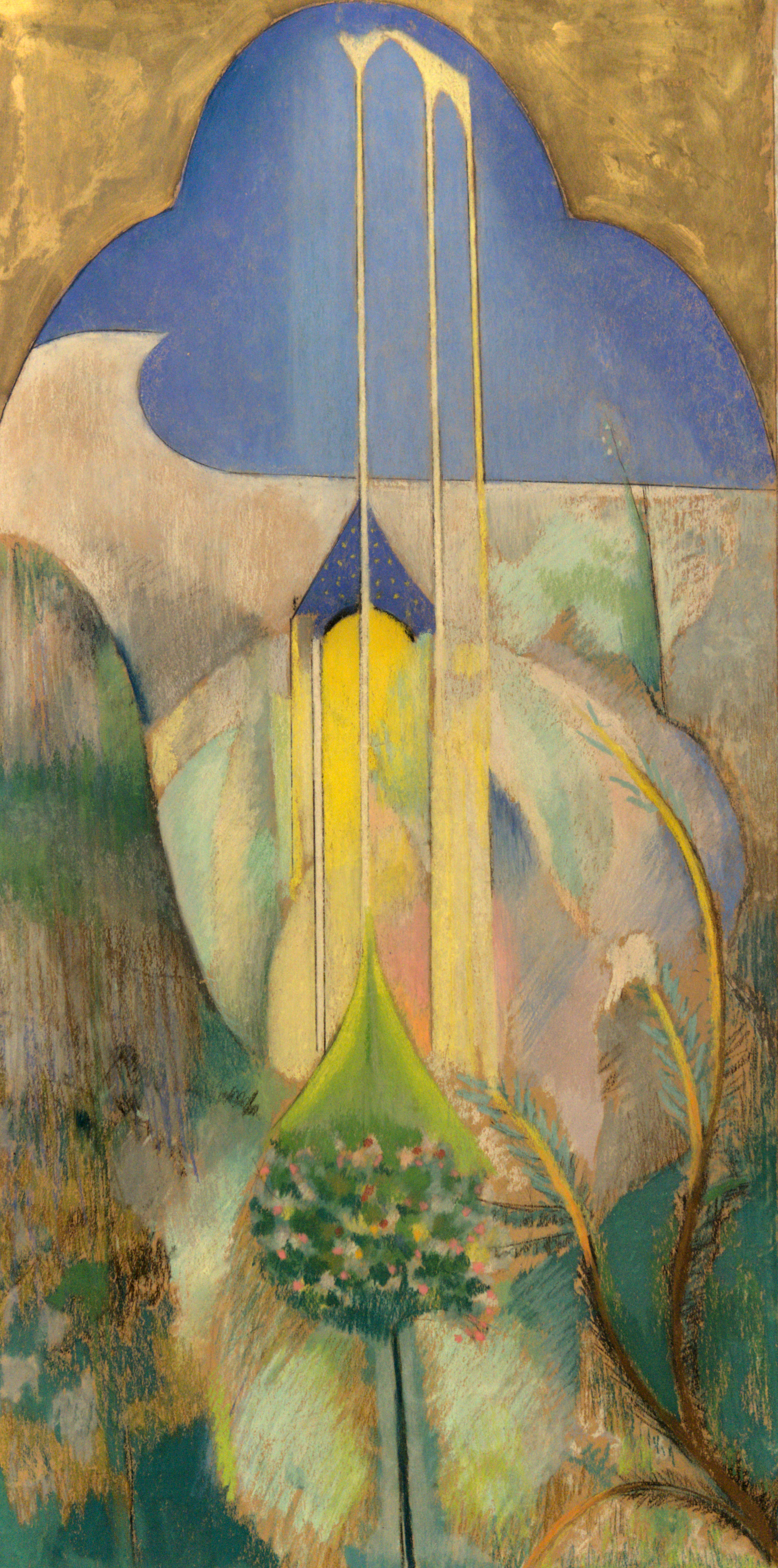
Augustus Vincent Tack (American, 1870–1949), Dawn, 1934–36. Oil on canvas mounted on hardboard, 23 3/4 × 24 3/4 in. (60.3 × 62.9 cm). Phillips Collection, Washington, DC.

Darkness
as black as your eyelid,
poketricks of stars,
the yellow mouth,
the smell of a stranger,
dawn coming up,
dark blue,
no stars,
the smell of a lover,
warmer now
as authentic as soap,
wave after wave
of lightness
and the birds in their chains
going mad with throat noises,
the birds in their tracks
yelling into their cheeks like clowns,
lighter, lighter,
the stars gone,
the trees appearing in their green hoods,
the house appearing across the way,
the road and its sad macadam,
the rock walls losing their cotton,
lighter, lighter,
letting the dog out and seeing
fog lift by her legs,
a gauze dance,
lighter, lighter,
yellow, blue at the tops of trees,
more God, more God everywhere,
lighter, lighter,
more world everywhere,
sheets bent back for people,
the strange heads of love
and breakfast,
that sacrament,
lighter, yellower,
like the yolk of eggs,
the flies gathering at the windowpane,
the dog inside whining for food
and the day commencing,
not to die, not to die,
as in the last day breaking,
a final day digesting itself,
lighter, lighter,
the endless colors,
the same old trees stepping toward me,
the rock unpacking its crevices,
breakfast like a dream,
and the whole day to live through,
steadfast, deep, interior.
After the death,
after the black of black,
this lightness—
not to die, not to die—
that God begot.

“The Fury of Sunrises” is the last of fifteen poems from Anne Sexton’s “The Furies” cycle, published in The Death Notebooks (Houghton Mifflin, 1974). Copyright is held by the Estate of Anne Sexton, represented by Sterling Lord Literistic.

Anne Sexton (1928–1974) was a Pulitzer Prize–winning confessional poet from New England who wrote in starkly personal terms about her psychiatric struggles (she suffered from bipolar disorder and died by suicide), sexuality, and other taboo subjects. Much of her poetry expresses a yearning for the ecstatic and sublime and explores religious questions, referencing God and faith—even though she characterized herself, in a 1968 BBC interview, as an atheist, albeit one who was “rather attracted to Catholicism.”

Roundup: Social music with Dan Zanes, the Green Man, and more

Lancaster Digital Collections has published twelve webpages of “iconography-inspired sacred art,” with downloadable images made available by permission of the artists. I especially like the paintings of Janet McKenzie [previously] and Khrystyna Kvyk [previously].

McKenzie, Janet_The Divine Journey
Janet McKenzie, The Divine Journey: Companions of Love and Hope, 2017. Oil on canvas, 48 × 36 in. Memorial Church, Harvard University, Cambridge, Massachusetts.

Kvyk, Khrystyna_The Descent into Hell
Khrystyna Kvyk (Ukrainian, 1994–), The Descent into Hell, 2023. Acrylic on gessoed wood, 40 × 40 cm. Private collection.

+++

FREE ZOOM CONVERSATION: Social music with Dan Zanes, July 16, 2025, 8 p.m. ET: I met the Baltimore-based folk musicians Dan and Claudia Zanes [previously] two years ago at a local family concert they put on. Joyous, bighearted, faith-filled, community-focused, committed to social justice—I love who they are and what they’re about and all the rich music they share.

In a social media post on June 11, Dan posed the question, “Is there anyone out there who wants to become a music maker and help uplift their community?” Followed by a generous offer: “I can teach you how to play guitar and sing songs (and write songs if you want). No cost, this is a different approach. It will be through a series of Zoom lessons (unless you live down the street). Whether you’re a beginner or someone who’s been dabbling and wants to take it out of the house, I can get you to a confident place so you can play for and with people.” The caveat? You just have to promise to put in the practice and to share your music freely in your community! And to teach someone else what you’ve learned.

“There are so many ways to make positive social change,” Dan says, “and creating music in our communities is certainly one of them.” I believe he has already selected a set of students to take on, but having received so many messages of interest, he has also decided to host a Zoom conversation on social music this coming Wednesday evening. On July 9, he wrote on social media:

Social music in chaotic times, people! Let’s talk about it. I’ve been hearing from many folks who want to be more useful in their communities and see music as the way.

Yes! Music can be healing, galvanizing, uplifting, energizing, and calming. Imagine if every community had many more music makers to play for the young folks, the elders, to lead singalongs and dance parties, to offer songs during times of loss and celebration. Of course it’s happening now, and still I believe there’s so much more that is possible.

If you’re interested in joining the meeting, send Dan an Instagram message @danzanes or a Facebook message @danandclaudiazanes and he’ll send you the link.

To give you a sense of Dan and Claudia’s vibes, here’s one of their original songs, which they debuted on their YouTube channel in 2020:

+++

ONLINE RETREAT: “Read for Your Life: Creating a Story-Formed Home” with Sarah Clarkson, August 5, 2025: Join author Sarah Clarkson [previously] for a daylong online retreat exploring children’s literature, childhood reading, and the development of imagination. “My goal,” she writes, “is to provide a vision for the beauty of the reading life, some good research, and a generous stack of practical booklists to help you begin to outfit and build a home library for the children in your life.” The cost is $35. The event begins at 9:30 a.m. UK time, but all live sessions will be recorded and offered on-demand afterward to registrants.

+++

PODCAST EPISODE: “The Green Man,” Gone Medieval, June 23, 2025: In this episode, Dr. Eleanor Janega talks with Imogen Corrigan, author of The Green Man: Myth and Reality (Amberley, 2025), about the enigmatic “green man” figure, or foliate head, which can be found in almost every pre-Reformation English cathedral and in many churches, decorating arches, corbels, roof bosses, choir stalls, and chancel screens. Corrigan claims that “the image has to be one of the most misunderstood, misinterpreted and misrepresented in the history of church carvings,” having nothing to do with pagan fertility rites. She suggests, rather, that the Green Man gestures toward the resurrection of, and resurrection in, Christ—to spiritual rebirth and eternal life.

Green Man misericord
Misericord from King’s Lynn Minster, England, ca. 1370s, depicting a Green Man disgorging oak leaves. Photo: Lucy Miller. (Click on image for great compilation!)

The two medievalists speak on location at St Mary’s at Minster-in-Thanet and St Nicholas-at-Wade in Kent. The conversation really starts to pick up at 19:47.

+++

This past month has seen the death of two rock ’n’ roll legends whose music, which played regularly on Oldies 100.7 WTRG, formed part of the soundtrack of my 1990s childhood: Brian Wilson (of the Beach Boys) and Sly Stone (of Sly and the Family Stone).

Much has been written about both trailblazers. I just want to mention two things:

1. Love and Mercy, the 2014 film directed by Bill Pohlad about Brian Wilson (played by Paul Dano and John Cusack), is excellent. Elliot Roberts makes the case that it’s the best music biopic ever made, and I’m inclined to agree; New York Times film critic Alissa Wilkinson also cites it as her favorite, at least within the rock genre. The story alternates between Wilson’s production of the Pet Sounds album in the mid-sixties and his abusive psychological treatment under his therapist and conservator Eugene Landy in the late 1980s, which coincided with his meeting Melinda Ledbetter, who would become his wife. The title is taken from one of Wilson’s solo songs from 1988. Here’s the film trailer:

2. Active from 1966 to 1983, Sly and the Family Stone was one of the very few multiracial, mixed-gender bands of the time, modeling integration when the notion was still fairly new in America. Perhaps you’ve heard their most famous hit, “Everyday People,” a call for unity across lines of difference (“There is a blue one who can’t accept the green one / For living with a fat one, tryna be a skinny one . . .”). Sly Stone was the front man—singer, songwriter, multi-instrumentalist, and producer. As is common among so many African American musicians, he got his musical start in church; from infancy, he was immersed in gospel music as a member of the Church of God in Christ, and his musical talent was nurtured there. I learned that in the fifties, he and three of his four siblings even formed a gospel group called the Stewart Four, locally releasing a single in August 1956. Here’s the B-side, “Walking in Jesus’ Name,” with a thirteen-year-old Sly singing lead:

“‘The Sun to Rule by Day’” by Gerhard Tersteegen (poem)

Le Pho_Composition
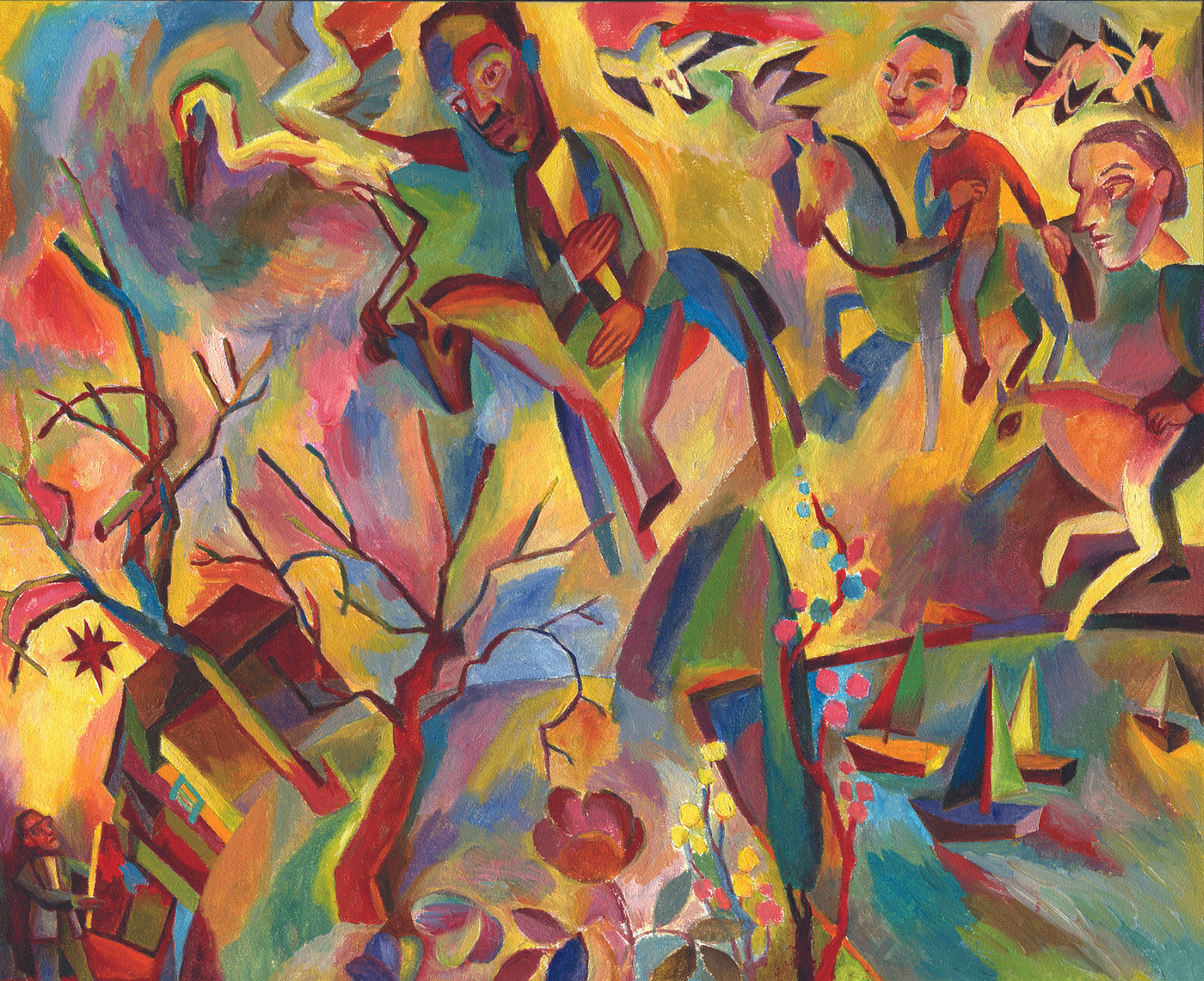
Lê Phổ (Vietnamese, 1907–2001), Composition, 1969. Oil on canvas, 23 3/4 × 29 in. (60.3 × 73.7 cm).

Phil. 2:13

Thou sayest, “Fit me, fashion me for Thee.”
Stretch forth thine empty hands, and be thou still;
O restless soul, thou dost but hinder Me
By valiant purpose and by steadfast will.

Behold the summer flowers beneath the sun:
In stillness his great glory they behold;
And sweetly thus his mighty work is done,
And resting in his gladness they unfold.

So are the sweetness and the joy divine
Thine, O beloved, and the work is Mine.

Translated from the German by Frances Bevan, 1894

In this poem God speaks to his beloved, urging her to cease her anxious striving to please him and to simply be present, soft, and open—to receive his love and its attendant sweetness and joy. The epigraph cites the apostle Paul’s encouragement to the church at Philippi that “it is God which worketh in you both to will and to do of his good pleasure,” but the title is taken from Psalm 136:8: “O give thanks unto the LORD . . . to him that made . . . the sun to rule by day: for his mercy endureth for ever.”

The second stanza is also a biblical allusion, pointing to Matthew 6:27–29, in which Jesus asks rhetorically, “Which of you by taking thought can add one cubit unto his stature? And why take ye thought for raiment? Consider the lilies of the field, how they grow; they toil not, neither do they spin: and yet I say unto you, that even Solomon in all his glory was not arrayed like one of these.”

As we rest in God, he shines his face on us and gladly grows us, beauties all.

(Related post: “The Avowal” by Denise Levertov)


Gerhard Tersteegen (1697–1769) was a German Pietist preacher, writer, humanitarian, and hymnist. Self-taught in religious studies, as a young man he gave up a successful career as a merchant to live a simple life of personal devotion and public ministry. Known as “the physician of the poor and forsaken,” he opened his home in Mülhern—it became known as Pilgrim’s Hut—to all manner of needy folks, leading prayer services and dispensing food, medicine, and spiritual counsel. He also traveled the region preaching the gospel. His writings include the hymn collection Das geistliche Blumengärtlein (The Spiritual Flower Garden) (1729), a volume of Gebete (prayers) and another of Briefe (letters), and translations of the French mystics and Julian of Norwich. He is sometimes classified as a mystic himself because of his emphasis on intimacy with God.

New albums: “Confessions” by the Anachronists, “Though It Be a Cross” by Weston Skaggs, and more

Here’s my new Spotify playlist for July:

Every month I curate a mix of old and new Christian (or Christian-resonant) song releases. For this coming month, some of the new songs come from the following five albums that were released this spring or early summer, which I’ve really been enjoying. I list them here chronologically and encourage you to listen to them each in full!

New albums 2025

1. Jesus by Jon Guerra, released April 4, 2025: An album of original songs in conversation with the words of Christ. Guerra says that a few years ago, to reacquaint himself with Jesus, he began reading cyclically through the Gospels, and as he did, “little song fragments started coming. I was trying to really hear the words, to feel the stories again, and so I’d write little tunes around certain phrases—‘do not lay up for yourselves treasures on earth,’ ‘if anyone would come after me,’ ‘give to everyone who asks of you,’ ‘take this cup from me,’” etc. He then developed those into the twelve fully fledged songs that made it onto the album.

Favorite tracks: “Reckoner (An Axe Laid to the Root),” “Where Your Treasure Is” (above), “Love Your Enemies”

2. Sermon on the Mount: Bible Memory Collection by The Soil and The Seed Project, released May 16, 2025: The Soil and The Seed Project is a ministry that provides intergenerational resources for people as they follow Jesus, read scripture, and talk about their faith together. One of those resources is new music, written and recorded by an expanding collective of folks. All twenty-five songs on this new double album of theirs are based on the Sermon on the Mount in Matthew 5–7, which contains the Beatitudes, the Lord’s Prayer, warnings against hypocrisy, the call to be salt and light, the command to love one’s enemies, the parable of the wise and foolish builders, assurances of God’s care, and the promise that those who seek will find. For the first disc, the Project set 48 of the 111 sermon verses to music, and for the second, they invited a handful of singer-songwriters to write songs in response to what they encountered as they dwelt in the text.

The album is accompanied by a “Little Liturgies” booklet of litanies, reflection prompts, and line drawings covering eleven weeks. Both the music and the booklet (digital or physical, while supplies last) are FREE from their website!

Favorite tracks: “Come and Eat” (above), “Mountains of Treasure,” “God of Mercy, God of Peace,” “Take What You’ve Given”

3. Though It Be a Cross by Weston Skaggs, released June 20, 2025: An EP of six hymns, freshly arranged and performed by Weston Skaggs of Ohio. The album title comes from a line from “Nearer, My God, to Thee” (video below). “Sarah Fuller Flower Adams wrote the lyrics from the perspective of Jacob and his received revelation of God’s nearness. A nearness that only occurred when he felt most hopeless and alone,” Skaggs explains. “In meditating on that narrative, she determined to be like Saint Peter: who became the most like Christ his master when he was raised on his own cross.” This song and others feature backing vocals by Katy Martin.

The most stylistically daring is “For the Beauty of the Earth,” whose verses Skaggs transposed to a minor key—to allude to the beauty and brokenness of creation and relationships, Skaggs said, “invit[ing] listeners to hold both gratitude and longing in the same breath.”

Favorite tracks: “No, Not One,” “Nearer, My God, to Thee” (above)

4. Confessions by the Anachronists, released June 26, 2025: The Anachronists are Andrés Pérez González, Corey Janz, and Jonathan Lipps, three musician friends who met while studying theology at Regent College in Vancouver and who have formed a group to give renewed voice, through modern indie music, to theologians and mystics from ages past. Confessions is their debut EP, with six songs rooted in Augustine’s spiritual autobiography from the late fourth century. The songs address grief over the death of a dear friend, and God’s merciful pursuit of those who wander; a preconversion sense of dissatisfaction but as yet unwillingness to make any changes; God as the One who is fully at rest in his own self, and how we might share in that rest; struggles with distraction and pride in the spiritual life; and the promise of renewal both personal and universal.

The still life colored-pencil drawing commissioned for the album cover is by the Finnish artist Minni Havas; it portrays Easter lilies growing out of a compost heap. It was especially inspired by the concluding song, “All of Our Decayed Parts,” which is itself based on an excerpt from Book IV.16 of the Confessions:

Do not be vain, my soul. Do not deafen your heart’s ear with the tumult of your vanity. Even you have to listen. The Word himself cries to you to return. There is the place of undisturbed quietness where love is not deserted if it does not itself depart. See how these things pass away to give place to others, and how the universe in this lower order is constituted out of all its parts. “Surely I shall never go anywhere else,” says the word of God. Fix your dwelling there. Put in trust there whatever you have from him, my soul, at least now that you are wearied of deceptions. Entrust to the truth whatever has come to you from the truth. You will lose nothing. The decayed parts of you will receive a new flowering, and all your sicknesses will be healed. All that is ebbing away from you will be given fresh form and renewed. (trans. Henry Chadwick)

This album comprises just six of the thirty-some Confessions-based songs the trio has written; they are testing the waters with it to see if there is more interest and funding to record more, and then to apply this approach to other ancient and medieval theological and spiritual writings by such luminaries as Athanasius and Julian of Norwich. Some laypeople feel daunted to read centuries-old works, or assume that they’re mostly irrelevant. But the Anachronists seek to mine the riches of historical Christian thought and provide an easy access point through music, hopefully encouraging folks to seek out the sources. I’m excited to see what they do next! Follow them on Instagram @anachronists.music.

Favorite tracks: “God of the Runaways,” “All of Our Decayed Parts” (above)

5. All Shall Be Well by the Good Shepherd Collective, released June 27, 2025: This album consists mainly of gospel and hymn covers. The artists in this collective, whom I’ve mentioned many times before, are top-notch, and I’m always excited to see what they put out.

Favorite tracks: “Lift Every Voice” (James Weldon Johnson and J. Rosamond Johnson), “Ancient of Days” (Ron Kenoly) (this appears to be a re-release from the collective’s Gospel Songs, vol. 1; above), “My Jesus Is All” (the Staples Singers), “I Saw the Light” (Hank Williams)