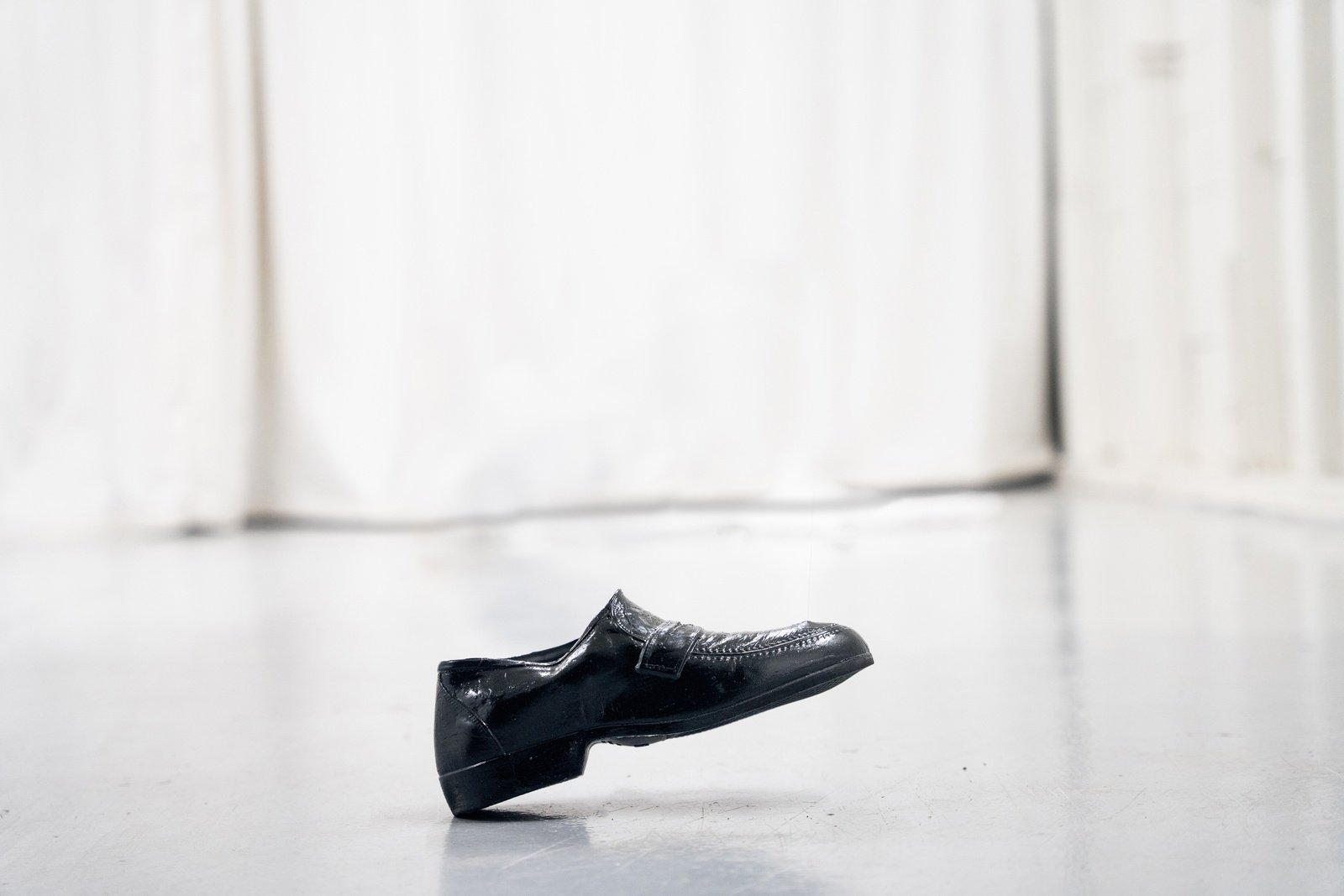
Lisa Walcott (American, 1983–), Other One to Drop, 2022. Rubber shoe, thread, motor, wood, ziptie, 3 1/2 × 8 × 2 in. (shoe).
“Waiting for the other shoe to drop” is an American idiom that means to wait for a seemingly inevitable event. According to Dictionary.com, the expression originated in early twentieth-century New York City tenements and refers to when you’d hear your upstairs neighbor kick off their shoe—you knew the second shoe would likewise be smacking the floor any second.
Midwest-based multidisciplinary artist Lisa Walcott plays upon this expression, as well as the fidgety habit of foot tapping, in her kinetic sculpture Other One to Drop. The piece consists of a loafer connected to a ceiling-mounted mechanism that at regular intervals raises the toe up off the ground by a barely visible thread and then lowers it back down, mimicking the body language of one who is waiting. But the piece also requires the viewers themselves to practice waiting, as the inactivity between movements creates a sense of imminence, and the shoe-drop will be missed if you turn away. Here’s a video of the piece in motion:
The tapping of the shoe conjures ideas of waiting and patience. The repetitive movement is consistent, but the slow pace adds anticipation and may even require some patience as the shoe hovers, finally taps, and repeats. The repetition of movement represents “promise” within the work. Even when the expectation has been demonstrated clearly and consistently, waiting requires patience and anticipation requires trust.
Since its founding at Pentecost, the church has waited for the other shoe to drop, so to speak. The first shoe was God made flesh in Bethlehem. The second shoe will be God’s return, in flesh, at the end of time. Christians are an Advent people, living in this liminal space between the already and not-yet. The liturgical calendar, in its wisdom, assigns us some four weeks each year to lean into that tension, exercising our hope muscles as we wait for Christ to come to us once again.
Walcott is an assistant professor of art at Hope College in Holland, Michigan. Her work “translates elements of daily life, embodies moods, and animates daydreams,” she says. Everyday objects such as brooms, drawers, tablecloths, drying racks, and fly swatters often find their way into her sculptures and installations. Explore more at https://lisawalcott.com/.
This wistful instrumental work was composed by Eric Marshall [previously], the lead singer of and songwriter for the ambient alt-rock band Young Oceans. Young Oceans grew out of Marshall’s collaborations with fellow musicians at Trinity Grace Church in Brooklyn, where he served as a worship leader from 2009 to 2018.
The title of this piece, “Though for Now We’re Waiting,” is a dependent clause that anticipates a second clause to complete the sentence. How would you complete it? The last thirty seconds provide a space for pause, for sitting quietly and attentively with the weight of your desire and God’s promise.
This post is part of a daily Advent series from December 2 to 24, 2023 (with Christmas to follow through January 6, 2024). View all the posts here, and the accompanying Spotify playlist here.
In the church calendar, the linked seasons of Advent, Christmas, and Epiphany are sometimes referred to as the “cycle of light.” “Since earliest times the Christian community has utilized light as a primary symbol to convey the meaning of the Christ-event,” writes Wendy M. Wright in The Vigil: Keeping Watch in the Season of Christ’s Coming. “The power of the symbol was not lost on most generations of believers who lived closer than we do to the truth that we are all ultimately dependent upon the light of the sun for warmth, vision, and life itself” (152). Light imagery permeates scripture and the writings of the church fathers.
The capstone of the cycle of light, celebrated each year on January 6, is Epiphany, which means “manifestation” or “appearance.” In the West, this feast commemorates the visit of the magi, to whom the divinity of Christ was revealed, and who brought back the light they received to their homelands, an early spreading of the gospel. Epiphany is exactly one month away, but I wanted to provide a few resources in advance. For those in the DC metro area: note that there are just two weeks left to see the Anne Lindberg exhibition!
+++
NEW PLAYLIST: Epiphany (Art & Theology): I put together a playlist of nearly a hundred Epiphany songs that celebrate Jesus as the light of the world and that mark the magi’s transformative encounter with him.
Besides the classic “We Three Kings,” it also includes a few versions of the ancient hymn “Phos Hilaron” (originally written in Koine Greek and translated into English as “Gladsome [or Gladdening] Light”), a Provençal carol popularized by Bizet, a shape-note hymn from Appalachia, aguinaldos from Puerto Rico, Arabic hymns from Syria and Lebanon, plainchant scripture settings, Renaissance motets, traditional and contemporary Black gospel songs, indie songs (including retuned hymns) from the past decade, and choral works from the UK, Jamaica, and Argentina. Some of the selections are quieter, more reflective, whereas others are very exuberant, like “Jesus Is the Light” by Hezekiah Walker and the Love Fellowship Crusade Choir:
And “Los Reyes Magos,” the fifth movement of Ariel Ramirez’s folk drama Navidad Nuestra (lyrics here); the song was written as a taquirari, a type of Bolivian folk song that has a syncopated rhythm and that is danced to, and features a charango (small guitar) and siku (Andean panpipe):
+++
ART COMMENTARIES: The VCS Advent Calendar 2023: Every Advent, the Visual Commentary on Scripture sends out a daily image from its online archives to its email list around a seasonal theme. This year’s theme is “light.” The images are keyed to particular scripture passages having to do with light and are accompanied by commentary from a range of contributors. So far the VCS has featured a Genesis 1–inspired Sistine Chapel fresco, John Piper and Patrick Reyntiens’s extraordinary Baptistery Window at Coventry Cathedral, a Trinitarian miniature from an English book of hours, a heliotropic landscape sculpture by David Wood, a light installation by Dan Flavin at a church in Milan, and Vincent van Gogh’s Starry Night.
Baptistery Window, Coventry Cathedral. Designed by John Piper and made by Patrick Reyntiens, 1957–61. Stained glass, 85 × 56 ft.
+++
EXHIBITIONS:
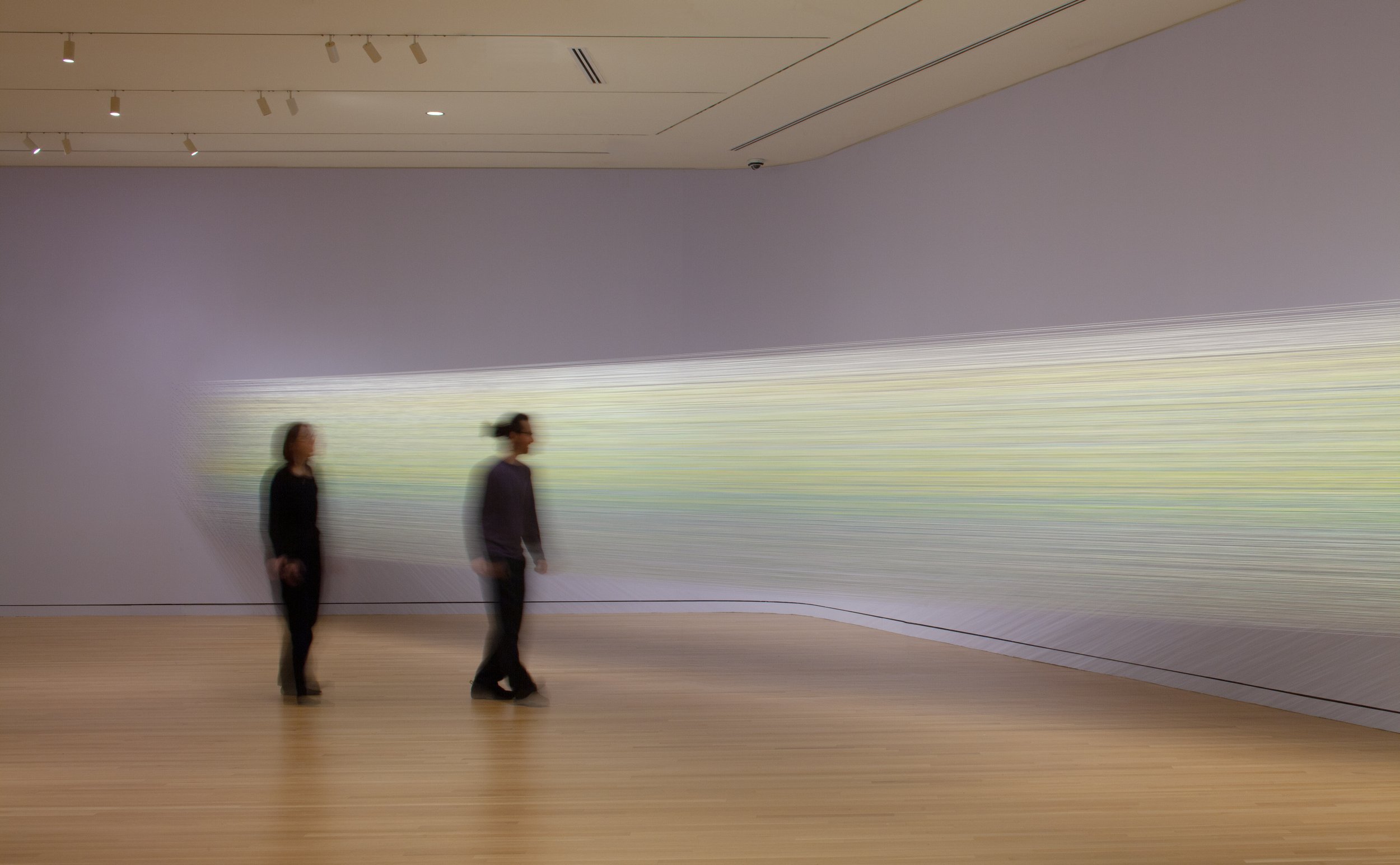
>> What color is divine light? by Anne Lindberg, January 5–December 22, 2023, Textile Museum at George Washington University, Washington, DC: I saw this installation last month, and it is striking! About four thousand strands of complementary yellow and blue cotton thread (and some white and green), stretching across the gallery against a backdrop of lavender-painted walls, evoking light. The artist describes the work as a drawing made of textile material in the air. It was inspired by a 1971 essay of the same title by the art historian Patrik Reuterswärd (see The Visible and Invisible in Art: Essays in the History of Art), and it opened adjacent to an exhibition of prayer carpets, titled Prayer and Transcendence.
Anne Lindberg (American, 1962–), What color is divine light?, 2023. Cotton thread, staples, 5 × 55 × 14 ft. Solo exhibition at the Textile Museum, George Washington University, Washington, DC. Photo: Derek Porter.
>> Bubble Universe: Physical Light, Bubbles of Light, Wobbling Light, and Environmental Light by teamLab, opens early February 2024, Borderless (museum), Azabudai Hills, Tokyo: teamLab is an international collective of “ultra-technologists” consisting of artists, programmers, engineers, CG animators, mathematicians, and architects who collaborate on immersive art projects. One of their upcoming installations is a room with hundreds of glowing spheres, each containing unique changing lights that interact with guests and the environment itself. [HT: My Modern Met]
teamLab, Bubble Universe, 2023 (work in progress). Interactive installation, Borderless, Azabudai Hills, Tokyo.
+++
NEW ALBUMS:
>> The Light by Sarah Sparks: A four-song EP by a Christian singer-songwriter from Hawaii. Here’s the first track:
>> Morning Star: Music for Epiphany Down the Ages by the Gesualdo Six: Released November 3, this wonderful album comprises twenty-one choral pieces for Epiphany—a mix of plainchant propers for Mass, hymns, Renaissance motets, and twenty-first-century works. One of the contemporary works is a setting by Owain Park of Psalm 43:3: “O send out thy light and thy truth, that they may lead me; let them bring me unto thy holy hill, and to thy dwelling”:
In these last days [God] has spoken to us by a Son, whom he appointed heir of all things, through whom he also created the worlds. He is the reflection of God’s glory and the exact imprint of God’s very being, and he sustains all things by his powerful word.
—Hebrews 1:2–3
“The Spirit of the Lord is upon me, because he has anointed me to bring good news to the poor. He has sent me to proclaim release to the captives and recovery of sight to the blind, to set free those who are oppressed, to proclaim the year of the Lord’s favor.”
Today this scripture has been fulfilled in your hearing.
—Jesus’s first public teaching in Nazareth (see Luke 4:16–21), quoting from Isaiah 61
LOOK: Niño Jesus santo
Niño Jesus, Puerto Rico, 18th century. Carved and painted wood and metal, 13 3/8 × 5 1/2 × 4 3/8 in. (34 × 14 × 11.2 cm). Smithsonian American Art Museum, Washington, DC.
“Devotional figures of the infant Jesus became popular in Puerto Rico during the seventeenth and eighteenth centuries,” writes Yvonne Marie Lange in her 1975 PhD dissertation, Santos: The Household Wooden Saints of Puerto Rico. “An unknown craftsman carved this small figure in the act of benediction, or blessing, with an orb in his left hand to symbolize God’s dominion over the earth.” (He’s got the whole world in his hands!) This is a baby Salvator Mundi, “savior of the world.” He is naked to emphasize his full humanity. The three flame-like shapes around his head create a cross and represent the light of God emanating from him.
Just as Isaiah The prophet has foretold A sprout from Jesse’s root Into a tree shall grow This sprout shall bloom Into a mighty tree of life Its fruit will feed us And its source will be our light
The Spirit of the Lord Will come to dwell with us A righteous judge A mighty counselor And by the word Of his everlasting power The baby in the manger Upholds the universe The baby in the manger Upholds the universe
For in him all the fullness Of God was pleased to dwell And through him To reconcile all things to himself Have you ever seen A wolf and a lamb lie down together? Can there ever be peace like this Between enemies? Can there ever be peace like this Between enemies? Would God dare to descend To come live with his enemies?
The Spirit of the Lord Will come to dwell with us Put on flesh Make peace for us with God And by the word Of his everlasting power The baby in the manger Upholds the universe The baby in the manger Upholds the universe
Then I saw heaven open And behold A white horse with its rider Righteousness his clothes With eyes that burn like fire And a crown atop his head Robes dipped in blood That he himself willingly shed Yet I had no doubt I still recognized his face Son of God, Son of Man Glorious grace
King of kings and Lord of lords Messiah, Christ, the Word of God King of kings and Lord of lords Messiah, Christ, the Word of God King of kings and Lord of lords Messiah, Christ, the Word of God King of Kings and Lord of lords Messiah, Christ, the Word of God
The Spirit of the Lord Has come to dwell with us Behold, the Lamb of God Makes all things new And by the word Of his everlasting power The baby in the manger Upholds the universe The baby in the manger Upholds the universe And he shall reign Forever and ever
Katie Ribera is involved in the music ministry of Trinity Church Seattle, which is led by Luke Morton, pastor of worship arts. Ribera wrote this song for her congregation, and it was recorded live from one of their worship services, released under the artist name Trinity Songworks. Listen to more from Trinity Songworks on the church’s website and their SoundCloud page, or on the albums Live Archive 2018–2021 and Let the Little Children Come.
This post is part of a daily Advent series from December 2 to 24, 2023 (with Christmas to follow through January 6, 2024). View all the posts here, and the accompanying Spotify playlist here.
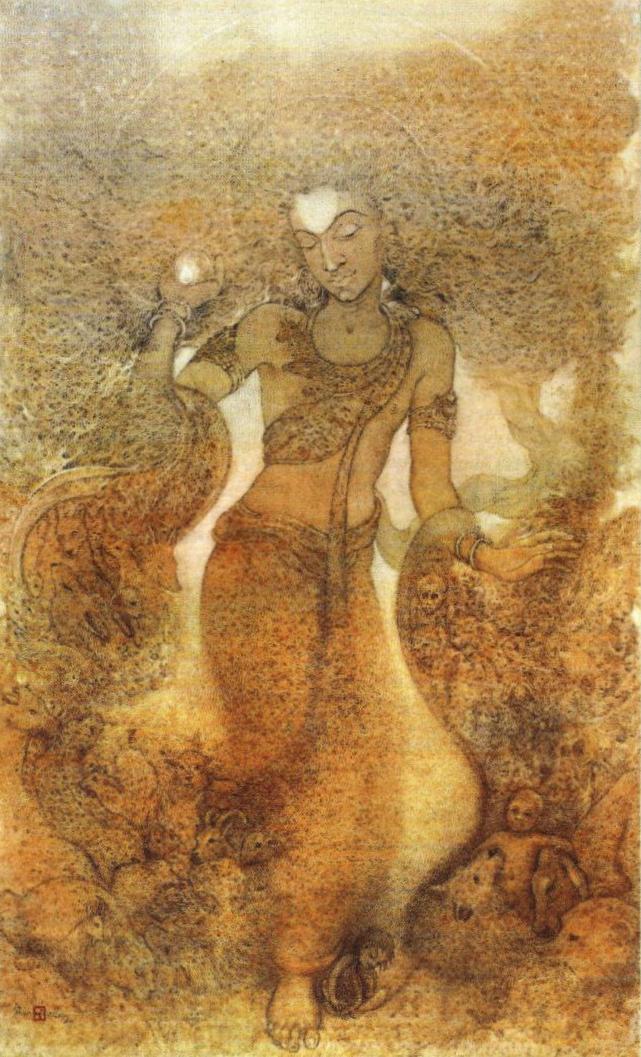
Frank Wesley (Indian, 1923–2002), The Promise of Peace, 1994. Watercolor, 50 × 30 cm.
Frank Wesley (1923–2002) [previously] is one of the twentieth century’s most celebrated Indian Christian artists. His watercolor The Promise of Peace appears on the cover of the March 1996 issue of Image: Christ and Art in Asia, the monthly magazine of the Asian Christian Art Association, which is where I sourced it from. Painted in warm brown earth tones and based on Isaiah 11:1–9, it shows an Indianized Jesus ushering in the peaceable kingdom of God. The ACAA provides the following commentary:
Christ is the shoot rising from the stump, and the Spirit of the Lord’s presence is shown in the white egg/flame/pearl in the upraised right hand and in the white heart shape centred on Jesus’ brow. A faint halo encircles his head, while a second halo sweeps from the right hand down to the left hand, under which the needy of the land shelter. The little child living at peace with many different animals is visible in the bottom right-hand corner, and the child playing unharmed with the viper is seated at the foot of Jesus. On the left-hand side of the painting a wide variety of creatures are playing happily together. The bracelet on Jesus’s left upper arm carries the symbol for Peter while that on the right upper arm signifies Paul. The symbols of the four gospel writers can be seen in the necklet.
LISTEN: “O Lord, May Your Kingdom Come” | Words by Greg Scheer, based on Isaiah 11:6–9, 2014 | Music by Eric Sarwar, based on the Raga Mishra Shivranjani, 2014 | Led by Eric Sarwar at the Calvin Symposium on Worship, 2019
Refrain: اے خدا تیری بادشاہی آئ (Transliteration: Aey Khuda, teri badshahi, aey) O Lord, may your kingdom come
Where the wolf and lamb Shall lie down as kin And a child shall lead them [Refrain]
Where the cow shall graze And its calves will play With the cubs of the lion [Refrain]
Where the babe in arms Shall fear no harm From the snake or the adder [Refrain]
May your kingdom come May your will be done On earth as in heaven [Refrain]
Born and raised in Pakistan, Rev. Dr. Eric Sarwar is a musician, global missiologist, and the pastor of Artesia City Church in Southern California, made up of Indian and Pakistani immigrants. He is also the founding president of the Tehillim School of Church Music and Worship in Karachi, which fosters the academic study of the ethnomusicology, missiology, and tradition of Christian worship in communities across Pakistan and the overseas diaspora. He plays the harmonium and is fluent in English, Hindi, Punjabi, and Urdu. He is the author of Psalms, Islam, and Shalom: A Common Heritage of Divine Songs for Muslim-Christian Friendship (Fortress Press, 2023) and is a frequent organizer of zabur (psalm) festivals.
In the video above, extracted from a Vespers service, Sarwar leads attendees of the 2019 Calvin Symposium on Worship in Grand Rapids, Michigan, in an anthem he wrote with Greg Scheer, joined on stage by other musicians from the symposium. The refrain is in Urdu and English.
This post is part of a daily Advent series from December 2 to 24, 2023 (with Christmas to follow through January 6, 2024). View all the posts here, and the accompanying Spotify playlist here. “O Lord, May Your Kingdom Come” is not on Spotify.
Every warrior’s boot used in battle and every garment rolled in blood will be destined for burning, will be fuel for the fire. For to us a child is born, to us a son is given, and the government will be on his shoulders. And he will be called Wonderful Counselor, Mighty God, Everlasting Father, Prince of Peace.
—Isaiah 9:5–6 NIV
LOOK: Nativity by Irenaeus Yurchuk
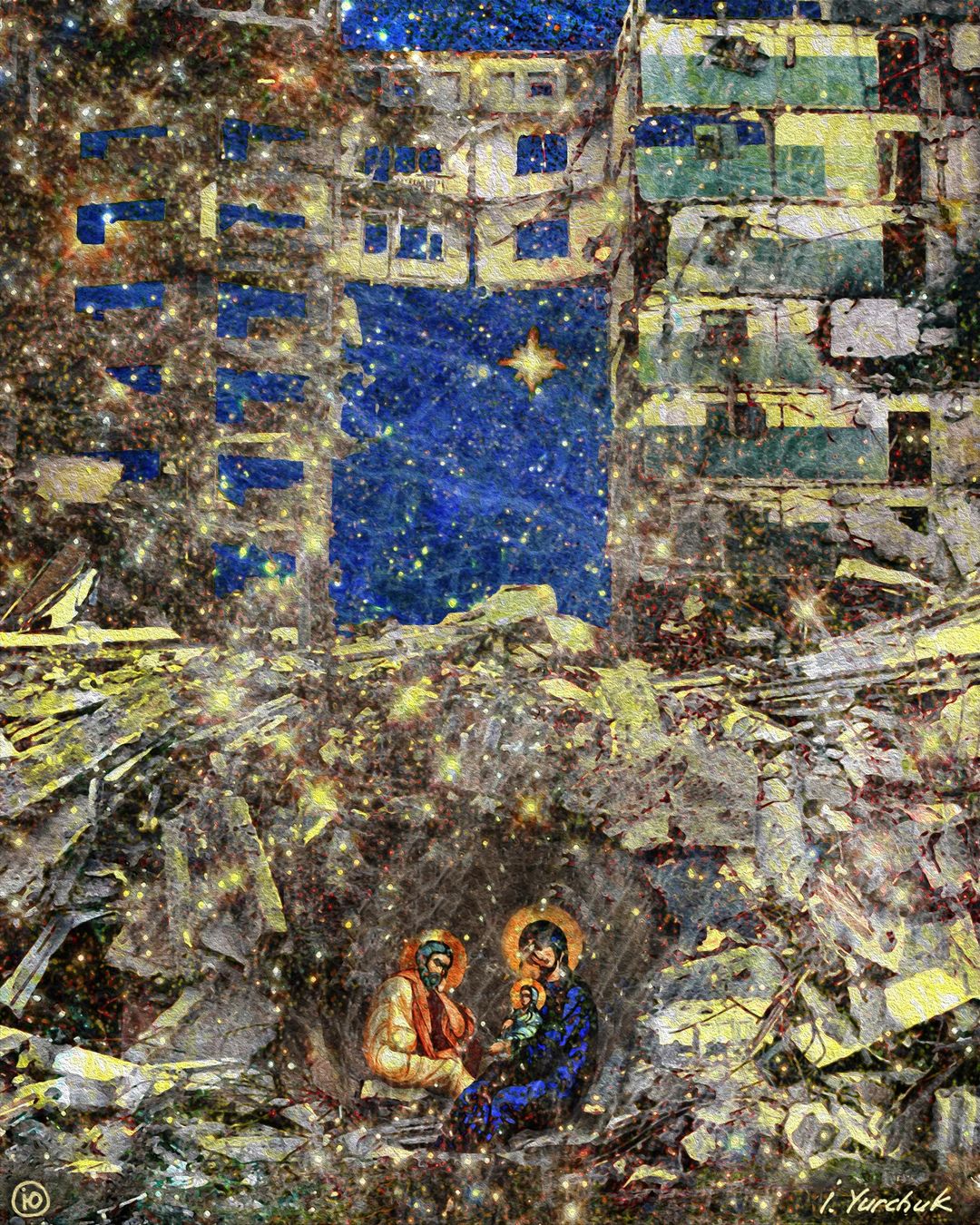
Irenaeus Yurchuk (Іриней Юрчук), Nativity, 2022. Mixed media on canvas. Used with permission.
Irenaeus Yurchuk was born in Ukraine during World War II and raised in central New York, where he still resides. He worked professionally as an urban planner until 2010, when he turned to art full-time.
“Over the years my work has evolved to combine multiple-image photography with drawing and painting, using a variety of digital editing and physical montage techniques,” Yurchuk says. “This includes adjusting inkjet images by applying acrylics, watercolors, pastels, markers, colored pencils together with selected collage materials to achieve a desired effect.”
Yurchuk’s Nativity is a response to Russia’s 2022 military invasion of Ukraine. This is no facile depiction of that historic birth, no cozy winter idyll. It is a war-zone Nativity. It shows the Holy Family, rendered in iconic style, sheltering at night in the rubble of a bombed-out apartment complex. Surrounded by fallen steel beams, concrete, and broken glass, Mother Mary holds the newborn Jesus while a downcast Joseph sits beside them with head in hands. Though their circumstances are dire, through the building’s shell shines one particularly bright star, signifying hope in the horror.
One of the biblical names for Jesus is Emmanuel, Hebrew for “God with us.” By showing the Christ child being born amid the ruins of a contemporary Ukrainian city, Yurchuk reinforces the ongoing relevance of the Incarnation, meditating on God’s descent into our world of woe to dwell with and to deliver. Jesus is “God with us” in our suffering. When everything around us is crumbling, God is there too, hurting alongside and calling all oppressors to account.
Do you recall the famous Christmas text from Isaiah, further immortalized by Handel, that begins “Unto us a child is born . . .”? Well, it is immediately preceded by a prophecy of war’s final demise, of soldiers’ uniforms and accoutrements and all their bloody violence being consigned to one great big burning trash heap. In the new world government established by Christ, the Prince of Peace, tyrants will be overthrown (Luke 1:51–52), and the nations will study war no more (Isa. 2:4).
May this artwork and the song below prompt you to intercede for those suffering under war today, in Ukraine and elsewhere.
LISTEN: “Drive Out the Darkness” by Paul Zach, Isaac Wardell, Dan Marotta, and John Swinton, on Lament Songs by the Porter’s Gate (2020)
Refrain: Come, O come Be our light Drive out the darkness Come, Jesus, come
Every year under the thorn Every wrong that we have known Every valley will be raised Ancient ruins will be remade [Refrain]
Every weapon made for war Every gun and every sword Will be melted in the flame To be used for gardening [Refrain]
In the emptiness of grief Through the night of suffering In the loss and in the tears God of comfort, O be near [Refrain]
Coda: Come, and end all the violence Come, do not be silent Come, we cling to your promise Come, you’ll break all injustice Come, Jesus, come
For my review of the Lament Songs album by the Porter’s Gate, see here.
In addition to these words that the Porter’s Gate has given us to pray, I commend to you this prayer by Rev. Kenneth Tanner, which he posted October 13 in response to recent atrocities in Israel and Gaza (I’ve been returning to it a lot over the past month):
This post is part of a daily Advent series from December 2 to 24, 2023 (with Christmas to follow through January 6, 2024). View all the posts here, and the accompanying Spotify playlist here.
O that you would tear open the heavens and come down!
—Isaiah 64:1a
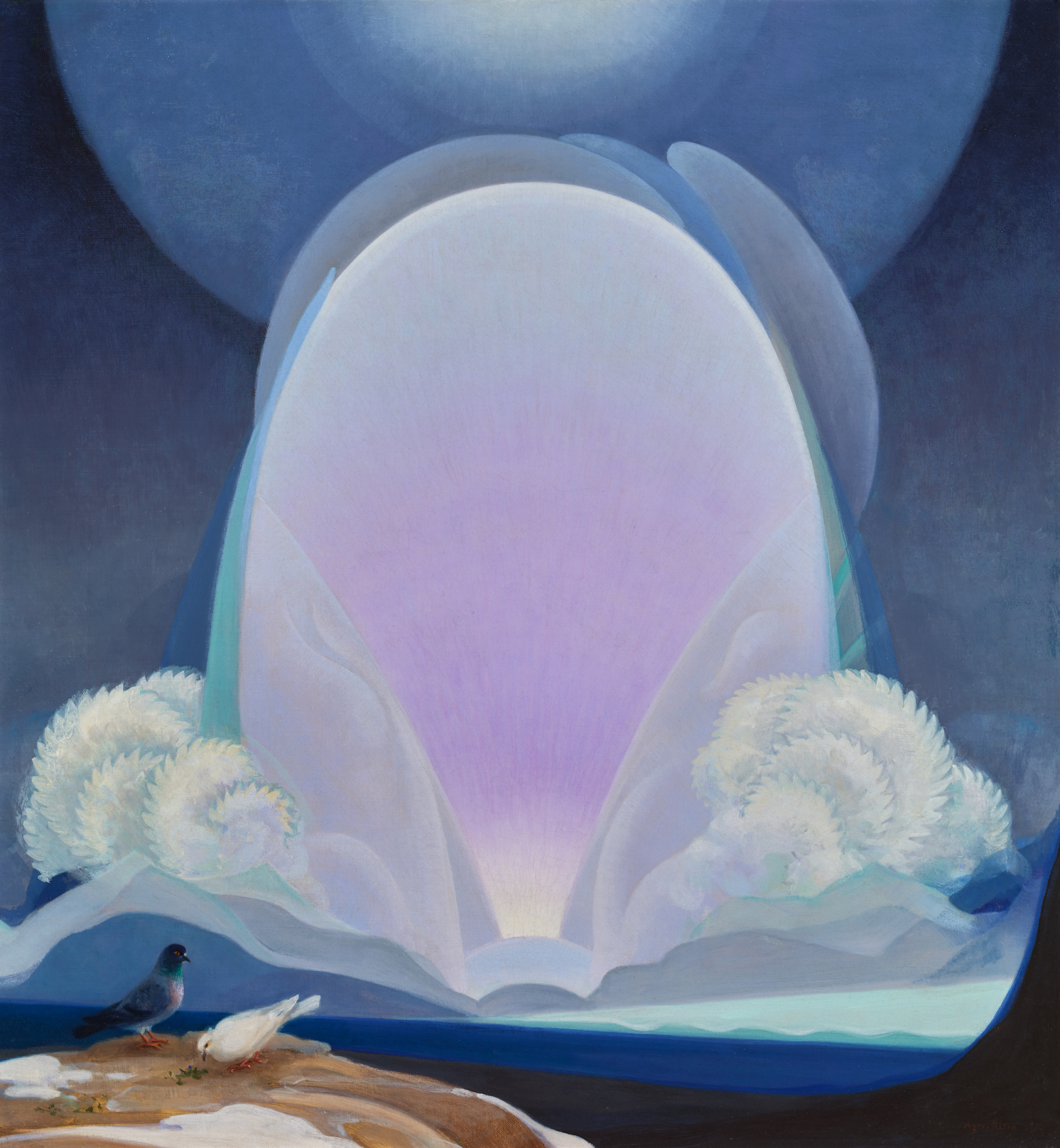
LOOK:Winter by Agnes Pelton
Agnes Pelton (American, 1881–1961), Winter, 1933. Oil on canvas, 30 × 28 in. Crocker Art Museum, Sacramento, California.
Agnes Pelton was part of the Transcendental Painting Group, an artists’ collective founded in the American Southwest in 1938 on the principles of creating a pure abstract painting style imbued with spiritual intent. Clayton Schuster, writing for Hyperallergic, describes one of Pelton’s metaphysical landscapes:
Pelton’s Winter (1933) depicts a pigeon and dove on a cliff in the foreground, with a great blooming cloud in the distance. The arched lavender cloud against the dark sky seems to suggest the narrow path toward a new beginning, as a pale glow at the top of the painting symbolizes hidden truths. Within the cloud are delicate lines hinting at two hills. The cloud seems to glow where the hills nearly meet and delineate the valley. It is as if Pelton has excavated a road from the cloud and revealed the path to paradise.
Pelton shows us a new way opening. The sky has been rent, and light breaks in. To either side of the central bulbous form are tooth-edged wheels in motion. At the bottom left, the snow is melting at the emerging warmth, revealing tiny green shoots on the ground. The two doves perhaps signify a coming peace.
Full of mystical yearning, this painting shouts “Advent!” to me. It evokes in my mind not only the Isaianic exclamation cited above—the basis for today’s featured song (below)—but several other Advent scriptures as well, such as Isaiah 40:3–5 (pave a straight path for God through the desert; every hill, every valley . . .), Psalm 98:8–9 (“let the hills sing together for joy at the presence of the Lord, for he is coming . . .”), and Revelation 1:7 (“Look! He is coming with the clouds”; cf. Matthew 24:30: “they will see ‘the Son of Man coming on the clouds of heaven’ with power and great glory”).
Pelton was not a Christian—she rejected organized religion—but her artworks are so wonderfully expansive in the associations and interpretations they invite.
For more on the artist, see the wonderful book Agnes Pelton: Desert Transcendentalist, a catalog of a recent major retrospective of her work organized by the Phoenix Art Museum.
O Savior, rend the heavens wide; Come down, come down with mighty stride; Unlock the gates, the doors break down; Unbar the way to heaven’s crown.
O Morning Star, O radiant Dawn, When will we sing your morning song? Come, Son of God! Without your light We grope in dread and gloom of night.
Sin’s dreadful doom upon us lies; Grim death looms fierce before our eyes. O come, lead us with mighty hand From exile to our promised land.
There shall we all our praises bring And sing to you, our Savior King; There shall we laud you and adore Forever and forevermore.
The German hymn text “O Heiland, reiß die Himmel auf” (O Savior, Rend the Heavens Wide) is by Friedrich Spee (1591–1635), a German Jesuit priest, professor, and poet best known for opposing the European witch trials and the use of torture. Written during the Thirty Years’ War, it was first published in Würzburg in 1622 in the collection Das Allerschönste Kind in der Welt (The Most Beautiful Child in the World).
Four-plus decades later, in 1666, a Dorian-mode melody was published anonymously with the text in the Rheinfelsisches Deutsches Katholisches Gesangbuch (German Catholic Hymnal). Then in 1863, Johannes Brahms arranged that melody as a motet for unaccompanied mixed choir (op. 74, no. 2):
The hymn entered English-speaking churches in the twentieth century when Martin L. Seltz (1909–1967) translated it.
The original chorale tune is still in use, but I’ve also heard some churches using the 2003 retune by Nathan Partain. Here’s a live recording of that version from Trinity Church Seattle, sung by Partain, back when he was the church’s music director (it was called Green Lake Presbyterian Church at the time):
The hymn also appears, with updated arrangement, on Partain’s 2019 album The Beauty to Come. The chord charts, lead sheets, and string scores for this album and two others can be downloaded for free from Partain’s website.
This post is part of a daily Advent series from December 2 to 24, 2023 (with Christmas to follow through January 6, 2024). View all the posts here, and the accompanying Spotify playlist here.
Frida Hansen (Norwegian, 1844–1931), Melkeveien (Milky Way), 1898. Tapestry, 260 × 345 cm. Museum für Kunst und Gewerbe (Museum of Arts and Crafts), Hamburg, Germany.
This art nouveau tapestry by Norwegian artist Frida Hansen received a gold medal at the world’s fair in Paris in 1900. It shows angelic figures unfolding a starry veil over the night sky. They glide forward above a band of Hebrew script that references the creation of the stars in Genesis 1.
The God who brought light in darkness in the beginning is bringing light again as we enter a new liturgical year.
Comprising the first five weeks of that new year, Advent-Christmas-Epiphany is a time of starlight, promise, and revelation. The first of the triad, Advent, is particularly concerned with themes of longing, waiting, lament, and future-oriented hope. We make ready our hearts to receive Christ—he who came to us first as a babe in a manger, in a vulnerable body like ours, to teach and suffer and redeem, and who is coming back one day in unveiled power and majesty to bring the fullness of God’s heavenly kingdom to earth.
Two millennia ago, God hung a special star in the sky for the magi to follow, guiding them on their way to the Christ child. May God similarly illumine our way to Christ as we seek him this season, giving us eyes to see and ears to hear the gospel of God-with-us and cultivating in us an eager readiness for Christ’s return.
I think of Hansen’s crowned young ladies as ushering us into the deep, dark blue of Advent to behold the signs that sparkle in scripture, foretelling a wondrous future.
LISTEN: “Star of Wonder” by Sara Groves, on O Holy Night, 2008; adapted and arranged from the refrain of “We Three Kings” by John Henry Hopkins, 1857
Star of wonder, star of light Star of royal beauty bright Guide us O guide us Won’t you guide us
Want to follow along with the music on Spotify? Most of the songs in this Advent blog series, and many more besides, can be found on the Art & Theology Advent Playlist.
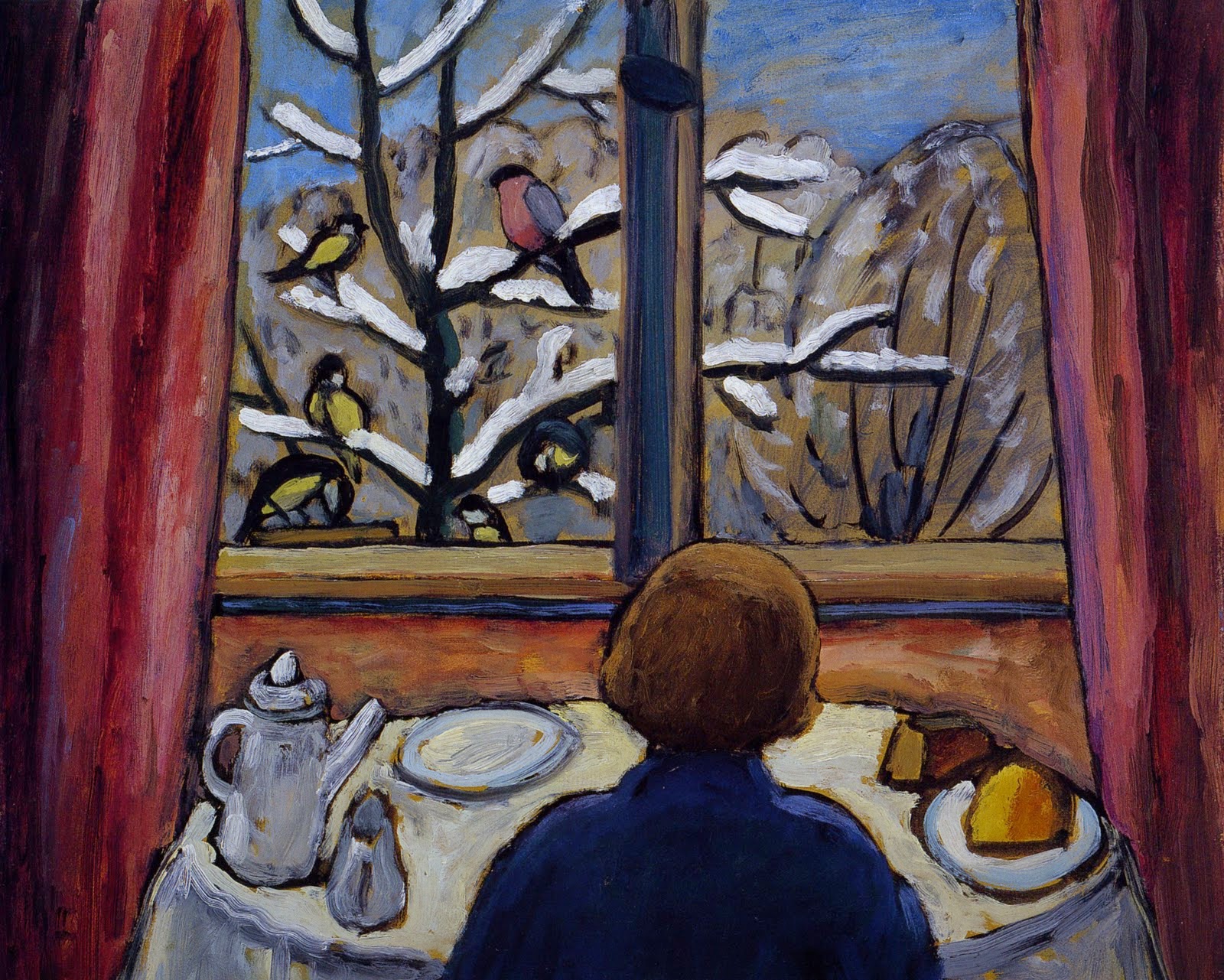
Gabriele Münter (German, 1877–1962), Breakfast of the Birds, 1934. Oil on board, 18 × 21 3/4 in. National Museum of Women in the Arts, Washington, DC.
I love to rise ere gleams the tardy light,
Winter’s pale dawn; and as warm fires illume,
And cheerful tapers shine around the room,
Through misty windows bend my musing sight,
Where, round the dusky lawn, the mansions white,
With shutters closed, peer faintly through the gloom
That slow recedes; while yon gray spires assume,
Rising from their dark pile, an added height
By indistinctness given—then to decree
The grateful thoughts to God, ere they unfold
To friendship, or the Muse, or seek with glee
Wisdom’s rich page. O hours more worth than gold,
By whose blest use we lengthen life, and, free
From drear decays of age, outlive the old!
Anna Seward (1747–1809), nicknamed the Swan of Lichfield, was a British Romantic poet who wrote elegies, odes, ballads, sonnets, and the well-received verse-novel Louisa (1784). Active in Lichfield’s literary community, she benefitted from her clergyman father’s progressive views on female education. She was a prodigious correspondent and was seen as an authority on English literature by contemporaries such as Samuel Johnson, Robert Southey, and Sir Walter Scott, the latter of whom edited her posthumously published Poetical Works in three volumes (1810).
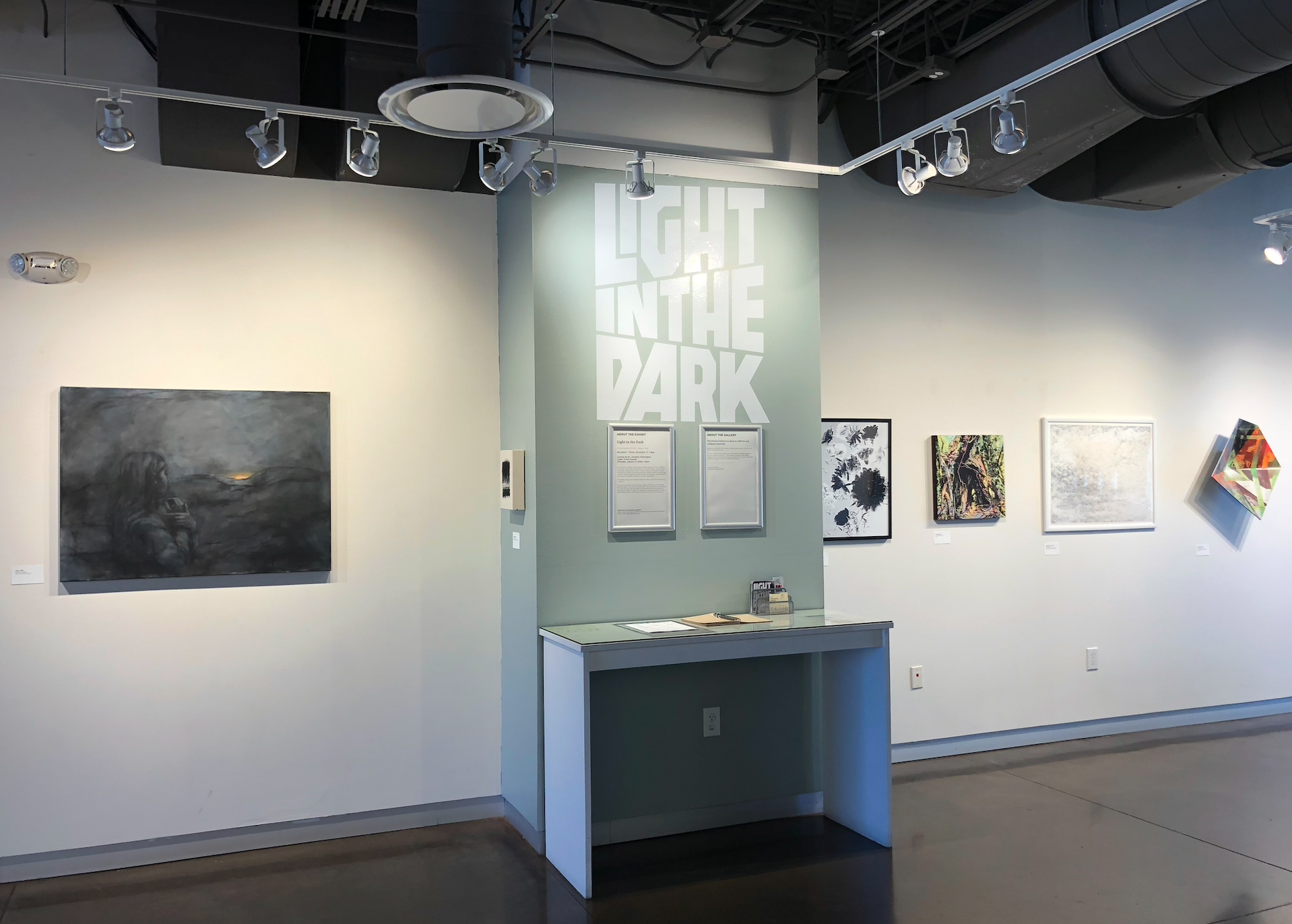
>> Light in the Dark, Sojourn Church Midtown, Louisville, Kentucky, November 17, 2023–January 7, 2024: Organized by Sojourn Arts, this juried exhibition features work by twenty-four artists from throughout the United States. It explores contrasts between light and dark, a powerful artistic as well as biblical theme with strong connections to the Christmas story. A complementary lecture on “Light in the Gospels” by Dr. Jonathan Pennington will take place on January 11, 2024.
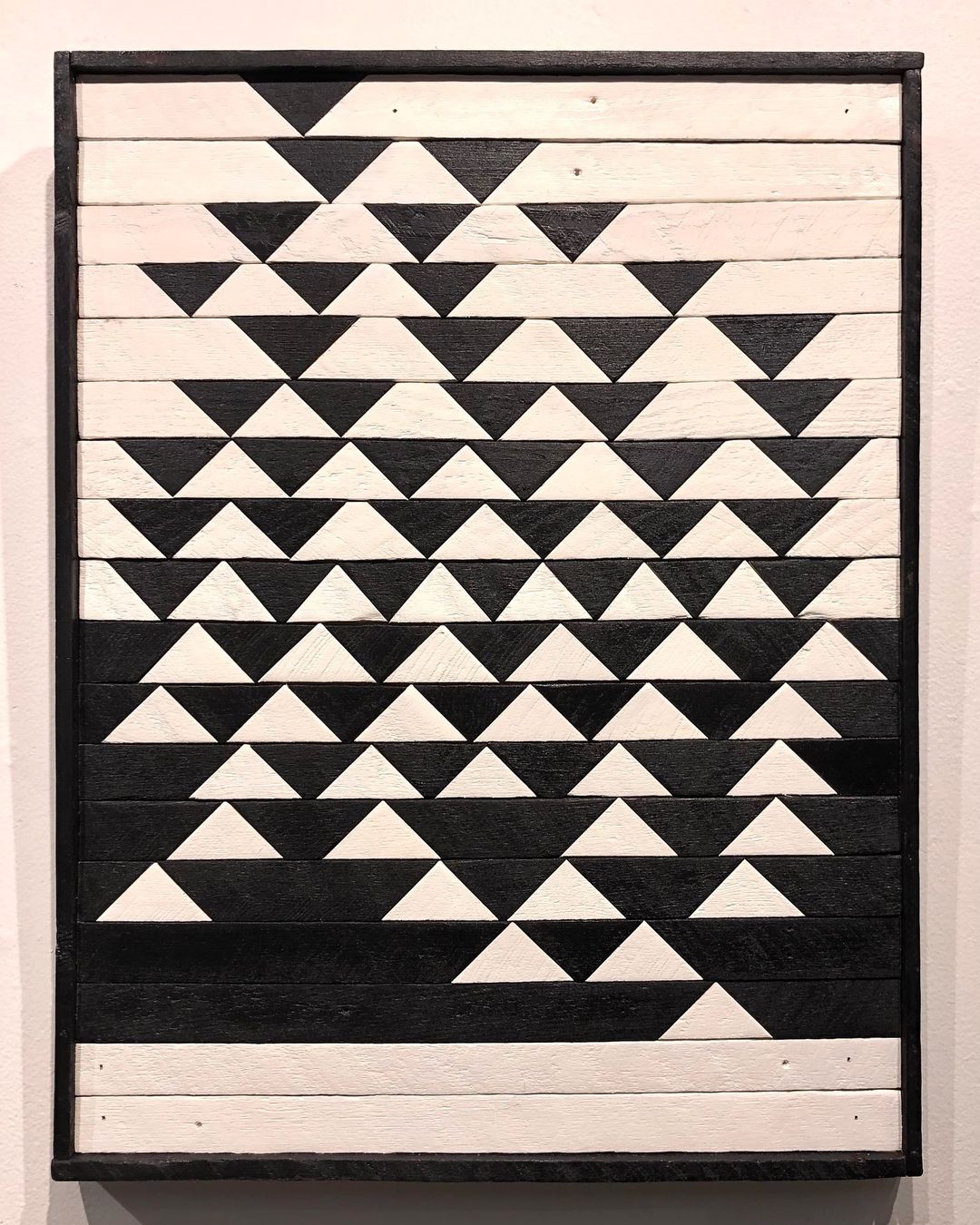
Brandon Hochhalter, The Incredible Power of Light, 2023. Reclaimed lath wood from homes in Old Louisville, 18 × 24 × 1 in. [artist’s website]
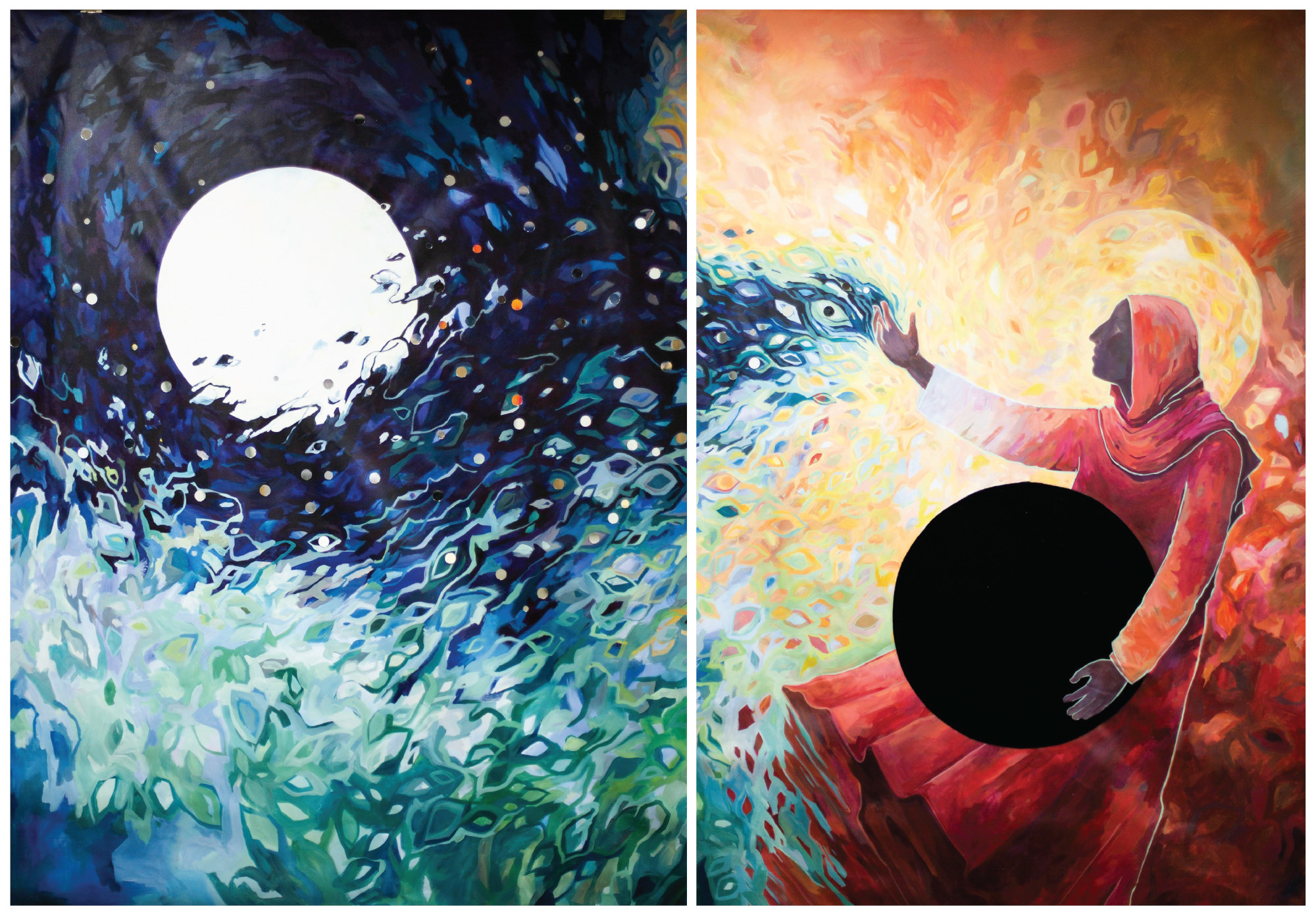
>> Wilson Abbey Advent Windows, 935 W. Wilson Ave., Chicago, December 1, 2023–January 6, 2024: A business under the umbrella of Jesus People USA, Wilson Abbey in uptown Chicago is a neighborhood gathering place for coffee, art shows, workshops, theater, dance, film screenings, and live music. Every December since 2016, they have installed a three-story-tall Advent calendar in their windows to be enjoyed from the streets, with one new artwork revealed each day from December 1 to 24. Directed by the building manager, Karl Sullivan, the project commissions local artists to contribute a painting, photograph, or other graphic work, and this year there are twenty-three participating artists. It will be a brand-new series of images, all on the theme “The Soul Felt Its Worth”—which, Sullivan told me, will “explore the idea of the Christ child coming to earth as a promise of justice and care for those who are seen by God, showcasing people groups who may not be seen, or whom we may not want to see because their problems are bigger than us.”
Below are two of the paintings from a previous iteration of the project, which together form an Annunciation scene. The drone video that follows was shot in 2020 by Mike Angelo Rivera.
Stop by 935 West Wilson Avenue in Chicago to see the progressively illuminated windows throughout the month of December (the full display will be up from December 24 to January 6), or follow along on Facebook or Instagram @wilsonabbeywindows. What a unique gift to the city! A fun way to engage the community.
+++
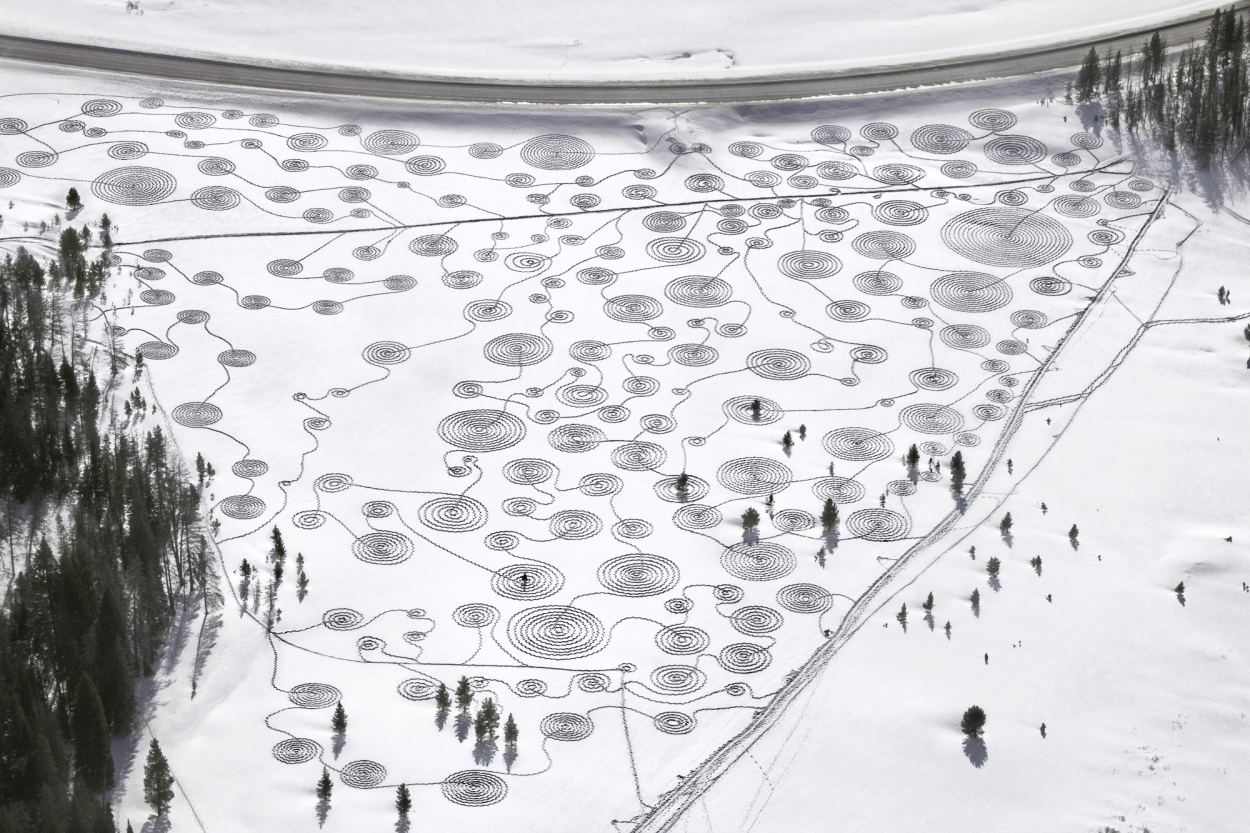
LAND ART: Snow Drawings by Sonja Hinrichsen: German-born, San Francisco–based artist Sonja Hinrichsen creates large-scale, ephemeral “snow drawings” in wintry locations around the world with the help of local volunteers who don snowshoes and track through the snow in patterns. She then photographs the land art from a helicopter or ski lift. These are amazing! Here’s a video by Cedar Beauregard of a drawing in progress at Rabbit Ears Pass, Colorado:
Snow Drawing by Sonja Hinrichsen, Rabbit Ears Pass, Colorado, 2012
Following the popularity of last year’s “25 Poems for Christmas,” I’ve decided to publish a brand-new installment, and will perhaps make this a yearly tradition! All the selections can be read online—just follow the links.
Despite the pithy title of this post, not all the poems are “Christmas” poems, strictly speaking, but rather they encompass the season of Advent too, as well as Epiphany. Advent is a four-week season leading up to Christmas that is characterized by a mood of longing and expectation; it is oriented not only toward Jesus’s first coming but also toward his second. Christmas, of course, celebrates the birth of Jesus, the Word of God made flesh. And Epiphany, on January 6, commemorates the visit of the magi to the crib, representing God’s self-revelation to the wider world.
Each poem is accompanied by a micro-commentary or short descriptive blurb, which I suggest you read after reading the poem itself. There’s a benefit to first entering a poem without having any context—then after registering your initial impressions and questions, to consider another person’s framing or analysis or highlights, and reread. And then a third time! Each reading can potentially reveal new meaning.
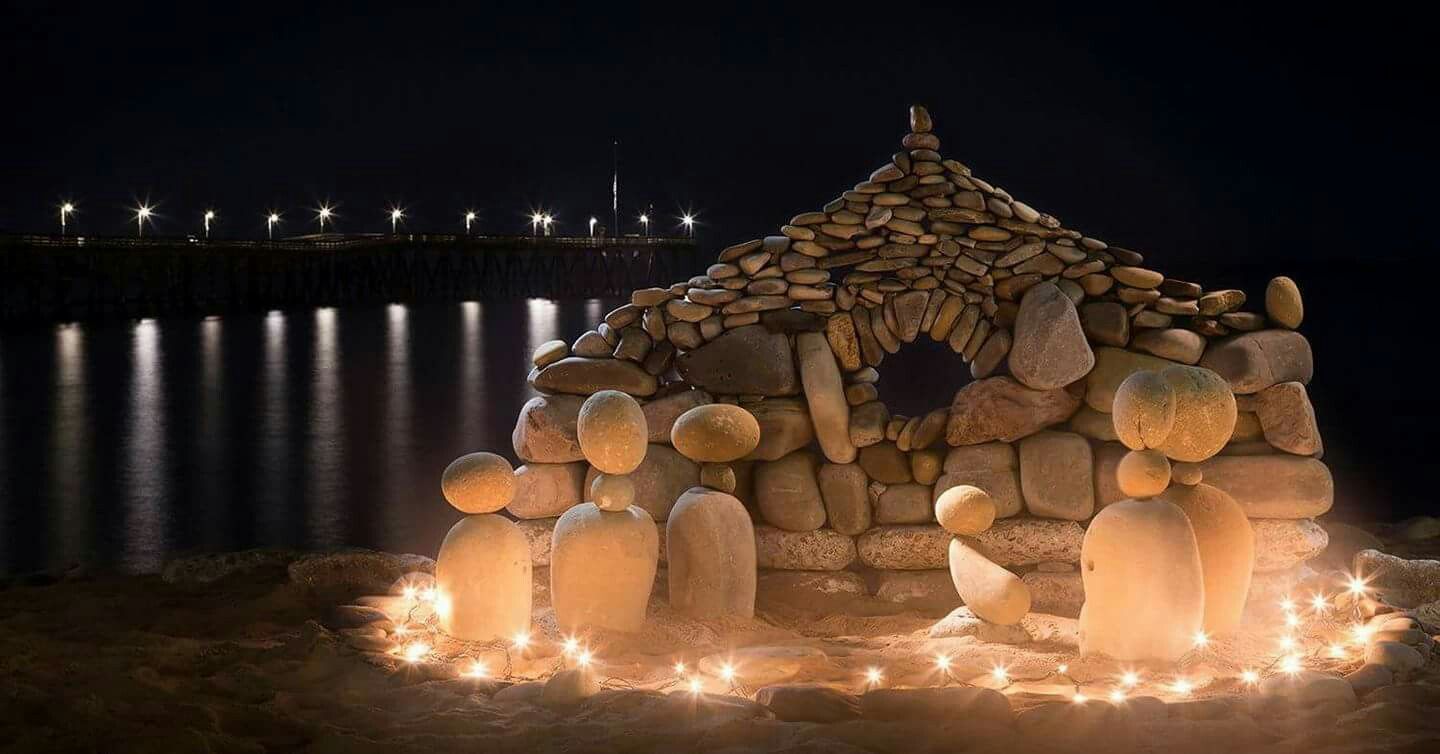
Stone Nativity by Juan Manuel Cisneros, Ventura, California, December 2016 [learn more]
1.“Haiku for an Advent Calendar” by Richard Bauckham: Church services during Advent tend to focus on messianic prophecies from the Hebrew Bible, rumblings of a coming savior. In this sequence of twenty-four haiku, Richard Bauckham pulls a detail from each book of the Jewish scriptures, finding anticipations of Christ. For example, Isaiah: “In the wilderness / a voice cries for centuries / seeking an echo.” Or Job: “God answered Job but / not his question. Maybe he / will do that again.”
2. “How Christ Shall Come” (anonymous): The cosmological Christ blew in from the four cardinal directions, coming as lover, knight, merchant, and pilgrim. So says this fourteenth-century Middle English lyric, rich in metaphor, compiled in a book of preaching aids and sermons by John Sheppey (d. 1360), bishop of Rochester. (It is unclear whether he is the author of the poem.) The great medieval literature scholar Carleton Brown gave it the title “How Christ Shall Come” in his landmark Religious Lyrics of the XIVth Century (1924), and Grace Hamman brought it to my attention recently in her wonderful monthly Substack, Medievalish, providing a modern English translation and commentary.
3.“Hawk Lies Down with Rabbit” by Seth Wieck: What would it look like for death to no longer have dominion in the animal world? Grappling with Isaiah’s end-time vision of a peaceable kingdom void of predation, this poem describes in graphic terms a bird of prey making its kill, feeding on flesh, and wonders how a hawk could still be itself with rewired impulses. Hear the author read and provide context for the poem on the Reformed Journal Podcast.
4.“john” by Lucille Clifton: Written in the voice of John the Baptist, this poem is part of an extraordinary sixteen-poem sequence titled “some jesus,” which features a range of biblical characters. In her retelling of his ministry as forerunner to the Messiah, Lucille Clifton casts John as a Black Baptist preacher, preparing his listeners to receive the one who “com[es] in blackness / like a star.” Clifton’s larger body of work would suggest that “blackness” here is multivalent, describing what Jesus comes into and as: the word suggests the darkness of the world that Christ entered, on the one hand, but also functions as a positive racial identifier. In Clifton’s revisioning, Christ comes as a Black man, wearing “a great bush / on his head”—which, again, could be read as an Afro, and/or as a mystical reference to the site at which God revealed himself to Moses in the Sinai desert. Luminous with truth, Christ comes, “calling the people brother.”
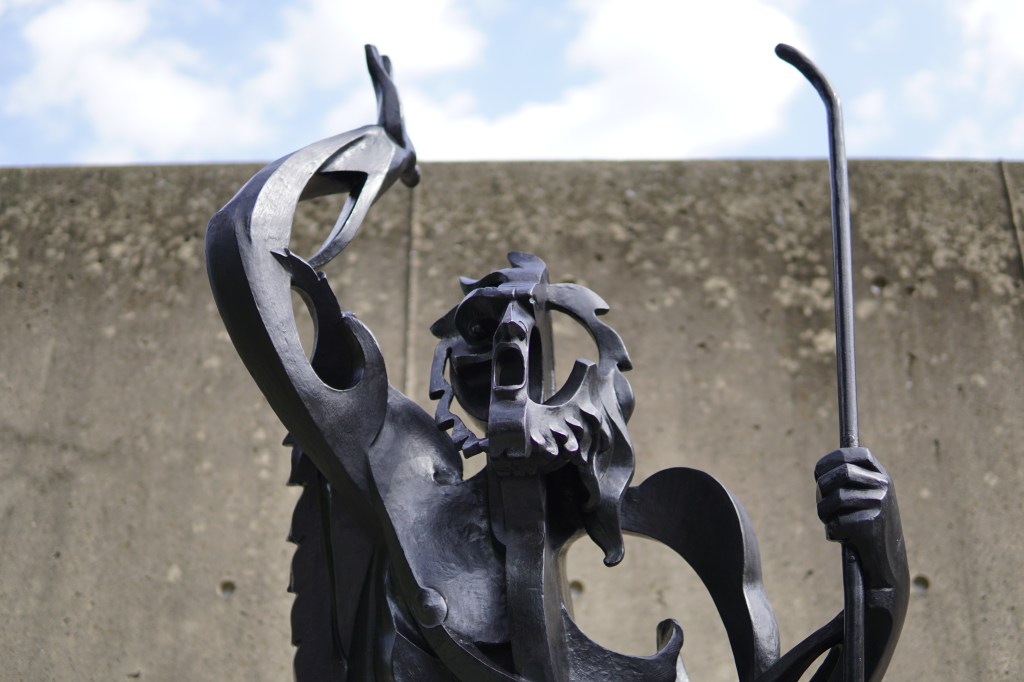
Pablo Gargallo (Spanish, 1881–1934), The Prophet (St. John the Baptist) (detail), 1933. Bronze, 91 3/4 × 29 1/2 × 19 in. Wurtzburger Sculpture Garden, Baltimore Museum of Art. Photo: Victoria Emily Jones.
5. “Christmas Mail” by Ted Kooser: Every December the story of an ancient birth comes alive again in couriers’ mailbags, in tin boxes at the ends of driveways, on mantels and fridges. This poem honors those postal workers who deliver good tidings in the form of Christmas cards, the magic spilling out the envelopes to make even the most tiresome routes sparkle a bit.
6. “December 25” by George MacDonald: Through the mid-nineteenth century, denominations influenced by the Reformed tradition, including the Church of Scotland in which George MacDonald was raised, typically did not observe Christmas, the rationale being that no one day should be thought of as holier than any other. But in his book-length dramatic poem Within and Without, MacDonald refers to December 25 as “this one day that blesses all the year”—and in this seven-liner from his Diary of an Old Soul, he describes Christmas as a gleaming blue sapphire, a structural center around which all the other jewels of the church calendar are oriented.
7. “On a Cardinal Climbing Down a Manhole to Restore Power to 400 Homeless People” by Michael Stalcup: On May 11, 2019, Cardinal Konrad Krajewski, the papal almoner (Pope Francis’s special appointee to distribute charity), crawled into a manhole and broke a police seal to personally restore power to a homeless shelter in Rome whose electricity had been shut off due to its failure to pay its bills. The shelter was occupied by some 450 people at the time, 100 of them children, who had been without electric light, hot water, and refrigeration for nearly a week. In this poem, which can be read Christologically, Michael Stalcup celebrates this defiant humanitarian act that brought light to a people living in darkness.
8. “Incarnation” by Amit Majmudar: “Inheart yourself, immensity. Immarrow, / Embone, enrib yourself.” So begins the five-poem sequence “Seventeens.” Musical and witty, this first poem is a plea to the great I AM to take on a body and “be all we are, and all we aren’t.”
9.“The Lord Is with Thee” by Micha Boyett: Written in 2010 as the third in a five-poem sequence commissioned by John Knox Presbyterian Church in Seattle, this poem centers on the Visitation episode described in Luke 1:39–58. It’s about Mary finding belonging in God’s story, especially through the companionship of her elder cousin Elizabeth, who has nurtured Mary’s faith since infancy and continues to do so in this her moment of crisis. “How easily she spoke of God, / as if he were a neighbor, a fish vendor on the street,” Mary admires. Elizabeth supports Mary physically, emotionally, and spiritually, holding her hair back as she vomits, protecting her from vicious rumors, affirming the work of God in her life, and accompanying her at the start of this wild path God has set them both on.
Odilon Redon (French, 1840–1916), Mystical Conversation, ca. 1896. Oil on canvas, 65 × 46 cm. Museum of Fine Arts, Gifu, Japan.
10.“Our Lady” by Mary Elizabeth Coleridge: The great-grandniece of the Romantic poet Samuel Taylor Coleridge, Mary Elizabeth Coleridge (1861–1907) grew up in a home visited by family friends Alfred Lord Tennyson, Anthony Trollope, John Ruskin, and Robert Browning, among others. In this poem she marvels at how God chose the common-born Mary for such a task as mothering the Christ, singing along with Mary’s Magnificat about how God raises up the lowly.
Source: Fancy’s Following (privately published, 1896). Public Domain.
11. “Traveling Man”by Marjorie Maddox: With his pregnant wife alongside, Joseph plods down south to Bethlehem, “convinced of the predestined / roll of dice chrismated with Miracle.” An epigraph from a Leonard Cohen song sets the tone.
12.“Sonnet in the Shape of a Potted Christmas Tree” by George Starbuck: This charming shape poem contrasts the extravagance of our popular celebrations of Christmas with the poverty of the first-century event it marks. The first half describes the furious wind of decorative activity that uproots evergreens from their natural habitats to bring them indoors and deck them with baubles and ribbon. I don’t know how to interpret “no scapegrace of a sect,” but “Daughter-in-Law Elect” refers to a duet from the Gilbert and Sullivan opera The Mikado. The turn comes with “a son born / now / now,” the latter two lines styled as the visible trunk of the tree; here the scene shifts to the simple stable of old, where Mary lies “spent” next to her newborn along with a cow and donkey, a sole “firework” guiding the magi and us all to the spot.
13.“Christmas (I and II)” by George Herbert: George Herbert (1593–1633) is one of the most celebrated poets of the English language. In part 1, a sonnet, of this two-part poem, he imagines himself a weary traveler who chances upon a humble inn where he unexpectedly finds his Lord, the infant Christ. It’s the inn of Bethlehem. Having then received rest from Christ his host, in the closing couplet he expresses his desire to reciprocate—to offer his own soul, lowly though it is, as a residence for Christ, praying that God first adorn it to make it hospitable. In the second part of the poem, Herbert uses a metaphysical conceit (extended metaphor) comparing his soul to a shepherd whose flock of thoughts, words, and deeds pastures on God’s word and who, like the shepherds of Bethlehem, sings glory to God. His shepherd-soul seeks eternal daylight, which he finds in the Son/sun, whose beams so intertwine with his song that the beams sing and his song shines.
14. “Descending Theology: The Nativity” by Mary Karr: The physicality of childbirth, from the contractions (which pierce the Virgin like a star, Karr writes) to the bodily fluids, is heavily featured in this poem. Jesus emerges from his mother “a sticky grub” with a “lolling head” and “sloppy mouth” that seeks out her breast for food. And as she feeds him physically, he feeds her spiritually. Then he falls asleep. His first nap, Karr writes, is a foretaste of the sleep of death he will eventually come to taste. But for now, he wakes up crying—as all babies do.
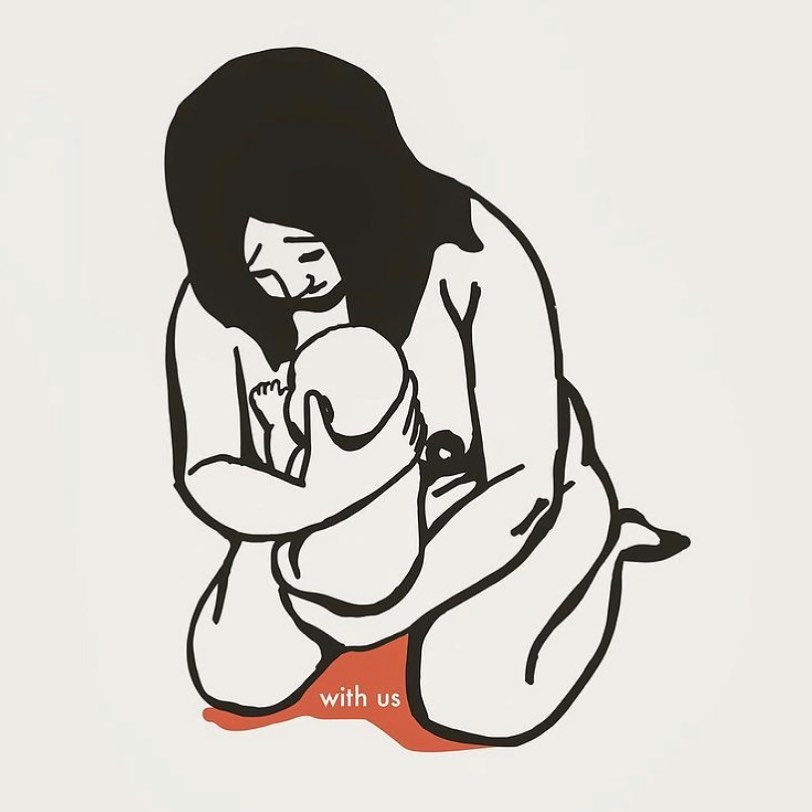
Scott Erickson (American, 1977–), With Us, Face to Face, 2016. Digital art. [available for purchase]
15.“from spiralling ecstatically this”by E. E. Cummings: What a fantastic opening line! The heavenly spheres whirling, twirling, down into the “proud nowhere”—Bethlehem—“of earth’s most prodigious night.” Heretofore living in mundanity, the domestic animals, hungry for miracle, for newness, are vouchsafed to be witnesses of this supernatural event, before which they kneel “humbly in their imagined bodies.” Overhead floats the “perhapsless mystery of paradise,” a phrase suggesting that heaven is beyond human understanding but not without certainty; it’s a declarative reality, not subjunctive, even if it can’t quite be put into words. Mary herself has no words—she silently, knowingly smiles, while the created world erupts in song around her. The “mind without soul” is a reference to Herod, who seeks to snuff out this new life, but to no avail.
The omission of spaces after punctuation marks (e.g., “a newborn babe:around him,eyes”) is not a mistake; that’s how E. E. Cummings liked it. Scholars say it’s to create a faster rhythm, but in this poem I don’t think that choice is as effective, as pauses and slow savoring seem more appropriate to its contemplative mood.
16.“How the Natal Star Was Born”by Violet Nesdoly: Narrated by the angel Gabriel, this poem imaginatively describes heaven’s nervously awaiting the birth of Jesus during the nine months following Gabriel’s dispatch to Mary, and then busting out in celebration when at last they hear his infant-cry. When his Son is born, instead of cigars, the Father passes out trumpets to his company of friends, who sound them all the way to Bethlehem’s fields, and pops open a bottle of champagne whose bubbles spray far and wide.
17. Sections 9–10 of “The Child” by Rabindranath Tagore: Hinduism was the religion of Rabindranath Tagore’s birth and upbringing, but he also held deep respect for Jesus Christ. (For more on the influence of Christianity on Tagore’s thought and writing, see chapter 4 of Rabindranath Tagore and Interfaith Dialogue by Manas Kumar Ghosh [DMin thesis, Charles Sturt University, 2010].) “The Child” is a free-verse poem that Tagore wrote in English in 1930 after seeing a passion play in Germany and then translated into Bengali in 1932 with the title “Sishutirtha” (Pilgrimage to Childhood). In it a “Man of faith” gathers people from all walks of life to join him on a “pilgrimage of fulfilment,” to “struggle [through the dark] into the Kingdom of living light.” Initially met with enthusiasm, the Man later becomes a target of the people’s anger and distrust, and they kill him. Disorientation ensues. But a man in the crowd is able to rally the others to repent and resume their quest, following the spirit of “the Victim.”
The final two sections, 9 and 10, are the selection I’ve chosen. (Scroll right to read the last.) At “the first flush of dawn,” when the time is ripe, the pilgrims arrive at a thatched hut in a palm grove, where they finally meet the eternal Light they’ve been seeking: “the mother . . . seated on a straw bed with the babe on her lap, / . . . the morning star.” Here is the Child of the title, humanity’s redeemer.
Source: The Child (London: George Allen and Unwin, 1931)
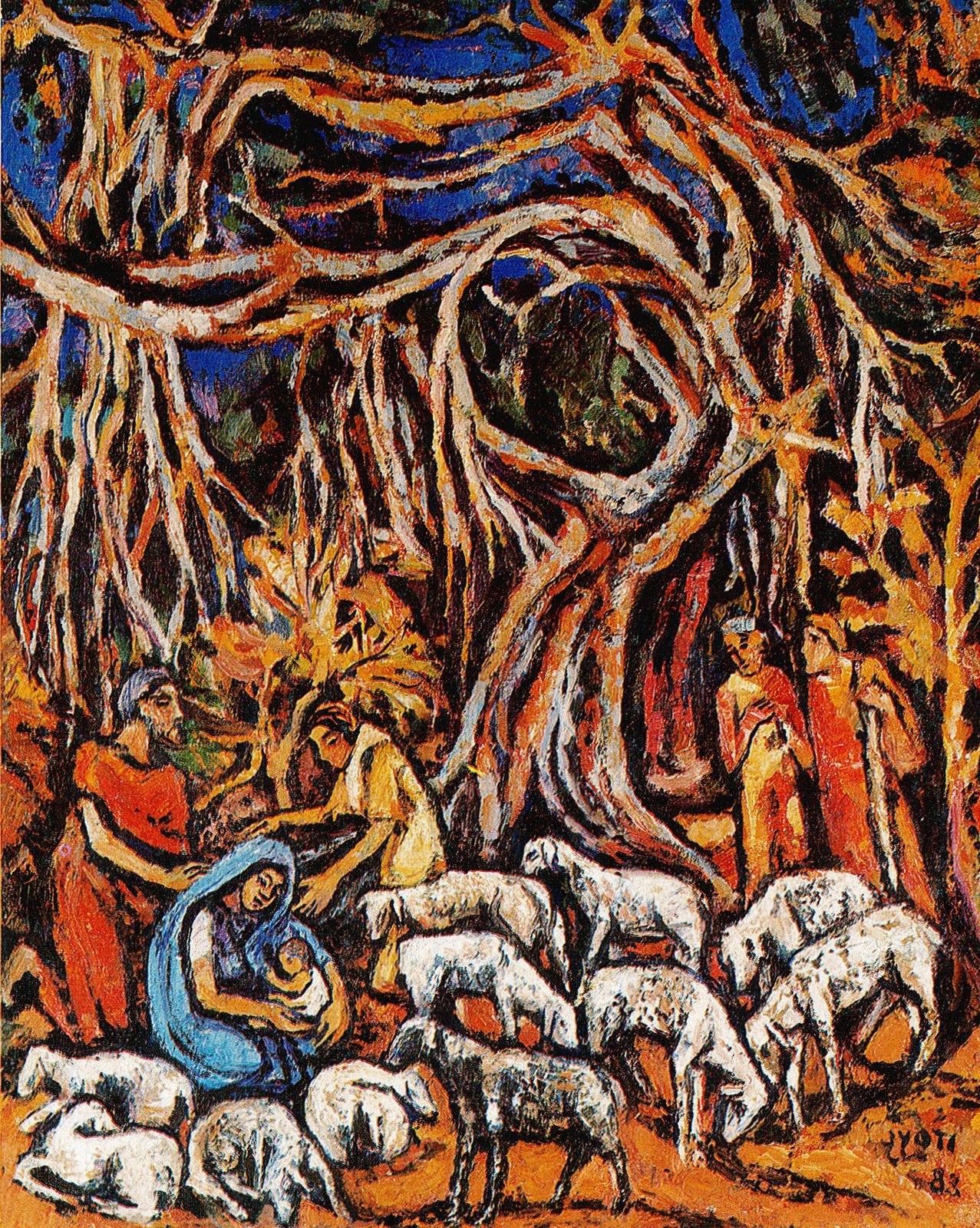
Jyoti Sahi (Indian, 1944–), Adoration of the Shepherds, 1983. Oil and acrylic on canvas.
18. “Love’s Bitten Tongue (11)”by Vassar Miller: This poem, “You, my God, lonesome man, Love’s bitten tongue,” is from a crown of twenty-two sonnets, a type of sequence in which the last line of each sonnet is repeated as the first line of the next, but each time with a new twist of syntax and sense. The crown as a whole expresses the poet-speaker’s struggle against her ego, and her desire for Christ (whom she gives such an evocative name in the title!). In this particular sonnet she describes waiting at the edge of her bed every Christmas Eve as a child in anticipation of both Santa’s arrival with gifts and the holy mystery of Christ’s birth, an admixture of sacred and profane longings that fill her still as an adult.
19. “Gloria in Profundis” by G. K. Chesterton: G. K. Chesterton’s poems are of variable quality, but this one is brilliant, emphasizing God’s descent from the rich heights of heaven into an obscure cave in a simple town. “Glory to God in the lowest!” it exclaims, a clever inversion of the angels’ song to the shepherds in Luke 2:14. The poem was originally published in a 1927 Christmas pamphlet with wood engravings by Eric Gill. The Latin title translates to “Glory in the Depths.”
Source: Gloria in Profundis by G. K. Chesterton (Ariel series pamphlet) (London: Faber and Gwyer, 1927); compiled in The Spirit of Christmas (New York: Dodd, Mead, 1985)
20.“Silent Night” by Bonnie Bowman Thurston: Rev. Dr. Bonnie Thurston invokes a tradition that says the night of Christ’s birth, there was a whole hour in which time stood still and all was silent. What a fascinating legend! Thurston told me its origin is northern European, said she remembers reading it in some scholarly Celtic studies; I wasn’t able to locate any such mentions, but the second-century Protoevangelium of James, chapter 18, probably written in Egypt or Syria, does describe everything momentarily freezing in place around Joseph as he steps out to find a midwife for Mary. Anyway, the poem ends with a striking metaphor! Word, flesh: fire. (Reminds me of this digital artwork by Scott Erickson.)
21. “After Luke 2:19” by Michelle Ortega: When the shepherds recounted to Mary what the angels had told them in the fields about Jesus being the promised Messiah, “Mary treasured all these words and pondered them in her heart,” Luke narrates in his Gospel. Poet Michelle Ortega expounds on this verse, emphasizing the relationship of Mary’s body to her son’s from conception to birth and now postpartum—an intimacy known well by mothers across the centuries. As wondrous as it was to be part of a cosmic story writ large in the skies, Ortega suggests that Mary treasured just as much as the grand pronouncements those small moments of being just an ordinary mama.
22. “Christmas: 1924”by Thomas Hardy: “We the civilized world have given Christianity a fair trial for nearly 2000 years, & it has not yet taught countries the rudimentary virtue of keeping peace,” lamented the British novelist and poet Thomas Hardy (1840–1928) in a letter to Florence Henniker dated February 25, 1900, during the Boer War. World War I only increased his cynicism, which is on display in this sour little epigram that opens with an ironic quotation of the angels’ proclamation to the shepherds the night of Jesus’s birth.
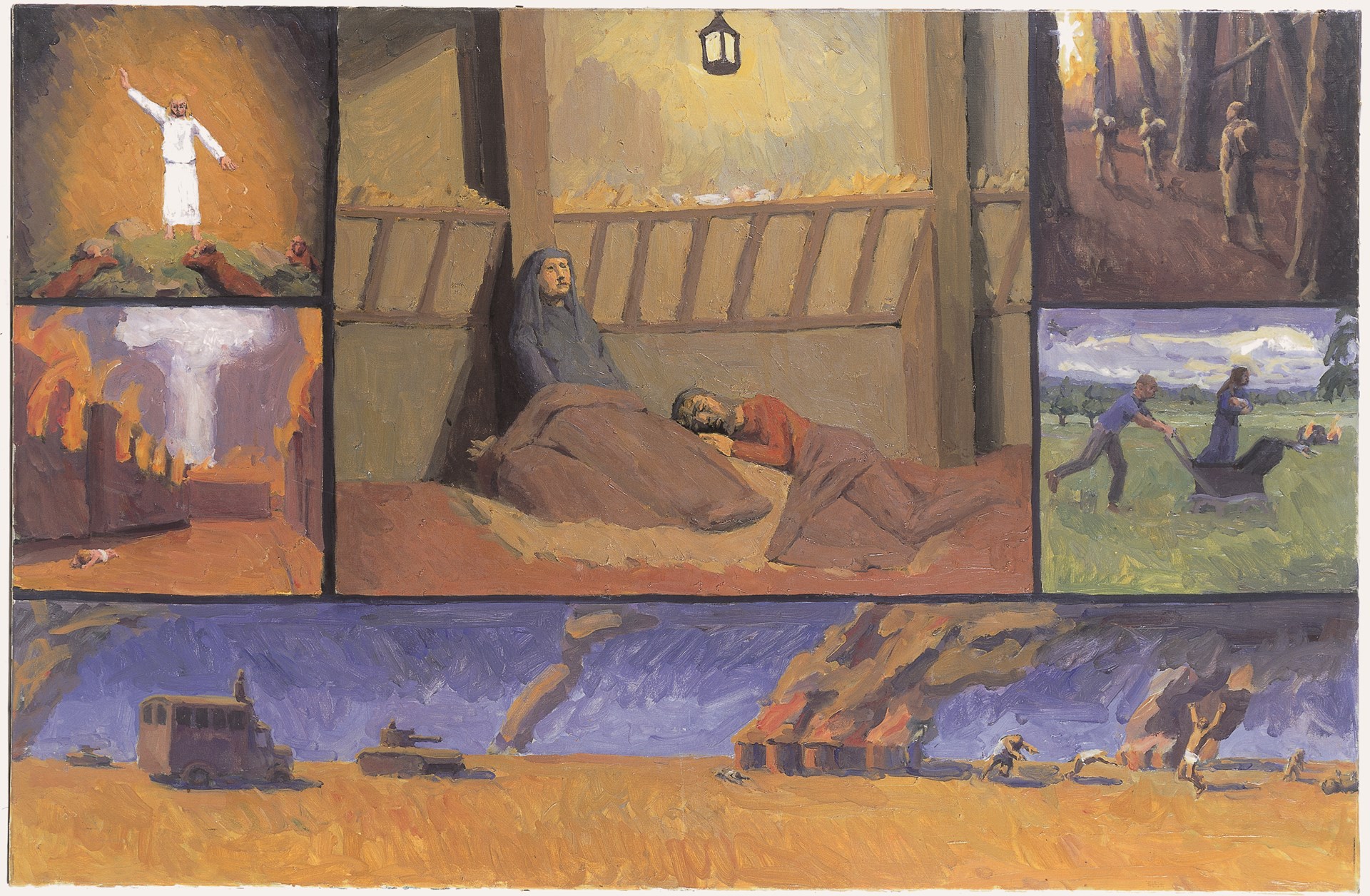
Francis Hoyland (British, 1930–), Nativity, 1961. Oil on canvas, 90 × 120 cm. Methodist Modern Art Collection, HOY/1963/1.
23. “Eating Baklava on New Year’s Eve” by Anya Krugovoy Silver: Poet Anya Silver (1968–2018) reads a spiritual benediction in her piece of baklava, layered and sweet and consumed on the eve of a new year.
Source: Second Bloom (Eugene, OR: Cascade Books, 2017)
24. “A Ballad of Wise Men”by George M. P. Baird: Jesus so often confounds the wisdom of the wise, starting with his birth. With gentle humor and in iambic rhythm and rhyme, this poem celebrates the simple access we all have to Christ.
Source: Rune and Rann (Pittsburgh: Aldine Press, 1916). Public Domain.
25. “Excrucielsis”by Hannah Main-van der Kamp: Originally published at ArtWay.eu as a response to the contemporary Romanian sculpture The Spring by Liviu Mocan, this poem alternates between the weary journeying toward truth of one of the biblical magi and that of a modern-day seeker similarly “longing for / the something more.” It can be a trudge, finding the Light—it involves risk, a willingness to follow the signs, and the tenacity to hold on to your “vision burden,” “clutch[ing] the weight” of it all the way over rough and varied terrain. But the epiphanic moment awaits, to sound like a trumpet blast. The title of the poem is a neologism combining the words “excruciating” and “excelsis” (Latin for “the heights”); “every excelsis contains something excruciating, that’s how we get to genuine excelsis,” the poet told me in an email. Read a related prose reflection by Main-van der Kamp here.
Source: The Slough at Albion (Victoria, BC: Ekstasis Editions, forthcoming)
Disclosure: This post contains Amazon affiliate links, meaning I earn a small commission from qualifying Amazon purchases originating from clicks on this site.







 Art & Theology