Before I launch into the Advent content, I want to alert newcomers to, and remind old-timers of, my Thanksgiving Playlist on Spotify (introduced here), which is revised and expanded since last year. You can get an overview at this blog post. From Destiny’s Child to Yo-Yo Ma, Meister Eckhart to Mister Rogers, there’s a little something for everyone, I hope. And exemplifying the global nature of Christianity, there are songs in Hebrew, Luganda, Zulu, Swahili, Yoruba, Spanish, French, Hawaiian, Arabic, Korean, and Tamil.
+++
ESSAY: “All Creation Waits” by Gayle Boss: In the northern hemisphere, Advent is accompanied by a deepening of the dark and cold. In her bestselling and wholly unique Advent devotional, All Creation Waits, Gayle Boss provides twenty-five reflections that detail how wildlife—turtles, loons, black bears, and so on—adapts to these changing conditions. Animals know that the darkness is a door to a new beginning, and we would do well to embrace this wisdom. In the book, each day’s reading is paired with a woodcut illustration by David G. Klein.
The year of the book’s 2016 release, On Being published the introduction on its blog, where Boss answers, “Why animals for Advent?” and describes some of the inspiration behind and framing of the book. This year Paraclete Press released a hardcover gift edition with a new introduction and afterword.
Woodcut by David G. Klein, 2016. In All Creation Waits, Gayle Boss tells a story of how one year, a week into Advent, she found a manger in the woods, which local children had filled with hay for the animals, then shelled corn.
+++
SONG: “O Come, O Come, Emmanuel”: There are hundreds of arrangements and recordings of this most beloved Advent hymn. Last year I featured two that I particularly like, and I think I’ll start a trend on the blog by doing the same at the beginning of each Advent—sharing two new renditions of the song.
>> Anna Hawkins.Anna Hawkins is a singer-songwriter of Irish heritage living in New Zealand. In her version of “O Come, O Come, Emmanuel” from her album Divine (2015), she sings the first verse in Hebrew, honoring the lyrics’ rootedness in the Hebrew scriptures. The music video was shot in Israel (cinematography by Michael Hilsden from Aspiring Productions). [HT: Global Christian Worship]
חזור חזור עמנואל ופדה אסירי ישראל שבגולה נאנחים עד כי תבוא בן- האלוהים ,שמחו! שמחו! עמנואל יבוא לכם בני ישראל
Chazor, chazor Immanu-El Ufde asirei Israel Shebagola ne’enachim Ad ki tavo Ben Elohim Simchu, Simchu, Immanu-El Yavo lachem bnei-Israel
[English translation:] O come, O come, Emmanuel And ransom captive Israel That mourns in lonely exile here Until the Son of God appear Rejoice! Rejoice! Emmanuel Shall come to thee, O Israel
>> CeCe Winans, arr. Alvin Love III.CeCe Winans is a gospel legend. On Something’s Happening! A Christmas Album (2018), she collaborated with her son, Alvin Love III, who wrote the lush orchestral arrangements and produced the record. “O Come, O Come, Emmanuel” opens with a celesta, which sounds like a music box or twinkling stars and has long been associated with the supernatural. The accompaniment is played by the Zagreb Philharmonic Orchestra, conducted by Tim Akers.
+++
VISUAL MEDITATION: “I Corinthians 7:29-31: God Only Knows” by Lynn Miller: Rev. Dr. Lynn Miller is an author, ecclesiastical artist, workshop leader, and Presbyterian minister who holds a BFA in graphic design, an MA in art history, an MFA in creative writing, an MDiv, and a DMin. From 2014 to 2021 she ran the blog Art&Faith Matters, curating a diversity of images based on the liturgical calendar. In this post she guides us in looking at the surrealist painting At the Appointed Time by Kay Sage, which features a mysterious, draped figure or object and lines receding toward the horizon. “What do you see in the painting? What do you think about what you see? What do you wonder about this painting?” She posits a number of possible interpretations.
Kay Sage (American, 1898–1963), At the Appointed Time, 1942. Oil on canvas, 81.3 × 99.1 cm. Newark Museum of Art, Newark, New Jersey.
+++
PODCAST SERIES: “Whispered Light: Advent Reflections on Death, Judgement, Heaven and Hell” by Matt Simpkins: In this four-episode podcast series from December 2020, Rev. Matt Simpkins, an Anglican priest and musician from Essex, explores the four themes traditionally contemplated by Christians during Advent—death, judgment, heaven, and hell—through four old American folk songs. He performs the songs, giving their history and using them as a launchpad for spiritual and theological reflection, which also integrates discussion of the Psalms. He addresses misconceptions about these “last things,” tracing the thread of hope and redemption that runs through them all. Just twenty to thirty minutes each, the episodes are available on your favorite podcast app and on YouTube (links below).
Episode 1: “O Death” (aka “A Dialogue with Death”)
The season of Advent begins Sunday, November 27, this year and is followed by the Twelve Days of Christmas, culminating on Epiphany, January 6. During these six weeks I will be publishing daily posts, each centered on a visual artwork and a piece of music that I hope will promote contemplation and prayer around the seasons’ themes, around the narrative of Christ’s coming. If you’d like to receive these posts in your inbox, enter your email address on the Subscribe page. This will subscribe you to the blog as a whole, but you can always unsubscribe afterward if you want to stick around for just this one series.
Some people erroneously consider Advent to be simply an extension of Christmas. Not so! The two seasons are, of course, related, but Advent is a four-week period that focuses not just on Christ’s first coming and the signposts leading up to it, but also his second, as well as his coming, as Spirit, into our hearts, lives, and communities. It is an opportunity for us to lean into the deep longing we feel for God’s presence.
“Advent is a season of hope,” writes the Rev. Tish Harrison Warren, “and part of practicing hope is noticing where we need it”—so many of the Advent selections have a tone of lament. But still others are celebratory, marked by a joyful anticipation of the new dawn and all that it will usher in.
Included in this year’s edition of the Advent-Christmas series are a community art project in Lima; a jazz setting of a poem by Malcolm Guite, plus settings of Emily Dickinson and George MacDonald; ancient hymns from Prudentius of Spain and Ephrem of Syria; an antiphon by Hildegard of Bingen that references Mary as the New Eve; a light installation in an abandoned warehouse in Malaysia; a South African Nativity linocut with native wildlife; a Chinese watercolor on silk of the Annunciation to the Shepherds; a parable-inspired spiritual with roots in Jamaica; an acoustic-folk adaptation of Hannah’s song, a likely influence on Mary’s Magnificat; and more. The assurance that “All shall be well,” popularized by Julian of Norwich, bookends the series.
Oh, and there will be a “prelude” post on November 26.
Bridegrooms and oil lamps, clouds and snowdrifts, trumpets and butterflies, rivers and stairs—these are some of the images, verbal and/or visual, that we’ll encounter as we journey from Genesis to Revelation, from humanity’s fall and God’s covenant with Abraham to the incarnation of the promised Savior to the new heavens and the new earth, where that Savior reigns in love over all the redeemed.
Many of the songs will be drawn from my two Spotify playlists:
I look forward to walking with you all through this wonder-full, ancient, ongoing Story that enfolds us.
—Victoria
P.S. Want a better sense of what to expect before sharing or subscribing? You can peruse last year’s posts here and here.
I am committed to making all Art & Theology content free for everyone, but that means my income takes a hit. I have been working on this series since August, saying no to some paid freelance offers to make it happen. If you find the posts meaningful and it is within your means, would you please consider donating whatever amount you feel the product is worth? (You can use the form below, or PayPal.) I will also include a donation link at the bottom of the final post, if you’d rather wait and decide then. Thank you!
Mikael Owunna (Nigerian American, 1990–), Lébé and His Articulations, from the Infinite Essence series, 2019. Dye sublimation print, 60 × 40 in. (152.4 × 101.6 cm). Edition of 3 + 1AP. [for sale]
                                O Lord!
        Thou hast given me a body,
Wherein the glory of thy power shineth,
Wonderfully composed above the beasts,
Within distinguished into useful parts,
Beautified without with many ornaments.
        Limbs rarely poised,
                And made for heaven:
        Arteries filled
                With celestial spirits:
        Veins, wherein blood floweth,
                Refreshing all my flesh,
                                Like rivers.
        Sinews fraught with the mystery
            Of wonderful strength,
                Stability,
                Feeling.
        O blessed be thy glorious Name!
That thou hast made it
            A treasury of wonders,
                Fit for its several ages;
                    For dissections,
                    For sculptures in brass,
                    For draughts in anatomy,
        For the contemplation of the sages.
                Whole inward parts,
                        Enshrined in thy libraries,
        Are:
                The amazement of the learned,
                The admiration of kings and queens,
                The joy of angels,
                The organs of my soul,
                The wonder of cherubims.
        Those blinder parts of refined earth,
                        Beneath my skin,
            Are full of thy depths,
            For:
                        Many thousand uses,
                        Hidden operations,
                        Unsearchable offices.
        But for the diviner treasures wherewith thou hast endowed
            My brains,
            My heart,
            My tongue,
            Mine eyes,
            Mine ears,
            My hands,
O what praises are due unto thee,
        Who has made me
                    A living inhabitant
                            Of the great world,
                    And the centre of it!
        A sphere of sense,
                            And a mine of riches,
Which when bodies are dissected fly away.
        The spacious room
                    Which thou has hidden in mine eye;
        The chambers for sounds
                    Which thou has prepar’d in mine ear;
        The receptacles for smells
                    Concealed in my nose;
        The feeling of my hands;
                    The taste of my tongue.
        But above all, O Lord, the glory of speech,
whereby thy servant is enabled with praise to
celebrate thee.
                                    For
        All the beauties in heaven and earth,
        The melody of sounds,
        The sweet odours
                            Of thy dwelling-place.
        The delectable pleasures that gratify my sense,
                            That gratify the feeling of mankind.
        The light of history,
                            Admitted by the ear.
        The light of heaven,
                            Brought in by the eye.
        The volubility and liberty
                            Of my hands and members.
        Fitted by thee for all operations,
                            Which the fancy can imagine,
                            Or soul desire:
        From the framing of a needle’s eye,
                            To the building of a tower;
        From the squaring of trees,
                            To the polishing of kings’ crowns.
        For all the mysteries, engines, instruments, wherewith the world is filled, which we are able to frame and use to thy glory.
        For all the trades, variety of operations, cities, temples, streets, bridges, mariner’s compass, admirable pictures, sculpture, writing, printing, songs and music, wherewith the world is beautified and adorned.
        Much more for the regent Life,
            And power of perception,
                Which rules within.
        That secret depth of fathomless consideration
            That receives the information
                Of all our senses,
That makes our centre equal to the heavens,
    And comprehendeth in itself the magnitude of the world;
        The involved mysteries
                            Of our common sense;
        The inaccessible secret
                            Of perceptive fancy;
        The repository and treasury
                            Of things that are past;
        The presentation of things to come;
            Thy Name be glorified
                For evermore.
    For all the art which thou hast hidden
            In this little piece
                Of red clay,
    For the workmanship of thy hand,
        Who didst thyself form man
            Of the dust of the ground,
        And breathe into his nostrils
            The breath of life.
    For the high exaltation whereby thou hast glorified every body,
                Especially mine,
        As thou didst thy servant
                Adam’s in Eden.
    Thy works themselves speaking to me the same thing that was said unto him in the beginning,
                WE ARE ALL THINE.
Thomas Traherne (1636/37–1674) was a country priest from England whose devotional writings, both prose and verse, are remarkable for their spiritual intensity. He wrote rapturously about the goodness, love, and mercy of God and the glories of God’s creation. He is sometimes classed as a Metaphysical poet, though his poems read more like Walt Whitman, with their long catalogs and ebullient joy. Traherne is most celebrated for his Centuries of Meditations, a collection of theological reflections that wasn’t published until 1908.
VIRTUAL ARTIST RESIDENCY: 2023 Inbreak Residency: Led by Dea Jenkins, the organization Inbreak, which promotes social healing through the arts, is hosting its third annual (virtual) residency, open to US-based artists of any discipline interested in exploring the intersections of art, faith, and race in the United States. The residency provides a collaborative environment and opportunities for artistic development and creative leadership growth, with group workshops, group feedback sessions, studio visits, and a curriculum featuring a curated selection of viewings, readings, and dialogue prompts. It culminates in a live or virtual exhibition.
Applications are due by November 20, 2022; you are required to submit work samples, an artist statement and/or short bio, and a community-focused project proposal. Four applicants will be selected for the 2023 cohort, which runs from January to May, and each given a $500 stipend.
+++
SONG: “Lux Aeterna”: “Lux Aeterna” (Eternal Light) is the Communion antiphon for the Roman Catholic Requiem Mass. The traditional Latin text has been set to music by many composers. Recorded at All Hallows’ Gospel Oak in London in May 2021, this performance by the Gesualdo Six is of the setting by Spanish Renaissance composer Cristóbal de Morales. I share it in anticipation of All Saints’ Day on November 1.
The lyrics translate as follows:
May eternal light shine upon them, Lord, with your saints forever, for you are good.
Grant them eternal rest, Lord, and may light perpetual shine upon them, with your saints forever, for you are good.
The video came out of the Interfaith Sacred Art Forum and the Sacred Art in Collections pre-1900 Network, both launched last year as part of the National Gallery’s Art and Religion research strand. In their inaugural 2021–22 season, the theme was “Crossing Borders,” and they have used two paintings in the museum’s collection as a foundation for wide-ranging events and activities. The theme for 2022–23 is “The Art of Creation,” and the two paintings around which conversations and activities are based are Rachel Ruysch’s Flowers in a Vase (1685) and Claude Monet’s Flood Waters (1896).
+++
VIDEO: “Introducing Annie Dillard” by Tish Harrison Warren: In this video from the Trinity Forum, Anglican priest and writer Tish Harrison Warren introduces the forum’s fall reading, the Pulitzer Prize–winning classic Pilgrim at Tinker Creek (1975) by Annie Dillard. The book comprises Dillard’s evocative reflections on her time spent wandering about and observing the lively woods, creeks, and natural world of Virginia’s Roanoke Valley while she convalesced from illness.
“She [Dillard] has taught me, in the words of Eugene Peterson, to pray with my eyes open,” Warren says. “She has taught me to notice God at work in the world in ways that I wouldn’t.”
I hear Dillard quoted all the time, but I’m embarrassed to say that I have not yet read this quintessential book of hers! Though I do own it. I have now pulled it off the shelf and put it in my “to read imminently” stack. 😊
+++
VISUAL MEDITATION: “The Taste of Palestine” by Meryl Doney, on the art of Sliman Mansour: Sliman Mansour is a Palestinian Christian artist whose work centers on the Palestinian struggle against the Israeli occupation. This ArtWay article is a great, concise introduction to his work, spotlighting four of his paintings: Picking Olives; The Flight to Egypt; Hagar; and The Holy Family in an Olive Grove.
Sliman Mansour (Palestinian, 1947–), The Flight to Egypt, 1984. Oil on canvas.
Last month my friend Becky Hadeed, food photographer and creator and host of The Storied Recipe podcast, released an episode called “Honoring the Women of Palestine,” where she interviews Mai of Almond and Fig. Mai discusses growing up in Palestine and shares some of the ways she seeks to connect with her Middle Eastern heritage from her kitchen in Chicago.
WEBSITE LAUNCH: The Foundation for Spirituality and the Arts: From a September 20 press release: “The Foundation for Spirituality and the Arts is pleased to announce the debut of our new website, fsa.art. Complementing in-person programming in Charleston and New York City, fsa.art functions as FSA’s online curatorial wing. It hosts both commissioned and curated content as well as a selection of features spotlighting significant artists, scholars, exhibitions, and publications from recent decades. We hope this site will be a valuable and inspiring resource that fosters dialogue, community, and innovation in the field of spirituality and the arts.”
FSA is “devoted to nurturing connections between spirituality and contemporary art. . . . By encouraging a mutual flow of creativity and faith from both artists and scholars, we hope to initiate fresh channels of spiritual enrichment from new depths of artistic expression. Nurturing innovative and experimental collaborations between a wide range of communities, we aspire to integrate estranged voices together in a spirit of harmony, openness, and inquisitiveness.”
At the heart of their programming is their annual series of residencies, open to visual artists, performers, composers, choreographers, curators, writers, and theologians. Visit their website to find out more, and follow them on Instagram @foundation.spirituality.arts. Below are four artworks I’ve encountered through their social media postings.
Tom Kristen (German, 1968–), Gemeinsam (Together), 2019. Jewish Synagogue and Community Center, Regensburg, Bavaria. Photo: Marcus Eben. Floating above the center’s atrium, this gilded bronze spiral text is taken from Rose Ausländer’s poem “Gemeinsam”: “Vergesst nicht, Freunde, wir reisen gemeinsam. . . . Es ist unsre gemeinsame Welt.” (“Don’t forget, friends: we travel together. . . . It is our common world.”)Bill Viola (American, 1951–), Still from Catherine’s Room, 2001. Color video polyptych on five flat panel displays, 18:39 minutes, performer: Weba Garretson. Photo: Kira Perov, courtesy Bill Viola Studio.Anila Quayyum Agha (Pakistani American, 1965–), Intersections, 2013. Lacquered wood and halogen bulb, 78 × 78 × 78 in. (cast shadows: 43.5 × 43.5 × 16 ft.). Installation view at Rice Gallery, Houston, Texas, 2015.Lee Mingwei (Taiwanese American, 1964–), Our Labyrinth, 2015–present. Photo: Stephanie Berger. In this performance work, single dancers, dressed in floor-length sarongs and wearing ankle bells, take turns sweeping a mound of rice in patterns on the floor in a designated gallery space. This iteration from 2020 at the Metropolitan Museum of Art was a collaboration with choreographer Bill T. Jones, and the performer in the photo is I-Ling Liu. [Watch on YouTube]
+++
LECTURE: “The New Visibility of Religion in Contemporary Art” by Jonathan A. Anderson: Religion is becoming more visible in contemporary art and more discussable, says artist, art critic, and theologian Jonathan Anderson in his September 17 talk sponsored by Bridge Projects in Los Angeles. Danh Vo, Kris Martin, Andrea Büttner, Deana Lawson, Arthur Jafa, Genesis Tramaine, Hossein Valamanesh, Theaster Gates, Zarah Hussain, Francis Alÿs, Louise Bourgeois, Sol LeWitt, Sean Kelly, Gerhard Richter, James Turrell—these are just some of the many contemporary artists who have engaged substantively with religion in their work, either through form or content or through the ways in which they frame the work’s central questions. Curators and art historians are recognizing this more and more, and it’s being reflected in exhibitions and scholarship. Anderson highlights several such instances from the past two decades, celebrating religion’s increased visibility but also pointing out where there’s room for improvement. The talk starts at 6:36:
At 28:58, Anderson outlines four interpretive horizons, or fundamental hermeneutics, within which religion is becoming visible, intelligible, and meaningful in contemporary art: anthropological (31:00), political (37:43), spiritual (42:51), and theological (48:42). He discusses the problems and possibilities of each—ways in which it has been productive or insightful, and ways in which it’s limiting. The fourth horizon, the theological, is the least developed in the art world and the most contested, he says.
He concludes,
A more concentrated and well-developed mode of theological inquiry has much to contribute to the history, theory, and criticism of contemporary art without being reductive, but instead opening much of what’s going on in contemporary art. And so going forward, I do envision a mode of study that keeps all these horizons in view, and a mode of discourse that keeps all these horizons in view, while especially developing the potential for the modes of critical writing capable of addressing theological conceptualities, genealogies, and implications that are in play in so much of the art being made today. And that involves thinking better from both directions, developing concepts and capacities—skills, really—where art criticism might operate with a more agile, historically sensitive understanding of religion and theology (a richer theological intelligence), and theology might operate with a more agile, historically sensitive understanding of art and criticism (a richer art historical intelligence, or visual intelligence).
The last half hour is Q&A. What he says at 1:03:59 is fascinating! If you enjoyed this talk, check out, too, the one he gave ten years ago, “The (In)visibility of Theology in Contemporary Art Criticism,” which I published detailed notes on and which became a chapter in the book Christian Scholarship in the Twenty-First Century: Prospects and Perils, edited by Thomas M. Crisp, Steve L. Porter, and Gregg A. Ten Elshof.
As a side note, Anderson teaches two courses at Duke Divinity School, where he is a postdoctoral associate in the DITA program: “Contemporary Art and Theology” and “Visual Art as Theology.” The latter looks at the history of primarily Christian art as a domain of primary theological reasoning and biblical commentary, done in visual-spatial terms rather than in verbal-written terms. His hope is that divinity students—future biblical scholars, theologians, pastors, etc.—will become more literate in the visual-spatial forms of theology. I mention this because it’s what I’m about too!
+++
PODCAST EPISODE: “Jacquiline Creswell: Curating in Sacred Spaces,”Exhibiting Faith: Hosted by critic and art historian David Trigg, this is the first episode of a brand-new podcast about the intersection of art and faith, featuring a range of guests for whom those two elements have played a significant role. First up is Jacquiline Creswell, a visual arts adviser and curator who has, since 2009, organized more than forty-five exhibitions in sacred spaces. She has been central to the development of the visual arts programs at Salisbury, Ely, and Chichester Cathedrals. She discusses some of the projects she has worked on and how they’ve been received by the congregation and the wider public, how the setting of an artwork can alter its meaning and the way people engage with it, the logistical challenges of placing art in historic churches, and more.
I was interested to learn that she is from a Jewish background, even though most of her jobs have been with Christian institutions. Check out the eight objectives she lists on her website, which have guided her curatorial work and which I find exciting; the first is “To present artwork which is engaging, that encourages a spiritual response and may at times challenge conventional perceptions.”
Nicholas Pope (British, 1949–), The Apostles Speaking in Tongues Lit By Their Own Lamps, 1996, installed 2014. Thirty-three figures in terracotta, metal, wick, paraffin, and flame. Trinity Chapel, Salisbury Cathedral. Photo: FXP, London.Jayson Haebich (born in Australia, living in Hong Kong and London), Star of Bethlehem, 2016. Interactive laser installation at Salisbury Cathedral, England.
New episodes of Exhibiting Faith are released once a month. The second (and latest) episode is an interview with Dubai-born, Birmingham-based textile artist Farwa Moledina, whose Women of Paradise (2022) scrutinizes the portrayal of Muslim women in the canon of Western art. Moledina also discusses her experience of Ramadan during lockdown and how it resulted in By Your Coming We Are Healed (2020), two sufras (floor mats for communal dining) made up of photographs of plated dishes submitted to her by participants in the virtual iftars she hosted, arranged according to Islamic design principles of symmetry, abstraction, and recurrence.
+++
SHORT FILM SERIES: At the Threshold: Theology on Film, dir. Sean Dimond:At the Threshold is the latest project from UNTAMED, a documentary film studio in Seattle that “pursue[s] stories of spiritual and narrative depth, with a bias for hope, risk, and redemption.” Filmed in Belgium, Germany, and the UK, it profiles six Christian theologians from Europe, each one humble, open-hearted, and reflective.
“The Open Narrative of Love” with Lieven Boeve, Leuven, Belgium: Boeve reflects on how God interrupts people’s self-enclosed stories. Christianity, he says, is itself an open narrative, not a closed one, and it leads us not away from the world but right into it. One of the filming locations in this short is a rural landscape in Borgloon where Pieterjan Gijs and Arnout van Vaerenbergh built Reading between the Lines, an open-air chapel created to imagine a church inseparable from the world around it.
“The Greater Part” with David Brown, St Andrews, Scotland: Brown talks about prayer, the Bible as part of a living tradition, the church’s call to be creatively other, and the only time he ever saw his father cry. He also cites some of the poets, novelists, and composers/singer-songwriters he admires.
“The Radiance” with Perry Schmidt-Leukel, Muenster, Germany: “The fractcal structure of religious diversity” is of deep interest to Schmidt-Leukel, a Christian who draws insights from Buddhism and who was criticized by Cardinal Joseph Ratzinger for doing so.
“Danseuse” with Ann Loades, Durham, England: A feminist theologian, Loades is one of only two people ever to be awarded a CBE for services to theology. The Christian tradition is responsible for the devaluation of women, she says, but that tradition also contains resources for its own transformation. She also discusses dance as prefiguring the resurrection body.
“To Imagine That” with Garrick Allen, Glasgow, Scotland: Allen sees the book of Revelation as being about how to live in a system that is unjust. “This is John’s response to an oppressive system, and it gives us space to rethink what a just system would look like in our world—to begin to imagine that.”
“Begin with the End” with Judith Wolfe, St Andrews, Scotland: “We have to take seriously the claim that we do not yet live in the world as it will be, and as we will be, and that we have to live towards an eschaton, a presence of God in the world, which is not only not yet apparent, but is not even comprehensible to us. So how do we live authentically in this life?”
From the studio: “Theology offers a home for the vast and the intimate. No question is foreclosed. Visually immersive, poetic, and global in scale, these narrative and theological short films invite viewers into a conversation about life and its limits which is as vibrant as it is challenging. This series isn’t about promoting theological ideas we necessarily agree with, but rather we are exploring the connections between vulnerable life, big questions, and the diversity of theological work being done today. It’s not that we are on the threshold of discovering God, but that perhaps God is already on the threshold of our lives, knocking to enter through our wounds, deepest desires, and questions.”
Update, 10/27/22: Two weeks after this article was published, Tokens Show rebranded and relaunched with a new name, No Small Endeavor; learn the inspiration behind the original title here, and the reason for the change here. Their mission remains the same but with a renewed commitment to greater diversity of guests, and their new tagline is “Exploring what it means to live a good life.” They also announced that starting in 2023, their radio show will be nationally syndicated.
“Public theology” is a term I’ve been seeing more and more—in people’s professional titles, in books, in taglines, etc. Public theology is theology that talks with and not just to society, write Sebastian Kim and Katie Day in their introduction to A Companion to Public Theology (2017); it ventures outside the ivory tower and the walls of the church, engaging issues of common interest to build the common good. It’s incarnational and touches all aspects of life, which means it’s interdisciplinary, addressing economics, politics, healthcare, criminal justice, the arts, and so on.
One media entity that does public theology really well is Tokens Media, which encompasses live events (Tokens Show), a podcast, a radio show, and online courses. Sponsored by Lipscomb University in Nashville with funding from the Lilly Endowment and the John Templeton Foundation, the shows are hosted and produced by Lee C. Camp, a professor of theology and ethics at Lipscomb.
Tokens Show blends music, theology, comedy, and social issues, bringing together a host of talent and thought from the local Nashville scene and the country at large for evenings of conversation and fun. See a trailer below, followed by a blurb from the Tokens press materials.
Called Nashville’s best variety show, our philosophical and theological events imagine a world governed by hospitality, graciousness, and joy; life marked by beauty, wonder, and truthfulness; and social conditions ordered by justice, mercy, and peace-making. We exhibit tokens of such a world in music-making, song-singing, and conversations about things that matter.
Unapologetically Christian but casting a wide net, Tokens Show spotlights poets, pastors, theologians, ethicists, historians, singer-songwriters, psychologists, journalists, politicians, activists, scientists, entrepreneurs, and other scholars and practitioners. Its long list of distinguished guests includes James Cone, Rachel Held Evans, Stanley Hauerwas, Miroslav Volf, Francis Collins, Jim Wallis, Tracy K. Smith, Keb’ Mo’, Christian Wiman, Naomi Shihab Nye, Walter Brueggemann, Amy-Jill Levine, Willie James Jennings, Pádraig Ó Tuama, Barbara Brown Taylor, Ricky Skaggs, Over the Rhine, and many more.
Tokens was launched in February 2008 as a quarterly event, generally held in Lipscomb’s Collins Alumni Auditorium, with its annual Thanksgiving show, a major bash, held at Nashville’s historic Ryman Auditorium since 2010. (This year’s is November 20—and I’ll be there! See more info at bottom of post.) The Tokens house band, the Most Outstanding Horeb Mountain Boys, consists of much-sought-after Nashville session players Byron House (upright bass), Pete Huttlinger (guitar), Aubrey Haynie (fiddle, mandolin), Chris Brown (drums), and Buddy Greene (harmonica, vocals), led by music director Jeff Taylor (piano, accordion).
Sojourners magazine praised Tokens Show for its substantive entertainment and overall playful tone:
If A Prairie Home Companion ever moved south and got religion—or at least went to divinity school—it might look a lot like TOKENS. While Camp and his cast deal with theology, they are after something bigger—glimpses of God’s action in the world . . . tokens of grace. . . . Camp knows the power of a pregnant pause, and how to switch from a song about environmental degradation to a radio skit without missing a beat. And the cast never seems to take itself too seriously.
One of Tokens Show’s regular segments is “Class and Grass,” where the house band plays a medley of classical music and bluegrass arranged by bandleader Jeff Taylor. For example, for Tokens’ 2019 Thanksgiving show, Taylor built a ruckus-raising medley around “Orange Blossom Special,” a fiddle tune from the 1930s named after a luxury passenger train of the same name, weaving in excerpts from Brahms’s Hungarian Dance No. 5, Bizet’s “Habanera,” Offenbach’s “Galop infernal,” and Rossini’s William Tell overture:
For their 2018 Thanksgiving show, they mashed up the Shaker hymn “Simple Gifts” with Aaron Copland’s Fanfare for the Common Man and “Did You Ever See the Devil, Uncle Joe?”:
“Für Elise and the Prophetic Imagination,” from “The Prophetic Ethic” show on June 6, 2014, features jazz, tango, and bluegrass variations on Beethoven’s famous, posthumously discovered bagatelle:
And the “Class and Grass” segment of Tokens’ April 13, 2010, show, “Back to Green,” combines a piano piece (anyone know what this is? Bach? Mozart?) and “Billy in the Lowground,” a popular fiddle tune among Kentucky musicians that has been known in Scotland for centuries:
Though several musical styles are represented on the Tokens stage—bluegrass, country, gospel, folk, blues, rock, classical—bluegrass predominates. Here’s a bluegrass version of the African American spiritual “My Lord Is a Rock in a Weary Land,” led by Buddy Greene:
And “Crying Holy Unto the Lord,” a song by Irene Amburgey that’s performed here by Bryan Sutton and Company:
One of the show’s past musical guests was Nefesh Mountain, a Jewish bluegrass band fronted by married couple Doni Zasloff and Eric Lindberg. Here they sing “Wayfaring Stranger” and “Esa Einai,” an original setting of Psalm 121:1 (“I lift my eyes to the mountains . . .”) in English and Hebrew.
Tokens Show also regularly features hymns, a significant part of Christian heritage, especially in the US. In the following video, Audrey Assad describes growing up in a Plymouth Brethren church that forbade the use of musical instruments but placed a high value on four-part a cappella singing. She then leads a vocal quartet in one of my favorite hymns, “Praise to the Lord, the Almighty” (the other singers are Michael Gungor, Buddy Greene, and Lee C. Camp):
Here’s an instrumental bluegrass hymn medley comprising “Where the Soul of Man Never Dies,” “Are You Washed in the Blood,” “Pass Me Not, O Gentle Savior,” and “Leaning on the Everlasting Arms”:
For some hymns, the audience is invited to sing along, as with “Pass Me Not, O Gentle Savior,” featuring soloist Jason Eskridge:
The show highlights new musical works as well, like singer-songwriter and upright bassist Scott Mulvahill’s “The Lord Is Coming”:
And Gungor’s “God and Country,” an antiwar anthem performed by Michael Gungor, Audrey Assad, and friends:
From their “Singing Down the Pain” show, I learned that the tune of Elvis’s “Love Me Tender” was taken from the American Civil War ballad “Aura Lee,” adopted by soldiers on both sides. I also learned about a historic music-sharing experience that happened outside Murfreesboro, Tennessee, on December 30, 1862, when, on the eve of a major military battle, Confederate and Union brass bands exchanged songs, Battle of the Bands–style, across enemy lines. Winding down, the Confederates started playing the familiar “Home, Sweet Home,” and the Union joined in, with soldiers from both North and South singing in unison their mutual longing for home.
Despite this bonding, the Battle of Stones River commenced early the next morning, resulting in 24,000 casualties.
As you can see from that video, Tokens Show is largely story-driven.
It occasionally features spoken-word pieces, as in their October 4, 2016, episode, “God Songs.” Leslie Garcia, one of Camp’s students at the time (now a digital product designer in New York), delivers a poetic reflection on the Latin American immigrant journey, drawing on her own family history. It opens, “My mother came to this country in the back of a pickup truck . . .”
Real-life questions and issues are met with the best of theological reflection at Tokens events, with Camp as emcee providing the connective tissue that links the various acts.
One thing I like about Tokens Show is how it recognizes the complexities of American Christianity’s past and present, painting neither as entirely good or entirely bad. It addresses some of the lamentable aspects of US and church history and culture, but it also speaks hope, confronting these realities with gospel truth so that we might humbly allow that truth to drive us to confession, action, and anticipation. And while it does acknowledge the ways in which sin has marked systems, it also celebrates those places within those systems where virtue or redemption can be found.
Tokens Show has a healthy relationship to tradition, which for them is a wellspring of creativity. In terms of music especially, Tokens showcases vibrant works from earlier eras but also, often, innovates on them or draws them into new contexts. In their theology, too, they adhere to the orthodox creeds while being open to what happens when those traditional tenets of belief are brought into so-called secular arenas of contemporary life, further unfolding their meaning. In the root sense of the words, Tokens is both conservative and progressive—conserving what’s worth conserving, leaving behind what’s not (such as cultural accretions that diminish the gospel), recovering and progressing toward the good, semper reformanda.
While some of the song selections may prompt nostalgia for some, Tokens Show is not all warm and cozy. There can be a bite and a challenge as we hear wrenching personal stories or encounter new facts. Tokens does not shy away from provocation for God’s sake. But it is to the show’s credit that the tone is never haranguing, always invitational.
The gospel calls us out of our bubbles and into the world. Our faith should have an impact on how we think about public issues and relate to others in the public square. Tokens Show models this kind of engagement.
During the COVID-19 pandemic, when live shows had to be shut down, Tokens launched a podcast, its first episode airing May 21, 2020. Its tagline is “Public theology. Human flourishing. The good life.” Even though live shows have resumed, the podcast continues to be active. I have enjoyed every single episode, but let me share just a few in particular:
>>“The Making of Biblical Womanhood: Beth Allison Barr,” June 3, 2021: Controversially, historian Beth Allison Barr defines “complementarianism,” the theological view that promotes male headship and female subordination, as “Christian patriarchy.” Hear her unpack that and other ideas from her book The Making of Biblical Womanhood: How the Subjugation of Women Became Gospel Truth in this episode. She offers a unique reading of 1 Corinthians 14 (bringing it into conversation with ancient Roman law codes); reminds us of the oft-neglected Romans 16 (which names a woman apostle and a woman deacon, among other early church leaders who were female, though several English translations obscure the fact); notes how the 1980s revival of the Arian heresy coincided with the explosion of “biblical womanhood”; and shares her and her husband’s personal connection to the topic in their ministerial life.
Shorter interviews of this nature also take place during the live shows, even though this blog article highlights the music.
You can subscribe to the Tokens podcast through the app of your choice, and episodes (audio only) are also posted on YouTube, though there’s a bit of a lag there. You can also find video excerpts from Tokens events on the Tokens YouTube channel.
Their annual Thanksgiving show this year is “No Small Endeavor”—Sunday, November 20, 7:30 p.m.,at Ryman Auditorium—with musical guest Johnnyswim, a husband-wife folk duo comprising Abner Ramirez and Amanda Sudano. As I mentioned, I’ll be going; I paid $137 for two tickets last week, including taxes and fees, and it looks like the house is already more than half-full. (There is also a $20 virtual option available, or a $47 virtual membership that gives you streaming access to four shows.) It will be my first Tokens Show and my first time in Nashville, and I’m making a long weekend of it with my husband. Let me know what we should do/see there, and if you have any tips on where to stay. We’re not country music fans, but bluegrass, gospel, blues, and folk—yes, please! We’re foodies too.
Besides catching one of Tokens’ live events, if you live in the Nashville area, you might also want to tune in to their radio show, which airs Sundays at 2 p.m. Central on WPLN Nashville Public Radio.
SPOTIFY PLAYLIST: October 2022 by Victoria Emily Jones: This month’s thirty-track assortment includes the jaunty “Now I’m on My Way” by Howard Smith and Frederick D. Fuller, performed by the Brooklyn Tabernacle Choir under the direction of Carol Cymbala, and the recently released “Good Tree” by the Hillbilly Thomists, a bluegrass band of Dominican friars.
+++
GOSPEL PERFORMANCE: “I’ve Got the Joy / It Is Summertime in My Heart / Give Me Oil in My Lamp” and “Do Lord” by The Four Girls: Did you know that Hollywood Golden Age actress Jane Russell was part of a traveling gospel music quartet, The Four Girls? In 1954, a year after starring with Marilyn Monroe in Gentlemen Prefer Blondes, she sang this medley on an Easter Sunday broadcast alongside fellow group members Connie Haines, Beryl Davis, and Rhonda Fleming (replacing Della Russell), who were Baptist, Episcopalian, and Mormon, respectively. Quite the interdenominational group! All four were active in the Hollywood Christian Group, founded in 1947 by Henrietta Mears.
That choreo, haha! And boy are they aggressive in their evangelism/catechesis of that little girl in the last number!
The Four Girls grew out of an impromptu performance at a fundraising event for St. Stephen’s Episcopal Church in Los Angeles in fall 1953. A representative of Coral Records was in the audience, and he signed the women immediately. Their recording of the spiritual “Do Lord” sold over 2 million copies.
+++
I get a kick out of Jack Black’s hammy character performances, especially the ones that involve singing. In each of the last two movies I saw him in, he plays a strangely likeable Christian criminal based on a real-life person.
In the dark comedy Bernie (2011) by Richard Linklater, Black plays Bernie Tiede, a small-town Texas mortician who befriends a wealthy widow but, when the emotional toll of her possessiveness and persistent nagging becomes too much, ends up killing her. The opening credit sequence (which comes after a scene of Bernie teaching a class, with great tenderness, on how to prepare a deceased body for viewing) shows him driving in his Lincoln Town Car, jamming to the Florida Boys’ “Love Lifted Me” on the radio. Millennium Entertainment has released a singalong version on YouTube, featuring a take from the movie with added lyrics and a bouncing Jack Black head!
Six years after this Golden Globe–nominated performance, Black starred in The Polka King (2017) as Polish American polka legend Jan Lewan, who was imprisoned in 2004 for running a Ponzi scheme. Although he’s a con artist, the movie portrays him as sympathetic—bright-eyed, kind, gentle—and devoutly Catholic. (Yes, he really did meet the pope!) The end credits feature Black as Lewan singing “Thank You So Much, Jesus,” written by Stephen Kaminski, Maya Forbes, and Wallace Wolodarsky for the movie. The repeated “dziekuje” is Polish for “thank you.” Enjoy the accent.
+++
SONG: “Morning Star Rise” by Josh White: Josh White is a singer-songwriter, the founding pastor of Door of Hope church in Portland, Oregon, and cofounder, with Evan Way, of Deeper Well Records. In the early 2010s he formed the neo-gospel collective The Followers, and encouraged one of his parishioners, Liz Vice, to get involved as a vocalist. She is featured on Deeper Well’s first record, Wounded Healer (2012), including on the song “Morning Star Rise”—performed live in 2012 in the video below, with White on lead. (Vice is on the left; Holly Ann is on the right.)
White recognized Vice’s musical talent and wrote a batch of songs for her to record on her own, which became her debut solo album, There’s a Light (2015)—an immense hit. Yay for pastors who notice and nurture the gifts of their people!
Last month when I was driving home to Maryland from Connecticut, I decided to stop for an hour or two at the Newark Museum of Art in New Jersey. I wanted to see a monumental Nativity painting in their collection by Joseph Stella. It didn’t end up being on display, but I did find many other compelling works. Chief among them was the acrollage painting Christ of the Christians by Nuyorican (New York Puerto Rican) artist Rodríguez Calero, a variation on the Crucifixion that portrays the violence of the cross in the abstract.
Rodríguez Calero (Puerto Rican, 1959–), Christ of the Christians, 1995. Acrollage on canvas, 52 × 36 in. Newark Museum of Art, Newark, New Jersey. All photos (except the two details that follow) courtesy of the artist.
Made with acrylic paint, rice paper, imaged paper, colored glazes, and gold leaf, the work is heavily layered. Its focal point is the direct gaze of a young Black man, his head framed by a shaded gray box and haloed in gold. His face is cut off just above the mouth. The Word is muted.
This figure fragment is at the top terminal of a rough-edged cruciform that is rendered in a harsh tar-black embedded with deep splotches of red. Body merges with cross—blood, wood, and flesh.
The whole background is covered in pinks and reds. The color pools and splatters and permeates, representing the pouring out of life.
Standing upright alongside the cross are three stenciled palm branches, alluding to Christ’s entry into Jerusalem just five days earlier. Palm branches were a symbol of triumph in ancient Judaism, hence their being waved to greet the Christ, the “Anointed One,” at the city gate. (Jesus’s followers anticipated a political victory over Rome, little knowing that God had other plans.) In Christian iconography palm branches are associated with martyrdom; in portraits and heavenscapes they are held by saints who met an early end because of their spiritual convictions, just like their Lord.
Their presence in this scene can be read on the one hand as an indictment of human fickleness (lauding Jesus as savior one day, crucifying him the next) and on the other as an assertion of triumph through the unlikely means of death on a cross.
The work can also be read through the lens of Black suffering and liberation. The late Christian theologian James Cone writes about such themes in The Cross and the Lynching Tree, a landmark book published in 2013, anticipating the Black Lives Matter movement. Cone explains how powerful a symbol the cross has historically been to Black American communities who face racial terror, violence, and oppression. They see in the Crucifixion, in addition to its spiritual implications, a demonstration of God’s solidarity with the oppressed, and hope on the other side. “I’m with you in your suffering,” says the God who hangs on a tree at the behest of a mob, “and death will not have the final word.”
Cone describes the thousands of lynchings of Black men, women, and children in the US as “recrucifixions”—the killing of sons and daughters of God. Two decades earlier, Jamaican American artist Renee Cox made the same connection in her photographic collage It Shall Be Named, just one in a line of artistic works to do so, going as far back as the Harlem Renaissance. Calero’s Christ of the Christians contributes to this tradition.
The gaze of the Christ in her piece is arresting. It confronts. It asserts the sacred humanity of its wearer, despite attempts to blot it out.
However, the artist tells me that for her, Christ of the Christians is about sacrifice, not violence, racial or otherwise. The man in the painting is the “people’s Messiah,” she says, “the anointed Savior to humankind who was sent to save all from the pain, darkness, and injustices that we see on a regular basis.” The cross is “willful humility, the culmination of prophecy, and the fulfillment of promises,” and the crown is heavenly reward. The trinity of branches represents hope.
One of the features that most struck me about this piece is its raised and varied textures, a hallmark all across the artist’s larger body of work. Calero coined the term “acrollage” to describe her mixed-media technique in which she uses an acrylic emulsifier to transfer collaged images (from found elements or her own photographs) onto painted canvas, adding further embellishments with gold leaf, stenciled patterns, and rice paper. This technique of layering materials, producing veils, suggests a theme of hiddenness and revelation.
Rodríguez Calero, or RoCa for short, was born in Arecibo, Puerto Rico, in 1959 and moved to Brooklyn when she was a year old. She returned to Puerto Rico after high school to study at the Escuela de Artes Plásticas at the Instituto de Cultura Puertorriqueña, under master artist Lorenzo Homar, who specialized in printmaking. Then she returned to New York for additional training in painting and collage under artist Leo Manso. She currently resides in New York and New Jersey.
Calero’s work merges Catholic iconography and hip-hop culture, drawing her personal community into the visual lexicon of the sacred. Raised Catholic, she was influenced from an early age by religious imagery at church and school. She brings this influence to bear in her artistic work while also integrating and reflecting the multiracial, multiethnic, urban environment she grew up in. “My inspiration really comes from just being in the neighborhood . . . the people walking the streets,” she says.
Alejandro Anreus, art historian and curator of the major 2015 exhibition Rodríguez Calero: Urban Martyrs and Latter-Day Santos at El Museo del Barrio in New York, describes the Nuyorican art aesthetic that was just getting off the ground while Calero studied at the Art Students League of New York from 1976 to 1982:
Starting before 1970—crystalizing possibly with the foundation of the Taller Boricua in New York City—and emerging and developing throughout the 1970s and into the 1980s, a specific aesthetic that can be defined as Nuyorican came into being. The aesthetic of New York Puerto Rican art was a diverse fusion of abstract expressionism and geometric abstraction, surrealism and social realism, as well as assemblage and constructions incorporating cultural and ethnic icons. The ethnic and cultural icons reflected several thematic preoccupations, which included Taino and Afro-Hispano imagery, depictions of barrio life, a popular, even populist Catholicism, and the belief that everyone, particularly the poor and marginalized of the neighborhoods, has dignity and inner worth regardless of social status. [exhibition catalog, p. 23]
The Christian doctrine of the imago Dei—that all human beings bear God’s image—is a central theme in Calero’s work. In His Image even adopts this theological language from the book of Genesis in its title, reminding us that God created each and every person with intrinsic and objective value, a reflection of his own divine self.
Rodríguez Calero (Puerto Rican, 1959–), In His Image, 1994. Acrollage on canvas, 36 × 24 in.
The piece shows a Black man dressed in a coat and beanie looking pensive and forlorn, his eyes downcast. Rectilinear pieces of teal-blue handmade paper form a cross behind him, and the outline of a manhole cover labeled “PUBLIC SERVICE” is superimposed over his face, doubling as a halo. In Christian art the halo signifies the light of Christ shining around and through a person, and Calero often adopts that device to underscore the sacred humanity of her subjects.
But the cross-hatching of this round form across the man’s face gives the impression of prison bars. Is he headed to prison, or is that destination merely what others, those with shallow or skewed vision, see when they look at him? Maybe he feels imprisoned by his circumstances. Or perhaps he is experiencing some kind of mental captivity. Whatever the nature of the confinement, those bars need to be broken. God wants every human being to be free and flourishing.
Rodríguez Calero (Puerto Rican, 1959–), El Hijo de Dios, 1995. Acrollage on canvas, 36 × 24 in.
The youth in El Hijo de Dios also shines forth God’s image. He looks straight out at the viewer from under his red Karl Kani sweatshirt hood, with a softness and a self-awareness that evoke empathy. A gilded pattern of crosses in diamonds cuts across the middle third of the acrollage, and a dot-rimmed semicircle, a halo fragment, seems to embrace the boy. The delicacy of this intervention over the thick, heavy folds of the cotton sportswear creates an intriguing mix.
To the boy’s right is a collaged face of a male in profile that looks like it could have been taken out of a Picasso painting. He could be an extension of the primary figure, his face set on a path. Or he could be someone who is at cross-purposes with him, as they are oriented at a ninety-degree angle from each other.
Translated “The Son of God,” the title of this acrollage could refer to Jesus Christ, who bears this title in a special sense, as the only begotten of God the Father. The man does seem to embody the vulnerability and determination that characterize Christ in his passion. Alternatively, it could refer to a child of God more generally, as the Spanish hijo is not necessarily male-specific. The particular and the universal are both at play here. We are all God’s children (Acts 17:28–29), equally and eternally beloved.
Rodríguez Calero (Puerto Rican, 1959–), Cruz de Loisaida, 1994. Acrollage on canvas, 64 × 42 in.
God’s love reaches especially into places of darkness, even though we don’t always feel it. In Cruz de Loisaida, our eyes are drawn to a monochrome found image of a hand injecting heroin into an arm. This fragment forms part of an abstracted cross, that archetypal symbol of deep suffering. The title, which translates to “Cross of Loisaida,” references a Lower East Side neighborhood with a strong Puerto Rican heritage. The piece laments the pain and anguish of drug addiction and, the artist says, the burdens forced on the Puerto Rican community by the government (“we are the sacrificial lambs”). Red pigment spills forth from the arm, evoking blood.
Rodríguez Calero (Puerto Rican, 1959–), Crowned with Thorns, 1999. Acrollage on canvas, 36 × 24 in.
Another acrollage that alludes to Christ’s passion is Crowned with Thorns, which is dominated by a large orange halo filled with linear and organic designs and cut out narrowly to reveal the face of a Black man. This headpiece is not obviously a crown of suffering; instead, it seems to convey an unironic air of royalty. It contains palm branches and irradiating gold lines that branch out like the veins of a leaf. And it smolders like fire. Could this be I AM speaking from the burning bush? The lush floral patterns, the Voice abloom?
By virtue of its historical associations, the title connects the man to Christ. With his hands he touches his Sacred Heart.
Rodríguez Calero (Puerto Rican, 1959–), The Chosen, 2000. Acrollage on canvas, 20 × 16 in.
One piece that appropriates unmistakable imagery of Christ is The Chosen: it contains a fragment of a Dutch Renaissance painting in the National Gallery of Christ crowned with thorns. Calero has cropped a detail of the gnarly crown piercing (a Caucasian) Christ’s forehead and collaged it with the face of a Latino man and the locs of a third (presumably a Black man). Her multiracial Jesus is nimbed twice over and emerges as if from a behind gold curtain, his brown eyes holding our gaze. He is surrounded by black-ink prints of flowers and crosses and flanked, as in Christ of the Christians, by golden palm branches. Droplets of red paint are splattered about his face and torso, one resting prominently on his upper right cheek like a tear.
Like Jesus, the Virgin Mary, his mother, is a major religious figure in Puerto Rican culture, and Calero references her in several of her artworks. Ángel y Maria depicts the moment of Annunciation, when the angel Gabriel comes to Mary to tell her that she has been chosen to bear God’s Son (Luke 1:26–38).
Rodríguez Calero (Puerto Rican, 1959–), Ángel y María, 2000. Acrollage on canvas, 52 × 36 in.
It’s a stunning image, bringing new life to a subject that has been painted hundreds of thousands of times over the course of history, starting with the ancient Roman catacombs. In Calero’s take, Mary is portrayed as a beautiful young woman of African descent who sits in profile, contemplating the gravity of what has just been asked of her. She holds a bouquet of flowers to her chest—perhaps she was in the midst of picking or arranging them when Gabriel arrived.
Gabriel stands in formality, cognizant of the weight of his message, patiently awaiting a response. His body is rendered in a wash of colors that blend into one another, producing an ethereal look.
Mary’s lips are parted, speaking her yes.
“The theme is love,” Calero told me. “The flowers are a representation of the blessing already inside.”
In the gospel story, this supernatural encounter results in a miraculous pregnancy, pictured in Calero’s La Madonna Negra (The Black Madonna). The image is of the Madonna del Parto (Our Lady of Parturition) type—that is, the pregnant Mary. We don’t often see Mary’s bare belly in all its pregnant glory, but here we are given a glimpse and reminded of the bodiliness of the Incarnation. We can even see the linea nigra extending across her belly button!
Rodríguez Calero (Puerto Rican, 1959–), La Madonna Negra, 2007. Acrollage on canvas, 54 × 24 in.
Calero’s Afro-Latina Madonna has two sets of arms. With one, she cradles her third-trimester baby bump and clenches the veil near her face, and the other she extends outward in a gesture of giving, offering the fruit of her womb for the life of the world (notice the printed impression of a fetus in her upper left hand). I love how these multiple gestures capture the conflicting instincts she must have felt—on the one hand, to keep the child to herself, to protect him from harm, and on the other, knowing her ministry is to support his, to share him with everyone. I see both Mary’s fear and her surrender in this image; her very human “What if I’m not ready for this?” and her “Welcome; come, receive.”
Rodríguez Calero (Puerto Rican, 1959–), Virgen María, 2000. Acrollage on canvas, 52 × 34 in. Collection of María Domínguéz-Morales and Juan M. Morales.
There’s also a hybridity in Virgen María, which shows a woman whose face is an amalgam of “every woman,” says the artist. Strong and confident, this Mary takes up space. Streaks of red paint cut across her torso like cords—but she spreads her arms, breaking what binds her. The bottom half of the canvas consists of blues and reds, Mary’s traditional colors, while the top half is gold, signifying the light of God.
“Mary, for me, has always been pictured as passive, and dressed in blue,” Calero told me. “Think about God in heaven, searching the world for the perfect woman to bear his Son. Now, in that state of mind, I thought Mary was chosen for her beauty, strength, compassion, intellect, and sexiness, and must represent all women, hence my Virgen María.”
Just as Calero often composites people of different races and ethnicities, she also occasionally mixes genders, as in Divine Prophet.
Rodríguez Calero (Puerto Rican, 1959–), Divine Prophet, 2012. Acrollage on canvas, 54 × 36 in.
This prophet’s face is made up of three collaged elements. A male with long hair and closely cropped facial hair forms the base, but the two eyes, underlined in blue shadow, are clearly a woman’s. And a mystical third eye is patched onto the forehead.
In Eastern spirituality, the third eye, also called the inner eye, provides perception beyond ordinary sight. The prophet, for example, sees visions of a reality that is presently invisible but that will one day be made manifest. The third eye symbolizes a state of enlightenment.
The prophet in this piece could be Jesus, or an Old Testament seer, or a prophet from another faith tradition. If the former, it’s interesting to consider how male and female are both contained in the Godhead, per Genesis 1:27. Although the second person of the Trinity incarnated as a male, there’s a long tradition of ascribing feminine attributes to Christ, from Clement to Ephrem to Anselm to Marguerite d’Oingt to Julian of Norwich. Christ is our Mother, they say, who labors to bring us to birth and feeds us at his breast. Moreover, the biblical book of Proverbs personifies Wisdom as a woman, and that woman is associated with Christ.
Centuries of European religious art and its mass-produced derivatives have harnessed the popular imagination to a narrow view of what the sacred looks like. Because of this conditioning through images, most people all over the world, not just in the West, conceive of Jesus, Mary, and the saints—those due honor—as white. Calero challenges that conception, not erasing whites but broadening the tent of sacred imagery to encompass people of color as well.
Most of her “saints” are not historical. They’re ordinary folks from New York’s barrios, or from other US cities—and from today. With their strong frontal poses, direct gazes, and haloes, they reflect the dignified, divine image–bearing status of those whom traditional Christian iconography has tended to exclude.
“Her saints—santos—are latter day and among us, her martyrs are our contemporaries,” says Alejandro Anreus. “They all live and struggle in an urban world filled with tension, even violence, as well as humor, yet open to epiphanies, where miracles can happen.” And, he continues, “her representations of Jesus Christ become all of us, as if reflecting the variety of humanity redeemed by Christ.”
(Regarding Anreus’s crucial last point: I articulated some of my thoughts on the matter a few years ago in this Instagram post.)
Black and brown bodies are beautiful and good, bearing the imprint of God their Creator. Rodríguez Calero helps us see and celebrate that. Bringing her cultural heritage to the fore, she cuts and combines, mixes and matches, contemplates, plays, and intuits, constructing affirming figure-based images of flesh and spirit that, while borrowing Christian visual tropes, are not tethered to Christianity but rather can live and move beyond an orthodox framework.
To learn more about Calero’s art training, her oeuvre, and collage as an art form, see the catalog for her retrospective (written in English and Spanish). You can also visit her website, www.rodriguezcalero.com.
Psalm 91 (Psalm 90 in the Vulgate) is a psalm of protection, commonly invoked in times of hardship or before embarking on a journey. It conveys the sheltering presence of God, using the metaphor, tender and intimate, of a mother bird who cares for her fledglings, shading them under her wings and lifting them up out of danger. This image recurs throughout the Psalter and the Bible at large (see Pss. 17:8; 36:7; 57:1; 63:7; Exod. 19:4; Deut. 32:11).
Agnes Pelton (American, 1881–1961), The Primal Wing, 1933. Oil on canvas, 25 × 24 in. San Diego Museum of Art, California. Source: Agnes Pelton: Desert Transcendentalist, p. 113.
Let me quote the psalm in full, using the King James Version, whose poetic quality cannot be beat:
1 He that dwelleth in the secret place of the most High shall abide under the shadow of the Almighty.
2 I will say of the Lord, He is my refuge and my fortress: my God; in him will I trust.
3 Surely he shall deliver thee from the snare of the fowler, and from the noisome pestilence.
4 He shall cover thee with his feathers, and under his wings shalt thou trust: his truth shall be thy shield and buckler.
5 Thou shalt not be afraid for the terror by night; nor for the arrow that flieth by day;
6 Nor for the pestilence that walketh in darkness; nor for the destruction that wasteth at noonday.
7 A thousand shall fall at thy side, and ten thousand at thy right hand; but it shall not come nigh thee.
8 Only with thine eyes shalt thou behold and see the reward of the wicked.
9 Because thou hast made the Lord, which is my refuge, even the most High, thy habitation;
10 There shall no evil befall thee, neither shall any plague come nigh thy dwelling.
11 For he shall give his angels charge over thee, to keep thee in all thy ways.
12 They shall bear thee up in their hands, lest thou dash thy foot against a stone.
13 Thou shalt tread upon the lion and adder: the young lion and the dragon shalt thou trample under feet.
14 Because he hath set his love upon me, therefore will I deliver him: I will set him on high, because he hath known my name.
15 He shall call upon me, and I will answer him: I will be with him in trouble; I will deliver him, and honour him.
16 With long life will I satisfy him, and shew him my salvation.
The righteous will be protected, sings the psalmist, from sickness and attack, whether by arrow or by wild animal. Because of the psalm’s specific mention of plagues, or “deadly disease,” it became especially popular during the COVID-19 pandemic.
Now, we know from experience that some of these statements cannot be taken at face value. Physical harm does befall those who love God. Believers were among the “ten thousand” (and more) felled by the most recent raging pestilence. It’s wrong to conclude that this was a result of their lack of faith.
Biblical scholar J. Alec Motyer clarifies that “the promise [in Psalm 91] is not security from but security in.” That God looks after us is an absolute principle, but the Bible makes clear that no one is immune from suffering. Still, we can trust in God’s grace and strength and ultimate deliverance, and entreat him for specific protections. Bodily salvation won’t come in full until the new heavens and the new earth are ushered in, but we are kept spiritually in the shelter of our loving God.
That doesn’t mean Psalm 91 is a lie; it is poetry, and poetic language is often not meant to be literal. The assurances are still worth praying. God does often intervene on our behalf.
The ancient Jewish community at Qumran near the Dead Sea, through whom the oldest manuscript fragments of the Hebrew Bible come to us, referred to Psalm 91 as a “psalm against demons,” and it is thought to have been used by that community in exorcisms. Jewish midrash interprets many of the listed threats as veiled language for demons, and there is Christian precedent for that interpretation as well. In Luke 10:17, Jesus’s followers marvel that “Lord, in your name even the demons submit to us!,” to which Jesus affirms that yes, “I have given you authority to tread on snakes and scorpions and over all the power of the enemy, and nothing will hurt you”—language very similar to that in Psalm 91.
In the Late Antique era, both Jews and Christians wore the words of Psalm 91 on amulets, to attain or simply feel God’s guarding power. In the church it is traditionally sung or recited during Compline services and on the first Sunday of Lent (in Matthew 4:6 the devil manipulatively quotes verse 11 in his temptation of Christ in the desert).
This psalm has also influenced popular culture, as from it comes the concept of guardian angels (vv. 11–12).
Below I have selected fifteen musical settings or adaptations of Psalm 91 from diverse sources, including homophonic and polyphonic choral works, songs in indie folk and soul styles, a Puerto Rican hymn, a Nepali bhajan, and more.
For each I have embedded either a YouTube video or Bandcamp track, and if a Spotify link exists, I’ve included it at the end of the description. If you cannot see these music players in your email client or RSS feed reader, open the post in your browser.
This is a curation, not a collation, meaning that I’ve intentionally picked these songs from among hundreds of options, for both excellence and variety. I tried to limit the list to ten and just couldn’t, but I thought twenty would be too overwhelming, so I compromised by choosing fifteen with five honorable mentions. I’ve added almost all twenty to a YouTube playlist (the Sister Sinjin song isn’t available on that platform), if you prefer to listen that way.
1. Gregorian chant performed by Harpa Dei: Born in Germany and raised in Ecuador, siblings Nikolai, Lucía, Marie-Elisée, and Mirjana Gerstner form the sacred vocal quartet Harpa Dei. Here they sing Psalm 91 in Latin in the medieval plainchant tradition. Subtitles are provided in Spanish and English.
For a plainchant in English, albeit of verses 4–5 only, see here.
2. “Psalm 91” by Victory Boyd: This is probably my favorite of all the selections. Victory Boyd is one of seven musical siblings, and before she started her solo career, she was a member of the vocal-harmony sibling act Infinity Song. Her voice is gorgeous, as is this simple musical setting she wrote, conveying both the vulnerability and confidence present in the psalm.
3. “Psalm 91” by Poor Bishop Hooper: Every Wednesday since January 1, 2020, married couple Jesse and Leah Roberts, who record music under the alias Poor Bishop Hooper, have been releasing a new psalm-based song for free download as part of their EveryPsalm project. Handling them consecutively, they have just eight left to go! They made a live video for “Psalm 91,” which shows them playing their own piano four hands accompaniment. [Spotify]
4. “Qui habitat in adjutorio altissimi” (He who dwells in the shelter of the Most High)by Josquin des Prez, adapted by Laurel MacDonald: Josquin des Prez (pronounced “joss-can day pray”) was a highly influential Franco-Flemish composer of the High Renaissance. In 1542 he wrote a setting of Psalm 91[90]:1–8 in Latin for twenty-four voices (SATB ×6)—that is, six distinct soprano parts, six distinct alto parts, etc.
Inspired by this choral motet, in 2007 composer and video artist Laurel MacDonald worked with longtime associate John Oswald to create qui, a sound installation of twenty-nine voices singing an adaptation of des Prez’s “Qui habitat” in twenty-nine languages over twenty-nine speakers, for the Royal Ontario Museum in Toronto. MacDonald revisited the project in 2010, creating the short video “XXIX” (below) with twenty-one of the original qui singers, each singing in the language of his or her personal heritage. They weave a complex tapestry with interlocking threads of Krio, Spanish, Korean, Hungarian, Hindi, Greek, Finnish, English, French, Italian, Latin, Zulu, Xhosa, Sesotho, Georgian, Russian, English, Tamil, Hebrew, Swahili, Japanese, and Arabic—a multilingual declaration of God’s protective power.
To hear Josquin des Prez’s motet as originally conceived, click here.
5. “Your Wings” by Lauren Daigle: Lauren Daigle is one of the most popular CCM (contemporary Christian music) artists of the past decade. Two-time-Grammy-winning and with two platinum records, she is often compared to Adele in terms of her vocal style—soulful, rich, in a husky register. In April 2020 she released on YouTube a stripped-down, “social distancing” version of her Psalm 91–based song (written with Jason Ingram and Paul Mabury) from Look Up Child, with just her and a piano. You can get a sense of her strong stage presence from the video; here she hits the melody with both her voice and her body—bouncy on the verses, smooth on the refrain! [Spotify (studio version)]
6. “Whomsoever Dwells” by Sinéad O’Connor: “Whomsoever Dwells,” written with Ron Tomlinson, is one of nine Hebrew Bible–based songs that appears on Sinéad O’Connor’s stellar 2007 double album, Theology. (Thanks to Art & Theology reader Koen Desmecht for introducing me to this!) The acoustic performance below—from November 8, 2006, at The Sugar Club in Dublin—was released on disc one, subtitled “The Dublin Sessions,” and features guitars, fiddle, harp, and low whistle; the same song, arranged for a pop-rock band and recorded in a London studio, is on disc two. (I much prefer the acoustic version.)
“Theology is an attempt to create a place of peace in a time of war and to provoke thought,” O’Connor said. It is very “personal” and “emotional.”
7. “El que habita al abrigo de Dios” (Those Who Dwell in the Shelter of God) by Luz Ester Ríos de Cunaand Rafael Cuna: This 1943 hymn from Puerto Rico is a versification of Psalm 91 in Spanish by Luz Ester Ríos de Cuna, with music by her husband, Rafael Cuna (1907–1995). I learned of it from the bilingual hymnal Santo Santo Santo: Cantos para el pueblo de Dios (Holy, Holy, Holy: Songs for the People of God). Here it’s performed by musicians from Iglesia Central del Movimiento Misionero Mundial en el Perú (Central Church of the World Missionary Movement in Peru) in Lima. Their names are not given.
8. “Denn er hat seinen Engeln befohlen” (For he shall give his angels charge),MWV B 53by Felix Mendelssohn: Early Romantic composer Felix Mendelssohn, a Reformed Christian with Jewish ancestry, wrote this setting of Psalm 91:11–12 in German in 1844 for Berlin Cathedral, where he was serving as Generalmusikdirektor (royal composer of church music). It is for an unaccompanied eight-part choir, but he later reused it with orchestral accompaniment as movement 7 of his oratorio Elijah.
9. “No Harm Befall You (Psalm 91)” by Sister Sinjin: Released on the 2022 compilation album Joy to the World (Psalms 90–106) from Cardiphonia Music, “No Harm Befall You” was written by Elizabeth Duffy and is sung by her and Kaitlyn Ferry, who make up the Indianapolis folk duo Sister Sinjin. Their harmonies are a hallmark of their music.
10. “Psalm 91” by Sharyn:Sharyn (pronounced “sha-REEN”) is a Ugandan-born, London-based gospel/R&B singer-songwriter “whose mission is to spread the gospel through adventurous, original, and engaging music,” she says. She wrote “Psalm 91” during the height of the coronavirus, as that scripture passage is one she would read again and again as a source of comfort amid the uncertainty. “This song is an affirmation and a reminder of who God is, what He can do, will do and has done,” she says. “Never forget that God is faithful and his promises are the greatest form of protection we can ever have. His promises are your armor and shield.” The recording features Calibleubird on backing vocals. [Spotify]
11. “Shelter Me” by Buddy Miller: In a 2010 episode of PBS’s Soundstage, country-rock artist Buddy Miller performed a set with other Americana greats Emmylou Harris, Shawn Colvin, and Patty Griffin, including this original song (written with Julie Miller) from his 2004 album Universal United House of Prayer. “Shelter Me” is about not being scared in the face of disaster or war, for God is our hiding place. The song could apply to Psalm 57 just as well, which addresses the same themes as Psalm 91 and even uses the same language of sheltering under the wings of the Almighty. [Spotify (studio version)]
12. “Underneath the Shadow” by Tom Wuest: This is one of twelve quiet, sparsely instrumented songs that Tom Wuest recorded with his wife, Karen, which were written as their two young sons fell asleep. They all “draw their lyrics from the psalms and from our family’s joy in and meditation upon the good creation of God,” he says. Fitting indeed for meditation, “Underneath the Shadow” comprises just three simple lines: “Underneath the shadow of Your wings / We dwell underneath the shadow of Your wings / Hidden close to Thee, we find rest.” [Spotify]
13. “Mero Saransthaan (My Shelter)” by Suraj Khadka: A Nepali adaptation of Psalm 91, this bhajan (devotional song) from 2021 features traditional instruments from the Indian subcontinent: sarangi (vertical fiddle), bansuri (bamboo flute), and dholak, madal, and tabla (drums). Thanks to Dr. Paul Neeley at Global Christian Worship for alerting me to this one.
14. “Lang en gelukkig (Psalm 91)” (Long and Happy) by Psalmen voor Nu: Founded in 2002, Psalmen voor Nu (Psalms for Now) was a project in the Netherlands to set all 149 psalms (they combined Psalms 42 and 43) in Dutch to music, a task they completed in 2014 with the release of their eleventh album. Seeking “to introduce as many people as possible to the beauty and power of the psalms,” the team comprised some twenty theologians, poets, and composers, plus a band. They wanted the texts to be understandable and the melodies modern and singable. This particular song from the project was written by Liesbeth Goedbloed (words) and Roeland Smith (music) and released in 2013. It has a smoky nightclub vibe. I’ve copied the lyrics below. [Spotify]
[1] Als je bij de Allerhoogste woont, mag je in zijn schaduw slapen. Als je zegt: ‘De Hoogste is mijn huis. mijn God, ik kan op u vertrouwen’, dan mag je in zijn schaduw slapen.
[2] Het is God die jou bevrijdt van de dood, de zwarte dood. Hij dekt je met zijn vleugels toe. Ga maar slapen. Je bent moe. Zijn trouw zal jou beschermen. Dan kun je slapen, dan kun je slapen. God waakt over jou. Dan kun je slapen.
[3] Voor de angst die elke avond komt, hoef je niet meer bang te wezen, ook al spookt de zwarte dood weer rond, al sloopt een ziekte alle mensen, jij hoeft niet meer bang te wezen.
[4] Ook al komt de dood dichtbij, vallen duizend mensen om, toch zul jij altijd veilig zijn wat de rest ook overkomt en slechte mensen krijgen, durf je te kijken, durf je te kijken? hun verdiende loon. Durf je te kijken?
[5] Jij zei ooit: ‘Mijn God, u bent mijn huis. Geen ziekte komt de drempel over.’ Die ellende gaat je deur voorbij, sinds je dicht bij God ging wonen. Geen ziekte komt je drempel over.
[6] Zijn engelen staan klaar. Ze dragen je op handen. God stuurt ze met je mee. Je stoot je nergens aan. De leeuw, de draak, de adder jij loopt over ze heen.
[7] Want je houdt van mij, zegt God, en die liefde maakt je vrij. Ik dek je met mijn vleugels toe, omdat jij weet wie ik ben. Je kent mijn naam en roept me. Ik kom je redden, ik kom je redden. En ik antwoord jou: ik kom je redden.
[8] In de zwartste nacht blijft ik bij jou. Ik red je en ik geef je leven. Deze keer is alle eer voor jou. Ik zeg: Ik ben voor jou een zegen! Voor jou een lang gelukkig leven!
[Outro] Lang en gelukkig, lang zul je leven, lang zul je leven, lang en gelukkig, lang zul je le ven! [source]
15. “In Him I Will Trust” by Sherri Youngward: Covering Psalm 91:1–5, this is one of sixteen psalm-passage settings by Bay Area singer-songwriter Sherri Youngward. For more, see her two Scripture Songs albums.
If you appreciated this post and would like to see more like it in the future, please consider donating to my work. If you do, leave a note telling me which psalm you’d like me to do next!
Phil Greenwood (Welsh, 1943–), Blossom, 2003. Etching and aquatint, 67 × 59 cm. Edition of 150.
I have been out today in field and wood,
Listening to praises sweet and counsel good
Such as a little child had understood,
              That, in its tender youth,
Discerns the simple eloquence of truth.

The modest blossoms, crowding round my way,
Though they had nothing great or grand to say,
Gave out their fragrance to the wind all day;
              Because his loving breath,
With soft persistence, won them back from death.

And the right royal lily, putting on
Her robes, more rich than those of Solomon,
Opened her gorgeous missal in the sun,
              And thanked him soft and low,
Whose gracious, liberal hand had clothed her so.

When wearied, on the meadow-grass I sank,
So narrow was the rill from which I drank,
An infant might have stepped from bank to bank;
              And the tall rushes near,
Lapping together, hid its waters clear.

Yet to the ocean joyously it went,
And, rippling in the fulness of content,
Watered the pretty flowers that o’er it leant;
              For all the banks were spread
With delicate flowers that on its bounty fed.

The stately maize, a fair and goodly sight,
With serried spear-points bristling sharp and bright,
Shook out his yellow tresses, for delight,
              To all their tawny length,
Like Samson, glorying in his lusty strength.

And every little bird upon the tree,
Ruffling his plumage bright, for ecstasy,
Sang in the wild insanity of glee;
              And seemed, in the same lays,
Calling his mate and uttering songs of praise.

The golden grasshopper did chirp and sing;
The plain bee, busy with her housekeeping,
Kept humming cheerfully upon the wing,
              As if she understood
That, with contentment, labor was a good.

I saw each creature, in his own best place,
To the Creator lift a smiling face,
Praising continually his wondrous grace;
              As if the best of all
Life’s countless blessings was to live at all!

So with a book of sermons, plain and true,
Hid in my heart, where I might turn them through,
I went home softly, through the falling dew,
              Still listening, rapt and calm,
To Nature giving out her evening psalm.
This poem was originally published in Poems of Faith, Hope, and Love by Phoebe Cary (Hurd and Houghton, 1867) and is in the public domain.
Phoebe Cary (1824–1871) was an American poet whose verse focuses on themes of religion, nature, and feminism. She grew up on a farm near Cincinnati, Ohio, the sixth of nine children. She was particularly close with her older sister Alice, also a writer, with whom she copublished a volume of poetry in 1849 before going on to publish books of her own. Buoyed by the recognition they received from such luminaries as Edgar Allan Poe and John Greenleaf Whittier, in 1850 the two sisters moved to New York City together, where they contributed regularly to national periodicals and hosted a weekly Sunday evening salon attended by East Coast literati. Phoebe was active in the early days of the women’s rights movement, serving as an assistant editor for The Revolution, Susan B. Anthony’s suffrage newspaper. She died of hepatitis at age forty-six, just six months after Alice.

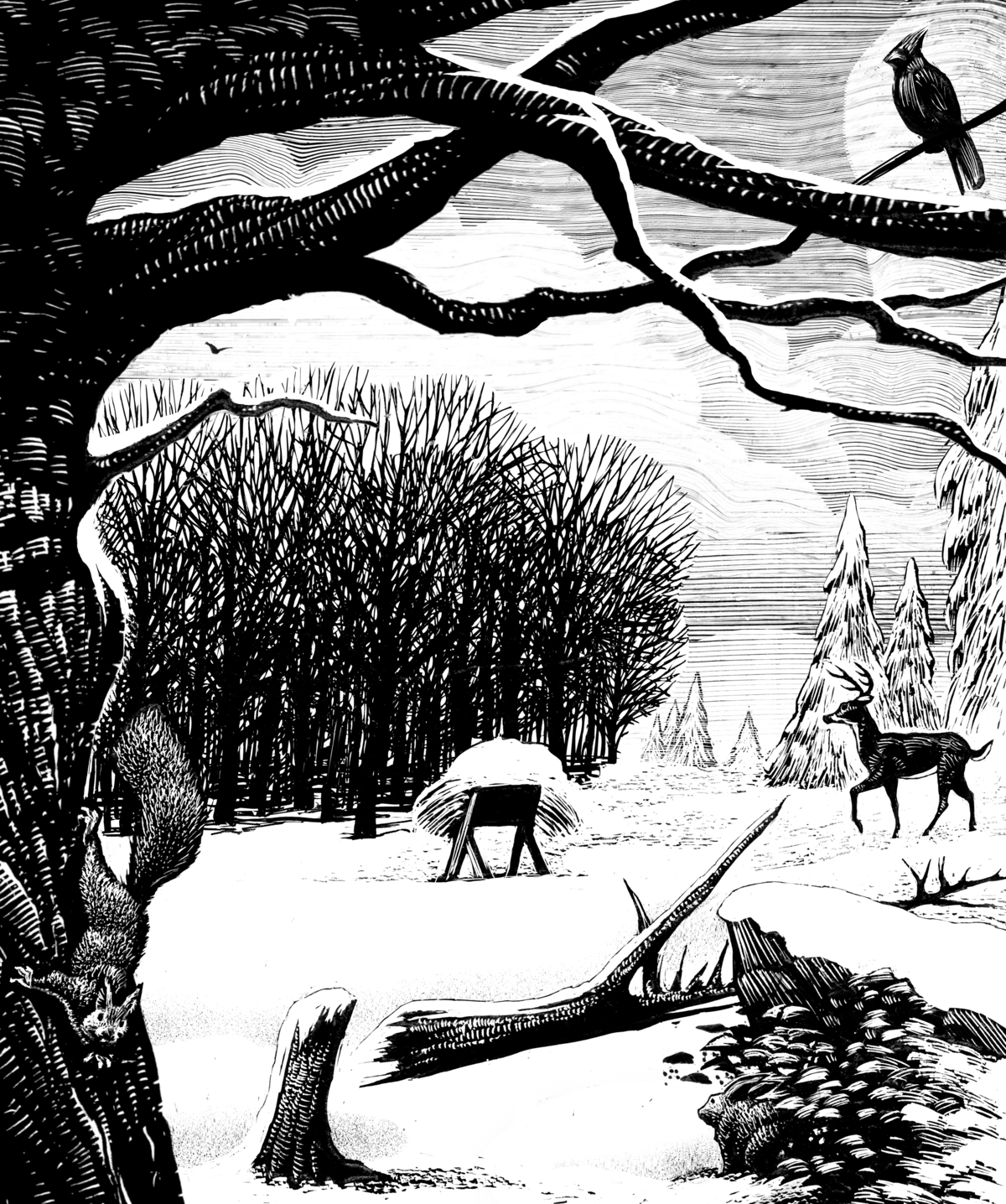
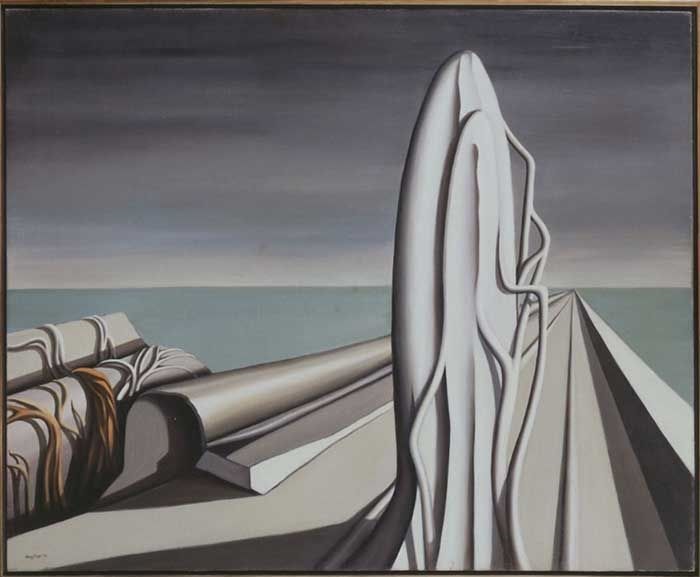
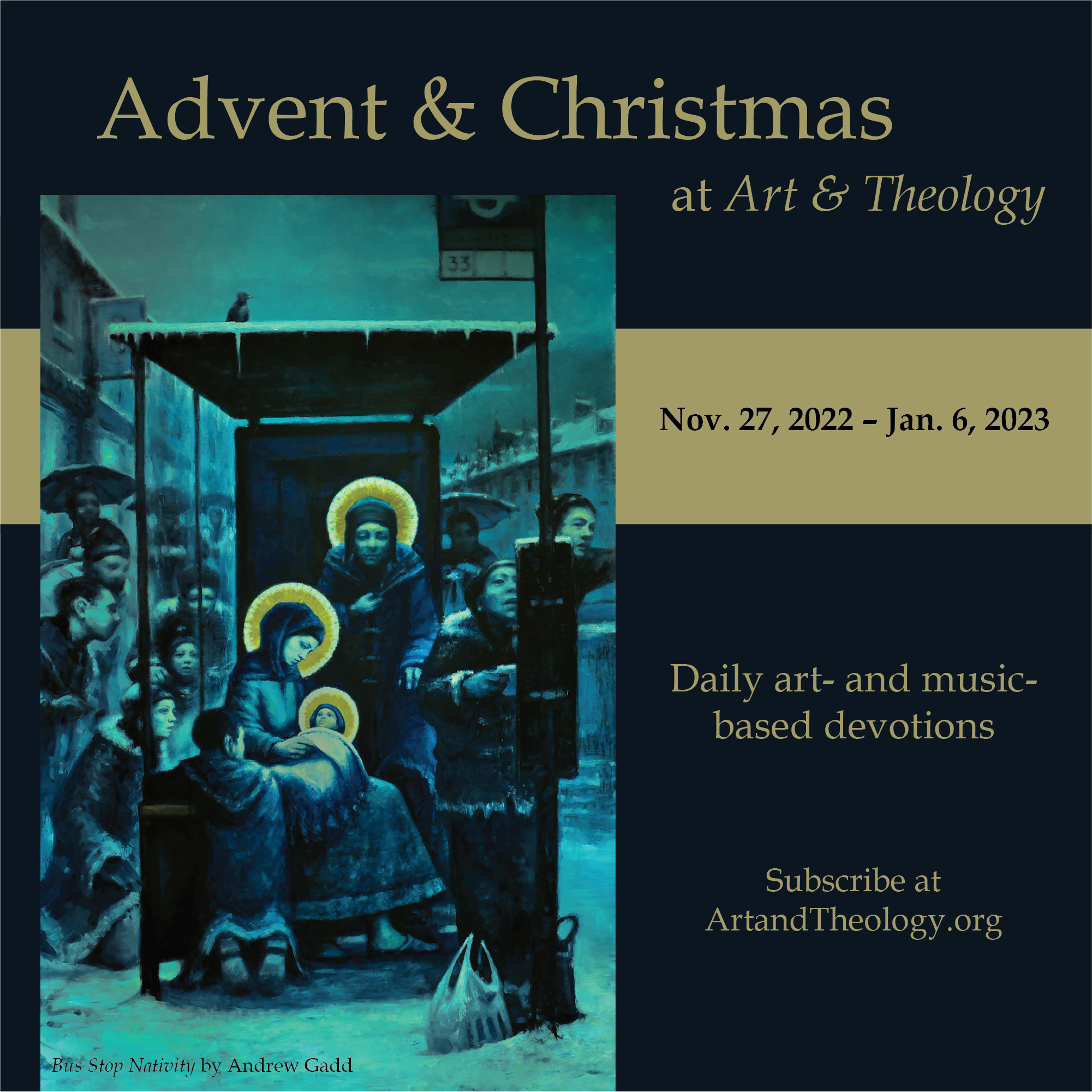

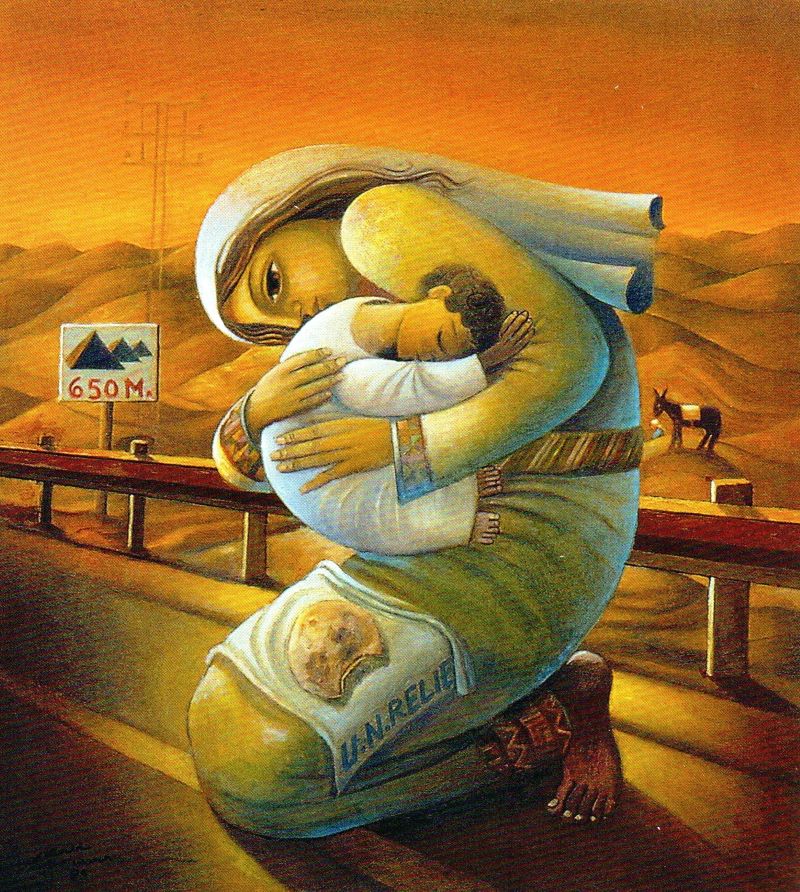
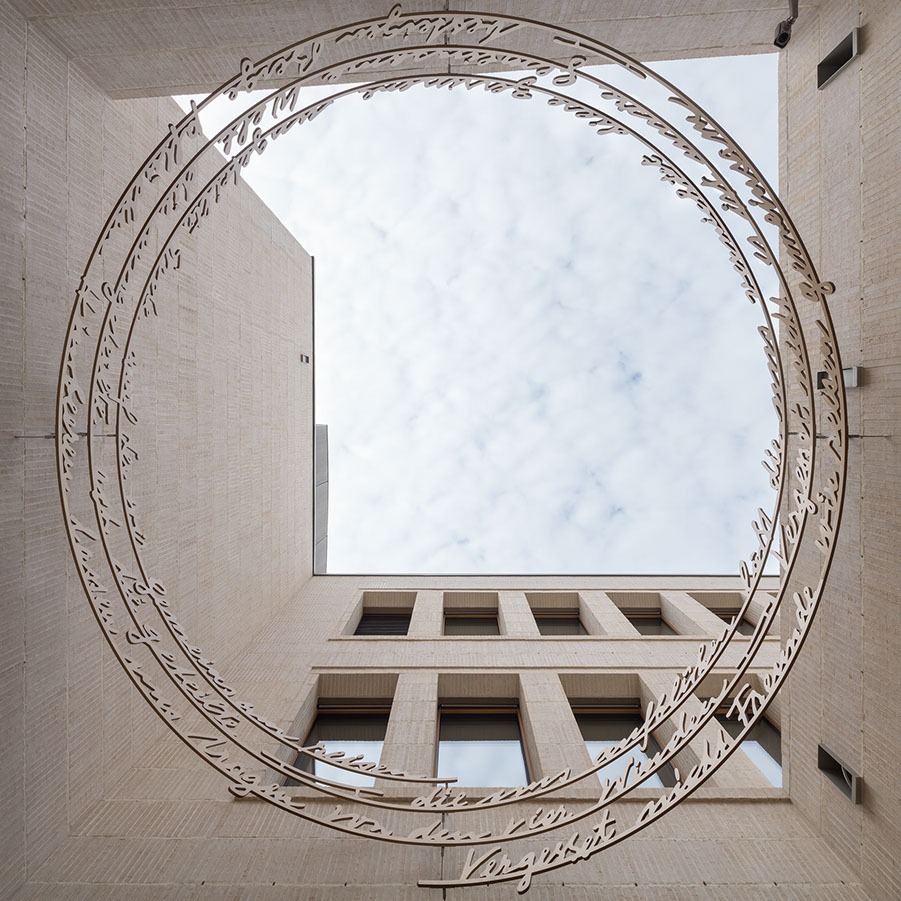
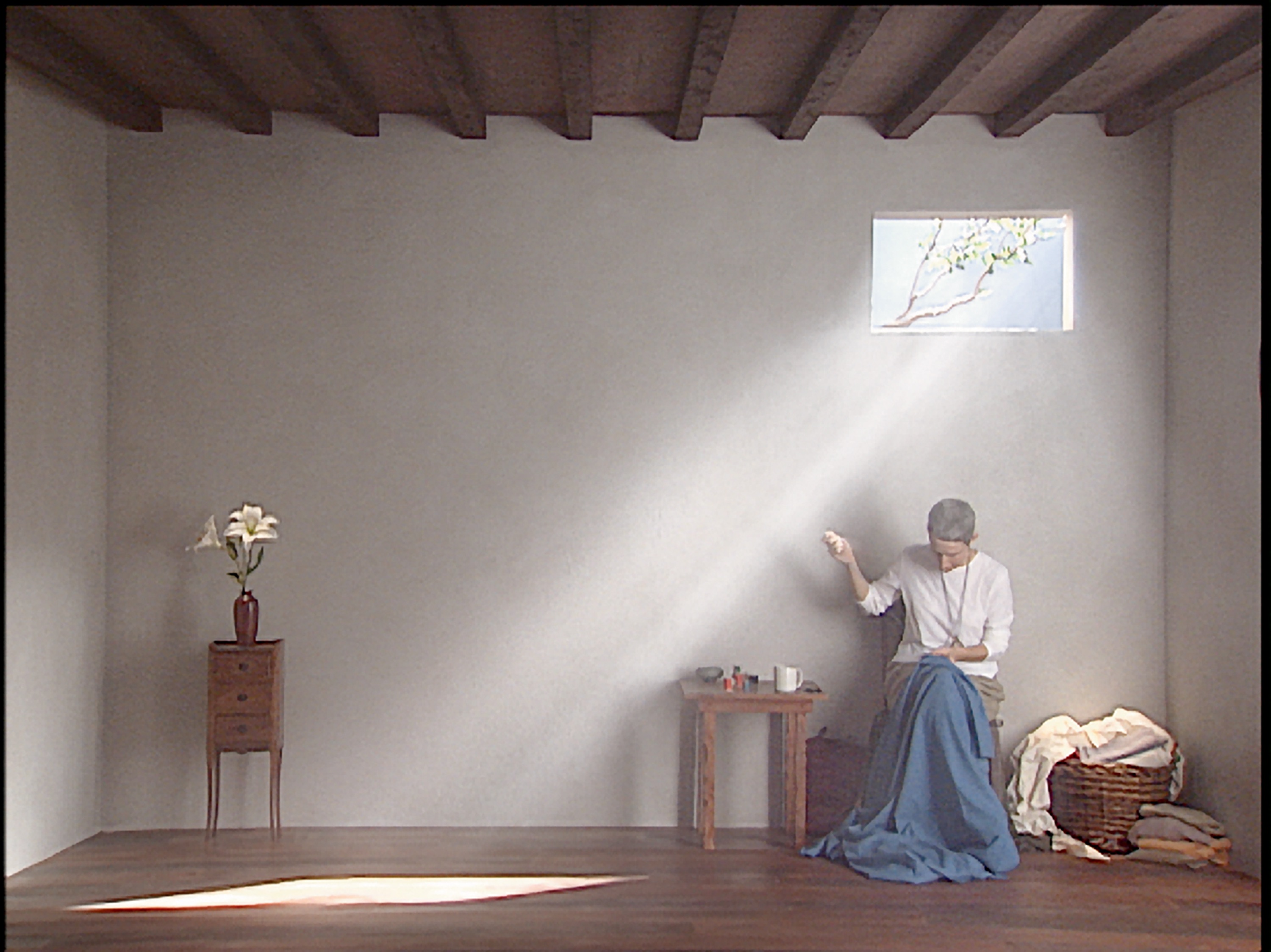
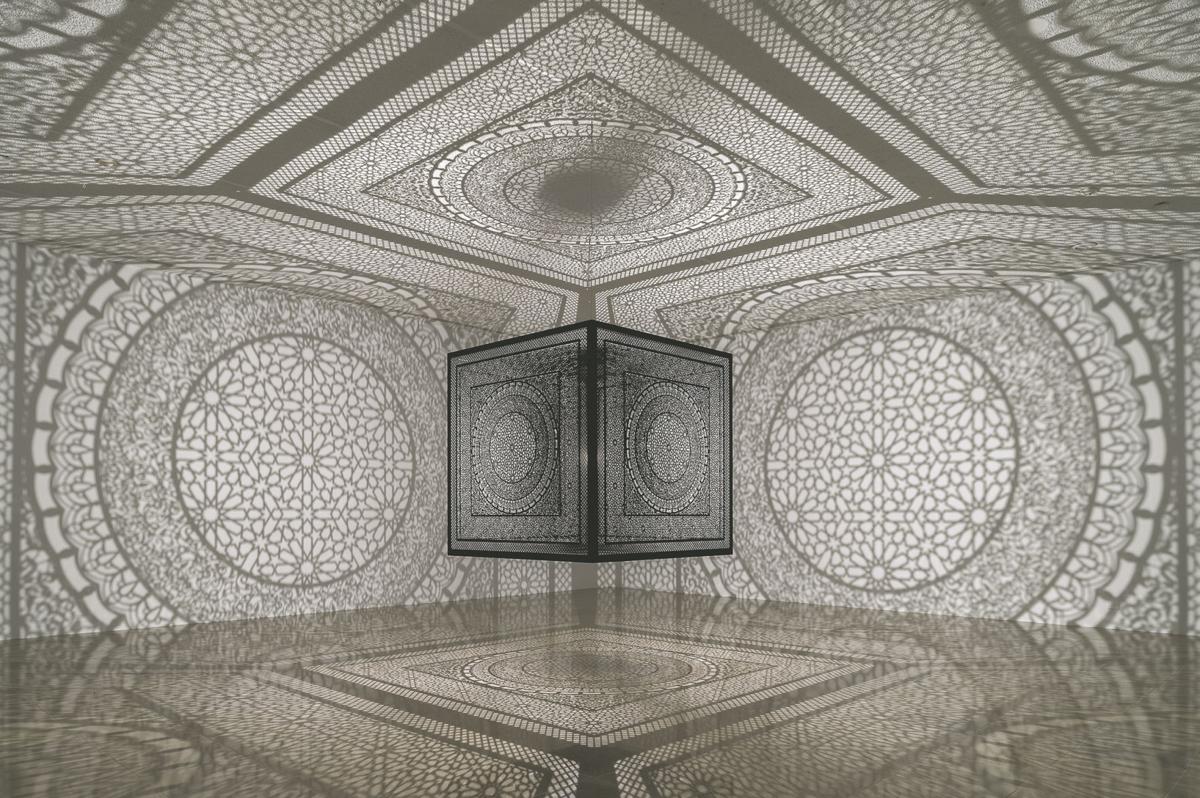
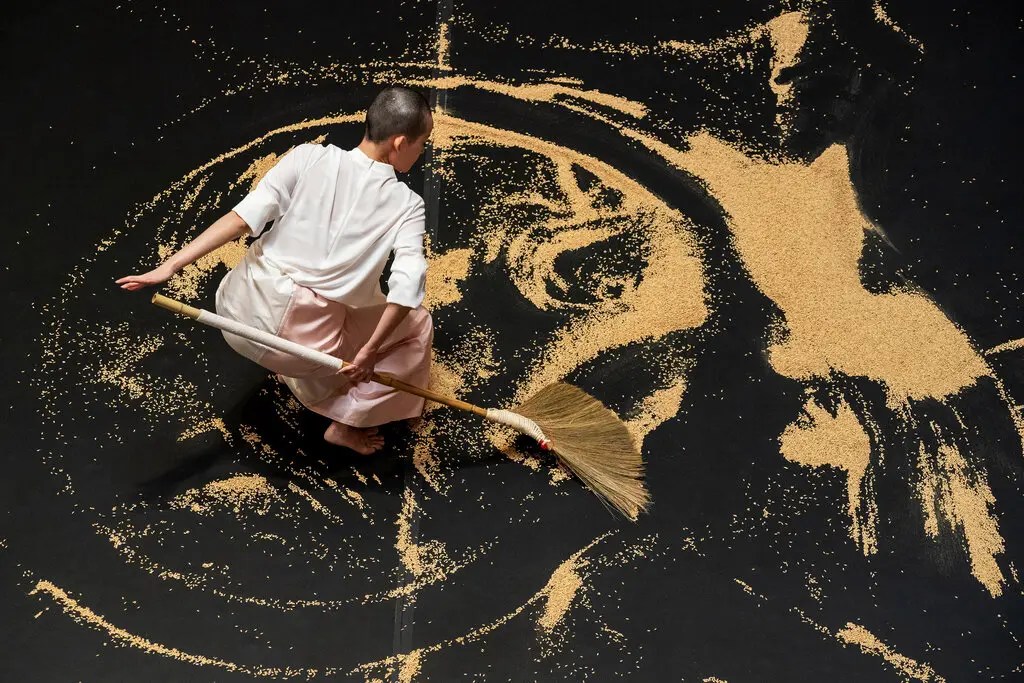
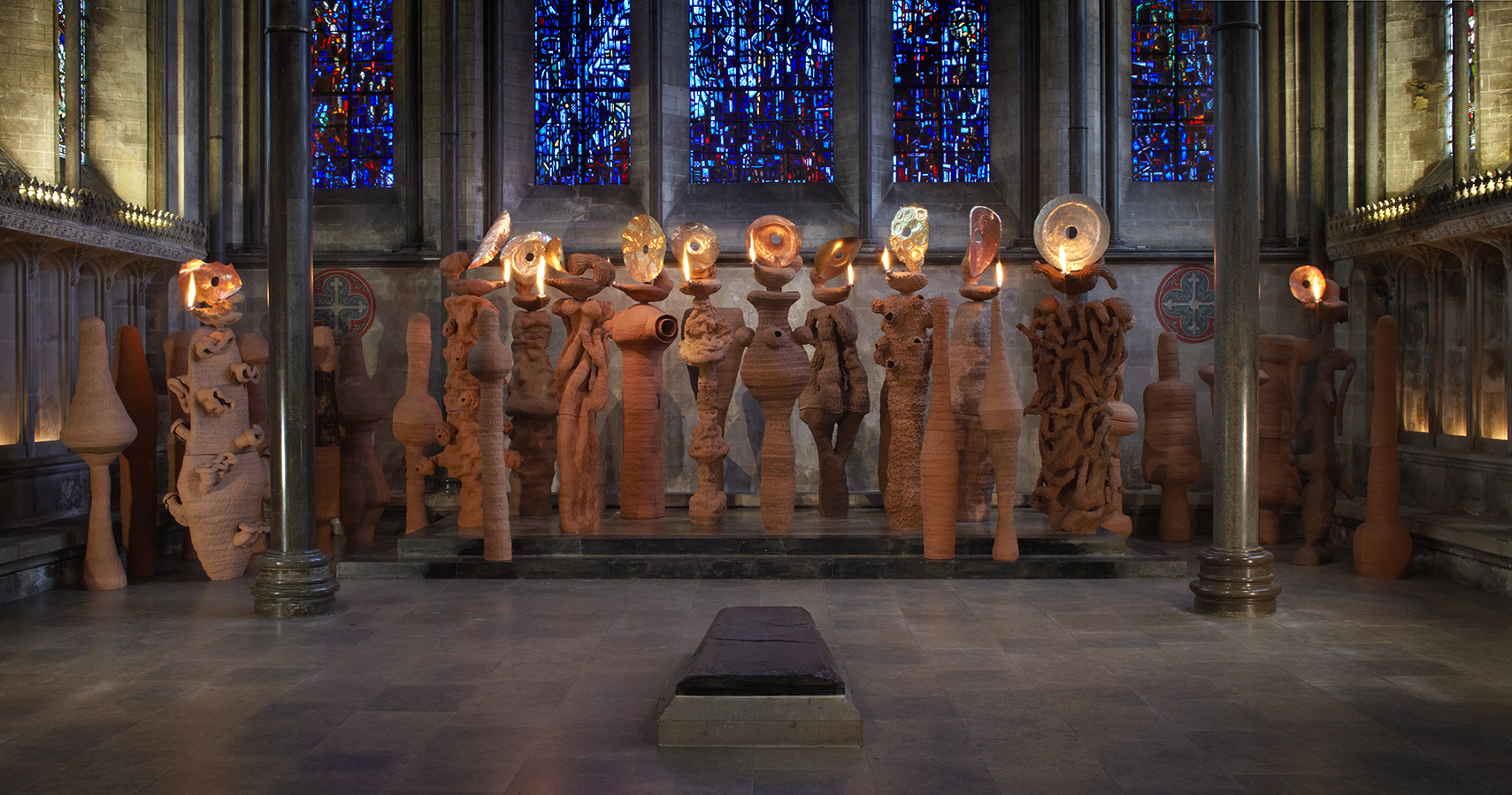
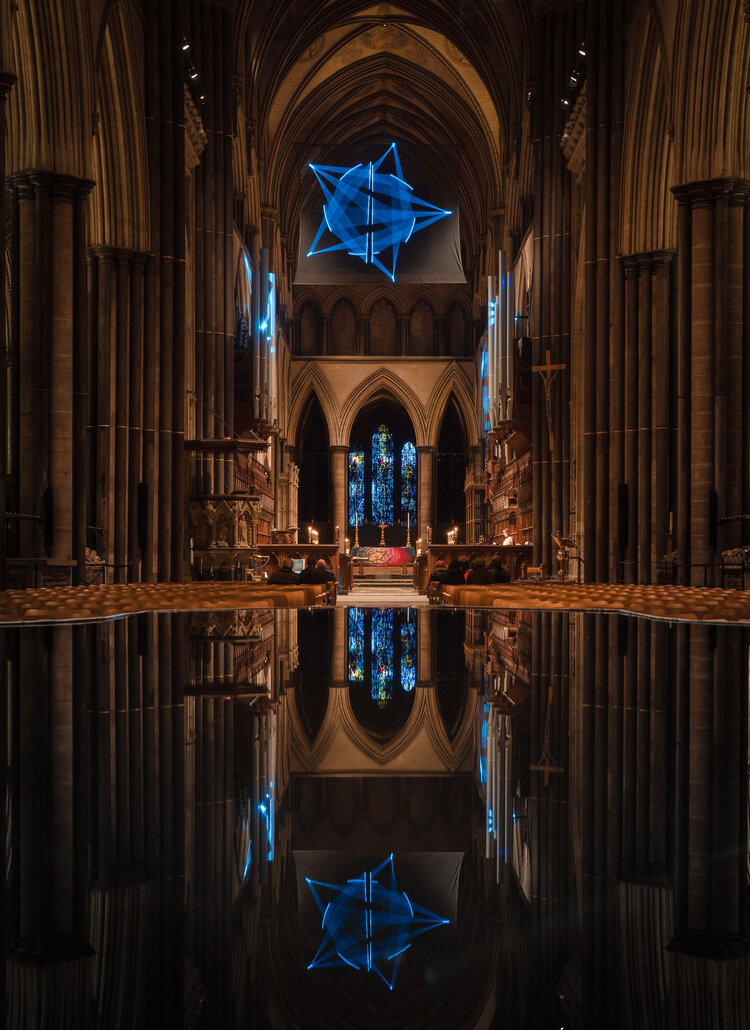
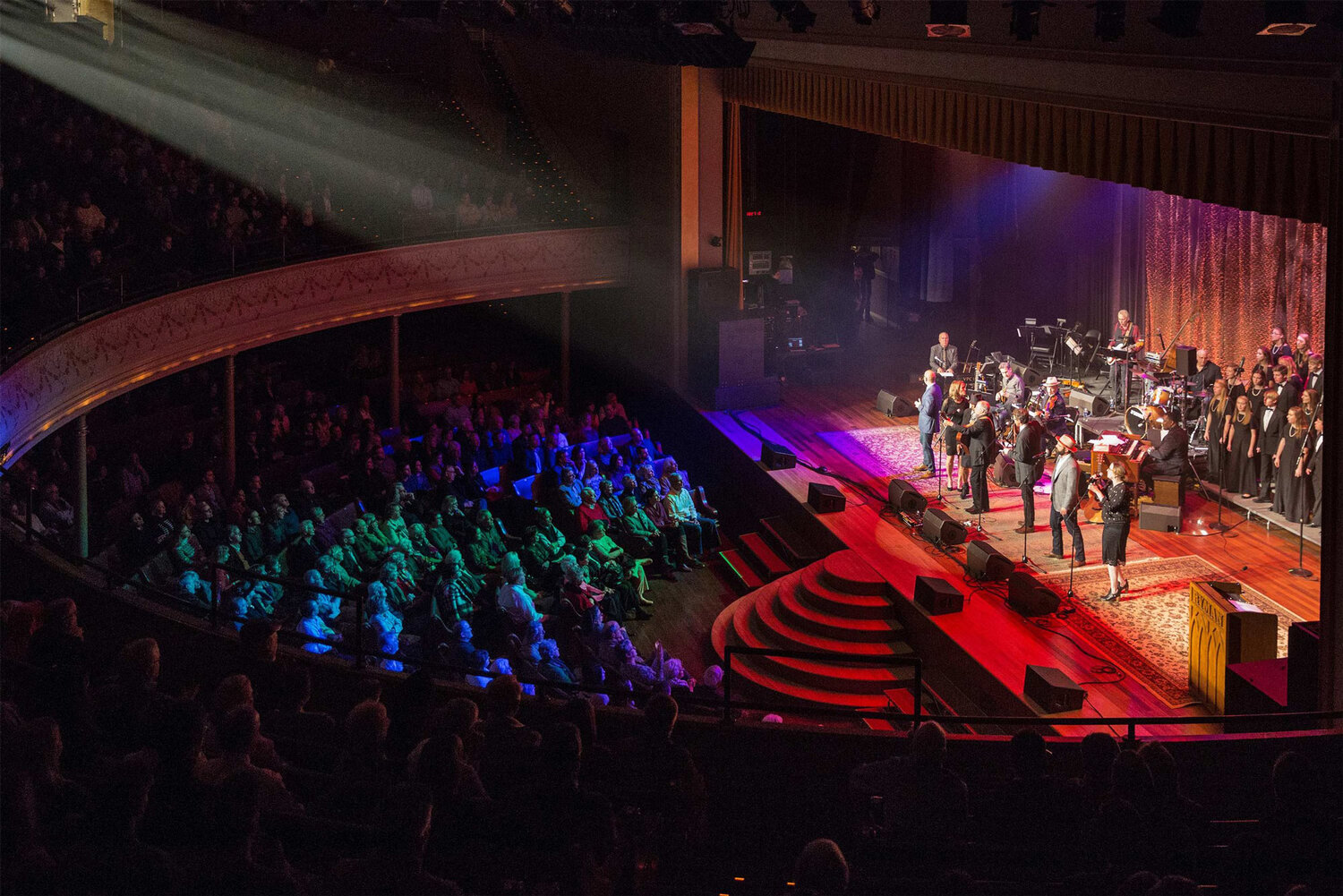
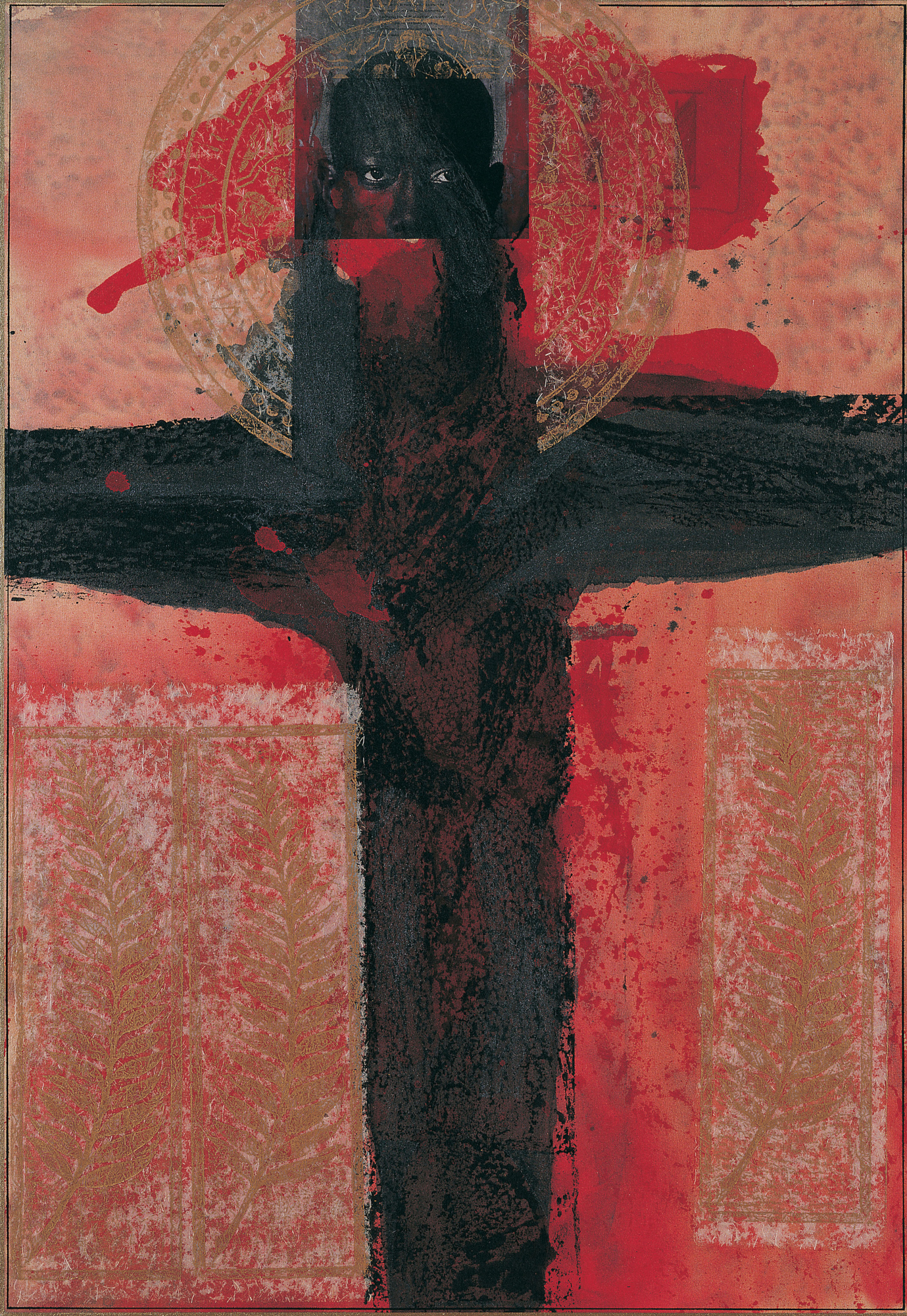


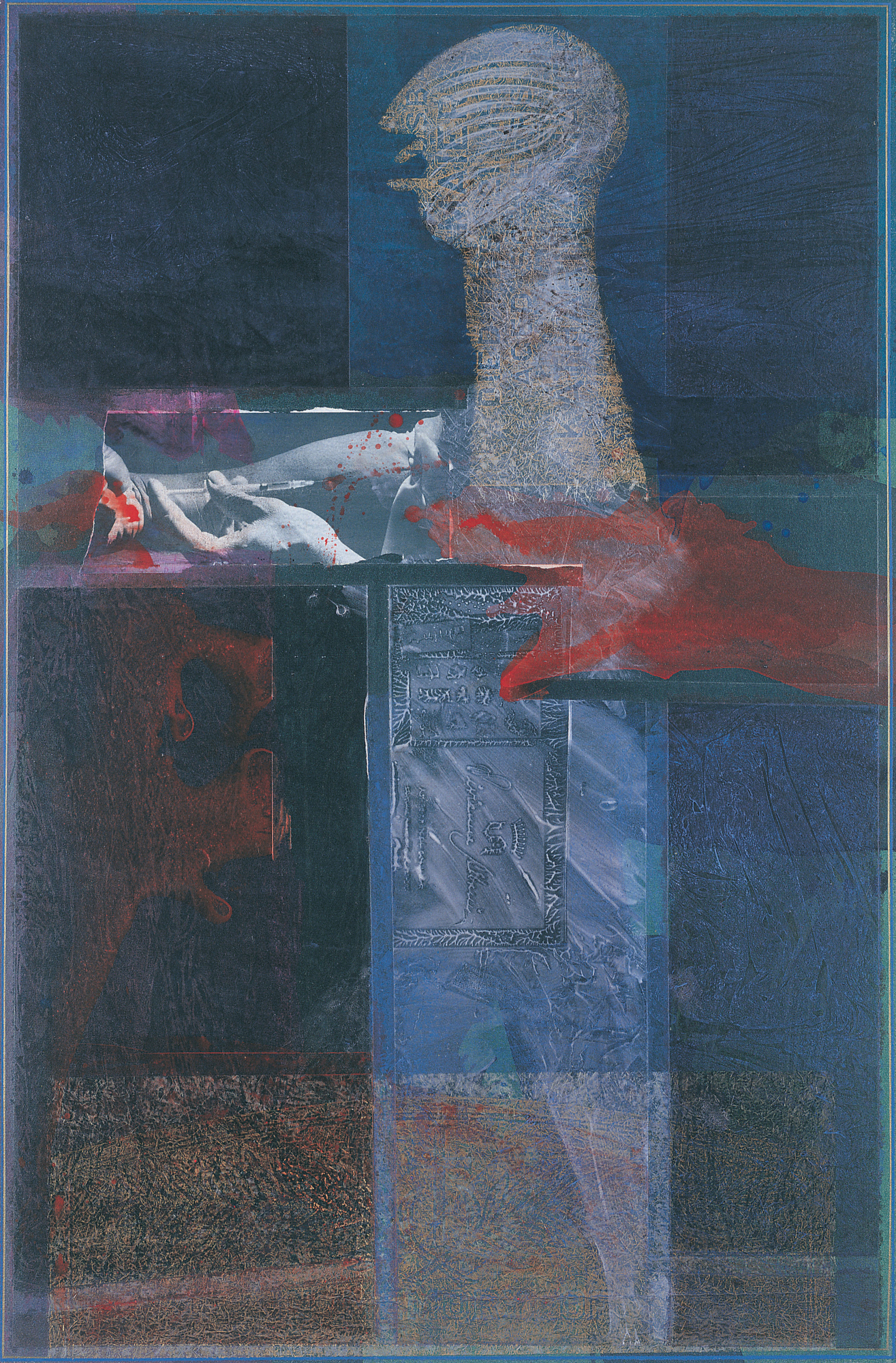

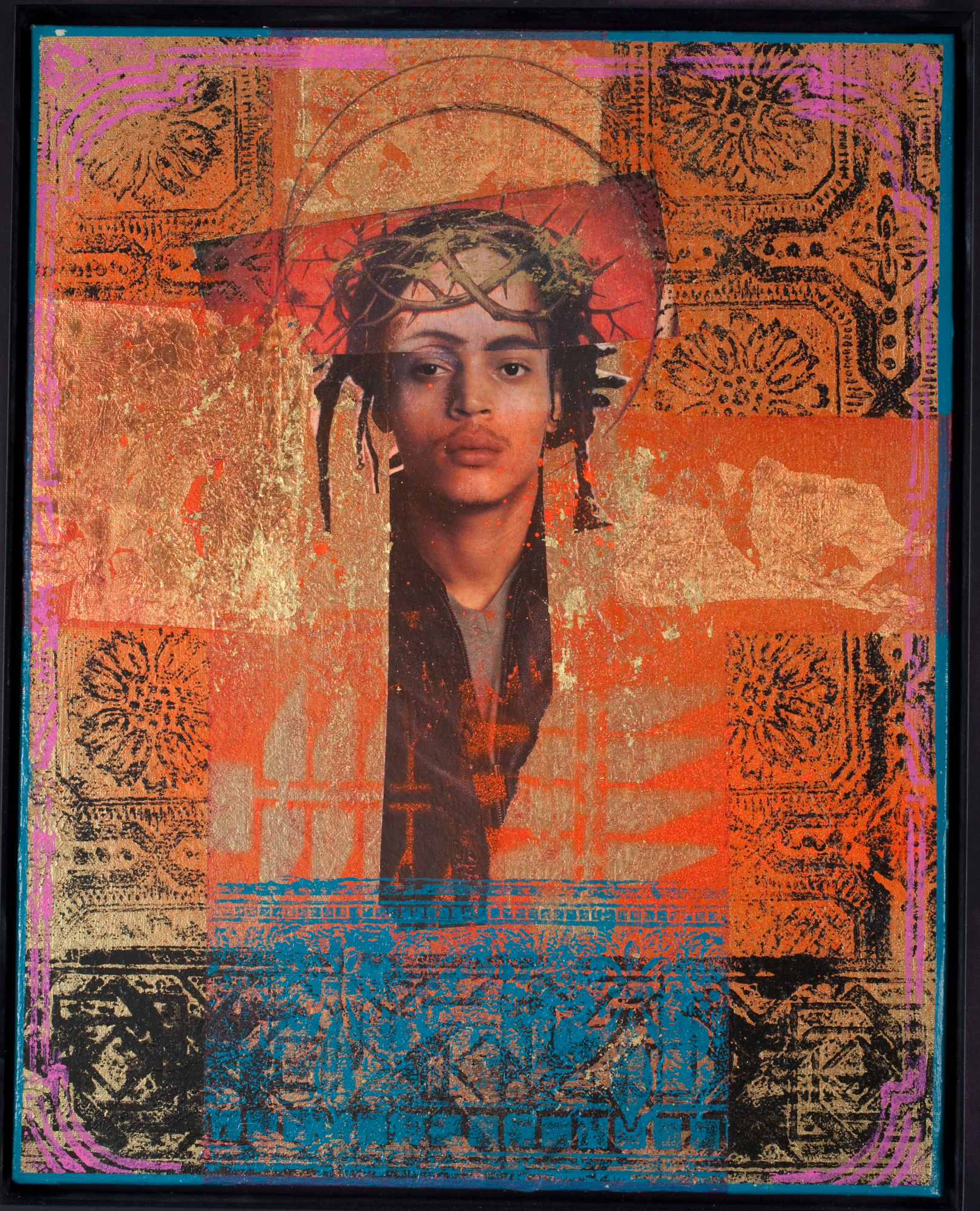


 Art & Theology