Advent, Day 6

LOOK: Cathedral by Bryn Gillette

Gillette, Bryn_Beyond the Ruins (Cathedral)
Bryn Gillette (American, 1980–), Cathedral, 2010–11, from the Beyond the Ruins series. Oil and glass shards on wooden door, 80 × 32 in. (203.2 × 81.3 cm). [available as a giclée print]

In 2000 while on a ministry trip to Jamaica, artist Bryn Gillette met Daniel Jean from Haiti, who was finishing up his Bible degree there while caring for five orphaned children. After Jean graduated he returned to Haiti and became a pastor and, over the next several years, continued taking in a growing number of children—ten, twenty-one, sixty-five!—from off the streets, giving them, through the help of his church community, food, shelter, medical care, education, love, and a sense of home.

While a large number of Haiti’s estimated 1.2 million orphans and vulnerable children (OVC) have lost parents to natural disaster, disease, gang violence, or political turmoil, most are what are called “social orphans,” meaning they have one or more living parents but that parent is unable to provide for them, usually because of poverty or drug addiction, and they are forced to fend for themselves. Some of these children are abandoned out of painful necessity; others, out of neglect. Jean was himself orphaned by poverty as a child, so he has an enormous amount of empathy for those in the same situation.

Having kept up a regular correspondence with Jean ever since their initial meeting, Gillette took his first trip to Haiti in 2008, to visit Jean and to meet the very large family he had built! Later that year he and his father, Mark Gillette, founded the nonprofit TeamOne:27 to support Jean’s work. Since then Jean’s family has grown to include more than two hundred kids in three “homes of blessing”—two in Port-au-Prince and one in Les Cayes, near where the magnitude 7.2 earthquake struck this August. The Gillettes describe Daniel Jean as a modern-day George Müller

Bryn Gillette has since returned to Haiti seven more times and considers himself an “artistic ambassador” for the country. Cathedral is part of his twelve-piece Beyond the Ruins series of paintings, made in the aftermath of the catastrophic January 12, 2010, earthquake that struck just outside the capital of Port-au-Prince, killing tens of thousands of Haitians. Each painting was executed on a standard-size door, metaphoric of the aspiration that Haiti will emerge stronger on the other side of this tragedy—that it will pass “beyond the ruins.”

Gillette began painting Cathedral in July 2010, when he was first able to visit the ruins of the Cathédrale Notre-Dame de L’Assomption in Port-au-Prince. “At that time the property was gated and uncleared of the rubble and deceased,” he said.

Gillette, Bryn_Cathedral (detail)
Detail

He returned in summer 2011, at which point he was able to go inside the shell of the church.

I spent much of my time sorting through the small piles of remaining debris and collecting discarded “treasures” of the stained glass windows. It became a game to the local children, who sent me home with a pile of several pounds of glass. I vowed to myself to honor these sacred shards somehow in a work that would be a worthy tribute to these precious and grieving Haitians. I embedded shards and crushed fragments of the Cathedral’s glass into the painting itself, praying over Haiti with what I might describe as a weeping hope.

While he was there he saw a young girl lingering in the doorway, standing on the wreckage and staring out over the cityscape. In the painting, Gillette said, she represents on one level a personified Haiti, vulnerable and grieving and interceding for her people. Hear more from the artist on this painting in this 2019 video:

After eleven years, Notre-Dame Cathedral has still not been rebuilt, though donations have enabled the erection of a transitional 1,500-seat structure on the site, where Masses are celebrated. Its ruins, especially its shattered rose window, are now a distinguishing feature of the Port-au-Prince skyline.

Lament and hope are key elements of Gillette’s Beyond the Ruins series as a whole, as he elaborates:

During the years I worked on these images, the painting process distilled countless hours of conversation, travel, prayer, heartache, and hope into color and form. These door-size portals are our declarations of hope, our inner groaning for justice made visible, a plea for God’s Spirit to renew Haiti’s destiny. . . . It is my hope that this work be a catalyst for Kingdom scale conversations, dreams, prayers, relationships, and initiatives.

Cathedral speaks powerfully of one of the main themes of Advent: mourning the brokenness (of our bodies, spirits, families, cities, governments, earth, etc.) while awaiting the coming of a new day. And even as we wait, we work—we (re)build, we mend. We keep our hands to the plow. We sow weeping.

“I feel like I am often praying in imagery rather than words,” Gillette says. Though I am viewer, not maker, I often feel the same—that my consideration of a particular image is my prayer. I’m thankful to artists who are able to express these “prayers” so eloquently and who put them out into the world so that we, too, can lift them up to God.

LISTEN: “Jesucristo, esperanza del mundo” (Jesus Christ, Hope of the World) | Words by Silvio Meincke, 1982; trans. Pablo D. Sosa, 1988 | Music by João Carlos Gottinari and Edmundo Reinhardt, 1982; arr. Greg Scheer, 1994 | Performed by Calvin University’s Capella, 2021

This video features a Spanish-English version of a twentieth-century Portuguese-language hymn from Brazil, which is #248 in the bilingual hymnal Santo, Santo, Santo: Cantos para el pueblo de Dios / Holy, Holy, Holy: Songs for the People of God. Here are the full lyrics in English:

A little beyond this our time
The future announces with gladness
No war, no disaster, no crime
No more desolation, no sadness

Lord, may your kingdom come
The joy of our world re-create
And all our hope and our longings
Transform in the fullness of life
Aié, eiá, aié, aié, aié

A bud of your hope is sprouting
The token of flowers in spring
A world to arrive, no doubting
With justice and joy that you bring

We hope to cast out all our hate
We long for a world of pure beauty
In which peace will never abate
And justice will be, then, our duty

The seeds of your kingdom we bear
Your future is drawing so near
The earth with your help we prepare
Until you, in fullness, appear

I’m aware that Spanish is not an official language of Haiti, but I’m always bringing art from different cultures into contact with one another, as I like to reveal points of connection across contexts. In addition to the obvious connections between today’s featured hymn and painting, consider the small but meaningful resonance between the line “A bud of your hope is sprouting” and artist Bryn Gillette’s description of the umbrellas on the Rue St Laurent opening like flowers.

Advent, Day 5

LOOK: Christmas Tree by Shirazeh Houshiary

Houshiary, Shirazeh_Christmas Tree
Shirazeh Houshiary (Iranian British, 1955–), Christmas Tree, 2016/1993. Temporary installation at Tate Britain, London.

Every year from 1988 to 2012, and again in 2016 after the completion of a massive three-year renovation, Tate Britain commissioned a leading contemporary artist to create a Christmas tree installation inside the galleries. (In 2017 this tradition was replaced with the annual Winter Commission, where an artist is invited instead to decorate the museum’s Millbank facade with lights.)

The Tate awarded Shirazeh Houshiary the Christmas Commission in 1993, and she came up with a novel interpretation of the theme: a live pine tree suspended upside down, its exposed roots coated in gold leaf. She described the piece as “taking earth back to heaven,” and the Tate says it reflects the artist’s interest “in astronomy, mysticism and the interplay between light and dark.”

As Houshiary’s Christmas Tree was so memorable, Tate Britain asked her to reprise it in 2016 down the center of the museum’s new spiral staircase designed by the architecture firm Caruso St John. So in December of that year it could be seen under the glass dome of the rotunda of the museum’s Thames-facing entrance, viewable from three different levels.

Though I didn’t get to see the installation in person, the photos instantly reminded me of the inverted tree that appears in some of the woodcuts and batiks of Indian Christian artist Solomon Raj (see, e.g., here and here). For him this symbol represents the Christian’s being rooted in God and bearing fruit in the world.

Neither Raj nor Houshiary, however, were the first to develop this symbol. The Katha Upanishad, an ancient sacred Hindu text, references something similar: “There is an eternal tree called the Ashvattha, which has its roots above and its branches below. Its luminous root is called Brahman, the Supreme Reality, and it alone is beyond death. Everything that exists is rooted in that point. There is nothing else beyond it” (2.3.1). The inverted tree is also mentioned in the Bhagavad Gita 15.1 and the Rig Veda 1.24.7. Furthermore, in his Timaeus Plato describes man as a “heavenly plant” with its branches on earth and its roots in heaven—and I wouldn’t be surprised to find the arbor inversa present in other religious and philosophical traditions as well.  

Houshiary was not working from an intentionally Christian framework (nor a Hindu or Platonic one), but her installation’s linkage with the season of Christmas welcomes, I’d say, a Christological reading. As already mentioned, she acknowledged in her 1993 statement an interplay between heaven and earth—heaven being evoked through the tree’s gilded root system that towers above the viewer, catching the natural light from above. Our realm, earth, is where the ever-green life enters and expands.

I think of how Jesus Christ, the New Adam, human being par excellence and yet Eternal One who is from the beginning, came down from on high, bringing lushness, grafting humanity into the Divine.

Houshiary, Shirazeh_Christmas Tree
Photo: Guy Bell

LISTEN: “Love Divine” | Words by Charles Wesley, 1747 | Music by Thomas Waller, first published 1869; arr. Wilder Adkins, 2015 | Performed by Justin Cross and Wilder Adkins on Hollow Square Hymnal, 2016; reissued as a single, 2018

Love divine, all loves excelling,
joy of heav’n, to earth come down!
Fix in us thy humble dwelling,
all thy faithful mercies crown.
Jesus, thou art all compassion;
pure, unbounded love thou art.
Visit us with thy salvation;
enter ev’ry trembling heart.

Breathe, O breathe thy loving Spirit
into ev’ry troubled breast.
Let us all in thee inherit,
let us find that second rest.
Take away our bent to sinning;
Alpha and Omega be.
End of faith, as its beginning,
set our hearts at liberty.

Come, Almighty, to deliver,
let us all thy life receive.
Suddenly return, and never,
nevermore thy temples leave.
Thee we would be always blessing,
serve thee as thy hosts above,
pray, and praise thee without ceasing,
glory in thy perfect love.

Finish, then, thy new creation;
pure and spotless let us be.
Let us see thy great salvation,
perfectly restored in thee.
Changed from glory into glory,
till in heav’n we take our place,
till we cast our crowns before thee,
lost in wonder, love, and praise.

“Love Divine, All Loves Excelling” is one of my absolute favorite hymns. It’s grand and passionate, tender and communal, and its many invocations have an Advent ring to them: Come down, Love! Make your home in us. Bring all your faithful mercies to a climax. Visit us with your salvation. Enter our trembling hearts. Breathe your spirit into us. Give us yourself. Lead us to ultimate rest. Be Alpha and Omega to us. Liberate. Deliver. Let us receive your life. “Suddenly return” . . . and never, never leave! Finish your new creation. Restore us in you.

Note that the second line appears in some hymnals without the comma following “joy of heav’n” and with a comma for the end punctuation, which, instead of acting as a petition, would indicate that the joy of heaven has already come down. The ambiguity, which different hymnal editors have resolved differently, is a perfectly comfortable one, as Jesus did come to earth once, and we beseech his return.

I know the hymn best from its pairing with the 1870 tune BEECHER by John Zundel, but Wilder Adkins uses a slightly earlier tune from the shape-note tradition that I quite like. It was composed by Thomas Waller (ca. 1832–1862) of Upson County, Georgia, who taught at Sacred Harp singing schools in the mid-nineteenth century.

Roundup: Empty chair, how to read a Last Judgment icon, and more

ARTWAY VISUAL MEDITATIONS:

ArtWay.eu is an online hub of resources related to faith and the visual arts. Every Sunday a new “visual meditation” is released on a selected artwork, written by one of a diverse range of volunteers from across the globe. (I contributed last week’s, on Eduardo Kingman, and another of mine, on a Flight to Egypt painting by Pranas Domsaitis, will be forthcoming.) Sign up here to receive the free weekly meditation in your inbox. Here are two examples from the past year, with Advent vibes, that I’ve found particularly meaningful.

>> “The Empty Chair in a Season of Waiting” by Rachel Hostetter Smith: Last year, in the midst of the COVID-19 pandemic, art history professor Rachel Hostetter Smith wrote about a series of Chinese ink wash paintings by Daozi. They’re a tribute to his friend, the Chinese human rights activist Liu Xiabo (1955–2017), who was unable to accept his 2010 Nobel Peace Prize in person because he was in prison, so he was represented at the ceremony by an empty chair. Smith brings this image of an empty chair into conversation with all the uncertainty and absence in this current time of pandemic; the Jewish Passover Seder liturgy and its setting a place at the table for the prophet Elijah; Franciscan priest Richard Rohr on the liminal space between the old world and the world to come; and John the Revelator’s eschatological vision of a throne descending from heaven (Rev. 21).

Daozi_The Empty Chair on the Sea Ridge
Daozi (aka Wang Min) (Chinese, 1956–), The Empty Chair on the Sea Ridge, 2018. Ink and color on paper, 97 × 54 cm.

This and fifty-four other contemporary artworks are part of the international traveling exhibition Matter + Spirit: A Chinese/American Exhibition, which Smith curated (click the link to explore the art—it’s very compelling!). The exhibition is a product of a gathering of North American and Chinese art professors in June 2018 in Beijing, Nanjing, and Shanghai, sponsored by the Nagel Institute for the Study of World Christianity.

>> “Waiting for the Lord” by Mary McCampbell: Mary McCampbell [previously] writes about a painting by Douglas Coupland, best known for his work as a novelist and for popularizing the term Generation X. “In I wait and I wait and I wait for God to appear (2011), the artist has painted a colorful QR (Quick Response) code, defamiliarizing a familiar symbol of daily life. . . . Like most QR codes, if a viewer holds up her camera to the graphic image, a message is decoded via smart phone. A contrast to the hard geometric edges of the painting, the message that magically appears is soft and human: ‘I wait and I wait and I wait for God to appear.’ . . . The painting reflects a longing for the real God to manifest himself, no longer merely an idea, a doctrine, a rhetorical position. Where is God in the intricate, detailed, yet seemingly random pattern of life? How can we discern WHO He is? . . . This atypical reminder to ‘Wait for the Lord; be strong and take heart and wait for the Lord’ (Psalm 27:14) discloses the curious, humble faith of a non-believer, one hoping and waiting for eyes to see the ‘appearance’ of the Lord.”

Coupland, Douglas_Waiting for the Lord
Douglas Coupland (German, 1961–), I wait and I wait and I wait for God to appear, 2011. Acrylic and latex on canvas, 182.9 × 182.9 cm. Queen’s University, Kingston, Ontario, Canada.

+++

LECTURE: “Understanding the Last Judgment” by Jonathan Pageau: “The traditional icon of the Last Judgment is a very complex image which is both the synthesis of Christian typology as well as an image of the eschatological finality of all things.” In this talk given at St. John Chrysostom Byzantine Catholic Church in Seattle, Jonathan Pageau breaks down Last Judgment iconography, explaining how to read it scene by scene.

Elements include:

  • The Deësis, a representation of Christ enthroned between Mary and John the Baptist
  • The hetoimasia, or prepared throne, which awaits the return of Christ
  • The psychostasis, or weighing of souls
  • The ladder of divine ascent, representing the struggle to reach illumination
  • Paradise, with the “good thief,” Abraham’s bosom, and the Mother of God
  • The last trump and the resurrection of the dead, with beasts regurgitating their human prey
  • The river of fire, per Daniel 7:10, with the damned being swallowed by the mouth of Hades

Why am I sharing this now? Because Advent is eschatological and future-oriented in nature, and, though it tends to be underemphasized in our era, judgment is a major theme—which Fleming Rutledge does a great job unpacking in her book Advent: The Once and Future Coming of Jesus Christ.

+++

COVID MEMORIAL: From September 17 to October 3, 2021, the National Mall in Washington, DC, was blanketed with some 670,000 white flags, each one representing an American life lost to COVID-19. Titled In America: Remember, the installation was conceived by artist Suzanne Brennan Firstenberg as a way to visualize the magnitude of loss the country has suffered over the past two years in relation to the pandemic, and to invite mourning. Visitors were invited to personalize flags for someone they lost.

Stephen Wilkes’s photos of the memorial undid me. The enormity of suffering represented is difficult to fathom. Every single flag is a devastation. And since the installation was put up this fall, there have been another 100,000-plus COVID deaths in the US, while the global death toll has surpassed 5.2 million.

In America: Remember (detail)
Photo: Stephen Wilkes / National Geographic

In America: Remember (detail)
Photo: Stephen Wilkes / National Geographic

In America: Remember (photo by Stephen Wilkes)
In America: Remember, September 17–October 3, 2021, an installation of 670,000+ white flags on the National Mall, conceived by Suzanne Brennan Firstenberg. Photo: Stephen Wilkes / National Geographic.

+++

ART COMPETITION: “Macierzyństwo Maryi” (The Motherhood of Mary): The results are in for Poland’s first annual Ogólnopolski Konkurs Sztuki Sakralnej (National Competition of Sacred Art, or OKSSa for short), organized by the Fundacji Maria i Marta (Mary and Martha Foundation). The theme was Mary’s motherhood.

First place, with a prize of 15,000 zł (about USD $3,600), went to Błażej Guza for Macierzyństwo Maryi, which shows Mary drawing a hopscotch board on the pavement, its shape portending her boy’s fate. Jesus is not visible in frame, save for his shadow, which reveals simply an innocent child ready to play.

This piece and thirty-four others from among the many entries were exhibited at Concordia Design Wrocław November 25–30, 2021, and this month a few of them will be shown at the National Museum in Wrocław. You can view the top three winners as well as four honorable mentions at the boldface link above, or on the foundation’s Facebook page. And here’s an exhibition view.

The Fundacji Maria i Marta aims to promote the development of contemporary Christian art in Poland by organizing competitions, exhibitions, and workshops and by providing artistic consultation for churches.

Guza, Blazej_The Motherhood of Mary
Błażej Guza, Macierzyństwo Maryi (The Motherhood of Mary), 2021. Acrylic and chalk, 90 × 60 cm.

Kowalewska-Tylka, Beata_Fullness of Spirit
Beata Kowalewska-Tylka, Pełnia ducha (Fullness of Spirit), 2021. Digital painting, 70 × 50 cm. The OKSSa jury commented on how this piece shows “the interpenetration of the spiritual and human dimensions of Mary’s motherhood,” the shape of the fiery red cloth evoking the Holy Spirit as dove, and the breast that gives milk signifying Mary’s physical nourishment of her son from her own body.

Advent, Day 4

Shower, O heavens, from above,
    and let the skies rain down righteousness;
let the earth open, that salvation may spring up,
    and let it cause righteousness to sprout up also;
    I the LORD have created it.

—Isaiah 45:8

Let us know, let us press on to know the LORD;
    his appearing is as sure as the dawn;
he will come to us like the showers,
    like the spring rains that water the earth.

—Hosea 6:3

LOOK: Appalachian Rhapsody in Blues: or, He Will Come to Us Like the Spring Rains by Grace Carol Bomer

Bomer, Grace Carol_Appalachian Rhapsody in Blues
Grace Carol Bomer (Canadian American, 1948–), Appalachian Rhapsody in Blues: or, He Will Come to Us Like the Spring Rains, 2015. Oil and wax on panel, 48 × 48 in.

LISTEN: “Rorate caeli” by William Byrd, 1605 | Performed by The Gesualdo Six, directed by Owain Park, 2020

Rorate caeli desuper, et nubes pluant justum: aperiatur terra, et germinet salvatorem.

Benedixisti, Domine, terram tuam: avertisti captivitatem Jacob.

Gloria Patri, et Filio, et Spiritui Sancto. Sicut erat in principio, et nunc, et semper, et in saecula saeculorum. Amen.

English translation:

Drop down, ye heavens, from above, and let the skies pour down righteousness: let the earth open and bring forth a Savior.

Lord, thou hast blessed thy land: thou hast turned away the captivity of Jacob.

Glory be to the Father, and to the Son, and to the Holy Ghost. As it was in the beginning, is now, and ever shall be, world without end. Amen.

The text of “Rorate caeli” (Let the heavens) is taken from the Vulgate translation of Isaiah 45:8. It “is frequently sung to plainsong at Mass and in the Divine Office during Advent, where it gives expression to the longings of Patriarchs and Prophets, and symbolically of the Church, for the coming of the Messiah. Throughout Advent it occurs daily as the versicle and response after the hymn at Vespers” [source].

William Byrd’s five-voice motet adds an additional verse from Psalm 85:1 (84:1–2 in the Vulgate), followed by the Gloria Patri.

This video performance is part of the Gesualdo Six’s 2020 Advent Sessions YouTube series.

Advent, Day 3

It is you who light my lamp;
the LORD, my God, lights up my darkness.

—Psalm 18:28

“I have come as light into the world, so that everyone who believes in me should not remain in the darkness.”

—John 12:46

LOOK: Self-Portrait by Stamatis Laskos

Laskos, Stamatis_Self-Portrait
Stamatis Laskos (Greek, 1985–), Self-Portrait, 2021. Oil on canvas, 110 × 80 cm.

LISTEN: “Lighten the Darkness” | Words by Frances Mary Owen (1842–1883) | Music by Sam Connour, 2017 | Performed by Lowana Wallace with Matt Froese, 2017

Lighten the darkness of our life’s long night,
Through which we blindly stumble to the day.
Shadows mislead us; Father, send Thy light
To set our footsteps in the homeward way.

Lighten the darkness of our self-conceit,
The darkness that we love so well,
Which shrouds the path of wisdom from our feet,
And lulls our spirits with its baneful spell.

Lighten our darkness when we bow the knee
To all the gods we ignorantly make
And worship, dreaming that we worship Thee,
Till clearer light our slumbering souls awake.

Lighten our darkness when we fail at last,
And in the midnight lay us down to die;
We trust to find Thee when the night is past,
And daylight breaks across the morning sky.

For more Advent songs by Sam Connour, see the album St Fleming of Advent, released under the moniker Lo Sy Lo.

Advent, Day 2

LOOK: First Day of Creation by Natalya Rusetska

Rusetska, Natalya_First Day of Creation
Natalya Rusetska (Ukrainian, 1984–), First Day of Creation, 2017. Egg tempera on gessoed wood board, 30 × 30 cm.

LISTEN: “Let There Be” by Michael and Lisa Gungor, on Ghosts Upon the Earth (2011)

Darkness hovering
Grasping everything it sees
Void, empty
Absent life and absent dream

Let there be
Let there be
Let there be
Let there be

Angels toil and crack open scrolls of ancient dreams
Countless worlds of his
Brilliant stars and breath and stream

Let there be
Let there be
Let there be
Let there be
Let there be
Let there be
Let there be light

Let there be light
Where there is darkness
Let there be light
Where there is nothing
Let there be light

The opening track on Gungor’s Ghosts Upon the Earth, “Let There Be” narrates God’s creation of the universe. What starts out as ethereal becomes increasingly more solid as the floating notes on piano and guitar coalesce into chords and meld with the cellos. Represented by a small choir, the Triune community voices its fiat: “Let there be . . .” A synthesized xylophone and tremolos from the strings suggest lively activity—“angels toil”—as the cosmos begins to take shape. In the second refrain the voices crescendo to a thunderous climax, a drum beating loud and steady as if laying down a foundation.

While this song is most fundamentally about the Genesis 1 creation story, it can also be read in light of John’s Gospel prologue, where he describes Jesus as light coming into the world, and similarly, Luke’s Annunciation narrative, where “ancient dreams” put down in prophetic scrolls are fulfilled in the conception of Christ in Mary’s womb, initiating a new epoch. 

(Related post: “God breaking in on our world”; video: “Saying Yes: The Annunciation in Contemporary Art”)

The Advent season begins in darkness. Taking stock of this darkness, we ask for God’s light to break in once again—into our hearts and lives, our communities, our world.

In the beginning the Spirit hovered over the void and breathed life into it. Millennia later the Spirit hovered over a virgin’s empty womb and did it again, making the Word flesh. And into our present lack, into our chaos, the Spirit still is coming, re-creating, so that Christ, the light, might be born in us.

Here’s a recent cover of “Let There Be” by IAMSON, which he combines with another Gungor song, “Crags and Clay”:

Advent, Day 1

LOOK: At Dusk (Boston Common at Twilight) by Childe Hassam

Hassam, Childe_At Dusk (Boston Common at Twilight)
Childe Hassam (American, 1859–1935), At Dusk (Boston Common at Twilight), 1885–86. Oil on canvas, 42 × 60 in. (106.9 × 152.4 cm). Museum of Fine Arts, Boston.

LISTEN: “Psalm 25” by Poor Bishop Hooper, 2020 [free download]

Nobody who waits for you will see disgrace
Teach me all your righteous paths
Make known your ways to me, Lord

Lead me by your truth, my God
And teach me now
I’ll wait for you the whole day long
You are the God of my salvation

You’ve shown your love from ages past
It existed from antiquity through history
Forgotten of my sinful youth
For your goodness, God
My eyes are always on you

Psalm 25 is not a common Advent text, but it is one of the readings assigned for today by the Revised Common Lectionary. Advent is a season of waiting, penitence, and promise—themes reflected in this psalm of David’s.

Jesse and Leah Roberts, whose musical alias is Poor Bishop Hooper, adapted Psalm 25:3–7, 15 last year as part of their EveryPsalm project, an initiative to release one original psalm-based song every Wednesday. They are currently up to Psalm 100.

I’ve paired the song with a painting by turn-of-the-century American Impressionist Childe Hassam, of a rosy dusk on the outskirts of the central park in downtown Boston. The sun is descending behind the elm trees, the gaslights have been lit, and the ground is blanketed in snow. On Tremont Street on the left, trolley cars and carriages wheel busily past, while on the adjacent walkway a mother and her two young daughters have stopped to feed the birds.

Moodwise, the painting and song complement each other, the twinkling of Roberts’s piano corresponding to the play of pink light on Hassam’s canvas—and both bespeaking God’s goodness. I present the image here as an invitation to, like this family, find moments of quiet enjoyment and reflection amid the bustle of December.

The scene evokes warm memories for me, as my husband and I, then newlyweds, walked this path every Sunday to church for the five years we lived in Boston. Ten minutes from Park Street Station to the hotel where our congregation met, crunching through the snow in our insulated boots in wintertime, the natural sights and sounds of the Common preparing us for worship.

Advent Series

Advent begins November 28, and this year I will be publishing short daily posts that pair a visual artwork with a piece of music, most accompanied by brief commentary. (I did a trial run last Advent.) The primary purpose is to invite spiritual contemplation on the season’s themes, allowing artists to be our guide. I’ve been planning out the series since August—and ended up procuring ideas to last for three Advents!—and I’m really looking forward to presenting it. The daily posts in this format will extend through the twelve days of Christmas as well.

Advent 2021

Contemporary singer-songwriters are heavily represented in the music selections, but there is also a Shaker hymn, an Appalachian spiritual, a Renaissance motet, a Byzantine troparion, a South African freedom song, sixties electronica, and a Victorian carol from Sussex. Many of these songs can be found on the Advent playlist I compiled. For the artworks, in addition to paintings there are a few installations, photographs, collages, a lithograph, a serigraph, a stencil print, a quilt, and a mosaic.

The recurring theme throughout, sometimes inherent to the artwork and in other cases brought about by a particular reading of it, is looking forward with hope and readiness to the coming of Christ, to the Light who will dispel darkness and bring justice and peace. “A new world is coming, and it’s just around the bend,” sings Nina Simone. May we welcome it with eager longing.

If you’d like to receive each post in your inbox, subscribe to the blog by entering your email address where prompted in the sidebar. I will also link to the posts on Facebook and Twitter. (Update: If you’re on your computer and you don’t see a sidebar, it’s probably because you’re viewing this post from the homepage; click on the post’s URL, and you should see the Subscribe button at the right. If you’re viewing this on your phone, the Subscribe button is at the bottom of the page, below the comments. Because this website is not self-hosted, WordPress does not allow me to manually add email addresses to the subscription list, nor to create a dedicated subscription tab—sorry!)

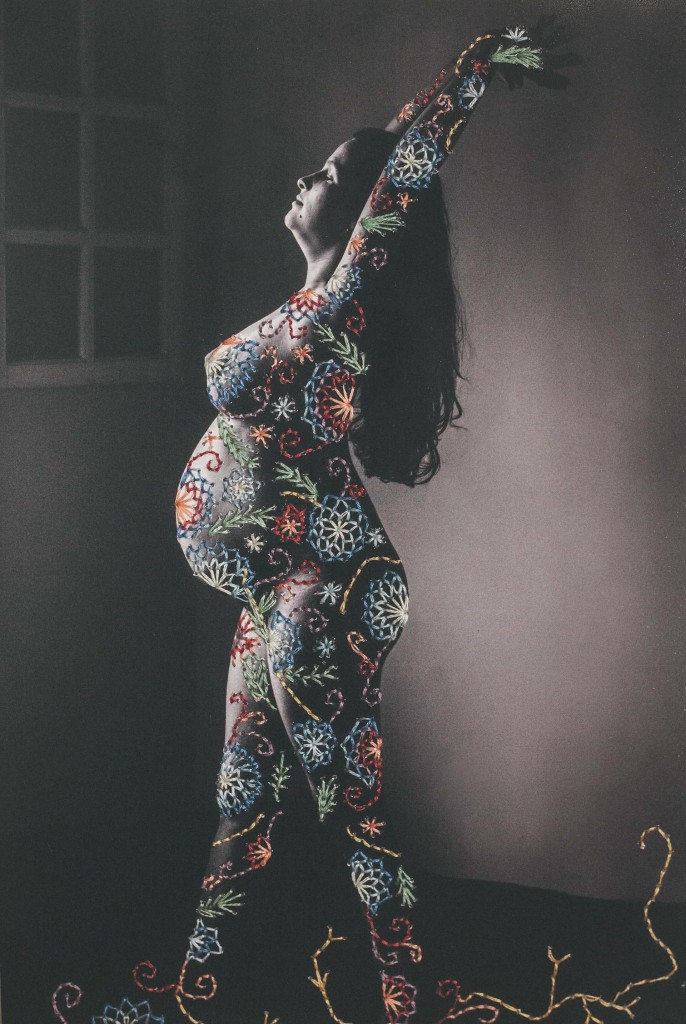
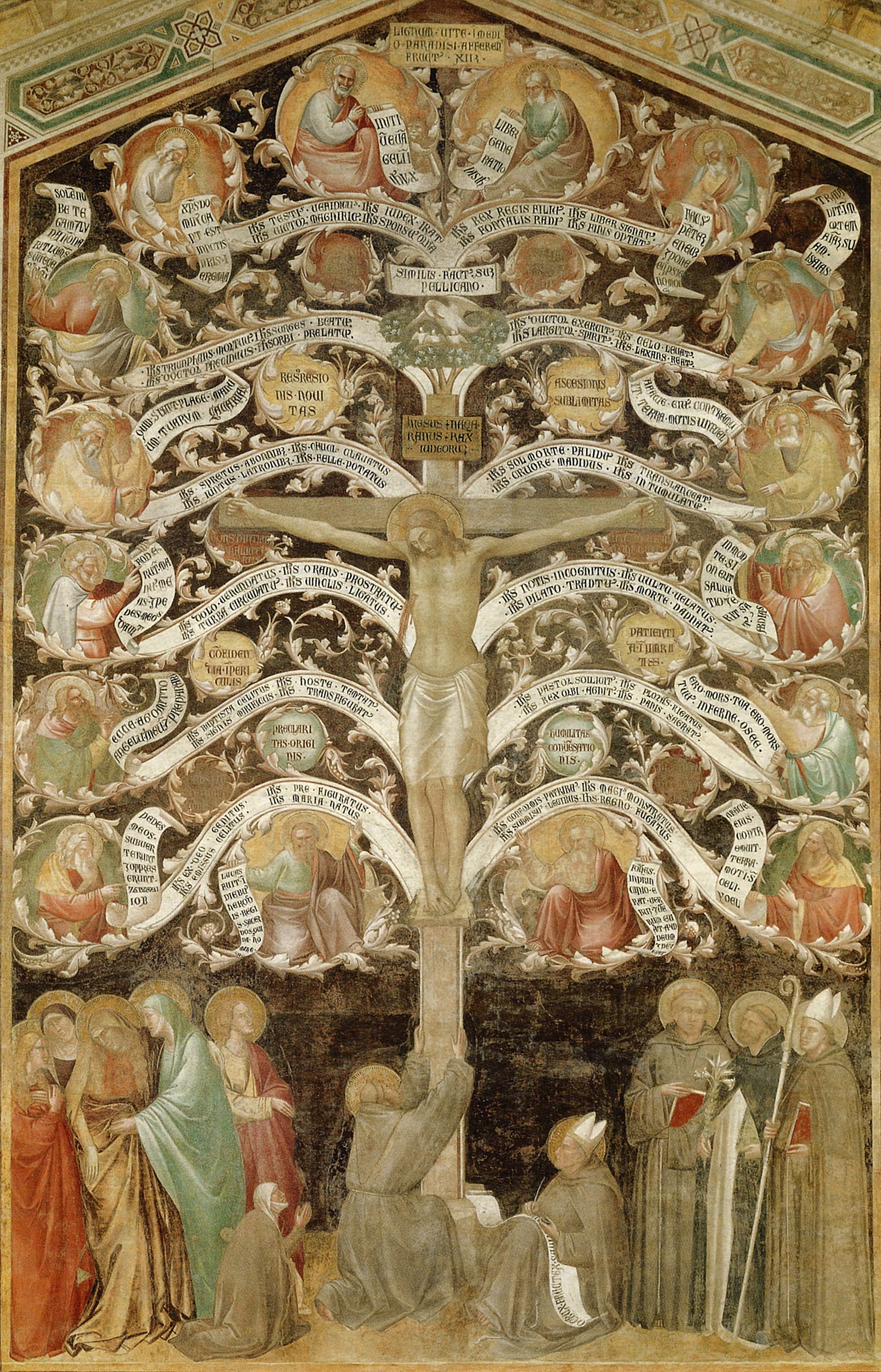
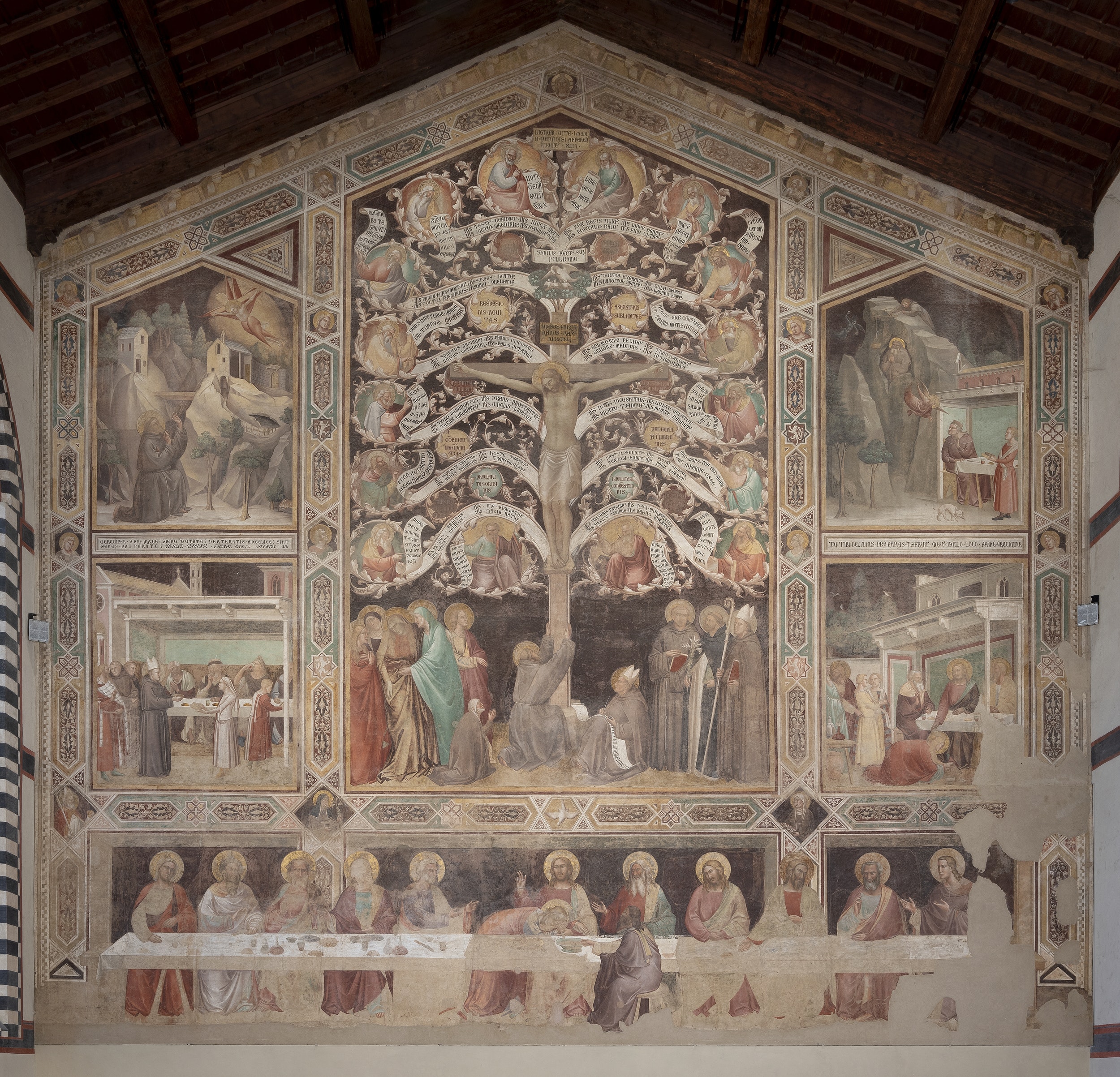
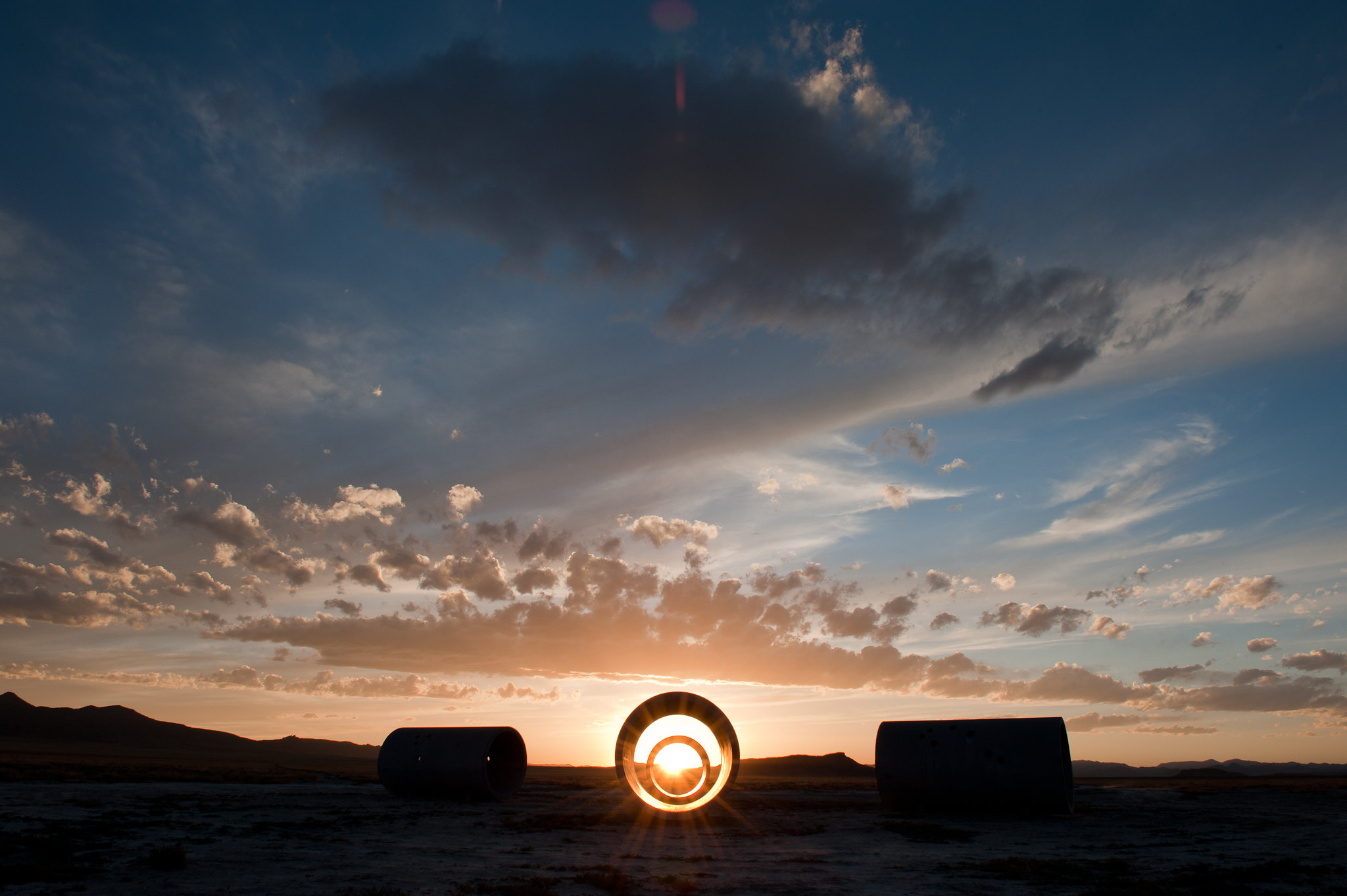
Art credits: In the poster above, clockwise from top left, are Sun Tunnels by Nancy Holt, a detail of Night Travelers by Delita Martin, Christmas Tree by Shirazeh Houshiary, and a fresco from the Monastery of Saint John the Theologian in Chora on the island of Patmos.

Advent roundup: Tsh Oxenreider, Lanecia Rouse Tinsley, and more

Advent is just around the corner, and here is some topical content for the season. (Much more to come!)

PODCAST EPISODES:

>> “On Journeying: Travel, Traditions, and Turning to the Psalms with Tsh Oxenreider,” Sacred Ordinary Days, December 22, 2020: Host Jenn Giles Kemper interviews author, travel guide, and fellow podcaster Tsh Oxenreider about her book Shadow and Light: A Journey into Advent. The liturgical calendar is a gift, not a burden, Oxenreider says; it provides scaffolding for our year and connects Christians to one another across time and place, in addition, of course, to promoting encounters with God and God’s story. Oxenreider provides book and music recommendations for the Advent season and shares one of her family’s favorite simple Advent traditions.

>> “The Annunciation and Art with Victoria Emily Jones,” Old Books with Grace, November 17, 2021: Old Books with Grace, hosted by Dr. Grace Hamman [previously], a specialist in medieval literature, is one of my favorite podcasts, so I was beyond excited to be invited on as a guest! In this conversation, Grace and I discuss four paintings and three poems that respond to the momentous event known as the Annunciation, where Gabriel tells Mary that she has been chosen to bear God’s Son. While the feast of the Annunciation is celebrated on March 25, we thought it nonetheless appropriate at this time just before Advent to consider how Mary welcomes Jesus, since we are preparing to welcome him ourselves. Available on YouTube and on all podcast streaming platforms.

Grace just wrapped up a fascinating series on Sir Gawain and the Green Knight, and for the four weeks of Advent she will be taking a closer look at four familiar Christmas carols from different eras, examining their history, theology, and language and recommending an Advent practice inspired by each carol. Follow Old Books with Grace on Instagram or Twitter.

+++

SONG: “O Come, O Come, Emmanuel”: This is the quintessential Advent hymn. Here are two renditions from last December by two of my favorite musical artists/groups. Wilder Adkins’s recording is on the Advent Sessions EP from Redeemer Community Church, and the Good Shepherd Collective recording, featuring Liz Vice and Charles Jones, is available as a single.

+++

NEW ALBUM: Advent Songs by the Porter’s Gate: The Porter’s Gate [previously] released a new album on November 12, a collection of ten original songs for Advent. The contributing songwriters are Nicholas Chambers, Paul Zach, Kate Bluett, Isaac Wardell, Liz Vice, Latifah Alattas (Page CXVI), and Tenielle Neda. Chambers, Zach, Vice, Alattas, and Neda are also featured as vocalists, as are Molly Parden, Jonathan Ogden, and Lauren Plank Goans. My favorites: “The Reign of Mercy,” “Mary’s Lullaby (Black Haired Boy),” “Simeon’s Song.”

+++

PAINTING + SHORT FILM: In 2017 Holy Family HTX, a church in Houston, commissioned artist-in-residence Lanecia Rouse Tinsley to create nine liturgical paintings, one for each major season of the church year. Called the Parament Collection, these six-by-six-foot pieces rotate throughout the year, signaling the change of season and inviting the congregation into a space of contemplation around seasonal themes.

The first painting in the cycle, Advent, is a minimalist composition predominantly in ultramarine, evoking Yves Klein’s blue monochromes; Tinsley says that, like Klein, she wants to “impregnate” the viewer with blue, which for her signifies hope. Blue (or alternatively, purple) is the primary color of Advent, but pink and white (for Gaudete Sunday and Christmas Eve, respectively) are also associated with it, which Tinsley makes reference to in her painting. At the white bar at the top, you can see a faint mark left by Hurricane Harvey; her studio flooded when the storm hit in August 2017, and this then-blank canvas suffered some water damage, but Tinsley made the conscious decision to use it to further press into the Advent theme of suffering. She lined the canvas in black, inspired by a line from Andy Warhol’s film Sunset: “Black means infinity.” All our longings, Tinsley says, are held within infinity.

The nine-minute film posted above is one of nine in a series by Chap Edmonson, titled Decoded, in which Tinsley discusses her Parament Collection piece by piece. View all nine films here.

+++

I also wanted to remind you about the Art & Theology Advent playlist I compiled on Spotify. Besides the ones mentioned above, here are the songs I’ve added to the mix since last Advent:

  • “Wonder” by MaMuse
  • “Better Days” by Chrisinti
  • “Peace Train” by Cat Stevens
  • “Peace” by Peter Bruun (a setting of a Gerard Manley Hopkins poem)
  • “Magnificat primi toni” by Palestrina
  • “From This Wicked Fall” (Cum erubuerint) and “The Flower Gleams” (Hodie aperuit) by Hildegard of Bingen, arr. Richard Souther
  • “Mary” by Buffy Sainte-Marie
  • “Like Mary” by Jess Ray and Langdon
  • “Restoration Song (Hold On)” by Son of Cloud
  • Nine songs by Tom Wuest
  • “Lighten Our Darkness” by Joel Clarkson
  • “For the Long Night” by Dan + Claudia Zanes
  • “La Luz” by Brother Isaiah
  • “Sunrise Song” and “Clouds of Waiting, Clouds of Returning” by Jacob Goins
  • “Break of Dawn” and “You Always” by Antoine Bradford
  • “Eternal Light” and “Joy Will Come” by Paul Zach

Thanksgiving Playlist

I’ve compiled a playlist of songs of thanks to God for life, beauty, family, salvation, fruitful harvests, and countless other blessings, and for God’s very self. To make a list on this theme is difficult, as every praise song, of which there are millions, is essentially a song of thanksgiving. So many songs and other musical pieces, including those from outside the Judeo-Christian tradition, testify to experiences of goodness. Perhaps I’m being too literal, but I focus (though not exclusively) on songs that explicitly say “Thanks.” I also want to make clear that God deserves thanks not just for what he’s done but for who he is.

To save the playlist to your Spotify account, click the ellipsis and select “Add to Your Library.”

The list is bookended by the seventeenth-century Trinitarian doxology written by Thomas Ken (“Praise God from whom all blessings flow . . .”), which many churches sing weekly to the tune of OLD 100TH. While the first on the list is in English, the last is in Hawaiian.

Several of the songs are settings of the biblical psalms. The Abayudaya community of Jews in eastern Uganda, for example, sings the call-and-response Psalm 136 in Luganda; led by J. J. Keki, the congregation responds after each line with “His steadfast love endures forever!” Banjoist Béla Fleck [previously] and mandolinist Chris Thile use this melody from Abayudaya as the basis of their “Psalm 136” duet, which appears on Fleck’s new album, Bluegrass Heart.

There’s also Psalm 92 (“It is good to give thanks to the Lord . . .”) from Poor Bishop Hooper’s EveryPsalm project, Wendell Kimbrough’s Psalm 107, and a classical guitar rendition of Jewish singer-songwriter Debbie Friedman’s “Hodu” [previously], a setting of Psalm 118:1–4. Rebekah Osborn also sets Psalm 118, in English.

“We Thank You” is by Broken Walls, a musical group comprising followers of the Jesus Way who seek to build bridges between the church and the First Nations people of North America. Founded by Jonathan Maracle, a Mohawk from Tyendinaga Territory in Ontario, Canada, the band uses indigenous instruments and sounds to share the Creator’s love.

Across the Atlantic, the monks of Keur Moussa Abbey [previously] in Senegal sing “Nous Te Louons, Père Invisible” (“We Praise You, Invisible Father”), accompanied by balafon (a gourd-resonated xylophone). The French lyrics translate as follows:

Lord of immortality
We praise you, invisible Father
You are the source of life
We praise you, invisible Father
The source of all light
We praise you, invisible Father
You are the source of grace
We praise you, invisible Father
Friend of mankind, friend of the poor, you draw everything unto yourself through the coming of your beloved Son!
We praise you, invisible Father

I’ve also included a dedicatory instrumental piece played on kora and oboe for the inauguration and consecration of the abbey.

Praise be to God, too, for natural wonders large and small. You’ll want to be sure to check out Alanna Boudreau’s setting of “Pied Beauty” by the poet-priest Gerard Manley Hopkins. (For you Hopkins lovers, Boudreau also set “My own heart let me more have pity on” and “God’s Grandeur,” the latter appearing on Spotify as “Wb / Bw.”) There are also classics like “This Is My Father’s World” and, retuned and retitled by Ben Thomas, “I Sing the Mighty Power of God” [previously].

“For the Beauty of the Earth,” which opens with gratitude for creation and then expands into other areas of thanks, is one of my all-time favorite hymns. Andrew Laparra’s straightforward rendition is so lovely, even though it does omit two of the verses—on the wonders of the human body (“. . . the mystic harmony linking sense and sound to sight”) and “the joy of human love . . .”

For the provision of food, there’s a delightful little song that Kim Gannon and Walter Kent wrote for the 1948 Disney short The Legend of Johnny Appleseed, the American nurseryman, conservationist, and folk hero. The song became popular in primary schools and children’s camps and at grace before meals, and in 2003 Mary Thienes Schünemann included an adaptation in the songbook and accompanying album This Is the Way We Wash-a-Day, which is what I’ve put on the list.

For another prayer appropriate for mealtime, see “Multilingual Grace” by Jaewoo Kim, Grace Funderburgh, Abraham Deng, and Josh Davis of Proskuneo Ministries [previously]. “Here in our community, we eat together a lot . . . and that means Koreans, Latinos, Americans, Burmese, and Sudanese and more coming together around the table,” Davis writes on the Proskuneo blog. “We wanted something we could sing to thank God together. And so we wrote this.” The chorus says “Thank you” in Arabic, Korean, Spanish, and Swahili:

Shukran
Gam-sa-hae
Gracias
Asante

(See the full lyrics.)

Relishing simply being alive is a common theme that comes across especially in songs like “So Glad I’m Here” by Bessie Jones, covered by Dan Zanes [previously] and Elizabeth Mitchell [previously], and “It’s Such a Good Feeling” by the Mister Rogers(!), charmingly jazzified by Holly Yarbrough.

Michael and Lisa Gungor sing of the gift of their second daughter, Lucette, in their song “Light.” Lucie, as they call her, whose name means “light,” was born in 2014 with Down syndrome and heart complications. Seven years and multiple heart surgeries later, she continues to fill the Gungors’ lives, and others’, with brightness.

Gratitude in all circumstances is another theme that comes up, in such songs as “Hallelujah” by the Sons of Rainer, “Sing” by Jon Batiste, and the traditional hymn “How Can I Keep from Singing.” And India Arie’s gorgeous “Give Thanks,” which expresses an attitude of welcome and embrace for all that life brings. In the refrain “Give thanks for all that is,” “Give thanks” is substituted in repeats with the words “Selah” (an untranslatable Hebrew word from the Psalms that probably indicates a reflective pause in the music), “Hallelujah” (Hebrew for “Praise the Lord”), “Namaste” (Sanskrit for “I bow to you”), and “Ashé” (a multivalent concept in Yoruba religion that carries the meaning, in one sense, of “So be it,” similar to “Amen” in Christianity).

Recited daily upon waking up, “Modeh Ani” by Nefesh Mountain is a Jewish prayer of thanks that translates to “I give thanks before you, King living and eternal, for You have returned within me my soul with compassion; abundant is Your faithfulness!” It’s based on the belief that every morning, God renews every person as a new creation.

There are also gospel songs aplenty by artists including Shirley Ann Lee, Mahalia Jackson, Beyoncé [previously], Regina Belle, Roberta Martin, Janice Gaines (covering Andraé Crouch), and others from the Black church tradition.

Bob Marley’s “Thank You, Lord” from 1967 isn’t on Spotify, but an admirable cover by his fellow Jamaican reggae artist Max Romeo is. Sam Cooke’s recording of “I Thank God” by Jack Hoffman, Elliott Lewis, and Bebe Blake is also missing from the streaming service, but I love what the Avett Brothers do with the song, so I’ve featured them instead.

Our gratitude for God’s love and hospitality should overflow into our relationships with other people, animals, and the earth, and our trust in God’s goodness means we should receive with openness what comes from his hand, even if it’s not what we asked for. In the playlist’s penultimate song, “The Welcome,” David Benjamin Blower sings, “Just as Love has welcomed you, my friends / Welcome one another and all things.”

+++

This blog site and the thematic playlists that accompany it take an enormous amount of time to put together. If you have been blessed by either this year, please consider making a financial contribution to support me so that I can continue doing this work. And thank you, all, for engaging with and sharing the content!