
Lent, Day 4

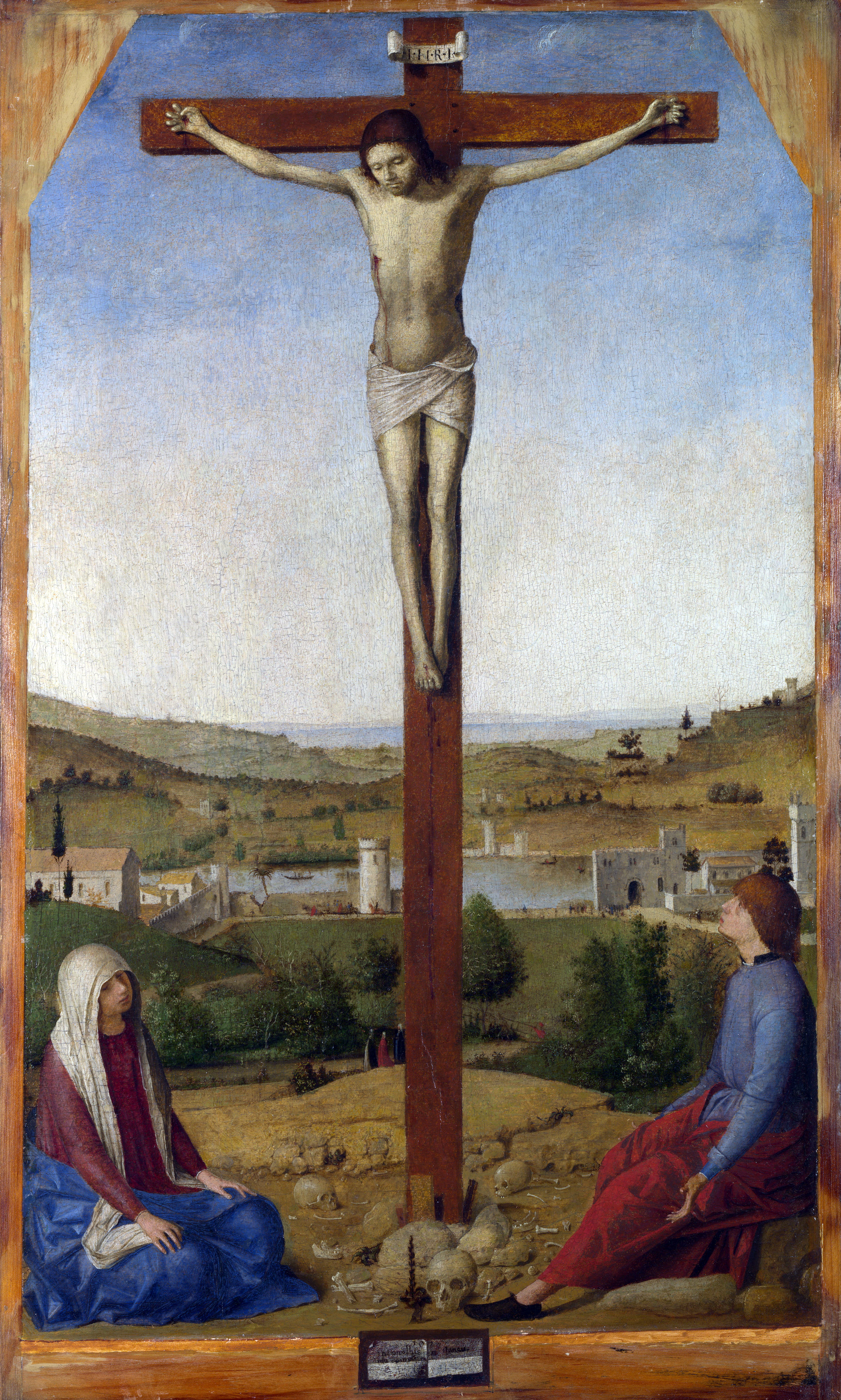
LOOK: Antonello da Messina (Italian, ca. 1430–1479), Christ Crucified, 1475. Oil on wood, 41.9 × 25.4 cm. National Gallery, London.
Messina, Antonello da_Christ Crucified

I’m struck by the strong verticality of this painting, which, by elevating Jesus so far above the ground, gives it a certain solitariness. Antonello composed the picture with a low viewpoint so that we, like John the apostle on the right, also have to look up to view the crucified Christ.

LISTEN: “Staff” by Josh Compton, on Awake, Awake by A Ship at Sea (2012)

As they looked upon the staff
That Moses wrapped the snake around
So my eyes behold the cross
That my Lord is placed upon

Bring me healing, bring me sight
Bring me feeling, bring me light
Bring anointing to my head
Make alive what once was dead

This song is inspired by Jesus’s words in John 3:14–15: “As Moses lifted up the serpent in the wilderness, so must the Son of Man be lifted up, that whoever believes in him may have eternal life.” Jesus is, of course, referring not only forward to his crucifixion but also back to the episode in Numbers 21:4–9, in which the people of Israel were healed from fatal snake bites by casting their gaze on a bronze serpent raised up on a pole.

Josh Compton is a singer-songwriter from Canton, Ohio, whose collaborative music projects have been recorded under the names The Brothers of Abriem Harp (I reviewed their Last Days album here) and A Ship at Sea [previously]. The latter’s Awake, Awake is one of my favorite albums.

“Staff” by A Ship at Sea is featured on the Art & Theology Lent Playlist on Spotify.
You Are There (Artful Devotion)

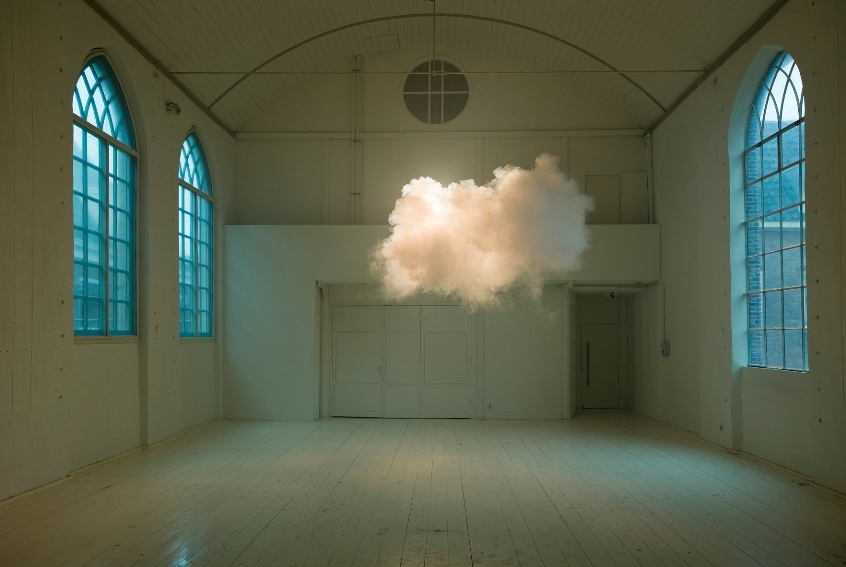
Nimbus II by Berndnaut Smilde
Berndnaut Smilde (Dutch, 1978–), Nimbus II, 2012. Lambda print, 125 × 186 cm. Saatchi Gallery, London.

Then Moses said to Aaron, “Say to the whole congregation of the Israelites, ‘Draw near to the LORD, for he has heard your complaining.’”

And as Aaron spoke to the whole congregation of the Israelites, they looked toward the wilderness, and the glory of the LORD appeared in the cloud.

—Exodus 16:9–10

+++

SONG: “I Cry Out” by a ship at Sea, on Awake, Awake (2012)

+++

This is one of several passages in the Old Testament in which God appears to Israel in a cloud during their desert journey to the Promised Land, signifying both his aboveness and beyondness and his withness. Here he shows up in response to the Israelites’ groans of hunger, showering down quail and manna (see earlier Artful Devotion, “Open Your Mouth”).

Dovetailing with this divine manifestation described in Exodus is Berndnaut Smilde’s photograph Nimbus II, which shows a cloud hovering inside the sixteenth-century Lady Chapel (Mariakapel) in Hoorn, the Netherlands. Smilde created the cloud by misting the area with water vapor and pumping smoke from a machine; the water particles then stuck to the smoke to form a fleeting installation, lasting only about thirty seconds. The photograph plays with the idea of presence and absence: the Lady Chapel has been vacant since 1968, and yet filling the emptiness is this sign of God’s glorious presence. Like us sometimes, the ancient Israelites had trouble seeing God in their wilderness wanderings. But he was overshadowing them in his protective care the whole time. When they truly looked (per Aaron’s instruction), they saw. When they cried out, God answered.

Nimbus II is one of many photographs from Smilde’s Nimbus series, shot in a variety of locations, from museums and factories to castles and dungeons. The title is a play on words, as a nimbus is both a type of cloud and another word for halo, the divine radiance that encircles the head of Christ and the saints in religious art. For more on this series, see “An artist creates miniature clouds in spaces around the world” by Jim Martin or the book Builded Remnants. You can also take a glimpse behind the scenes in this short video, and this one.


This post belongs to the weekly series Artful Devotion. If you can’t view the music player in your email or RSS reader, try opening the post in your browser.

To view all the Revised Common Lectionary scripture readings for Proper 13, cycle B, click here.