Roundup: New film book, “Sawubona,” conceptual art, and more

NEW BOOK: A Whole Life in Twelve Movies: A Cinematic Journey to a Deeper Spirituality by Kathleen Norris and Gareth Higgins: Published last October by Brazos Press, this excellent book comprises twelve chapters reflecting on fourteen movies (two chapters feature a complementary pair), drawing out story, insights, and meaning. It’s authored by the award-winning American spiritual memoirist and poet Kathleen Norris (Acedia and Me; The Cloister Walk; Dakota: A Spiritual Geography) and the Irish writer, peace activist, retreat leader, and festival organizer Gareth Higgins. Each chapter contains two mini-essays—one by each author, the second responding to the first, sometimes disagreeing on points—and a section of “Questions and Conversation,” which make the book especially fitting for a film/reading club. There’s also a “For Further Viewing” section in the back, with many more recommendations, several of which are new to me and which I’ve been watching (e.g., Le Havre, Love Is Strange, Patti Cake$) and really enjoying!
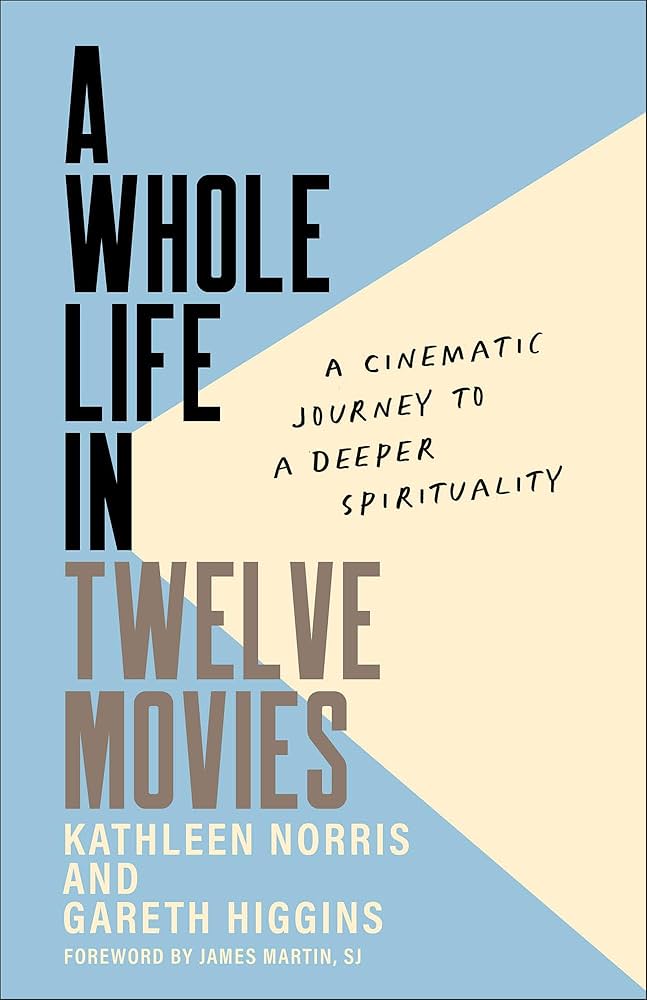
A Whole Life in Twelve Movies

I so appreciate the variety of films featured in the book—which come from different eras, cultures, and genres and address different themes—and I like that the writers don’t overdetermine the films’ meanings to try to make them fit a Christian agenda, which is sometimes a trap that people writing on Christianity and film fall into (influenced partly, I’m sure, by publishers’ demands, to make the marketing easier). Norris and Higgins are simply two Christians writing about their shared love of cinema, and I had so much fun listening in on their conversations.

You may also want to check out the Substack that Norris and Higgins write together, Soul Telegram: Movies & Meaning, whose purpose is “to help people find the most life-giving movies, and to write about them as a way of reflecting on the meaning of our lives.” See also the recent Habit podcast episode “Kathleen Norris watches movies,” where Norris discusses Paterson, Babette’s Feast, After Life, and more.

+++

SONGS:

>> “Oh Mercy (Long Way to Go)” by Glen Spencer and David Gungor, 2024: Debuted by the Good Shepherd Collective on December 8, 2024. Watch on Instagram below, or this cued-up YouTube video.

>> “Sawubona” (I See You) by Jane Ramseyer Miller, 2012: The most common greeting used by Zulu people is “Sawubona,” literally meaning “I see you,” with the implication of “My whole attention is with you. I value you.” The word conveys a deep witnessing and presence, acknowledgment and connection. A standard reply is “Ngikhona,” “I am here.” This humanity-honoring exchange that occurs regularly in South Africa was set to music by the American choral director Jane Ramseyer Miller and is performed in the video below by the Justice Choir, a grassroots movement that encourages more community singing for social and environmental justice.

The song is authorized for free noncommercial use, and sheet music is available from the Justice Choir Songbook.

+++

PODCAST EPISODE: “Taylor Worley: Sacramental Eyes and Conceptual Art,” The Artistic Vision, January 31, 2025: Dr. Taylor Worley is a visiting associate professor of art history at Wheaton College, the author of Memento Mori in Contemporary Art: Theologies of Lament and Hope (Routledge, 2019), and a recipient of a grant from the Templeton Religion Trust, which he has used to research the intersection of conceptual art and Christian contemplation. He’s also become a friend of mine, as we often run into each other at conferences!

In this recent podcast interview, he talks about his most amazing teaching experience to date; helping Protestants like himself recover a sacramental ontology of the world; asking questions verbally versus aesthetically; death and mortality; what conceptual art is, and why it’s “real art”; what the esteemed Roger Scruton got wrong in his documentary Why Beauty Matters; the “Art of Attention” study he conducted with a psychophysiology colleague in the modern wing of the Art Institute of Chicago (which I participated in! here’s one of the three pieces I was tasked with looking at for five straight minutes while hooked up to a heart-rate monitor); and why artists inspire him.

+++

LECTURE: “Spirituality and Art in the Twenty-First Century” by Aaron Rosen: For its fourth annual keynote on October 23, 2024, the MSU (Michigan State University) Foglio Speaker Series on Spirituality hosted Dr. Aaron Rosen, a writer, curator, and educator on religion and the arts. He is a practicing agnostic Jew married to an Episcopal priest and the author of Art and Religion in the 21st Century (Thames & Hudson, 2015). His presentation is so well-structured and spotlights a vast range of artworks! It starts at 5:05 of the video below; the Q&A is not included.
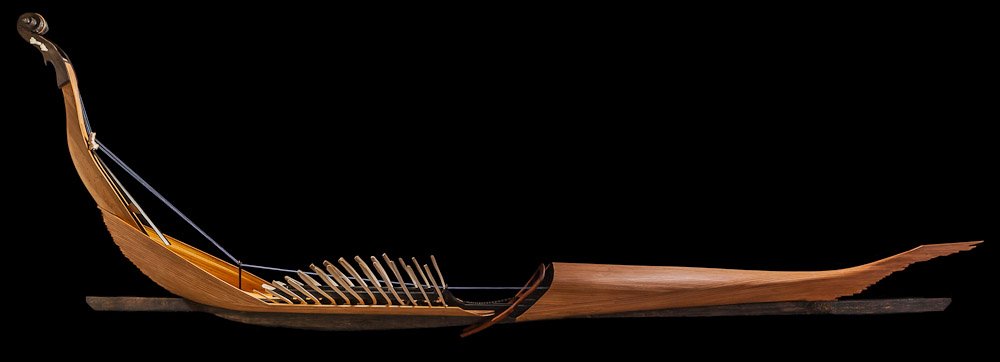
Rayner, Stephanie_Boat of Eternal Return
Stephanie Rayner, Boat of Eternal Return, 1998–2012. Pine, tulip poplar, mahogany, ebony, moose ribs, guanaco coccyx, mare pelvis, ruler, dice, DNA sequencing gels from the Human Genome Project, score of Mozart’s Requiem, cello components, hand-worked glass, spirit level, 9 × 30 × 2 1/4 ft.

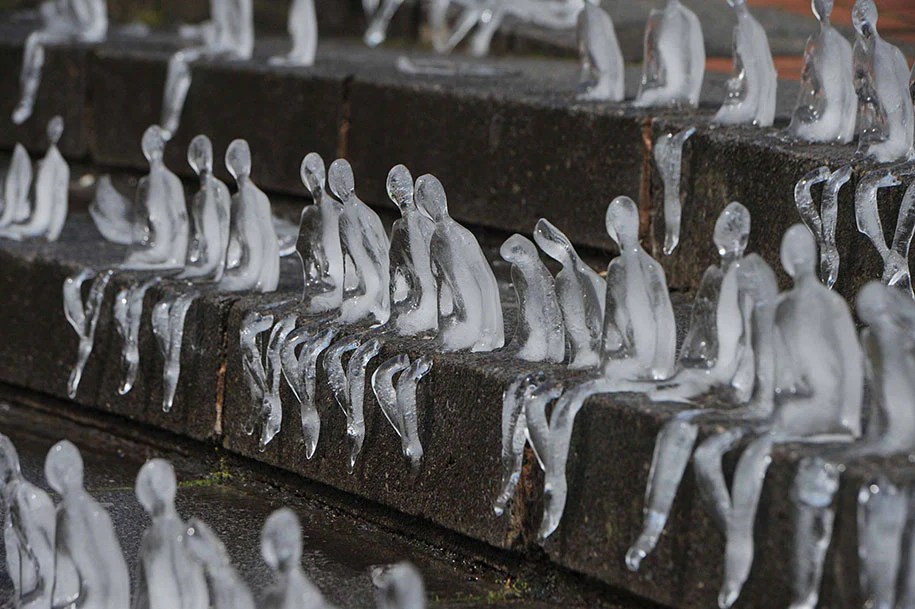
Azevedo, Nele_Minimum Monument
Néle Azevedo (Brazilian, 1950–), Minimum Monument (detail), Chamberlain Square, Birmingham, England, 2014. Sculpted ice.

In the talk, Rosen explores how art can facilitate or exemplify four spiritual states:

  1. Attention
    – Simplicity
    – Repetition
    – Memory
  2. Wonder
    – The Uncanny
    – Technological Sublime
    – Sublime Silence
    – Darkness
    – Ecological Lament
    – Ecological Hope
  3. Care
    – Resilience
    – Replenishment
    – Maintenance
    – Recognition
  4. Belonging
    – Homecoming
    – Pilgrimage
    – Sanctuary
    – Sharing Sacred Space

+++

VIDEO INTERVIEW: “VCS Creative Conversations: Ben Quash with Steve Reich”: “This film continues our series of ‘Creative Conversations’. In these conversations, living artists working in a variety of different artistic media discuss how the Bible and its legacies of visual and theological interpretation operate as a vital resource for their own creativity. In this film, VCS [Visual Commentary on Scripture] Director Ben Quash interviews the legendary American contemporary composer Steve Reich. They discuss the profound role of the Bible in transforming both the subject matter and the style of Reich’s music, reflecting especially on his settings of the Abraham story, the episode of Jacob’s ladder, and texts from the Psalms.”
Roundup: Artists convene at Vatican, “crucified with Christ” artworks, and more

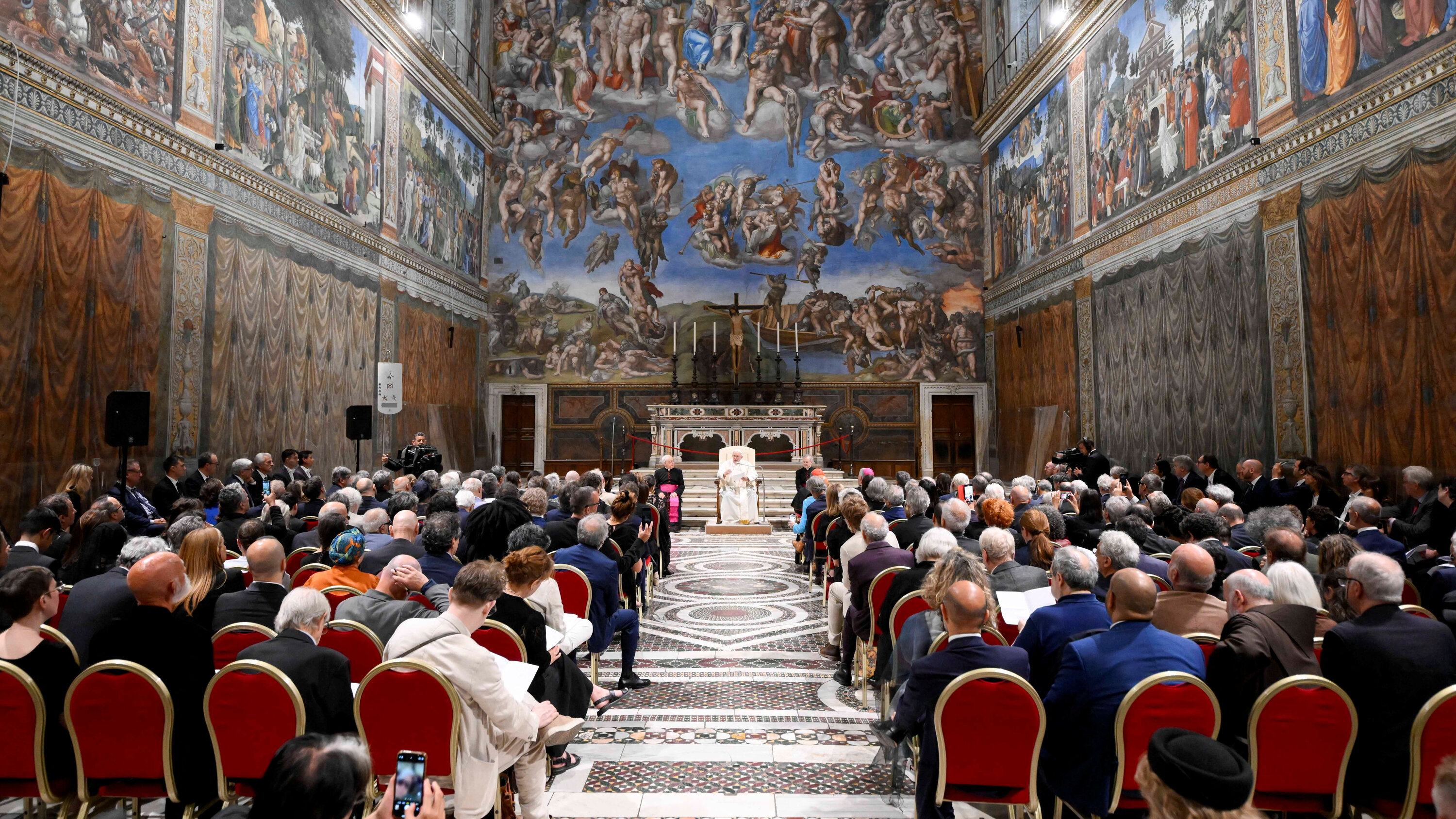
SPEECH: “Address of His Holiness Pope Francis to Artists for the 50th Anniversary of the Inauguration of the Vatican Museums’ Collection of Modern Art”: On June 23, at the invitation of Pope Francis, some two hundred select visual artists, filmmakers, composers, poets, and other creatives gathered at the Sistine Chapel to commemorate the fiftieth anniversary of the Vatican Museums’ Collection of Modern and Contemporary Art, inaugurated in 1973 by Pope John Paul VI. “One of the things that draws art closer to faith is the fact that both tend to be troubling,” Pope Francis said last Friday. “Neither art nor faith can leave things simply as they are: they change, transform, move and convert them.” He applauded how “artists take seriously the richness of human existence, of our lives and the life of the world, including its contradictions and its tragic aspects. . . . Artists remind us that the dimension in which we move, even unconsciously, is always that of the Spirit. Your art . . . propel[s] us forward.” For reporting on this event by the New York Times, see here.

Pope Francis meeting artists
Pope Francis addresses a group of artists, June 23, 2023. Photo: Vatican Media, via Reuters.

This papal address came less than a month after the pope addressed another gathering of artists at the Vatican for the conference The Global Aesthetics of the Catholic Imagination, sponsored by La Civiltà Cattolica with Georgetown University (read that address here).

+++

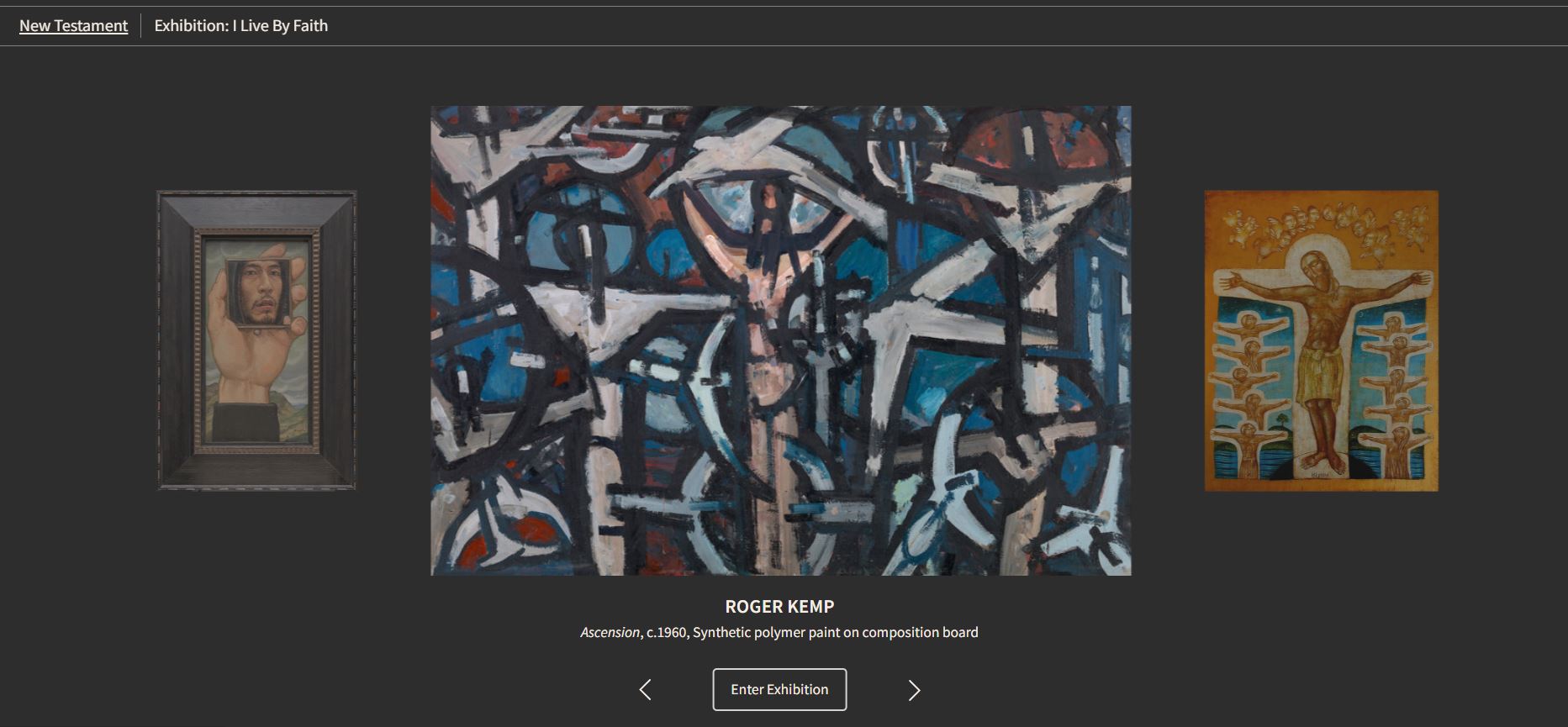
VISUAL COMMENTARY ON SCRIPTURE: “I Live by Faith (Galatians 2:15–21)” by Victoria Emily Jones: My latest set of commentaries for the VCS went live this month! It centers on one of Paul’s famous sayings: “I have been crucified with Christ, and it is no longer I who live, but it is Christ who lives in me.” I was bummed that one of the three commentaries I originally wrote had to be scrapped because the image permission was ultimately denied; I thus had to reconfigure and replace, and I ended up with two artworks in the three-piece exhibition that aren’t as diverse from each other as I had hoped. But still, each artwork brings a unique and compelling lens through which to examine this passage. (Note: If you’re viewing the exhibition on your phone, after you “Enter Exhibition,” you’ll need to expand the “Exhibition Menu” to access the “Show Commentary” button.)

Crucified with Christ (VCS)

The VCS was covered by The Art Newspaper in a recent article by Anna Somers Cocks. “Theology is making a comeback as an important tool for interpreting art,” reads the URL.

+++

VIDEO: “Abraham: An Interfaith Discussion at the Bode-Museum, Berlin”: Besides publishing written commentaries on works of art in dialogue with Bible passages, the Visual Commentary on Scripture also produces videos. This one brings together an Anglican Christian priest (who directs the VCS), a Jewish rabbi, and a Muslim theologian around a fifth-century ivory pyxis depicting Abraham, a figure held in common by all three faith traditions.

+++

POEM: “Gate A-4” by Naomi Shihab Nye: I’ve always loved this heartwarming poem about an unexpected moment of communion shared with strangers at an airport, made possible through kindness and the letting down of one’s guard. Listen to commentary by Joanne Diaz and Abram Van Engen on the Poetry for All podcast, episode 19; they answer the question “Why is this a poem?” Here’s a video of Nye reading it herself:

+++

NEW ALBUMS:

>> April 21: Worship for Workers by the Porter’s Gate: “In 2022 a group of songwriters, pastors, and professionals gathered in Nashville, Tennessee to write a series of worship songs for workers. Over three days they discussed the spiritual, emotional, and material struggles facing workers around the world today. Soon enough, they began to compose a series of songs specifically designed to help Christians carry their daily work before the Lord.” Here’s one of the thirteen songs on the album, “You Hold It All”:

The Worship for Workers album is part of a larger project, sponsored by the Brehm Center and a number of other institutions, to provide music, prayers, art, liturgies, and training to the church around the topic of work. It grew out of the book Work and Worship: Reconnecting Our Labor and Liturgy by Matthew Kaemingk and Cory Willson.

>> May 5: Glory Hour by Victory: Victory Boyd [previously] is a Grammy-winning soul and gospel artist who got her start singing with her siblings in the group Infinity Song but whose career really kicked into high gear when she worked as a songwriter for Kanye West’s Jesus Is King (2019). Glory Hour is her second full-length album as a solo artist; its title refers to the time of the morning when the sun rises. Most of the tracks are original songs or spoken word, but there are also three classic hymns/gospel songs: “His Eye Is on the Sparrow,” “Great Is Thy Faithfulness,” and “I Know It Was the Blood.” Here’s the music video for “Just like in Heaven,” based on the Lord’s Prayer:

>> May 19: Seven Psalms by Paul Simon: Paul Simon released this original seven-movement composition about doubt and belief as a single thirty-three-minute track, as it is meant to be listened to in one sitting. I’m a Simon fan; one of my early blog posts is a review of his and Garfunkel’s debut album, Wednesday Morning, 3 A.M. But if I’m honest, I was underwhelmed by this much-anticipated release. I’m in the minority there, so I think I’ll need to give it another listen. What do you think of it? Here’s the trailer:

>> June 2: Byrd: Mass for Five Voices by the Gesualdo Six: One of my favorite vocal ensembles has just come out with an album of songs by William Byrd—his setting of the Mass along with a handful of motets. A Catholic composer in Protestant England in the late Renaissance, Byrd wove together musical “notes as a garland to adorn certain holy and delightful phrases of the Christian rite,” as he wrote in the preface to his second book of Gradualia (1607). Here’s the Gesualdo Six’s performance of his “Afflicti pro peccatis nostris,” a Latin prayer, a desperate plea for sanctification, that translates to “Afflicted by our sins, each day with tears we look forward to our end: the sorrow in our hearts rises to thee, O Lord, that you may deliver us from those evils that originate within us”:

Given (Artful Devotion)

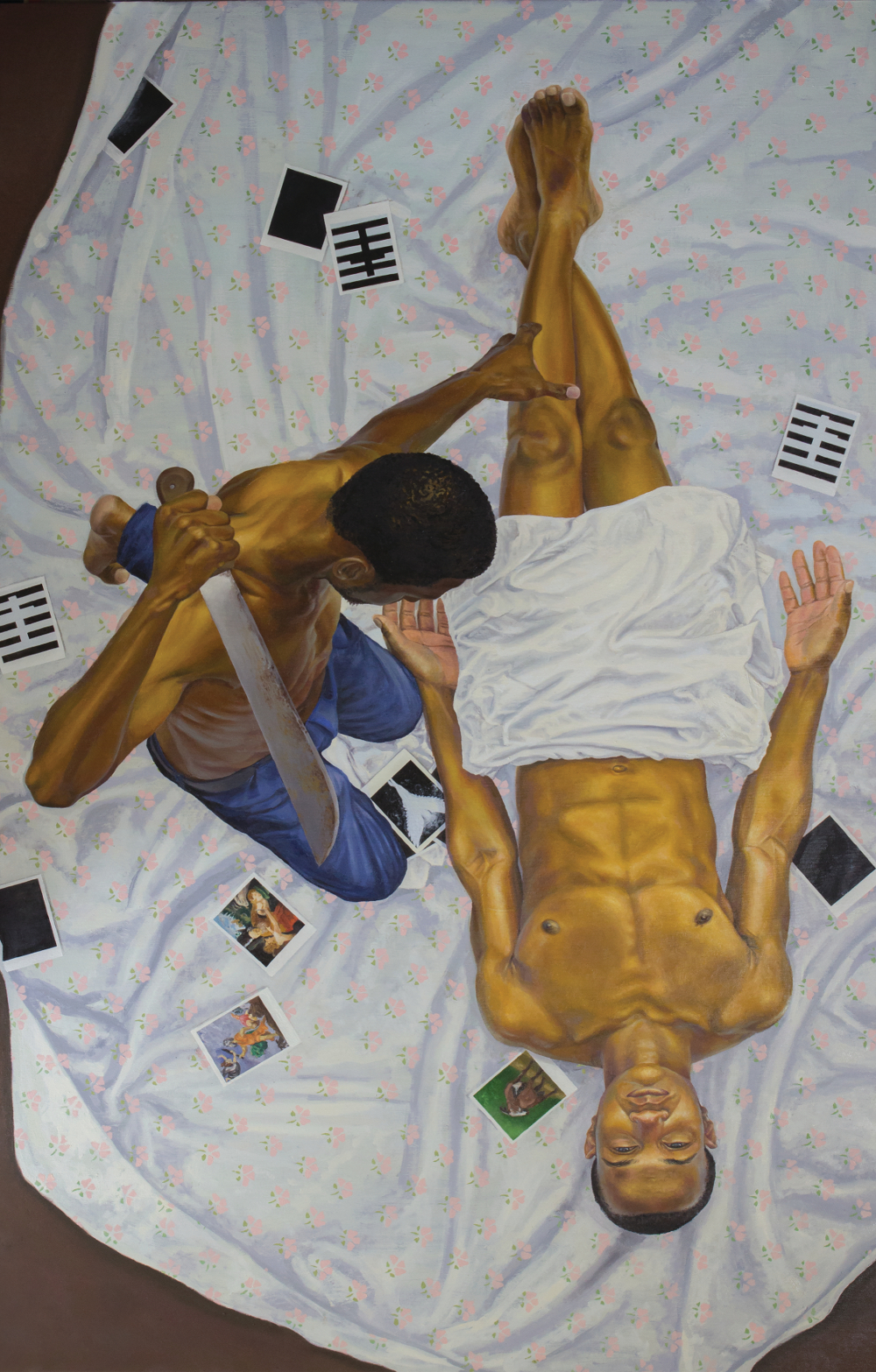
Bailey, Greg_The Sacrifice of Isaac
Greg Bailey (Jamaican, 1986–), The Sacrifice of Isaac, 2017. Oil on canvas, 90 × 57 in.

After these things God tested Abraham and said to him, “Abraham!” And he said, “Here I am.” He said, “Take your son, your only son Isaac, whom you love, and go to the land of Moriah, and offer him there as a burnt offering on one of the mountains of which I shall tell you.” So Abraham rose early in the morning, saddled his donkey, and took two of his young men with him, and his son Isaac. And he cut the wood for the burnt offering and arose and went to the place of which God had told him. On the third day Abraham lifted up his eyes and saw the place from afar. Then Abraham said to his young men, “Stay here with the donkey; I and the boy will go over there and worship and come again to you.” And Abraham took the wood of the burnt offering and laid it on Isaac his son. And he took in his hand the fire and the knife. So they went both of them together. And Isaac said to his father Abraham, “My father!” And he said, “Here I am, my son.” He said, “Behold, the fire and the wood, but where is the lamb for a burnt offering?” Abraham said, “God will provide for himself the lamb for a burnt offering, my son.” So they went both of them together.

When they came to the place of which God had told him, Abraham built the altar there and laid the wood in order and bound Isaac his son and laid him on the altar, on top of the wood. Then Abraham reached out his hand and took the knife to slaughter his son. But the angel of the LORD called to him from heaven and said, “Abraham, Abraham!” And he said, “Here I am.” He said, “Do not lay your hand on the boy or do anything to him, for now I know that you fear God, seeing you have not withheld your son, your only son, from me.” And Abraham lifted up his eyes and looked, and behold, behind him was a ram, caught in a thicket by his horns. And Abraham went and took the ram and offered it up as a burnt offering instead of his son. So Abraham called the name of that place, “The LORD will provide”; as it is said to this day, “On the mount of the LORD it shall be provided.”

—Genesis 22:1–14

+++

SONG: “He Is Given” by Isaac Wardell, 2010 | Sung by DM Stith and Chelsey Scott on He Will Not Cry Out: Anthology of Hymns and Spiritual Songs, vol. 2 by Bifrost Arts, 2013

+++

Sunday’s lectionary reading from Genesis is a difficult one—about Abraham’s near-sacrifice of his son Isaac. Christians have traditionally understood it as a prefiguration of the sacrifice of Jesus, the beloved and faithful Son who, like Isaac, carried the wood for his own sacrifice to the top of a mountain and laid down on it to die. He is also the lamb who takes our place, saving us from the flames of death.

Jamaican artist Greg Bailey casts two young black men as Abraham and Isaac. Isaac lies down on a floral-printed sheet, his open palms facing upward in surrender, as Abraham, whose face is hidden from our view, raises his machete. Scattered around them are Polaroids that allude to other elements of the story: the “angel of the Lord” who stops the killing, the ram that’s sacrificed instead, and, anticipating the New Testament fulfillment, crosses. Two of the Polaroids are of Baroque paintings of the sacrifice of Isaac by Caravaggio and Titian.

This painting was exhibited at St. Stephen Walbrook in London in July 2017 as part of the Jamaican Spiritual exhibition.


This post belongs to the weekly series Artful Devotion. If you can’t view the music player in your email or RSS reader, try opening the post in your browser.

To view all the Revised Common Lectionary scripture readings for Proper 8, cycle A, click here.

Roundup: A sign of the times; multifaith art exhibit; Hildegard of Bingen musical; and more

After nudges from several readers, I’ve decided to join Instagram! Follow me @art_and_theology. I’m still trying to settle on how I’d like to use the platform, but in the meantime, I’ve been sharing photos I’ve taken on visits to art museums and spaces that house sacred art. (And in case you don’t already know, Art & Theology is also on Facebook and Twitter.)

+++

DANCE: “Sign of the Times,” choreographed by Travis Wall: Premiering August 19, 2019, on Fox’s So You Think You Can Dance (season 16, episode 11), this contemporary dance piece is choreographer Travis Wall’s response to the gun violence epidemic in America. It’s a communal lament through movement, really—an expression of fear, sadness, pain, anger, frustration, and defiance. It is performed by this season’s “top ten”: Benjamin Castro, Gino Cosculluela, Eddie Hoyt, Madison Jordan, Anna Linstruth, Bailey Muñoz, Sophie Pittman, Mariah Russell, Ezra Sosa, and Stephanie Sosa.

+++

FEATURED POET: Marjorie Maddox: The latest installment of Abbey of the Arts’ Featured Poet series is, as usual, wonderful! I’ve read some of Maddox’s poems in magazines and anthologies but haven’t yet gotten my hands on one of her collections. This feature has incentivized me to request a copy of Transplant, Transport, Transubstantiation through my local library.

“The work of poetry,” Maddox writes, is “empathy and epiphany. The process of writing and reading allows us to better understand this world and the next. Poetry connects the local and universal, the mundane and the miraculous. It gives us those ears to hear and eyes to see that we might, then, head back into the turning world sustained, nourished, and willing to learn more. And will this not lead us to the Sacred? Yes, I say. Yes.”

+++

ESSAY: “Acts of Attention: On Poetry and Spirituality” by Robert Cording: I really enjoyed this essay from Image journal about the importance of attending to the world. “Attention is simply a loving look at what is,” writes Cording, a poet and birdwatcher. He discusses seeing not as a physiological act but as perceiving the fullness that exists in each moment. “Seeing is impossible without love or reverence,” he says. Along the way he engages with Marie Howe, Aristotle, Emerson and Thoreau, Tolstoy, Ruskin, Heidegger, Hopkins, Czesław Miłosz, and Marilynne Robinson. He also walks us through three poems: Robert Frost’s “Two Tramps in Mud Time,” Wallace Stevens’s “Man on the Dump,” and Seamus Heaney’s “The Pitchfork.” So much goodness here!

If you enjoyed this essay as much as I did, be sure to also check out “Cloud Shapes and Oak Trees,” also by Cording, from 2017.

+++

EXHIBITION: Abraham: Out of One, Many, curated by Rev. Paul-Gordon Chandler of Caravan: Caravan is an international nonprofit that uses the arts to build sustainable peace around the world. “Our peacebuilding work is based on the belief that the arts can serve as one of the most effective mediums to enhance understanding, bring about respect, enable sharing, and facilitate friendship between diverse peoples, cultures and faiths.”

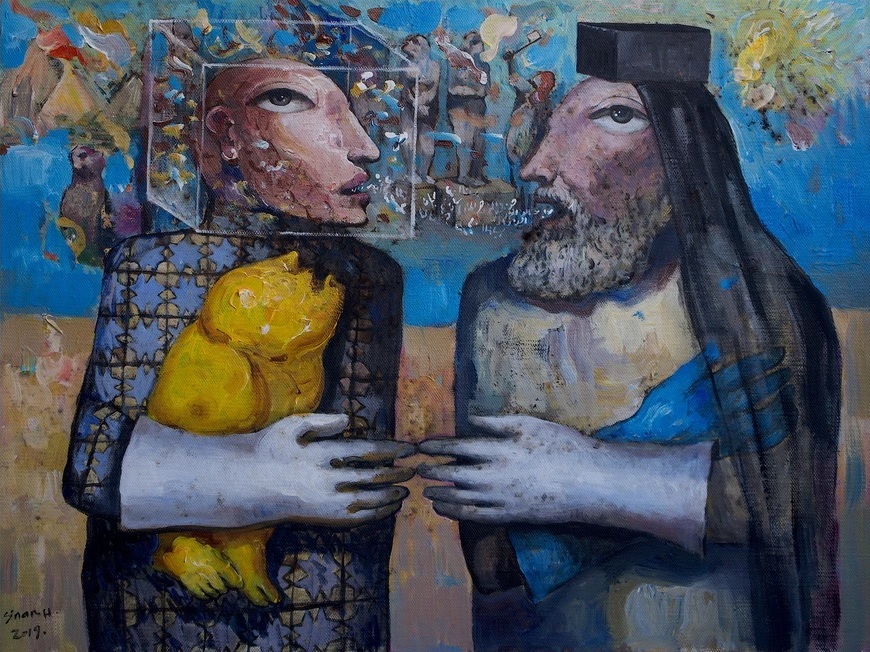
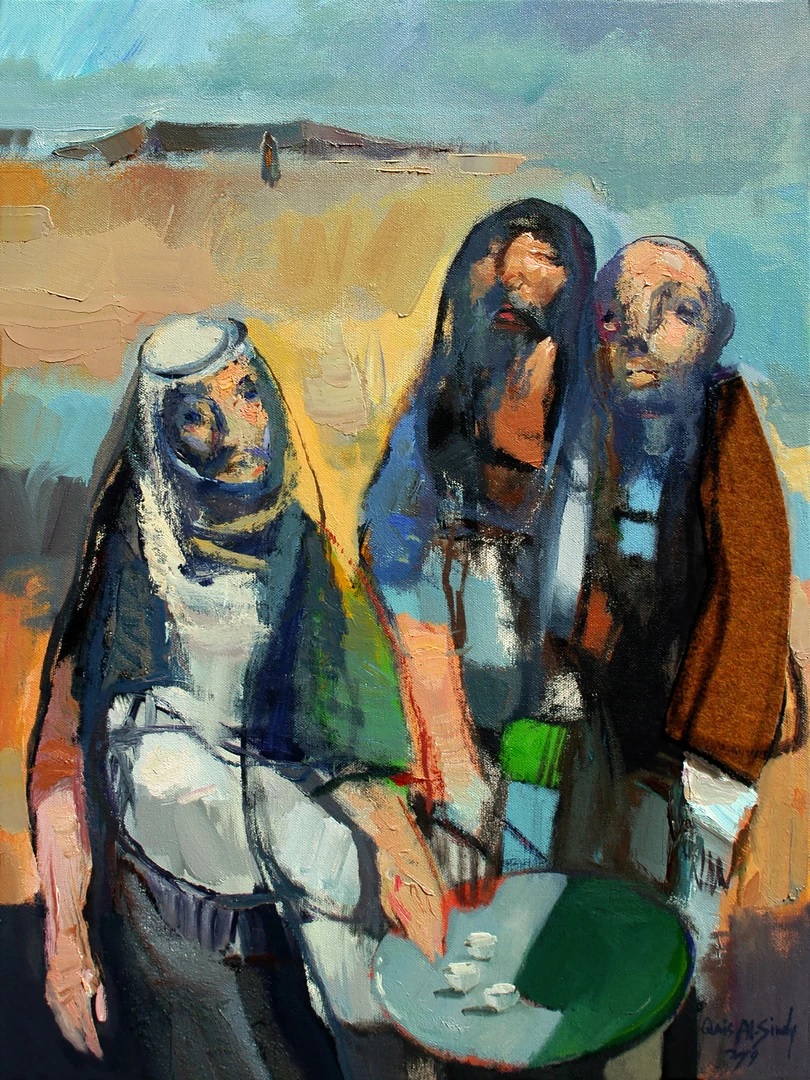
Caravan’s current exhibition is built around Abraham, a key ancestral figure shared by the world’s three major monotheistic religions: Judaism, Christianity, and Islam. Caravan commissioned three Middle Eastern artists, one from each of these faith traditions, to each create five paintings on these subjects: Living as a Pilgrim, Welcoming the Stranger, Sacrificial Love, The Compassionate, and A Friend of God. The exhibition of resulting works opened May 3 at St. Paul’s Within the Walls in Rome. From there it has traveled to Paris and Edinburgh and, starting September 8, will be in the States, touring through 2021 with stops in Boston, Atlanta, Houston, Washington, DC, Chicago, and more (see schedule). There’s an excellent digital catalog available, which contains full-color reproductions and descriptions of all fifteen paintings.

Hussein, Sinan_Living as a Pilgrim
Sinan Hussein (Iraqi, 1977–), Living as a Pilgrim, 2019. Mixed media on canvas, 45 × 60 cm. Part of the “Abraham: Out of One, Many” exhibition organized by Caravan.

Sindy, Qais Al_Welcoming the Stranger
Qais Al Sindy (Iraqi, 1967–), Welcoming the Stranger, 2019. Oil and collage on canvas, 60 × 45 cm. Part of the “Abraham: Out of One, Many” exhibition organized by Caravan.

+++

MUSICAL: In the Green by Grace McLean: Lincoln Center Theater’s LCT3 produces shows by new playwrights, directors, and designers, and for this summer, they commissioned a musical about the twelfth-century German mystic Hildegard of Bingen. (It finished its run on August 4, so I’m late in publicizing it—sorry!) A Benedictine nun and later abbess, Hildegard was also a composer, poet, dramatist, theologian, botanist, and healer—a true polymath. In the Green focuses on her relationship with her mentor, Jutta, just six years her senior.

Here’s Grace McLean, the show’s lyricist, composer, playwright, and player of Jutta, performing “Eve” (which uses looping technology!), followed by a short conversation between her and one of the other cast members. [HT: Still Life]