Roundup: “Peace on Earth” by U2, guns into shovels, and more

SONGS:

>> “Peace on Earth” by U2: “Heaven on earth—we need it now. I’m sick of all this hanging around. Sick of the sorrow, sick of the pain . . .” U2’s “Peace on Earth” was inspired by the Omagh bombing in Northern Ireland on August 15, 1998. It first appeared on their 2000 album All That You Can’t Leave Behind, but I prefer the stripped-down acoustic version they recorded last year on Songs of Surrender.

The song wrestles with the tension between the angels’ proclamation of peace in Luke 2 and the course of history ever since, riddled, as before, with violence. “Hope and history won’t rhyme,” the lyrics lament—they’re just not matching up. “Peace on earth” feels naive; the words sometimes stick in our throats. The refrain addresses Christ: “Jesus, can you take the time / To throw a drowning man a line?” In its emotional honesty and its asks, it resembles a biblical psalm. (Bono has in fact spoken about how the Psalms have influenced his songwriting.)

When U2 performed “Peace on Earth” live at Sphere Las Vegas this February, Bono substituted the names of five Irish casualties of the Troubles listed in one of the verses with the names of four Palestinian and Israeli children who have been killed in the current Israel-Hamas War: Gal, Ayat, Hind, and Mila.

>> “There Will Be a Day (Isaiah 2)” by Caroline Cobb, arr. Joel Littlepage: I cued up my favorite song from last year’s Dawning Light service at Grace Mosaic church in Washington, DC (it’s at 32:50–37:29 of the video): “There Will Be a Day” by Caroline Cobb, based on Isaiah 2. The song is from Cobb’s album A Seed, a Sunrise: Advent to Christmas Songs (2020)—it’s my favorite of all her songs, and because of its emotional and summative power, I’ve set it as the concluding track of my Advent Playlist. Joel Littlepage, Grace Mosaic’s pastor of worship and formation and the director of the Daily Prayer Project, arranged it with gospel inflections for his church’s annual Advent carols service. He’s at the keyboard; his wife, Melissa Littlepage, is the vocal soloist (she’s also the choir director); and the saxophonist is Skip Pruitt.

Cobb, the songwriter, has published a new book this year that may be of interest: Advent for Exiles: 25 Devotions to Awaken Gospel Hope in Every Longing Heart. She discusses it on a recent episode of The Habit Podcast that I commend to you.

+++

ARTWORK: Home (land) Birth (place) by Beth Krensky: Beth Krensky is an artist, activist, and educator of Jewish heritage who describes herself as “a gatherer of things—objects, words, spirit—and a connector of fragments to make us whole.” Her website documents many compelling artistic projects she has undertaken over the past decade. One of them, Home (land) Birth (place), is a performance from 2016 with her academic colleague Amal Kawar, a professor of political science and the author of Daughters of Palestine: Leading Women of the Palestinian National Movement.

Krensky, Beth_Home Land, Birth Place
Beth Krensky (American, 1965–), Home (land) Birth (place), a performance with Amal Kawar, 2016, Great Salt Lake, Utah. Photo: Josh Blumental.

For this piece, Krensky sewed together a truce flag from baby clothes and other white linens and attached it to two olivewood poles onto which she burned quotes from Israeli and Palestinian mothers who have lost a child to Israeli-Palestinian violence. She and Kawar held the flag aloft in the desert outside their hometown of Salt Lake City as a call for peace. Read the artist’s statement at the link above, and view additional photos of the flag here.

+++

DEVOTIONAL POST: “Swords Will Be Turned into Plowshares,” Center for Christianity, Culture, and the Arts at Biola University: Every year Biola University’s CCCA publishes free daily Advent and Christmas devotions online that feature an artwork, a song, a poem, and a written reflection—the work of many contributors. You can access their 2024 Advent Project here.

Last year I was particularly taken with the peace-themed compilation offered on January 2, which includes a poem by Denise Levertov, a socially conscious, participatory art project led by Pedro Reyes (more on that in next roundup item), a Sweet Honey in the Rock rendition of an African American spiritual, and a wonderful reflection by Dr. Natasha Aleksiuk Duquette, a literature professor. Check it out.

+++

ARTICLE: “Mexican Artist Pedro Reyes Molds 1,527 Guns into Shovels Used to Plant Trees,” Colossal: Pedro Reyes is a Mexican artist, architect, and cultural agent who seeks to turn social problems into opportunities for tangible change through works that integrate elements of theater, psychology, and activism. (I learned about him through Biola’s Advent Project, above.) In 2008, in cooperation with city authorities, he led a campaign in Culiacán, Mexico, to collect firearms, giving donors vouchers for electronic appliances in exchange. The hundreds of guns he received were publicly crushed by a steamroller, melted, and remolded into shovels, which were then distributed to public schools and other institutions who committed to planting trees with them. This project was an effort to curb local gun violence and to cultivate the collective imagination toward life.

Reyes, Pedro_Palas por Pistolas
Pedro Reyes (Mexican, 1972–), Palas por Pistolas (Guns for Shovels), 2008

Reyes, Pedro_Palas por Pistolas
Artist Pedro Reyes steamrolled 1,527 surrendered guns for his Palas por Pistolas project, transforming them into shovels for planting trees.

I’m interested in exploring more of Reyes’s work, as I love what he’s doing. In 2016, as a visiting lecturer in MIT’s Art, Culture, and Technology Program, he cotaught the course “The Reverse Engineering of Warfare: Challenging Techno-optimism and Reimagining the Defense Sector (an Opera for the End of Times).” A full-color illustrated survey of his projects, Pedro Reyes: Ad Usum / To Be Used, was published by Harvard University Press in 2017.

+++

INSTAGRAM SERIES: “Alternative Advent 2024” by Kezia M’Clelland: Through December 24, follow the Instagram account @alternative_advent for a progressively revealed photo essay of Advent promises told through journalistic images from 2024, sourced from various news organizations. I call attention to this project every year. The woman behind it, Kezia M’Clelland, has a master’s degree in violence, conflict, and development from SOAS University of London and helps equip churches and communities to support children and families in crisis situations.
“Song of the Agitators”: 1852 poem set to music

Reclaiming the Monument
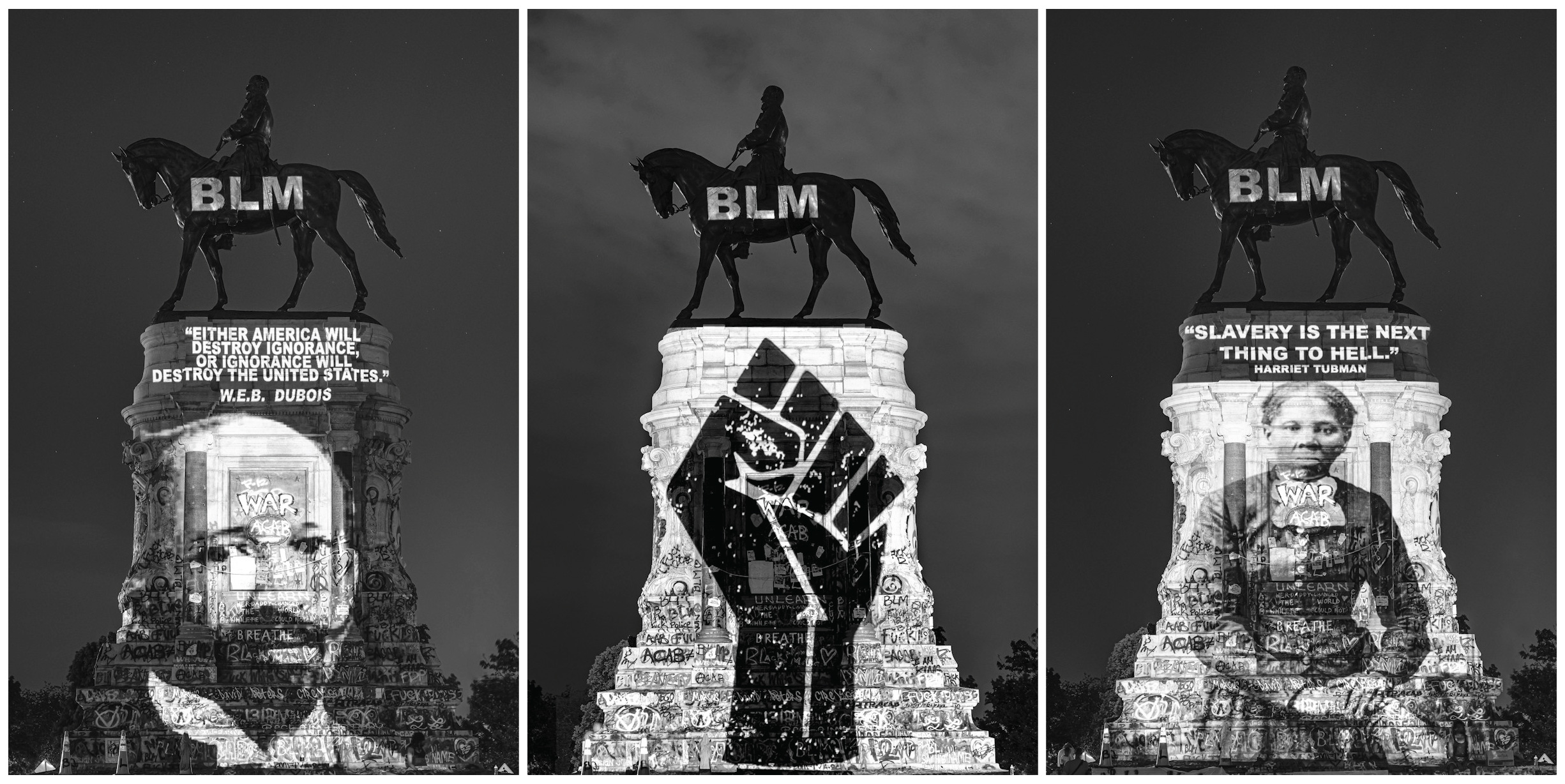
In summer 2020, artists Dustin Klein and Alex Criqui projected images of Black lament and empowerment onto the Robert E. Lee Monument at Marcus-David Peters Circle in Richmond, Virginia, part of their Reclaiming the Monument project. Read more at bottom of post.

Song of the Agitators

“Cease to agitate!” we will,
When the slave whip’s sound is still;
When no more on guiltless limb
Fetters print their circlet grim;
When no hound athirst for blood
Scours the thorny Georgian wood;
When no mother’s pleading prayer,
On the sultry Southern air,
Quivereth out in accents wild,
“Master, give me back my child!”
   In the day when men shall be
   Brethren, equal-born, and free—
   Day for which we work and wait—
   We will “cease to agitate”!

When our statute books proclaim
To the world no more our shame,
And a freeman’s rights shall hold
Dearer than the Judas gold;
When the Polar Star shall give
Light to the last fugitive;
When our border lakes shall rise
On the last lone bondman’s eyes,
And their waves for him no more
Haste to clasp the Northern shore;
   In the day when men shall be
   Brethren, equal-born, and free—
   Day for which we work and wait—
   We will “cease to agitate”!

Written by an anonymous abolitionist during the days of race-based chattel slavery in the United States, this poem was originally published in the Ohio Star (Ravenna, OH) in 1852 and was reprinted shortly after in the Anti-Slavery Bugle (Oct. 9, 1852) (Lisbon, OH), the Liberator (Nov. 19, 1852) (Boston), and the Voice of the Fugitive (Dec. 16, 1852) (Windsor, Ontario).

The poem addresses those who, with the status quo working in their favor, would tell the enslaved to stop complaining about the injustices being perpetuated against them, stop ruffling feathers and demanding change, and instead just sit back and be content with the way things are.

The speaker of the poem responds with a defiant no; they and their fellow activists will stop agitating only when their cause is won. When the enslaver’s whip ceases to crack the air, and shackles no longer imprint themselves on ankles and wrists. When bloodhounds are no longer unleashed on freedom seekers, and children are no longer forcibly separated from their parents. When the country’s founding documents are scrubbed of their racism, and its legislation protects the rights of all Americans in equal measure. When the North Star guides home and the Great Lakes give passage to every last person out of bondage into liberation.

Those who work for justice today still often encounter the demand, “Cease to agitate!” “Stop stirring up trouble.” “Don’t be such a downer.” “Why are you so angry?” “Why can’t you just be grateful for the progress we’ve made?” “When will you ever be satisfied?”

Struck by its contemporary relevance, Detroit-born, Vancouver-based musical artist Khari Wendell McClelland adapted the above poem and set it to music. “I sing this song for all those who are living under tyranny, escaping tyranny, and searching for peace,” he wrote in a 2015 Facebook post sharing a demo video.

McClelland’s “Song of the Agitator” appears on his 2018 album, Freedom Singer. The album is dedicated to his great-great-great-grandmother Kizzy, who fled US slavery through the Underground Railroad to Windsor, Ontario, settling in Detroit after slavery was abolished.

Here’s a video of McClelland performing the song with Noah Walker for the Tiny Lights InSight Series in 2020:

While the first stanza he sings almost verbatim from the nineteenth-century source material, the second stanza he reworks to highlight present-day grievances:  

Now here we are today
Still pushing for equal pay
And these treaty rights don’t hold
They’re shiny like the Judas gold
The stain of blood remains
A mother’s only son slain
Our kids are crying out for more
Continually being ignored

And here’s how he’s adapted the refrain:

On that day we will be
Family, equal-born, and free
Dawn will come, night will cease
We’ll rejoice, mind at ease
For that day we’ll work and wait
That’s when we’ll cease to agitate

In a Geopoetics podcast interview that aired February 25, 2023, McClelland said, “For some of us, it’s been hundreds of years of incredible terror. And, you know, it’s a great luxury to feel in this moment like something’s wrong.” He continues, “It’s good to be agitated—to want to make things be different. When we start to become a little too comfortable with things being out of sort, being unjust, that’s where . . . it’s a problem. . . . Agitation is actually . . . good fuel.”

About the images above:

The Robert E. Lee Monument in Richmond, Virginia, was erected in 1890 during the Jim Crow era to glorify the Confederate general (who fought against the Union to preserve slavery). A bronze equestrian statue atop a giant plinth in the center of one of the historic city’s traffic circles, it had been controversial from the beginning, with many of Richmond’s Black residents regarding it as an oppressive and traumatic presence.  

After the murder of George Floyd, the monument became an epicenter of Black Lives Matter protests as well as a site of vandalism, and Virginia governor Ralph Northam announced on June 4, 2020, that it would be removed. While the legality of that intent was being litigated, light projection artist and Richmonder Dustin Klein, later joined by collaborator Alex Criqui, cast nightly image projections onto the statue—first of Black victims of police violence, and then of Black activists, writers, theologians, artists, and politicians and associated quotes. In October 2020, the graffiti-covered, image-lit Robert E. Lee Monument was declared the most influential American protest artwork since World War II by the New York Times.

On September 2, 2021, the Virginia Supreme Court upheld Northam’s decision, and the statue was removed shortly after.

To view more photos and learn more about Klein and Criqui’s Reclaiming the Monument project, see www.reclaimingthemonument.com.

Roundup: The Soil and The Seed Project, Transfiguration art, and more

For the first time, this year I plan on publishing short daily posts for the entirety of Lent and for the Octave of Easter, pairing a visual artwork with a piece of music along the seasons’ themes (for an example of this format, see here)—just an FYI of what to expect. I also have several poems lined up. And you might want to check out the Art & Theology Lent Playlist and Holy Week Playlist on Spotify (introduced here and here respectively), which I’ve expanded since last year. I’m very pleased with the Holy Week Playlist in particular.

+++

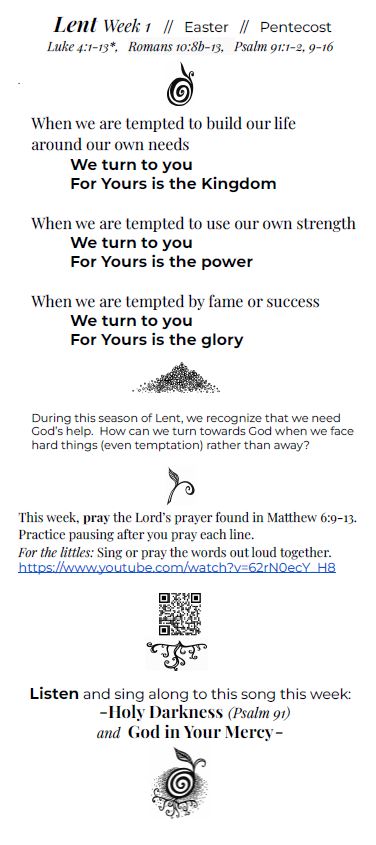
NEW RESOURCE FOR HOME LITURGIES: The Soil and The Seed Project: Directed by Seth Thomas Crissman of The Walking Roots Band [previously] and with the contributions of a team of artists, writers, and musicians, “The Soil and The Seed Project nurtures faith through music, art, and Little Liturgies for daily and weekly use in the home. These resources help establish new rhythms of faith as together we turn towards Jesus, believing and celebrating the Good News of God’s Love for the whole world.” The project launched in November 2021 with its Advent/Christmas/Epiphany collection. When the project is complete it will consist of four volumes of music (forty-plus songs total—all original, save for a couple of reimagined hymns) and four liturgical booklets that include responsive scripture-based readings, reflection prompts, suggested practices, and an original artwork.

The Lent/Easter/Pentecost collection releases February 25, but as a special treat, Crissman is allowing Art & Theology readers a “first listen” with this private link (it will turn public on Friday). Here’s one of the songs, “I Want to Know Christ,” a setting of Philippians 3:10–11 by Harrisonburg, Virginia–based songwriter and jail chaplain Jason Wagner, followed by a Little Liturgies sample:

Little Liturgies, Lent Week 1

Thanks to a community of generous donors, The Soil and The Seed Project gives away all its content for free, including shipping, to anyone who is interested (individuals, couples, families, churches, etc.); request a copy of the latest music collection and liturgies here. CDs and printed booklets are available only while supplies last (1500 copies have been pressed/printed for this collection), but digital copies of course remain available without limit.

+++

CONVERSATIONS AT CALVIN: Below are two videos (of many!) from the 2022 Calvin Symposium on Worship, which took place earlier this month.

>> “Modern-Day Prophets: How Artists and Activists Expand Public Worship” with Nikki Toyama-Szeto: A writer, speaker, and activist on issues of justice, leadership, race, and gender, Nikki Toyama-Szeto is the executive director of Christians for Social Action and a leading voice for Missio Alliance. Here she is interviewed by preacher and professor Noel Snyder. They discuss the generativity of imagination, and its invitation to displacement; the connection between corporate worship and public witness; the movement of the Holy Spirit outside church walls; “political” and “pastoral” as classifications that differ from group to group; embracing messiness; and what pastors can learn from artists and activists.

A few quotes from Toyama-Szeto that stood out to me:

  • “Part of what we’re trying to do at Christians for Social Action is stir the Christian imagination for what a fuller followership of Jesus looks like in a more just society. The word ‘imagination,’ and I would say specifically Christian imagination, I think of as the dream that God dreams for his people and his creation. What does it mean to be oriented toward the dream that God is dreaming? Another word for it is shalom—the full flourishing of all his creation and all his people. And if you look at the gap between where we are today and what that dream is, that gap is imagination. How is it that we get from here, the broken world we see . . . how do we press in and lean into the dreams that God dreams for his people and for his world?”
  • “For me, I have found artists and prophets—those who are agitating for justice—are ones who help dislodge me from everyday things I take for granted, and those assumptions, and they help me to dream new and bigger dreams.”
  • “The pursuit of justice is the declaration of God’s character in the public square.”

Here are links to a few of the names and books she references: Sadao Watanabe, A Book of Uncommon Prayer, Andre Henry [previously], The Many.

>> “Christians and Cultural Difference,” with Pennylyn Dykstra-Pruim and David I. Smith: María Cornou interviews Calvin University professors Pennylyn Dykstra-Pruim and David I. Smith, authors of Christians and Cultural Difference (2016).

Smith shares his frustration that often the only Christians who endeavor to learn other languages and develop cultural intelligence and appreciation are those who are preparing to be missionaries in a foreign country, and they do it only for the purpose of missional effectiveness.

If you take one piece of theology [i.e., evangelism] and try and make that the bit that’s about cultural difference, that puts distortions into the conversation. . . . You might want to think about mission, but you might also want to think about what it means to be made in the image of God. Does that mean everyone’s the same, or does it mean everyone has responsibility for shaping culture and we might all do it in different ways, and you have to make space for that? We might need to think about the cross. We might need to think about God’s embrace of us and how we embrace each other. We might need to think about love of neighbor. We might need to think about the body of Christ and the makeup of the early church. . . . You might have to visit a whole bunch of different theological places to get a composite picture rather than saying this is the doctrine that somehow solves cultural difference for us.

I was also struck by Smith’s discussion of how cultural difference can help us read the scriptures in a new way (see 19:38ff.). He gives an example from In the Land of Blue Burqas, where Kate McCord, an American, describes her experience reading the Bible with Muslim women from Afghanistan, and particularly how they taught her a very different interpretation of John 4, the story of Jesus’s encounter with the Samaritan woman at the well. Wow.

+++

VISUAL COMMENTARY ON SCRIPTURE: The Transfiguration: In churches that follow the Revised Common Lectionary, this Sunday, the last Sunday in the Epiphany season, is Transfiguration Sunday, giving us a vision with which to enter Lent. (Other traditions celebrate Jesus’s transfiguration on August 6.) In this video from the Visual Commentary on Scripture project, art historian Jennifer Sliwka and theologian Ben Quash discuss this New Testament event through three visual artworks: a fifteenth-century icon by Theophanes the Greek, which shows the “uncreated light” revealed to Peter, James, and John on Mount Tabor; a fresco by Fra Angelico from the wall of a friar’s cell in Florence, where Jesus’s pose foreshadows his suffering on the cross; and a contemporary light installation by the seminary-educated American artist Dan Flavin, comprising fluorescent light tubes in the shape of a mandorla. Brilliant!

+++

CIVA TRAVELING EXHIBITION: Again + Again, curated by Ginger Henry Geyer with Asher Imtiaz: “A photography exhibition that invites recurring and fresh contemplation of the ordinary and extraordinary through the seasons of the Christian liturgical calendar,” sponsored by Christians in the Visual Arts. The show will be on view at Second Presbyterian Church in Indianapolis from February 26 to March 26 and is available for rental in North America after that. I saw it at St. David’s Episcopal Church in Austin in November at the CIVA biennial and was impressed! It is accompanied by a beautifully designed catalog that pairs each photograph with a poem, several of which were written specifically for the exhibition and which respond directly to a given photo.

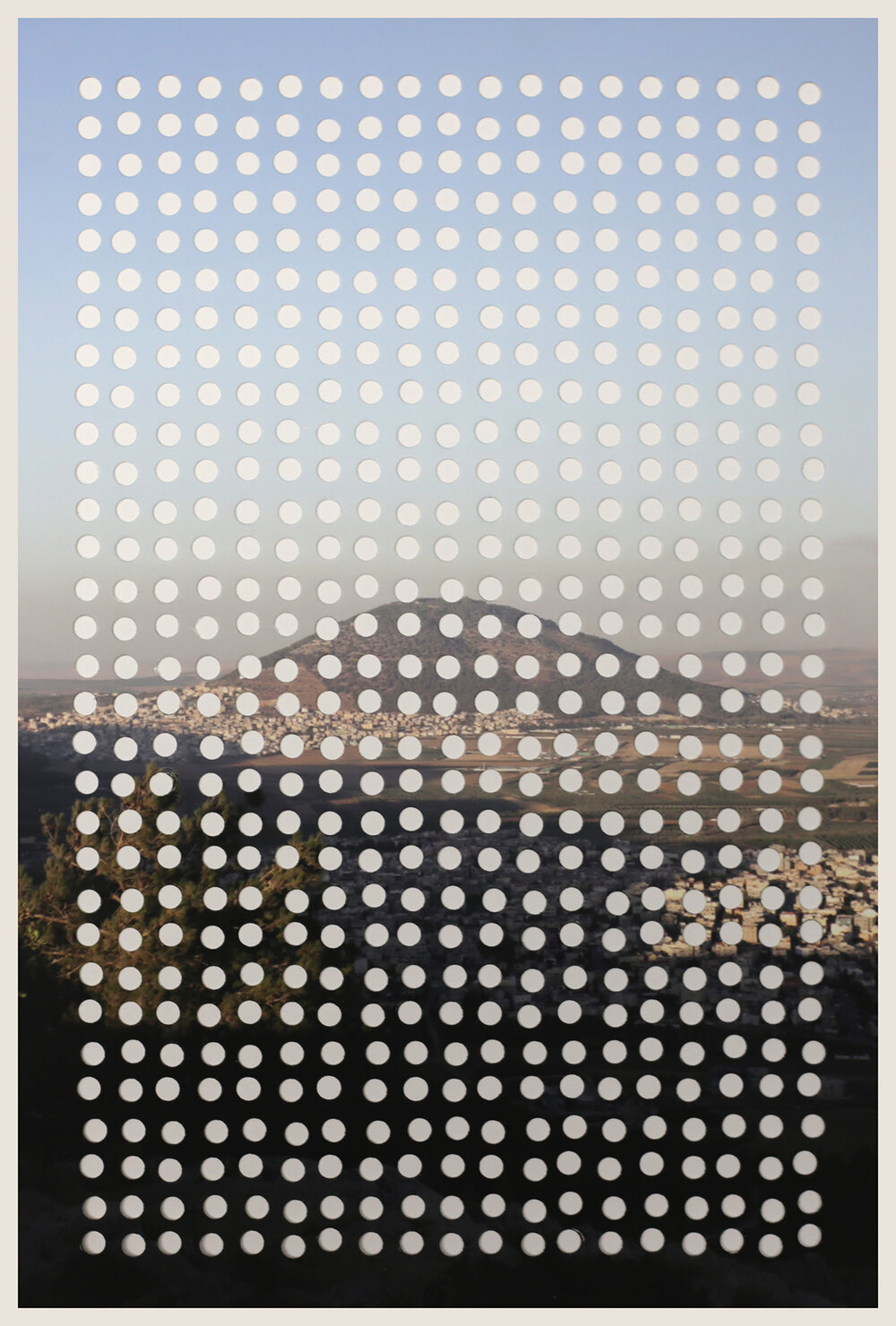
Winters, Michael_Mount Tabor, June 2017
Michael Winters, Mount Tabor, June 2017, 2017. Inkjet print with holes punched out in white wood frame, 19 × 13 in.

One of my favorite art selections is Mount Tabor, June 2017 by Michael Winters, the director of arts and culture at Sojourn Church Midtown in Louisville, Kentucky. “Mount Tabor . . . is where the transfiguration of Christ is thought to have occurred,” Winters writes. “I stood viewing that scene in 2017. It looked so normal. I’m not sure why I felt compelled to punch holes in this photograph, but I think it’s because I wanted to be able to see through this ‘normal’ landscape to the glory of the transfigured Christ—which is to say, I wanted to see reality.”

Browse all the Again + Again photographs on the CIVA website. Longtime followers of the blog will recognize some of the photos from Greg Halvorsen Schreck’s Via Dolorosa series that I featured back in 2016.