Christmas, Day 3: Noel

LOOK: Adoration of the Shepherds by El Greco

El Greco_Adoration of the Shepherds (Prado)
El Greco (Doménikos Theotokópoulos) (Greek Spanish, 1541–1614), The Adoration of the Shepherds, 1612–14. Oil on canvas, 319 × 180 cm. Museo del Prado, Madrid.

One of my most memorable museum-going experiences has been spending time in the El Greco gallery at the Prado Museum in Madrid, with its dynamic, richly hued, floor-to-ceiling paintings of scenes from the life of Christ. It was the first time I had seen any of the artist’s monumental paintings in person (the Adoration is ten and a half feet tall!), and I was captivated. The color, the intensity, the distortions, the interplay of earthly and heavenly. I could feel their spiritual vigor.

El Greco (“The Greek”) was born in Crete in 1541 but ended up settling in Spain and is associated with the Spanish Renaissance. The expressiveness he achieved through his elongated, twisting figures and loose brushwork have led today’s art historians to describe him as a modern artist stuck in the sixteenth century.

Set in a dark and undefined space, El Greco’s Prado Adoration of the Shepherds shows Mary, Joseph (at left in blue tunic and yellow drapery), and three shepherds beholding the wonder of God made flesh. They gather around the naked Christ child, bathed in the light he emits—warming their hands in it, it seems. One shepherd reverentially crosses his arms over his chest. Even the ox is on its knees, adoring.

Overhead, a group of angels unfurls a banner that reads, GLORIA IN EXCEL[SIS DEO E]T IN TERRA PAX [HOMINIBUS] (“Glory to God in the highest, and on earth peace to men”) (Luke 2:14).

Adoration of the Shepherds was El Greco’s final painting. He painted it for his family burial chapel at the convent of Santo Domingo del Antiguo in Toledo, Spain, not knowing that his own body would be resting there so soon, as shortly after he completed the painting, he died of a sudden illness. Even after El Greco’s remains were transferred by his son to the new convent of San Torcuato just a few years later, the painting remained in the possession of the original convent, who moved it to their church’s high altar. It was acquired by the Prado Museum in 1954.

LISTEN: “In a Cave” | Words by Harold B. Franklin, 1961; adapt. | Music by Caleb Chancey, 2020 | Performed by musicians from Redeemer Community Church, Birmingham, Alabama, 2020

Caleb Chancey sings lead on the recording, with Abigail Workman on harmonizing vocals and harp, Joel Blount on guitar, and Kelsie Baer on violin.

In a cave, in a lowly stable
Christ our Lord was born
From the heavens all the white-robed angels
Sang that holy morn

Noel! Noel! Noel! Noel!
Rang throughout sky
Noel! Noel! Noel! Noel!
Praise to God on high

When the shepherds heard that heavenly chorus
They were all afraid
Then the angels spoke their tidings o’er them
All fears should be allayed

Noel! Noel! Noel! Noel!
Rang through the starlit sky
Noel! Noel! Noel! Noel!
Praise to God on high

Born to you in David’s city
Savior, Messiah, King
Peace on earth to the sons of man
Hope and joy he did bring

Noel! Noel! Noel! Noel!
Noel!

Let us like those lowly shepherds
Seek the Lord tonight
May his kindness and his mercy o’er us
Be our Christmas light
Christmas, Day 6

LOOK: Adoration of the Shepherds by Hugo van der Goes

van der Goes, Hugo_Adoration of the Shepherds
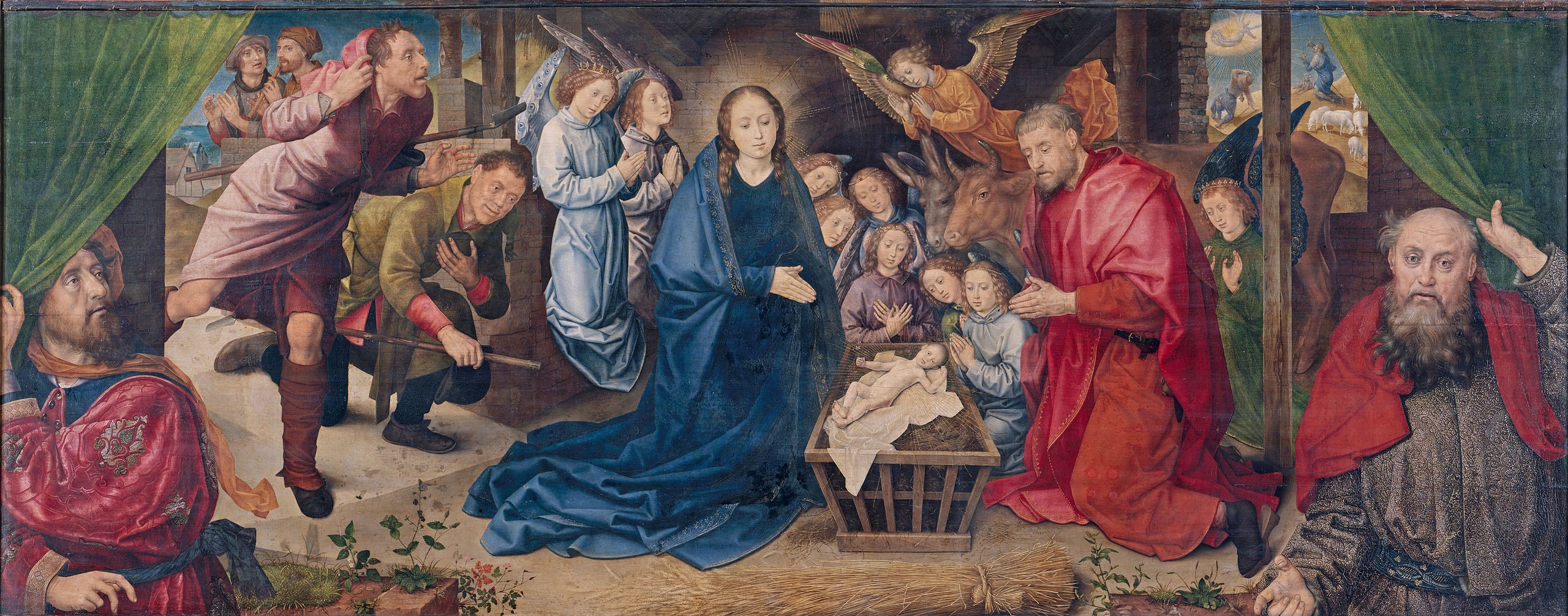
Hugo van der Goes (Flemish, ca. 1440–1482), Adoration of the Shepherds, ca. 1480. Oil on oak wood, 99.9 × 248.6 cm. Gemäldegalerie, Berlin.

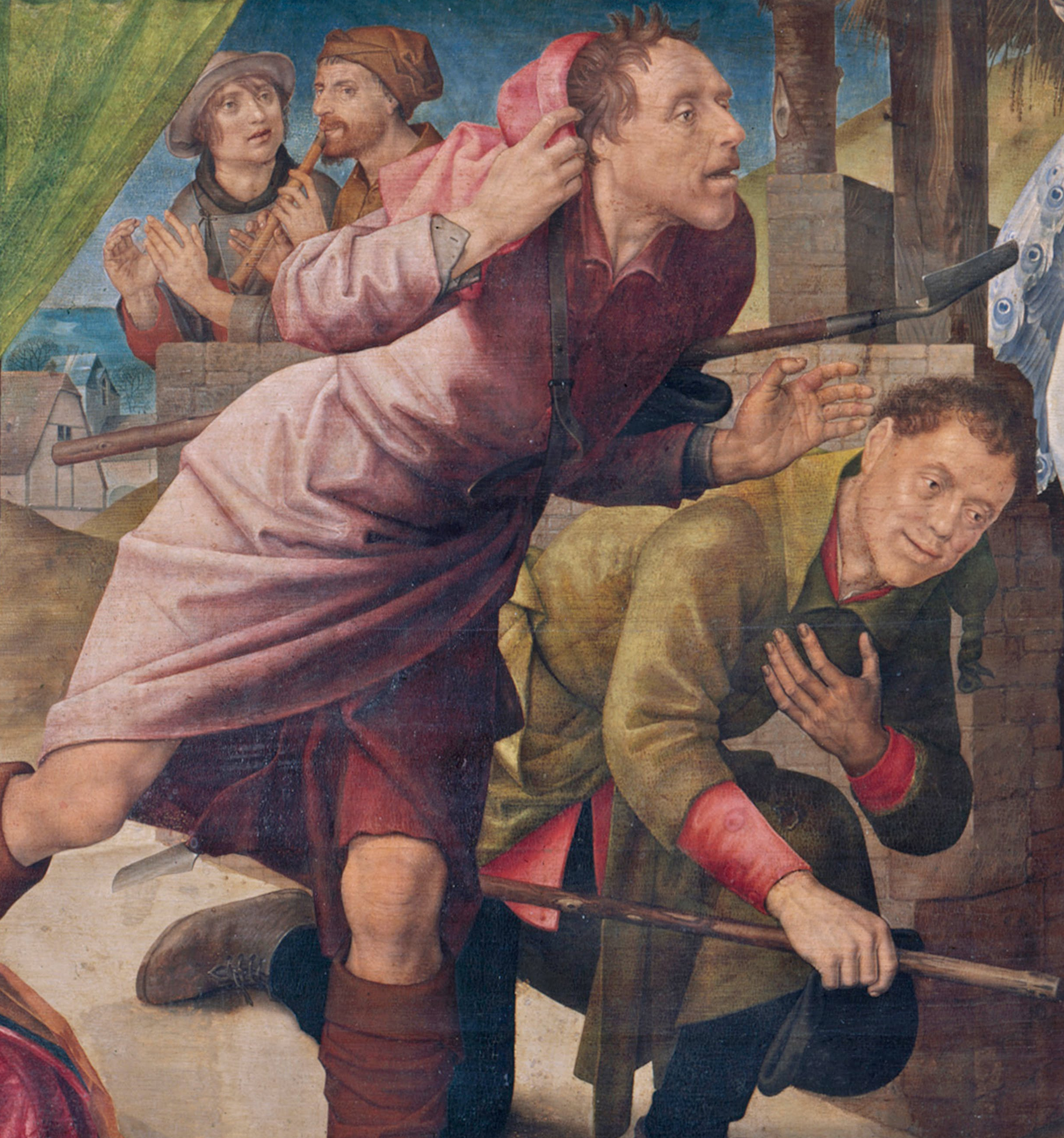
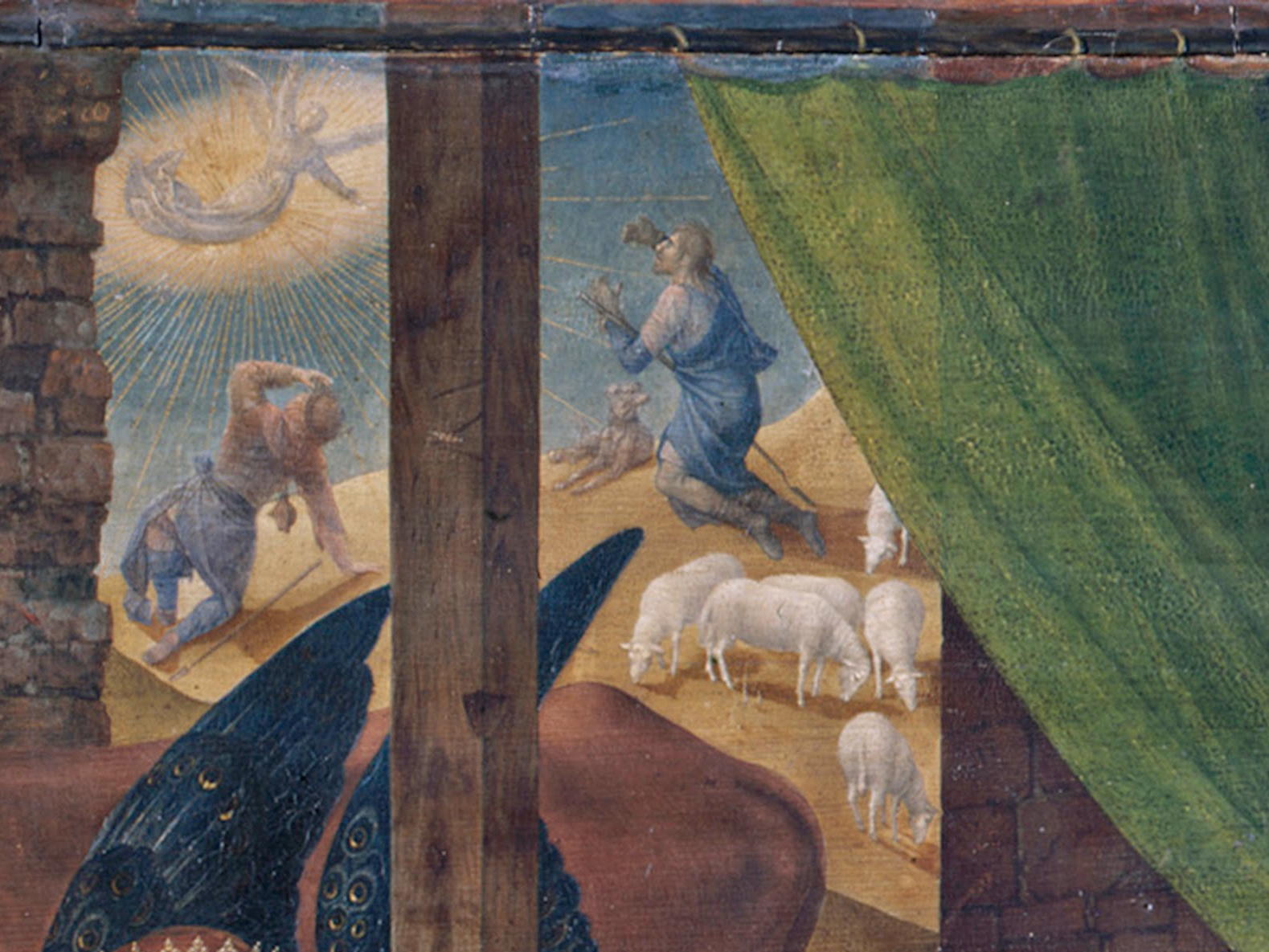
After the angel of the Lord announced the birth of the Messiah to a band of shepherds, “they went with haste” to the place where he lay (Luke 2:16). The Flemish artist Hugo van der Goes shows the shepherds’ hurried arrival at the manger. One of them gallops through the door panting, having run from the scene in the upper right corner, and another removes his hat and kneels. Two more stand behind them just outside the shed—one playing a recorder, the other in midclap.

van der Goes, Hugo_Adoration of the Shepherds (detail, Annunciation)
van der Goes, Hugo_Adoration of the Shepherds (detail, shepherds)

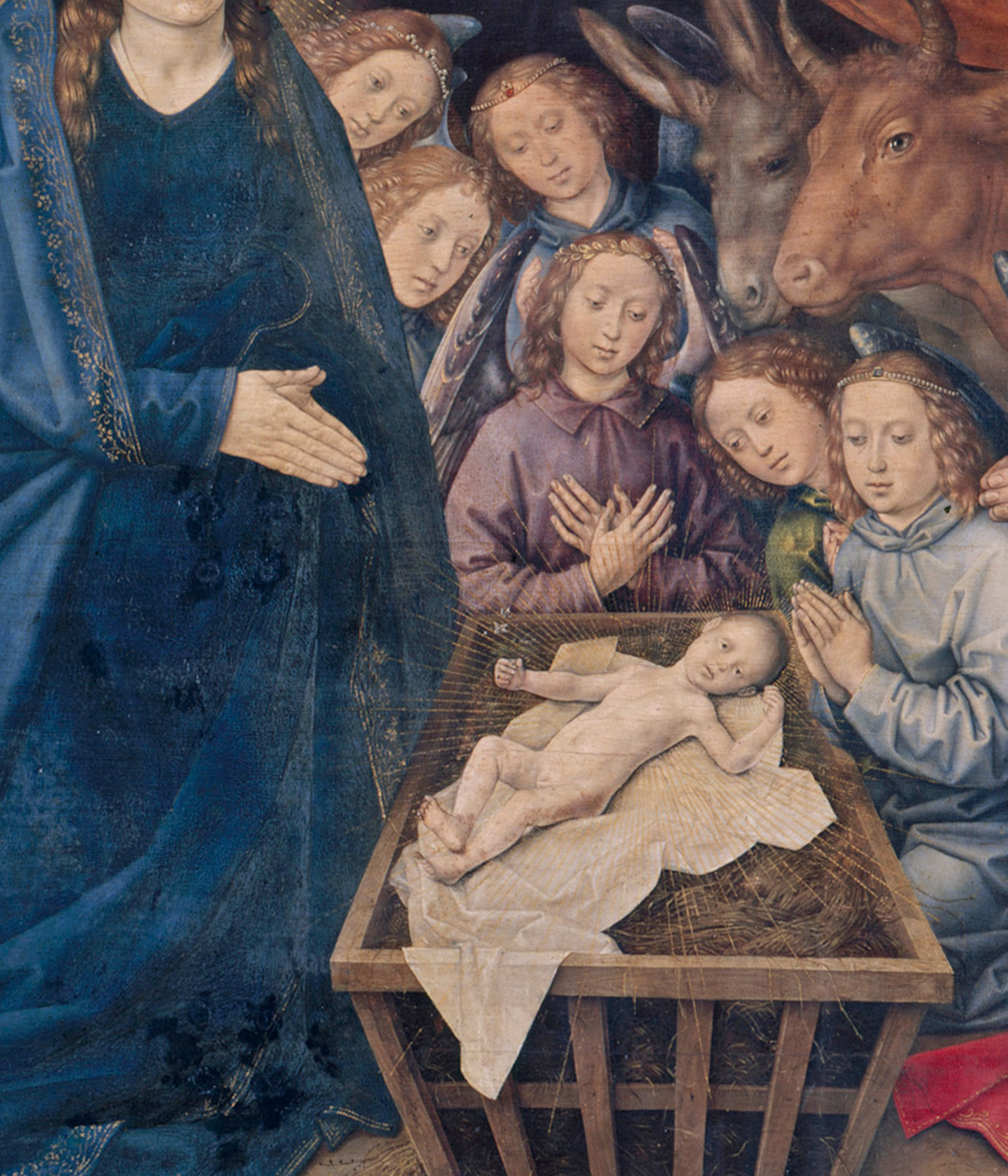
In the center of the composition, the Christ child squirms in his makeshift bed, surrounded by his parents, an ox and ass, and a coterie of angels. At the foot of the manger is a sheaf of wheat, an allusion to Jesus as “the living bread that came down from heaven” (John 6:51) and, by extension, to the Eucharist. This painting, after all, was originally made, most likely, to hang over an altar.

van der Goes, Hugo_Adoration of the Shepherds (detail, Jesus)

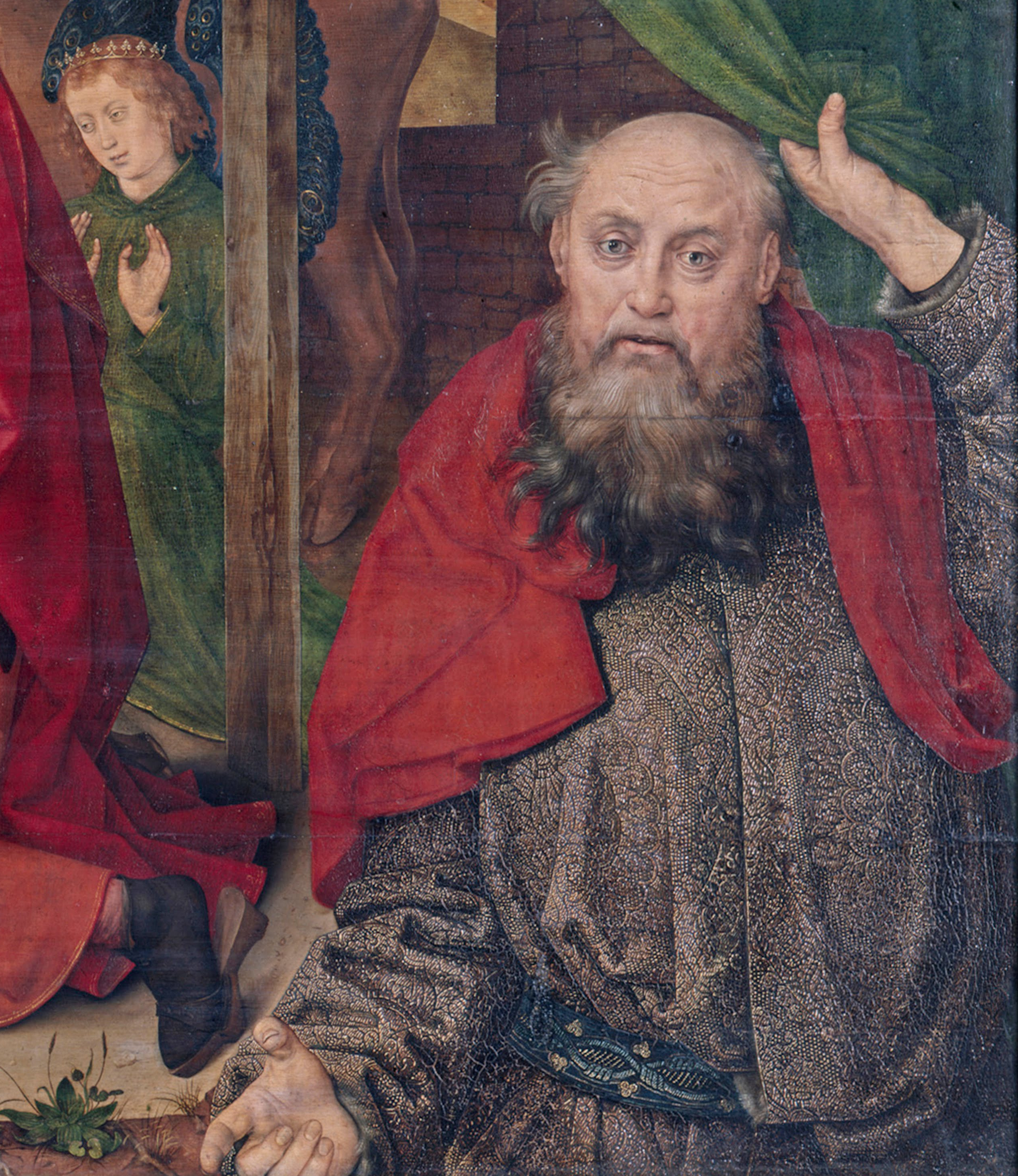
In the foreground two men draw open a set of curtains, revealing God made flesh. An actual wooden rod is attached to the panel and painted with rings, enhancing the illusion. Most scholars agree that the men represent Isaiah (left) and Jeremiah (right), Old Testament prophets who foretold Christ (see, e.g., Isa. 7:14; Jer. 23:5–6)—though John Moffitt suggests they are the apostles Mark and Paul, two New Testament personages who specifically associate themselves with a veil as a sign of divine manifestation. Either way, these figures act as intermediaries between the viewer and the depicted narrative, inviting us, like the shepherds, to bear witness to the wondrous mystery of the Incarnation and to respond in adoration.

van der Goes, Hugo_Adoration of the Shepherds (detail, Jeremiah)

This Adoration, sometimes referred to as van der Goes’s Berlin Nativity, is not the artist’s most famous painting on the subject. That would be the central panel of the Portinari Altarpiece, painted a few years earlier.

LISTEN: “Where Shepherds Lately Knelt” | Words by Jaroslav J. Vadja, 1987, © Concordia Publishing House | Music by Carl F. Schalk, 1987, © GIA Publications, Inc. | Performed by Koiné on Emmanuel Lux, 2012

Where shepherds lately knelt and kept the angel’s word,
I come in half-belief, a pilgrim strangely stirred;
but there is room and welcome there for me,
but there is room and welcome there for me.

In that unlikely place I find him as they said:
sweet newborn babe, how frail! and in a manger bed,
a still small voice to cry one day for me,
a still small voice to cry one day for me.

How should I not have known Isaiah would be there,
his prophecies fulfilled? With pounding heart I stare:
a child, a son, the Prince of Peace for me,
a child, a son, the Prince of Peace for me.

Can I, will I forget how Love was born, and burned
its way into my heart, unasked, unforced, unearned,
to die, to live, and not alone for me,
to die, to live, and not alone for me?