Advent Prelude: Not Knowing

Watch therefore: for ye know not what hour your Lord doth come.

—Matthew 24:42 (KJV)

LOOK: Quote-Unquote, Hyphen, and The Point of Intersection by Kay Sage

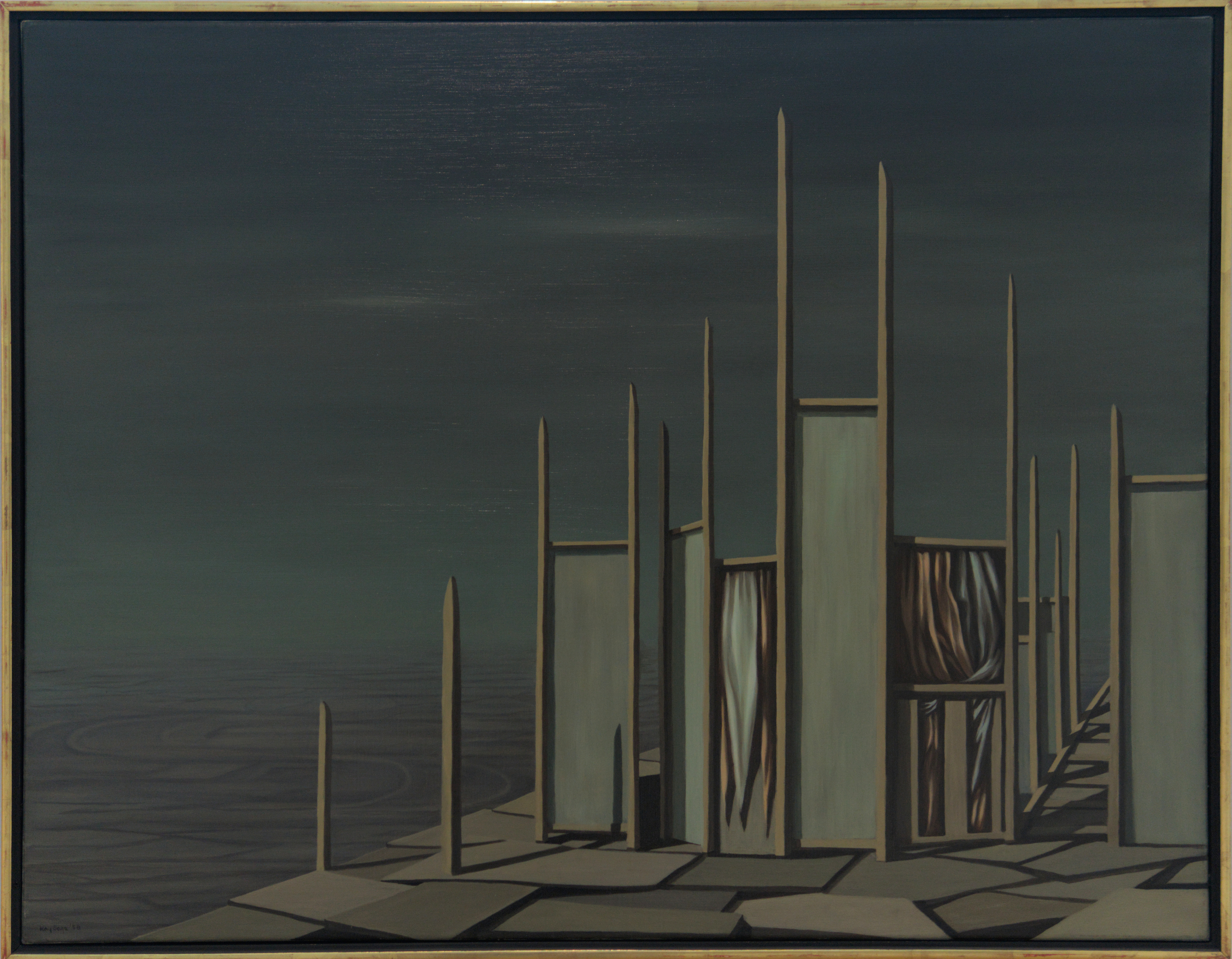
There’s a wistful quality to the paintings of the midcentury American surrealist artist Kay Sage [previously], which often feature tenuous, draped structures and a distant light in the vast dark. The first work of hers I saw in person was Quote-Unquote, which shows a ragged, exposed architectonic form—is it fallen into disrepair, or incomplete?—whose vertical wood beams pierce the dreary gray sky.

Sage, Kay_Quote-Unquote
Kay Sage (American, 1898–1963), Quote-Unquote, 1958. Oil on canvas, 28 × 39 in. (71.1 × 99.1 cm). Wadsworth Atheneum, Hartford, Connecticut, 1963.198. Photo: Victoria Emily Jones. © Estate of Kay Sage / Artists Rights Society (ARS), New York.

The museum label at the Wadsworth Atheneum reads in part: “Sage’s later paintings featured vertical architectural structures, such as walls and scaffolding, set in otherwise deserted landscapes. These inanimate forms were often draped with plain fabric, as if to suggest a human presence or absence.” The title Quote-Unquote provides little interpretive help. What is being quoted here? Is irony intended?

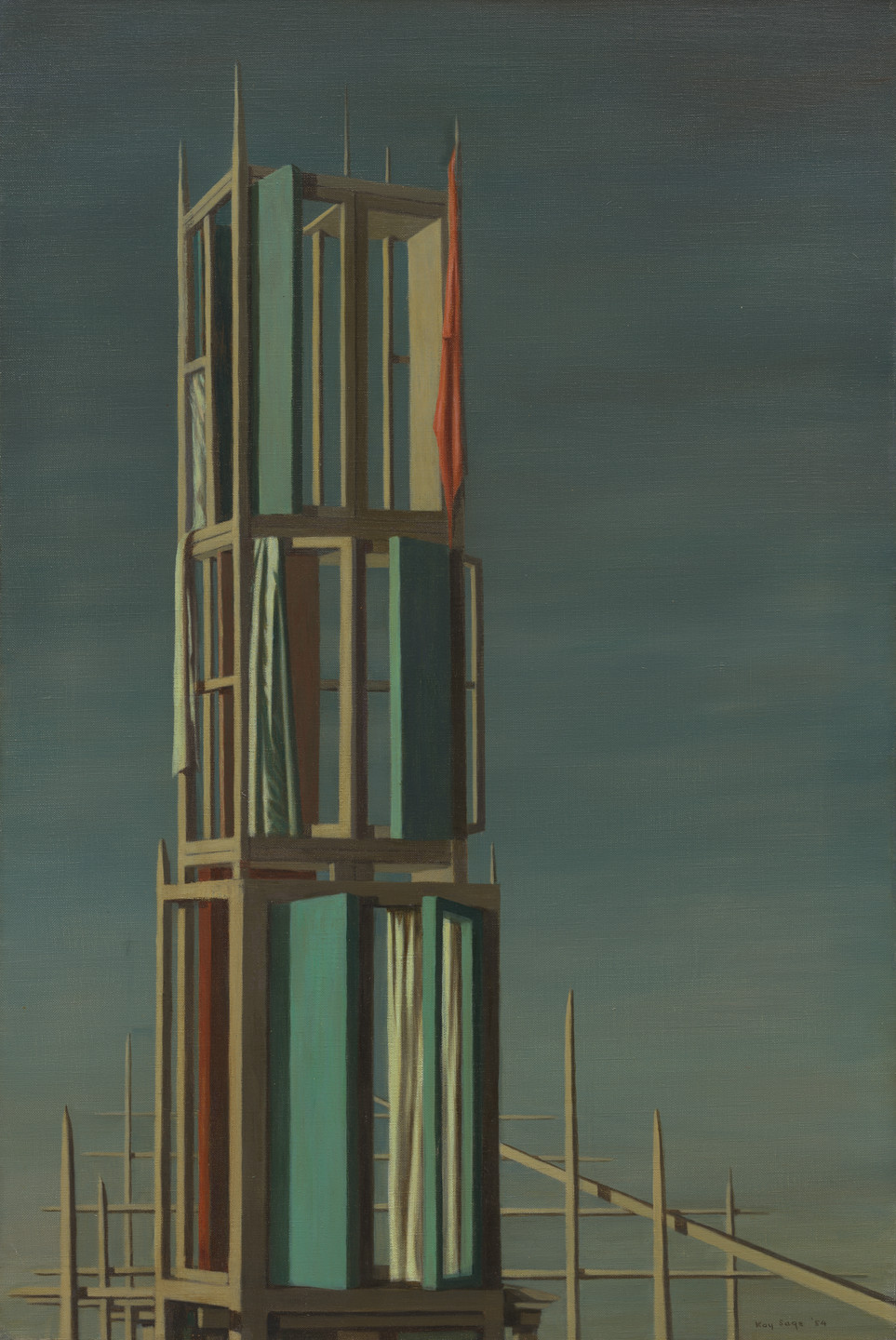
Painted the same decade, Sage’s Hyphen shows a towering structure of open doors and windows.

Sage, Kay_Hyphen
Kay Sage (American, 1898–1963), Hyphen, 1954. Oil on canvas, 30 × 20 in. (76.2 × 50.8 cm). Museum of Modern Art, New York. © Estate of Kay Sage / Artists Rights Society (ARS), New York.

And The Point of Intersection shows a series of wooden boards and frames standing, slightly diagonal to the viewer, on a ground that recedes into infinity. In the bottom left corner a rumpled sheet or garment lies on a squat platform.

Sage, Kay_The Point of Intersection
Kay Sage (American, 1898–1963), The Point of Intersection, 1951–52. Oil on canvas, 39 × 32 in. (99.1 × 81.3 cm). Collection of Selma Ertegun, New York. © Estate of Kay Sage / Artists Rights Society (ARS), New York. Source: Kay Sage: Catalogue Raisonné, p. 269

Is the “intersection” of the title between time and eternity, or . . . ?

LISTEN: “Not Knowing When the Dawn Will Come” | Words by Emily Dickinson, ca. 1884 | Music by Jan Van Outryve, 2018 | Performed by Naomi Beeldens (voice) and Jeroen Malaise (piano) on Elysium, Emily Dickinson Project, 2018

Not knowing when the Dawn will come,
I open every Door,
Or has it Feathers, like a Bird,
Or Billows, like a Shore –

This is one of twelve musical settings of Dickinson poems for piano and voice by the Belgian composer Jan Van Outryve. It’s sung by soprano Naomi Beeldens, with Jeroen Malaise on keys.

I’ve always read “Not knowing” as an Advent poem, as promoting a posture of readiness for the coming of Christ—he who is, as we call out in the O Antiphons of late Advent, our Oriens, Rising Sun, Dayspring. Will he come softly, rustling, avian-like, or will he come crashing onto earth’s shore like a wave?

Expecting Dawn’s imminent arrival, the speaker of the poem opens every door, welcoming its light.

(Related posts: https://artandtheology.org/2022/12/14/advent-day-18-will-there-really-be-a-morning/; https://artandtheology.org/2022/12/15/advent-day-19-healing-wings/)

From Augustine (Confessions) to Teresa of Ávila (The Interior Castle), the picture-making nuns of St. Walburga’s Abbey in Eichstätt to C. S. Lewis (Mere Christianity), the human heart has long been compared to a house. To open the windows or doors of the heart to Christ is to invite him to come in and dwell there and to transform the place.

Advent commemorates three comings of Christ: his coming in “history, mystery, and majesty,” as one priest put it. That is, Christ’s coming (1) as a babe in Bethlehem, (2) in the Spirit, to convert, illuminate, equip, and console, and in the bread and wine of the Eucharist, and (3) at the end of time.

Have you opened every door to him? Do you eagerly expect him to arrive—this Christmas (are you telling, singing, enacting the story of his nativity?); into your struggles and brokenness, to companion you and to heal and strengthen; and again on earth, to unite it with heaven and establish, fully and finally, his universal reign?

This is the first post in a daily Advent and Christmastide series that will extend to January 6. I hope you follow along!

Advent Series 2025

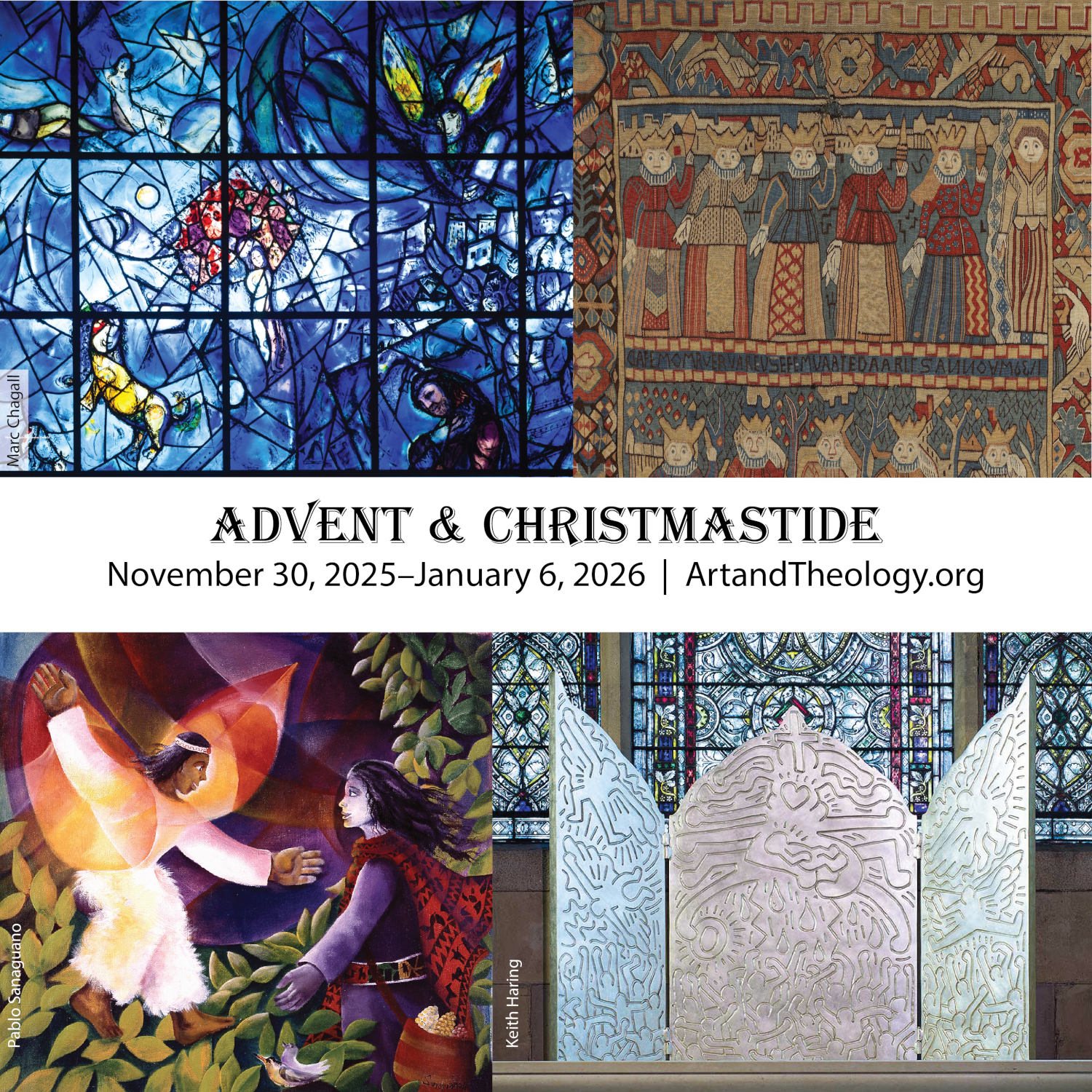
Want to receive a daily pairing of art and music in your inbox during this Advent and Christmas season? Sign up here. (If you already subscribe to the blog, you’re all set.) Posts will run from November 29, the day before the first Sunday of Advent, to Epiphany on January 6. I have also planned a few poems and roundups to go out during that time.

Advent 2025 promo

Advent is my favorite season of the church year because it taps into the deep yearning I feel for this world to be set right, for God’s beauty to burst into it with an irrefutable finality—no more sin, no more sorrow. The season is a chance to practice hope, something I sometimes struggle with, as I tend to lean more cynical.

The readings, art, and music of Advent sweep me up into the grand narrative of scripture, attuning me to the ways God has always been coming to us, but fixing me especially on how in Bethlehem of Judea, he came in a very special way—as a human being—and nurturing my excitement for his imminent return to earth to wed it to heaven.

Advent themes include:

  • Lament and longing
  • Hope, peace, joy, love
  • Promise
  • John the Baptist, especially his call to repentance in preparation for the coming kingdom
  • The second coming of Christ (individual judgment, cosmic renewal)
  • The parable of the ten bridesmaids
  • The new heavens and the new earth
  • Isaiah’s messianic prophecies: a virgin conceiving, swords into plowshares, a peaceable kingdom, a great light shining on a people in darkness, a flowering branch from the root of Jesse, etc.
  • Pregnancy
  • Mary’s song
  • God with us

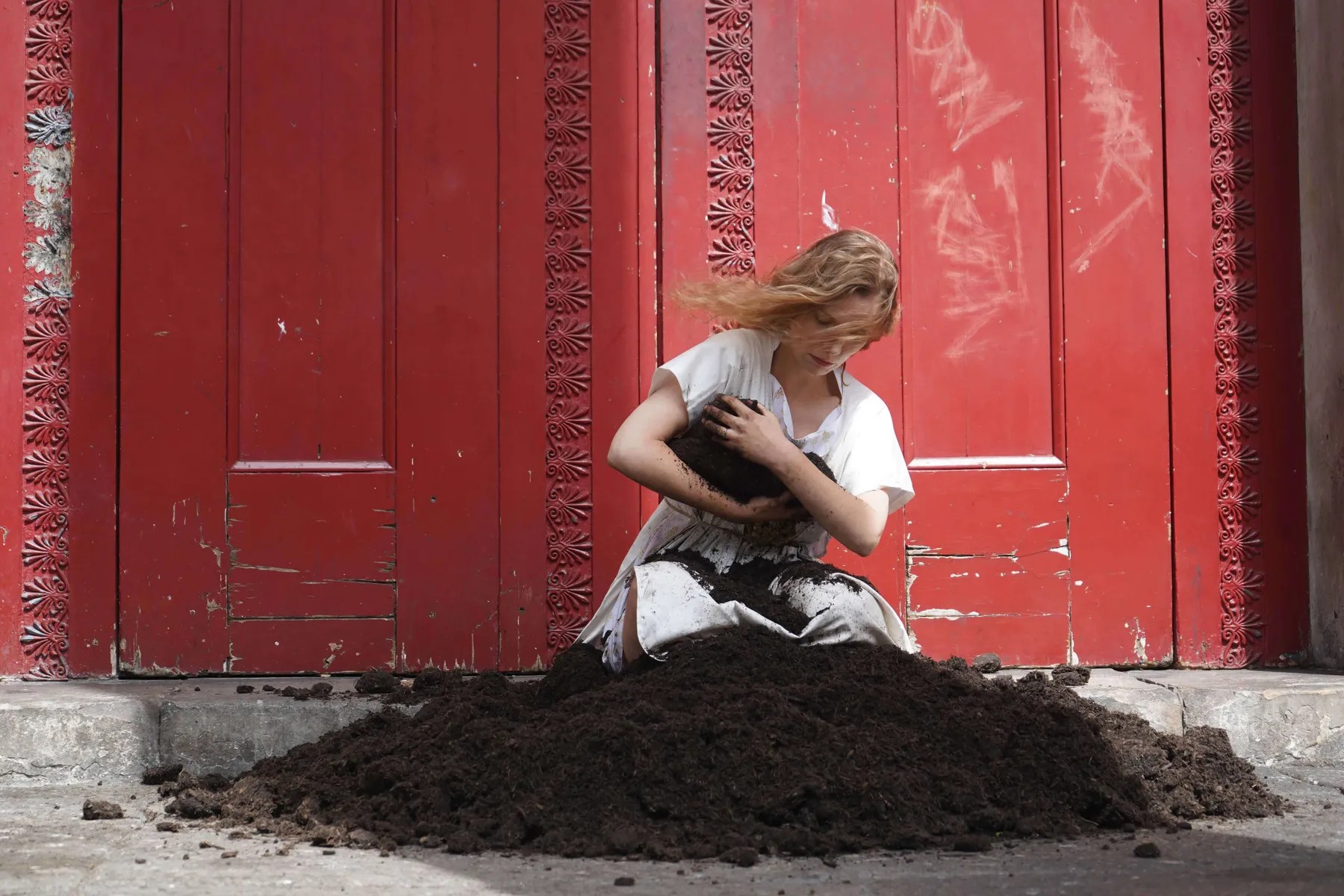
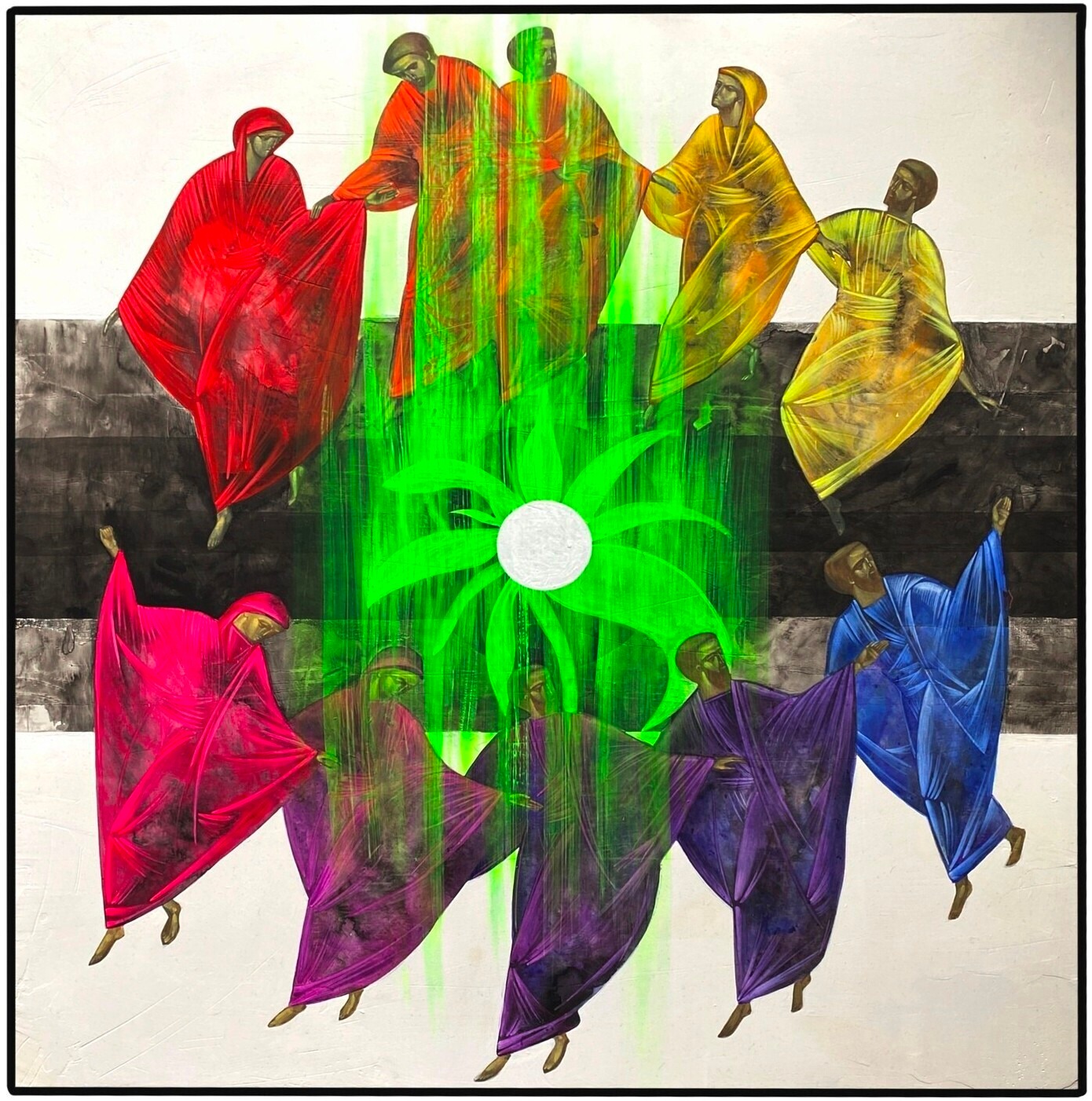
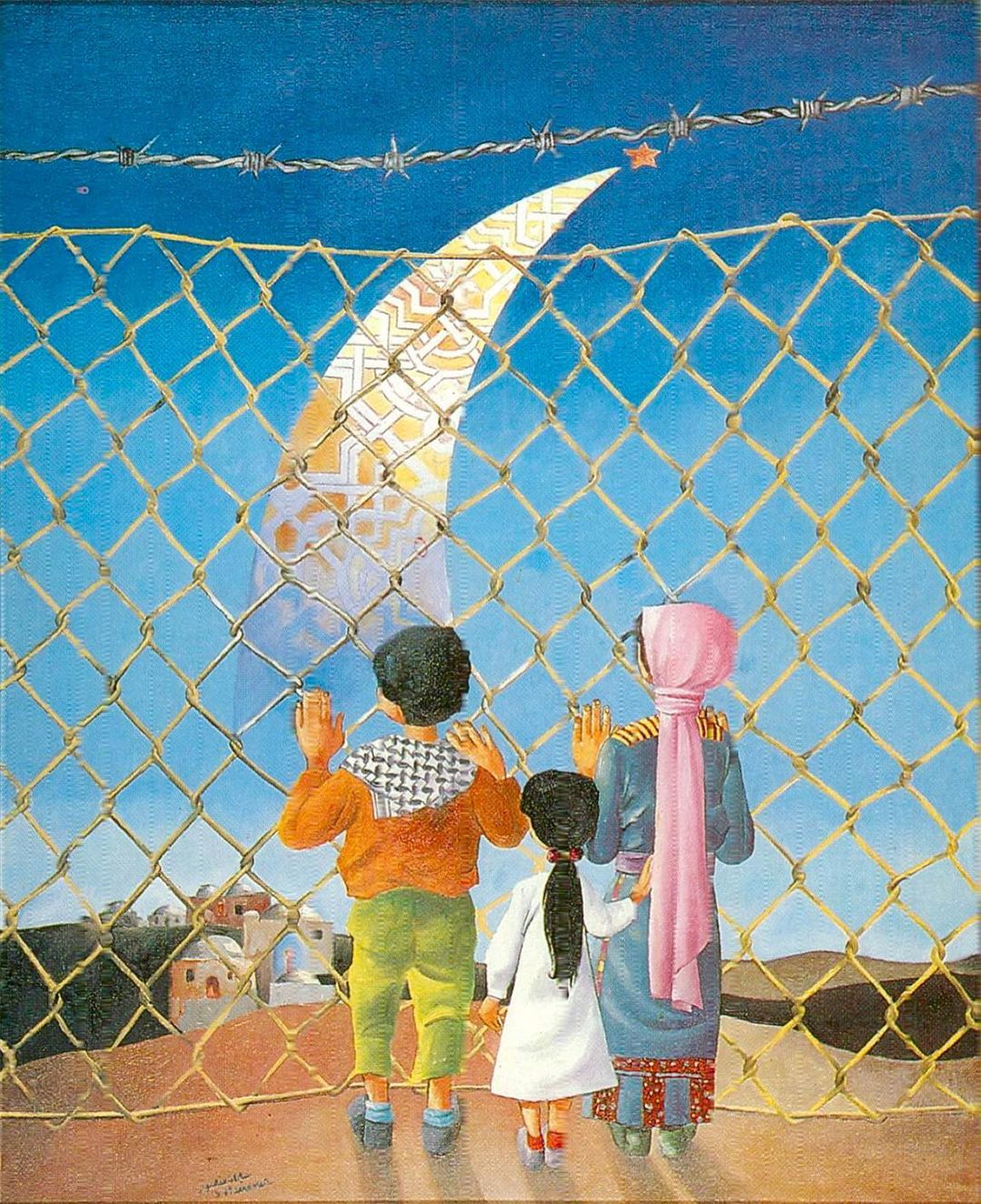
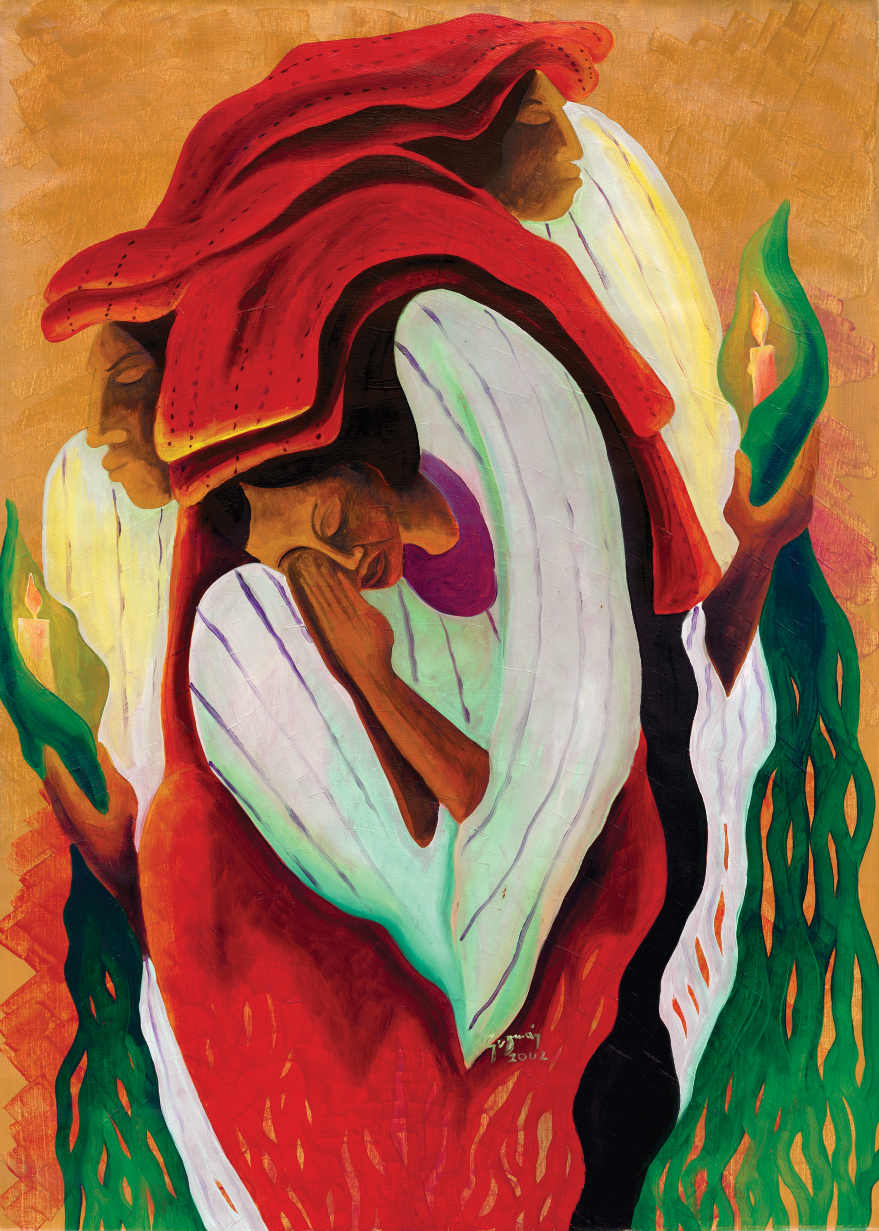
Based on these, I’ve curated dozens of visual and musical selections that I hope will make God’s story come alive to you in fresh ways. A thread installation, a soil-based performance, quilted detritus, a photograph from a war zone, confetti skies, stained glass oracles, a sixth-century apsidal mosaic from a Roman basilica, a medieval German New Year’s greeting by and for nuns, a Jemez Pueblo nativity in clay, a site-specific dance before a mural in Atlanta . . . these are some of the artworks that will be featured.

As for music, you’ll hear a classical setting of an Emily Dickinson poem, an adaptation of Psalm 27 by a Ugandan worship collective, a contemporary “Mass for Peace,” a Latin American song of the Annunciation, a dialogue between Mary and the infant Christ from Renaissance England, a responsory by the medieval polymath Hildegard of Bingen, offerings from many different singer-songwriters, and more.

Many of the songs will be drawn from my Advent playlist on Spotify, which I first published in 2020 but have been adding to each year:

If you know of anyone else who might be interested in an arts-based approach to Advent and Christmas devotions, please share with them the link to this post. You can peruse previous years’ entries to get a flavor:

Advent 2024 | Christmas 2024
Advent 2023 | Christmas 2023
Advent 2022 | Christmas 2022
Advent 2021 | Christmas 2021
Advent 2020 (abbreviated)

I’m looking forward to sharing what I’ve curated for the start of this new liturgical year, as time unfolds across four hallowed weeks of expectant waiting and then Twelve Days of festivity and wonder.