
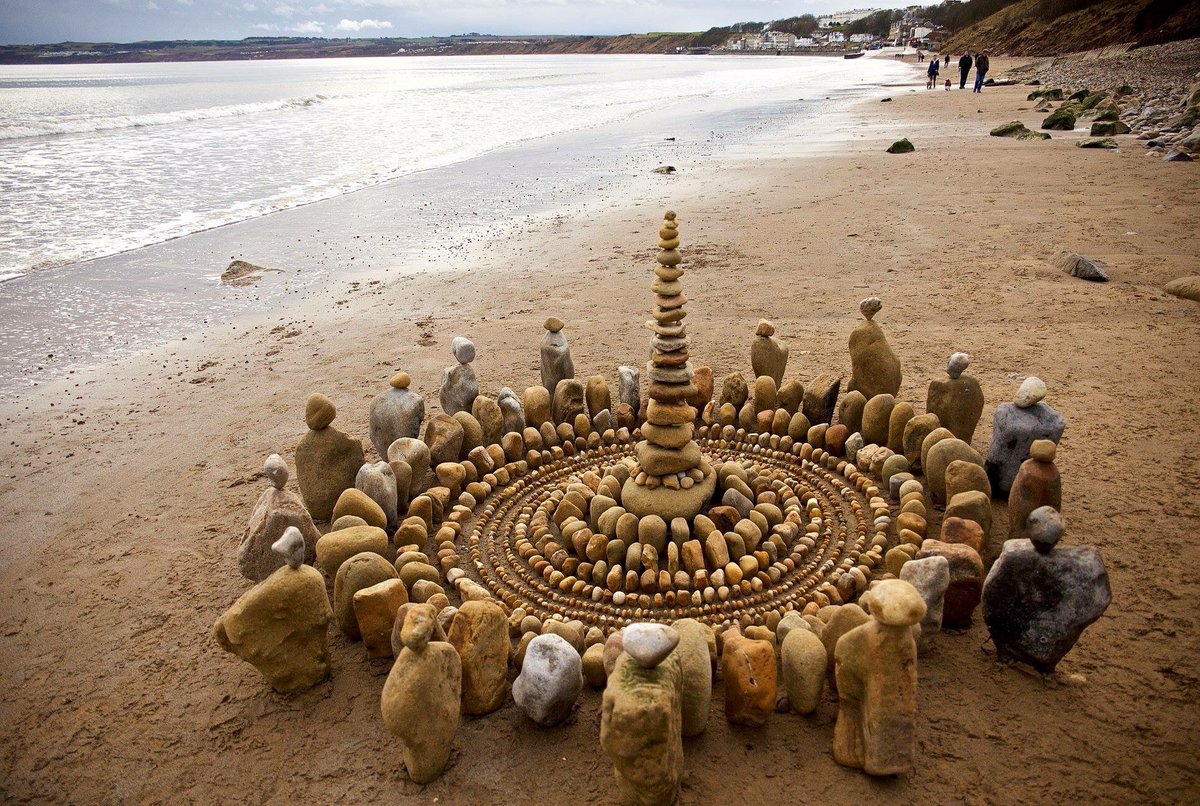
We alone can devalue gold
by not caring
if it falls or rises
in the marketplace.
Wherever there is gold
there is a chain, you know,
and if your chain
is gold
so much the worse
for you.

Feathers, shells
and sea-shaped stones
are all as rare.

This could be our revolution:
to love what is plentiful
as much as
what is scarce.
This poem was originally published in Horses Make a Landscape Look More Beautiful (Harcourt Brace & Company, 1984) and is compiled in Her Blue Body Everything We Know: Earthling Poems 1965–1990, Complete (Harcourt Brace Jovanovich, 1991).
Alice Walker is an American novelist, short story writer, poet, and social activist. Born in 1944 in Eatonton, Georgia, the eighth and last child of sharecroppers, in 1982 she became the first African American woman to win the Pulitzer Prize for Fiction, which she was awarded for her novel The Color Purple. Over the span of her career, Walker has published numerous best-selling works of fiction, poetry collections, essays, and children’s books. She lives in Mendocino, California.
At first glance this poem may seem naive or flippant about economic realities. In the world we’ve created, money is a necessity. My country, the United States, has suffered two recessions in recent memory: in 2007–9, when the subprime mortgage crisis led to the collapse of the US housing bubble, and during the first two months of the COVID-19 pandemic in March and April 2020, when more than twenty-four million Americans lost their jobs. Lack of money can have disastrous effects.
But “We Alone” is not denigrating those who stress about not having a paycheck or not being able to afford basic provisions. Rather, it is critiquing a system that creates those conditions, a system in which money has been elevated to godlike status, and wealth is consolidated in the banking and corporate institutions headquartered on Wall Street, which engage in predatory activities that harm and debase. Capitalism is built on self-interest, profit, and acquisitiveness, and therefore it can easily breed greed, a voraciousness for more and more, which often comes at the expense of others.
Alice Walker has said elsewhere that “capitalism is a big problem, because with capitalism you’re just going to keep buying and selling things until there’s nothing else to buy and sell, which means gobbling up the planet.”[1] In her essay “All Praises to the Pause,” she writes,
Capitalism . . . cannot possibly sustain itself without gobbling up the world. That is what we see all around us. Women and children in Bangladesh, India, the Philippines, Haiti, Mexico, China and elsewhere in the world forced into starvation and slavery as they turn out the tennis balls and cheap sneakers for the affluent. Ancient trees leveled to make more housing while housing that could be saved and reused is torn down and communities heartlessly displaced. Mining of the earth for every saleable substance she has. Fouling of the waters that is her blood. Murdering innocents, whether people, animals or plants, in pursuit of oil.[2]
(Related reading: report from “Can Capitalism Be Ethical?,” a lecture by Dr. Rowan Williams, former archbishop of Canterbury, Murray Edwards College Cambridge, November 2, 2016)
My purpose here is not to argue for or against specific economic systems, nor is that the point of this poem. What Walker challenges in “We Alone” is the pervasive notion that people and things are worth only what the market says they are. Have you, too, bought in to that lie? Do you fail to value the things that are free and plentiful in life, like shells on the beach, or birdsong, or a refreshing rain? Ordinary gifts like that operate outside the laws of supply and demand and suggest the beautiful abundance of God’s economy.
On a few occasions the Bible uses the term “mammon” to refer to riches and their pernicious influence. Jesus preached against mammon in his Sermon on the Mount, famously warning the crowds, “You cannot serve both God and mammon” (Matt. 6:24). The church fathers personified mammon as an evil master who enslaves, and medieval Christian writers named it a demon. Walker, too, acknowledges how wealth can hold us captive, the word “chain” in her poem pulling double duty, referencing on the one hand a metal-link ornament holding a jewel or a watch, and on the other hand a shackle.
To not care about filling our coffers is a countercultural stance. To not be constantly checking the rise and fall of stock prices, or obsessing about our investment portfolio.
Those who overvalue material assets will miss out on the more satisfying riches that abound in the natural world, which don’t have to be worked for or taken from others to be enjoyed.
NOTES
1. Alice Walker, quoted in Fernanda Sayão, “Capitalism” (Rio de Janeiro: Animal Farm Research, 2012), 14.
2. Alice Walker, “All Praises to the Pause; The Universal Moment of Reflection,” commencement address, California Institute of Integral Studies, San Francisco, May 19, 2002, in We Are the Ones We Have Been Waiting For: Inner Light in a Time of Darkness (New York: The New Press, 2006), 77–78.
 Art & Theology