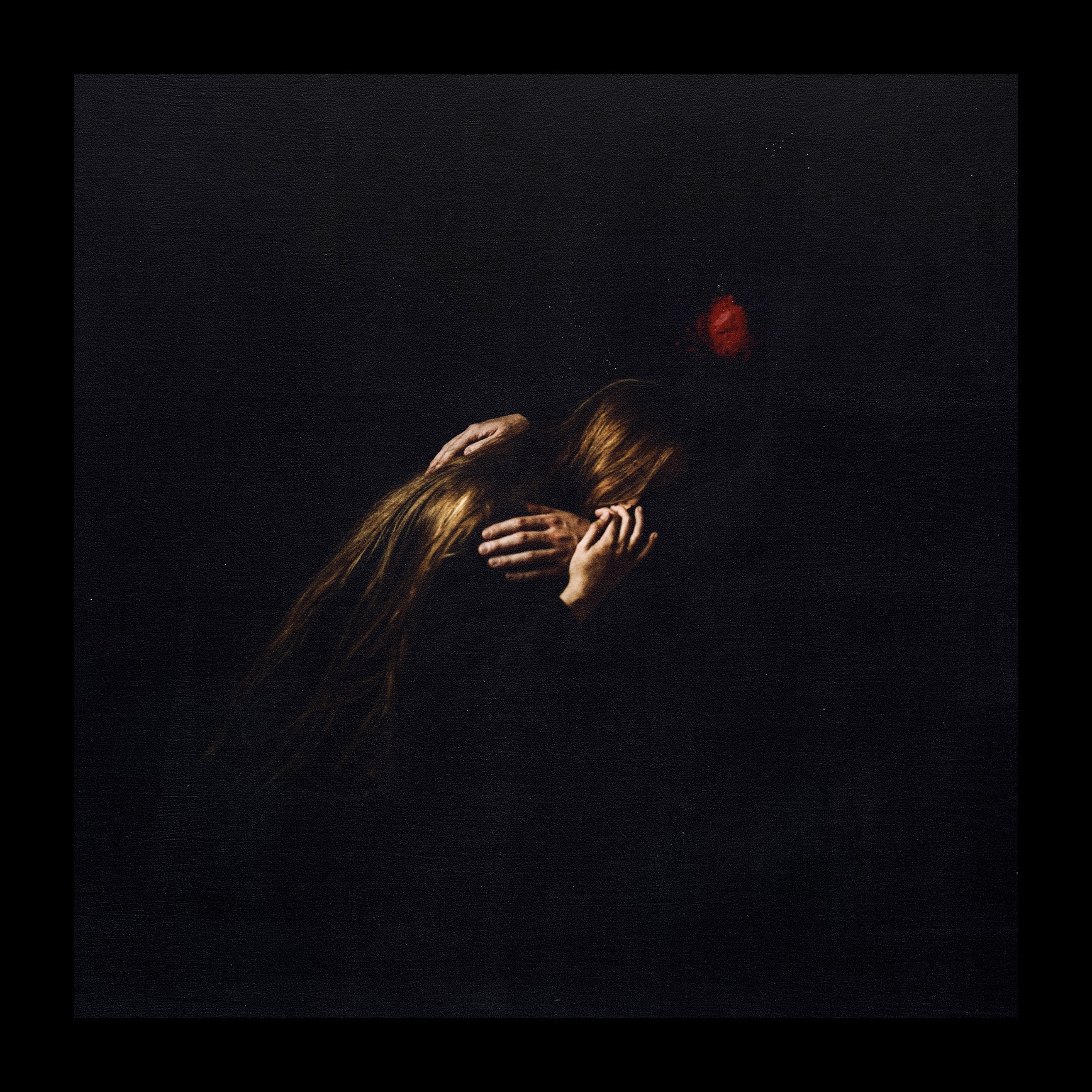
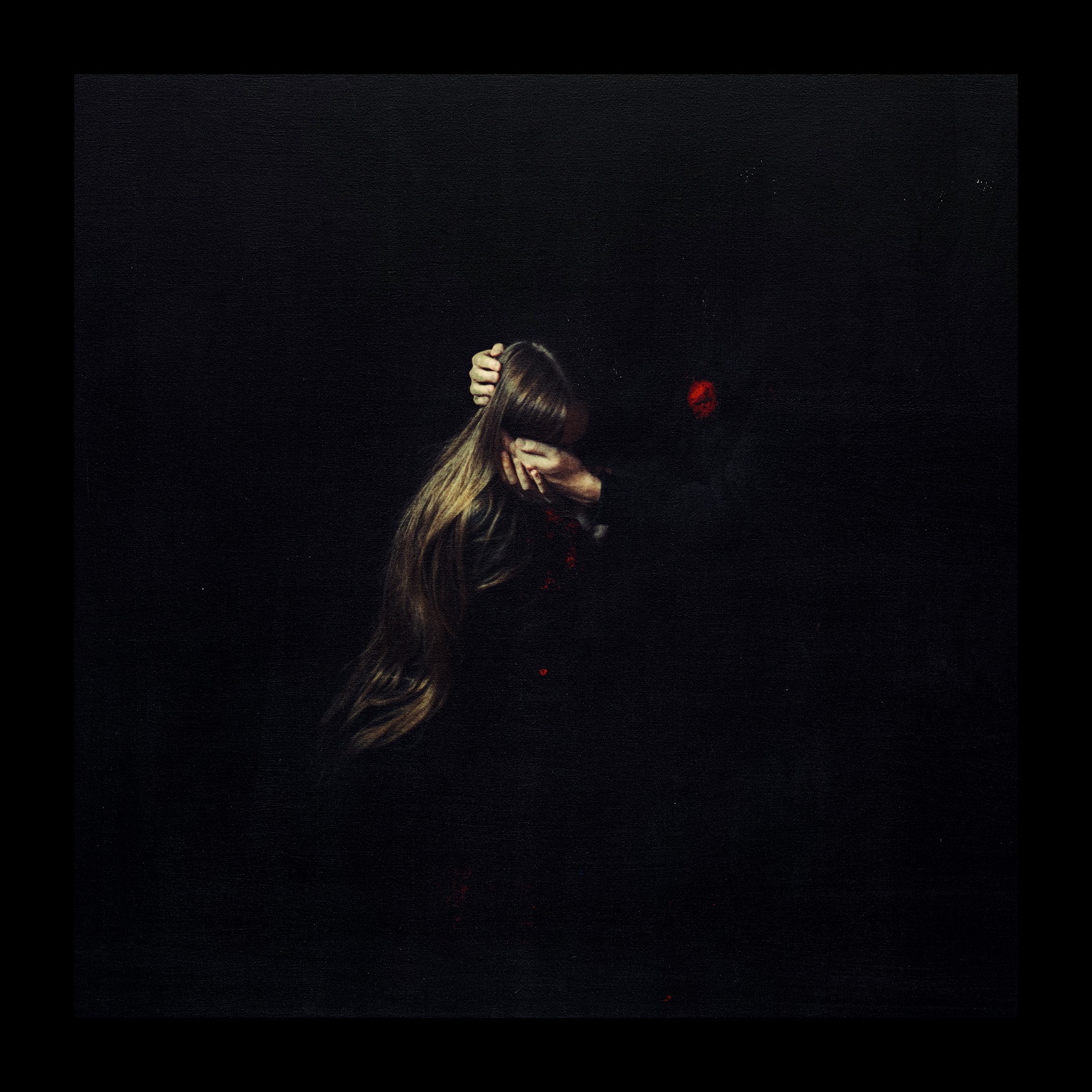
Laura Makabresku (Polish, 1987–), Intimacy of the Heart (7), 2020Laura Makabresku (Polish, 1987–), Intimacy of the Heart (8), 2020
LISTEN: “Mary” by the Brothers of Abriem Harp, on Last Days (2015) [reviewed here]
Mary, my dear, come over here Tell me, is it true what they say? Mary, my dear, let go of your fear And bring your gift to me, I pray Let your heart rest with mine I don’t have much time So break your fragrance free, my dear
Let your tears fall on me Brush your hair on my feet Let your alabaster tears fall on me Fall on me
Overflow, overflow And go where you go Let this fragrance fill the air with love divine Love divine
Fill the air, fill the air Let your heart beat with mine Let this fragrance fill the air with love divine Love divine
Mary, my dear, bring yourself near Let your heart beat with mine, my dear
Laura Makabresku (Polish, 1987–), Intimacy of the Heart (10), 2020
VIDEO: “Waiting with Christ: An Artful Meditation for Holy Week”: A collaboration between Duke Initiatives in Theology and the Arts in Durham, North Carolina, and City Church in Cleveland, Ohio, this half-hour video from 2021 presents a small collection of scripture readings, poems, visual art, and music for Holy Week, interspersed with reflections by theologian Jeremy Begbie. The artistic selections are a spoken word performance by Paul Turner, Malcolm Guite’s sonnet “Jesus Meets His Mother,” the Adagio movement of Schubert’s String Quintet in C Major, the painting Riven Tree by Bruce Herman, and Bifrost Arts’ “Our Song in the Night,” performed by Salina Turner, Allison Negus, and Joel Negus [previously].
+++
ARTICLE: “6 Musical ‘Passions’ Beyond Bach” by Josh Rodriguez: Composer, professor, and Deus Ex Musica cofounder Josh Rodriguez is an excellent classical music curator and guide. In this article he introduces us to six modern large-scale musical works about Jesus’s final week: The Passion of Yeshua by Richard Danielpour, La Pasión Según San Marcos by Osvaldo Golijov, The Passion of the Christ Symphony by John Debney, Johannes-Passion by Sofia Gubaidulina, Simeron by Ivan Moody, and the St. John Passion by James MacMillan. He interweaves composer biography, musical analysis, and meaning in concise ways, with nods to music history. Stylistic influences for these diverse selections range from Byzantine chant to salsa! Audio/video excerpts are provided, such as the cued-up “¿Por qué?” from Golijov’s Pasión (see below), a movement centering on the woman who anointed Jesus’s feet with perfume (Mark 14:3–9).
+++
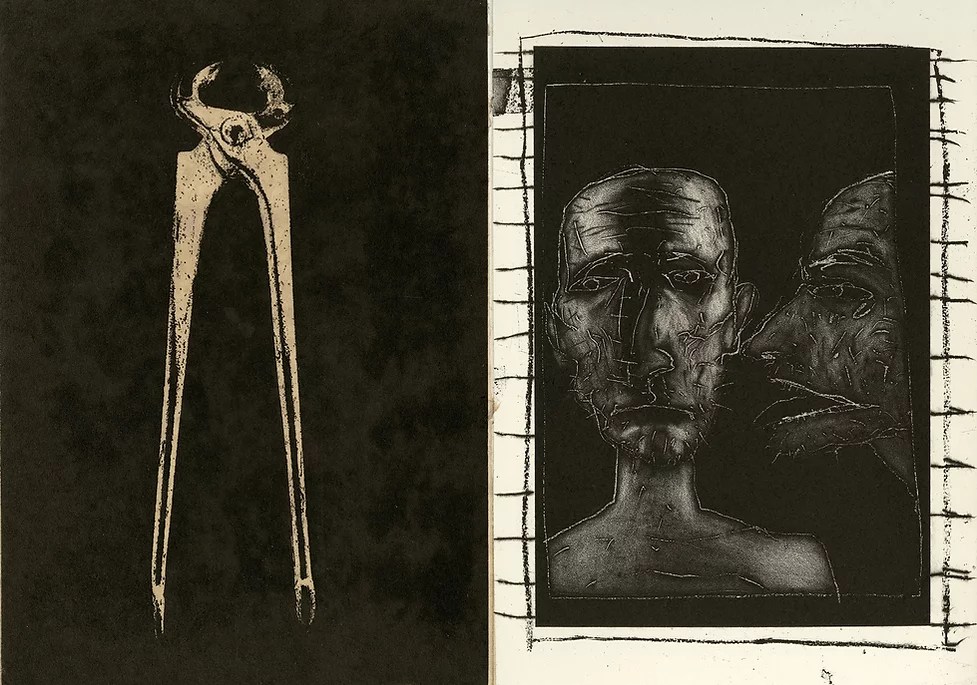
PRINT SERIES: The Passion and Its Objects (after Dürer) by Marcus Rees Roberts: “The Passion and Its Objects (after Dürer) is a series of etchings and monotypes by Marcus Rees Roberts. The images derive from fragments from Albrecht Dürer’s series of woodcuts The Small Passion (1511). Images of the Passion – and of the crucifixion in particular – are so embedded in Western consciousness that we forget that it is a depiction of betrayal, prejudice, and torture. In this version of the Passion by Dürer, one of several he made, small, everyday objects lie scattered within the images – a jug, pliers, a hammer, a coil of rope. Even five hundred years later, we recognise these objects as our own; we can identify with them. But in so doing, we enter the depicted space, and we become complicit in the cruelty. This is one reason why Dürer’s Small Passion is both so powerful and so uncomfortable.”
Marcus Rees Roberts (British, 1951–), The Passion and Its Objects (after Dürer) I, 2019. Diptych etching and aquatint with chine collé printed on Somerset Satin soft white 300gsm, each plate 29.5 × 21 cm (overall 29.5 × 42 cm). Edition of 15.
+++
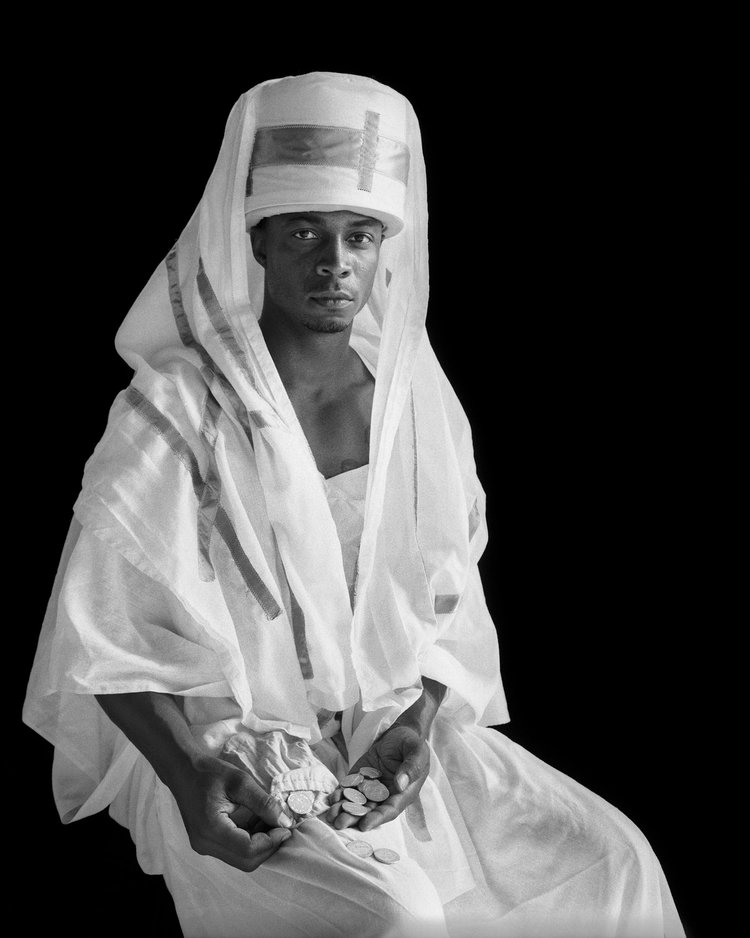
PHOTOGRAPHY SERIES: Passion Play by Deborah Luster: “There are more than 5,300 inmates at the Louisiana State Penitentiary at Angola. Nearly 4,000 of them are serving life without parole. In 2012 and 2013 the Angola Prison Drama Club staged a play unlike any other in the prison’s experience. The Life of Jesus Christ featured 70 inmates, men and women acting together for the first time—in costume, with a real camel, performing for the general public. For the untrained actors, this production held special meaning as they saw pieces of their own lives revealed in the characters they played.”
Layla “Roach” Roberts (Inquisitor), sentenced to LIFE, Angola Prison, Louisiana. Photograph by Deborah Luster, from the Passion Play series, 2013.Bobby Wallace (Jesus), Angola Prison, Louisiana. Photograph by Deborah Luster, from the Passion Play series, 2013.
+++
SONGS:
>>“May I Go with You” by January Lim: This Maundy Thursday song was written in 2020 in the voice of Jesus in Gethsemane, speaking to God the Father. In the first stanza, it seems to me that Jesus is asking to be taken up to heaven, like Elijah—just whisked away back to glory, and spared tomorrow’s cruelties and pain. But in the second stanza that same request seems to shift in meaning as Jesus expresses a desire to go with God’s plan and asks for the strength to follow through. The song was released on the EP Gathered Sighs (2021), put out by Evergreen Baptist Church of Los Angeles, where Lim serves as worship arts pastor. [HT: Global Christian Worship]
LISTEN: Adagio in G minor for violin, strings, and organ | Attributed to Tomaso Albioni, 18th century, but possibly entirely by Albioni biographer Remo Giazotto, 1958 | Performed by the Budapest Franz Liszt Chamber Orchestra
Today is the second day of Holy Week, the final week of Jesus’s life. One event that takes place during this period—on Wednesday, according to the chronologies of Matthew and Mark—is a woman’s anointing Jesus with oil. All four Gospel writers include the story, with variations (and Luke places it earlier in Jesus’s ministry). Love, hospitality, sacrifice, and honor are key themes. The woman is unnamed in the Synoptic Gospels, but John identifies her as Mary (of Bethany). Praising her initiative, Jesus clarifies to those gathered that she anoints him in preparation for his burial (Matt. 26:12; Mark 14:8; John 12:7). It was a solemn act.
Since the prophet in the Old Testament anointed the head of the Jewish king, the anointing of Jesus’ head must have been understood immediately as the prophetic recognition of Jesus, the Anointed, the Messiah, the Christ. According to the tradition it was a woman who named Jesus by and through her prophetic sign-action. It was politically a dangerous story. (xiv)
Sometimes it was a priest who anointed the new king, so the act could be read as not only prophetic but also sacramental. That is, Mary serving here as prophet and priest.
Someone, I forget who, once noted that Jesus would have gone to the cross with this aromatic fragrance still on him. The smell would have lingered with his sweat and blood and was perhaps a comfort to him in his hours of deepest distress, reminding him of the loving devotion of one of his disciples. It was also a proclamation to all the actors and bystanders, as he moved up Golgotha’s hill and was crucified, that he is indeed the Anointed One of God.




 Art & Theology