Roundup: More Christmas music, and icons of the Incarnation

CHRISTMAS EVE SERVICE 2021, Good Shepherd New York: Good Shepherd New York is an interdenominational church located in the Chelsea neighborhood of Manhattan. When the pandemic hit in 2020, like many churches, they pivoted to online services. This video-only format enabled them to expand their music ministry, soliciting participation from nonlocal musicians, who collaborated virtually with the church’s in-house musicians to release some stellar worship music—beautiful arrangements and performances. While GSNY now meets again in person for worship, they also release separate digital worship services on their YouTube channel to reach a wider community. Last year I tuned in to their Christmas Eve service, which I really enjoyed, particularly the music. “Mary’s Lullaby,” written by associate pastor David Gungor and sung by his wife, Kate, with harmonizing vocals by Liz Vice, is my favorite from the list.

  • Children’s skit
  • 4:31: Prelude: “Carol of the Bells,” cello solo by David Campbell
  • 5:20: Welcome
  • 7:22: “Mary, Did You Know,” feat. Charles Jones
  • 11:04: “O Come, All Ye Faithful”
  • 13:55: “Joy to the World!”
  • 16:55: “Angels We Have Heard on High”
  • 20:51: “Hark! the Herald Angels Sing”
  • 23:51: “O Holy Night,” feat. Charles Jones
  • 28:05: “Mary’s Lullaby” (by The Brilliance), feat. Kate Gungor and Liz Vice
  • 30:03: Sermon by Michael Redzina
  • 44:55: “Silent Night,” feat. Matthew Wright and Liz Vice
  • 48:43: “Happy Xmas (War Is Over)” (by John Lennon)

Many of these songs were released last month on the Good Shepherd Collective’s debut Christmas album, Christmas, Vol. 01, available wherever music is sold or streamed.

Good Shepherd New York will be holding an in-person candlelight service at 5 p.m. on Christmas Eve this year in the Chapel of the Good Shepherd at 440 West 21st Street. Musician Charles Jones will be there.

+++

EXHIBITION WALK-THROUGH: Słowo stało się Ciałem (The Word Became Flesh), Warsaw Archdiocese Museum, March 3–31, 2021: Last year a collection of contemporary Ukrainian and Polish icons on the theme of Incarnation was exhibited in Warsaw. In this video, curator Mateusz Sora and Dr. Katarzyna Jakubowska-Krawczyk, head of the Department of Ukrainian Studies at the University of Warsaw, discuss some of the pieces. I don’t speak a lick of Polish, and closed captioning is not available, so I’m not sure what is said—but the camera gives a good visual overview. You can also view a full list of artists and photos of select icons in this Facebook post.

Kuziv, Kateryna_Annunciation
Kateryna Kuziv (Катерина Кузів) (Ukrainian, 1993–), Annunciation, 2020. Egg tempera and gilding on gessoed wood, 40 × 40 cm. [IG: @kateryna_kuziv]

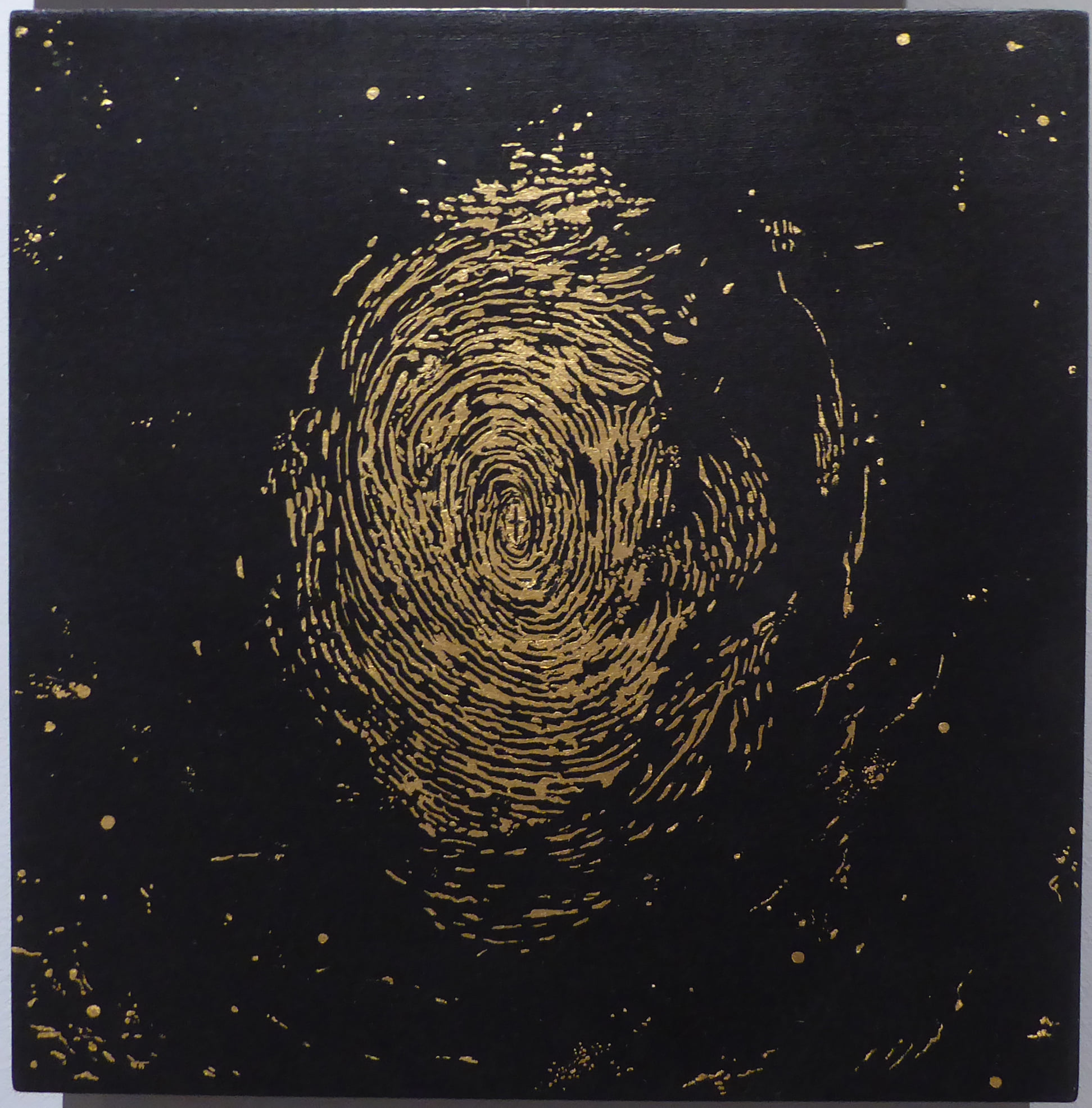
Fiodorowicz, Boris_3,1415926535879323846264338327
Borys Fiodorowicz (Polish), 3,1415926535879323846264338327, 2020. God has fingerprints! [IG: @borysfiodorowicz]

ON A RELATED NOTE: There’s a public exhibition of icons by several of these artists happening in North Carolina at Gordon-Conwell Theological Seminary–Charlotte through February 17, 2023: East Meets West: Women Icon Makers of Western Ukraine. I attended an earlier iteration of East Meets West in Massachusetts back in 2017 (mentioned here), and it was wonderful. The icons are owned by the American collector and former news correspondent to the USSR John A. Kohan, and he has added more pieces to this area of his collection since I last saw it.

There will be a special event on Wednesday, February 1, from 7 to 9 p.m., featuring a talk about the history of iconography by Professor Douglas Fairbairn and a video introduction by Kohan; RSVP here.

+++

ICON INTERPRETATION: “The ‘All-Seeing Eye of God’ Icon” by David Coomler: Icons expert David Coomler unpacks a preeminent example, and two variants, of this unusual icon type that emerged in Russia at the end of the eighteenth century, influenced by the “Eye of Providence” symbol found, for example, on the Great Seal of the United States. Moving from the center outward, four concentric circles show a young Christ Emmanuel, a sun-face, the Theotokos (Virgin Mary), and the angelic hosts, with Lord Sabaoth (God the Father) at the top and symbols of the Four Evangelists at the corners. Inscriptions include “As the burning coal that appeared to Isaiah, a sun arose from the virgin’s womb, bringing to those who wandered in darkness the light of the knowledge of God” (a variant of the Irmos, Tone 2, from the Easter Octoechos) and “My eyes [shall be] on the faithful of the land, that they may dwell with me” (Psalm 101:6).

All-Seeing Eye icon
All-Seeing Eye of God icon, Russia, late 19th or early 20th century

For more icons of this type, see Dr. Sharon R. Hanson’s Pinterest board. And for a fascinating history of the disembodied eye–in-triangle that’s most often associated (unwarrantedly) with Freemasonry in the popular imagination, read Matthew Wilson’s BBC article “The Eye of Providence: The symbol with a secret meaning?” (I learned that one of its earliest appearances is in a Supper at Emmaus painting by Pontormo! It was a Counter-Reformation addition, to cover up the newly banned trifacial Trinity that Pontormo had painted.)

+++

SONG: “Almajdu Laka” (Glory to You) (cover) by the Sakhnini Brothers: The Sakhnini family has lived in Nazareth—Jesus’s hometown!—for generations and is part of the town’s minority Arab Christian population. Adeeb, Elia, and Yazeed Sakhnini [previously] record traditional and original Arabic worship songs together as the Sakhnini Brothers. This is their latest YouTube release, just in time for Christmas. The song is by the Lebanese composer Ziad Rahbani. Turn on “CC” to view the lyrics in English, and see the full list of performers in the video description.

+++

BLOG SERIES: Twelve Days of Carols by Eleanor Parker: There’s a plethora of medieval English Christmas carols preserved for us in medieval manuscripts, a few of which are still part of the repertoire around the world but most of which have fallen into disuse or that are at least lesser known. Medievalist Eleanor Parker spotlights twelve from the latter category. She ran this series back in 2012–13 with the intention of doing twelve posts, one for each day of Christmas, but she stopped short at seven—so I’ve added links to additional carol-based posts of hers from other years. She provides modern translations of the Middle English and, in some cases, brief commentary.

Note that #11 contains an Old English word that Tolkien adopted in his Lord of the Rings!

  1. “Welcome, Yule” (below)
  2. “The Sun of Grace”
  3. “Come kiss thy mother, dear”
  4. “A Becket Carol”
  5. “The Jolly Shepherd”
  6. “Be Merry, and the Old Year”
  7. “Behold and See”
  8. “Hand by hand we shall us take”
  9. “King Herod and the Cock” (below)
  10. “Be merry, all that be present”
  11. “Hail Earendel”
  12. “Christmas Bids Farewell”

Roundup: Giotto projections, global Christmas music playlist, Sakhnini Brothers concert, sacred lettering, deep incarnation

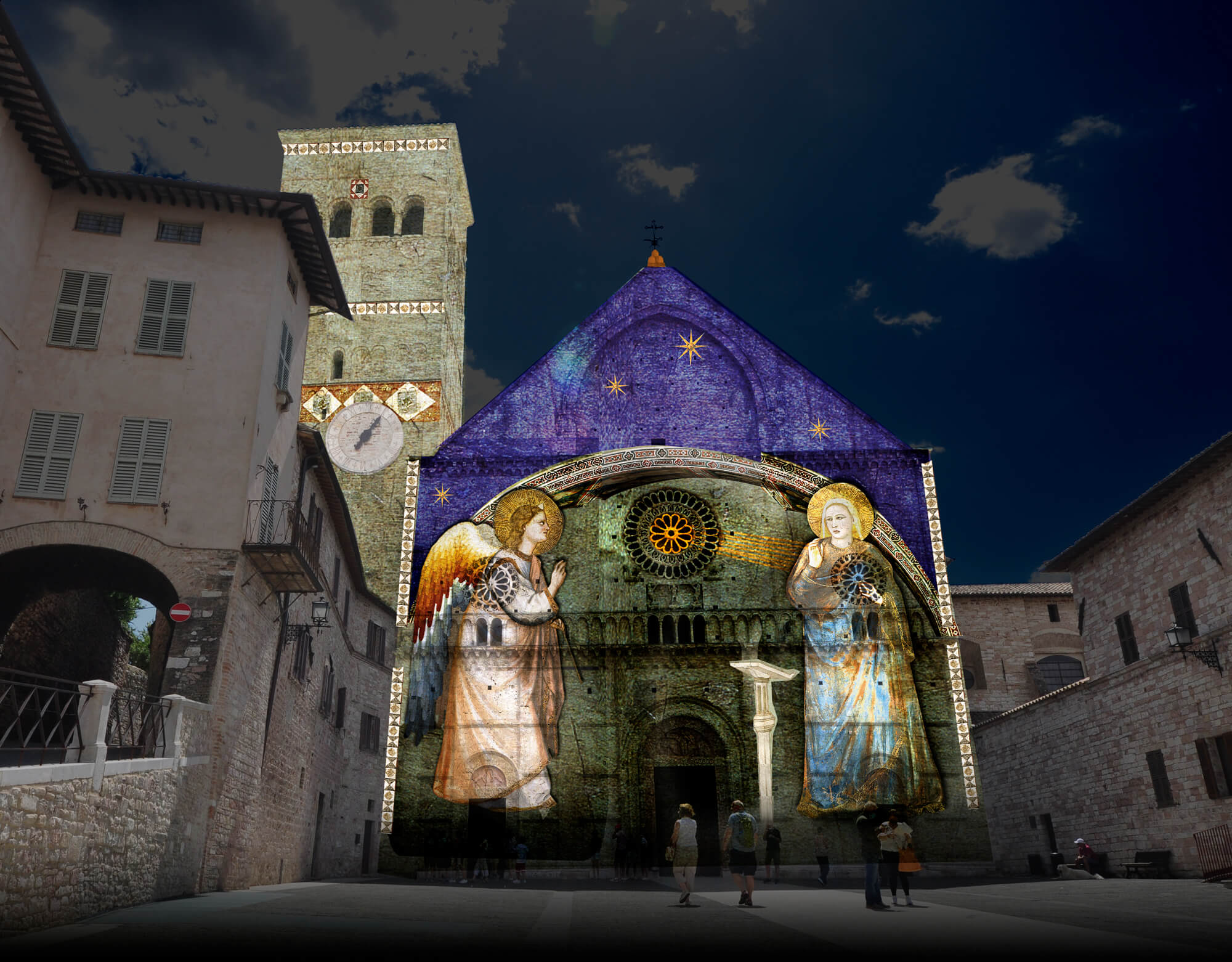
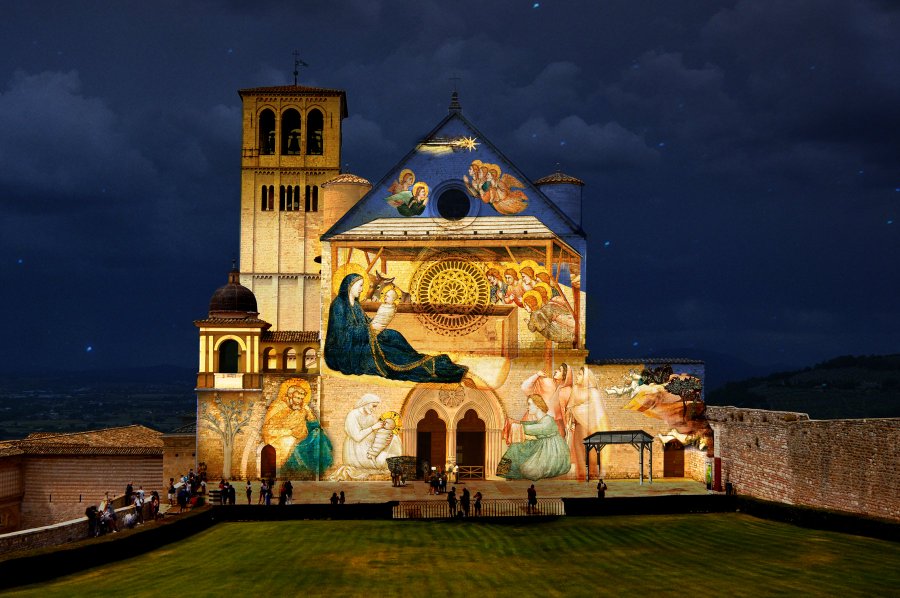
PROJECTION MAPPING INSTALLATION: Il Natale di Francesco (The Christmas of Francis): Last year the Sacro Convento in Assisi, a Franciscan friary, initiated an architectural lighting project called Il Natale di Francesco that featured projections of Christmas-themed frescoes by Giotto from the Lower Basilica of St. Francis onto several of the city’s landmark churches. Architect Mario Cucinella served as artistic director, and the company Enel X realized the installation, which ran throughout Advent and Christmastide, from December 8, 2020, to January 6, 2021 (and I hear it’s been reprised this year!). The pièce de résistance was the projection of Giotto’s Nativity onto the facade of the Upper Basilica of St. Francis. Other projections included the Annunciation on the Cathedral of San Rufino, the Visitation on the Basilica of Saint Clare, and the Adoration of the Magi on the abbey church of San Pietro in Valle—all images adapted using advanced technology to suit the spaces they illuminated.

Annunciation projection

Other components of the installation included frescoed stars from the main basilica’s vaults projected onto the streets; a re-creation of Giotto’s scenes with dozens of sculpted figures, including the addition of a masked nurse at the crèche in honor of all the frontline healthcare workers serving during the COVID-19 crisis; and every thirty minutes a video-mapping show that offered views of the basilica’s interior. I so love the creativity of bringing the sacred art treasures of the church out into the town squares when the pandemic necessitated church closures.

+++

VIRTUAL CONCERT: Christmas with the Sakhnini Brothers: The Sakhnini Brothers are Adeeb, Elia, and Yazeed, three Arabic-speaking brothers from Nazareth who are followers of Jesus. They play about twenty instruments collectively but specialize in piano, oud, and violin, respectively, and love to blend modern Western and ancient Middle Eastern musical styles.

In this half-hour living room concert that premiered December 13, they are joined by vocalist Nareen Farran, pianist Sireen Elias, and percussionist Firas Haddad. They perform an instrumental rendition of “God Rest Ye Merry Gentlemen”; “Amano Morio,” a traditional hymn from the Syriac Maronite liturgy, whose lyrics translate to “The Lord is with us day and night”; “O Come, All Ye Faithful” in Arabic; “Sobhan Al Kalima” (Glory to the Word), another traditional hymn in Syriac (see YouTube video description for full English translation); “Mary, Did You Know”; and “Laylet Eid” (Christmas Eve), a song by Fairuz to the tune of “Jingle Bells.” Their arrangements are fantastic! (You especially have to hear what they do with that closing number; I can’t stop smiling.)

You can support the Sakhnini Brothers on Patreon and follow them on Facebook.

+++

PLAYLIST: Global Christmas Music YouTube Playlist: At the request of Inspiro Arts Alliance, my friend Paul Neeley, an ethnodoxologist blogging at Global Christian Worship, has curated a playlist of twenty-eight Christmas songs from around the world. Languages include French, Yoruba, English, Arabic, Gaelic, Huron, Norwegian, Nepali, German, Hindi, Thai, Italian, Urdu, Spanish, Pangasinan (Philippines), Zulu, Korean, and Swahili. Here are just two videos from the list: “The Greatest Gift,” an original rock song by Sinn Patchai from Thailand, and “Don Oíche Úd i mBeithil” (That Night in Bethlehem), a traditional Irish carol performed by Mairéad Ní Mhaonaigh.

Neeley also put together a listening guide so that you can follow along with the lyrics.

+++

VIRTUAL EXHIBITION: Visual Music: Calligraphy and Sacred Texts, Henry Luce III Center for the Arts & Religion: “‘Form,’ wrote Jewish-American artist Ben Shahn, ‘is the very shape of content.’ Shahn’s statement serves as the guiding principle for this exhibit. Each of these fifteen pieces, all by living artists, is a calligraphic interpretation of a text sacred to Jews, Christians, or both. Each artist has pondered their chosen text, explored it inside and outside, and provided their own rendition of it—their own ‘translation’ into visual form.”

Jonathan Homrighausen, a doctoral student in Hebrew Bible at Duke University who writes and researches at the intersection of Hebrew Bible, calligraphic art, and scribal craft, has curated this wonderful online art exhibition for the Henry Luce III Center for the Arts & Religion at Wesley Theological Seminary in Washington, DC. I spent hours viewing all the rich content on the website, including Homrighausen’s illuminating commentaries (which take us beyond a simplistic “ooh, pretty” response), and following links to learn more. From the exhibition homepage you can click on any of the images for a detailed description, detail photos, embedded videos and music, and suggested articles for further reading.

Also check out the video presentation Homrighausen gave on December 12 for the Jewish Art Salon in New York City in which he discusses five of the Hebrew Bible–based pieces on display, plus two that render rabbinic quotes. The Q&A that follows is moderated by Jewish calligrapher Judith Joseph.

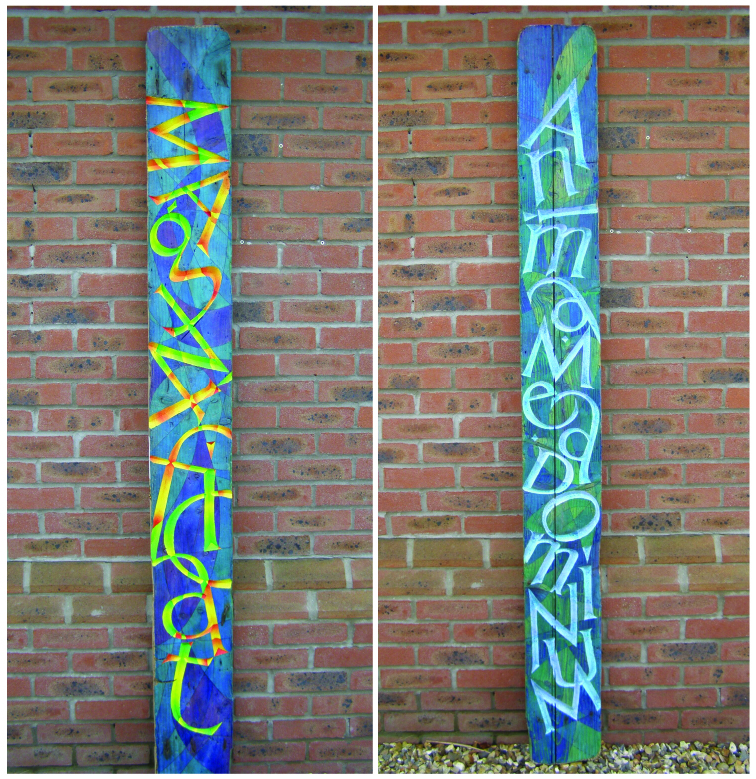
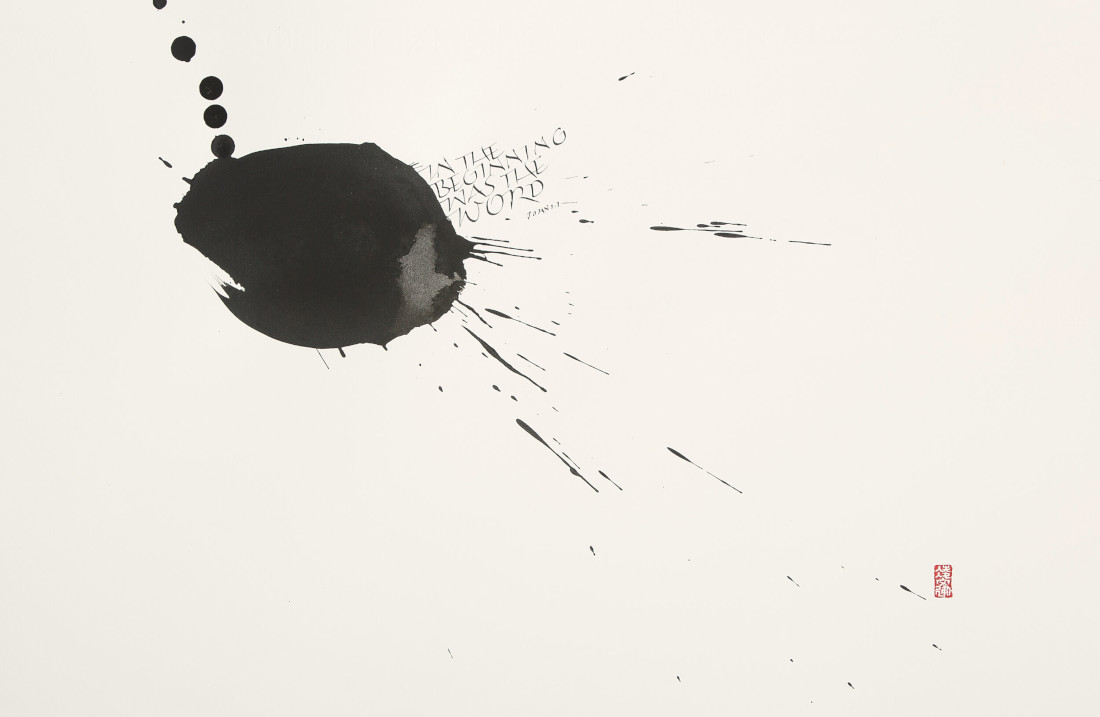
Since many of my blog readers will have just read Mary’s Magnificat from Luke 1 this past Sunday (it’s one of the assigned lections for Advent 4) and we’re just a few days away from the feast of Christmas, let me share these two timely images from the exhibition:

Wenham, Martin_Magnificat (front and back)
Martin Wenham (British, 1941–), Magnificat (front and back), 2008. Paint on found pinewood, 84 × 8 1/2 in.

Ling, Manny_In the beginning was the word
Manny Ling (Chinese, 1966–), ‘In the beginning was the word’ (John 1:1), 2018. Chinese ink on paper, 11 11/16 × 16 1/2 in.

+++

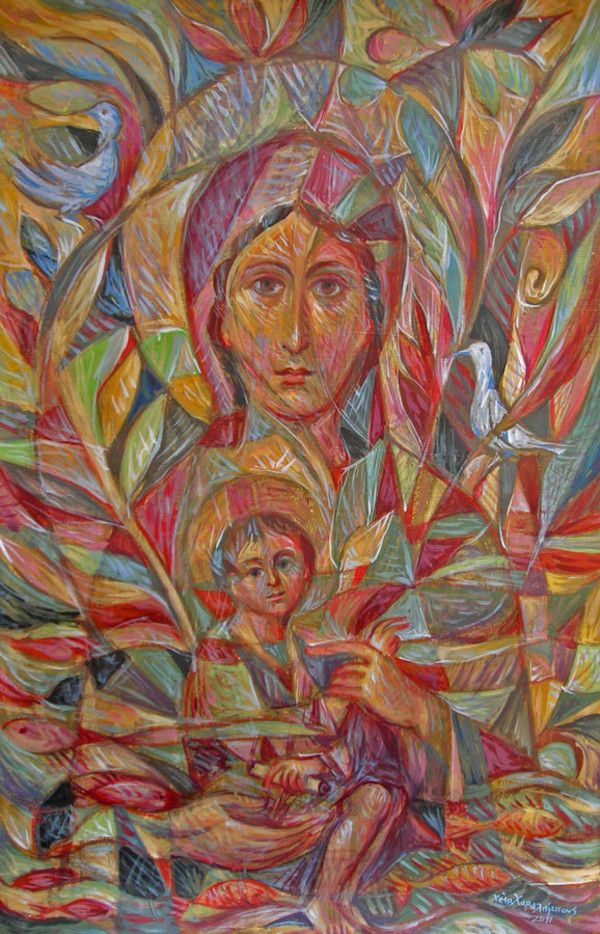
VISUAL MEDITATION: “An Icon of Deep Incarnation” by John A. Kohan: Art collector John A. Kohan reflects on the painting Madonna of the Woods by Cypriot artist Charalambos Epaminonda, a variation on the Virgin Hodegetria type. “God took on human flesh and entered creation not just to bring you and me personal salvation or rescue the human race from sin and death, but to restore and renew the entire earth and all that is therein. Contemporary theologians in our age of ecological awareness call this concept ‘deep incarnation’ . . .”

Epaminonda, Charalambos_Madonna of the Woods
Charalambos Epaminonda (Cypriot, 1962–), Madonna of the Woods, 2011. Acrylic on canvas, 46 × 29 cm. Sacred Art Pilgrim Collection.