Into Your Family (Artful Devotion)

How God loves his people by John Muafangejo
John Muafangejo (Namibian, ca. 1943–1987), How God loves his People all over the World, 1974. Etching. © John Muafangejo Foundation. Source: The African Dream: Visions of Love and Sorrow—The Art of John Muafangejo, p. 64

All who are led by the Spirit of God are sons of God. For you did not receive the spirit of slavery to fall back into fear, but you have received the Spirit of adoption as sons, by whom we cry, “Abba! Father!” The Spirit himself bears witness with our spirit that we are children of God, and if children, then heirs—heirs of God and fellow heirs with Christ, provided we suffer with him in order that we may also be glorified with him.

—Romans 8:14–17

+++

SONG: “You Are the Lover of Our Souls” by Mike Crawford and His Secret Siblings, on Bright Hopes! (2017) (written 2012)

+++

Artist John Ndevasia Muafangejo was born around 1943 in southern Angola, a member of the Kwanyama tribe of the Owambo people. He moved to Namibia as a teenager and was educated at an Anglican mission school, then spent 1967–69 in training at the Evangelical Lutheran Church Art and Craft Centre in Rorke’s Drift, South Africa, an art school that scholars credit as integral to the development of modern African printmaking. Muafangejo is one of the most famous alumni of the school, gaining international recognition for his linocuts, which have been exhibited throughout Europe and America. But his career was cut short in 1987 when he died suddenly of a heart attack, just three years before Namibia gained its independence.

The artwork pictured above is somewhat uncharacteristic of Muafangejo, being an etching (he was much more prolific with and is better known for his linocuts) and excluding the political and autobiographical content that mark much of his other work. Church life and biblical narratives, however, did regularly find expression in his prints. He thought highly of the church, whose local leaders fought against apartheid, supported his art, and (through Father C. S. Mallory) cared for him during bouts of mental illness.

How God loves his People all over the World shows God the Father embracing all his children, who tenderly place their hands over their hearts. A family portrait! What Muafangejo visualizes in anthropomorphic terms, Mike Crawford, in his music video for “You Are the Lover of Our Souls,” suggests through images of sun, sea, sky, and breeze, which feel like a hug from on high. “God, you are so good / You are beautiful / So mysterious / How you’re calling us into your family / You’ve invited us into your family / We’re your sons and daughters now. / . . . / Yes, you have adopted me.”

For more information on John Muafangejo, see The African Dream: Visions of Love and Sorrow—The Art of John Muafangejo by Orde Levinson (Thames & Hudson, 1992).


This post belongs to the weekly series Artful Devotion. If you can’t view the music player in your email or RSS reader, try opening the post in your browser.

To view all the Revised Common Lectionary scripture readings for Trinity Sunday, cycle B, click here.
Come, Energy Divine (Artful Devotion)

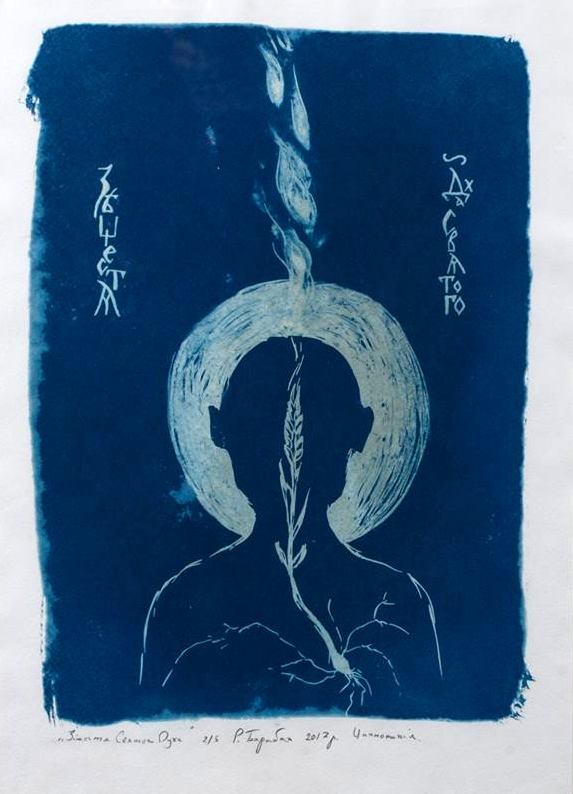
Descent of the Holy Spirit
Roman Barabakh (Ukrainian, 1990–), Descent of the Holy Spirit, 2017. Cyanotype print, 54 × 42.2 сm. Available for sale via Iconart.

“I will put my spirit within you, and you shall live . . .”—Ezekiel 37:14

+++

SONG: “Abbeville” (Come, Holy Spirit, Come) | Words by Benjamin Beddome (published posthumously in 1818) | American folk tune from The Sacred Harp, arr. Elisha J. King (1844) | Performed by Marsha Genensky of Anonymous 4, on American Angels: Songs of Hope, Redemption, and Glory (2005)

You can hear this song—and twelve others—on “Anonymous 4: The Sacred Harp,” a Saint Paul Sunday radio broadcast that aired on American Public Media in September 2006. The entire concert-interview is worth a listen, or you can skip to 7:49.

Anonymous 4’s a cappella version of “Abbeville” is my favorite, but another nice version is the Wilder Adkins–Gabrielle Jones duet with acoustic guitar accompaniment. There’s also Liz Janes’s arrangement, with musical saw, commissioned in 2008 for the album Help Me to Sing: Songs of the Sacred Harp but rereleased in 2016 on Cardiphonia Music’s Hollow Square Hymnal.

Come, Holy Spirit, come,
With energy divine,
And on this poor, benighted soul,
With beams of mercy shine.

From the celestial hills,
Light, life, and joy dispense;
And may I daily, hourly feel
Thy quick’ning influence.

Melt, melt this frozen heart;
This stubborn will subdue;
Each evil passion overcome,
And form me all anew.

Mine will the profit be,
But Thine shall be the praise;
And unto Thee will I devote
The remnant of my days.


This post belongs to the weekly series Artful Devotion. If you can’t view the music player in your email or RSS reader, try opening the post in your browser.

To view all the Revised Common Lectionary scripture readings for Pentecost Sunday, cycle B, click here.

Like a Tree (Artful Devotion)

Blossoming Plum Tree by a River
Blossoming Plum Tree by a River, Japan, early 20th century. Color lithograph, 8.8 × 13.8 cm (3 7/16 × 5 7/16 in.). Museum of Fine Arts, Boston.

Blessed is the man
who walks not in the counsel of the wicked,
nor stands in the way of sinners,
nor sits in the seat of scoffers;
but his delight is in the law of the LORD,
and on his law he meditates day and night.

He is like a tree
planted by streams of water
that yields its fruit in its season,
and its leaf does not wither.
In all that he does, he prospers.

—Psalm 1:1–3

Blessed is the man who trusts in the LORD,
whose trust is the LORD.
He is like a tree planted by water,
that sends out its roots by the stream,
and does not fear when heat comes,
for its leaves remain green,
and is not anxious in the year of drought,
for it does not cease to bear fruit.

—Jeremiah 17:7–8

+++

SONG: “I Shall Not Be Moved” | Negro spiritual, performed by Mississippi John Hurt (1892–1966), on The Best of Mississippi John Hurt | For a congregational hymn arrangement, see the African American Heritage Hymnal #479

Instead of the rough extroverted singing style and aggressive guitar playing that typified the other Delta legends, Hurt sang in a gentle, quiet voice and played intricate and often delicate guitar patterns. With a particular fondness for songsters that had blues leanings in their repertoires, like Leadbelly and Josh White, Hurt developed into an extraordinarily lyrical guitarist with a refined finger-picking style. His tender singing exuded a warmth unique to the blues genre, and the gospel influence so prominent in his music gave his songs a depth and reflective quality . . . [excerpted from a Paste magazine feature by Alan Bershaw]

For an even earlier recording of this song, from 1926, listen to the Taskiana Four.


This post belongs to the weekly series Artful Devotion. If you can’t view the music player in your email or RSS reader, try opening the post in your browser.

To view all the Revised Common Lectionary scripture readings for the Seventh Sunday of Easter, cycle B, click here.

Carried Up (Artful Devotion)

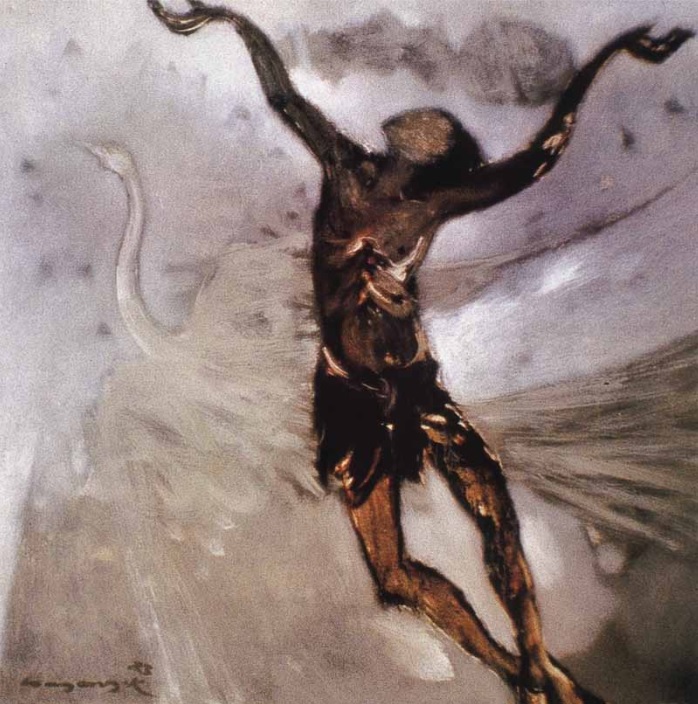
Ascension by Bagong Kussudiardja
Bagong Kussudiardja (Indonesian, 1928–2004), Ascension, 1983.

This Thursday, May 10, the church commemorates Jesus’s ascension into heaven—an event Luke describes twice!

“While he blessed them, he parted from them and was carried up into heaven.” (Luke 24:51)

“. . . as they were looking on, he was lifted up, and a cloud took him out of their sight.” (Acts 1:9)

Read the full passages at https://lectionary.library.vanderbilt.edu//texts.php?id=92.

+++

MUSIC: “Liebesträume No. 3” by Franz Liszt (1850) | Performed by Jenő Jandó, on The Essentials: Greatest Classics, vol. 1 (2016)

+++

The ascension is so central [to Christianity] because it assures us that the Incarnation continues. Christ didn’t just come among us for thirty-three years, slumming, as it were, and then when his work was done, say, “Phew! I’m glad that’s over! I’m going to unzip this skin suit and get back to heavenly living,” leaving us here on our own. He went into heaven with a pledge of all that we are going to become. Tertullian, I think, was the first one to put it that way. The Spirit, in scripture, is the pledge of Christ’s presence in us, but Christ’s continuing body is the pledge of what we’re going to have in heaven. So the ascension tells us that Christ has not let go of our humanity. He truly wants to take human beings where we’ve never gone before: into the very life of the triune God.

—Gerrit Scott Dawson, author of Jesus Ascended: The Meaning of Christ’s Continuing Incarnation, from an Authors on the Line interview


This post belongs to the weekly series Artful Devotion. If you can’t view the music player in your email or RSS reader, try opening the post in your browser.

To view all the Revised Common Lectionary scripture readings for Ascension Day, cycle B, click here.

How Gentle (Artful Devotion)

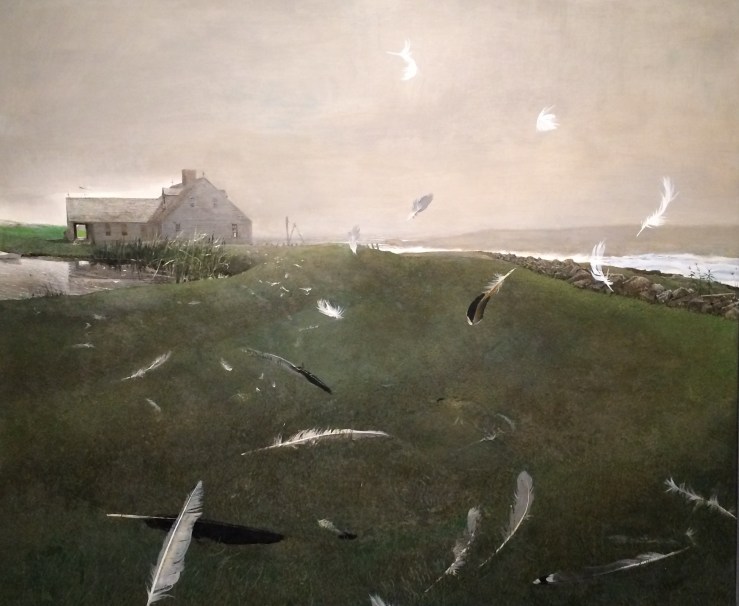
Airborne by Andrew Wyeth
Andrew Wyeth (American, 1917–2009), Airborne, 1996. Tempera on hardboard panel. Crystal Bridges Museum of American Art, Bentonville, Arkansas.

For this is the love of God, that we keep his commandments. And his commandments are not burdensome. For everyone who has been born of God overcomes the world.

—1 John 5:3–4a

+++

SONG: “How Gentle God’s Commands” | Words by Philip Doddridge (1702–1751) | Music by Hans Georg Nägeli (1773–1836) | Performed by Ordinary Time, on At the Table (2009)


How gentle God’s commands!
How kind his precepts are!
Come, cast your burdens on the Lord
And trust his constant care.

Beneath his watchful eye,
His saints securely dwell;
That hand which bears all nature up
Shall guard his children well.

Why should this anxious load
Press down your weary mind?
Haste to your heav’nly Father’s throne
And sweet refreshment find.

His goodness stands approved,
Unchanged from day to day;
I’ll drop my burden at his feet
And bear a song away.

+++

I cannot see, my God, a reason why
From morn to night I go not gladsome, free;
For, if thou art what my soul thinketh thee,
There is no burden but should lightly lie,
No duty but a joy at heart must be:
Love’s perfect will can be nor sore nor small,
For God is light—in him no darkness is at all.

—George MacDonald, from A Book of Strife in the Form of the Diary of an Old Soul (1880)


This post belongs to the weekly series Artful Devotion. If you can’t view the music player in your email or RSS reader, try opening the post in your browser.

To view all the Revised Common Lectionary scripture readings for the Sixth Sunday of Easter, cycle B, click here.

Truest Vine (Artful Devotion)

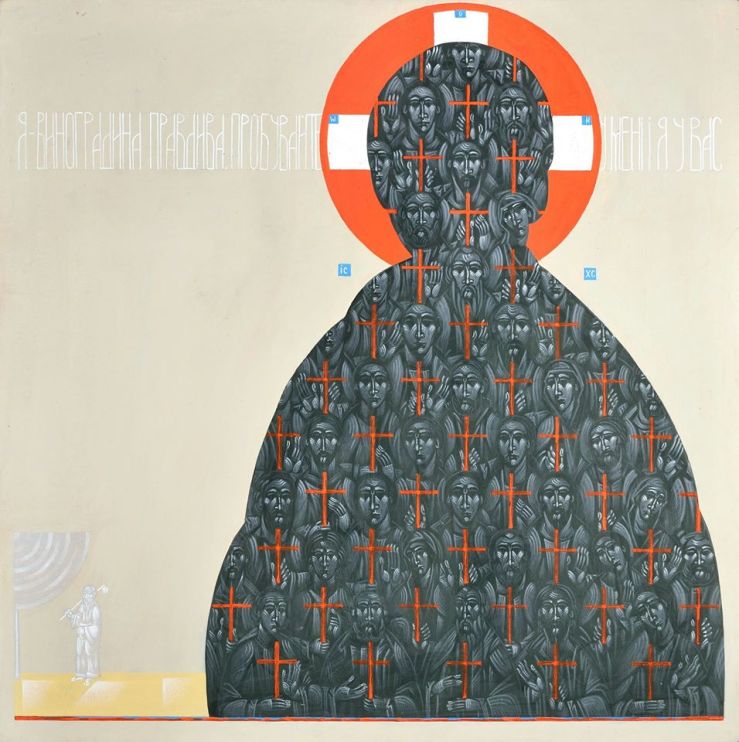
I Am the True Vine by Ostap Lozinski
Ostap Lozynsky (Ukrainian, 1983–), I Am the True Vine, 2015

I am the vine; you are the branches. Whoever abides in me and I in him, he it is that bears much fruit, for apart from me you can do nothing. If anyone does not abide in me he is thrown away like a branch and withers; and the branches are gathered, thrown into the fire, and burned. If you abide in me, and my words abide in you, ask whatever you wish, and it will be done for you. By this my Father is glorified, that you bear much fruit and so prove to be my disciples.

—John 15:5–8

+++

SONG: “Make of Our Hearts” by Hiram Ring, on Songs for Liturgy (2012)


This post belongs to the weekly series Artful Devotion. If you can’t view the music player in your email or RSS reader, try opening the post in your browser.

To view all the Revised Common Lectionary scripture readings for the Fifth Sunday of Easter, cycle B, click here.

What the World Needs Now (Artful Devotion)

How does God’s love abide in anyone who has the world’s goods and sees a brother or sister in need and yet refuses help? Little children, let us love, not in word or speech, but in truth and action.

—1 John 3:17–18

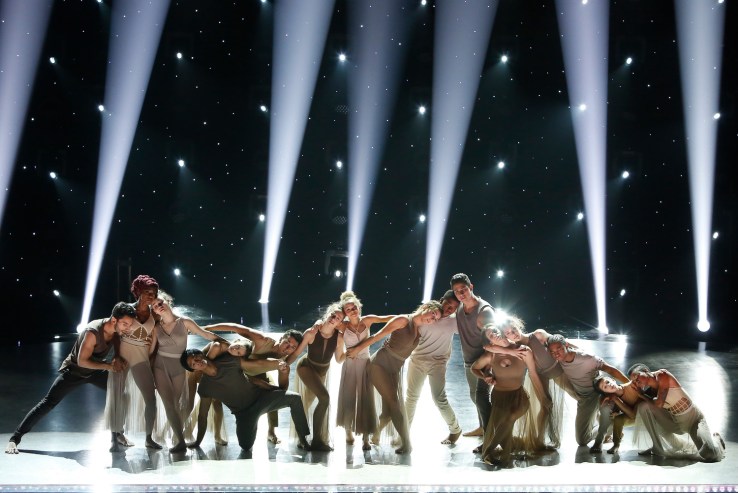
For this week’s installment, instead of presenting for contemplation a song and a visual artwork, I want to share a contemporary dance number, in which the aural and the visual—music and bodily movement—are intertwined. Click on the image below to watch the performance on YouTube (will open in new tab; ends at 2:11).

What the World Needs Now Is Love (Travis Wall)

This routine was choreographed by Travis Wall to Will Young’s cover of “What the World Needs Now Is Love.” It aired August 22, 2016, on season 13, episode 10 of So You Think You Can Dance on Fox. For this “Next Generation” season, contestants were between the ages of 8 and 13 and were paired with older dancers from previous seasons (“All-Stars”). The young dancers are Tahani Anderson, Leon “Kida” Burns, Ruby Castro, J. T. Church, Emma Hellenkamp, and Tate McRae. The All-Stars are Gaby Diaz, Comfort Fedoke, Marko Germark, Jenna Johnson, Paul Karmiryan, Sasha Mallory, Kathryn McCormick, Jonathan Platero, Robert Roldan, and Du-Shaunt “Fik-Shun” Stegall.

+++

Liberate us, we pray you, Lord, from the getting and grasping to which we are prone. Teach us the royal way of the law of the gift, that in giving not only things but ourselves we may know even now the life abundant you promise to bring to perfection in eternal life with you. Increase in us gratitude for your gift of yourself, and let that gift of gratitude inspire us to the greatness of living our lives as love in response to love.

—Richard John Neuhaus

+++

God of all—
come now and transform my life
into becoming an instrument and embodiment of your peace.
May I bring, be, and sustain love over hate.
May I bring, be, and sustain pardon in the midst of harm.
May I bring, be, and sustain hope where there is none.
May I bring, be, and sustain light in the terror of the dark.
May I bring, be, and sustain rejoicing upon sadness.

Grant me the gift
to choose the consolation of others over my own;
to seek to understand over my need to be understood;
to seek in all things, to love well beyond myself.
Because in such ways,
I will receive much more if I give without reserve,
and I will know true reconciliation and restoration
when I forgive and restore others;
and then,
I will know the joy of life to the fullest
when I truly die to myself.

Amen.

—David Haas, adaptation of the Prayer of St. Francis
(© 2017 by David Haas / The Emmaus Center for Music, Prayer, and Ministry)


This post belongs to the weekly series Artful Devotion. If you can’t view the music player in your email or RSS reader, try opening the post in your browser.

To view all the Revised Common Lectionary scripture readings for the Fourth Sunday of Easter, cycle B, click here.

In My Heart, a Melody (Artful Devotion)

Wildly Dancing Children by Emil NOlde
Emil Nolde (German, 1867–1956), Wildly Dancing Children, 1909. Oil on canvas, 73 × 88 cm. Kunsthalle Kiel, Germany.

“You have put gladness in my heart . . .”—Psalm 4:7

+++

SONG: “In My Heart There Rings a Melody” | Words and music by Elton Menno Roth, 1924 | Arranged for and performed on violin by Jaime Jorge, on Rock of Ages: Simply Classic Hymns, Volume 3 (2010)

+++

Embedded in my heart is a melody.
I hear it now and again, faintly.
It disturbs my quest for power with hints of grace.
It haunts my dreams of control with intimations of selflessness.
It stays my hand lifted in anger
And softens my chest tight with rage.
It whispers to me of justice,
And sings to me of compassion.
It is the song of God and I shall sing it yet.
But not alone.
We each bear the song
And someday we will sing it together in harmony.
On that day the mountains of discord will melt before us;
Idols of ego, tribe, and boundary will shatter,
And together we will sing the world awake.

—Rami M. Shapiro

This poem, “Psalm 97,” is from Accidental Grace: Poetry, Prayers, and Psalms, copyright © 2015 by Rami M. Shapiro. Used by permission of Paraclete Press.


This post belongs to the weekly series Artful Devotion. If you can’t view the music player in your email or RSS reader, try opening the post in your browser.

To view all the Revised Common Lectionary scripture readings for the Third Sunday of Easter, cycle B, click here.

By the Mark (Artful Devotion)

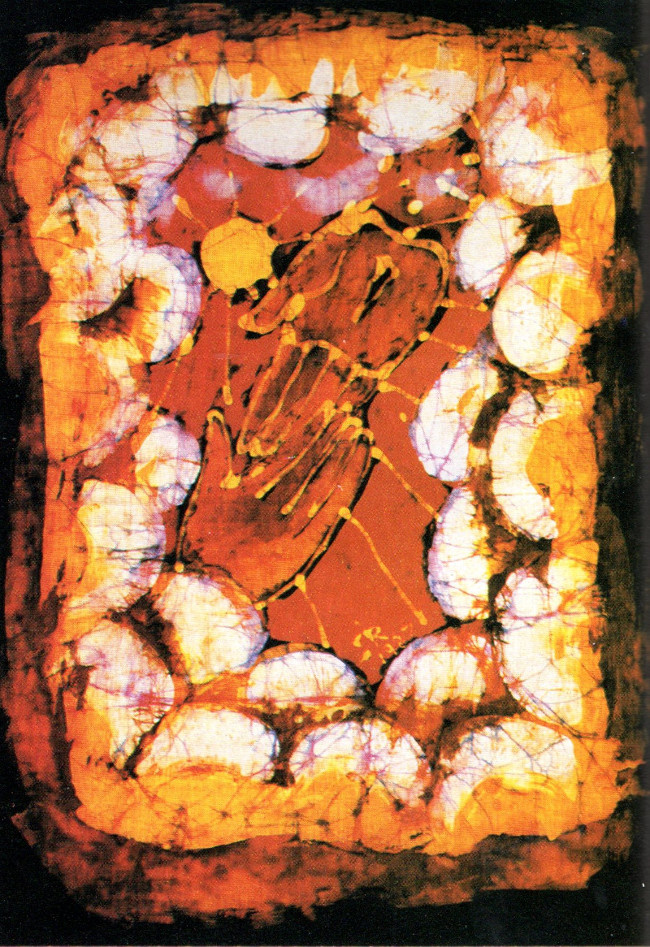
You and I by Solomon Raj
P. Solomon Raj (Indian, 1921–), You and I, before 1993. Batik. Source: Living Flame and Springing Fountain (Indian Society for Promoting Christian Knowledge, 1993)

Then [Jesus] said to Thomas, “Put your finger here, and see my hands; and put out your hand, and place it in my side. Do not disbelieve, but believe.”

Thomas answered him, “My Lord and my God!”

—John 20:27–28

+++

SONG: “By the Mark” by Gillian Welch and David Rawlings, on Revival (1996)

(Related post: “Thomas in the dark”)

+++

“St. Thomas the Apostle” by Malcolm Guite, from Sounding the Seasons: Seventy Sonnets for the Christian Year

“We do not know . . . how can we know the way?”
Courageous master of the awkward question,
You spoke the words the others dared not say
And cut through their evasion and abstraction.
O doubting Thomas, father of my faith,
You put your finger on the nub of things:
We cannot love some disembodied wraith,
But flesh and blood must be our king of kings.
Your teaching is to touch, embrace, anoint,
Feel after him and find him in the flesh.
Because he loved your awkward counter-point,
The Word has heard and granted you your wish.
O place my hands with yours, help me divine
The wounded God whose wounds are healing mine.

[Click here to listen to a short sermon Guite preached on St. Thomas back in 2012, which opens with his reading of this poem.]


This post belongs to the weekly series Artful Devotion. If you can’t view the music player in your email or RSS reader, try opening the post in your browser.

To view all the Revised Common Lectionary scripture readings for the Second Sunday of Easter, cycle B, click here.

Death Is Ended! (Artful Devotion)

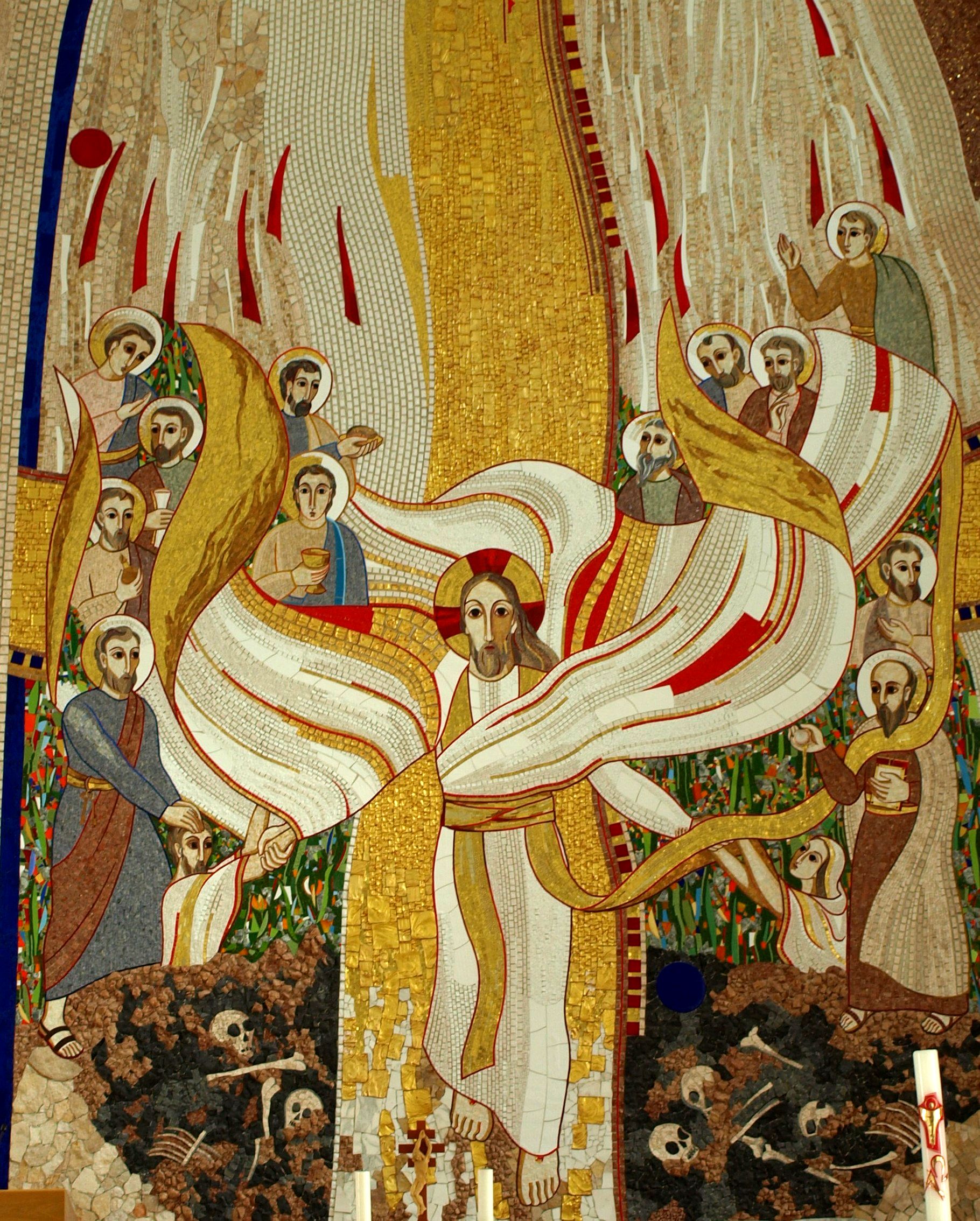
Resurrection by Marko Rupnik
Marko Ivan Rupnik (Slovenian, 1954–), Resurrection of Christ (detail), 2006. Mosaic, St. Stanislaus College Chapel, Ljubljana, Slovenia.

And he will destroy on this mountain the shroud that is cast over all peoples, the sheet that is spread over all nations; he will swallow up death forever. . . . This is the LORD for whom we have waited; let us be glad and rejoice in his salvation.

—Isaiah 25:7, 9b

Kristus je vstal! Zares je vstal! (Slovenian) | Christ is risen! He is risen indeed!

—traditional Easter Acclamation

+++

SONG: “Death Is Ended” by James Ward, on I’ll Be More like Jesus: The Choral Music of James Ward and New City Fellowship (2006)

My church is a part of the New City Network; we have several favorite James Ward songs, and this is one of them. I can’t wait to sing it together as a congregation this morning!

+++

Let no one fear death,
for the death of our Savior has set us free.
He has destroyed it by enduring it.
He destroyed hell when he descended into it.
He put it into an uproar even as it tasted of his flesh. . . .
Hell grasped a corpse, and met God.
It seized earth, and encountered heaven.
It took what it saw, and was overcome by what it did not see.
O Death, where is thy sting?
O Hell, where is thy victory?
Christ is risen and you are cast down! . . .
Christ is risen and life is set free!

—John Chrysostom, 4th century

+++

For a description of the mosaic pictured above, read the final entry in last year’s “Journey to the Cross: Artists Visualize Christ’s Passion.” To see more of Rupnik’s mosaics, visit www.centroaletti.com.


This post belongs to the weekly series Artful Devotion. If you can’t view the music player in your email or RSS reader, try opening the post in your browser.

To view all the Revised Common Lectionary scripture readings for Easter (Resurrection of the Lord) Sunday, cycle B, click here.