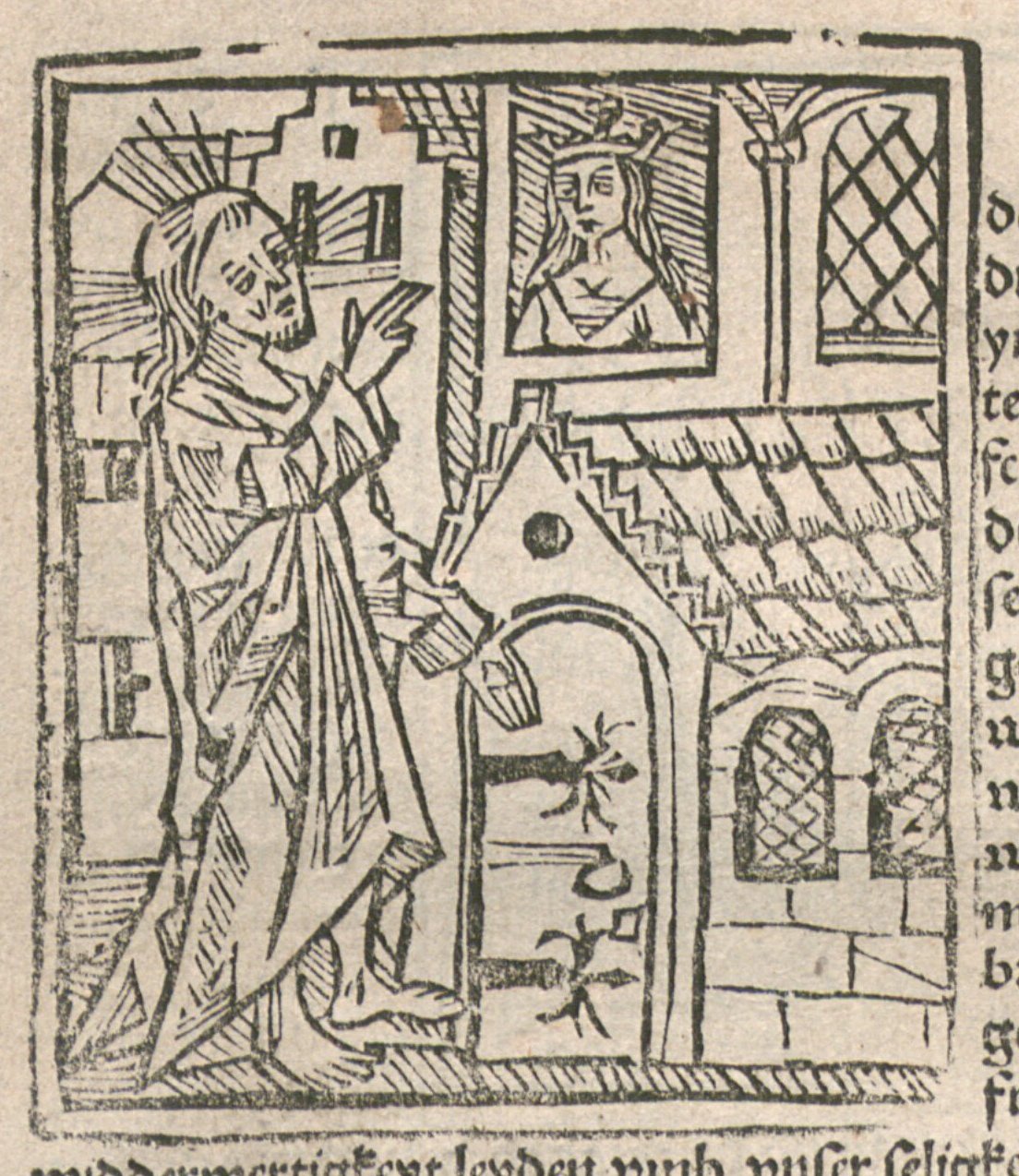
“Knocking on the Door,” woodcut from Von der ynnigen selen wy sy gott casteyet vnnd im beheglich mach, aka Christus und die minnende Seele (Christ and the Loving Soul), published in Erfurt, Germany, ca. 1500. Museum Otto Schäfer, Schweinfurt, Germany, OS 231, fol. 5v. Digitized by Bayerische Staatsbibliothek.
“Sonnet XVIII” by Lope de Vega
¿Qué tengo yo que mi amistad procuras?
¿Qué interés se te sigue, Jesús mío,
que a mi puerta cubierto de rocío
pasas las noches del invierno escuras?

¡Oh, cuánto fueron mis entrañas duras
pues no te abrí! ¡Qué extraño desvarío
si de mi ingratitud el hielo frío
secó las llagas de tus plantas puras!

¡Cuántas veces el ángel me decía:
«¡Alma, asómate agora a la ventana,
verás con cuánto amor llamar porfía!»
¡Y cuántas, hermosura soberana,
«Mañana le abriremos» – respondía,
para lo mismo responder mañana!
From Rimas sacras (Sacred Rhymes) by Lope de Vega (Madrid, 1614). Public domain.
Lope de Vega (1562–1635) was as astoundingly prolific Spanish playwright, poet, and novelist who was a key figure in the Spanish Golden Age of Baroque literature. His 1,800-some plays encompass the categories of religious, mythological, historical, pastoral, chivalric, and comedies of manners. A known philanderer, Lope had multiple love affairs throughout his life; besides the four children he had from his two wives, he also had at least ten more by his mistresses. The death of his son in 1612, and then of his lover the following year, threw him into an existential crisis, and he turned toward religion, even joining the Catholic priesthood in 1614—but that path didn’t lead to the personal reform he had thought he wanted, as he continued his womanizing. He died of scarlet fever at age seventy-two.
Translated by Henry Wadsworth Longfellow
Lord, what am I, that with unceasing care
     Thou didst seek after me, that thou didst wait,
     Wet with unhealthy dews, before my gate,
And pass the gloomy nights of winter there?

Oh, strange delusion, that I did not greet
     Thy blest approach! and oh, to heaven how lost,
     If my ingratitude’s unkindly frost
Has chilled the bleeding wounds upon thy feet!

How oft my guardian angel gently cried,
     “Soul, from thy casement look, and thou shalt see
     How he persists to knock and wait for thee!”
          And oh, how often to that voice of sorrow,
“Tomorrow we will open,” I replied,
          And when the morrow came I answered still, “Tomorrow.”
Henry Wadsworth Longfellow (1807–1882) was an American poet, educator, and linguist, best known for “Paul Revere’s Ride” and “The Song of Hiawatha.” From 1829 to 1854, he was a professor of modern languages, first at Bowdoin College, his alma mater, and then at Harvard University. Though rooted in New England, he traveled extensively in Europe and was proficient in—besides his native English—Spanish, Portuguese, French, German, Italian, Danish, Swedish, Finnish, and Polish, as well as Latin and Greek. He frequently translated poetry from those languages into English, his most influential translation being of Dante’s Divine Comedy, which brought that work to a wider English-speaking audience.
Translated by Geoffrey Hill
Based on the prose translation by J. M. Cohen in The Penguin Book of Spanish Verse, 3rd ed. (Penguin, 1988)
What is there in my heart that you should sue
so fiercely for its love? What kind of care
brings you as though a stranger to my door
through the long night and in the icy dew

seeking the heart that will not harbour you,
that keeps itself religiously secure?
At this dark solstice filled with frost and fire
your passion’s ancient wounds must bleed anew.

So many nights the angel of my house
has fed such urgent comfort through a dream,
whispered ‘your lord is coming, he is close’
that I have drowsed half-faithful for a time
bathed in pure tones of promise and remorse:
‘tomorrow I shall wake to welcome him.’
Sir Geoffrey Hill (1932–2016), a Fellow of the Royal Society of Literature, was an English poet and literary critic who is recognized as a principal contributor to those fields in the twentieth and twenty-first centuries. He was a Christian. From 1988 to 2006, he lived in the United States, where he taught literature and religion at Boston University, but throughout his career he also had professorships at Oxford, Leeds, and Cambridge. “Hill’s poetry is known for its barbed humor, personal intensity, and deep interests in culture, history, and religion,” Poets.org states, and for being dense and intellectually rigorous.
The eighteenth sonnet from Lope de Vega’s Rimas sacras—reproduced above in its original Spanish and in two English translations—portrays Jesus as a lover, knocking tenaciously to be let into his beloved’s heart. He stands outside at night in the cold, a coldness matched by the beloved’s indifference, for she says, “I’ll open tomorrow,” but then keeps putting off that promise to the next day and the next . . .
“The poet marvels at the persistence of divine love in the face of human ingratitude,” writes Colin Thompson in his journal article “‘The Resonances of Words’: Lope de Vega and Geoffrey Hill.” Lope mines the paradox of fiery passion and icy rejection, Thompson says, “pressing . . . the traditional language of Petrarchan and courtly love into the service of spiritual love.”
Lope derived the conceit of “¿Qué tengo yo?” from two biblical passages: one in the Old Testament and one in the New. Part of an ancient Hebrew erotic love poem, the first is Song of Solomon 5:2–6, in which a woman narrates how, lying in bed one night, she hears her lover’s call outside, but she waits too long to answer, for when she rises to open the door, he has gone:
I was sleeping, but my heart was awake. The sound of my beloved knocking! “Open to me, my sister, my love, my dove, my perfect one, for my head is wet with dew, my locks with the drops of the night.”
I had put off my garment; how could I put it on again? I had bathed my feet; how could I soil them? My beloved thrust his hand into the opening, and my inmost being yearned for him.
I arose to open to my beloved, and my hands dripped with myrrh, my fingers with liquid myrrh, upon the handles of the bolt. I opened to my beloved, but my beloved had turned away and was gone. My soul failed me when he spoke. I sought him but did not find him; I called him, but he gave no answer.
Chapter 3, verse 20 of Revelation, the final book of the Bible, implicitly references this passage. Christ exclaims to the church in Laodicea, “Listen! I am standing at the door, knocking; if you hear my voice and open the door, I will come in and eat with you, and you with me.” The extrapolation of the Song of Solomon romance to the relationship between Christ and the church, allegorized as his bride, would become common in early Christian biblical interpretation.
In his poem, Lope was also likely drawing on Augustine, a fourth- and fifth-century church father he is known to have read. In a famous passage from book 8 of his Confessions, Augustine describes how he initially responded to Christ’s wooing with indecisiveness:
I had no answer to make to you when you called me: Awake, thou that sleepest, and arise from the dead, and Christ shall give thee light. And, while you showed me, wherever I looked, that what you said was true, I, convinced by the truth, could still find nothing to say except lazy words spoken half asleep: “A minute,” “just a minute,” “just a little time longer.” But there was no limit to the minutes, and the little time longer went a long way. (trans. Rex Warner)
Augustine’s conversion to Christianity was a slow one because of his slothful will. Many modern readers find that they relate to him in this—procrastinating making a faith decision because of force of habit and resistance to change. We worry what a commitment to Christ would demand of us, and it’s easier to just continue living for ourselves. So we settle for the status quo. Geoffrey Hill, in his translation of Lope, describes “the heart . . . / that keeps itself religiously secure,” punning on “religiously,” which in this case means “fervently, zealously”: the heart that, unwilling to be vulnerable, not daring to love and be loved, keeps itself closed to Christ.
Besides these biblical and patristic influences on Lope’s poem, Rafael Lapesa, in his 1977 book Poetas y prosistas de ayer y de hoy (Poets and Prose Writers of Yesterday and Today), identifies another: De los nombres de Cristo (The Names of Christ) by the Spanish Augustinian friar Luis de León, a masterpiece of Renaissance philosophical and theological thought first published in 1583. The “Pastor” (Shepherd) section in book 1 reads in part:
Madruga, digo antes que amanezca se levanta; o, por decir verdad, no duerme ni reposa, sino, asido siempre al aldaba de nuestro corazón, de contino y a todas horas le hiere y le dice, como en los Cantares se escribe: Abreme, hermana mia, Amiga mia, Esposa mia, abreme; que la cabeza traigo llena de rocio, y las guedejas de mis cabellos llenas de gotas de la noche.
He [Christ] rises early, I say; before dawn he rises. Or, to tell the truth, he neither sleeps nor rests but, always clinging to the knocker of our heart, continually and at all hours strikes it and says to it, as it is written in the Song of Songs: “Open to me, my sister, my love, my bride, open to me; for my head is covered with dew, and the locks of my hair are full of drops of the night.” (my translation)
Lope eulogized Luis in his seven-thousand-line Laurel de Apolo (1630) and clearly admired him.
The “Christ as lover” trope appears copiously in Christian literature, and Lope de Vega is but one poet who developed it, engaging it from a personal, confessional angle. Written right after his return to Christianity—after he finally opened the door to Christ—his “Sonnet XVIII” looks back on the many years he spent ignoring Christ’s entreaties so that he could pursue various lusts, which he would continue to struggle with for the rest of his life. He expresses wonder that Christ would love someone like him, and be so steadfast in his knocking. Unlike the knocking lover in the Song of Solomon, Christ stood before Lope’s door until Lope answered at last, “Come in.”
Every month I curate a mix of old and new Christian (or Christian-resonant) song releases. For this coming month, some of the new songs come from the following five albums that were released this spring or early summer, which I’ve really been enjoying. I list them here chronologically and encourage you to listen to them each in full!
1. Jesusby Jon Guerra, released April 4, 2025: An album of original songs in conversation with the words of Christ. Guerra says that a few years ago, to reacquaint himself with Jesus, he began reading cyclically through the Gospels, and as he did, “little song fragments started coming. I was trying to really hear the words, to feel the stories again, and so I’d write little tunes around certain phrases—‘do not lay up for yourselves treasures on earth,’ ‘if anyone would come after me,’ ‘give to everyone who asks of you,’ ‘take this cup from me,’” etc. He then developed those into the twelve fully fledged songs that made it onto the album.
Favorite tracks: “Reckoner (An Axe Laid to the Root),” “Where Your Treasure Is” (above), “Love Your Enemies”
2. Sermon on the Mount: Bible Memory Collection by The Soil and The Seed Project, released May 16, 2025:The Soil and The Seed Project is a ministry that provides intergenerational resources for people as they follow Jesus, read scripture, and talk about their faith together. One of those resources is new music, written and recorded by an expanding collective of folks. All twenty-five songs on this new double album of theirs are based on the Sermon on the Mount in Matthew 5–7, which contains the Beatitudes, the Lord’s Prayer, warnings against hypocrisy, the call to be salt and light, the command to love one’s enemies, the parable of the wise and foolish builders, assurances of God’s care, and the promise that those who seek will find. For the first disc, the Project set 48 of the 111 sermon verses to music, and for the second, they invited a handful of singer-songwriters to write songs in response to what they encountered as they dwelt in the text.
The album is accompanied by a “Little Liturgies” booklet of litanies, reflection prompts, and line drawings covering eleven weeks. Both the music and the booklet (digital or physical, while supplies last) are FREE from their website!
Favorite tracks: “Come and Eat” (above), “Mountains of Treasure,” “God of Mercy, God of Peace,” “Take What You’ve Given”
3. Though It Be a Cross by Weston Skaggs, released June 20, 2025: An EP of six hymns, freshly arranged and performed by Weston Skaggs of Ohio. The album title comes from a line from “Nearer, My God, to Thee” (video below). “Sarah Fuller Flower Adams wrote the lyrics from the perspective of Jacob and his received revelation of God’s nearness. A nearness that only occurred when he felt most hopeless and alone,” Skaggs explains. “In meditating on that narrative, she determined to be like Saint Peter: who became the most like Christ his master when he was raised on his own cross.” This song and others feature backing vocals by Katy Martin.
The most stylistically daring is “For the Beauty of the Earth,” whose verses Skaggs transposed to a minor key—to allude to the beauty and brokenness of creation and relationships, Skaggs said, “invit[ing] listeners to hold both gratitude and longing in the same breath.”
Favorite tracks: “No, Not One,” “Nearer, My God, to Thee” (above)
4. Confessions by the Anachronists, released June 26, 2025: The Anachronists are Andrés Pérez González, Corey Janz, and Jonathan Lipps, three musician friends who met while studying theology at Regent College in Vancouver and who have formed a group to give renewed voice, through modern indie music, to theologians and mystics from ages past. Confessions is their debut EP, with six songs rooted in Augustine’s spiritual autobiography from the late fourth century. The songs address grief over the death of a dear friend, and God’s merciful pursuit of those who wander; a preconversion sense of dissatisfaction but as yet unwillingness to make any changes; God as the One who is fully at rest in his own self, and how we might share in that rest; struggles with distraction and pride in the spiritual life; and the promise of renewal both personal and universal.
The still life colored-pencil drawing commissioned for the album cover is by the Finnish artist Minni Havas; it portrays Easter lilies growing out of a compost heap. It was especially inspired by the concluding song, “All of Our Decayed Parts,” which is itself based on an excerpt from Book IV.16 of the Confessions:
Do not be vain, my soul. Do not deafen your heart’s ear with the tumult of your vanity. Even you have to listen. The Word himself cries to you to return. There is the place of undisturbed quietness where love is not deserted if it does not itself depart. See how these things pass away to give place to others, and how the universe in this lower order is constituted out of all its parts. “Surely I shall never go anywhere else,” says the word of God. Fix your dwelling there. Put in trust there whatever you have from him, my soul, at least now that you are wearied of deceptions. Entrust to the truth whatever has come to you from the truth. You will lose nothing. The decayed parts of you will receive a new flowering, and all your sicknesses will be healed. All that is ebbing away from you will be given fresh form and renewed. (trans. Henry Chadwick)
This album comprises just six of the thirty-some Confessions-based songs the trio has written; they are testing the waters with it to see if there is more interest and funding to record more, and then to apply this approach to other ancient and medieval theological and spiritual writings by such luminaries as Athanasius and Julian of Norwich. Some laypeople feel daunted to read centuries-old works, or assume that they’re mostly irrelevant. But the Anachronists seek to mine the riches of historical Christian thought and provide an easy access point through music, hopefully encouraging folks to seek out the sources. I’m excited to see what they do next! Follow them on Instagram @anachronists.music.
Favorite tracks: “God of the Runaways,” “All of Our Decayed Parts” (above)
5.All Shall Be Well by the Good Shepherd Collective, released June 27, 2025: This album consists mainly of gospel and hymn covers. The artists in this collective, whom I’ve mentioned many times before, are top-notch, and I’m always excited to see what they put out.
Favorite tracks: “Lift Every Voice” (James Weldon Johnson and J. Rosamond Johnson), “Ancient of Days” (Ron Kenoly) (this appears to be a re-release from the collective’s Gospel Songs, vol. 1; above), “My Jesus Is All” (the Staples Singers), “I Saw the Light” (Hank Williams)
(This post is optimized for viewing in a web browser on a computer screen.)
Pelican in Her Piety, 1880–81. Mosaic, Palatine Chapel, Aachen, Germany.
The pelican was one of the most popular animal symbols for Christ in the Middle Ages, appearing widely in art and literature. The association was first made in the Physiologus, a Late Antique Greek compilation of moralized animal lore written (probably around the year 200) in Alexandria and intended for Christian edification. Its anonymous author says the mother pelican is such “an exceeding lover of its young” that, to revive them from death, she pierces her breast with her beak and spills her blood over them.
The church sometimes refers to this allegorical bird as the vulning pelican (from the Latin vulnerō, “to wound”), or the Pelican in Her Piety.
The Christological parallel is obvious: Jesus submitted to being pierced with nails and spear on the cross, his heart’s blood spilt, in order to give life to his children. But the Physiologus cites a more obscure biblical passage: “ὡμοιώθην πελεκᾶνι ἐρημικῷ” (Ps. 101:7a LXX). In the Latin Vulgate, that’s “Similis factus sum pelicano solitudinis,” and in English, “I am like a pelican of the wilderness” (Ps. 102:6a KJV). The Physiologus author puts these words of the psalmist, which express a sense of isolation, into the mouth of Christ, lonely in his messianic ministry and in his passion.
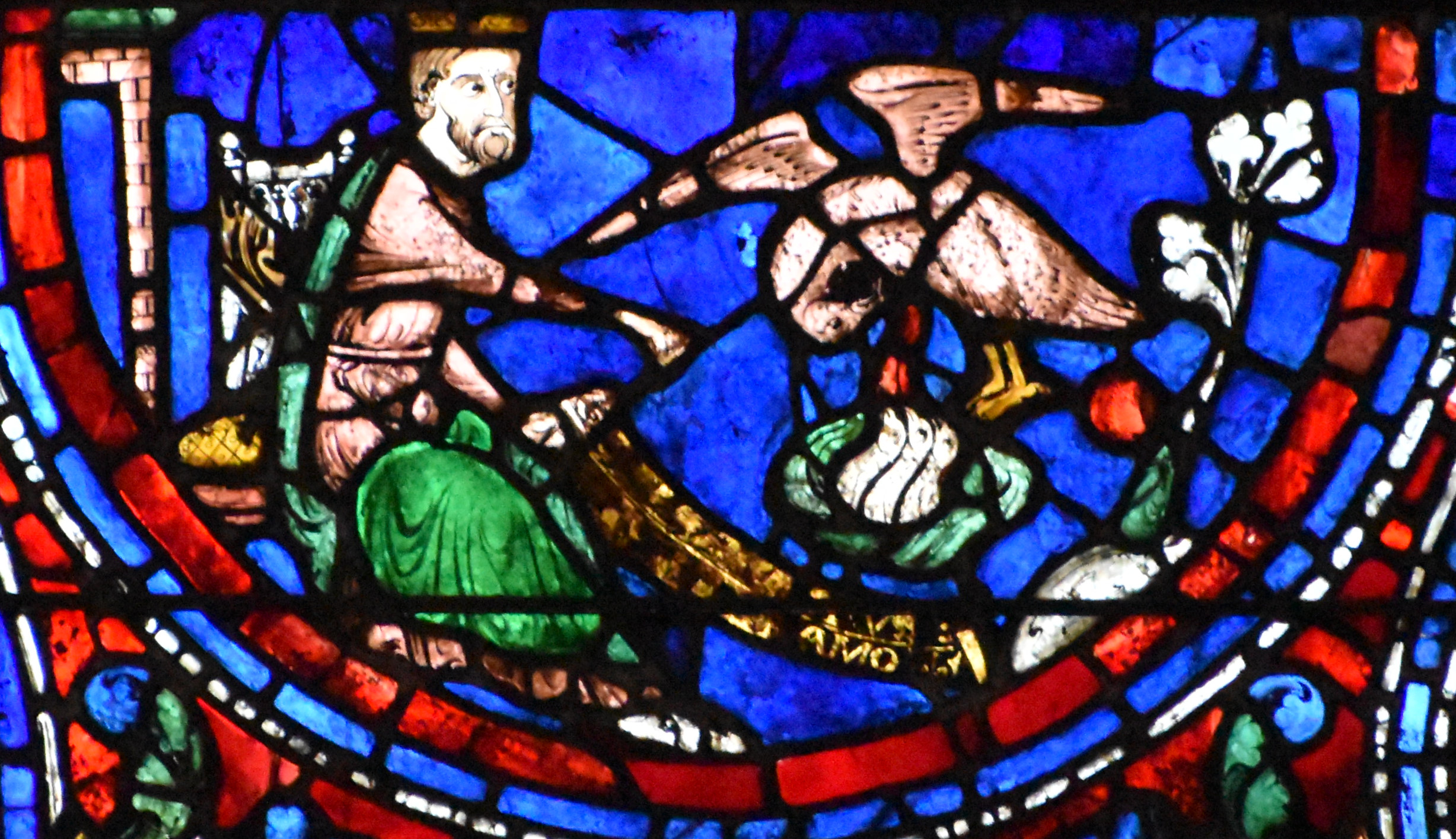
Detail from the 13th-century Redemption Window at Chartres Cathedral in France, showing a pelican (a figure of Christ) feeding her young with her own blood as King David looks on, holding a scroll with the inscription “Similis factus sum pellicamo,” from Psalm 102:6. Photo: Adrian Barlow. There are similar glass panels at Rouen and Le Mans.
Not all parts of the pelican legend recounted in the Physiologus map easily onto Christ’s love for his church. The chicks are dead because they kept striking their parents in the face, and their parents, striking back, killed them. The parents feel bad, and it’s after three days of mourning that mama bird breaks herself open to bring back her little ones.
In his commentary on Psalm 102, Augustine writes, “Let us not pass over what is said, or even read, of this bird, that is, the pelican.” Standing over her dead chicks, “the mother wounds herself deeply, and pours forth her blood over her young, bathed in which they recover life. This may be true, it may be false: yet if it be true, see how it agrees with him, who gave us life by his blood. It agrees with him in that the mother’s flesh recalls to life her young with her blood; it agrees well. For he calls himself a hen brooding over her young. If, then, it be so truly, this bird does closely resemble the flesh of Christ, by whose blood we have been called to life.”
Augustine then goes on to explain how the mother’s killing her young relates to God metaphorically killing our old self so that he can then raise us up to new life in Christ; he likens conversion to death and rebirth. Medieval theologians loved to stretch allegories to the extreme!
A more streamlined version of the pelican legend that got passed down omits the filicide, focusing simply on the bird’s animating sacrifice—on how her shed blood raises the dead to life. And after the Feast of Corpus Christi was established in 1311, a variant emerged that said the pelican feeds her young with her blood when no other food would satisfy, a picture that resonated with the increased attention on the Eucharist in the Latin West.
The Physiologus, which contains the earliest known appearance of the pelican legend, was translated from Greek into Latin sometime between the fourth and early sixth centuries, and from there into Ethiopic, Armenian, Syriac, and a multitude of European and Middle Eastern vernaculars. By the end of the twelfth century its legends were absorbed into the bestiary, a genre of popular nature-book in keeping with the encyclopedic taste of the High Middle Ages.
In Art
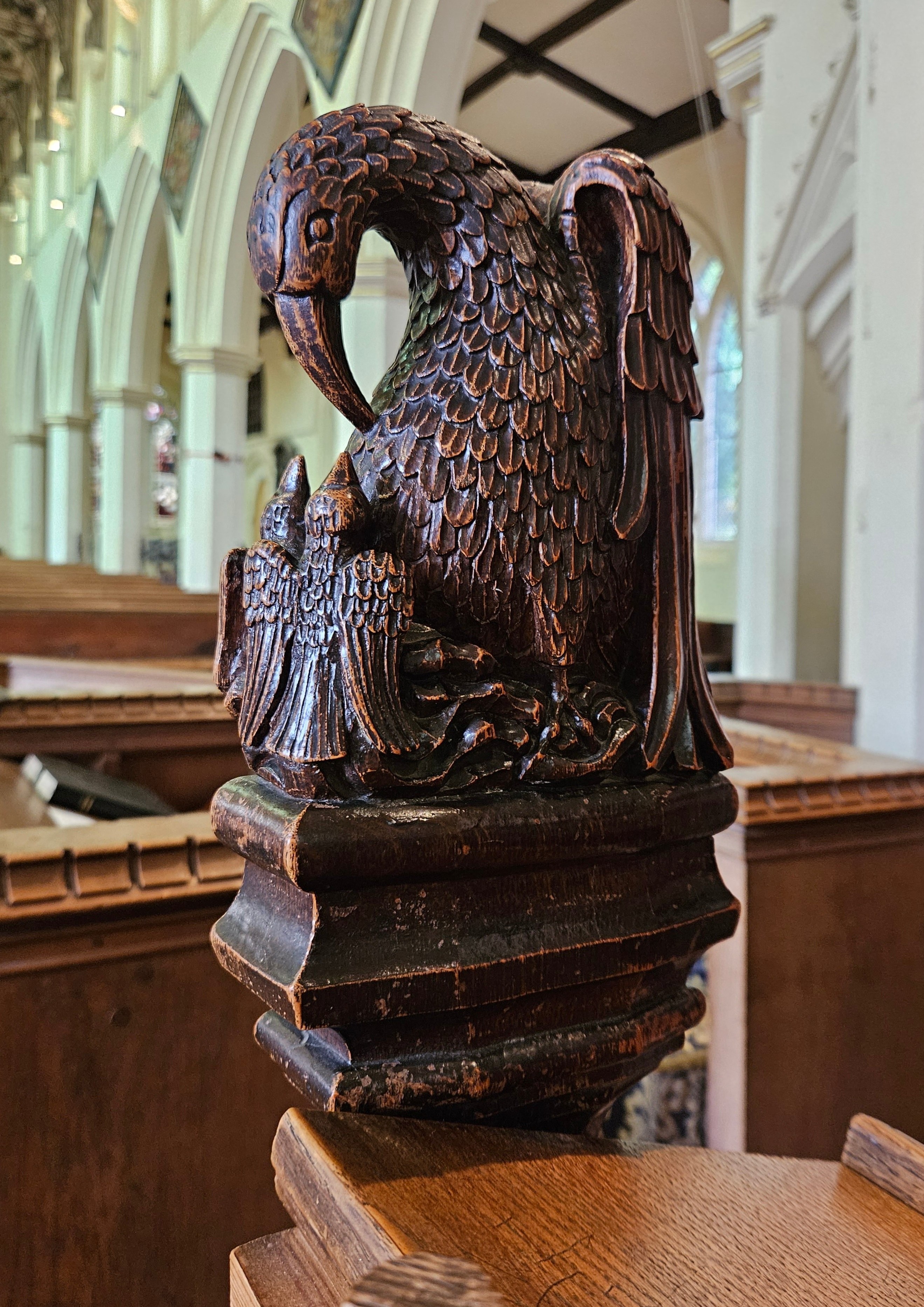
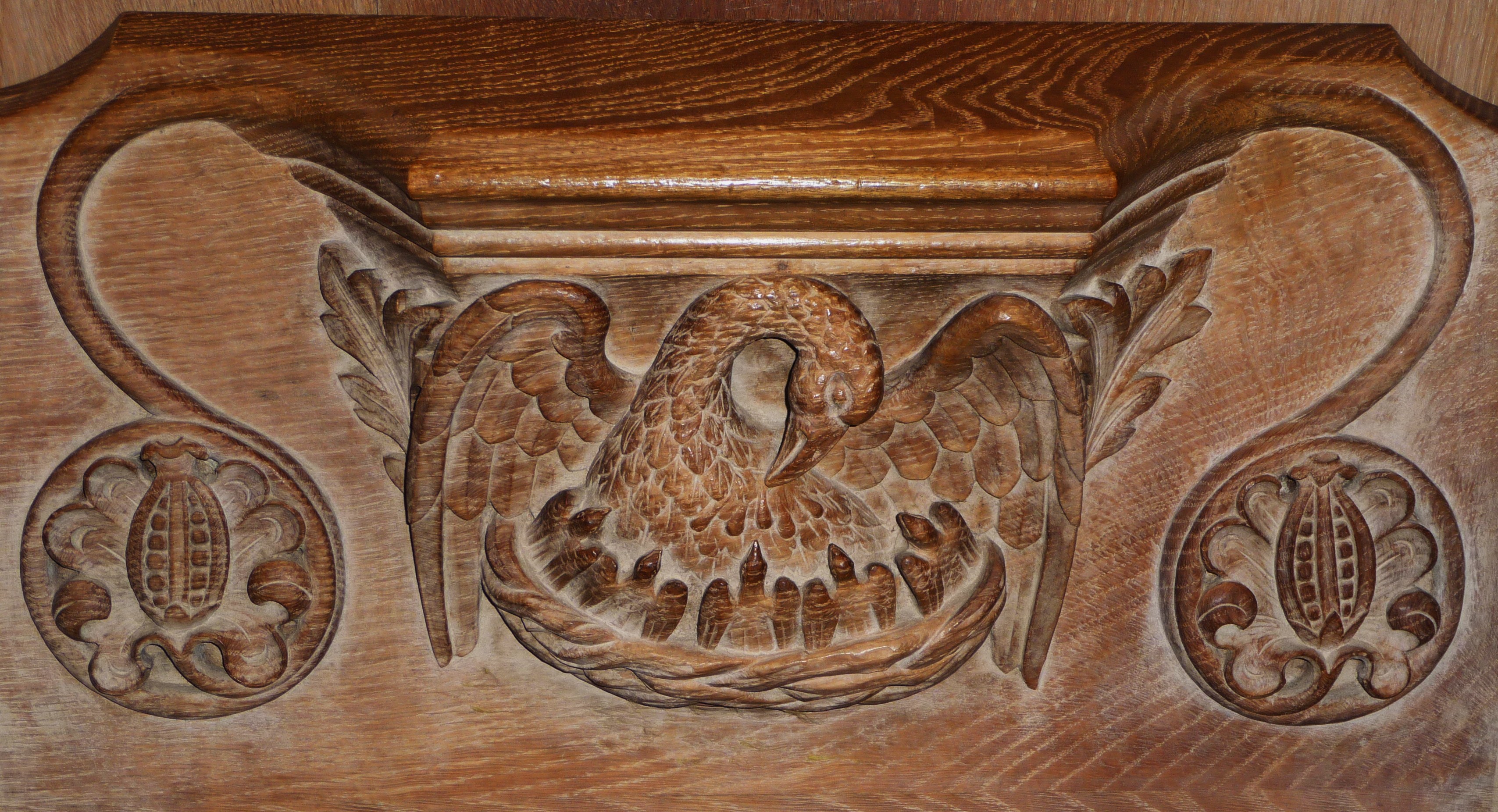
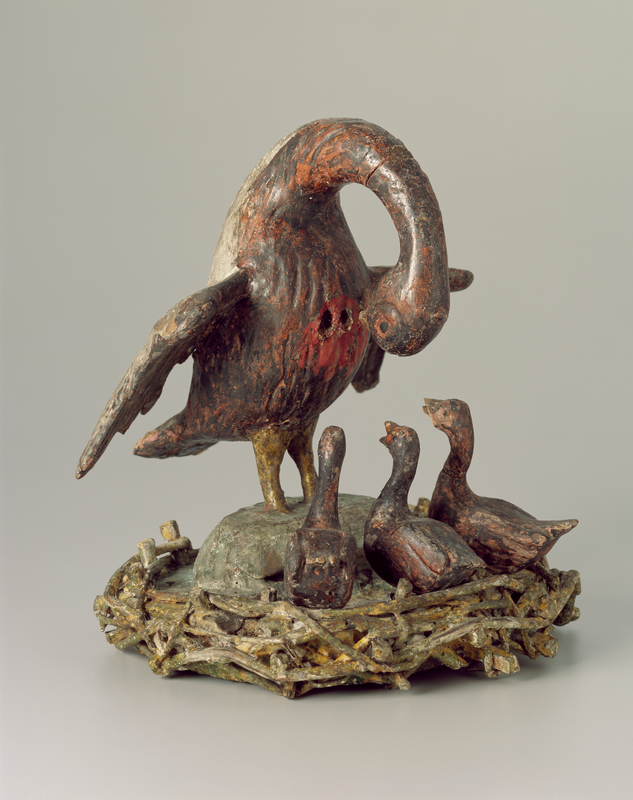
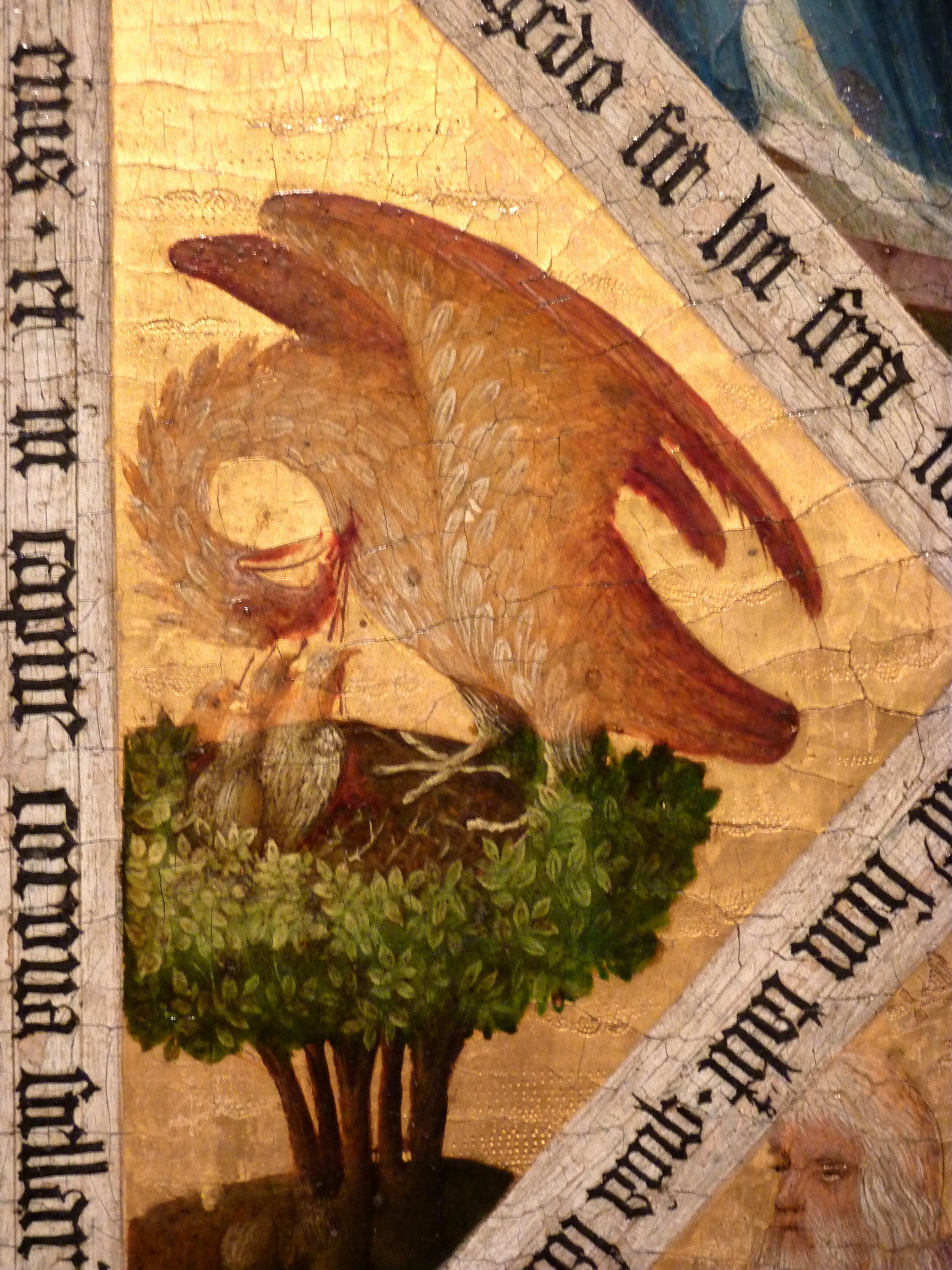
The vulning pelican has appeared in all kinds of visual media from late antiquity through the medieval and premodern eras and on into the twentieth and twenty-first centuries, including illuminated prayerbooks, missals, bestiaries (as in the tiled gallery below; hover to view captions, or click to enter carousel); panel paintings, frescoes; mosaics; stained glass windows; tapestries; lecterns, roof bosses, bench ends, misericords, corbels; and a range of liturgical objects and vestments.
From a miscellany containing an illustrated copy of Hugh of Fouilloy’s De avibus, Italy, late 13th or early 14th century. Biblioteca Statale di Cremona, MS 199, fol. 11v. https://bestiary.ca/beasts/beastgallery244.htm
From an illuminated copy of Der Naturen Bloeme (The Flower of Nature) by Jacob van Maerlant, Flanders, ca. 1350. The Hague, Koninklijke Bibliotheek, KA 16, fol. 96vb. https://manuscripts.kb.nl/show/images/KA+16/page/26
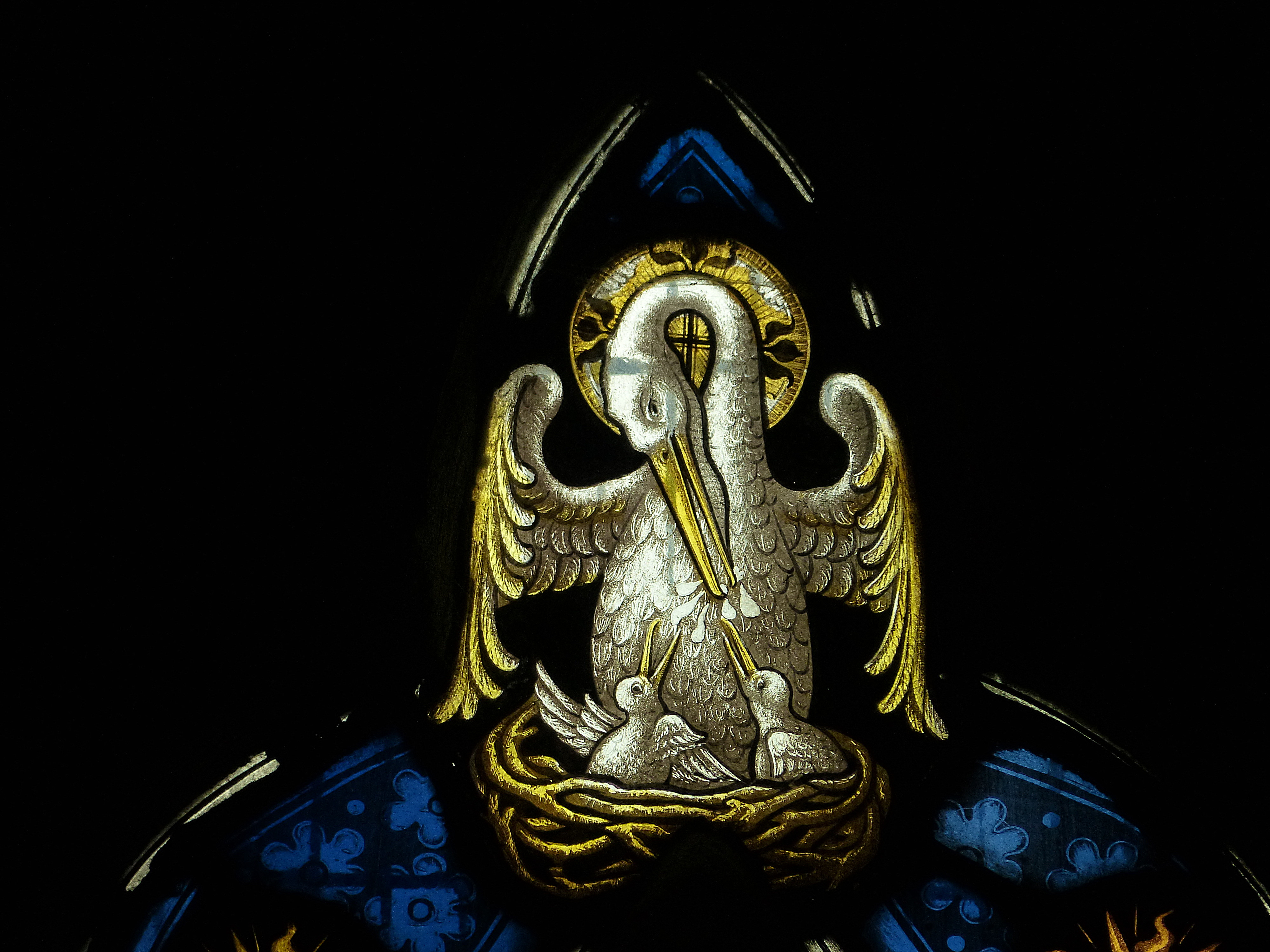
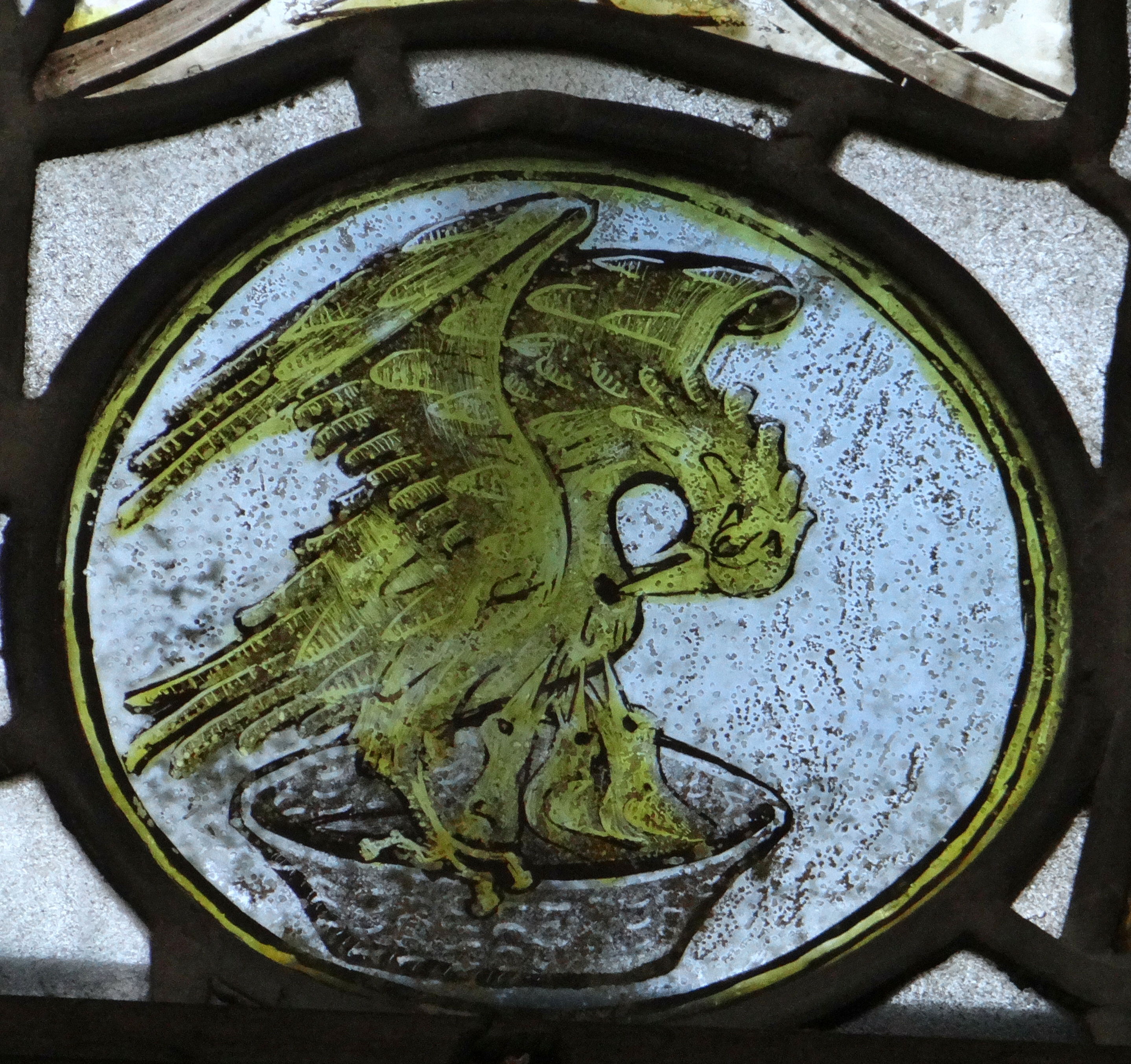
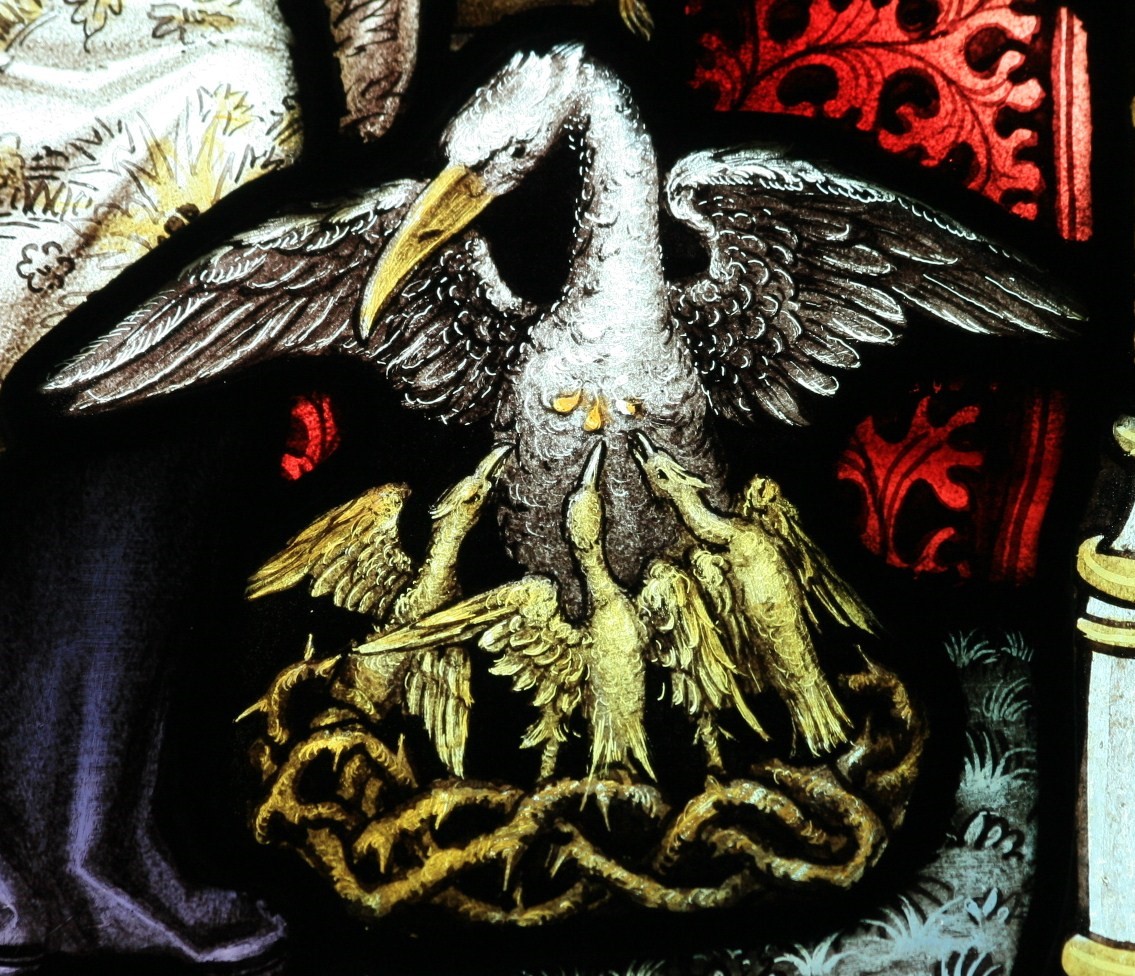
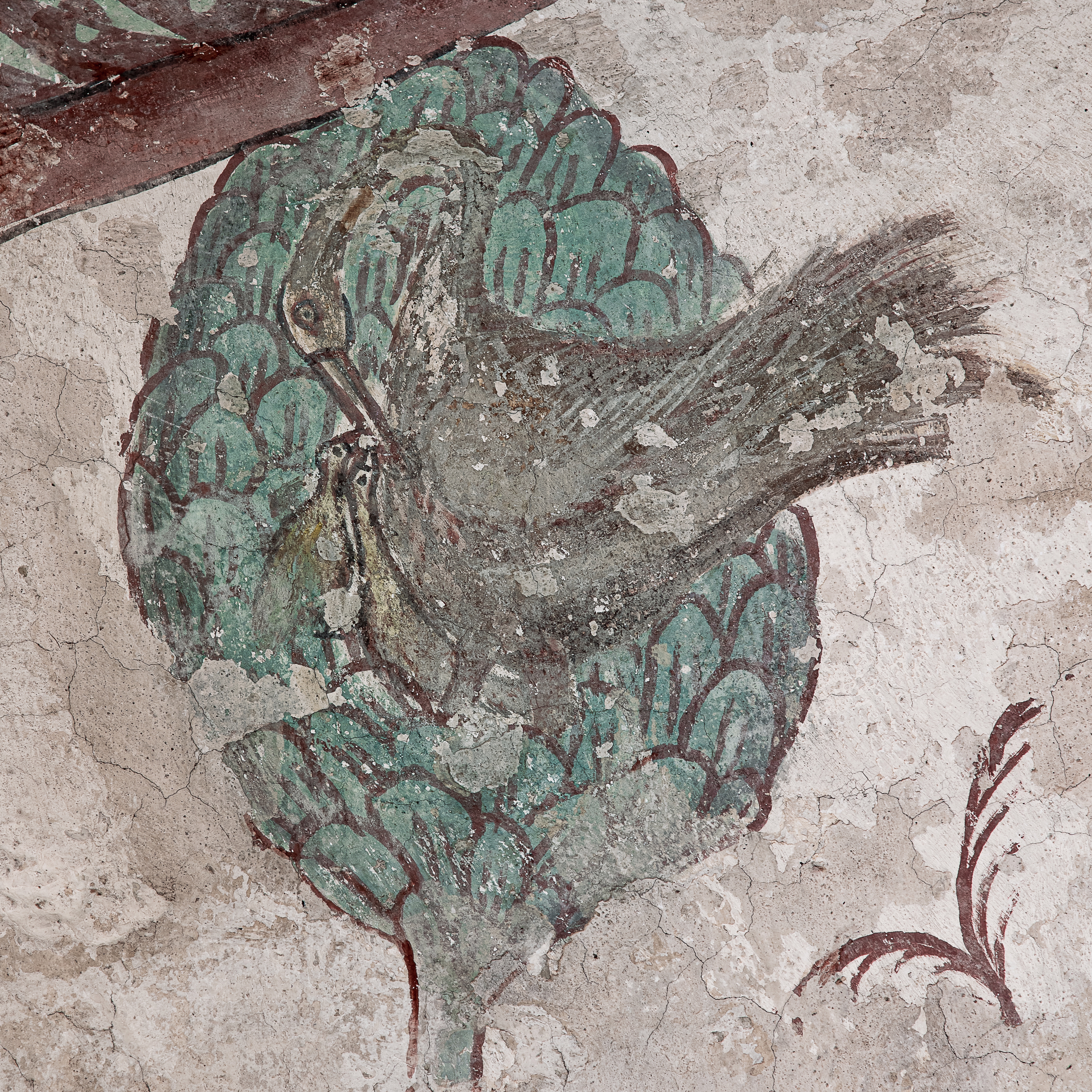
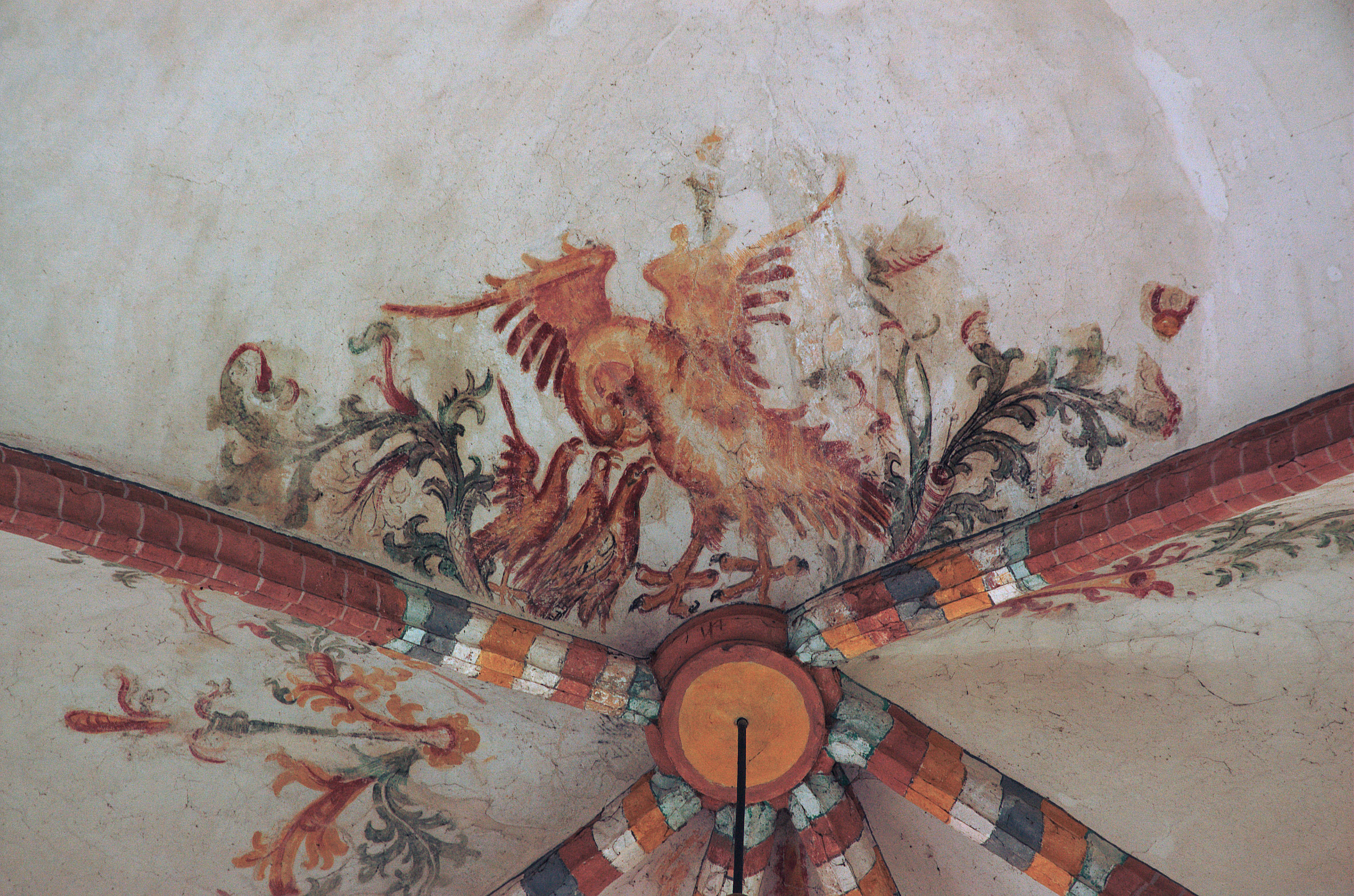
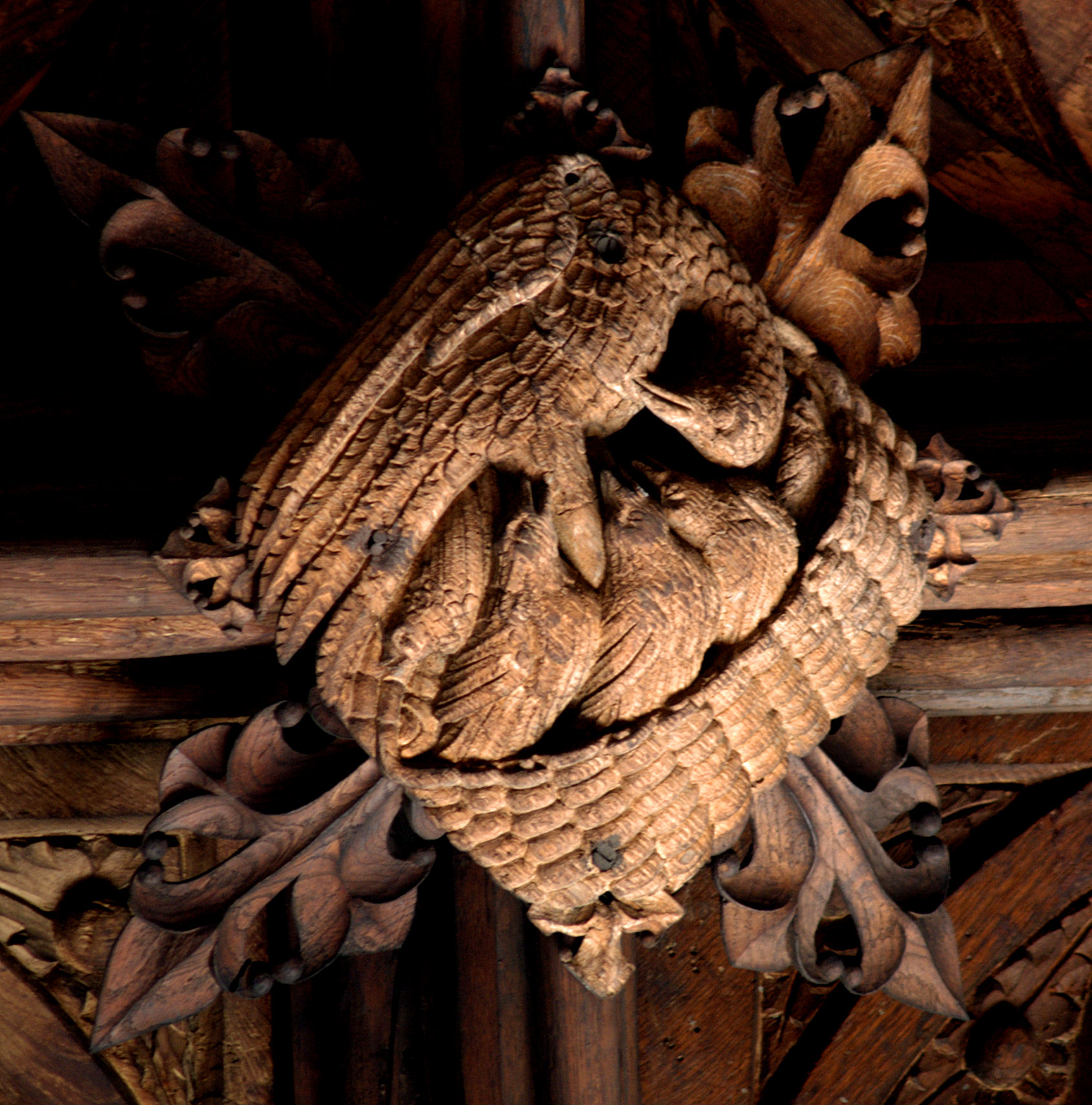
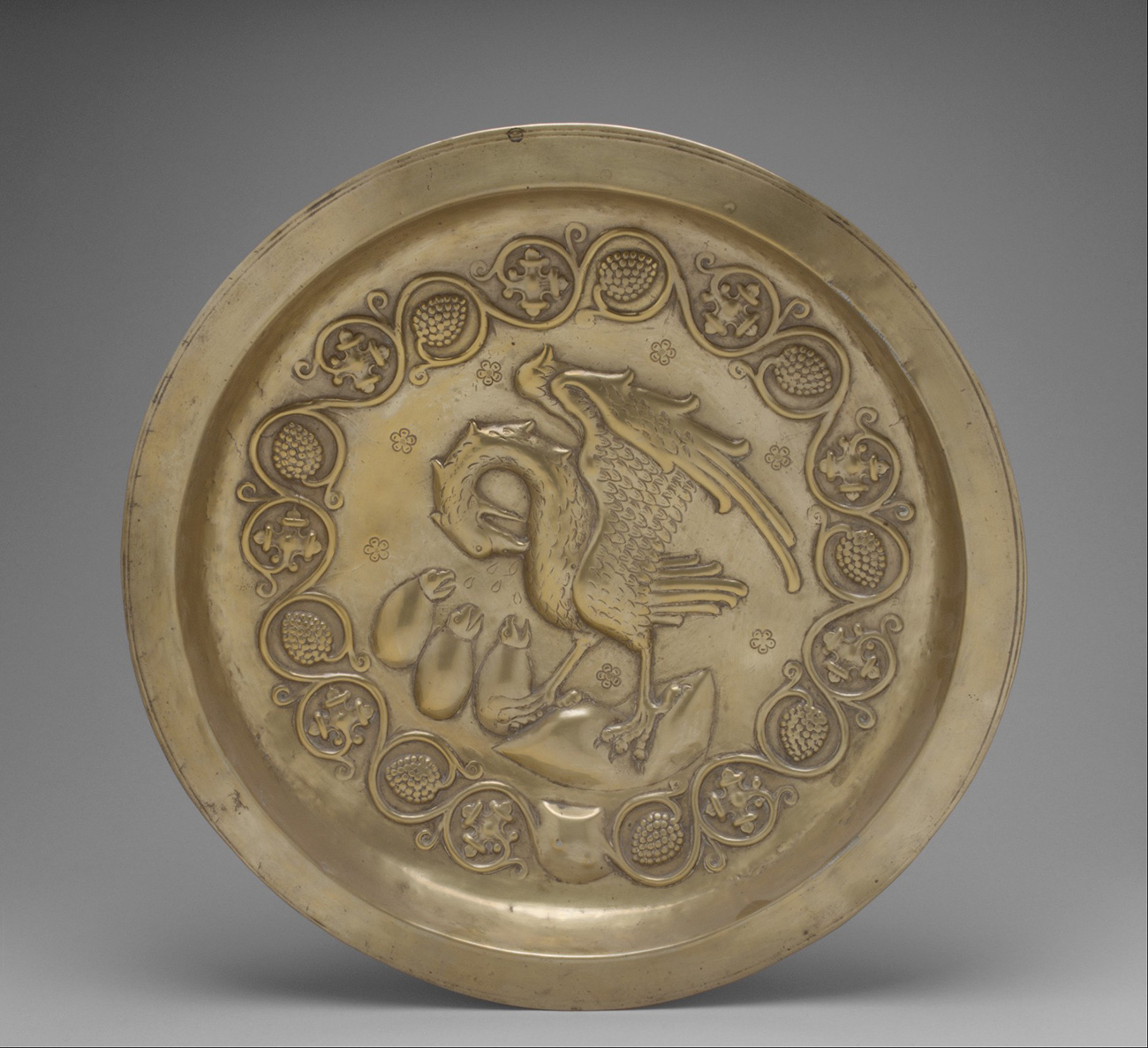
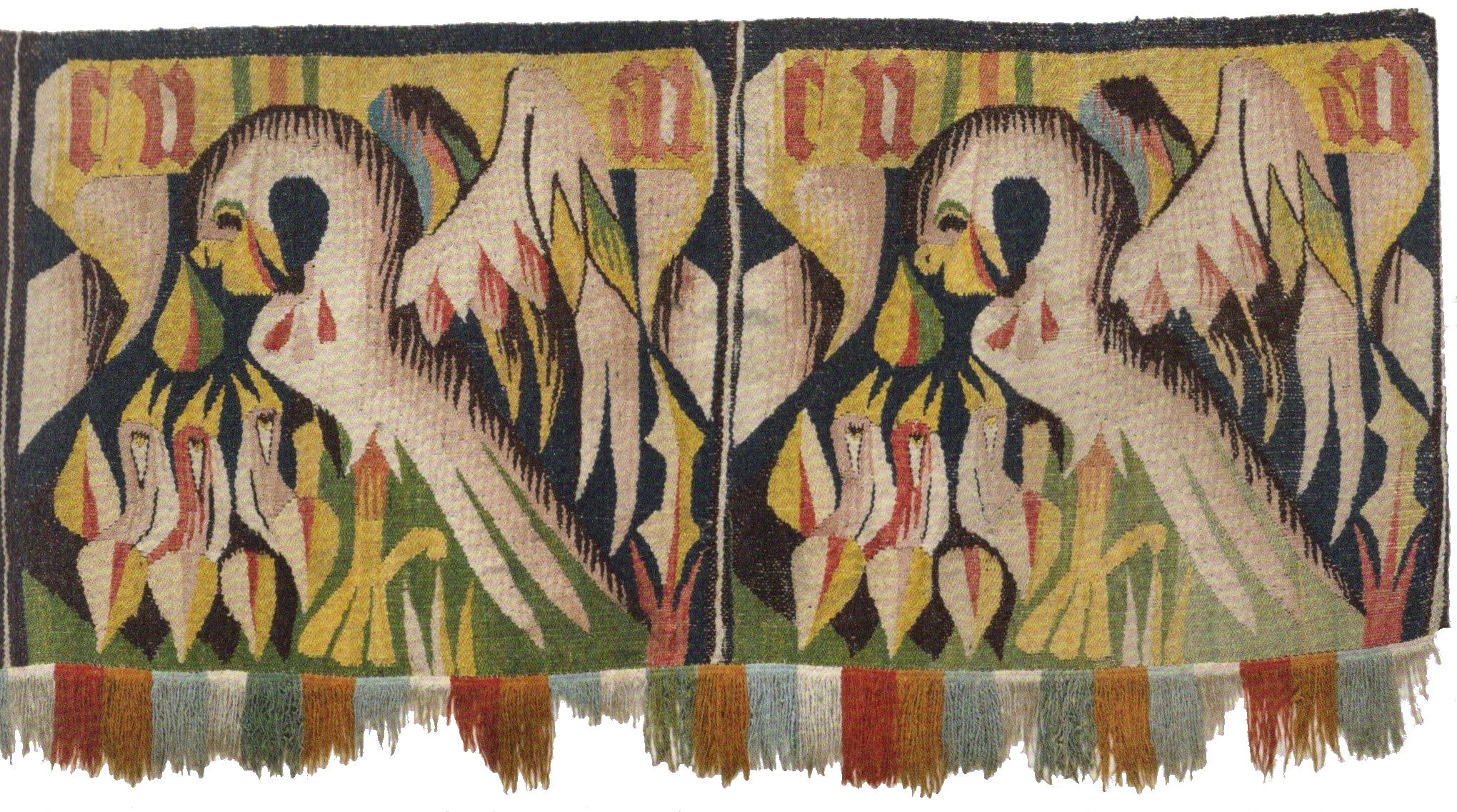
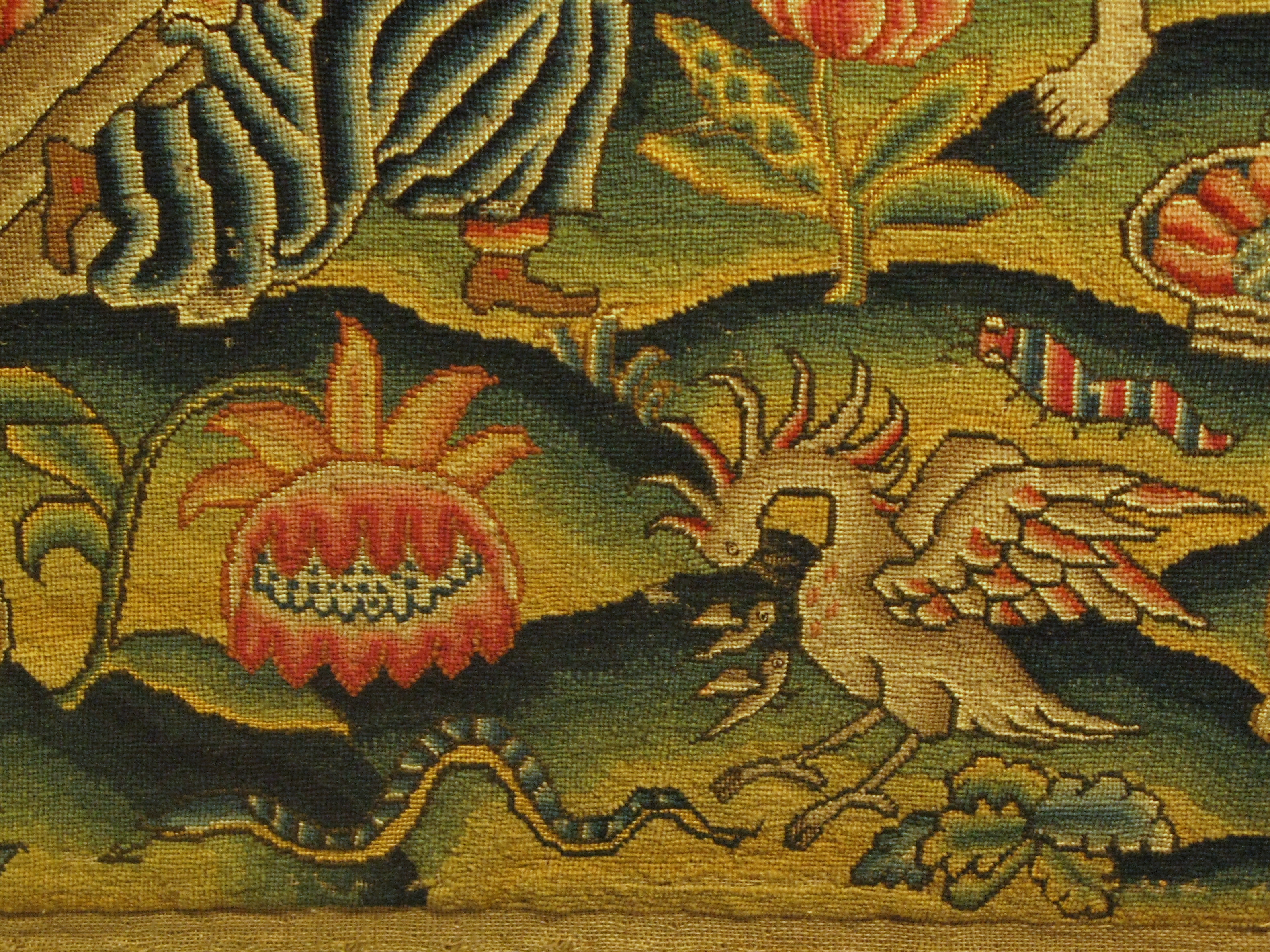
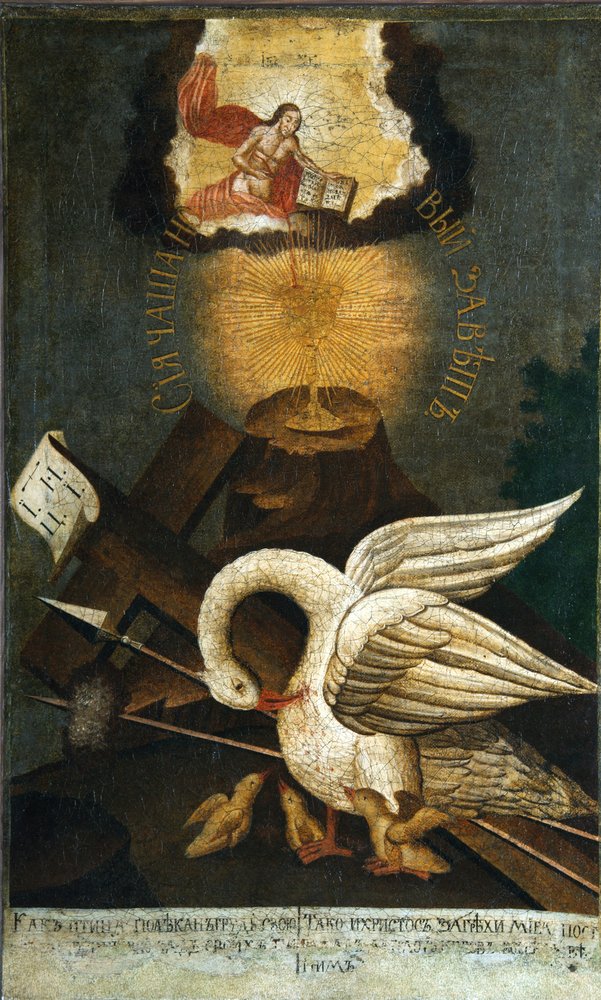
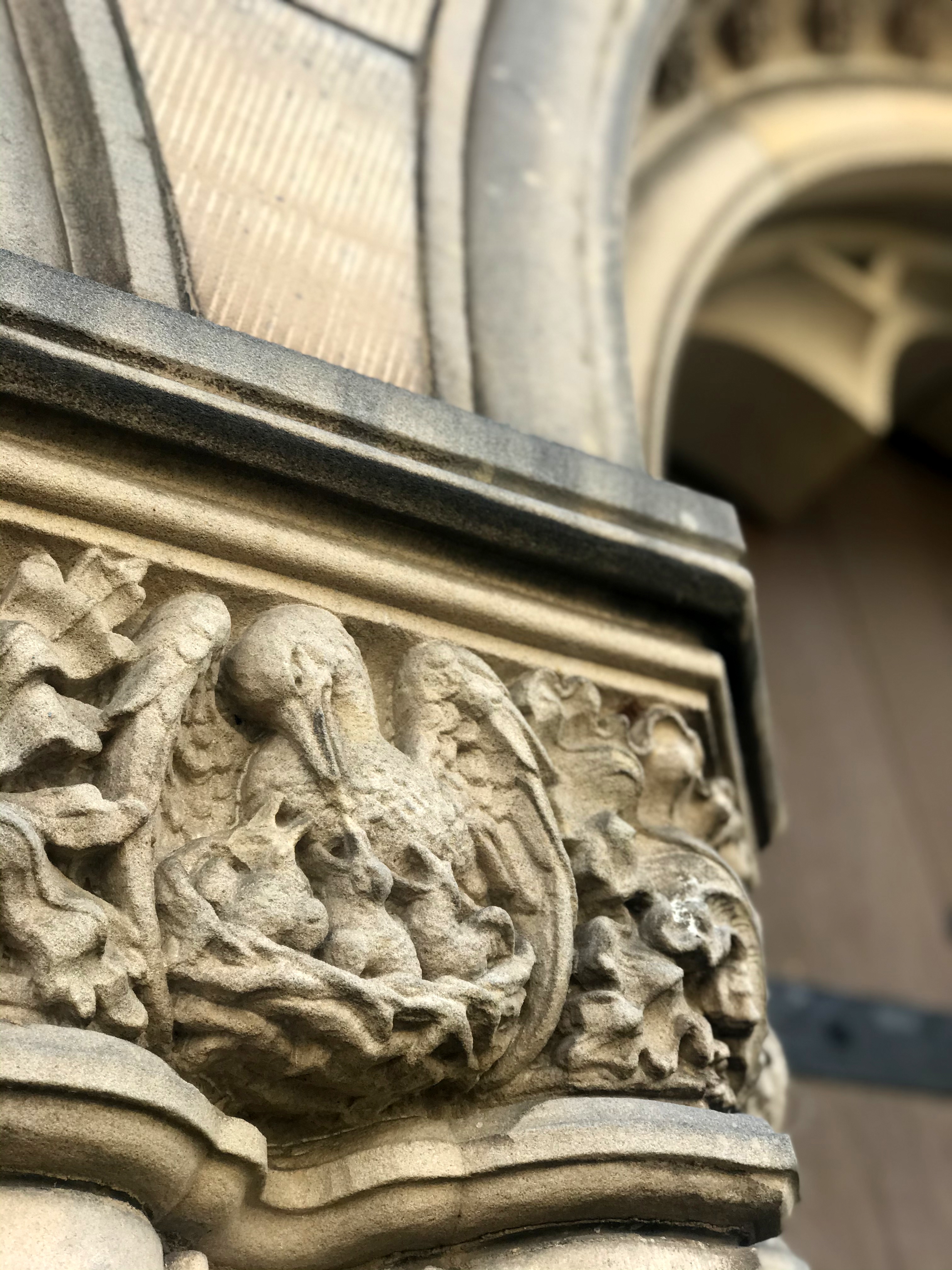
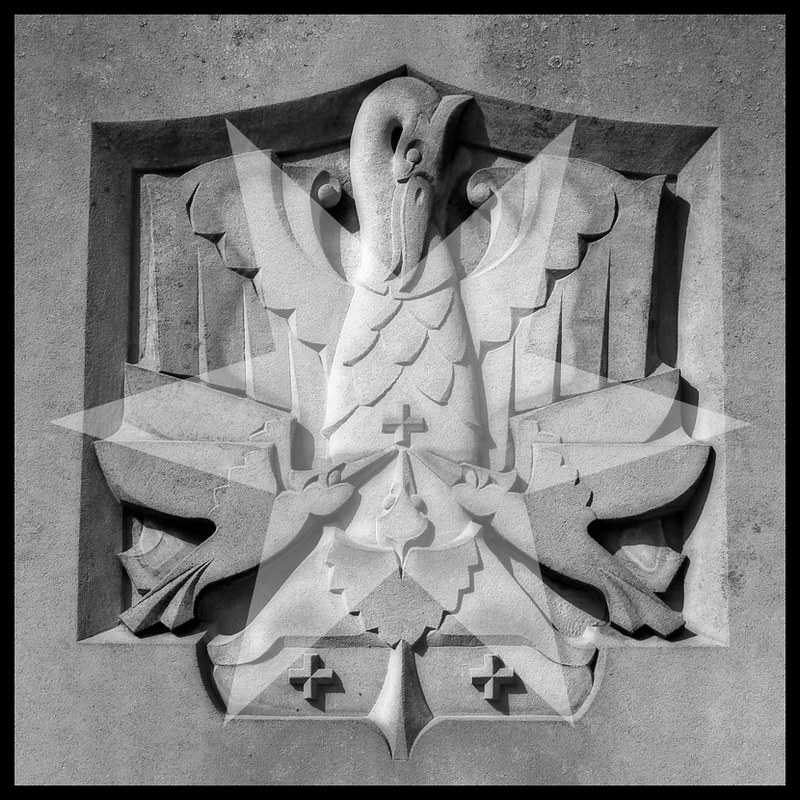
Pelican in Her Piety, 1331–32. Stained glass, Lady Chapel, St Michael and All Angels, Felton, Northumberland, England. Photo: Ann Chapman.Pelicanin Her Piety, 15th century. Stained glass, All Saints Church, Oaksey, England. Photo: Rex Harris.Pelican in Her Piety, All Saints Church, Bishop Burton, East Riding of Yorkshire, EnglandPelican in Her Piety, 1476. Fresco, Bollerup Church, Sweden. Photo: Stig Alenas.Painted choir vault, 15th century, Mariakerk (St. Mary’s Church), ‘t Zandt, Groningen, Netherlands. Photo: Ana Sudani.Oak wood roof boss, ca. 1470–80, St Mary the Virgin, Shrewsbury, Shropshire, England. Photo: Ana Sudani.Bench end by Henry Ringham, 19th century, St Margaret, Ipswich, Suffolk, England. Photo: Simon Knott.Carved oak misericord from Sheffield Cathedral, England, 1920Sculpture with Pelicans, Switzerland, 16th century. Painted linden and willow wood, 29.5 × 27 × 26 cm. Landesmuseum (Swiss National Museum), Zurich, LM-3972.Triptych with the Virgin and Child (detail), Cologne or Lower Rhine, ca. 1425–30. Tempera and gold leaf on oak wood. LVR-LandesMuseum Bonn, Germany. [view full triptych]Plate with the Pelican in Her Piety, Dinant or Malines, Netherlands, 15th century. Brass, diameter 19 7/8 in. Metropolitan Museum of Art, New York. It’s unknown whether this plate was used domestically or liturgically (i.e., for the Eucharist).Tapestry with a Pelican Feeding Her Young (detail), Germany (Lüne Abbey), ca. 1500. Linen and wool, 65 × 233 cm. Kloster Lüne Museum für sakrale Textilkunst, Lüneburg, Germany, Inv. LUEKO Ha 010.05. Source: Book of Beasts: The Bestiary in the Medieval World, cat. 41bCushion cover (detail), England, ca. 1640–70. Wool and silk embroidery on linen, 55.9 × 107.5 cm. Victoria and Albert Museum, London. The primary scenes are the Hospitality of Abraham and the Sacrifice of Isaac. [view full cushion]Pelican in Her Piety, Russia, early 19th centuryPelican in Her Piety, 1907–9. Relief carving from the exterior of Holy Trinity Church, St Andrews, Scotland. Photo: Joy Marie Clarkson.Pelican of Mercy, 1956. Stone relief carving, exterior of Blessed Sacrament Catholic Church, Sioux City, Iowa.
The bird doesn’t always look like an actual pelican, though. It could be that some of the artists had never seen one, although the Dalmatian pelican, which has the long bill and the expandable throat pouch that we most associate with the genus, had been widespread across Europe since ancient times. More likely, the imaginative rendering of the pelican in Christian art derives from the account of the bird in book 12 (“De animalibus”) of the widely influential compendium Etymologies by the Spanish archbishop Isidore of Seville, written around 623, which repeats the popular legend and adds that the pelican lives in Egypt. An exotic bird therefore required exotic treatment.
Neither does the behavior the Physiologus ascribes to pelicans have any basis in natural fact. It’s possible the legend arose from the observation that the pelican sometimes bends its beak into its chest, which may look like it’s piercing it, and that some pelicans have a reddish tinge on their breast plumage and/or a red tip on their beak. However, zoological accuracy was not the point; the point was to convey theological truth.
In The Bestiary of Christ, Louis Charbonneau-Lassay says the pelican first started appearing as a Christian symbol on clay oil lamps in ancient Carthage (present-day Tunisia), citing “L. Delattre, Carthage,Symboles eucharistiques, p. 91”—the French archaeologist Alfred Louis Delattre (1850–1932). But I’ve not been able to track down the cited text or find any such examples. If you can point me to photographs, please do!
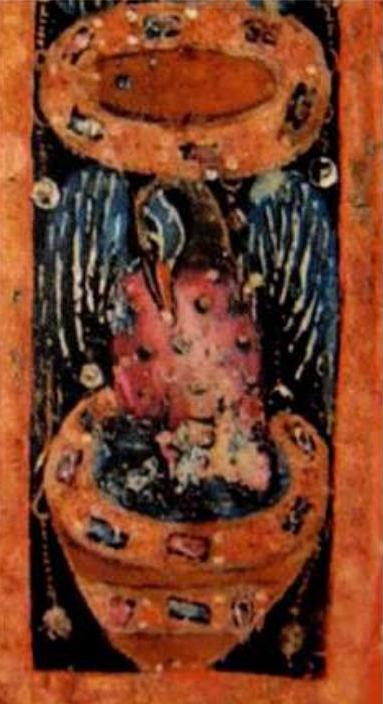
In the “Ējmiacin [Etchmiadzin] Codex” entry in The Eerdmans Encyclopedia of Early Christian Art and Archaeology, Paul Corbey Finney identifies the border illustrations in that Armenian Gospel book’s Baptism of Christ miniature from ca. 600 as depicting a pink-bodied pelican spreading its blue wings and pecking its breast while standing in a bejeweled chalice. The figure is repeated ten times.
Pelican detail from The Baptism of Christ in the Codex Etchmiadzin, an Armenian Gospel book. Yerevan, Mesrop Mashtots Institute of Ancient Manuscripts (Matenadaran), Cod. 2374, fol. 229v. The image is dated to ca. 600, but it was added to a 10th-century manuscript.
Finney mentions that a vulning pelican also appears in the Rabbula Gospels from sixth-century Syria. I think he’s referring to the bird at the top of the canon tables on folio 5a, which also shows the prophets Joel and Hosea and the Wedding at Cana. The iconography is far less obvious here.
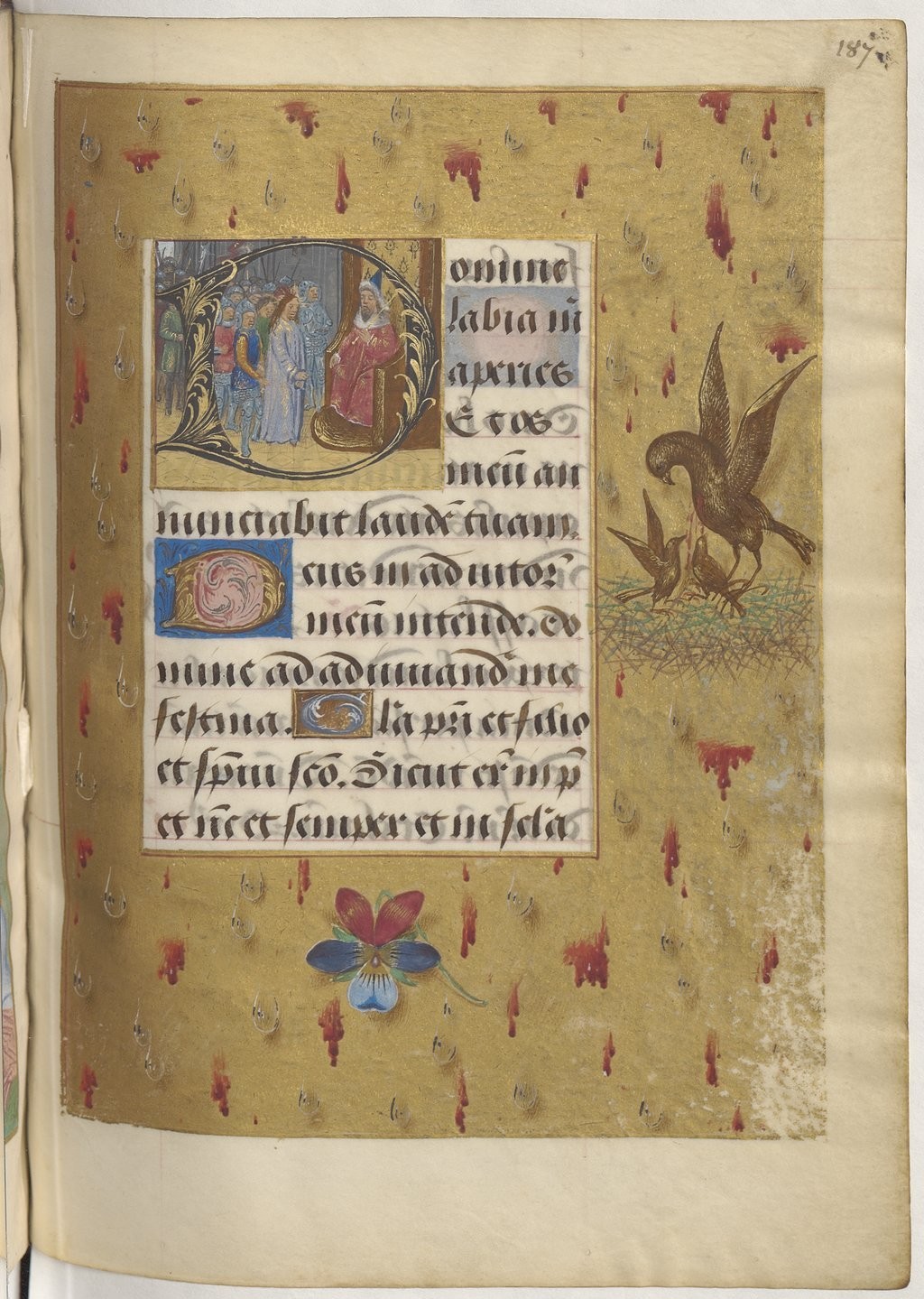
One illuminated manuscript page I love that makes use of the pelican symbol comes from the late Flemish Boussu Hours, a prayerbook made for Isabelle de Lalaing, probably after the death of her husband Pierre de Hennin, lord of Boussu.
Master of Antoine Rolin (Flemish, active 1490–1520), Le pélican, symbole du Christ (Pelican, symbol of Christ), from the Boussu Hours, Cambrai, France, ca. 1490–95. Paris, Bibliothèque de l’Arsenal, Ms 1185 réserve, fol. 187r.
Appearing opposite a full-page miniature of Christ in Gethsemane, folio 187r opens the Hours of the Passion prayer cycle:
V: Domine labia mea aperies. R: Et os meum annunciabit laudem tuam. V: Deus in adiutorium meum intende. R: Domine ad adiuvandum me festina. Gloria Patri, et Filio: et Spiritui sancto. Sicut erat in principio, et nunc, et semper: et in saecula saeculorum.
English translation:
V: O Lord, open my lips, R: And my mouth shall declare thy praise. V: Incline unto my aid, O God. R: O Lord, make haste to help me. Glory be to the Father, and to the Son, and to the Holy Ghost, as it was in the beginning, is now, and ever shall be: world without end.
The historiated initial “D” shows Christ before Pilate, and in the margin a pelican exudes her lifeblood into the mouths of her two chicks, a scene set against a gold background likewise dripping with blood—as well as sweat and tears. It’s “almost as if the gold margin were an expanded microcosm of the bird’s broken breast,” writes Katharine Davidson Bekker in her essay “Those Who Weep: Tears, Eyes, and Blood in the Boussu Hours.” Bekker further notes that “the pansy flower in the margin, the name of which references the French penser (‘to think’), . . . encourages the reader to think deeply about the images on the page.”
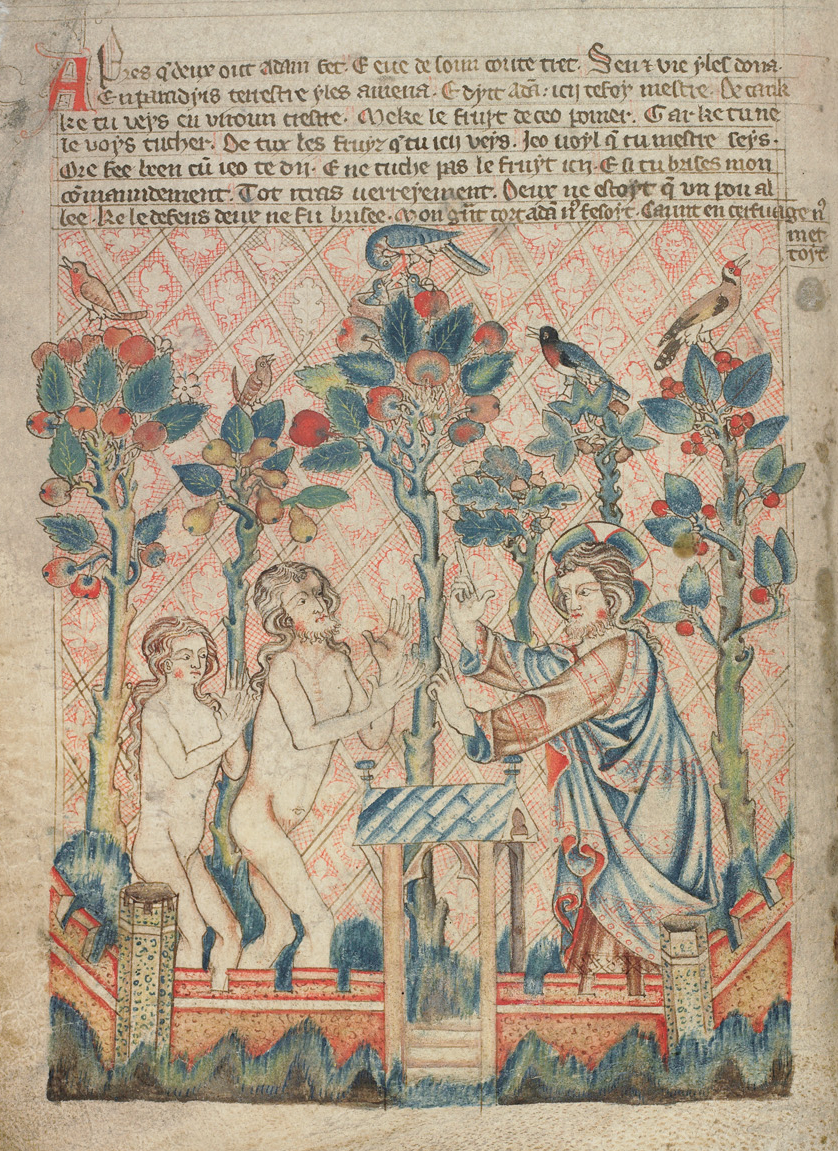
Another remarkable appearance of the pelican in medieval manuscript illumination is in the Holkham Bible Picture Book from fourteenth-century England—remarkable because it appears not in a passion cycle, as was typical, but in a creation cycle!
The Tree of Knowledge, from the Holkham Bible Picture Book, southeastern England, ca. 1327–35. British Library, Add MS 47682, fol. 3v.
In the garden of Eden, God the Creator, portrayed here as Christ, instructs Adam and Eve that they may freely eat of any tree except the tree of the knowledge of good and evil, which he points to with one hand and with the other wags his finger in a forbidding manner. Various birds perch atop the adjacent trees, but at the apex of this fateful one at the center is the vulning pelican, foreshadowing the sacrifice of Christ that will be required for humanity to reenter Paradise after the fall.
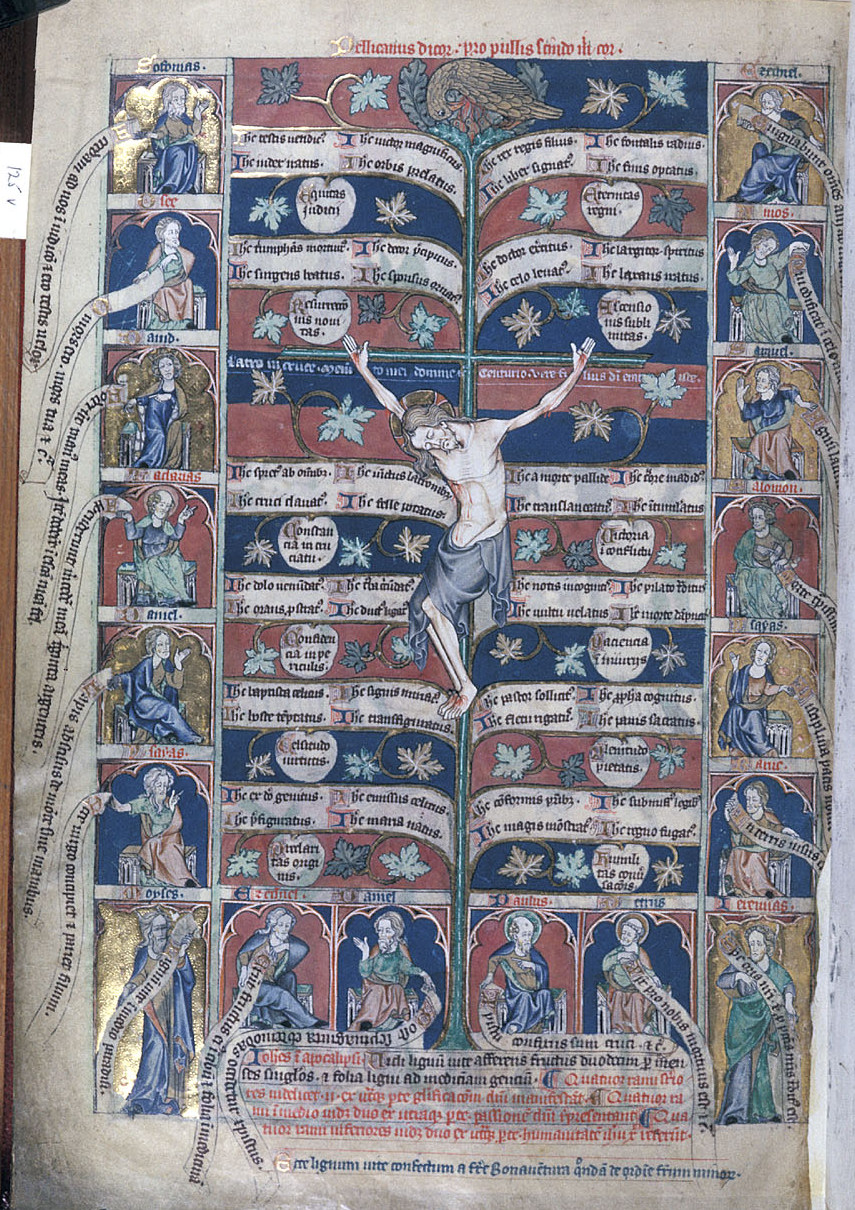
Compare this image to the diagrammatic one on folio 125v of the De Lisle Psalter, which was inspired by Bonaventure’s meditational treatise the Lignum vitae. It shows a pelican nesting atop the tree of life on which Christ is crucified, wounding herself to feed her offspring with her blood:
Tree of Life, from the De Lisle Psalter, England, 1310–39. London, British Library, Arundel MS 83, fol. 125v.
The Latin inscription above it in red reads, Pellicanus dicor, pro pullis scindo mihi cor (“I am called a pelican, because I tear open my heart for my chicks”). The twelve branches contain texts relating to Christ’s humanity, passion, and glorification, while the surrounding panels contain Old Testament witnesses.
The Crucifixion is the narrative context in which the vulning pelican most often appears in art, reinforcing the notion of Christ’s self-emptying sacrifice. It was especially popular in proto- and early Renaissance panel paintings from Italy—which the gallery below reflects, in addition to featuring a few other examples from France, Greece, and Armenia.
Fra Angelico, Christ on the Cross, the Virgin, Saint John the Evangelist, and Cardinal Torquemada (detail), ca. 1453–54. Harvard Art Museums / Fogg Museum, Cambridge, Massachusetts. Photo: Victoria Emily Jones [view full painting]
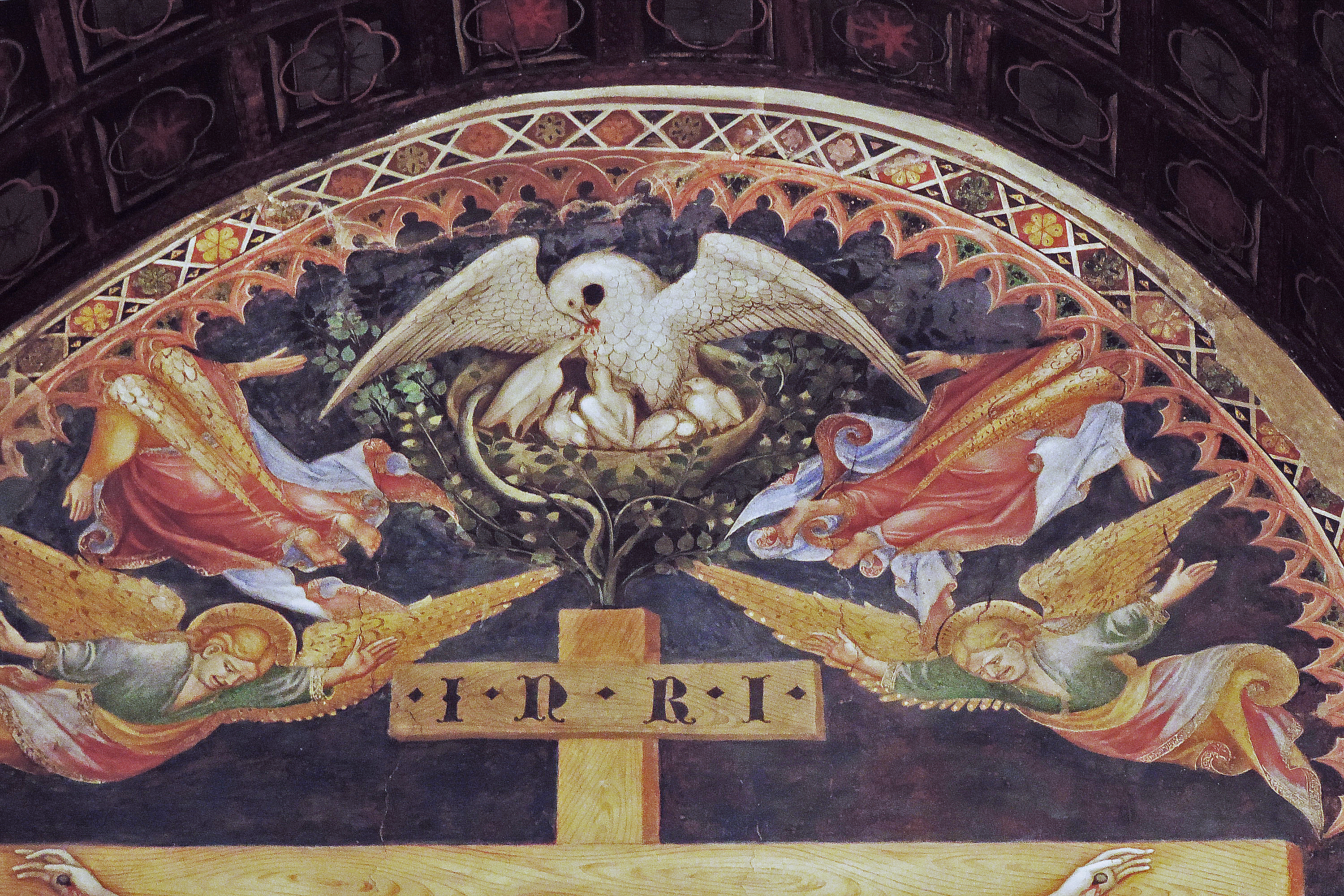
In the Simone di Filippo Benvenuti example above (third row, left), notice the little winged dragon fleeing the pelicans’ nest as the mother pelican undoes the harm he has inflicted. A similar detail can be found in the Crucifixion fresco from the altar wall of the Oratory of St. John the Baptist in Urbino, which shows a snake slithering away from the perishing chicks, who are brought back to life by their intervening mother:
Lorenzo Salimbeni (Italian, 1374–ca. 1418) and Jacopo Salimbeni (Italian, ca. 1370/80–after 1426), Crucifixion (detail), ca. 1416. Fresco, Oratorio di San Giovanni Battista (Oratory of St. John the Baptist), Urbino, Italy.
The snake motif references a version of the pelican legend found in De natura rerum (On the Nature of Things) by the Flemish Dominican friar Thomas of Cantimpré (ca. 1200–1272) and the slightly later De animalibus (On Animals) by the German Dominican friar Albertus Magnus (ca. 1200–1280). According to these two works, when the mother pelican leaves her nest to find food for her fledglings, she returns to find them dead from the bite of an ambushing snake. She then tears her own flesh to revive them with her blood, which is full of healing properties.
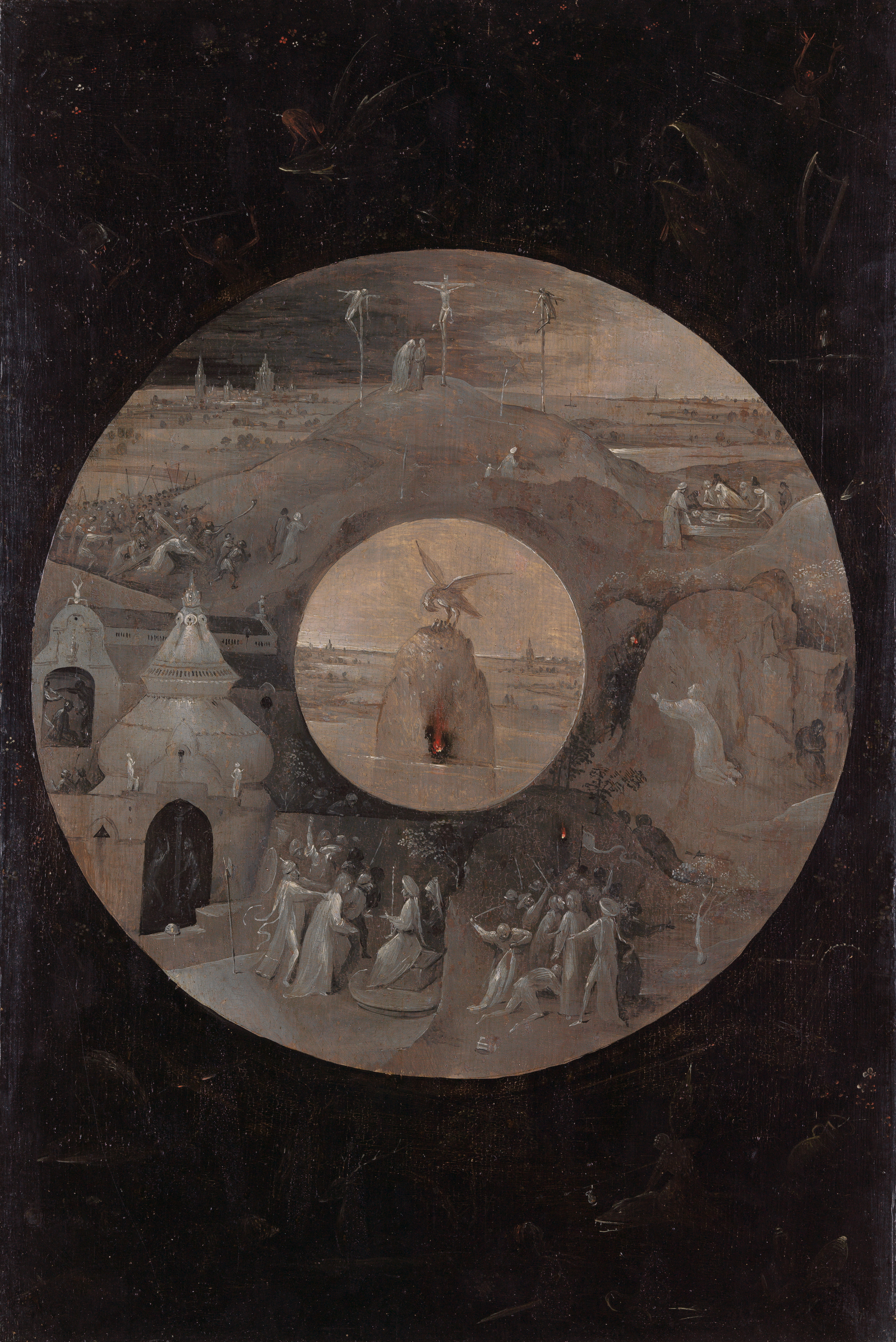
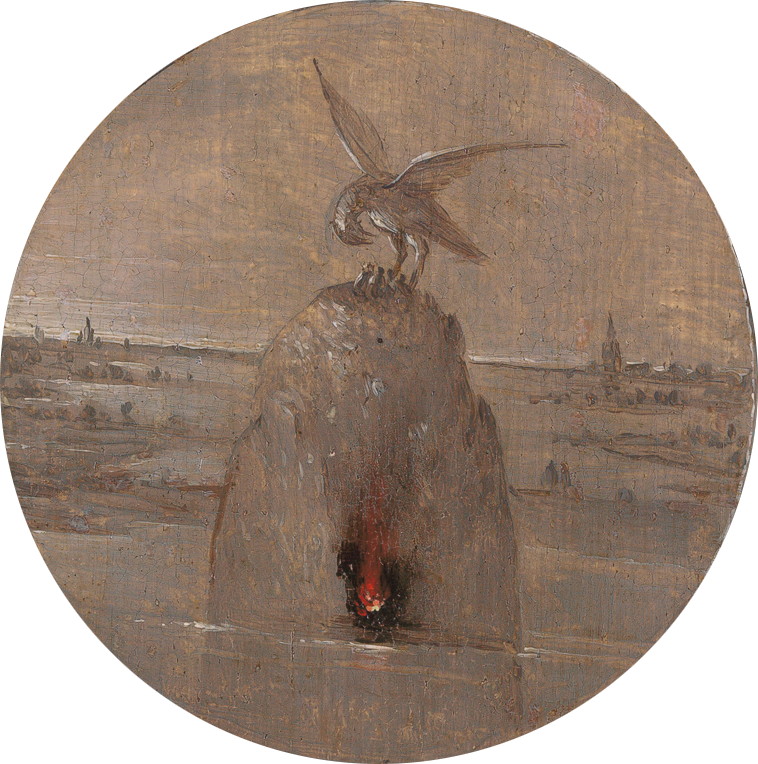
One of the most unique visual treatments of the vulning pelican that I found is a painting by the Dutch Renaissance artist Hieronymus Bosch. Rendered in grisaille (gray monochrome), his pelican appears in the center of a ring depicting scenes from the passion of Christ. It’s painted on the reverse of a panel that shows John the Evangelist in exile on Patmos, penning the book of Revelation.
Hieronymus Bosch (Netherlandish, ca. 1450–1516), Scenes from the Passion of Christ (reverse of John on Patmos), ca. 1500. Oil on panel in grisaille, 62.8 × 43.2 cm. Staatliche Museen zu Berlin, Gemäldegalerie.
Staged around mountain crags, the passion cycle begins on the right with Jesus praying in Gethsemane and continues clockwise with the Arrest of Christ, Christ before Pilate, the Flagellation, the Crowning with Thorns, the Carrying of the Cross, the Crucifixion, and the Entombment.
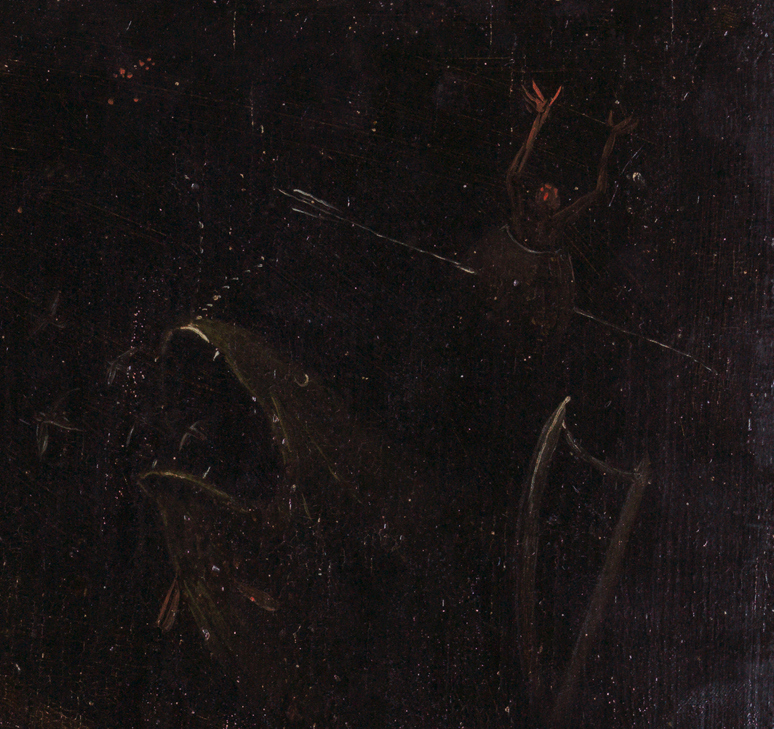
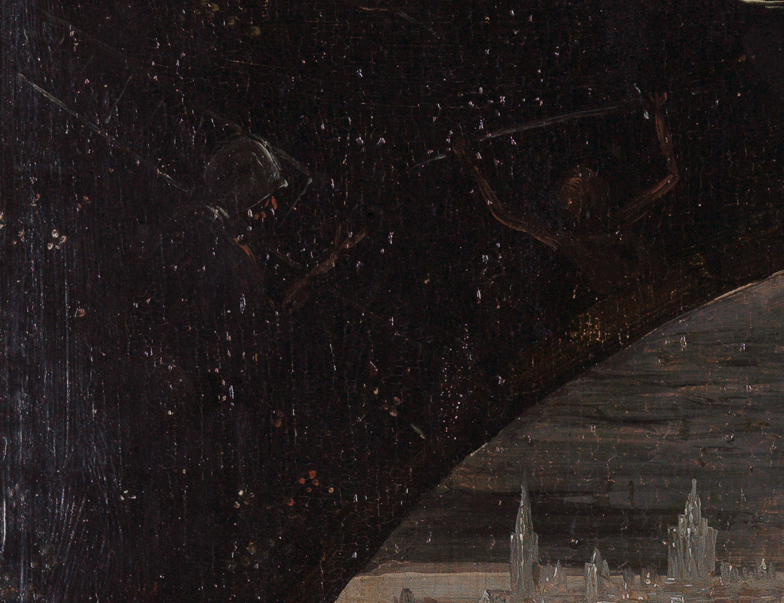
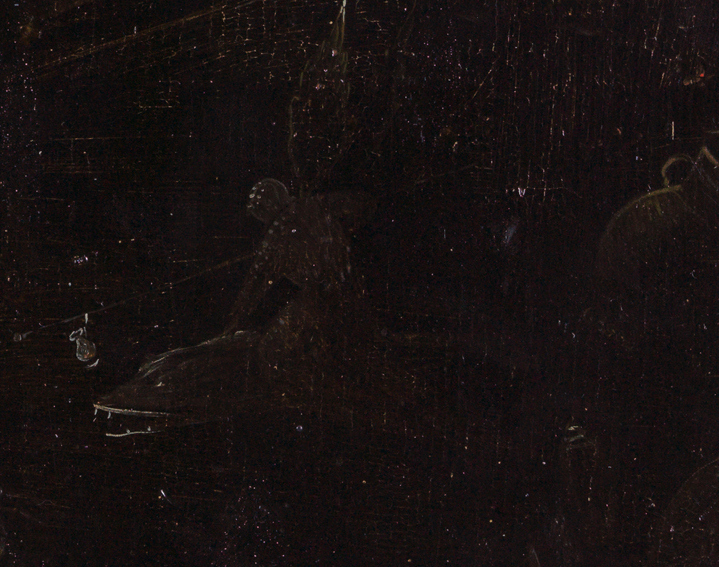
Outside this ring of scenes is a darkness populated by shadowy demons:
But the inner disc, the focal point of the composition, contains the promise of redemption. Emerging from the still waters of a vast postdiluvian landscape is a hillock with a hollow that houses a burning fire. On the summit, a large mother bird spreads her protective wings over her brood, inclining her head toward her chest—an iconography we recognize as the vulning pelican, symbolic of the deep, saving love God embodied on the cross.
As we view this painting, we progress from the outer darkness with its infernal powers, to the growing light actualized by the events of Maundy Thursday and Good Friday, and finally to the brilliant center with its red flame—which, other than two dim, flickering torches in Gethsemane, contains the sole bit of color in the whole painting. Images of the Sacred Heart of Jesus, which would gain prominence in the seventeenth century, feature a flame, representing Christ’s ardent love burning bright. And that’s what we have here.
Red is also the color of blood. I’m reminded of Robert Southwell’s poem “Christ’s Bloody Sweat,” which combines imagery of the pelican and the self-immolating but ultimately indestructible phoenix, marveling at “how bleedeth burning love.” (I’ll explore a few more poems about the pelican in the next section.)
As John writes in the wonderful prologue to his Gospel, “The light shines in the darkness, and the darkness did not overtake it” (John 1:5).
In Bosch’s painting, the Christbrand bursts, like the pelican’s split side. The flame of redemption is lit, like a lighthouse, calling us home into the love of God.
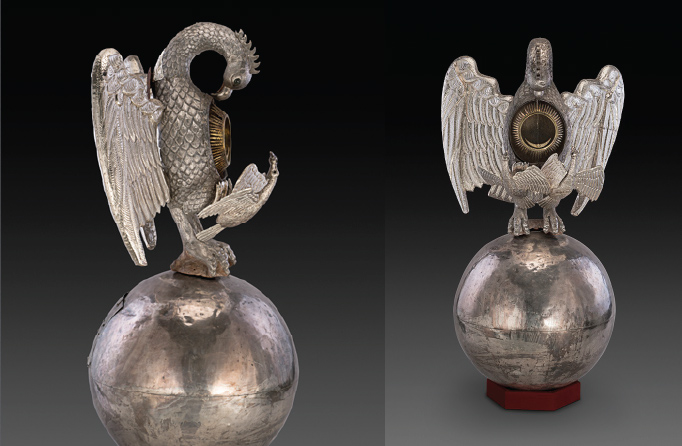
Another especially compelling art object that draws on the pelican legend is a silver-plated tabernacle monstrance from Portuguese Goa in southwestern India.
Tabernacle monstrance made in Goa, India, 17th century. Silver on wood, glass, 142 × 72 cm, globe 66 cm. Museum of Christian Art, Convent of Santa Monica, Old Goa, India.
In the Roman Catholic Church, a tabernacle is a container in which the consecrated hosts (small unleavened wafers of bread) of the Eucharist are stored as part of the “reserved sacrament” rite, and a monstrance is a vessel that displays the consecrated host on the altar and in procession. This object combines both into one—the spherical base serving as the tabernacle, with access gained through an opening at the back, and the bird’s breast bearing a transparent aperture surrounded by a golden sunburst halo, through which the host can be viewed. The body of Christ, broken for you.
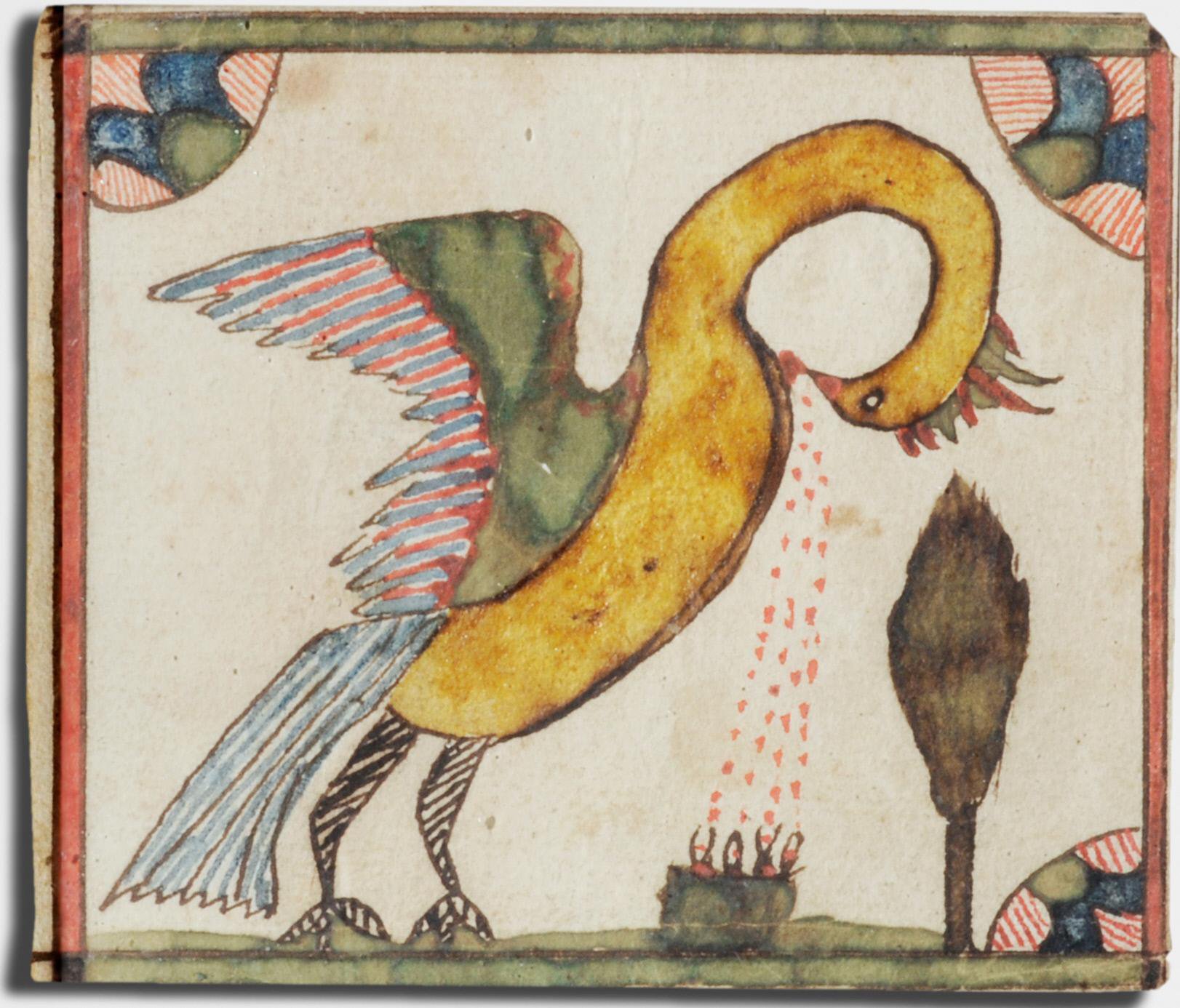
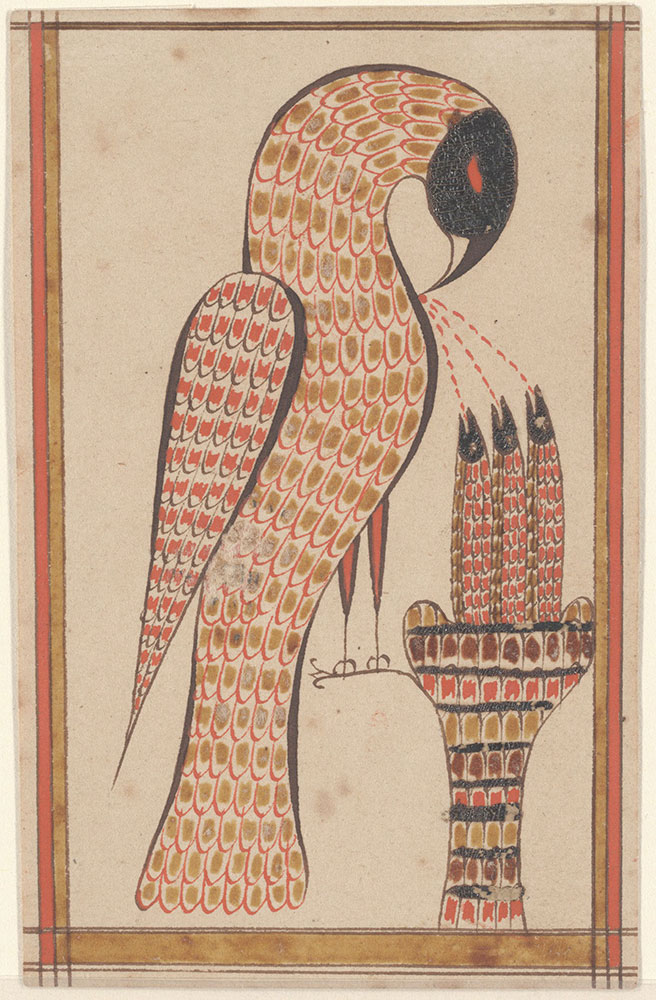
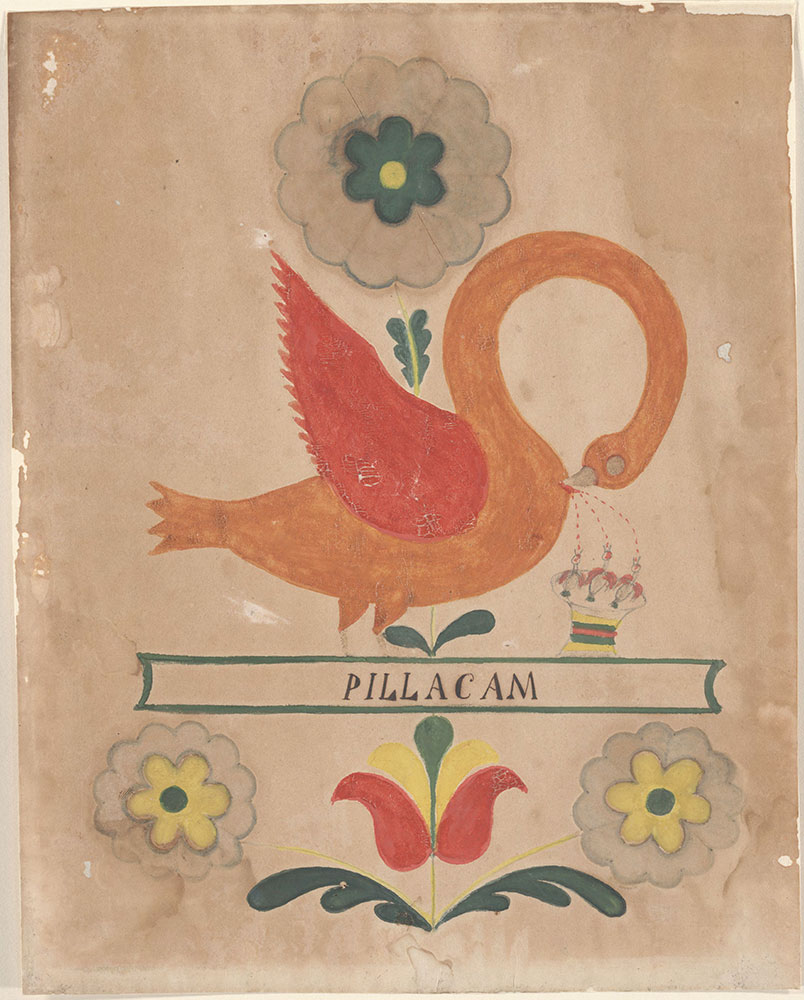
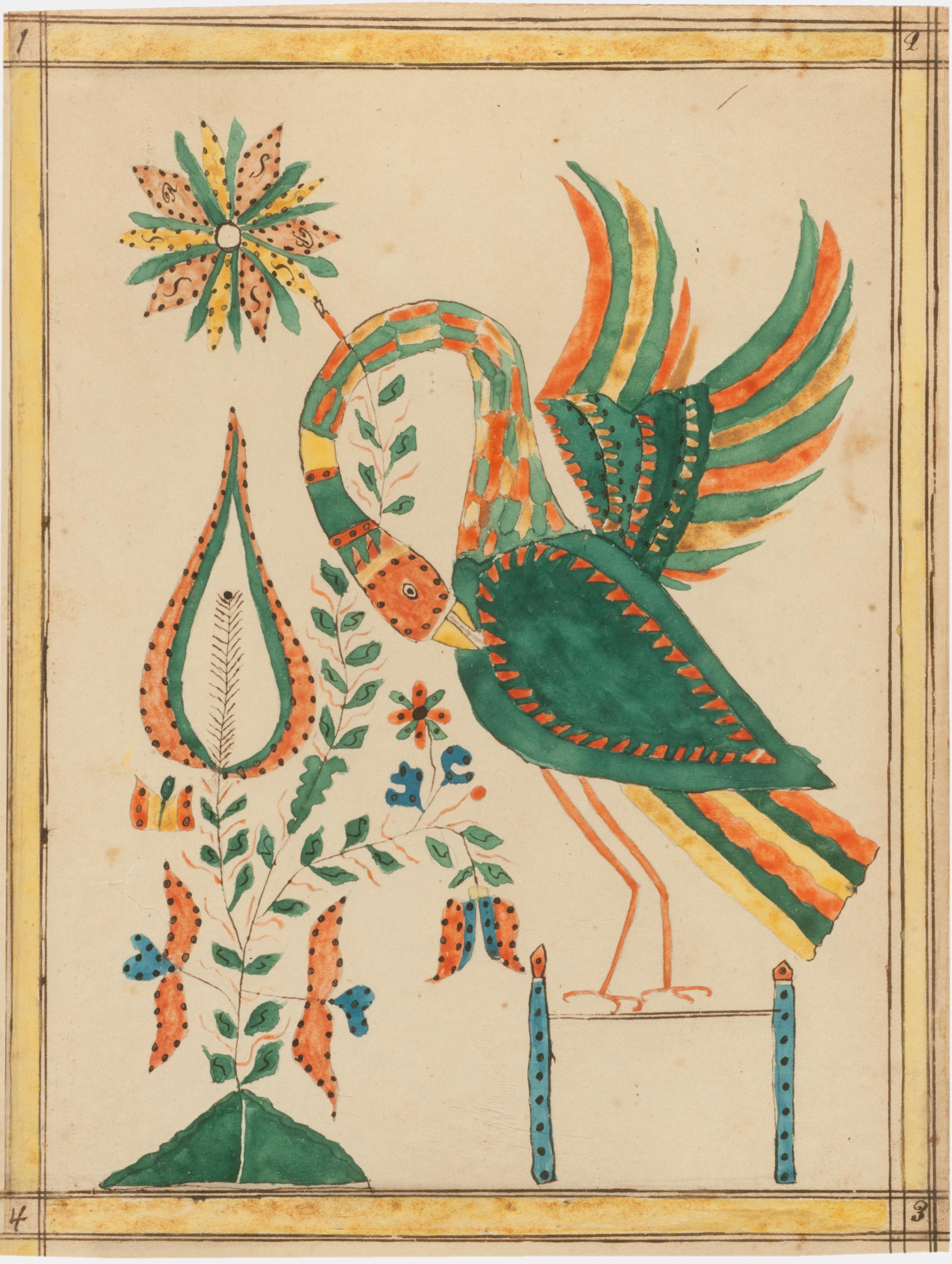
In researching this essay, I found that the pelican is a subject that recurs (so charmingly!) in the folk art of eighteenth- and nineteenth-century Pennsylvania Germans:
A Pelican in Its Piety, Bucks County or Montgomery County, Pennsylvania, ca. 1800. Watercolor and ink on laid paper, 8.9 × 8.3 cm. Promised gift of Joan and Victor Johnson to the Philadelphia Museum of Art.David Kulp (American, 1777–1834), Pelican in Its Piety, Bucks County, Pennsylvania, ca. 1810. Watercolor and ink on wove paper, 18.6 × 12.2 cm. Free Library of Philadelphia.Pelican, Pennsylvania, ca. 1850. Watercolor and ink on wove paper, 31.6 × 25.4 cm. Free Library of Philadelphia.A Pelican in Its Piety, Pennsylvania, ca. 1825. Watercolor and ink on wove paper, 24.1 × 19.1 cm. Promised gift of Joan and Victor Johnson to the Philadelphia Museum of Art.
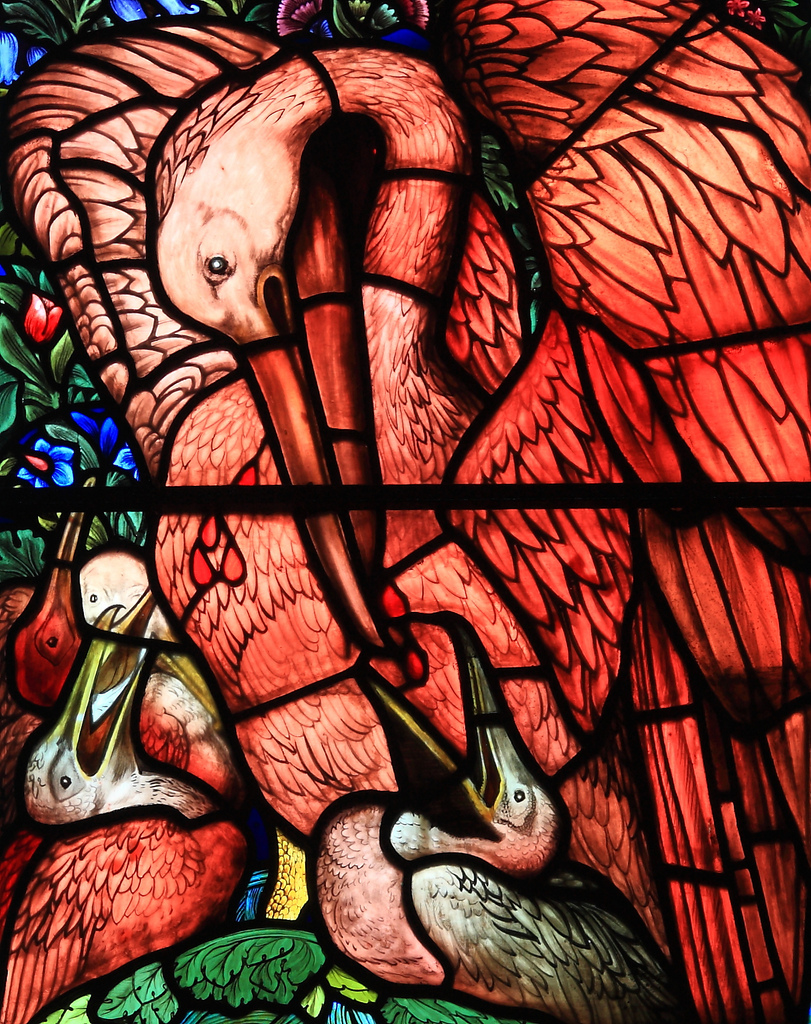
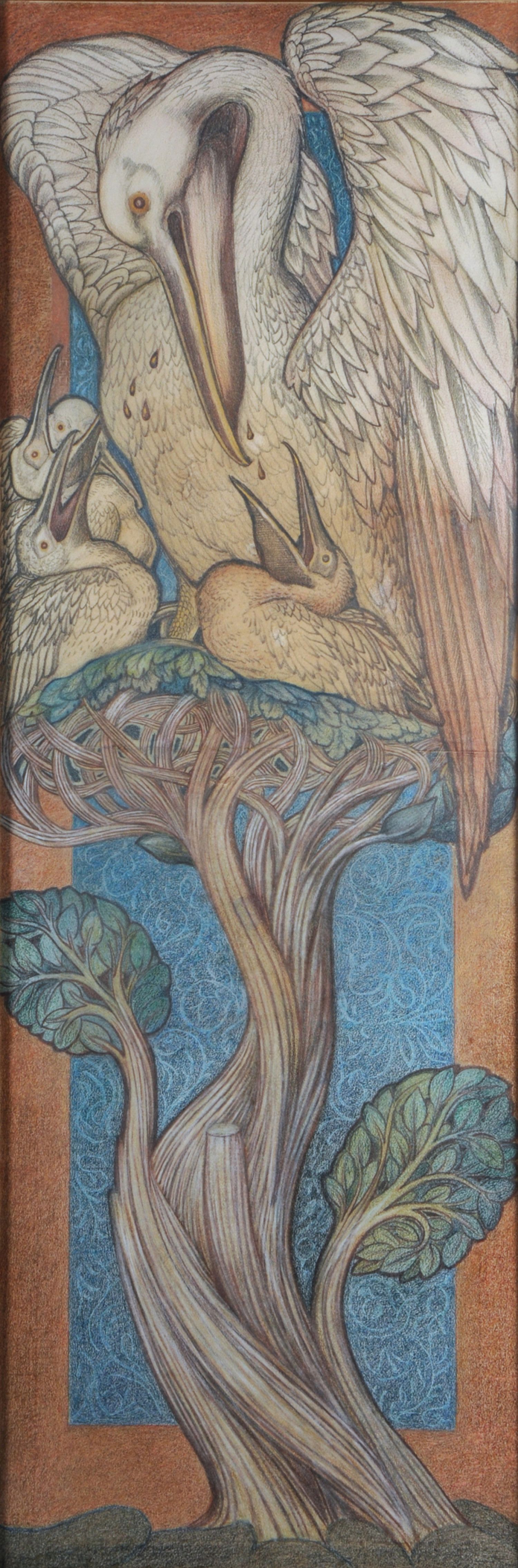
From the Victorian era, I’m especially fond of the stained glass pelican design by the Pre-Raphaelite artist Edward Burne-Jones, fabricated by Morris & Co. to serve as part of the East Window of St Martin’s Church, Brampton, in Cumbria. Burne-Jones drew his design in 1880, and after the window was completed the following year, he returned to the drawing out of personal fondness, embellishing it with colored chalks, and gold for the blood drops, thus developing it into a more substantial work.
Edward Burne-Jones (British, 1833–1898) and Morris & Co., Pelican on Nest (detail), 1880. East Window, St Martin, Brampton, Cumbria, England. Photo: Dave Webster. [view full window]Edward Burne-Jones (British, 1833–1898), Pelican in Her Piety, 1880–81. Pencil, colored chalk, and gold on paper, 172.7 × 57.3 cm. William Morris Gallery, London.
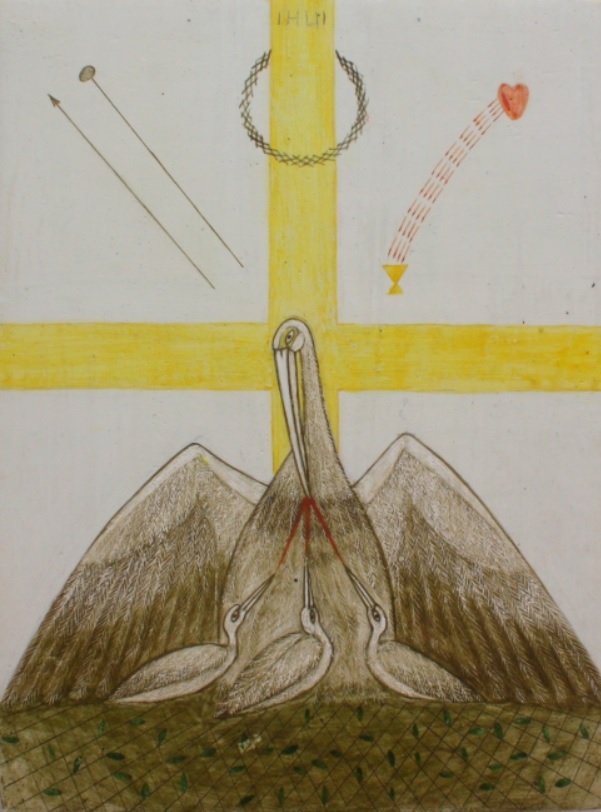
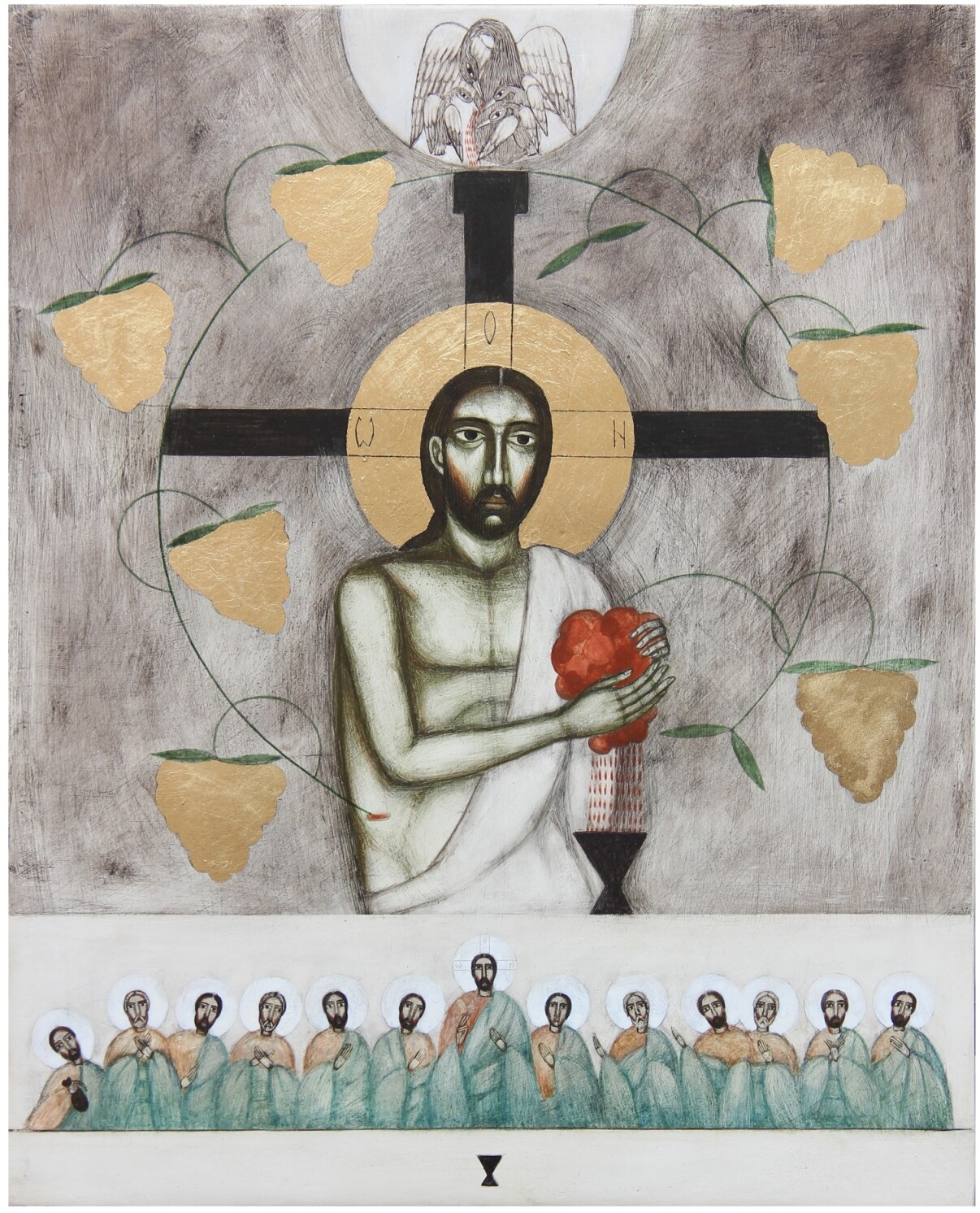
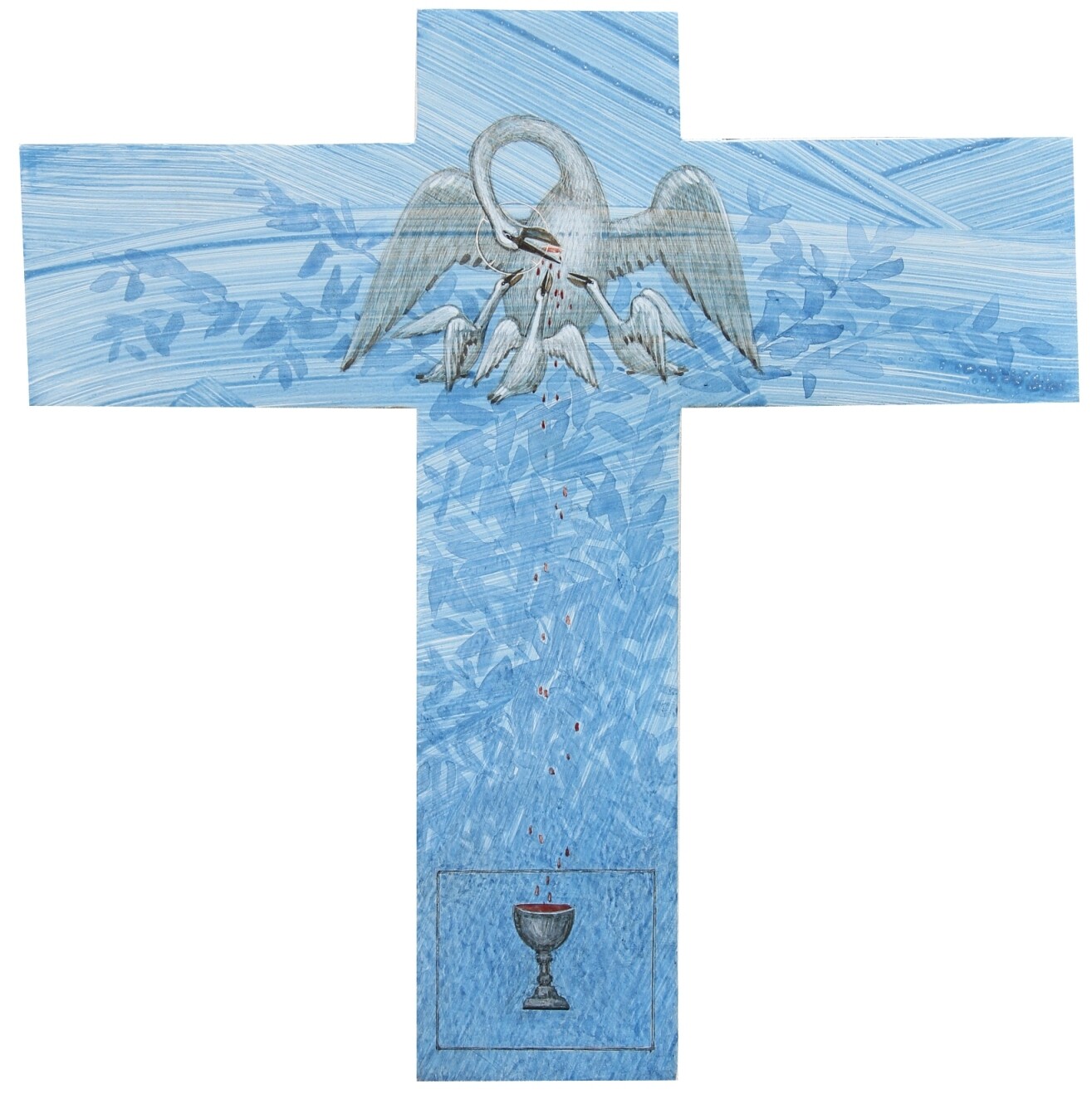
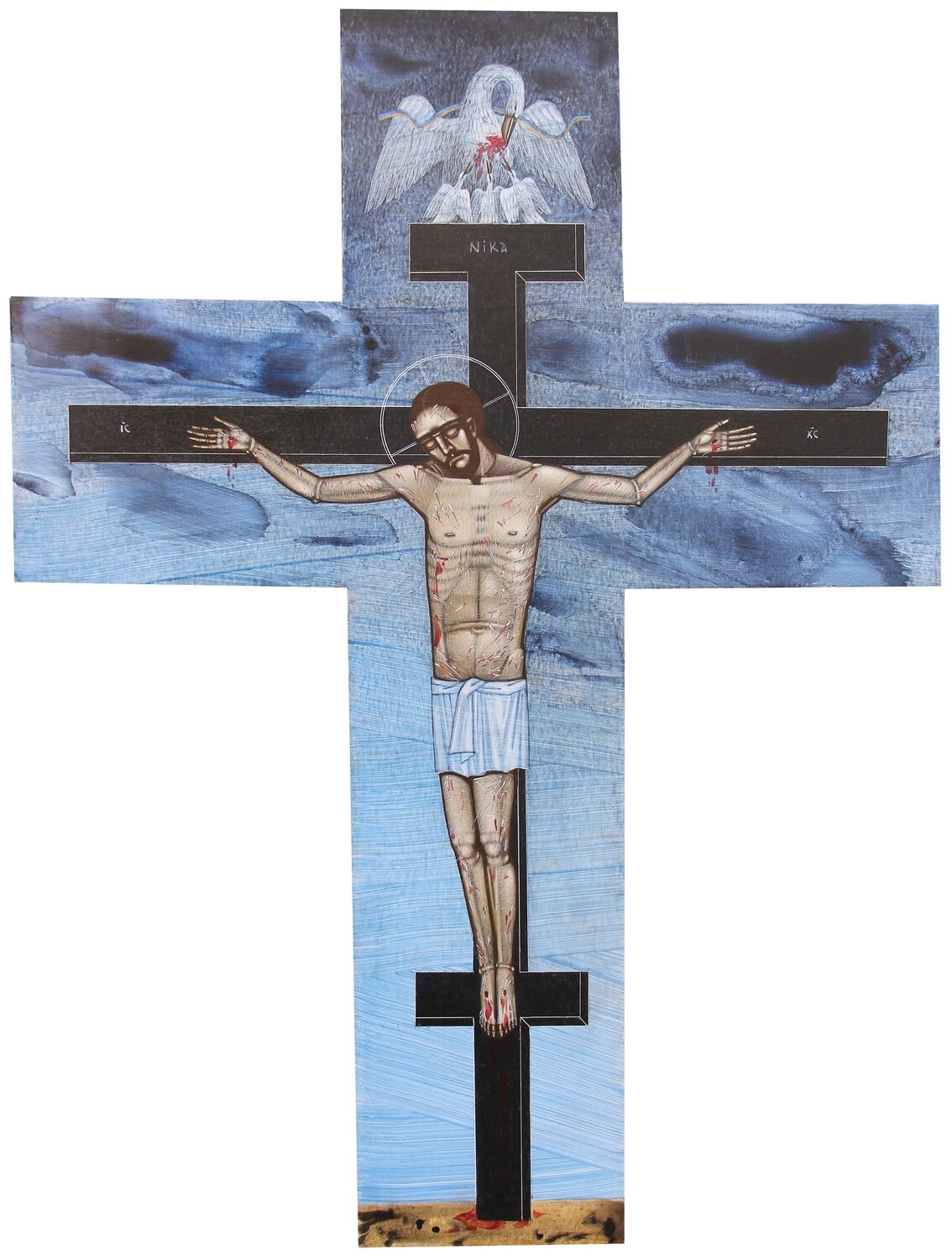
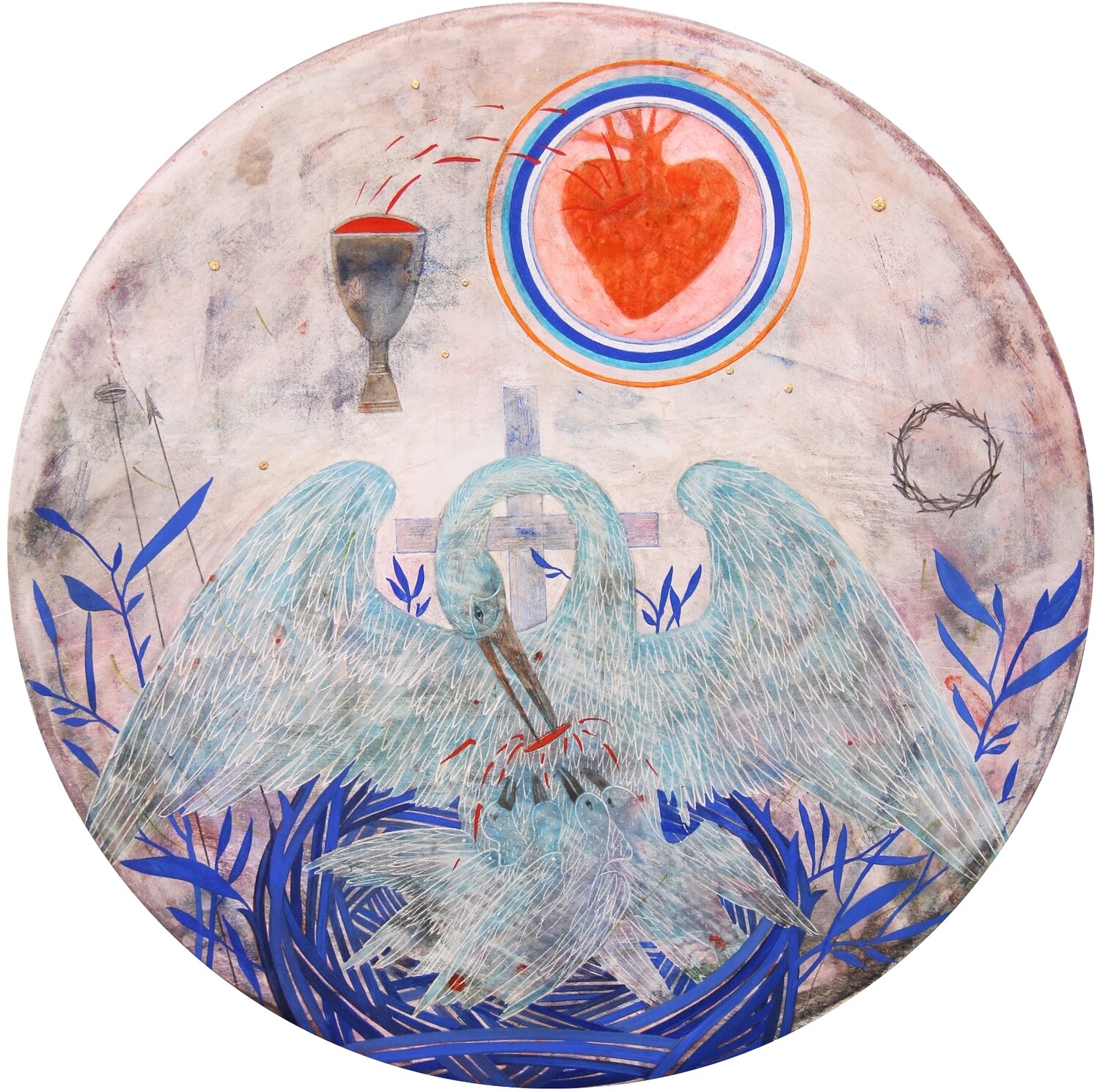
Contemporary artists have also turned to the subject of the vulning pelican, especially the Ukrainian Catholic women iconographers of Lviv:
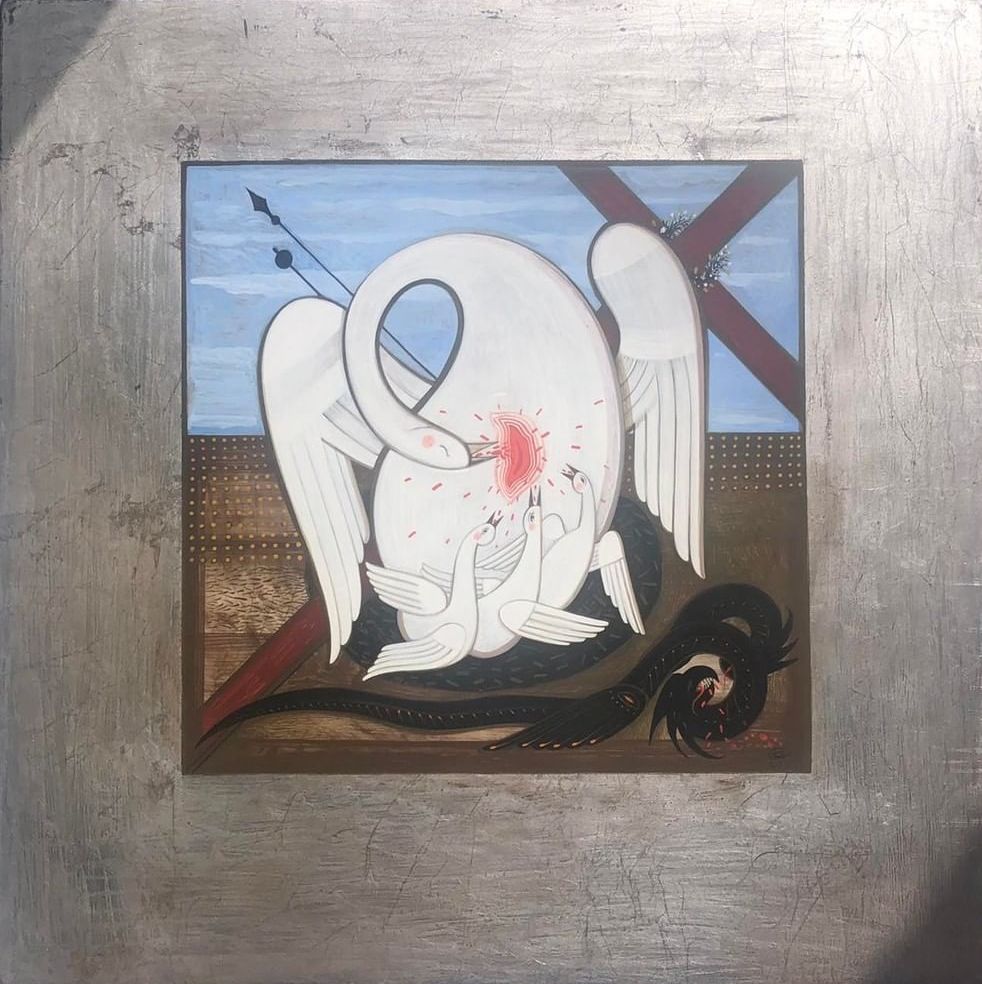
Natalya Rusetska (Ukrainian, 1984–), Pelican, 2017. Egg tempera on gessoed wood, 19 × 15 cm.Natalya Rusetska (Ukrainian, 1984–), Jesus the Grapevine and the Last Supper, 2021. Egg tempera on gessoed wood, 30 × 24 cm.Kateryna Kuziv (Ukrainian, 1993–), Pelican, 2021. Egg tempera on gessoed wood, 30 × 30 cm.Kateryna Kuziv (Ukrainian, 1993–), Crucifixion, 2022. Egg tempera on gessoed wood, 65 × 49 cm.Ulyana Tomkevych (Ukrainian, 1981–), Pelican, 2021. Egg tempera on gessoed wood, diameter 30 cm.Olya Kravchenko (Ukrainian, 1985–), Sacrifice and Victory, 2022. Tempera and silver leaf on gessoed wood, 40 × 40 cm.
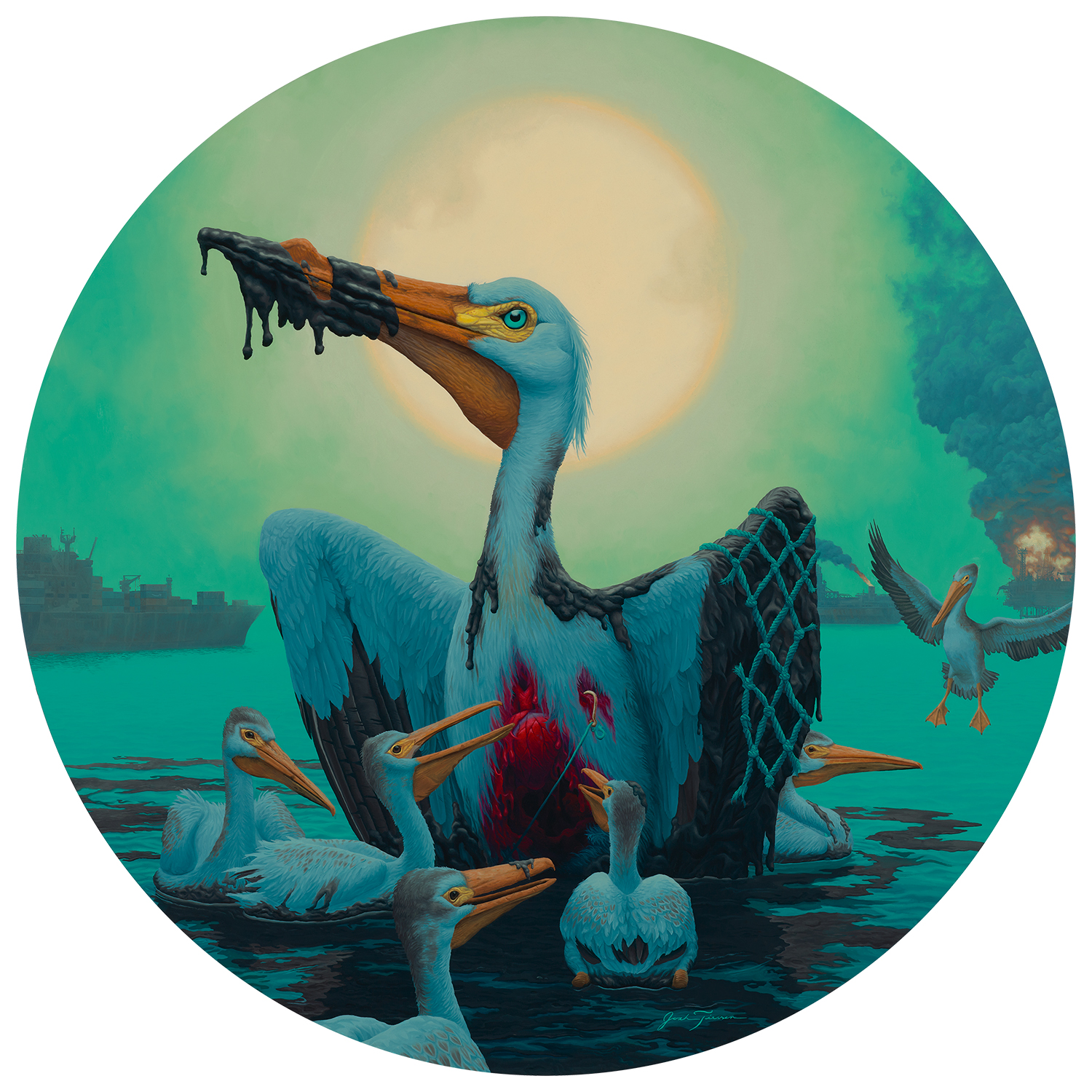
Addendum, 4/8/25: Shortly after publishing this, a reader reminded me of Josh Tiessen’s painting All Creatures Lament from his Vanitas and Viriditas series, which shows an American white pelican protecting her chicks in the face of another oil spill and the accumulation of fishing-related plastic waste. Tiessen, an artist of faith, directs the symbolism of the pelican toward a call for wildlife conservation. (I previously featured Tiessen’s work here.)
Josh Tiessen (Canadian, 1995–), All Creatures Lament, 2023. Oil on braced Baltic birch, diameter 26 inches.
In Poetry and Song
Probably the most universally famous poetic treatment of the pelican as an emblem of Christ is the eucharistic hymn “Adoro te devote” (Hidden God, Devoutly I Adore Thee). Written around 1260 by Thomas Aquinas, it is one of the most beautiful medieval poems in Latin. Aquinas did not originally write it for the liturgy, but it was added to the Roman Missal in 1570 and since then has been used in the Catholic Mass. The penultimate stanza reads:
Pie pelicane, Jesu Domine,
Me immundum munda tuo sanguine,
Cujus una stilla salvum facere
Totum mundum quit ab omni scelere.
Like what tender tales tell of the Pelican,
Bathe me, Jesus Lord, in what thy bosom ran—
Blood that but one drop of has the pow’r to win
All the world forgiveness of its world of sin.

Trans. Gerard Manley Hopkins
Here’s a great video of the hymn put out by the Fundación Canto Católico, set to a Benedictine plainsong melody from the thirteenth century, as has become standard. Our pelican passage appears at the 4:10 mark. The subtitles are in Spanish, but you can turn on CC for English.
(If, like me, you’re wondering what in the world the video’s images are from, an explanatory note in the YouTube comments section explains: they are from the Cuasimodo festival in Chile, celebrated the second Sunday of Easter. The festival has nothing to do with Victor Hugo’s famous hunchback but rather is about bringing Communion to the sick and elderly who were unable to leave their residences to participate in the sacrament during Holy Week. [The Spanish Cuasimodo comes from the Latin Quasimodo, from the incipit of the day’s introit based on 1 Peter 2:2: “Quasi modo géniti infántes . . . ,” or “As newborn babes . . .”] Traditionally for this task, priests were escorted by horsemen, who showed them the route and protected them from assaults.)
The vulning pelican also appears in the liturgy of the Eastern Orthodox Church, whose members sing at Matins on Good Friday evening, “Like a pelican wounding her breast, Thou, O Word, hast made Thy mortal children to live, for Thou hast shed upon them life-giving streams.”
Dante Alighieri, the great medieval Italian writer, calls Christ “nostro Pelicano” (our Pelican) in canto 25 of his Paradiso, the third book in his Divine Comedy trilogy of extended narrative poems.
The Christ-pelican appears, too, in English poetry from the late Middle Ages onward. One Middle English poem found in a prayerbook from ca. 1460 reads:
The pellicane his bloode dothe blede
Therwith his birdis for to fede.
It figureth that God with his bloode
Us fede hanging on the rode,
Whane he us brought oute of hell
In joy and blis with him to dwel,
And be oure fader and oure fode,
And we his childerne meke and good.

[Bodleian Library MS Douce 1, fol. 57r]
The pelican his blood doth bleed,
Therewith his birdies for to feed.
It figures God, who, with his blood,
Fed us hanging on the rood,
By which he brought us out of hell,
In joy and bliss with him to dwell,
To be our father and our food,
And we his children meek and good.
Our Pelican, by bleeding thus, Fulfill’d the law, and cured us.
Look here, and mark (her sickly birds to feed) How freely this kind Pelican doth bleed. See how (when other salves could not be found) To cure their sorrows, she herself doth wound; And when this holy emblem thou shalt see, Lift up thy soul to him, who died for thee.
For this our hieroglyphic would express That Pelican which, in the wilderness Of this vast world, was left (as all alone) Our miserable nature to bemoan; And in whose eyes the tears of pity stood, When he beheld his own unthankful brood His favors and his mercies then condemn, When with his wings he would have brooded them, And sought their endless peace to have confirm’d, Though to procure his ruin, they were arm’d.
To be their food, himself he freely gave; His heart was pierc’d, that he their souls might save, Because they disobey’d the sacred will, He did the law of righteousness fulfill; And to that end (though guiltless he had been) Was offered for our universal sin.
Let me, oh God! forever fix mine eyes Upon the merit of that sacrifice: Let me retain a due commemoration Of those dear mercies, and that bloody passion, Which here is meant; and by true faith, still feed Upon the drops this Pelican did bleed; Yea, let me firm unto thy law abide, And ever love that flock for which he died.
I already mentioned, in relation to Bosch’s pelican painting above, “Christ’s Bloody Sweat” by the English Catholic martyr Robert Southwell.
More recently, the Anglican priest Matt Simpkins, who performs music under the name Rev Simpkins, wrote a song titled “Pelican,” which he released on his album Big Sea (2020). Gritty and impassioned, here’s a live performance at Colchester Arts Centre:
Pelican feeds the hungry and needy I kneel before her My throat like an open grave
Food cannot fill me Water dilutes me Nothing contents me Pelican, pity me
She tears her breast, her children to refresh By her I am blessed, led to life from living death
Though death entreats me Her life flows sweetly Given so freely Given in flesh and blood
She tears her breast, her children to refresh By her I am blessed, led to life from living death
Pelican feeds me Loves me completely Though I’m unworthy She gives so graciously
She tears her breast, her children to refresh By her I am blessed, led to life from living death
She crowns the whole earth, the heavens and seas The Pelican tears her breast for me
She’s queen of what was and what is to be The Pelican tears her breast for me
She gives of herself in infinity The Pelican tears her breast for me
She’s compassion and love, she’s strength and glory The Pelican tears her breast for me
I love it when contemporary artists engage with historical Christological symbols, whether from the animal world or elsewhere, tapping into a creative wisdom the saints of ages past have bequeathed to us but that is too often dismissed in favor of literalism or wordy, intellectual articulations of doctrine.
I wholeheartedly support the endeavor of academic theology, but it must be remembered that for centuries, the church has developed her theology not just through discursive prose but also through liturgy, verse, and visual art. While many modern Christians may discount medieval allegories of Christ as naive, backward, too fanciful, or too obscure, I want to suggest that there’s value in learning (at least some of) them and even incorporating them into new material, to explore how they might come alive in new contexts.
By studying the pelican of ancient lore, for example, as it has been adapted in Christian art and literature, I’ve grown in my appreciation for the mother-love of God, who, to restore me to life and to nourish me—his child, his dependent—allowed his sacred flesh to be torn, so that I might know the power in the blood.
This essay took many hours to research and write and came to fruition only after several years spent collecting enough Pelican images to reach a critical mass. If you have the inclination and means to support more essays like this, I’d really appreciate a donation!
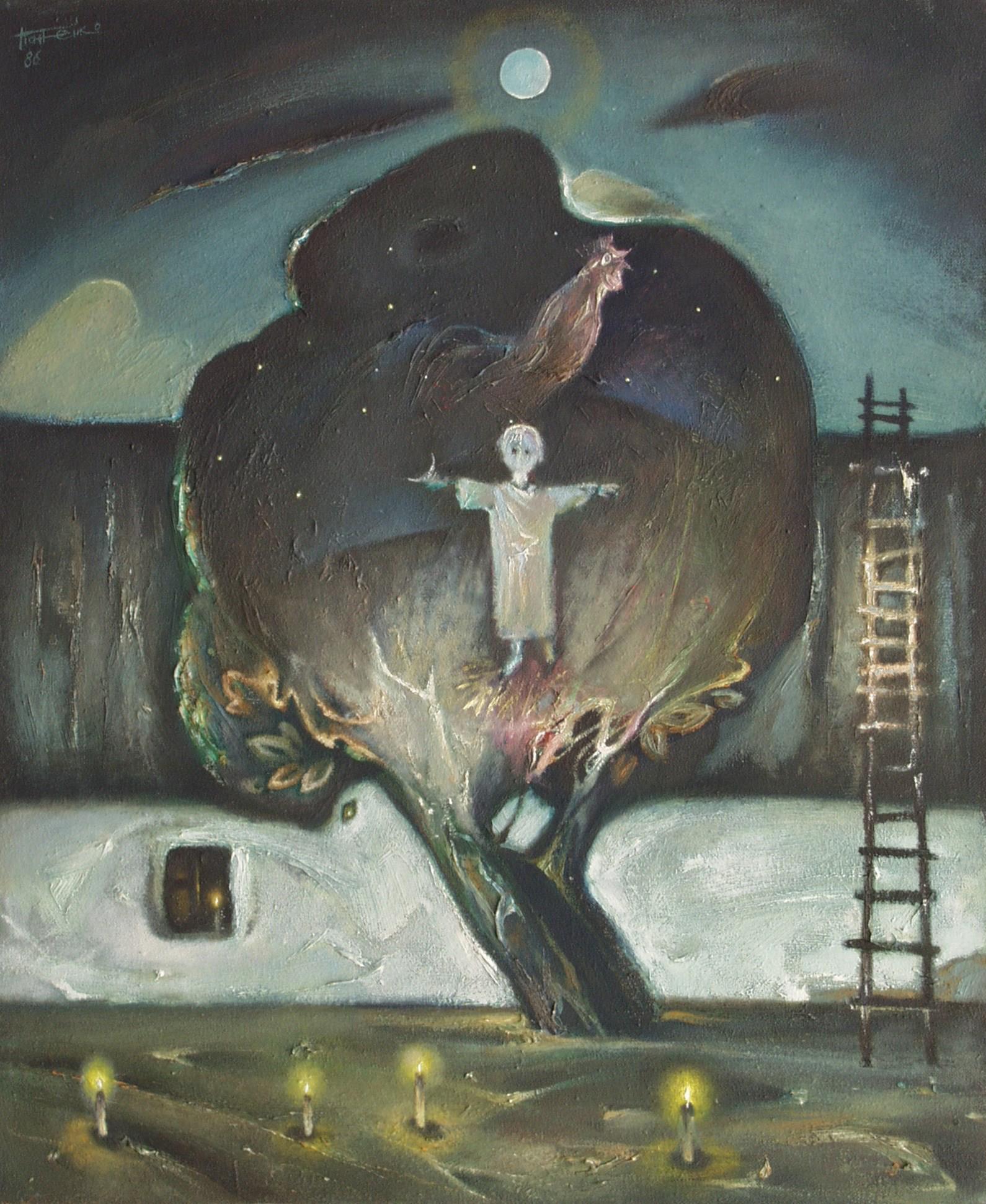
Ihor Paneyko (Ukrainian, 1957–), Я родився (I Am Born), 1986. Oil on canvas.
LISTEN: “The Infinite a Sudden Guest” by Josh Rodriguez, 2015 | Performed by New City Music on Songs from Engedi, 2015
The Infinite a sudden guest—
Awake, mankind! For your sake God has become man. Awake, you who sleep: God has become man. Awake, rise up from the dead, And Christ will enlighten you. For your sake, God became man.
You would have suffered eternal death, Never freed from sinful flesh, Had he not taken on himself The likeness of sinful flesh; Lost from everlasting unhappiness, Had it not been for this mercy. You would never have returned to life, Had he not shared your death.
Let us celebrate the coming of salvation and redemption! Let us celebrate the day who is the great and eternal day, Came from the great and endless day of eternity Into our own short day of time.
Christ, born of Mary. Eternity entered time. Truth has arisen from the earth: Christ who said, “I am the Truth.” And Justice looked down from heaven: Because believing in this newborn child, Man is justified not by himself but by God.
Truth has arisen from the earth: Because the Word was made flesh, And Justice looked down from heaven. Justified by faith, let us be at peace with God. For Peace and Justice have embraced in Jesus Christ.
The Infinite a sudden guest— God In time In God In time In God In time In God In time In God In time In God In time In God.
In 2015 Josh Rodriguez[previously here and here] composed this piece for SATB choir, violin, and percussion forNew City Presbyterian Church in Royal Oak, Michigan, where he served as music director at the time.
Its striking title and first line come from a short poem by Emily Dickinson, and the rest of the text is taken from a Christmas sermon by Augustine of Hippo (cataloged as Sermon 185 by scholars), which centers on Psalm 85:11: “Truth shall spring out of the earth; and righteousness shall look down from heaven.” Augustine sees this prophecy as fulfilled in Christ. The full sermon can be read in St. Augustine, Sermons on the Liturgical Seasons, trans. Mary Sarah Muldowney, RSM (vol. 38 of the Fathers of the Church series) (Washington, DC: Catholic University of America Press, 1959), 6–9. Section 1 can be read for free here.
Celebrating the entrance of God into human history, this choral work alternates between vigorous, exuberant passages and ones that are slower and more introspective. In the opening, there’s a wonderful crescendo on “guest”—an expansion that reflects the possibility opened up by the Incarnation. The final passage alternates between the phrases “in God” and “in time.” God is in time and time is in God, the infinite contracted to a span.
This post is part of a daily Christmas series that goes through January 6. View all the posts here, and the accompanying Spotify playlist here.
The Rothschild Canticles is the name of a lavishly illuminated manuscript of Franco-Flemish origin, produced at the turn of the fourteenth century. “A potpourri of biblical verses, liturgical praise, dogmatic formulas, exegesis, and theological aphorisms, . . . the manuscript leads its user step by step through meditations on paradise, the Song of Songs, and the Virgin Mary to mystical union and, finally, contemplation of the Trinity,” describes Barbara Newman in her excellent essay “Contemplating the Trinity: Text, Image, and the Origins of the Rothschild Canticles.” It’s a diminutive little book, with a trim size of just four and a half inches by about three and a quarter.
The manuscript lacks any provenance before 1856, but Newman proposes that it was made at the Benedictine abbey of Bergues-Saint-Winnoc in Flanders, located at what is today the northern tip of France. The compiler of its texts, she suggests, was probably the same person who designed its remarkable images—most likely a monk of Saint-Winnoc, who probably employed a professional lay artist from Saint-Omer to execute the designs. The book’s patron was probably a canoness at the nearby abbey of Saint-Victor. It is now preserved at the Beinecke Rare Book and Manuscript Library at Yale University in New Haven, Connecticut. All photographs in this post are courtesy of the Beinecke. Click here to page through the fully digitized manuscript.
The most extraordinary section of the book is a florilegium (collection of literary extracts) on the Trinity, which comprises folios 39v–44r and 74v–106r and draws especially on Augustine’s De Trinitate. Within these pages are nineteen full-page miniatures that exhibit “the most stunning iconographic creativity, . . . bearing witness to a distinctive Trinitarian theology.”
The representation of the Holy Trinity poses one of the most difficult iconographic problems in Christian art. How is one to portray three distinct, divine persons who share one essence? Historical attempts have included the following:
Three identical Christomorphic men (this one is relatively rare)
Three mystically conjoined faces, or three separate heads sharing one body (nicknamed the “monstrous Trinity” and condemned by the Roman Catholic Church)
The Gnadenstuhl (Throne of Mercy, or Throne of Grace), in which the Father is shown holding a crucifix or, in a later variation known as the Mystic Pietà, his slumped Son, while the Holy Spirit in the form of a dove hovers between them
Triangles, trefoils, triquetras, or other abstract geometric designs that suggest Three-in-Oneness
In the Eastern Orthodox Church, the Holy Trinity is represented by three angels seated at a table. These are the three mysterious visitors of Abraham in Genesis 18, believed to be a theophany (visible manifestation of God).
The artist of the Rothschild Canticles relies on none of these conventions, inventing instead an almost wholly original visual language to express the rich yet daunting doctrine. In contrast to other depictions of the Trinity, in the Rothschild Canticles we find, says Newman,
a playful, intimate approach to the triune God, marked by spontaneity rather than solemnity, dynamism rather than hieratic stasis, wit rather than awe. There is no hint of narrative, but something more like an eternal dance. . . . The divine persons are caught up in an everlasting game of hide-and-seek with humans while they enact among themselves, in ever-changing ways, that mutual coinherence that the Greek fathers called perichoresis—literally “dancing around one another.” (135)
Jongleurs (itinerant medieval entertainers proficient in juggling, acrobatics, music, and recitation), angels, and various pointing figures play the role of implied viewers and manifest a joyous attitude. For example,
on fol. 79r a celestial percussionist attacks a row of bells with mallets; on fol. 84r, angels in the upper left and right play a game of ring toss; on fol. 88r, musicians . . . strum whimsically shaped zithers embellished with animal heads. . . . In the lower right corner of fol. 96r, an elfin figure bends over backward to play an instrument whose pinwheel shape mimics the great solar wheel behind which divine Wisdom hides. Four characters in the corners of fol. 98r stretch their arms as if to join hands in a cosmic dance, while on fol. 100r, three spectators raise their hands in wonder beneath a divine apparition, imitating the stunned postures of Peter, James, and John at the Transfiguration. . . . Collectively, they seem to proclaim that the reader need not be ashamed or afraid, even though all human attempts to comprehend the Trinity are comically inept. Nonetheless, she can merrily follow the Lord of the Dance. (135–36)
The quirkiness is so endearing!
Newman continues,
In the Rothschild Canticles, coinherence is the dimension of Trinitarian theology to which the artist seems most profoundly committed. The complex relationality of the three persons is conveyed through the delicate interplay of touch, gesture, and changing positions. Sometimes the Father and Son join hands; on fol. 104r they touch feet behind the wheel they hold. Sometimes they grasp the sides, wings, or talons of the dove, and sometimes they unite around a fourth figure representing the Divine Essence. (143–44)
Moreover,
the artist invented some simple devices to keep the paradox of triunity before the mind’s eye at all times. For example, a prime signifier of divinity—the golden sun with its waving, tentacle-like rays—is sometimes single (fols. 44r, 81r, 88r, 90r), sometimes triple (fols. 40r, 83r, 94r). Elsewhere the artist complicated this formula. On fol. 79r, three small suns for each person are superimposed on one large sun; fols. 92r and 100r insert a smaller sun inside a bigger one; and on fol. 96r, two suns interlock to form a double wheel with spokes radiating both inward and outward. (141)
I particularly like fol. 94r, where the three persons of the Godhead wear the sun like a collar. And fol. 100r, where we see just three feet and three hands, each belonging to a different person, peeping out from behind a giant sun disc!
Another recurring and versatile motif in the Trinity cycle is the veil, which signifies both God’s presence and God’s hiddenness. Sometimes it forms a hammock in which the Trinity rests, partially covered (fols. 75r, 88r); or is braided in an enclosing circle, dangling down for humans to touch (fol. 81r); or is looped about the Father, Son, and Spirit, nestling them snugly (fol. 84r); or is knotted and clutched (fol. 92r); or is draped over bands of cloud (fol. 106r). In this artistic program, veils both conceal and reveal, communicating the paradoxical nature of God who is ensconced in mystery—incomprehensible—and yet accessible, wanting to be known.
Notably, the profusion of Trinitarian imagery is supplemented in the manuscript with textual reminders of the limitations of images. In De Trinitate 8.4.7, for example, Augustine says that all manmade images of God are false, and yet, he says, they are useful insofar as they help the mind cling to the invisible reality to which they point.
Below is a complete compilation of Trinity miniatures from the Rothschild Canticles, reproduced in the order they appear in the manuscript. I have prefaced most with one or more of the quotations that appear on its facing page (thanks to Newman’s identifications) so that you can see how intricately text and image relate. If you wish to reproduce any of these images singly, I suggest the following credit:
Trinity miniature from the Rothschild Canticles (MS 404, fol. _), made in Flanders, ca. 1300. Beinecke Rare Book and Manuscript Library, Yale University, New Haven, Connecticut.
“Dominus in orisunte eternitatis et supra tempus” (The Lord is on the horizon of eternity and beyond time):
Fol. 40rFol. 42r
“Tu es vere Deus absconditus” (Truly you are a hidden God) (Isa. 45:15):
Fol. 44r
“Bene ergo ipsa difficultas loquendi cor nostrum ad intelligentiam trahit, et per infirmitatem nostram coelestis doctrina nos adjuvat: ut quia in Deitate Patris, et Filii, et Spiritus sancti nec singularitas est, nec diversitas cogitanda, vera unitas et vera Trinitas possit quidem simul mente aliquatenus sentiri, sed non possit simul ore proferri.”—Pope Leo I, Sermo 76.2
(“This difficulty in expressing clearly by speech draws our hearts to the power of discerning, and, through our weakness, the heavenly doctrine helps us, that, because of the divinity of Father, Son, and Holy Spirit, neither singularity nor diversity is to be considered. The true unity and true Trinity can be apprehended ‘at the same time’ by the mind, but cannot be produced at the same time by the lips.” Trans. Jane Patricia Freeland, CSJB, and Agnes Josephine Conway, SSJ)
Fol. 75r
“Pater complacet sibi in Filio et Filius in Patre, et Spiritus sanctus ab utroque” (The Father is well pleased in the Son, and the Son in the Father, and the Holy Spirit is from both):
Fol. 77rFol. 79r
“Dicebat enim intra se si tetigero tantum vestimentum eius salva ero” (She said within herself, if I touch the hem of his garment, I will be healed) (Matt. 9:21):
81r
(Also illustrated on fol. 81r is the Holy Spirit as the person “qui facit ex utroque unum” [who makes both one; cf. Eph. 2:14], as cited on the facing page. Notice the shared halo.)
“Trinus personaliter et unus essentialiter” (Three in persons and one in essence):
Fol. 83rFol. 84r
“Dominus Deus noster Deus unus est” (The Lord our God is one God) (Mark 12:29):
Fol. 88r
“Ita et singula sung in singulis, et omnia in singulis, et singula in omnibus, et omnia in omnibus, et unum omnia. Qui videt hec vel ex parte, vel per speculum et in enigmate, gaudeat cognoscens Deum.”—Augustine, De Trinitate 6.12
(“They are each in each and all in each, and each in all and all in all, and all are one. Whoever sees this even in part, or in a puzzling manner in a mirror [1 Cor. 13:12], should rejoice at knowing God.” Trans. M. Mellet, OP, and Th. Camelot)
Fol. 90r
“Sapientia sua, que pertendit a fine usque ad finem fortiter et disponit omnia suaviter” (His wisdom, which reaches from end to end mightily and orders all things sweetly) (Wis. 8:1):
Fol. 92r
“Tres vidit et unum adoravit” (He saw three and worshipped one), a liturgical verse referring to the Trinitarian epiphany in Genesis 18:1–3, in which Abraham saw three men, fell down in worship, and then addressed his divine visitors in the singular:
Fol. 94r
“Gyrum caeli circuivi sola et in profundum abyssi penetravi et in fluctibus maris ambulavi” (I [Wisdom] have circled the vault of heaven alone) (Ecclus. 24:8):
Fol. 96rFol. 98r
“Abscondes eos in abdito faciei tuae” (Thou hidest them [the saints] in the covert of thy presence) (Psa. 30:21):
Fol. 100r
“Optime et pulcrius loquitur qui de Deo tacet” (He speaks best and most beautifully who is silent about God):
Fol. 102r
“Centrum meum ubique locorum, cirumferentia autem nusquam” (My center is in all places, my circumference nowhere). Also, “Quod Deus est, scimus. Quid sit, si scire velimus, / Contra nos imus. Qui cum sit summus et imus, / Ultimus et primus, satis est; plus scire nequimus.” (We know that God is; if we wish to know what he is, / We go against ourselves. That he is the highest and the lowest, / The last and the first, is enough; we can know no more.) And another: “Deus fuit semper et erit sine fine; ubi semper fuit, ibi nunc est. / Et ubi nunc est ibi fuit tunc.” (God always was and shall be without end; where he always was, there he is now. And where he is now, there he was then.)
Fol. 104r
(I love this detail of the Father and Son touching feet behind the wheel to brace themselves up! And the implosion of the sun.)
And lastly, the final text page in the Trinity cycle, which faces a nonfigural miniature of concentric rings of fire and cloud, contains this unidentified apophatic dialogue:
—Domine, duc me in desertum tue deitatis et tenebrositatem tui luminis, et duc me ubi tu non es. —Mea nox obscurum non habet, sed lux glorie mee omnia inlucessit. —Bernardus oravit: Domine duc me ubi es. —Dixit ei: Barnarde, non facio, quoniam si ducerem te ubi sum, annichilareris michi et tibi.
(—Lord, lead me into the desert of your divinity and the darkness of your light; and lead me where you are not. —My night has no darkness, but the light of my glory illumines all things. —Bernard prayed, Lord, lead me where you are. —He said to him, Bernard, I will not, for if I led you where I am, you would be annihilated both to me and to yourself.)
Fol. 106r
My hope is that pastors, theologians, seminarians, and Christians in general spend time studying, meditating on, and delighting in these artworks, which present profound theological content in a compact and sensory format. Visual theology at its best.
Though our efforts to visualize the Trinity will always be clumsy and imperfect, I do think the Rothschild Canticles artist has been more successful than anyone before or since. His miniatures convey, with whimsy and warmth, the eternal relationship of love at the heart of the universe.










 Art & Theology