
“The Perils and Peculiarities of Visually Depicting the Trinity”
Speakers: Dr. Ben Quash, Professor of Christianity and the Arts at King’s College London; Dr. Scott Nethersole, Senior Lecturer in Italian Renaissance Art at the Courtauld Institute of Art
Date: February 21, 2018
Location: Courtauld Institute of Art, Somerset House, Strand, London
Organizer: Department of Theology and Religious Studies at King’s College and the Courtauld Institute of Art
Cost: Free
Description: Nethersole will discuss Botticelli’s Trinity Altarpiece, with special attention paid to its unsettling disjunctions of scale and space—a theological decision on the part of the artist. Then Quash “will examine some of the larger theological problems that are raised by trinitarian visual imagery, and look at . . . some of the successes and failures of various artistic experiments, including one or two very recent ones.” Q&A and informal reception to follow.
#/media/File:Botticelli_Trinity.jpg)
“Religion in Museum Education” (conference)
Speakers: Dr. Caroline Widmer, Dr. Anna Chiara Cimoli, et al. (see link for full list)
Date: February 23, 2018
Location: Lorenzo de’ Medici Institute, Florence
Organizer: Forum on Museums and Religion, an initiative of the Lorenzo de’ Medici Institute’s Museum Studies MA program
Cost: Free
Description: This one-day conference will bring together museum educators and religious authorities to discuss how secular museums housing religious objects might develop educational programming that highlights sacred functions without risking the impression of a religious agenda. Lecture topics include “Understanding Religion through Art,” “Sharing the Sacred with Schools,” “Teaching from Paintings with Religious Subject Matter,” “Churches as Living Museums,” and more, and case studies will come from the British Museum, the Uffizi in Florence, Museum Rietberg in Zurich, the National Museum for the History of Immigration in Paris, and the Shoah Memorial and Pinateca di Brera in Milan. The conference will conclude with a roundtable discussion.
“The New Iconoclasm: A Christological Reflection on Making and Breaking Images”
Speaker: Dr. Natalie Carnes, Associate Professor of Theology at Baylor University
Date: February 28, 2018
Location: Alumni Memorial Common Room, Duke Divinity School, Durham, North Carolina, USA
Organizer: Duke Initiatives in Theology and the Arts (DITA)
Cost: Free
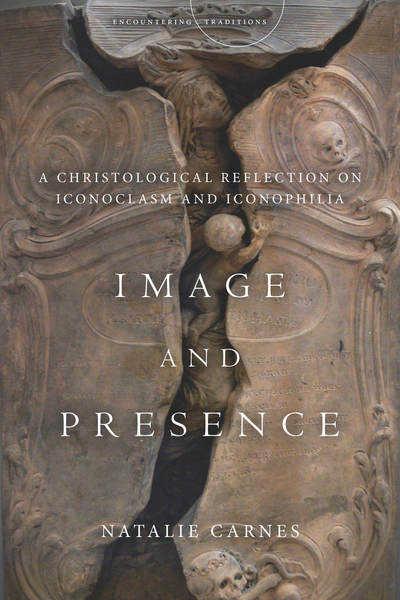
Description: Carnes’s lecture will draw on the content of her new book from Stanford University Press, Image and Presence: A Christological Reflection on Iconoclasm and Iconophilia. “Christians of many epochs—glutted with images, shocked by them—have resorted to the iconoclast’s hammer or its successor, the authoritarianism of empty space. Natalie Carnes proposes a better way to live through our senses” (Mark D. Jordan, Harvard University). “A major contribution to the discussion of image as and in theology” (Judith Wolfe, University of St. Andrews).
“‘In the manner of smoke’: Leonardo, Art, and Faith” (5-hour mini-course)
Lecturer: Rev. Iain Lane, Tutor in Christian Doctrine and the Visual Arts
Date: March 3, 2018
Location: Holywell Lodge, St. Albans, Hertfordshire, England
Organizer: St. Albans Cathedral
Cost: £25
Description: “Leonardo da Vinci produced some of the most compelling images in the history of Christian art. . . . This study day explores each of Leonardo’s surviving, overtly Christian works in detail, exploring their meaning and setting them in context. The picture which is revealed is of an artist of profound religious sensibility rooted in both scientific rationality and a deep awareness of the human condition: a man who embodied a unity of vision which has arguably been lost in our own age.”
#/media/File:Leonardo_da_Vinci_-_Annunciazione_-_Google_Art_Project.jpg)
“Swords into Ploughshares: The Ambivalent Role of the Arts and Religion in Building Peace”
Lecturer: Dr. Jolyon Mitchell, Professor of Communication, Arts, and Religion at the University of Edinburgh
Date: March 7, 2018
Location: Sarum College, Salisbury, England
Organizer: Centre for Theology, Imagination, and Culture at Sarum College
Cost: Free (advance booking required)
Description: This lecture will explore the role of different media arts in both inciting violence and promoting peace, drawing on examples from countries such as Israel-Palestine, Mozambique, Rwanda, and the UK.
“Scandal and Glory: The Cross in the Bible and Poetry”
Speakers: Paula Gooder, Director of Mission, Learning, and Development in the Birmingham Diocese; Mark Oakley, Canon Chancellor of St. Paul’s Cathedral
Date: March 13, 2018
Location: St. Paul’s Cathedral, London
Organizer: St. Paul’s Cathedral (Adult Learning initiative)
Cost: Free
Description: “Is Christ on the cross our brother in suffering or our King in triumph? Jesus’ death is at the heart of Christianity, but the four Gospel accounts are very different and the cross has been seen as both the throne of God’s glory and the place of ultimate desolation and defeat. In addition we have 2,000 years of interpretations, paintings, poems, theologies, and liturgies that add to the complexity, and sometimes to the confusion. . . . Paula Gooder and Mark Oakley will look at different aspects of the cross through the Gospels and poetry, exploring some of what we might learn from it not only of sin and reconciliation, but also of new life, love, freedom, and creation made new.” Q&A to follow.
“Art and the Apocalypse: The Book of Revelation and Visual Exegesis”
Speakers: Dr. Natasha O’Hear, Lecturer in Theology and Visual Art at ITIA, University of St. Andrews, Scotland; Dr. Anthony O’Hear, Professor of Philosophy at the University of Buckingham
Date: March 16, 2018
Location: The Gallery, 70 Cowcross Street, London
Organizer: Art and Christianity
Cost: £12
Description: Drawing on their recent award-winning book Picturing the Apocalypse: The Book of Revelation in the Arts over Two Millennia, the O’Hears will explore the visual history of the book of Revelation as well as the notion of the artist as biblical exegete. The focus will be on the Four Horsemen of the Apocalypse (Rev. 6) and the Rider on the White Horse (Rev. 19).

“Women Artists and the Modern Church in Britain”
Lecturer: Dr. Ayla Lepine, Visiting Fellow in Art History at the University of Essex
Date: April 4, 2018
Location: The Gallery, 70 Cowcross Street, London
Organizer: Art and Christianity
Cost: £14.21
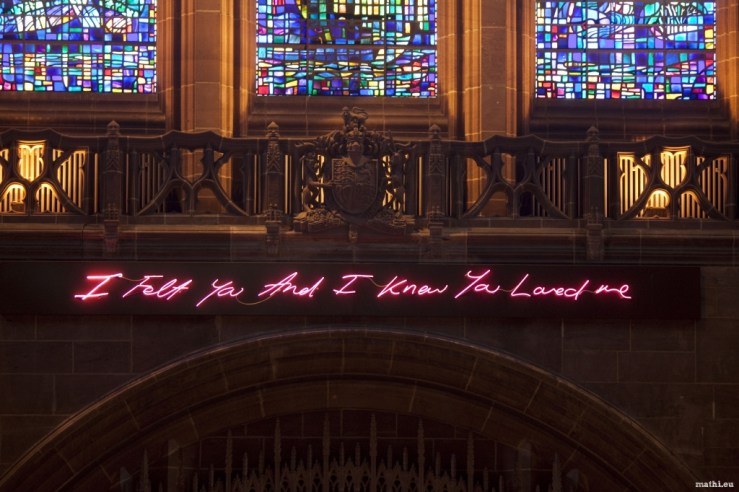
Description: “From the turn of the twentieth century to the present, women have produced diverse and complex works of art for and in response to the Church. This talk explores the relationship between Christian sacred spaces, from vast and well-known cathedrals to rural chapels, and women artists in a period in which feminism, culture, and Christianity engaged in new dialogues.” Artists include Winifred Knights, Elizabeth Frink, Enid Chadwick, and Tracey Emin.
+++
Many of these events I found out about through the weekly Arts and the Sacred at King’s (ASK) e-bulletin compiled by Dr. Chloë Reddaway. If you would like to be added to the ASK listserv or announce a relevant event through it, contact her at chloe.1.reddaway@kcl.ac.uk.
Note: The two book cover images on this webpage are Amazon affiliate links, meaning that Art & Theology will earn a small commission on any purchase that originates here.

 Art & Theology