Roundup: New online community for poetry lovers and learners; Christians in the movies; etc.

ONLINE COURSE: The Good, the True, the Beautiful: Reading Literature to Restore the Soul with Karen Swallow Prior, October 29–December 17, 2025: Offered through the Free to Be Faithful initiative of the Institute of Christian Studies in Toronto, this eight-week online course taught by literature scholar Karen Swallow Prior (author of On Reading Well and other books) “invites students into the sacred act of reading—exploring how classic and contemporary works of fiction and poetry can reawaken moral imagination, deepen empathy, and cultivate spiritual resilience. Together we will reflect on the formative power of beauty and goodness through the written word, guided by voices both timeless and timely.”

The class will meet Wednesdays from 6:30 to 8:30 p.m. ET and will include lectures and discussion. The cost for first-time ICS students, not for credit, is $289 USD. (To take it for credit costs about $1,110 USD.) Read the ICS’s course introduction on Substack, and view additional course offerings at https://f2bf.icscanada.edu/#courses.

+++

ONLINE POETRY COMMUNITY: Versed~, founded and led by Dr. Adam Walker: A recently minted Harvard PhD grad and award-winning educator, Adam Walker is a scholar of English and American literature specializing in Romantic poetry. I’ve really been enjoying his “Close Reading Poetry” YouTube channel, where he has posted such videos as “6 Poets Tolkien Fans Should Read,” “The Theological Aesthetics of Gerard Manley Hopkins,” “Mary Sidney Herbert, the Mother of English Devotional Poetry,” “Reading John’s Gospel as Visionary Literature,” and many, many more. He seeks to make great poetry accessible to everyone. I love the combination of erudition and warmth that he exudes.

This March, Walker launched Versed~, “a space where the serious love and study of poetry is available beyond the paywalls of the universities—a place where readers can talk about books, make friends, compare notes, and share their writings with other readers.” He continues:

Our meetings blend the rigor of the classroom with the warmth of a living room. . . . Versed offers a wide range of learning opportunities, including live classes, a library of past courses, exclusive access to unpublished courses, and resources designed for everyone from beginners to advanced readers. At Versed, students can sharpen their literary skills, master various techniques in the art of close reading, and encounter works of great literature with other readers. Here, you’ll find all the insight of a university course, without the pressure, just good books and better company.

You can join for just $20/month.

+++

PODCAST EPISODES:

These are both available for listening wherever you get your podcasts.

>> “How to Read a Poem” with Ben Myers, The Artistic Vision, July 15, 2025: Dr. Benjamin Myers [previously], the 2015/16 poet laureate of Oklahoma and author of four books of poetry, kicks off a new “how to” lecture-style series for The Artistic Vision, providing tips on how to read (and listen to) poetry. “The purpose of poetry is the cultivation of attention,” he says. He urges readers to resist the temptation to try to “solve” the poem, and emphasizes the role of beauty and sound in enhancing the poetic experience. For consideration, he highlights the poems “The Red Wheelbarrow” by William Carlos William, “The Song of Wandering Aengus” by William Butler Yeats, “Birches” by Robert Frost, and “The Lake Isle of Innisfree” by William Butler Yeats. For those who want to learn more, he heartily recommends How to Read a Poem by Tania Runyan.

>> “On the Artistic Vision of Flannery O’Connor” with Jessica Hooten Wilson, The Artistic Vision, December 11, 2024: Dr. Jessica Hooten Wilson—author of The Scandal of Holiness: Renewing Your Imagination in the Company of Literary Saints and the forthcoming Reading for the Love of God: How to Read as a Spiritual Practice, among other titles—discusses the sacramental vision of the Southern fiction writer Flannery O’Connor (1925–1964). She touches on the role of the dark and grotesque in O’Connor’s work; symbolism, allegory, and the accumulation of meaning; her favorite O’Connor short story, “Greenleaf”; Mystery and Manners, a collection of O’Connor’s essays and other prose; being called upon by O’Connor’s estate to present O’Connor’s unfinished third novel, Why Do the Heathen Rage?, to the public for the first time, and artist Steve Prince’s indispensable contribution to the project; and “The Woodcarver,” a parable of craft by the ancient Taoist philosopher Chuang Tzu (Zhuangzi).

+++

MEDLEY: “You’re Nearer / Nearer, My God, to Thee” by Nnenna Freelon: Cued up in the video below, from a 2016 Jazz Vespers service at Duke University Chapel, is a medley by the American jazz singer Nnenna Freelon, which combines a 1940 Broadway musical number by Rodgers and Hart with a nineteenth-century hymn. What a compelling mash-up! It appears on Freelon’s 2000 album Soulcall.

+++

ARTICLE: “Christians in the Movies: The Good, the Bad, and the Ugly” by Mike Frost: “Hollywood movies are full of religious nuts. . . . But it’s not all bad news. Mainstream cinema has presented us with some powerful, complex, and authentic depictions of devout Christians,” writes Mike Frost, a minister from Australia. He gives ten examples.
Medieval roundup: Julian of Norwich, stained glass at York Minster, Jewish hymn from Andalusia, and more

PODCAST EPISODES:

>> “Jack’s Bookshelf: Julian of Norwich” with Dr. Grace Hamman, Pints with Jack: The “Jack’s Bookshelf” podcast series explores the authors and books that influenced the life and writings of C. S. Lewis. Hosted by David Bates, this episode covers Julian of Norwich (ca. 1343–after 1416), an English anchorite and mystic who authored what editors call Revelations of Divine Love or The Showings, the first English-language book by a woman. The most famous quote from this work is “Sin is behoovely, but all shall be well, and all shall be well, and all manner of thing shall be well.” Medieval scholar Grace Hamman [previously] unpacks the quote and discusses other key passages and themes from Julian, as well as what little we know of her biography. An excellent introduction!

>> “Ben Myers—The Divine Comedy,” Life with God: One of the many gifts my parents have given me over the years was a four-month study-abroad stay in Florence during my junior year of college, where one of my courses was devoted to reading and studying—in its original Italian and in the author Dante Alighieri’s hometown!—the masterful trilogy of narrative poems known as La Divina Commedia, or The Divine Comedy in English. Moving through hell, purgatory, and heaven, it is an allegory of the soul’s journey toward God. I enjoyed hearing Dr. Benjamin Myers [previously], director of the Great Books Honors Program at Oklahoma Baptist University, discuss this deeply influential work from the early fourteenth century, and sharing one of his own poems, “Listening to Reggae at the Nashville Airport.”

+++

VIRTUAL TOURS OF CATHEDRALS:

Cathedrals are, among other things, repositories of sacred art. I’m so appreciative of digitization initiatives that seek to make some of those treasures available to global publics online. Here are two admirable examples.

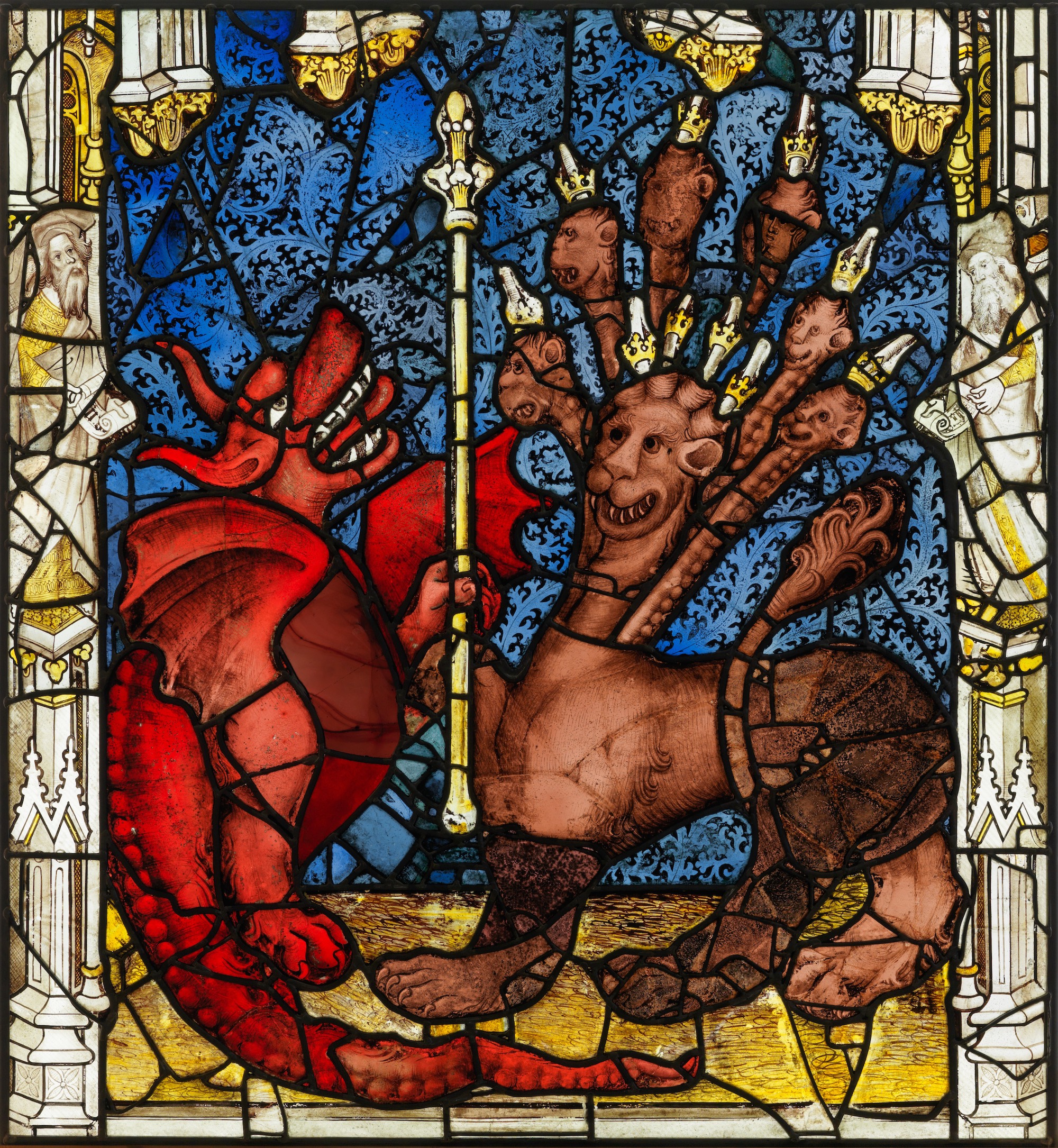
>> The York Minster Stained Glass Navigator: York Minster in northeastern England has the largest collection of medieval stained glass in the UK, with the earliest pieces dating from the late twelfth century. On behalf of the Chapter of York, the York Glaziers Trust is undertaking to photograph it all. These photos are available for viewing online through the cathedral’s “Stained Glass Navigator,” which enables you to hover over panels to identify the scenes, zoom in for higher resolution, and see where each panel in situated in the context of the window’s larger narrative.

I especially recommend exploring the extraordinary Great East Window, which depicts the beginning and the end of all things. The top section opens with the seven days of creation, followed by other select scenes from the Old Testament, but the bulk of the window—and my favorite sequence—consists of scenes from the book of Revelation. The bottom row depicts historical and legendary figures associated with the history of York Minster.

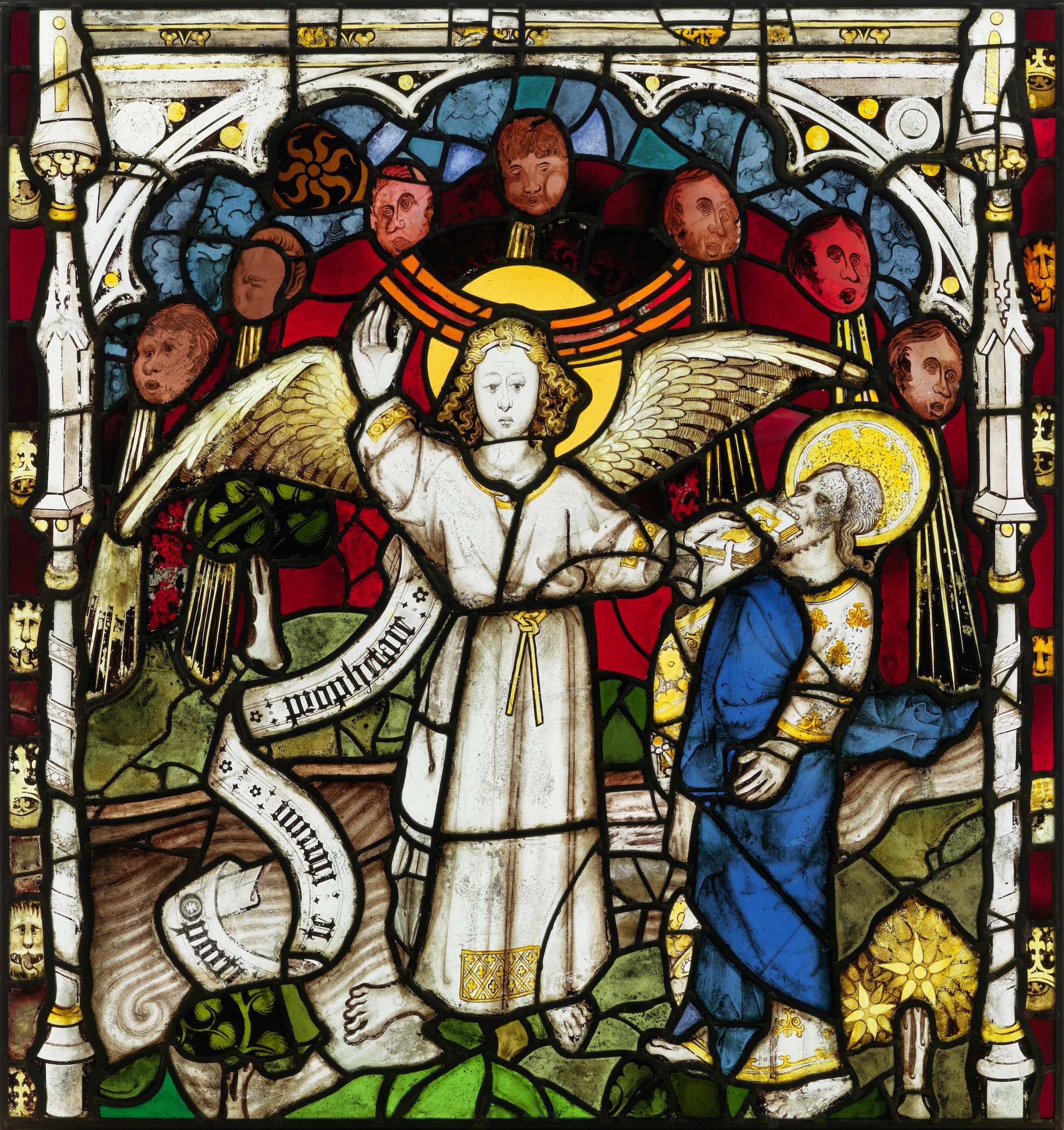
St. John takes the book from the angel (York)
John Thornton of Coventry (British, fl. 1405–1433), St. John Takes the Book from the Angel (Rev. 10:8–11), 1405–8. Stained glass panel from the Great East Window, York Minster, York, England. Photo courtesy of the York Glaziers Trust.

The Dragon gives power to the beast (York)
John Thornton of Coventry (British, fl. 1405–1433), The Dragon Gives Power to the Beast (Rev. 13:1–3), 1405–8. Stained glass panel from the Great East Window, York Minster, York, England. Photo courtesy of the York Glaziers Trust.

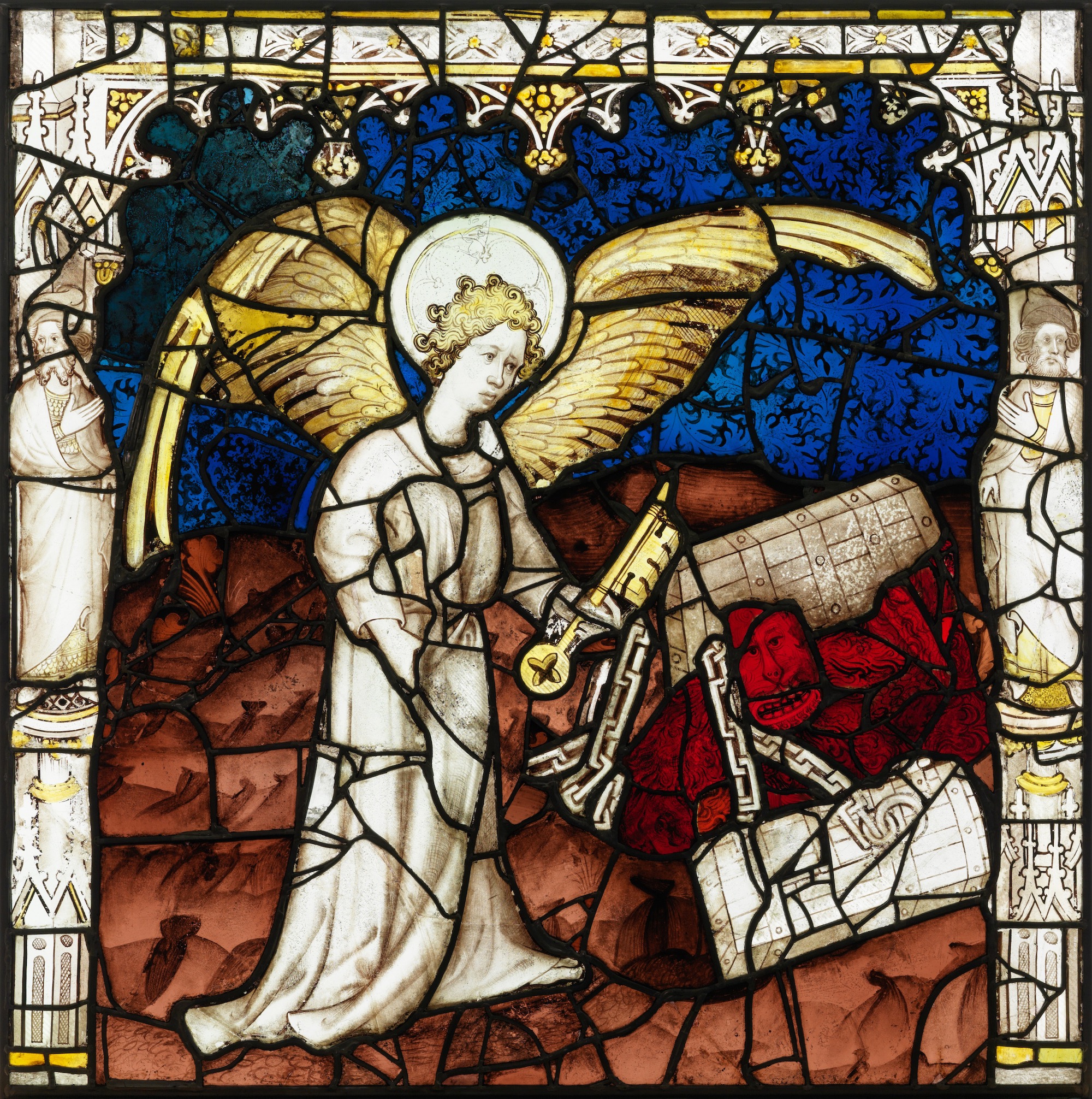
Satan chained in the bottomless pit (York)
John Thornton of Coventry (British, fl. 1405–1433), Satan Chained in the Bottomless Pit (Rev. 20:1–3), 1405–8. Stained glass panel from the Great East Window, York Minster, York, England. Photo courtesy of the York Glaziers Trust.

>> Life of a Cathedral: Notre-Dame of Amiens: Located in the heart of Picardy in northern France, Amiens Cathedral is one of the largest Gothic churches of the thirteenth century, renowned for the beauty of its three-tier interior elevation, its prodigious sculpted decoration, and its stained glass. This website put together by Columbia University’s Media Center for Art History offers a detailed virtual tour of the cathedral, drawing attention to its architectural features and artworks, from the many stone relief sculptures over its four portals (my favorite) to the octagonal labyrinth that adorns the marble floor in the nave to the early sixteenth-century misericords in the choir stall.

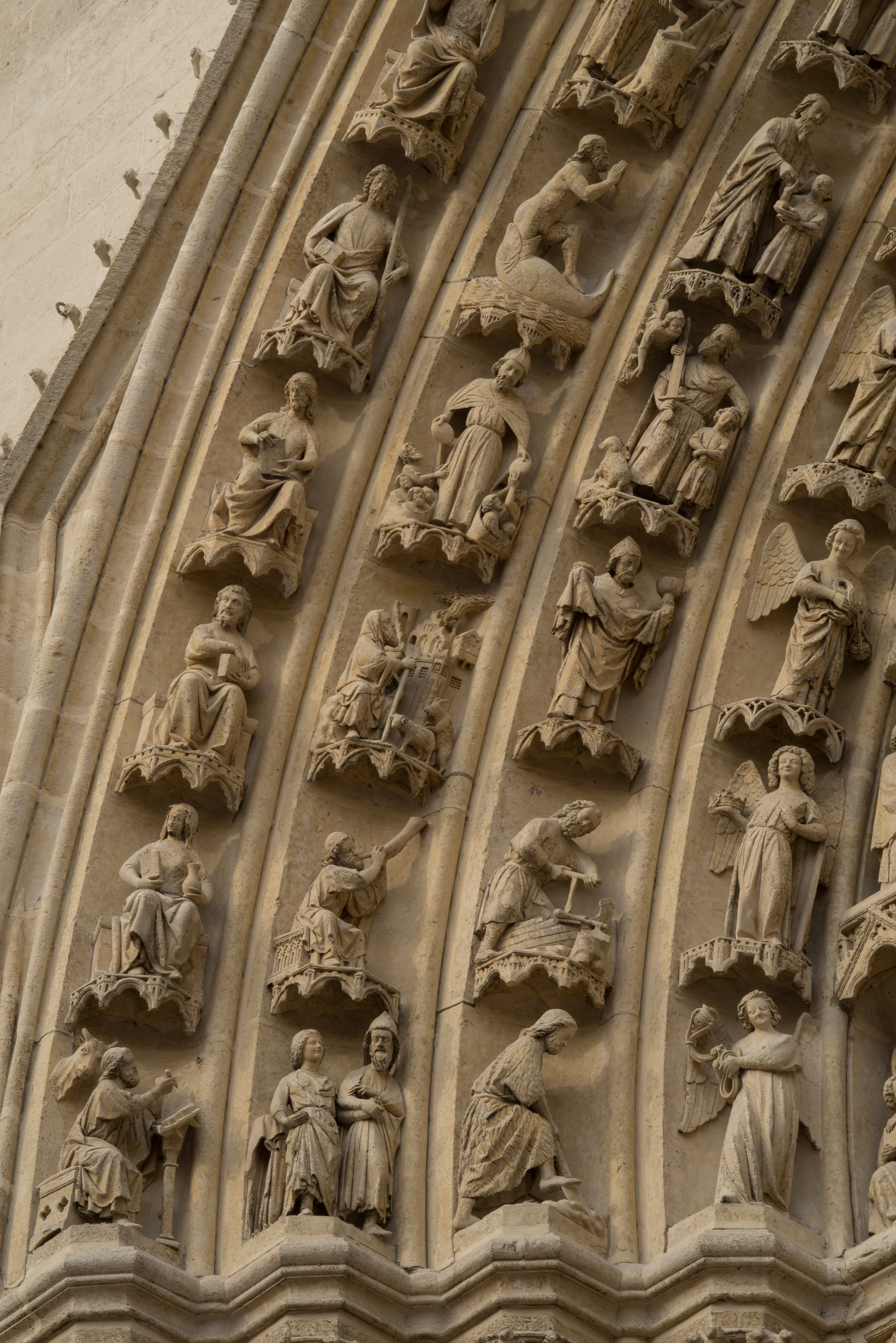
Voussoir close-up, Amiens Cathedral
Detail of voussoirs from the south transept portal of St. Honoré at Amiens Cathedral, ca. 1240, featuring Adam working the ground, Noah building the ark, Jonah being disgorged from the fish, Hosea marrying Gomer, and other biblical figures and vignettes

+++

SONG: “Adon Olam,” performed by the Maqamat Masters, feat. Nissim Lugas: The well-loved text of this traditional Hebrew prayer in five stanzas probably originated in medieval Spain, having been first found in a thirteenth-century siddur (Jewish prayer book) from Andalusia. Drawn from the language of the Psalms, it praises God for both his transcendence and his immanence. He is incomparably great, the ruler over all, and yet he’s also a personal God, a refuge for those who call on him. The prayer’s title and opening phrase translates to “Master of the Universe” or “Eternal Lord.”

Various tunes have been used for the singing of this prayer over the centuries. The Maqamat Masters perform it here with a melody based on the traditional Armenian folk tune NUBAR NUBAR, arranged by Elad Levi and Ariel Berli. They also add to the prayer a few lines from the ghazals of the Persian Sufi poet Saadi (1210–ca. 1292), about the burning fire of God’s love; Lugas sings this Farsi passage from 3:06 to 4:08.

“Maqamat Masters is a unique group of musicians that coalesced around their work together teaching at the Maqamat School of Eastern Music in Safed, Israel,” 12 Tribes Music writes. “Each of the musicians is a master in a different traditional musical genre from the Middle East, and they bring their personal voices and decades of explorations together, to create a magical, new and innovative sound.”

+++

VIRTUAL EXHIBITION: The Faras Gallery: Treasures from the Flooded Desert: In 1960, Faras, a small town in Sudan near the Egyptian border, was one of the archaeological sites designated for flooding by the waters of the Nile to create Lake Nasser. Responding to an international call by UNESCO to preserve the area’s cultural heritage before it would be buried beneath the new reservoir, a Polish team led by Professor Kazimierz Michałowski proceeded with salvage excavations in 1961–64. Their efforts uncovered the wonderfully preserved ruins of a medieval cathedral, active from the eighth to fourteenth centuries (it was built on the remains of an early seventh-century church) and containing over 150 religious paintings, a trove of Nubian Christian art. By agreement with Sudan, half of the findings went to Poland’s National Museum in Warsaw, while the other half are kept in Sudan’s National Museum in Khartoum.

Nubian Madonna and Child
Wall Painting with Bishop Marianos under the protection of Christ and the Mother of God, early 11th century, excavated from Faras Cathedral in modern-day Sudan. Secco tempera on plaster, 247 × 155.5 cm. National Museum, Warsaw.

Excavation of Faras Cathedral

Curated by Paweł Dąbrowski and Magdalena Majchrzak and hosted by Google Arts & Culture, this virtual exhibition spotlights the wall paintings and artifacts from Faras that are housed in Warsaw. It discusses the importance of the discovery of the cathedral and the technical challenges of detaching the paintings (tempera on dry mud plaster) from the walls. It also includes digital reconstructions of the cathedral’s interior and exterior in 3D stereoscopy, as well as video elements. Here is one of the four videos from the exhibition:

Roundup: New Easter songs, joint Easter-iftar dinner, and more

Here’s my new (nonthematic) playlist for the month of April!

But also, because Easter lasts through May 18, be sure to check out the 184 songs I handpicked for the season, which includes some new ones mixed in since the playlist’s original publication.

+++

NEW SONGS:

>> “He Lives” by Emma Nissen: Emma Nissen is a Latter-day Saint singer-songwriter from Arizona known for her gorgeous jazz vocals. Here she performs an original song about God the Father giving his Son, Jesus, to redeem the world through his life, death, and resurrection. “Let there be light, let there be love . . .”

>> “Living Among the Dead” by Caleb Stine: Alt-country singer-songwriter Caleb Stine, based in Baltimore, released this Johnny Cash–esque, resurrection-themed song just before Easter. The title and chorus come from the words the angels spoke to the women who went to Jesus’s tomb the Sunday after his death, looking for his body. “Why do you look for the living among the dead?” they asked. “He is not here but has risen. Remember how he told you, while he was still in Galilee, that the Son of Man must be handed over to the hands of sinners and be crucified and on the third day rise again” (Luke 24:5–7).

The first verse narrates that momentous visit to the tomb. The second verse fast-forwards to the present day and raises issues of poverty, mental illness, substance abuse, culture warring, and militarism, some caused and others exacerbated by the death-dealing policies or neglect of the government. Many people look to politicians for salvation, trusting in their often empty promises, embracing their divisive rhetoric, and ignoring major character flaws for the sake of power. This song cautions us not to go to a dry well for sustenance—not to quench our thirst for living water in places that cannot give it.

The third verse tells of a “thin man in a dusty hat” who regales the story of a carpenter who healed and fed people, who drove out demons from bodies and greedy opportunists from temple courtyards, who befriended those of little means and those who were ostracized. He addressed human suffering head-on with tenderness and self-sacrifice. When the chorus comes in a final time, I hear in it that this loving, serving, reconciling Christ is still living, his Spirit is still moving, and that we ought to get behind that movement, practicing resurrection where we live. “Be not of fear, be of light, lift your head.” As the body of Christ, we should follow him in doing the same deeds and proclaiming the same good news of liberation.

+++

BLOG POST: “50 Ways to Practice Resurrection during the 50 Days of Eastertide” by Tamara Hill Murphy: Spiritual director and writer Tamara Hill Murphy of Connecticut shares fifty simple ideas for celebrating the Easter season in your day-to-day, including retelling baptism stories, visiting a botanical garden, watching a movie that makes you laugh, swinging on the playground, cooking a new veggie recipe, building a new piece of furniture, or washing your car by hand. “I find a lot of joy . . . in seeing these ordinary choices during my day as ways to practice a life that trumps death, a resurrection kind of life,” Murphy writes.

+++

PODCAST EPISODE: “The Beauty—the Poetry—of Christian Experience” with Benjamin Myers, Faith & Imagination: I listen to at least a dozen podcast episodes a week, and this one has been one of my favorites of the past few months. Dr. Benjamin Myers is a literature professor at Oklahoma Baptist University and a former poet laureate of Oklahoma. Here, host Matthew Wickman interviews Myers about two of his six books: A Poetics of Orthodoxy: Christian Truth as Aesthetic Foundation (2020) and the poetry collection The Family Book of Martyrs (2022). They talk about the incarnation and its implications on art; the disclosure of the extraordinary in the ordinary; the inherently unsecular nature of all good poetry; how beauty mirrors grace; the importance of the humanities in Christian education (how it “thickens up” the soul); the obligation of Christian art to capture both the “something good” and the “something missing” of our lives; and how love calls us to the things of this world.

A few additional highlights for me:

  • Myers came to faith after attending a Lessons & Carols service, compelled by the beauty and truthfulness of the story it told.
  • “Beauty is not just in the eye of the beholder but also in the being of God.”
  • At 37:24, Myers reads a poem he wrote for his youngest daughter: “Elizabeth Discovers Rock and Roll.”

+++

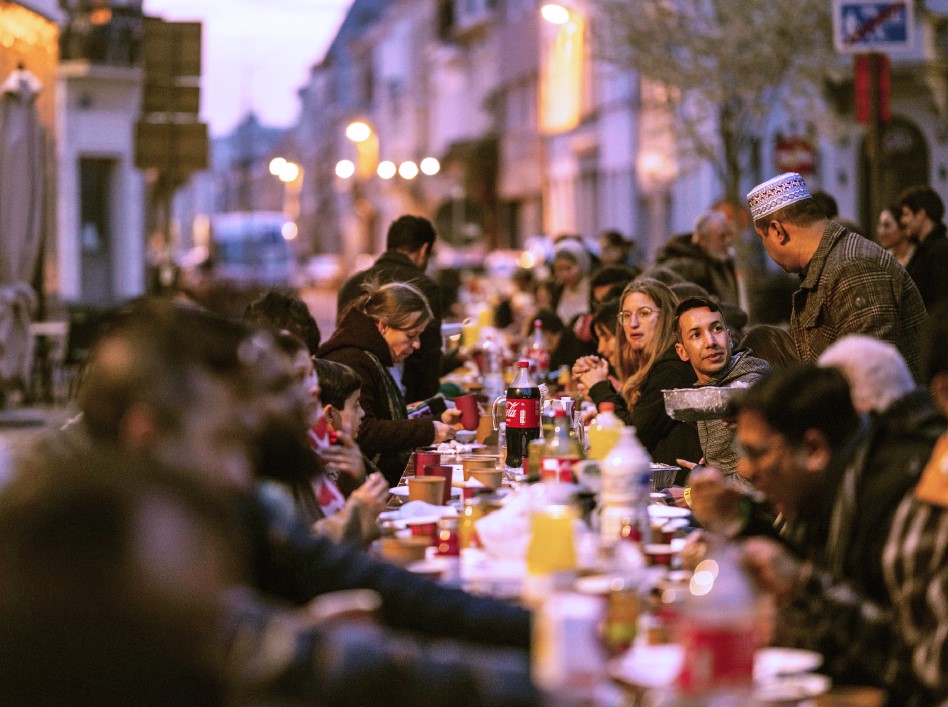
INSTAGRAM VIDEO: from AJ+: On March 31 in the Borgerhout district of Antwerp, a mile-plus-long table set up along the Turnhoutsebaan brought together city residents for a joint Easter-iftar dinner. Easter is the most sacred feast of the Christian year, celebrating the resurrection of Jesus; on Easter Sunday, Christians break the forty-day fast they’ve held for the duration of Lent. Lent almost always overlaps in part with Ramadan, a Muslim holy month of fasting that commemorates the prophet Muhammad’s first revelation. On each day of Ramadan after sunset, the fast is broken with an evening meal called an iftar.

Easter-iftar dinner
Christians and Muslims in Antwerp broke their fasts together at an outdoor Easter-iftar dinner on March 31. Photo: Sanad Latifa.

Borgerhout carried out this interfaith initiative in collaboration with the FMV cultural association and other partners in the hopes of promoting dialogue, social cohesion, and connection. I love this idea of gathering folks together across lines of religious difference to enjoy community, good food, and spiritual celebration! For more information, see https://www.2kmsamenaantafel.be/.

+++

NEW ALBUM: Three Gifts by Liturgical Folk and Jon Guerra: Ryan Flanigan of Liturgical Folk and Jon Guerra have teamed up to release an EP of three songs, one for each of the three theological virtues: faith, hope, and love (1 Cor. 13:13). Here’s “the greatest of these”: