Roundup: Cello in a canyon, John Cage and silence, and more

SPOTIFY PLAYLIST: March 2025 (Art & Theology):

(See also my Lent Playlist.)

+++

ANIMATED VIDEO: “Why Jesus Warns Us About Giving, Praying, and Fasting Publicly” by BibleProject: Giving, praying, and fasting are the three major practices of Lent, which begins March 5 this year. Jesus encouraged his followers to engage in all three, but in his Sermon on the Mount he also cautioned them not to do so with the motive of being seen by others. That’s why Matthew 6 is one of the lectionary readings for Ash Wednesday, the first day of Lent. Written by Tim Mackie and Jon Collins and directed by Rose Mayer, with art direction by Joshua Espasandin and PMurphy, the following BibleProject video exposits this teaching.

BibleProject is a nonprofit in Portland, Oregon, that offers free videos, podcasts, articles, and classes to help people experience the Bible in a way that is approachable and transformative.

+++

SONGS from Advent Birmingham [previously]:

The following two songs are from the music ministry of the Cathedral Church of the Advent in downtown Birmingham, Alabama. The ministry flourished under the leadership of Rev. Dr. Zac Hicks, who served as the church’s canon for worship and liturgy from 2016 to 2021. (He is now pastor of Church of the Cross, also in Birmingham.)

The music videos used to be available on YouTube, but it appears that the church has undergone some restructuring, and they have been removed. For now, though, they are still available through Facebook, and the audio releases are available through streaming services.

>> “Lord, Who Throughout These Forty Days”: This 1873 hymn by Claudia Frances Hernaman recounts the forty days Jesus spent in fasting and prayer in the Judean wilderness at the outset of his ministry and beseeches God to give us strength, like Jesus, to fight temptation, to die to self, and to live by his word and with a keen sense of his abiding presence. It’s set to an American folk tune from the Sacred Harp tradition, known as LAND OF REST, which has roots in the ballads of northern England and Scotland. The hymn is sung by Madison Craig (née Hablas), with Emma Lawton (née Dry) and Annie Lee on background vocals, Joey Seales on pump organ, Charley Rowe on cajon, and Zac Hicks on acoustic guitar.

>> “Spring Up, O Well”: This is an original song by Zac Hicks, sung by Jordan Brown. It draws especially on the narrative in John 4, where Jesus tells a Samaritan woman at a well, “Everyone who drinks of this water will be thirsty again, but those who drink of the water that I will give them will never be thirsty. The water that I will give will become in them a spring of water gushing up to eternal life” (vv. 13–14). The exclamation “Spring up, O well!” in the song’s refrain comes from Numbers 21:17, where the Israelites praise God for providing them water in the desert, and that musical phrase is adapted from the old children’s church song “I’ve Got a River of Life.”

+++

SHORT FILM: “Silences,” dir. Nathan Clarke: Shot in 2016 at Box Canyon near Laity Lodge in the Texas Hill Country, this contemplative short film features cellist Steuart Pincombe playing a short improvisation that interacts with the natural space. The impromptu music making was for him an exercise in prayer.

Three years earlier, also while on retreat at Laity Lodge, Pincombe’s wife shot him doing the same inside the newly constructed Threshold, an interactive, site-specific, permanent outdoor installation by Roger Feldman consisting of three curved walls:

The Threshold improvisation, Pincombe writes, “stemmed from a particular note (and its harmonic overtones) that naturally resonated in the space—the cello’s lowest strings were tuned to match this strongest resonation. Playing with the confusion of resonances (or pitches) was an important part of this short musical and spatial exploration—pitches are bent or adjusted in a way that create audible pulses in the sound and play on the conflicts of resonation within the space.”

+++

ESSAY: “Silence in an Age of Mass Media: John Cage and the Art of Living” by Dr. Jonathan A. Anderson, ARTS (Spring 2017): Many twentieth- and twenty-first-century artists have explored the necessities and possibilities for aesthetic stillness and silence, Anderson writes. In this essay he considers the composer John Cage (1912–1992), best known—and most excoriated—for his modernist piano composition 4′33″ (1952), in which the pianist sits at the bench for four minutes and thirty-three seconds, playing no notes. The point was to attune the audience to the ambient sounds of the concert hall (coughing, rustling, creaking, mechanical humming, outside traffic, etc.), testing the distinction between “music” and “noise.” Cage found the fundamental difference between the two to be not in the qualities of sound but in the attentiveness of the listener.

I was pleasantly surprised to learn from Anderson’s article that even after Cage left Christianity (in which he was raised) and turned to Zen Buddhism, he continued to link his love for the givenness of environmental sounds to Jesus’s admonition to “consider the lilies” (Luke 12:27). “Cage sought to quiet his own aesthetic ‘worry’ for musical meaning,” Anderson writes, “and to instead receive the given sounds of the world as richly meaningful in themselves.”

+++

VIDEO: Lenten Jazz Vespers, Duke University Chapel, March 23, 2023: This Jazz Vespers service combines the liturgical traditions of Vespers with the musical improvisation of jazz. Exploring the theme of hope, the service is presided over by Rev. Racquel C. N. Gill, minister for intercultural engagement at Duke University Chapel. Musical leadership is provided by the John Brown Little Big Band.

Here are the time stamps:

  • 0:01: Song: “I Came to Tell You” by Trinity Inspirational Choir
  • 5:40: Welcome and Prayer
  • 8:33: Song: “Miracle (It’s Time for Your Miracle)” by Marvin Sapp
  • 14:38: Poetry reading: “Dark Testament (8)” by Pauli Murray
  • 16:11: Song: “Be Ye Steadfast” by Arthur T. Jones
  • 21:25: Scripture reading: Romans 5:1–11
  • 24:02: Song: “Through It All” by Andraé Crouch
  • 28:10: Sermon by Rev. Bruce Puckett, assistant dean of Duke University Chapel
  • 35:56: Response
  • 52:18: Prayer and Benediction
  • 54:36: Song: “Down on My Knees” by John P. Kee
Roundup: Call for Lord’s Prayer songs, two lectionary poems, new theology podcast takes kids’ questions, and more

NEW SONG + CALL FOR SUBMISSIONS: Sing the Prayer from BibleProject: To cap off their five-part podcast series on the Lord’s Prayer this month, BibleProject commissioned singer-songwriters Brian Hall (of the family band TENTS) and Liz Vice to write and record a new setting of the Lord’s Prayer, using the translation by Tim Mackie and the BibleProject Scholar Team:

Our Father who is in the skies, may your name be recognized as holy. May your kingdom come and may your will be done as it is in the skies, so also on the land. Our daily provision of bread, give to us today. And forgive us our debts, just as we also have forgiven those indebted to us. And don’t lead us to be tested, but deliver us from the evil one. Amen. (Matt. 6:9–13; cf. Luke 11:2–4)

(You may be wondering, as I did, where’s the final line, “For thine is the kingdom, and the power, and the glory, for ever.” As Mackie explains, that line is not in the earliest manuscripts of Matthew or Luke; the addition first appeared in the Didache, an early Christian teaching manual.)

You can listen to and download Hall and Vice’s new setting of the Lord’s Prayer, which Vice sings to Hall’s guitar accompaniment, at the “Sing the Prayer” link above. In addition, the Good Shepherd Collective video-recorded a more fully instrumented arrangement for a digital worship service; see here. And here are links to the recent Lord’s Prayer episodes of the BibleProject podcast:

  1. “How Does Jesus Teach Us to Pray?”
  2. “What Does ‘Hallowed Be Thy Name’ Mean?”
  3. “What Does Jesus Mean by ‘Daily Bread’?”
  4. “What Forgiveness Is and Isn’t”
  5. “Does God Lead Us into Temptation?”

All you composers out there can get involved too! Through September 15, 2024, BibleProject is accepting submissions of musical settings of the Lord’s Prayer. You can sing the text verbatim using a translation of your choice, or you can rephrase it or write a song based on the prayer’s themes. Purely instrumental responses are also welcome. Send in a song file using their online form, and they will select some of their favorites to host on their website (for streaming, not download). View the early selections at https://bibleproject.com/singtheprayer/all.

+++

TV SHOW EXCERPT: Opening montage from season 3, episode 4 of The Chosen, “Clean, Part 1”: Several people have asked for my opinion of The Chosen, a television adaptation of the Gospels created by Dallas Jenkins. I think it’s great! Creatively (not woodenly, as is too often the case) written, culturally and historically immersive, high production values, and humanizing—it portrays the disciples (the Twelve and others, including the women) as complex, rounded characters with backstories, families, and distinct personalities. Jonathan Roumie is fantastic as Jesus; so is Liz Tabish as Mary Magdalene. If I were to identify a weakness in the series, it would be the portrayal of the Roman soldiers and rulers, especially Quintus, as cartoonish, one-dimensional—although that begins to shift with at least one Roman in season 3—and the occasional awkward dialogue that’s used to explain to the audience ancient Jewish practices and law codes with which we’re likely to be unfamiliar.

I’m in the middle of season 3 right now and was particularly struck by the opening montage of episode 4, a narrative embellishment of Luke 10:1, which says that Jesus “sent them [his appointed followers] on ahead of him in pairs to every town and place where he himself intended to go.” In the series, this is the first time the disciples perform healings. They’re surprised and confused by, and even a little fearful of, the power working through them; they don’t understand it and aren’t always sure how to wield it. This eight-minute segment shows them growing into their roles as they bring the gospel in word and deed throughout the region, preparing the way for Jesus.

Hear the cast discuss the montage.

The Chosen is streaming for free on its own custom app, as well as on Hulu, Netflix, Amazon, and Peacock.

+++

POEMS:

This coming Sunday’s Gospel reading in the Revised Common Lectionary is Mark 5:21–43, which recounts the Healing of the Woman with an Issue of Blood and the Raising of Jairus’s Daughter. Here are two poems based on that passage. (As a side note related to the previous item: The Chosen, season 3, episodes 4–5 center on these two healing narratives; “Veronica’s” arc is especially cathartic!)

>> “Haemorrhoissa” by Leila Chatti: In her early twenties, the poet Leila Chatti [previously] had uterine tumors and suffered from severe bleeding and pain for two and a half years. She explores the shame, discomfort, isolation, and trauma of that condition as well as cultural taboos surrounding women’s bodies in her debut collection, Deluge (Copper Canyon Press, 2020), influenced by her dual Islamic-Christian heritage. In this poem she finds kinship with the unnamed hemorrhaging woman in the Synoptic Gospels and admires her boldness in touching Jesus’s hem. The title of the poem, a transliteration of “ἡ αἱμοῤῥοοῦσα,” is the Greek term used in the New Testament to refer to this woman, often translated as the “woman with an issue of blood” or “bleeding woman.”

(Related post: https://artandtheology.org/2022/03/09/lent-7/)

>> “Jairus” by Michael Symmons Roberts: The poetry collection Corpus by Michael Symmons Roberts (Jonathan Cape, 2004) also centers on the body, especially on the relationship between corporeality, death, and resurrection. This poem from it, in which the speaker (a disciple of Jesus’s, perhaps?) addresses Jairus, celebrates physical appetite, an instinctive desire that helps keep us alive and that here also represents the hunger for living.

+++

NEW PODCAST: Curiously, Kaitlyn: Launched this spring under the aegis of Holy Post Media, Curiously, Kaitlyn is a weekly podcast hosted by author and theologian Kaitlyn Schiess in which she and other scholars respond to theological questions submitted by kids, unpacking complex concepts in simple terms. Questions so far have included “Is God a boy or a girl?,” “What will we look like in heaven? ’Cause I want my Nana to look like Nana, but she might want to look younger!,” and the clarification-seeking “Does God bring heaven to earth?” (the latter of which occasioned a super-helpful distillation of a key theme in N. T. Wright’s teaching). I’ve really been enjoying this!

Curiously, Kaitlyn

+++

NEW DOCUMENTARY: God and Country, dir. Dan Partland: Released earlier this year, this documentary produced by Rob Reiner “looks at the implications of Christian Nationalism and how it distorts not only the constitutional republic, but Christianity itself. Featuring prominent Christian thought leaders, God & Country asks this question: What happens when a faith built on love, sacrifice, and forgiveness grows political tentacles, conflating power, money, and belief into hyper-nationalism?”

If you are an American Christian, you need to see this film. White Christian nationalism is becoming an increasingly larger threat in the US as it becomes more mainstream, and we need to be aware of it and denounce it. God and Country features interviews with several folks whom I’ve followed for years and deeply respect, including historians and best-selling authors Jemar Tisby and Kristin Kobes Du Mez, Holy Post podcaster and VeggieTales creator Phil Vischer, political commentator David French, and ethicist Russell Moore. Some of the footage from worship services is disturbing, to say nothing of the attack on the Capitol on January 6, 2021.

God and Country is currently available on Kanopy, an on-demand streaming service that many public and academic library patrons have free access to.

Roundup: Jesus’s surprising path to kingship, Isenheim Altarpiece video, “Varsha,” and more

Heads up: For each day of Holy Week (March 24–30) and the Easter Octave (March 31–April 7), I will be publishing a short post that pairs a visual artwork with a piece of music as a way of inviting you into the narrative. Here are examples from previous years:

Holy Week Series 2023 | Easter Series 2023
Holy Week Series 2022 | Easter Series 2022
Holy Week Series 2021 | Easter Sunday 2021
Holy Week Series 2020 | Easter Sunday 2020

+++

VIDEO: “How Jesus Became the King of the World (That He Always Was)” by BibleProject: Written and directed by Jon Collins and Tim Mackie with art direction by Robert Perez, this six-minute animated video explores how Jesus brought God’s kingdom to earth and how we can live under God’s reign today.

+++

SONGS:

>> “Lead On, O King Eternal” (second verse), retuned by John Hatfield: This Palm Sunday hymn was originally written by Ernest W. Shurtleff in 1887 and paired with an older tune by Henry T. Smart. It has largely fallen out of favor due to its cringey first verse, with its militant language of battle and conquest. However, John Hatfield, a singer-songwriter from Houston, calls our attention to the second verse, which reframes what comes before, turning the martial imagery on its head. Our battle, Shurtleff writes in verse 2, is waged not with weapons but with holiness, peace, and deeds of love and mercy. “Let’s be about that, my friends,” Hatfield urges. In this Instagram video he sings “the better verse” of “Lead On, O King Eternal” to a new tune he wrote for it, self-accompanied on ukulele:

>> “Anointed One of God” by Tom Fisher: Written around 2004, Tom Fisher revisited this hymn of his in 2022, updating some of the lyrics. Where he hums, he originally had the word “Hallelujah,” but he wanted to experiment with something more subdued and to honor the tradition, observed in Roman Catholicism, Episcopalianism, and other denominations, of removing the “Alleluias” from worship services during Lent in recognition of the solemnity of the season. The song exalts Jesus as the Christ, literally “Anointed One” (messiah in Hebrew), who, contrary to expectations, fulfilled this identity by being crucified. According to Matthew’s and Mark’s Gospel accounts, an unnamed woman recognized Jesus’s messiahship at a house in Bethany two days before his death, pouring oil on his head—a prophetic act that named him king. The scent probably lingered in his hair and on his body as he went to the cross. [HT: Liturgy Fellowship]

>> “傷跡 (Scars)” by Takafumi Nagasawa, performed by Ruah Worship: A sibling group from Japan covers this contemporary worship song about Jesus taking up his cross and with it the weight of humanity’s sin. “The scars on your hands are the sign of your love for me,” goes the refrain. Turn on Closed Captioning for English subtitles.

+++

VIDEO: “The mystical brilliance of Grünewald’s Isenheim Altarpiece” by Smarthistory: This is one of my all-time favorite artworks—I’ve given talks on it, with a focus on its matchless Crucifixion panel—though I admit I’ve only seen it in books and on screens; it’s on my list of things to see before I die (it’s at the Unterlinden Museum in Colmar, France). Drs. Beth Harris and Steven Zucker have created this excellent video introduction to it, featuring wonderful photography and commentary and an animation that shows the altarpiece’s multiple configurations.

Isenheim Altarpiece (detail)
Matthias Grünewald (German, ca. 1470–1528), Crucifixion (detail) from the Isenheim Altarpiece, 1515

+++

INSTRUMENTAL INTERLUDE: “Varsha” by Reena Esmail, for cello or viola, from The Seven Last Words Project: Commissioned by Juilliard Historical Performance to compose an interlude between the “I Thirst” and “It Is Finished” movements of Haydn’s Seven Last Words of Christ, Reena Esmail wrote “Varsha” for cello, drawing on Hindustani raags that evoke rain. (She is one of seven composers who worked on the project, each contributing their own interlude.) In this video it’s performed by Madeleine Bouissou, who premiered it April 16, 2019, at the Cathedral of Saint John the Divine in New York City as part of The Seven Last Words Project.

Describing her artistic vision, Esmail writes, “Christ thirsts. Rain comes from the distance (Megh Malhaar). There is a downpour around him (Miyan ki Malhaar), but he grows slowly weaker. His next words make clear that even the rain is not enough: his thirst is of another sort, which cannot be quenched by water. And so, it is finished.”

Esmail is an Indian American composer living in Los Angeles, known for combining the worlds of Indian and Western classical music in her work.

Roundup: Online literary retreat (Aug. 27), Yvonne Adhiambo Owuor interview, global Marian art, and more

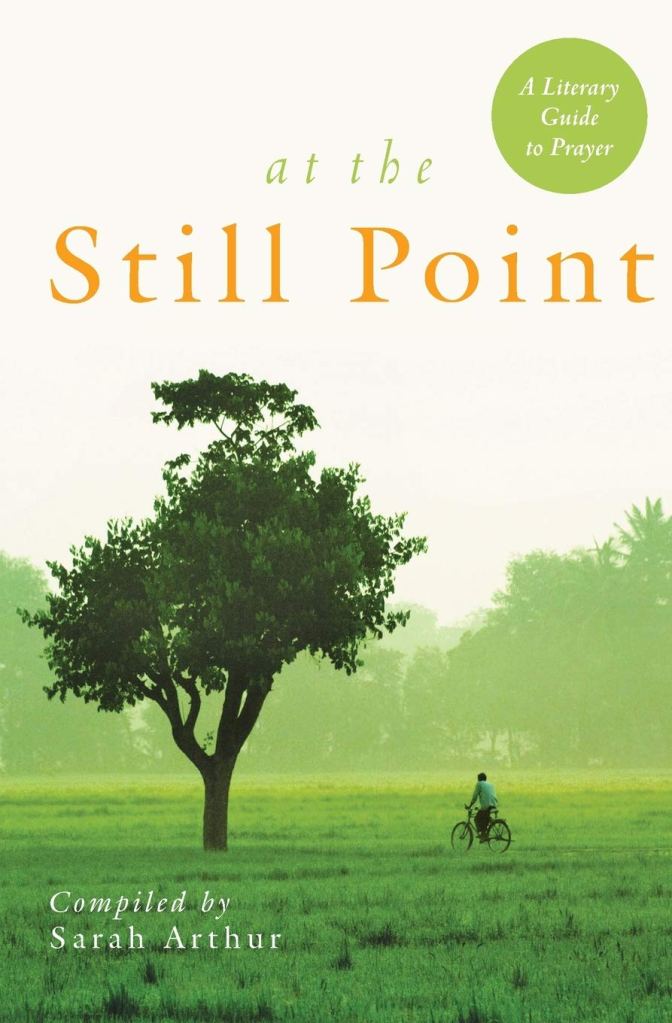
ONLINE LITERARY RETREAT: “The Extraordinary Possibility of Ordinary Time: Retreat with Sarah Arthur,” August 27 (this Friday!), 1–3 p.m. ET: Hosted by Paraclete Press. “Come away for an afternoon of exploration, refreshment, and celebration of Ordinary Time. Sarah Arthur invites you to join her for a deep sip at the well of poetry and literature as devotional reading. Guest poets Luci Shaw and Scott Cairns will also take part in this mini-retreat for lovers of words and Spirit.” The $50 admission price includes a copy of Sarah’s book At the Still Point: A Literary Guide to Prayer in Ordinary Time. I attended her Lent retreat earlier this year and found it very meaningful. Sorry for the short notice.

+++

TRIBUTE: “My Benediction to the Beloved Storyteller Walter Wangerin Jr.” by Philip Yancey: Walter Wangerin Jr. died of cancer on August 5. He was a pastor; a storyteller; a National Book Award–winning author of novels, short stories, and spiritual essays, including The Book of the Dun Cow, The Book of Sorrows, and Ragman: And Other Cries of Faith; and a professor of literature, theology, and creative writing. His friend and fellow writer Philip Yancey has written this nice little tribute to him for Christianity Today.

+++

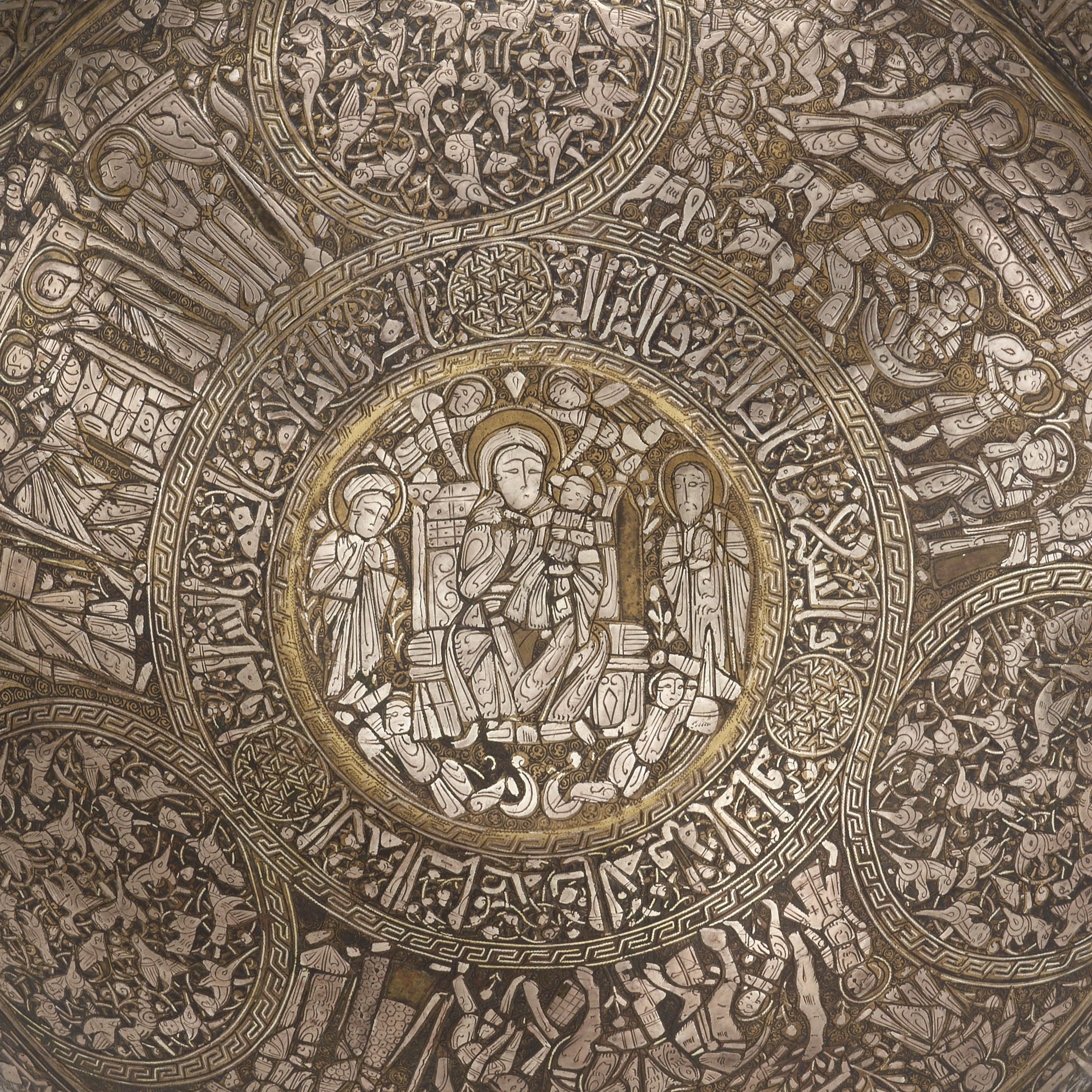
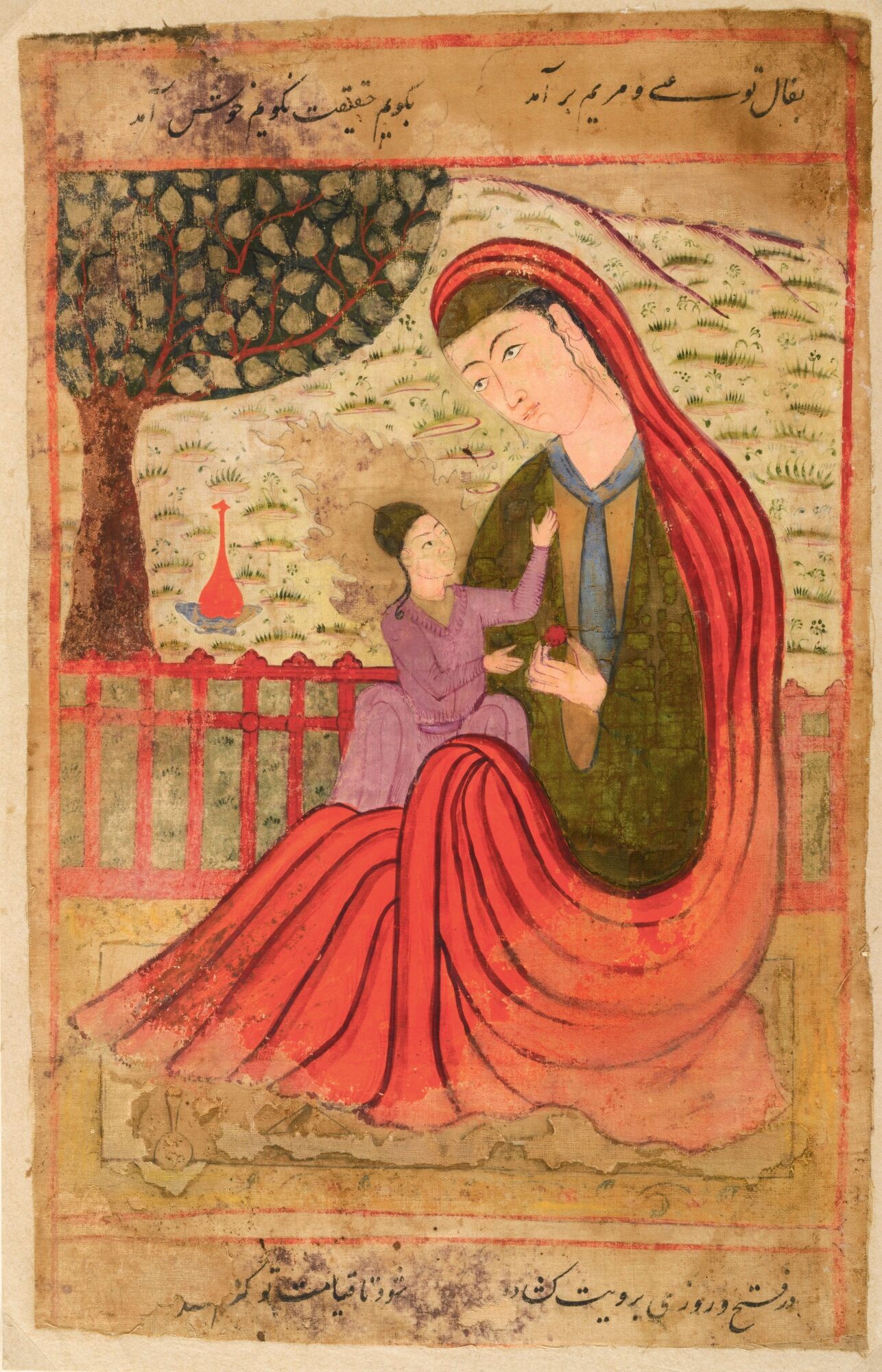
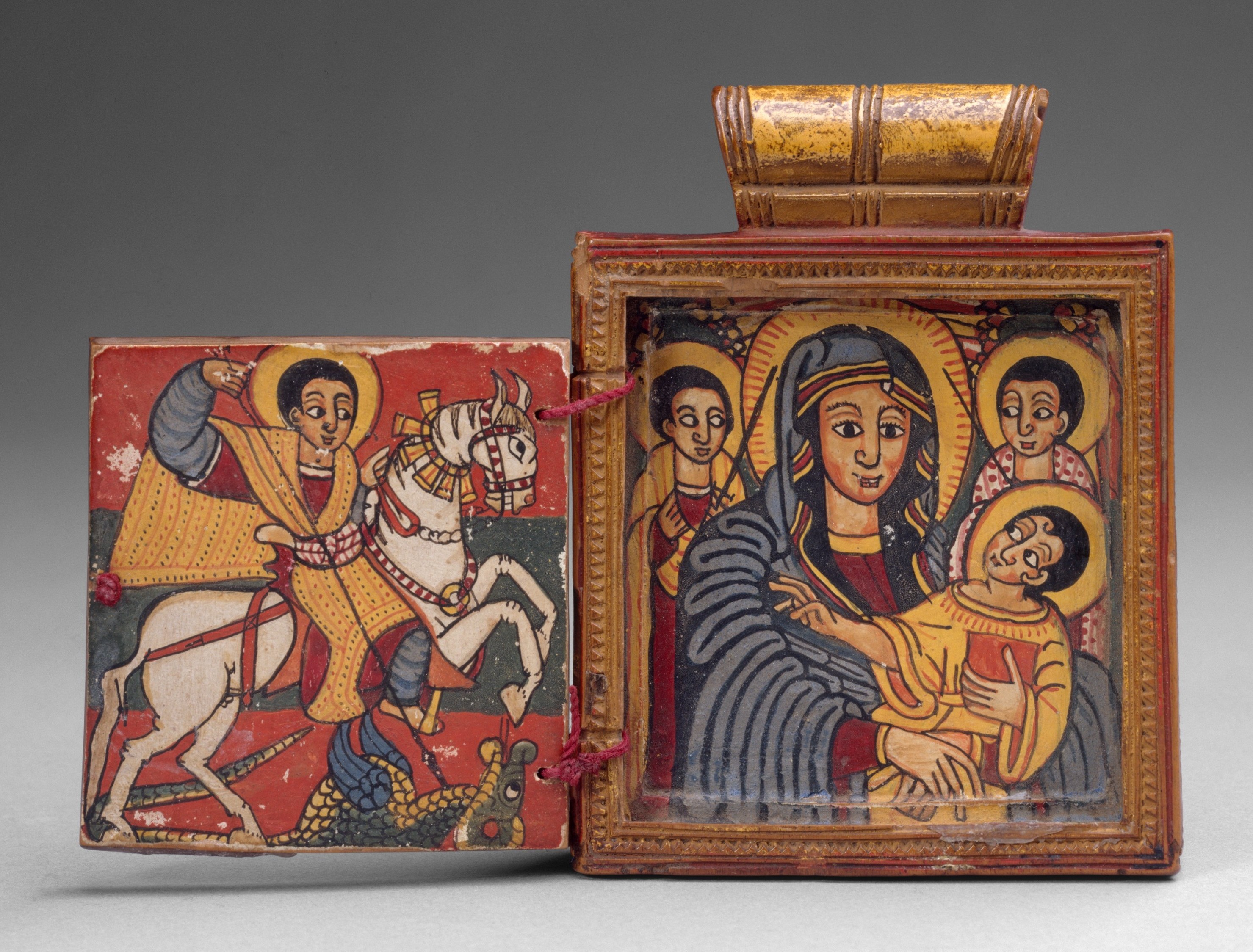
ONLINE EXHIBITION: A Global Icon: Mary in Context, created by the National Museum of Women in the Arts: Curated by Virginia Treanor, this digital resource was created as an expansion of the in-person exhibition Picturing Mary: Woman, Mother, Idea (see catalog), which ran from December 5, 2014, to April 12, 2015. Click through the pages to experience art images with descriptions, videos, and other content having to do with representations of Mary from across the world. The first video in the series is posted below, and here’s a playlist of all seven.

Christian canteen from Iraq
Canteen with Adoration of the Christ Child (detail), Syria or Northern Iraq, mid-13th century. Brass, silver inlay, 17 13/16 × 14 7/16 in. (45.2 × 36.7 cm). Freer Gallery of Art, Smithsonian Institution, Washington, DC. Click image to see full object.

Virgin and Child, from a Falnama (Book of Divination), Mughal India, ca. 1580. Gouache on cloth, 33.4 × 21.1 cm.

Dehua Madonna and Child
Madonna and Child, Dehua, China, 1690–1710. Porcelain, 15 × 3 1/2 × 3 in. (38.1 × 8.9 × 7.6 cm). Peabody Essex Museum, Salem, Massachusetts, inv. AE85957.

Ethiopian pendant icon
Double Diptych Icon Pendant, Ethiopia, early 18th century. Wood, tempera pigment, string, 3 3/4 × 6 × 5 1/2 in. (9.5 × 15.2 × 14 cm) (open, mounted). Metropolitan Museum of Art, New York.

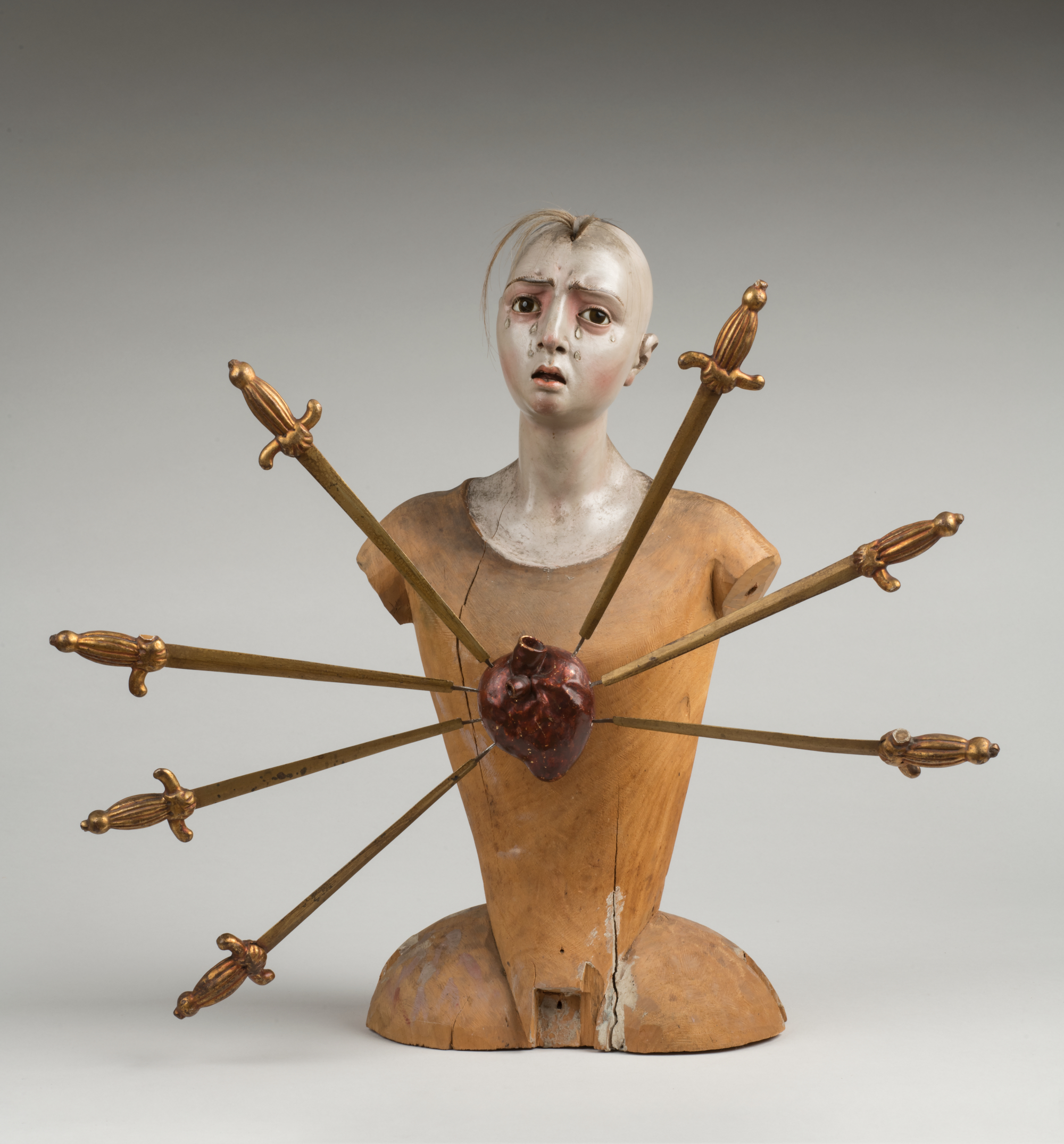
Lady of Sorrows (Italy, 18th c)
Our Lady of the Seven Sorrows, Italy, 18th century. Polychromed wood, human hair, 17 3/4 × 17 3/4 × 9 3/4 in. Royal Museums of Art and History, Brussels, Inv. FB.514. Photo © RMAH, used with permission.

+++

INTERVIEW (+ upcoming virtual conversation): “A God Who Wails and Dances: A Conversation with Yvonne Adhiambo Owuor”: This interview by Erika Kloss, which appears in the current issue of Image journal (no. 109), is so. good. Kenyan writer Yvonne Adhiambo Owuor is the author of the novels Dust and The Dragonfly Sea and award-winning short stories such as “The Weight of Whispers,” as well as the executive director of the Zanzibar International Film Festival. Here she talks about fiction, faith, coffee, and calling colonialism to account. To engage further, you can register for the Image-sponsored online event “The Art of Fiction: A God Who Wails and Dances with Yvonne Adhiambo Owuor,” which takes place September 23 at 3 p.m. ET.

Here’s just a snippet from her conversation with Kloss, where she describes what she would say to those who want nothing to do with Christianity because of all the evil that has been done in its name:

Dare to rescue God as Emmanuel from the dense debris of hubris, and from the weight and stench of whited sepulchers. For it is true, an excess of ghouls have appropriated for themselves the meaning and potency of the revolutionary One who dares to pronounce to humanity, “Love your enemies . . . Do good to those who hate you.”

Why should young people let themselves be revulsed by a legion who never fully entered into the depths of the subversive, seductive, paradigm-dissolving, drinking-and-hanging-out-with-sinners, beautiful, and heroic man-God? Why wouldn’t young people set out to experience for themselves the grand and compelling epic of a creator God in love, who loses his children and the earth to a defiant and rebellious once-beloved prince of light, and who struggles long and hard to regain the humanity he had loved and lost? So passionate and desperate is the creator in this endeavor that he will enter into humanity to try to court and secure these cherished children, even at the risk of his own murder—and even that does not stop the love. A love stronger than death? Don’t we all write anthems, in one form or another, yearning for this?

Let the next generation of seekers . . . visit old worlds that contain the spirit of the faith, not just in the Middle East, but also northern Africa, northern Sudan, Egypt, and Ethiopia, all those rubbed-out places (that colonialists presumed to suggest they were ‘civilizing’) from which Christianity entered into and transformed Europe and the world. . . . An historical quest for meaning at sites of origins might inspire young people to look again at the call to adventure and transcendent idealism that is the Way.

+++

VIDEO SERIES: How to Read the Bible by BibleProject: “Reading the Bible wisely requires that we learn about the ancient literary styles used by the biblical authors. . . . While the Bible is one unified story, it cannot all be read in the same way. The How to Read the Bible series walks through each literary style found in the Bible to show how each uniquely contributes to the overall story of Scripture.”

Led by Dr. Tim Mackie and Jon Collins, BibleProject is a crowdfunded animation studio that creates videos, podcasts, and small-group curricula. From 2017 to 2020 they executed a series called How to Read the Bible, which is nineteen episodes total. In it they examine the three major literary styles that comprise the Bible: narrative (chronicles, biographies, parables), poetry (celebratory, reflective, erotic, politically resistant, apocalyptic), and prose discourse (laws, sermons, letters). Each style lives by its own rules and structure, and we get into trouble, for example, when we don’t properly understand how metaphor works, or when we don’t recognize that Paul’s epistles were situated in a particular historical context. Here’s one of the videos in the series, on design patterns in biblical narrative: