Roundup: Thurman’s “Meditations,” documentary on African Christian history, and more

BOOK: Meditations of the Heart by Howard Thurman (1953): I’ve just finished reading this book, and I think it would make an excellent companion for Lent. Written by Rev. Dr. Howard Thurman, a minister, theologian, professor, and civil rights leader, it consists of 152 one- to two-page meditations that he originally wrote for use by the congregation of Fellowship Church in San Francisco, a racially integrated, interdenominational church he cofounded in 1944. Some of the entries are prayers, some anecdotes, some reflections on scripture or spiritual topics, some expressions of desire or intent. For me, the book really started picking up in the second half. In part 5, several of the meditations begin and/or end with a mantra-like saying, such as “I will keep my heart open to truth and light” or “Teach me to affirm life this day!”—something short and memorizable to keep in the pocket of your heart and turn over and over.

Here’s an example of one of the meditations:

I want to be more loving. Often there are good and sufficient reasons for exercising what seems a clean direct resentment. Again and again, I find it hard to hold in check the sharp retort, the biting comeback when it seems that someone has done violence to my self-respect and decent regard. How natural it seems to “give as good as I get,” to “take nothing lying down,” to announce to all and sundry in a thousand ways that “no one can run over me and get away with it!” All this is a part of the thicket in which my heart gets caught again and again. Deep within me, I want to be more loving—to glow with a warmth that will take the chill off the room which I share with those whose lives touch mine in the traffic of my goings and comings. I want to be more loving!

I want to be more loving in my heart! It is often easy to have the idea in mind, the plan to be more loving. To see it with my mind and give assent to the thought of being loving—this is crystal clear. But I want to be more loving in my heart! I must feel like loving; I must ease the tension in my heart that ejects the sharp barb, the stinging word. I want to be more loving in my heart that, with unconscious awareness and deliberate intent, I shall be a kind, a gracious human being. Thus, those who walk the way with me may find it easier to love, to be gracious because of the Love of God which is increasingly expressed in my living.

Included in the volume are prayers for a gracious spirit in dealing with injustice, for placing our “little lives” and “big problems” on God’s altar, for laying ourselves bare to God’s scrutiny, for “when life grows dingy,” for the kindling of God’s light within us, “to be more holy in my words,” to learn humility from the earth, and for an enlarged heart that makes room for Peace.

+++

DOCUMENTARY: Unspoken, dir. Christopher Lamark (2022): This feature-length film takes an in-depth look at early African Christianity and its enduring heritage in African diaspora communities in America, dispelling the notion that Christianity is exclusively a white man’s religion. Director Christopher Lamark and his team interview historians, religious scholars, and cultural influencers, including Dr. Vince Bantu, Rev. Dr. Esau McCaulley, Rev. Dr. Charlie Dates, Lecrae Moore, and Sho Baraka, who reveal that Africans accepted Christianity of their own agency long before colonization or the slave trade, not just in the North but in sub-Saharan Africa as well. Bantu even points out that the Reformation was well underway in Africa a hundred years before Martin Luther, as the Ethiopian Christian monk Estifanos led a movement to bring the church’s practices more in line with scripture and to challenge abuses.

The false narrative that the Black church was born from those who drank the Kool-Aid served to them by their white oppressors has done a lot of damage, imposing shame and deterring young Black people from the Christian faith. That’s why it’s so important to correct this misinformation, to let people know that colonialism and slavery didn’t bring Christianity; it mutated it. At a time when much of white America was corrupting the gospel, Blacks preserved it, their ancient religious heritage, for subsequent generations.

Unspoken was produced by Lisa Fields of the Jude 3 Project, and Don Carey. It is streaming for free on TUBI.
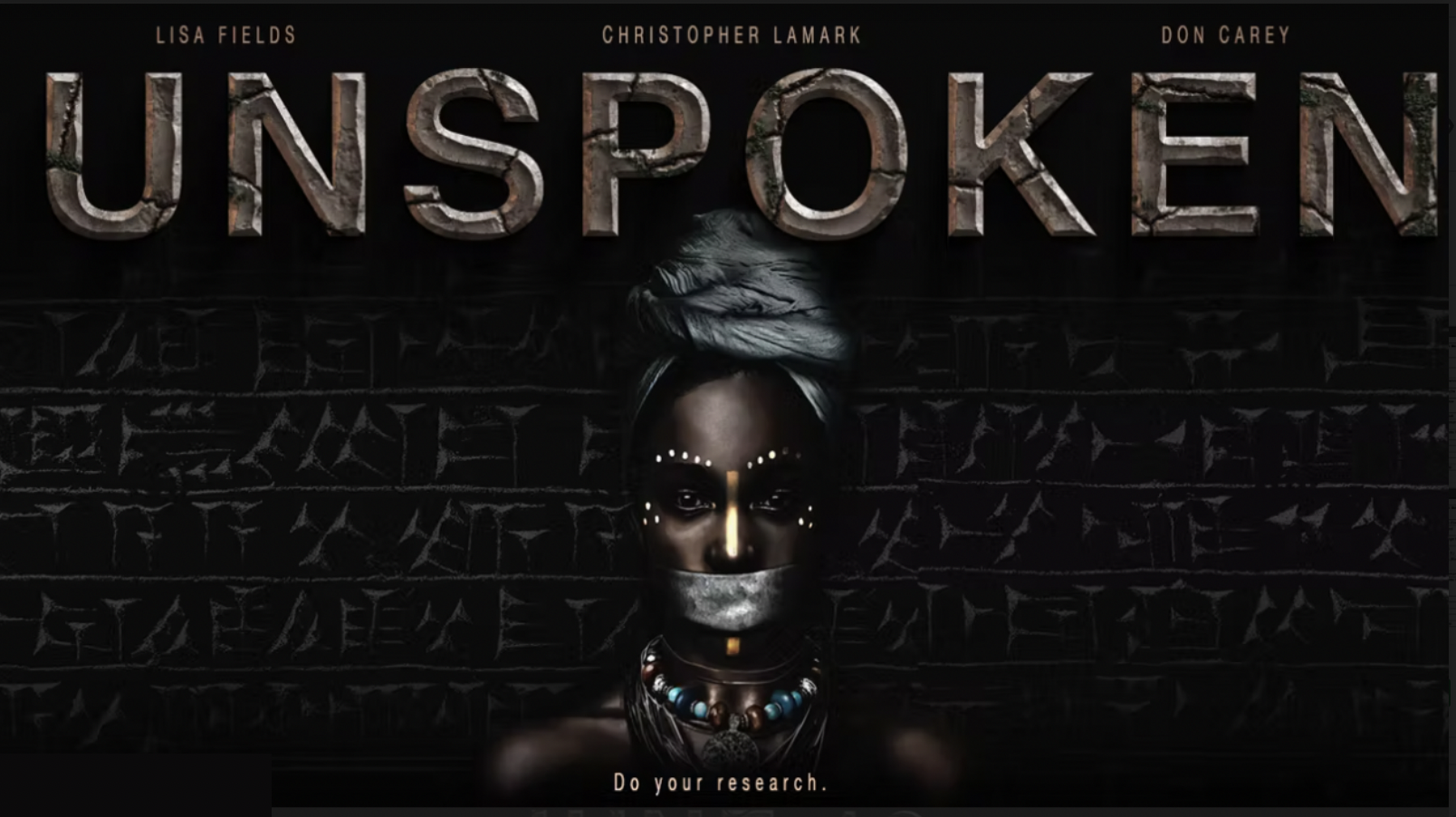
Unspoken movie poster

+++

SYMPOSIUM: Embodied Faith and the Art of Edward Knippers, September 20–21, 2024, Gordon-Conwell Theological Seminary, Charlotte, NC: Sponsored by the Leighton Ford Initiative in Theology, the Arts, and Gospel Witness, this year’s Gordon-Conwell theology and arts symposium will center on the paintings of Edward Knippers, from Arlington, Virginia. In addition to an exhibition of over two dozen of Knippers’ works, there will be talks by artists Steve Prince, Bruce Herman, and Rondall Reynoso and theologians Natalie Carnes, W. David O. Taylor, and Kelly Kapic, as well as a dance performance by Sarah Council and a drum circle led by Olaniyi Zainubu and David Drum.
Knippers, Edward_Resurrection
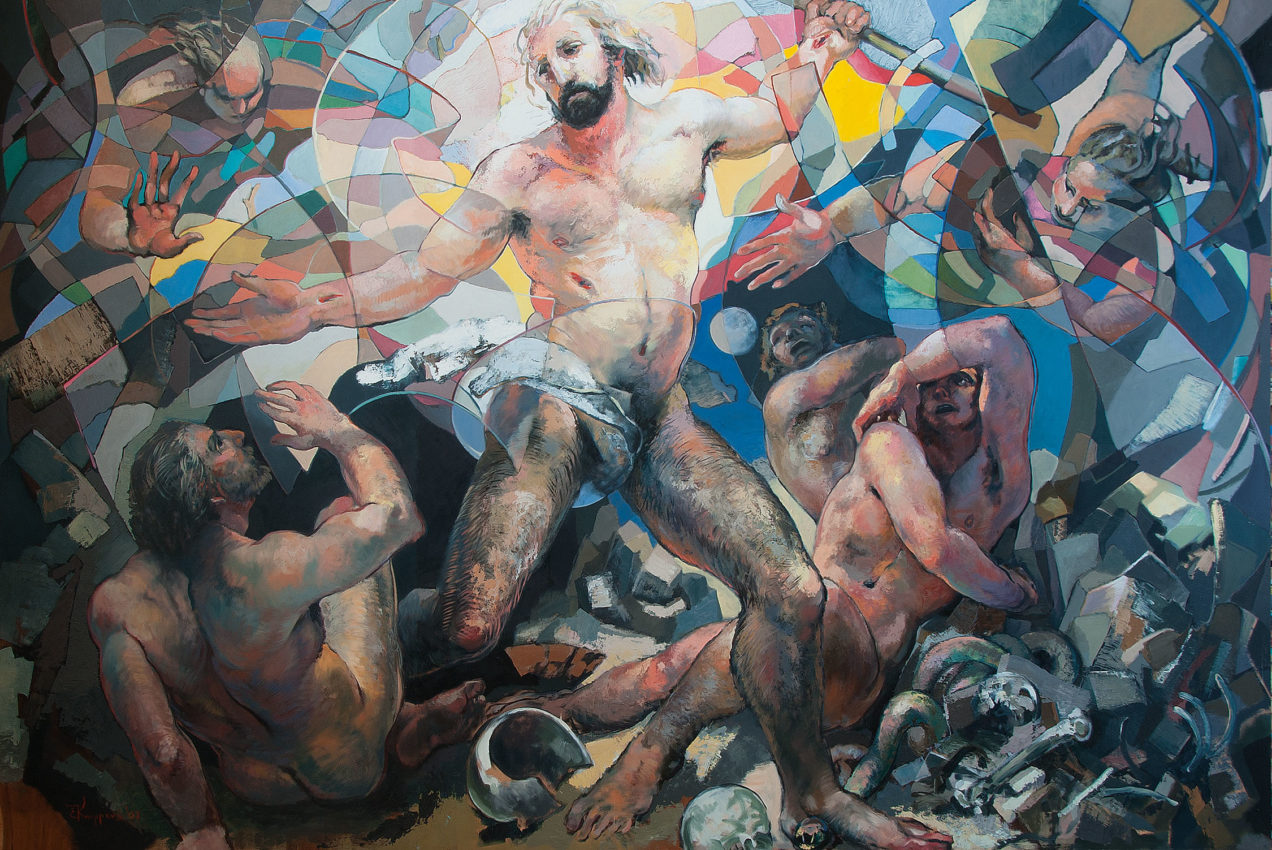
Edward Knippers (American, 1946–), The Resurrection of Our Lord, 2007. Oil on panel, 8 × 12 ft.

“‘Disembodiment is not an option for the Christian.’ This statement by visual artist Edward Knippers is a guiding principle in his work, which features the human body, often in connection with biblical scenes. Disembodiment is not an option for those who believe that human beings are created in God’s image with beautiful bodies, that everything from sin to salvation are embodied experiences, and that God’s redemption comes through the broken and risen body of Jesus. The paintings of Edward Knippers invite us to consider the goodness, brokenness, mystery, and glory of Christ’s body as well our own, urging us to grapple with the temptation to avoid, sexualize, downplay, or disparage bodies along with a fully embodied faith.”

I signed up! The early-bird discount is $20 off and ends March 1.

+++

SONGS:

>> “Give Me a Clean Heart” by Margaret Douroux, sung by Everett Harris and friends: Written in 1970 by Dr. Margaret Pleasant Douroux, this song of penitence based on Psalm 51:10 is a gospel classic. In the 2020 video below, it’s sung a cappella by a six-person virtual choir, using an arrangement by Adoration ’N Prayze. To hear it sung in a Black church context, led by Rev. Dr. E. Dewey Smith Jr., click here.

>> “Psalm 50” (Psalm 51) in Aramaic by Seraphim Bit-Kharibi: Father Seraphim Bit-Kharibi is an Assyrian Orthodox monk who is the archimandrite (head) of the Monastery of the Thirteen Holy Assyrian Fathers in Dzwell Kanda, Georgia. He is Assyrian by ethnicity, and his native language is Aramaic, the language of Jesus. Here he chants Psalm 51 (Psalm 50 in the Greek numbering system) in Aramaic with his church choir, which appears on his 2018 album Chanting in the Language of Christ. In the following video, the singing starts fifty-one seconds in.

There is also a video recording of him chanting this psalm with a young identified girl during the visit of Pope Francis to Georgia on September 30, 2016.

In a 2014 interview, Father Seraphim said:

My people, Assyrians, . . . still pay with their lives for their worship of Christ. In Eastern countries such as Iraq, Iran, Syria, and other warzones, Assyrians get attacked in their churches and beheaded if they refuse to convert to Islam. They are being destroyed en masse.

As for Assyrians in Georgia, there are about 4,000 of them. The Assyrian language is basically Neo-Aramaic, which is about 2,500 years old. The wonderful thing is that this language allows us insight into what people living centuries ago sounded like. Out of 4,000 Assyrians living in Georgia, 2,000 of them live in my village of Kanda and comprise 95 percent of its population. Almost 90 percent of these people speak Neo-Aramaic.

+++

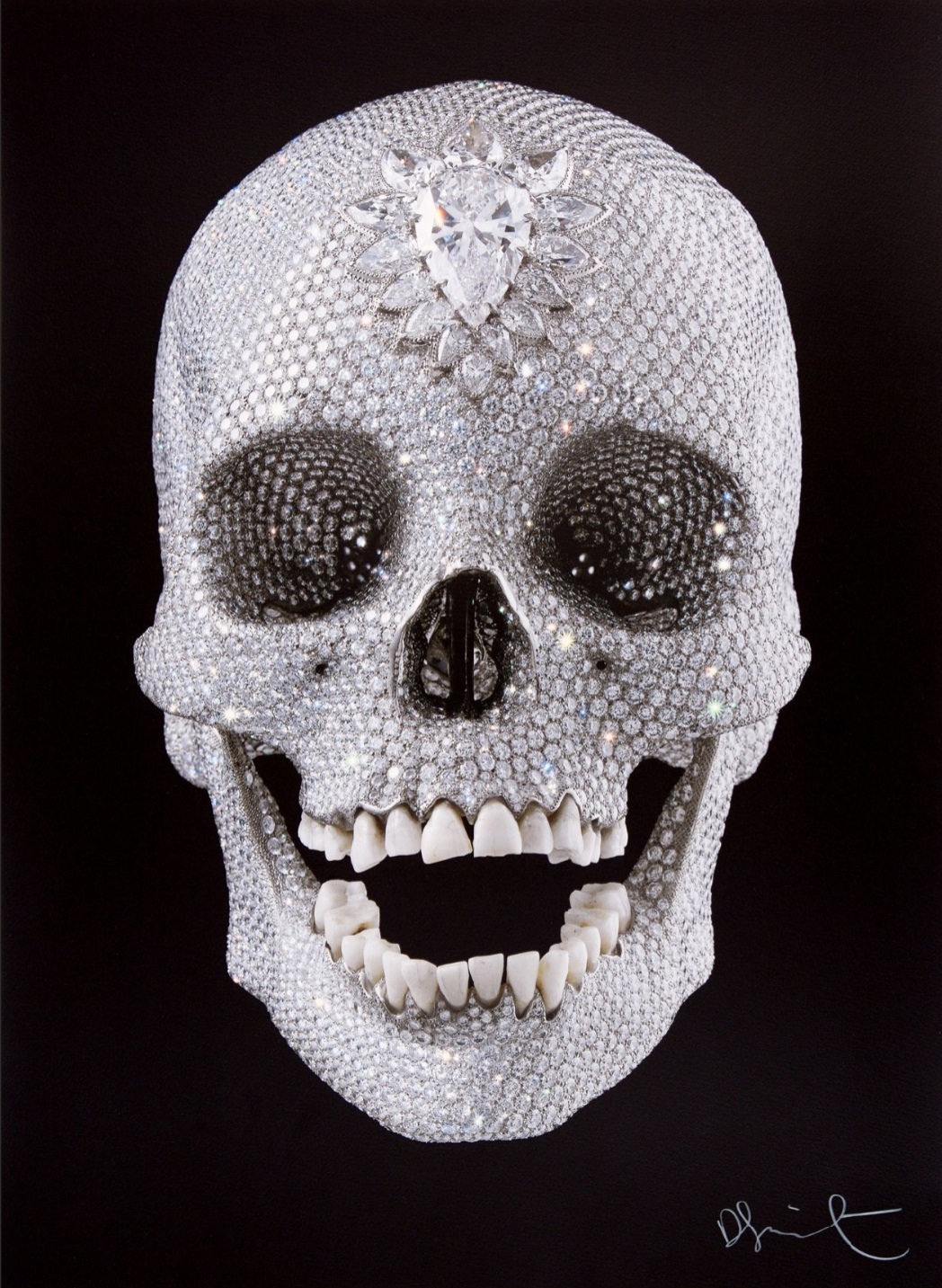
ART COMMENTARIES: Lent Stations: Vices and Virtues: To promote art-driven contemplation around Lenten themes, this Lent the Visual Commentary on Scripture is spotlighting fourteen artworks from its archives based on the seven deadly sins and seven virtues. So far they’ve featured a pair of medieval statues personifying the Synagogue and the Church, a diamond-encrusted skull by Damien Hirst, a Rubens painting of Cain murdering Abel, and an Egyptian textile roundel depicting scenes from the life of Joseph.
Hirst, Damien_For the Love of God
Damien Hirst (British, 1965–), For the Love of God, 2007. Platinum, diamonds, and human teeth, 17.1 × 12.7 × 19 cm.

Roundup: Black church–inspired art exhibition; new albums; visual Easter Vigil liturgy; and more

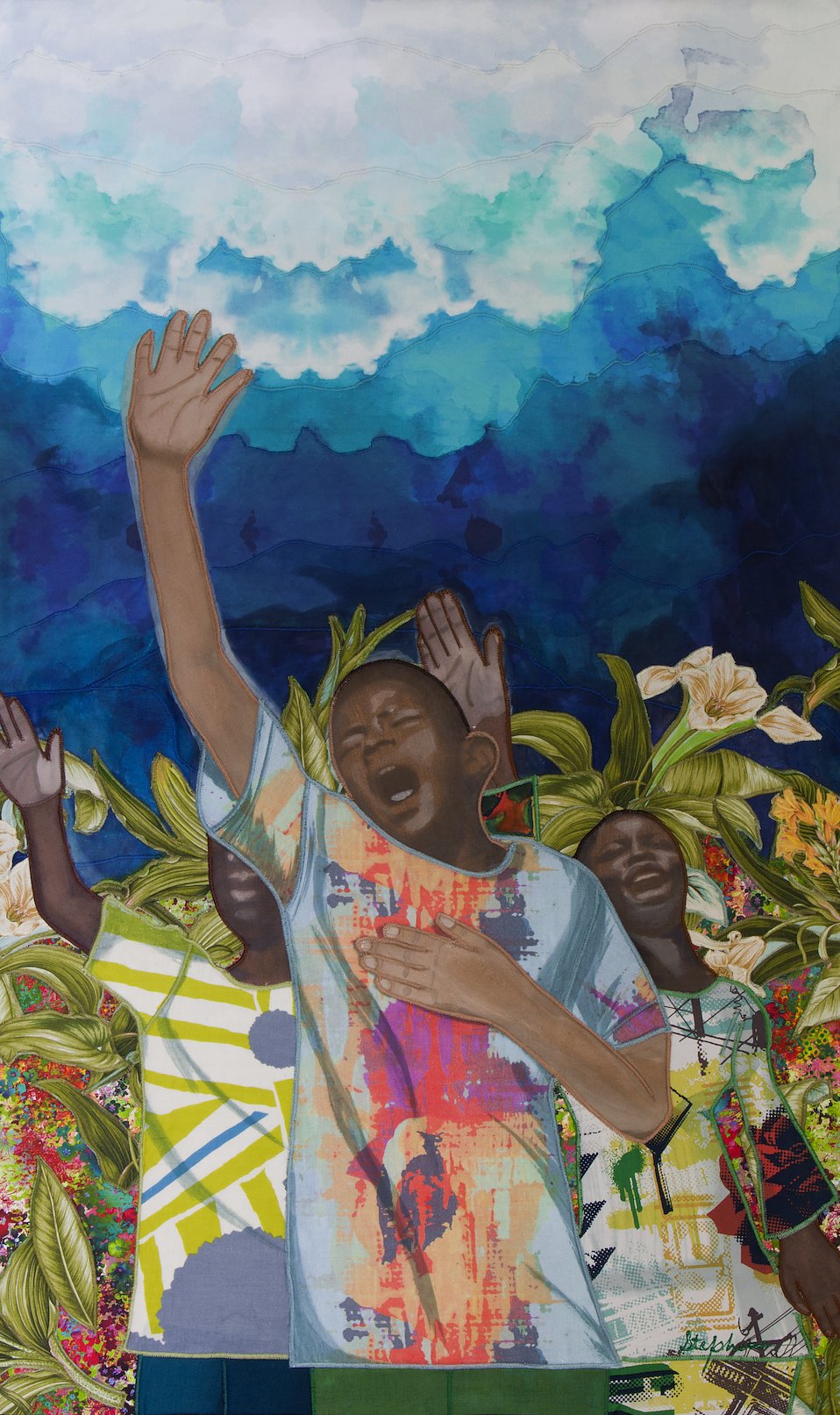
EXHIBITION: Otherwise/Revival, Bridge Projects, Los Angeles, April 9–June 26, 2021: Curated by Jasmine McNeal and Cara Megan Lewis, this group exhibition visualizes the impact of the historic Black church—specifically the Black Pentecostal movement—on contemporary artists. Included are several artists I’ve featured on the blog before—Lava Thomas [here], Kehinde Wiley [here], Clementine Hunter [here], Letitia and Sedrick Huckaby [here]—plus twenty-six others.

Phyllis Stephens (American, 1955–), High and Lifted Up, 2020. Cotton fabric, 57 × 33 in. Private collection. Courtesy of the artist and Richard Beavers Gallery, New York.

Davis, Kenturah_Namesake I
Kenturah Davis (American, 1984–), Namesake I, 2014. Incense ink on rice paper, applied with rubber stamp letters, 39 × 36 in. Courtesy of the artist and the Petrucci Family Foundation, New Jersey.

I regret that I won’t be able to see the exhibition in person, but there’s a wealth of relevant content available on the gallery’s website, including photos, artist bios and statements, and commentaries. I haven’t fully delved in yet, but some of the artist names are new to me, and I look forward to jumping over to their websites to learn more. There’s also a series of free events that have been scheduled. The premiere of the virtual music performance yes! lord by Ashton T. Crawley and a symposium on the Azusa Street Revival have already passed (both are archived online for on-demand viewing), but here are some upcoming opportunities you can reserve a spot for:

+++

ARTICLE: “5 Films About the Beauty of Resurrection” by Brett McCracken: “Resurrection’ tropes are so familiar in certain genres that they can numb us to the jarring beauty and bracing surprise of resurrection. But other films capture the magic and shock of resurrection by situating it within more mundane realities and contexts. Here are five of my favorite examples of this kind—movies that capture resurrection in all of its miraculous, unsettling, hope-giving glory.” One of his selections is Happy as Lazzaro, which I saw last year and enjoyed:

+++

NEW ALBUMS:

>> Hymns I by Lovkn: Steven Lufkin is a singer-songwriter from Phoenix, Arizona, recording under the name Lovkn. His latest EP, a collection of eight acoustic hymn covers, was released April 2. (Also, he’s currently raising funds to record an album of original songs, to be released later this year: kickstarter.com/projects/lovkn/new-album-2021.)

>> Prayers for the Time of Trial by Joel Clarkson: Released April 7, this EP comprises five original SATB choral compositions by Joel Clarkson, which he recorded with his sister Joy Clarkson. My favorite is the first, “Lighten Our Darkness,” a setting of the Book of Common Prayer’s Collect for Aid Against Perils: “Lighten our darkness, we beseech thee, O Lord; and by thy great mercy defend us from all perils and dangers of this night; for the love of thy only Son, our Savior, Jesus Christ. Amen.”

The other four are “Sub Tuum Praesidium” (Beneath Thy Protection), a third-century hymn to the Virgin Mary as Theotokos; “Hail King,” a poem by Joel’s other sister, Sarah Clarkson, that marvels at how rocky cliffs and sea waves and herring gulls sing God’s praises in their own way; “Ubi Caritas,” an ancient hymn centered on the theme of Christian charity; and the simple benediction “May the peace of the Lord be with you now and always.”

In addition to composing music, Joel is also a professional audiobook narrator and the author of Sensing God: Experiencing the Divine in Nature, Food, Music, and Beauty.

+++

ORTHODOX CHANT: Russian Kontakion of the Departed: At Prince Philip’s funeral service at St. George’s Chapel at Windsor Castle on April 17, a choir of four sang, among other pieces, the Russian Kontakion of the Departed, translated into English by William John Birkbeck and arranged by Sir Walter Parratt. “The Russian Kontakion of the Departed is an ancient Kiev chant with its origins in the Russian Orthodox liturgy. This moving chant expresses the sorrow of grief but reminds us of the Christian hope of everlasting life; in the face of sadness, we sing Hallelujahs.” [HT: Global Christian Worship]

Give rest, O Christ, to thy servant with thy saints:
where sorrow and pain are no more;
neither sighing but life everlasting.
Thou only art immortal, the creator and maker of man:
and we are mortal formed from the dust of the earth,
and unto earth shall we return:
for so thou didst ordain,
when thou created me saying:
Dust thou art und unto dust shalt thou return.
All we go down to the dust;
and weeping o’er the grave we make our song:
Alleluia, alleluia, alleluia.

+++

VISUAL LITURGY: “After Ezekiel” by Madeleine Jubilee Saito: Remember those flip books you probably encountered as a kid—the ones with a series of images that gradually change from one page to the next, giving the illusion of animation when viewed in quick succession? Well, this is a digital version of that. In 2019 cartoonist and illustrator Madeleine Jubilee Saito created an image sequence intended to be swiftly clicked through as part of the Easter Vigil at a church in Boston. It was inspired by the story of Ezekiel in the valley of dry bones (Ezek. 37). Very compelling!

Roundup: Black art and Black church documentaries, “Hymns” album, and more

DOCUMENTARIES:

>> Black Art: In the Absence of Light (HBO): Directed by Sam Pollard, this ninety-minute documentary is an excellent introduction to the work of some of the foremost Black visual artists working in the US today. It opens by discussing the landmark 1976 exhibition Two Centuries of Black American Art, the first comprehensive survey of such. Curated by art historian and artist David C. Driskell (the main voice of the documentary), the exhibition, which opened at LACMA, showed the public that there is a lineage and a history, starting with early Black American artists like Joshua Johnson, Robert S. Duncanson, Edward Bannister and extending forward to artists like Romare Bearden, Charles White, Alma Thomas, and others. The exhibition inspired a whole new generation of Black artists, many of whom were encountering the work of their artistic forebears in person for the first time.

A range of contemporary Black artists are interviewed: Kerry James Marshall, Sanford Biggers, Jordan Casteel, Faith Ringgold, Richard Mayhew, Radcliffe Bailey, Kehinde Wiley, Amy Sherald, Hank Willis Thomas, Glenn Ligon, Fred Wilson, Carrie Mae Weems, Kara Walker, Theaster Gates, Betye Saar. So are several Black curators, art historians, and collectors, like Kasseem “Swizz Beatz” Dean, and Thelma Golden, director of the Studio Museum in Harlem, “the focal point of African American cultural and artistic production” since 1968 and “one of the most important institutions that we have,” as Weems says in the film. Another interviewee throughout is Maurice Berger, an art historian (who is white) and longtime voice against racism in the art world.

Both Driskell and Berger died of coronavirus while the film was in postproduction, and it is dedicated to their memory, as a postscript reads.

You can watch it for free, regardless of HBO subscription status, through March 17. HBO has also published a curriculum and art-making activities as supplements, which you can find at the link.

>> The Black Church: This Is Our Story, This Is Our Song (PBS): Written, hosted, and co-produced by Henry Louis Gates Jr., this two-part docuseries premiered February 16. It’s impossible to separate Black religion, politics, and culture, so the documentary weaves them all together over the course of four hours, showing how for centuries the Black church was the epicenter of Black life and exploring its role in the twenty-first century. I think it does a great job overall of avoiding an overly simplistic narrative.

The Black Church “traces the 400-year-old story of the Black church in America, all the way down to its bedrock role as the site of African American survival and grace, organizing and resilience, thriving and testifying, autonomy and freedom, solidarity and speaking truth to power. The documentary reveals how Black people have worshipped and, through their spiritual journeys, improvised ways to bring their faith traditions from Africa to the New World, while translating them into a form of Christianity that was not only truly their own, but a redemptive force for a nation whose original sin was found in their ancestors’ enslavement across the Middle Passage.”

You can watch online for free; just download the PBS Video app, or visit YouTube: episode 1; episode 2.

+++

SONG: “Lift Every Voice and Sing,” performed by Victory Boyd: WOW. Such a beautiful interpretation of this classic hymn. Victory writes, “I’m continually inspired by this song and how it was written in the 1800’s by 2 brothers both African Americans that saw and experienced great affliction in this Country… yet they still had hope. They still had a song of freedom on their lips and they encouraged EVERY voice to join in and sing alongside them this song of freedom. Recorded LIVE at The Secret Place.” [HT: SALT Project]

+++

ARTICLE: “Sacred faces: Father John Giuliani’s artwork honors Native American cultures and reminds us of how God comes into the world” by John Christman, SSS: Fr. John Giuliani, the Italian American artist-priest known for his many paintings depicting the Holy Family and other biblical figures as Indigenous peoples of the Americas, died in January. Paul Neeley of Global Christian Worship reminded me of the article U.S. Catholic magazine published on March 9, 2016, about his work.

Guatemalan Annunciation by Fr. John Giuliani
Giuliani, John_Jesus and His Disciples
Jesus and His Disciples (Navajo) by Fr. John Giuliani

“As a Catholic priest and son of Italian immigrants, I bear the religious and ethnic burden of ancestral crimes perpetrated on the first inhabitants of the Americas,” Giuliani once said. “Many have been converted to Christianity, but in doing so some find it difficult to retain their indigenous culture. My intent, therefore, in depicting Christian saints as Native Americans is to honor them and to acknowledge their original spiritual presence on this land. It is this original Native American spirituality that I attempt to celebrate in rendering the beauty and excellence of their craft as well as the dignity of their persons.”

See also the 2012 Indigenous Jesus article “Father John Giuliani, Painter of Native American Icons.”

+++

ALBUM: Hymns by Paul Zach: Released February 5, this new album by Paul Zach comprises eight of his favorite hymns plus two originals, with vocal contributions by Liz Vice, Page CXVI, Leslie Jordan, Taylor Leonhardt, and The Sing Team. There has been a lot of experimentation in the hymns genre among recording artists, but what Zach gives us is something quiet and pared-down, which is exactly what I like. And as I’ve said before, Zach’s voice is so wonderfully expressive. He’s a joy to listen to and to sing along with. Below is the opening track, “Just a Closer Walk with Thee,” followed by Zach’s gorgeous setting of Psalm 23. The album is available on iTunes and Spotify.