Juneteenth Playlist: Songs of Black joy, liberation, and faith

Juneteenth (June 19) is a federal holiday in the United States celebrating the liberation of enslaved African Americans in Texas in 1865. Abraham Lincoln had issued the Emancipation Proclamation on January 1, 1863, but it was not implemented in places still under Confederate control, and because Texas, being on the westernmost edge of the Confederacy, was farthest from the military action of the Civil War, Texans could conveniently continue to enslave, as there were no soldiers there to enforce the executive decree. But when Union troops, both white and Black, arrived in Galveston Bay on June 19, 1865, two months after the official end of the war, they saw to it by threat of force that the 250,000-plus enslaved Black people in the state were freed.

Also known as Emancipation Day or Jubilee Day (after the year of release mandated by ancient Israelite law), Juneteenth has been celebrated by African American communities in Texas ever since the first anniversary of the freeing event. Historically, the church has been at the center of these celebrations, as the formerly enslaved attributed their liberation to God, to whom they gave effusive thanks and praise. In the twentieth century, Juneteenth expanded into other states but still remained very niche, until 2021, when, after decades of lobbying by Black activists, President Joe Biden signed into law the Juneteenth National Independence Day Act, moving the holiday into the mainstream.

Juneteenth marks not only that one historic day but also, more broadly, freedom as an ongoing struggle. It’s not as if the illegalizing of chattel slavery, or even the passage of the Civil Rights Act of 1964, ended racial oppression or prejudices, which manifest today in, for example, the racial wealth gap, voter suppression, and disparities in policing. We have made important progress as a country, for sure, but there’s still a ways to go until everyone breathes free.

Bishop T. D. Jakes of The Potter’s House in Dallas says that Juneteenth must involve a reckoning with our nation’s sordid past and a commitment to identifying and rooting out whatever sordidness persists. “It’s vital we all must remember when liberty and justice is delayed or denied, it causes traumatic ripples throughout future generations. . . . As we collectively stop to acknowledge and learn from the delayed liberties of our nation’s ancestors, we must not allow those same systems to repeat injustices.”

In recognition of Juneteenth, I’ve compiled on Spotify 118 songs of Black joy, liberation, and faith. From Beyoncé to Duke Ellington, Adolphus Hailstork to Rhiannon Giddens, Mary Lou Williams to Richard Smallwood, these artists jubilate, extol, lament, protest, revel, testify, and hope.

I acknowledge the complications of me, a white person, offering this playlist. I have grappled with how to appropriately celebrate Juneteenth and how to balance its predominant tone of joy (am I allowed to feel joy?) with an honest accounting of past and present evils that mark the Black experience in America, especially slavery and its legacy. One basic piece of advice I’ve heard is to center Black voices. Listen to and lift up Black historians, Black theologians, Black novelists, Black songwriters, etc.  

The Art & Theology Juneteenth Playlist combines sacred and so-called secular music written and/or performed by Black artists and exhibiting a spirit of defiant joy. It emphasizes the beauty, power, creativity, and divine belovedness of Black people.

Honoring the religious roots of Juneteenth and the faithful ongoing witness of the Black church, I have incorporated many Christian songs, especially those that speak to the imago Dei and to God’s faithfulness, guidance, and deliverance. The Bible is full of divine deliverance tales: the Israelites from slavery in Egypt; Daniel from the lions’ den; the three Hebrew boys from the fiery furnace; Jonah from the belly of the whale; Paul and Silas from prison. “Didn’t my Lord deliver Daniel? Then why not every man?” sings one spiritual. Another, “Go Down, Moses,” confronts Pharaoh, a stand-in for white Southern enslavers, with the demand “Let my people go,” while yet another exults in the toppling of Pharaoh’s power—“Pharaoh’s army got drownded.” The spiritual “Satan, We’re Gonna Tear Your Kingdom Down” addresses the Enemy directly, expressing resolve to overthrow demonic systems and ideologies, such as white supremacy.

There are also plenty of feel-good vibes on the playlist, lighter songs like Lee Dorsey’s “Occapella,” Count Basie’s “Jumpin’ at the Woodside,” and Jon Batiste’s “Freedom” (with its stylish, smile-inducing music video that I can’t get enough of!):

There’s also the gospel song “This Joy” by Shirley Caesar, sung by the Resistance Revival Chorus:

Its first verse is: “This joy that I have—the world didn’t give it to me. . . . The world didn’t give it, and the world can’t take it away.” “This strength,” “this love,” and “this peace” follow in subsequent verses—otherworldly qualities given to us by God, as Caesar makes explicit in the original, and which no one can ever steal from us. No matter what harm people may do to us, we still possess these inner gifts, which help us face whatever comes.

Composed in the antebellum South, “No More Slavery Chains for Me” (aka “Many Thousands Gone” or “No More Auction Block”) holds together proclamation and grief. The speaker boldly asserts her freedom: “No more slavery chains,” “no more auction block,” “no more peck of corn,” “no more driver’s lash,” “no more mistress’ call,” “no more children stole from me.” It could be spoken by someone who is still enslaved but who refuses to tolerate that condition any longer, or it could be spoken by someone recently freed, rejoicing in what she has escaped. But the solemn refrain, “Many thousands gone,” remembers the multitudes whom slavery has killed. Here’s a performance by mezzo-soprano Shirley Verrett, an international opera star active from the late 1950s through 1990s:

Often words fail to capture the emotional intensity one might feel. “Triptych: Prayer / Protest / Peace” by Max Roach, from his 1960 avant-garde jazz album We Insist!: Freedom Now Suite, featuring Abbey Lincoln, consists almost entirely of wordless vocal expressions, screaming, and sighing, along with drumming by Roach. It’s mournful and alarming. The only words are at the beginning of part 3: “I need peace.” Cued up here (starting at 5:50) is Lincoln and Roach’s performance of the first two parts of “Triptych” for a Belgian TV station that aired January 10, 1964. (The earlier song in the video is “Tears for Johannesburg,” from the same suite.)

In the liner notes for We Insist!, Nat Hentoff writes that “Triptych” is a “final, uncontrollable unleashing of rage and anger that have been compressed in fear for so long that the only catharsis can be the extremely painful tearing out of all the accumulating fury.”

From the same era and genre is “They Say I Look Like God” from The Real Ambassadors, a jazz musical by Dave Brubeck and Iola Brubeck that never made it to the stage but that was recorded in the studio in 1961 and released a year later. Sung by Louis Armstrong, the song opens with these humorous lines, which Armstrong delivers with chilling earnestness:

They say I look like God
Could God be black? My God
If all are made in the image of Thee
Could Thou perchance a zebra be?

This is one-half of the first of four verses, all of which are interspersed with lines of scripture from Genesis 1 and 1 John 4 intoned, like a liturgical chant, by the trio Lambert, Hendricks & Ross, affirming the inherent goodness of Black folks, bearers of the divine breath. Verses 2 and 3 are addressed to God, pleading that he would show “that our creation was meant to be.” The final verse expresses longing for the day

When God tells man he’s really free
Really free
Really free
Really free

The creation narrative of Genesis 1 is also where Sho Baraka’s “Black as Heaven” opens—with beautiful Blackness, sacred humanity. Historically the color white has been used to symbolize goodness, purity, and heaven, but Baraka turns that symbol inside out and declares that he is “black as heaven.” If God created all humans in his image and many of those humans have black skin, then Blackness is a reflection of God. The Creator loves what he created, and we should too.

Heaven is full of Black saints and will continue to fill with such. The song lists many from across the fields of politics, music, history, education, theology and homiletics, agricultural science, and the culinary arts: Dr. Martin Luther King Jr., King Ezana of Aksum, King Lalibela of the Zagwe dynasty, Mahalia Jackson, Athanasius, Mary McLeod Bethune, George Washington Carver, David Walker, Edna Lewis, Carter G. Woodson, Bishop G. E. Patterson, Sister Rosetta Tharpe. These men and women are all “black as gold,” not in the sense that they are commodities or currencies, but rather are holy, luminous; and black as life-giving soil.

This is one of the songs commissioned for the 2022 documentary Juneteenth: Faith and Freedom [previously], and it includes a rap by Mag44 of Zambia. There’s so much richness in it, and I encourage you to follow along and sit with the lyrics, investigating any unfamiliar references and, depending on your background, humbly receiving the critiques or gladly receiving the affirmations.

In addition to hip-hop and jazz, the playlist is full of songs from the civil rights movement, such as “Woke Up This Morning with My Mind.” This old gospel song was recorded by Roosevelt and Uaroy Graves in 1936 and adapted in 1961 by the Rev. Robert Wesby, a Baptist minister from Aurora, Illinois. Wesby first sang it while spending time in jail in Hinds County, Mississippi, as a Freedom Rider, replacing the repeated word “Jesus” with one of Jesus’s key platform goals, “freedom”: “Woke up this morning with my mind stayed on freedom.”

This song became an important one in civil rights marches, and is led in the above recording by the famous activist Fannie Lou Hamer. For subsequent verses, she sings “Walkin’ and talkin’ with my mind . . . ,” “Singin’ and prayin’ with my mind . . . ,” “Ain’t no harm to keep your mind . . .” Stayed on freedom.

“Ain’t No Grave” is another traditional gospel song, first recorded by Bozie Sturdivant in 1942 and then by Sister Rosetta Tharpe in 1946–47. It’s about the general resurrection, when the saints will be called up out of their graves, but it’s also about indestructibility, the refusal to be or stay buried. I chose a more recent arrangement performed by jazz vocalist Tiffany Austin [previously], from her 2018 album Unbroken:

Hers starts off with the percussive sounds of a ring shout, a style borrowed from the Gullah Geeche of South Carolina’s Sea Bird Islands, and then goes on to incorporate scat singing. It’s full of enthusiastic energy!

One of the most powerful songs on the playlist is “Make It Home” by Tobe Nwigwe, written after the murder of George Floyd in May 2020. The song is “for the nappy heads in heaven, with a nappy-head Christ by they side”—for Blacks who have died.

It’s also a prayer and a blessing for Blacks who are living. “I pray you catch a wave that doesn’t subside. . . . May your streets be paved with gold. Hope my whole hood make it home.” He prays that his friends, family, and neighbors are able to make it safely back to their homes each night and are not killed in the streets. But “home” operates on other levels as well. To be at home with yourself, for example, is to feel whole, confident, secure in your body. Home also implies belonging. And of course “home” can also mean heaven, that place of ultimate freedom and rest. Are we creating the necessary conditions for freedom and rest here on earth as it is in heaven?

I learned about this song from Dr. Mary McCampbell (see the February 17, 2022, installment of her newsletter, The Empathetic Imagination), who teaches the music video in her humanities class at a Christian university.

Collectively, the songs on this playlist reflect the multifaceted spirit of Juneteenth, which encapsulates exultation, passion, power, praise, irrepressibility, resistance, sorrow, anger, and hope and trust. Like Juneteenth itself, the playlist is a looking back and a looking forward. We Americans are a people “on our way.” The work of emancipation is unfinished. These Black artists invite us to join the work.

I invite you, as a way of commemorating the holiday, to:

1. Choose one of the songs and pray from it.

2. Choose one of the artists and explore more of their oeuvre.

3. Choose one of the older songs and explore its origin and history, learning more about the context from which it arose and how it has been received over the decades. Listen to other renditions to see the different ways it’s been interpreted.

The image on the playlist cover is cropped from a photo I took a few years ago at Duke University Chapel of the linocut Ain’t No Grave by Steve A. Prince (2019), which shows a dancing winged figure emerging from the head of Carlotta Walls LaNier, the youngest of the Little Rock Nine, as she integrates the city’s high school in 1957. It is an embodiment of LaNier’s mighty spirit, and that of other Black “agents of God,” to use Prince’s term, who pursue freedom for themselves and others.

Advent, Day 25

You shall have the trumpet sounded throughout all your land. And you shall hallow the fiftieth year and you shall proclaim liberty throughout the land to all its inhabitants. It shall be a jubilee for you . . .

—Leviticus 25:9–10

The LORD has proclaimed
    to the end of the earth:
Say to daughter Zion,
    “See, your salvation comes . . .”

—Isaiah 62:11

Immediately after the suffering of those days

the sun will be darkened,
    and the moon will not give its light;
the stars will fall from heaven,
    and the powers of heaven will be shaken.

Then the sign of the Son of Man will appear in heaven, and then all the tribes of the earth will mourn, and they will see “the Son of Man coming on the clouds of heaven” with power and great glory. And he will send out his angels with a loud trumpet call, and they will gather his elect from the four winds, from one end of heaven to the other.

—Matthew 24:29–31

“Look, I tell you, lift up your eyes, and see that the fields are white for harvest.”

—John 4:35

LOOK: Middle Eastern manuscript illumination of a trumpeting angel

Trumpeting angel (Islamic)
Angel from a detached page of the Arabic manuscript Aja’ib al-Makhluqat wa Ghara’ib al-Mawjudat, painted in Syria, Iraq, or Egypt, 1375–1425. Opaque watercolor and gold on paper, 38.9 × 24.6 cm (full sheet). British Museum, London.

Written around 1270, Aja’ib al-Makhluqat wa Ghara’ib al-Mawjudat (The Wonders of Creation and the Oddities of Existence) by the Persian cosmographer Zakriya ibn Muhammad al-Qazwini was one of the best known and most copied texts in the medieval Islamic world. This leaf from a fourteenth-century illuminated version shows an angel blowing a long trumpet that resembles a karnay, an ancient brass instrument still used throughout Central Asia, especially Uzbekistan, to herald celebrations.

The British Museum website identifies the angel in this painting as Gabriel; however, according to the hadith (records of the traditions and sayings of the prophet Muhammad) and the verso of this page, it is the angel Israfil who will blow the horn on the Day of Resurrection. Similar representations can be found here, here, here, and here. I sent a query to the museum asking why they’ve titled the painting “The Angel Gabriel” and whether it might be a mistake, and they told me they are looking into it.

Even though the Bible never specifies Gabriel as the trumpeter of the last days, he has come to be associated with that role in Christian tradition. The Armenian church was the first to assign it to him beginning in the twelfth century, and John Milton did likewise in his seventeenth-century epic, Paradise Lost. Gabriel’s trumpet is also a familiar trope in African American spirituals.

Israfil is not mentioned in the Bible. However, because whole hosts of angels exist and so few are named in scripture, all three Abrahamic religions (Judaism, Christianity, Islam) have naturally taken to supplying some names of their own.

The unknown artist of this image has creatively imagined an angel’s wing that tapers off into what looks like an animal head!

I chose the image for its ability to evoke Christ’s return—which, FYI, Muslims are also waiting for.

LISTEN: “Days of Elijah” by Robin Mark, 1996 | Arranged by Keith Lancaster and performed by the Acappella Company on Glorious God: A Cappella Worship, 2007

These are the days of Elijah
Declaring the Word of the Lord
And these are the days of your servant Moses
Righteousness being restored
And though these are days of great trials
Of famine and darkness and sword
Still we are the voice in the desert crying
Prepare ye the way of the Lord

Behold he comes
Riding on the clouds
Shining like the sun
At the trumpet call
So lift your voice
It’s the year of Jubilee
And out of Zion’s hill
Salvation comes

And these are the days of Ezekiel
The dry bones becoming as flesh
And these are the days of your servant David
Rebuilding a temple of praise
And these are the days of the harvest
The fields are as white in the world
And we are the laborers in your vineyard
Declaring the Word of the Lord

Behold he comes
Riding on the clouds
Shining like the sun
At the trumpet call
So lift your voice
It’s the year of Jubilee
And out of Zion’s hill
Salvation comes

There’s no god like Jehovah

In the fifth century BCE God told Israel through his prophet Malachi, “See, I am sending my messenger to prepare the way before me. . . . Lo, I will send you the prophet Elijah before the great and terrible day of the LORD comes” (Mal. 3:1a; 4:5; cf. Isa. 40:3).

Four hundred years later came John the Baptist, whom Jesus referred to as Elijah (Matt. 11:14)—preparing the way, preaching the Word.

Northern Irish singer-songwriter Robin Mark invokes Elijah and, implicitly, his new-covenant counterpart, John, in the first stanza of “Days of Elijah,” comparing the ministries of these two prophets to that of the church. Just as John the Baptist prepared the way for the Messiah’s first coming, we are to prepare the way for his second.

The refrain pictures that second coming as a jubilee celebration—as freedom, rest, wholeness, the world set right—announced by a trumpet blast.

We are in the last days, the time between Christ’s two advents. And though we await the fullness of redemption, we do not do so passively. Filled with Christ’s Spirit, we labor as agents of justice and resurrection and praise, as the song suggests.

Above I featured a fairly standard (and skillful!) version of “Days of Elijah” that could be sung by your average church congregation. But here’s one to really knock your socks off: an arrangement by the South African gospel group Joyous Celebration, which they performed live in Johannesburg last month:

Roundup: Ecotheology, “Kadosh,” black church music, and more

I didn’t post an Artful Devotion this week, as I struggled to satisfactorily put together image and song for any of the readings, but I’ve now cycled through all three lectionary years on the blog, which are stored in the archives. For content on Sunday’s lectionary reading from the psalms, Psalm 133, see “When Brothers Dwell in Unity (Artful Devotion)” (featuring a Chicago mural by William Walker and a joyful new psalm setting from the Psalter Project); see also the poem “Aaron’s Beard” by Eugene Peterson.

+++

NEW ALBUM: Quarantine Sessions by Eric Marshall: Eric Marshall is the frontman of and songwriter for the meditative art rock band Young Oceans. During the COVID-19 quarantine he recorded eleven of the band’s old songs acoustically in his home studio—just his voice and guitar—and has released them digitally on Bandcamp. Several music artists have been making stripped-down records during this season, and I’m digging it!

+++

ART COMMENTARIES from ART/S AND THEOLOGY AUSTRALIA

Art/s and Theology Australia is an online publication that aims to provoke public reflection and promote research on conversations between the arts and theology, predominantly in Australian contexts. Here are a few articles from the recent past that I particularly enjoyed.

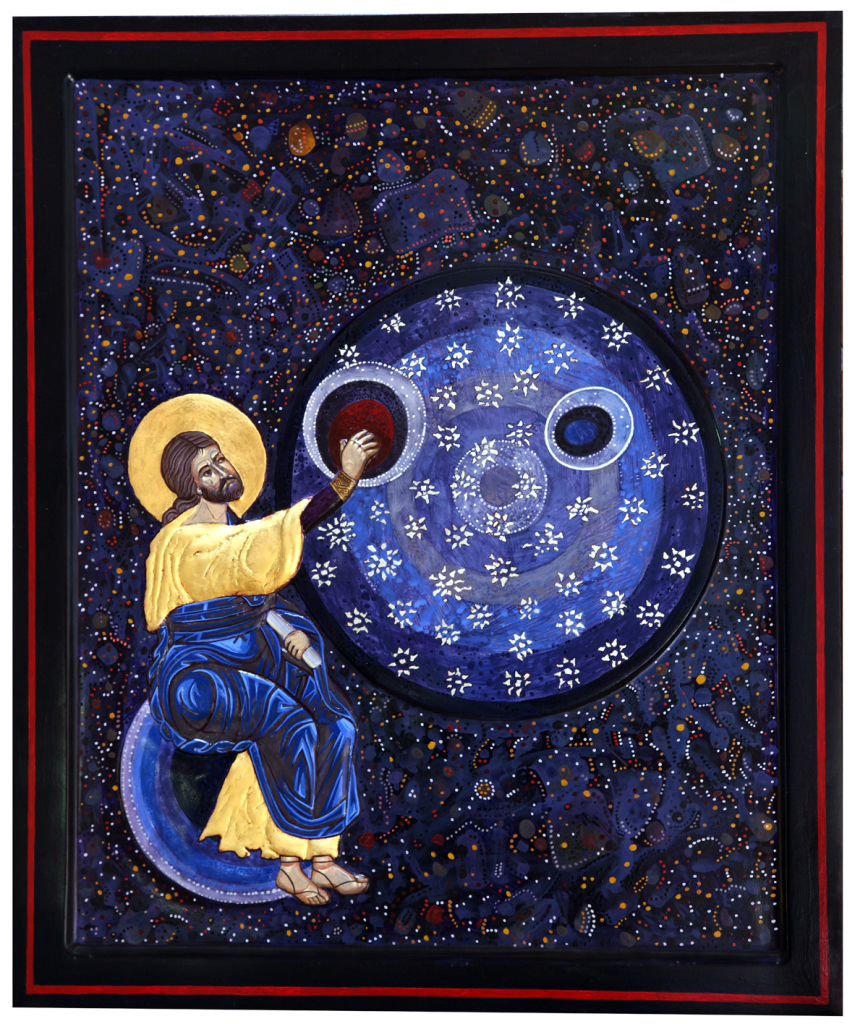
Galovic, Michael_Creation of Light in the Heavens
Michael Galovic (Serbian Australian, 1949–), Creation of Lights in the Heavens, n.d.

^^ “Jesus Dreaming: A Theological Reaction to Michael Galovic’s Creation of Lights in the Heavens by Merv Duffy: Creation of Lights in the Heavens by contemporary artist and iconographer Michael Galovic is an authentically Australian reading and rewriting of one of the Byzantine creation mosaics at Monreale Cathedral. Like its visual referent, it shows the Logos-Christ seated on the cosmos, hanging the sun in place (medieval artists tended to show God the Son, who is depictable, as Creator), but the gold background, used in icons to represent the eternal uncreated light of God, is replaced with dots, curves, and circles that represent the Dreamtime of Aboriginal theology, the origin of time and eternity.

Dunstan, Penny_Sixteen Earth Bowls
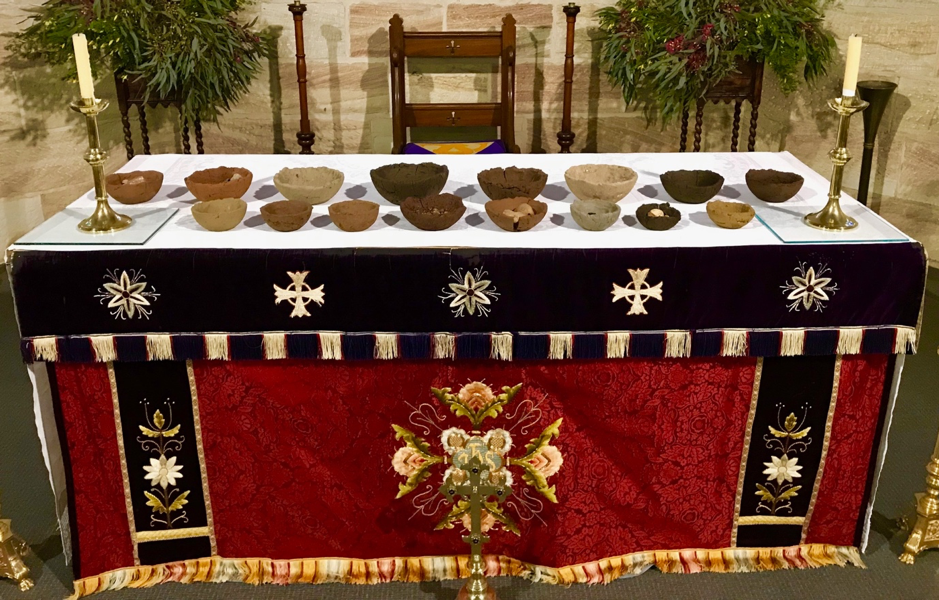
Penny Dunstan, Sixteen Earth Bowls, 2018. Installed at Holy Trinity Anglican Church, Merriwa, for the Festival of the Fleeces.

^^ “Sixteen Earth Bowls” by Penny Dunstan: Soil scientist and visual artist Penny Dunstan has crafted bowls out of topsoil from rehabilitated coal mines in the Hunter Valley in Warkworth, New South Wales, which she exhibits in churches, among other places. “Making earth bowls is a way of thinking about my ethical responses to soil use in a post-mining landscape,” she writes. “It is a way of thinking with my heart and not just my head. As I work with each Hunter Valley topsoil, I come to understand each as an individual, a special part of God’s creation. Each soil behaves according to its own chemical nature and historical past when I fashion it into a bowl shape. . . .

“These soils, full of tiny lives, are responsible for growing our food, making our air and storing atmospheric carbon. Our very lives as humans on the earth depend on them. By fashioning these soils into bowls and placing them in sacred places, I hope to remind us to honour the earth that we stand upon, that earth that speaks to us by pushing back at our feet.” (Note: See also Rod Pattenden’s ArtWay visual meditation on Dunstan’s work.)

Finnie, Andrew_The Body of Christ, the Tree of Life
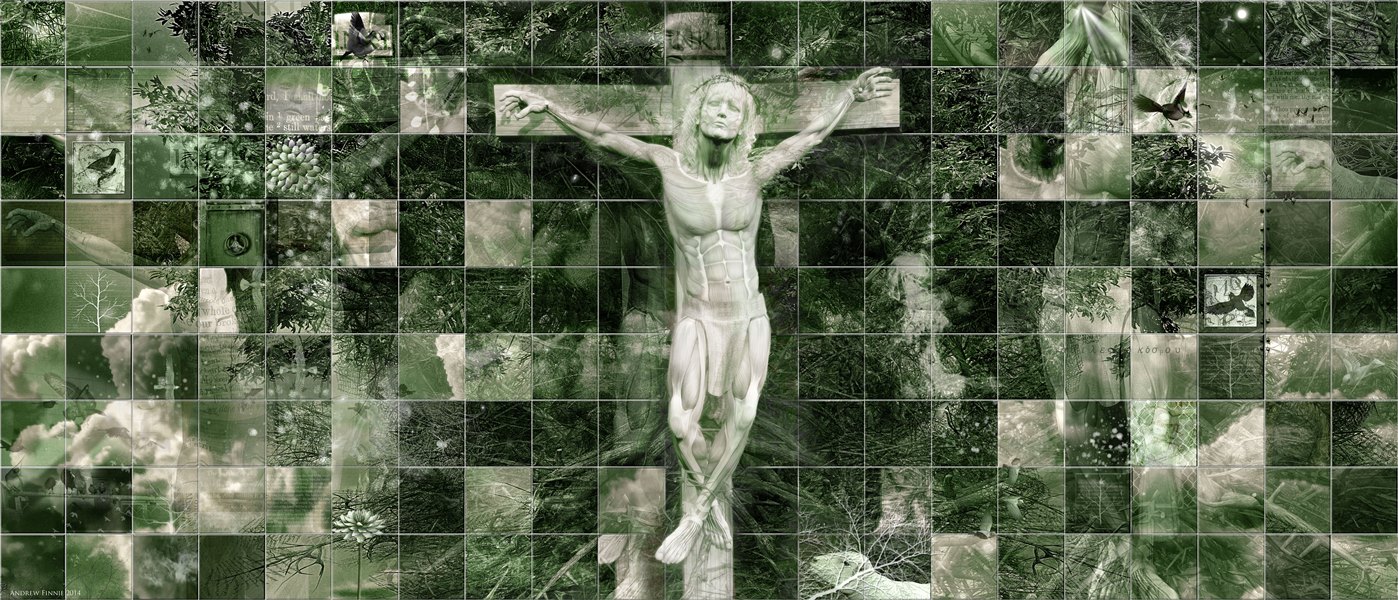
Andrew Finnie (Australian, 1957–), The Body of Christ, The Tree of Life, 2014. Pigment print on Hahnemuhle paper, 78 × 182 cm.

^^ “The Cross and the Tree of Life” by Rod Pattenden: “One of the pressing questions for the Church is how we see Christology being renewed in the face of climate change and the potential for the quality of life on this planet to decline,” writes art historian Rod Pattenden [previously]. “Who is Jesus for us in the midst of the profound changes that are occurring to the earth, water, and air of our world? . . .

Andrew Finnie’s image The Body of Christ, The Tree of Life”—a large-scale ecotheological digital collage—“is an attempt to re-imagine the figure of Christ in conversation with the earth and the networks that sustain human life in all its thriving beauty. Here, the traditional figure of the cross has become entwined in the roots of the tree, a tree of life that is giving form to the variety and beauty of the natural world.”

+++

SONG: “Kadosh” by Wally Brath, sung by Nikki Lerner: The Kedushah is part of the Amidah, the central prayer of the Jewish liturgy. Its first verse is taken from the song of the seraphim in Isaiah 6:3: “Holy, holy, holy, is the LORD of hosts; the whole earth is full of his glory!” (Kadosh means “holy.”) In this original composition for voice, piano, and string quartet, Wally Brath [previously] has combined this Hebrew exclamation from the book of the prophets with an English excerpt from the Lord’s Prayer taught by Jesus in Matthew 6:10: “Thy kingdom come, thy will be done on earth as it is in heaven.” [HT: Multicultural Worship Leaders Network]

The performance captured in this video, featuring Nikki Lerner, took place at Winona Lake Grace Brethren Church in Winona Lake, Indiana, on July 11, 2020. A full list of performers is given in the YouTube description.

+++

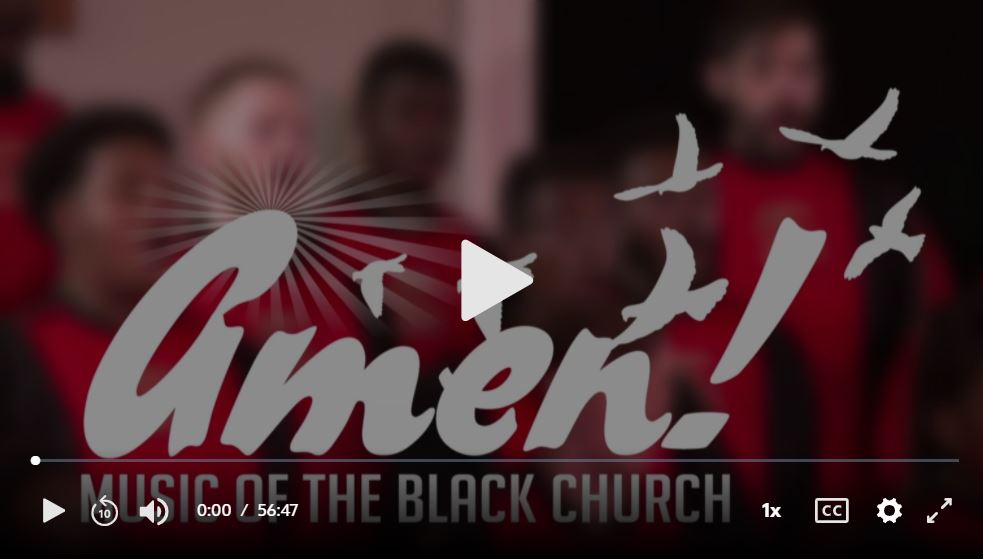
CONCERT FILM: Amen! Music of the Black Church: Recorded before a live audience at the Second Baptist Church in Bloomington, Indiana, and airing April 26, this PBS special explores the rich traditions, historical significance, and meaning of black church music. Dr. Raymond Wise leads the Indiana University African American Choral Ensemble in twenty-one spirituals, hymns, and gospel songs, showing how black church music is not monolithic. He demonstrates the stylistic spectrum you can find among black church communities using a song text derived from Psalm 24:7–10 (“Lift up your heads . . .”): one performed with the European aesthetic preferred in more affluent congregations, one a classical-gospel hybrid, and one pure gospel. One thing I learned from the program is that there is a tradition of shape-note singing in the black church! (See, e.g., The Colored Sacred Harp.) [HT: Global Christian Worship]

Music of the Black Church

Here’s the set list:

  • “We’ve Come This Far by Faith” by Albert Goodson
  • “Kumbaya”
  • “Run, Mary, Run”
  • “Oh Freedom”
  • “What a Happy Time” by J. M. Henson and J. T. Cook
  • “Amazing Grace” by John Newton
  • “Ain’t Got Time to Die” by Hall Johnson
  • “I’ve Been ’Buked”
  • “Lift Up Your Heads” by Emma Louise Ashford, arr. Lani Smith
  • “Lift Up Your Heads” by Clinton Hubert Utterbach
  • “Lift Up Your Heads, All Ye Gates” by Raymond Wise
  • “Glory, Glory, Hallelujah”
  • “Jesus on the Mainline”
  • “I Need Thee Every Hour” by Annie S. Hawks and Robert Lowry
  • “You Can’t Beat God Giving” by Doris Akers
  • “Come to Jesus” by E. R. Latta and J. H. Tenney
  • “We Shall Overcome” by Charles Tindley
  • “Lord, Keep Me Day by Day” by Eddie Williams
  • “Lord, Do It for Me” by James Cleveland
  • “Oh Happy Day” by Edwin Hawkins
  • “I’ve Got a Robe” by Raymond Wise
  • “Hallelujah, Praise the Lord, Amen” by Raymond Wise

+++

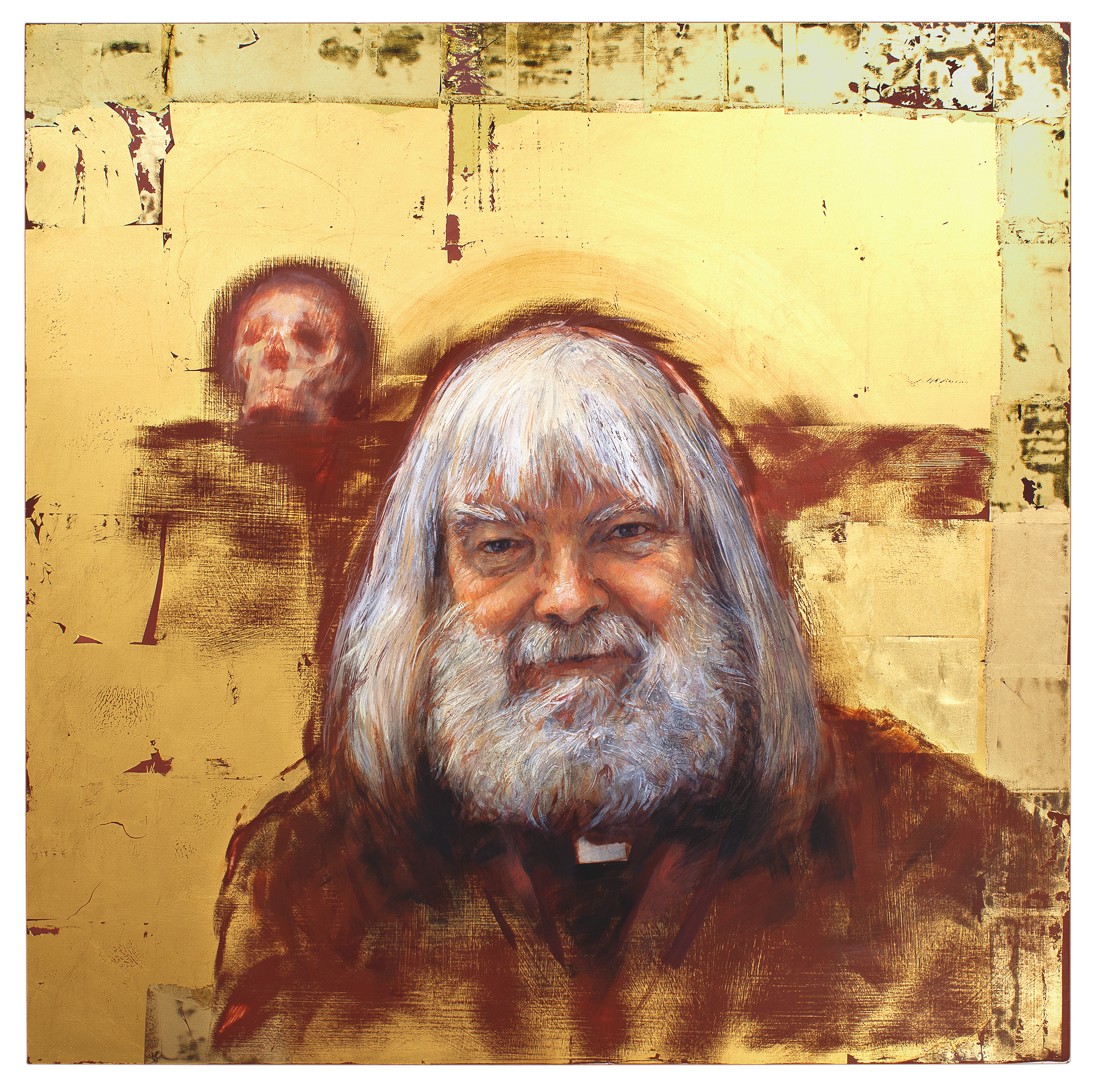
INTERVIEW: Last September The Cultivating Project interviewed Malcolm Guite [previously] on his latest poetry collection After Prayer, the poet-priest George Herbert, the life of a writer, art as faithful service, doubt and despair, his Ordinary Saints collaboration with Bruce Herman and J.A.C. Redford, his friendship with Michael Ward (author of Planet Narnia), the blessing of seasons (both earthly and liturgical), and making room for joy. The interview includes three of Guite’s poems: “Christ’s side-piercing spear,” “A Portrait of the Artist,” and “St. Augustine and the Reapers.”

Herman, Bruce_Malcolm Guite
Bruce Herman (American, 1953–), Malcolm Guite, 2016. Oil on panel with gold leaf, 30 × 30 in.

Blessed Are (Artful Devotion)

Come ye blessed by Nathaniel Mokgosi
Nathaniel Mokgosi (South African, 1946–2016), “Come, ye blessed . . . ,” 1980. This linocut is one of ten in a series on the Beatitudes. Source: Christliche Kunst in Afrika, p. 274

Blessed are you who are poor, for yours is the kingdom of God.

Blessed are you who are hungry now, for you shall be satisfied.

Blessed are you who weep now, for you shall laugh.

Blessed are you when people hate you and when they exclude you and revile you and spurn your name as evil, on account of the Son of Man! Rejoice in that day, and leap for joy, for behold, your reward is great in heaven; for so their fathers did to the prophets.

—Luke 6:20b–23

+++

SONG: “Blessed Are the Poor in Spirit” | Traditional, performed by Mitchell’s Christian Singers, on Mitchell’s Christian Singers, vol. 2 (1936–1938)

The Great Depression had a devastating effect on America’s recording industry, but a gradual recovery started in 1934, and that’s when the gospel quartet climbed to ascendancy within the broader genre of African American religious music. One of the most celebrated groups of this period was Mitchell’s Christian Singers from Kinston, North Carolina, originally called the New Four but then renamed for manager Willie Mitchell.

Each of the members had a different day job—tobacco warehouse laborer, truck driver, stonemason, coal salesman—but they formed a habit of singing together in the evenings and were discovered by a local talent scout. They went on to record more than eighty sides from 1934 to 1940, and in 1938 they even appeared onstage at Carnegie Hall alongside other greats, including Sister Rosetta Tharpe and Count Basie, for a landmark program titled “From Spirituals to Swing.” (One review of the concert noted how Mitchell’s Christian Singers sang “with touching solemnity . . . intensity and abandon . . .”) But despite their extensive output and relative popularity, none of the members opted for full-time professional musicianship. They traveled out of state to make records from time to time but generally stayed close to home, performing at churches and community functions.

The recording above, from an August 11, 1937, studio session, features Louis “Panella” Davis, Julius Davis, William Brown, and Sam Bryant. It was reissued in 1996 by Document as part of a four-volume CD set of the group’s complete works.


This post belongs to the weekly series Artful Devotion. If you can’t view the music player in your email or RSS reader, try opening the post in your browser.

To view all the Revised Common Lectionary scripture readings for the Sixth Sunday after Epiphany, cycle C, click here.

Roundup: Obits; breast cancer saint; exhibitions; gospel jam

ARTIST DEATHS:

This August saw the homegoing of two beloved Christian art-makers.

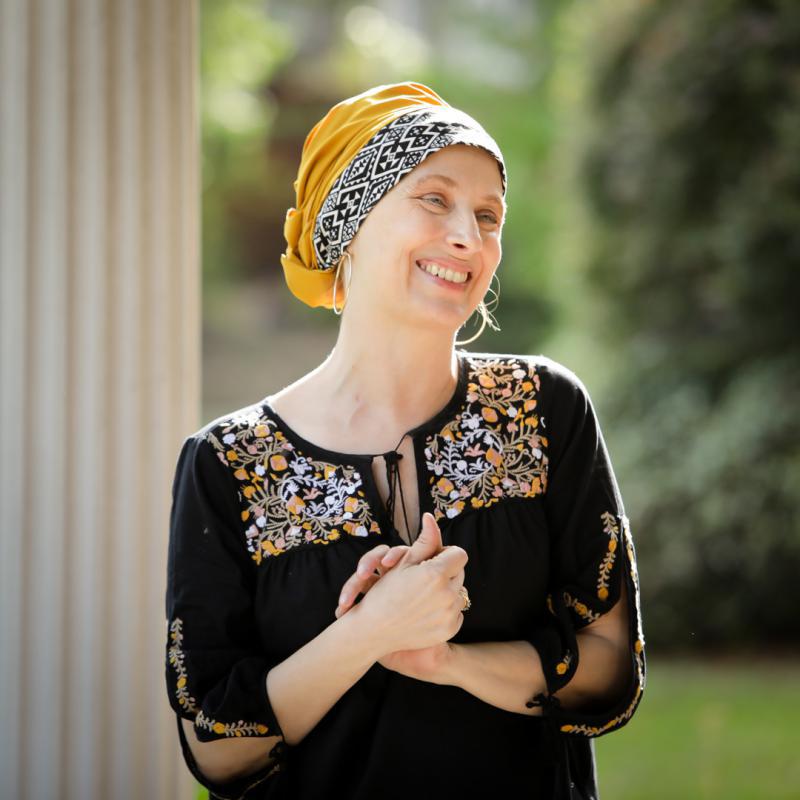
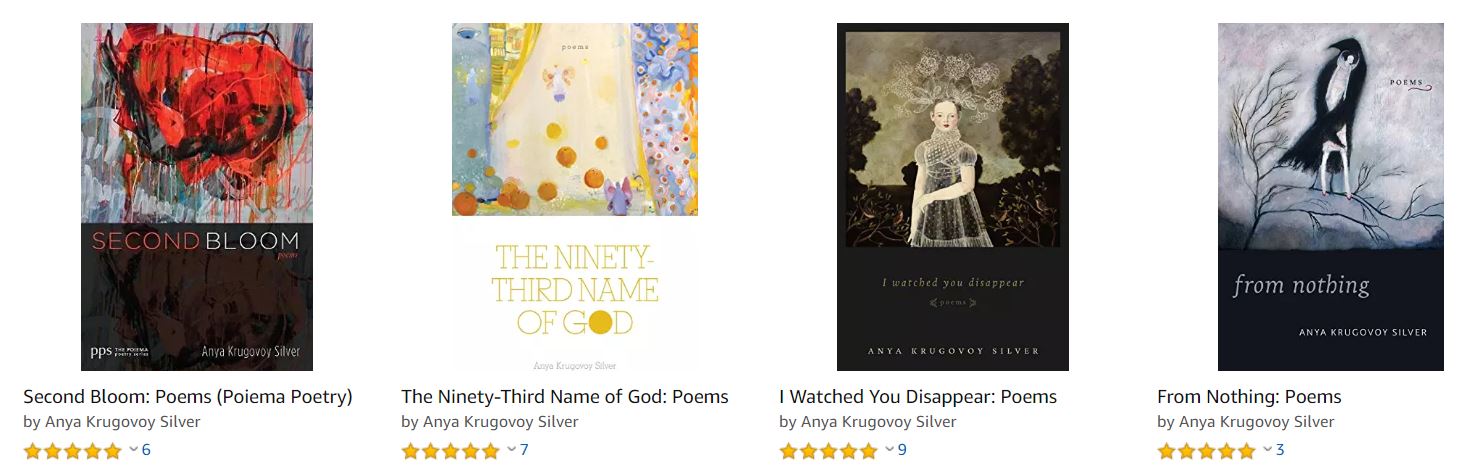
>> “Making meaning out of suffering and loss is one of poetry’s most fundamental aims,” wrote poet Anya Silver, who passed away from inflammatory breast cancer on August 6 at age forty-nine. Since her diagnosis in 2004, she published four volumes of poetry that wrap up faith with deep, honest questioning of God. Many of her poems contain imagery related to cancer and its treatment and describe with unswerving candor what it’s like to live under the threat of imminent death. When she received a Guggenheim Fellowship this year, the foundation described her work as “engag[ing] with the trauma of chronic and terminal illness, and with religious faith and mystery, storytelling, memory, and the risks and rewards of being human.” One of her best-known poems is “Psalm 137 for Noah,” written for her only child, whom she gave birth to during her illness.

“I have a tremendous amount of joy in my life, and my joy exists with pain,” Silver said in an interview with Georgia Public Radio in January. “I don’t see those two things as completely separate. All of life is woven together, and separating the strands is impossible.” Read her obituary in the New York Times, and a sweet tribute by Elizabeth Palmer in the Christian Century.

Anya Silver

Anya Silver books

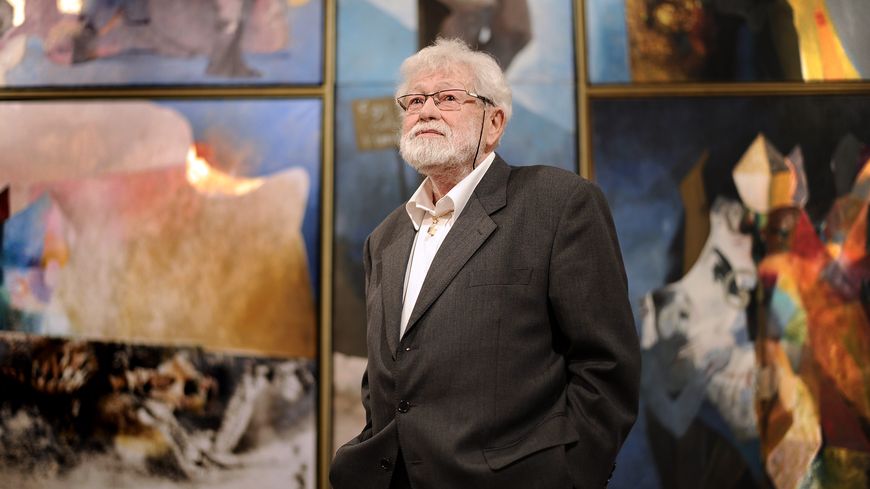
>> A giant of contemporary French sacred art, Jean-Marie Pirot, known professionally as Arcabas, died August 23 at age ninety-one. He is best known for his paintings, which feature biblical characters and scenes, but he also worked in sculpture, engraving, tapestry, mosaic, and cabinetry, as well as in the theater making scenery and costumes. His magnum opus is the interior decoration of Saint-Hugues-de-Chartreuse in the Isère region of France, which comprises over a hundred works by the artist created over a span of thirty-five years.

There has been much published about Arcabas in French (e.g.) but unfortunately very little in English—though for starters, I recommend this ArtWay article. A YouTube search of his name yields several video interviews and feature news segments—again, in French. I’ve embedded a recent video homage below, which shows you inside Saint-Hugues as well as his designs for the stained-glass windows inside the Basilica of the Sacred Heart in Grenoble, a project he was working on when he died. I’d love to help bring out some of these books, or even a brand-new catalogue raisonné, in English, so if any of you have connections to Arcabas’s French publishers or people close to him, or have experience translating from French to English, let me know!

Arcabas

+++

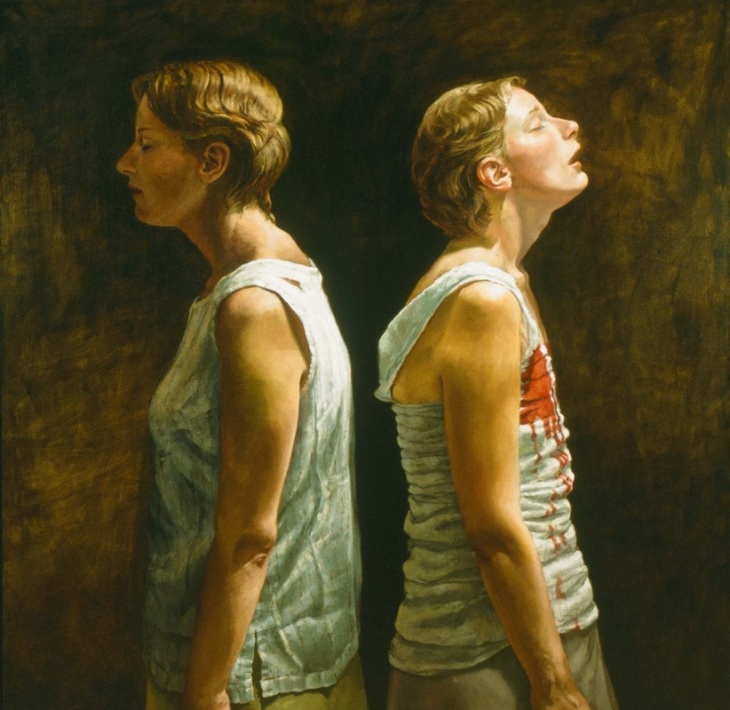
PAINTING: Saint Agatha’s Grief by Melissa Weinman: October is Breast Cancer Awareness Month, so what better time to get acquainted with Agatha of Sicily, patron saint of breast cancer patients. Agatha was a third-century Christian from a noble family whose martyrdom has been authenticated, although its details have not. According to legend, fifteen-year-old Agatha made a vow of virginity and rejected the amorous advances of the Roman prefect Quintianus. After consistently being spurned, Quintianus had her arrested for her faith (this was during the persecutions of Decius) and tortured. Among the tortures she underwent was the tearing off of her breasts with pincers. She died in prison, probably in the year 251.

St. Agatha's Grief by Melissa Weinman
Melissa Weinman (American), Saint Agatha’s Grief, 1996. Oil on canvas, 42 × 42 in.

In traditional portraiture, Agatha is shown holding her severed breasts on a platter (see, e.g., Francisco de Zurbarán). More recently, though, American artist Melissa Weinman painted a double portrait of Agatha as a modern-day woman in a white tank top enduring the tortuous experience of breast cancer. The two women stand back to back, the left figure having presumably just received the diagnosis, and the right figure bearing blood stains on the chest that indicate a mastectomy. There is an immediate sense of violation in the image, but also a sense that God’s glory is at work. While the one figure is cast in darkness, the other leans toward the light, suggesting hope and faith in the purposes of God, even in the groaning.

+++

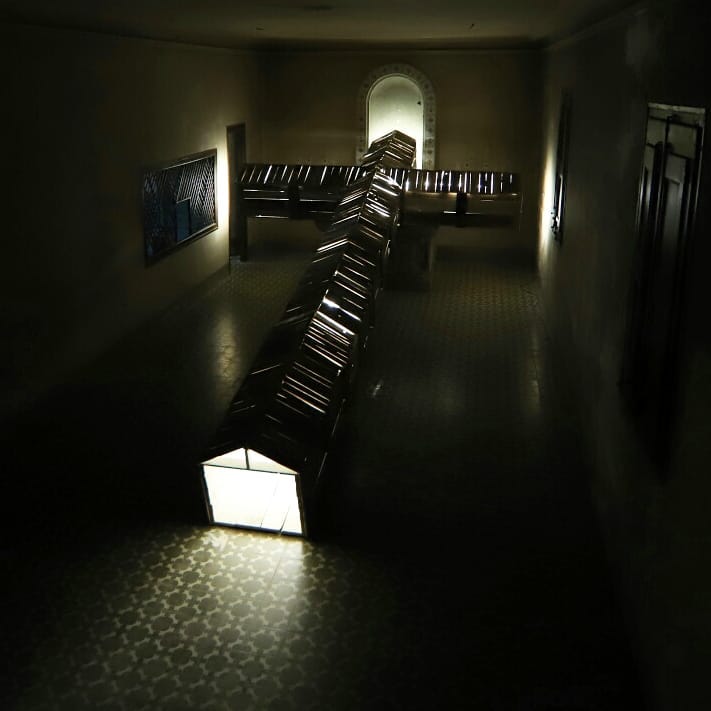
RECENT EXHIBITION: “Creença”: This summer fifty artists from a variety of disciplines participated in a two-month residency at Konvent, a nineteenth-century convent (now an art center) in Cal Rosal, Catalonia, Spain. Organized by Void Projects, the residency culminated in a three-day pop-up exhibition from August 30 to September 2, titled “Creença” (Belief), which included not just visual art but live theater, talks, and music.

Jofre Oliveras and Stefan Krische installation
Site-specific installation by Jofre Oliveras and Stefan Krische, 2018, in Konvent, Cal Rosal, Catalonia, Spain.

+++

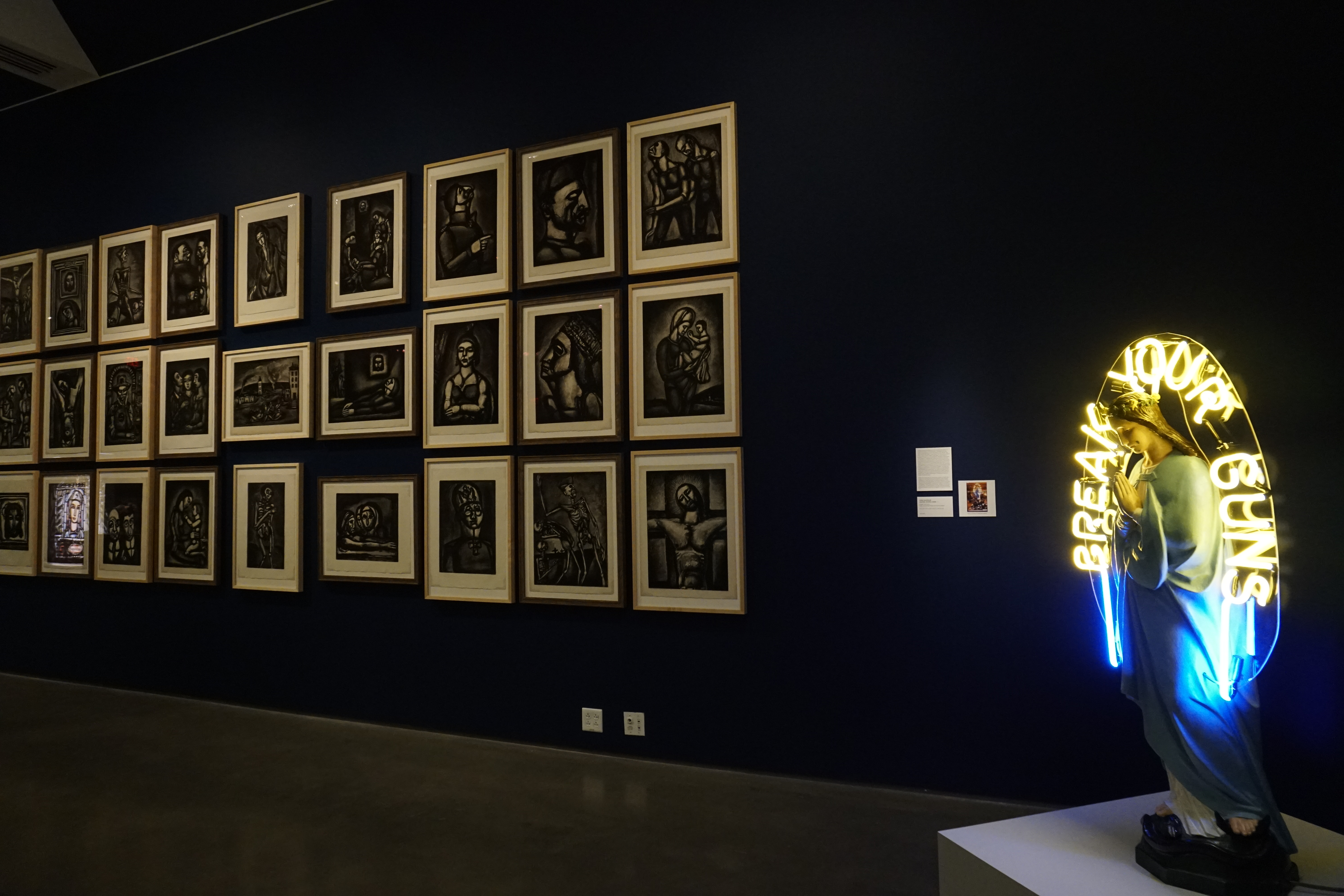
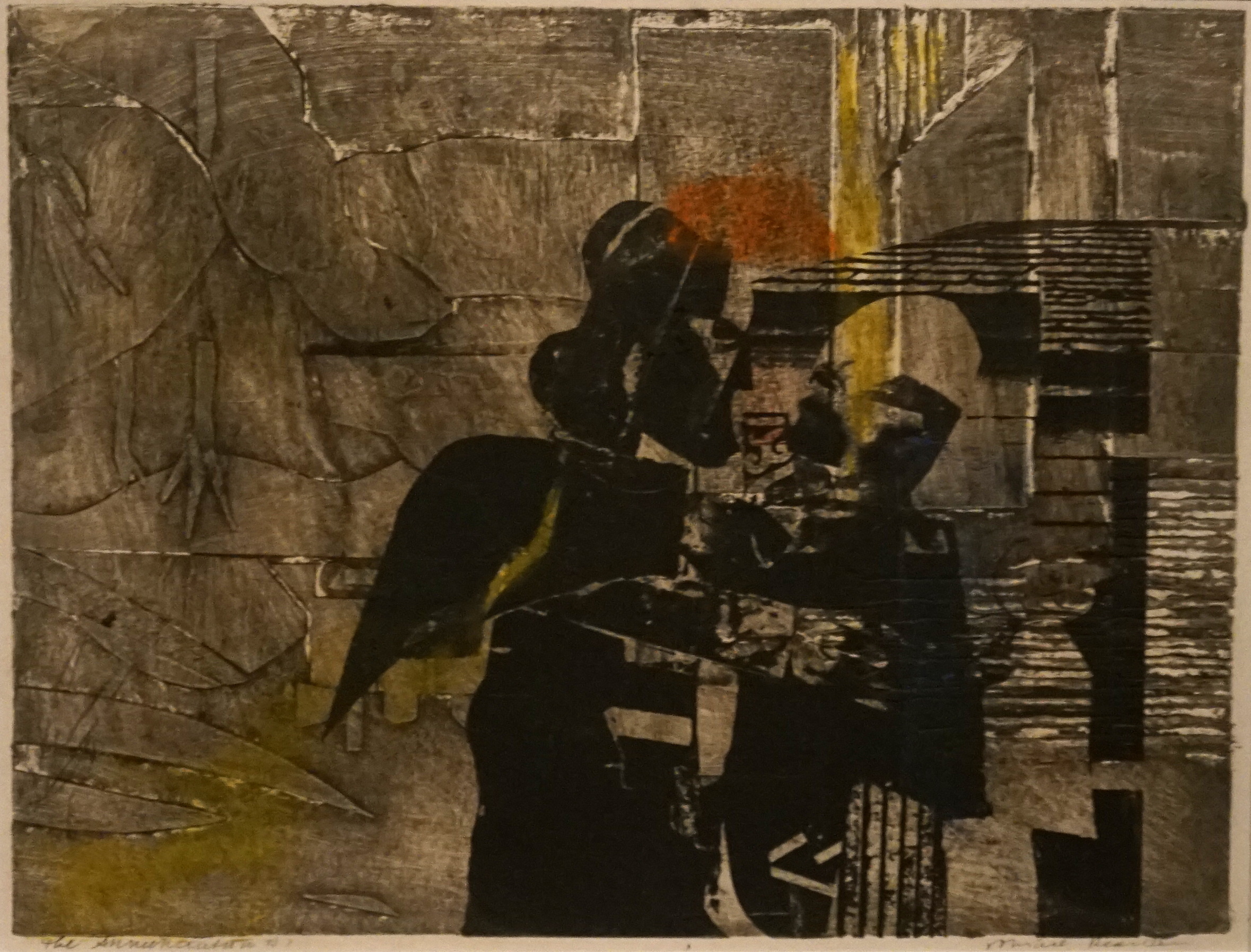
CURRENT EXHIBITION: “Wrestling the Angel: A Century of Artists Reckoning with Religion,” Bechtler Museum of Modern Art, Charlotte, North Carolina: Through October 28, the Bechtler is showing 219 pieces of religious-themed art spread out across its large fourth floor, including works by Dalí, Rouault, Chagall, Warhol, Manessier, Bearden, and other modern greats. I visited last weekend, and while I feel that the theme was treated too loosely and therefore the exhibition lacked the full impact it could have had, I thoroughly enjoyed individual portions, and I appreciate the Bechtler, and in particular curator Jen Edwards, for bringing together these diverse works that speak in some way to religion, spirituality, or morality.

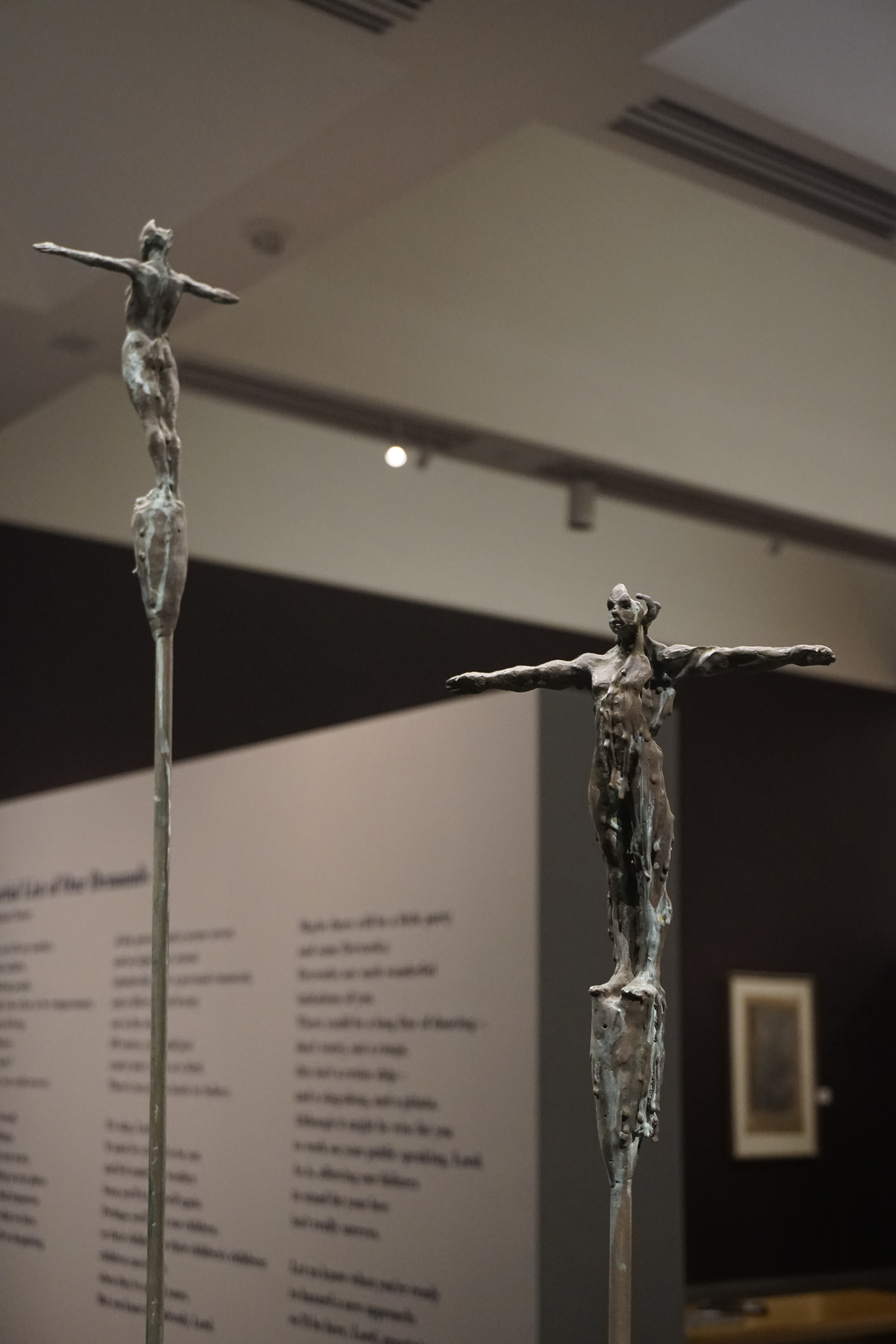
This was the first time I’ve seen Rouault’s entire Miserere (“Have Mercy”) series—all fifty-eight aquatints!—in one space, and it was stunning. Its display alongside Charlotte artist Gina Gilmour’s Break Your Guns and Stacy Lynn Waddell’s Untitled (Mike Brown’s Battle at Normandy) reinforces the theme of lament for violence and suffering inherent in all three. In the same room the set of small bronze crucifixes by Elizabeth Turk, which in their original gallery installation in 2002–03 contained lit candles in the hollows of the heads, invite further reflection on death, subtly connecting (through strategic placement) Christ’s crucifixion with the “crucifixions” of those slain in the past century through acts of war, gun violence, and police brutality.

Wrestling the Angel installation view
Installation view: “Wrestling the Angel,” Bechtler Museum of Modern Art, Charlotte, North Carolina, 2018. Left: Prints from Georges Rouault’s Miserere series, 1927. Right: Break Your Guns by Gina Gilmour, 1980. Photo: Victoria Emily Jones.

Poppyfields (detail) by Elizabeth Turk
Elizabeth R. Turk (American, 1961–), untitled bronzes from Poppyfields, 2002–03. Installation view: “Wrestling the Angel,” Bechtler Museum of Modern Art, Charlotte, North Carolina, 2018. Photo: Victoria Emily Jones.

The Annunciation by Romare Bearden
Romare Bearden (American, 1911–1988), The Annunciation, ca. 1967. Collograph, 11 3/4 × 15 1/2 in. (29.6 × 39.4 cm). Courtesy of Jerald and Mary Melberg. Photo: Victoria Emily Jones.

For other reviews of this exhibition, see those by Andy Smith and Barbara Schreiber. And word to the wise: avoid the last day, because it’s a Carolina Panthers NFL home game, and the stadium is right across the street from the museum. (I wish I had thought to check the schedule before I made the cumbersome trek last Sunday!)

+++

JAM SESSION: I love this impromptu gospel music performance by Karen R. Harding (right), Steve Brock, and Sharon Walker. They sing “Give Up (And Let Jesus Take Over)” by Howard Goodman and “Can’t Nobody Do Me Like Jesus” by Andraé Crouch. [HT: Global Christian Worship]

Like a Ship upon the Sea (Artful Devotion)

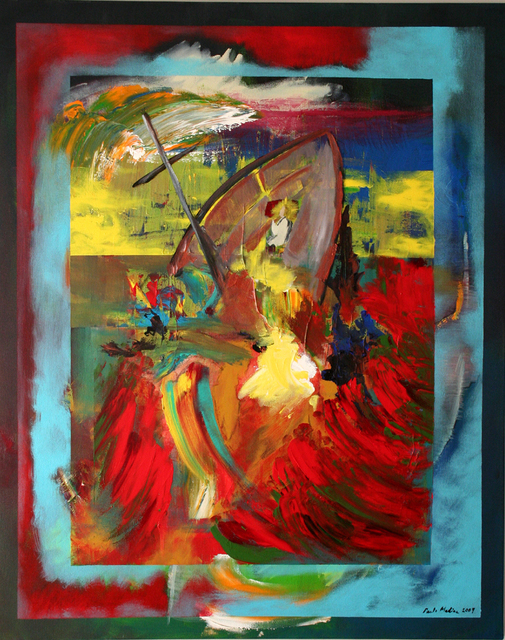
Navecilla by Paulo Medina
Paulo Medina (Mexican, 1964–), Navecilla, 2007. Acrylic on canvas, 100 × 80 cm.

Some went down to the sea in ships,
doing business on the great waters;
they saw the deeds of the Lord,
his wondrous works in the deep.
For he commanded and raised the stormy wind,
which lifted up the waves of the sea.
They mounted up to heaven; they went down to the depths;
their courage melted away in their evil plight;
they reeled and staggered like drunken men
and were at their wits’ end.
Then they cried to the Lord in their trouble,
and he delivered them from their distress.
He made the storm be still,
and the waves of the sea were hushed.
Then they were glad that the waters were quiet,
and he brought them to their desired haven.
Let them thank the Lord for his steadfast love,
for his wondrous works to the children of man!

—Psalm 107:23–31, describing one of four groups of exiled Judahites whom God rescued in their distress

On that day, when evening had come, [Jesus] said to [his disciples], “Let us go across to the other side.” And leaving the crowd, they took him with them in the boat, just as he was. And other boats were with him. And a great windstorm arose, and the waves were breaking into the boat, so that the boat was already filling. But he was in the stern, asleep on the cushion. And they woke him and said to him, “Teacher, do you not care that we are perishing?” And he awoke and rebuked the wind and said to the sea, “Peace! Be still!” And the wind ceased, and there was a great calm. He said to them, “Why are you so afraid? Have you still no faith?” And they were filled with great fear and said to one another, “Who then is this, that even the wind and the sea obey him?”

—Mark 5:35–41

+++

SONG: “Stand by Me” | Words and music by Charles A. Tindley, 1905 | Performed by Seth Avett, 2013 | United Methodist Hymnal #512

Read the history of this hymn by “one of the founding fathers of African American gospel music” at Discipleship Ministries, and listen to unique renditions by Sister Rosetta Tharpe and the Staples Singers.

+++

Paulo Medina’s painting Navecilla (Ship) was inspired by a letter St. Thérèse of Lisieux wrote to her older sister, Céline, on July 23, 1893, which references the narrative from next week’s Gospel lectionary reading and says in part,

Be assured, dear Céline, that even though your dinghy is far asea, it is perhaps already very close to your harbor. The wind of suffering that is propelling it is a wind of love, and that wind is faster than lightning. [translated by Victoria Hebert and Denis Sabourin]

Read the full letter, in an alternate translation from the French by John Clarke, at the Archives du Carmel de Lisieux.


This post belongs to the weekly series Artful Devotion. If you can’t view the music player in your email or RSS reader, try opening the post in your browser.

To view all the Revised Common Lectionary scripture readings for Proper 7, cycle B, click here.