BOOK: Meditations of the Heartby Howard Thurman (1953): I’ve just finished reading this book, and I think it would make an excellent companion for Lent. Written by Rev. Dr. Howard Thurman, a minister, theologian, professor, and civil rights leader, it consists of 152 one- to two-page meditations that he originally wrote for use by the congregation of Fellowship Church in San Francisco, a racially integrated, interdenominational church he cofounded in 1944. Some of the entries are prayers, some anecdotes, some reflections on scripture or spiritual topics, some expressions of desire or intent. For me, the book really started picking up in the second half. In part 5, several of the meditations begin and/or end with a mantra-like saying, such as “I will keep my heart open to truth and light” or “Teach me to affirm life this day!”—something short and memorizable to keep in the pocket of your heart and turn over and over.
Here’s an example of one of the meditations:
I want to be more loving. Often there are good and sufficient reasons for exercising what seems a clean direct resentment. Again and again, I find it hard to hold in check the sharp retort, the biting comeback when it seems that someone has done violence to my self-respect and decent regard. How natural it seems to “give as good as I get,” to “take nothing lying down,” to announce to all and sundry in a thousand ways that “no one can run over me and get away with it!” All this is a part of the thicket in which my heart gets caught again and again. Deep within me, I want to be more loving—to glow with a warmth that will take the chill off the room which I share with those whose lives touch mine in the traffic of my goings and comings. I want to be more loving!
I want to be more loving in my heart! It is often easy to have the idea in mind, the plan to be more loving. To see it with my mind and give assent to the thought of being loving—this is crystal clear. But I want to be more loving in my heart! I must feel like loving; I must ease the tension in my heart that ejects the sharp barb, the stinging word. I want to be more loving in my heart that, with unconscious awareness and deliberate intent, I shall be a kind, a gracious human being. Thus, those who walk the way with me may find it easier to love, to be gracious because of the Love of God which is increasingly expressed in my living.
Included in the volume are prayers for a gracious spirit in dealing with injustice, for placing our “little lives” and “big problems” on God’s altar, for laying ourselves bare to God’s scrutiny, for “when life grows dingy,” for the kindling of God’s light within us, “to be more holy in my words,” to learn humility from the earth, and for an enlarged heart that makes room for Peace.
+++
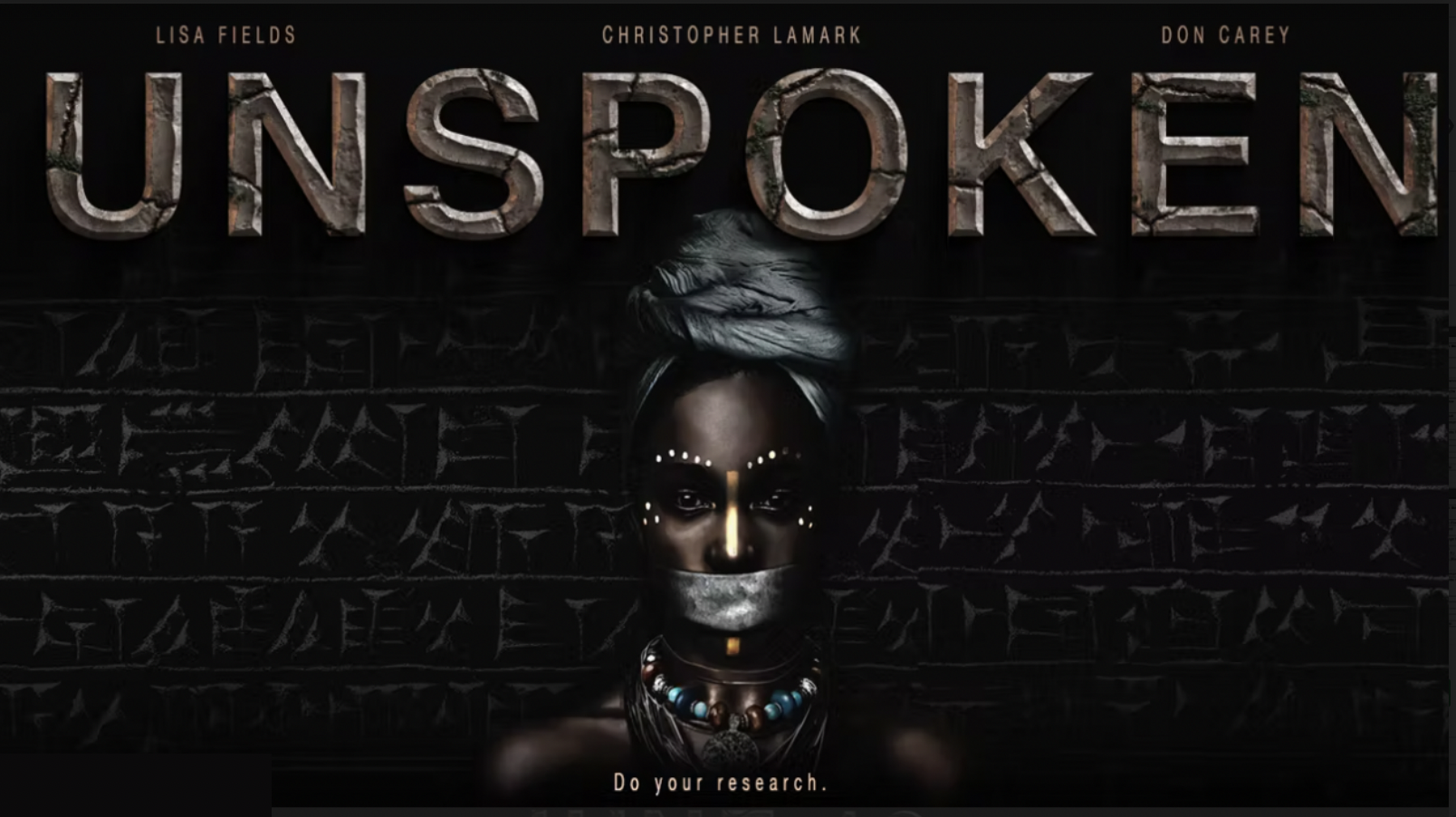
DOCUMENTARY: Unspoken, dir. Christopher Lamark (2022): This feature-length film takes an in-depth look at early African Christianity and its enduring heritage in African diaspora communities in America, dispelling the notion that Christianity is exclusively a white man’s religion. Director Christopher Lamark and his team interview historians, religious scholars, and cultural influencers, including Dr. Vince Bantu, Rev. Dr. Esau McCaulley, Rev. Dr. Charlie Dates, Lecrae Moore, and Sho Baraka, who reveal that Africans accepted Christianity of their own agency long before colonization or the slave trade, not just in the North but in sub-Saharan Africa as well. Bantu even points out that the Reformation was well underway in Africa a hundred years before Martin Luther, as the Ethiopian Christian monk Estifanos led a movement to bring the church’s practices more in line with scripture and to challenge abuses.
The false narrative that the Black church was born from those who drank the Kool-Aid served to them by their white oppressors has done a lot of damage, imposing shame and deterring young Black people from the Christian faith. That’s why it’s so important to correct this misinformation, to let people know that colonialism and slavery didn’t bring Christianity; it mutated it. At a time when much of white America was corrupting the gospel, Blacks preserved it, their ancient religious heritage, for subsequent generations.
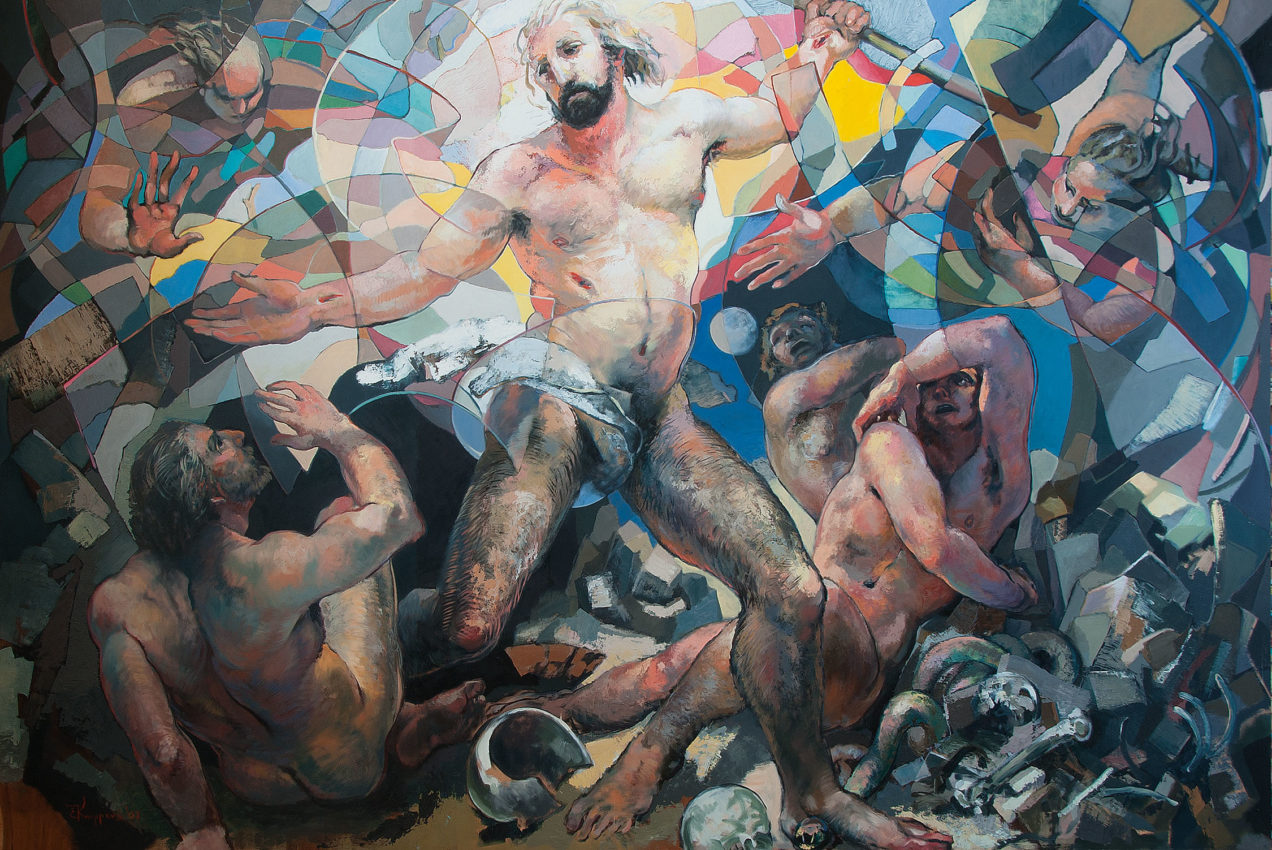
SYMPOSIUM: Embodied Faith and the Art of Edward Knippers, September 20–21, 2024, Gordon-Conwell Theological Seminary, Charlotte, NC: Sponsored by the Leighton Ford Initiative in Theology, the Arts, and Gospel Witness, this year’s Gordon-Conwell theology and arts symposium will center on the paintings of Edward Knippers, from Arlington, Virginia. In addition to an exhibition of over two dozen of Knippers’ works, there will be talks by artists Steve Prince, Bruce Herman, and Rondall Reynoso and theologians Natalie Carnes, W. David O. Taylor, and Kelly Kapic, as well as a dance performance by Sarah Council and a drum circle led by Olaniyi Zainubu and David Drum.
Edward Knippers (American, 1946–), The Resurrection of Our Lord, 2007. Oil on panel, 8 × 12 ft.
“‘Disembodiment is not an option for the Christian.’ This statement by visual artist Edward Knippers is a guiding principle in his work, which features the human body, often in connection with biblical scenes. Disembodiment is not an option for those who believe that human beings are created in God’s image with beautiful bodies, that everything from sin to salvation are embodied experiences, and that God’s redemption comes through the broken and risen body of Jesus. The paintings of Edward Knippers invite us to consider the goodness, brokenness, mystery, and glory of Christ’s body as well our own, urging us to grapple with the temptation to avoid, sexualize, downplay, or disparage bodies along with a fully embodied faith.”
I signed up! The early-bird discount is $20 off and ends March 1.
+++
SONGS:
>> “Give Me a Clean Heart” by Margaret Douroux, sung by Everett Harris and friends: Written in 1970 by Dr. Margaret Pleasant Douroux, this song of penitence based on Psalm 51:10 is a gospel classic. In the 2020 video below, it’s sung a cappella by a six-person virtual choir, using an arrangement by Adoration ’N Prayze. To hear it sung in a Black church context, led by Rev. Dr. E. Dewey Smith Jr., click here.
>> “Psalm 50” (Psalm 51) in Aramaic by Seraphim Bit-Kharibi: Father Seraphim Bit-Kharibi is an Assyrian Orthodox monk who is the archimandrite (head) of the Monastery of the Thirteen Holy Assyrian Fathers in Dzwell Kanda, Georgia. He is Assyrian by ethnicity, and his native language is Aramaic, the language of Jesus. Here he chants Psalm 51 (Psalm 50 in the Greek numbering system) in Aramaic with his church choir, which appears on his 2018 album Chanting in the Language of Christ. In the following video, the singing starts fifty-one seconds in.
My people, Assyrians, . . . still pay with their lives for their worship of Christ. In Eastern countries such as Iraq, Iran, Syria, and other warzones, Assyrians get attacked in their churches and beheaded if they refuse to convert to Islam. They are being destroyed en masse.
As for Assyrians in Georgia, there are about 4,000 of them. The Assyrian language is basically Neo-Aramaic, which is about 2,500 years old. The wonderful thing is that this language allows us insight into what people living centuries ago sounded like. Out of 4,000 Assyrians living in Georgia, 2,000 of them live in my village of Kanda and comprise 95 percent of its population. Almost 90 percent of these people speak Neo-Aramaic.
+++
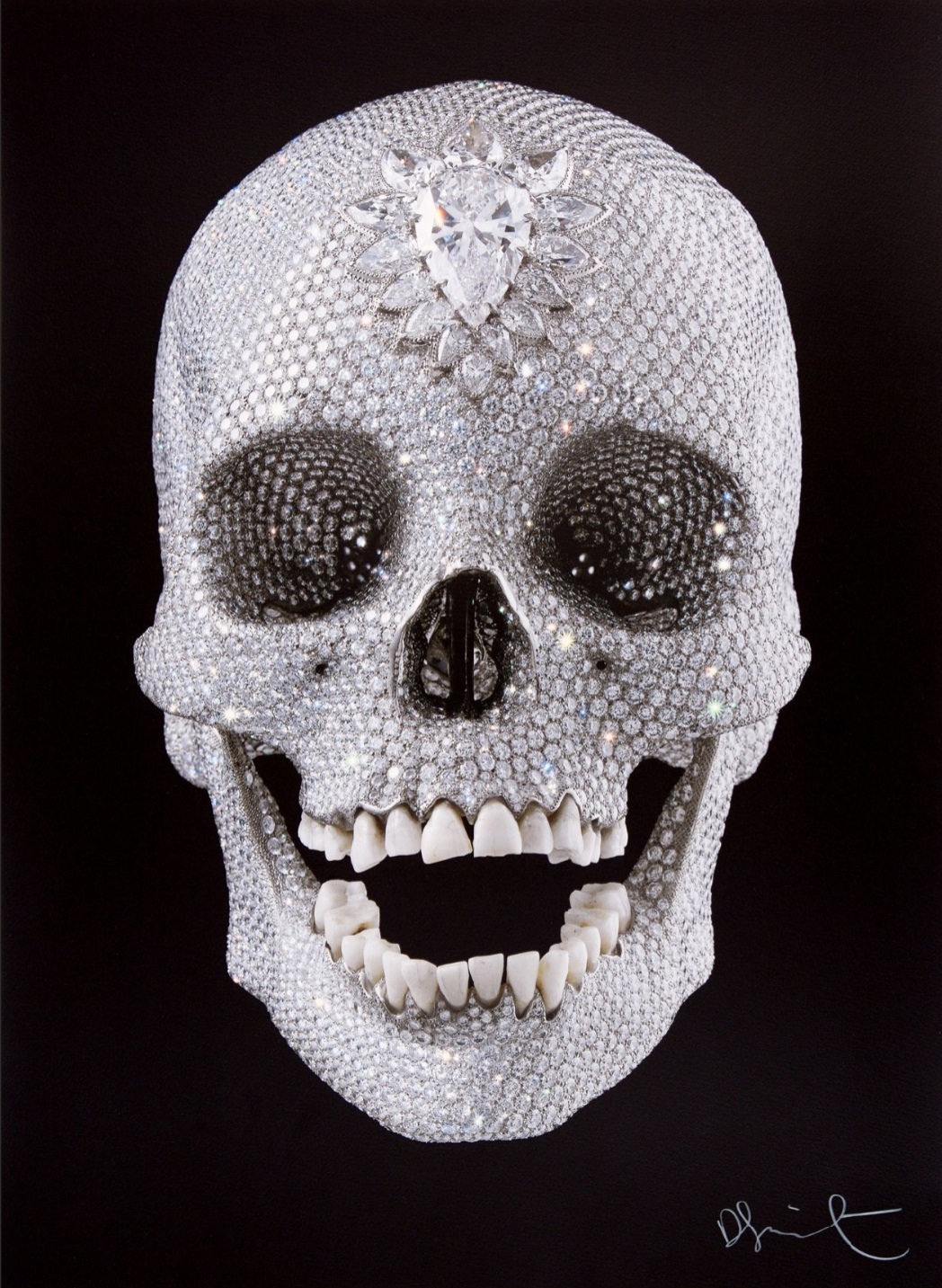
ART COMMENTARIES: Lent Stations: Vices and Virtues: To promote art-driven contemplation around Lenten themes, this Lent the Visual Commentary on Scripture is spotlighting fourteen artworks from its archives based on the seven deadly sins and seven virtues. So far they’ve featured a pair of medieval statues personifying the Synagogue and the Church, a diamond-encrusted skull by Damien Hirst, a Rubens painting of Cain murdering Abel, and an Egyptian textile roundel depicting scenes from the life of Joseph.
Damien Hirst (British, 1965–), For the Love of God, 2007. Platinum, diamonds, and human teeth, 17.1 × 12.7 × 19 cm.
LECTURE: “PRESENCE: Illuminating Black History, Faith, and Culture” by Steve A. Prince: Printmaker, sculptor, draftsman, and “art evangelist” Steve Prince is the director of engagement and distinguished artist in residence at the Muscarelle Museum of Art at the College of William & Mary in Williamsburg, Virginia—and a personal friend of mine! In this lunchtime presentation organized last fall by Upper House, a center for Christian gathering and learning in Madison, Wisconsin, he discusses his body of work, which is influenced by his New Orleans background and is full of symbols and of figures from African American history. Bessie Mitchell and the Trenton Six, Mamie Till, the Little Rock Nine, Henrietta Lacks, the Greensboro Four, Amadou Diallo, John Coltrane, Harriet Jacobs, and Sarah Collins Rudolph are just a few of the people he references. He discusses the role of the arts in lament, healing, renewal, and celebration, framing the whole talk in terms of the first and second lines of the New Orleans jazz funeral—metaphors, he says, of life on earth (“the dirge”) and life in the hereafter.
Steve Prince (American, 1968–), Bird in Hand: Second Line for Michigan, 2012. Graphite drawing, 9 × 20 ft.
+++
ABOUT HARRIET POWERS:
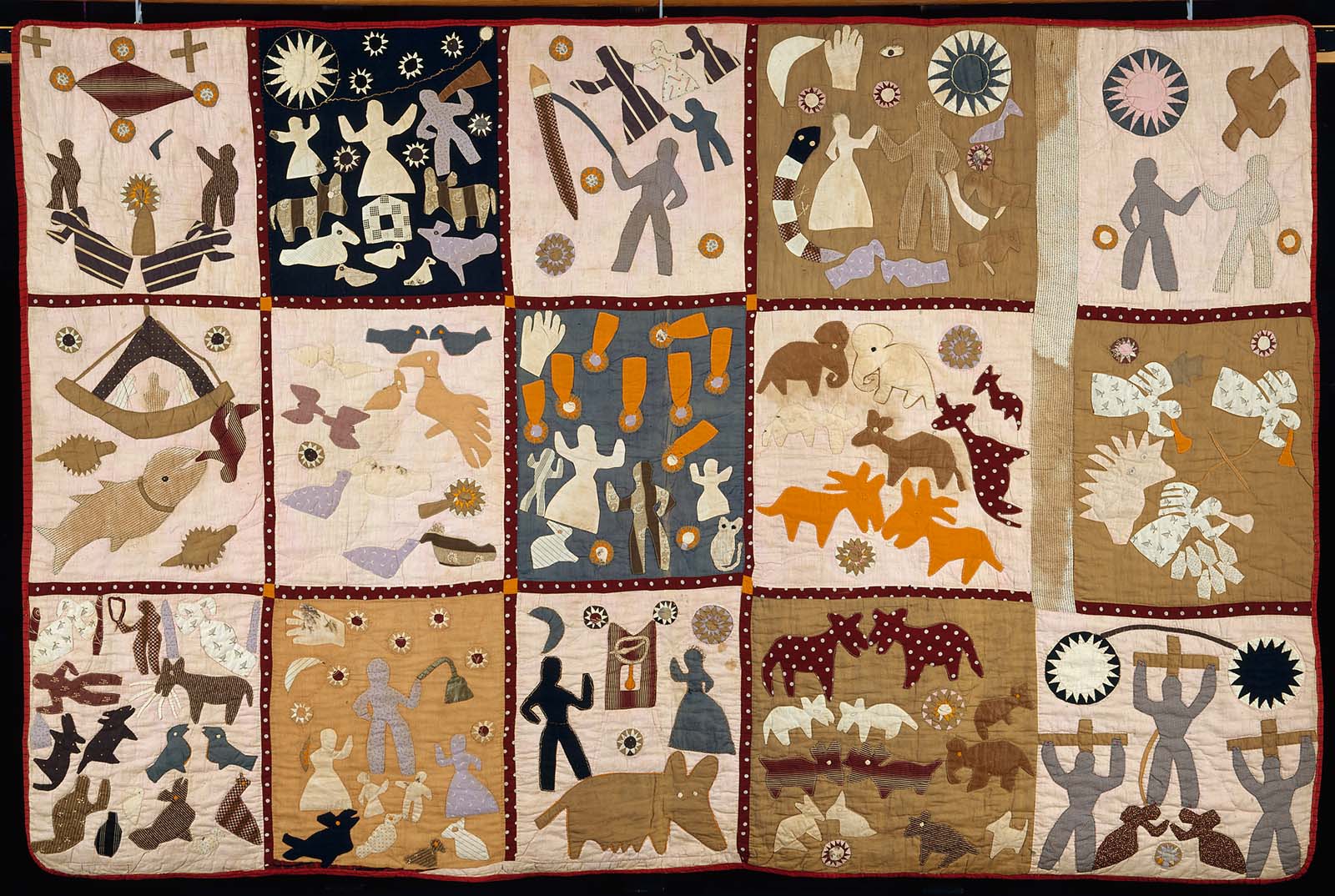
Harriet Powers (1837–1910) was an African American quilter from Georgia who used traditional appliqué techniques to record Bible stories, local legends, and astronomical events. Her two extant quilts, referred to as the Bible Quilt and the Pictorial Quilt, are considered among the finest examples of nineteenth-century Southern quilting. They really are extraordinary.
Harriet Powers (American, 1837–1910), Bible Quilt, ca. 1886. Cotton plain weave, pieced, appliqued, embroidered, and quilted, 75 × 89 in. (191 × 227 cm). National Museum of American History, Washington, DC.Harriet Powers (American, 1837–1910), Pictorial Quilt, 1895–98. Cotton plain weave, pieced, appliqued, embroidered, and quilted, 68 7/8 × 105 in. (175 × 266.7 cm). Museum of Fine Arts, Boston.
A breakdown of the individual squares on Powers’s quilts happens at 14:44–22:16, and conversation continues about Powers specifically until about the one-hour mark. Notably, when asked about the importance of the quilts, Hicks says, “They’re important because you have a woman who is testifying of her love for God 135 years after those quilts left her home. She continues to testify. When you think about all the people . . . I just think she’s a storyteller, but she’s a storyteller with a purpose, and I admire her for that.” The second hour is about story-quilting today—where a new generation of quilt-makers is taking the art form in the twenty-first century—and touches on functional use of quilts versus display.
>> “Blessed Assurance”: A Black gospel arrangement of a classic Fanny Crosby hymn, performed by the Portsmouth Gospel Choir from the University of Portsmouth in the UK.
>> “Parachute” by Arielle Howell and Moses Hooper: A song of surrender. Filmed in 2016, this was the first music video made under the aegis of Under the Belltower, a Biola University initiative (no longer active) that brought together student musicians, composers, and filmmakers to make art in community and showcase that work with an end product.
Archibald J. Motley Jr. (1891–1981) was one of the most important artists of the Harlem Renaissance. He’s best known for his paintings of urban Black culture, especially the Chicago jazz scene and other nightlife, and he was also a wonderful portraitist.
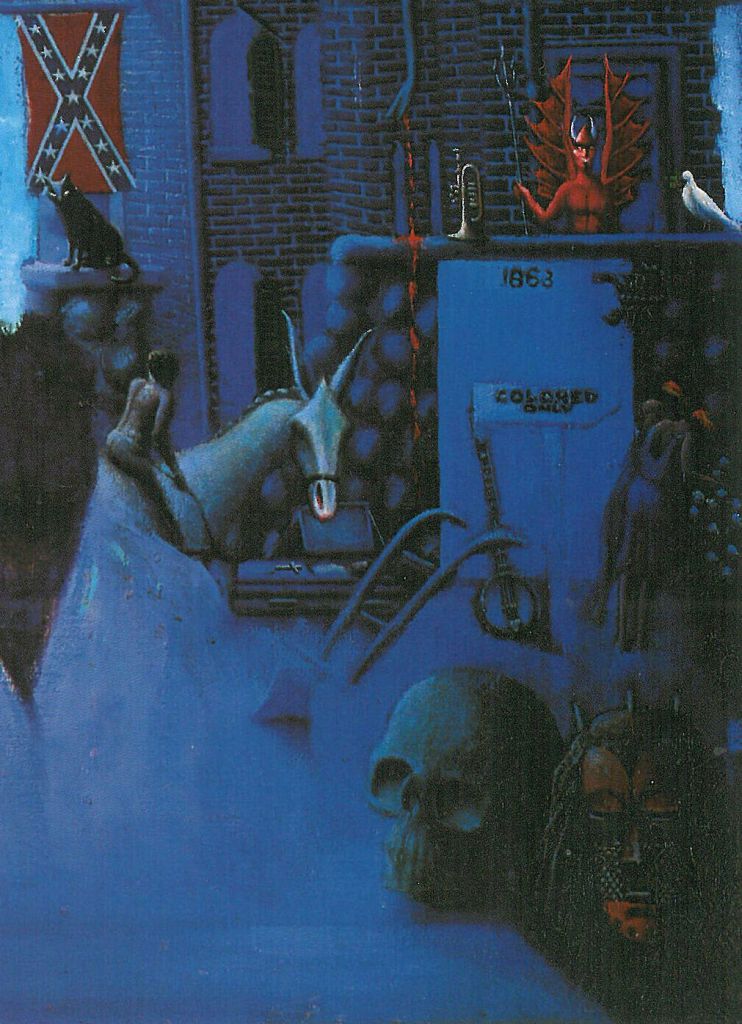
His final painting, however, shows none of the carefree conviviality that was characteristic of much of his work. On the contrary, it’s nightmarish. Begun in 1963 and reworked over the course of a decade, The First One Hundred Years: He Amongst You Who is Without Sin Shall Cast the First Stone: Forgive Them Father For They Know Not What They Do chronicles race relations in the United States from the Civil War to the civil rights era. It’s the most overtly political painting in Motley’s oeuvre, and once completed, he didn’t paint for the remaining nine years of his life.
The “one hundred years” in the title refers to the period since the Emancipation Proclamation took effect in 1863, changing the legal status of more than 3.5 million enslaved African Americans to “free.” The Civil War ended May 9, 1865, and slavery was officially abolished with the Thirteenth Amendment on December 18 of that year. But the legacy of that institution was still felt throughout the next century, in which Black people suffered disenfranchisement, segregation, lynchings, and a number of other injustices and terrors.
Motley visualizes the Black struggle for freedom and equality through symbols and vignettes.
At the top of the painting are the death masks of John F. Kennedy, Martin Luther King Jr., and Abraham Lincoln, all of whom were assassinated as they sought to advance the rights of African Americans.
Below King’s visage is a Confederate flag, hanging from the front porch of a crumbling Southern manse. The red is replicated in the blood running out the house’s downspout, a horned devil (who surveys the domain he’s claimed), the blood-drop cross insignia of a Ku Klux Klansman, and the tongue of a snarling police dog.
At the bottom right a traditional African mask lies beside a human skull, alluding not only to physical death but also to the fragmentation or loss of cultural identity experienced by those who were abducted from their homeland and brought across the Atlantic to live in captivity, separated from their families and communities and ways of life and even given new names by their oppressors. This wound is also felt by the enslaved persons’ descendants, who are unable to trace their lineage.
Above this still life is a Black person on horseback, operating a plow right next to a coffin. Besides the obvious reference to plantation labor, the vignette also evokes the African American spiritual that goes, “Keep your hand on the plow, hold on”—a song of endurance through hardship.
In the center of the painting the Statue of Liberty stands in ironic contrast to a lynched man, the color of her freedom torch echoed in the burning cross of the KKK. Just behind this dead Black man who hangs from a tree is another dead man hanging from another tree: Jesus on the cross. (For more on how these two symbols mutually interpret each other, see theologian James H. Cone’s The Cross and the Lynching Tree.) The hill of Calvary is the brightest part of the entire composition, which I imagine Motley, a practicing Catholic, intended to signify hope, enlightenment, and a call to repentance. The cross illuminates our sin and the love of God that compels us to love our neighbors. I will address this further, in relation to an MLK sermon, below.
In the shadow of the cross is a sea of protest and counterprotest signs. Alongside slogans like “We Want to Vote,” “Black Power,” and “We Shall Overcome” are swastikas, “America for Whites, Africa for Blacks,” and “Go home, niggers, and get your relief check.” To the left of this activity, a white police officer beats a Black man with a baton, and a fireman turns a high-pressure hose on Lady Justice. This vignette evokes the chilling news footage from May 1963, when Birmingham Public Safety Commissioner Bull Connor ordered the use of fire hoses and attack dogs on peaceful Black protesters, including children. The force of the jet streams ripped off boys’ shirts and pushed girls over the tops of cars. It was an assault on Black bodies and on justice itself.
Birmingham, Alabama, was, and still is, one of the most racially divided cities in the US, and in the 1960s it became a center of civil rights activism. From 1947 to 1965 it was the site of fifty racially motivated dynamite explosions, earning it the nickname “Bombingham.” The bombing that caught the most international attention was of Sixteenth Street Baptist Church on September 15, 1963. The blast killed four girls who were leaving Sunday school: Addie Mae Collins, Cynthia Wesley, Carole Robertson, and Carol Denise McNair. Motley alludes to this terrorist act with the stained glass window wherein the face of a white Jesus is blown out, as that’s actually what happened at Sixteenth Street Baptist. (“The absence of the face,” said James Baldwin, “is something of an achievement since we have been victimized so long by an alabaster Christ.”)
In the center foreground, emerging from the phantasmagoria, is another faceless figure, his form and features undefined. He’s a specter, really, walking toward us—or is it someone in a dream state? Motley mixes historical scenes of violence and terror with contemporary ones, showing how the ghosts of our nation’s past are still haunting us.
Scattered throughout the painting are animals that represent ill omens or evil: a bat, a vulture (who feeds on death), a black cat, a serpent, a scorpion (on the right, crawling across the door marked “1863”). The latter two call to mind Luke 10:19, where Jesus tells his disciples, “Behold, I give unto you power to tread on serpents and scorpions, and over all the power of the enemy . . .” A dove of peace, the only nonsinister animal presence, perches on the margins.
Church, listen up: we have the call and the power, in Christ(!), to tread on racism and every other evil that erects itself against the kingdom of God. Don’t let the Enemy have a stranglehold. Let us be active in confronting the evil of white supremacy and dismantling it—in our own hearts, our congregations, our government, and in all the other systems it operates in—so that the supremacy of Christ and his gospel of freedom and reconciliation can be made known.
Where Are We Today?
I encountered The First One Hundred Years through the 2015 retrospective Archibald Motley: Jazz Age Modernist and have been sitting with the image ever since, thinking: What progress have we made? Do I recognize this scene? What will “The Next One Hundred Years” look like in America?
It’s been almost fifty years since Motley completed the painting, and blood still flows. Black people are still being lynched (Ahmaud Arbery, killed by white vigilantes while out on a jog, is one example). Some people and businesses are still flying their Confederate flags. And racist hate groups are as active as ever. Last October the Department of Homeland Security named white supremacist extremists the country’s number one domestic terrorism threat, a threat that came to fruition January 6 when a mob of radical Trump supporters, catalyzed by the president himself, stormed the Capitol equipped with climbing gear, riot helmets, shields, gas masks, bear spray, flex cuffs, lead pipes, and baseball bats, attempting to overturn the 2020 presidential election results by force. The insurrectionists erected a functional gallows and noose on the lawn and shouted and graffitied death threats. A Confederate battle flag was marched through the halls of Congress, as were other neo-Confederate, neo-Nazi, and nationalist symbols, along with crosses, the Christian flag, a “Jesus 2020” banner, “Make America Godly Again,” etc. (Christian nationalism, on flagrant display at the Capitol, has been publicly denounced by several prominent American Christians these past four years, so I won’t get into it here.) The mob was a mishmash of different groups and individuals united around Trump’s claims of election fraud and trying to hold on to (white) power.
Law enforcement’s completely deficient planning for the white-led protest (and thus inability to properly respond when the protest turned into a siege) stood in stark contrast to the way Black Lives Matter protests in DC were handled last summer, with militarized officers at the ready, low-flying helicopters, and eight-foot-tall fences. Peaceful Black protesters in the streets were met with tear gas and rubber bullets, whereas January 6’s white protesters were able to invade the Capitol with little resistance.
Why the woeful lapse in security, despite clear intelligence that right-wing extremists would be gathering there the day Congress was convening to ratify Biden’s democratically won victory? Because despite the DHS’s recent Homeland Threat Assessment, white people are, in general, not perceived as dangerous; Black (and brown) people are. And because white people know the system works for them, those who stormed the Capitol felt empowered to do so with impunity. They weren’t scared of the police. They didn’t even try masking their identities; on the contrary, several posted photos and videos of their crimes online. After trespassing, assaulting police officers (one of whom died), and vandalizing and looting while federal legislators ran and hid in fear for their lives, the insurrectionists were gently told by President Trump to “Go home. We love you.” Only a few were detained. Investigations have since been launched and more and more arrests are being made. But I bring this all up to show just one recent instance of racial disparities in policing as well as the rise of white nationalist fervor, which are just two of the many symptoms that prove that America does indeed still have a race problem.
The Trump presidency has really brought white supremacy to the fore, forcing us to confront a national sin that perhaps we thought was mostly behind us. “Reckoning” is a word I’ve been seeing a lot. Activist and author Ibram X. Kendi says that if we can be thankful to Trump for anything, it’s this: “He has held up a mirror to American society, and it has reflected back a grotesque image that many people had until now refused to see: an image not just of the racism still coursing through the country, but also of the reflex to deny that reality.”
The Need for Enlightenment
The two subtitles of Motley’s painting are both quotations of Jesus, which together indict sin and ask God for mercy. “He amongst you who is without sin shall cast the first stone” (John 8:7) was spoken to pierce the consciences of a mob of religious elites who sought to stone a woman for adultery; it exposed their two-facedness, their eagerness to punish another’s sin but not to examine their own. Motley is thus urging viewers to confront the ways in which they themselves have violated God’s law, how they have said, by their words or actions (or inaction), that Black lives do not matter. Admit. Admitting sin, admitting that there’s a problem, is the first step in rooting it out.
“Forgive them, Father, for they know not what they do” (Luke 23:34) was spoken by Jesus on the cross. As he hung dying, he prayed to God on behalf of his killers, recognizing in them a spiritual blindness. Forgiveness is a nuanced concept whose complexities I won’t discuss here, but Jesus’s prayer expresses his goodwill toward his enemies, a spirit of wanting to see them reconciled to God. Jesus recognized that even as sinners hurt people, they themselves are also hurting. They don’t even realize how their sin binds them and blinds them.
In a ca. 1962 sermon on this text, Martin Luther King describes his oppressors (and Jesus’s) as suffering from an “intellectual and moral blindness . . . an ill which man inflicts upon himself by his tragic misuse of freedom and his failure to use his mind to its fullest capacity. There is plenty information available if we consider it as serious a moral obligation to be intelligent as to be sincere. One day we will learn that the heart can never be totally right if the head is totally wrong.” King describes how enslavers sought to rationalize their beliefs, drawing from “science,” history, and biblical interpretation, and segregationists were doing the same, ignoring all evidence that contradicted what they sincerely believed to be true. These days we’ve seen how those who benefit from white privilege seek to explain away racial inequalities or even simply refuse to believe they exist, because who wants to give up power? And of course they find online communities or curate social media feeds that bolster their view that everyone is treated equally in America, that skin color does not grant any unfair advantages, and so when another unarmed Black person is killed by police, they interpret it through the white lens of “Well, he must have been doing something wrong . . .”
Maybe as you read this very article you’re tensing up and want to tell me X, Y, and Z regarding why white privilege is a fallacy or how I’ve been taken in by a “liberal agenda,” or how my narrative of the recent event at the Capitol is completely off—it wasn’t an insurrection, and it had nothing to do with white supremacy, and those weren’t really Trump supporters (yes, I’ve actually heard people say that). Maybe you think it’s me who’s blind.
King talks about the need for enlightenment.
Light has come into the world. There is a voice crying through the vista of time calling men to walk in the light. Man’s earthly life will be reduced to a tragic cosmic elegy if he fails to heed this call. “This is the condemnation,” says John, “that light is come into the world, and men loved darkness rather than light.”
John’s saying, King says, is demonstrated vividly at the cross, which shows God at his best and humanity at its worst.
We must continue to see the Cross as a magnificent symbol of love conquering hate, and light overcoming darkness. But in the midst of this glowing affirmation, let us never forget that our Lord and Master was nailed to that Cross because of human blindness. Those who crucified him knew not what they did.
In what ways are we nailing Christ to the cross afresh, so to speak, unaware of what we’re doing? In what ways are we resisting the work of the Holy Spirit to expose sin, both personal and collective? In what ways are we closing our ears to the cries of our hurting Black brothers and sisters, and to the calls to action from those who are continuing King’s legacy of nonviolent resistance? I’m speaking to white American Christians in particular here. We all want America to heal. But the sin of racism must be acknowledged and confessed, and repentance undertaken, before healing can proceed.
Repenting of sin is a foundational Christian practice; it’s in the church’s DNA. And yet with this particular issue, there’s been a lot of unwillingness among Christians to see and to act. These past four years have been for me a time of self-examination and also critical examination of the evangelical tradition I grew up in and which you might say I’m still a part of. In addition, I’ve spent a lot of time relearning history, locating my privilege, unlearning biases, rereading the Psalms and the Prophets, repenting, exploring more deeply the witness of the Black church and all-around diversifying the voices I listen to, and slowly (admittedly, hesitantly!) wading into the waters of civic engagement. I have a long way to go, to be sure, but I’m on the journey.
I see Motley’s painting as a lament for all the racial injustices perpetrated in the US but also a statement of hope, as the cross beckons us to persist in (or join) the freedom struggle. It’s a prayer that the scales would fall off the eyes of white America—that we would shed willful ignorance—and that people of all races would walk together not only in the light of “liberty and justice for all” but, as King preached, in the light and Spirit of Christ.







 Art & Theology