Roundup: “Soul Food Love,” call for Sufjan Stevens papers, and more

LECTURES:

Calvin University’s January Series is an annual fifteen-day series of lectures and conversations that “aims to cultivate deep thought and conversations about important issues of the day, to inspire cultural renewal and make us better global citizens in God’s world.” It brings in various scholars on various topics, but the two lectures I want to call out in particular are both about food!

Also note: upcoming events in the series include “Neurodivergent Storytelling” with Daniel Bowman Jr., a novelist and professor with autism; a live recording of the Poetry for All podcast featuring guest poet Marilyn Nelson; and “Tuning Our Minds, Ears, and Hearts to Sing God’s Grace: Reflections of a Conductor” with Pearl Shangkuan.

>> “Soul Food and the Collective Cultural Memory” by Caroline Randall Williams (available through Feb. 15): Caroline Randall Williams is a multigenre writer (of poems, YA fiction, essays, recipes), educator, activist, and home cook in Nashville whom Southern Living recognized as one of “50 People Changing the South” for her work around food justice. She’s the coauthor (with her mother, Alice Randall) of Soul Food Love: Healthy Recipes Inspired by One Hundred Years of Cooking in a Black Family and host of the TV show Hungry for Answers. I enjoyed this wonderful introduction to her work—though frustratingly, the sound cuts in and out several times. The introduction starts at 14:05, and the Q&A starts at 1:04:40. She opens with a reading of the delicious poem “When the Burning Begins” by Patricia Smith.

>> “Table Conversations: Building Community as We Eat” by Kendall Vanderslice: Kendall Vanderslice is a baker, writer, and the founder of the Edible Theology Project, an educational nonprofit connecting the Communion table to the kitchen table. She earned her master’s of theological studies from Duke Divinity School and master’s in gastronomy from Boston University. . . . Through her work in food studies and theology, Vanderslice explores the ways God uses the table to restore communities and creation. In her most recent book, By Bread Alone: A Baker’s Reflection on Hunger, Longing, and the Goodness of God, she discusses her faith journey, shares recipes, and dives into the role of bread in church history.” Introduction starts at 11:45; Q&A, at 50:33.

+++

CALLS FOR PAPERS:

>> For inclusion in the forthcoming book My Impossible Soul: The Metamodern Music of Sufjan Stevens: Dr. Tom Drayton and Greg Dember are compiling essays for a new book on Sujan Stevens, and they’re seeking contributing writers from across academic disciplines. “My Impossible Soul will be the first academic volume dedicated to the work of multi-instrumentalist singer-songwriter Sufjan Stevens. A staple of the indie/alternative music scene since 2000, Stevens’ work transcends genres – ranging from minimalist folk to maximalist electronica. His prolific discography blends “stories of his own life with ancient mythology and religious references” (McKinney 2015), interweaving themes of grief (Minton 2023), nostalgia, queer relationships (Postelli 2016; Glow 2021), Christianity, disease, problematic families, and the apocalypse with intricately produced compositions. . . . This volume aims to provide the first international and interdisciplinary analysis of the music, lyrics, performance process and cultural impact of Sufjan Stevens, through the framework of metamodernism . . .” Proposal deadline: March 1, 2024.

>> On Religion and Film: The International Conference on Religion and Film is held every two years, gathering leading scholars in the fields of religious studies and film; 2022’s was in Amsterdam, and this year’s (June 27–28, 2024) is in Hollywood! The Brehm Center at Fuller Seminary is soliciting papers for the conference. “We invite papers exploring Hollywood films from their origins in the 1890s through the silent film era as well as the Classic Hollywood studio film era from the 1930s through the end of the Hays Code (1968). How did religion influence the creative process, production, reception, and distribution of these films? How might the intersection of religion and film in this historic era inform our conversations about religion and film today? We are especially interested in contemporary films that deal with the future and the role of religion in the future. In addition, we seek papers exploring how advances in film technologies and our collective experience of film (in-theater technologies, VR, Streaming) will influence the future of filmmaking. Additionally, how might AI change storytelling and human creativity? How will those who work in Religion and Film Studies adapt/respond to these changes?” Abstracts are due by February 10, 2024.

+++

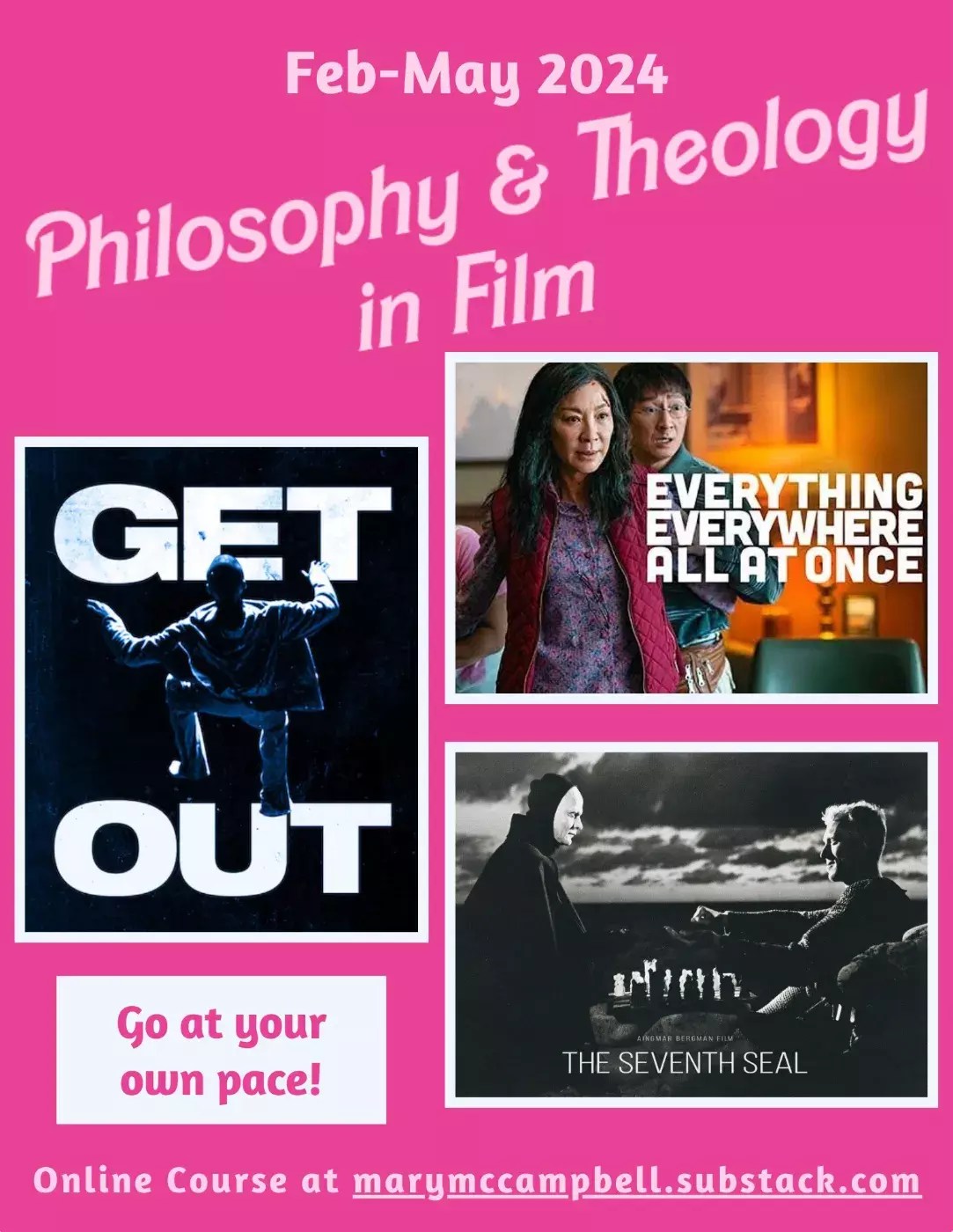
ONLINE COURSE: “Philosophy and Theology in Film” with Dr. Mary McCampbell, February–May 2024: Mary McCampbell [previously] is a writer and educator on film, literature, and popular culture whose Substack, The Empathetic Imagination, is one of my favorites! In December she and nine other professors lost their jobs at Lee University because the university’s humanities major has been suspended due to financial difficulties—and this despite her being tenured and having taught there for fourteen years.

So, she won’t be in a traditional classroom this spring, but the course she had prepared to teach undergraduates she is adapting for online and opening up to the public! It costs just $20 (a four-month paid subscription to The Empathetic Imagination), which is a real steal. Beginning near the end of February and running through May, the course will include:

  • An introductory video for each of ten films, including a lesson on the main philosophical influences and parallels (including intro lectures on Marx, Nietzsche, Freud, Sartre, Descartes, and more)
  • A live Zoom discussion of each film
  • A written Substack post of McCampbell’s analysis of each film, hopefully followed by a lively discussion in the comments section

I’ll be participating!
+++

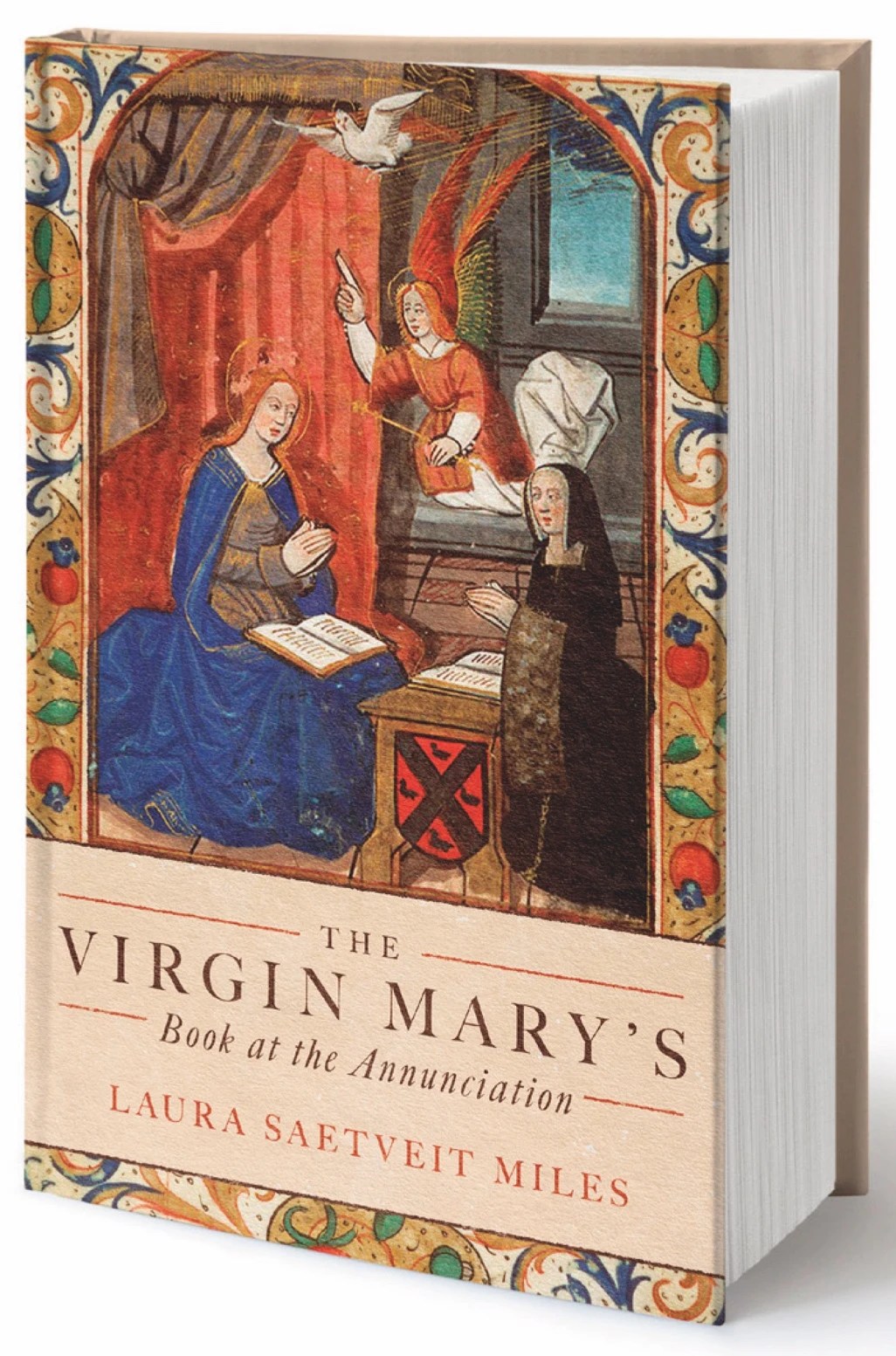
UPCOMING (ONLINE) LECTURE: “Reading alongside the Virgin Mary in Late Medieval Books of Hours Annunciation Scenes” by Laura Saetveit Miles, February 1, 2024: Professor Laura Saetveit Miles’s book The Virgin Mary’s Book at the Annunciation (Boydell & Brewer, 2020) has been one of my favorite reads of the last several years—so I was delighted to see she’ll be giving a free online talk on the topic next week! Organized by the Centre for Marian Studies at St Mary’s University in Twickenham, Miles’s lecture “will focus on two rare and fascinating versions of the standard Annunciation scene, as they are developed in both devotional literature and illuminations in Books of Hours. One type of representation captures the moment before Gabriel arrives; the other type depicts the reader herself as part of the scene. Some versions even combine these two. Where do these variations come from, and what do they mean? This neglected story of imitatio Mariae sheds new light on what Mary’s role in the Incarnation meant for medieval Christians across Europe.” (Update, 2/2: Here’s the recording.)
Roundup: Peter Howson retrospective, “Strange Stories of the Bible” with Pádraig Ó Tuama, and more

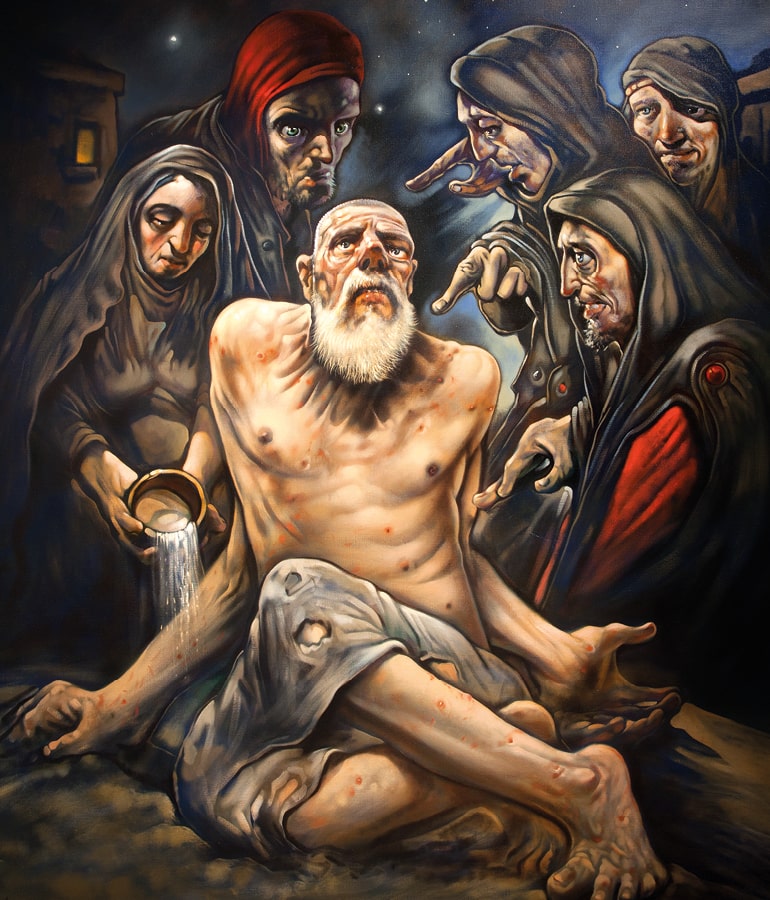
ART EXHIBITION: When the Apple Ripens: Peter Howson at 65, May 27–October 1, 2023, City Art Centre, Edinburgh: City Art Centre in Edinburgh is hosting a major retrospective of one of the UK’s leading figurative painters, Peter Howson, who first emerged during the mid-1980s as one of the New Glasgow Boys and whom the art critic Donald Kuspit dubbed the “Scottish Bosch.” Curated by David Patterson, the exhibition brings together some one hundred works spanning the artist’s career, many never seen before in Scotland, with subjects ranging from working-class Glasgow men to the Bosnian War (into which Howson was sent as official war artist) to biblical stories. His work deals with themes of aggression, struggle, and faith.

Artist and art educator Tessa Asquith-Lamb discusses five key works from the exhibition in this twenty-minute video:

Howson, Peter_Job
Peter Howson (Scottish, 1958–), Job, 2011. Oil on canvas, 182 × 152 cm. Collection of Alan and Karen Turner.

“I like to bring the Bible into this world we live in today,” says Howson, who is a Christian. (He made headlines when he went public with the story of his religious conversion while undergoing treatment for alcohol and drug abuse in 2001.) Reflecting on the reception of and motivation behind his biblical works, he said in a recent video interview (30:31ff.):

There’s two camps of people. There’s the people that groan whenever they see a religious painting of mine, and they say, “Why can’t he stay away from religion?” It’s that kind of embarrassment about religion. They don’t like my religious art, but I continue to do it. . . . And then there’s the other people that actually are religious, but they don’t like it because it’s too frightening for their gentle, staid, normal religiousness. They don’t want anything nasty happening in their lives or anything that’s going to cause a stir. So to them it’s a big danger as well, the stuff I do, because it’s violent, it’s real. It’s like the consuming fire of God.

The Bible is an incredible book. It’s a book that’s got everything in it, really. It’s got so much tragedy, violence, disaster, despair. It’s also got incredible revelation in it. It’s got incredible acts of love and kindness. . . .

All I know is that . . . the work I do on the Bible and on the teachings of Jesus, or on the events in Jesus’s life—which have in fact fascinated artists for centuries—I don’t know why it shouldn’t continue with me. For me to paint these things, it’s made a big difference to a lot of people’s lives. It helps people. It’s a therapy that takes them through a door into a different universe altogether. It takes them into a new world, a new discovery. They realize they are not a person that’s just flesh and blood, an animal. It means that there’s a spiritual side that they’ve missed out on. And that’s the most important thing they can ever understand or realize. And it’s salvation, really, for them, for people to go through that door. That’s the door I want to lead them through.

In conjunction with the exhibition, on June 23 the City Art Centre hosted a panel with writer and art critic Susan Mansfield and other experts on the subject of religious art today, including what place it has in an increasingly secular world. Unfortunately there appears to be no recording of the event offered online. But there are still other related events coming up; learn more here. And you still have about a month and a half to see the exhibition!

+++

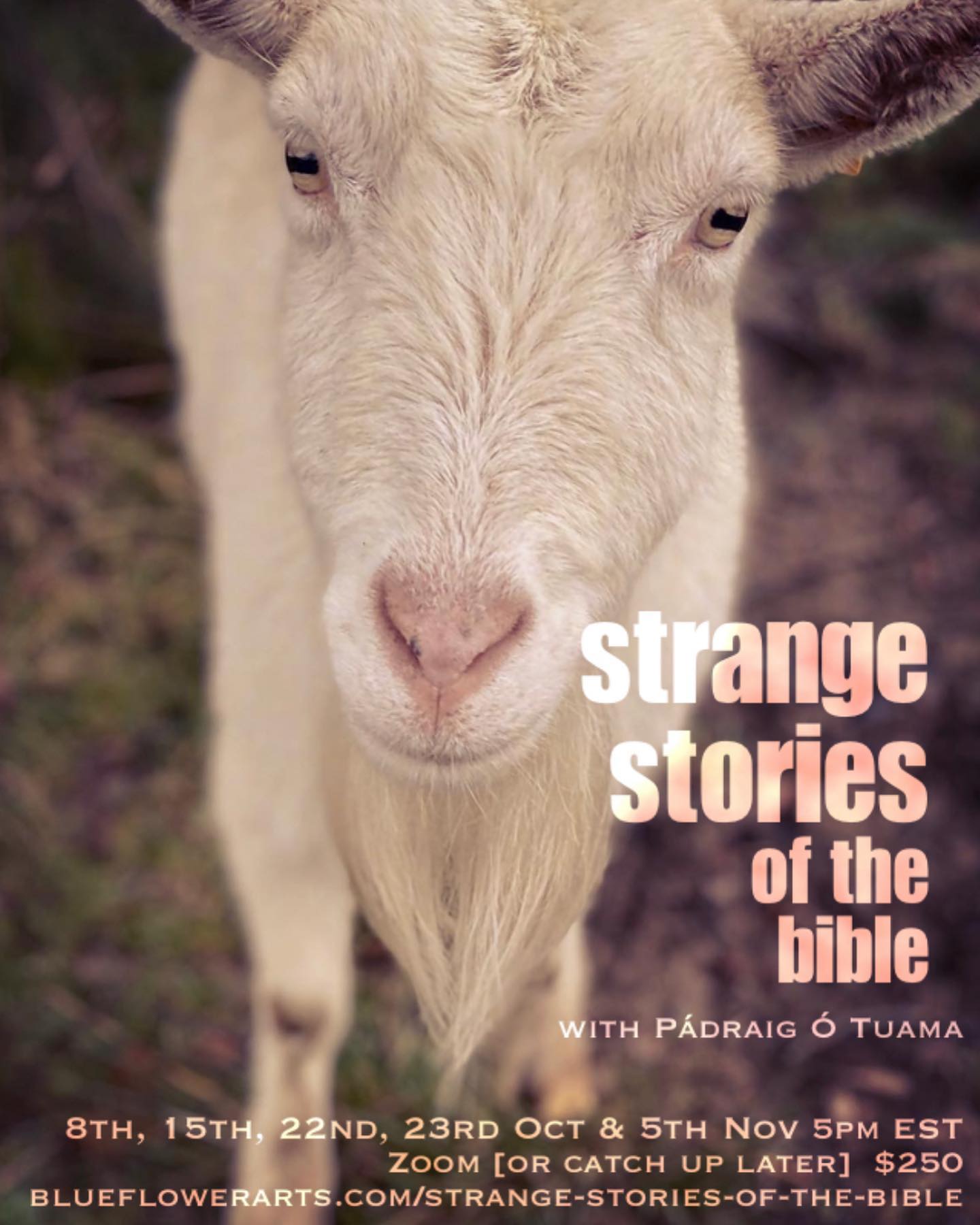
ONLINE COURSE: “Strange Stories of the Bible,” taught by Pádraig Ó Tuama, October 8–November 5, 2023: Over the course of five Zoom-mediated classes, poet-theologian Pádraig Ó Tuama will lead a literary exploration of peculiar stories from the extraordinary library of world stories that is the Bible, focusing on the lives of five figures: Noah, Isaac, Ruth, Mary of Bethlehem, and Judas. Their stories are not so foreign as one might think, as they “depict very familiar aspects of human behaviour: jealousies, rivalries, rages, desires, ambitions, schemes, travels, courage, challenges, archetypes, addictions, misunderstandings and machinations.” Each class will involve a close reading of a scripture text, bringing to bear literary analysis, contemporary poetry, and art, and will leave participants with questions for self-reflection. Cost: $250 USD.

+++

POETRY-WRITING RETREAT: “Ideas Everywhere! Inspirations for Poetry,” led by Marjorie Maddox, September 22–24, 2023 (update: the date has been rescheduled to October 2729, 2023), Bethany Retreat Center, Frenchville, PA: “The everyday, the eternal, and everything in between—ideas for poems are everywhere! During this retreat, we’ll focus on generating poems from both the mundane and the miraculous, using—as time permits—the arts (paintings, photographs, movies, music), sacred texts and rituals, nature, news, place, sports, and the medical as springboards. By drafting, revising, and discussing poems in a supportive community, we’ll consider how one poetic choice leads to another, each contributing to the work’s overall effect. Arrive ready to engage, experiment, write, laugh. Leave with new ideas and strategies for future poems.” Cost: $275 (includes meals and lodging).

I have a poem by Marjorie Maddox queued up to publish here next month. I really appreciate her work!

+++

CALL FOR POETRY: Presence: A Journal of Catholic Poetry is accepting poetry submissions through October 1, 2023, for its eighth annual issue, to be published in April 2024. “We publish poems on the basis of their artistic excellence, rather than on the basis of the author’s professed creed or because the subject matter is explicitly Catholic. The poems in this journal convey God’s presence in any number of ways—by exploring the intersection of matter and spirit, by depicting the struggle between belief and doubt, by questioning the faith, being surprised by it, taking joy in it, even finding humor in it.” Learn more at https://www.catholicpoetryjournal.com/poems.

Poets who have contributed to past issues include Marilyn Nelson, Julia Alvarez, Dana Gioia, Robert Cording, and Paul Mariani.

+++

PROGRAM: The Brehm Residency: The Brehm Center at Fuller Theological Seminary is looking for artists and Christian ministry leaders in the US to join their remote residency program for spring 2024. The cost to participate is $495. “How do artists experience the world? How do creative hearts respond to the story of God? We believe these questions matter. The mission of the Brehm Residency is to cultivate generative relationships between artists and ministry leaders who are mutually dedicated to the artistic renewal of our communities and their churches.” Registration deadline: October 31, 2023.

The program consists of (1) a curriculum of readings and resources that cover historical, theological, and psychological perspectives on the arts, and (2) ten biweekly, ninety-minute online gatherings from January through May 2024, which include guided discussions, fellowship, and periodic guest speakers. There is also an optional, seven-day in-person add-on.

+++

NEW WEBSITE + EVENTS + FUNDING CALL: The Leighton Ford Initiative in Theology, the Arts, and Gospel Witness at Gordon-Conwell Theological Seminary: Gordon-Conwell is a multidenominational, evangelical seminary based in Hamilton, Massachusetts, with other campuses in Boston; Charlotte, North Carolina; and Jacksonville, Florida. In 2022 under the direction of Dr. Wes Vander Lugt, the seminary launched the Leighton Ford Initiative in Theology, the Arts, and Gospel Witness, which “embraces and engages with God’s gift of artistry through impactful teaching, relevant scholarship, and catalytic events that form students, enrich the church, and propel participation in God’s mission to make all things new.” The initiative offers academic courses; pursues arts and theology research and publications; hosts symposia, gallery exhibitions, concerts, film screenings, conversations with writers and artists, and other events; and plans arts-integrated chapel services. I attended the excellent Georges Rouault symposium they organized last fall—which I publicized here. Here’s what’s upcoming on their calendar:

Once enough money is raised for an endowed chair, the initiative will become an official center within the Gordon-Conwell Institute and programming will expand. There are plans to offer a Certificate in Theology, the Arts, and Gospel Witness, host pilgrimages to sites of global arts influence, assist faculty in integrating the arts into their teaching, and host creative residencies.

Roundup: Upcoming Texas events (music of the Psalms, art seeking understanding) and more

UPCOMING EVENTS:

>> “The Music of the Psalms in Church History” by W. David O. Taylor, Christ Church, Austin, Texas, October 1, 2022: “For two thousand years, Christians have found the Psalter to be an invaluable resource for worship and prayer. And, like the original psalmists, Christians have felt compelled and inspired to set the text of the psalms to music, of all sorts: from a cappella to choral, from folk to rock, from reggae to gospel, and more. In collaboration with local musicians, David Taylor, Associate Professor of Theology and Culture at Fuller Theological Seminary and author of Open and Unafraid: The Psalms as a Guide to Life, will explore how Christians in different periods of church history have sung the psalms within corporate worship,” spanning the apostolic, medieval, Renaissance, Reformation, modern, and contemporary eras.

Psalms (David Taylor)
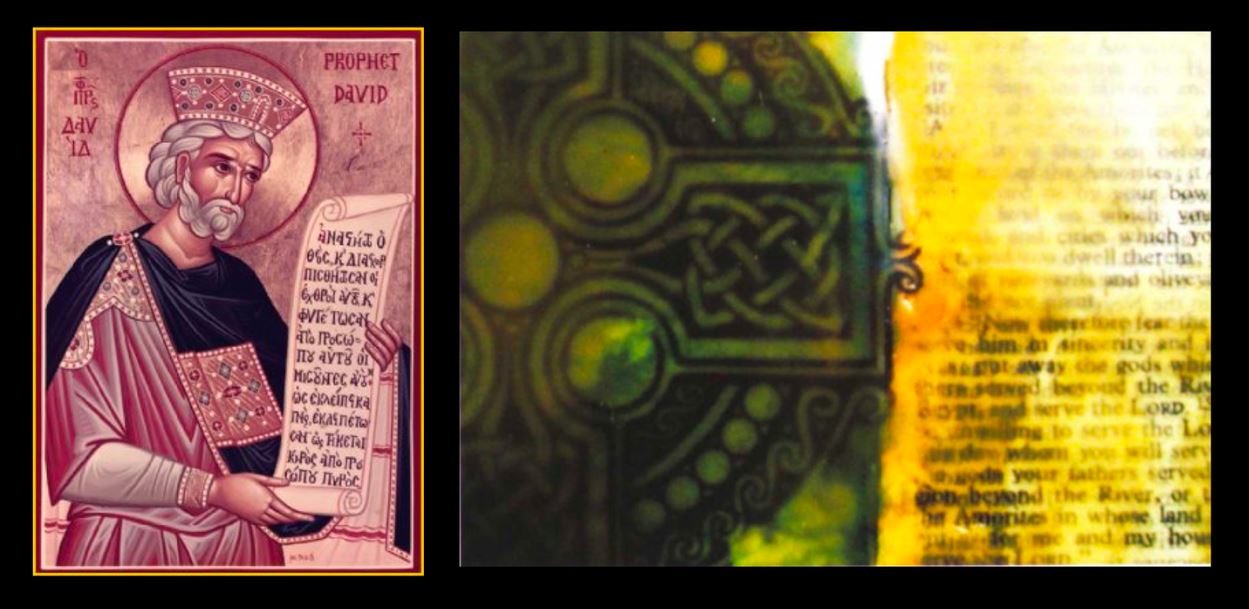
Left: Icon of the Holy Prophet-King David. Right: Celtic Cross with Bible Page, encaustic by Phaedra Jean Taylor.

A choir will perform several chants (Hebrew, Byzantine, Gregorian) and a motet, and then attendees will be led in a handful of Psalm-based songs, from a hymn of German origin to an African American spiritual to CCM classics. Along the way Taylor will provide historical context and trace a narrative.

Sponsored by the Brehm Center at Fuller Theological Seminary, the event is free, but registration is required and filling up; reserve your spot here. It will be recorded and eventually posted on the Fuller Studio YouTube channel (whether there will be a livestream is still TBD).

>> Baylor Symposium on Faith and Culture: Art Seeking Understanding, Baylor University, Waco, Texas, October 26–28, 2022: Every fall the Institute for Faith and Learning at Baylor University organizes a symposium around a given topic, and this year’s topic is the arts. Registration is still open! The standard cost is $250, or $125 for students. “The notion of art seeking understanding (ars quaerens intellectum) invites association with the notion of faith seeking understanding (fides quaerens intellectum). Just as faith is a gift of grace that grows toward deeper knowledge, so it seems that art is a gift whose practice leads to a deeper order of understanding. This seems true not only for the person who experiences art, but also the artist—whether musician, painter, sculptor, or poet. The 2022 Baylor Symposium on Faith and Culture invites contributions from across the disciplines (including scholars, artists, and other practitioners) as we explore together how art seeks understanding and thus contributes to human flourishing.”

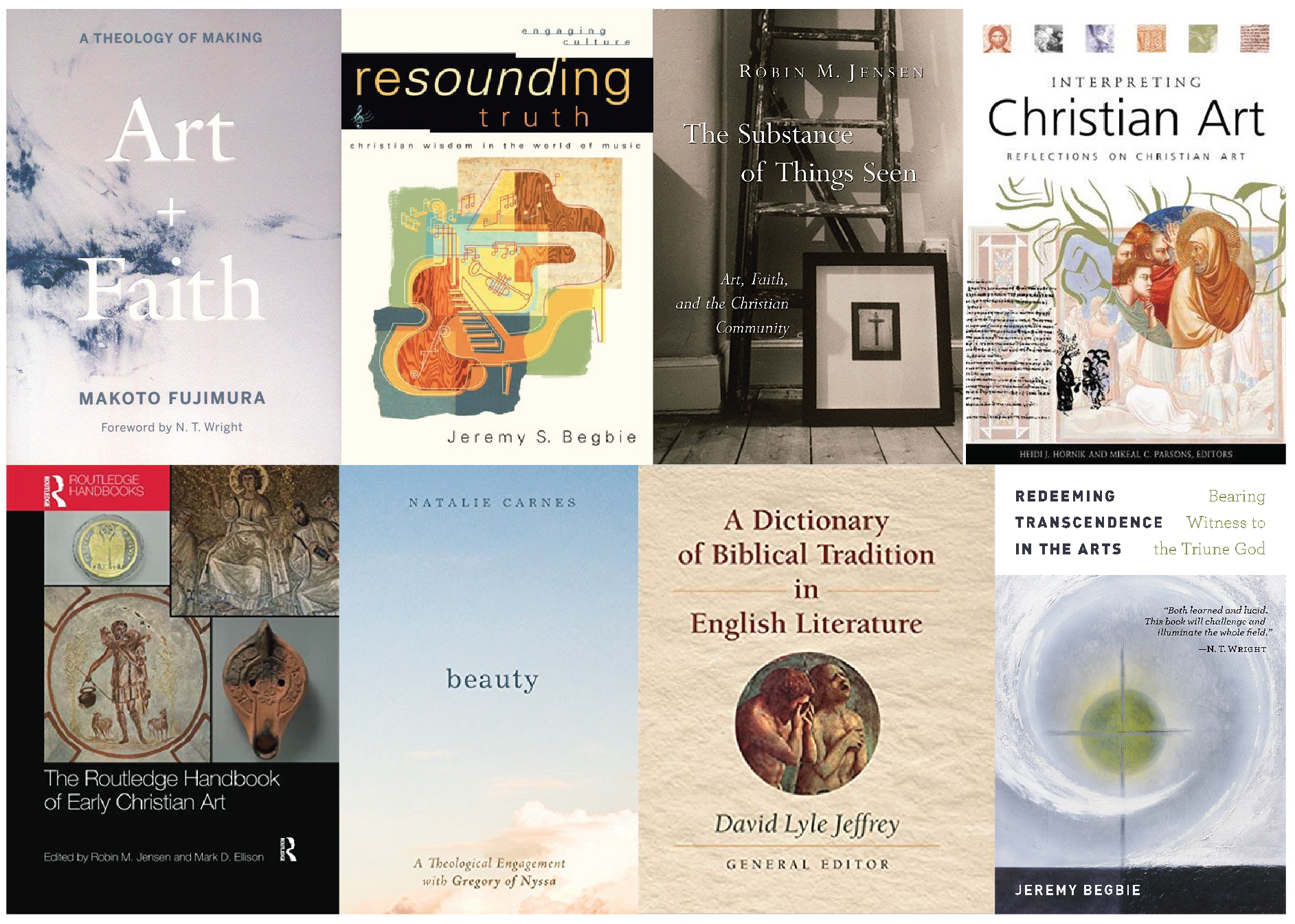
Their line-up of presenters includes several from within Baylor’s own distinguished ranks, such as composer and liturgist Carlos Colón, theologian Natalie Carnes, art historian Heidi J. Hornik, and literature scholar David Lyle Jeffrey, in addition to famous outside guests like theologian-pianist Jeremy Begbie, contemporary nihonga painter Makoto Fujimura, and Early Christian art historian Robin M. Jensen. See a full list by clicking on the boldface link above.

Books
Just a fraction of the books authored by the eminent speakers at the upcoming Baylor symposium

The website does not provide a list of presentation titles, but among the topic suggestions on its call for proposals page are how art contributes to moral and spiritual perception, sensitivity, and/or character formation; the power of imagination; the relation of poetic art to the communication of moral truth; art therapy in pastoral counseling; how musical settings of biblical texts add value to those texts; and how to reconcile the making of religious art with the commandment in Exodus 20:4.

+++

SONG: “The Lord Is My Light” by Lillian Bouknight | Performed by the Notre Dame Folk Choir, dir. Emorja Roberson: “Very little is known about Lillian Bouknight (d. 1990), except that she was an African American from North Carolina, and a soloist and composer in the Pentecostal Holiness movement in the Aliquippam, PA, Community, also serving as a prayer warrior and on the Mother’s Board.” This setting of Psalm 27 that she composed appears in the African American Heritage Hymnal #160.

+++

VIDEO: “Theology through the Arts” by Jeremy Begbie: A pioneer of the field of theology and the arts, UK-born and US-based scholar Jeremy Begbie is the headliner for the Baylor symposium mentioned above. I met him briefly at a Duke conference a few years ago, and he’s such a delightful person, not to mention a phenomenal teacher who often dispenses wisdom from a piano bench. If you’re not familiar with his work, this fourteen-minute video is a great introduction to it. He’s all about demonstrating how instrumental music (his specialization is Western classical) can help unlock the truths of the Christian gospel. Here he talks about the given, the improvised, and the ministry of the Holy Spirit.

+++

BLOG: Pray with Jill Geoffrion: The Rev. Dr. Jill Kimberly Hartwell Geoffrion is a spiritual director, pilgrim guide, workshop leader, and retreat facilitator who spends at least three months a year at Chartres Cathedral in France, known for its architecture, sculpture, prayer labyrinth, and the world’s most extensive collection of twelfth- and thirteenth-century stained glass. An ordained American Baptist minister with an MDiv from Princeton Theological Seminary and a PhD in women’s studies and Christian spiritualities, she is the author of Visions of Mary: Art, Devotion, and Beauty at Chartres Cathedral (2017) (beautifully produced, from Paraclete Press), Pondering the Labyrinth: Questions to Pray on the Path (2003), and more. Contact her if you are interested in a spiritually based visit to Chartres or in having her present to a group.

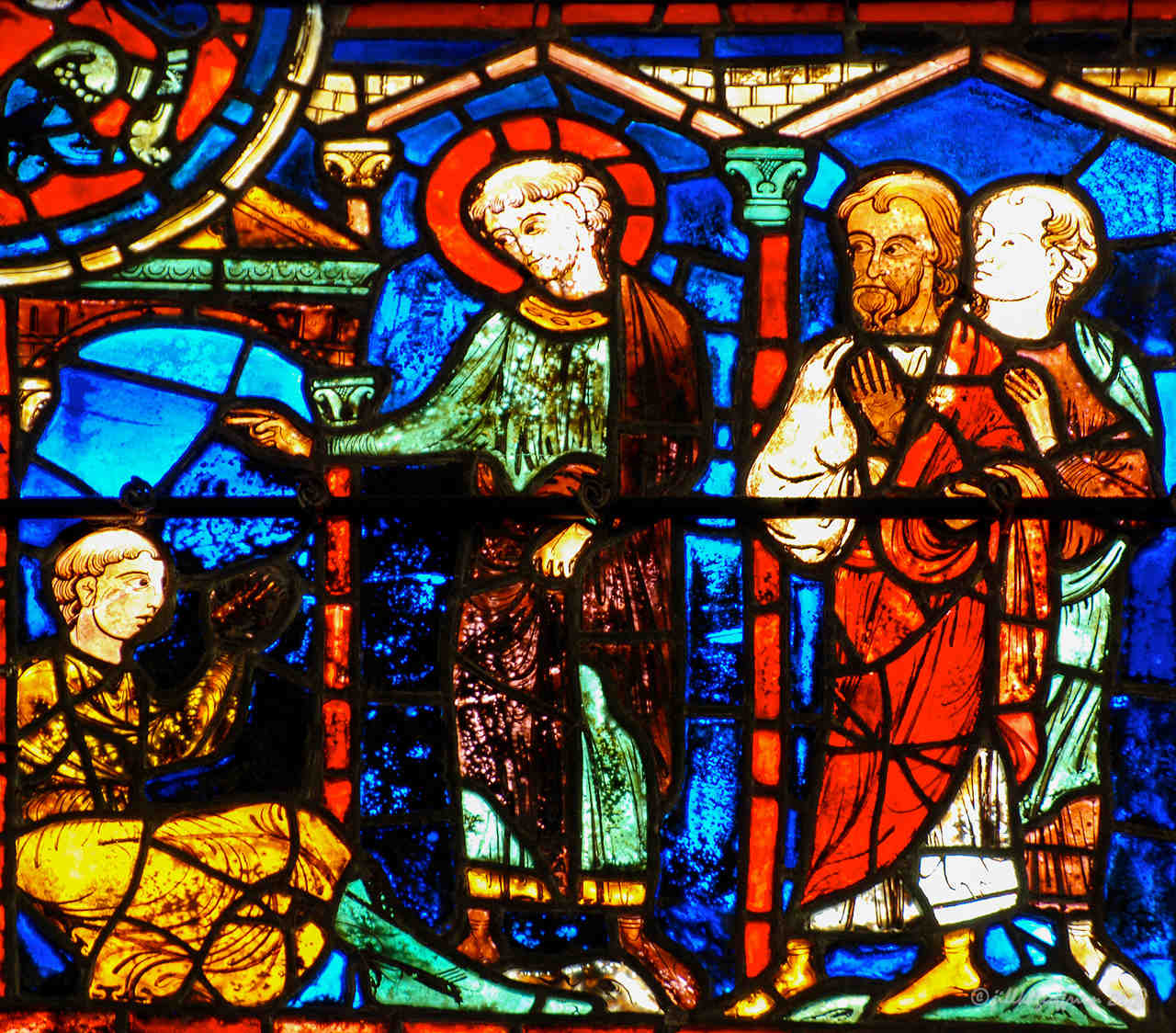
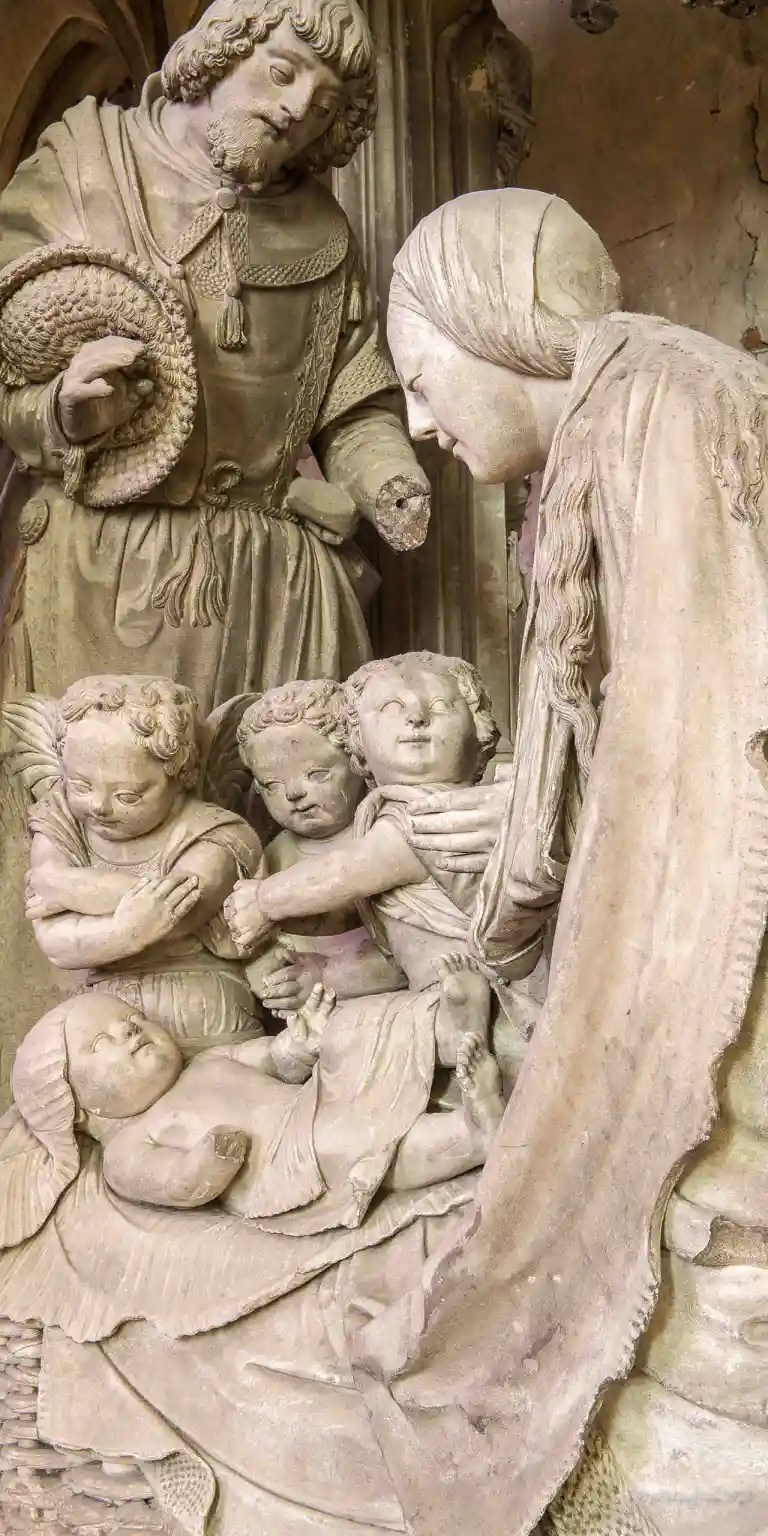
Geoffrion is also a professional photographer, and she shares many of her beautiful art photographs from Chartres on her blog, providing specific prompts for prayer and meditation based on the images. For example, in a post on the stained glass panel of Saint Martin bringing a man back to life, she writes, “Think of what is dead and needs resurrection in you, in those you love, in those who live within twenty-five miles of you, and in whatever country you call home. Then, take a very deep exhale and plead with God, ‘Bring resurrection!’” Or, reflecting on the sixteenth-century Nativity sculpture group attributed to Jehan Soulas, she invites us to “imitate one or more of the sets of eyes in the image . . . as you pray, ‘May I see with Your eyes, God. Teach me to see anew.’”

Saint Martin bringing a man back to life (with two onlookers), 1217–20, stained glass window panel in the south ambulatory at Chartres Cathedral, France. Photo: Jill Geoffrion.

Soulas, Jehan_Nativity
Jehan Soulas, Nativity, 1529, from the choir screen in Chartres Cathedral, France. Photo: Jill Geoffrion.

Geoffrion’s blog is a wonderful free resource for those looking to engage prayerfully with the art treasures of Chartres Cathedral. New content is typically posted in batches a few times a year, and the archive goes back to 2015. Sometimes Geoffrion digitally isolates certain details of the stained glass to aid in a more concentrated focus.

As I said when I featured the Tree of Jesse window several years ago, Chartres is high on my list of places to visit, for aesthetic, historical, and spiritual reasons. I hope to make it there sometime in the next five years.

Roundup: Controversial Eve painting, liturgy, protest, visualizing belief, and “Ya Hey”

“Mormon painting of a black Eve draws fire, but not for the reasons you might think” by Peggy Fletcher Stack, Salt Lake Tribune: Early this year a new painting of a seminude black Eve by Mormon artist J. Kirk Richards went on display at Writ & Vision gallery in Provo, Utah. While many Mormons have expressed how captivated and inspired they are by it (and I should note, black figures are extremely rare in Mormon art), a few have insisted it’s wrong for a white man to depict a nude black woman because it conjures up collective memories of sexual brutality and enslavement. The article features some interesting perspectives by black Mormon feminists. In addition to raising important questions surrounding racial histories and representation, the painting, I’ve noticed, also illustrates a distinctly Mormon view of the Fall, which differs from the orthodox Christian view—a fact Richards alludes to in his March 14 gallery talk. View the painting.

+++

“A Conversation about Creativity and the Liturgical Calendar,” panel discussion presented by Brehm Center and Fuller Studio: Moderator Edwin M. Willmington, composer-in-residence at Fuller Theological Seminary, talks with an all-star trio of creatives and liturgists comprising David Gungor of The Brilliance [00:50], on authenticity in songwriting and introducing liturgical practices to the evangelical church he attended; Todd E. Johnson [10:40], on the history, purpose, and major observances of the church calendar; and Lauralee Farrer [26:18], on discovering the Canonical Hours in a New Mexico desert and later developing them into characters for a film project. Questions: [34:02] How has liturgy shaped you? [36:20] Advice for artists on how to bring the church year to bear in their art? [37:11] Have you found that lament is generally embraced or resisted? [39:41] Advice for worship leaders?

+++

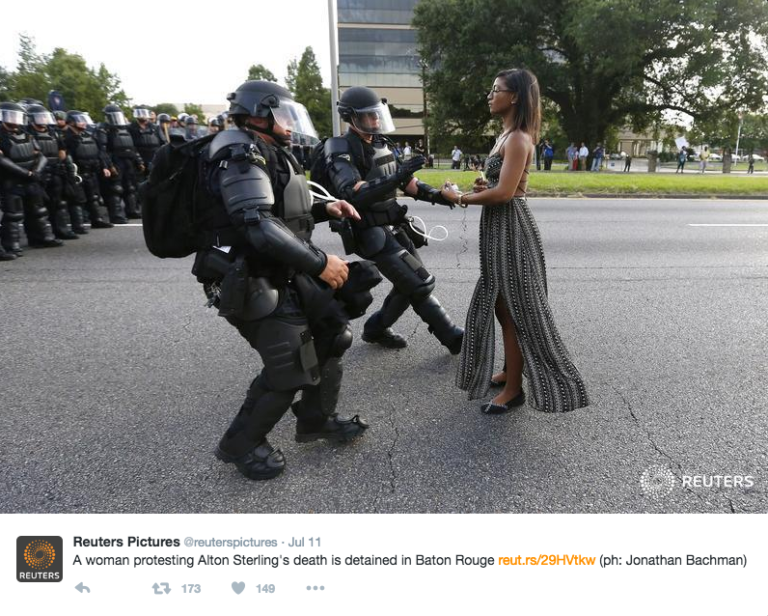
“An Art Historical Perspective on the Baton Rouge Protest Photo that Went Viral” by An Xiao Mina and Ray Drainville, Hyperallergic: During a July 10 protest following the fatal killing of Alton Sterling, Reuters photographer Jonathan Bachman captured the moment of twenty-eight-year-old Ieshia L. Evans’s arrest. As heavily armored policemen pressed in, the other protestors dropped back, but Ieshia stood assuredly in the middle of the three-lane highway, prepared to be bound. This article lauds the strength of this image of confrontation by citing compositionally and thematically similar paintings, including Briton Riviere’s Daniel in the Lion’s Den and Giotto’s The Arrest of Christ, and other works of art.

Ieshia Evans arrest photo

Ieshia considers herself a vessel of God, eager to be used by him to bring justice and peace. Here’s what she wrote on her Facebook wall the night of her release from jail:

Ieshia Evans statement

+++

“Things Unseen: Vision, Belief, and Experience in Illuminated Manuscripts”: Running through September 25 at the Getty Center in Los Angeles, this exhibition “explores the visual challenges artists faced as they sought to render miraculous encounters with the divine, grand visions of the end of time, the intricacies of belief, and the intimate communications of prayer.” It includes a September 15 talk, “How Do We Depict Religious Experiences?”—that is, how do we convey metaphysical essence in physical form? I appreciated the Getty’s blog post this week featuring a newly acquired choir book leaf that’s part of the exhibition. Curator Bryan C. Keene writes about the difficulties of identifying the illuminator and about discovering, through an examination of the back and a search on the Cantus database, that the illumination depicts the wiping of tears from saints’ eyes, not, as previously assumed, the healing of the blind.

Christ wiping the tears from the eyes of the saved
Initial A: Christ Wiping the Tears from the Eyes of the Saved, attributed to the Master of the Antiphonary of San Giovanni Fuorcivitas, ca. 1345–50. Tempera and gold leaf on parchment, 5 1/3 × 5 1/3 in. (13.5 × 13.5 cm). The J. Paul Getty Museum, Ms. 113, recto. Digital image courtesy of the Getty’s Open Content Program.

+++

“Ya Hey” song cover by The Brilliance: Written by Ezra Koenig of Vampire Weekend, “Ya Hey” is a modern-day psalm that expresses frustration with God’s seeming unresponsiveness—to being spurned and being sought, to brokenness and suffering, to sin and struggle. The title is a play on the word Yahweh, the Hebrew name for God. The chorus references the burning bush of Exodus 3: “Through the fire and through the flames / You won’t even say your name / Only ‘I am that I am.’” The Brilliance’s acoustic cover of “Ya Hey” was released last month as a music video on YouTube featuring four New York City ballet dancers. It abandons the shrill vocoder and heavy percussion of the original song in favor of a softer, purer sound. Read the lyrics and an analysis at Sound: Interrupted.