They will mock him and spit upon him and flog him and kill him . . .
—Mark 10:34
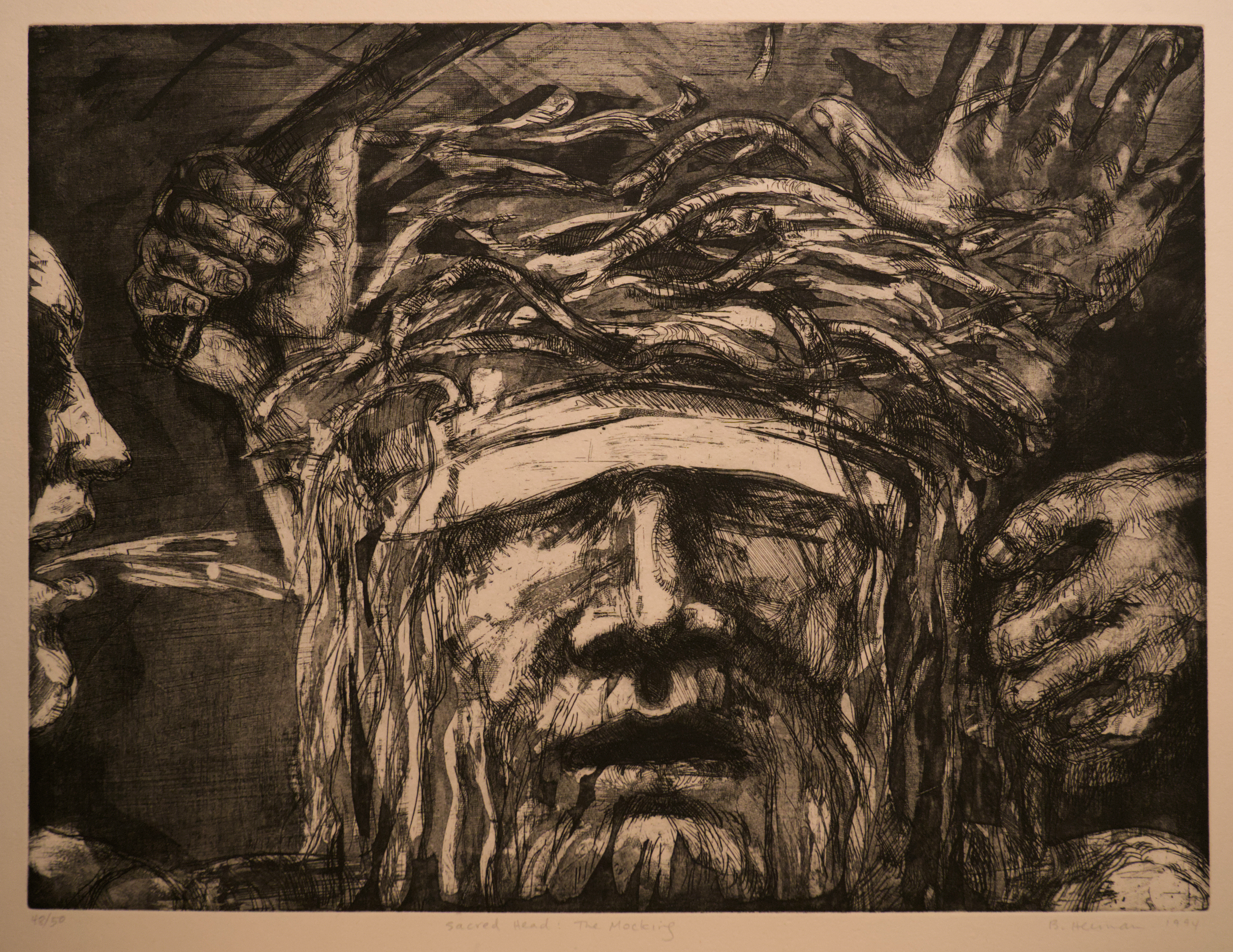
LOOK: Sacred Head II: The Mocking by Bruce Herman
Bruce Herman (American, 1953–), Sacred Head II: The Mocking, from the Florence Portfolio, 1994. Intaglio, edition 48/50, sheet 21 1/2 × 30 1/8 in., image 17 3/4 × 23 5/8 in. Collection of Victoria Emily Jones.
The Florence Portfolio is a suite of twenty intaglio prints based on the biblical theme of sacrifice, made by six artists from Christians in the Visual Arts (CIVA) who lived and worked together for a month in Florence, Italy. I purchased two limited-edition portfolio prints—this one, and Wayne Forte’s Deposition—from the CIVA store shortly before the organization closed its operations in 2023.
A tightly cropped image of Christ’s blindfolded face, Bruce Herman’s Sacred Head II: The Mocking conveys disorientation. Hands slapping, shoving, pounding. Spittle on the cheek, in the ear. A nest of thorns piercing the scalp. Taunting epithets and derisive laughter. A cracking scourge. This is only a fraction of the violence and humiliation Christ suffered in the hours before his death.
Pilate took Jesus and flogged him Soldiers, they twisted a crown of thorns And put it on his head And arrayed him in a purple robe
Hail, King of the Jews! Hail, King of the Jews!
And they struck him with their hands And when they had mocked him They stripped him of the purple robe And put on his own clothes And they led him away To crucify him
NEW ALBUM: By Babylon’s River by the Pharaoh Sisters: A folk band from the foothills of North Carolina, the Pharaoh Sisters [previously] are Austin Pfeiffer, Jared Meyer, Kevin Beck, and John Daniel Ray. On September 13 they released their second album, By Babylon’s River, unveiling a new genre they call “saloon Christian.” The title track is a western waltz adaptation of Psalm 137. Also included on the album are a version of Psalm 81 (“Sing, Oh Sing”); bluegrass arrangements of the gospel standards “Leave It There” and “Hold to God’s Unchanging Hand”; retunes of the hymns “All Things Bright and Beautiful” by Cecil Frances Alexander and “’Tis Finished” by Charles Wesley; a cheeky take on the story of Samson, and more.
I was introduced to Hurt over a decade ago through his recording of the African American spiritual “I Shall Not Be Moved,” based on Psalm 1. The songs he sang were a mix of sacred and secular.
+++
ARTISTS’ PROFILE: “Sunny Taylor / Jack Baumgartner,”Artful, season 3, episode 6: The BYUtv docuseries Artful, which is available to watch freely online, profiles a variety of artists of faith—many of them Latter-day Saints, but some (non-LDS) Christian or Jewish.
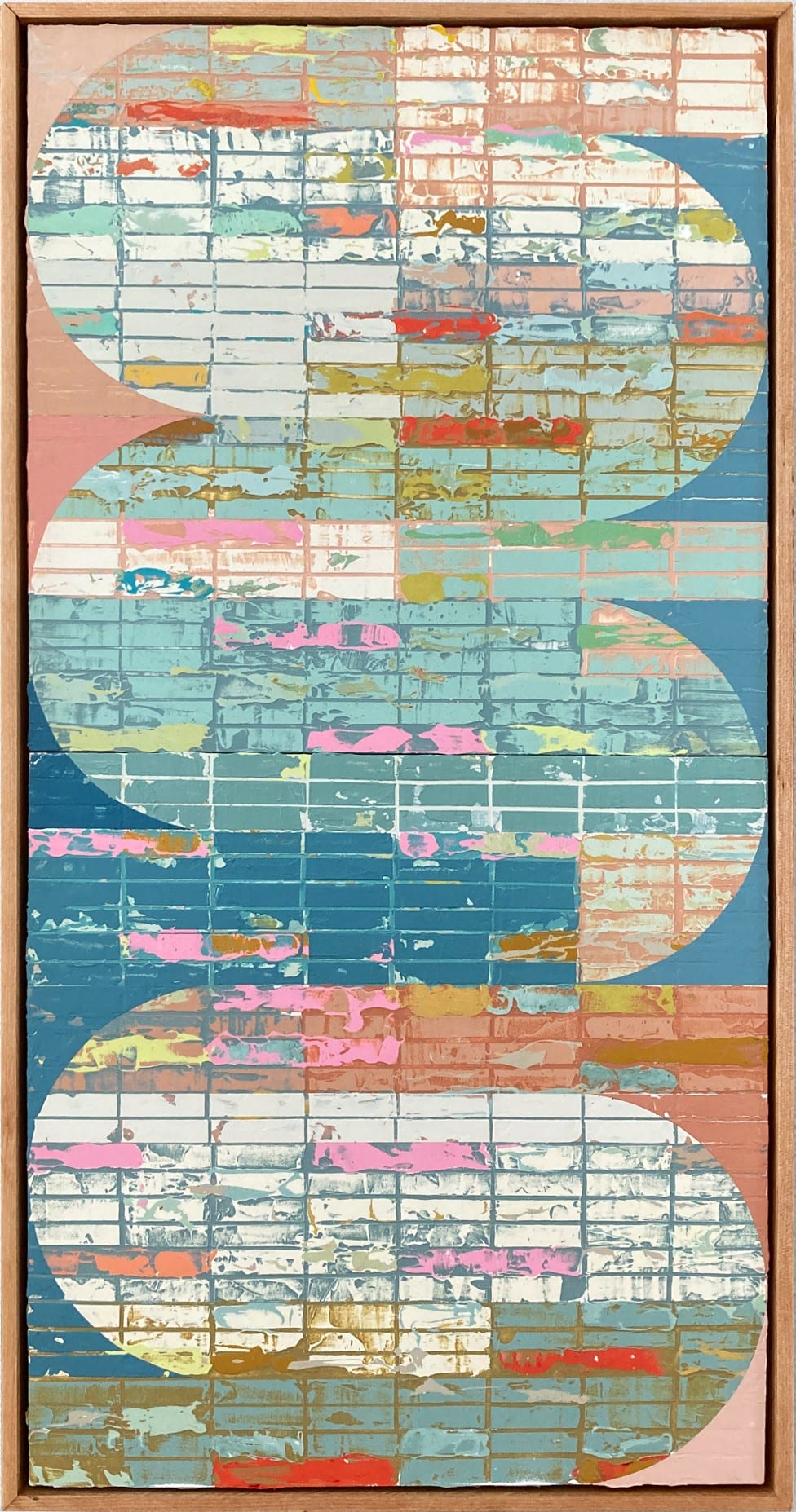
The first half of episode 6, season 3, highlights the work of Sunny Taylor, who lives in Wilton, Maine, and engages with painting’s geometric tradition. She values process over product and wants viewers to observe the surface and textures of her paintings, built up through meticulous layering techniques that involve scraping and grinding. She sees beauty in imperfection, and sorrow and joy as bound up together. Follow her on Instagram @sunnytaylorart.
Sunny Taylor (American, 1979–) Connections, 2024. Acrylic on panel, 24 × 12 in. [for sale] [artist’s statement]
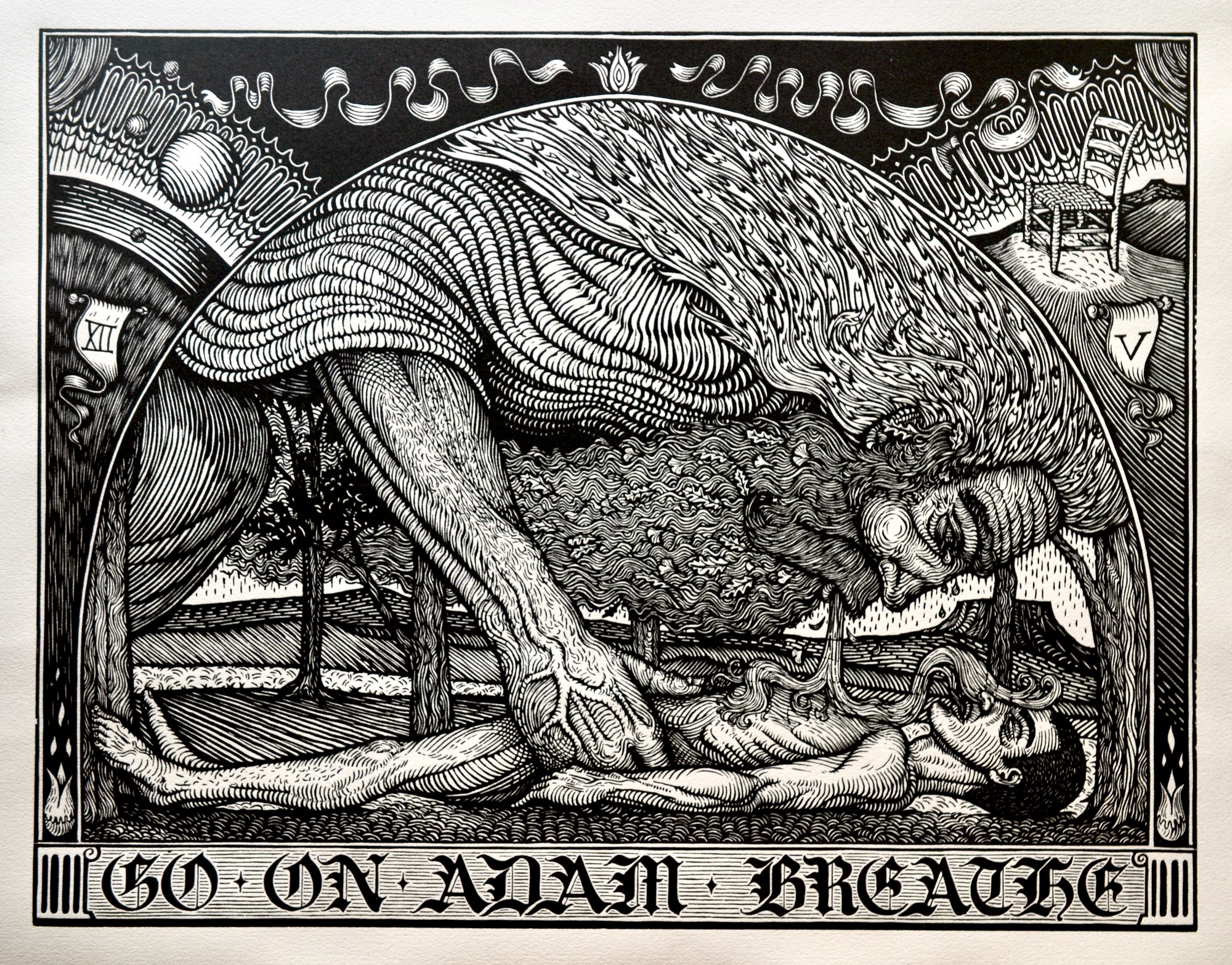
Beginning at the 13:38 time stamp, the second half is on multidisciplinary artist Jack Baumgartner of Kansas. Baumgartner, who has a Presbyterian background, is a printmaker, painter, farmer, woodworker, puppeteer, and musician. He raises sheep, goats, and chickens, builds furniture, plays the banjo, and cohosts the podcast The Color of Dust with two poet friends, “exploring the seen and unseen in the soil of art and agriculture.” He is also a husband and a father of five. I first learned about Baumgartner through an Image journal profile; and Plough published an article about him in 2018. I really enjoyed this twelve-minute video segment that shows him at work and at play in and around his home—especially his puppet theater performance of The Two Deaths of John Beartrist Laceroot! Follow him on Instagram @baumwerkj.
Jack Baumgartner (American, 1976–), Go On, Adam, Breathe, 2023. Linocut, 14 × 18 in. [for sale]
+++
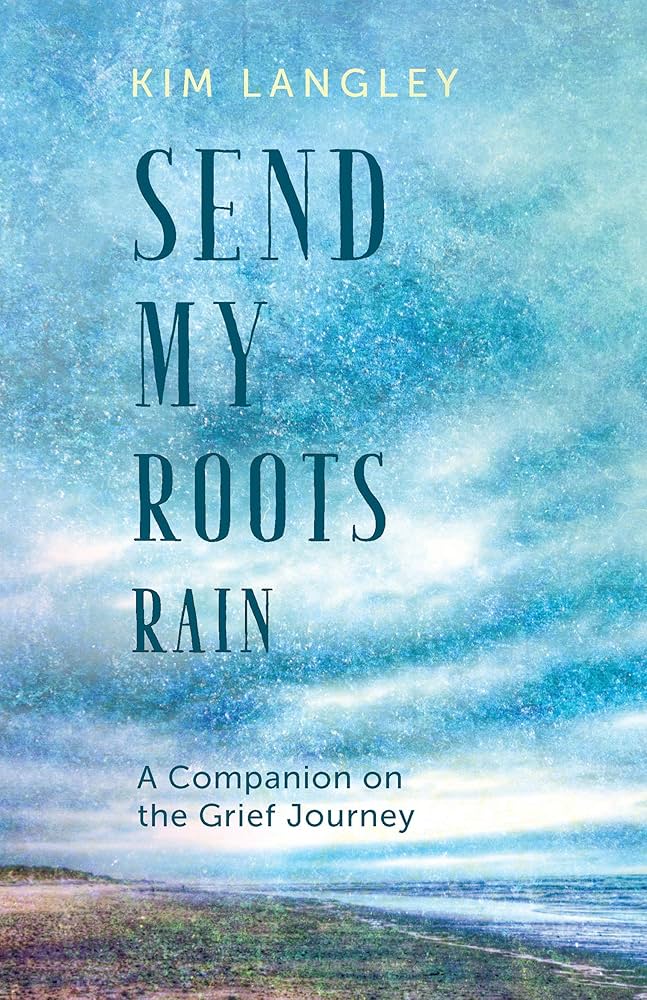
PODCAST EPISODE: “Grief and Poetry, with guest Kim Langley,”Faith and Imagination, October 4, 2021: Kim Langley is a certified spiritual director and retreat leader from Ohio; she is also the founder of WordSPA (acronym for “Spirituality Poetry Appreciation”) and author of Send My Roots Rain: A Companion on the Grief Journey (Paraclete, 2019), a compilation of sixty poems interwoven with narrative and commentary, in preparation for which she interviewed some three dozen chaplains, pastors, grief counselors, hospice workers, funeral directors, and bereaved people. She wrote the book after the death of her parents. “I found such comfort in the poems,” she writes, “written by a host of people just like us, picking up their pain, juggling it awkwardly in their arms at first—or maybe for a long time—then gradually finding the resilience to carry it, to know when and how to put it down, when to pick it up, and how to develop strong muscles for the long haul. They helped me carry my pain, and I think they will help you to survive, and maybe even thrive a little.” In this podcast episode, she and the host read and discuss four poems from the book: “Let Evening Come” and “Otherwise” by Jane Kenyon, “Those Winter Sundays” by Robert Hayden, and “Stillbirth” by Laure-Anne Bosselaar.
Launched in 2020, Faith and Imagination [previously] is the podcast of the BYU Humanities Center, hosted by founding director Matthew Wickman. It features interviews with a range of writers, scholars, clergy, and others. View the full archive at https://humanitiescenter.byu.edu/podcast/. And in addition to the Langley episode, let me turn your attention to an excellent recent release with an author I’ve mentioned before: “On Deepening Our Religious Experience: An Invitation to Poetry for the Church, with Abram Van Engen.” You may have heard Van Engen discuss his new book elsewhere, but this interview brings some great insights to the fore.
+++
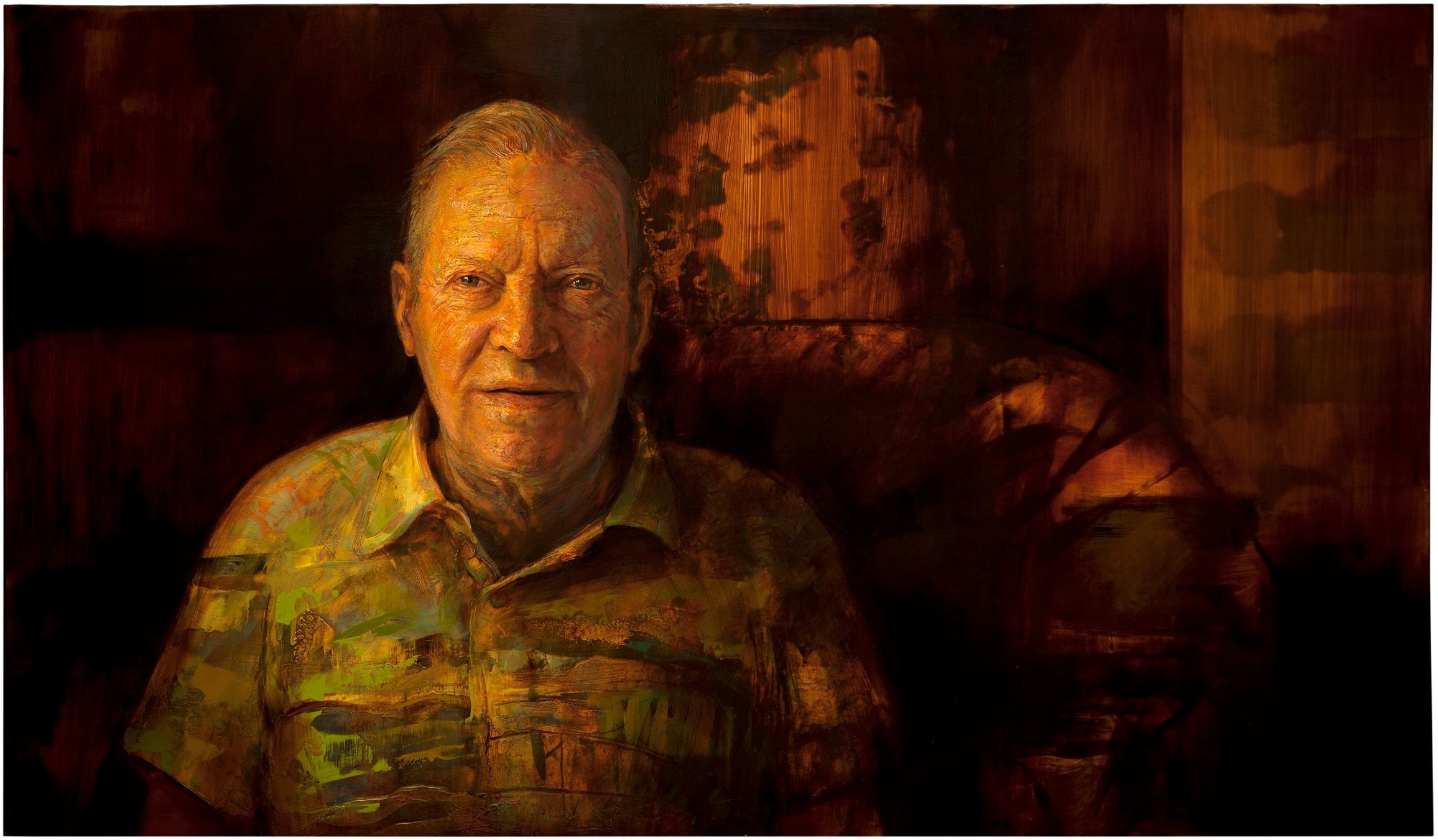
CREATIVE COLLABORATION: Ordinary Saints, a project by artist Bruce Herman, poet Malcolm Guite, and composer J.A.C. Redford: When Bruce Herman’s parents died unexpectedly in 2009, three months apart, painting their portraits was a key way in which he moved through his grief. Poet Malcolm Guite saw Herman’s portrait of his father exhibited at a Christians in the Visual Arts conference in 2011 and, struck by its sheer sense of presence, wrote a sonnet about it. This act of ekphrasis then developed into a three-way collaboration when their mutual friend J.A.C. Redford, a composer, responded by setting Guite’s poem to music.
Bruce Herman (American, 1953–), Portrait of the Artist’s Father: William C. Herman, 2010. Oil and alkyd on wood, 30 5/8 × 51 in. Collection of the artist.
The basis of Ordinary Saints is a series of portraits Herman painted of family and friends throughout the 2010s, which spawned a series of poems by Guite, which in turn spawned a suite of instrumental music and a song cycle by Redford. The first public presentation of the multidisciplinary project was at a Laity Lodge retreat in the Texas Hill Country on October 26–28, 2018, and it has since traveled to Nashville and Oxford.
The project attempts “to render . . . a glimpse of the glory of our mortal faces when turned toward God . . . faces that point toward the one Face we all must seek,” Herman says. Or, as Guite puts it: “to explore what it means to be truly face to face with one another, how we might discern the image of God in our fellow human beings, and how that discernment might ready us for the time when, as we are promised, we will no longer see ‘through a glass darkly’ but really see God and one another face to face in the all-revealing, and all-healing light of Heaven.”
Here is the title poem, followed by Redford’s title composition for voice, piano, cello, and clarinet:
Ordinary Saints
by Malcolm Guite
The ordinary saints, the ones we know, Our too-familiar family and friends, When shall we see them? Who can truly show Whilst still rough-hewn, the God who shapes our ends? Who will unveil the presence, glimpse the gold That is and always was our common ground, Stretch out a finger, feel, along the fold To find the flaw, to touch and search that wound From which the light we never noticed fell Into our lives? Remember how we turned To look at them, and they looked back? That full- Eyed love unselved us, and we turned around, Unready for the wrench and reach of grace. But one day we will see them face to face.
>> “Ordinary Sugar” by Amanda Gunn: Pádraig Ó Tuama reads and comments on this food poem in the July 10, 2023, episode of Poetry Unbound. “How can russet potatoes be made to taste of sugar and caramel? By dedication, love, and craft. Amanda Gunn places her poetry in conversation with the farming and culinary skills of her forebears: women who cultivated land, survival, strength, and family bonds.”
>> “Given”by Anna A. Friedrich: This poem by Anna A. Friedrich is a beautiful tribute to her grandmother, Juanita Powell Alphin, who died this June. Friedrich imagines all the gifts her memama ever gave—jump ropes, stuffed animals, homemade fudge, thrift-store doodads, five-dollar bills, a kitten, a plane ticket, etc.—tumbling out onto the golden streets of heaven, a testimony to her generous, loving spirit.
Since the Middle Ages, the Roman Catholic Church has celebrated May, a time of new growth, as “Mary’s month.” The calendrical placement of this celebration probably has to do in part with the fact that the ancient Greeks celebrated a festival to Artemis, the goddess of fecundity, in May; the ancient Romans, Flora, the goddess of flowers and spring. Because Mary, by the power of the Holy Spirit, conceived in her womb and brought to birth the life of the world, Jesus Christ, Christians see her as standing at the threshold of an eternal springtime.
POLL QUESTION: Before moving on to the six roundup items below, if you are a regular reader of this blog or other media like it, would you please help me out by answering the following poll question? (I’m trying out this WordPress feature for the first time!) Over the years I’ve gathered a lot of compelling poems and artworks on the Annunciation, encompassing a variety of eras, styles, and perspectives, and I’d like to pursue the idea of turning one or the other, or both, into a book. Which kind of Annunciation-themed book would you be most inclined to buy? Keep in mind that a book with art would cost significantly more because it would be in full color and probably a larger hardcover. Also note that a book that combines art and poetry would obviously have fewer selections of each than a book dedicated fully to one or the other.
+++
UPCYCLED MARY STATUETTES:Soasig Chamaillard is a French artist who, since 2006, has been acquiring small, damaged statues of the Virgin Mary—either from garage sales or received donations—and restoring and transforming them, often with reference to children’s toy lines and media franchises, comic book heroes, or other pop-culture icons. Some are silly or irreverent; others, merely quirky. Here are two I like, which both modernize Mary, by her dress or her reading material. Click on the images to view detail photos of the final product, and see here and here for blog posts that document the transformation process.
Before/After. Right: Soasig Chamaillard (French, 1976–), Jeans-Marie (Jeans Mary), 2015. Plaster, acrylic paint, resin, metal frame, height 48 cm.Before/After. Right: Soasig Chamaillard (French, 1976–), Nouvelle Bible (New Bible), 2008. Plaster, acrylic paint, resin, digital print, height 40 cm.
The first shows Mary in high-waisted jeans and red Converse high-tops with rosettes on the tongues. The second one, a Madonna del Parto, shows her pregnant and reading the book J’élève mon enfant (Raising My Child) by Laurence Pernoud, picking up tips on being a new mom.
+++
ESSAY: “Mary: Evolution of a Bookworm” by Joel J. Miller: “It’s unlikely the historical Mary could read at all, but medieval Christians transformed her into an icon of literacy,” often showing her with a book in hand, whether as a child learning to read from her mother, Saint Anne; at the Annunciation, with the book of Isaiah, the Psalter, or a book of hours splayed open on her lap; or teaching her own child, Jesus, how to read. Drawing on the research of Laura Saetveit Miles, author of The Virgin Mary’s Book at the Annunciation: Reading, Interpretation, and Devotion in Medieval England [previously], Joel J. Miller discusses how images of Mary reading “rode a wave of rising female literacy and simultaneously encouraged its expansion.”
Ivory plate of the Annunciation from the Brunswick Casket, made in Metz, France, ca. 860–70. Herzog Anton Ulrich Museum, Braunschweig, Lower Saxony, Germany. This is the earliest known representation of the Virgin Mary with a book at the Annunciation.Lorenzo Costa (Italian, 1460–1535), Annunciation (Mary Reading), first third of 16th century. Oil on panel, 62 × 60.5 cm. Gemäldegalerie Alte Meister (Old Masters Picture Gallery), Dresden, Germany.
+++
CONVERSATION: “Sacra Conversazione” with Walter Hansen and Bruce Herman: In this written conversation from Image no. 62, artist Bruce Herman [previously] and patron Walter Hansen discuss the two large altarpieces Herman produced comprising six paintings on the life of the Virgin Mary: Miriam, Virgin Mother and Second Adam. The article is about the creative process and Herman’s collaboration with Hansen and with student apprentices in Orvieto, Italy, but it’s also about attempting to recover Mary’s image from a heap of the saccharine or overly exalted on the one hand, and ironic detachment on the other. Herman says,
I had vivid memories of Boston art critics and museum people back in the 1980s telling me that [religious] subject matter could only be approached ironically, but I had a persistent feeling that they were wrong. I’ve sensed for many years that the tradition of biblical imagery in art is far from exhausted—maybe simply stalled out due to loss of nerve or imagination. To me, much of the recent religious imagery we’ve inherited is fairly shallow. I know this might sound odd, given more than a thousand years of tradition, but I honestly believe that new insights are arrived at in every generation. Why can’t a contemporary artist paint the Virgin Mary without irony—and maybe even specifically attack the problematic nature of much Marian imagery? Why can’t a century of experimentation in painting yield something relevant to that tradition?
It’s an excellent conversation! You may have to subscribe to Image journal to access it, but it’s well worth it for all the wonderful content they put out quarterly and access to their archives.
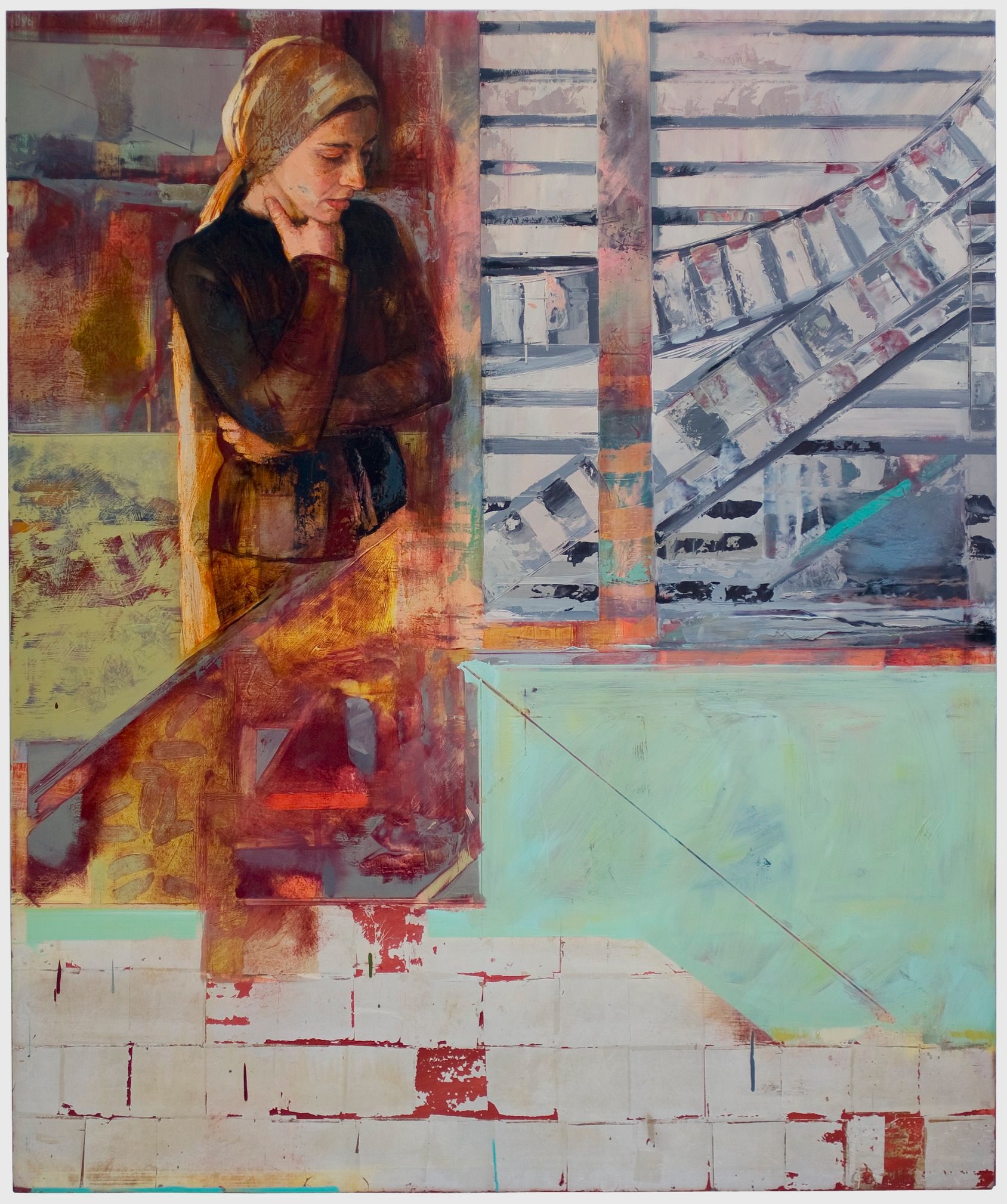
Bruce Herman (American, 1953–), Miriam, Virgin Mother, 2007. Oil on wood with silver and gold leaf, 95 × 154 in. (241.3 × 391.2 cm).
Read more about the two altarpieces and view more photos at www.bruceherman.com/magnificat, and in the beautifully produced catalog magnificat, with a foreword by Hansen and essays by Rachel Hostetter Smith and John Skillen. The book also features four paintings from Herman’s related Woman series.
+++
ART VIDEOS:
What follows are my two favorite videos from the Visual Commentary on Scripture’s twelve-episode series “Unlocking Christian Art: The Virgin Mary,” in which theologian Ben Quash and art historian Jennifer Sliwka discuss religious artworks from museums in Berlin.
>> “Holy Kinship”: The subject of this video is a late medieval German limewood carving by Hans Thoman depicting Jesus’s extended family on his mother’s side. He and his mom, grandma, grandpa, step-grandpas, aunts, and cousins pose for this matriarchal family portrait that reflects a medieval legend (rejected by the Council of Trent) that Saint Anne was grandmother not just to Jesus but also, through two subsequent marriages, to five of the twelve apostles: James the Greater, Simon, Jude, James the Less, and John the Evangelist. Also included in this sculpture group are Elizabeth and Zechariah with their son, John the Baptist, and Emelia with her son Servatius of Tongeren, a fourth-century saint whom legends name a distant relative of Jesus. [view object record]
>> “Leave-Taking”: From the same period and general region as the above sculpture comes a painting by Bernhard Strigel (1460–1528) that shows Jesus taking leave of his mother just before his entry into Jerusalem the week of his death, a popular subject in northern Europe in the sixteenth century. The episode derives from a versified Marienleben (Life of Mary) from the early fourteenth century written by the Carthusian monk Philipp von Seitz, aka Bruder Philipp, from Middle Franconia. [view object record]
SONG: “Mary” by Patty Griffin: “Mary, you’re covered in roses, you’re covered in ashes, you’re covered in rain . . .” From the 1998 album Flaming Red by the country-folk artist Patty Griffin, the song “Mary” is a tribute to the woman who mothered Jesus and mothers us all. A compassionate presence who lives on in heaven at her son’s right hand, she feels the pain of other mothers who’ve lost their children. Griffin sings of Mary’s beautiful, big, humble, suffering, nurturing, pondering heart.
+++
POEM: “Christ’s Mother Reflects: His Childhood”by Micha Boyett: This is the last in a series of five Advent poems written from the perspective of Mary for John Knox Presbyterian Church in Seattle in 2010, the other four being on the subjects of the Annunciation, the boy who is snatched away by a dragon in Revelation 12, the Visitation, and the Nativity. Here, after Jesus’s death, Mary reflects back on his life—an early heartbreak of his, his contemplative nature, a question he once asked, his delight in scripture study, the hard choices he made, her own unfulfilled hope for normalcy on his behalf, the tearing of his flesh that mends us.
Bruce Herman (American, 1953–), Called, from the Woman series, 2007. Oil, alkyd resin, and 23k gold and silver leaf on wood, 58 3/4 × 48 3/4 in. Collection of Bjorn and Barbara Iwarsson, Lakeville, Minnesota.
My parents named me
    for the daughter of Amram
        and the Levite woman Yocheved:

prophetess with a timbrel
    who cast her baby brother
        on the mercies of the Nile.

Our name means Bitter Waters
    like the salt-encrusted sea
        into which the Jordan flows.

Or perhaps Sea of Myrrh—
    that sticky precious resin
        scenting the anointing oil

which Moshe once used
    to consecrate the Mishkan,
        the place where Presence dwelled.

My namesake had a well
    which followed the Israelites
        in all their wandering,*

a sweet spring in the desert
    bringing clarity to the heart
        of anyone who cupped their hands

and drank. Will I too
    be a wellspring of Torah,
        a source of living waters,

or will I stagnate here
    in this backwater town
        never hearing the voice of God?
* According to the Mishnah (Talmud, Taanit 9a), a well of fresh water miraculously followed Miriam, Moses’s sister, as she wandered with her people through the desert, providing a steady source of drink for all.
Rabbi Rachel Barenblat is a longtime blogger at The Velveteen Rabbi and a cofounder of Bayit, a collective of clergy, liturgists, artists, and educators that develops and distributes online Judaism resources. She holds dual ordination as a rabbi and mashpi’ah (spiritual director) and since 2011 has served as spiritual leader of Congregation Beth Israel in North Adams, Massachusetts. She has an MFA in writing and literature from the Bennington Writing Seminars and is the author of six volumes of poetry, including 70 faces: Torah poems (Phoenicia Publishing, 2011)and Texts to the Holy (Ben Yehuda, 2018). Her work has appeared in Reform Judaism,The Wisdom Daily, The Forward, and anthologies such as The Bloomsbury Anthology of Contemporary Jewish American Poetry and The Women’s Seder Sourcebook. She has taught at Beyond Walls, a writing program for clergy of many faiths at the Kenyon Institute, and is currently serving as a visiting faculty at the Academy for Spiritual Formation.
VIDEO: “Waiting with Christ: An Artful Meditation for Holy Week”: A collaboration between Duke Initiatives in Theology and the Arts in Durham, North Carolina, and City Church in Cleveland, Ohio, this half-hour video from 2021 presents a small collection of scripture readings, poems, visual art, and music for Holy Week, interspersed with reflections by theologian Jeremy Begbie. The artistic selections are a spoken word performance by Paul Turner, Malcolm Guite’s sonnet “Jesus Meets His Mother,” the Adagio movement of Schubert’s String Quintet in C Major, the painting Riven Tree by Bruce Herman, and Bifrost Arts’ “Our Song in the Night,” performed by Salina Turner, Allison Negus, and Joel Negus [previously].
+++
ARTICLE: “6 Musical ‘Passions’ Beyond Bach” by Josh Rodriguez: Composer, professor, and Deus Ex Musica cofounder Josh Rodriguez is an excellent classical music curator and guide. In this article he introduces us to six modern large-scale musical works about Jesus’s final week: The Passion of Yeshua by Richard Danielpour, La Pasión Según San Marcos by Osvaldo Golijov, The Passion of the Christ Symphony by John Debney, Johannes-Passion by Sofia Gubaidulina, Simeron by Ivan Moody, and the St. John Passion by James MacMillan. He interweaves composer biography, musical analysis, and meaning in concise ways, with nods to music history. Stylistic influences for these diverse selections range from Byzantine chant to salsa! Audio/video excerpts are provided, such as the cued-up “¿Por qué?” from Golijov’s Pasión (see below), a movement centering on the woman who anointed Jesus’s feet with perfume (Mark 14:3–9).
+++
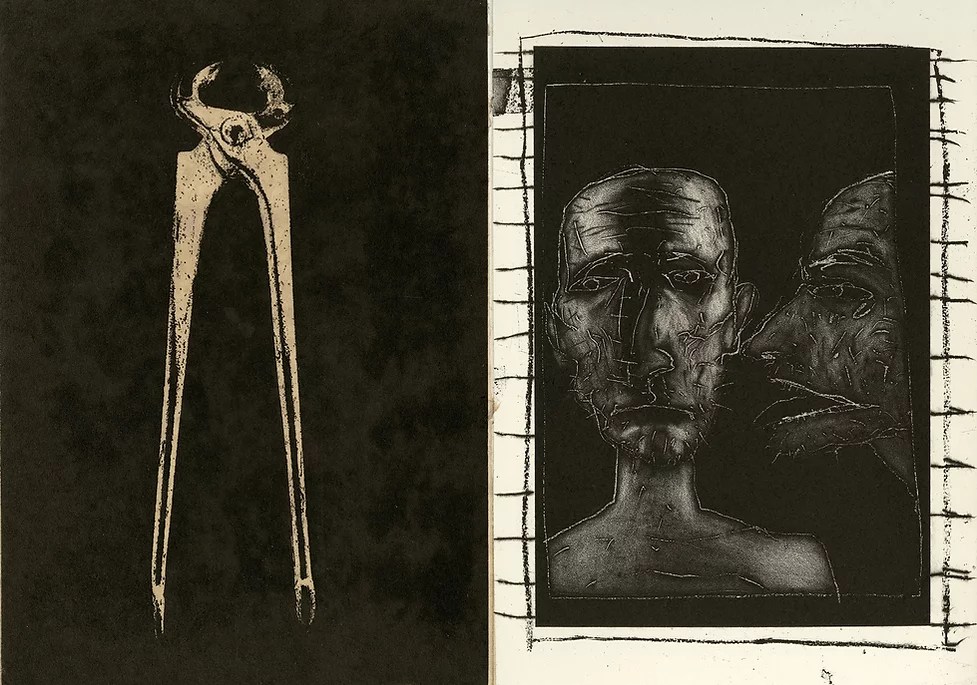
PRINT SERIES: The Passion and Its Objects (after Dürer) by Marcus Rees Roberts: “The Passion and Its Objects (after Dürer) is a series of etchings and monotypes by Marcus Rees Roberts. The images derive from fragments from Albrecht Dürer’s series of woodcuts The Small Passion (1511). Images of the Passion – and of the crucifixion in particular – are so embedded in Western consciousness that we forget that it is a depiction of betrayal, prejudice, and torture. In this version of the Passion by Dürer, one of several he made, small, everyday objects lie scattered within the images – a jug, pliers, a hammer, a coil of rope. Even five hundred years later, we recognise these objects as our own; we can identify with them. But in so doing, we enter the depicted space, and we become complicit in the cruelty. This is one reason why Dürer’s Small Passion is both so powerful and so uncomfortable.”
Marcus Rees Roberts (British, 1951–), The Passion and Its Objects (after Dürer) I, 2019. Diptych etching and aquatint with chine collé printed on Somerset Satin soft white 300gsm, each plate 29.5 × 21 cm (overall 29.5 × 42 cm). Edition of 15.
+++
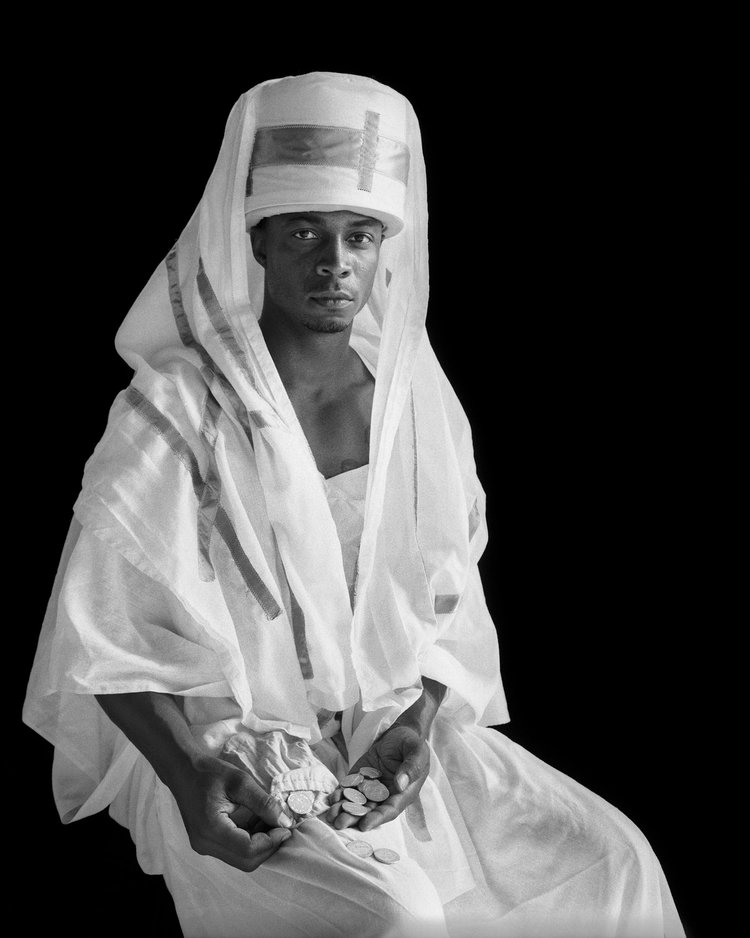
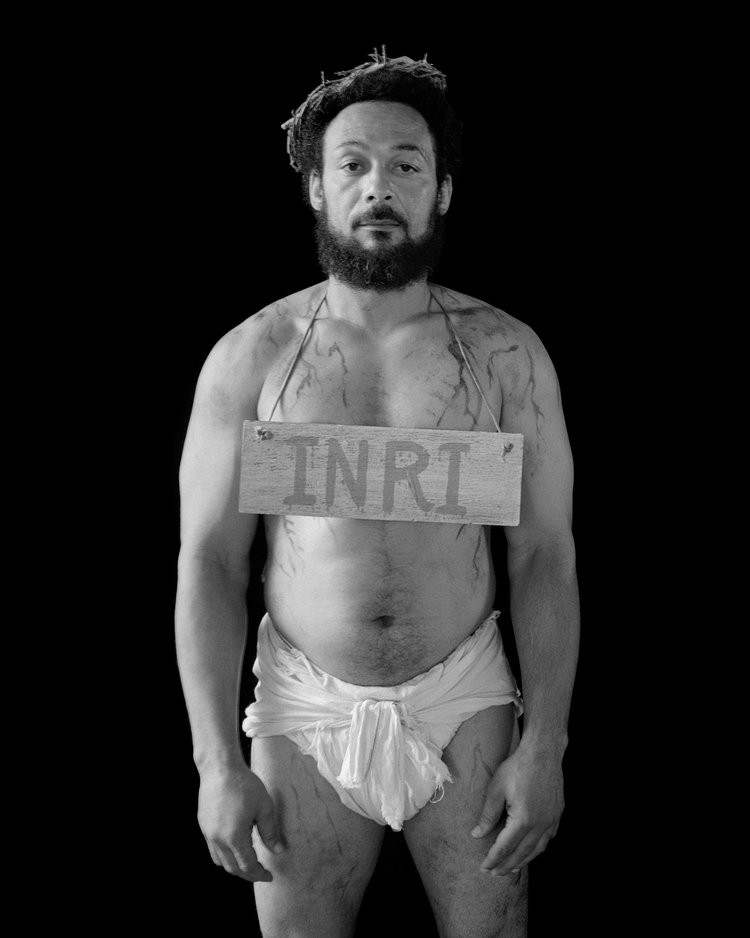
PHOTOGRAPHY SERIES: Passion Play by Deborah Luster: “There are more than 5,300 inmates at the Louisiana State Penitentiary at Angola. Nearly 4,000 of them are serving life without parole. In 2012 and 2013 the Angola Prison Drama Club staged a play unlike any other in the prison’s experience. The Life of Jesus Christ featured 70 inmates, men and women acting together for the first time—in costume, with a real camel, performing for the general public. For the untrained actors, this production held special meaning as they saw pieces of their own lives revealed in the characters they played.”
Layla “Roach” Roberts (Inquisitor), sentenced to LIFE, Angola Prison, Louisiana. Photograph by Deborah Luster, from the Passion Play series, 2013.Bobby Wallace (Jesus), Angola Prison, Louisiana. Photograph by Deborah Luster, from the Passion Play series, 2013.
+++
SONGS:
>>“May I Go with You” by January Lim: This Maundy Thursday song was written in 2020 in the voice of Jesus in Gethsemane, speaking to God the Father. In the first stanza, it seems to me that Jesus is asking to be taken up to heaven, like Elijah—just whisked away back to glory, and spared tomorrow’s cruelties and pain. But in the second stanza that same request seems to shift in meaning as Jesus expresses a desire to go with God’s plan and asks for the strength to follow through. The song was released on the EP Gathered Sighs (2021), put out by Evergreen Baptist Church of Los Angeles, where Lim serves as worship arts pastor. [HT: Global Christian Worship]
ART EXHIBITION: De-Colonizing Christ, Riverfront Gallery, St. Stephen’s Episcopal Cathedral, September 12–December 19, 2021 (preview: September 11): St. Stephen’s Episcopal Cathedral in Harrisburg, Pennsylvania, is hosting a juried art exhibition that highlights non-Caucasian representations of Jesus. There are twenty-eight original artworks in the show, plus a dozen on loan from private collections. An opening reception (with hors d’oeuvres) will take place Saturday, September 11, from 7 to 9 p.m., which I’ll be attending! It is open to the public, and masks are required in the sanctuary and cloister gallery.
The poster image is Pantocrator in Black and Brown by Brian Behm from Chapel Hill, North Carolina, which has been awarded Best in Show.
“Recent events have opened conversations among churches, theologians, and biblical scholars, considering in what way the western portrayal of Jesus as a European has been used to marginalize people of color,” the press release reads. “Many suggest that the pursuit of racial justice demands the exploration of ways in which we can de-colonize the Christ—releasing the image of Jesus from a legacy of White Supremacy and exploring images of Jesus as a man of color. This exhibit invites the Central Pennsylvania community into the conversation.” Read more about the impetus behind the exhibition in this opinion piece by the dean of the cathedral, the Very Rev. Dr. Amy Welin.
In addition to the preview night, where many of the artists will be present, there are three related lectures scheduled:
October 17, 2 p.m.: “White Jesus: Mangling Christianity and the Birth of White Supremacy in the West” by Dr. Drew G.I. Hart, Assistant Professor of Theology, Messiah University
November 28, 2 p.m.: Discussion about the tensions inherent in inclusive worship in predominantly white congregations, led by the Rev. Dr. Catherine Williams, Assistant Professor of Preaching and Worship, Lancaster Theological Seminary
+++
BOOK LAUNCH EVENTS: God in the Modern Wing: Viewing Art with Eyes of Faith, September 17–18, 2021: In anticipation of this book’s release on October 12, Upper House in Madison, Wisconsin, is hosting a string of free events two weekends from now. The two lectures can be attended in person or virtually, but the workshop is in-person only. Coeditors Cameron J. Anderson (an artist) [previously] and G. Walter Hansen (a theologian and art collector) will be present.
God in the Modern Wing grew out of a series of lectures that Hansen organized in 2015, one of which I wrote about. The book description is as follows: “Should Christians even bother with the modern wing at the art museum? After all, modern art and artists are often caricatured as rabidly opposed to God, the church—indeed, to faith of any kind. But is that all there is to the story? In this Studies in Theology and the Arts volume, coeditors Cameron J. Anderson and G. Walter Hansen gather the reflections of artists, art historians, and theologians who collectively offer a more complicated narrative of the history of modern art and its place in the Christian life. Here, readers will find insights on the work and faith of artists including Marc Chagall, Jackson Pollock, Mark Rothko, Andy Warhol, and more.”
+++
(IN-PERSON) ARTS FESTIVAL: Faith in Arts Institute, October 13–16, 2021, Asheville, North Carolina: “The inaugural Faith in Arts Institute hosted by UNC Asheville and the Black Mountain College Museum + Arts Center, intended for anyone interested in the role of art in religious and spiritual experience, will be led and facilitated by artists and scholars. The number of participants for the institute itself will be limited to create the possibility for rich and meaningful dialogue and engagement among the participants and faculty.
“In addition to talks on religion and art in the 21st century, sacred art in secular spaces / secular art in sacred spaces, and small group discussions on topics including devotion and discipline, revelation and inspiration, faith and hope, ritual and routine, vision and imagination, the institute will also include several workshops, film screenings and more.” Registration is $60. View a schedule and find out more information here.
The presenters are:
Julie Levin Caro, Professor of Art History, Warren Wilson College (specializes in modern American art and African American art)
Curt Cloninger, artist, designer, writer
Marie T. Cochran, Founder and Director, Affrilachian Artist Project
David Hinton, essayist and translator of Chinese poetry
Rachel Elizabeth Harding, Associate Professor of Indigenous Spiritual Traditions, University of Colorado–Denver (specializes in religions of the Afro-Atlantic diaspora)
Jessica Jacobs, author of the coming-of-age memoir-in-poems Take Me with You, Wherever You’re Going
Kay Larson, author of Where the Heart Beats: John Cage, Zen Buddhism, and the Inner Life of Artists
Christopher-Rasheem McMillan, Assistant Professor of Dance and of Gender, Women’s, and Sexuality Studies, University of Iowa
Aaron Rosen, Professor of Religion and Visual Culture, Wesley Theological Seminary
Pamela D. Winfield, Professor of Religious Studies, Elon University (specializes in the visual/material culture of Japanese Buddhism)
+++
SONG FOR SUKKOT: “Whoever Is Thirsty” by Marty Goetz: Every fall Jews celebrate Sukkot, aka the Feast of Tabernacles or Festival of Booths, a seven-day commemoration of God’s provision for their people during their desert sojourn after the exodus. This year the holiday falls on September 20–27. Four Sukkots ago, singer-songwriter Marty Goetz, a Jewish believer in Jesus, posted this video of a song he composed, “Whoever Is Thirsty,” from his 2010 album Sanctuary. It is an original setting of Revelation 22:17 (a book that “herald[s] the return of Yeshua the Messiah,” he says), and he performs it here with his daughter Misha Goetz.
The Spirit and the bride say, “Come.” And let everyone who hears say, “Come.” And let everyone who is thirsty come. Let anyone who wishes take the water of life as a gift.
—Revelation 22:17
+++
NEW PLAYLIST:September 2021 (Art & Theology): I’m continuing to put together a short monthly Spotify playlist as a way to share great music mainly from the Judeo-Christian tradition. Per usual, it consists mostly of folk and gospel, which are my personal preferences. I realized after the fact that this month’s selection has quite a bit of banjo! (I do love that instrument . . .): a setting by bluegrass quintet Crooked Still of Wendell Berry’s poem “The Peace of Wild Things”; Béla Fleck jamming with Ugandan kalimba player Ruth Akello on “Jesus Is the Only Answer” [previously]; Rhiannon Giddens playing and singing the spiritual “I’m Gonna Tell God All of My Troubles”; Ellen Petersen and her siblings covering the Mark Bishop song “With the Spirit of the Lord Inside”; “Esa Einai,” a setting of Psalm 121:1–2 in English and Hebrew by Jewish bluegrass duo Nefesh Mountain; and an original song by the Westbound Rangers [previously], led by one of my high school friends, Graham Sherrill.
The closing song is “Kia Hora Te Marino,” a collection of Maori blessings and proverbs set to music by Christopher Tin. The first stanza goes,
Kia hora te marino, Kia whakapapa pounamu te moana, Kia tere te rohirohi. Kia hora te marino, Te marino ara Mo ake tonu ake.
English translation: May peace be widespread, may the sea glisten like greenstone, and may the shimmer of light guide you. May peace be widespread, be widespread now and forever more.
I didn’t post an Artful Devotion this week, as I struggled to satisfactorily put together image and song for any of the readings, but I’ve now cycled through all three lectionary years on the blog, which are stored in the archives. For content on Sunday’s lectionary reading from the psalms, Psalm 133, see “When Brothers Dwell in Unity (Artful Devotion)” (featuring a Chicago mural by William Walker and a joyful new psalm setting from the Psalter Project); see also the poem “Aaron’s Beard” by Eugene Peterson.
+++
NEW ALBUM: Quarantine Sessions by Eric Marshall: Eric Marshall is the frontman of and songwriter for the meditative art rock band Young Oceans. During the COVID-19 quarantine he recorded eleven of the band’s old songs acoustically in his home studio—just his voice and guitar—and has released them digitally on Bandcamp. Several music artists have been making stripped-down records during this season, and I’m digging it!
+++
ART COMMENTARIES from ART/S AND THEOLOGY AUSTRALIA
Art/s and Theology Australia is an online publication that aims to provoke public reflection and promote research on conversations between the arts and theology, predominantly in Australian contexts. Here are a few articles from the recent past that I particularly enjoyed.
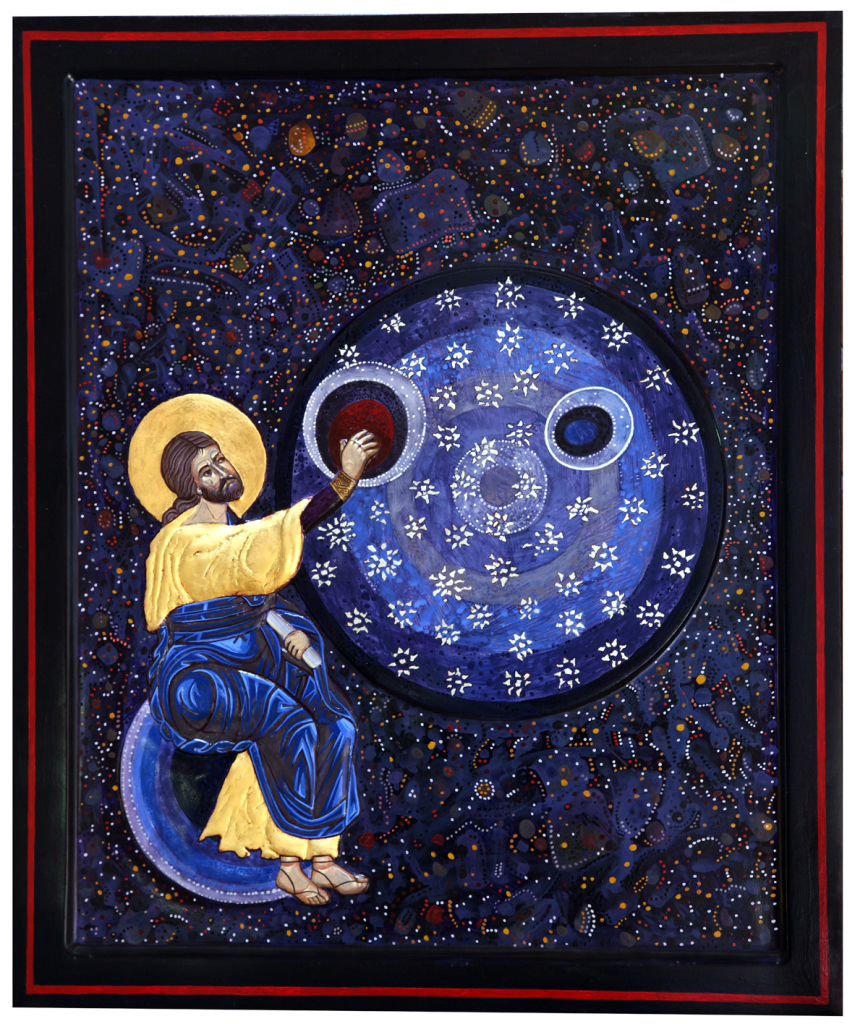
Michael Galovic (Serbian Australian, 1949–), Creation of Lights in the Heavens, n.d.
^^“Jesus Dreaming: A Theological Reaction to Michael Galovic’s Creation of Lights in the Heavens” by Merv Duffy:Creation of Lights in the Heavens by contemporary artist and iconographer Michael Galovic is an authentically Australian reading and rewriting of one of the Byzantine creation mosaics at Monreale Cathedral. Like its visual referent, it shows the Logos-Christ seated on the cosmos, hanging the sun in place (medieval artists tended to show God the Son, who is depictable, as Creator), but the gold background, used in icons to represent the eternal uncreated light of God, is replaced with dots, curves, and circles that represent the Dreamtime of Aboriginal theology, the origin of time and eternity.
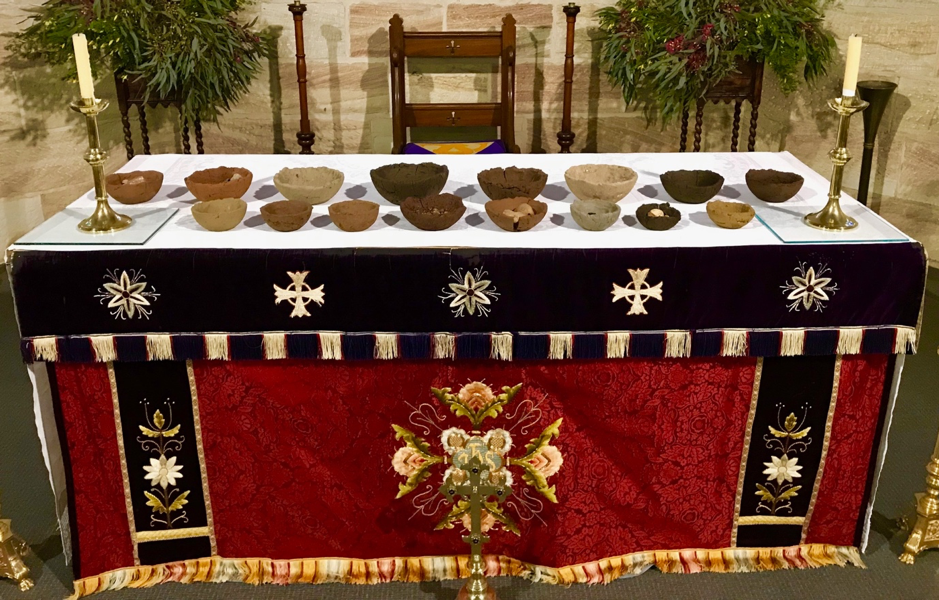
Penny Dunstan, Sixteen Earth Bowls, 2018. Installed at Holy Trinity Anglican Church, Merriwa, for the Festival of the Fleeces.
^^ “Sixteen Earth Bowls” by Penny Dunstan: Soil scientist and visual artist Penny Dunstan has crafted bowls out of topsoil from rehabilitated coal mines in the Hunter Valley in Warkworth, New South Wales, which she exhibits in churches, among other places. “Making earth bowls is a way of thinking about my ethical responses to soil use in a post-mining landscape,” she writes. “It is a way of thinking with my heart and not just my head. As I work with each Hunter Valley topsoil, I come to understand each as an individual, a special part of God’s creation. Each soil behaves according to its own chemical nature and historical past when I fashion it into a bowl shape. . . .
“These soils, full of tiny lives, are responsible for growing our food, making our air and storing atmospheric carbon. Our very lives as humans on the earth depend on them. By fashioning these soils into bowls and placing them in sacred places, I hope to remind us to honour the earth that we stand upon, that earth that speaks to us by pushing back at our feet.” (Note: See also Rod Pattenden’s ArtWay visual meditation on Dunstan’s work.)
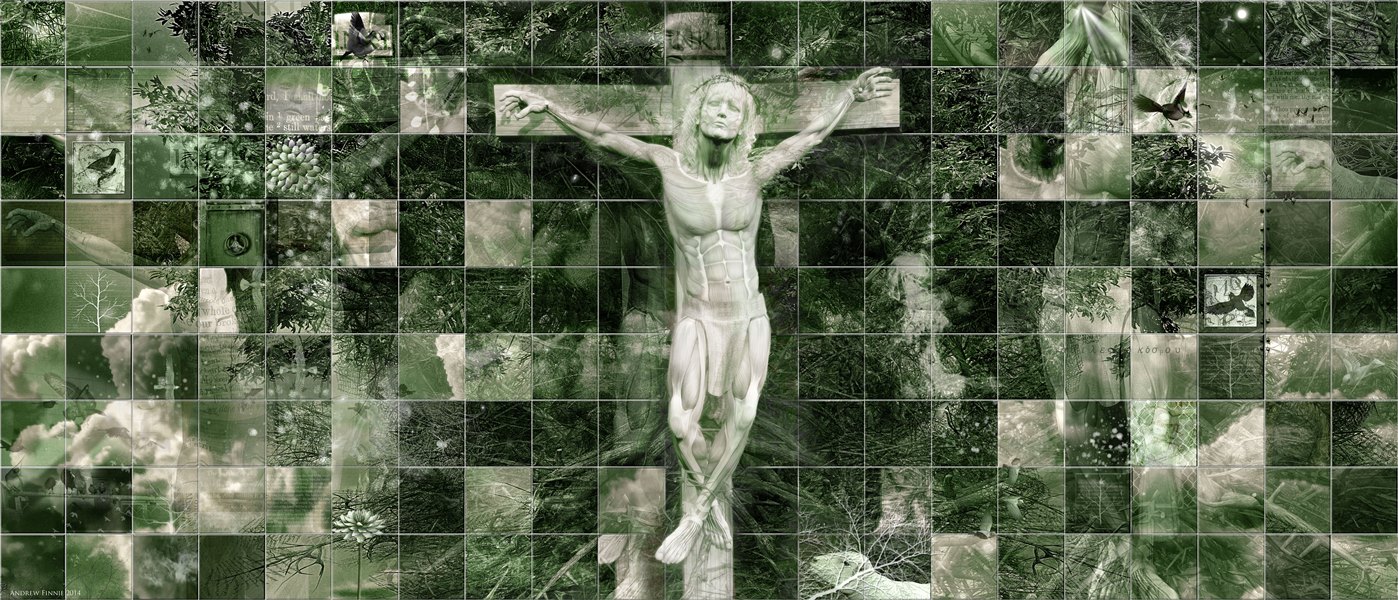
Andrew Finnie (Australian, 1957–), The Body of Christ, The Tree of Life, 2014. Pigment print on Hahnemuhle paper, 78 × 182 cm.
^^“The Cross and the Tree of Life” by Rod Pattenden: “One of the pressing questions for the Church is how we see Christology being renewed in the face of climate change and the potential for the quality of life on this planet to decline,” writes art historian Rod Pattenden [previously]. “Who is Jesus for us in the midst of the profound changes that are occurring to the earth, water, and air of our world? . . .
“Andrew Finnie’s image The Body of Christ, The Tree of Life”—a large-scale ecotheological digital collage—“is an attempt to re-imagine the figure of Christ in conversation with the earth and the networks that sustain human life in all its thriving beauty. Here, the traditional figure of the cross has become entwined in the roots of the tree, a tree of life that is giving form to the variety and beauty of the natural world.”
+++
SONG: “Kadosh” by Wally Brath, sung by Nikki Lerner: The Kedushah is part of the Amidah, the central prayer of the Jewish liturgy. Its first verse is taken from the song of the seraphim in Isaiah 6:3: “Holy, holy, holy, is the LORD of hosts; the whole earth is full of his glory!” (Kadosh means “holy.”) In this original composition for voice, piano, and string quartet, Wally Brath [previously] has combined this Hebrew exclamation from the book of the prophets with an English excerpt from the Lord’s Prayer taught by Jesus in Matthew 6:10: “Thy kingdom come, thy will be done on earth as it is in heaven.” [HT: Multicultural Worship Leaders Network]
The performance captured in this video, featuring Nikki Lerner, took place at Winona Lake Grace Brethren Church in Winona Lake, Indiana, on July 11, 2020. A full list of performers is given in the YouTube description.
+++
CONCERT FILM: Amen! Music of the Black Church: Recorded before a live audience at the Second Baptist Church in Bloomington, Indiana, and airing April 26, this PBS special explores the rich traditions, historical significance, and meaning of black church music. Dr. Raymond Wise leads the Indiana University African American Choral Ensemble in twenty-one spirituals, hymns, and gospel songs, showing how black church music is not monolithic. He demonstrates the stylistic spectrum you can find among black church communities using a song text derived from Psalm 24:7–10 (“Lift up your heads . . .”): one performed with the European aesthetic preferred in more affluent congregations, one a classical-gospel hybrid, and one pure gospel. One thing I learned from the program is that there is a tradition of shape-note singing in the black church! (See, e.g., The Colored Sacred Harp.) [HT: Global Christian Worship]
Here’s the set list:
“We’ve Come This Far by Faith” by Albert Goodson
“Kumbaya”
“Run, Mary, Run”
“Oh Freedom”
“What a Happy Time” by J. M. Henson and J. T. Cook
“Amazing Grace” by John Newton
“Ain’t Got Time to Die” by Hall Johnson
“I’ve Been ’Buked”
“Lift Up Your Heads” by Emma Louise Ashford, arr. Lani Smith
“Lift Up Your Heads” by Clinton Hubert Utterbach
“Lift Up Your Heads, All Ye Gates” by Raymond Wise
“Glory, Glory, Hallelujah”
“Jesus on the Mainline”
“I Need Thee Every Hour” by Annie S. Hawks and Robert Lowry
“You Can’t Beat God Giving” by Doris Akers
“Come to Jesus” by E. R. Latta and J. H. Tenney
“We Shall Overcome” by Charles Tindley
“Lord, Keep Me Day by Day” by Eddie Williams
“Lord, Do It for Me” by James Cleveland
“Oh Happy Day” by Edwin Hawkins
“I’ve Got a Robe” by Raymond Wise
“Hallelujah, Praise the Lord, Amen” by Raymond Wise
+++
INTERVIEW: Last September The Cultivating Project interviewed Malcolm Guite [previously] on his latest poetry collection After Prayer, the poet-priest George Herbert, the life of a writer, art as faithful service, doubt and despair, his Ordinary Saints collaboration with Bruce Herman and J.A.C. Redford, his friendship with Michael Ward (author of Planet Narnia), the blessing of seasons (both earthly and liturgical), and making room for joy. The interview includes three of Guite’s poems: “Christ’s side-piercing spear,” “A Portrait of the Artist,” and “St. Augustine and the Reapers.”
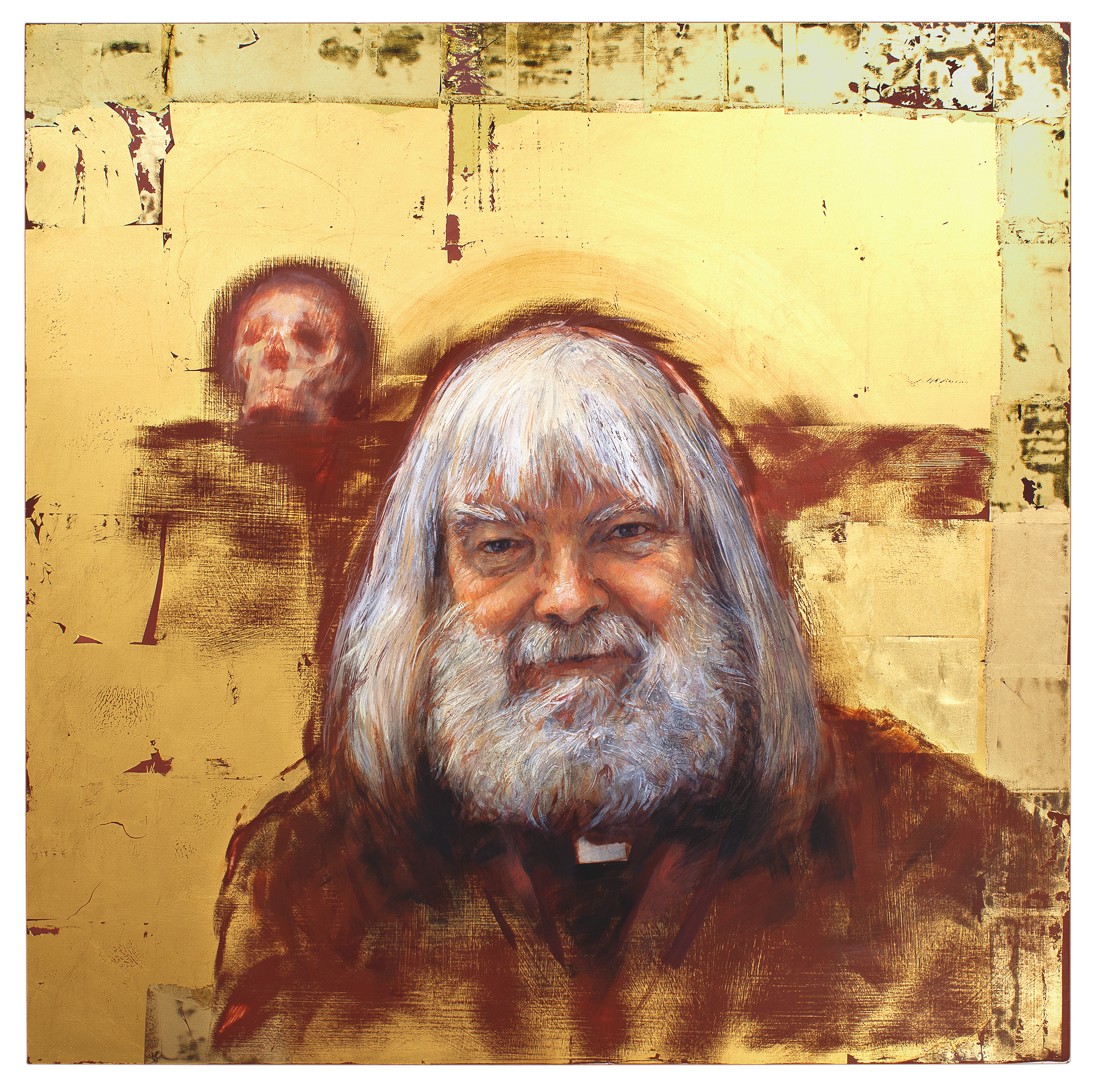
Bruce Herman (American, 1953–), Malcolm Guite, 2016. Oil on panel with gold leaf, 30 × 30 in.
Here is a list of upcoming arts conferences and retreats. I will be attending the CIVA conference next month as well as the DITA conference in September—if you’ll be at either, please let me know; I’d love to meet you!
All Things New (International Arts Festival) Date: June 15, 2019 Location: Waterras Common Hall 3F, Tokyo, Japan Cost: ¥2500 (about $22) Presenters: Joshua Messick, Gerda Liebmann, Christopher Elmerick, Roger Lowther, and more Organizer:Community Arts Tokyo (with additional sponsorship by Grace City Church Tokyo) Description: “How can people in a city experience personal, social, and economic flourishing? What is the role of artists in making this world a better place? How can faith, work, and the arts come together for a holistic view of peace for the good of mankind? At this conference, we will hear from artists in the business world, the media world, and the plight of refugees from other countries. Their stories will give us a vision for how the arts point a way to new beginnings and bring goodness and hope into a broken world. Join us as we enter this world through speaker presentations, music performances, a short film, gallery exhibits, small group discussions, and more!” (Note: Presentations in Japanese will have simultaneous English translation over the wireless earphone system.)
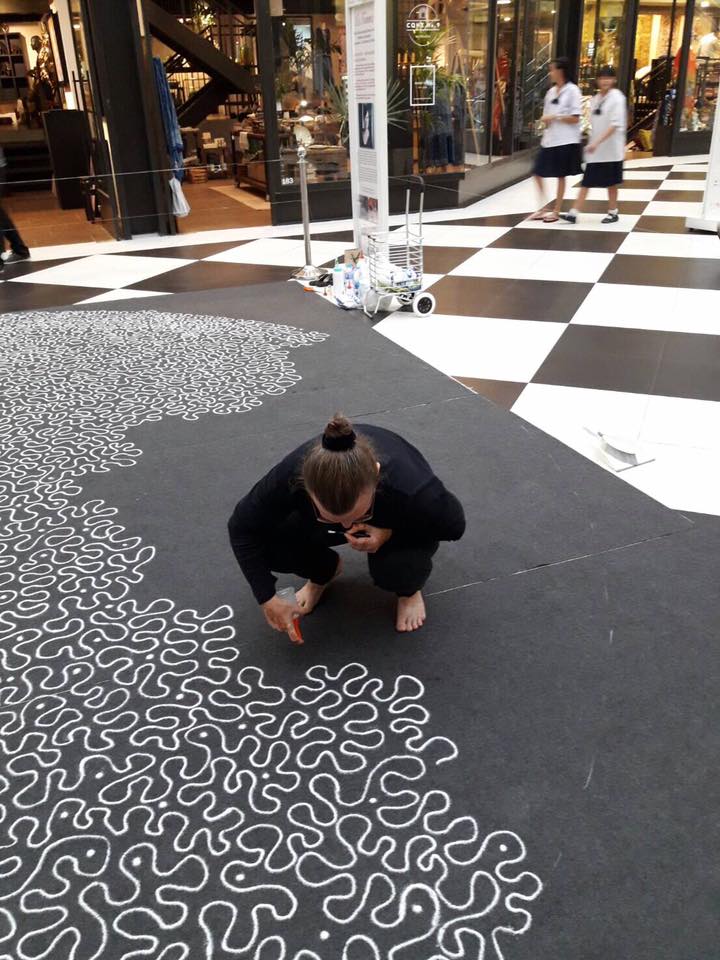
At the “All Things New” festival next month, Thai artist Gerda Liebmann will be installing one of her “salt art” pieces.
The festival will include presentations/workshops/performances by
hammered dulcimer player Joshua Messick, who contributed to the soundtrack of the Japanese animated fantasy film Mary and the Witch’s Flower
visual artist Gerda Liebmann, on how art can foster relationship and connection
Christopher Elmerick, who founded and runs a cultural center in Berlin that promotes the free exchange of ideas through shared work- and performance spaces and more
Megumi Project, a group of women artisans who upcycle vintage kimonos into shawls, scarves, bags, journals, and other accessories
the Charis Chamber Players
organist Roger Lowther, on the physics of music
Roger Lowther is, with his wife Abi, the founder and director of Community Arts Tokyo, “a team of artists, professionals, and Japanese nationals assisting church planting through outreach, discipleship, worship, and disaster relief.” Their work is supported through Mission to the World, the international missions arm of the Presbyterian Church in America (PCA).
+++
Are We There Yet? Date: June 13–16, 2019 Location: Bethel University, St. Paul, Minnesota, USA Cost: $350 for nonmembers; $300 for members Presenters: Sedrick Huckaby, Letitia Huckaby, Hawona Sullivan Janzen, Chris Larson, Rico Gatson, Nate Young, Linnéa Spransy, Cara Megan Lewis, Rev. Babette Chatman, Jamie Bennett, Joanna Taft, Kelly Chatman, Joyce Lee, Caroline Kent, Lyz Wendland, Betsy Carpenter, Amanda Hamilton, Catherine Prescott, Vito Aiuto, and others Organizer:Christians in the Visual Arts (CIVA) Description: “If you’re anything like us, working in an age of high anxiety and disruption has been trying. At the same time, the art world has never seen more diversity, wealth, interconnection, and popular appreciation. Some experience our current creative conditions as a ‘joyful noise,’ others a ‘resounding gong.’ This makes art difficult yet at the same time crucial. With our hope rooted in the Lord, we can rejoice in the unfinished state of our work. There is still so much to be made!
“Are We There Yet invites us to inhabit questions together: What are our shared pursuits? What practices and commitments can guide us in our work and collaboration? What would radical generosity do to the global art market? And how might we be participants in making ‘impossible things possible,’ as described by curator Hans Ulrich Obrist? With a commitment to hospitality, we will ask these questions and many more.”
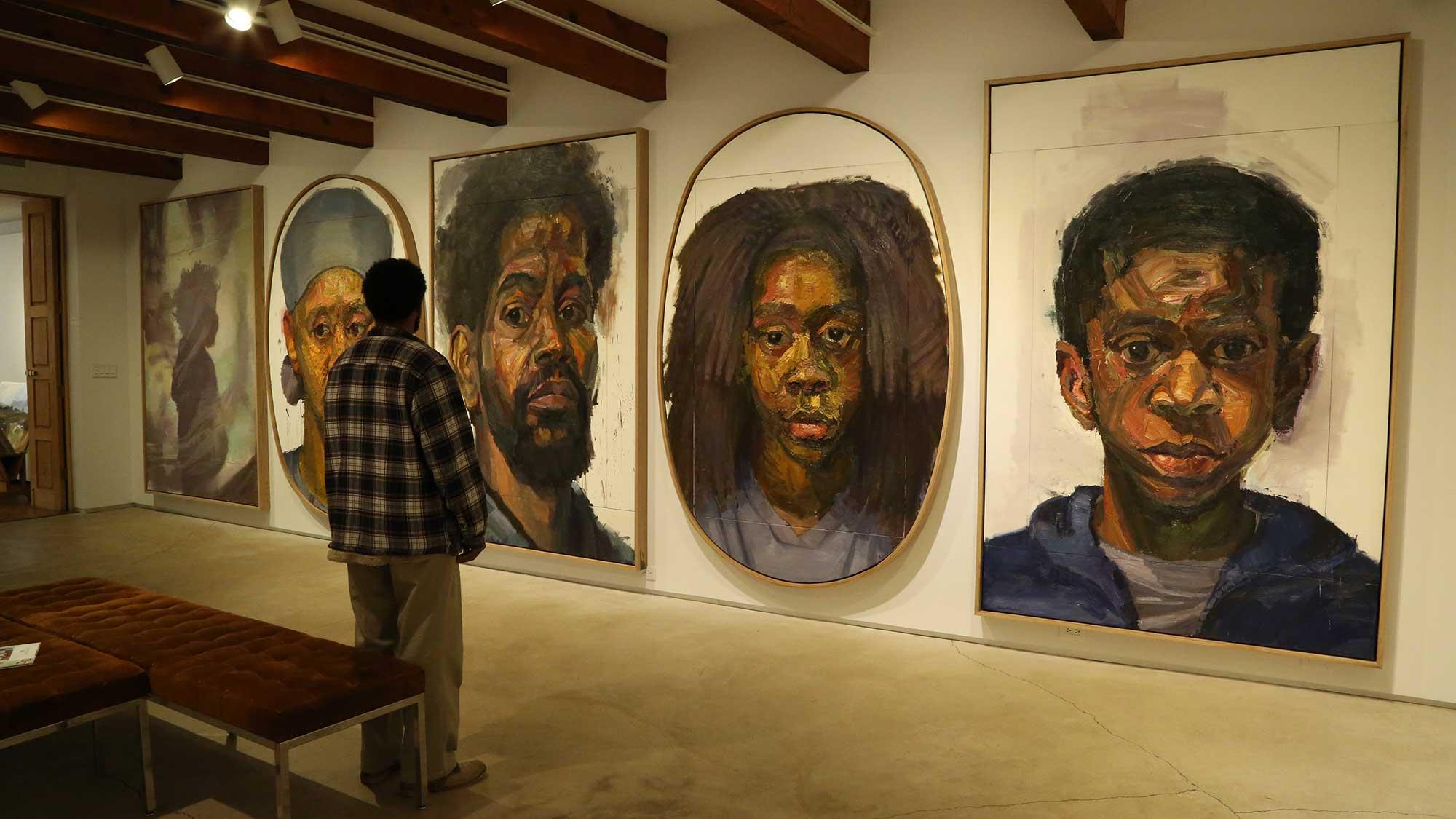
At Valley House Gallery in Dallas, Sedrick Huckaby stands in front of portraits he painted of his children, his wife Letitia, and himself. Sedrick and Letitia are two of the keynote speakers for CIVA’s 2019 Biennial Conference. Photo: Dane Walters/Kera News.
The conference will consist of plenary talks, panel discussions, and breakout sessions and will include a juried art show, late-night artist show & tells, optional day-ahead tours (art museums, city architecture, or sculpture garden) or workshops (printmaking or photography), a Liz Vice concert, and an ecumenical worship service.
+++
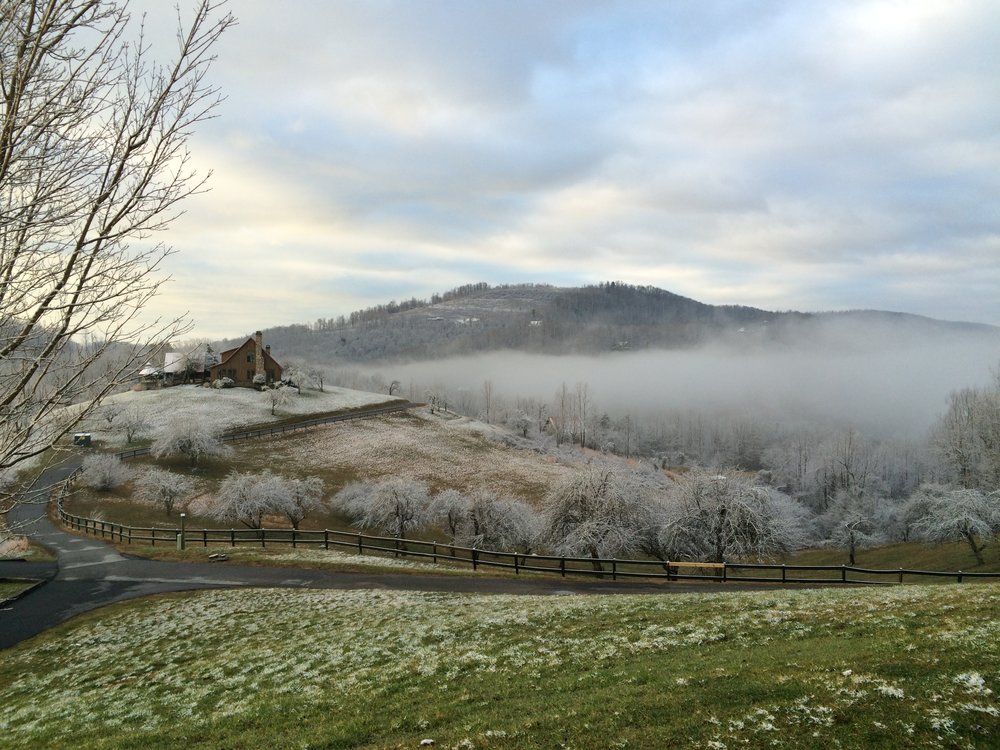
Visual Arts Retreat Date: June 21–23, 2019 Location: Apple Hill Lodge, Moravian Falls, North Carolina, USA Cost: $450 (includes lodging, food, and class materials) Presenters: Allison Luce, Corey Frey, Ty Nathan Clark (via satellite), Stephen Roach, Thomas Torrey, Lauren Olinger Organizer:The Breath & the Clay Description: “Come get away for a weekend designed to inspire and deepen your understanding of visual art both as a spiritual practice and as an art form.”
+++
Vocation, Motherhood, and Artmaking Date: July 25–28, 2019 Location: Laity Lodge, Leakey, Texas, USA Cost: $495 (scholarships available) Presenters: Andi Ashworth, W. David O. Taylor, Letitia Huckaby, Phaedra Taylor, Sandra McCracken, Ashley Cleveland Organizer:Laity Lodge Description: “This retreat is an invitation to explore the opportunities and challenges that are involved in the twin calling to motherhood and artmaking. It is open to mothers in all stations and circumstances of life, whether at the beginning of motherhood or in the fullest years of grandmothering, and to artists of all media, disciplines and contexts.” (Read more from David Taylor.)
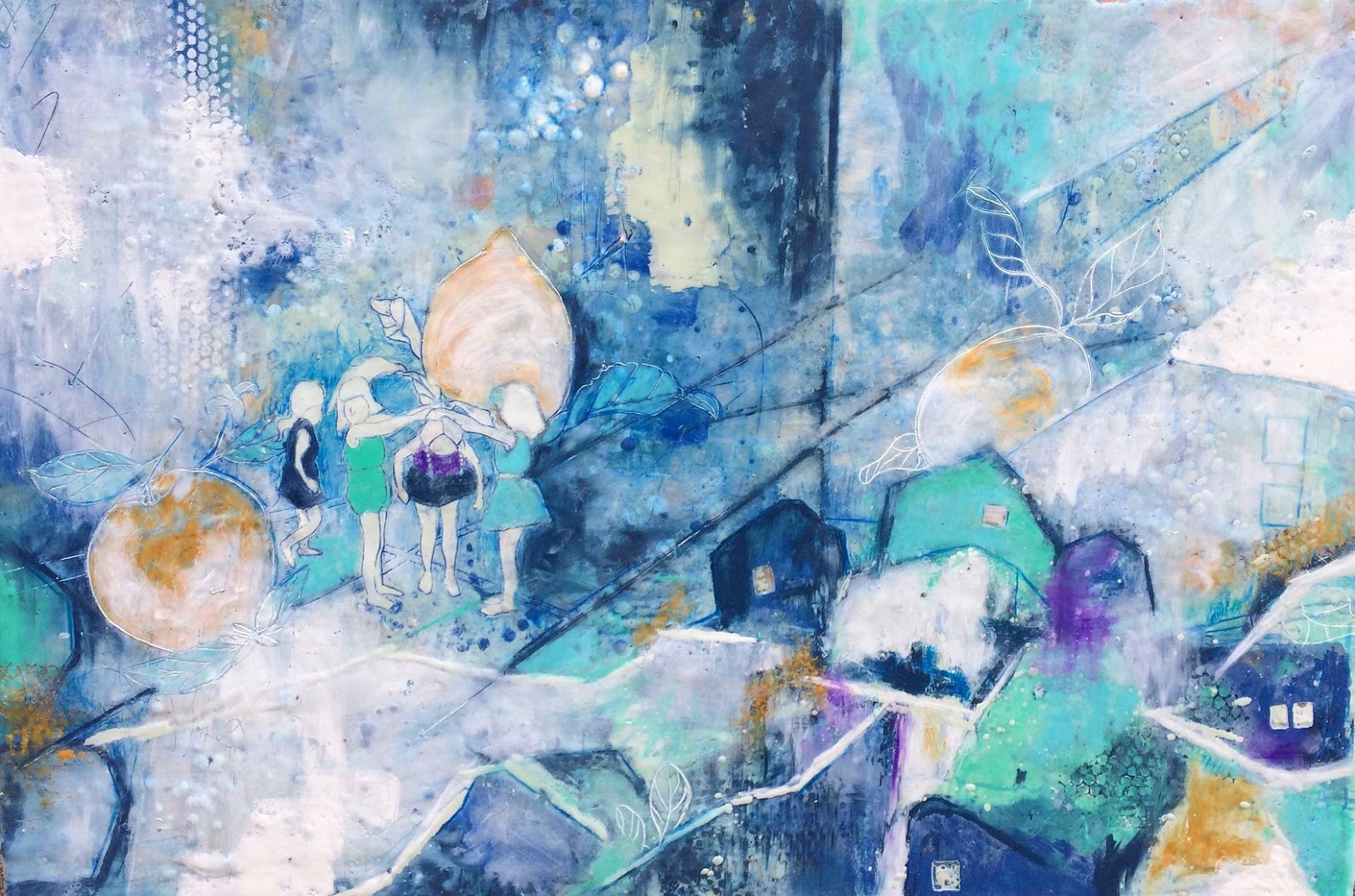
Phaedra Taylor (American), The Book of Games: Oranges & Lemons, 2018. Encaustic on wood panel, 20 × 30 in.
+++
Kingdom Creatives Con Date: August 3, 2019 Location: National Union Building, Washington, DC Cost: $99 Presenters: Noah Elias, Othello Banaci, Rachel Petrillo, Anifa Mvuemba, John David Harris, Ryan Han, Andrew Hochradel Organizer: Bemnet Yemesgen Description: A conference “aimed at igniting inspiration, learning, and networking in the Christian creative community. . . . Attendees will enjoy workshops and talks by creatives from diverse backgrounds and industries. The conference is specifically tailored towards creatives who love Jesus Christ . . . graphic designers, illustrators, photographers, filmmakers, developers, animators, copywriters,” etc.
+++
New York City Arts Weekend Date: August 9–10, 2019 Location: Various venues, New York, USA Cost: $295 CAN Presenters:Makoto Fujimura, Iwan Russell-Jones Organizer:Regent College (host: Jeff Greenman) Description: “Makoto Fujimura and Iwan Russell-Jones lead this exploration of Christian faith and the visual arts in New York City. Enjoy a fascinating tour of the Metropolitan Museum of Art and participate in shared meals, stimulating presentations, and challenging conversations. Develop a deeper understanding of how creativity finds its place in the new creation.”
+++
Creation and New Creation: Discerning the Future of Theology and the Arts Date: September 5–8, 2019 Location: Duke University, Durham, North Carolina, USA Cost: $175 (student discounts available) Presenters: Jeremy Begbie, Malcolm Guite, Christian Wiman, N. T. Wright, Natalie Carnes, Jennifer Craft, Carlos Colón, Steve Prince, Bruce Herman, Judith Wolfe, and others Organizer:Duke Initiatives in Theology and the Arts (DITA) Description: “At DITA10, we will celebrate past scholarship, reflect on today’s landscape, and imagine with tomorrow’s leaders.” The colloquium will include keynote lectures; workshops for church leaders and artists addressing the challenges of theology and the arts in the church and in our daily lives; panel discussions with artists and theologians; a concert by the New Caritas Orchestra; and a corporate worship service.
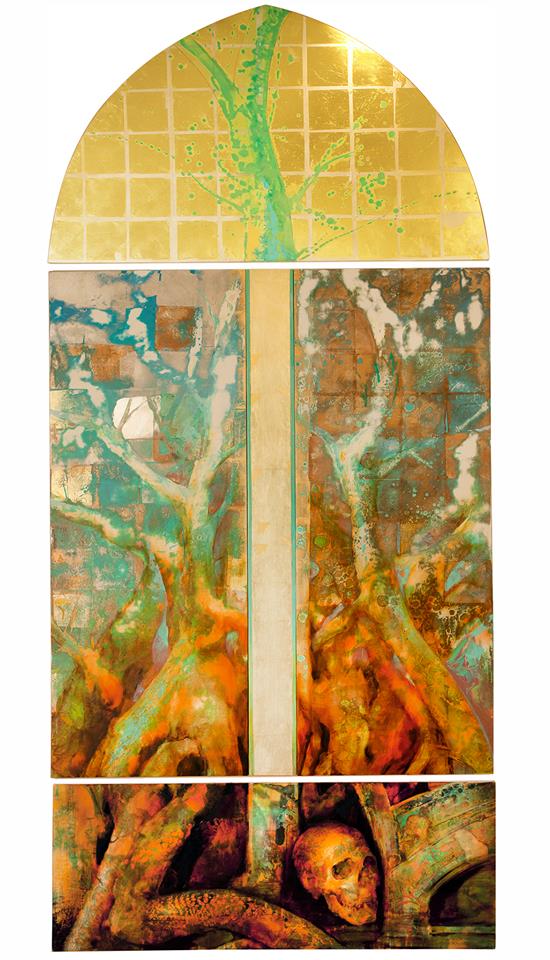
Bruce Herman (American, 1953–), Riven Tree, 2016. Oil on wood panels with gold, silver, and platinum leaf, 96 × 47 in. York Chapel, Duke Divinity School, Durham, North Carolina. [see “making of” video] [see in situ photo]
+++
The Future of the Catholic Literary Tradition (Catholic Imagination Conference) Date: September 19–21, 2019 Location: Loyola University Chicago, USA Cost: $150 Presenters: Tobias Wolff, Alice McDermott, Paul Schrader, Dana Gioia, Paul Mariani, Richard Rodriguez, Angela Alaimo O’Donnell, and others Organizer:Hank Center for the Catholic Intellectual Heritage Description: “This international biennial conference, sponsored by Loyola’s Hank Center, features over 60 writers, poets, filmmakers, playwrights, journalists, editors, publishers, students, and critics who will explore a variety of questions surrounding the Catholic imagination in literature and the arts. What is the future of the Catholic literary tradition? What is the state of discourses in faith and Christian humanism in a world increasingly described as ‘Post’—postmodern, post-human, post-Christian, post-religious? How is Catholic thought and practice (or the absence of it) represented in literature, poetry, and cinema? If, as David Tracy observes, religion’s ‘closest cousin is not rigid logic, but art,’ what might literary art be trying to communicate to its ‘cousin’—and to us all—as we travel along the first decades of the 21st century?”
The call for papers is still open, until June 15. Also check out some of the special events being offered, which will include a theatrical performance of Flannery O’Connor’s Everything That Rises Must Converge and an evening of poetry readings, live music, and a Chicago blues panel.
+++
Writer’s Retreat Date: October 25–27, 2019 Location: Apple Hill Lodge, Moravian Falls, North Carolina, USA Cost: $450 (includes lodging and food) Presenters: TBA Organizer:The Breath & the Clay Description: “Come get away for a weekend designed to develop your writing both as a spiritual practice and as an art form.”
+++
The Art of the Lost: Destruction, Reconstruction, and Change Date: November 27–29, 2019 Location: Canterbury Cathedral, England Cost: £175 for full conference (single-day tickets also available) Presenters: Sandy Nairne, Simon Cane, James Clark, Ascensión Hernández Martínez, Emma J. Wells, and others Organizer:Canterbury Cathedral Description: “This conference will explore and appraise current and developing studies of how art changes, is reused or repurposed, disappears or is rediscovered. It will look at how and why art is defaced, destroyed or is lost within architectural settings, with a particular focus on art within the context of cathedrals, churches or other places of worship. It will consider changing ideologies, iconoclasm, war, fashion and symbolism. It will cover art from the 6th century to the modern day.”





 Art & Theology