The Trial by Bitter Water: An Apocryphal Tale of the Virgin Mary Being Tested for Adultery

As important as she is in the Christian tradition, the Bible doesn’t give us a whole lot of details about the life of Mary, especially prior to her conception of Jesus. To give her a backstory and fill in some gaps, the Protoevangelium of James (aka the Gospel of James) was written in the second century, probably in Syria. The author purports to be the apostle James, the brother of Jesus (by an earlier marriage of Joseph’s, according to the text), but the actual author is unknown. While parts of it are based on the canonical Gospels of Matthew and Luke, most of the material is legendary, developed to satisfy people’s curiosity about Jesus’s parentage and some of the events of his infancy.

The Protoevangelium of James was, and remains, immensely popular in Eastern Christianity, having been translated early on from its original Greek into Syriac, Ethiopic, Coptic, Armenian, and Arabic. On how the Orthodox Church views the text today, I found this Reddit thread interesting.

A later version of it, with additions and modifications, emerged in Latin by the seventh century under the name the Gospel of Pseudo-Matthew (aka the Infancy Gospel of Matthew), popularizing its stories in the West.

None of the three branches of Christianity regards these gospels as scripture—the Gelasian Decree of circa 495 officially classified the Protoevangelium as apocryphal, meaning not inspired or authoritative—but nonetheless, they have heavily influenced (in Catholicism and Eastern Orthodoxy) Christian art and Mariology.

Trying to interpret Christian artworks depicting unfamiliar scenes or details is how I first brushed up against the Protoevangelium of James and the Gospel of Pseudo-Matthew.

One such scene, which is rare but sometimes appears between images of the Visitation (or the Annunciation to Mary, or the First Dream of Joseph) and the Journey to Bethlehem, is of Mary standing before a priest, holding a cup. This, I learned, depicts the so-called trial by bitter water, or sotah ritual, an ancient Hebrew method for dealing judicially with women who were suspected of adultery. Outlined in Numbers 5:11–31, in this ritual, a suspicious husband was to bring his wife to the tabernacle to subject her to a trial by ordeal. After receiving a grain offering from the husband, the priest would mix a concoction of holy water, dust from the tabernacle floor, and curses scraped off from the parchment they were written on. The wife would be compelled to swear her innocence and then drink the cup. If she was guilty of marital unfaithfulness, she would suffer painful reproductive affliction;1 but if not, she would be unharmed and thus exonerated.

Trial by ordeal was a common legal recourse in patriarchal cultures across the ancient Near East, reflecting distrust of women’s sexuality and reinforcing husbands’ domination over their wives. That it was a sanctioned practice in the Old Testament is troubling, to say the least—but let’s sidestep that discussion for now. Let me simply commend to you the Numbers 5 visual commentary by Maryanne Saunders (Master of Studies, History of Art, Oxford), which examines three artworks based on this passage, including a feminist Jewish one.
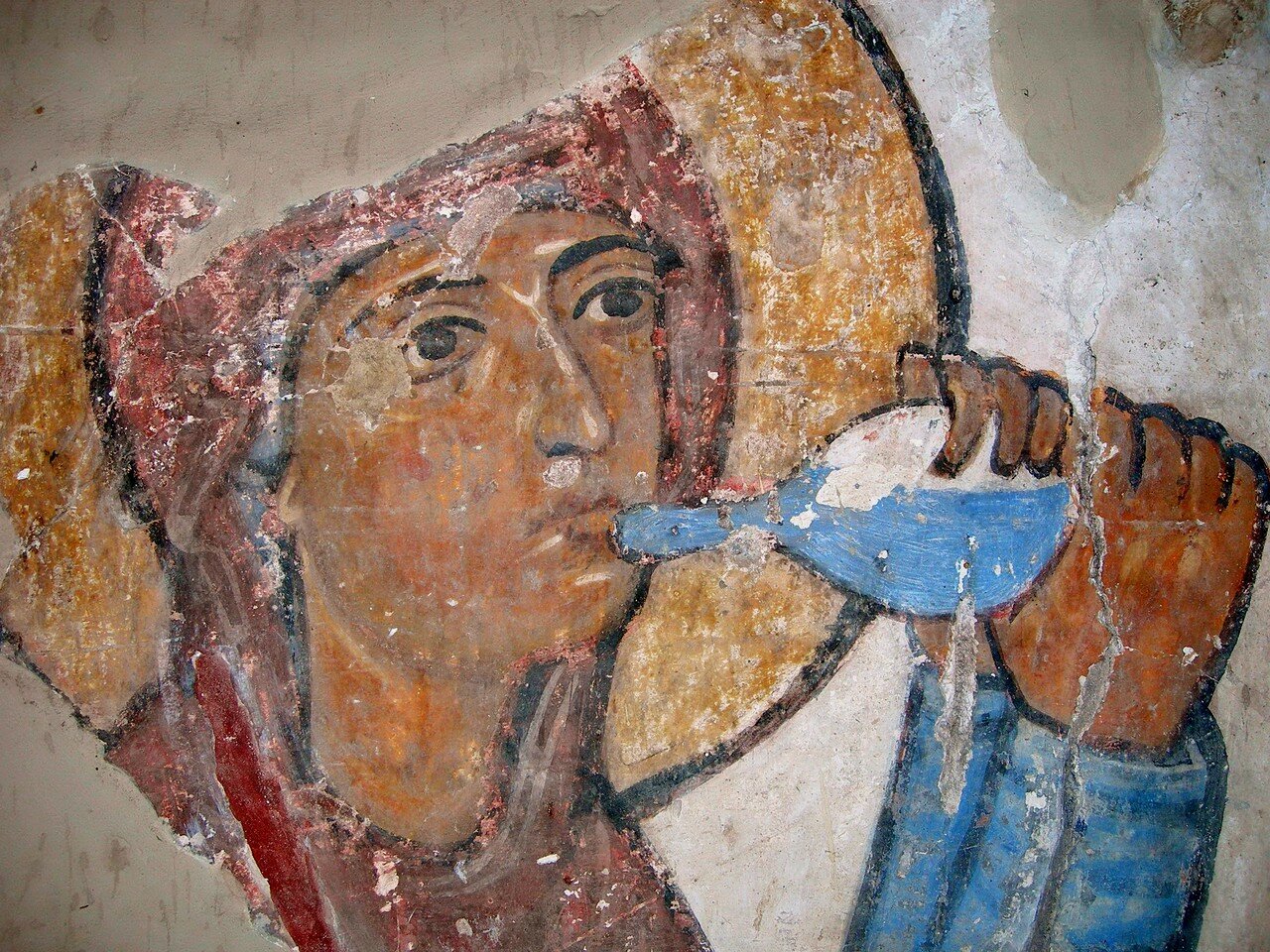
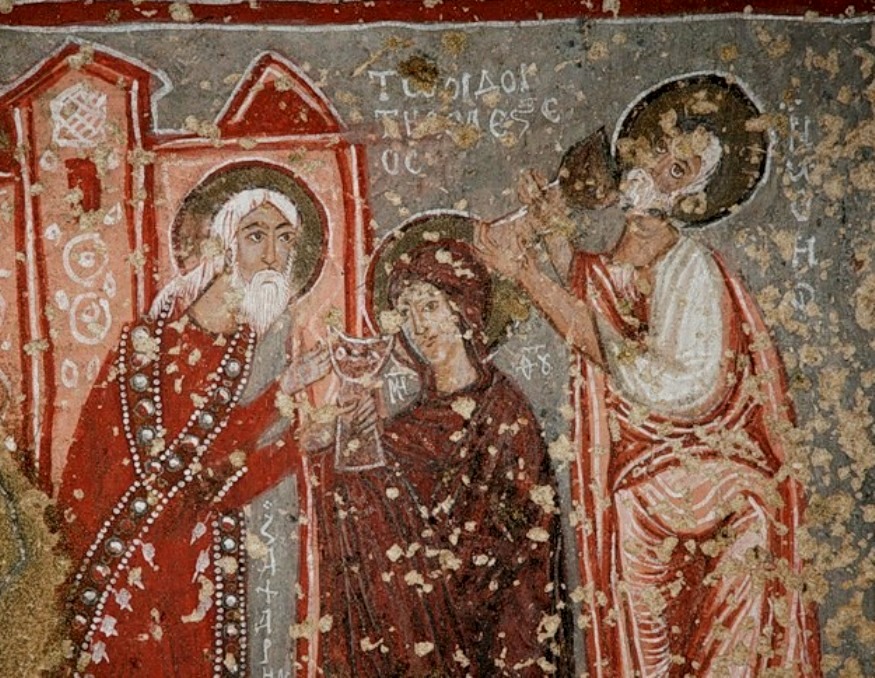
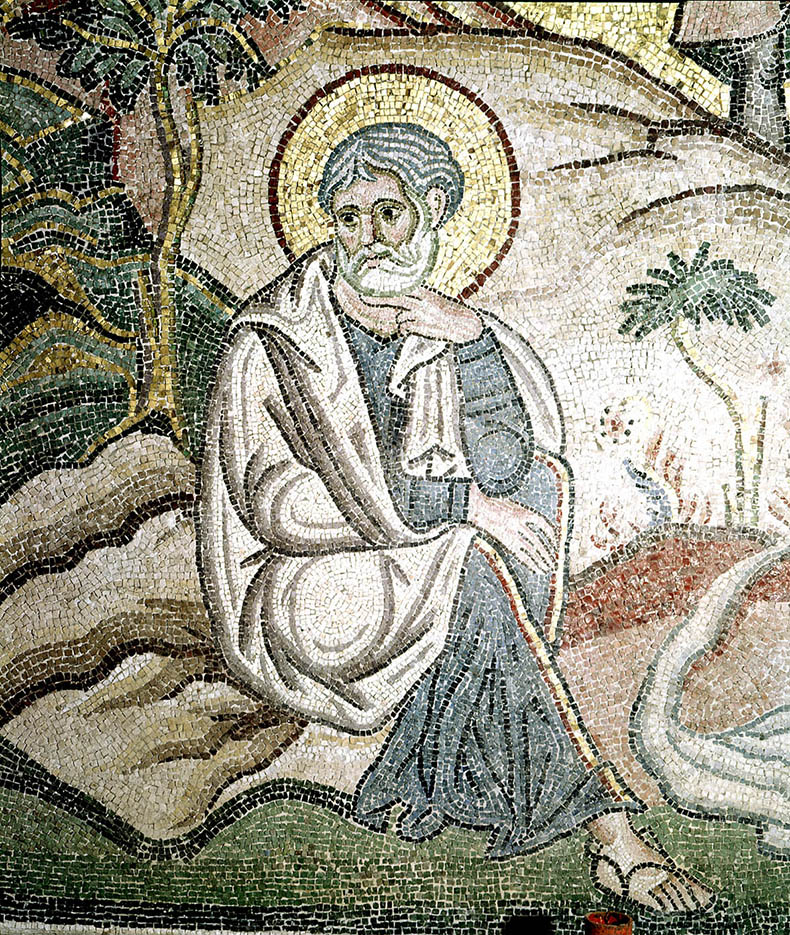
Trial by Bitter Water (Ateni, Georgia) (detail)
Fresco, 11th century, Church of the Dormition of the Virgin Mary, Ateni, Georgia. (See a wider shot below.)

According to the Protoevangelium of James, sometime after the angel had appeared to Joseph convincing him of Mary’s fidelity, a Jewish scribe named Annas saw Mary’s pregnant belly and reported both her and Joseph to the priest for sexual sin, for they were not yet married. They maintained their innocence and were made to drink a potion that would have no effect if they were telling the truth but that would make them ill if they were indeed guilty. Of course, they came out scot-free. Their chastity was divinely confirmed.

(Related post: https://artandtheology.org/2022/12/10/advent-day-14-joseph/)

This account of the Jewish ritual of sotah is unique in that (1) it is initiated by a third party, and (2) the male partner is also accused and made to drink the potential curse. Traditionally, the ritual could be initiated only by a husband. Scholars cite the Protoevangelium author’s apparent unfamiliarity with Jewish practices—this and others—as evidence that he was not Jewish (as the historical James was).

The Protoevangelium was written at a time when opponents of Christianity were decrying the virgin birth. The pagan philosopher Celsus, for example, insisted that while pledged to Joseph, Mary had an affair with the Roman soldier Panthera, and that Jesus was the illegitimate fruit of that union. The story of the trial by bitter water was an attempt to defend Mary against the charge of adultery and Jesus against the charge of ignoble origins. It also—if one believes God was indeed the moral adjudicator in the trial—corroborates the message Mary and Joseph claimed to have received separately from an angel, that Jesus was the Son of God.

I’m sharing this episode from the Protoevangelium not because I think it actually happened but so that you have more context for an image that occasionally crops up in cycles on the life of Mary. Also, perhaps its elaboration on the scandal and consequences of alleged adultery in ancient Jewish culture helps better situate us in Mary’s time and place.

Before I quote the relevant excerpt, a little further background is in order, to explain some of what’s mentioned in the dialogues. Earlier in the Protoevangelium, we read that as an expression of gratitude, Mary’s parents dedicated her to the service of God, and that she lived in the temple in Jerusalem from age three until puberty, where she was fed by angels. When her first menstruation loomed, the priests consulted on what to do with her, lest she defile the temple with her blood. They decided to give her over to the care of Joseph, an elderly widower with grown children.

OK, so now, here are chapters 15 and 16 of the Protoevangelium of James, as translated by Alexander Walker, courtesy of New Advent (I’ve added paragraph breaks):

15. And Annas the scribe came to him [Joseph], and said: “Why have you not appeared in our assembly?”

And Joseph said to him: “Because I was weary from my journey, and rested the first day.”

And he [Annas] turned, and saw that Mary was with child. And he ran away to the priest, and said to him: “Joseph, whom you vouched for, has committed a grievous crime.”

And the priest said: “How so?”

And he said: “He has defiled the virgin whom he received out of the temple of the Lord, and has married her by stealth, and has not revealed it to the sons of Israel.”

And the priest answering, said: “Has Joseph done this?”

Then said Annas the scribe: “Send officers, and you will find the virgin with child.” And the officers went away, and found it as he had said; and they brought her along with Joseph to the tribunal.

And the priest said: “Mary, why have you done this? And why have you brought your soul low, and forgotten the Lord your God? You that wast reared in the holy of holies, and that received food from the hand of an angel, and heard the hymns, and danced before Him, why have you done this?”

And she wept bitterly, saying: “As the Lord my God lives, I am pure before Him, and know not a man.”

And the priest said to Joseph: “Why have you done this?”

And Joseph said: “As the Lord lives, I am pure concerning her.”

Then said the priest: “Bear not false witness, but speak the truth. You have married her by stealth, and hast not revealed it to the sons of Israel, and hast not bowed your head under the strong hand, that your seed might be blessed.” And Joseph was silent.

16. And the priest said: “Give up the virgin whom you received out of the temple of the Lord.” And Joseph burst into tears. And the priest said: “I will give you to drink of the water of the ordeal of the Lord, and He shall make manifest your sins in your eyes.”

And the priest took the water, and gave Joseph to drink and sent him away to the hill-country; and he returned unhurt. And he gave to Mary also to drink, and sent her away to the hill-country; and she returned unhurt. And all the people wondered that sin did not appear in them.

And the priest said: “If the Lord God has not made manifest your sins, neither do I judge you.” And he sent them away.

And Joseph took Mary, and went away to his own house, rejoicing and glorifying the God of Israel.

Here’s how that episode is adapted in chapter 12 of the Gospel of Pseudo-Matthew—again, translated by Walker, and in the public domain:

After these things [the angelic announcements to Mary and Joseph] there arose a great report that Mary was with child. And Joseph was seized by the officers of the temple, and brought along with Mary to the high priest. And he with the priests began to reproach him, and to say: “Why have you beguiled so great and so glorious a virgin, who was fed like a dove in the temple by the angels of God, who never wished either to see or to have a man, who had the most excellent knowledge of the law of God? If you had not done violence to her, she would still have remained in her virginity.”

And Joseph vowed, and swore that he had never touched her at all.

And Abiathar the high priest answered him: “As the Lord lives, I will give you to drink of the water of drinking of the Lord, and immediately your sin will appear.”

Then was assembled a multitude of people which could not be numbered, and Mary was brought to the temple. And the priests, and her relatives, and her parents wept, and said to Mary: “Confess to the priests your sin, you that wast like a dove in the temple of God, and received food from the hands of an angel.”

And again Joseph was summoned to the altar, and the water of drinking of the Lord was given him to drink. And when anyone that had lied drank this water, and walked seven times round the altar, God used to show some sign in his face. When, therefore, Joseph had drunk in safety, and had walked round the altar seven times, no sign of sin appeared in him. Then all the priests, and the officers, and the people justified him, saying: “Blessed are you, seeing that no charge has been found good against you.”

And they summoned Mary, and said: “And what excuse can you have? Or what greater sign can appear in you than the conception of your womb, which betrays you? This only we require of you, that since Joseph is pure regarding you, you confess who it is that has beguiled you. For it is better that your confession should betray you, than that the wrath of God should set a mark on your face, and expose you in the midst of the people.”

Then Mary said, steadfastly and without trembling: “O Lord God, King over all, who know all secrets, if there be any pollution in me, or any sin, or any evil desires, or unchastity, expose me in the sight of all the people, and make me an example of punishment to all.” Thus saying, she went up to the altar of the Lord boldly, and drank the water of drinking, and walked round the altar seven times, and no spot was found in her.

And when all the people were in the utmost astonishment, seeing that she was with child, and that no sign had appeared in her face, they began to be disturbed among themselves by conflicting statements: some said that she was holy and unspotted, others that she was wicked and defiled.

Then Mary, seeing that she was still suspected by the people, and that on that account she did not seem to them to be wholly cleared, said in the hearing of all, with a loud voice, “As the Lord Adonai lives, the Lord of Hosts before whom I stand, I have not known man; but I am known by Him to whom from my earliest years I have devoted myself. And this vow I made to my God from my infancy, that I should remain unspotted in Him who created me, and I trust that I shall so live to Him alone, and serve Him alone; and in Him, as long as I shall live, will I remain unpolluted.”

Then they all began to kiss her feet and to embrace her knees, asking her to pardon them for their wicked suspicions. And she was led down to her house with exultation and joy by the people, and the priests, and all the virgins. And they cried out, and said: “Blessed be the name of the Lord forever, because He has manifested your holiness to all His people Israel.”

Some of the differences from the Protoevangelium of James are:

  1. Mary and Joseph’s accusers are a group of unnamed religious officials rather than the scribe Annas.
  2. It’s specified that Mary and Joseph are brought before the high priest, and he’s named Abiathar. (In the Protoevangelium, the high priest, from the time of Mary’s presentation in the temple as a child to just after the birth of Christ, is Zechariah, Elizabeth’s husband.)
  3. The sotah ritual involves the accused circling the altar seven times rather than going away to the hill country and returning.
  4. Most notably, Mary vows to remain celibate for life. This passage lent power to (or derived power from?) the developing doctrine of Mary’s perpetual virginity—considered dogma by the Roman Catholic Church, as formally declared at the Lateran Council of 649, and taught, too, by the Eastern Orthodox Church, who accept the title “ever-virgin” for Mary, as recognized at the Second Council of Constantinople in 553.

One of the earliest known appearances of the trial by bitter water in visual art is on one of the twenty-seven surviving ivory plaques set into the cathedra (episcopal throne) of Archbishop Maximian of Ravenna.
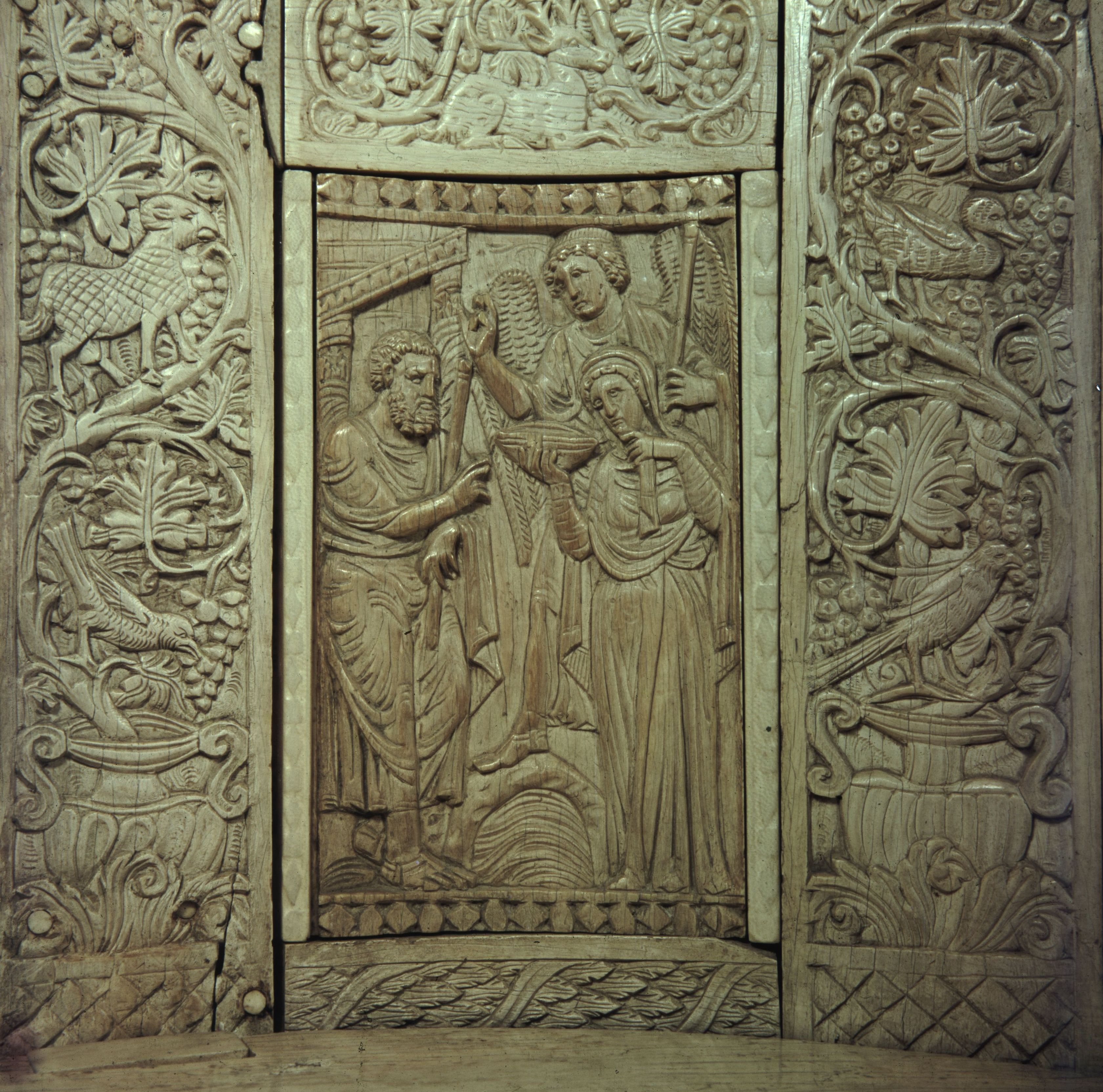
Trial by Bitter Water (Throne of Maximian)
Throne of Maximian (detail), Constantinople or Alexandria, ca. 545–53. Ivory. Archiepiscopal Museum, Ravenna, Italy. [view full throne]

Standing at the right, Mary holds a vessel in one hand and a skein of wool in the other. (The Protoevangelium says she was among the young women who wove a new veil for the holy of holies.) Joseph stands across from her with a staff in hand, and behind her stands an angel, indicating divine intervention to determine guilt or innocence.  

Around the same time, the trial by bitter water appeared in another ivory made in the Eastern Mediterranean—possibly Syria.
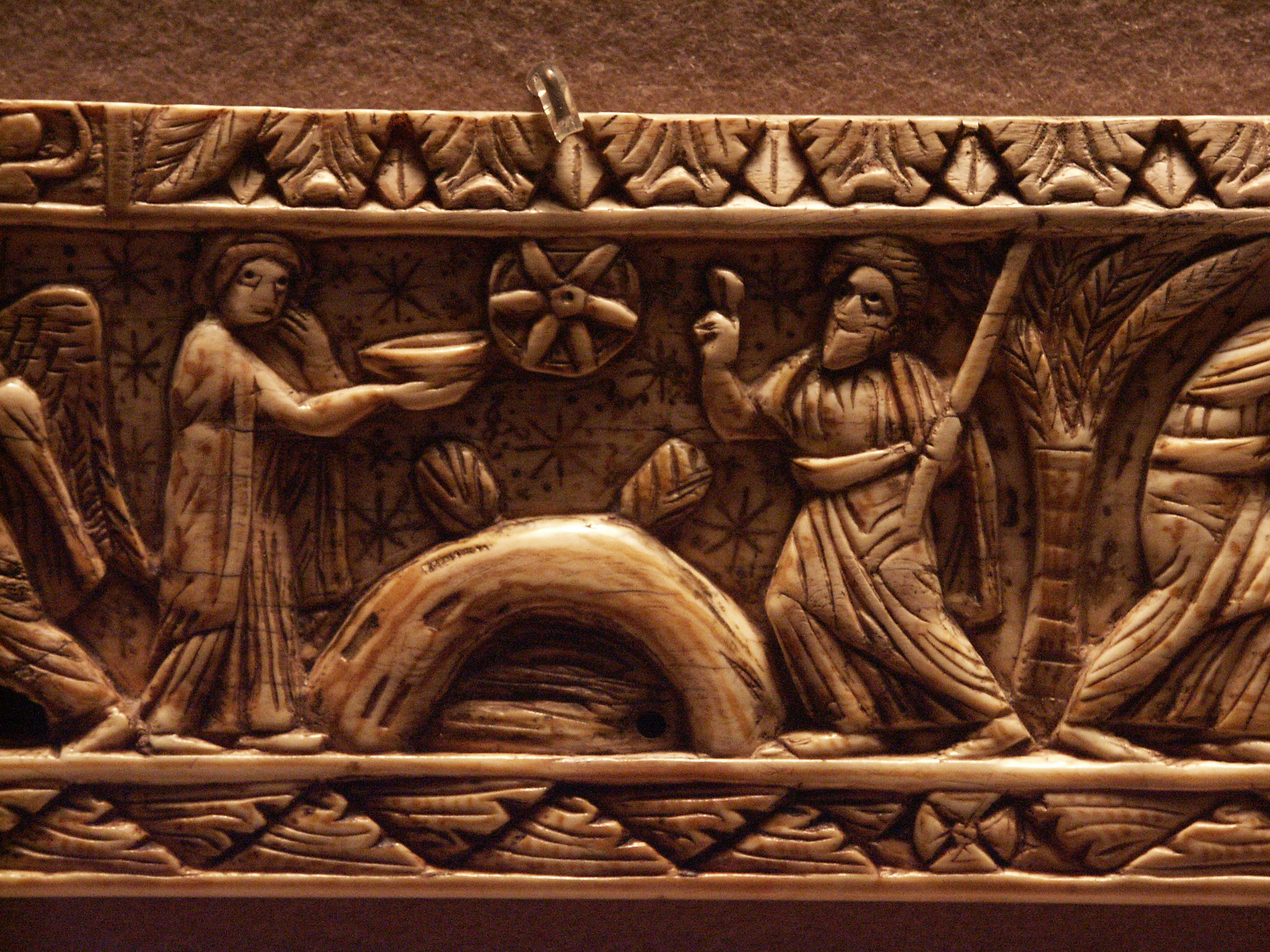
Trial by Bitter Water (Louvre)
Detail of an ivory band depicting the Trial by Bitter Water, Eastern Mediterranean (Syria?), 550–600. Musée du Louvre, OA 11149. [view full artwork]

And in a sequence of Marian scenes on a carved ivory Gospel-book cover from France.
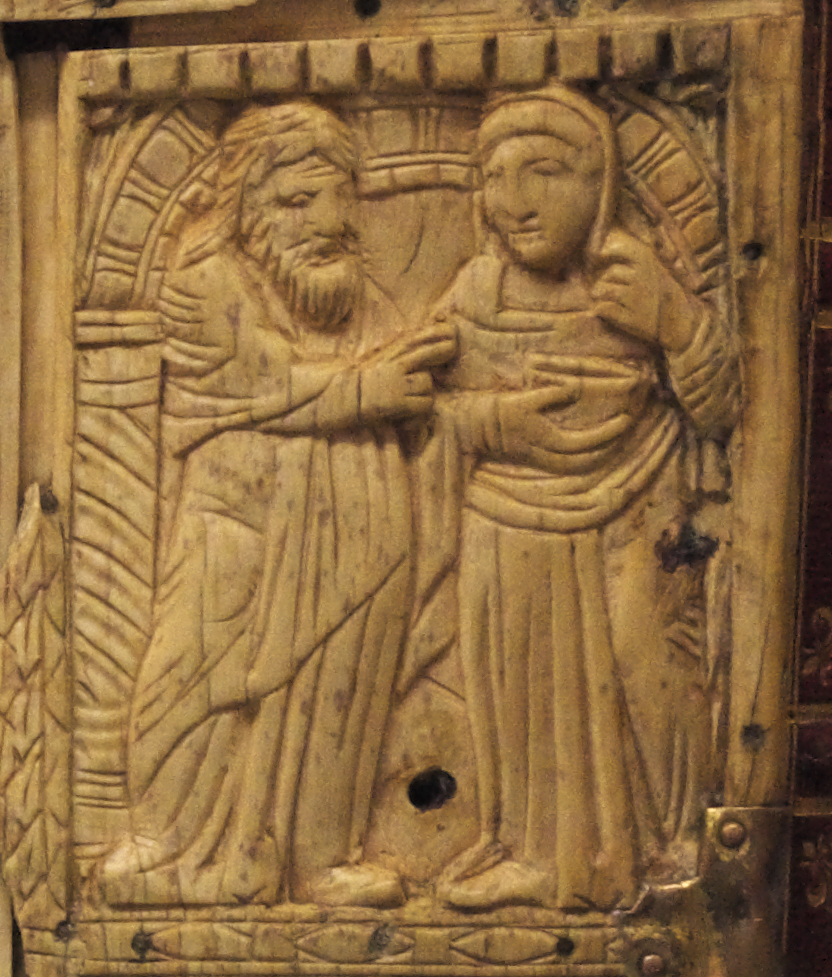
Trial by Bitter Water (Lupicin Gospels)
Ivory panel from the back cover of the Lupicin Gospels, France, 6th century. Bibliothèque nationale de France, Paris. [view full cover]

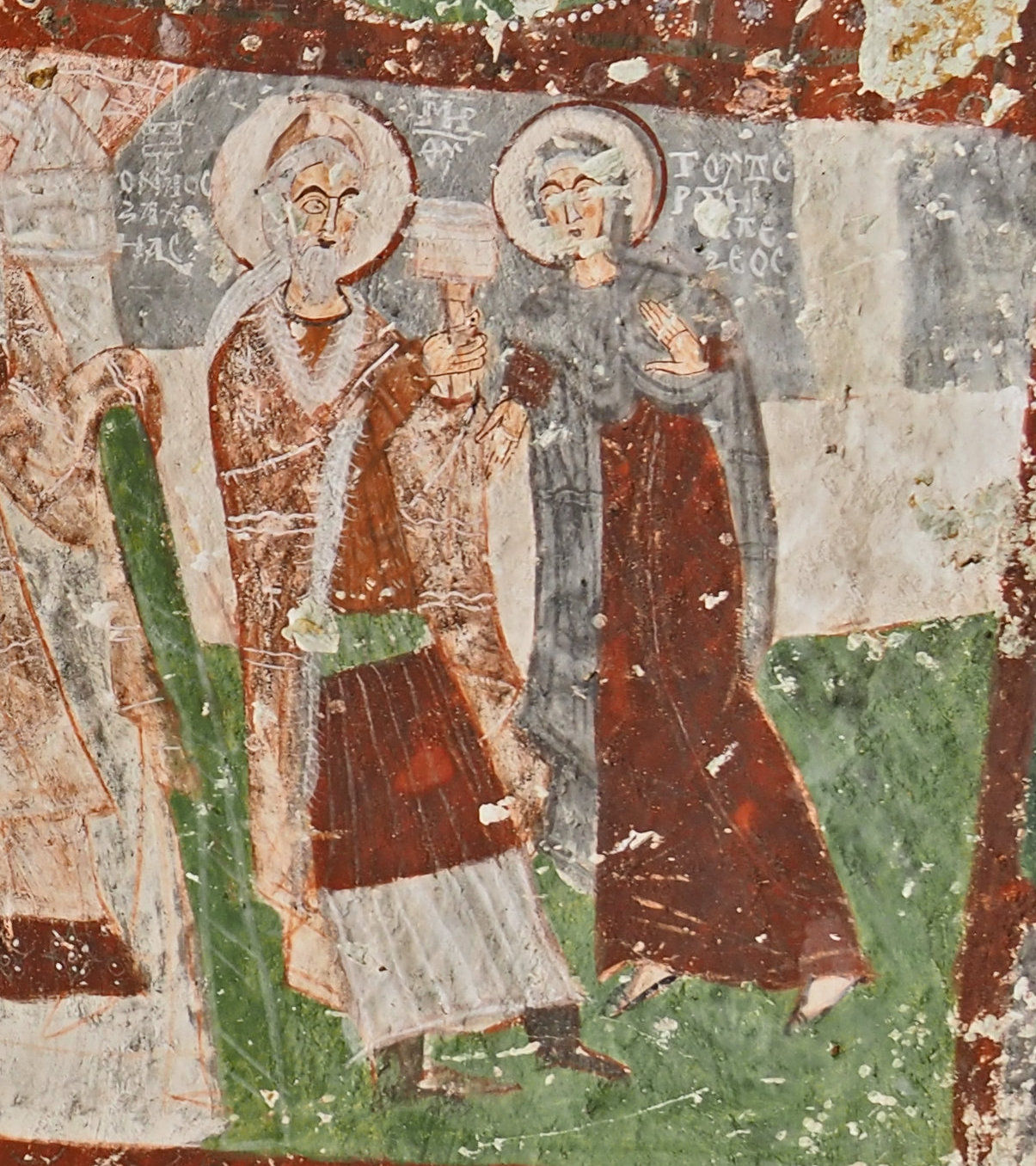
The scene is found painted inside several of the cave churches of Cappadocia from the ninth through eleventh centuries, including St. Eustathios, Tokalı (see below), Kılıçlar, Bahattin Samanlığı, Aynalı, Eğritaş, and Pürenli Seki, as the art historian Yıldız Ötüken has pointed out.

In Old and “New” Tokalı Kilise (Buckle Church), the latter built as an extension forty years after the original, Joseph drinks the bitter water as well as Mary, as the apocryphal gospels state but which is rarely shown.
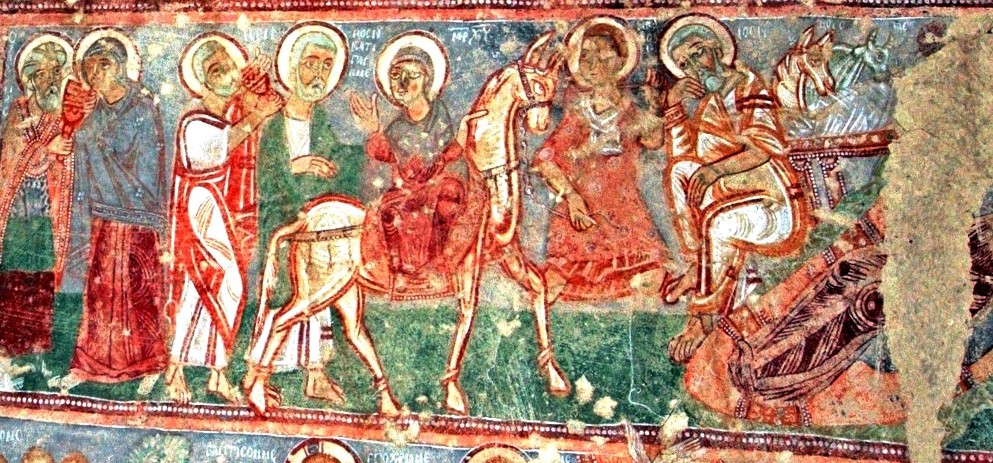
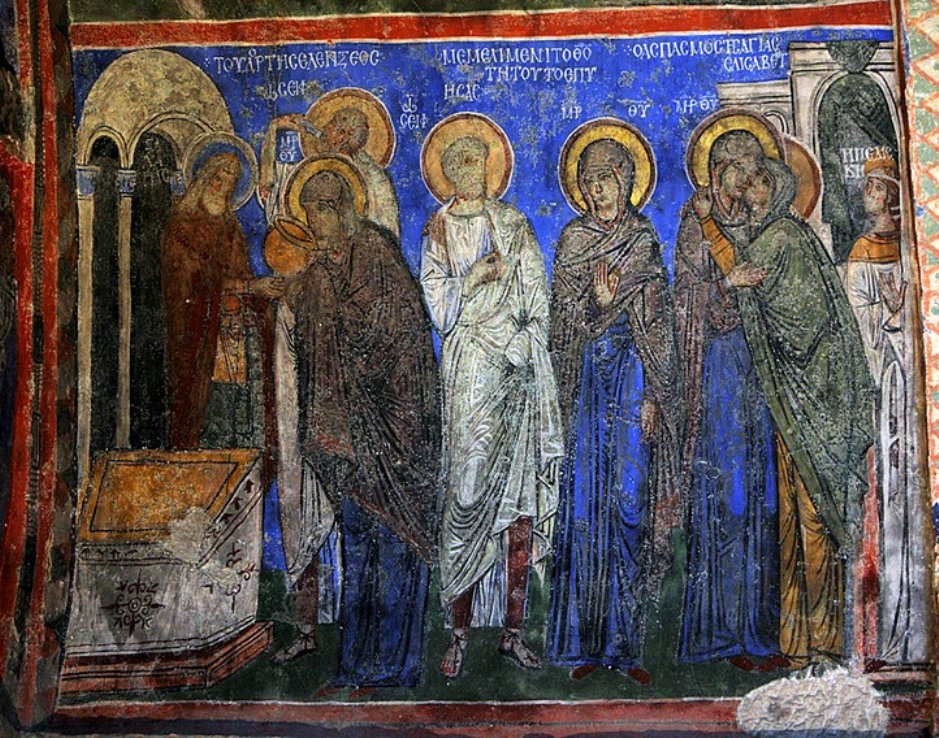
Trial by Bitter Water (Old Tokali)
Fresco, ca. 920, south wall, Old Tokalı Kilise (Buckle Church), Göreme Open Air Museum, Cappadocia, Turkey [view wider shot]

Trial by Bitter Water (New Tokali)
Fresco, ca. 960, New Tokalı Kilise (Buckle Church), Göreme Open Air Museum, Cappadocia, Turkey

So, too, at Çavuşin Church:

Trial by Bitter Water (Çavuşin)
Fresco, mid-10th century, Çavuşin Church, Göreme National Park, Cappadocia, Turkey [view wider shot]

But not at Pancarlik Church:

Trial by Bitter Water (Pancarlik Church)
Fresco, 11th century, Pancarlik Church, Cappadocia, Turkey [view wider shot]

The trial by bitter water also appears elsewhere in the Balkans, such as in Georgia and North Macedonia.
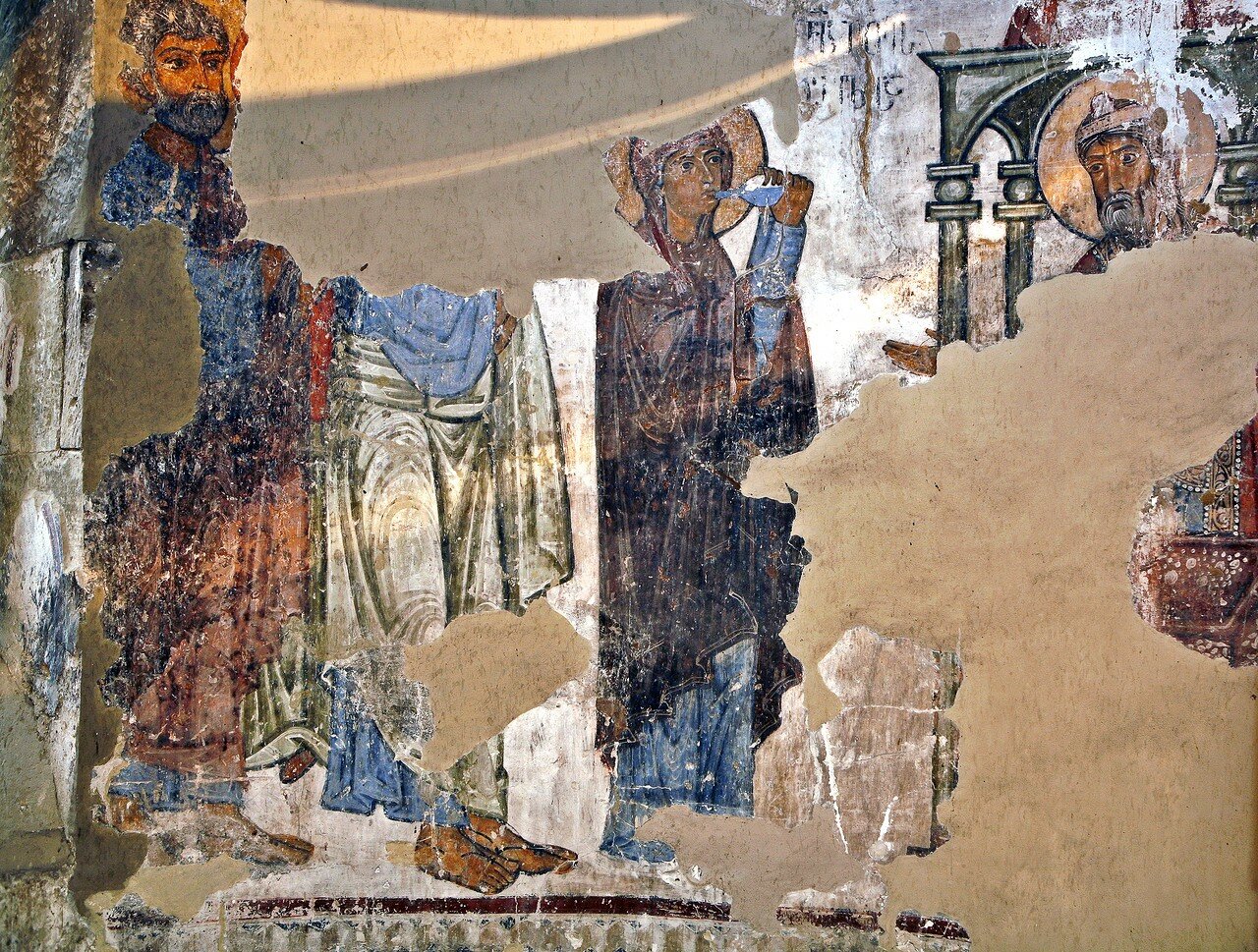
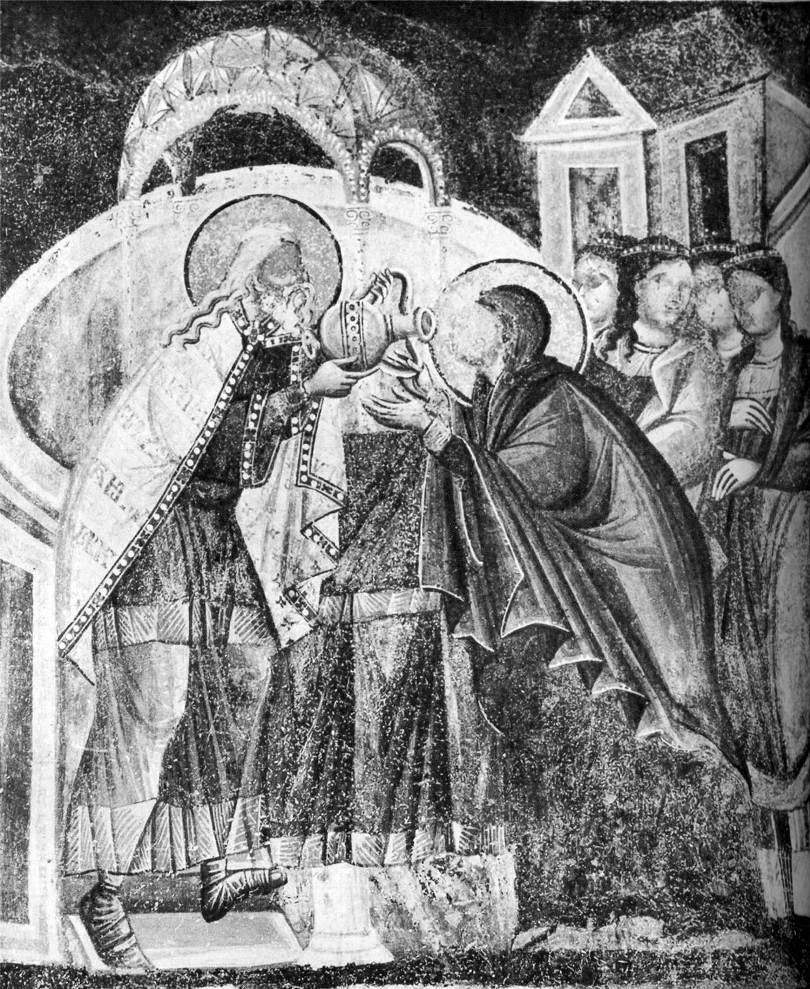
Trial by Bitter Water (Ateni, Georgia)
Fresco, 11th century, Church of the Dormition of the Virgin Mary, Ateni, Georgia

Trial by Bitter Water (Balkans)
I’m not able to confirm, but blogger Marina Golubina says this is a 13th-century fresco from Sušica (near Skopje) in North Macedonia.

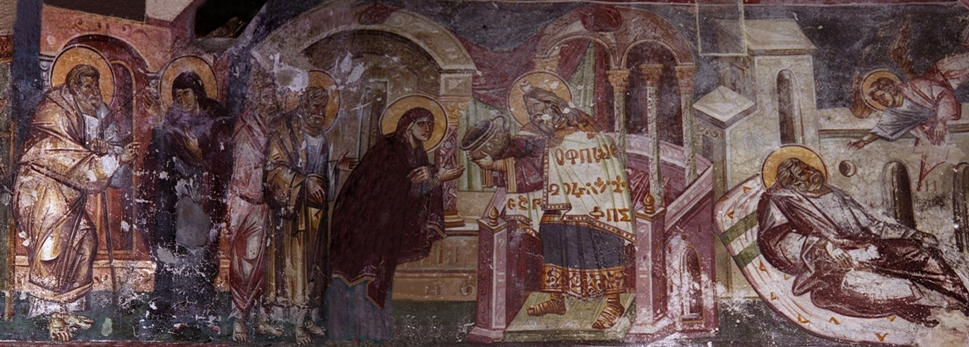
Joseph's Reproach, Trial by Bitter Water, Joseph's Dream
Michael Astrapa and Eutychius, Joseph’s Reproach, the Trial by Bitter Water, and Joseph’s Dream, 1295. Fresco, north wall, Church of the Virgin Mary Peribleptos, Ohrid, North Macedonia.

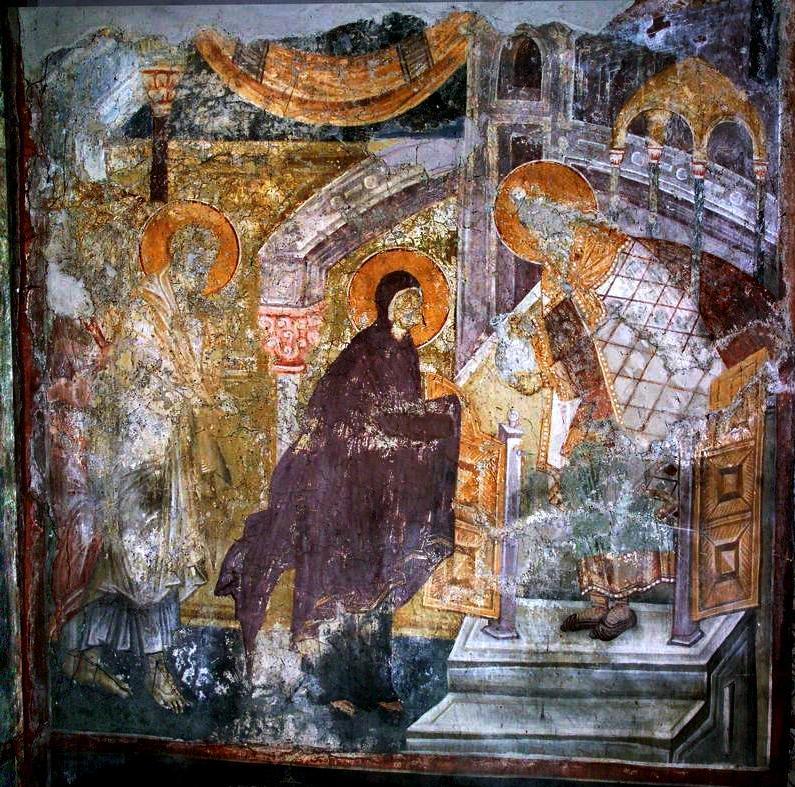
Trial by Bitter Water (Macedonia)
Fresco, 1330, Church of the Presentation of the Virgin in the Temple, Kucevište, North Macedonia

In that second image in the above grouping, Mary is accompanied to the temple by her five (four?) virgin companions, named in the Gospel of Pseudo-Matthew as Rebecca, Sephora, Susanna, Abigea, and Cael.

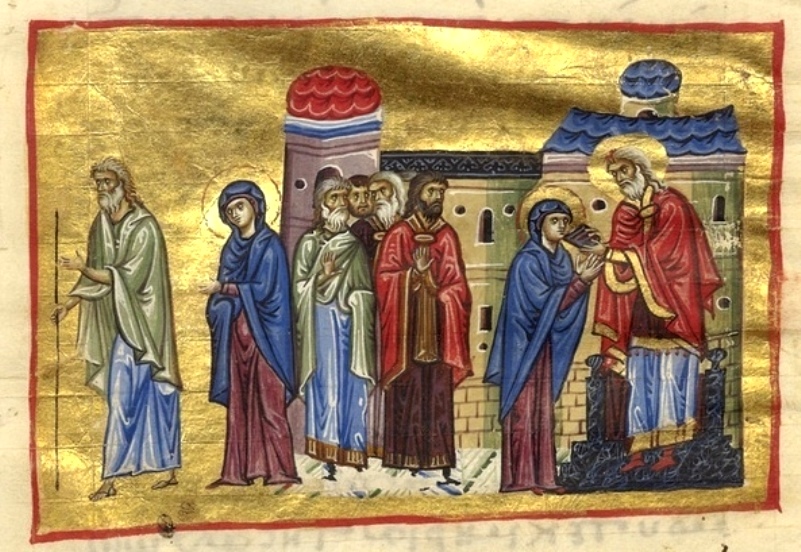
Due to overlapping content, the Protoevangelium of James is illustrated in detail in the twelfth-century manuscript Six Homilies on the Life of the Virgin by James of Kokkinobaphos, which was made by a prominent atelier in Constantinople and is held at the Vatican Library. The trial by bitter water is divided into two separate scenes: one of Joseph drinking the cup and being escorted up the mountain, and one of Mary doing the same.
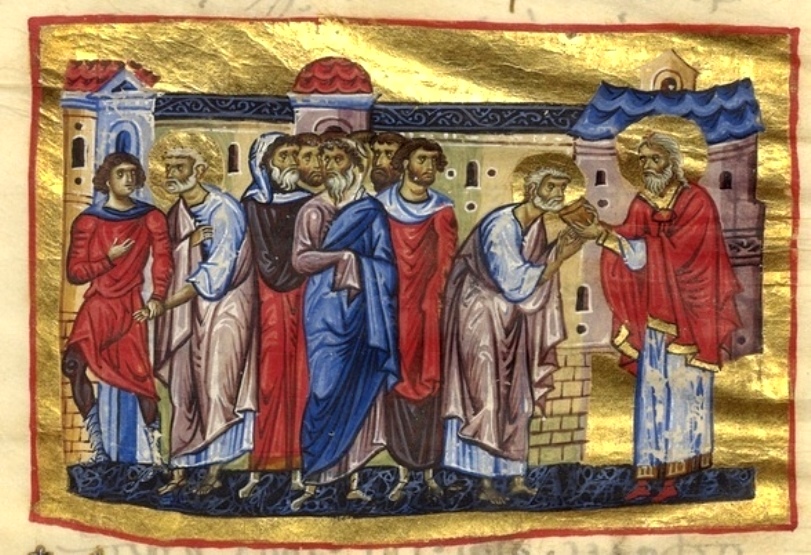
Trial by Bitter Water (Joseph) (Vatican)
Joseph drinks the cup from Zechariah, Constantinople, first half of 12th century. From a manuscript of the Six Homilies on the Life of the Virgin by James of Kokkinobaphos. Rome, Biblioteca Apostolica Vaticana, Vat. gr. 1162, fol. 184r. [object record]

Trial by Bitter Water (Mary) (Vatican)
Mary drinks the cup from Zechariah, Constantinople, first half of 12th century. From a manuscript of the Six Homilies on the Life of the Virgin by James of Kokkinobaphos. Rome, Biblioteca Apostolica Vaticana, Vat. gr. 1162, fol. 188r. [object record]

Other scenes in the sequence portray Joseph’s dream, Joseph consulting with his sons, Joseph apologizing to Mary, Annas the scribe confronting Joseph and the pregnant Mary, Annas reporting the couple to the high priest Zechariah, Mary and Joseph being brought to the temple, Zechariah talking with Joseph, Zechariah talking with Mary, and after the drink, Mary returning unharmed and Zechariah proclaiming her innocence, and then Mary, Joseph, and Joseph’s sons leaving Jerusalem.

On occasion, the trial by bitter water appears in Russian icons, such as on the walls of St. Sophia Cathedral in Vologda.
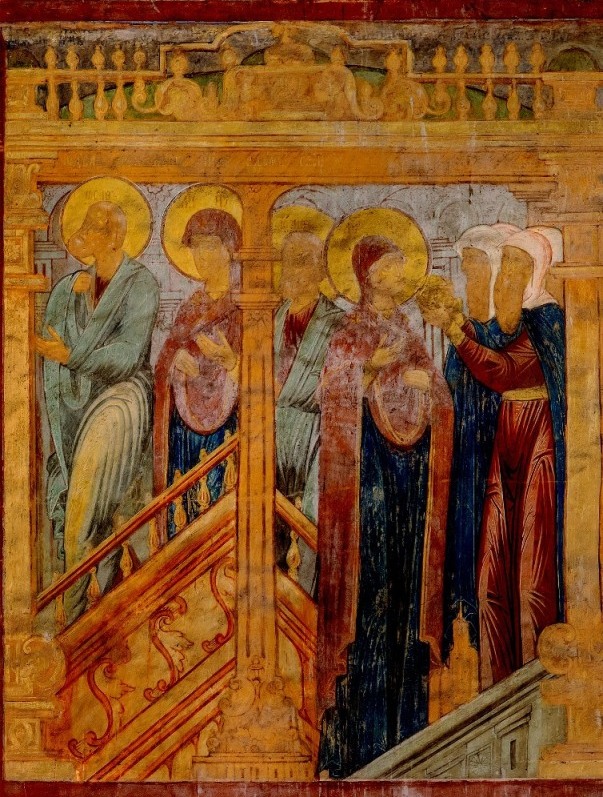
Trial by Bitter Water (Russia)
Fresco, 1685–87, St. Sophia Cathedral, Vologda, Russia

I first encountered it, though, in my studies of Ethiopian art, where it appears in a handful of illuminated manuscripts.
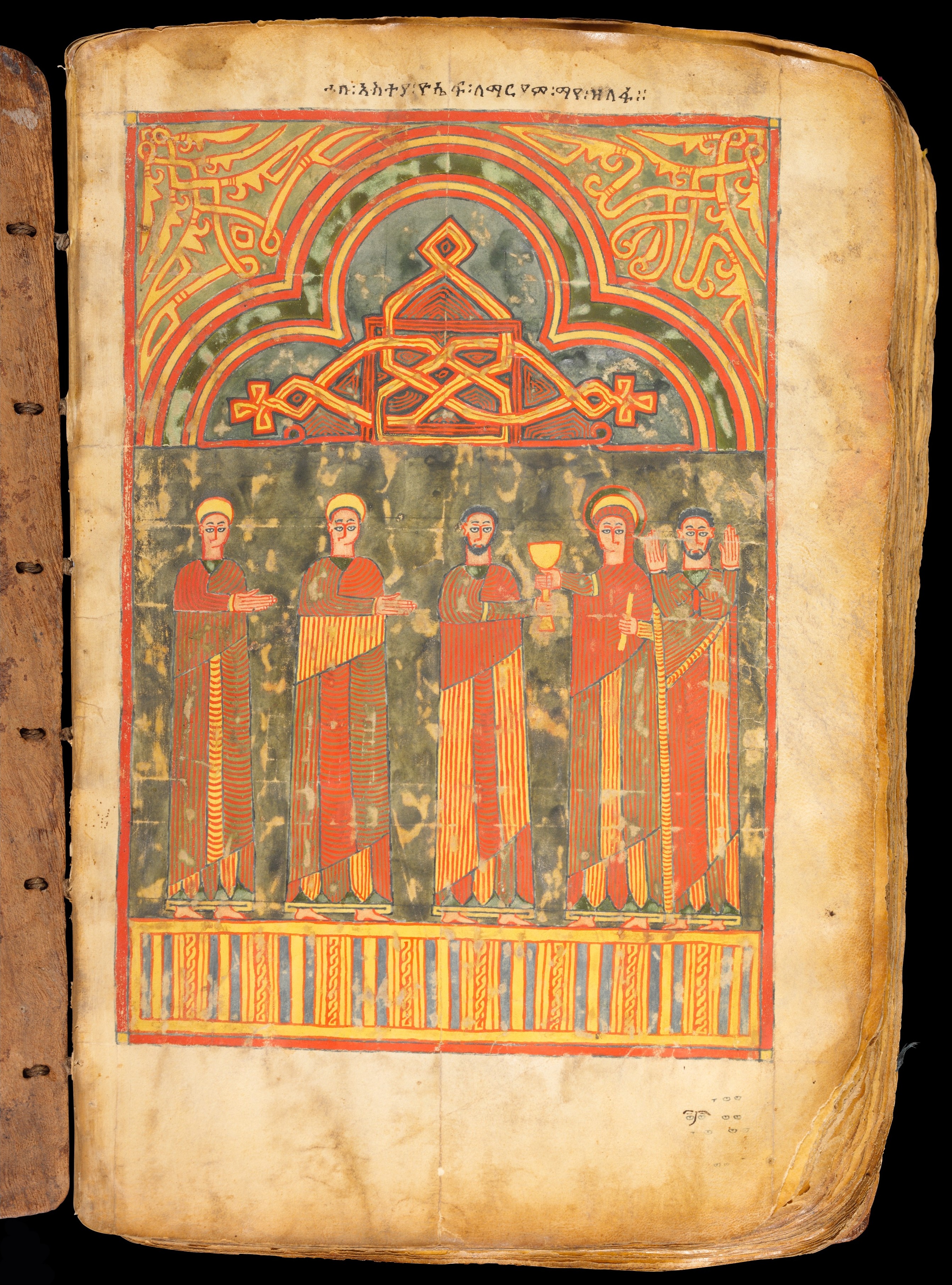
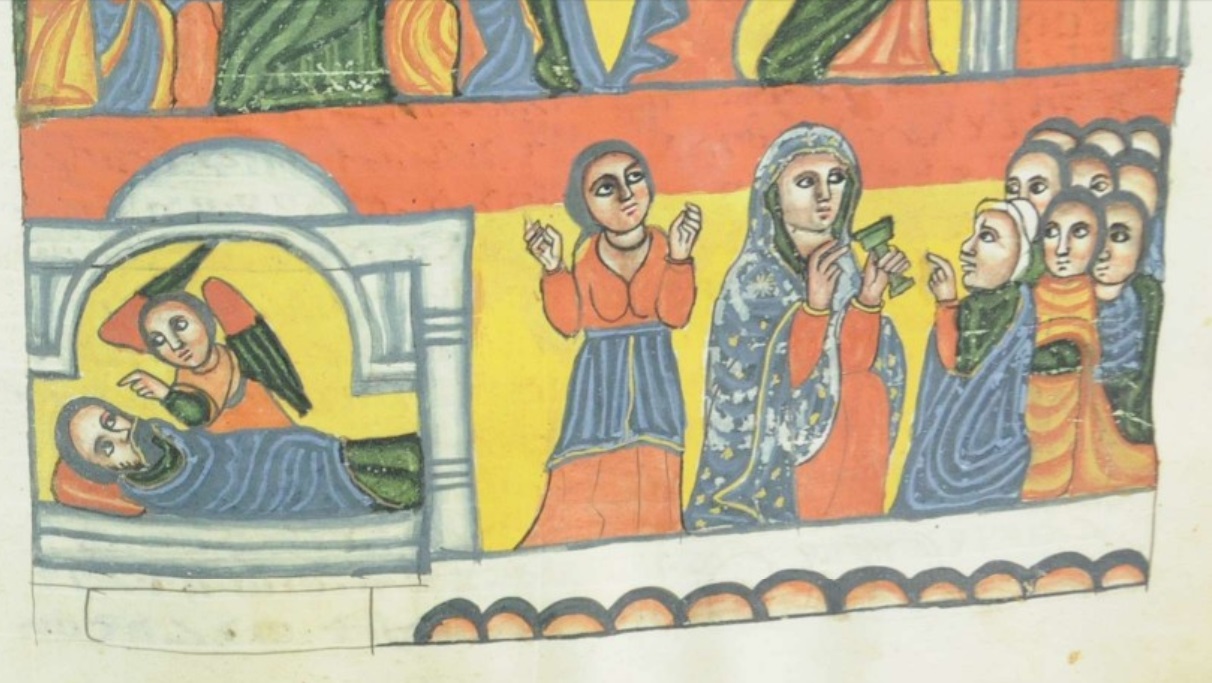
Trial by Bitter Water (Ethiopia)
The Trial by Bitter Water, from an Ethiopian Gospel-book, late 14th–early 15th century. Metropolitan Museum of Art, New York.

Trial by Bitter Water (Ethiopia)
Painting from a Miracles of Mary manuscript, Ethiopia, probably 18th century. Dimā Giyorgis Monastery, Goğğām Province, Ethiopia. Shelfmark: G2-IV-2.

The trial by bitter water is almost nonexistent in Western art. One exception is a fresco inside the Church of Santa Maria foris portas (Church of St. Mary Outside the Gates) in Castelseprio, Italy. All the frescoes there, which are some of the most sophisticated and expressive to have survived from the early medieval period, exhibit a strong Byzantine influence.

Trial by Bitter Water (Castelseprio)
Fresco, first half of 9th century, Church of Santa Maria foris portas (Church of St. Mary Outside the Gates), Castelseprio, Italy. Photo: Francesco Bini.

A mosaic at the Basilica of San Marco (Saint Mark’s) in Venice could easily be mistaken for the trial by bitter water, as Mary appears to be taking in hand the same pitcher with which she draws water from the well in the adjacent Annunciation scene.
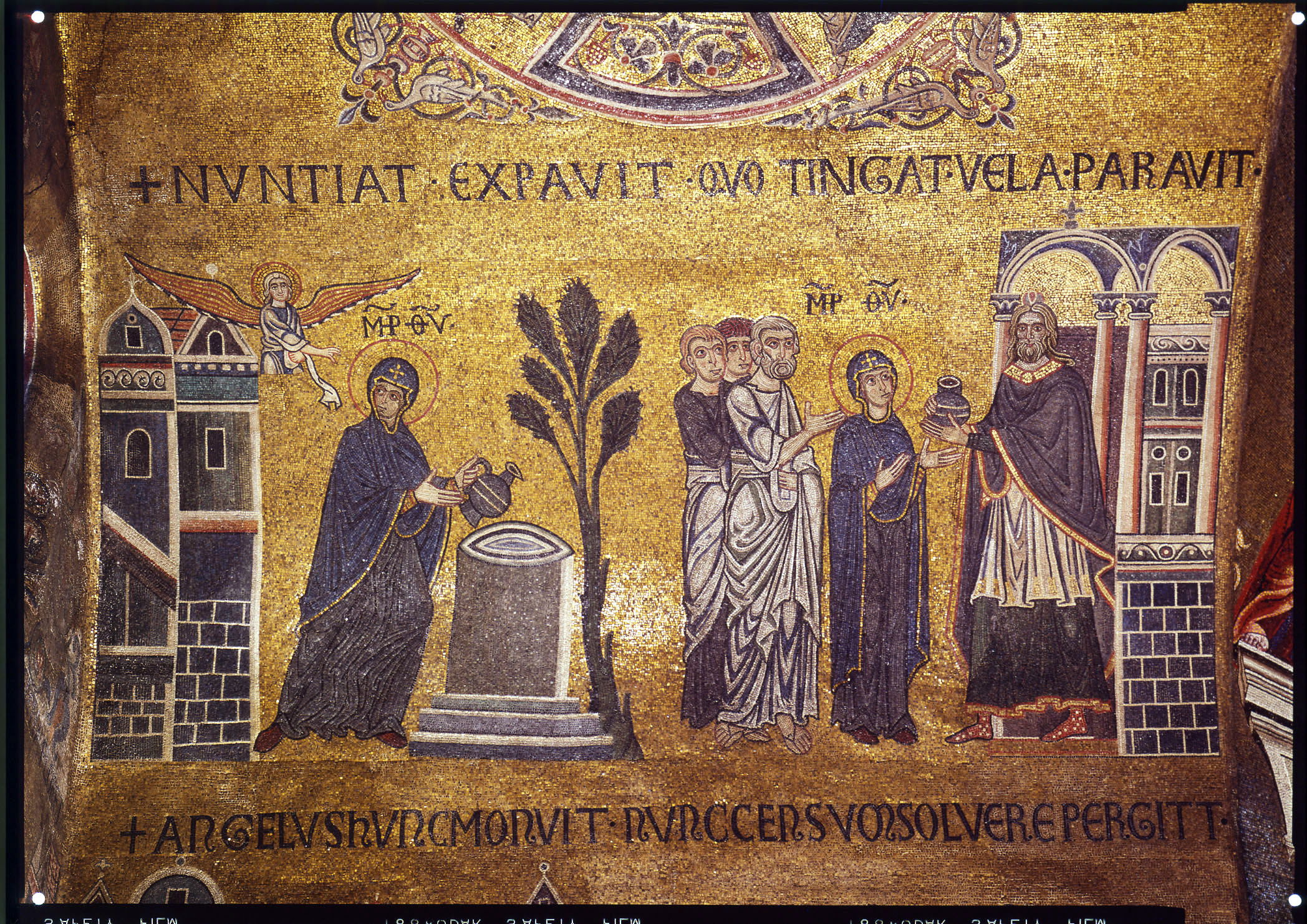
Annunciation at the Spring (San Marco, Venice)
The Annunciation at the Spring and the Handing Over of Purple to Mary, detail of transept mosaic in the Basilica of San Marco, Venice, 12th century

But the Latin inscription, Quo tingat vela paravit, indicates that the priest is handing Mary a vase of dye. This is another reference to the Protoevangelium: Chapter 10 says that after her betrothal to Joseph but before their marriage, Mary was one of seven virgins from the house of David selected by a council of priests to remake the temple veil (presumably to replace the old worn one). By lot, she was chosen to spin and weave the scarlet and purple.

Other comparable images, such as the mosaic at the former Chora Church (now Kariye Mosque) in Istanbul, show the priest handing Mary a skein of wool instead.

According to the Protoevangelium, Mary was spinning wool for this project when she was interrupted by the angel Gabriel with news of an even greater task she had been chosen for.

Those who disbelieved her about how her pregnancy came to be insisted she be brought to the temple for a trial by bitter water. Sometimes in image cycles on the life of Mary, such as the one on the Carolingian-era Werden Casket, she is shown on her way to the trial rather than at it, being led to the temple by an angel, priest, or moral police to verify her account before God.

Credit goes to Marina Golubina for compiling the vast majority of these images in a blog series (in Russian): Part 1, Part 2, Part 3, Part 4, Part 5, Part 6, Part 7, Part 8, Part 9, Part 10, Part 11, Part 12, Part 13, Part 14, Part 15, Part 16. As always, I have linked each image to its online source and have done my best to provide captioning info.


NOTES

  1. When Christians claim that the Bible opposes abortion, some people point to Numbers 5:11–31 as a counterexample, since, for the woman who has conceived a child out of wedlock, the “bitter water” is essentially an abortifacient; “if you have gone astray while under your husband’s authority, if you have defiled yourself and some man other than your husband has had intercourse with you, . . . now may this water that brings the curse enter your bowels and make your womb discharge, your uterus drop!” the priest pronounces (Num. 5:20, 22 NRSV). There’s ambiguity in the Hebrew text as to whether this curse involves loss of a fetus or only infertility. ↩︎
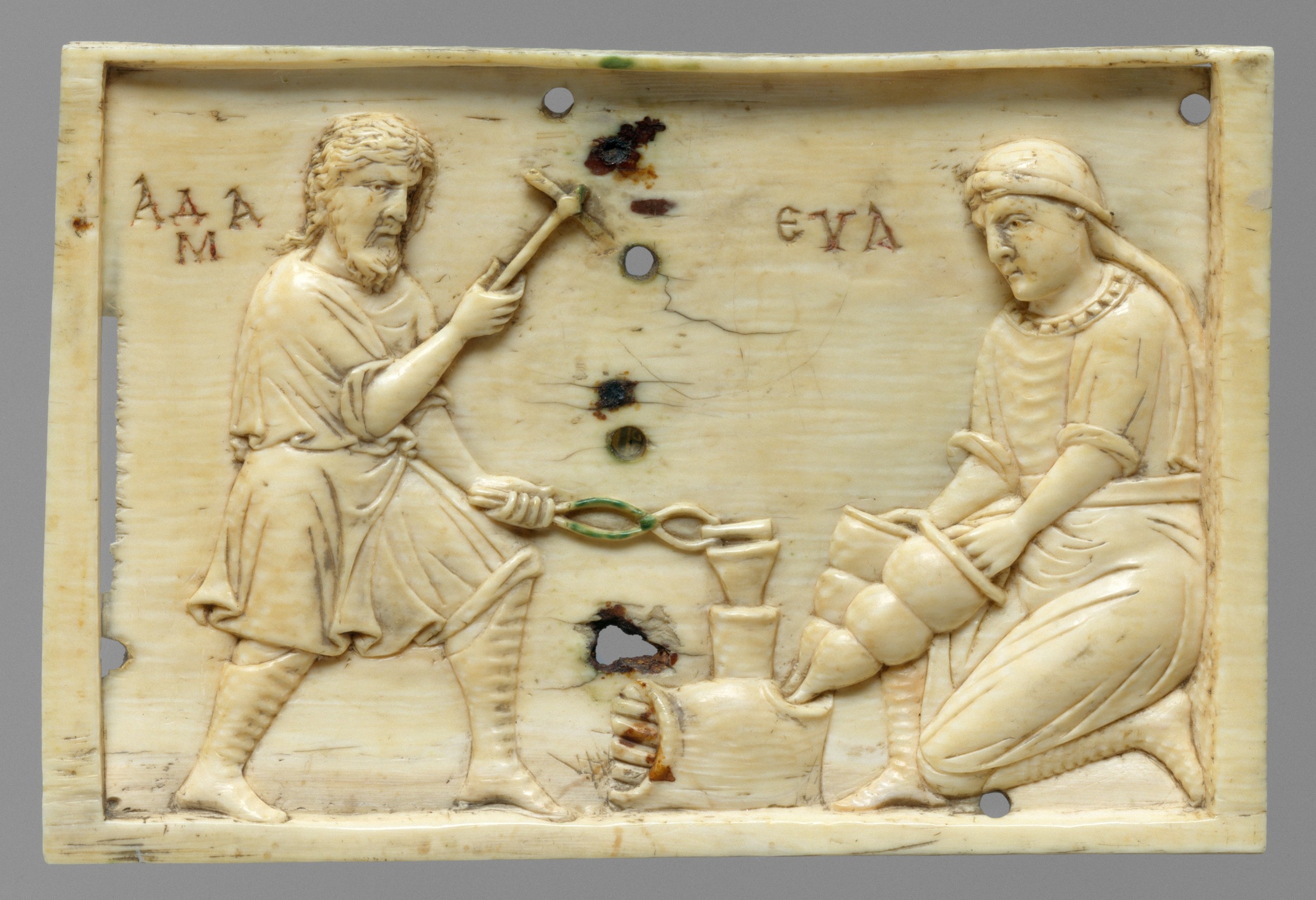
Adam and Eve at the Forge: Partners in Labor in Byzantine Ivories

For the past month I’ve been working on an essay that brings together a selection of over three dozen art-historical images of Adam and Eve at Labor—a subject that appeared as early as the fifth century—and provides theological commentary. I wanted to publish it shortly before Labor Day on September 1. Unfortunately, it won’t be finished in time. Whenever I researched a particular image, it opened up further avenues of research, and I’ve realized that I need to spend much more time reading and reflecting on the topic, including consulting more commentaries on Genesis 3 and medieval theologies of work, before writing.

Instead, allow me to simply share a Byzantine ivory panel that amazed me when I encountered it on the website of the Metropolitan Museum of Art a few years ago, which I saw in person on my last visit in January—a small little thing, just a few inches wide, and easy to miss in the large glass case in Gallery 300, except that I was specifically looking for it.

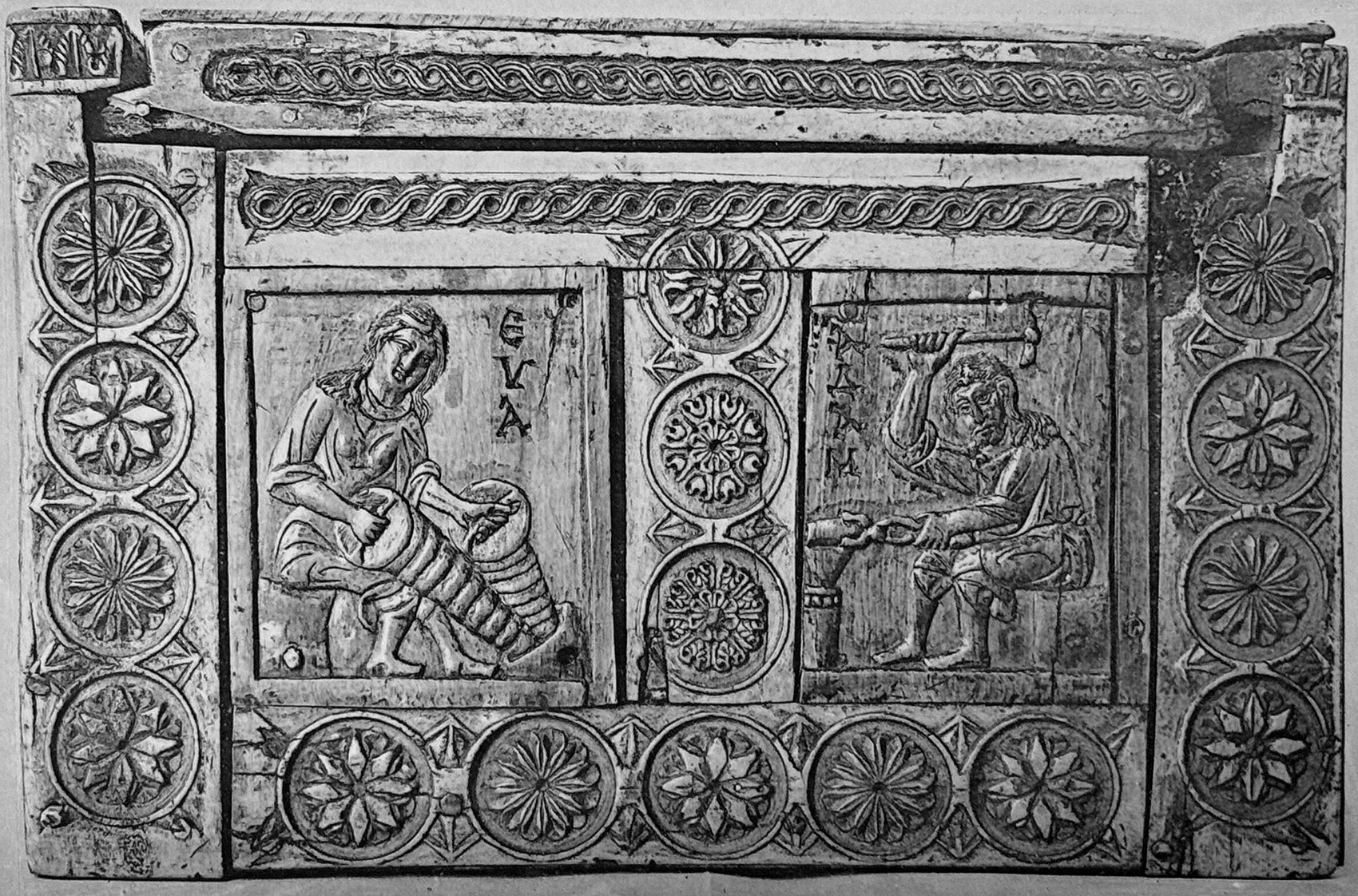
Adam and Eve at the forge
Adam and Eve at the Forge, panel from a small box made in Constantinople, 10th or 11th century. Ivory, gilt, polychromy, 2 9/16 × 3 7/8 × 3/16 in. (6.5 × 9.9 × 0.5 cm). Metropolitan Museum of Art, New York.

It shows Adam hammering iron over an anvil while Eve operates the bellows! Husband and wife co-laboring in a forge—she supplying strong blasts of air to the furnace, he shaping the metal.

This panel struck me because one, I had never seen a medieval image of a female blacksmith before (other than as a personification of Nature, from The Romance of the Rose), and two, the vast majority of images of Adam and Eve at work after the fall show Eve spinning wool or flax and/or breastfeeding while Adam tills the soil, reflecting gendered ideas about the division of labor. Occasionally Eve is shown working the land or harvesting its fruits alongside Adam, as in the Ripoll Bible, a Salerno ivory, a relief carving on the facade of Modena Cathedral, and another ivory panel from this same box—work that men and women in agricultural societies definitely shared then as now. But more often the primordial couple is shown participating in separate spheres of work—the fields versus the home—albeit side by side.

In the Middle Ages, blacksmithing was the domain of men. Sometimes the daughters or wives of male smiths worked alongside them in family-run forges, but they were not permitted to join the guilds.

The Met ivory is a rare egalitarian picture of husband and wife engaged together in a muscular, creative task that contributes to their mutual survival and the betterment of society. Their resourcefulness, ingenuity, hard work, and cooperation are highlighted.

The detached panel is from a luxury box made for an elite Christian client in Constantinople for storing coins, jewelry, or other valuables. A small group of such boxes depicting scenes from the lives of Adam and Eve survives from the tenth and eleventh centuries. It’s possible the box that this smithing panel comes from was a wedding gift, as it espouses the virtue of teamwork in marriage. “Such caskets could have belonged to young couples embarking on a new life together,” writes Ioli Kalavrezou in The Glory of Byzantium: Art and Culture of the Middle Byzantine Era, A.D. 843–1261. “The story of Adam and Eve could have reminded them of the difficulties they would encounter but at the same time spurred them on to an industrious and, it was to be hoped, prosperous existence.”

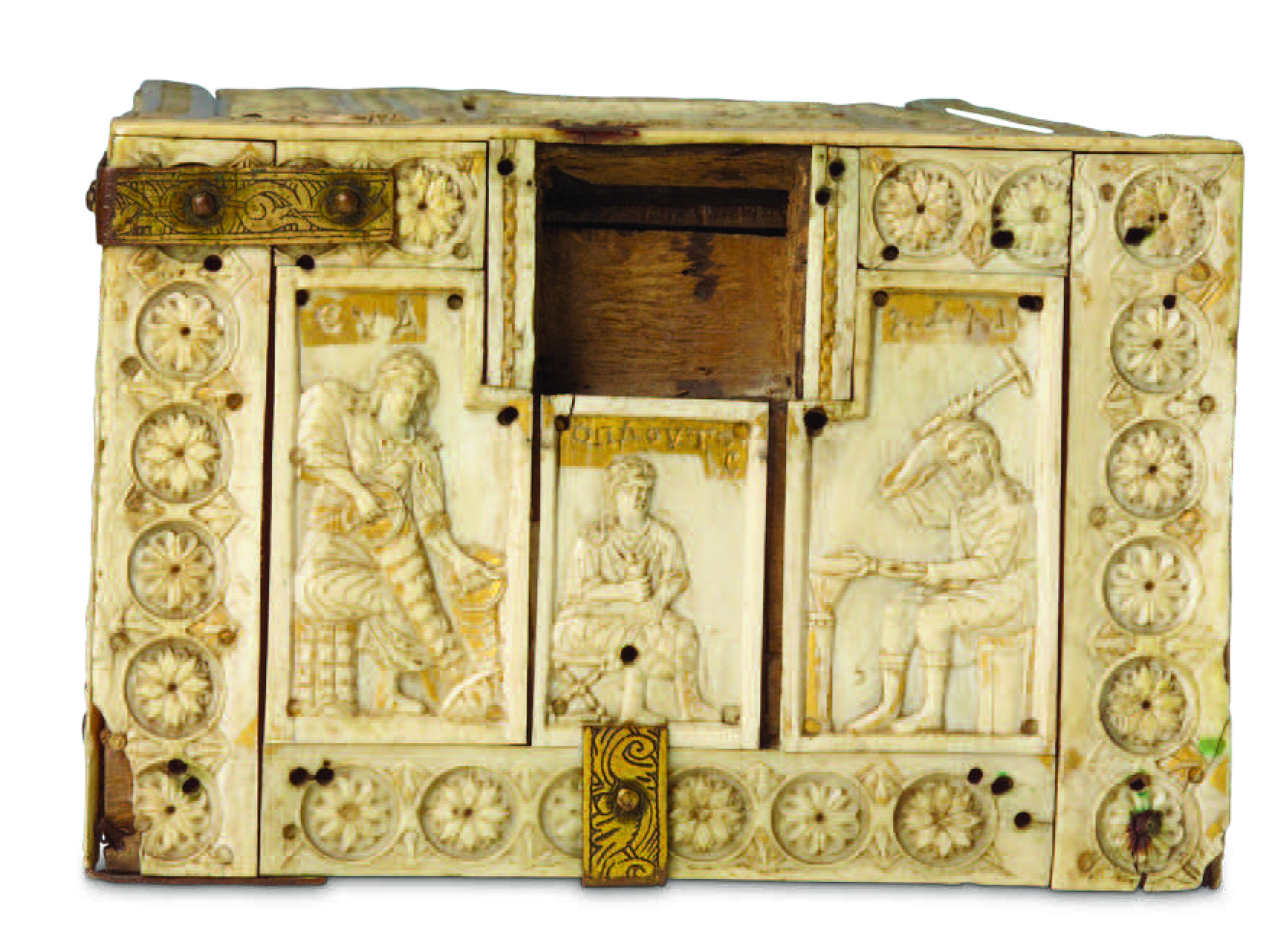
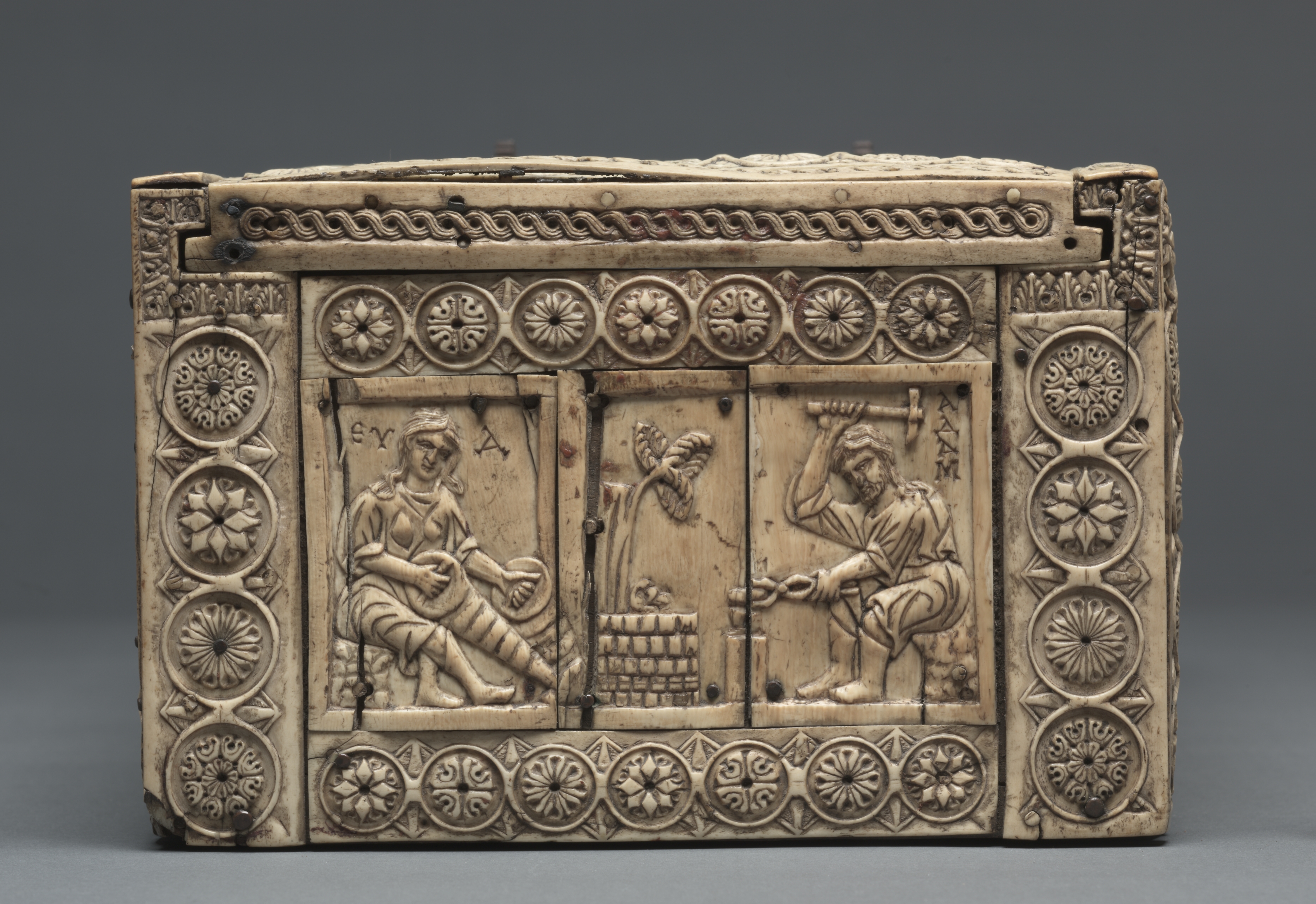
In the essay “The Origin of the Crafts According to Byzantine Rosette Caskets,” historian Justin Wilson examines Byzantine views about the origin of the primordial crafts (technai) of farming and metallurgy, especially by looking at select scenes from three related ivory boxes: from the Cleveland Museum of Art in Ohio in the United States, the State Hermitage Museum in Saint Petersburg, Russia, and the Hessisches Landesmuseum Darmstadt in Germany. All three contain a scene of Adam and Eve at the forge.

Adam and Eve blacksmithing (Cleveland casket)
Right (short) side of a rosette casket with scenes of Adam and Eve, Constantinople, ca. 975–1025. Ivory, wood, overall 5 5/8 × 18 3/8 × 8 in. (14.3 × 46.7 × 20.3 cm). Cleveland Museum of Art, Ohio.

Adam and Eve blacksmithing (Saint Petersburg casket)
Right (short) side of a rosette casket with scenes of Adam and Eve, Constantinople, ca. 975–1025. Ivory, wood, traces of gilding, overall 5 × 18 5/16 × 7 9/16 in. (12.7 × 46.5 × 19.3 cm). State Hermitage Museum, Saint Petersburg.

Adam and Eve blacksmithing (Darmstadt casket)
Right (short) side of a rosette casket with scenes of Adam and Eve, Constantinople, ca. 1000–1025. Wood, ivory, overall 5 × 18 × 7 1/2 in. (12.5 × 46 × 19 cm). Hessisches Landesmuseum Darmstadt, Germany. Photo: Wolfgang Fuhrmannek.

For the anonymous artists of these boxes, Wilson writes, “blacksmithery symbolizes how human labor reshapes the world.”

The scene on the Darmstadt casket features a third figure between the couple: Plutus, the Greek god of wealth and abundance, holding a moneybag. In his 1899 study of the Adam and Eve chests, the classical archaeologist Hans Graeven proposed that Plutus signifies the valuable contents presumably kept inside the chest; art historian Josef Strzygowski agreed, suggesting that the god was meant to be read in relation not to Adam and Eve but to the chest’s lock (now missing), under which he was placed.

Wilson adds that Plutus, traditionally associated with good fortune, signals the prosperity of postlapsarian life—that although we lost Eden and must sweat and toil for our bread, humanity can still thrive. In the words of the late pastor Tim Keller in his book Every Good Endeavor, “Whenever we bring order out of chaos, whenever we draw out creative potential, whenever we elaborate and ‘unfold’ creation beyond where it was when we found it, we are following God’s pattern of creative cultural development,” and there’s blessedness in that.

Open-Access Image Archive of Middle Eastern Art, Architecture, and Archaeology

Based at the Faculty of Classics at the University of Oxford, the Manar al-Athar (“Guide to Archaeology”) digital archive provides high-resolution photographs of archaeological sites, buildings, and art from the Levant, North Africa, the Caucasus, and the Balkans, covering the time of Alexander the Great (ca. 300 BCE) through the Byzantine and early Islamic periods, with special emphasis on late antiquity. All the images are freely downloadable, made available for teaching, research, and academic publication under a Creative Commons Attribution-NonCommercial-ShareAlike 2.0 UK (CC BY-NC-SA 2.0) license.

Manar al-Athar was established in 2012 by Dr. Judith McKenzie (1957–2019) and since 2020 has been directed by Dr. Ine Jacobs. It is in continuous development. The photos are cataloged by geographical region and are labeled in both English and Arabic. They picture a range of historical structures—some intact, others in ruins; both interiors and exteriors, where applicable—including mausoleums, churches, mosques, khanqahs (Sufi lodges), hammams (public bathhouses), palace complexes, madrasas (colleges for Islamic instruction), forums, fountains, cisterns, aqueducts, civic buildings, theaters, markets, fortifications, and hostels.

Of primary interest to me is the Christian art from churches and tombs, from countries such as Egypt, Syria, Turkey, Armenia, Georgia, and Serbia, and Jewish art that pictures stories from the Hebrew Bible.

Unfortunately, the subjects of the artworks aren’t labeled and there’s no commentary or transcription/translation of inscriptions, nor are the buildings or artworks dated. Inevitably, many of the frescoes and mosaics have degraded with age, sometimes making the iconography difficult to read. There’s also no way to filter by religion; Christianity accounts for only a portion of the images, with others coming from Jewish, Islamic, or pagan traditions, and a number are from nonreligious contexts. I’d love to see a more robust tagging system and advanced searchability functions as the archive continues to evolve.

The archive is by no means comprehensive, but I hope it will encourage further scholarship and attract more digital image donations.

Below is a sampling of the hundreds of images you can find on the Manar al-Athar website.


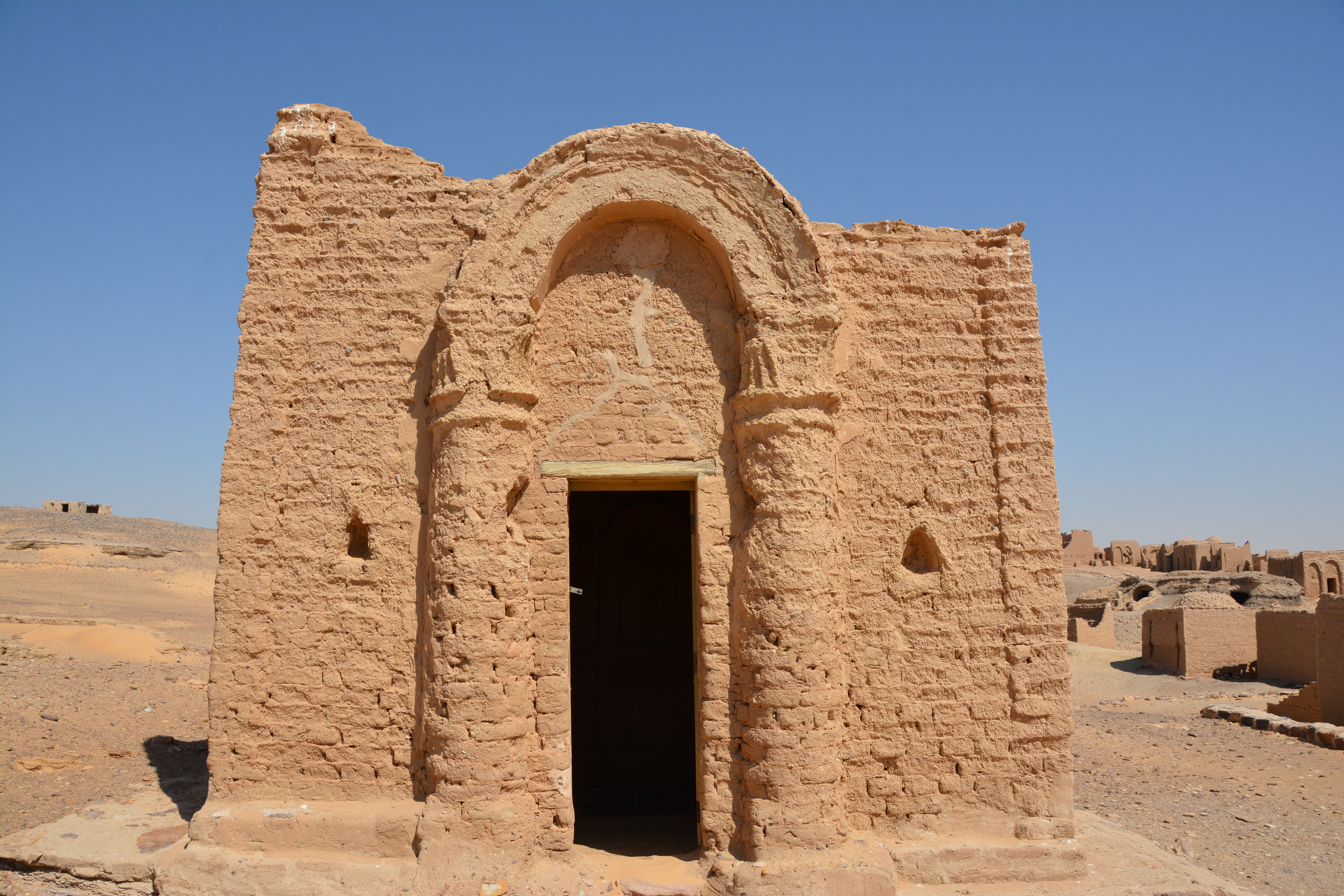
One of the earliest surviving and best-preserved Christian cemeteries in the world, used by Christians from the third to eighth centuries, is Bagawat Necropolis in the Kharga Oasis in Egypt’s Western Desert. The Chapel of Peace is one of 263 mud-brick funerary chapels in the cemetery, celebrated for the painting of biblical, early Christian, and allegorical figures inside its dome.

Chapel of Peace (Bagawat, Egypt)
The Chapel of Peace, a monumental Christian tomb at Bagawat Necropolis, Kharga Oasis, Egypt, built 5th or 6th century. Photo: Mohamed Kenawi / Manar al-Athar.

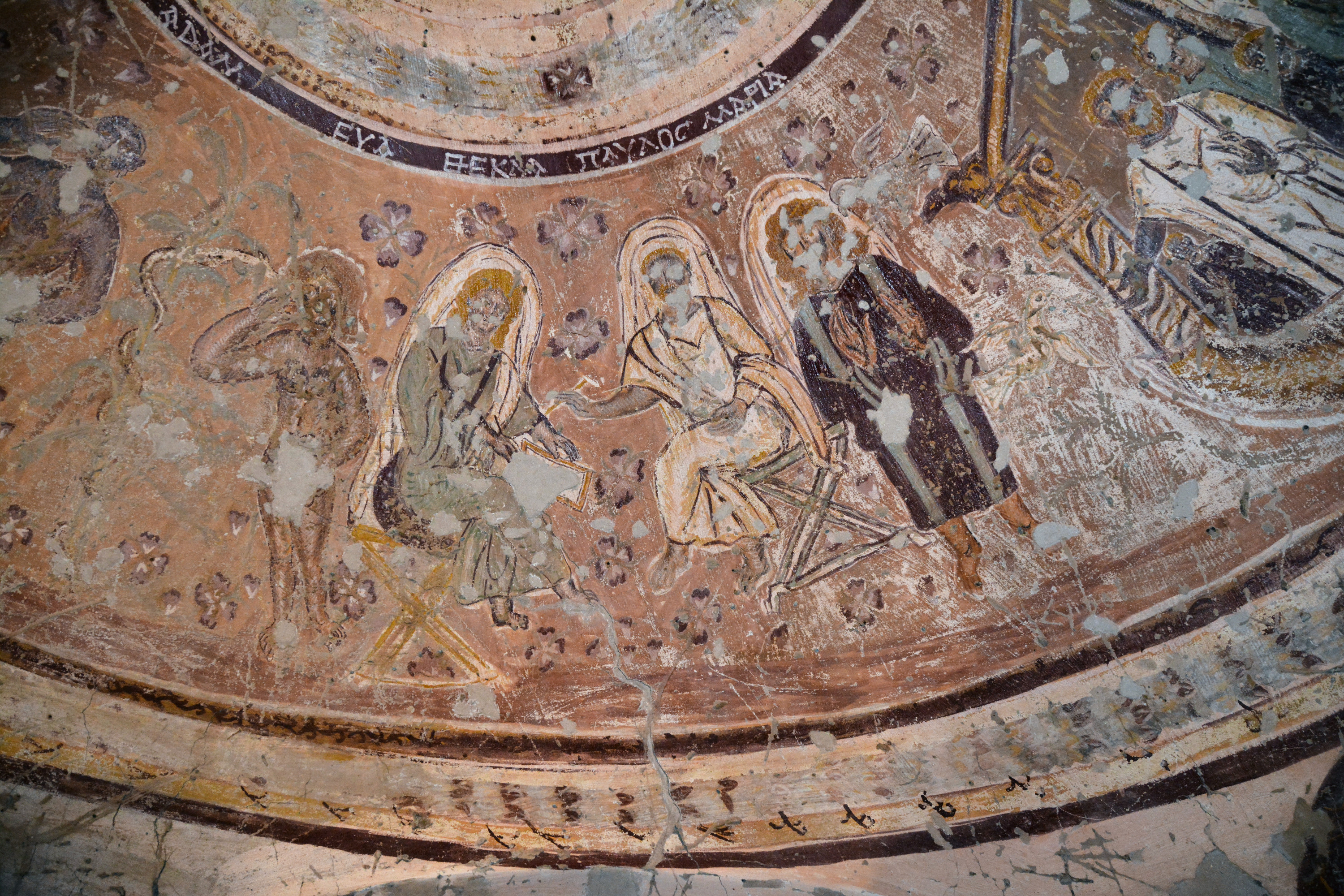
Paul and Thecla (Chapel of Peace)
Dome fresco detail from the Chapel of Peace at Bagawat Necropolis in Kharga Oasis, Egypt, 5th or 6th century. Photo: Mohamed Kenawi / Manar al-Athar.

The detail pictured above shows the female saint Thecla (Θέκλα), a first-century Christian preacher and martyr, learning from the apostle Paul (Παῦλος), as described in the ancient apocryphal Acts of Paul and Thecla. They both sit on stools, Thecla holding open a book on her lap, pen in hand, while Paul points out a particular text.

In addition to Paul and Thecla, the dome fresco also depicts, clockwise from that pair: Adam and Eve; Abraham about to sacrifice his son Isaac, with Sarah stretching out her hand (it’s unclear whether this gesture signifies her surrender to God’s will or an attempt to stop her husband’s act); Peace, holding a scepter and an ankh; Daniel in the Lions’ Den; Justice, holding a cornucopia and balance scales; Prayer; Jacob; Noah’s Ark; and the Virgin Annunciate, the New Eve, who heard the word of God and obeyed it and thus brought forth life, unlike her ancestor, who listened to the lies of the Evil One and brought forth death (the snake and dove at the women’s respective ears emphasize this contrast). View a facsimile of the full dome here.

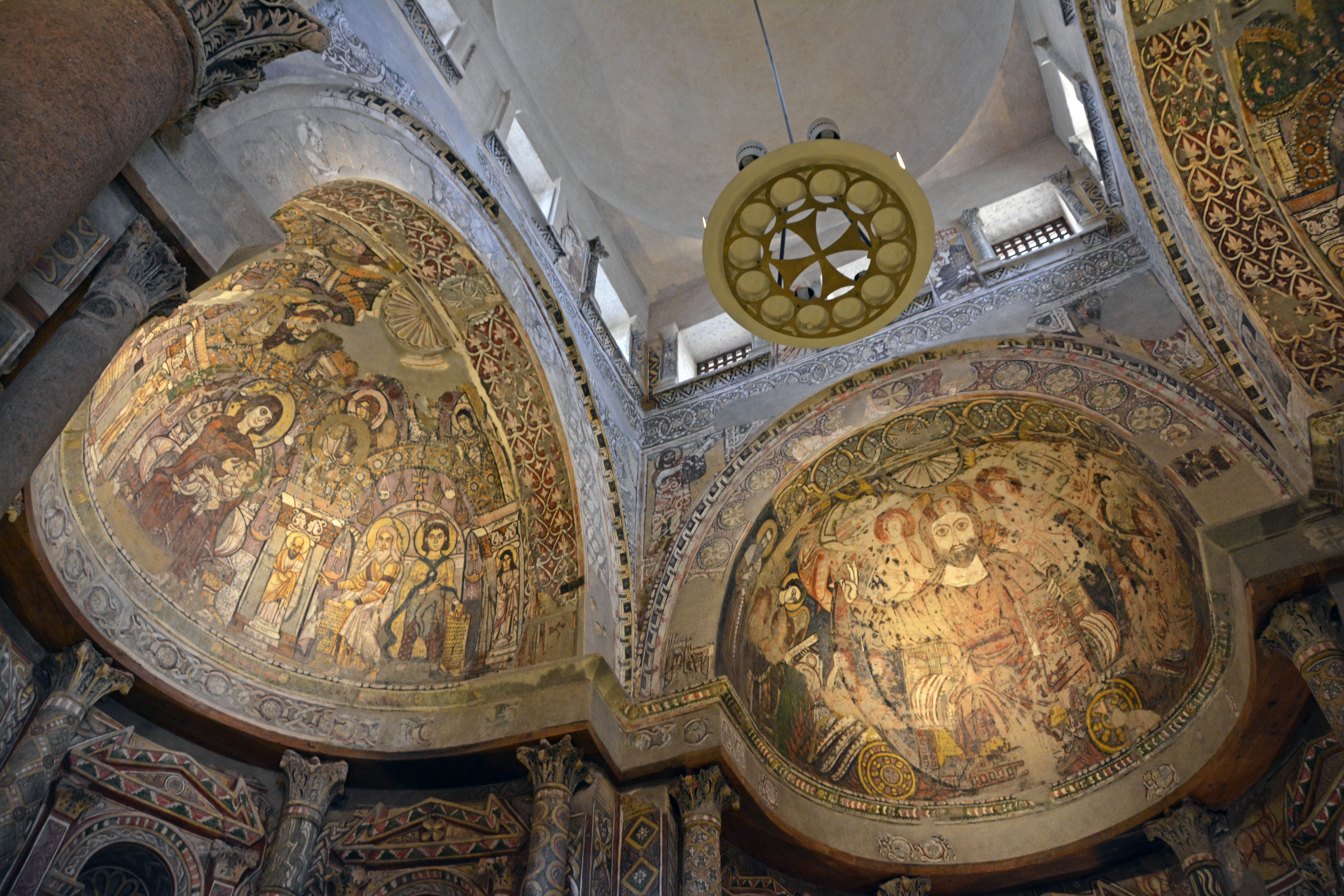
Also in the Egyptian folder are photos of one of Byzantine Egypt’s most glorious encaustic-painted sanctuaries, that of the Red Monastery Church, a triconch (three-apse) basilica that’s part of the (Coptic Orthodox) Monastery of Apa Bishuy near Sohag.

Red Monastery Church
North apse (Virgin Galaktotrophousa, aka the Nursing Madonna) and east apse (Christ Pantocrator), painted 6th–7th or 8th century, Red Monastery Church, near Sohag, Egypt. Photo: Mohamed Kenawi / Manar al-Athar.

Here’s a video that presents a 3D reconstruction and fly-through of the basilica:

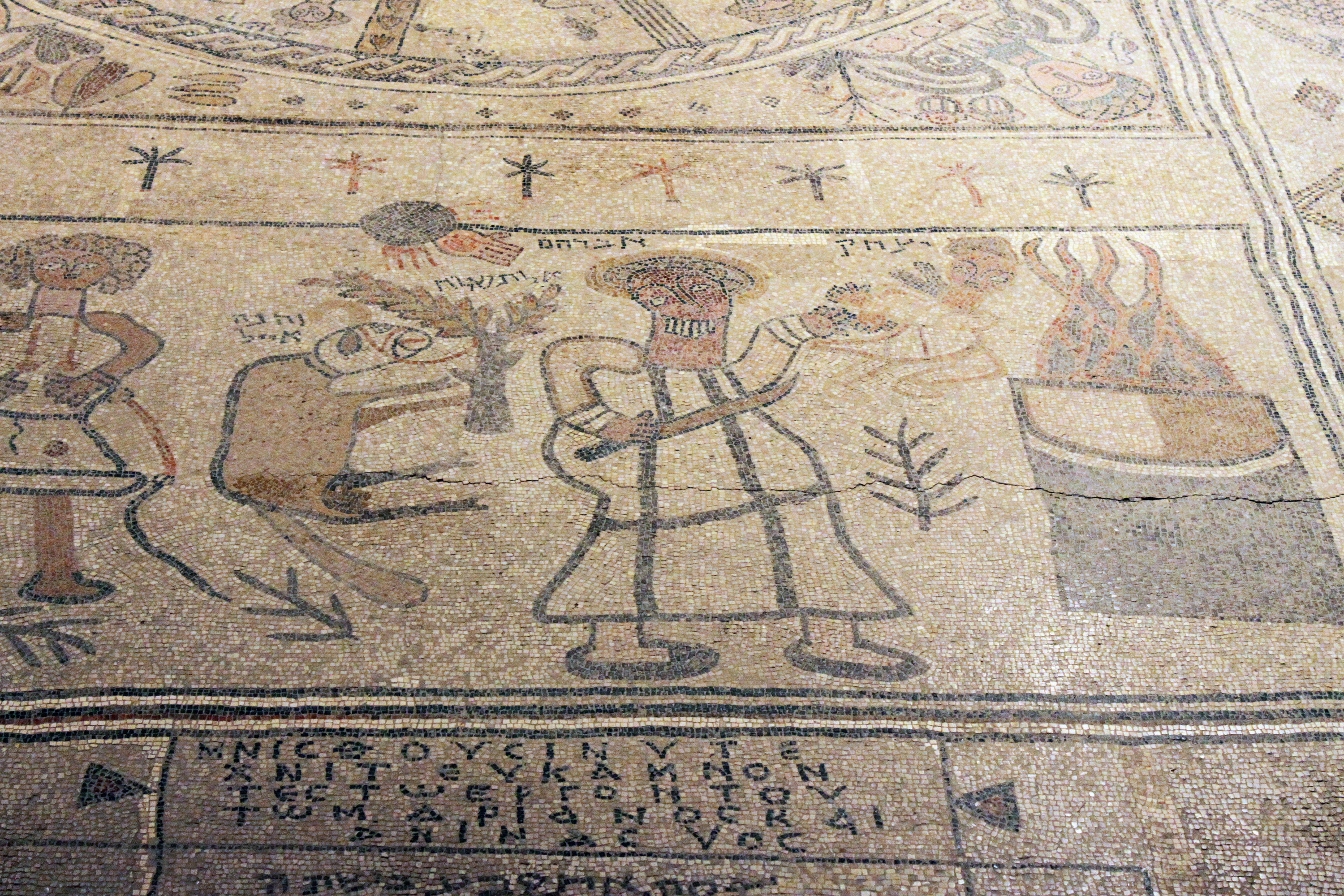
Moving northeast into Israel, we come to the sixth-century Bet Alpha (sometimes rendered as Beit Alfa) Synagogue, located in the Beit She’an Valley. The excavation of Jewish sacred sites like this one reveal that, contrary to what is popularly alleged, Judaism is not a strictly aniconic religion. Many Jewish communities have understood the prohibition against graven images in Exodus 20:3–6 and Leviticus 26:1 as a prohibition against idol worship, not figurative art (art that depicts people and animals) in general. Thus several ancient synagogues, not to mention Jewish manuscripts, portray episodes from the biblical narrative, such as the Akedah (Binding [of Isaac]), told in Genesis 22.

Sacrifice of Isaac (Bet Alpha mosaic)
The Binding of Isaac, early 6th century. Mosaic pavement, Bet Alpha (Beit Alfa) Synagogue, Heftziba, Israel. Photo: Sean Leatherbury / Manar al-Athar.

Rendered in a primitive style, this scene is one of three from the mosaic pavement in the central hall of Bet Alpha. It shows Abraham, sword in hand, about to throw his son Isaac onto a fiery altar, when God, represented by a hand from the sky, intervenes, telling him to stop; it’s then that Abraham notices a ram tangled up in a nearby thicket, which he sacrifices instead. The Hebrew inscriptions read, from right to left, “Yitzhak” (Isaac), “Avraham” (Abraham), “al tishlakh” (Do not lay [your hand on the boy]), and “v’hineh ayil” (Here is a ram). Stylized palm trees line the top of the scene.

Here is video footage of the full floor mosaic in its space, showing wide views as well as details, including of the remarkable zodiac wheel in the center:

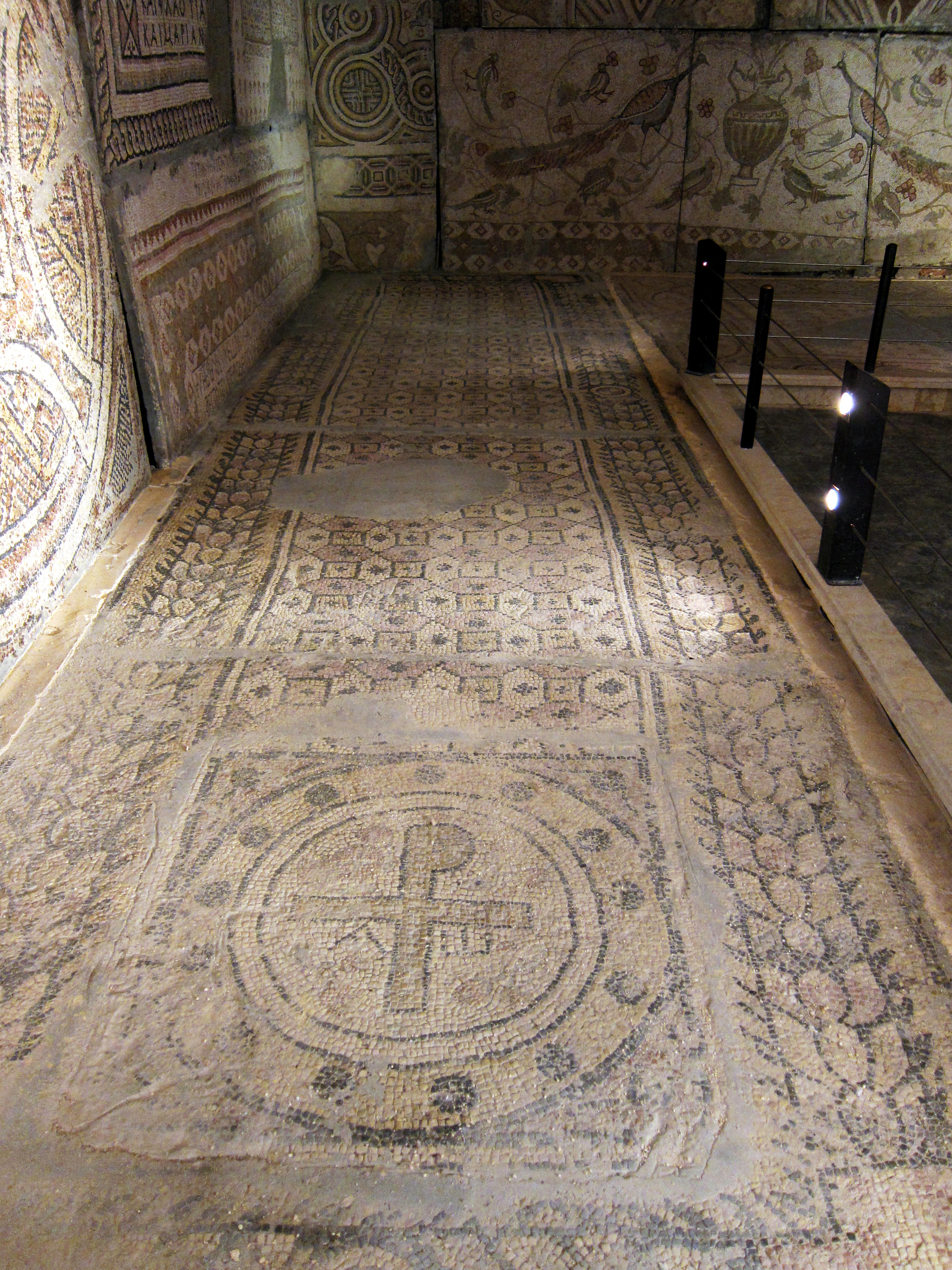
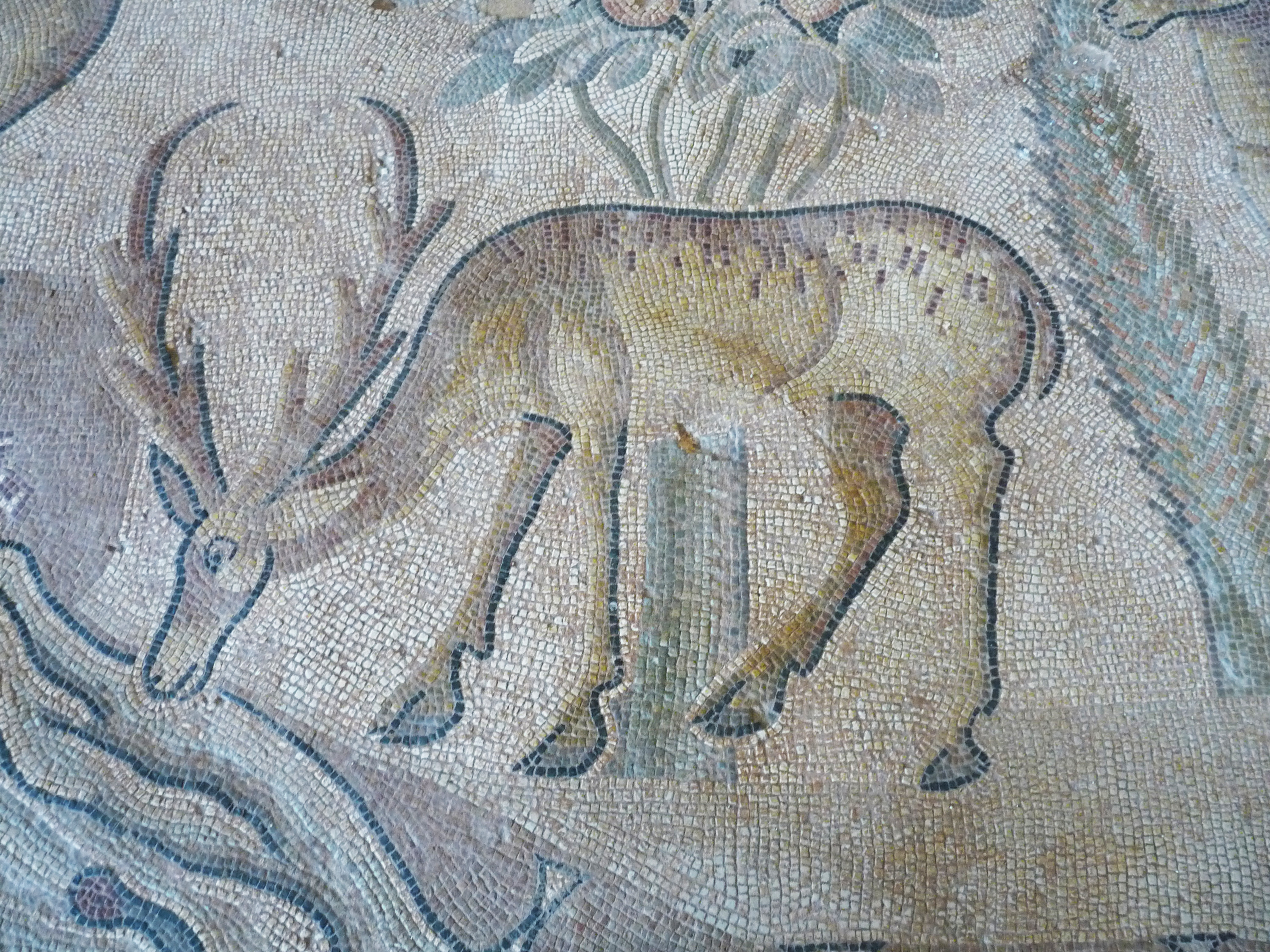
Mosaic was a common form of late antique decoration in places of worship. Here are two examples from Syria:

Tell Aar church mosaics
Mosaics from the ancient Tell Aar church, including a chi-rho monogram with an alpha and omega (foreground) and peacocks flanking an amphora (background), housed in the Maarat al-Numan Museum, Syria. Photo: Sean Leatherbury / Manar al-Athar.

Deer drinking water
Deer drinking from a stream, 5th century. Mosaic, Church of the Martyrs, Taybat al-Imam, Syria. Photo: Jane Chick / Manar al-Athar.

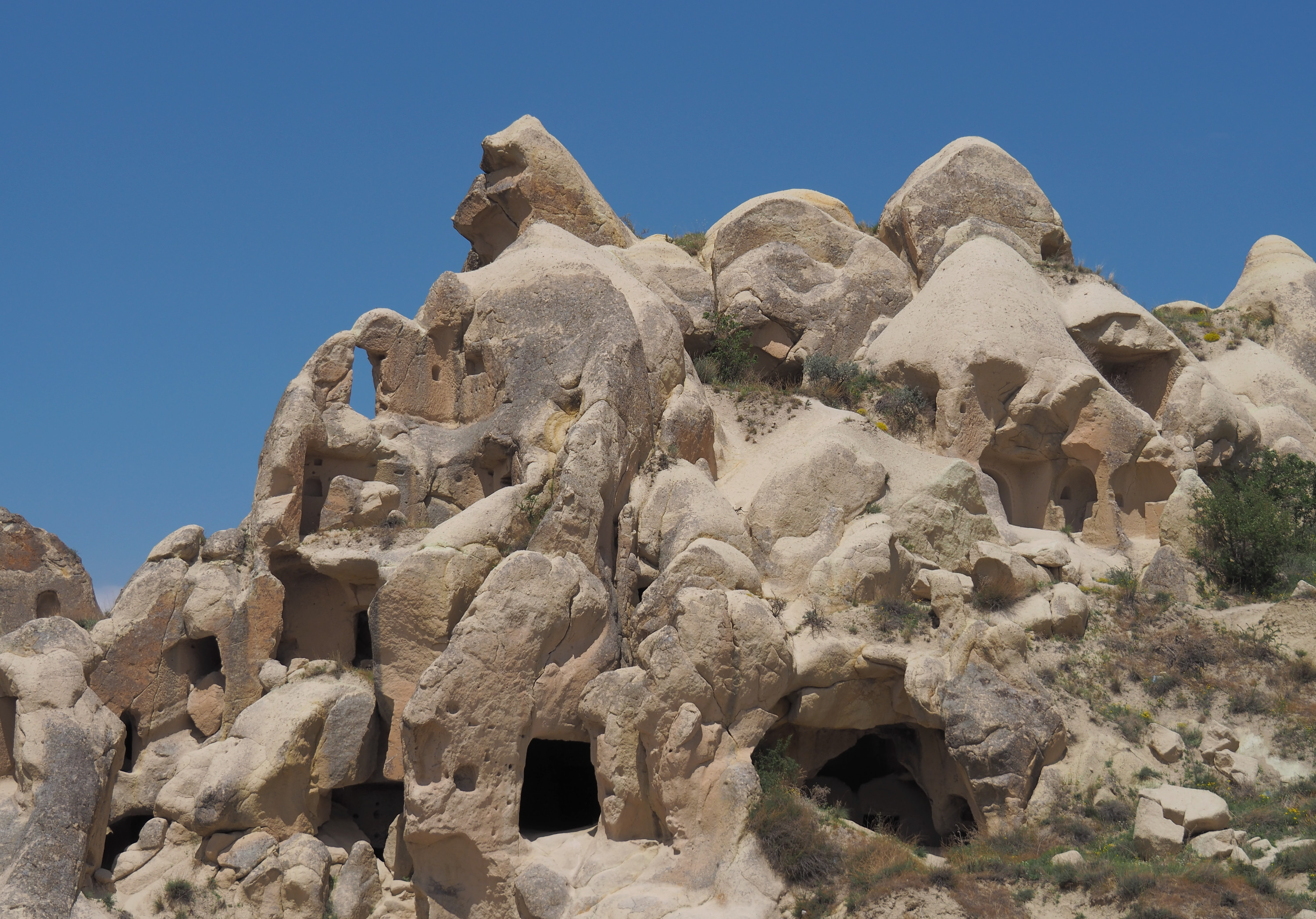
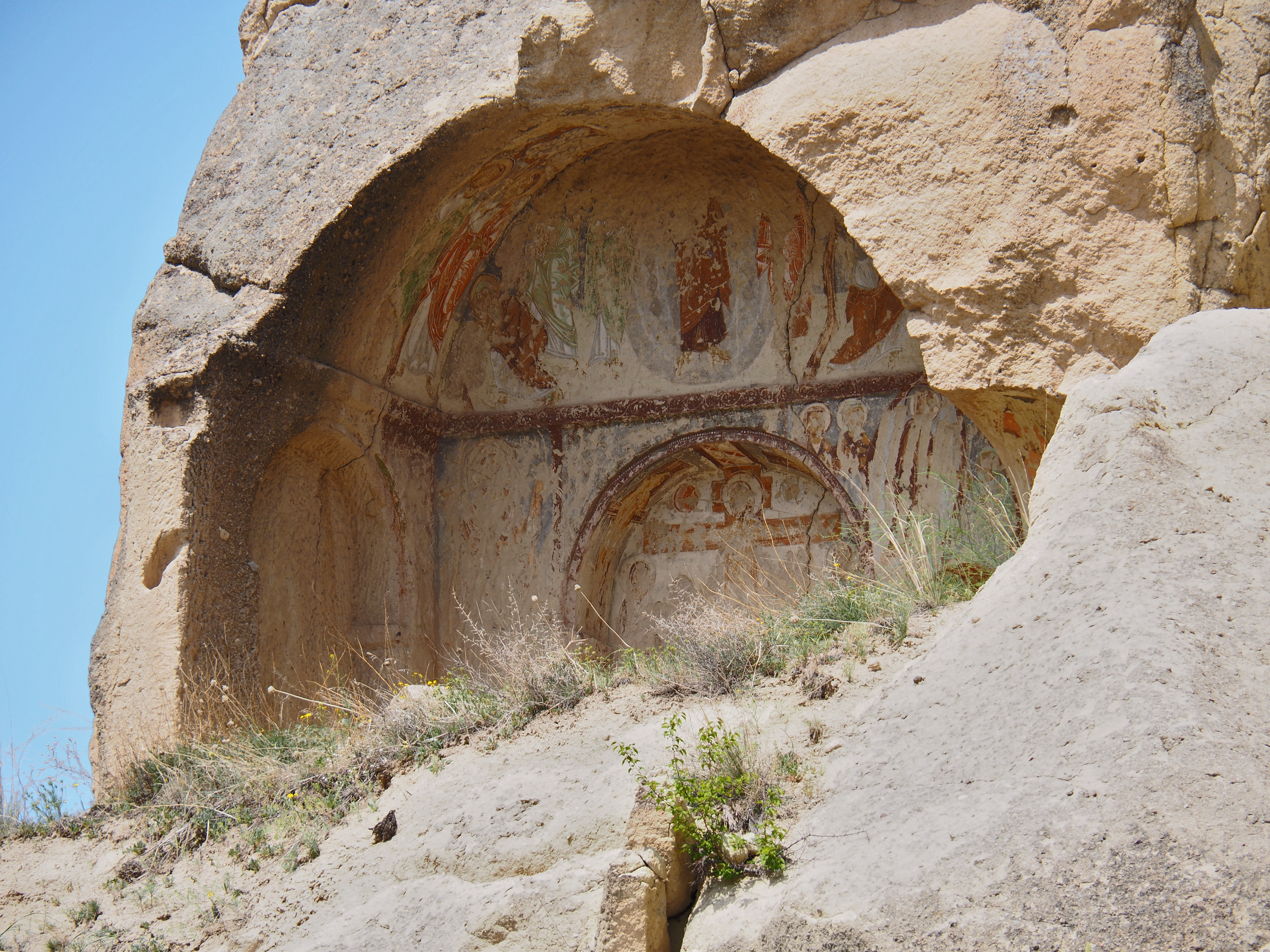
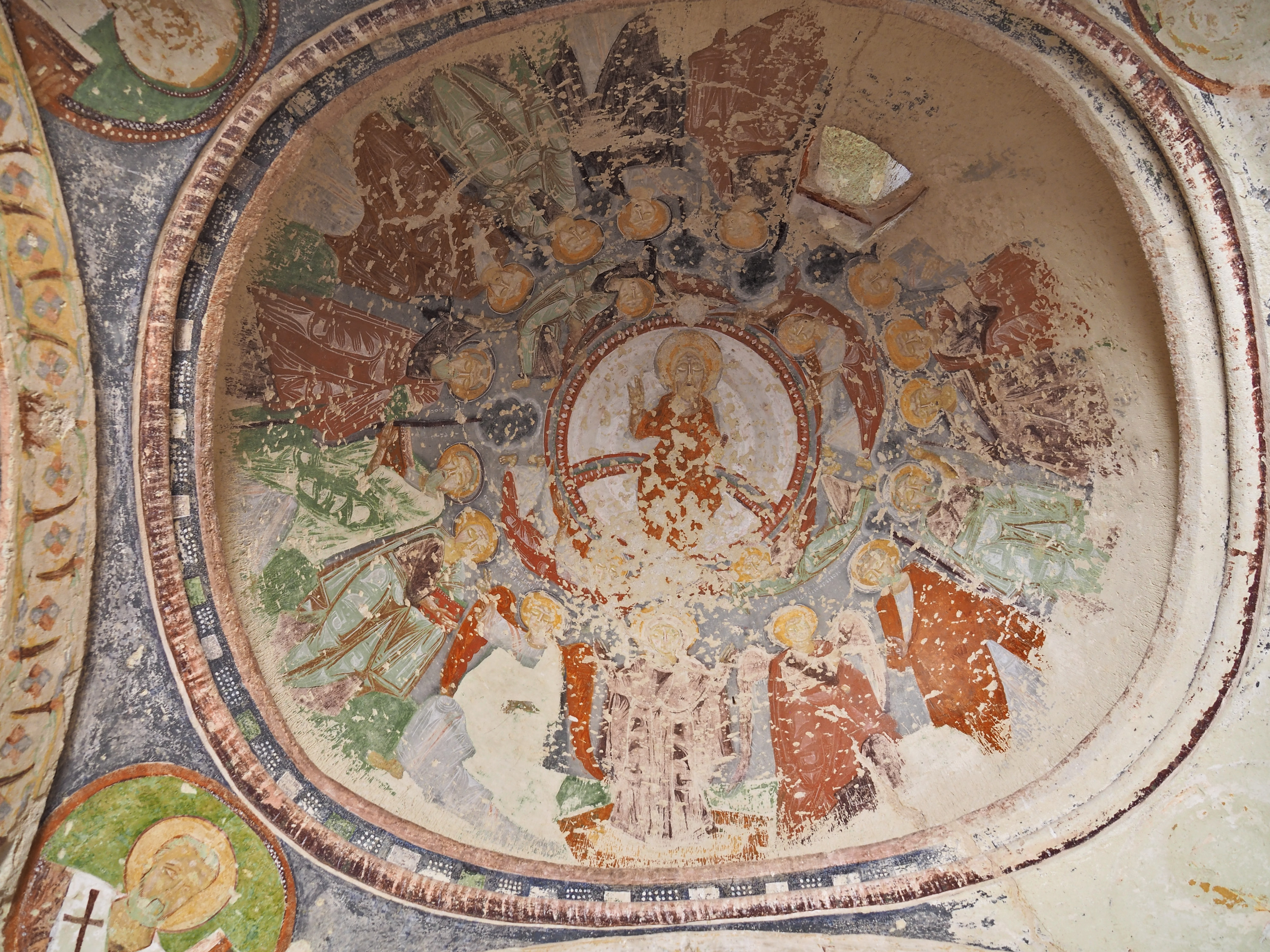
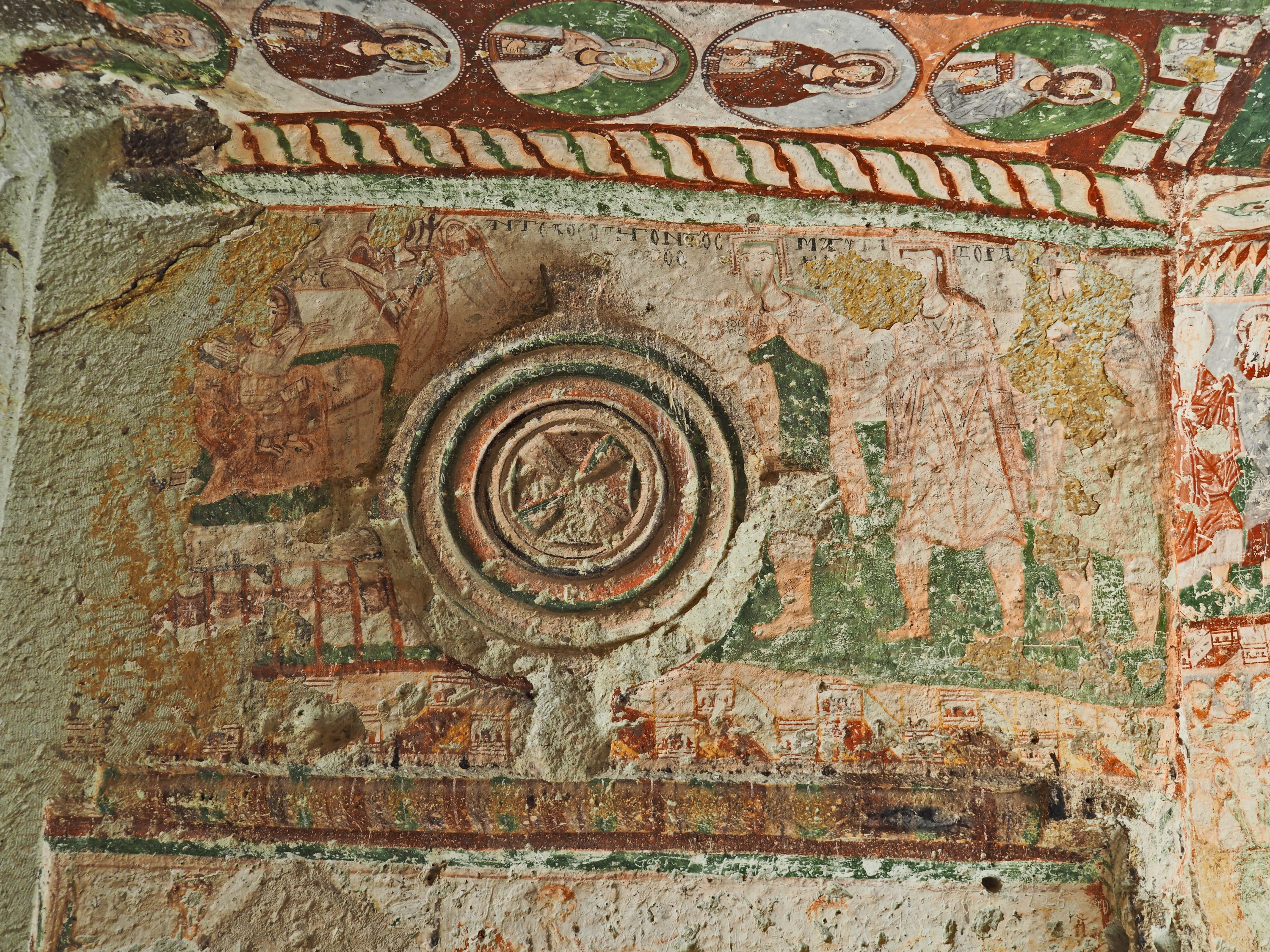
To the north of Syria in Turkey—cataloged by Manar al-Athar under “Anatolia,” the ancient name for the peninsula that comprises the majority of the country—there are the Cappadocian cave churches, hewn out of volcanic tufa. They began to be built in the fifth century, with a boom happening in the ninth through eleventh centuries, which is the period to which almost all the surviving paintings can be dated. There are over a thousand such churches, some very simple inside, and others elaborately painted. The architecture has been described as eccentric and enchanting. I like to imagine the monks, nuns, and other Christians who worshipped there all those centuries ago.

Rock-hewn chapel, Cappadocia
Middle Byzantine cave church, Göreme Open Air Museum, Cappadocia, Turkey. Photo: Marlena Whiting / Manar al-Athar.

Crucifixion and Transfiguration
Frescoes depicting the Crucifixion and the Transfiguration, from a rock-cut chapel at the Göreme Open Air Museum, Cappadocia, Turkey. Photo: Marlena Whiting / Manar al-Athar.

Christ in Glory (Turkey)
The Ascension of Christ, 10th century. Dome fresco, Church of the Evil Eye (El Nazar Kilise), Göreme, Cappadocia, Turkey. Photo: Marlena Whiting / Manar al-Athar.

One of the cave churches in Cappadocia, part of an ancient monastic settlement, is Pancarlik Church, home to an impressive fresco cycle on the Life of Christ that’s painted mainly in rusty red and bean green.

Adoration of the Magi (Turkey)
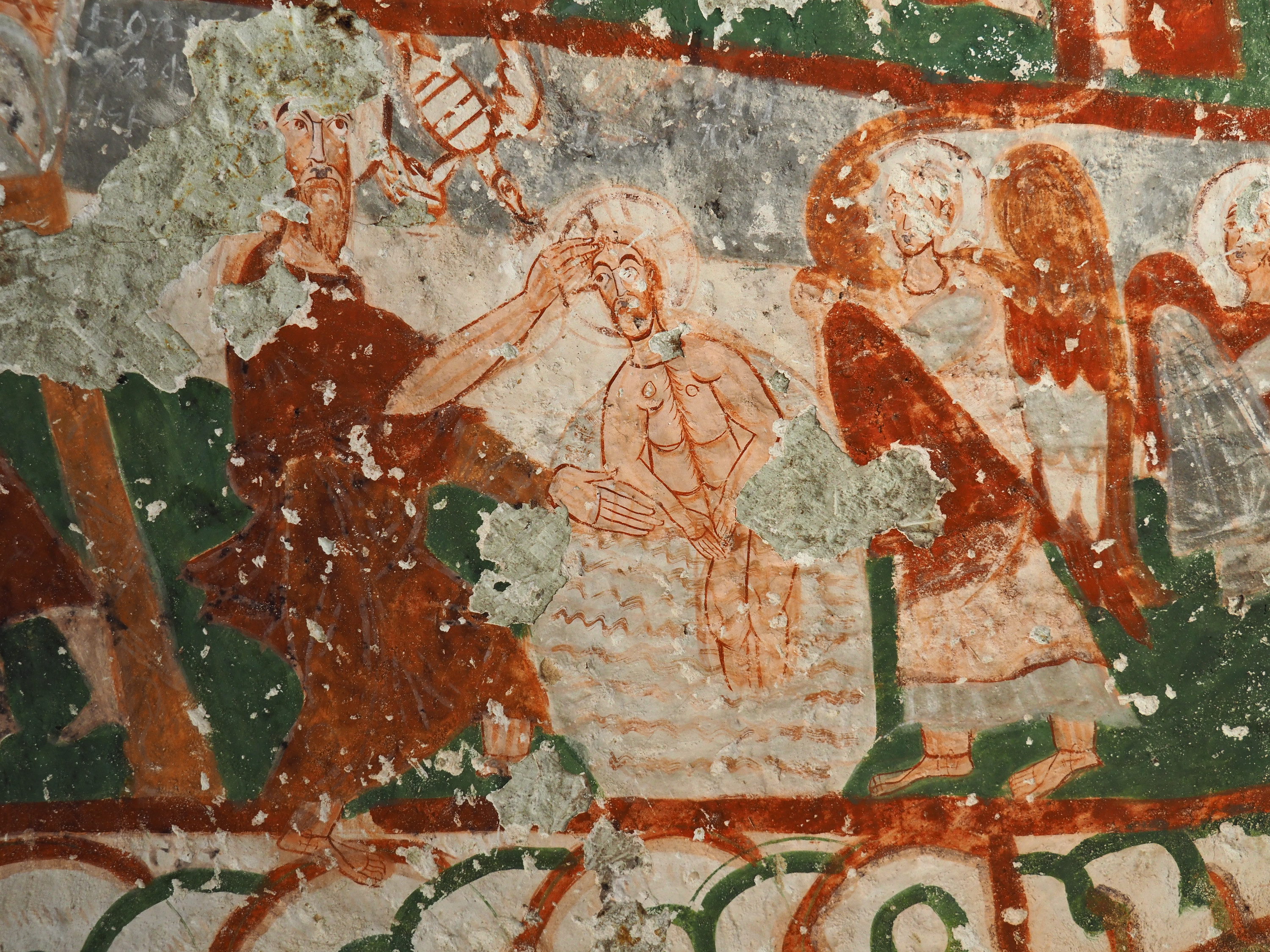
Adoration of the Magi fresco and Greek cross relief carving, probably early 11th century. Pancarlik Church, Cappadocia, Turkey. Photo: Marlena Whiting / Manar al-Athar.

Baptism of Christ (Pancarlik Church, Turkey)
The Baptism of Christ, probably early 11th century. Fresco, Pancarlik Church, Cappadocia, Turkey. Photo: Marlena Whiting / Manar al-Athar.

Beyond Cappadocia but also in Turkey is Hagia Sophia (Holy Wisdom) in Trabzon, not to be confused with the more famous Hagia Sophia in Istanbul, 650 miles away. Originally a Greek Orthodox church, it was converted into a mosque following the conquest of Trabzon (then called Trebizond) by Mehmed II in 1461. During prayer the frescoes in the nave, made by Christians who built and previously occupied the space, are covered by curtains to honor the Islamic prohibition against images—the veils are pulled aside during tourist hours—while the frescoes in the narthex remain uncovered at all times.

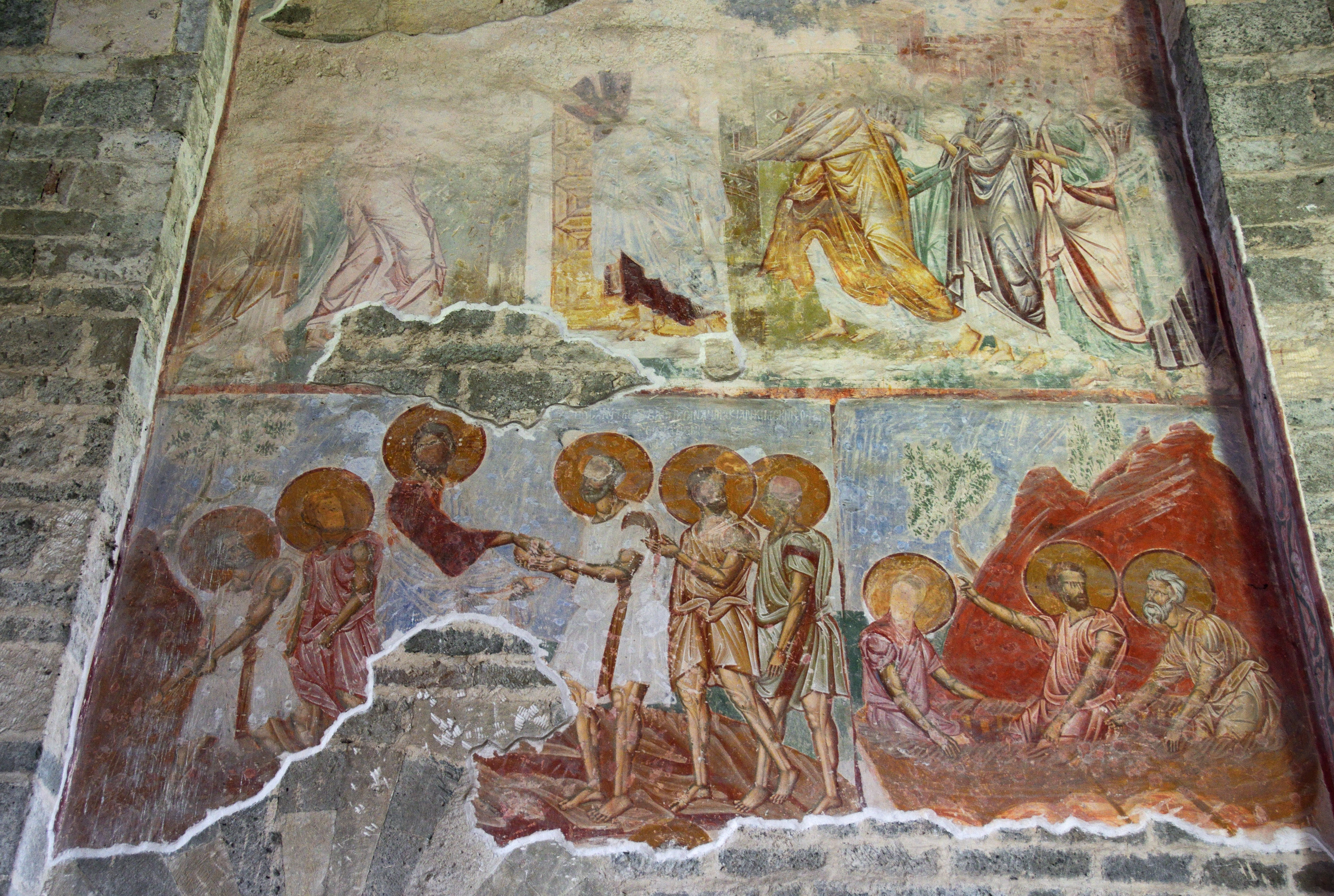
Breakfast on the Shore (Hagia Sophia, Trabzon)
The Incredulity of St. Thomas (top) and The Risen Christ Appears on the Shore (bottom), late 13th century. Frescoes, Hagia Sophia (Aya Sofya Mosque), Trabzon, Turkey. Photo courtesy of Manar al-Athar.

One of the frescoes shows Christ appearing to his disciples after his resurrection on the shore of the Sea of Galilee. He hands a fish and a loaf of bread to Peter, who stands at the front of the group, so that they can all share a joyous breakfast together after the tragic, upending events of the previous week.

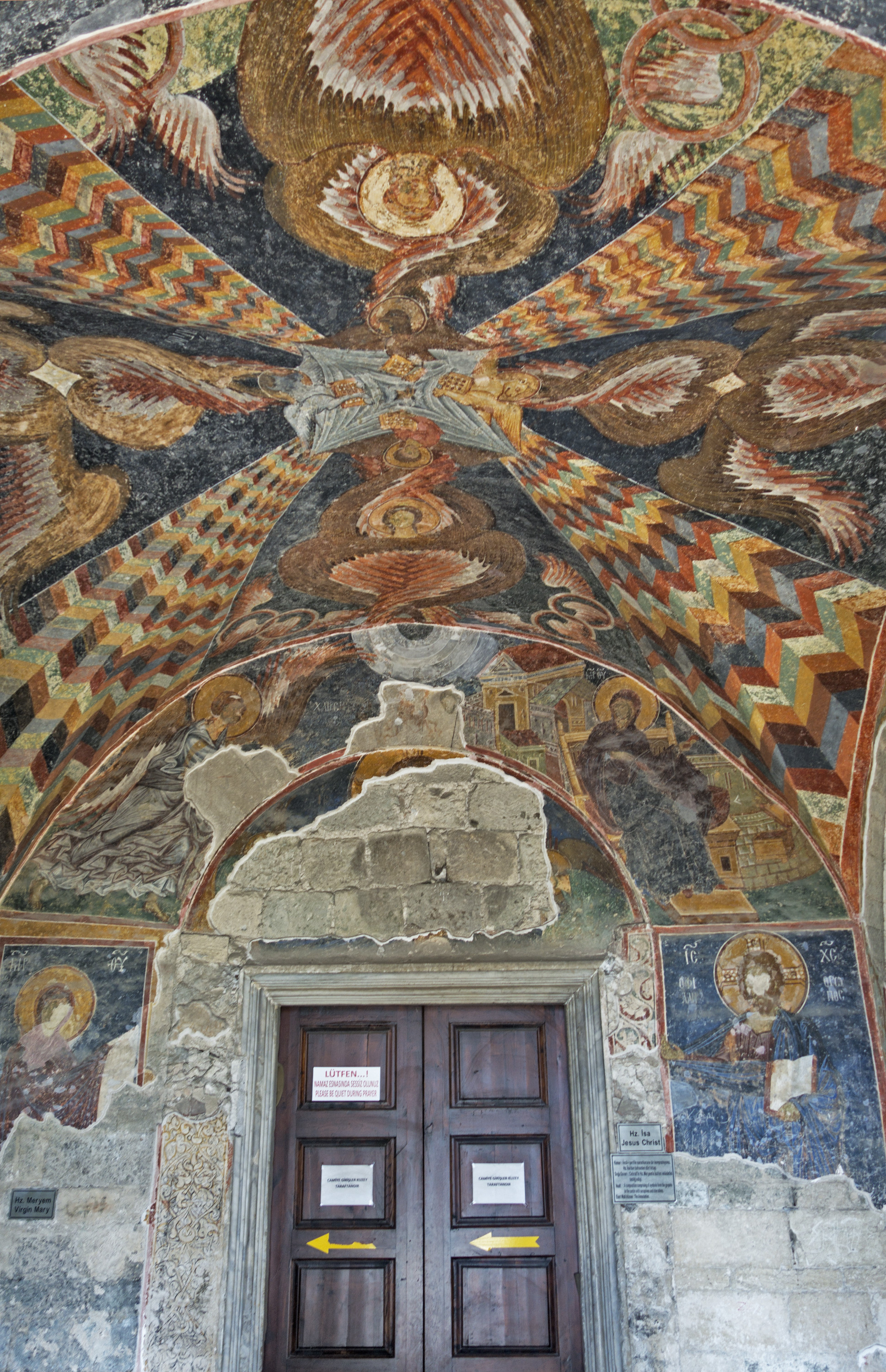
Tetramorph (Hagia Sophia, Trabzon)
Frescoed narthex, late 13th century, Hagia Sophia (Aya Sofya Mosque), Trabzon, Turkey. Photo: Matthew Kinloch / Manar al-Athar.

Another fresco, on the vaulted ceiling of the narthex, shows the four living creatures of Revelation 4—long interpreted by Christian artists as symbols of the Four Evangelists—situated along the four sides of the canopy of the heavens, each holding a golden Gospel-book and surrounded by seraphim and blazes of rainbow light.

In the Caucasus region, Armenia has a long and rich tradition of Christian art, especially relief carving and painting, as the faith took root there early on in the fourth century.

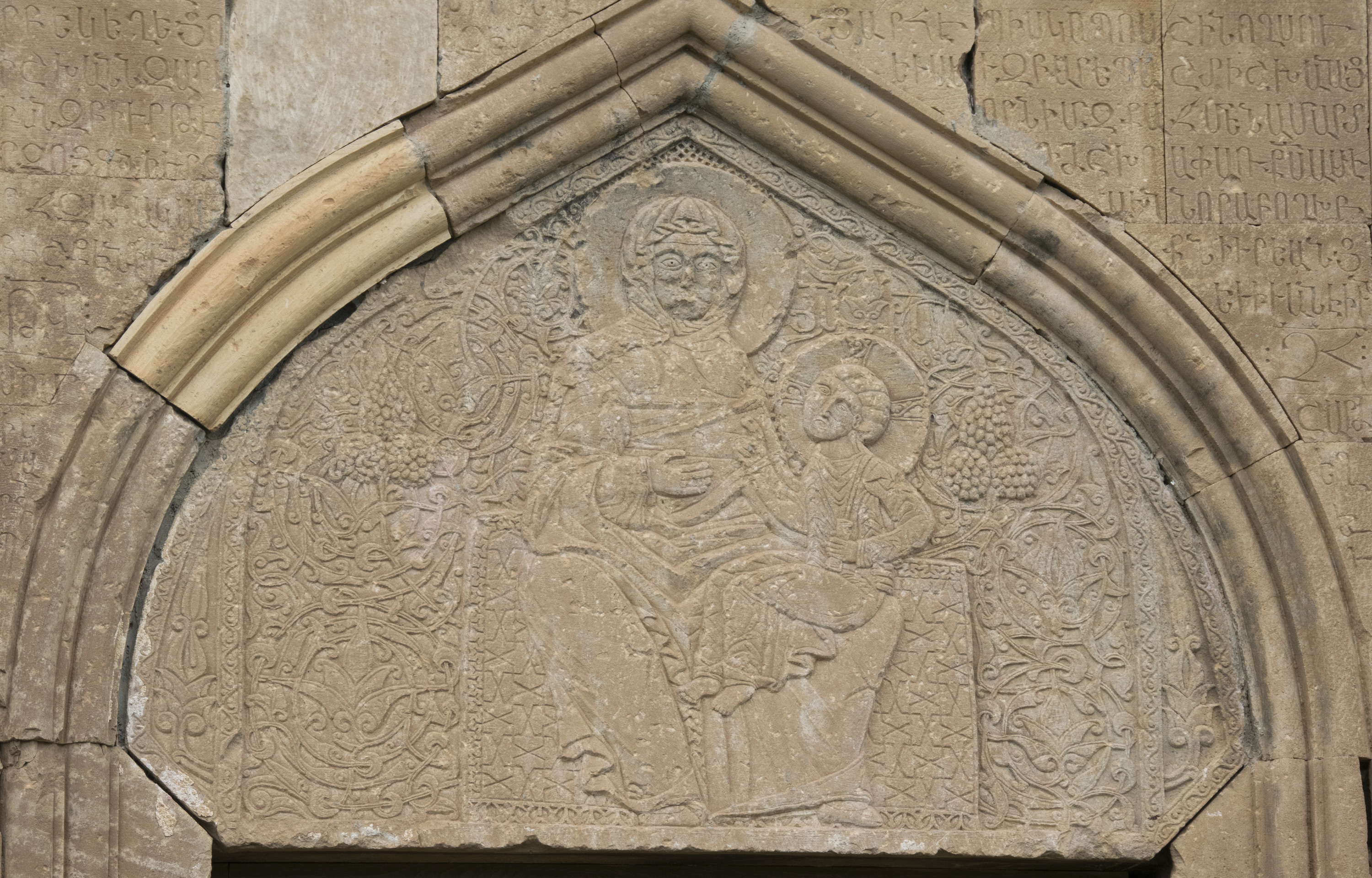
Virgin and Child
Momik Vardpet, Virgin and Child, ca. 1321. Carved tympanum, west portal, Church of St. Astvatsatsin (Holy Mother of God), Areni, Armenia. Photo courtesy of Manar al-Athar.

Overlooking the village of Areni on the eastern bank of the river Arpa is the Church of St. Astvatsatsin, which has a beautiful relief carving in the tympanum above the west portal by the Armenian architect, sculptor, and manuscript illuminator Momik Vardpet (died 1333). It depicts the Christ child seated on the lap of his mother, holding a scroll in one hand and raising the other in blessing. Decorative vines rise up behind and around the pair, suggesting verdancy.

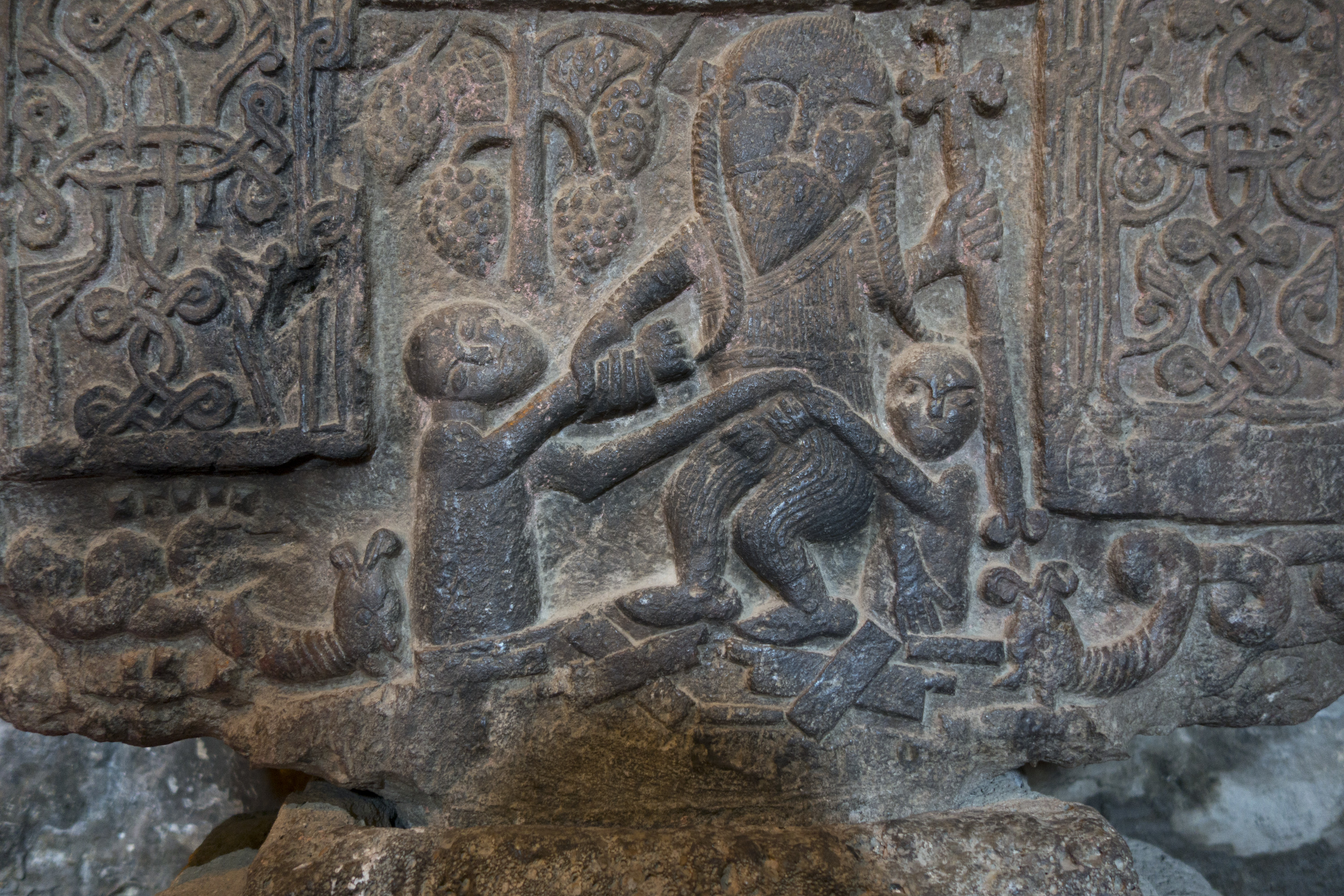
The most distinctive Christian art form in Armenia is the khachkar, a carved memorial stele bearing a cross and often botanical motifs, and only occasionally a Christ figure. In the village of Sevanavank, at a different Church of St. Astvatsatsin, there’s a particularly striking khachkar that portrays the crucified Christ in the center, and below that, a scene of the Harrowing of Hell.

Harrowing of Hell (Armenia)
The Harrowing of Hell, detail of a khachkar from the Church of St. Astvatsatsin (Holy Mother of God) in Sevanavank, Armenia. Photo: Matthew Kinloch / Manar al-Athar. [view full khachkar]

Holding aloft his cross as a scepter, the risen Christ breaks down the gates of death and rescues Adam and Eve, representatives of redeemed humanity, while serpents hiss vainly at his heels. I’m struck by the uniqueness of Christ’s hair, which flows down in two long braided pigtails. Was this a common hairstyle for males in medieval Armenia? I have no idea.

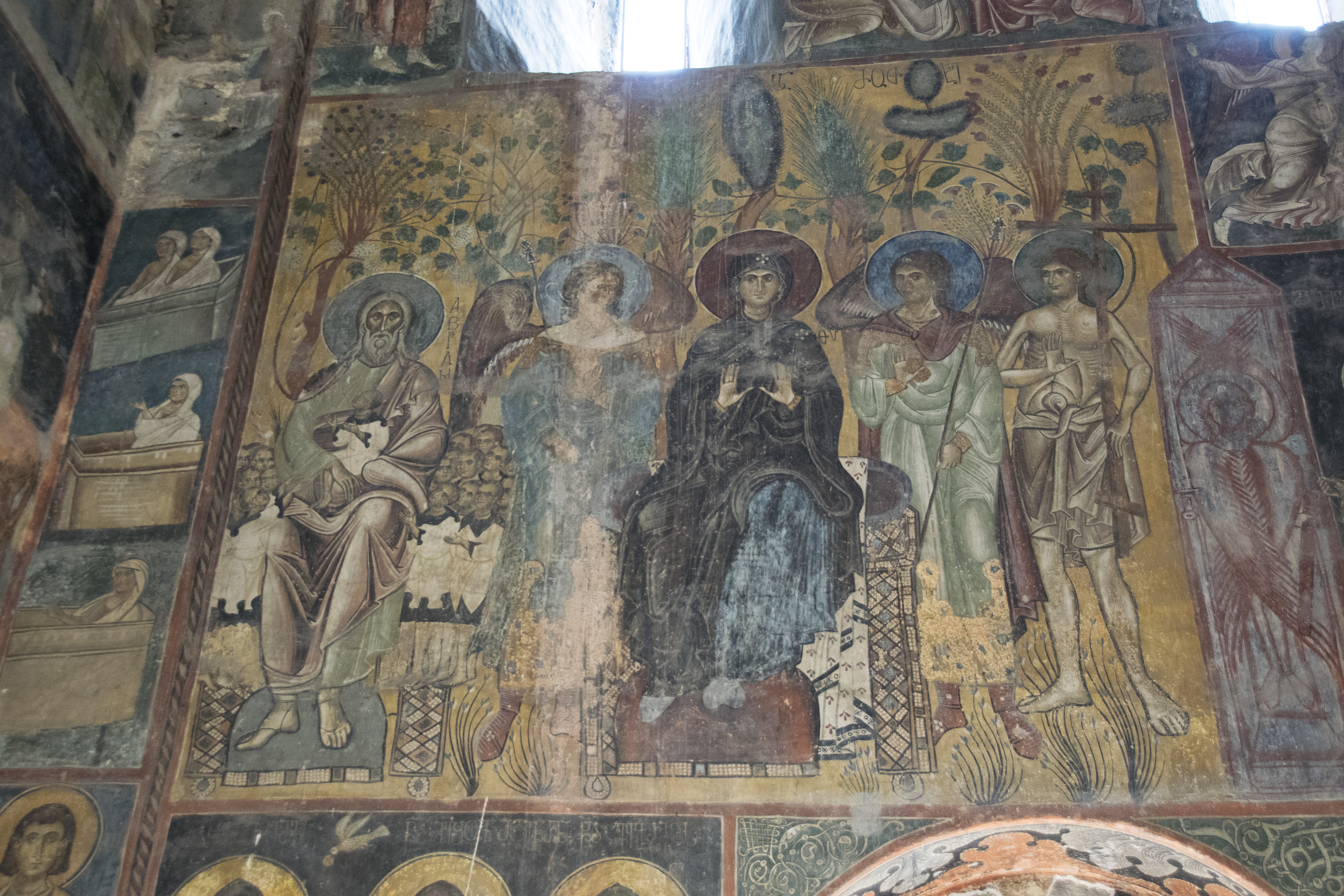
The last artwork from Armenia that I’ll share is an icon of paradise from the Church of St. Astvatsatsin (yes, it’s a popular church name in that country!) at Akhtala Monastery.

Paradise (Armenia)
Paradise, 1205–16. Fresco, west wall, Church of St. Astvatsatsin (Holy Mother of God), Akhtala Monastery, Akhtala, Armenia. Photo courtesy of Manar al-Athar.

In the center is the Mother of God flanked by two angels. On the left is Abraham with a child, representing a blessed soul, sitting on his lap (Luke 10:22 describes how the righteous dead go to “Abraham’s bosom,” a place of repose). On the right is Dismas, the “good thief” who repented on the cross of his execution, and to whom Jesus promised paradise (Luke 23:39–43); he is venerated as a saint in the Catholic and Orthodox churches.

The image is part of a larger Last Judgment scene that covers the entire west wall. A few panels above, at the very top, Christ is enthroned on a rainbow.

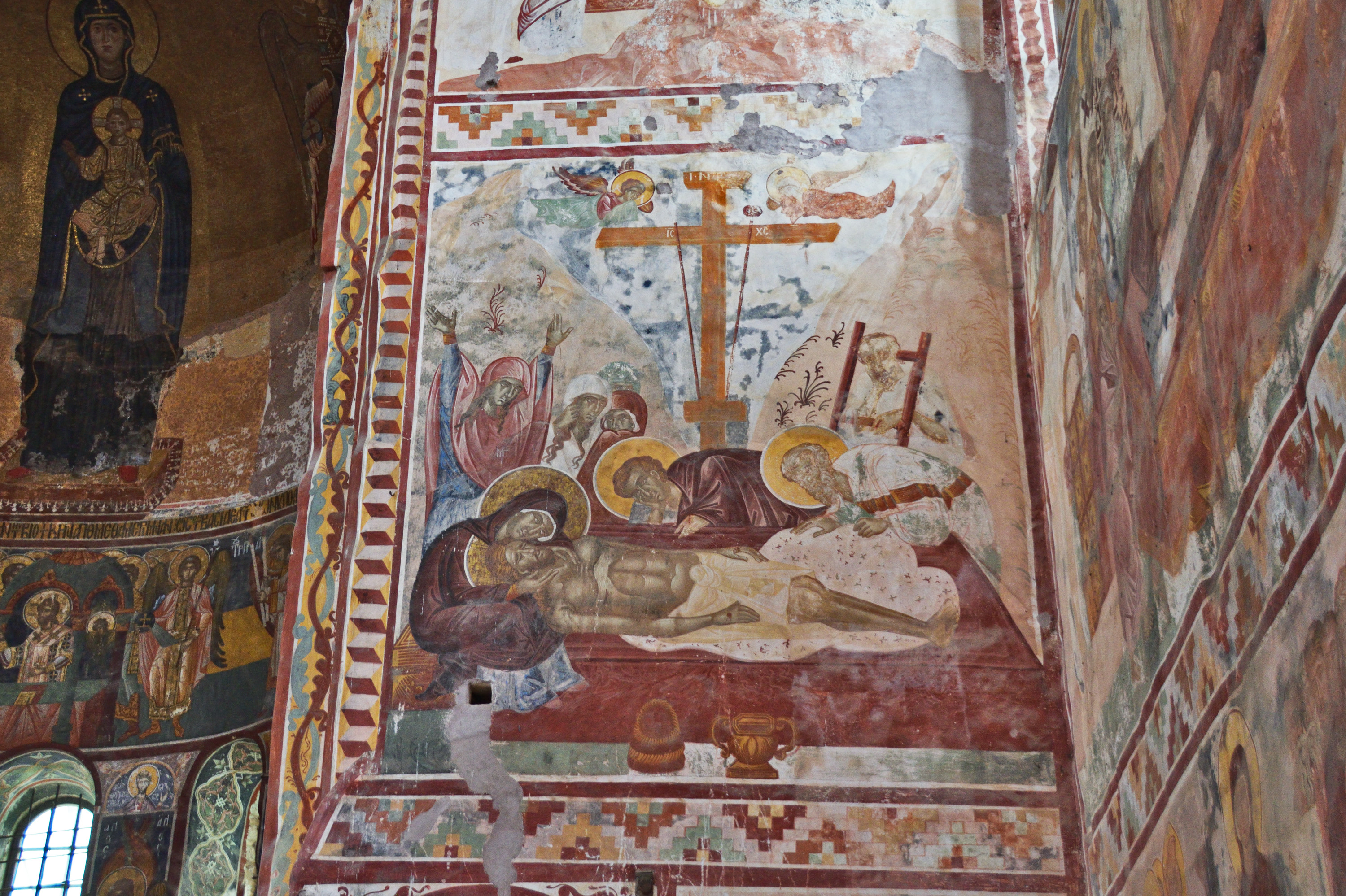
The neighboring country of Georgia has also cultivated a tradition of Christian icon painting. The main church of Gelati Monastery, founded in 1106, is richly decorated with painted murals dating from the twelfth through seventeenth centuries. One of them is the Lamentation over the Dead Christ: The Virgin Mary gently cradles the head of her son and Mary Magdalene throws her arms up in grief while the apostle John leans in close to mourn the loss and Joseph of Arimathea begins to wrap the body in a shroud.

Lamentation (Georgia)
Lamentation over the Dead Christ, fresco, Church of the Blessed Virgin, Gelati Monastery, near Kutaisi, Georgia. Photo courtesy of Manar al-Athar.

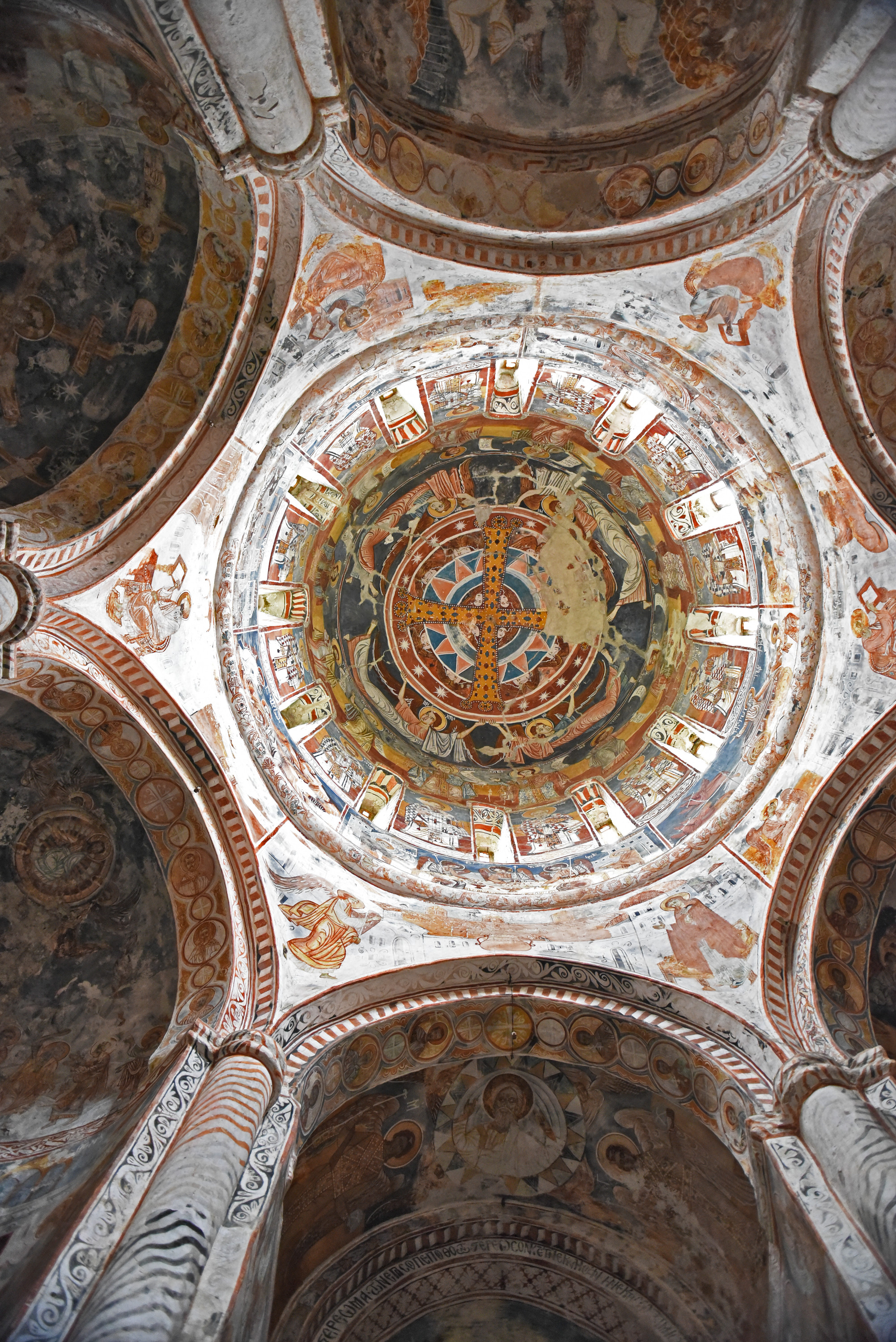
Another Georgian icon painting, from the central dome of the Church of St. Nicholas in Nikortsminda, shows angels bearing aloft a jeweled cross, surrounded by the twelve apostles.

Georgian church dome
Central dome, Church of St. Nicholas, Nikortsminda, Georgia. Photo: Ross Burns / Manar al-Athar.

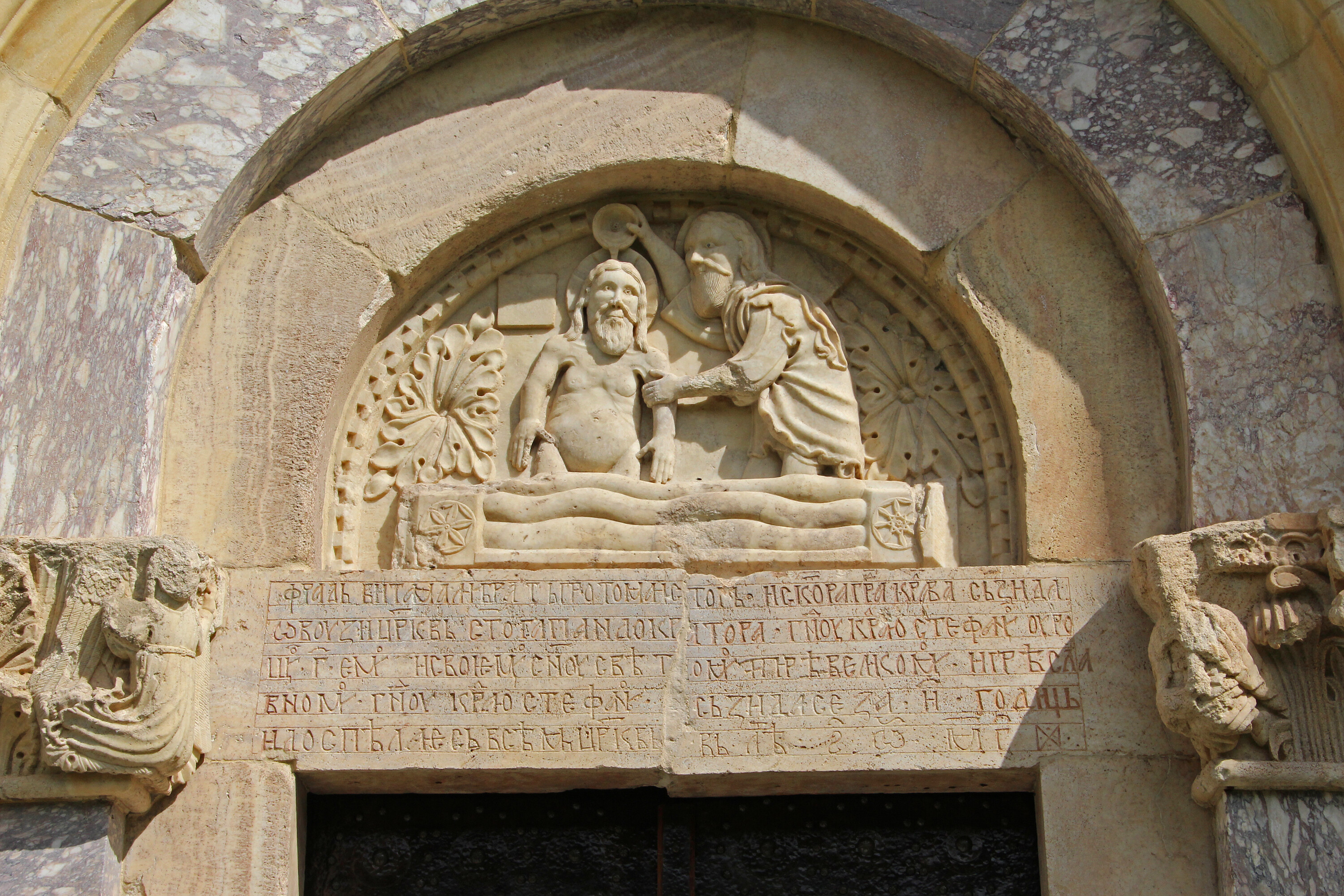
Lastly, from the Balkans, I want to point out Decani Monastery in Kosovo, a Serbian Orthodox monastery built in the fourteenth century in an architectural style that combines Byzantine and Romanesque influences. The tympana of its katholicon (main church) lean into the Romanesque. The one over the south entrance portrays John baptizing Jesus in the river Jordan, and the Serbian inscription below describes the monastery’s founding.

Baptism of Christ tympanum (Decani)
The Baptism of Christ, 1327–35. Carved tympanum, south portal, Christ Pantocrator Church, Decani Monastery, near Deçan, Kosovo. Photo: Mark Whittow / Manar al-Athar.

Decani’s katholicon is the largest and best-preserved medieval church in the Balkans and due to continuing ethnic strife in the region is under international military protection. The Blago Fund website has more and better photos of the extensive frescoes inside, from the fourteenth through seventeenth centuries.

It’s important to note that this is one of a number of churches from the Manar al-Athar archive that are still active sites of Christian worship, where communities of believers are nurtured through word, image, and sacrament.


If you are interested in volunteering with Manar al-Athar—helping with image processing, labeling, fundraising, or web building—or if you have taken any photographs that may be of interest to the curatorial team, email manar@classics.ox.ac.uk.

Website: https://www.manar-al-athar.ox.ac.uk/

Roundup: Ellsworth Kelly’s “Austin,” new book by Jonathan Anderson, religion in pop art, and more

PRINT INTERVIEWS:

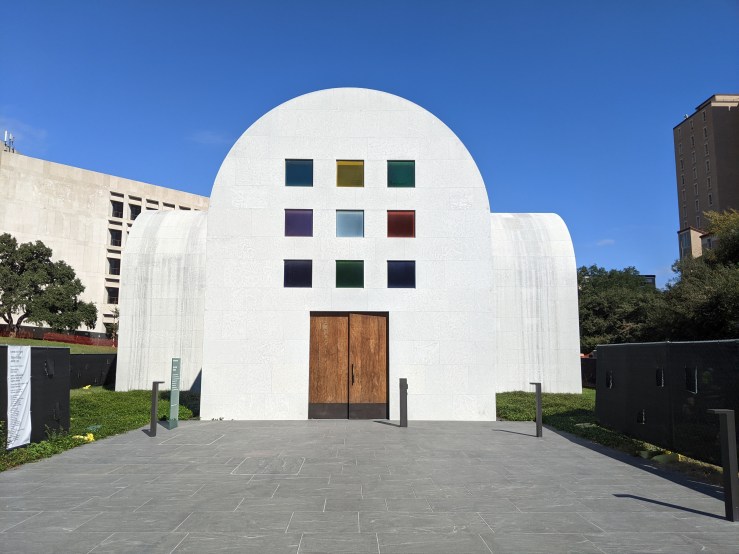
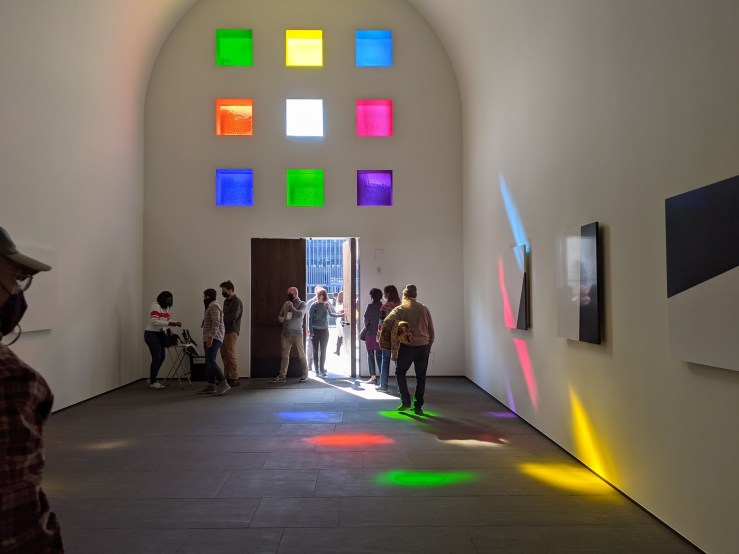
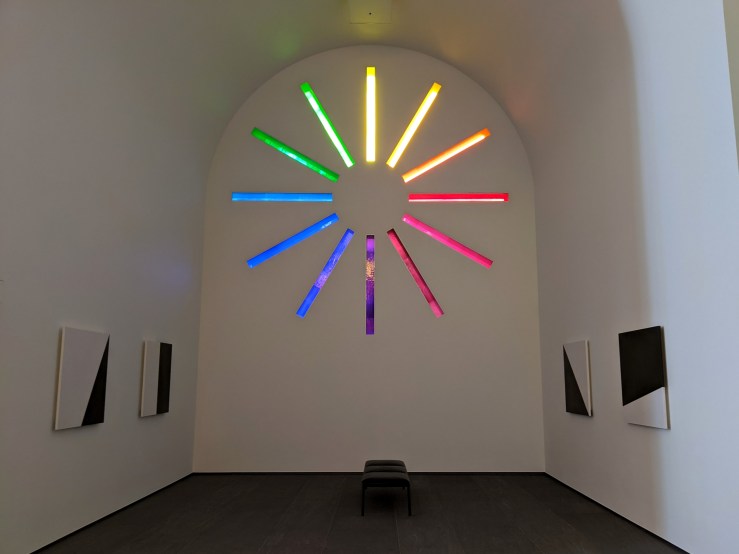
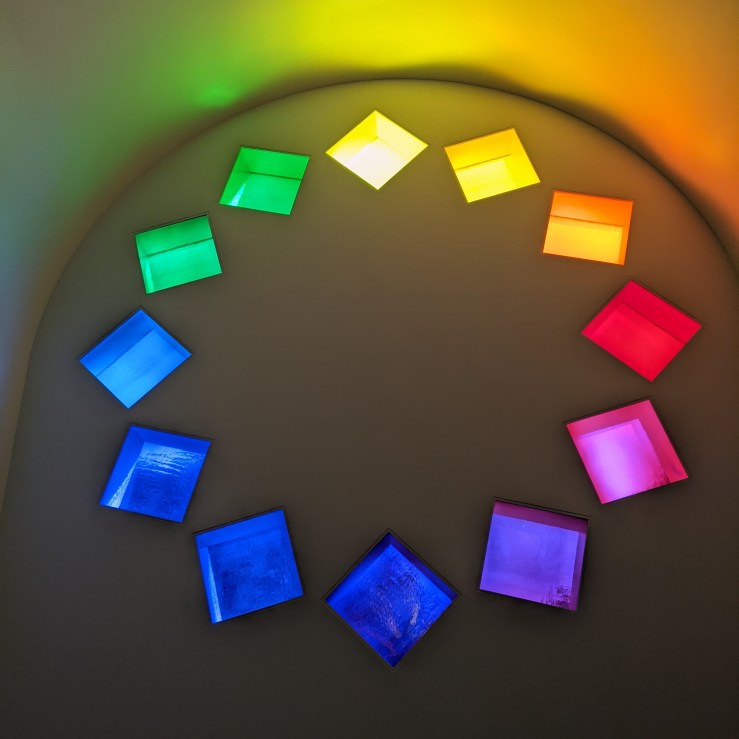
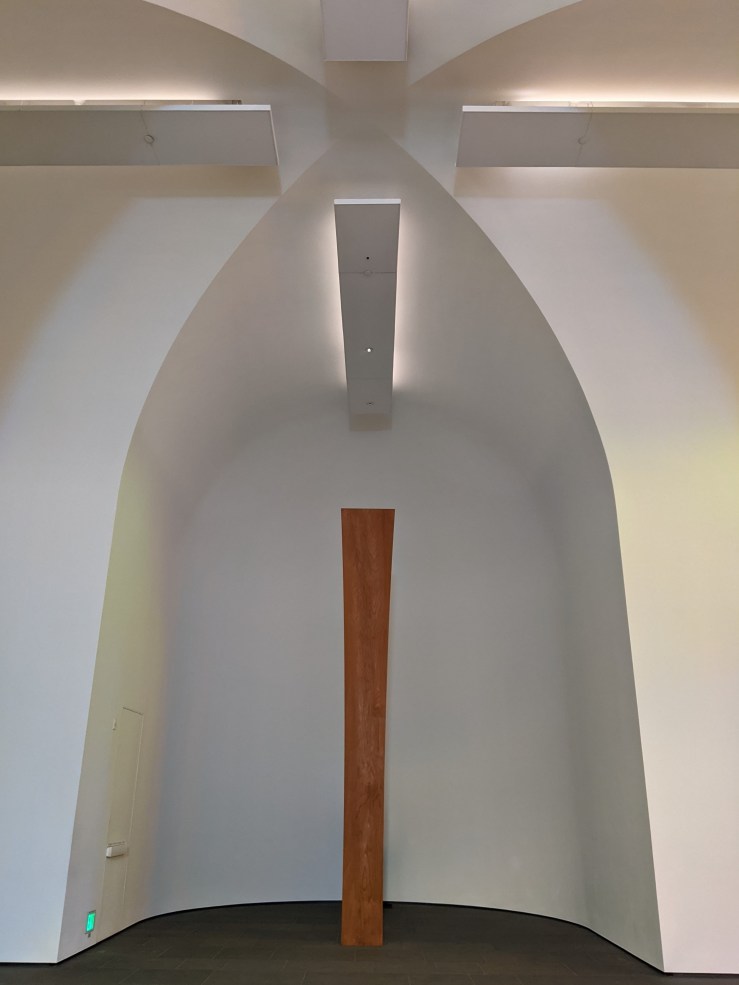
>> “What Remains: The Making of Ellsworth Kelly’s Last Work,” Image interview with Rick Archer: I got to experience Ellsworth Kelly’s Austin—a modernist “chapel” containing three stained glass windows, fourteen black-and-white marble panels (Stations of the Cross), and a redwood totem—while in Texas for a CIVA conference in 2021; see some of my photos below. Kelly was an atheist inspired by Romanesque church architecture, and the architect he chose to collaborate with on Austin, Rick Archer, is a Christian. In this wonderful new interview by Bruce Buescher, Archer discusses his working relationship with Kelly, Kelly’s desire for randomization and form over meaning, the technical and architectural challenges of bringing Kelly’s vision to life, religious references, and the artist’s objective for the space. “I hope when people go in here, they will experience joy,” Archer remembers Kelly saying.

  • Austin by Ellsworth Kelly
  • Austin by Ellsworth Kelly
  • Austin by Ellsworth Kelly
  • Austin by Ellsworth Kelly
  • Austin by Ellsworth Kelly

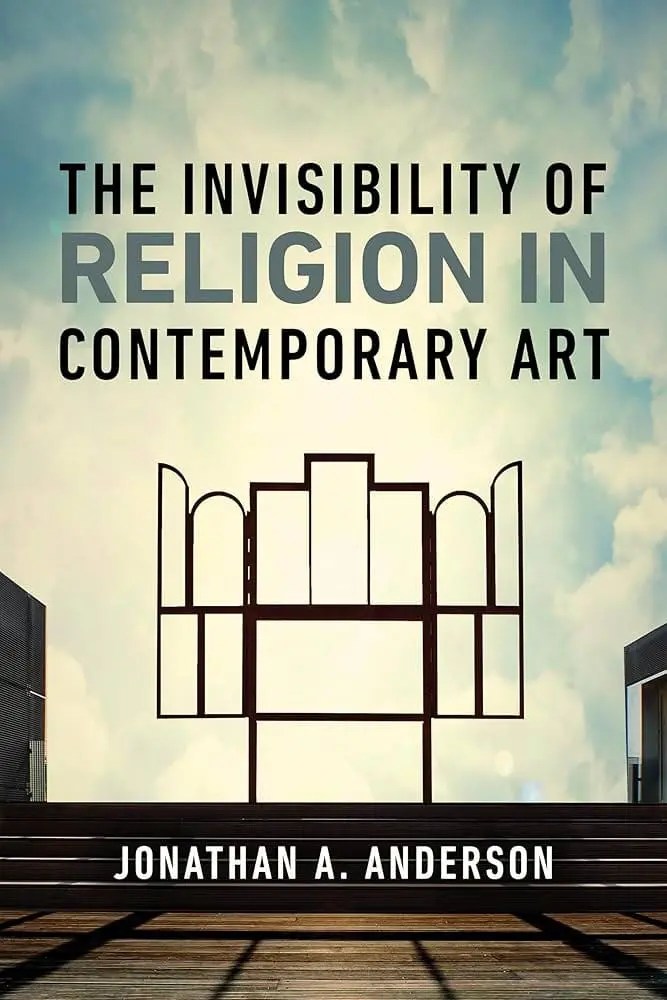
>> “The Invisibility of Religion in Contemporary Art: An interview with Jonathan A. Anderson” by Matthew J. Milliner: Jonathan Anderson [previously] is one of the most important people working across the disciplines of art and theology, and I’m thrilled that his book The Invisibility of Religion in Contemporary Art is now available from the University of Notre Dame Press!

Invisibility of Religion in Contemporary Art

In this recent interview for Comment magazine, Anderson explains his purpose in writing the book:

I have become increasingly convinced that so many pivotal artists and artworks over the past century are deeply shaped by religious traditions and seriously engaged in theological questioning, but this remains severely under-interpreted or misinterpreted in the scholarship about these artists. One might see these threads running through an artist’s artworks and personal writings and even discuss these topics with the artist in their studio, but when one moves to the scholarly writing and teaching about that same artist, that language consistently disappears or is transposed into another register—usually politics, occasionally a highly esoteric spirituality. I wanted to understand, at a non-superficial level, why this was the case, and I wanted to see how other ways of speaking and writing about this topic might be possible.

Don’t miss, at the end of the article, his three hopes for the field of “art and theology,” which I very much share!

+++

LECTURE: “The Problems and Possibilities of Visual Theology: The Ascension as a Case Study” by Jonathan A. Anderson: With Ascension Day coming up on May 29, it’s timely to share this talk given by Jonathan Anderson (see previous roundup item) a few years ago at Duke Divinity School, where he worked as a postdoctoral associate of theology and the visual arts from 2020 to 2023. Anderson explores a handful of images depicting the Ascension of Christ, a particularly challenging subject because of the spatial ambiguity. The scriptural accounts of the event (Luke 24:50–53 and Acts 1:6–11) beg the question, “What does ‘lifted up’ mean? Where is Jesus?” Attempting to work out these spatial difficulties visually can be theologically and exegetically productive, Anderson claims—even if it sometimes leads to unsatisfying results, as, Anderson says, it often does in Western art from the Renaissance onward. By contrast, when artists foster intertextual readings across the biblical canon and focus not so much on what the Ascension looks like as a historical event but rather on what it means, they are generally more successful.

Here are some time stamps, with links to the artworks discussed:

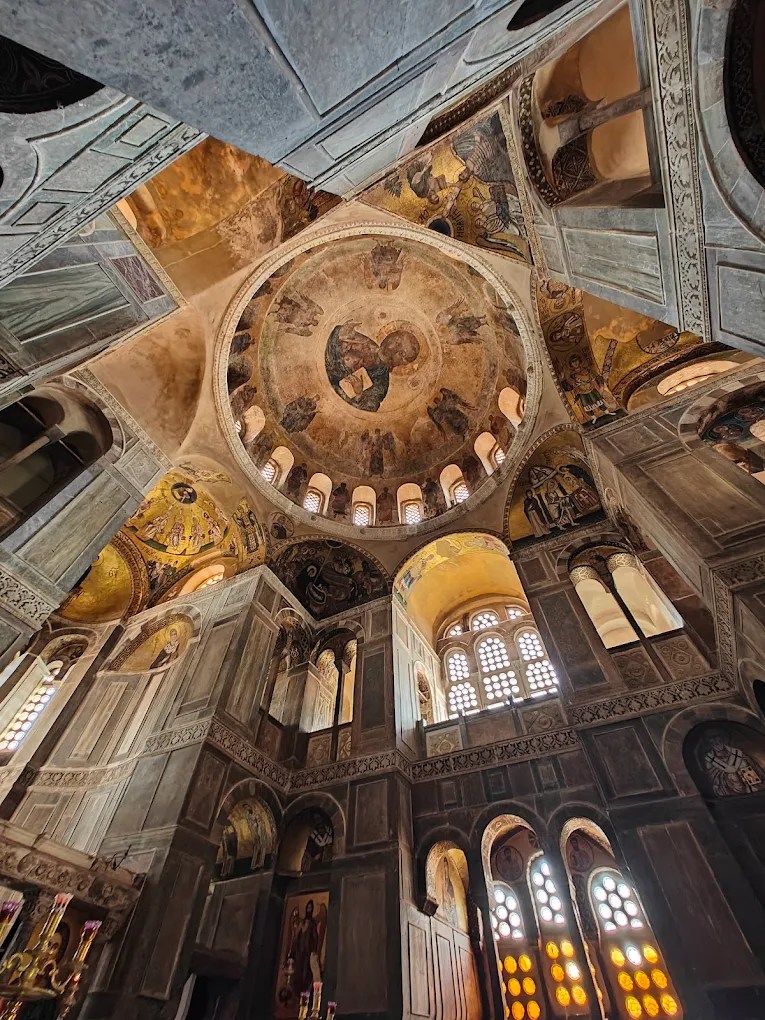
Hosios Loukas
Katholikon of Hosios Loukas monastery, Boeotia, Greece, 1011–12

+++

INSTRUMENTAL JAZZ: “Prayer” by Cory Wong: This video shows a live performance of Cory Wong’s “Prayer” on July 4, 2023, at Gesù music hall in Montreal. Wong, on guitar at far left, is joined by Ariel Posen on guitar, Victor Wooten on bass, and Nate Smith on drums. I learned about Wong through his collaborative album with Jon Batiste, Meditations (2020), which includes a version of this piece featuring Batiste’s piano playing.

+++

EXHIBITION: OMG! Reli Popart, Museum Krona, Uden, Netherlands, April 5–September 7, 2025: This exhibition at Museum Krona (housed in the complex of the still-active Birgittine Abbey of Maria Refugie in Uden, Netherlands) explores the connection between the pop art movement and Christianity through works by artists such as Andy Warhol, Corita Kent, Niki de Saint Phalle, and especially Dutch artists, including Woody van Amen and Wim Delvoye. Pop art is characterized by the use of imagery from popular culture, sourced from television, magazines, comic books, ads—and sometimes from the trash bin.

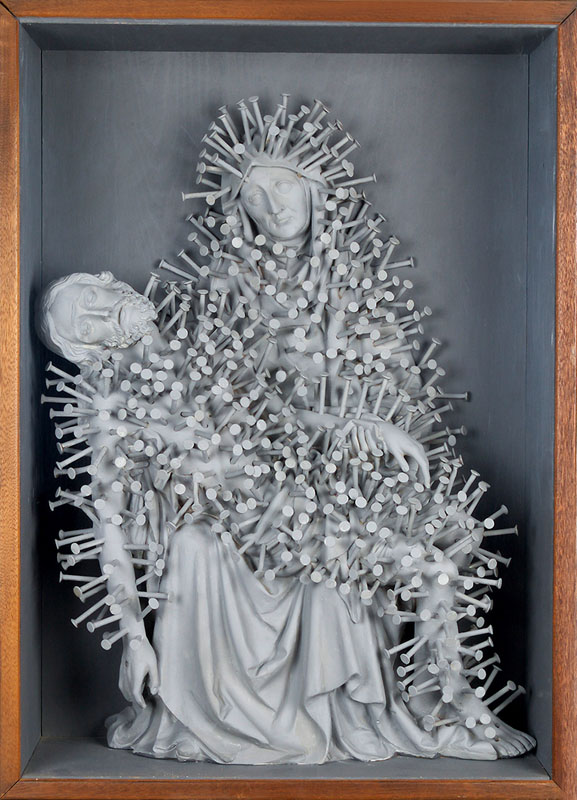
Jacques Frenken [previously], for example, built a body of work by salvaging discarded plaster sculptures of Christ and the saints—mass-produced for Catholic devotional use—and reconstructing them into assemblages. For his Spijkerpiëta, he “brought the Pietà back into our midst and accentuated the pain it radiates with nails,” the artist said.

Frenken, Jacques_Spijkerpieta
Jacques Frenken (Dutch, 1929–2022), Spijkerpiëta (Nail Pietà), 1967. Plaster, paint, iron, wood. Museum Krona, Uden, Netherlands.

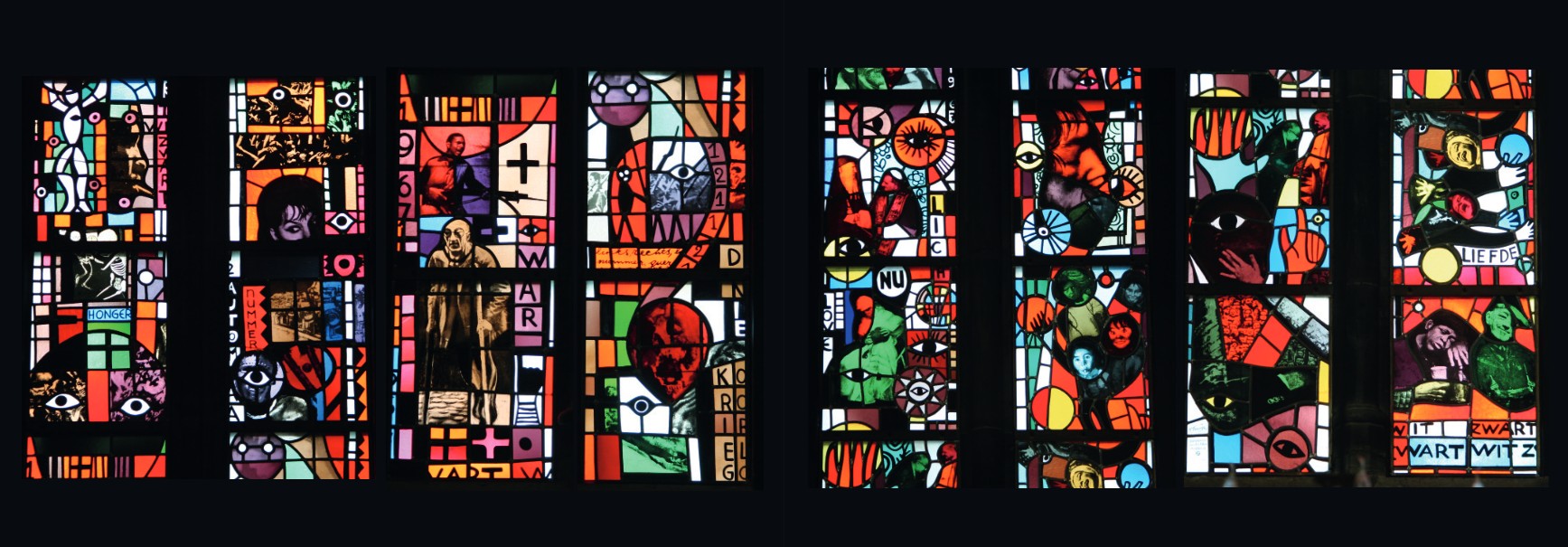
Another artist represented in the exhibition is Hans Truijen, who was commissioned in the 1960s by St. Martin’s Church in Maastricht to design eight stained glass windows for their worship space. The four along the left aisle of the nave depict human and divine suffering, whereas those on the right express hope, love, freedom, and happiness. He chose photographic images from various periodicals, including ones of the Vietnam War, and transferred them to glass using a special screen-printing process.

Truijen, Hans_Stained glass
Hans Truijen (Dutch, 1928–2005), Studies for the eight stained glass windows commissioned by St. Martinuskerk, Wyck-Maastricht, Netherlands, 1966–68. Courtesy of the artist’s son, Marc Truijen.

Easter, Day 7: The Lamb Has Overcome

LOOK: Adoration of the Lamb from Filotheou Monastery

Adoration of the Lamb (Athon fresco)
Adoration of the Lamb, 1765. Fresco in the exonarthex of the katholikon of Filotheou Monastery, Mount Athos, Greece.

LISTEN: “The Lamb Has Overcome” by Luke Morton, 2011 | Performed by Red River Hymnal, feat. Matt McCloskey, 2014

The Lamb has overcome
The battle’s done
And the victory is won
For the Lamb has overcome

No grave could hold him down
Up from the ground
“He is risen!” was the sound
No grave could hold him down

At God’s right hand is he
Our Perfect Plea
As he lives to intercede
At God’s right hand is he

Refrain:
Worthy is the Lamb who was slain
Glory be unto his name
Worthy is the Lamb who was slain
Glory be unto his name

The table now is spread
This wine and bread
Broken body and blood shed
The table now is spread

The day is drawing near
He shall appear
And will wipe away each tear
The day is drawing near [Refrain]

The Lamb has overcome
The battle’s done
And the victory is won
For the Lamb has overcome

“The Vigil of Joseph” by Elsa Barker (poem)

Saint Joseph at the Nativity
Saint Joseph at the Nativity, ca. 1100, mosaic detail from Daphni Monastery, Haidari (outside Athens), Greece [ view full scene ]

After the Wise Men went, and the strange star
Had faded out, Joseph the father sat
Watching the sleeping Mother and the Babe,
And thinking stern, sweet thoughts the long night through.

“Ah, what am I, that God has chosen me
To bear this blessed burden, to endure
Daily the presence of this loveliness,
To guide this Glory that shall guide the world?

“Brawny these arms to win Him bread, and broad
This bosom to sustain Her. But my heart
Quivers in lonely pain before that Beauty
It loves—and serves—and cannot understand!”

from The Frozen Grail and Other Poems by Elsa Barker (Duffield & Company, 1910)

Elsa Barker (1869–1954) was a novelist, short story writer, and poet from New England. She lived for extended periods in London and Paris and was a member of the Theosophical Society.

Advent, Day 22: The King of Glory, Drawing Near

LOOK: Journey to Bethlehem mosaic from the former Chora Church

Journey to Bethlehem (Chora Church)
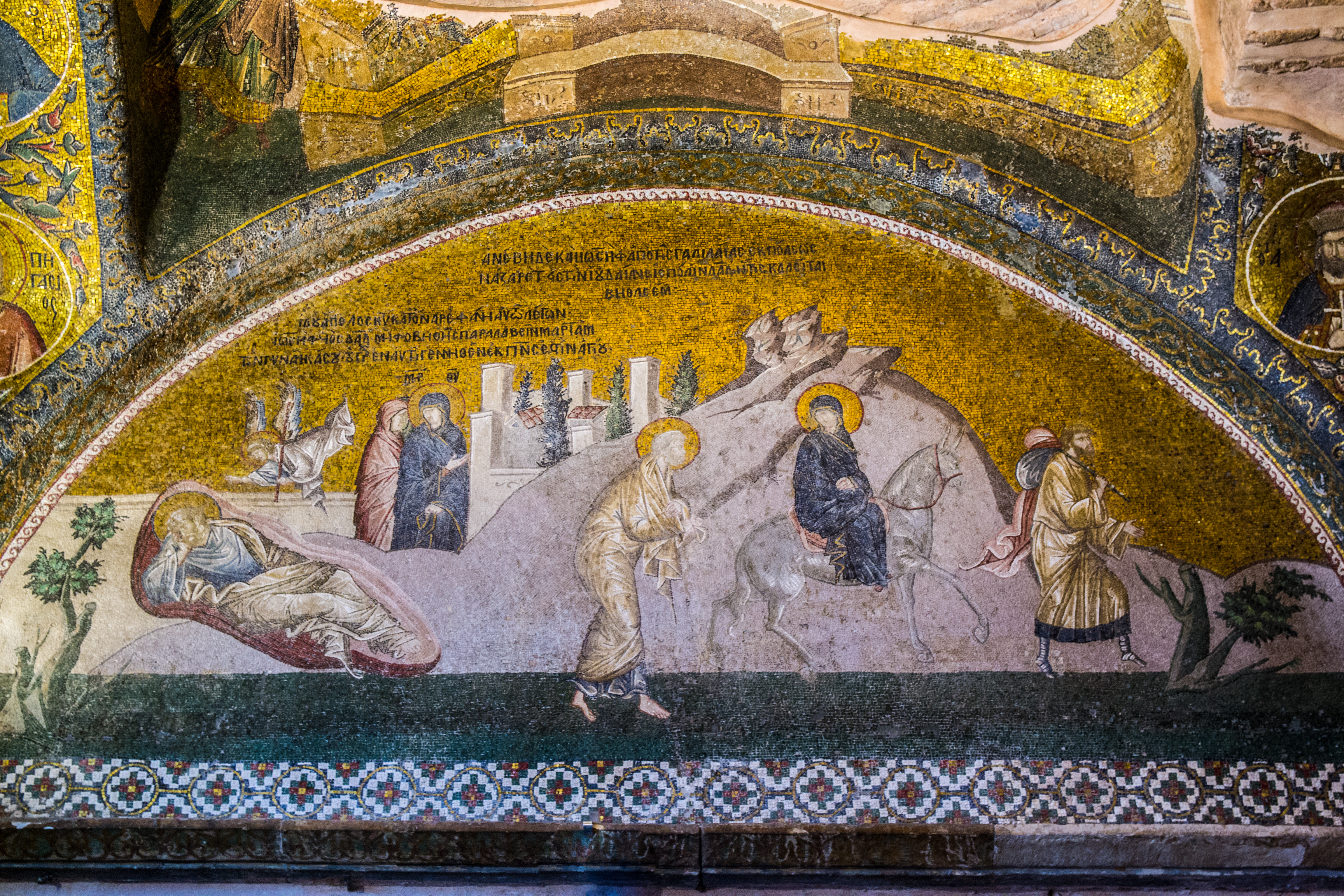
Joseph’s Dream and the Journey to Bethlehem, 1315–20. Mosaic, outer narthex, Kariye Camii (Chora Mosque) (formerly Chora Church), Istanbul, Turkey.

Among the finest artworks of the Palaeologan Renaissance, this Late Byzantine mosaic is in the lunette directly above the north door of a thirteenth-century church in Istanbul (formerly Constantinople), through which the clergy would have entered. It shows on the left an angel appearing to Joseph in a dream to corroborate Mary’s story of the miraculous conception of the son in her womb, and on the right the couple traveling to Bethlehem to register for the census, their donkey led by one of Joseph’s sons from a previous marriage (an apocryphal character from the Protoevangelium of James 17:1–2 and the Gospel of Pseudo-Matthew 13). I believe the scene in the middle background is the Visitation, in which Mary visits her older cousin Elizabeth in the hill country for support during her early months of pregnancy.

The building the mosaic was made for has changed possession and uses over the centuries. Originally a Byzantine church called the Church of the Holy Savior at Chora, it was converted to a mosque in 1511, over a half century after the Ottoman conquest of Constantinople. Because of the important cultural heritage it contains—namely, its Christian mosaics and frescoes—the secular Turkish Republic turned it into a museum in 1945 by court decree. In 2019 that decree was overturned, and the following year it was reconsecrated as a mosque.

It just reopened to the public May 6 of this year. Visitors are allowed daily, excluding Fridays, from 9 a.m. to 6 p.m. except during Muslim prayer times, which vary based on the sun but last for an hour in the early afternoon and an hour in the late afternoon. During prayer, the mosaics and frescoes in the “naos” (nave) are covered with curtains to honor the prohibition in the hadith against visual representations of human beings. But the images in the exonarthex, like the one shown here, remain uncovered at all times.

Chora mosaic in situ

LISTEN: “Lift Up Your Heads” (original title: “Macht hoch die Tür”) | Original German words by Georg Weissel, 1623; translated into English by Catherine Winkworth, 1855 | Tune: TRURO, Anon., from Thomas Williams’s Psalmodia Evangelica, 1789 | Performed by Sufjan Stevens and friends on Silver & Gold, 2012

1. Lift up your heads, ye mighty gates!
Behold, the King of Glory waits;
The King of kings is drawing near,
The Savior of the world is here.
Life and salvation he doth bring,
Wherefore rejoice and gladly sing:
We praise thee, Father, now,
Creator, wise art thou!

2. A Helper just he comes to thee,
His chariot is humility,
His kingly crown is holiness,
His scepter, pity in distress,
The end of all our woe he brings;
Wherefore the earth is glad and sings:
We praise thee, Savior, now,
Mighty in deed art thou!

3. O blest the land, the city blest,
Where Christ the Ruler is confessed!
O happy hearts and happy homes
To whom this King in triumph comes!
The cloudless Sun of joy he is,
Who bringeth pure delight and bliss.
We praise thee, Spirit, now,
Our Comforter art thou!

4. Fling wide the portals of your heart;
Make it a temple set apart
From earthly use for heaven’s employ,
Adorned with prayer and love and joy.
So shall your Sovereign enter in
And new and nobler life begin.
To thee, O God, be praise
For word and deed and grace!

5. Redeemer, come! I open wide
My heart to thee; here, Lord, abide!
Let me thy inner presence feel,
Thy grace and love in me reveal;
Thy Holy Spirit guide us on
Until our glorious goal is won!
Eternal praise and fame
We offer to Thy name!

(Related post: https://artandtheology.org/2022/12/03/advent-day-7-lift-up-your-heads/)

Georg Weissel (1590–1635) was a German Lutheran minister and hymn writer. He wrote “Macht hoch die Tür” (Lift Up Your Heads) in 1623 for the dedication, during Advent, of the newly built Altroßgärter Kirche in Konigsberg, where he served as pastor until his death. The hymn is rooted in Psalm 24, especially verses 9–10:

Lift up your heads, O gates!
    and be lifted up, O ancient doors,
    that the King of glory may come in!
Who is this King of glory?
    The LORD of hosts,
    he is the King of glory. Selah

Likely written by King David on the occasion of the ark of the covenant’s coming to Jerusalem after being taken back from the Philistines (2 Sam. 6), this psalm directs its hearers to open wide the city gates to welcome in God’s presence, symbolized by this precious gold-plated chest. In his hymn, Weissel turns this directive into a metaphor, telling worshippers to open the gates of their hearts so that God can enter in and abide there.

Weissel’s hymn has an odd meter of 88.88.88.66—six lines of eight syllables, followed by two lines of six syllables. Many hymnals of the past century have modified the hymn’s structure to create four-line stanzas instead, each line of equal measure, nixing the shorter ending couplets and combining what remains.

On his 2012 Christmas album, Silver & Gold, Sufjan Stevens and a small vocal ensemble sing what in the original hymn is stanzas 1a and 3a. The group sings the four-part harmonies to a simple piano accompaniment for the first verse and a cappella the second.

For a contemporary arrangement that covers more lyrical ground, see Josh Bales’s 2018 recording of the hymn, from his album Come Away from Rush and Hurry:

I’ve paired this hymn with an artwork of the Journey to Bethlehem to show how “the King of kings is drawing near,” bringing life and salvation. Will you “fling wide the portals of your heart” to receive him?

Advent, Day 14: Spinning

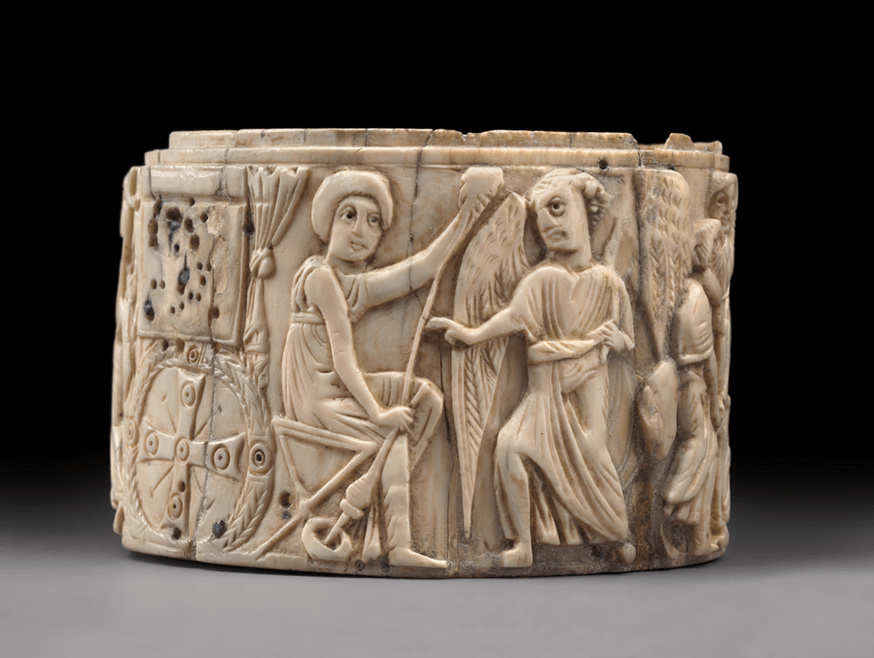
LOOK: Pyxis with the Annunciation

Annunciation pyxis (Late Antique)
Pyxis with the Annunciation, Byzantine Empire (Minden?), 5th or 6th century. Ivory, height 7.9 cm, diameter 11.8 cm. Museum für Byzantinische Kunst, Bode-Museum, Staatliche Museen zu Berlin. [object record]

According to the Protoevangelium of James, an apocryphal infancy gospel from the second century, the Virgin Mary was raised in the Jerusalem temple from age three and was tasked with weaving the purple and scarlet thread of the veil that shrouded the holy of holies, the temple’s innermost sanctuary. One day while taking a break from this sacred labor to collect water from a well, the angel Gabriel approached her with a greeting: “Hail, favored one. The Lord is with you.” She looked around and saw no one, so she returned to her work indoors.

As she was engaged in her spinning, Gabriel reappeared and delivered the message he had been sent with: that Mary was chosen to bear the Son of God.

This account of the Annunciation gained special traction in the East, where the Virgin Annunciate is almost always shown with a spindle of scarlet thread in her hand, or less frequently, standing at a well—unlike in Western depictions, where she is typically shown holding a book.

The Byzantine art object pictured above is an ivory-carved pyxis (pl. pyxides), a cylindrical container used to store small items, such as jewelry or cosmetics. The Annunciation is one of three scenes represented, the other two being the Journey to Bethlehem and the Nativity (including Salome with her withered hand; see Prot. 19–20). The square to Mary’s left is where the lock case was originally mounted.

In the early fifth century, the prominent Byzantine theologian Proclus of Constantinople (ca. 390–446) developed Mary’s weaving into an extended theological metaphor of the Incarnation. He preached on Mary’s womb as a “workshop” containing the “awesome loom of the divine economy” on which the flesh of God was woven together, providing the bodiless divinity with form and texture. [1] “In the workshop of Mary’s womb, the vertical warp thread of divinity was bound to a weft of virgin flesh,” writes Fr. Maximos Constas (b. 1961), paraphrasing Proclus. [2]

Jesus’s flesh is a kind of clothing—the same we wear—made during Mary’s nine months of pregnancy:

The one who redeemed us was not a mere man. May this never be! But neither was he God denuded of humanity, for he had a body. And if he had not clothed himself with me, he could not have saved me, but in the womb of a virgin the one who pronounced the sentence against Adam clothed himself with me, who stood condemned, and there in her womb was transacted that awesome exchange, for taking my flesh, he gave me his spirit. [3]

Notes:

  1. Nicholas Constas, “The Purple Thread and the Veil of Flesh: Symbols of Weaving in the Sermons of Proclus,” chap. 6 of Proclus of Constantinople and the Cult of the Virgin in Late Antiquity (Leiden and Boston: Brill, 2003), 317. The quotations are from Proclus’s Homily 1.I.21–25.
  2. Constas, 357.
  3. Proclus of Constantinople, Homily 1.VIII.122–27, qtd. Constas, 354.

LISTEN: “The Virgin, Spinning” by Katy Wehr, on And All the Marys (2018)

I’m spinning the scarlet and purple—woman’s work
But God is spinning the gold, I see
Weaving a tiny thread like me
Into the grand design to be
The saving of the world

Chosen as the roving fiber—clean and combed
Then dropped and spun and quickly wound
Upon the spindle tightly bound
To serve the One I’m wound around:
The Savior of the world

Refrain:
Son of the Most High, let it be, let it be
Son of God, let it be, let it be to me

In the hands of the Master, I marvel at his ways
He brings me into his weaving room
My heart is stretched upon the loom
The God-man knitted within my womb
The Savior of the world [Refrain]

Bridge:
First to hear, first to hear and believe
First to love, first to love and receive
The Son of God

Will they believe me? I wonder, who can say?
But I will always answer yes
Though a sword may pierce my breast
The Father of my son knows best
The Savior of the world [Refrain]

In “The Virgin, Spinning,” singer-songwriter Katy Wehr takes the weaving metaphor in a different direction than Proclus. Voiced by Mary, the song reflects on how God is weaving a grand tapestry of salvation, in which Mary is a thread.

Rare iconography of Hades impaled on Golgotha

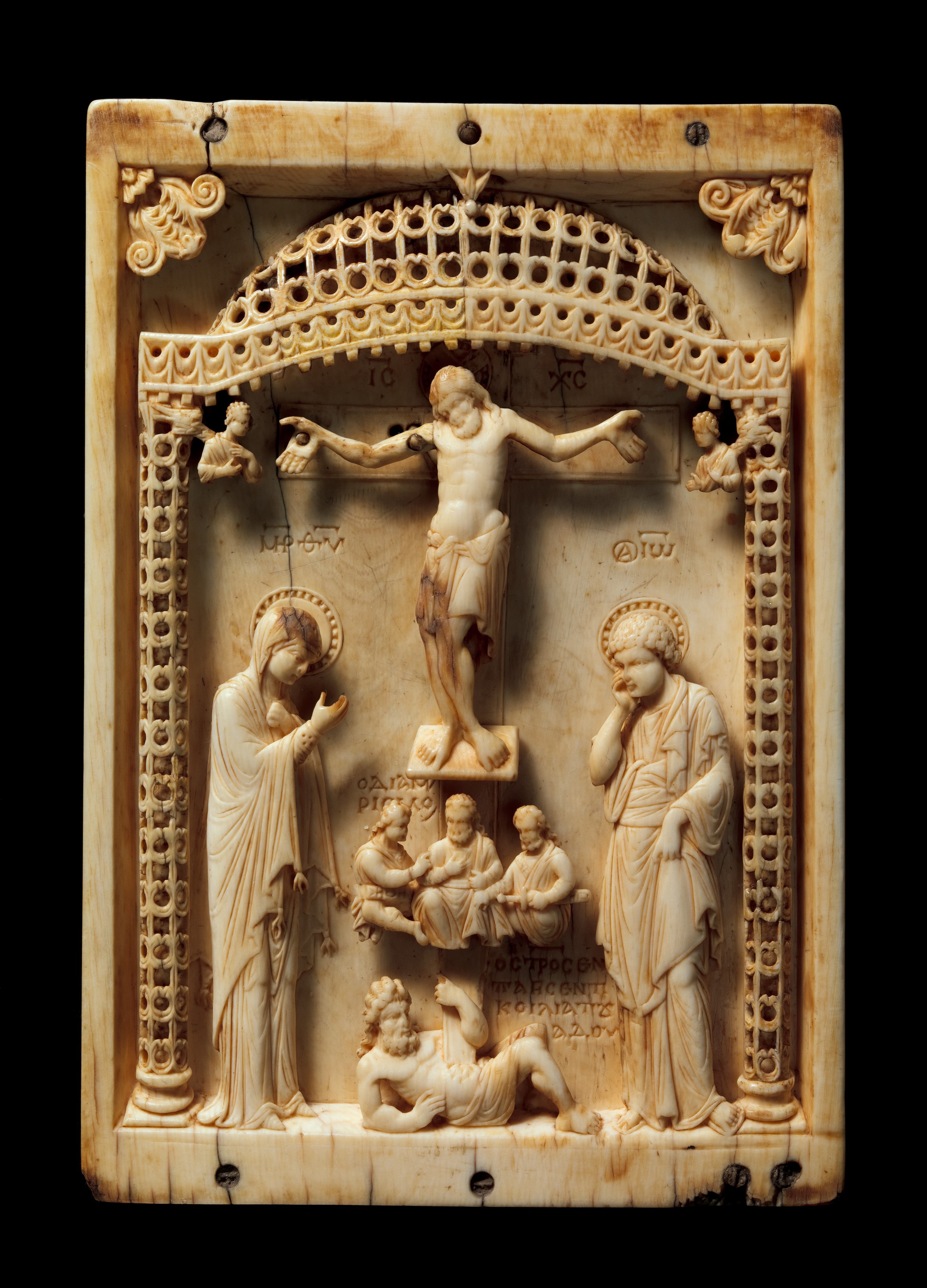
The Metropolitan Museum of Art in New York has in its collection a Byzantine Crucifixion ivory from Constantinople with an unusual figure at the bottom: a burly, bearded man in a reclining position, being stabbed through his belly by the cross. The Greek inscription clues us in to his identity: “The Cross Implanted in the Stomach of Hades.” This is the ruler of the underworld being subdued by Christus Victor, the conquering Christ!

Crucifixion with Hades stabbed
Icon with the Crucifixion, made in Constantinople, mid-10th century. Ivory, 5 15/16 × 3 1/2 in. (15.1 × 8.9 cm). Metropolitan Museum of Art, New York.

Hades is associated with death. The New Testament writers use the word, roughly equivalent to the Hebrew Sheol, to refer to the unseen realm of the dead, where people’s souls reside between death and the general resurrection, or sometimes to the grave, the place of bodily decay.

The iconography of Hades being stabbed is unique among surviving Byzantine representations of the Crucifixion, though it is present in some depictions of the Anastasis (Resurrection), known in English as the Harrowing of Hell.

There is also an ancient literary tradition of Hades experiencing gastric troubles in response to Christ’s redemptive work—either being speared through his midsection with Jesus’s cross, or his stomach churning in nervous anticipation of Jesus’s approach. Byzantine art curator Margaret English Frazer cites several such examples in her essay “Hades Stabbed by the Cross of Christ”:

  • “With this precious weapon [the cross] Christ tore apart the voracious stomach of Hades and blocked the treacherous fully opened jaws of Satan. Seeing this, Death quaked and was terrified, and released all whom he held beginning with the first man.”—Ephrem the Syrian, “Sermo in pretiosam et vivicam crucem” (Sermon on the Precious and Life-Giving Cross)
  • In the Gospel of Nicodemus, Hades frets to Satan about Jesus’s coming to the underworld after his crucifixion: “I not long ago swallowed down one dead, Lazarus by name; and not long after, one of the living by a single word dragged him up by force out of my bowels: and I think that it was he of whom thou speakest. If, therefore, we receive him here, I am afraid lest perchance we be in danger even about the rest. For, lo, all those that I have swallowed from eternity I perceive to be in commotion, and I am pained in my belly.”
  • In the Gospel of Bartholomew, upon hearing footsteps descending the stairs to his abode, Hades says, “My belly is rent, and mine inward parts are pained: it cannot be but that God cometh hither.”
  • In a sermon among the spuria of John Chrysostom of the fifth to seventh century, the infernal serpent laments that a nail is implanted in his heart and a wooden lance pierces him, tearing him apart. (“In adorationem venerandae crucis,” Patrologia Graeca 62, col. 748)
  • Hades, to the snake: “Let us both bitterly lament,
    Since in His descent He has attacked my stomach,
    So that I vomit forth those whom I formerly devoured.
    But now lament with me, for we are despoiled of our common glory.”
    —Romanos the Melodist, Fourth Hymn of the Resurrection, trans. Marjorie Carpenter in Kontakia of Romanos, Byzantine Melodist
  • Again, Hades, crying out: “I am pierced in the stomach;
    I do not digest the One whom I devoured;
    Just so, on the third day, the whale disgorged Jonas.
    Now I disgorge Christ and all of those who are Christ’s;
    Because of the race of Adam I am being chastised.”
    —Romanos the Melodist, Fifth Hymn of the Resurrection, trans. Marjorie Carpenter in Kontakia of Romanos, Byzantine Melodist

But again, the context of all these passages is Christ’s descent into Hades, part of the resurrection narrative celebrated on Easter. Is there any precedent for Hades being stabbed at the moment of Christ’s death?

Frazer identifies the most likely literary inspiration for our anonymous ivory carver as Romanos the Melodist’s hymn “On the Triumph of the Cross” from the sixth century, which was sung on Good Friday in the Byzantine church. Here’s an excerpt, translated from the Greek by Marjorie Carpenter:

Pilate fixed three crosses on Golgotha,
Two for the robbers, and one for the Giver of life.
When Hades saw Him, he said to those below:
“O my priests and forces, who has fixed the nail in my heart?
A wooden spear has pierced me suddenly and I am torn apart.
I am in pain—internal pain; I have a bellyache;
My senses make my spirit quiver,
And I am forced to vomit forth
Adam and those descended from Adam, given to me by a tree.
The tree leads them back
Again into Paradise.”

Satan tries to calm Hades, but he is inconsolable in his defeat, replying,

“Run and uncover your eyes, and see
The root of the tree within my spirit;
It has gone down into my vitals,
So that like iron it will draw up Adam.”

As is common in the New Testament and early patristic writings, Romanos interprets the Crucifixion as Christ’s victory over death. Through Christ’s self-sacrifice, death is disemboweled, no longer posing a threat. The gates of eternal life with God are now opened.

As I study this tenth-century ivory, I wonder who first owned it and how it supported their faith, and I marvel that after more than a thousand years, this precious object still beckons and speaks. It is the central panel of a small triptych whose two wings are now lost. Its diminutive size—no bigger than a hand—means it was likely a personal devotional object.

The artist places the scene under a baldachin. Jesus’s arms are extended over the crossbeam and his feet rest on a suppedaneum, below which three seated soldiers cast lots for his cloak. The Virgin Mary and Saint John stand on either side in an attitude of mourning. But their tears will soon give way to rejoicing, because the cross’s wooden stake plunges decisively into the stomach of Hades, doing him in; see the blood welling up at the wound. The cross is portrayed as the weapon with which Christ wins humanity’s salvation.

This is a symbolic image, one that manifests physically the metaphysical drama playing out beneath the surface of things. Hades embodies death, the opposite of life, so his impalement represents an end to his reign of terror. Symbolism is a common tool of the religious artist for signposting the viewer toward an invisible spiritual truth, and here the artist uses it to show how Christ has, surprisingly, vanquished death by death.


FURTHER READING

Margaret English Frazer, “Hades Stabbed by the Cross of Christ,” Metropolitan Museum Journal 9 (1974): 153–61