Roundup: Films for Advent, new Advent books, and more

BLOG SERIES: Three excellent, brief musings on the season of Advent by W. David O. Taylor, published last year on his blog:

  1. “Advent is for singing not-Christmas songs”: “This is, of course, easier said than done. Hymnals fail to supply a decent list of options and congregants often clamor for the ‘traditional’ carols, the songs of triumphant appearance and glorious coming. Yet this insistence fights against the dominant concern of the Gospels. Luke especially spends the bulk of his story anticipating Christ’s birth rather than narrating his arrival. The dramatic tension lies in what’s to come—not in what’s happened already . . .”
  2. “Advent is about being neither fish nor fowl”: “In being neither here nor there, Advent reminds us of our truest identity. We are amphibious creatures . . .”
  3. “Advent is about the goodness of divine interruptions”: “The entire story of Advent is a story of interruptions. . . . May we, like the actors in God’s divine nativity drama, have eyes to see and hearts to welcome his interrupting work in our lives. May we trust that he wills our deepest good in these interruptions. May we be blessed in our trust in him.”

+++

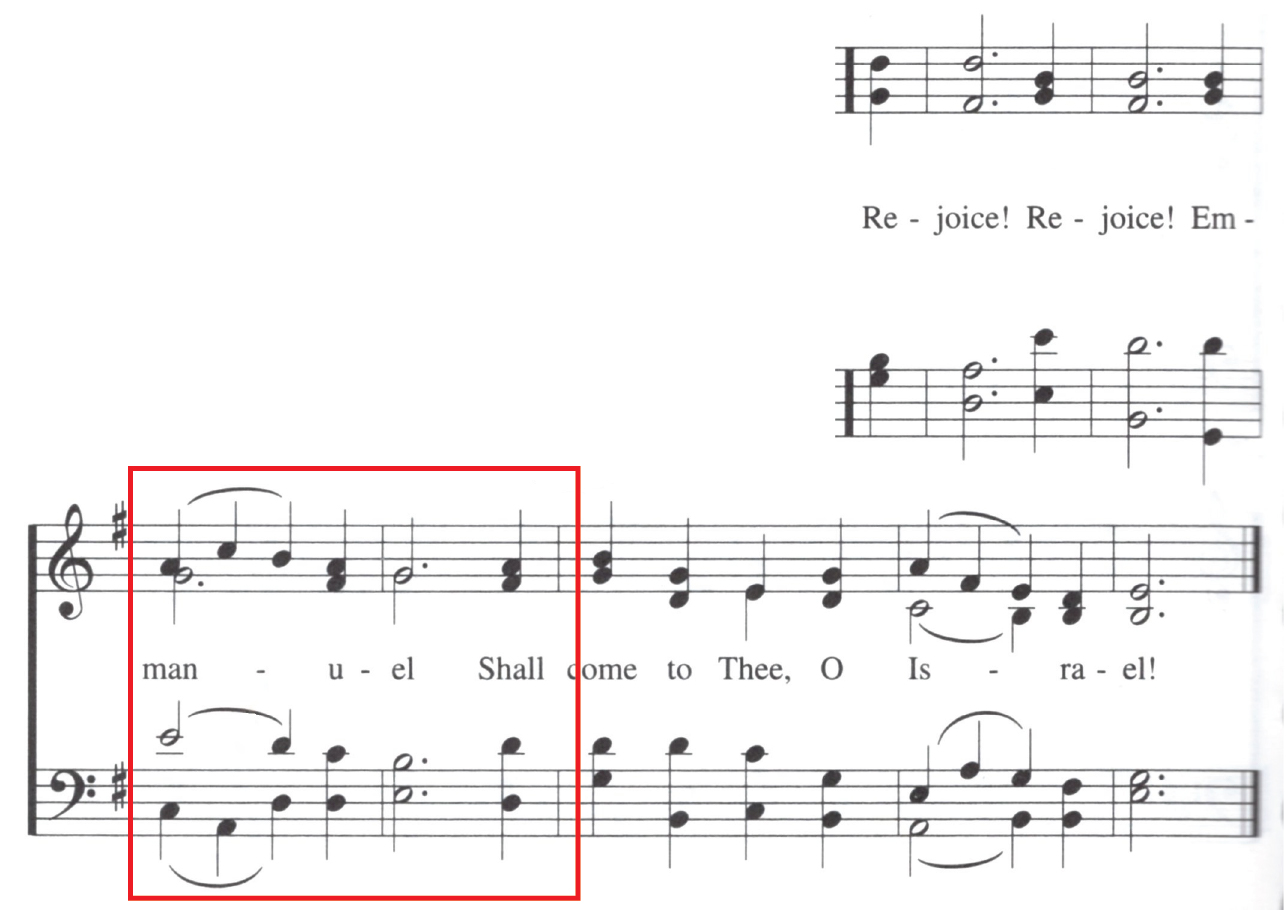
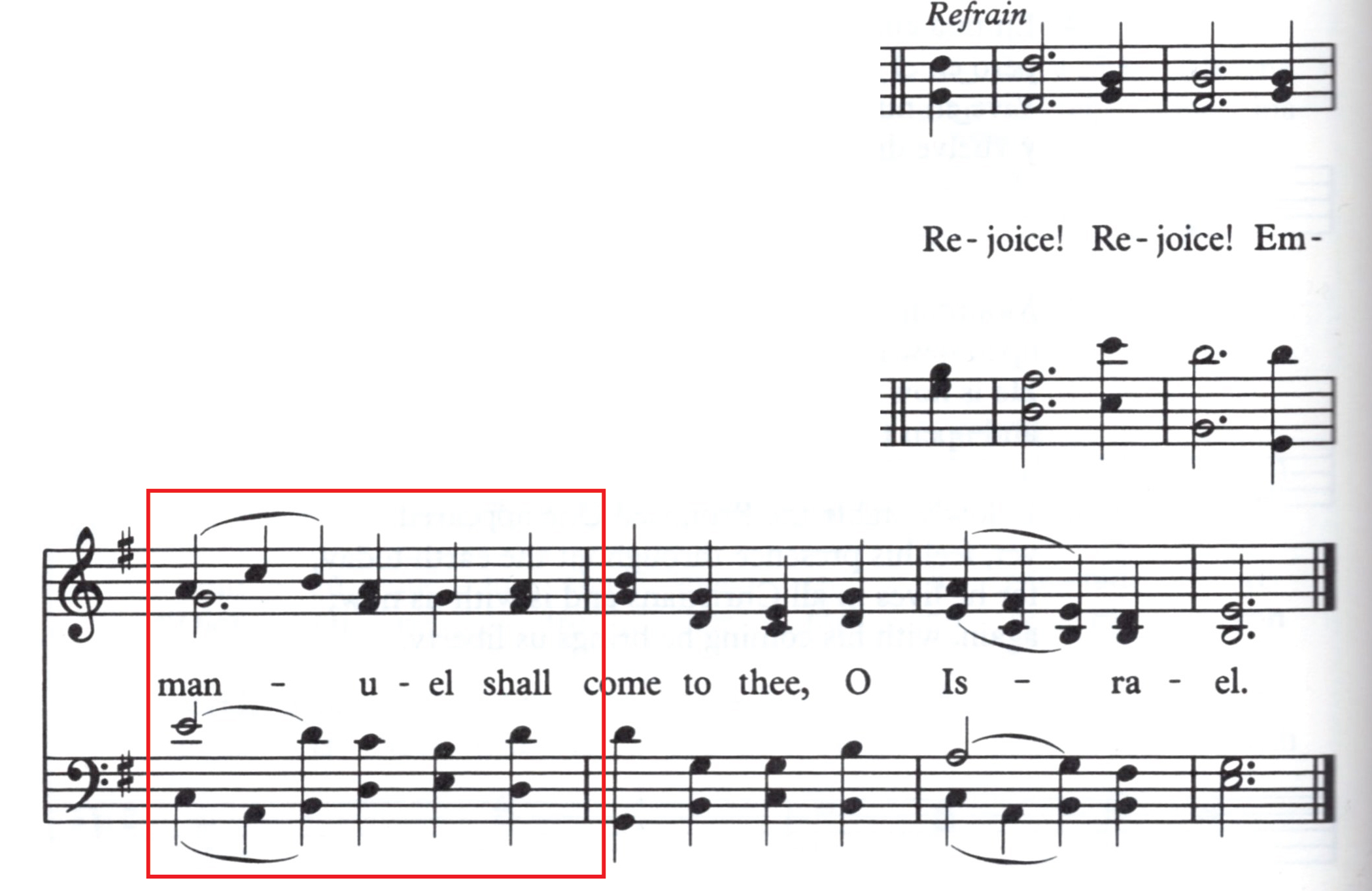
ESSAY: “O Come, O Come, Emmanuel: Dark Good News” by Linda Gregerson, Image: Poet Linda Gregerson reflects, in prose, on the quintessential Advent hymn, which dates back to the Middle Ages. She grew up singing it in her Methodist church every December. “It’s ironic, really—it quite betrays me—to realize that I must have loved this hymn for its whiff of the monastery: chalice and incense smuggled in by way of the minor chord. There’s a moment, a breathtaking moment, when the meter defies expectation. Everything has been steady-as-you-go, four-four time, all quarter notes and dotted halves. But during that remarkable refrain, just when you expect to dwell on the last syllable of the holy name for a count of three, as every verse before this has prepared you to do, the hymn leaps forward and anticipates itself by half a measure. No breath, no stately pause: Emmanuel / Shall come to thee, as though rushing to arrival. Those missed beats never fail to stop my heart.”

I didn’t know what Gregerson was talking about until I looked up the notation in The United Methodist Hymnal no. 211, and sure enough, in measure 15 there are two extra beats. In all the other hymnals I have (and all the recordings of the song I’ve heard), that measure is divided into two and the regular meter sustained, with “el” held out for three beats. Interesting! It does feel unnatural to me to sing it the way she suggests, but she offers a compelling theological reason for why the arranger made that decision.
O Come_v1
This is the standard way (as far as I’m concerned) of singing “O Come, O Come, Emmanuel.” Sheet music excerpt from Majesty Hymns, the hymnal of my youth.

O Come_v2
Sheet music excerpt from The United Methodist Hymnal, showing the unusual (but significant, Gregerson claims) shift from 4/4 meter to 6/4 in one of the measures of the refrain

Here’s an example of a congregation (First United Methodist Houston) singing the refrain the way Gregerson so fondly remembers:

+++

NEW BOOKS:

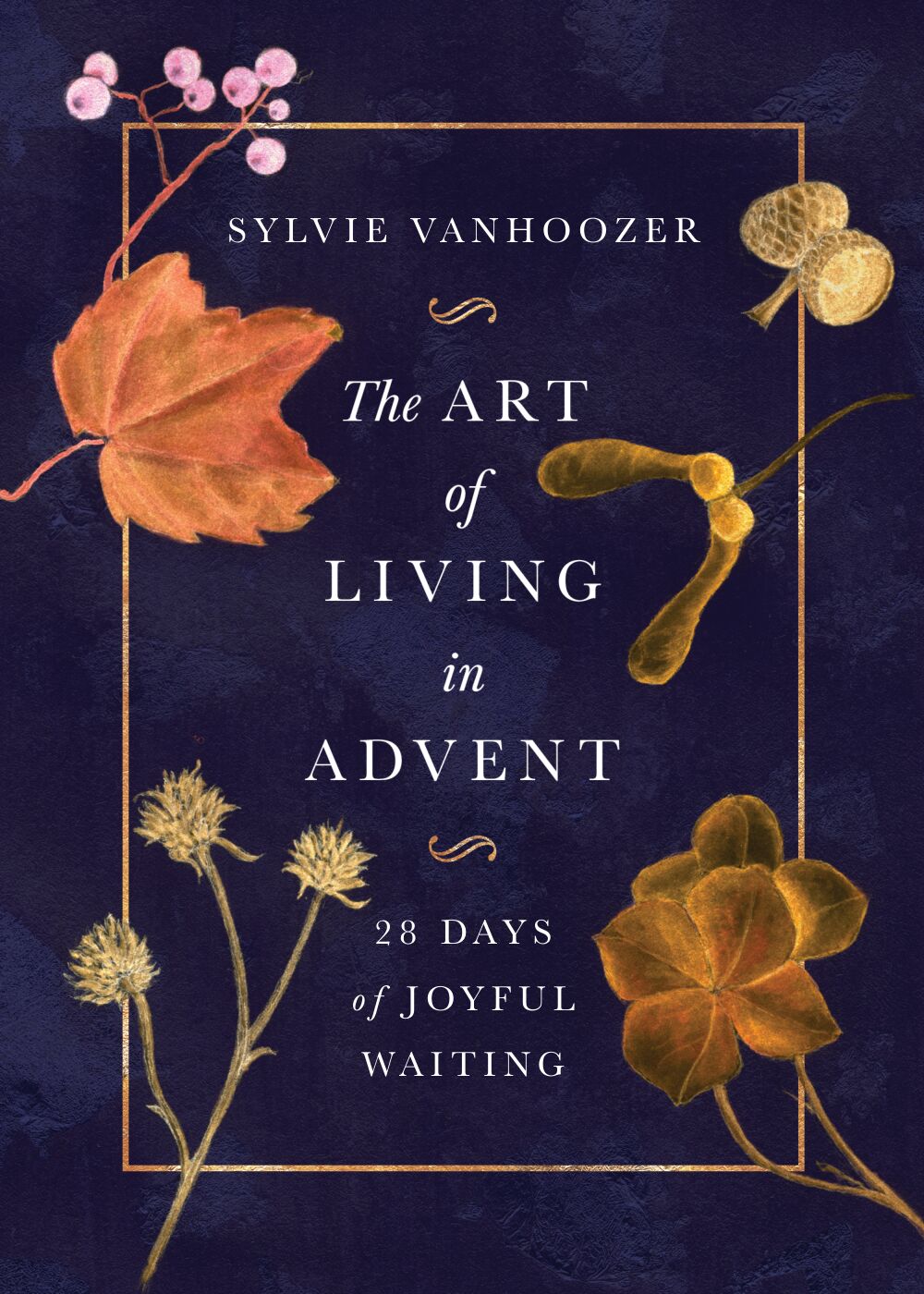
>> The Art of Living in Advent: 28 Days of Joyful Waiting by Sylvie Vanhoozer: A retired French teacher and a botanical artist, Sylvie Vanhoozer was born and grew up in Provence and now lives in Illinois with her husband, the theologian Kevin Vanhoozer. In this little illustrated book, she introduces readers to the tradition of Provençal crèches, localized nativity scenes populated by santons (“little saints”). Made from the land’s clay, the santons resemble nineteenth-century villagers, who offer up gifts from their vocations—olives, bread, wine, wood, sheep, hurdy-gurdy music, herbal remedies. (Reminds me of the presepe from southern Italy that I encountered some years ago!) The crèches are also traditionally decorated with native vegetation, such as thyme, juniper, lavender, and rosemary, freshly harvested on the first weekend of Advent. This is one of the ways in which Provençals embrace Christ’s presence in their own time and place.
The Art of Living in Advent

“I am not inviting readers to leave their place and go to some distant land in a distant past,” Vanhoozer writes. “The invitation is rather to transpose this Provençal scene into one’s own place, to live the same story in a different context. . . . The question is not ‘Did Jesus really come to Provence?’ but rather ‘Could Jesus really come here, to me?’ Could my home, my neighborhood, my church, become a crèche scene, with Christ right here beside me, in me?”

I think this book would have worked better as a literary essay, as it feels padded out to make its ninety-page count, with redundancies and somewhat arbitrary divisions. But I love how Vanhoozer draws us into this cherished and still-living tradition from her childhood and calls us to see and participate in the story of God’s coming where we live, in all its particularities.

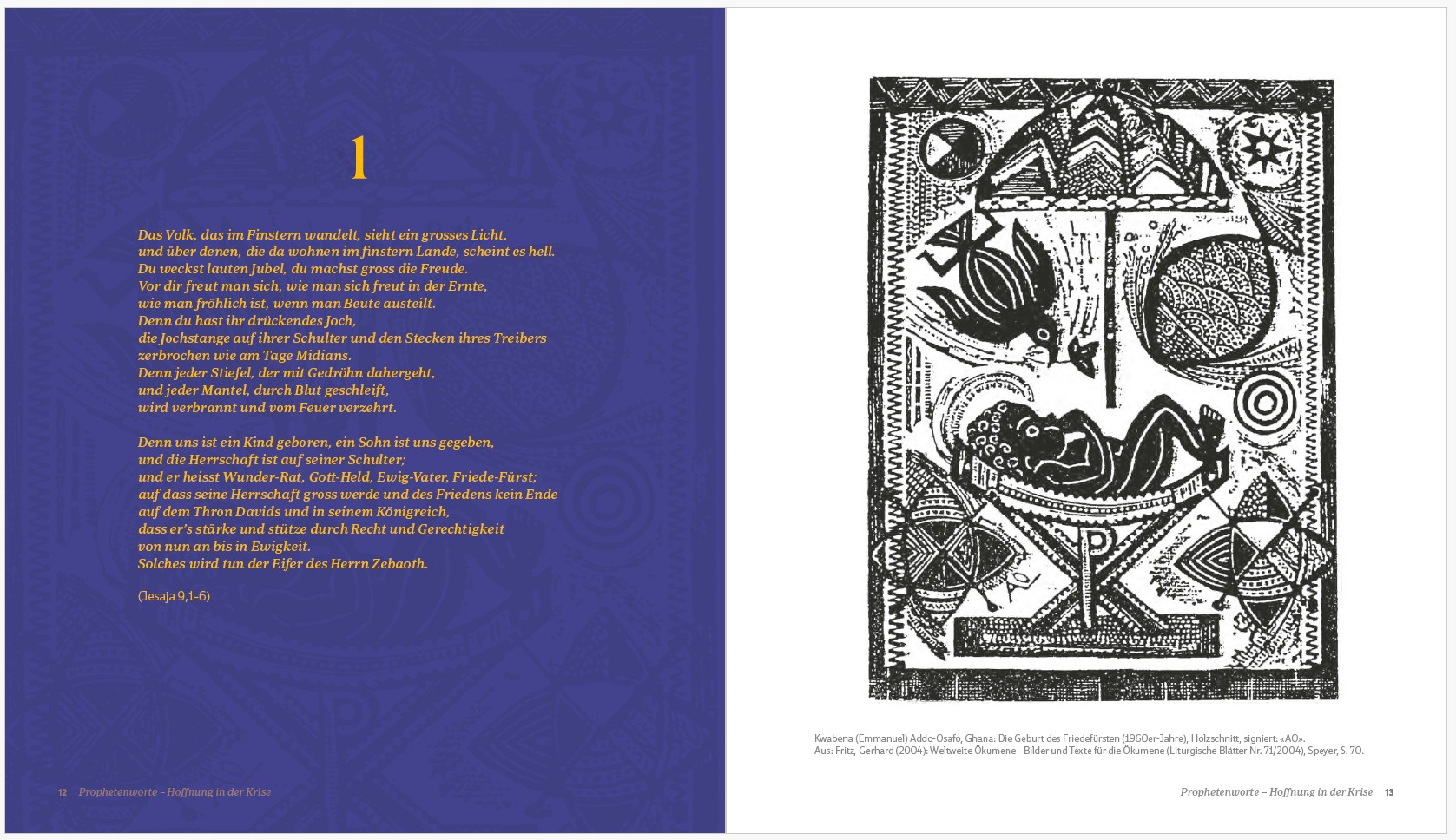
>> Advent: 24 Kunstwerke zur Bibel aus aller Welt by Christian Weber: Rev. Dr. Christian Weber [previously] is the director of studies for Mission 21, an international mission agency of the Protestant Reformed Churches in Switzerland. His work brings him into contact with religious art from diverse parts of the globe. I’m delighted by this new (German-language) book of his, whose title translates to Advent: 24 Bible-Inspired Artworks from Around the World. Organized into four parts (“Words of Prophecy,” “Parables of Jesus,” “John the Baptist,” and “Mary”) and printed in full color, the book features twenty-four primary artworks (plus some supplementary) from twenty-two countries, providing background on and interpretations of each, as well as information about the artists and a bibliography.
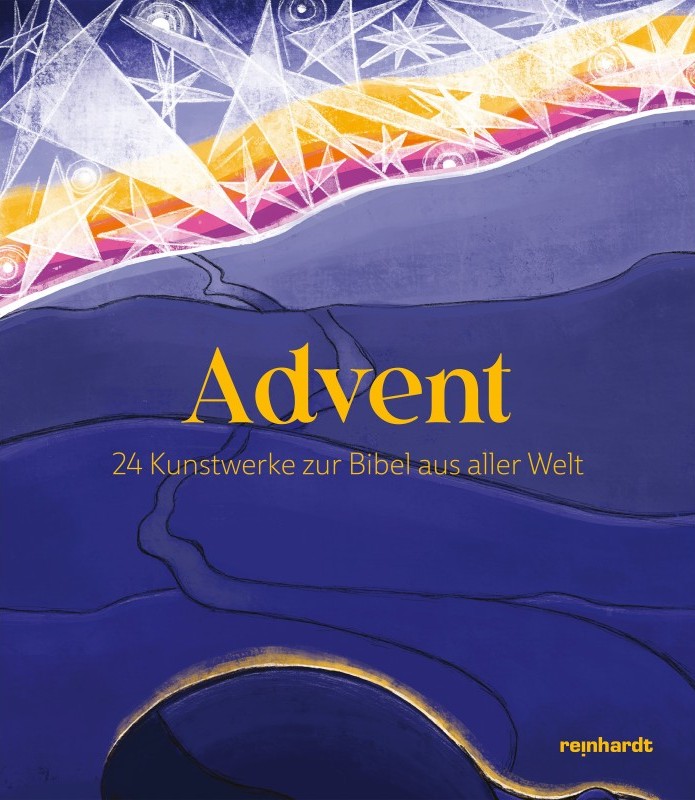
Advent (Mission 21 book cover)
Advent (Mission 21 page spread)
Sample page spread from Advent: 24 Kunstwerke zur Bibel aus aller Welt, showing a woodcut by the Ghanaian artist Kwabena (Emmanuel) Addo-Osafo

A church mural from Zimbabwe, a kalamkari from South India, a gourd carving from Peru, a manuscript illumination from Armenia—these are among the artworks Weber highlights. Some of the works are of higher quality than others, but the emphasis is on how the scripture texts of the Advent season have prompted artistic responses in a variety of places outside Europe, which is the continent that has most shaped the popular imagination when it comes to the biblical story. Weber’s Advent encourages us to widen those imaginations. Despite my fifteen or so years spent researching global Christian art, Weber is always bringing new artists to my attention! You can view sample pages from the book on the publisher’s website.

The cover image is a detail of For Those in Darkness by the American artist Lauren Wright Pittman.

Weber is looking for a North American publisher to release an English-language edition of the book.

+++

ARTICLE/VIDEO: “Five Films to Help You Observe Advent” by Abby Olcese, Think Christian: Abby Olcese, author of Films for All Seasons: Experiencing the Church Year at the Movies, provides five movie suggestions for Advent, corresponding to the themes of Hope, Faith, Joy, Peace, and Christ. (Other churches and families, like mine, substitute “Faith” with “Love” on their Advent wreaths; Olcese’s fifth pick, for Christmas Eve, would fit the “Love” theme perfectly, but see also my suggestion below.) You can read the content as an article or watch it in video format, which includes a few film clips:

ALSO: Allow me to add one of my own suggestions: American Symphony, a 2023 documentary about musical artist Jon Batiste, whose meteoric rise to fame coincided with the return of his partner Suleika Jaouad’s leukemia. Directed by Matthew Heineman, the film follows a year in the life of the married couple, as Batiste prepared for the premiere of his boundary-breaking American Symphony composition at Carnegie Hall in September 2022 while Jaouad endured chemotherapy. It has a very Advent-y feel, by which I mean its calling on God in the darkness (Batiste is a devout Christian) and its orientation around faith, hope, and love. It’s a beautiful, intimate portrait of a marriage, of creativity, courage, and care.

+++

ART: Advent Wreath by Beach4Art: Beach4Art is a family of four who create beach art inspired by beautiful nature in Devon, UK. (Follow them on Facebook, Instagram, or TikTok, and see their Etsy shop.) Below are some photos of the Advent wreath they made out of twigs, stones, and shells on Sandymere beach for the first Sunday of Advent in 2023.
Easter, Day 6: Hope

LOOK: Hope by Ulrich Barnickel

Barnickel, Ulrich_Hope
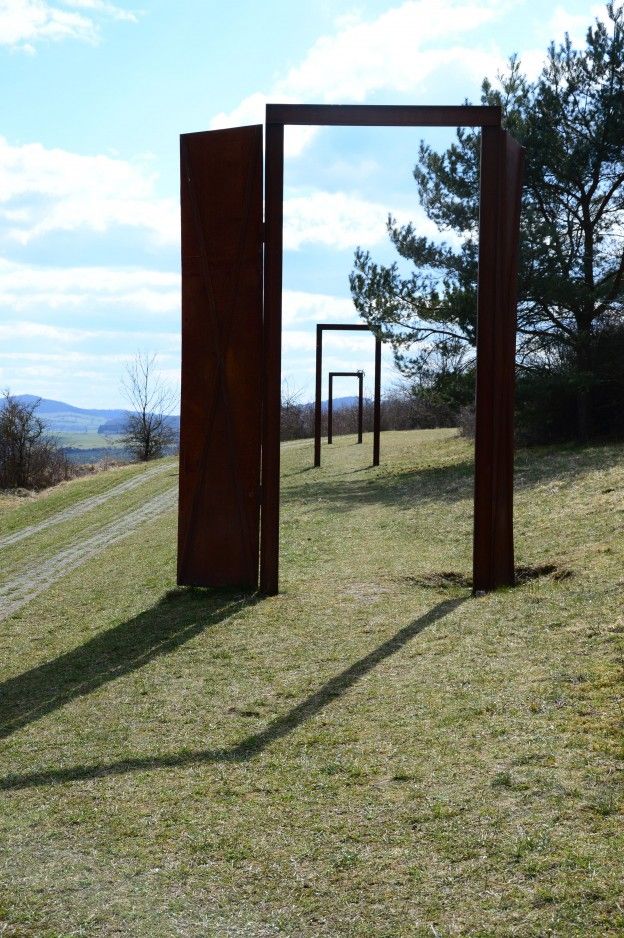
Ulrich Barnickel (German, 1955–), Hoffnung (Hope), fourteenth station from the cycle Weg der Hoffnung (Path of Hope), 2009–10. Iron sculpture, Geisa, Germany.

This is the last of fourteen monumental sculptures situated along the former inner German border that separated Soviet-occupied East Germany and Allied-occupied West Germany from 1952 to 1990. Stretching from Hesse to Thuringia, this highly militarized frontier consisted of high metal fences, barbed wire, alarms, watchtowers, and minefields, a literal iron curtain that divided families, friends, and neighbors.

In 2009, the Point Alpha Foundation, founded to preserve the historic site as a memorial, commissioned German metal sculptor Ulrich Barnickel to create an artwork as part of the memorial. He decided to draw on the traditional fourteen Stations of the Cross, connecting the suffering of Jesus to that of the people on the inner German border under Communism. Collectively titled Path of Hope, his fourteen iron sculptures cover 1,400 meters of ground (scaling down the 1,400 kilometers of the former border). All but the last are figurative, representing Jesus falling, meeting his mother, being nailed to the cross, and so on. They contain artifacts from or references to German Cold War era history, such as a vintage steel helmet hanging on Pilate’s chair, or the grenade and the trench that Jesus stumbles over.

The final station, titled Hope, is a threefold open doorway. After all the heaviness of the previous thirteen stations, we get this breather. Here’s what the doors say to me: Invitation. Possibility. The fourteenth station of the cross is traditionally where Christ is buried in his tomb. But instead of a dead body on a slab or a sealed-up cave, Barnickel gives us an open frame, a door ajar, a view of sky. It alludes to resurrection. Jesus walked through death and came out the other side. And so can we.

While the Path of Hope is a vehicle for remembering, lamenting, and healing from the collective traumas of war and political violence and oppression, it can also speak to personal losses, to any individual’s journey of grief. It’s an invitation to acknowledge the pain we carry but also to see beyond it to the Better Day that is coming, as well as to embrace the life before us here and now. The doors ask us to unburden ourselves of whatever weight is crushing us and to be renewed. (Notice the crown of thorns, an emblem of suffering, left hanging on the corner of the final threshold.) To follow the Man of Sorrows, who walks beside us in our own sorrow, from death into life.

For those accompanying a loved one to the door of death, or who have had a loved one suddenly snatched through, may Barnickel’s Hope meet you in your grieving, filling you with soft consolations of a Love stronger than death, a Love who, once buried, became on the third day the firstfruits of the resurrection harvest.

Barnickel, Ulrich_Hope

LISTEN: “Alleluia, Christ Is Risen Once Again” by Tara Ward, written 2007, performed 2020

Waking up to tragic dawn
Not comprehending what is going on
Alleluia, Christ is risen once again

And it frames a hollow place
Lost dreams and accolades
Alleluia, Christ is risen once again

Alleluia, Christ is risen
Though the walls of castles fall
Alleluia, he is risen for us all

From these sights the shadows light
In an overwhelming night
Alleluia, Christ is risen once again

Hopes fly from us every day
Fear reigns far and so does hate
Alleluia, Christ is risen once again

Alleluia, Christ is risen
Though the gates of all this war
Alleluia, Christ is risen evermore

Alleluia, God is able
To complete the life you led
Alleluia, Christ is risen from the dead

Alleluia, he is risen once again

From the sorrow you have fled
You have joy around your head
Alleluia, Christ is risen once again

And as from earthly trials you fly
You leave sadness when you die
Alleluia, Christ is risen once again

Alleluia, Christ is risen
And the life you’re living now
Alleluia, all’s forgiven somehow

Alleluia, there is beauty
When I think of you, joy I feel
Alleluia, in my sadness, faith is real

Alleluia, Christ is risen once again
Alleluia for you, my friend

Tara Ward [previously] wrote this song during the 2007 Easter season when two tragedies struck within a week of each other. On April 16, a mass shooter opened fire at Virginia Tech, killing thirty-two people, and on April 21, Ward’s friend Liz Duncan was fatally struck by a car while jogging. In the second half of the song, Ward addresses Duncan in the second person, rejoicing through tears that she has entered a state of joy and rest and will one day be raised, body and soul.

Ward returned to the song for Easter 2020 following the death that March of another friend and the initial outbreak of COVID-19. “I was trying to think of what I would sing if I was still working at a church, looking for honest songs to sing on Easter, and this one came up,” she writes on the YouTube video description.

The Nashville community, and America at large, is still reeling from the March 27 shooting at Covenant School that left seven dead, the 131st mass shooting in the US this year. I can only imagine the absolute devastation and rage a parent would feel upon learning that the child they dropped off at school that morning would not be coming home because they were gunned down with an assault rifle.

As I listen to this song, I think, too, of Leslie Bustard, a writer and book publisher, a luminary in the art and faith sphere, who, less than two months after hosting an amazing Square Halo conference on the theme of “ordinary saints,” is now in hospice with late-stage cancer.

Sometimes all the exuberance of Easter can seem disjunctive with the bleak state of the world or our own present circumstances. Christ is risen, but death is still a reality, and it’s still painful. Quiet and aching, this song gives space to grief while also confessing this central Christian doctrine: that Jesus rose from the dead, giving life to all who will receive it. Of course, that doesn’t mean Christians are exempt from experiencing physical death—we will all one day go to the grave—nor from the grief that follows in the wake of a loved one’s passing.

But what Ward’s song helps us do is sing “alleluia” in our sadness, because Christ’s resurrection life is at work in those who have passed on in him, and it’s at work in those of us who walk through the valley of death’s shadow here on earth. The “once again” language—“Christ is risen once again”—indicates that Jesus’s historical rising has ongoing implications, its efficacy extending to every new place of death.

Roundup: Via Dolorosa with medical X-rays, hope in the night, and more

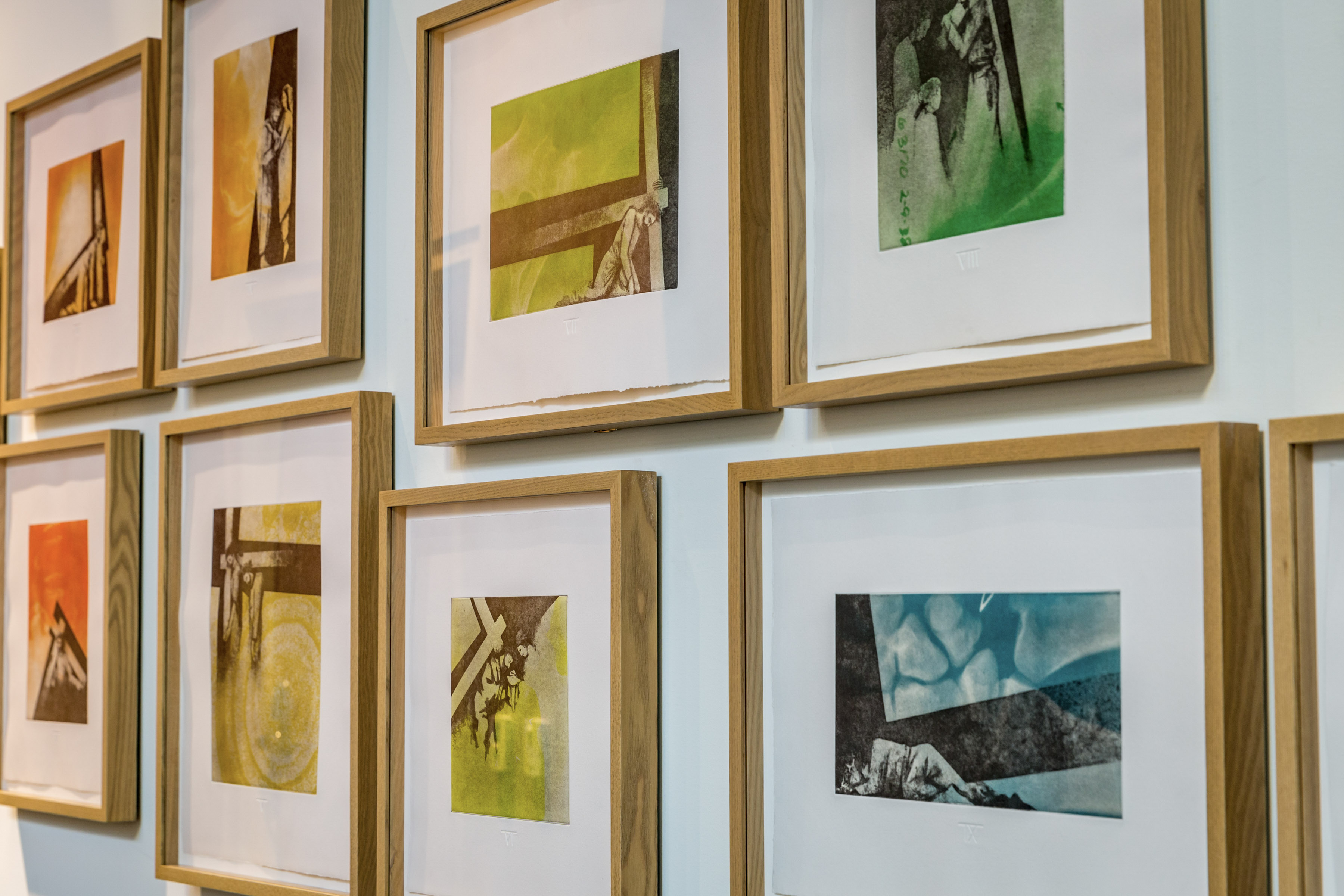
PRINT SUITE: Via Dolorosa by William Frank: Commissioned by SSM Saint Louis University Hospital for their chapel, this set of Stations of the Cross prints by William Frank combines depictions of Christ’s passion with diagnostic X-ray imaging of patients from the hospital’s archives. “The human body, and the community, act as the landscape,” he told me. A bullet in the spine, a kidney stone, a wrist fracture, a tumor, tuberculosis of the bones—Jesus’s suffering unfolds against the backdrop of these specific, tangible forms of suffering. But the rainbow color scheme transforms the stark black-and-white medical images into something a little less scary, suggesting hope and promise—maybe healing, maybe not, but at the very least, divine accompaniment along the path of sorrow.

Frank, William_Via Dolorosa
William Frank (American, 1984–), Via Dolorosa (installation detail), 2020. Etching, archival inkjet, chin collé, with embossment, suite of fourteen prints, overall 4 × 16 ft. SSM Saint Louis University Hospital Chapel, St. Louis, Missouri. Photo: Lisa Johnston, courtesy of the artist.

This year, the Catholic Health Association of the United States created a set of video reflections around Frank’s Stations, one for each piece, which you can find at https://www.chausa.org/prayers/lent-reflections. They also shot a video conversation with the artist:

The suite won a Faith & Form International Award for Religious Architecture & Art.

+++

NEW SONG: “Spooling” by Rev. Matt Simpkins: Diagnosed with stage 4 skin cancer, the Rev. Matt Simpkins [previously] of Lexden in Colchester, an Anglican vicar and a rock musician, said the only way he could calm his nerves enough to get through his next MRI scan was by writing a song from inside the machine. He composed some words and harmonies in his head to the “groovy,” sonorous beeps of the scanner, recording the song afterward using sampling, thus turning a typically threatening, antiseptic medical sound into a party vibe. He was interviewed on the BBC about it last month:

And here’s the bizarre music video, with special effects!

“I’m in a difficult situation with stage 4 cancer, but again, you’ve got a choice, and this song is a good example of that—how you can take something up into song and live,” he says. He hopes the song will minister to those who are undergoing cancer treatment or facing a possible diagnosis—that it is a small oasis, a source of silly laughter, comfort, and strength, for those in dire health.

“Spooling” is the first single from Simpkins’s forthcoming album Pissabed Prophet, a collaboration with his friend Ben Brown. The album is available for preorder on Bandcamp.

+++

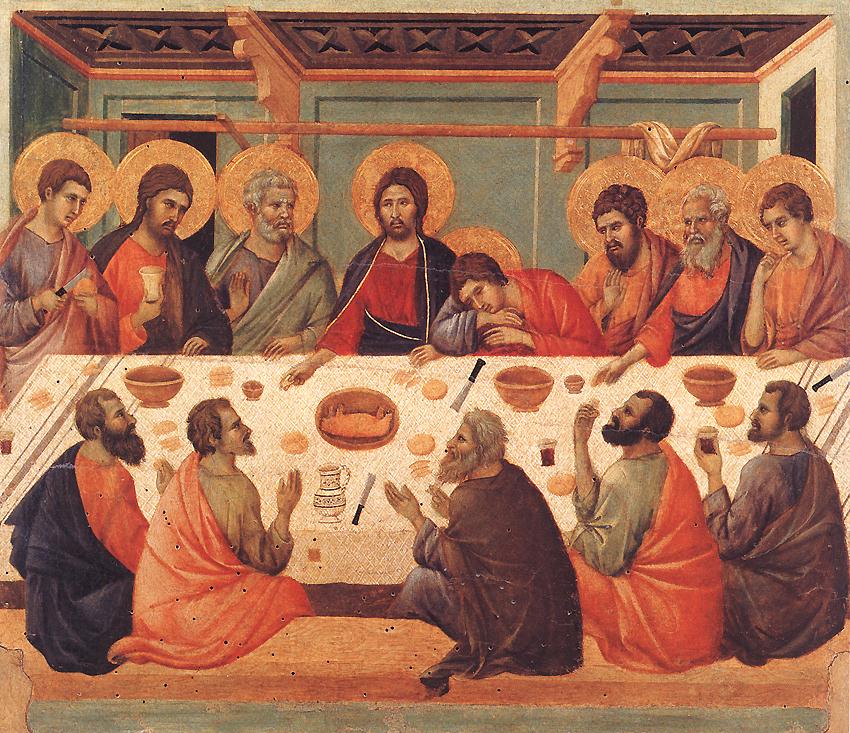
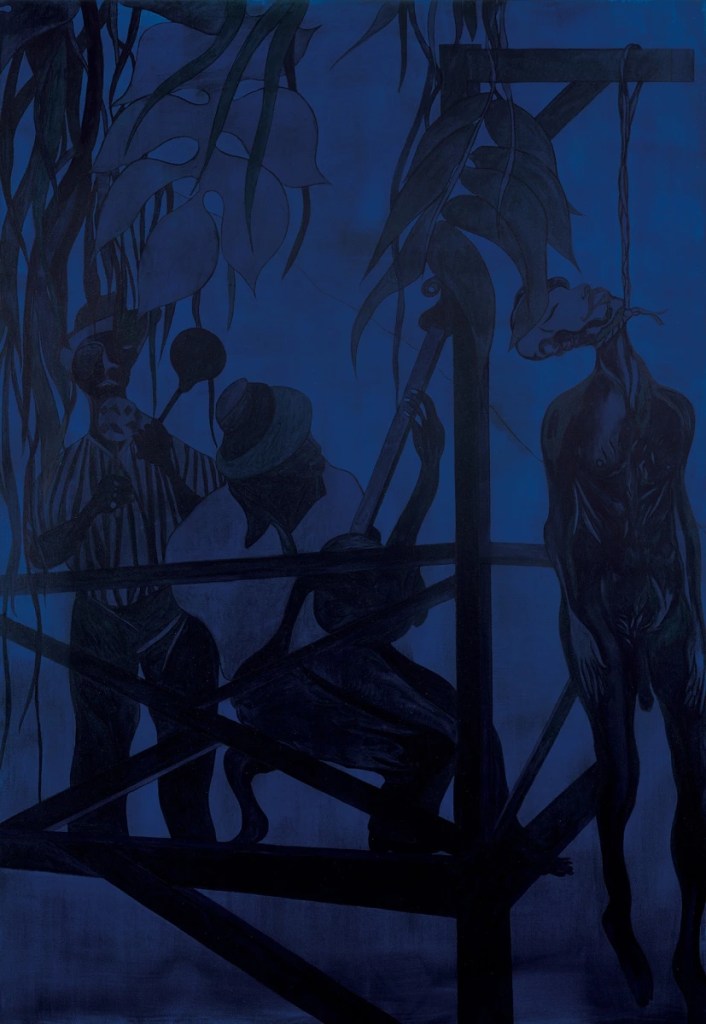
ART COMMENTARY: The Apostle Judas by Adrienne Dengerink Chaplin: As part of the Visual Commentary on Scripture project, Dr. Adrienne Dengerink Chaplin has selected three artworks that in some way interpret Matthew 26:20–25 (and parallel passages), when at the Last Supper Jesus announces that someone there will betray him. Rather than featuring the more common portrayals of Judas as malevolent, halo-less, and/or segregated from the group at the far end of the table, Dengerink Chaplin has chosen works that show him integrated and indistinct, one of twelve betrayers, whose treachery, she boldly proposes, we might construe as “a happy fault.”

  • Ofili, Chris_The Upper Room
  • Duccio_Last Supper
  • Ofili, Chris_Iscariot Blues

With the Duccio panel, she points out something I’ve often contemplated as well: that Jesus feeds Judas with the element he calls his body, keeps communion with him, and is there not a preemptive forgiveness implicit in that act?

+++

SONG: “In the Night” by Andrew Peterson: At a Laity Lodge retreat in 2015, Andrew Peterson of Nashville performed one of the songs from his album Counting Stars (2010) with fellow musicians Buddy Greene, Jeff Taylor, and Andy Gullahorn. “In the Night” rehearses “dark night” stories from scripture: Israel wrestles with God, is enslaved by Egypt, is pressed in by Syria; a prodigal son must resort to eating pig slop; the Son of Man is beaten and killed. But in each of these stories, deliverance comes. Hence the refrain: “In the night, my hope lives on.”

+++

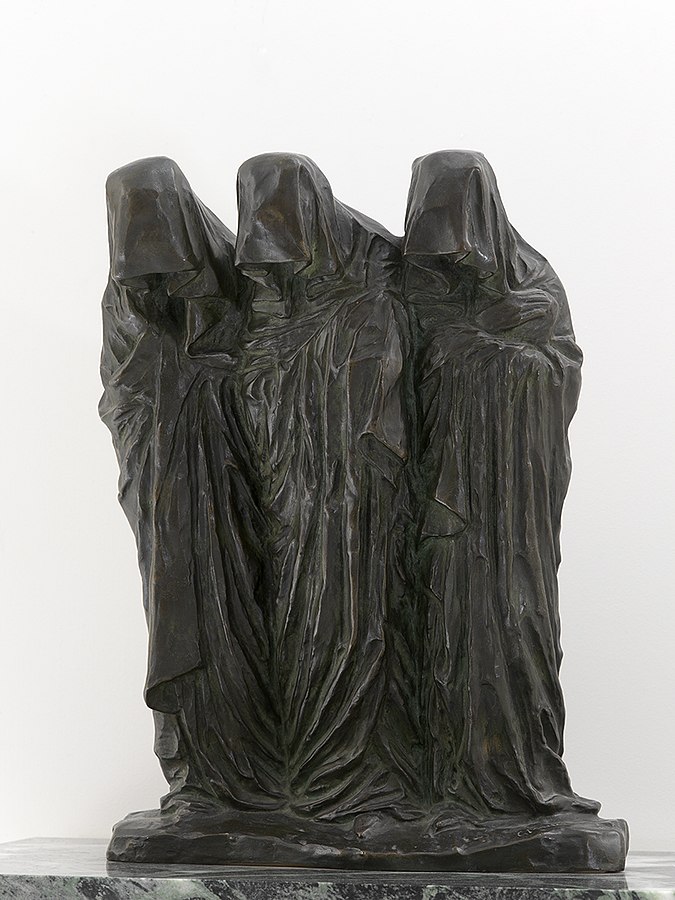
VISUAL MEDITATION: On The Holy Women at the Tomb by George Minne, commentary by Marleen Hengelaar-Rookmaaker: Marleen Hengelaar-Rookmaaker, the creator of ArtWay, writes about a nineteenth-century bronze sculpture by the Belgian artist George Minne, which shows the three women who went to Jesus’s tomb on Easter morning in an attitude of grief—bent backs, bowed heads—drawing on the gothic pleurants, or weepers, of late medieval tombs. The women are “totally enwrapped in mourning their beloved,” Hengelaar-Rookmaaker writes. “This is in fact the very last moment of the passion, the last moment of suffering past the Pietà and the burial of Christ. It will only be a minute before their hoods will come off and the news of the resurrection will enter their numbed minds.”

Minne, George_The Holy Women at the Tomb
George Minne (Belgian, 1866–1941), Les saintes femmes au tombeau (The Holy Women at the Tomb), 1896. Bronze, 44.5 × 62 × 20.5 cm. Groeningemuseum, Bruges, Belgium.

This composition by Minne also exists in granite, wood, and plaster versions.

+++

NEW PLAYLIST: April 2023 (Art & Theology): Includes an excerpt from the psychedelic rock–style Mass in F Minor by the Electric Prunes, “The Outlaw” by Jesus Movement icon Larry Norman, a chuckle-inducing bluegrass song first recorded in 1926 by Gid Tanner and Faith Norris and covered here by the Local Honeys, a choral setting of Psalm 128 (“Happy is everyone who fears the Lord, who walks in his ways . . .”) by the Italian Jewish Renaissance composer Salomone Rossi, Whitney Houston’s rendition of “His Eye Is on the Sparrow,” and a short Kiowa Apache church song that translates to “Son of our Father will set up a cedar tree / Now he is calling to us / He’s going to heal our minds / That’s why he is calling to us.”

Favorite Films of 2021, Part 2

Read part 1 here.

11. Summer of Soul (. . . or, When the Revolution Could Not Be Televised), dir. Ahmir “Questlove” Thompson. The Harlem Cultural Festival of summer 1969, consisting of six free concerts spread out over six sequential Sundays, is a touchstone of Black music history and culture. Attracting over 300,000 people and known colloquially as “Black Woodstock” (Woodstock took place the same summer), it featured major pop, R&B, blues, jazz, funk, and gospel artists, including Nina Simone, Gladys Knight & the Pips, Mahalia Jackson, B. B. King, Stevie Wonder, the 5th Dimension, Edwin Hawkins, Mavis Staples, and Sly and the Family Stone. But because the festival got so little media attention, both during and in the fifty-plus years since, few people actually know about it.

Questlove combines archival footage of the incredible live concert performances—drawing from the forty-plus hours shot by festival coproducer Hal Tulchin, most of it never before seen—with interviews he conducted with participating musicians, audience members, and cultural commentators, as well as with other historical footage that gives a broader portrait of the times. Thoughtfully constructed, Summer of Soul highlights several movements taking place at the time within Black communities—civil rights, antiwar, Black pride, Black Power—anchoring them in musical expressions of those ideas. One thing that keeps coming up in the film is the therapeutic aspect of music, especially gospel music; several interviewees mention how music is one way they cope with unrest, trauma, and injustice and express their pain as well as their hope.

The concert took place only one year after the assassination of Martin Luther King Jr., and one of the highlights for me was gospel veteran Mahalia Jackson and a young Mavis Staples singing “Precious Lord, Take My Hand” as a tribute to him. (Seconds before King died, he had requested that song from Ben Branch, who was set to perform that night.) At one point Jackson passes the mic to Staples to let her solo, which could be read symbolically as her passing the gospel music baton to the next generation.

The most revelatory sequence for me was the one where the Staples Singers’ performance of “It’s Been a Change” is interwoven with contemporary interviews about the moon landing. As Apollo 11 touched down on July 20, 1969, and the astronauts’ disembarkment was being broadcast live around the world, thousands of Black people were gathered at a park in Harlem watching the festival concert, just as they had been for the past three Sundays, instead of their television screens. A journalist was there asking attendees why they were missing this important historic event, and the responses overwhelmingly boiled down to: it wasn’t relevant to them; this music was. Several expressed frustration that with the rampant poverty, hunger, and urban decay, the pouring of tax dollars into space exploration was not only a serious misuse of funds but also immoral. These sentiments are best encapsulated in the spoken-word poem “Whitey on the Moon,” written and performed by Gil Scott-Heron the following year.

Streaming on Disney+ and Hulu.

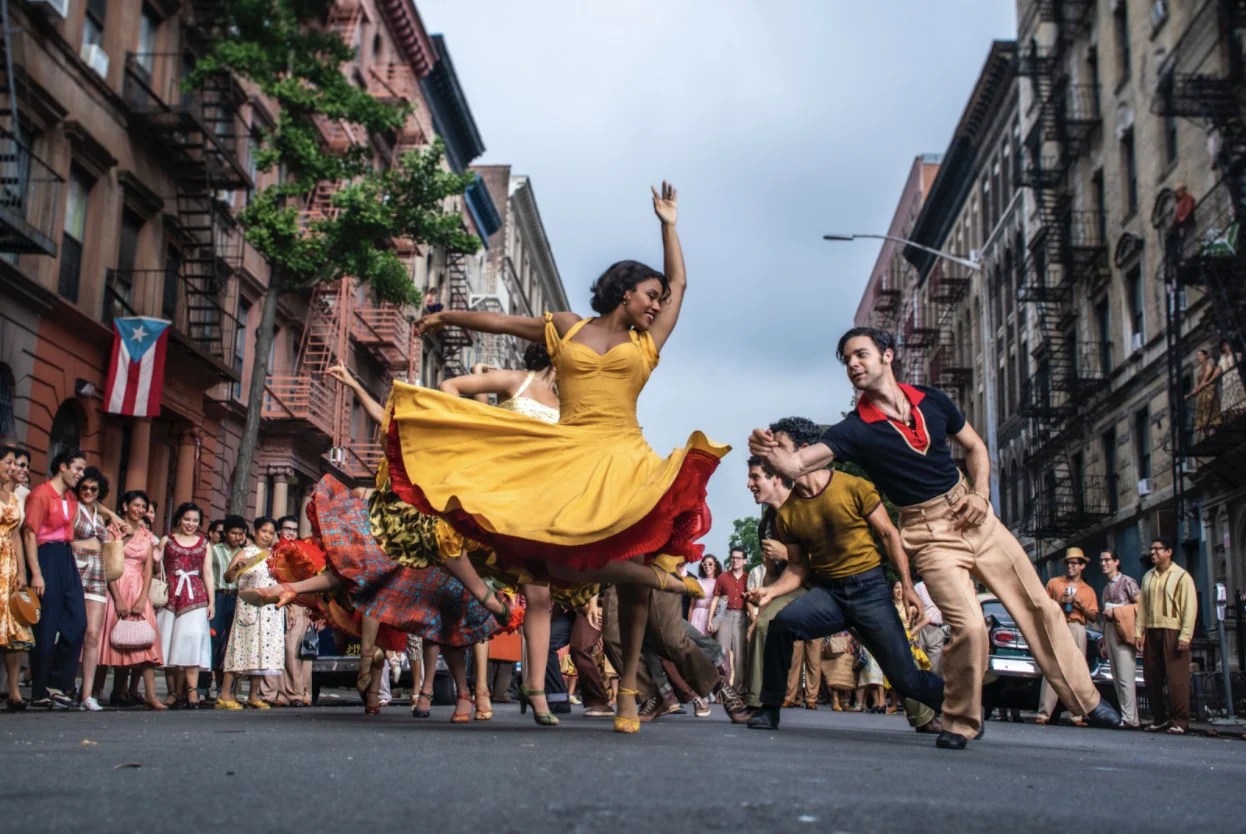
12. West Side Story, dir. Steven Spielberg. I was skeptical of this musical being remade, as the original film adaptation from 1961 is so iconic and well loved. But I must say, I actually prefer this version! The choreography, dancing, and cinematography are phenomenal. Filming dance sequences, especially with large ensembles, is a notorious challenge, and the scene of the school dance in the gym nails it. And rather than being confined to an apartment rooftop, as it was in ’61, the “America” number moves through the streets of Manhattan and is even more colorful and dynamic.

You’re probably already familiar with the storyline, which is inspired by Shakespeare’s Romeo and Juliet: two teenage lovers associated with rival New York street gangs, the Sharks (made up of Puerto Ricans) and the Jets (who are white), fall in love, with disastrous consequences. I’ve always thought the love story to be pretty shallow, and for all the narrative and character fixes/updates Tony Kushner makes to the source material in this screenplay, that doesn’t really change here. Tony (Ansel Elgort) and Maria (Rachel Zegler) are given a little more dimension, but I’m still not totally invested in their romance. And Maria’s quick forgiveness of Tony for what he does to her brother (no spoilers) is just baffling to me.

Still, I appreciate the added backstories given to several of the characters, and even to the turf wars. Spielberg makes it clear that the story is unfolding against the backdrop of the real-life slum-clearance projects in San Juan Hill (Lincoln Square), in which, beginning in 1959, the neighborhood’s majority Black and Hispanic tenants were evicted to make way for the building of Lincoln Center.

West Side Story (2021)
Anita (Ariana DeBose) leads the boisterous musical number “America” in Steven Spielberg’s West Side Story. Charismatic and layered, DeBose’s performance is my favorite in the film. (Her character is given more to do in this version.)

Spielberg also corrects an egregious flaw in the 1961 film, which was the casting of white actors in brownface to play Puerto Rican characters. (Even Rita Moreno, who was a Puerto Rican playing a Puerto Rican, was made to wear skin-darkening makeup as Anita in the original.) Spielberg took care to cast Latinx actors of various skin tones. He also has them speaking occasional Spanish in the film, which is not subtitled (he did not want to “other” the language). So there’s more ethnic and cultural authenticity, and the Puerto Rican characters are more rounded. However, I understand the criticism that the story itself, despite Spielberg’s modifications, still stereotypes Puerto Rican males as violent and ignorant, and Puerto Rican women as either virginal (like Maria) or fiery (like Anita).

For an alternative musical depiction of Puerto Ricans in New York City, set in the 2000s, I commend to you In the Heights, which also released last year. It didn’t crack my top 20, and I was not impressed by the female lead, but it’s a really enjoyable watch—and the concept, music, lyrics, and screenplay are actually by Puerto Ricans (Lin-Manuel Miranda and Quiara Alegría Hudes), not by white guys.

Streaming on Disney+ and HBO Max. (But if you can catch it on a big screen, do it!)

13. Together Together, dir. Nikole Beckwith. A type of aspiring parent that I’ve never seen onscreen before, and frankly have never even thought about, is the single man in middle age who, because he has no partner but really wants a child, uses a surrogate. This heartwarming pregnancy dramedy explores the odd relational dynamic between these two people—Matt (Ed Helms), who’s getting ready to be a father, and Anna (Patti Harrison), the young woman, a stranger at first, whom Matt hires to grow his child inside her.

Many Christians have strong opinions about how children should be brought into the world—that is, through the sexual union of a husband and wife. And while that is a beautiful and God-honoring process, not to mention the most practical, there are some for whom marriage never pans out but who still desire to experience the miracle of new life bred from one’s own genes, and the joys of parenthood. What might the bond between an expectant dad and his gestational surrogate look like? They share an incredibly intimate (but nonsexual) connection by virtue of the creative act they’re participating in together, but obviously it’s sticky, because one of the parties will have to cut her attachment to the child after the birth—or will she?

The movie subverts popular rom-com tropes by showing a deep platonic relationship between two nonrelated people of the opposite sex—and I really appreciate that. We’ve been programmed to want to see, and even to expect, these two people to become romantically involved, as that’s the happiest ending we can imagine. Beckwith gives us something different. Watching Matt and Anna’s friendship blossom throughout the film is so beautiful and gratifying, and the ending is perfect.

Streaming on Hulu.

14. The Mitchells vs. The Machines, dir. Michael Rianda and Jeff Rowe: In this animated family flick, the quirky and dysfunctional Mitchell family must band together to save the world from a robot apocalypse. It’s genuinely funny, and I appreciated the foregrounding of the father-daughter relationship, which starts out strained but heals and grows through shared crisis.

Streaming on Netflix.

15. Judas and the Black Messiah, dir. Shaka King. It’s Chicago, 1968. When Bill O’Neal (LaKeith Stanfield) is caught impersonating a federal officer to steal a car, the FBI agrees to drop all charges, plus give him a monthly stipend, if he will infiltrate the Illinois chapter of the Black Panther Party to gather intelligence on Chairman Fred Hampton (Daniel Kaluuya), whose message of Black liberation and community activism toward that goal have made him a perceived national threat.

This American biopic dramatizes Hampton’s rise to power and his assassination by police. A charismatic leader with strong organizational skills, Hampton was building an alliance among gangs and minority groups in Chicago—an antiracist, anticlass Rainbow Coalition. He taught political education classes, launched a project for community supervision of the police (to hold them accountable for brutality), helped set up a free medical clinic and a free breakfast program on the West Side, and more.  

After striking his deal with the FBI, O’Neal was able to gain the trust of Party members through deception. He became Hampton’s driver and, later, his security captain. The information he supplied to agents about Hampton’s apartment layout enabled the infamous police raid on December 4, 1969, in which Hampton was gunned down while sleeping next to his pregnant girlfriend (Dominique Fishback), who survived—and who served, alongside Fred Hampton Jr., as a consultant on the film.

Significant as he is, Fred Hampton is not a person I ever learned about in school, so this film was educative for me.

Streaming on HBO Max.

16. Hive, dir. Blerta Basholli. This Albanian-language drama from Kosovo is based on the real-life story of Fahrije Hoti (played by Yllka Gashi). The film opens seven years after Fahrije’s husband went missing in the Krusha massacre in March 1999, during the Kosovo War.

Fahrije is a beekeeper, but she’s struggling to provide for her two children and her disabled father-in-law with local honey sales alone. So she starts her own business making and selling ajvar (a condiment made from roasted red peppers), first at the grocery store in town and later for export to other European countries. For help in this venture she recruits many of the other widows in Krusha, of varying ages, who form a “hive” of support for one another. But because the culture is very patriarchal, the women meet with hostility from the older men in the village who believe it’s dishonorable for women to be entrepreneurs and who see their economic independence as a threat to traditional values.

Grief and empowerment are interwoven in this inspiring story of a woman who dares to imagine a future for herself and her family apart from her husband, whom she painfully acknowledges (though not out loud) may be dead.

It’s now been twenty-three years since the massacre, and people in Krusha are still holding out hope for husbands and sons to return, putting pressure on the government to redouble its search efforts. More than 240 men from the village have been confirmed dead, while sixty-four remain missing.

Streaming on Kanopy.

17. Licorice Pizza, dir. Paul Thomas Anderson. I don’t know what to say about this one, except that it’s wacky and entertaining. An ode to LA’s San Fernando Valley of the 1970s, where writer-director Paul Thomas Anderson grew up, it centers on the “goofily chaste romance” (Alissa Wilkinson’s words) between fifteen-year-old Gary Valentine (Cooper Hoffman) and twenty-five-year-old Alana Kane (Alana Haim). She’s flattered by the attention he gives her and charmed by his precocity and cheeky drive; he, besides simply crushing on her, relishes her cheerleading and practical support for his upstart business ventures, like selling waterbeds and opening a pinball arcade. Although the age difference between Gary and Alana is a bit uncomfortable, the tone is light and the stakes are low. Their chemistry is not an erotic one, but rather one that’s sparked and sustained by their having fun together on ridiculous adventures.

18. The Tragedy of Macbeth, dir. Joel Cohen. “A tale of murder, madness, ambition, and wrathful cunning,” adapted here with stunning visuals that capture the mood of the play just right. Add to that a stellar cast. Kathryn Hunter as the three witches (aka “the weird sisters”) is especially compelling—sent shivers down my spine!

Streaming on Apple TV+.

19. Our Friend, dir. Gabriela Cowperthwaite. A celebration of faithful, embodied friendship, this drama is adapted from the 2015 Esquire article “The Friend: Love Is Not a Big Enough Word” that Matt Teague wrote after his wife Nicole’s death from ovarian cancer at age thirty-six. When Nicole (Dakota Johnson) is diagnosed and starts getting sick, her and Matt’s (Casey Affleck) friend Dane (Jason Segal) leaves his management job and girlfriend in New Orleans and moves into the Teagues’ house in Fairhope, Alabama, to provide care and support for as long as he’s needed—which ends up being fourteen months! He gets their girls ready for school in the mornings, cooks meals, does the laundry, provides mental and emotional support, and helps Nicole accomplish her bucket list. The film is sweet and sad and joyful all at once.

Our Friend has been criticized for not portraying several of the physical horrors of cancer that Matt describes in the article. But I’d say that even though it’s not particularly graphic, the film still presents cancer as ugly and disruptive and painful and exhausting; rightfully, it does not romanticize terminal illness or death. What is a shame, I’ll mention, is that the central role Christian faith plays in the Teagues’ lives, as Matt has been vocal about in interviews and Nicole shared a lot about on her cancer blog and on YouTube, is entirely absent from the film.

Segal is excellent as Dane. And it’s beautiful to see not just Dane’s sacrificial love but also the Teagues’ dedication to and inclusion of Dane throughout their married life, as we see in the many flashbacks that develop their friendship story. Married couples, especially ones with kids, tend to maintain relationships mostly with other married couples, not with singles, which should not be so—so I love that the film highlights this trio of friends in a meaningful way.

Streaming on Amazon Prime.

20. A Hero, dir. Asghar Farhadi. Rahim (Amir Jadidi) is on leave from debtors’ prison when he finds a bag of gold. He seeks to return it to its owner and becomes a local celebrity—until some people start to question his integrity.

Streaming on Amazon Prime.

HONORABLE MENTIONS: The Pink Cloud; One Night in Miami; Luca; Spencer; Lorelei; The Eyes of Tammy Faye.