
LOOK: The Antioch “Chalice,” 6th century
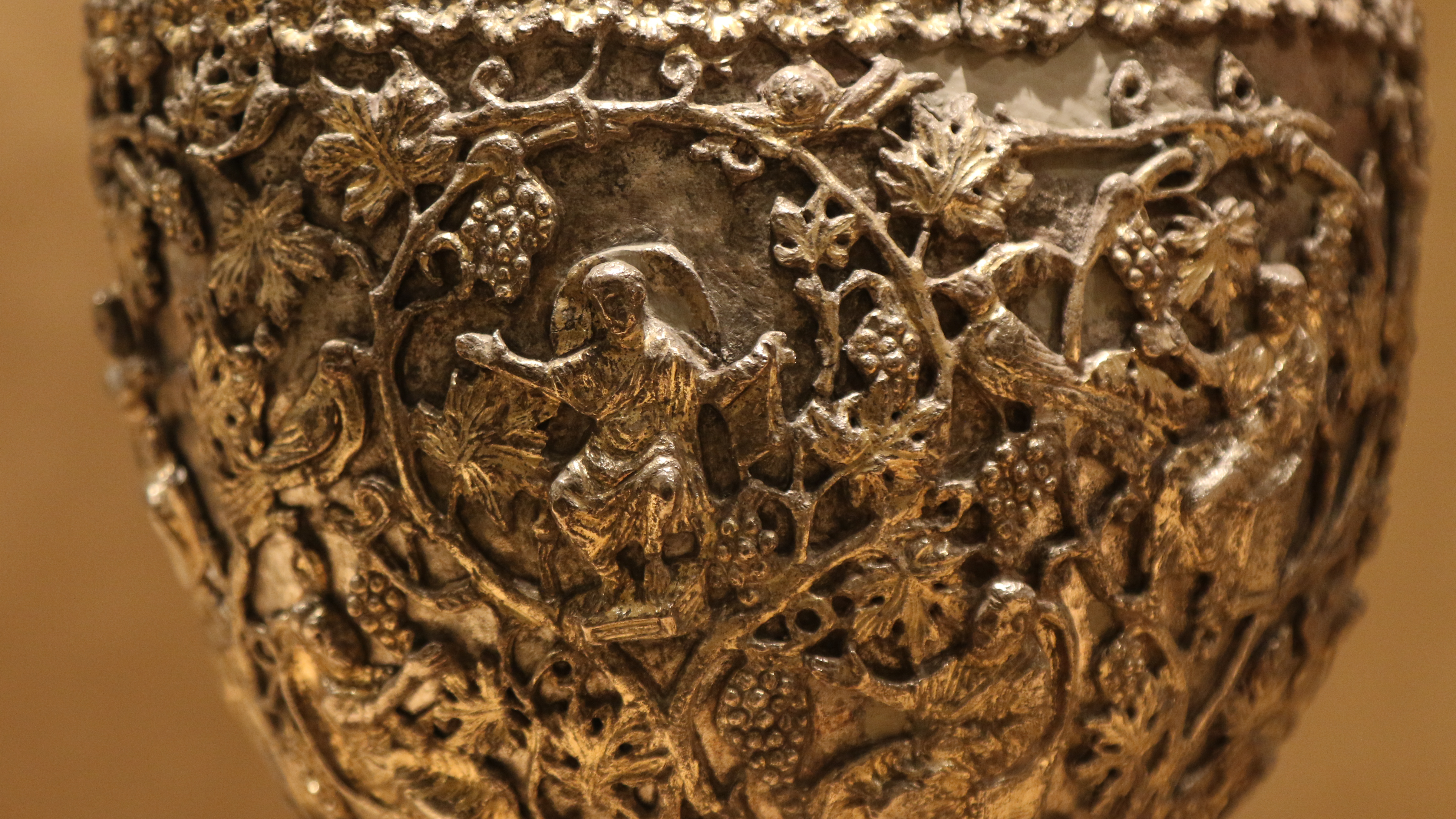
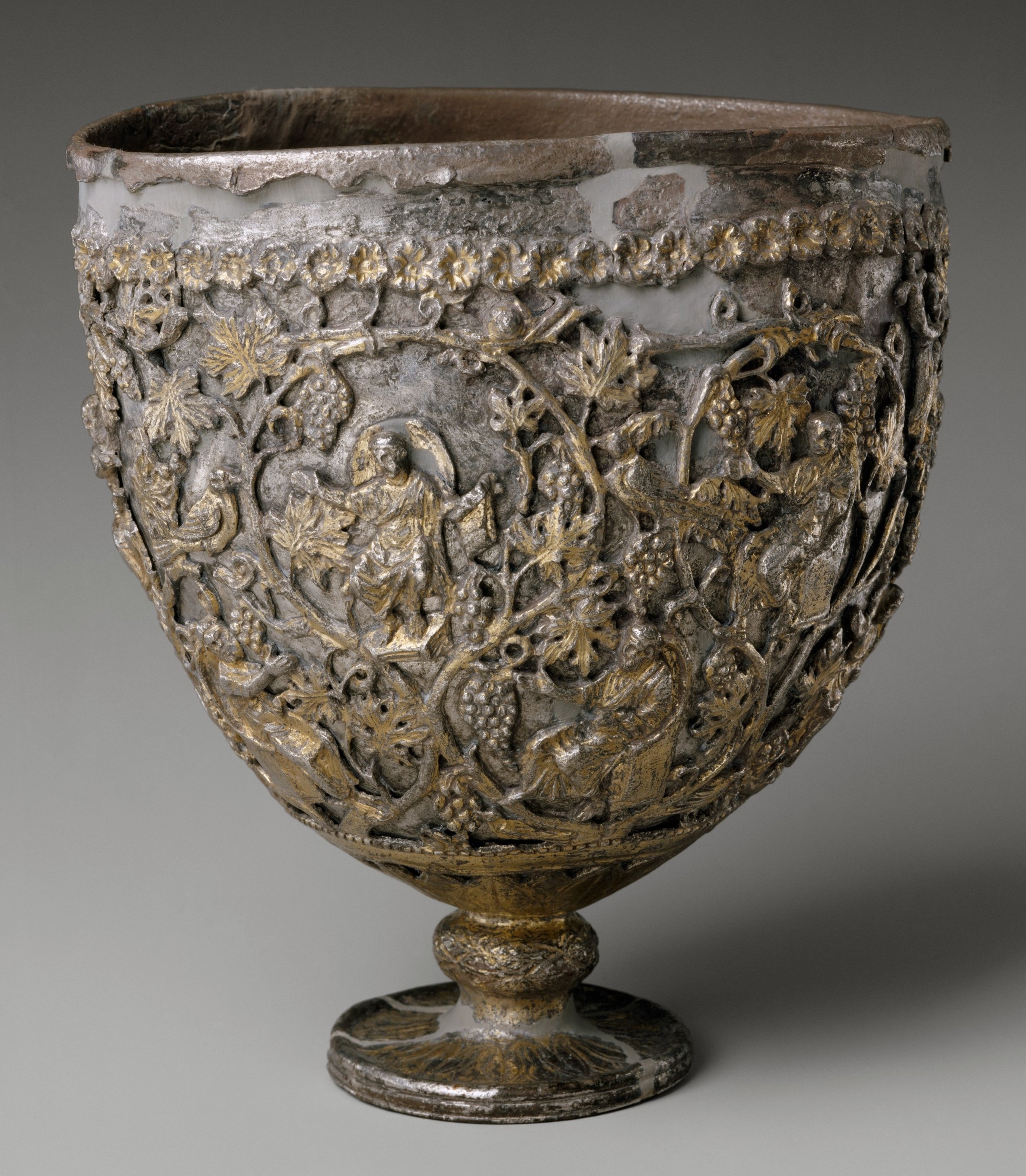
This Byzantine liturgical object was discovered in 1908 in Antioch on the Orontes (in modern-day Turkey, near the Syrian border) and is thought to be from the first half of the sixth century. Originally it was identified as a chalice, used in the celebration of the Eucharist, but more recent scholarship suggests that it was probably a standing oil lamp that was used in church.
The elaborate silver shell that encloses the plain silver bowl is covered in emblems of the renewal of life—vines, fruit, doves, a butterfly, a rabbit. There are also snails and a grasshopper! If indeed the object is a lamp, its flame would have reinforced Jesus’s self-identification as the light of the world.
Twelve seated human figures circle the bowl, two of which likely represent Christ, as each is surrounded by five figures in attitudes of directed reverence. One Christ figure (see the first photo below) is shown with a scroll draped over his left arm, representing his teaching. The other Christ, on the opposite side, is depicted as the resurrected Lord and giver of life; a lamb stands under his right arm, and beneath him, an eagle with outspread wings perches on a fruit basket.
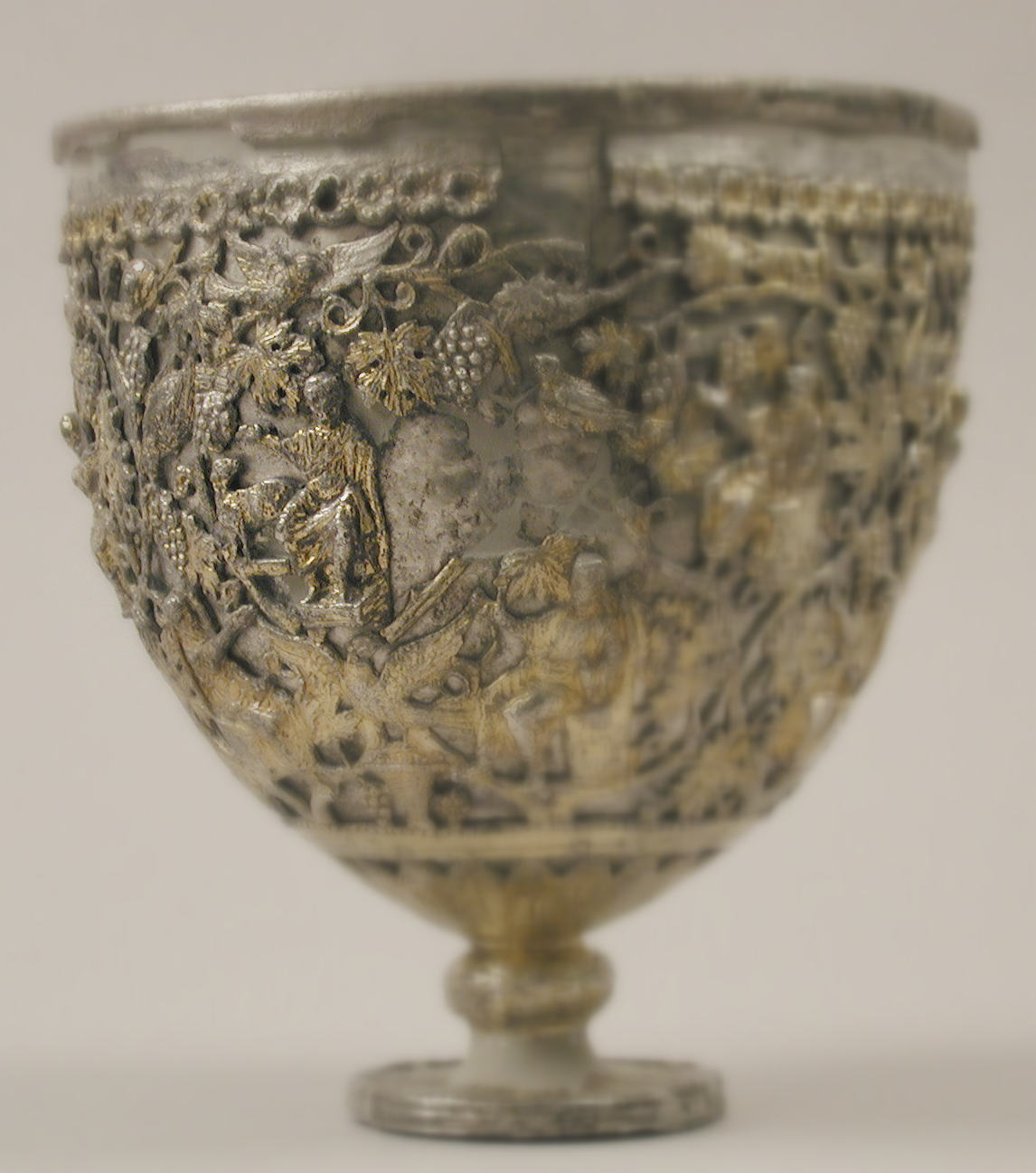
The subordinate figures, all holding scrolls, may be apostles, or they may be philosophers of the classical age who, like the Hebrew prophets, had foretold the coming of Christ.
LISTEN: Christ lag in Todesbanden (Christ Lay in the Bonds of Death) (BWV 4) by J. S. Bach, 1707 | Words by Martin Luther, 1524 | Performed by Ensemble Orlando Fribourg at the Church of St. Michael’s College, Fribourg, Switzerland, 2016
Bach wrote this Easter cantata—one of his earliest works—at age twenty-two as part of his application for the post of organist at Divi Blasii church in Mühlhausen, Germany. (He got the job!) Its text and melody are taken from the hymn of the same name by Martin Luther, which was itself derived from the eleventh-century plainsong “Victimae paschali laudes.”
The twenty-two-minute cantata is divided into an opening instrumental movement, called a sinfonia, and seven vocal movements corresponding to the stanzas of Luther’s hymn. These are arranged symmetrically—chorus–duet–solo–chorus–solo–duet–chorus—with the focus on the high drama of the central fourth movement, which describes the battle between Life and Death.
Sinfonia

1. Choral
Christ lag in Todesbanden,
für unsre Sünd gegeben,
der ist wieder erstanden
und hat uns bracht das Leben.
Des wir sollen fröhlich sein,
Gott loben und dankbar sein
und singen Halleluja. Halleluja.

2. Duett (SA)
Den Tod niemand zwingen kunnt
bei allen Menschenkindern;
das macht alles unsre Sünd,
kein Unschuld war zu finden.
Davon kam der Tod so bald
und nahm über uns Gewalt,
hielt uns in seim Reich gefangen.
Halleluja.

3. Aria (T)
Jesus Christus, Gottes Sohn,
an unser Statt ist kommen
und hat die Sünde abgetan,
damit dem Tod genommen
all sein Recht und sein Gewalt;
da bleibt nichts denn Tods Gestalt,
den Stachel hat er verloren. Halleluja.

4. Choral
Es war ein wunderlich Krieg,
da Tod und Leben ’rungen;
das Leben, behielt den Sieg,
es hat den Tod verschlungen.
Die Schrift hat verkündet das,
wie ein Tod den andern fraß,
ein Spott aus dem Tod ist worden. Halleluja.

5. Duett (ST)
Hier ist das rechte Osterlamm,
davon wir sollen leben,
das ist an des Kreuzes Stamm
in heißer Lieb gegeben.
Des Blut zeichnet unsere Tür,
das hält der Glaub dem Tode für,
der Würger kann uns nicht rühren. Halleluja.

6. Aria (B)
So feiern wir das hoh Fest
mit Herzensfreud und Wonne,
das uns der Herre scheinen lässt.
Er ist selber die Sonne,
der durch seiner Gnaden Glanz
erleucht unsre Herzen ganz;
der Sünden Nacht ist vergangen. Halleluja.

7. Choral
Wir essen und leben wohl,
zum süßen Brot geladen;
der alte Sau’rteig nicht soll
sein bei dem Wort der Gnaden.
Christus will die Kost uns sein
und speisen die Seel allein;
der Glaub will keins andern leben. Halleluja.
Sinfonia

1. Chorale
Christ Jesus lay in death’s strong bands
for our offenses given;
but now at God’s right hand he stands
and brings us life from heaven.
Therefore let us joyful be
and sing to God right thankfully
loud songs of alleluia! Alleluia!

2. Duet (SA)
No son of man could conquer death,
such ruin sin had wrought us.
No innocence was found on earth,
and therefore death had brought us
into bondage from of old
and ever grew more strong and bold
and held us as its captive. Alleluia!


3. Aria (T)
Christ Jesus, God’s own Son, came down,
his people to deliver;
destroying sin, he took the crown
from death’s pale brow forever.
Stripped of pow’r, no more it reigns;
an empty form alone remains;
its sting is lost forever. Alleluia!

4. Chorale
It was a strange and dreadful strife
when life and death contended.
The victory remained with life,
the reign of death was ended.
Holy Scripture plainly saith
that death is swallowed up by death;
disgraced, it lies defeated. Alleluia!

5. Duet (ST)
Here the true Paschal Lamb we see,
whom God so freely gave us;
he died on the accursed tree—
so strong his love—to save us.
See, his blood now marks our door;
faith points to it; death passes o’er,
and Satan cannot harm us. Alleluia!

6. Aria (B)
So let us keep the festival
to which the Lord invites us;
Christ is himself the joy of all,
the sun that warms and lights us.
Now his grace to us imparts
eternal sunshine to our hearts;
the night of sin is ended. Alleluia!

7. Chorale
Then let us feast this Easter day
on Christ, the bread of heaven;
the Word of grace has purged away
the old and evil leaven.
Christ alone our souls will feed;
he is our meat and drink indeed;
faith lives upon no other! Alleluia!

Trans. Richard Massie, 1854
 Art & Theology