I’m one of the artistic directors of the Eliot Society, a faith-based arts nonprofit in Annapolis. I’m really looking forward to our next two events this fall! If you’re in the area, I’d love for you to come out to these talks by a musician and a medievalist. They’re both free and include a time of Q&A and a small dessert reception afterward.
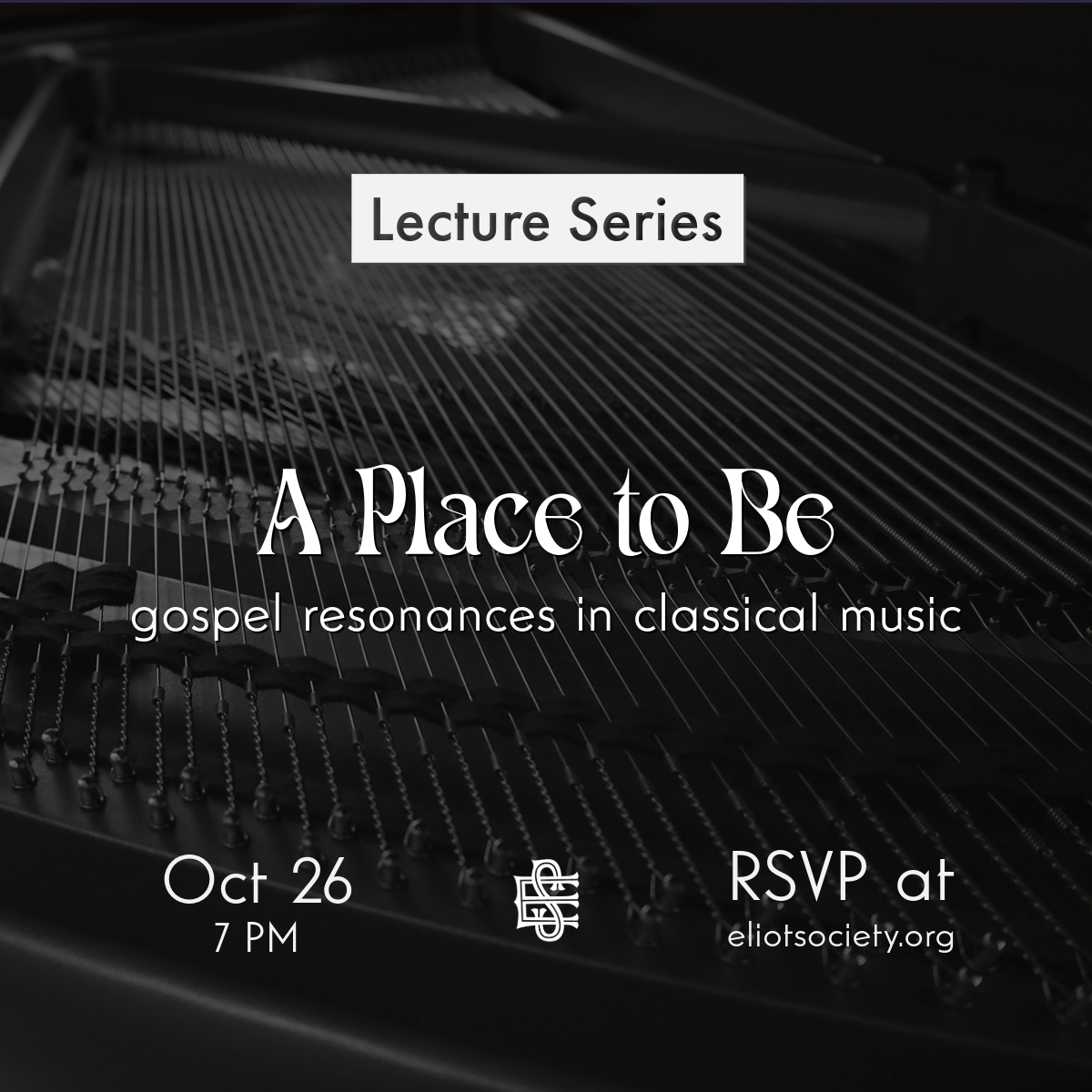
>> “A Place to Be: Gospel Resonances in Classical Music” by Roger Lowther, October 26, 2024, Redeemer Anglican Church, Annapolis, MD: “At its most basic, music is a collection of sounds. How those sounds are organized varies by country and culture and reflects their values, history, and heart-longings. Join Tokyo-based American musician Roger W. Lowther on a journey through the landscapes of Western and Japanese classical music and explore their unique and fascinating differences. Roger will lead from the piano as he demonstrates the musical languages of each tradition and show how they contain hidden pointers to gospel hope in a world full of suffering and pain.”
I’ve heard Roger speak before, and he’s very Jeremy Begbie-esque in that he does theology through instrumental music. As a bicultural person, a New Englander having lived in Japan for almost twenty years (ministering to and through artists of all disciplines), he brings a unique perspective. In addition to discussing the defining features of the Western versus Japanese classical traditions, he’ll be performing a few piano pieces from each.
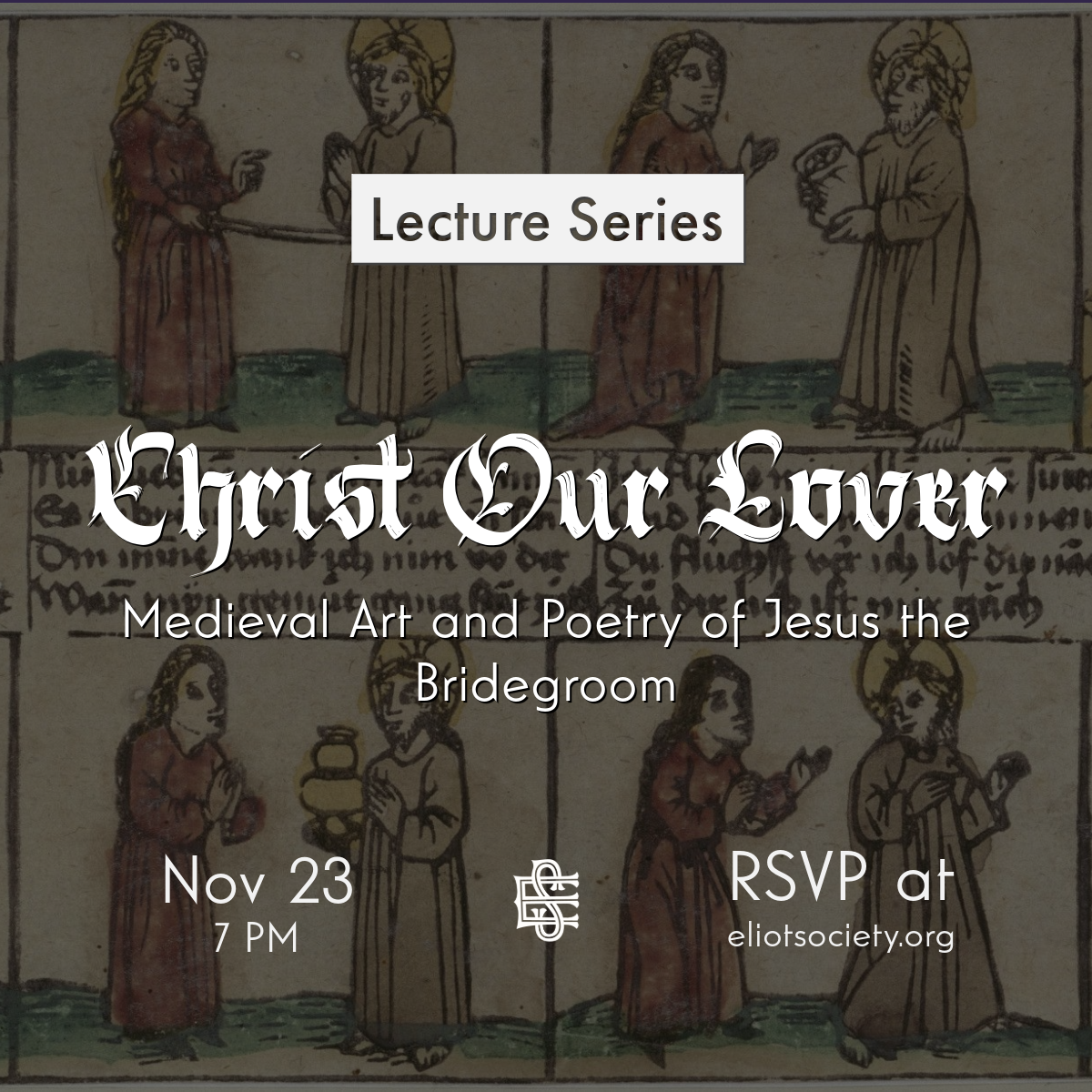
>> “Christ Our Lover: Medieval Art and Poetry of Jesus the Bridegroom” by Dr. Grace Hamman, November 23, 2024, St. Paul’s Anglican Church, Crownsville, MD: “If there was a ‘bestseller’ book of the Bible in the European Middle Ages, it would be the Song of Songs. When read allegorically, in the manner of medieval theologians like St. Bernard of Clairvaux, the book tells the story of the romance between Christ and the soul that culminates in Christ’s love shown on the cross. This is a story of mutual pursuit, the pain of desire and sacrifice, sensual delight, and true union. The idea of Jesus as a longing lover of each individual soul appeared everywhere by the later medieval period, in art, poetry, sermons, and the devotional writings of men and women alike.
“These themes and images can strike us as strange, even uncomfortable. An illustrated poem for nuns depicted the Song of Songs like a cartoon strip. Prayer books of wealthy nobles portrayed Christ’s wounds intimately. Poets wrote Christ in the role of a chivalric, wounded knight weeping and waiting for his lady. And yet, examining this ancient imagery of Jesus our Lover together can challenge us to greater vulnerability with our Savior, to refreshed understandings of God’s hospitality, and, in the words of Pope Gregory the Great, can set our hearts ‘on fire with a holy love.’”
Grace is a fabulous teacher of medieval poetry and devotional writing, one whom I’ve mentioned many times on the blog before. Her Jesus through Medieval Eyes was my favorite book of 2023; read my review here. She has encouraged me to move in toward the strange and imaginative in medieval theology and biblical interpretation, because there’s often beauty and wisdom to be found there if we give it a chance. She has a keen awareness of the body of Christ across time and an appreciation for the gifts they’ve bequeathed the church of today, be they words, art, or whatever else.
+++
VIDEO: “Poet and Pastor: Christian Wiman and Eugene Peterson”: In this four-minute video from Laity Lodge, poet and essayist Christian Wiman and pastor and spiritual writer Eugene Peterson (best known for his Bible translation The Message) talk about prayer and spirituality. They each share a poem they’ve written: Wiman’s “Every Riven Thing” and Peterson’s “Prayer Time.” “People who pray need to learn poetry,” Peterson says. “It’s a way of noticing, attending.”
ARTICLE + PLAYLIST: “Latin American Fiesta!” by Mark Meynell: I always appreciate the selections and knowledge Mark Meynell [previously] brings to his 5&1 blog series for the Rabbit Room, each post exploring five short pieces and one long piece of classical music. This Latin American installment features Kyries from Peru and Argentina, a candombe air, a four-part Christmas anthem in Spanish creole from Mexico (I found an English translation!), an Argentine tango, and a dance chôro (Portuguese for “weeping” or “cry”) from Brazil. What diverse riches!
“Classical music, as conventionally understood, is not often associated with Latin America,” Meynell writes, “though, as we will see, this is a situation that needs rectifying. Some extraordinary soundworlds were being created long before the Conquistadores arrived from European shores, and together with the cultural impact of the transatlantic slave trade from Africa, the musical mix that resulted is unique. To put it at its most simplistic, we could say that the two key musical influences were the Catholic Church and the complex rhythms of percussion and dance; and often, it’s hard to tell where one ends and the other begins.”
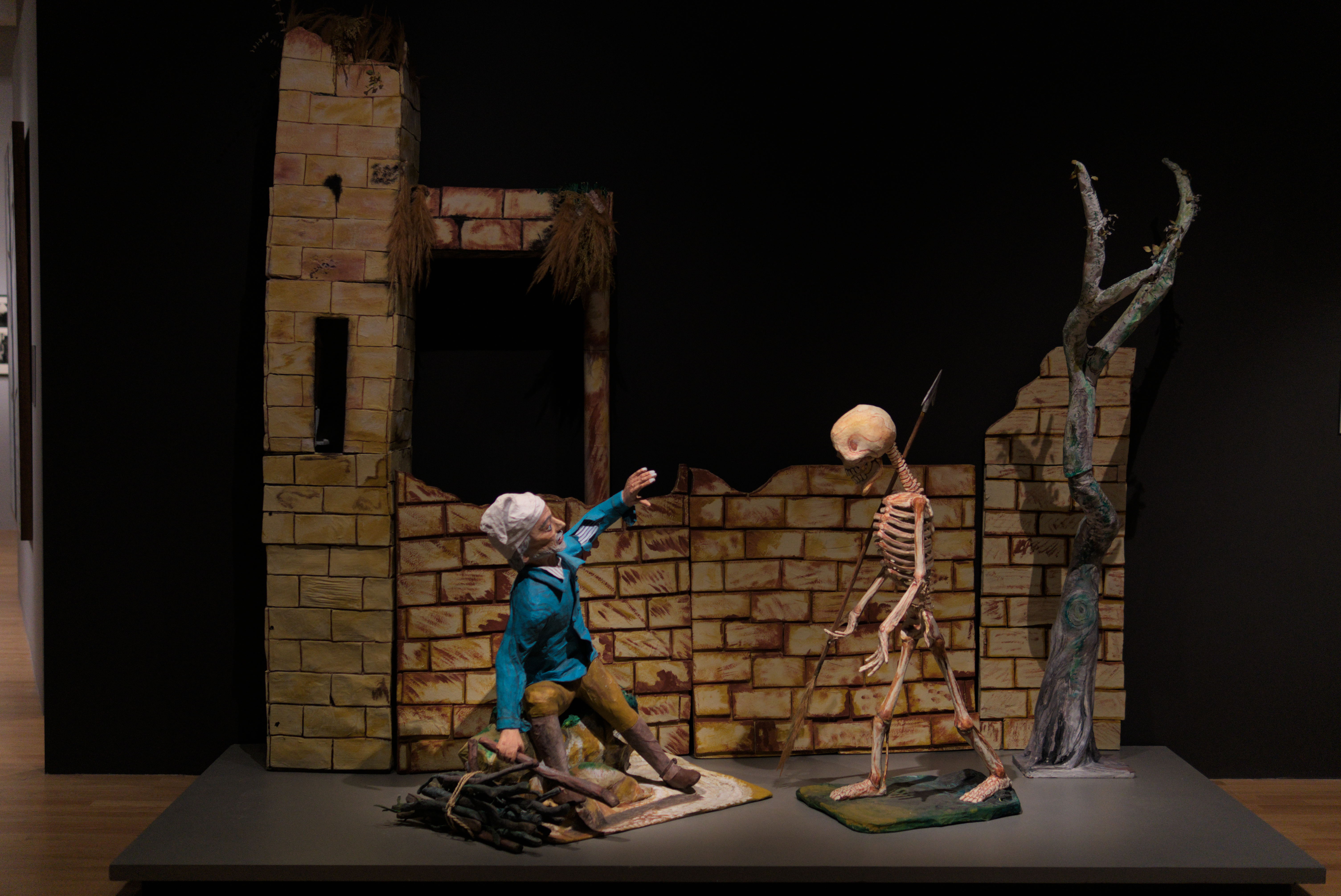
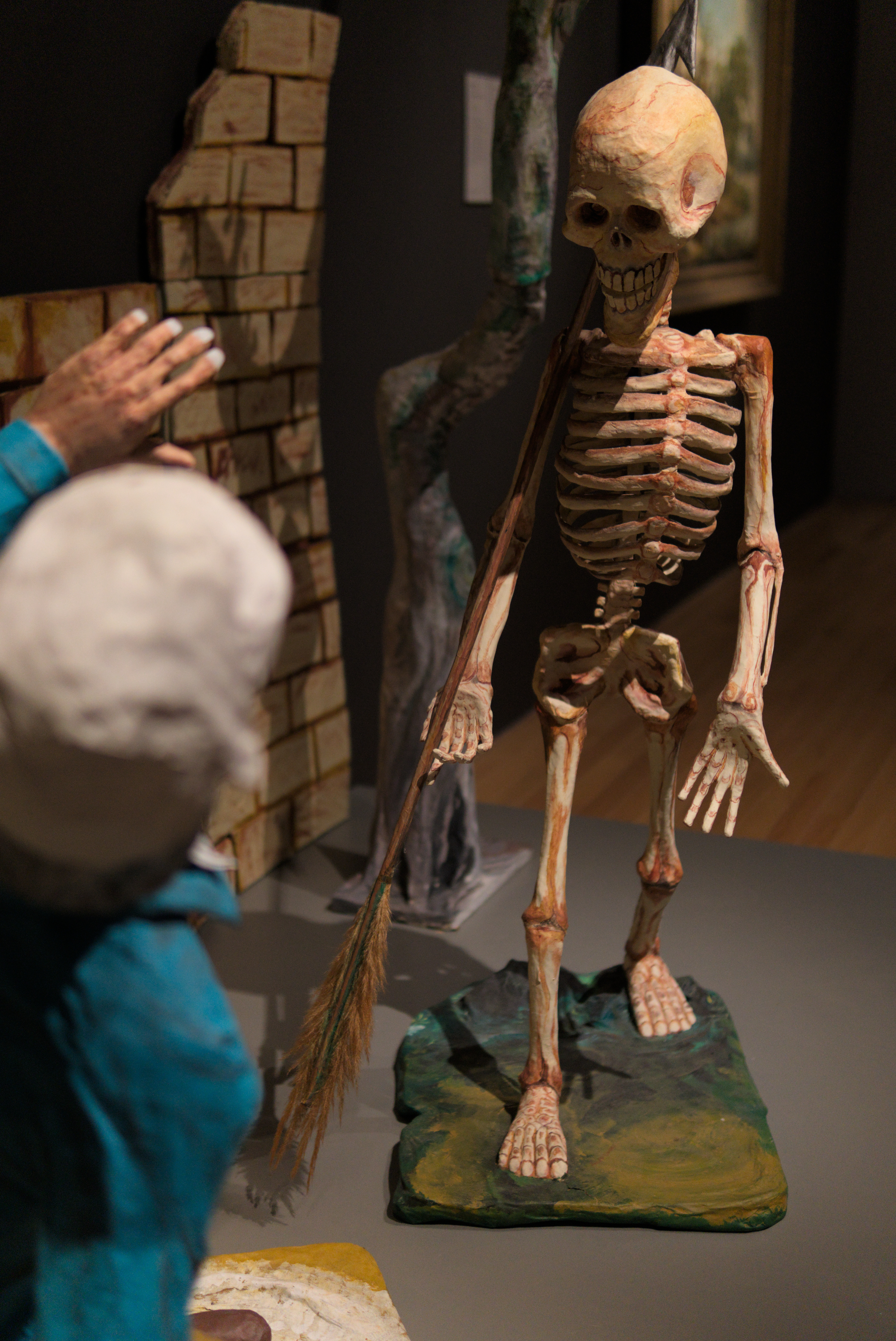
ARTWORK: The Old Man and Death by Pedro Linares: Last month I visited the Wadsworth Atheneum Museum of Art in Hartford, Connecticut, for the first time and was delighted to stumble upon an exhibition that had just been put up, Entre Mundos: Art of Abiayala. On view through December 15, it highlights collection works made by artists with personal or ancestral ties to Mexico, the Caribbean, and Central and South America. The title translates to “Between Worlds,” and “Abiayala,” I learned, is a Guna (Kuna) word that means “land in its full maturity” or “land of vital blood”; it’s used by the Guna and some other Indigenous peoples to refer to the Americas.
Pedro Linares (Mexican, 1906–1992), El viejo y la muerte (The Old Man and Death), 1986. Papier-mâché and mixed media. Wadsworth Atheneum Museum of Art, Hartford, Connecticut. Photo: Victoria Emily Jones.
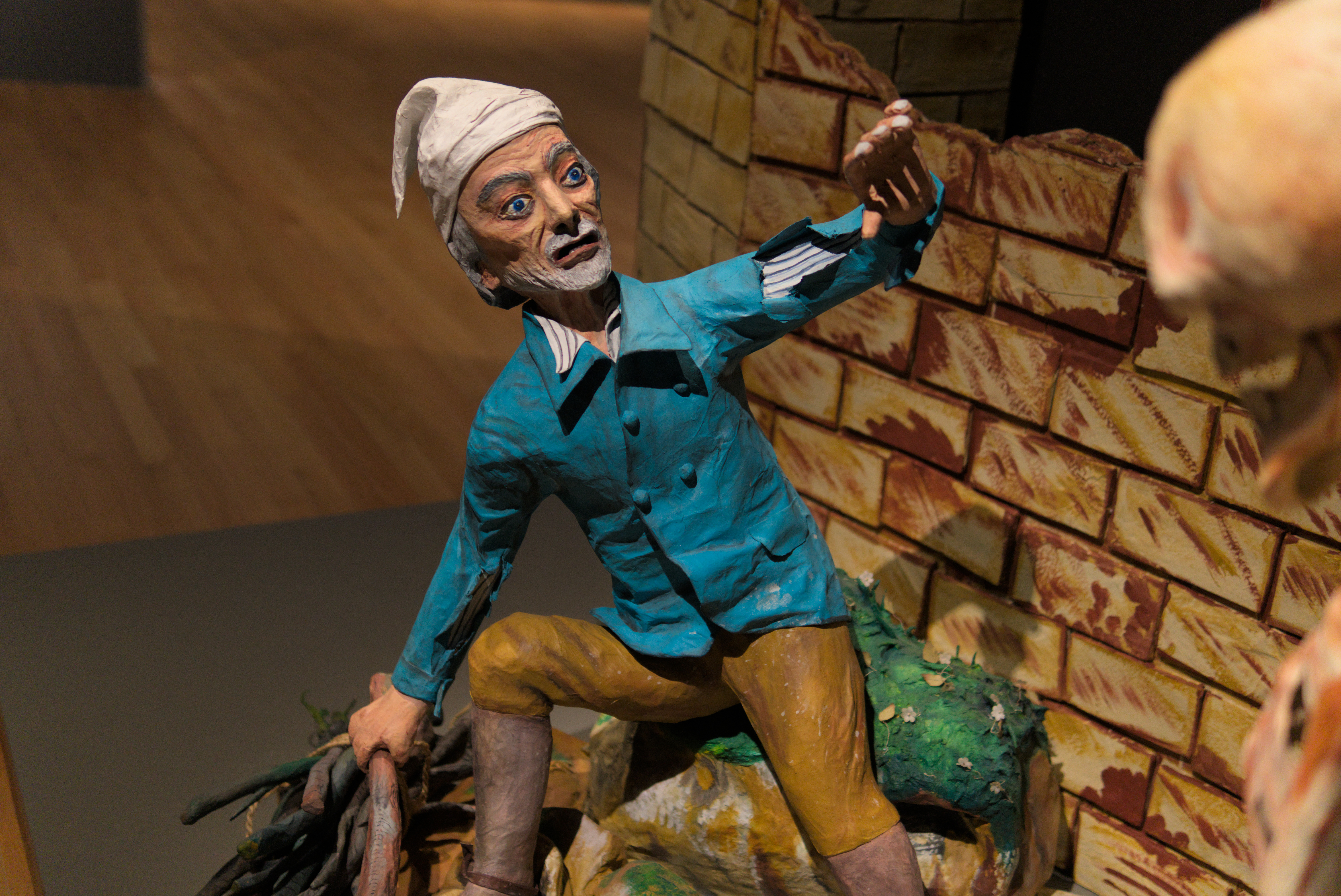
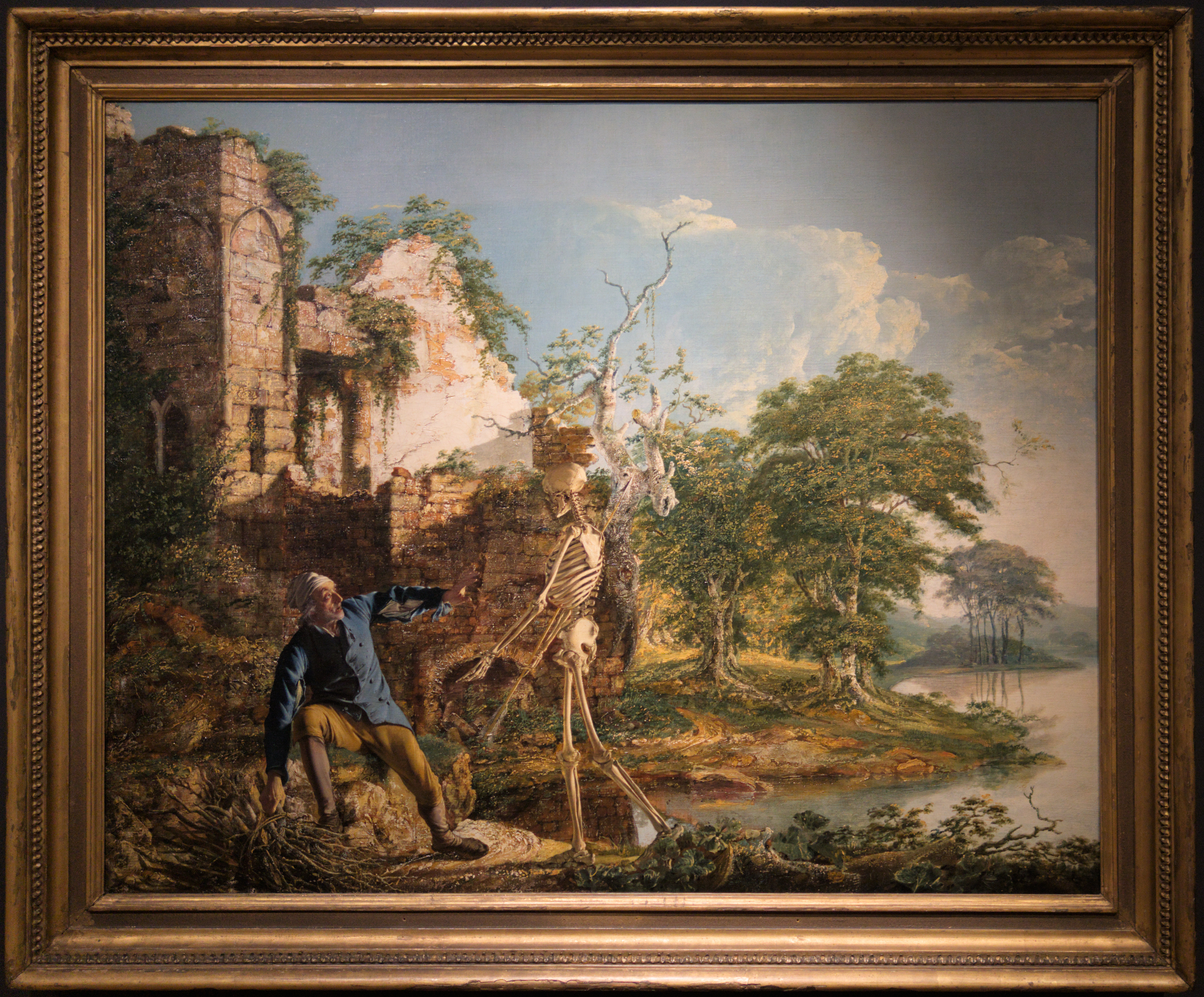
For me the standout piece from the exhibition is The Old Man and Death by Pedro Linares, a dramatic tableau in the medium of cartonería (papier-mâché sculpture), a traditional handcraft of Mexico. Commissioned by the Wadsworth in 1986 for the artist’s MATRIX exhibition, it reinterprets Joseph Wright of Derby’s 1773 painting of the same name, one of the most popular works in the museum’s collection.
Joseph Wright of Derby (English, 1734–1797), The Old Man and Death, 1773. Oil on canvas, 40 × 50 1/16 in. (101 × 127 cm). Wadsworth Atheneum Museum of Art, Hartford, Connecticut. Photo: Victoria Emily Jones.
masterfully combines Wright’s ability to depict a literary narrative with his skill in rendering a natural setting with accuracy and keenly observed detail. The subject of this painting is based on one of Aesop’s Fables or possibly a later retelling by Jean de la Fontaine. . . . According to the tale, an old man, weary of the cares of life, lays down his bundle of sticks and seats himself in exhaustion on a bank and calls on Death to release him from his toil. Appearing in response to this invocation, Death arrives. Personified here as a skeleton, Death carries an arrow, the instrument of death. Illustrating the moral of the tale that it is “better to suffer than to die,” the startled old man recoils in horror and instinctively waves him off, reaching for the bundle as he clings to life.
The Linares piece and its inspiration are placed side-by-side in the gallery, which also displays an alebrije by the same artist, papel picado, painted skulls, an ofrenda, and Diego Rivera’s Young Girl with a Mask.
SPOTIFY PLAYLIST: July 2024 (Art & Theology): This month’s “mixtape” includes a worship song by Daniel P. Cariño from Baguio, the Philippines; a 1954 recording from the streets of New Orleans of the itinerant preacher, singer, and guitarist Elder David Ross; a piano-violin arrangement of “Amazing Grace” by Carlos Simon; a nineteenth-century American folk hymn; an excerpt from Mendelssohn’s oratorio Elijah; a Jesus bhajan in Hindi from Toronto; a one-word song by choral-pop composer Michael Engelhardt; a brand-new Porter’s Gate single; and more.
+++
NEW BOOKS:
>> Diary of an Old Soul: Annotated Edition by George MacDonald, with introduction and notes by Timothy Larsen: At last, a keepsake edition of George MacDonald’s devotional poetry collection Diary of an Old Soul! Last week InterVarsity Press released a cloth-bound hardcover with ribbon bookmark, an introduction and sparing notes by the modern British religious history scholar Timothy Larsen, and, as MacDonald stipulated in the book’s first printing in 1880, a blank page facing each page of verse for readers to continue the conversation. C. S. Lewis gave a copy of Diary of an Old Soul to his future wife, Joy Davidman, as a Christmas gift in 1952, and it would make a wonderful Christmas gift still. For each day of the year MacDonald offers a seven-line poem that voices his spiritual longings, struggles, or joys; the Victorian tastemaker John Ruskin extolled the collection as proof that worthy religious poetry could still be written in the modern age. I highlighted my favorite selections from the book in a blog post last year, but on reading this new edition, new lines are standing out to me.
>> Word Made Fresh: An Invitation to Poetry for the Church by Abram Van Engen: Several Christians have told me they want to read more poetry and learn to better appreciate it but don’t know where to start. I usually recommend starting with an anthology, to get a taste of a wide range of styles and eras, and see if there are particular kinds they gravitate to. But now I’m thrilled I can recommend Abram Van Engen’s Word Made Fresh: An Invitation to Poetry for the Church, with a foreword by Shane McCrae. (Full disclosure: I was the copyeditor!) Endorsed by such luminaries as Christian Wiman and James K. A. Smith, the book is an excellent introduction to how and why to read poetry. Van Engen discusses sixty-two distinct poems, almost all of them reproduced in full, ranging from John Donne, Ben Jonson, and Frances Ellen Watkins Harper to Gwendolyn Brooks, Richard Wilbur, and Li-Young Lee and including, too, church hymns and biblical psalms, two forms of poetry with which Christian readers are likely already familiar. In part 1 he demonstrates six ways to read poetry: personally, for pleasure, inquisitively, like it’s a friend, considering form, and through erasure. In part 2 he answers the question “Why read poetry?”: to name creation, to tell the truth, to rejoice with those who rejoice, and to weep with those who weep. Van Engen insists that poetry is for everyone, and Word Made Fresh substantiates the claim.
PRINT INTERVIEW: “Through the Rent, Eternity Enters: A Conversation with Marilyn Nelson and Christian Wiman,” moderated by Abram Van Engen, Hedgehog Review: In December 2023, The Carver Project at Washington University in St. Louis brought together award-winning poets Marilyn Nelson and Christian Wiman for a discussion of poetry, faith, love, perception, ambition, humility, prayer, and grace, moderated by Abram Van Engen. Poets, I’ve noticed from attending conferences and reading or listening to interviews with them, tend to have an immense storehouse of wise quotes from other poets and thinkers at the ready, as this interview corroborates. There’s so much here to chew on!
+++
ESSAY: “Christianity and Poetry” by Dana Gioia, First Things: “This brief and inadequate historical survey,” writes poet and literary critic Dana Gioia, “is offered to demonstrate the powerful continuity of Christian poetry in English. Our literary canon is suffused with religious consciousness, which has expressed itself in ways beyond the imagination of theology and apologetics. Milton boasted that his Paradise Lost would ‘justify the ways of God to men,’ but his masterpiece was only one of countless poems that engaged, enlarged, and refined the spirituality of the English-speaking world. Christianity went so deeply into the collective soul of the culture that its impact continues even in our secular age.”
He proposes, “All that is necessary to revive Christian poetry is a change in attitude—a conviction that perfunctory and platitudinous language will not suffice, an awareness that the goal of liturgy, homily, and education is not to condescend but to enliven and elevate. We need to recognize the power of language and use it in ways that engage both the sense and the senses of believers.”
+++
CANTATA: Rejoice in the Lamb by Benjamin Britten, performed by VOCES8 and the VOCES8 Foundation Choir & Orchestra, dir. Barnaby Smith: “Rejoice in the Lamb (Op. 30) is a cantata for four soloists, SATB choir and organ composed by Benjamin Britten in 1943 and uses text from the poem Jubilate Agno by Christopher Smart (1722–1771). The poem, written while Smart was in an asylum, depicts idiosyncratic praise and worship of God by different things including animals, letters of the alphabet and musical instruments. Britten was introduced to the poem by W. H. Auden whilst visiting the United States, selecting 48 lines of the poem to set to music with the assistance of Edward Sackville-West. The cantata was commissioned by the Reverend Walter Hussey for the celebration of the 50th anniversary of the consecration of St Matthew’s Church, Northampton. Critics praised the work for its uniqueness and creative handling of the text.” (Wikipedia)
I know this poem from its famous passage about Jeoffry the cat, in which Smart celebrates his cat’s relationship with God: “For I will consider my Cat Jeoffry. / For he is the servant of the Living God duly and daily serving him. / For at the first glance of the glory of God in the East he worships in his Way. / For this is done by wreathing his body seven times round with elegant quickness. / For then he leaps up to catch the musk, which is the blessing of God upon his prayer. . . .” See 3:52 of the video.
SONG: “Wild Strawberries” by Nick Chambers: This song from 2020 expresses yearning to know the God whose beauty is revealed in nature and who is mysterious, “divinely robed in dark and radiant haze.” It’s based on a 1819 Swedish hymn by Johan Olaf Wallin that was quoted by the aging professor Isak Borg in Ingmar Bergman’s multi-award-winning film Wild Strawberries.
“In the gospel narratives,” Chambers writes, “the risen Jesus is always one step ahead, beckoning us further. We follow after tangible touches and traces he leaves behind—folded grave clothes and broken bread. He travels with us but isn’t always recognizable, still teaching his friends how to fish, readying breakfast on the beach. Wherever he appears and withdraws, the background becomes the foreground, inviting us to see and seek him everywhere. Resurrection cannot be confined; all creation is drawn into its trajectory.” Read more from Chambers in the YouTube video description.
New Mount Pilgrim commemorates the Maafa, the Great Migration, and martyrs of urban violence and instills hope with trilogy of rose windows, which include an African Christ
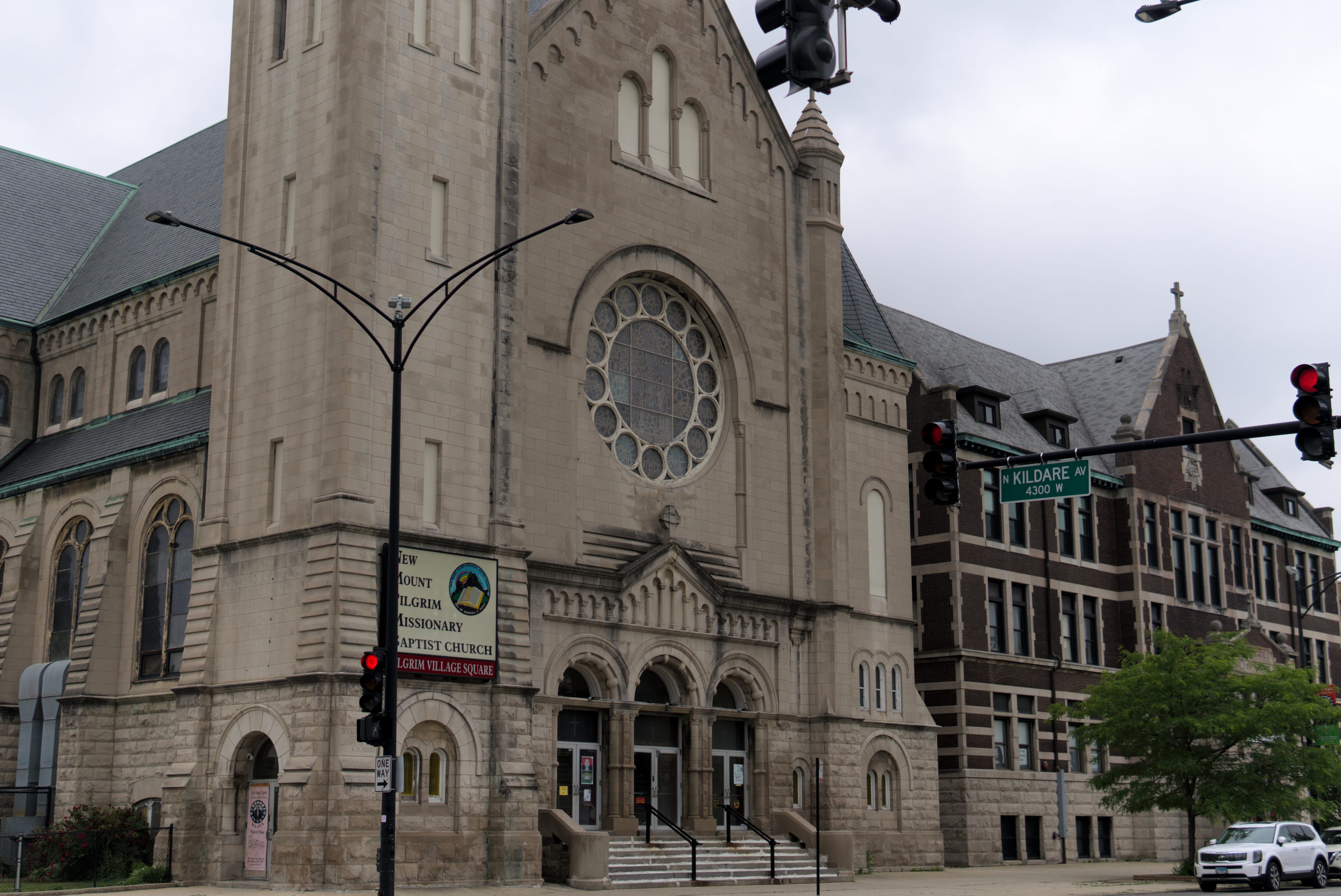
Designed by Charles L. Wallace and built in 1910–11, the French Romanesque–style church at 4301 West Washington Boulevard in Chicago’s West Garfield Park neighborhood was originally home to one of the largest Irish Catholic parishes in the city: St. Mel’s (named after Mél of Ardagh, a nephew of St. Patrick from the fifth century). They had the interior decorated with stained glass windows made by the studio of F. X. Zettler in Munich, portraying biblical figures and other saints—all as Caucasian, as was customary at the time and, frankly, still is. St. Mel’s, which merged with Holy Ghost Catholic Church in 1941 (whose parishioners were mainly of German descent), was a flourishing congregation. But in the late 1960s, white people began leaving the neighborhood as Black people moved in, and St. Mel’s membership waned until eventually the church closed its doors in 1988.
After the building had stood vacant for several years, in 1993, the Catholic Archdiocese of Chicago sold it to New Mount Pilgrim Missionary Baptist Church, a local Black congregation founded in 1950. The church leaders found that, due to lack of maintenance, the three large rose windows had structural issues that needed to be addressed. Rather than repairing the windows, they decided to replace them with new ones that better reflected the faith stories of their own parishioners—their history, heritage, and aspirations as a community. Rev. Dr. Marshall E. Hatch Sr., who had become the church’s pastor just a month after they moved into the new building and still serves in that role, developed the concepts for the windows with input from the congregation and started fundraising. All three were fabricated by Botti Studio of Architectural Arts in nearby Evanston, Illinois.
The Maafa Remembrance Window
The most striking and theologically profound of the three new windows, and the one I flew to Chicago to see last summer, is the Maafa Remembrance window on the wall to the left of the front altar. Because the church is oriented south rather than the traditional east, this is, directionally speaking, the East Rose Window; it purposefully faces the Atlantic Ocean. It was dedicated December 17, 2000, the church’s fiftieth anniversary year. It replaced an image of the Assumption of Mary (which you can view here); read more about the church building’s original windows on the website of art historian Rolf Achilles.
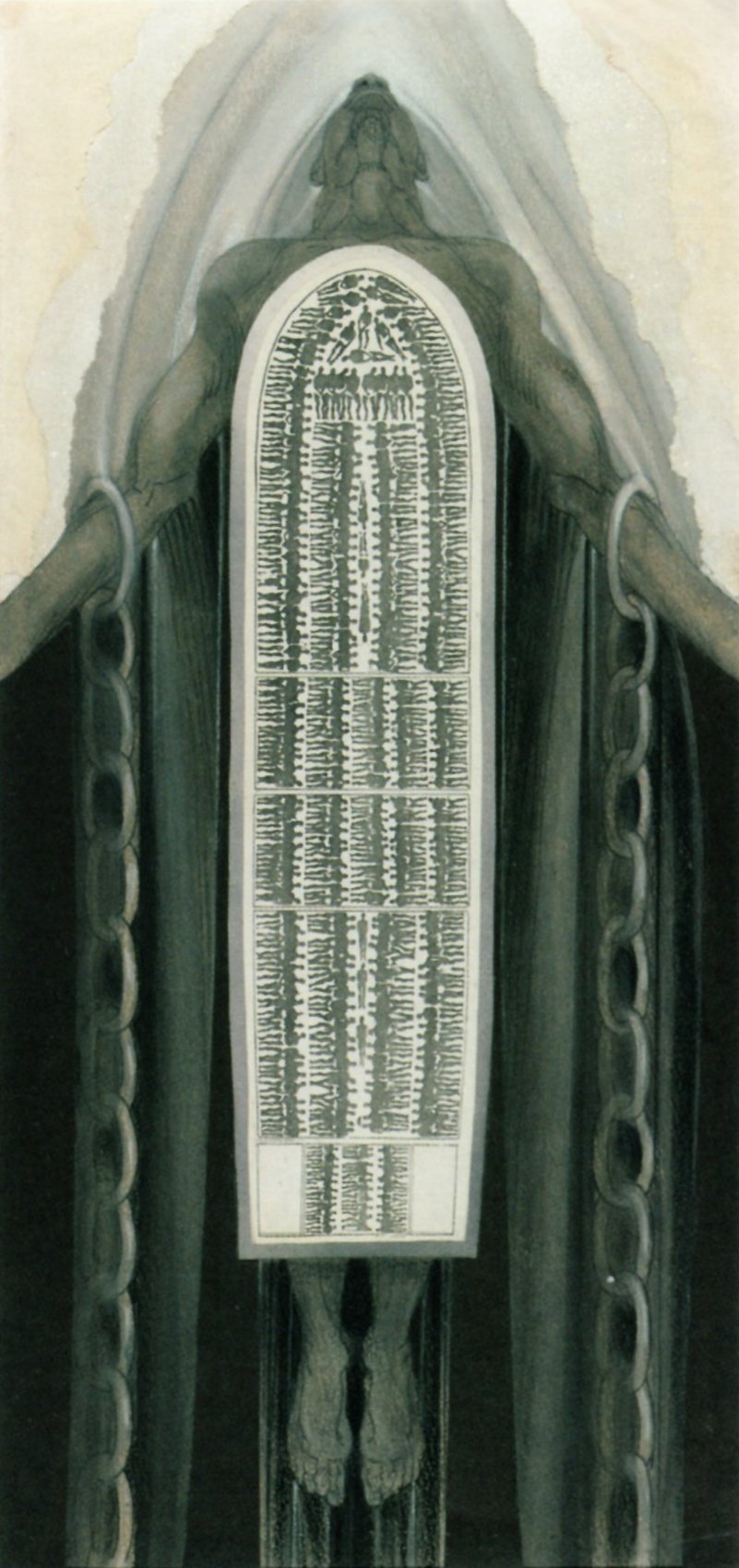
Maafa Remembrance, 2000, based on an illustration from The Middle Passage by Tom Feelings. Stained glass, diameter 25 feet. New Mount Pilgrim Missionary Baptist Church, West Garfield Park, Chicago. Photo: Victoria Emily Jones.Six of the twelve apostles are pictured in these stained glass windows inherited by New Mount Pilgrim from the building’s former owner, St. Mel’s Catholic Church. They appear beneath the newer Maafa Remembrance window, commissioned to counterbalance the preponderance of sacred white personages with sacred Black ones and to tell a narrative of liberation. Photo: Victoria Emily Jones.
Maafa (mah-AH-fah) is a Swahili word meaning “great disaster” or “great tragedy.” Since the late 1980s it has been used to refer to the transatlantic slave trade of the sixteenth through nineteenth centuries, during which an estimated 12.5 million African men, women, and children were kidnapped from their homes and forcibly brought to the Americas to work plantations without pay (by and large), building the wealth of their white enslavers. Some scholars prefer the term “African Holocaust” or “Black Holocaust” to describe this historic atrocity.
Based on an illustration by Tom Feelings from his extraordinary book The Middle Passage: White Ships / Black Cargo (Dial, 1995), the East Rose Window commemorates the Maafa through an evocation of the Middle Passage, the second leg of the triangular trade route. On this harrowing two- to three-month voyage across the Atlantic Ocean, which ships made many times over chattel slavery’s multicentury duration, at least two million enslaved Africans died of malnutrition, dehydration, disease, captor-inflicted violence, or suicide.
The closeness of the place, and the heat of the climate, added to the number in the ship, which was so crowded that each had scarcely room to turn himself, almost suffocated us. This produced copious perspirations, so that the air soon became unfit for respiration, from a variety of loathsome smells, and brought on a sickness among the slaves, of which many died, thus falling victims to the improvident avarice, as I may call it, of their purchasers. This wretched situation was again aggravated by the galling of the chains, now become insupportable; and the filth of the necessary tubs, into which the children often fell, and were almost suffocated. The shrieks of the women, and the groans of the dying, rendered the whole a scene of horror almost inconceivable.
In Feelings’s image, an African Christ figure stretches his chained arms out, as if on the cross. His body is constituted by the famous schematic representation of the crowded lower deck of the Brookes slave ship’s human cargo hold, first created in England in 1788 and widely disseminated throughout the nineteenth century. The perspective is such that we’re looking down on a body-as-slave-ship gliding through the waters—but it’s also a crucifixion. The Son of God carries the suffering of the sons and daughters of God, feeling it in his own body. He wears the slave ship like a giant wound that will forever mark him because it has marked his ecclesial body, the church.
The window functions, on one level, as a lament. Consider it in light of the following poem by Lucille Clifton, which draws out the cruel irony of the actual names some ostensibly Christian slave ship owners gave their vessels.
“slaveships” by Lucille Clifton
loaded like spoons into the belly of Jesus where we lay for weeks for months in the sweat and stink of our own breathing Jesus why do you not protect us chained to the heart of the Angel where the prayers we never tell and hot and red our bloody ankles Jesus Angel can these be men who vomit us out from ships called Jesus Angel Grace Of God onto a heathen country Jesus Angel ever again can this tongue speak can these bones walk Grace Of God can this sin live
The speaker of the poem, an enslaved African, addresses Jesus, questioning why he allows them to be so brutally treated—stolen from their homeland, marched to the coast in chains, claustrophobically packed in ship holds for maximum profitability, and spat out onto auction blocks in a barbarous country that appears to practice the devil’s ways more than God’s. How can God abide such sin? What kind of grace is it that transports them into oppression?
Christian Wiman brilliantly unpacks this poem, noting Clifton’s cunningly subtle tweak of a prophetic passage from Ezekiel that promises resurrection, both of individuals and of a nation. Underneath its acerbity, there’s a certain hopefulness to the poem—a hope that this sin will die, this suffering be transformed. In both Ezekiel’s vision of the valley of dry bones and Clifton’s poem, Wiman writes,
the Word comes streaming again through, and by means of, the word. In terms of the poem, Jesus (the man) is on board Jesus (the ship), but he is in the hold, just as, when the worship services took place above the captured slaves on the Gold Coast of Africa, God, if he was anywhere, was underneath it all, shackled and sweating and merged with human terror.
Emmanuel, God-with-us.
Clinging to this truth, the psalmist declares, “If I make my bed in hell, behold, thou [God] art there” (Psalm 139:8b). In his great compassion, God descends with us into the depths, and bears us up.
The Maafa Remembrance window plays with the themes of descent and ascent. As Emmanuel, Jesus was below deck, in the miserable belly of the thousands of slave ships that traversed the Atlantic, suffering with those chained inside. Christ’s arms are draped with chains, notes Marshall Hatch Jr., the pastor’s son and cofounder and executive director of the MAAFA Redemption Project (more on that below), “but he’s rising. And at some point those chains will break. That’s the hopefulness that shines through.”
Thus, the window commemorates both tragedy and triumph. It honors those who died on the Middle Passage and through the institution of slavery more broadly while also honoring those who persevered all the way to freedom. Hatch Jr. says this Christ is “carrying within himself the memories of those who lost their lives on the journey to America. But also he’s carrying the legacy of those who survived. And we are that living legacy,” descendants of the Middle Passage.
The border around the window’s central image calls parishioners to “REMEMBRANCE.” They must remember their history, the Great Catastrophe their ancestors endured, and, having faced the truth, commit to ending slavery’s legacy of racism in America’s civic, social, and religious spheres and in their own psyches.
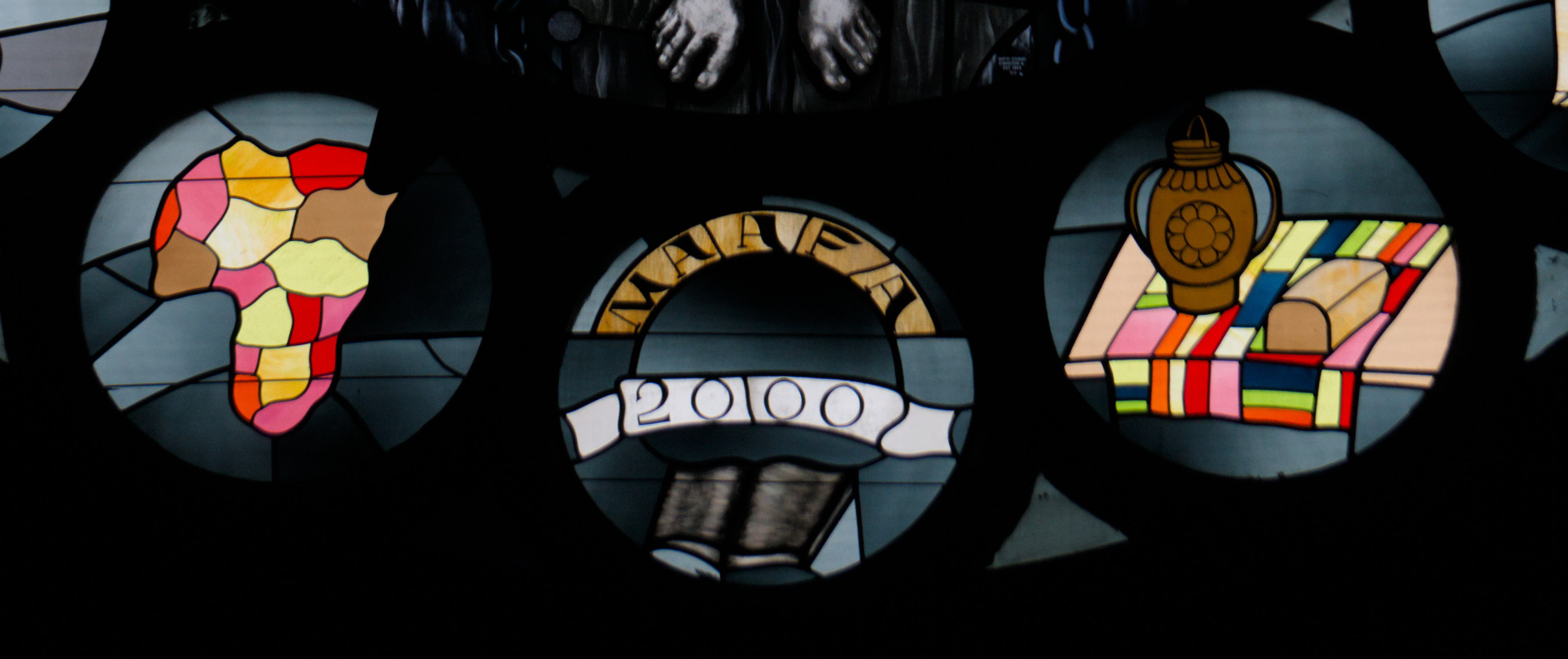
Two of the roundels in the bottom border show a map of Africa and a Communion table laid with kente cloth, a loaf of bread, and a flask of wine. The roundel between these two displays the open word of God, which guides Christians forward in our work of justice and reconciliation.
Art historian Cheryl Finley features New Mount Pilgrim’s Maafa Remembrance window in her book Committed to Memory: The Art of the Slave Ship Icon (Princeton University Press, 2022), which traces the origins of the Brookes schematic and its proliferation in mass culture and art. She identifies the window, twenty-five feet in diameter, as the largest example of the “slave ship icon” in the world and writes that, like the cross of Christ, the slave ship embodies both death and rebirth. It is “a site of death, of dying Africans, and of new life, of a people who would persevere in the face of slavery and unspeakable cruelty to become a free people who helped define the modern era” (6).
“The children will need to know that this symbol, this window, is a representation of not only the pain but also the possibilities of a great and mighty God,” Rev. Dr. Gregory Thomas told the Chicago Tribune in 2000. Thomas was a theology professor at Harvard Divinity School, where Hatch Sr. served a fellowship sabbatical semester in 1999 and first encountered Feelings’s Middle Passage book.
In the window, slavery is interpreted in light of the paradox of the cross. Theologian James H. Cone famously interpreted another, later icon of Black suffering—the lynching tree—in light of the same in his essential book The Cross and the Lynching Tree (Orbis, 2011). He opens the book by explaining why and how the cross has held such power for the Black church:
The cross is a paradoxical religious symbol because it inverts the world’s value system with the news that hope comes by way of defeat, that suffering and death do not have the last word, that the last shall be first and the first last.
That God could “make a way out of no way” in Jesus’ cross was truly absurd to the intellect, yet profoundly real in the soul of black folk. Enslaved blacks who first heard the gospel message seized on the power of the cross. Christ crucified manifested God’s loving and liberating presence in the contradictions of black life—that transcendent presence in the lives of black Christians that empowered them to believe that ultimately, in God’s eschatological future, they would not be defeated by the “troubles of this world,” no matter how great and painful their suffering. Believing this paradox, this absurd claim of faith, was only possible through God’s “amazing grace” and the gift of faith, grounded in humility and repentance. There was no place for the proud and the mighty, for people who think that God called them to rule over others. The cross was God’s critique of power—white power—with powerless love, snatching victory out of defeat. (2)
A powerful reclamation of Christian iconography, New Mount Pilgrim’s Maafa Remembrance window weds Black history and Christian theology to offer its predominantly African American congregation a communal symbol that honors what they’ve been through as a people and reminds them that they worship a risen Christ who breaks chains and brings life out of death.
The North Star / Great Migration Window
The East Rose Window covered in the previous section is narratively the first in the trilogy of newly commissioned windows, but the first of the three to be fabricated and installed, earlier in 2000, was the North Rose Window, called the North Star or Great Migration window. It commemorates those who traveled north on the Underground Railroad to escape slavery, and, a few generations later (from about 1910 to 1970), as part of a mass movement to escape Jim Crow oppression.
North Star / Great Migration, 2000. Stained glass, diameter 25 feet. New Mount Pilgrim Missionary Baptist Church, West Garfield Park, Chicago. Photo: Victoria Emily Jones.
The North Star window shows a Black family unit, the father, in purple robe, lifting his newborn up to the heavens in a gesture of gratitude and pride. The child is backlit by the North Star, a beacon to freedom. The scene recalls the famous naming ceremony in the 1977 Roots miniseries, based on the best-selling novel by Alex Haley, in which Omoro Kinte, a Mandinka man living in The Gambia, carries his firstborn son, Kunta Kinte, to the edge of the village, raises him into the starry night sky, and exclaims, “Behold, the only thing greater than yourself!” This declaration affirms the child’s inherent worth and directs him toward worship of his Creator God.
During New Mount Pilgrim’s baby dedication ceremonies, the pastor raises the child in like manner while the parents vow to bring up the child in the nurture and admonition of the Lord and the congregation vows to support them in this task. This physical gesture of lifting up signifies surrender to God and hope that the next generation will carry the flame of faith out into the city of Chicago and the wider world. Because the North Star window is situated across from the pulpit, over the choir loft and organ, it is in full view of the dedicants.
Baby dedication ceremony, New Mount Pilgrim Missionary Baptist Church. Photo courtesy of Partnering for Community Impact.View from the pulpit of New Mount Pilgrim, facing the North Star window and the main entrance to the church. Photo courtesy of the church.
The inscription below the family in the window reads, “Lift holy hands,” a phrase taken from 1 Timothy 2:8, and the roundels in the border spell out the name of the church. The three portraits at the bottom are of the church’s longest-serving pastors: (from right to left) Rev. J. H. Johnson, the church’s first elected pastor; Rev. James R. McCoy, who served from 1965 to 1993; and Rev. Dr. Marshall Hatch Sr., who has served since 1993. Hatch Sr.’s father and McCoy both participated in the Great Migration, having moved to Chicago from Aberdeen, Mississippi, and so did the majority of the church’s founding members.
The North Star window fills the space previously occupied by a window depicting Saint Cecilia, a Roman virgin martyr.
The Sankofa Peace Window
The West Rose Window, known as the Sankofa Peace window, was the final one to be installed, replacing the clear panes that were there for over two decades. (New Mount Pilgrim sold the original window depicting Mary and the Christ child blessing and accepting the rosary from a male and female saint, to raise funds for the new one.) The Sankofa Peace window was dedicated on February 24, 2019 (watch the service here and view photos here), the year that marked the four hundredth anniversary of race-based slavery in America.
Sankofa Peace, 2019. Stained glass, diameter 25 feet. New Mount Pilgrim Missionary Baptist Church, West Garfield Park, Chicago. Photo: Victoria Emily Jones.
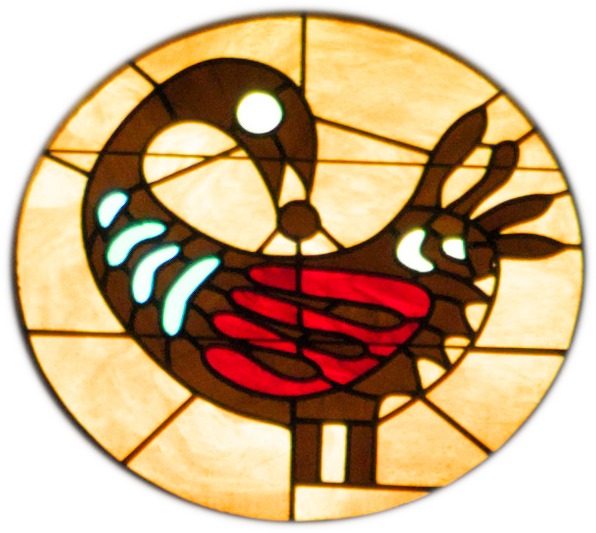
Sankofa is a Twi word from the Akan people of Ghana that means “go back and retrieve it,” a phrase that encourages learning from the past to inform the future. It comes from the proverb “Se wo were fi na wosan kofa a yenkyiri”—“It is not wrong to go back for that which you have forgotten,” to return to one’s roots to reclaim lost identity. The concept of Sankofa is traditionally symbolized by a mythical bird with its head turned backward while its feet face forward, carrying a precious egg in its mouth, which represents the knowledge of the past on which wisdom is based.
The Sankofa bird appears in the top center roundel of the window.
Hatch Jr., who preached at the window’s dedication service, discussed Sankofa as a spiritual discipline, highlighting how it can refer not only to returning to one’s cultural roots, but also to God, our Source. “Sankofa is the process of training my soul to reach back and remember the grace and the glory of God,” he says, which can fuel us for the forward journey. He quotes the famous gospel hymn that says, “My soul looks back in wonder how I got over.” We must regale one another with stories of where we’ve been and how far God has brought us, and remind ourselves and each other where we’re heading.
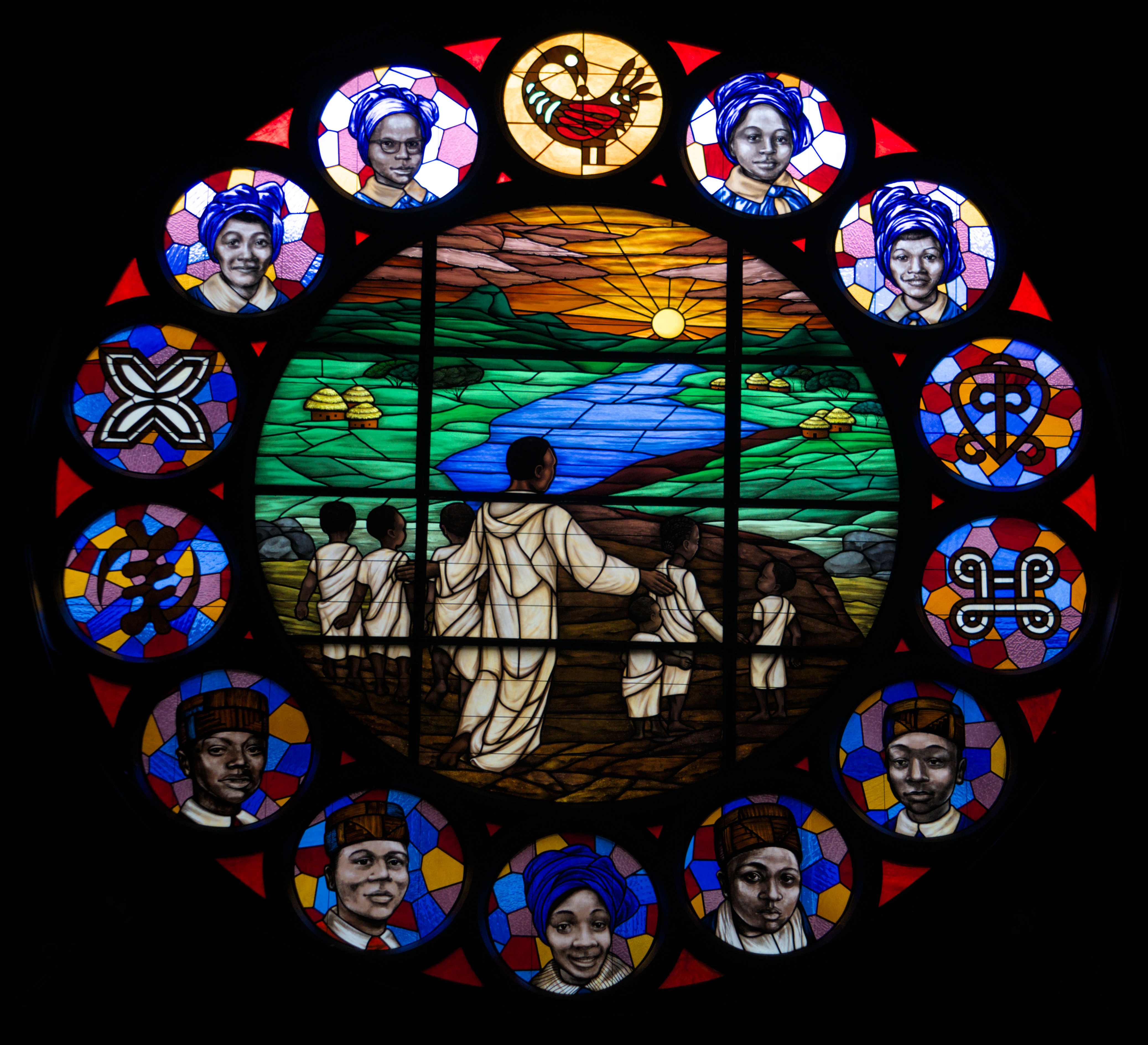
Besides the Sankofa bird, the other four adinkra symbols that New Mount Pilgrim chose to include in the window’s border are:
These are key guiding principles of the church, part of their missional purpose and identity. They seek liberation and peace for all, through the power of God, following the path of the Savior who is Love, who brings us back to who we most truly are.
One way the Sankofa Peace window looks backward while moving forward is through the memorialization of murdered Black American youth, from the civil-rights-era South and twenty-first-century Chicago. The portraits at the top depict the four girls who were killed by the Sixteenth Street Baptist Church bombing in Birmingham, Alabama, in 1963: Carole Robertson (age fourteen), Addie Mae Collins (fourteen), Denise McNair (fourteen), and Cynthia Wesley (eleven).
The five teens at the bottom, selected by members of New Mount Pilgrim’s youth leadership committee, were victims of Chicago violence from the previous decade or so. From left to right, they are:
Derrion Albert(1994–2009), age sixteen. On his way home from school, he got caught in the middle of a brawl between two rival factions of students and was beaten to death with a railroad tie. The crime was captured on cellphone video.
Laquan McDonald (1997–2014), age seventeen. He was shot sixteen times by a police officer while he was walking away.
Hadiya Pendleton (1997–2013), age fifteen. She was killed by a stray bullet while hanging out in a park with friends after her final honors exams.
Blair “Bizzy” Holt (1990–2007), age sixteen. He was fatally shot on a CTA bus while shielding his friend from gang gunfire.
Demetrius “Nunnie” Griffin Jr. (2000–2016), age fifteen. A lifelong member of New Mount Pilgrim, he was burned to death in a trash can in a West Side alley. His death was ruled a homicide, but his killer(s) have not been found. He had told his mother that a gang had been trying to recruit him.
All nine children are dressed in traditional African headwear.
Even as the window laments these unjust deaths, it also provides a vision of restoration. The central scene shows Jesus as the Good Shepherd, leading his children to green pastures and still waters lined with thatched-roof homes—an Edenic place of peace and rest. One might view this as the afterlife (Hatch Sr. told me the children are “going back to the Father’s estate”); but it could also be seen as a picture of Christ leading us into a future on this side of the parousia, where all God’s children are safe and thrive on earth as it is in heaven.
Hatch Sr. told me the window is about recovering a village mentality right in the heart of the city, embracing values like hospitality, family, mutual support, elder respect, and the protection and uplift of children. Whereas the North Star window visualizes the literal lifting up of a child, the Sankofa Peace window calls parishioners to do it metaphorically, through the building of strong community and advocacy for policies that prevent violence and tragedy.
The MAAFA Redemption Project
As a tangible outworking of the communal values expressed in its three rose windows, in 2017 New Mount Pilgrim established a workforce, social, and spiritual development program for young Black men in West Garfield Park, which is still running strong. (It graduated its seventh cohort last month!) Called the MAAFA Redemption Project, it is predicated on the belief that redemption and transformation must begin with the individual, and then that personal transformation can effect family and community transformation. The program emphasizes the importance of, as its website says, “remembering the past in order to create a more just and verdant present and future.”
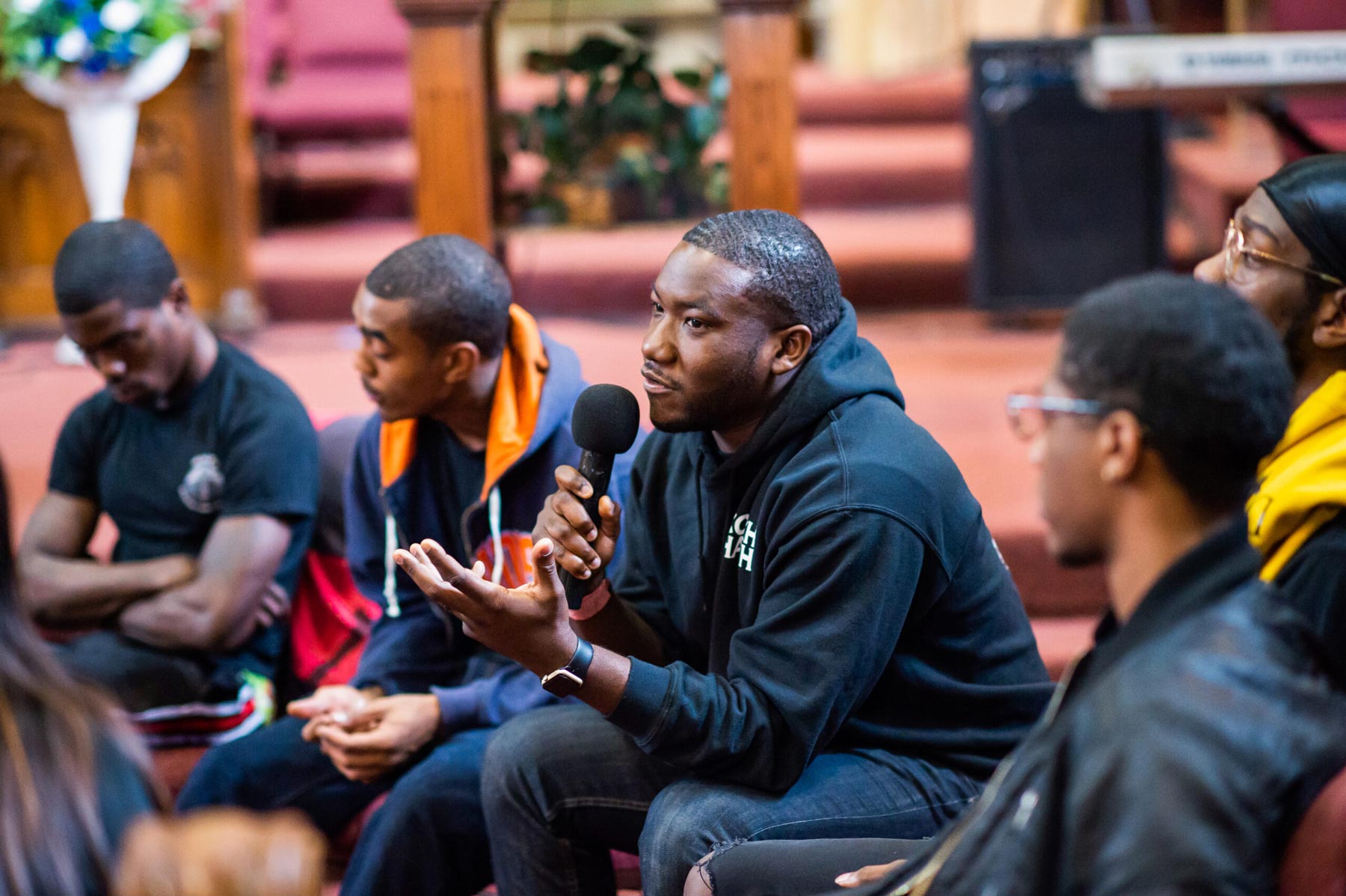
Marshall Hatch Jr., director of the MAAFA Redemption Project (a ministry of New Mount Pilgrim MB Church), speaks with a group of participants about their experiences as young Black men living in West Garfield Park.
Using a dual direct-service and community-building approach, the program provides housing, job training, educational opportunities, psychotherapy, counseling, and wrapround social services to the young men who enroll. These supports are supplemented with programming that focuses on the arts, cultural identity development, spiritual enrichment, transformative travel, civic empowerment, and life coaching and mentoring.
The square-mile neighborhood of West Garfield Park has the highest rate of gun violence in Chicago and is one of the most crime-dense populations in the nation. The MAAFA Redemption Project seeks to recruit men between the ages of eighteen and thirty who are a part of this gun culture or at risk of becoming so, recognizing that young people are a neighborhood’s greatest resource for change. The project affirms the dignity and promise of the neighborhood’s Black and Brown youth and aims to instill hope in them, empowering them in activism against gun violence and the conditions that create it.
“The young people who come to us are tired of the subculture that only produces death, despair, and falling into the trap of the criminal justice system,” says Marshall Hatch Jr., the cofounder and executive director of the MAAFA Redemption Project. “They want something different for themselves and their loved ones.”
He continues, “We want to create the space for young men to see themselves differently, to reimagine themselves as men and leaders, pillars of this neighborhood. And so our goal is to embrace the truths that they give us of their experience but also challenge them to overcome, just as their ancestors overcame; to develop the inner resources to persevere and to challenge the system so that their sons, their daughters, don’t have to fight the same fights.”
The video storytelling unit NBC Left Field ran a wonderful segment in November 2018 that features the work of MAAFA Redemption Project:
I also recommend the feature-length documentary All These Sons (2021), directed by the Oscar-nominated Bing Liu and Joshua Altman (Minding the Gap) and streaming for free on Tubi, Amazon, and other services. MAAFA Redemption Project is one of the two Chicago antiviolence programs profiled, the other being the South Side’s Inner-City Muslim Action Network (IMAN) run by Billy Moore.
Most recently, MAAFA Redemption Project has partnered with other groups to build and share ownership of the Sankofa Wellness Village, a series of interconnected capital projects and social enterprises sited along the Madison and Pulaski corridor in West Garfield Park. Winner of the Chicago Prize awarded by the Pritzker Traubert Foundation, the village will be a sprawling, $50 million campus that will bring critical health, financial, and recreational resources back into the disinvested neighborhood, including a wellness center, a credit union, an art center, a business incubator and entrepreneurial support center, and pop-up fresh food markets.
The Sankofa Wellness Village breaks ground later this summer and is expected to open in late 2025.
Having identified the arts as an unmet need and desire of West Garfield Park residents, MAAFA Redemption Project has taken the reins on what will be called the MAAFA Center for Arts and Activism. They are working to restore the old St. Barnabas Episcopal Church to provide a space where residents can engage in intergenerational art making, relationship building, community organizing, political education, and civic empowerment.
Rendering of the future MAAFA Center for Arts and Activism in West Garfield Park, Chicago. Credit: Moody Nolan/Bureau Gemmel
“We’re part of a continuum of that liberation narrative of God,” Hatch Sr. says, referring to his church’s commitment to see their neighborhood flourish.
When in the nineties they inherited a grand church full of Eurocentric stained glass and other decoration from the Irish Catholic community that worshipped there previously, New Mount Pilgrim Missionary Baptist Church had some decisions to make. How would they honor the history of that sacred space while also making room for their own histories? What adjustments would have to be made to accommodate their different ecclesial and theological tradition? They made a few changes to the sanctuary, but they left most of it intact. The most significant change is the three new rose windows they commissioned to replace the old ones that were buckling. Once the first two were installed, Pastor Marshall Hatch Sr. told me, the space really started to feel like home.
Hatch Sr. spoke to me about “the power of art to reclaim an identity” for youth involved in or susceptible to gang violence. For sure, many local youth have been inspired by the Maafa Remembrance image in particular, which MAAFA Redemption Project uses as its logo, and thus it’s been widely visible throughout the neighborhood. And yet while the “under thirty” demographic is a particular focus of the church’s outreach efforts, the identity-forming power of art holds true for folks of any age. When a West Garfield Park resident enters the New Mount Pilgrim sanctuary for whatever reason—prayer, worship, respite, connection, religious education, compulsion from a family member—they can hopefully see themselves reflected in the imagery of the rose windows, and, in conjunction with the church’s music and preaching ministries, experience healing and revival.
Their culture, their history, their stories are sacralized in stained glass and integrated into the larger story of redemption God is telling.
Perhaps, from viewing the windows, they feel a deep identification with Christ in his crucifixion, or a sense of God’s presence with them in their suffering; perhaps they are dazzled by the dignity and endurance of their ancestors, or are compelled by the freedom Christ offers; perhaps that was one of their friends whose face shines down from the wall, or the niece or nephew of a friend, and they are turned toward somber remembrance of the lost life and moved to concrete action to reduce the city’s violence; perhaps they’re emboldened by the reminder that Christ goes with them as they seek transformation, as they bring to bear the gospel in this present age, in their own lives and the life of their community.
Visit the Church
Address: New Mount Pilgrim Missionary Baptist Church 4301 W. Washington Blvd. Chicago, IL 60624 (To see the windows in the sanctuary, I made a weekday appointment ahead of time with office manager Rochelle Sykes by calling the church at 773-287-5051. She let me in through the side door.)
The Middle Passage: White Ships / Black Cargo by Tom Feelings (Dial, 1995). This is an important work that every American should own a copy of. It consists of fifty-four powerful grayscale drawings that tell the story of the transatlantic slave trade’s Middle Passage. There’s no written narrative, but there is a brief introduction by the historian John Henrik Clarke. The book caught the attention of Marshall Hatch Sr. while he was a scholar-in-residence at Harvard Divinity School in 1999 and led him to reach out to Feelings for permission to have a stained glass window made based on one of the illustrations.
Committed to Memory: The Art of the Slave Ship Icon by Cheryl Finley (Princeton University Press, 2022). Thank you to Marshall Hatch Sr. for recommending this book to me. Finley, an art historian, explores how an eighteenth-century engraving of a slave ship became a cultural icon of Black resistance, identity, and remembrance, its radical potential rediscovered in the twentieth century by Black artists, activists, writers, filmmakers, and curators who have used it as a medium to reassert their common identity and memorialize their ancestors. It’s heavily illustrated and an insightful read, academic in tone but very accessible.
Painting the Gospel: Black Public Art and Religion in Chicagoby Kymberly N. Pinder (University of Illinois Press, 2016). This is where I first found out about the Maafa Remembrance window at New Mount Pilgrim. It’s one of sixty-some Black-affirming religious images from Chicago churches and their neighborhoods made between 1904 and 2015 that Pinder, an art historian, features, focusing on their intersection with the social, political, and theological climates of the times. Read my review here.
“Voices from Chicago’s Most Violent Neighborhood” by Andy Grimm, Chicago Sun-Times, 2023. The Sun-Times spent months last year talking to residents of West Garfield Park about why they’ve chosen to stay despite the rampant violence, and they’ve presented some of these stories in a well-designed, interactive web feature. One of the remarks that stands out to me is: “The most dangerous residents of the neighborhood are also the most endangered.”
SPOTIFY PLAYLIST: September 2023 (Art & Theology): Another monthly gathering of good, true, and beautiful music of a spiritual bent from a variety of sources, ranging from a Victorian lullaby to a hymn revamp by Ike and Tina Turner to a traditional Yom Kippur melodic motif reimagined to a bluesy saxophone prayer to an old-time song about Noah from the southern US to a Christian praise song sung by a Miskito church community in their native tongue. Two selections from the playlist are below.
>> “Abodah” by Ernest Bloch, performed by Sheku Kanneh-Mason: Ernest Bloch was a Swiss-born American composer who drew heavily on his Jewish heritage in his work. Abodah (עֲבוֹדָה) (more commonly transliterated avodah) is Hebrew for “service,” “work,” or “worship,” a word often used in relation to the ritual service that used to be performed by the Jewish high priest in Jerusalem each year on Yom Kippur (the Day of Atonement), before the temple was destroyed; described in Leviticus 16, it involved confession of sin and animal sacrifices.
“May the offering of our lips be accepted as a replacement for the sacrifice of bulls,” the rabbis now say—and thus present-day Yom Kippur liturgies feature poetic recitations from Leviticus 16 and related Mishnah texts, “an expression of the Jewish people’s yearning both for spiritual liberation and redemption,” writes Neil W. Levin. More conservative congregations will vocalize prayers for a rebuilding of the temple and the restoration of sacrificial worship. But for an example of a seder avodah from the Reform tradition, see here. Yom Kippur is celebrated on September 24–25 this year.
Bloch’s Abodah composition is based on a tune, part of a canon of tunes known as the missinai (lit. “from Sinai”), that originated in the Ashkenazi communities of medieval Germany and that is still used today in Ashkenazi synagogues on Yom Kippur. Bloch composed the piece for piano and violin, but it’s arranged here for solo cello and performed by the internationally acclaimed Sheku Kanneh-Mason [previously].
For Christians, the atonement rituals from Leviticus find their fulfillment in the once-for-all self-sacrifice of Jesus, and though this solemn tune has its roots in the Jewish faith tradition, its meditation on human sin and divine forgiveness can cross religious boundaries.
>> “I’ll Fly Away” (Yo volaré) from We the Animals: This spare, a cappella performance of a 1929 southern gospel song by Albert E. Brumley plays during the opening credits of the film We the Animals (2018), sung by Josiah Gabriel, one of the three main child actors. I’m interested in how and why religious songs are employed in nonreligious films, and this one was really effective in establishing not only the tone of the movie but also its theme of freedom.
Based on a semiautobiographical novel of the same name by Justin Torres, We the Animals follows three Puerto Rican brothers ages seven and up navigating a volatile family life in rural upstate New York. There’s violence and tenderness, depression and joy, and I appreciate its exploration of complicated masculinity, and how nuanced the character of the father is. (Torres has said that the process of writing the book was partly about finding empathy for his father who was abusive, and that the story is really about love and grace in a family.) In the film, flying is used as a visual metaphor for the youngest son’s, the narrator’s, rising above captivity (mainly psychological) and coming to a place of existential flourishing. The film is excellent, as is the book, though beware the R rating. Streaming on Netflix and Hulu.
+++
UPCOMING CONCERT: “Beyond Measure: An Evening of Music in Celebration of Abundantly More,” dir. Jeremy Begbie, September 8, 2023, Duke Divinity School, Durham, NC: To celebrate the release of Dr. Jeremy Begbie’s book Abundantly More: The Theological Promise of the Arts in a Reductionist World, Duke Initiatives in Theology and the Arts is presenting a special concert with the New Caritas Orchestra, conducted by Begbie. It will take place next Friday at 7:30 p.m. at Goodson Chapel on the campus of Duke Divinity School, and no tickets or registration are required. The program will explore the power of music—along with words and images—to expand our theological imagination, and it will be followed by a reception and book signing.
I suspect it will be similar in format to Begbie’s “Home, Away, and Home Again: The Rhythm of the Gospel in Music” event, which I attended in 2017 and was wonderful. (View the video recording below.) In his lecture-concerts, Begbie interweaves composer biography, musical analysis, theological commentary, storytelling, and performance to help audiences truly hear and appreciate the music. In “Home, Away, and Home Again,” he discusses the technical term “tonic” (the note upon which all other notes of a piece of music are hierarchically referenced, the one that gives the piece its sense of stability), demonstrating with various examples how 90 percent of Western music starts at home, goes places, then arrives back home but changed. Along the way he discusses themes of war, despotism, (up)rootedness, loss, hope, the resurrection, and new creation. Featured composers include Béla Bartók, Antonín Dvořák, Aaron Copland, Ennio Morricone, Leonard Cohen, and Benny Goodman.
+++
UPCOMING CONFERENCE: “Poets of Presence: Faith, Form, and Forging Community,” October 27–28, 2023, Loyola University, Chicago: Sponsored by Presence: A Journal of Catholic Poetry and The Francis and Ann Curran Center for American Catholic Studies at Fordham University, this poetry conference will feature the keynotes “The Art of Faith and the Faith of Art” by Christian Wiman and “The Forge and the Fire: God in the Blacksmith Shop” by Angela Alaimo O’Donnell. There will be workshops on writing formal poetry, translating poetry, and an editor’s secrets for successful submissions, among others, and poetry readings. I was excited to see Paul J. Pastor [previously] on the list of presenters! Cost: $60.
+++
DOCUMENTARY: Many Beautiful Things: The Life and Vision of Lilias Trotter, dir. Laura Waters Hinson (2015): Available for free on YouTube, this seventy-minute documentary shines a light on Lilias Trotter (1853–1928), an English painter and protégé of the leading Victorian tastemaker John Ruskin who, instead of pursuing an art career as Ruskin had urged her to do, became a Christian missionary in Algiers for forty years—as a single woman, self-funded (all the missions agencies rejected her because she had a heart condition that made her physically vulnerable). Her ministry centered on the women in the kasbah—teaching them to read, helping them attain economic independence. She also befriended a Sufi brotherhood whose members were eager to hear her talk about God. In Many Beautiful Things, Michelle Dockery of Downton Abbey voices words from Trotter’s books, journals, and correspondence, and art director Austin Daniel Blasingame has deliciously animated her art! (See behind the scenes of that process.) Sleeping at Last supplied the original soundtrack.
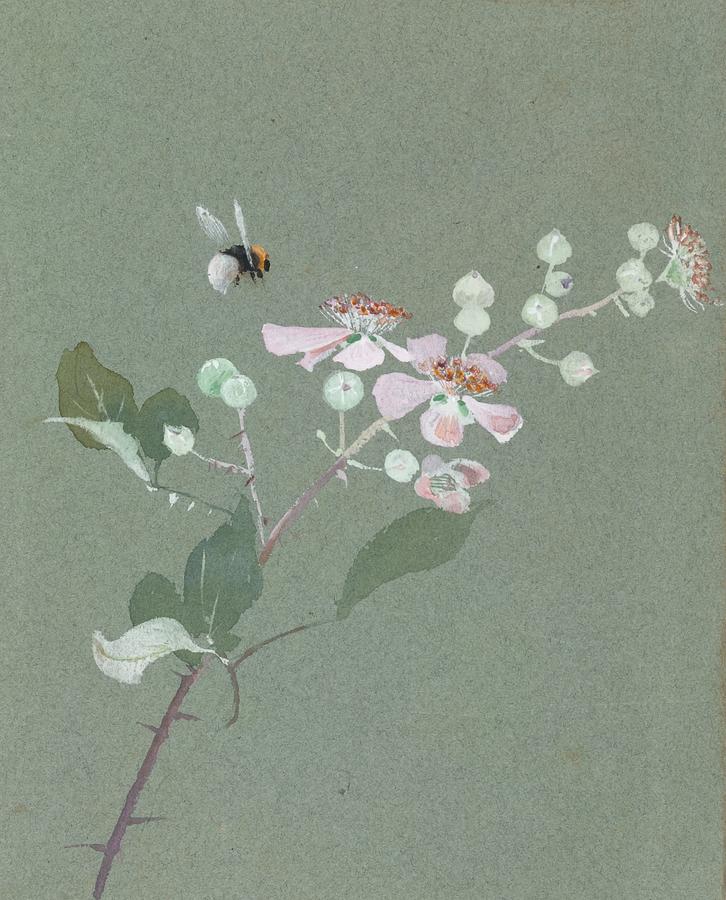
While in North Africa, Trotter continued making sketches and watercolors, documenting the everyday life that surrounded her—people, bees, flowers, sunsets. These are minor works/studies, not intended for the art market, but they were for Trotter a major way of delighting in God’s creation. I don’t like how the marketing of the film leans heavily into the narrative of “Oh, look at Lilias, so selfless and heroic, sacrificing artistic fame for service, she really could have been tops if she hadn’t given it up,” as it wrongly suggests that evangelistic or nonprofit work is more God-honoring than art making, or that recognition in one’s field is not something a Christian should desire. The film itself mostly avoids that way of looking at it, focusing instead on Trotter’s faithfulness in responding to a call that was particular to her and then finding ways to integrate art, as an avocation, into her new life in Algiers. “Her art . . . wasn’t lost in Algeria. If anything, it was fed,” says biographer Miriam Rockness. As viewers, we’re asked to reexamine our conception of success.
Watercolor by Lilias Trotter, July 9, 1907
I had never heard of Lilias Trotter before watching this documentary (thanks for the recommendation, Sarah!), but now I’m glad to know about her. Learn more at https://liliastrotter.com/, and follow the Lilias Trotter Legacy on Instagram, Facebook, and/or Twitter. Also, the current issue of Christian History magazine (no. 148) is devoted entirely to Trotter; you can download a free copy (or purchase a physical one) here.
One of the reasons I love poetry is it brings me into more intimate contact with the world. It slows me down and asks me to give my attention to things that, in my constant, often self-inflicted busyness, I fail to notice. And it shepherds me into a deeper sense of gratitude and awe. It’s really easy for me to see the world’s ugliness—sin, suffering—and to be scared, angry, disgusted, horrified, or overwhelmed. My inclination is to see what’s wrong instead of what’s right. While poetry can perform many different functions, one of them is to attune us to the daily gifts and graces that come to us from, I believe, the hand of God.
In the spirit of Thanksgiving, here are ten contemporary poems of gratitude that can be read online. A popular tradition for this holiday is, when gathered with others round the feasting table, to take turns sharing what you’re thankful for. The three most typical answers for adults are: my family, my health, my job. These are perfectly fine answers. But poets can show us what it feels like to be blessed with family, for example, and can teach us how to offer praise even when our health is declining or we’re unemployed. Moreover, poets help us expand our repertoire of thanksgivings, naming things with specificity: “the incense of butter on toast” (Siegel), “the honey-colored toes of mice” (Singleton), “two daughters and one cloud, an old oak / and a great love” (Wiman), the moon that “shakes a dress of light onto my body” (Silver) and “shuffl[es] its soft, blind slippers over the floor” (Hirshfield).
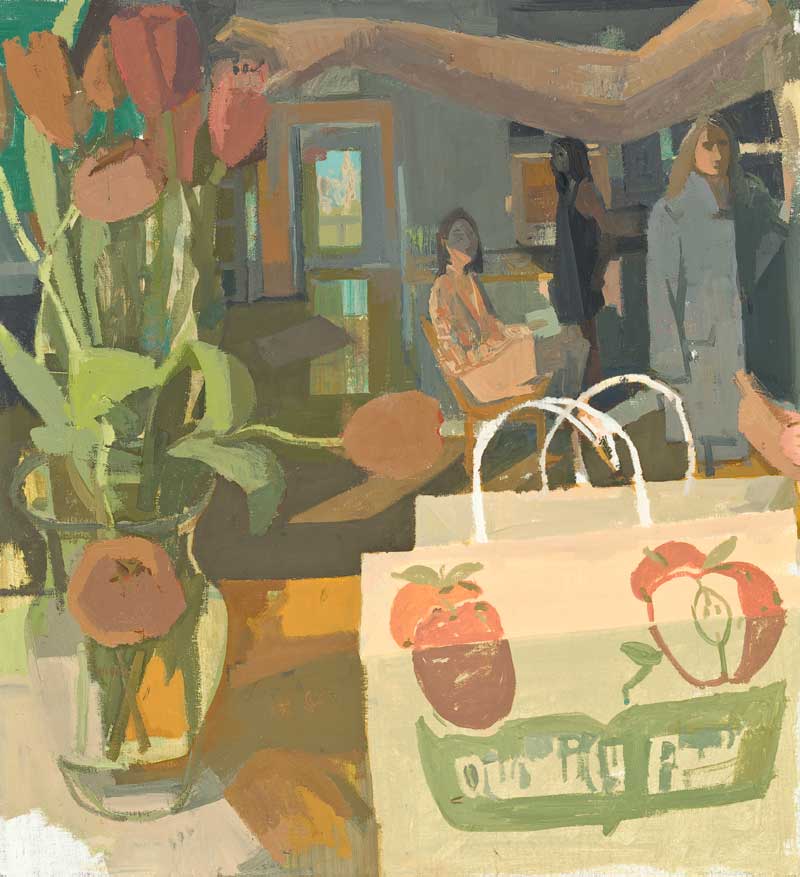
Susan Lichtman (American, 1952–), Orchard Bag and Bouquet, 2015. Oil on linen, 24 × 22 in.
I’ve listed the volume that each poem is published in—I’ve read all but the Browning one, and they’re all excellent. I hope this tiny sampling from the trove of contemporary poetry enlarges your thankfulness and inspires you to read more! Happy Thanksgiving, friends.
“When the sun returns”by Sarah Browning, in Killing Summer (2017): Jesus said to consider the birds. Browning does. “it is hallelujah time, / the swallows tracing an arc / of praise just off our balcony, / the mountains snow-sparkling / in gratitude . . .”
“A Song of Praises”by Robert Siegel (scroll to bottom of page), in Within This Tree of Bones(2013): In this very textural, sensory poem, a humdrum morning routine becomes a litany of more than two dozen in-the-moment gratitudes, for everything from warm washcloths to the snap of elastic to grapefruit flesh to a beautiful face at the breakfast table.
“I Praise Unsalted Butter”by Sharron Singleton, in Our Hands a Hollow Bowl (2018): Another litany of thanksgivings for the mundane, like pearl buttons, babies’ fingernail parings, freckles, delphinium’s cobalt, unseen dendrites, the word “rhubarb,” and so on. In spite of great evil (the poet references the famous “Napalm Girl” photograph), there is still much to wonder at.
“Fifty”by Christian Wiman, in Survival Is a Style (2020): “I never thought I’d live to the age of fifty, so my inclination these days is to praise,” says Wiman, who was diagnosed with a rare blood cancer in 2006 during his first year of marriage. “I wasn’t able to write about joy until I got sick. It wasn’t that sickness brought joy. It’s made me much more conscious of how much joy was in my life and gave me some impetus to articulate it.”
“Morning”by Yahia Lababidi, inBarely There: Short Poems (2013): This six-liner celebrates the newness and invitation of each day. (For a bonus poem by the same author, see “Breath.”)
“Psalm”by Marilyn Nelson, in The Fields of Praise (1997): Reflecting on the inherently dangerous act of driving, Nelson is thankful for (God’s) ongoing protection in the car. The poem ends with a classic line from the biblical book of Psalms.
“How Rarely I Have Stopped to Thank the Steady Effort”by Jane Hirshfield (scroll down to fourth poem), in The Beauty: Poems (2015): I would have never thought to be thankful for walls that stand up! But yes, the basic architecture of my little suburban home is a marvel—how it all holds together. In a pause in conversation, the speaker of this poem ponders all that’s going on in the silence: tree bark absorbing the scent of crow feathers, honey dissolving into tea, DNA replicating. The poem then turns into an expansive reflection on all the invisible phenomena of bodies and lives, of emotions and desires that ebb and flow as their building blocks get rearranged.
“A Handful of Berakhot” by Anya Krugovoy Silver, in The Ninety-Third Name of God (2010): Silver [previously] is one of the consummate poets of gratitude, particularly gratitude amid illness. She was pregnant with her first and only son, Noah, when she was diagnosed with inflammatory breast cancer in 2004. She died in 2018. Her body of work is characterized by a stubborn holding on to joy even as she wrestles honestly with God through many painful years of chemo and a mastectomy. Silver, a Christian, married a Jewish man, whose faith tradition inspired this poem. “In Judaism, a berakhah (pl. berakhot) is a formula of blessing or thanksgiving, recited in public or private, usually before the performance of a commandment, or the enjoyment of food or fragrance, and in praise on various occasions. The function of a berakhah is to acknowledge God as the source of all blessing” [source]. Silver’s nineteen custom berakhot are for such occasions as “buckling my son’s shoes,” “slipping my prosthetic breast into my bra,” “riding the ferris wheel,” and “going to the post office.”
“Gratitude”by Anna Kamieńska, in Astonishments: Selected Poems(2007): “I was full of thanks / like a Sunday alms-box,” Kamieńska writes in this rapturous poem, which bursts with love for everyone and everything.
Here is a list of upcoming arts conferences and retreats. I will be attending the CIVA conference next month as well as the DITA conference in September—if you’ll be at either, please let me know; I’d love to meet you!
All Things New (International Arts Festival) Date: June 15, 2019 Location: Waterras Common Hall 3F, Tokyo, Japan Cost: ¥2500 (about $22) Presenters: Joshua Messick, Gerda Liebmann, Christopher Elmerick, Roger Lowther, and more Organizer:Community Arts Tokyo (with additional sponsorship by Grace City Church Tokyo) Description: “How can people in a city experience personal, social, and economic flourishing? What is the role of artists in making this world a better place? How can faith, work, and the arts come together for a holistic view of peace for the good of mankind? At this conference, we will hear from artists in the business world, the media world, and the plight of refugees from other countries. Their stories will give us a vision for how the arts point a way to new beginnings and bring goodness and hope into a broken world. Join us as we enter this world through speaker presentations, music performances, a short film, gallery exhibits, small group discussions, and more!” (Note: Presentations in Japanese will have simultaneous English translation over the wireless earphone system.)
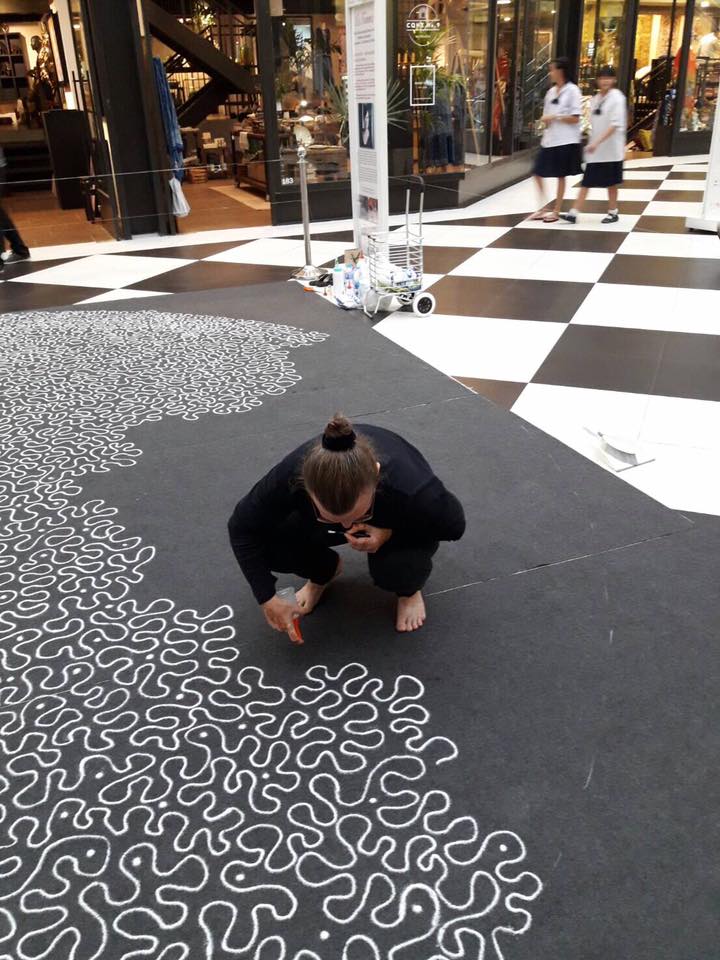
At the “All Things New” festival next month, Thai artist Gerda Liebmann will be installing one of her “salt art” pieces.
The festival will include presentations/workshops/performances by
hammered dulcimer player Joshua Messick, who contributed to the soundtrack of the Japanese animated fantasy film Mary and the Witch’s Flower
visual artist Gerda Liebmann, on how art can foster relationship and connection
Christopher Elmerick, who founded and runs a cultural center in Berlin that promotes the free exchange of ideas through shared work- and performance spaces and more
Megumi Project, a group of women artisans who upcycle vintage kimonos into shawls, scarves, bags, journals, and other accessories
the Charis Chamber Players
organist Roger Lowther, on the physics of music
Roger Lowther is, with his wife Abi, the founder and director of Community Arts Tokyo, “a team of artists, professionals, and Japanese nationals assisting church planting through outreach, discipleship, worship, and disaster relief.” Their work is supported through Mission to the World, the international missions arm of the Presbyterian Church in America (PCA).
+++
Are We There Yet? Date: June 13–16, 2019 Location: Bethel University, St. Paul, Minnesota, USA Cost: $350 for nonmembers; $300 for members Presenters: Sedrick Huckaby, Letitia Huckaby, Hawona Sullivan Janzen, Chris Larson, Rico Gatson, Nate Young, Linnéa Spransy, Cara Megan Lewis, Rev. Babette Chatman, Jamie Bennett, Joanna Taft, Kelly Chatman, Joyce Lee, Caroline Kent, Lyz Wendland, Betsy Carpenter, Amanda Hamilton, Catherine Prescott, Vito Aiuto, and others Organizer:Christians in the Visual Arts (CIVA) Description: “If you’re anything like us, working in an age of high anxiety and disruption has been trying. At the same time, the art world has never seen more diversity, wealth, interconnection, and popular appreciation. Some experience our current creative conditions as a ‘joyful noise,’ others a ‘resounding gong.’ This makes art difficult yet at the same time crucial. With our hope rooted in the Lord, we can rejoice in the unfinished state of our work. There is still so much to be made!
“Are We There Yet invites us to inhabit questions together: What are our shared pursuits? What practices and commitments can guide us in our work and collaboration? What would radical generosity do to the global art market? And how might we be participants in making ‘impossible things possible,’ as described by curator Hans Ulrich Obrist? With a commitment to hospitality, we will ask these questions and many more.”
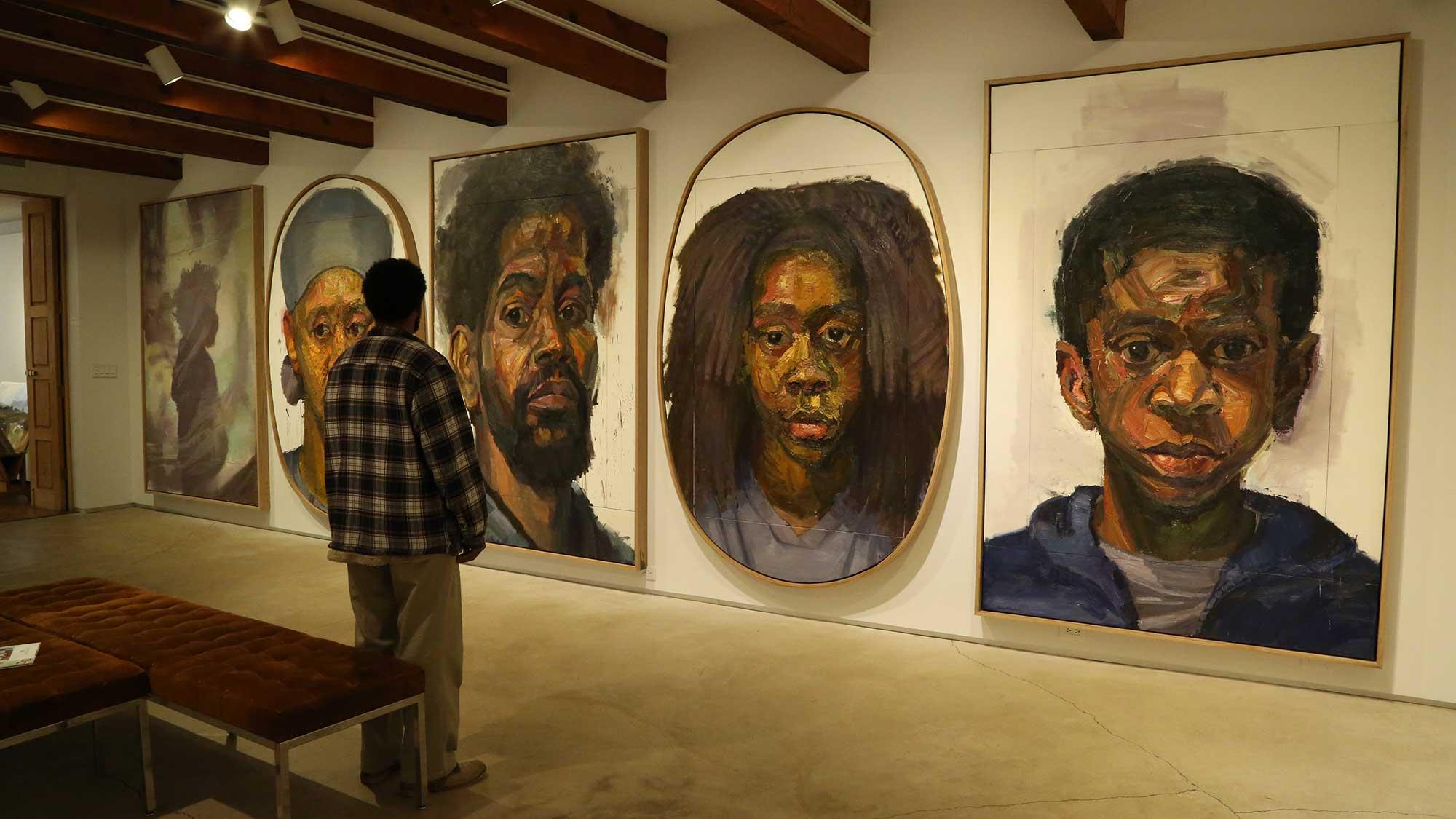
At Valley House Gallery in Dallas, Sedrick Huckaby stands in front of portraits he painted of his children, his wife Letitia, and himself. Sedrick and Letitia are two of the keynote speakers for CIVA’s 2019 Biennial Conference. Photo: Dane Walters/Kera News.
The conference will consist of plenary talks, panel discussions, and breakout sessions and will include a juried art show, late-night artist show & tells, optional day-ahead tours (art museums, city architecture, or sculpture garden) or workshops (printmaking or photography), a Liz Vice concert, and an ecumenical worship service.
+++
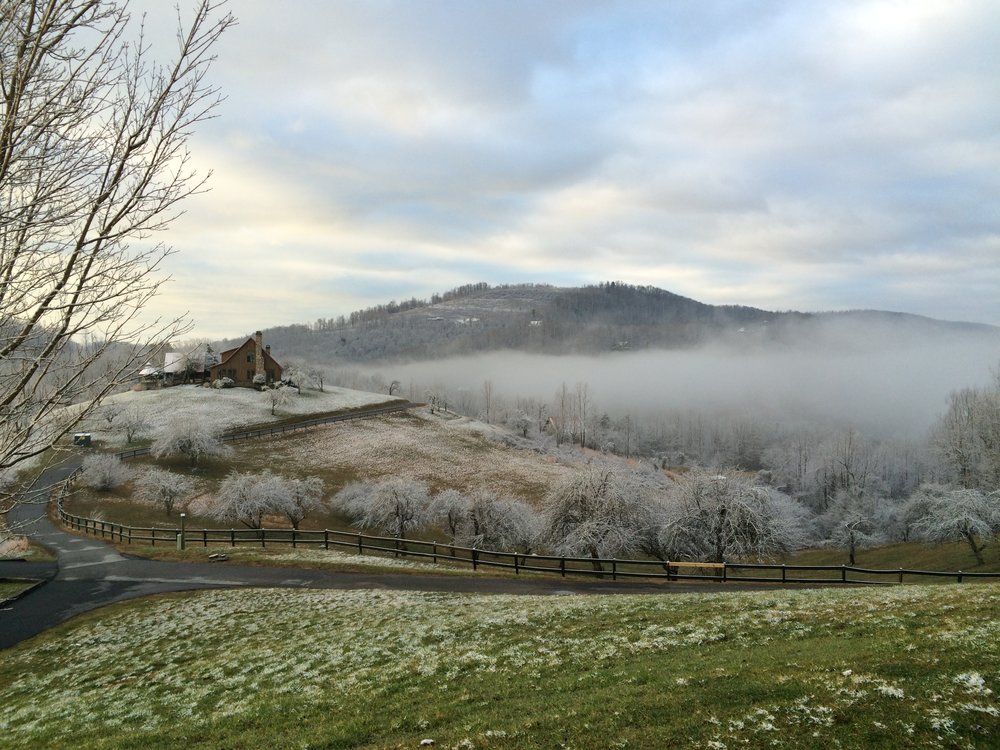
Visual Arts Retreat Date: June 21–23, 2019 Location: Apple Hill Lodge, Moravian Falls, North Carolina, USA Cost: $450 (includes lodging, food, and class materials) Presenters: Allison Luce, Corey Frey, Ty Nathan Clark (via satellite), Stephen Roach, Thomas Torrey, Lauren Olinger Organizer:The Breath & the Clay Description: “Come get away for a weekend designed to inspire and deepen your understanding of visual art both as a spiritual practice and as an art form.”
+++
Vocation, Motherhood, and Artmaking Date: July 25–28, 2019 Location: Laity Lodge, Leakey, Texas, USA Cost: $495 (scholarships available) Presenters: Andi Ashworth, W. David O. Taylor, Letitia Huckaby, Phaedra Taylor, Sandra McCracken, Ashley Cleveland Organizer:Laity Lodge Description: “This retreat is an invitation to explore the opportunities and challenges that are involved in the twin calling to motherhood and artmaking. It is open to mothers in all stations and circumstances of life, whether at the beginning of motherhood or in the fullest years of grandmothering, and to artists of all media, disciplines and contexts.” (Read more from David Taylor.)
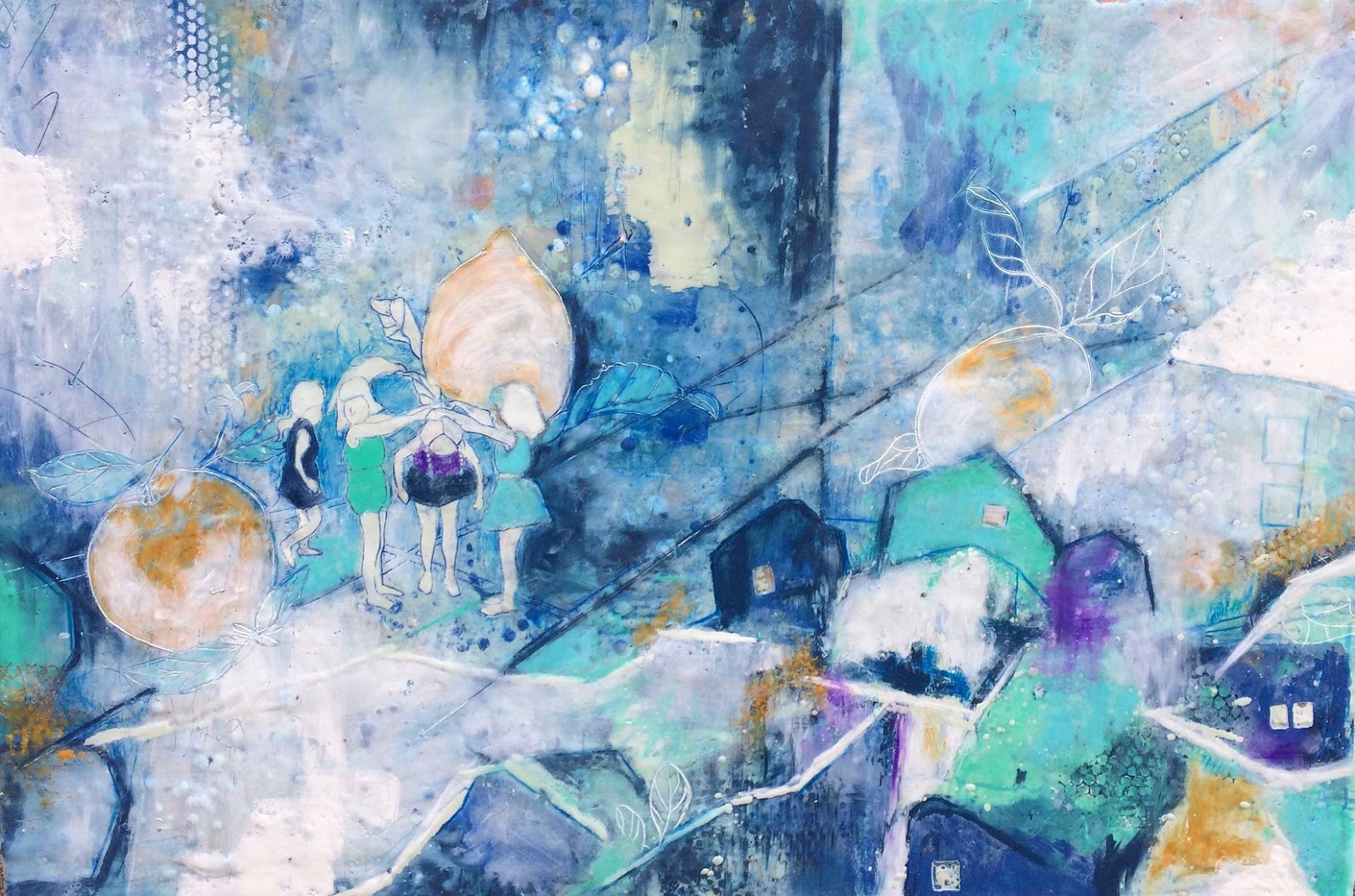
Phaedra Taylor (American), The Book of Games: Oranges & Lemons, 2018. Encaustic on wood panel, 20 × 30 in.
+++
Kingdom Creatives Con Date: August 3, 2019 Location: National Union Building, Washington, DC Cost: $99 Presenters: Noah Elias, Othello Banaci, Rachel Petrillo, Anifa Mvuemba, John David Harris, Ryan Han, Andrew Hochradel Organizer: Bemnet Yemesgen Description: A conference “aimed at igniting inspiration, learning, and networking in the Christian creative community. . . . Attendees will enjoy workshops and talks by creatives from diverse backgrounds and industries. The conference is specifically tailored towards creatives who love Jesus Christ . . . graphic designers, illustrators, photographers, filmmakers, developers, animators, copywriters,” etc.
+++
New York City Arts Weekend Date: August 9–10, 2019 Location: Various venues, New York, USA Cost: $295 CAN Presenters:Makoto Fujimura, Iwan Russell-Jones Organizer:Regent College (host: Jeff Greenman) Description: “Makoto Fujimura and Iwan Russell-Jones lead this exploration of Christian faith and the visual arts in New York City. Enjoy a fascinating tour of the Metropolitan Museum of Art and participate in shared meals, stimulating presentations, and challenging conversations. Develop a deeper understanding of how creativity finds its place in the new creation.”
+++
Creation and New Creation: Discerning the Future of Theology and the Arts Date: September 5–8, 2019 Location: Duke University, Durham, North Carolina, USA Cost: $175 (student discounts available) Presenters: Jeremy Begbie, Malcolm Guite, Christian Wiman, N. T. Wright, Natalie Carnes, Jennifer Craft, Carlos Colón, Steve Prince, Bruce Herman, Judith Wolfe, and others Organizer:Duke Initiatives in Theology and the Arts (DITA) Description: “At DITA10, we will celebrate past scholarship, reflect on today’s landscape, and imagine with tomorrow’s leaders.” The colloquium will include keynote lectures; workshops for church leaders and artists addressing the challenges of theology and the arts in the church and in our daily lives; panel discussions with artists and theologians; a concert by the New Caritas Orchestra; and a corporate worship service.
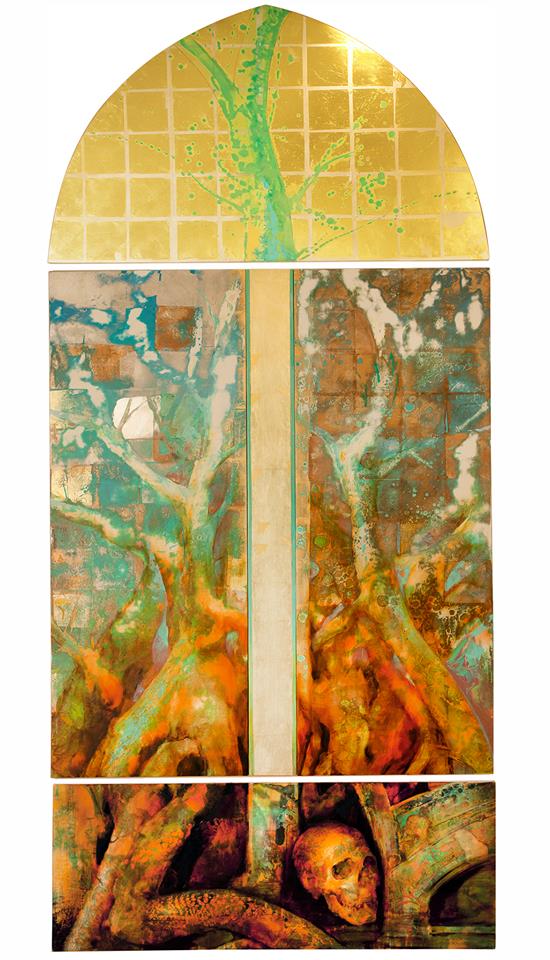
Bruce Herman (American, 1953–), Riven Tree, 2016. Oil on wood panels with gold, silver, and platinum leaf, 96 × 47 in. York Chapel, Duke Divinity School, Durham, North Carolina. [see “making of” video] [see in situ photo]
+++
The Future of the Catholic Literary Tradition (Catholic Imagination Conference) Date: September 19–21, 2019 Location: Loyola University Chicago, USA Cost: $150 Presenters: Tobias Wolff, Alice McDermott, Paul Schrader, Dana Gioia, Paul Mariani, Richard Rodriguez, Angela Alaimo O’Donnell, and others Organizer:Hank Center for the Catholic Intellectual Heritage Description: “This international biennial conference, sponsored by Loyola’s Hank Center, features over 60 writers, poets, filmmakers, playwrights, journalists, editors, publishers, students, and critics who will explore a variety of questions surrounding the Catholic imagination in literature and the arts. What is the future of the Catholic literary tradition? What is the state of discourses in faith and Christian humanism in a world increasingly described as ‘Post’—postmodern, post-human, post-Christian, post-religious? How is Catholic thought and practice (or the absence of it) represented in literature, poetry, and cinema? If, as David Tracy observes, religion’s ‘closest cousin is not rigid logic, but art,’ what might literary art be trying to communicate to its ‘cousin’—and to us all—as we travel along the first decades of the 21st century?”
The call for papers is still open, until June 15. Also check out some of the special events being offered, which will include a theatrical performance of Flannery O’Connor’s Everything That Rises Must Converge and an evening of poetry readings, live music, and a Chicago blues panel.
+++
Writer’s Retreat Date: October 25–27, 2019 Location: Apple Hill Lodge, Moravian Falls, North Carolina, USA Cost: $450 (includes lodging and food) Presenters: TBA Organizer:The Breath & the Clay Description: “Come get away for a weekend designed to develop your writing both as a spiritual practice and as an art form.”
+++
The Art of the Lost: Destruction, Reconstruction, and Change Date: November 27–29, 2019 Location: Canterbury Cathedral, England Cost: £175 for full conference (single-day tickets also available) Presenters: Sandy Nairne, Simon Cane, James Clark, Ascensión Hernández Martínez, Emma J. Wells, and others Organizer:Canterbury Cathedral Description: “This conference will explore and appraise current and developing studies of how art changes, is reused or repurposed, disappears or is rediscovered. It will look at how and why art is defaced, destroyed or is lost within architectural settings, with a particular focus on art within the context of cathedrals, churches or other places of worship. It will consider changing ideologies, iconoclasm, war, fashion and symbolism. It will cover art from the 6th century to the modern day.”
In addition to those I posted in March, here are a few more conferences of note. (Update, 5/4: I’ve added two more entries since the original publication of this post. Thanks, Chloë Reddaway and Talita Peters, for the tips!)
UPCOMING CONFERENCES
Title:“The Place of Sacred Art: Exploring the Interpretation of Sacred Art in Secular and Faith Contexts” Date: May 9, 2017 Location: AV Room, Gas Hall, Birmingham Museum and Art Gallery, Birmingham, England Organizer:Canon Dr. Andrew Smith, director of interfaith relations for the bishop of Birmingham Cost: £20 Speakers: David Cheetham, Catherine Ogle, Orit Azaz, Rebecca Bridgman, Peter Bradley Description: This symposium will consider the ways in which people reinterpret sacred art when it is displayed in new contexts or alongside art from different faith traditions, and how displaying different types of art in sacred spaces transforms our understanding of the sacred and the artistic. Presentations address how cathedrals have negotiated being open to artists of different religious backgrounds and exhibiting work that challenges and questions, and how contemporary art can offer unexpected encounters with the sacred. Registration also includes a tour through the award-winning Faith in Birmingham Gallery by curator Rebecca Bridgman.
Title: “‘any-angled light’: Poetry and the Mission of Your Church” Date: May 16–18, 2017 Location: Yale University, New Haven, Connecticut Organizer:Yale Institute of Sacred Music Cost: $65 (registration ends May 8, noon ET!) Keynote speakers:Mary Karr and Christian Wiman Description: How does poetry equip the church to fulfill its mission of inviting others into God’s future? Drawing on spiritual verse spanning all eras from the biblical to the contemporary, this conference for church leaders and laypeople will (1) inspire the integration of poetry into a church’s congregational life and its public outreach and activism; (2) model the introduction of poetry and poetic sensibilities into worship; and (3) expose participants to diverse poetry and poetic forms. Besides plenary sessions with two of America’s finest poets, the conference includes workshops, musical worship, and a poetry slam.
Title: “Catholicism, Literature and the Arts: 1850–Present” Date: July 5–7, 2017 Location: Durham University, Durham, England Organizers:Centre for Catholic Studies at Durham University and Ushaw College Cost: £70 (discount rates for students, low-income, paper presenters) Speakers:Eamon Duffy, Terry Eagleton, Paul Lakeland, Anna Lawson, Melanie McDonagh, HE Daniel Mulhall, Paul Anthony Murray Description: The conference “will bring together leading scholars to address key questions in the study of Catholic art and writing, including the question of whether there is a distinctive tradition of ‘Catholic literature’. Among the main topics and themes of the conference are Catholic memoir and autobiography; Catholic fiction and poetry; Catholic readership; journalism; publishers and archives; and the visual arts. The conference will include film, music, and the visual arts, as well as literature,” and will consist of lectures, discussion groups, and workshops.
Title:“Canvas: A Conference on Theology and Creativity—Inscape, God, Art, and the Inner Life” Date: August 11–12, 2017 Location:Imago Dei Community, Portland, Oregon Organizers:Humble Beast and Western Seminary Cost: $100 Speakers: TBA Description: “The Canvas Conference humbly exists to inform all acts of human creativity and beauty with biblical, gospel-centered theology for the worship of the triune God. . . . We want to help build strong theological foundations for the artist and, likewise, to push Christians to pursue creative orthodoxy in their theological craft. We have found that without theology, creativity wanders from its original significance and purpose; while without creativity, theology often becomes cold, distant, and futile. In response, The Canvas Conference seeks to build bridges between the artist and the theologian by inviting God to take center stage in every human endeavor.”
Title:“Arts + Spirituality”(11th annual Verge Conference) Date: September 28–29, 2017 Location: Trinity Western University, Langley, British Columbia Organizer:School of the Arts, Media, and Culture, TWU Cost: $199 (discount rates for presenters, students, seniors, and single-day attendees) Keynote speaker:Cam Anderson, executive director, Christians in the Visual Arts Description: Throughout human history and across cultures, the arts have been closely associated with spirituality and religious practice. This conference seeks to explore that connection. Paper submissions are welcome on any topic relating to the arts and spirituality, as are proposals for presentations in the form of performances. The deadline for submissions is May 31.
PAST CONFERENCE
There have been so many events organized around the topic of art and religion in the past year that it’s hard to keep up. Below is a “Study Day” that slipped by before I had the chance to promote it; I’m posting the info here so that you can see the kinds of conversations that are going on among religious studies scholars and museum professionals and can look for future opportunities to join in. (If you’re not in either field but are a museumgoer—and if you’re reading this blog, I imagine you are—a great way to get involved would be to give feedback to the museums you visit. Did their presentation of religion through art and artifact, and wall text, help you connect in a deeper way to your own faith tradition, or see others in a new light? Or did you feel it was offensive, unfair, or in some way else deficient, and if so, why?)
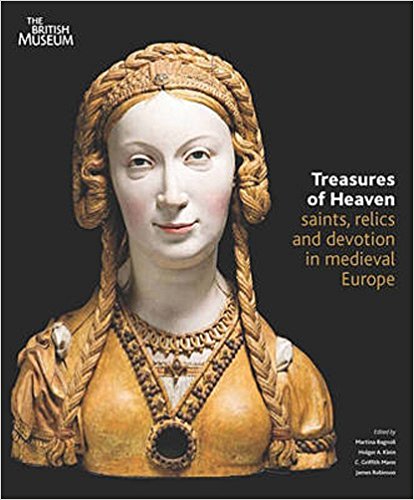
Title:“Encountering the Sacred in Museums” Date: March 15, 2017 Cost: £35 Location: Stevenson Lecture Theatre, British Museum, London Organizer:British Museum Description: This day of discussions on the role museums play in caring for and presenting religious art and artifacts included the lectures “What Is Sacred?” by religious historian Karen Armstrong and “Beyond Belief: The Role of Museums in Interpreting Religion” by Rickie Burman, development manager of London’s National Gallery. In other sessions, visitor experiences at diverse venues were discussed: the Museum of Witchcraft and Magic in Cornwall, the Creation Museum in Kentucky, and the British Museum during its “Treasures of Heaven: Saints, Relics, and Devotion in Medieval Europe,” an exhibition shaped by consultation with community groups.













 Art & Theology