Roundup: Christmas disco song by Boney M., dancing fish, Indian Madonna and Child paintings, and more

Wondering why I’m still posting Christmas content? Because Christmas is a twelve-day feast that began December 25 and extends through January 5. While the stores and most media have moved on, the church continues to celebrate. So I encourage you to keep your Christmas decorations up, keep singing and playing carols, and keep partying!

Here’s a link to my Christmastide playlist, comprising over twenty-seven hours of hand-picked sacred Christmas music. Also check out my Epiphany playlist for January 6.

+++

SONGS:

>> “Mary’s Boy Child / Oh My Lord” by Boney M.: The calypso carol “Mary’s Boy Child” was written in 1956 by Jester Hairston and popularized by Harry Belafonte, who recorded it that year. The most famous cover, though, is by Boney M., a reggae, funk, and disco band founded in 1975 in West Germany by the record producer Frank Farian. Its four original members were Liz Mitchell and Marcia Barrett from Jamaica, Maizie Williams from Montserrat, and Bobby Farrell from Aruba. Boney M. released their disco-lite version of “Mary’s Boy Child,” in medley with the new song “Oh My Lord” (by Frank Farian and Fred Jay), as a single in 1978 and then on their full-length Christmas album in 1981. It’s one of the best-selling singles of all time in the UK.

The song makes me smile so much—it’s bright and catchy—especially when I watch the music video, which shows the band singing and dancing in a white room wearing furry white coats. It’s one of two music videos they made for the song, the other cut together with kids enacting the Nativity.

>> “O Ho, Masih Aaya, Zameen Par” (Oh, Christ Has Come! There Is Joy on Earth!) by Akshay Mathews: This contemporary carol from India opens, “Oh, Christ has come! There is joy on earth, there is joy throughout the heavens. Oh, Christ has come!” Then it describes the Annunciation to the Shepherds. Read the Hindi lyrics here. In the video, singer-songwriter Akshay Mathews [previously], who lives in Delhi, triplicates himself using a clone effect so that he is shown playing all three accompanying instruments: guitar, keyboard, and hand drum.

>> “There’s a Fire in Bethlehem,” arr. Conrad Susa: I learned of this traditional Spanish villancico, “En Belén tocan a fuego,” from Calvin University’s 2022 Lessons and Carols Service, For God So Loved the Cosmos. As part of that program, the song was performed in English by the university’s Women’s Chorale, as arranged by Conrad Susa. It opens with imagery of the fire of God’s love flaring out from a stable, and develops into a scene of fish, rivers, and birds rejoicing in the birth of their Redeemer. There was a recording error that puts the lips out of sync with the sound, but the music otherwise comes across just fine.

I love the playful chorus, where the tempo picks up and the pianist shifts to staccato technique (detached and bouncy): “Fish in the river are glistening and dancing, dancing and leaping to celebrate his birthday.” In the sixteenth-note piano run that signals the transition between chorus and verse, I can picture the cavorting, splashing, and darting of our gill-bearing brothers. Although several animal characters make an appearance in Christmas songs, fish usually aren’t one of them. I like how the anonymous writer of this song includes them among the ones who celebrate Christ’s birth. Reminds me a bit of the animated Christmas short from Russia that I shared back in 2017.

To hear a professional recording by the Balthasar-Neumann-Chor, click here.

+++

ARTICLES:

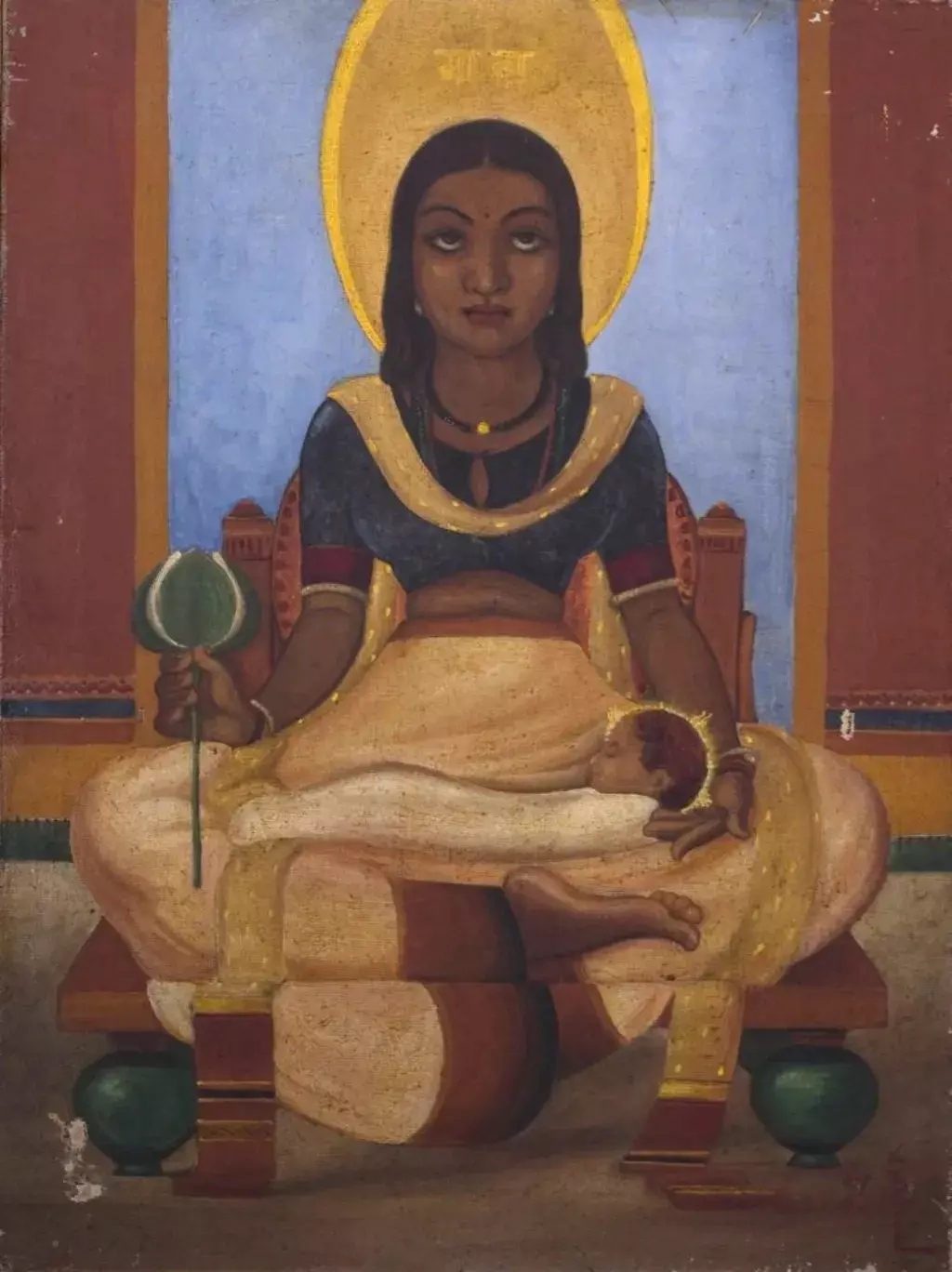
>> “Modernism and Islamic motifs: How Indian artists envisioned Christ’s birth” by Cherylann Molan, BBC News Mumbai: This article explores a handful of Indian depictions of the Virgin and Child by Mughal-era artists, Jamini Roy, and Angelo da Fonseca, all of which present Jesus’s birth from a local perspective.
Fonseca, Angelo da_Mother and Child
Angelo da Fonseca (Indian, 1902–1967), Mother and Child, 1952. Watercolor on paper. Photo courtesy of the Xavier Centre of Historical Research, Goa.

>> “A Resolution for People Who Are Already Doing Their Best” by Kate Bowler, Everything Happens (Substack): “Every January, we perform this ritual together. We shake off the indulgence of the holidays and brace ourselves for improvement. We tell ourselves that this will be the year we get it together . . . that any mess was temporary . . . that with the right plan, the right habits, the right mindset, we can finally become the person we were always supposed to be. This is not a small thing. In the United States and Canada (bless us all), New Year’s resolutions have become a kind of secular sacrament—an annual recommitment to the belief that limits are a problem to be solved. But what if they aren’t?”

Kate Bowler [previously], an award-winning author, podcaster, and historian of American self-help, breaks the illusion of unlimited agency and shares the question she’s asking herself for the new year instead of “What should I fix?”
Christmas, Day 5: Thorn and Thistle

LOOK: Illustration by Stephen Procopio

Illustration by Stephen Procopio
Illustration by Stephen Procopio for Behold: The Newborn King (2020), a set of biblical trading cards published by Fish Coin Press

LISTEN: “Thorn and Thistle” by We Are Messengers, feat. Keith and Kristyn Getty, on Rejoice! (A Celtic Christmas) (2024)

To a world of thorn and thistle
Shadowed still by Eden’s fall
On a night so unexpected
Enters the Lord of all

In a cold and stony manger
Swaddled in a linen cloth
Into darkness, into danger
Born now is heaven’s Love

Holy hands with fragile fingers
Our redemption in his veins
To a world of thorn and thistle
Jesus came

Child of heaven, Man of Sorrows
Bitter is the earth’s betrayal
Soon our pride will be the hammer
My sin will be the nail

Holy hands with fragile fingers
Our redemption in his veins
To a world of thorn and thistle
Jesus came

See how a rose is blooming
Breaks through the hardened ground
Sweet fragrance fills the winter air
Its thorn a Savior’s crown

Oh rejoice, he comes to rescue
Our redemption in his veins
To a world of thorn and thistle
Jesus came

Christmas, Day 4: Mothers March On

Today’s format is a little bit different, in that the visual art and music are part of a singular video piece which also prominently features dance—so, multiple media all wrapped up into one.

Every year in the church calendar, December 28 commemorates the Massacre of the Innocents—the boys of Bethlehem slain by agents of the state, deployed by Herod, who feared the perceived threat they posed. The story is told in Matthew 2:16–18 and quotes the prophet Jeremiah:

A voice was heard in Ramah,
    wailing and loud lamentation,
Rachel weeping for her children;
    she refused to be consoled, because they are no more.

While the remembrance marks this ancient event specifically, the church also takes the occasion to pray for present-day innocents who have been victimized by the powerful. For example, the collect (succinct prayer) for this day from the Book of Common Prayer reads:

We remember today, O God, the slaughter of the holy innocents of Bethlehem by King Herod. Receive, we pray, into the arms of your mercy all innocent victims; and by your great might frustrate the designs of evil tyrants and establish your rule of justice, love, and peace; through Jesus Christ our Lord, who lives and reigns with you, in the unity of the Holy Spirit, one God, for ever and ever. Amen.

The artists of today’s piece, made in 2019, confront the unjustified killing of Black men in America by police. They do not make the explicit connection to Herod’s massacre, but I do, as I hear, in the many Black mothers who have lost their children to state violence, Rachel weeping and refusing to be comforted. And I see Herod-like rulers who want to silence those wails and reverse the progress made in awareness and reform.

(Related posts: Saltcellars by Rebekah Pryor and “Mothers and Shepherds” by Common Hymnal; Antiquarum Lacrimae (The Tears of Ancient Women) by Joan Snyder and “Neharót Neharót” by Betty Olivero)

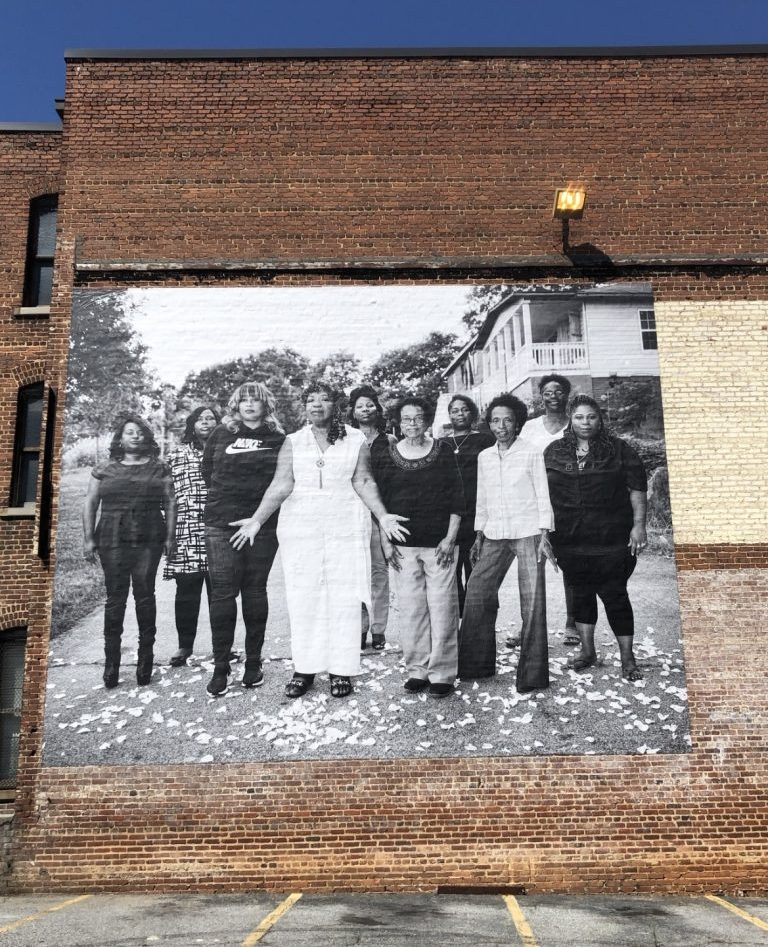
LOOK & LISTEN: The Ritual of Being, a site-specific dance performance by T. Lang in front of the Mothers March On mural by Sheila Pree Bright, 2019

The 2010s was a decade of racial reckoning in America. In response to neighborhood watchman George Zimmerman’s killing of the unarmed Black teen Trayvon Martin and subsequent acquittal, the Black Lives Matter movement was founded in 2013, demanding policing and criminal justice reform and the safety of marginalized Black communities. BLM activism and the continual miscarriages of racial justice that prompt it received ample media coverage all the way through the movement’s peak in 2020 with the murder of George Floyd. That coverage has lessened in the last few years, but the movement is still active, and mothers still bear the wound of their slain children.

In 2019, the lens-based artist Sheila Pree Bright, author of #1960Now: Photographs of Civil Rights Activists and Black Lives Matter Protests, brought together nine mothers who are fighting for justice for their boys whose lives were taken from them by police. She wanted to give them a safe space to talk, and to photograph them. The portrait Mothers March On depicts, from left to right, Tynesha Tilson (mother of Shali Tilson), Wanda Johnson (mother of Oscar Grant), Felicia Thomas (mother of Nicholas Thomas), Gwen Carr (mother of Eric Garner), Monteria Robinson (mother of Jamarion Robinson), Dr. Roslyn Pope (author of An Appeal for Human Rights), Dalphine Robinson (mother of Jabril Robinson), Patricia Scott (mother of Raemawn Scott), Montye Benjamin (mother of Jayvis Benjamin), and Samaria Rice (mother of Tamir Rice).

Bright, Sheila Pree_Mothers March On
Sheila Pree Bright (American, 1967–), Mothers March On, 2019. Vinyl-print photo mural installed at 190 Pryor Street, Atlanta, Georgia, 30 × 60 ft. (9.1 × 18.3 m).

Carr, whose son died in the chokehold of an NYPD officer who ignored his cries of “I can’t breathe,” is the focal point of the image, with her arms outstretched and fingers spread. This body language connotes an offering of self to the cause of justice and a readiness to receive it. That her hands are open rather than clenched in a fist indicates unguardedness, while her planted feet indicate firmness.

The woman in glasses beside Carr is Roslyn Pope, who died in 2023. A mother to two daughters, she had not herself lost a child to police violence, but she was part of Mothers March On on account of her seminal civil rights work in Atlanta. In 1960, while serving as president of the student government at Spelman College, she drafted the manifesto An Appeal for Human Rights, announcing the formation of the Atlanta Student Movement, whose campaign of civil disobedience would contribute to the dissolution of racist Jim Crow laws across the region. In a 2020 interview for the sixtieth anniversary of the manifesto’s publication, Pope expressed concern that some of the students’ hard-fought gains were being eroded, telling the Associated Press, “We have to be careful. It’s not as if we can rest and think that all is well.”

Sheila Pree Bright describes the photo she composed:

The Mothers March On photographic project is about Black women who have witnessed the tragic loss of their children who have fallen to police brutality. . . . This project pays homage to the sacrifices, wisdom, and guidance of Black mothers as nurturers and protectors who are passing on a legacy of determination and love, showing how they are fierce and tender, protective and vulnerable, and strong and soft. I’m honoring the struggles of Black mothers, celebrating the beauty of their strength and resilience. These mothers continue to march on for Human rights for their children to bring attention to the urgent need for police reform and the systemic racism that continues to fuel police brutality against Black bodies since slavery.

La Tanya S. Autry writes for Hyperallergic:

Bright’s depiction . . . stresses Black mothers’ memory, determination, love, and corporeality. Through the repetition of standing figures, the portrait insists on the integrity of Black bodily form. The women speak back to lynching culture. With rose petals at their feet, like fallen bodies of their murdered sons, these mothers, on the front-lines of state violence, refuse to relent. They know who and what has been taken from them; they will never forget. . . .

The various activist work of these mothers is astounding, and they include organizing family support groups, such as Georgia Moms United, legislative advocacy of Georgia House Bill 378 (Use of Force Data Collection Act) to track police violence, and developing youth centers, such as the Tamir Rice Afrocentric Cultural Center

Bright printed the portrait in large scale and pasted it on the side of a brick retail building at 190 Pryor Street in Atlanta, Georgia, near the Georgia State Capitol. Then, for ProtectYoHeART Day in Atlanta, she and the performance artist T. Lang collaborated on a video piece at that site, where T. Lang dances before the mural to the aching instrumental jazz piece “Alabama” by the saxophonist John Coltrane. (Coltrane wrote the music as a memorial for the four girls who were murdered by Ku Klux Klansmen at Sixteenth Street Baptist Church in Birmingham in 1963; learn more here.) Clothed in a fringe dress, T. Lang spins, jerks, reaches, heaves, throws herself against the wall, crouches, withers, bursts, climbs, pulls, and walks forward, movements of grief and struggle capped by resolve.

A temporary installation, the Mothers March On mural is no longer on Pryor Street.

I first learned about Sheila Pree Bright’s photography from a compelling series of hers that I saw at the Wadsworth Atheneum in Hartford, Connecticut, titled Young Americans. In it she invited people across the US between the ages of eighteen and twenty-five to pose with the American flag in whatever way they felt most comfortable. “My practice moves between documentary and conceptual work, from portraiture to constructed realities—always grounded in truth, history, and lived experience,” Bright says.

Christmas, Day 3: Stupendous Stranger

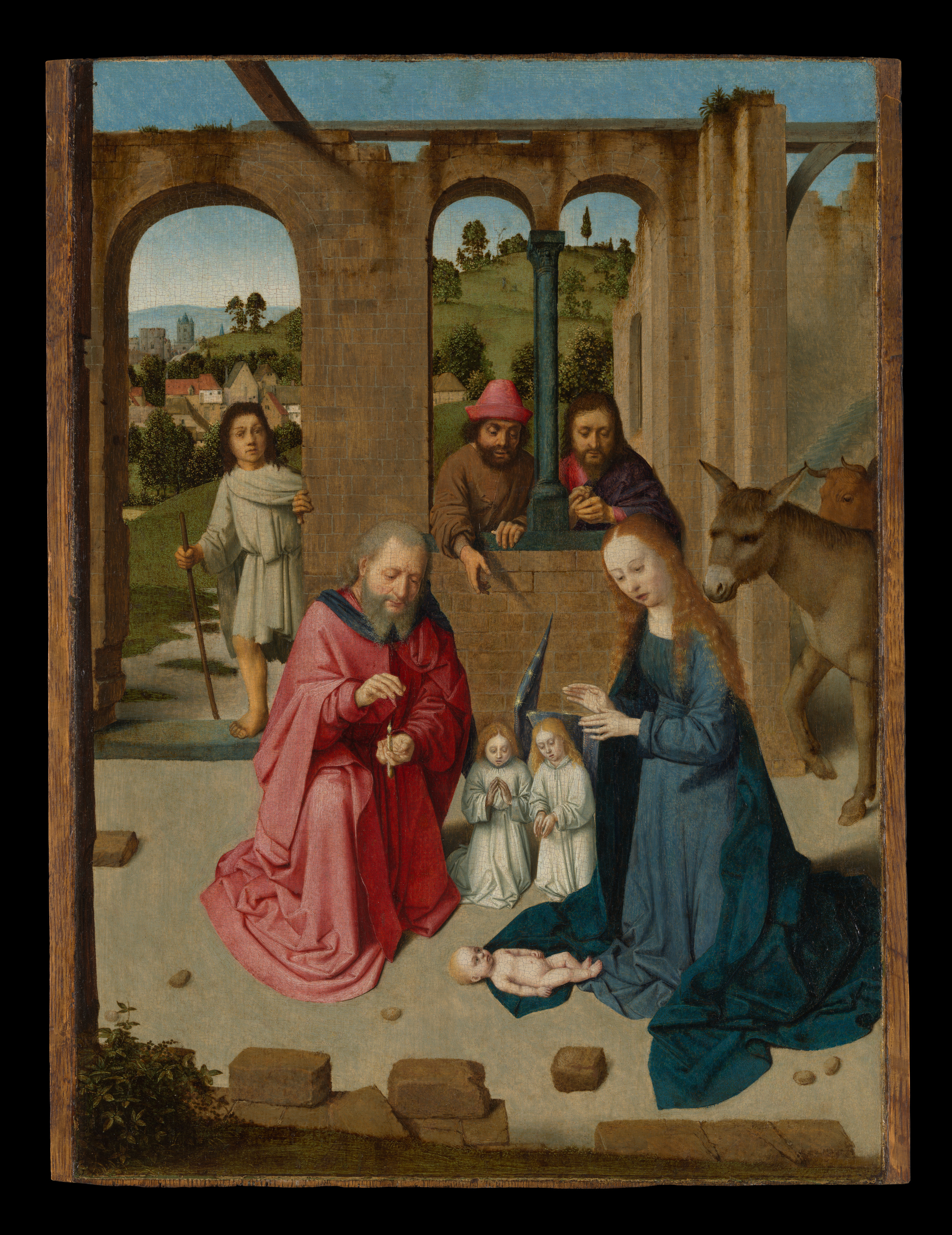
LOOK: The Nativity by Gerard David

David, Gerard_Nativity
Gerard David (Netherlandish, ca. 1455–1523), The Nativity, early 1480s. Oil on wood, 18 3/4 × 13 1/2 in. (47.6 × 34.3 cm). Metropolitan Museum of Art, New York.

LISTEN: “Where Is This Stupendous Stranger” | Words by Christopher Smart, 1765 | Music by Linda L. Hanson, 2012 | Performed by Fire (women’s a cappella chamber ensemble), 2020

Where is this stupendous Stranger?
Prophets, shepherds, kings, advise!
Lead me to my Master’s manger,
Show me where my Savior lies.

O most mighty, O most holy,
Far beyond the seraph’s thought,
Are you then so mean and lowly
As unheeded prophets taught?

O the magnitude of meekness,
Worth from worth immortal sprung!
O the strength of infant weakness,
If eternal is so young!

God all-bounteous, all-creative,
Whom no ills from good dissuade,
You have come to be a native
Of the very world you made.

The four verses of this Christmas hymn are excerpted from a nine-stanza poem by Christopher Smart [previously] published in Hymns and Spiritual Songs for the Fasts and Festivals of the Church of England (London, 1765). The poem was recovered in the twentieth century and since then has received multiple new musical settings—by composers such as I-to Loh, Charles Heaton, Conrad Susa, Joan A. Fyock, Leo Nestor, Alec Wyton, Thomas Gibbs Jr., Scott M. Hyslop, and Jacques Cohen—as well as pairings with older tunes.

My favorite setting of the text is by Linda L. Hanson, the founding director of Fire, a women’s a cappella chamber ensemble in Charlottesville, Virginia. The group performs the hymn in the video above, which Fire member Mary Welby von Thelen spliced together from thirteen solitary recordings during the COVID-19 pandemic. Hanson is in the top row, the third from the left.

The alliterative opening line of the hymn asks where the “stupendous Stranger” can be found—the divine one sent from heaven. Stupendous isn’t an adjective we use often. It means “causing astonishment or wonder: awesome, marvelous.” The poetic speaker begs the prophets, shepherds, and magi to divulge the location of the Christ child so that he can go and worship him.

The next two stanzas marvel at the paradoxes of the Incarnation—how Christ is “mighty” and “holy,” beyond the comprehension of even the angels, and yet “mean” (humble) and “lowly,” lying here in the dirt before us, visible, tangible, vulnerable, no longer far above us but in our very midst. What “magnitude of meekness,” what “strength of infant weakness.” The eternal one is born in time.

The omnibenevolent Creator has deigned to become part of his creation. No potential ill that he will suffer as a result—and he will suffer many and grievous ills, culminating in death by crucifixion—can deter him from making his beloved earth his home.

Hanson has generously allowed me to share the sheet music of “Where Is This Stupendous Stranger,” and says the hymn can be freely used by local church congregations. Anything outside that context will require her permission.

Christmas, Day 2: Angels

LOOK: Sprites Dancing in the Dark Night by Wang Xin

Wang Xin_Sprites Dancing in the Dark Night
Wang Xin, Sprites Dancing in the Dark Night, Chongming District, Shanghai, China, 2024

For this photograph, Wang Xin won the Royal Meteorological Society’s Standard Chartered Weather Photographer of the Year 2024. The society provides this description:

As multiple thunderstorms raged around Shanghai, Xin traveled to the Chongming District and adopted a trial-and-error approach by setting up the camera and waiting. After a few hours, a “faint red figure” flashed in Xin’s eyes, and this remarkable image was captured. The elusive sprites only last a few milliseconds, so Xin used a four-second exposure to achieve this photo.

Sprites occur due to electrical discharge, but unlike ordinary lightning, they occur well above cumulonimbus clouds, approximately 50 miles above the ground, in a layer of the atmosphere known as the mesosphere. Due to their fleeting nature, sprites are still not well understood, but they have been observed to occur after a strong, positive lightning bolt between the cloud and ground. The red color comes from changes in the energy of the electrons of nitrogen atoms high in the atmosphere.

LISTEN: “Angels from the Realms of Glory” | Words by James Montgomery, 1816 | Music by Henry Thomas Smart, 1867 | Performed by Hunter Fraser on Fraser Family Christmas, vol. 1, 2022

Angels from the realms of glory,
wing your flight o’er all the earth;
ye who sang creation’s story,
now proclaim Messiah’s birth.

Refrain:
Come and worship, come and worship,
worship Christ, the newborn king.

Shepherds, in the field abiding,
watching o’er your flocks by night:
God with man is now residing;
yonder shines the infant light. [Refrain]

Sages, leave your contemplations;
brighter visions beam afar.
Seek the great Desire of nations;
ye have seen his natal star. [Refrain]

Saints before the altar bending,
watching long in hope and fear:
Suddenly the Lord, descending,
in his temple shall appear. [Refrain]

Christmas, Day 1: He Came Down

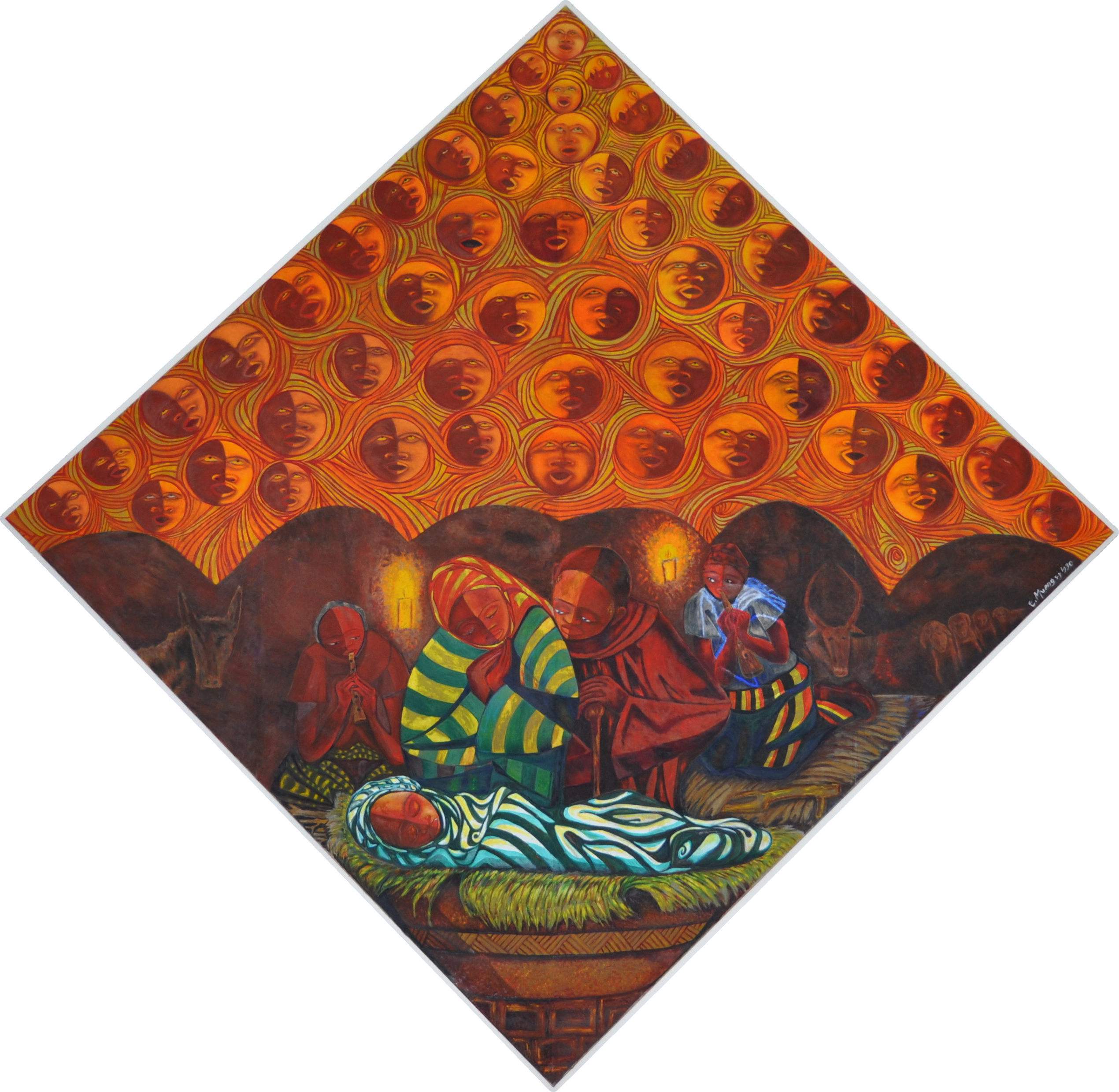
LOOK: The Birth of Jesus by Engelbert Mveng

Mveng, Engelbert_The Birth of Jesus
Fr. Engelbert Mveng, SJ (Cameroonian, 1930–1995), The Birth of Jesus, 1990. Central scene of mural at Our Lady of Africa Catholic Church, Chicago. All photos courtesy of the church.

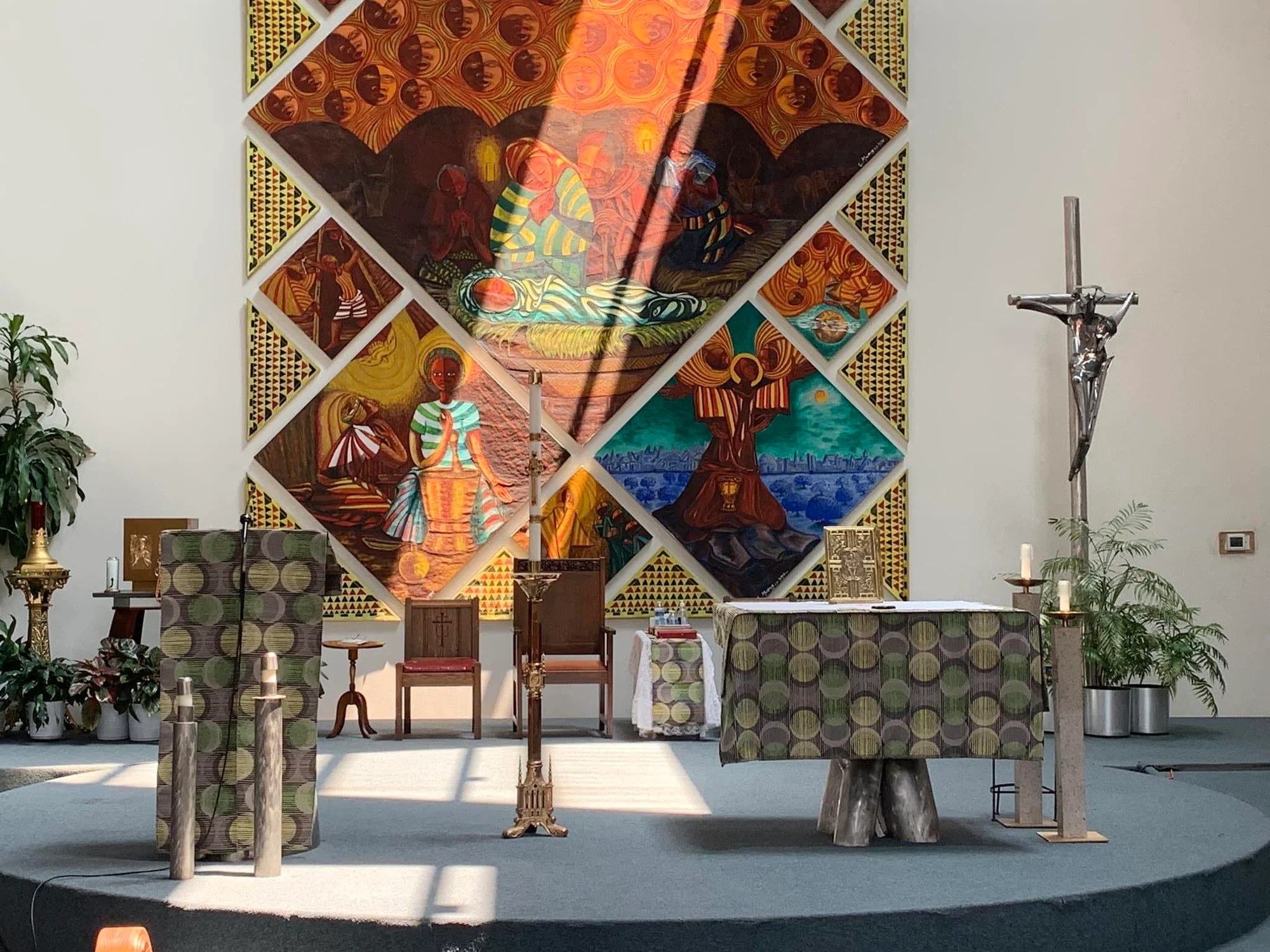
When Holy Angels Catholic Church on the south side of Chicago was rebuilt following a 1986 fire, the historic church commissioned the Cameroonian Jesuit priest, artist, and historian Engelbert Mveng (1930–1995) to paint a mural for behind the altar. He chose to represent moments of angelic intervention in biblical history. (See a close-up of the full mural here.)

The mural’s focal point is a Nativity scene, set in a hilly African landscape that’s pulsing with joy. The infant Jesus lies asleep on a grassy bed, adored by his parents and flanked by candles, pipers, and some curious animal onlookers. Caught up in the sky’s vibrant swirls are forty-nine disembodied angel heads, singing their Gloria.

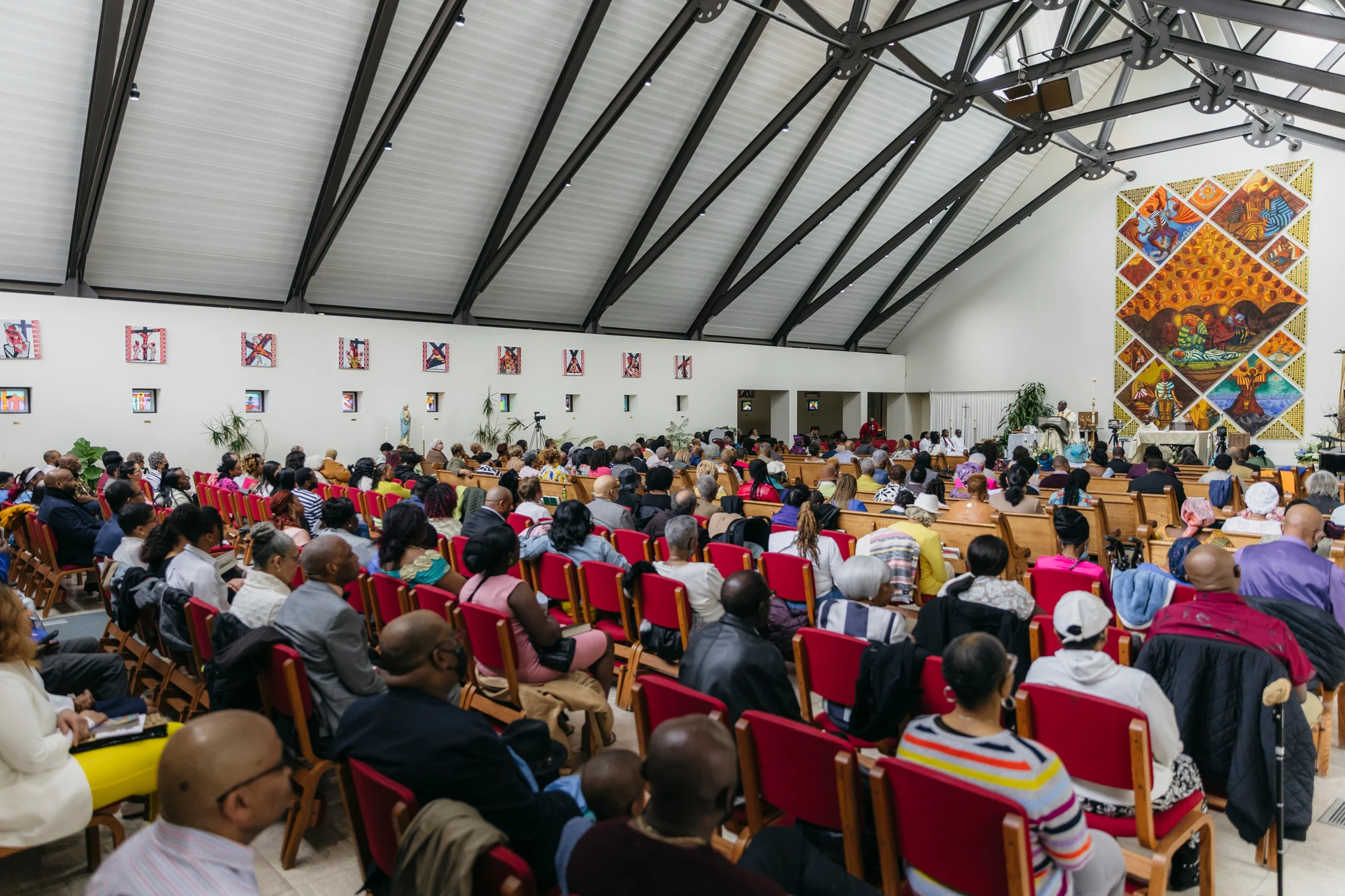
In July 2021, Holy Angels merged with the faith communities of Corpus Christi, St. Ambrose, St. Anselm of Canterbury, and St. Elizabeth of Hungary in the Bronzeville/Kenwood area of Chicago to become Our Lady of Africa Parish, housed at the former Holy Angels church. The altar mural remains installed on the east end, a key visual feature of the worship space.

Mveng mural
Mveng mural

LISTEN: “He Came Down,” traditional Cameroonian carol | Transcribed and arranged by John L. Bell of the Iona Community, 1986 | Arranged and performed by Marty Haugen on Welcome the Child, 1992 [sheet music]

He came down that we may have life
Hallelujah, forevermore!

He came down that we may have peace . . .

He came down that we may have hope . . .

He came down that we may have joy . . .

Roundup: Childbirth photography, “Talj, Talj,” and more

SUBSTACK POST: “Advent and Love” by Micha Boyett, The Slow Way: “There was a mother and man who loved her. There was a baby. The baby was the story God was telling, and that story became a seven-pound human and wailed. His mother cleaned his body with cloth and water, and fed him at her breast. She hoped he would latch on. It took a while. She bled and napped. He napped and cried again. He was God’s story and human. This is how he made a home with us. His making a home with us was love, and that love created a way for peace, hope, and joy.” Micha Boyett is an excellent spiritual writer, and I’m thrilled to learn that she has an Advent book coming out next year!

+++

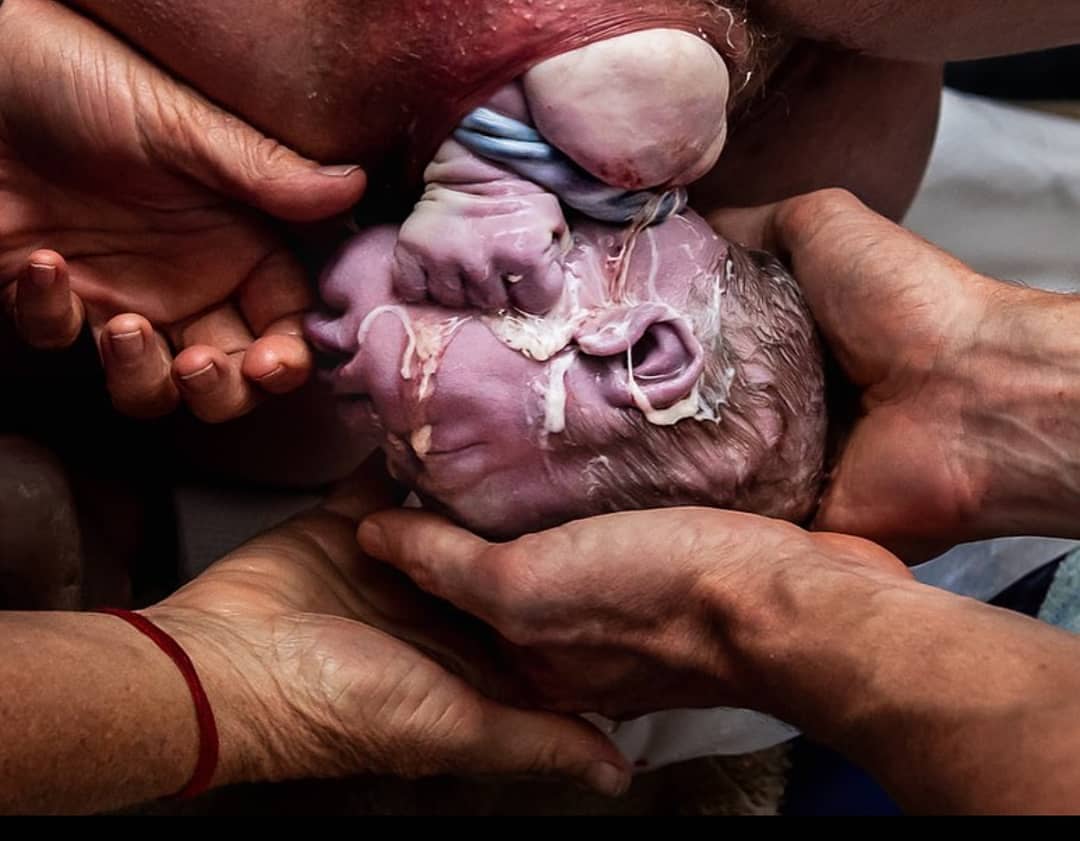
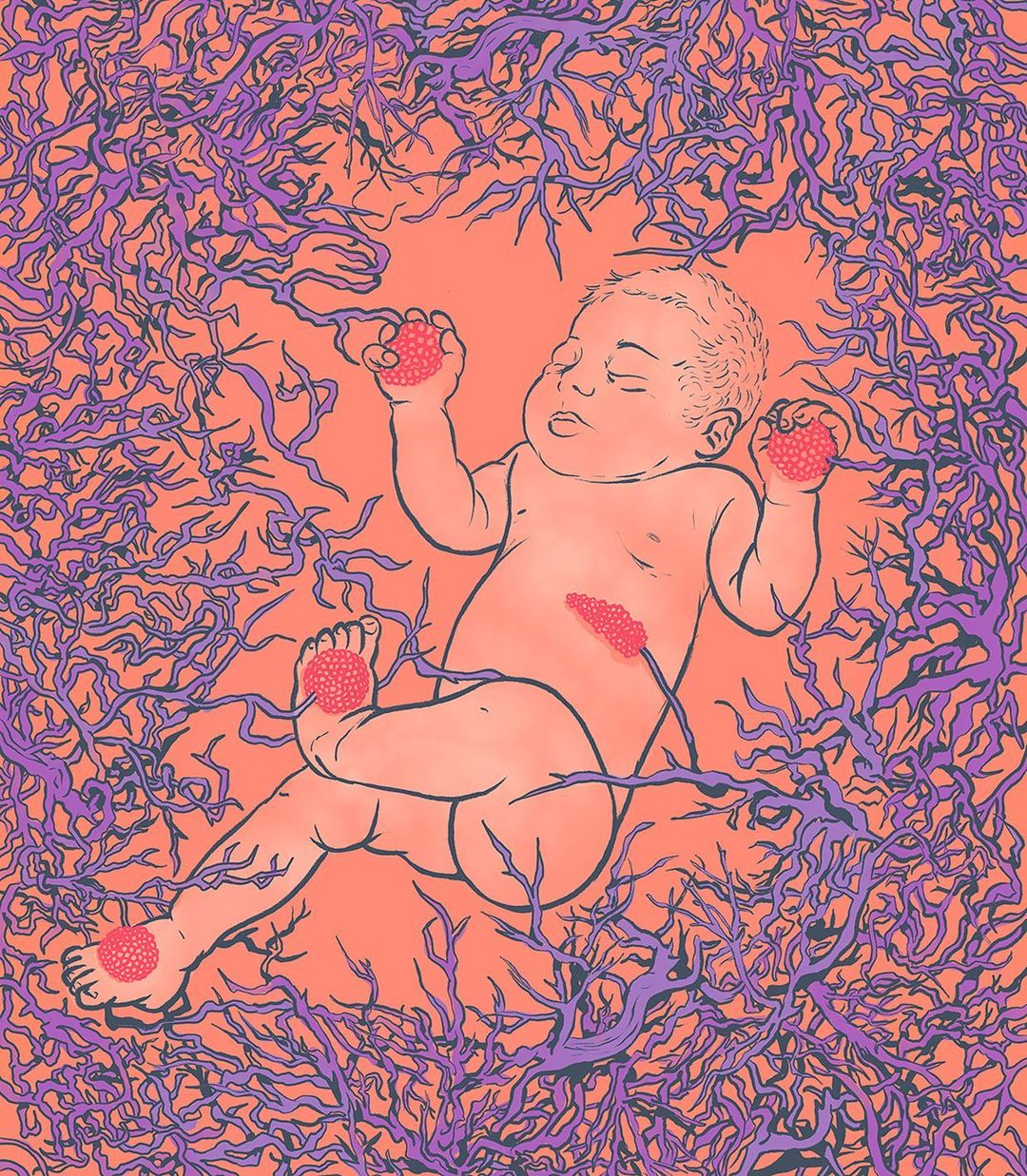
CHILDBIRTH PHOTOGRAPHY: “2019 Birth Becomes Her Image Contest Winners” and “2020 IAPBP Competition Winners”: I’ve never birthed a baby or witnessed a live birth, but whenever I see photographs of the process and its outcome, it makes me emotional with joy. Seriously, I tear up as I smile. I don’t know these people, and yet I’m awed and overwhelmed.

Photo by Belle Verdiglione
Photograph by Belle Verdiglione, 2019

Since Christmas is about the BIRTH of Jesus, I find it meaningful to spend some time with childbirth photographs to remind myself how God chose to come to us—through a woman’s birth canal. It’s a wonder that never ceases to amaze me. Although there are a few exceptions, it’s a picture of birth that artists interpreting the Nativity typically don’t want to touch (in part because women’s bodies are still largely taboo, in part because the Catholic Church teaches the birth was quick, painless, and bloodless), and so in the artistic canon, we get mostly clean, calm images of postpartum bliss, not the laborious and messy before. But isn’t that, too, part of the miracle and the glory of Christmas?

The boldface links above are to past Birth Becomes Her and International Association of Professional Birth Photographers competitions. If you have any other recommended compilation sources or favorite childbirth photographers, I’d love to know!

+++

SONGS:

>> “Love Came Down” by Joanna Forbes L’Estrange: For her 2024 album Winter Light, the British choral composer Joanna Forbes L’Estrange wrote a new setting of this beloved Christmas poem by Christina Rossetti.

>> “Yeshu Thungea Ningla” (On the Day Jesus Was Born) by James Lhomi: Released by Lareso Music, this song was written by James Lhomi, a significant Lhomi Christian musician in Nepal. The Lhomi are a Tibetan people living in India, China, and Nepal. Lhomi is also the name of their language. The song opens, “Let us a sing a sweet song on the day of Christ’s birth, let us rejoice with a joyful heart, for Emmanuel has been born unto us.” [HT: Global Christian Worship]

>> “What a Day It Is” by Evan Thomas Way: Singer-songwriter Evan Thomas Way, cofounder (with Josh White) of the Deeper Well record label, released this song on his 2014 debut album, Only Light. At the time, he was the worship pastor at Door of Hope Church in Portland, Oregon; now he’s an executive pastor there.

>> “Talj, Talj” (Snow, Snow) by Fairuz: The Lebanese singer Fairuz (فيروز‎‎,) is one of the most celebrated singers in the Arab world. Born to Christian Maronite and Syriac Orthodox parents, she is now a member of the Greek Orthodox Church. She popularized the Arabic Christmas carol “Talj, Talj” on her 1977 album Christmas Hymns, which you can watch her perform on a television special in the video below (I can’t find the year or name of the show or broadcaster). The lyrics paint a wintry scene of snow falling and hearts flowering, for “there is a baby awake in the cave, and his sweet eyes are full of love.” [HT: Global Christian Worship]

“Oh My Goodness! Noël Live” by MMK: French pop versions of 10 Christmas classics

MMK is an alternative folk band from France consisting of Noémie Kessler (lead vocals), Sophie Chaussier, Antoine Garnier, Jérémy Haessig, Cédric Kessler, and Jonathan Lubrez. On November 23, 2016, they released the album Oh My Goodness! Noël Live, comprising pop versions of ten classic Christmas songs, all but one of them in French. All ten performances are available on YouTube; I’ve listed them below in the order they appear on the LP, and have also compiled them into a YouTube playlist, but for audio only, you can listen on Spotify. My favorites are #2, #3, and #7.

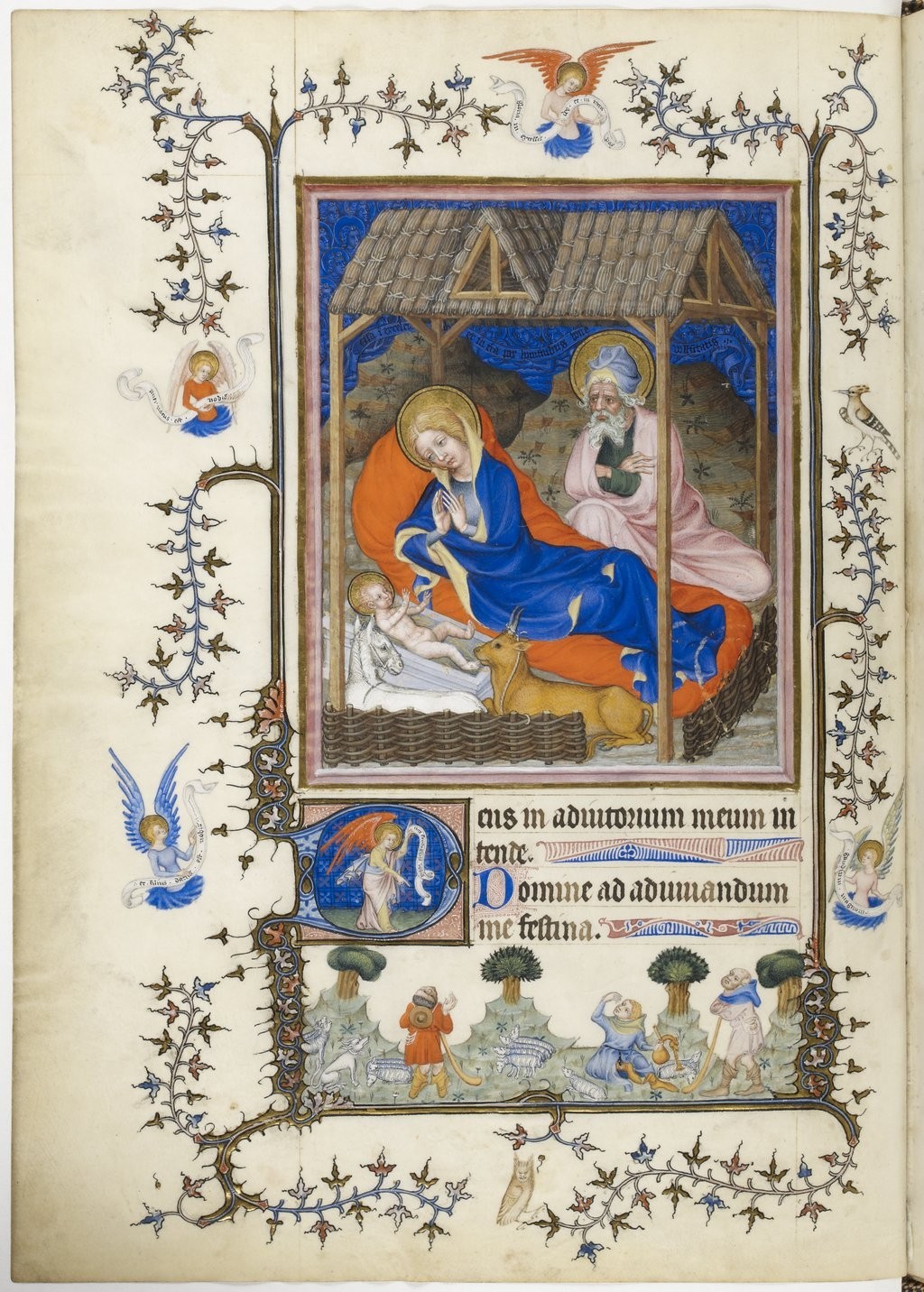
Nativity (French MS)
The Nativity, from the Très Belles Heures de Notre-Dame du Duc de Berry, ca. 1380. Paris, Bibliothèque nationale, Ms. nouv. acq. lat. 3093, fol. 41v.

1. “Ô Peuple Fidèle” (O Come, All Ye Faithful): The origin of this carol is unknown, but it first appeared in England, with Latin lyrics, in the eighteenth century. Some scholars attribute it to Cistercian monks of either Germany, Portugal, or Spain.

2. “Vive le vent” (Long Live the Wind): This secular Christmas carol is sung to the same tune as “Jingle Bells,” but the words—written by Francis Blanche in 1948—are completely different. The song delights in wintry weather and hearth fires, evergreens and feasting.

Sur le long chemin
Tout blanc de neige blanche
Un vieux monsieur s’avance
Avec sa canne dans la main.
Et tout là-haut le vent
Qui siffle dans les branches
Lui souffle la romance
Qu’il chantait petit enfant, oh!

Refrain:
Vive le vent, vive le vent,
Vive le vent d’hiver,
Qui s’en va sifflant, soufflant
Dans les grands sapins verts, oh!
Vive le temps, vive le temps,
Vive le temps d’hiver,
Boules de neige et Jour de l’An
Et Bonne Année grand-mère!

Et le vieux monsieur
Descend vers le village,
C’est l’heure où tout est sage
Et l’ombre danse au coin du feu.
Mais dans chaque maison
Il flotte un air de fête
Partout la table est prête
Et l’on entend la même chanson, oh!

Chevalet:
Vive le vent, vive le vent
Vive le vent d’hiver
Qui rapporte aux vieux enfants
Leurs souvenirs d’hier, oh!
Along the long road
All white from the white snow
Walks an old man
With his cane in his hand.
And the wind way up there
Which whistles in the branches
Blows the romantic tune on him
That he sang as a young child, oh!

Refrain:
Long live the wind, long live the wind,
Long live the winter wind,
Which goes whistling, blowing
Through the tall green Christmas trees, oh!
Long live the season, long live the season,
Long live the holiday season—
Snowballs and New Year’s Day
And happy New Year, Grandma!

And the old man
Goes down toward the village;
It’s the time when everyone is good
And the shadow dances near the fire.
But in each house
There floats a festive air;
Everywhere the table is set,
And you hear the same song, oh!

Bridge:
Long live the wind, long live the wind,
Long live the winter wind,
Which brings to old kids
Their memories of yesterday, oh!

Trans. David Issokson

3. “Les anges dans nos campagnes” (Angels We Have Heard on High): The English carol “Angels We Have Heard on High” is a paraphrase by the Anglo-Irish Catholic bishop James Chadwick of a carol that originally appeared in French in 1842.

4. “Douce nuit” (Silent Night): “Silent Night” was originally written in German in 1816 by the Austrian Catholic priest Joseph Mohr and was set to music by the schoolteacher and organist Franz Xaver Gruber in 1818.

5. “Aujourd’hui le roi des cieux” (Today the King of Heaven—i.e., The First Noel): This is the French version of “The First Noel,” an early modern carol of Cornish origin. The word “Noel,” used as a refrain, comes from the Old French “Nouel,” meaning Christmas.

6. “Minuit, Chrétiens,” aka “Cantique de Noël” (O Holy Night): The song that English speakers know as “O Holy Night” was originally written in French by the poet and wine merchant Placide Cappeau in 1847, with music by the opera composer Adolphe Adam. It’s surprising to me that such powerful Christian worship lyrics could be written by an avowed atheist, as Cappeau was! (A parish priest in Roquemaure had hired him because he was a great writer—the priest wanted a new poem for Midnight Mass—and Cappeau took the commission presumably because he needed the money.)

7. “D’où viens tu, bergère?” (Where Are You Coming From, Shepherdess?): This French Canadian ballad is from the sixteenth century. It’s a dialogue between a shepherd girl who has just seen the Christ child and a curious interlocutor, who prompts her to describe everything she witnessed. MMK sings three of the seven traditional verses.

D’où viens-tu bergère, d’ou viens-tu?
—Je viens de l’étable de m’y promener,
J’ai vu un miracle ce soir arriver.

Qu’as-tu vu bergère, Qu’as-tu vu?
—J’ai vu dans la crèche un petit enfant
Sur la paille fraîche mis bien tendrement.

Rien de plus bergère, Rien de plus?
—Des anges de gloire descendus du ciel
Chantaient les louanges du Père éternel.

ENGLISH TRANSLATION:

Where are you coming from, shepherdess? Where are you coming from?
—I’m coming from the stable, where I was walking.
I saw a miracle occur this evening.

What did you see, shepherdess? What did you see?
—I saw in the manger a little child
Tenderly laid on the cool straw.

Nothing more, shepherdess, nothing more?
—The angels of glory came down from the sky,
Singing the praises of the eternal Father.

8. “Entre le bœuf et l’âne gris” (Between the Ox and the Gray Donkey): With its text originating in the thirteenth century, this is the oldest French carol that’s still sung today. It describes how Jesus sleeps amid domestic animals and shepherds, in his mother’s arms. The refrain translates to “A thousand divine angels, a thousand seraphim, fly around this great God of love.” I recognize the striking minor-key tune, written in the nineteenth century by François-Auguste Gevaert, from Bifrost Arts’ “Joy, Joy!”

9. “Oh viens bientôt Emmanuel” (O Come, O Come, Emmanuel): Translated from the Latin, this hymn of longing has graced the lips of Christians since the eighth or ninth century.

10. “Go Tell It on the Mountain”: Coming from the Black church tradition in the United States, this is the only song on the live album that MMK sings in a language other than French. Such exuberance!

“Those Who Saw the Star” by Julia Esquivel (poem)

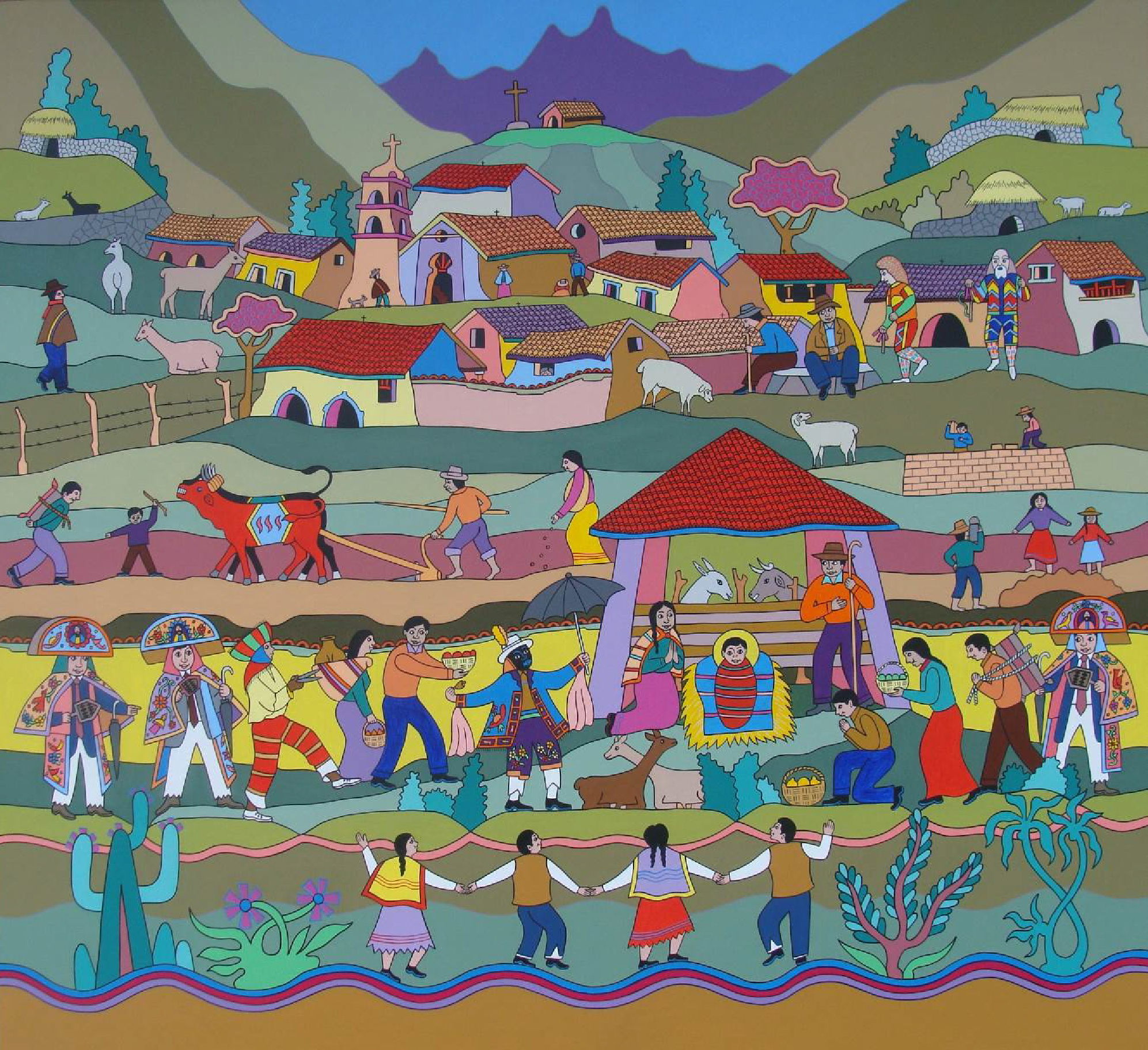
Sanchez Cerron, Josue_Christmas in the Andes
Josué Sánchez Cerrón (Peruvian, 1945–), Navidad en los Andes (Christmas in the Andes)

The Word, for our sake, became poverty clothed as the poor who live off the refuse heap. 

The Word, for our sake, became agony in the shrunken breast of the woman grown old by the absence of her murdered husband.

The Word, for our sake, became a sob a thousand times stifled in the immovable mouth of the child who died from hunger.

The Word, for our sake, became rebellion before the lifeless body of Gaspar Sanchez Toma, “scientifically” murdered.

The Word, for our sake, became danger in the anguish of the mother who worries about her son growing into manhood.

The Word became an ever-present absence among the 70,000 families torn apart by death.

The Word, for our sake, became an inexorable accusation arising from the blazing craters which swallowed up their tortured bodies.

The word-knife cut us deeply in that place of shame: the painful reality of the poor.

The Word blew its spirit over the dried bones of the Mummified-Churches, guardians of silence.

The Word, that early-morning-bugle, awoke us from the lethargy which had robbed us of our Hope.

The Word became a path in the jungle, a decision on the farm, love in women, unity among workers,
and a Star for those few who can inspire dreams.

The Word became Light,
The Word became History,
The Word became Conflict,
The Word became Indomitable Spirit,
and sowed its seeds
upon the mountain,
near the river, and in the valley,

and those-of-good-will heard the angels sing.

Tired knees were strengthened,
trembling hands were stilled,
and the people who wandered in darkness
saw the light!

Then,

The Word became flesh in a nation-pregnant-with-freedom,
The Spirit strengthened the arms which forged Hope,
The Verb became flesh in the people who perceived a new day, and for our sake became life in Mary and Joseph who embrace Righteousness and bury the people’s ignominy.

The Word became the seed-of-justice
and we conceived peace.

The Word cried out to the world the truth about the struggle against the anti-man.

The Word made justice to rain
and peace came forth from the furrows in the land.

And we saw its glory in the eyes of the poor converted into true men and women.

Grace and Truth celebrated together
in the laughter of the children rescued by life.

And those-who-saw-the-star
opened up for us
the path we now follow.

Meanwhile,
Herod, slowly dying,
is eaten by worms.

The Word became judgment
and the anti-men ground their teeth.

The Word became forgiveness
and human hearts
learned to beat with love.

And the Word shall continue sowing futures
in the furrows of Hope.

And on the horizon,
the Word made light
invited us to relive a thousand dawns
toward the Kingdom that comes.

The Word will gather us round her table.
And they will come from the East and the West,
from the North and the South,
and dressed in incorruption
we-will-finally-be-happy.

Translated from the Spanish by Maria Elena Acevedo, René Calderón, Maria Elena Caracheo, Sister Caridad Inda, and Philip Wheaton in the bilingual Threatened with Resurrection / Amenazado de Resurreción: Prayers and Poems from an Exiled Guatemalan (The Brethren Press, 1982).

Julia Esquivel (1930–2019) was a Guatemalan poet, theologian, lay preacher, biblical studies teacher, social worker, and human rights activist. In 1953 she moved to Costa Rica to study at the Seminario Biblico Latinoamericano, returning to Guatemala to work at the Instituto Evangélico América Latina. After speaking out against the massacres, assassinations, torture, and forced disappearances being carried out by the Guatemalan military and police, she received death threats and survived two kidnapping attempts and thus went into forced exile in 1980, finding refuge in the monastic Communauté de Grandchamp in Switzerland. She studied at the Ecumenical Institute at Château de Bossey, run by the World Council of Churches. She returned to her home country in 1996 after the signing of the Peace Accords, helping document over two hundred thousand civilian deaths and disappearances for the Recovery of Historical Memory Project and working with women traumatized by violence. She is the author of several books, including the poetry collections Threatened with Resurrection (1982) and The Certainty of Spring (1993).

Roundup: Theological spinoff of “The Twelve Days of Christmas,” Advent art with Elissa Yukiko Weichbrodt, and four new Christmas song recordings

POEM SERIES: “Twelve Days of Advent” by Kate Bluett: This year on her blog, writer Kate Bluett [previously] is publishing a series of original metrical verses based loosely on the cumulative song “The Twelve Days of Christmas.” She calls it the Twelve Days of Advent and through it explores the theology of Christ’s coming. I love this creative, sacred spin on the popular seasonal ditty! Here’s where the series currently stands (my favorite poems are in boldface):

  1. “A Partridge in a Pear Tree”: Bluett imagines, in the tree of the knowledge of good and evil, a bird singing (representing, as I take it, God’s word), but Adam and Eve heed not his song, and, taking the tree’s forbidden fruit, find themselves exiled. The bird weeps for the alienation of his two friends, and wings his way east of Eden, into the home of a young maiden, a daughter of Eve, who receives him, shelters him, an act that leads to restoration. Bluett uses some of the language of late medieval English folksong, such as “with a low, low, my love, my love” and “welaway.”
  2. “Two Turtledoves”
  3. “Three French Hens”
  4. “Four Calling Birds”: This poem is brilliant. In it the four matriarchs in Jesus’s genealogy speak to Mary, tenderly calling her “Child” and rejoicing in her “bringing forth our life’s tomorrow.” Tamar, Rahab, Ruth, Bathsheba—they’ve long awaited redemption, and now they’re at its threshold. Mary’s yes to God’s call “set[s] [their] dry bones stirring, thrumming / with a hope [they’d] hardly dared.” They inform her that her vocation will involve great suffering (as we know, she’ll experience the brutal death of her son)—but her willingness to give up her son to the cross, to endure that rupture, will mean new life for the world.
  5. “Five Gold Rings”
  6. “Six Geese a-Laying”: Picking up the Isaianic language of the wilderness being made glad, the poetic speaker sings an eschatological vision of flocks coming home to “the orchard of the rood” (rood = cross) to lay and hatch eggs in nests once empty, now brimming with life.
  7. “Seven Swans a-Swimming”

I eagerly await the remaining five poems!

Update, 12/23/25:

    +++

    SUBSTACK SERIES: “Art + Advent 2025” by Elissa Yukiko Weichbrodt: The art historian Elissa Yukiko Weichbrodt [previously], author of Redeeming Vision and the Loving Look Substack, is one of my favorite writers. This Advent she is writing a weekly series of art reflections centered on the themes of hope, peace, joy, and love.

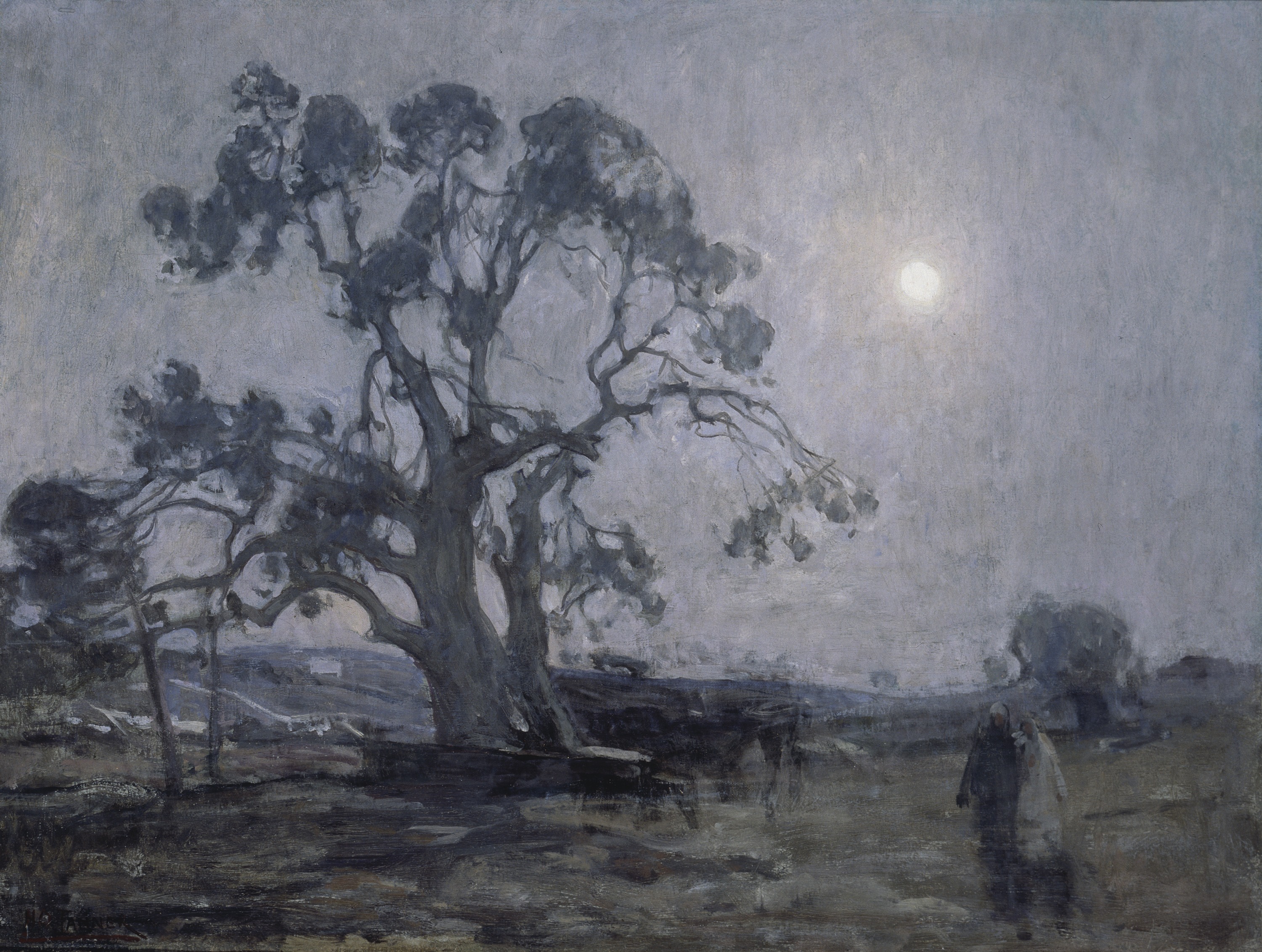
    >> “Week 1 // Hope: Abraham’s Oak and Sarah’s Laughter”: Looking at Henry Ossawa Tanner’s painting Abraham’s Oak, Weichbrodt writes about shadowy promise. She also considers, with reference to an early Byzantine mosaic of the Hospitality of Abraham, how to hope again after being wounded, as Sarah did, is a vulnerable thing. “As Advent begins, I find myself peering into a Tanner-like mist, seeing the dim outline of longed-for goodness taking shape in the distance. Sometimes I’m full of hope, but I’m also, like Sarah, sometimes full of armored laughter.”

    Tanner, Henry Ossawa_Abraham's Oak
    Henry Ossawa Tanner (American, 1859–1937), Abraham’s Oak, 1905. Oil on canvas, 21 3/8 × 28 5/8 in. (54.4 × 72.8 cm). Smithsonian American Art Museum, Washington, DC.

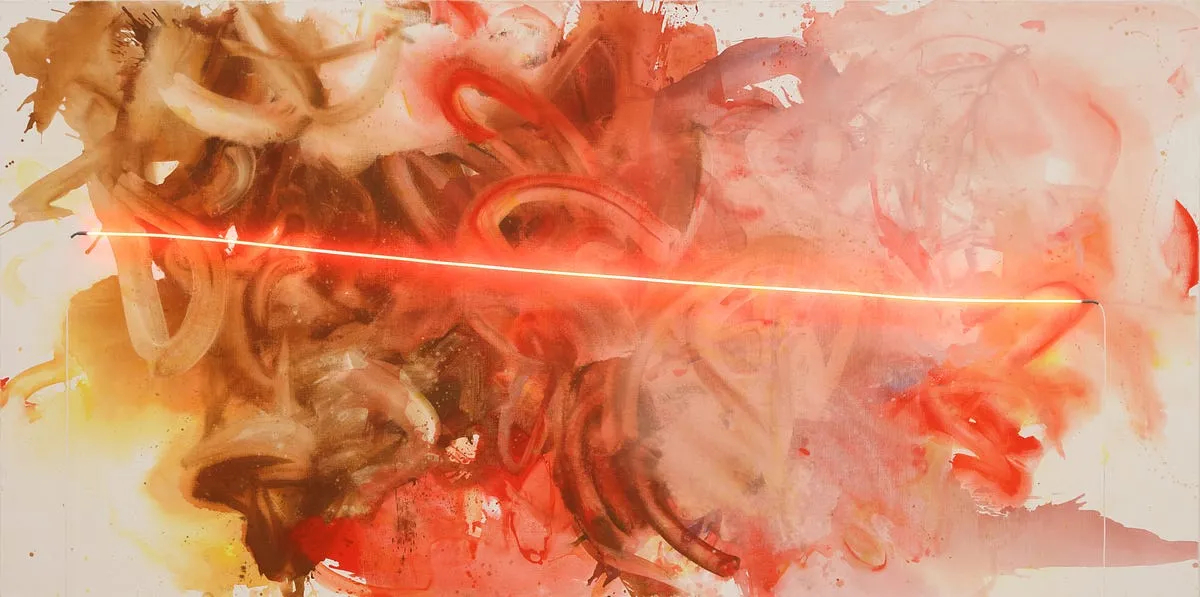
    >> “Week 2 // Peace: A Stitch Pulling Tight”: “How do we do repair work in a fraying world with our own, fraying selves? What thread can stitch together all these gaping wounds?” Weichbrodt asks. She looks at Mary Weatherford’s monumental painting Gloria (new to me!), finding in the hot coral neon light blazing across the canvas resonance with Renaissance paintings of the Annunciation, which portray the Light of the World as the stitch that mends the tear between God and humanity.

    Weatherford, Mary_Gloria
    Mary Weatherford (American, 1963–), Gloria, 2018. Flashe paint and neon on linen, 117 × 234 in. (297.2 × 594.4 cm). High Museum of Art, Atlanta.

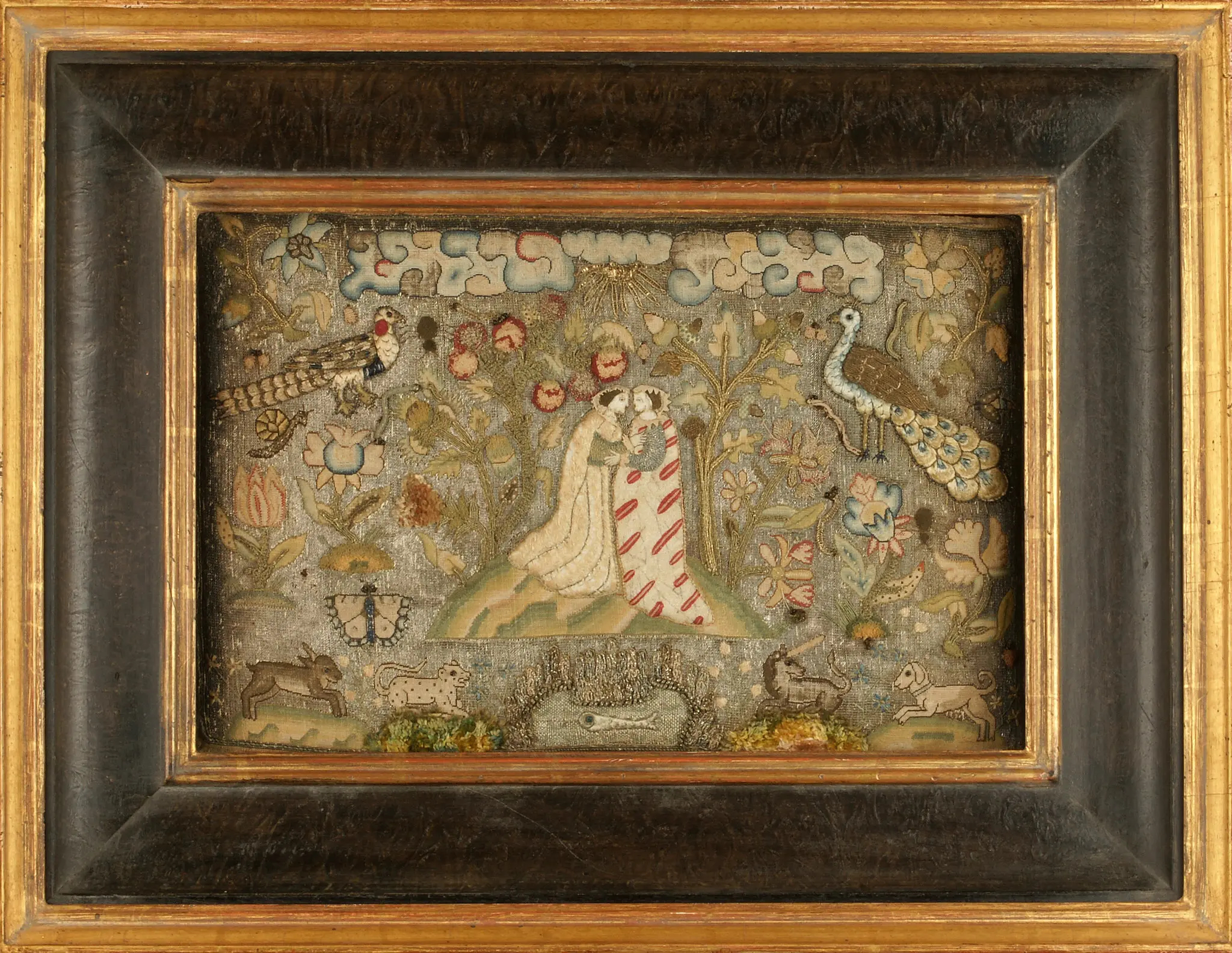
    >> “Week 3 // Joy: Far as the Curse Is Found”: In this post, Weichbrodt explores nine Visitation paintings and one extraordinary embroidery. “Every time I see [a Visitation artwork],” Weichbrodt writes, “I encounter joy. It’s not that Mary and Elizabeth are always smiling. Often, their expressions are quite serious. But joy—deep, sustained, sustaining joy—circulates between them like an electrical current.” Justice, threshold, and fecundity are among the supplementary themes touched on.

    Visitation embroidery
    The Visitation, England, first half of 17th century. Embroidery, 44.1 × 57 cm (framed). Ashmolean Museum, University of Oxford.

    Weichbrodt’s final Advent 2025 post, on love, will be published this Saturday. Weichbrodt’s final Advent 2025 post, on love, will be published this Saturday. (Update, 12/20/25: Week 4’s post, “Love In Between,” is now published. It centers on Vincent van Gogh’s painting Almond Blossoms, a gift for his newborn nephew, but also spends time with a Nativity mosaic by Pietro Cavallini and a Nativity painting by Gerard David.)

    +++

    SONGS:

    Here are four newly released Christmas songs of note: two originals, one lyrical adaptation of a classic, and a new arrangement.

    >> “War on Christmas” by Seryn: Seryn’s new album is titled War on Christmas. Here’s the title track:

    The refrain is:

    There is a war on Christmas
    But it’s not the one you think
    It’s in the news, it’s out of mind
    It happens overseas
    Cause as we sing the hymns and songs
    With families by our sides
    There is a war on Christmas
    Someone’s fighting to survive

    “War on Christmas” is a phrase some Christian conservatives in the US use to express their feeling of having their faith traditions attacked by the sinister forces of pluralism when people or signage greet them with a generic “Happy Holidays” instead of “Merry Christmas.” I roll my eyes big-time when I hear people complain about this, because it’s ridiculous for any American to assert that they are impeded from or ostracized for celebrating Christmas in this country, or to take offense that a stranger does not automatically assume their particular religious affiliation.

    Seryn’s song affirms that yes, there is a war on Christmas—only it’s a war not against personal religious freedoms in America but against peace, love, and the other values Christ came to teach and embody. When humans wage literal wars with literal weapons, killing and maiming each other and inducing mass terror—that’s an assault against Christ’s mass, with its message of welcome and reconciliation. So, too, when we perpetuate hate, whether on personal, national, or global scales. As another Christmas song puts it, “Hate is strong and mocks the song of ‘Peace on earth, goodwill to men.’”

    >> “O New Commingling! O Strange Conjunction!” by the Anachronists: The lyrics to this new song by the Anachronists [previously]—Corey Janz, Andrés Pérez González, and Jonathan Lipps—are a paraphrase from the sermon “On the Theophany, or Birthday of Christ” by Gregory of Nazianzus (ca. 329–390), one of the most influential and poetic theologians of the early church. Gregory delivered the sermon, labeled “Oration 38” in the Nicene and Post-Nicene Fathers series, at Christmastime in 380 in Constantinople, where he served as bishop. In section 13, the Anachronists’ source for the song, he expresses awe at the beautiful mystery of the Incarnation. Below is an excerpt from the public-domain NPNF translation.

    The Word of God Himself—Who is before all worlds, the Invisible, the Incomprehensible, the Bodiless, Beginning of Beginning, the Light of Light, the Source of Life and Immortality, the Image of the Archetypal Beauty, the immovable Seal, the unchangeable Image, the Father’s Definition and Word—came to His own Image, and took on Him flesh for the sake of our flesh, and mingled Himself with an intelligent soul for my soul’s sake, purifying like by like; and in all points except sin was made man. . . . O new commingling; O strange conjunction; the Self-Existent comes into being, the Uncreate is created, That which cannot be contained is contained. . . . He Who gives riches becomes poor, for He assumes the poverty of my flesh, that I may assume the richness of His Godhead. He that is full empties Himself, for He empties Himself of His glory for a short while, that I may have a share in His fullness. What is the riches of His goodness? What is this mystery that is around me? I had a share in the image; I did not keep it; He partakes of my flesh that He may both save the image and make the flesh immortal. He communicates a second Communion far more marvelous than the first.

    (Related post: Andy Bast sets to music a Nativity hymn by St. Ephrem)

    >> “Away in a Manger (Then to Calvary)” by Sarah Sparks: Singer-songwriter Sarah Sparks [previously] released a new EP, Christmas Hymns, last month, comprising five classic carols, including one with revised lyrics that further draw out the significance of the Incarnation. I’m a big fan of Sparks’s voice and her no-frills acoustic style.

    Away in the manger
    No crib for a bed
    The great King of Heaven
    Does lay down his head
    The stars he created
    Look down where he lay
    The little Lord Jesus
    Asleep on the hay

    And there in the manger
    The Maker of earth
    In riches and glory?
    No, born in the dirt
    With oxen and cattle
    With shepherds and sheep
    No stranger to weakness
    He loves even me

    And there in the manger
    Is our Servant-King
    He sits with the lowly
    He washes their feet
    Away in the manger
    Then to Calvary
    His birth, life, and death
    And his raising for me

    And there in the manger
    Is my greatest friend
    His mercy, his patience
    His grace know no end
    Be near me, Lord Jesus
    For all of my days
    In life and in death
    Till we meet face to face

    >> “Angels We Have Heard on High” by the Petersens: Last Friday the Petersens [previously] released a music video—shot at Wonderland Tree Farm in Pea Ridge, Arkansas—debuting their new bluegrass arrangement of one of my favorite Christmas carols. Banjo, mandolin, fiddle, acoustic guitar, dobro, upright bass—I love the instrumentation of the bluegrass genre and what it adds here, and the Petersens are consummate performers.