Timber Timbre is the moniker of the Canadian folk blues singer-songwriter Taylor Kirk. The opening track on his 2009 self-titled album, “Demon Host,” establishes the album’s haunted tone. The song is mournful and mystical, and it references God, religion, sin, death, and repentance.
Death, she must have been your will A bone beneath the reaper’s veil With your voice my belly sunk And I began to feel so drunk
Candle, candle on my clock Oh Lord, I must have heard you knock Me out of bed as the flames licked my head And my lungs filled up black in their tiny little shack It was real and I repent All those messages you sent Clear as day, but in the night Oh, I couldn’t get it right
Here is a church and here is a steeple Open the doors, there are the people And all their little hearts at ease For another week’s disease
And eagle, eagle talons scream I never once left in between I was on the fence and I never wanted your two cents Down my throat, into the pit, with my head upon the spit Oh Reverend, please, can I chew your ear? I’ve become what I most fear And I know there’s no such thing as ghosts But I have seen the demon host
There are several different ways to interpret this song, but at its core, it seems to me it’s about an agnostic facing death. In the first four lines he hears death calling to him—personified, atypically, as a woman. The “your,” I think, is God, whom the speaker names a few lines later. (Alternatively, “death” could be a noun of direct address and “your” its pronoun, in which case “she” may refer to a female friend who has died, inciting the crisis that follows.) Unprepared for this sudden confrontation, the speaker feels woozy with shock.
Candles and clocks serve as memento mori, reminders of death. As the wax burns down and time ticks on, he’s jolted out of a nightmare about the flames of judgment. Awake now to the reality of God’s holiness, he repents, realizing that God has been pursuing him all along.
He enters a church, but he’s turned off by the apparent easiness with which the people greet “another week’s disease.” I’m not sure what that means—the horrors and suffering of the world? personal sin? If these Christians struggle with either, they mask it. He is not able to feel the same sense of peace and victory they do.
“Eagle, eagle talons scream” is an elusive yet evocative line that may refer to the feeling of being pierced or gutted, perhaps having one’s sin revealed by the Holy Spirit. Or maybe it expresses a more indefinable sense of anxiety and distress.
The speaker admits he had always been perfectly comfortable sitting on the fence, “in between” faith and no-faith, not committing to this or that system of belief and practice. He never wanted God to intervene with his “two cents” on what is real and how to live. He resents the church’s teachings on eternal punishment and hellfire. And yet he’s ambivalent about Christianity. He cherishes his indecision, but he’s also restless. He seeks out the pastor to talk with.
“I’ve become what I most fear,” he confesses. And what is that? Being sold out to Jesus? Engulfing wickedness?
Even the title of the song, taken from the last line, is ambiguous, as the word “host” has multiple meanings. The “demon host” could refer to an army of demons, to a body that’s possessed by a demon, or to a parody of the Eucharist (in Christian liturgies, the consecrated bread, the body of Christ, is called the host). It seems the speaker has either experienced a stark vision of evil, or some evil has taken hold of him. Or maybe it’s death that he’s characterizing as demonic, but if so, it’s manifesting supernaturally, as he calls it ghostly.
In the music video there’s a menacing hooded figure that stands outside the shed in which Kirk performs, looking very much like the Grim Reaper. This entity listens, then gradually approaches, then even holds the microphone for Kirk, but his face is always in shadow. In some shots we see a second figure, dressed in the same garb, holding a guitar.
Lyrically, the song is unresolved, and musically, the last minute is unsettling.
Is this a song about damnation? Or dying to self, crucifying the ego, part of the conversion process? What about addiction? Or surviving a near-death experience and living in light of that? Whatever the particulars, the song is in the voice of someone who is shaken from his equivocation into seriously considering faith; someone who wrestles with God, mortality, and evil.
I’m eager to hear what you make of it or what stands out to you.
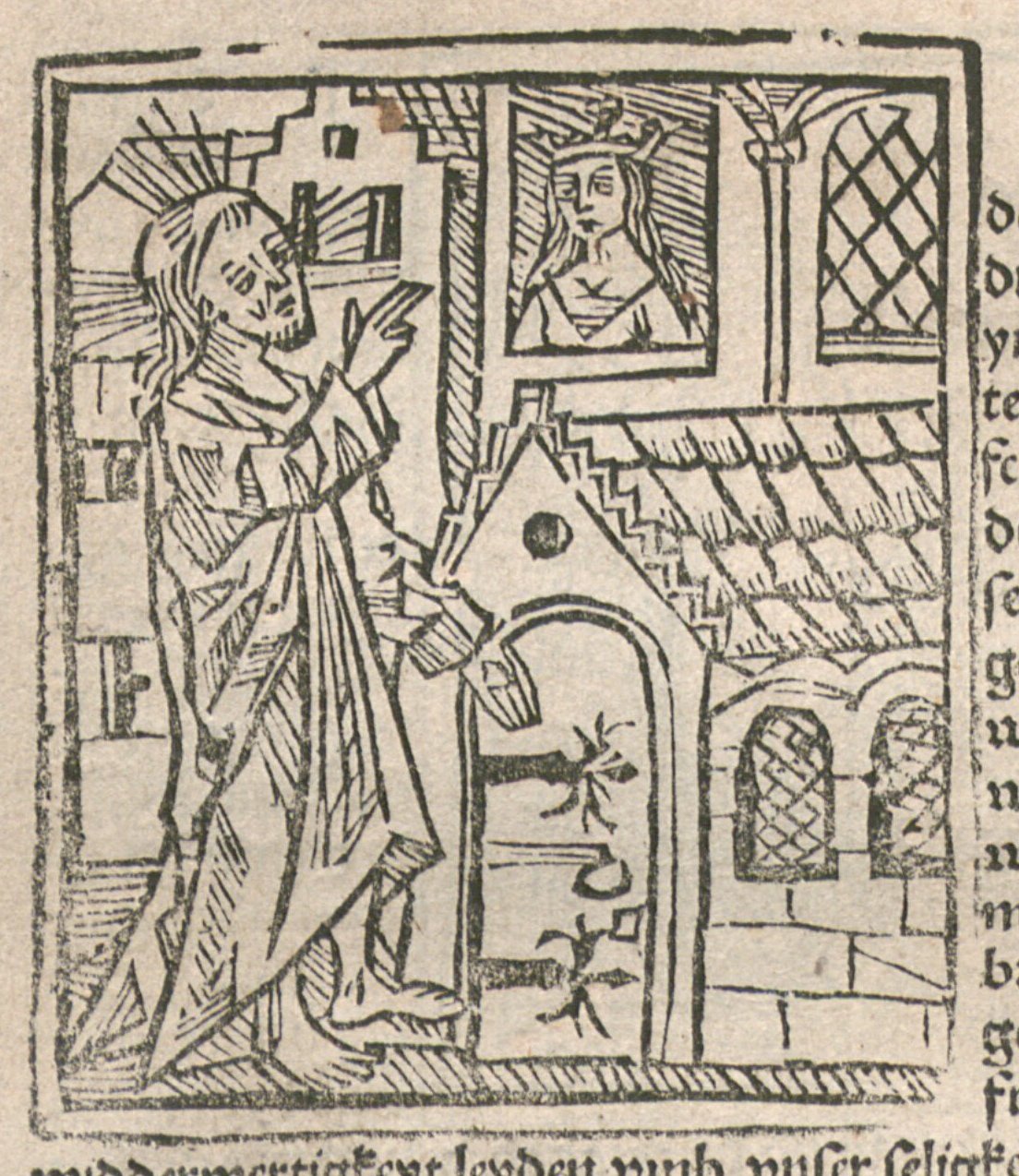
“Knocking on the Door,” woodcut from Von der ynnigen selen wy sy gott casteyet vnnd im beheglich mach, aka Christus und die minnende Seele (Christ and the Loving Soul), published in Erfurt, Germany, ca. 1500. Museum Otto Schäfer, Schweinfurt, Germany, OS 231, fol. 5v. Digitized by Bayerische Staatsbibliothek.
“Sonnet XVIII” by Lope de Vega
¿Qué tengo yo que mi amistad procuras?
¿Qué interés se te sigue, Jesús mío,
que a mi puerta cubierto de rocío
pasas las noches del invierno escuras?

¡Oh, cuánto fueron mis entrañas duras
pues no te abrí! ¡Qué extraño desvarío
si de mi ingratitud el hielo frío
secó las llagas de tus plantas puras!

¡Cuántas veces el ángel me decía:
«¡Alma, asómate agora a la ventana,
verás con cuánto amor llamar porfía!»
¡Y cuántas, hermosura soberana,
«Mañana le abriremos» – respondía,
para lo mismo responder mañana!
From Rimas sacras (Sacred Rhymes) by Lope de Vega (Madrid, 1614). Public domain.
Lope de Vega (1562–1635) was as astoundingly prolific Spanish playwright, poet, and novelist who was a key figure in the Spanish Golden Age of Baroque literature. His 1,800-some plays encompass the categories of religious, mythological, historical, pastoral, chivalric, and comedies of manners. A known philanderer, Lope had multiple love affairs throughout his life; besides the four children he had from his two wives, he also had at least ten more by his mistresses. The death of his son in 1612, and then of his lover the following year, threw him into an existential crisis, and he turned toward religion, even joining the Catholic priesthood in 1614—but that path didn’t lead to the personal reform he had thought he wanted, as he continued his womanizing. He died of scarlet fever at age seventy-two.
Translated by Henry Wadsworth Longfellow
Lord, what am I, that with unceasing care
     Thou didst seek after me, that thou didst wait,
     Wet with unhealthy dews, before my gate,
And pass the gloomy nights of winter there?

Oh, strange delusion, that I did not greet
     Thy blest approach! and oh, to heaven how lost,
     If my ingratitude’s unkindly frost
Has chilled the bleeding wounds upon thy feet!

How oft my guardian angel gently cried,
     “Soul, from thy casement look, and thou shalt see
     How he persists to knock and wait for thee!”
          And oh, how often to that voice of sorrow,
“Tomorrow we will open,” I replied,
          And when the morrow came I answered still, “Tomorrow.”
Henry Wadsworth Longfellow (1807–1882) was an American poet, educator, and linguist, best known for “Paul Revere’s Ride” and “The Song of Hiawatha.” From 1829 to 1854, he was a professor of modern languages, first at Bowdoin College, his alma mater, and then at Harvard University. Though rooted in New England, he traveled extensively in Europe and was proficient in—besides his native English—Spanish, Portuguese, French, German, Italian, Danish, Swedish, Finnish, and Polish, as well as Latin and Greek. He frequently translated poetry from those languages into English, his most influential translation being of Dante’s Divine Comedy, which brought that work to a wider English-speaking audience.
Translated by Geoffrey Hill
Based on the prose translation by J. M. Cohen in The Penguin Book of Spanish Verse, 3rd ed. (Penguin, 1988)
What is there in my heart that you should sue
so fiercely for its love? What kind of care
brings you as though a stranger to my door
through the long night and in the icy dew

seeking the heart that will not harbour you,
that keeps itself religiously secure?
At this dark solstice filled with frost and fire
your passion’s ancient wounds must bleed anew.

So many nights the angel of my house
has fed such urgent comfort through a dream,
whispered ‘your lord is coming, he is close’
that I have drowsed half-faithful for a time
bathed in pure tones of promise and remorse:
‘tomorrow I shall wake to welcome him.’
Sir Geoffrey Hill (1932–2016), a Fellow of the Royal Society of Literature, was an English poet and literary critic who is recognized as a principal contributor to those fields in the twentieth and twenty-first centuries. He was a Christian. From 1988 to 2006, he lived in the United States, where he taught literature and religion at Boston University, but throughout his career he also had professorships at Oxford, Leeds, and Cambridge. “Hill’s poetry is known for its barbed humor, personal intensity, and deep interests in culture, history, and religion,” Poets.org states, and for being dense and intellectually rigorous.
The eighteenth sonnet from Lope de Vega’s Rimas sacras—reproduced above in its original Spanish and in two English translations—portrays Jesus as a lover, knocking tenaciously to be let into his beloved’s heart. He stands outside at night in the cold, a coldness matched by the beloved’s indifference, for she says, “I’ll open tomorrow,” but then keeps putting off that promise to the next day and the next . . .
“The poet marvels at the persistence of divine love in the face of human ingratitude,” writes Colin Thompson in his journal article “‘The Resonances of Words’: Lope de Vega and Geoffrey Hill.” Lope mines the paradox of fiery passion and icy rejection, Thompson says, “pressing . . . the traditional language of Petrarchan and courtly love into the service of spiritual love.”
Lope derived the conceit of “¿Qué tengo yo?” from two biblical passages: one in the Old Testament and one in the New. Part of an ancient Hebrew erotic love poem, the first is Song of Solomon 5:2–6, in which a woman narrates how, lying in bed one night, she hears her lover’s call outside, but she waits too long to answer, for when she rises to open the door, he has gone:
I was sleeping, but my heart was awake. The sound of my beloved knocking! “Open to me, my sister, my love, my dove, my perfect one, for my head is wet with dew, my locks with the drops of the night.”
I had put off my garment; how could I put it on again? I had bathed my feet; how could I soil them? My beloved thrust his hand into the opening, and my inmost being yearned for him.
I arose to open to my beloved, and my hands dripped with myrrh, my fingers with liquid myrrh, upon the handles of the bolt. I opened to my beloved, but my beloved had turned away and was gone. My soul failed me when he spoke. I sought him but did not find him; I called him, but he gave no answer.
Chapter 3, verse 20 of Revelation, the final book of the Bible, implicitly references this passage. Christ exclaims to the church in Laodicea, “Listen! I am standing at the door, knocking; if you hear my voice and open the door, I will come in and eat with you, and you with me.” The extrapolation of the Song of Solomon romance to the relationship between Christ and the church, allegorized as his bride, would become common in early Christian biblical interpretation.
In his poem, Lope was also likely drawing on Augustine, a fourth- and fifth-century church father he is known to have read. In a famous passage from book 8 of his Confessions, Augustine describes how he initially responded to Christ’s wooing with indecisiveness:
I had no answer to make to you when you called me: Awake, thou that sleepest, and arise from the dead, and Christ shall give thee light. And, while you showed me, wherever I looked, that what you said was true, I, convinced by the truth, could still find nothing to say except lazy words spoken half asleep: “A minute,” “just a minute,” “just a little time longer.” But there was no limit to the minutes, and the little time longer went a long way. (trans. Rex Warner)
Augustine’s conversion to Christianity was a slow one because of his slothful will. Many modern readers find that they relate to him in this—procrastinating making a faith decision because of force of habit and resistance to change. We worry what a commitment to Christ would demand of us, and it’s easier to just continue living for ourselves. So we settle for the status quo. Geoffrey Hill, in his translation of Lope, describes “the heart . . . / that keeps itself religiously secure,” punning on “religiously,” which in this case means “fervently, zealously”: the heart that, unwilling to be vulnerable, not daring to love and be loved, keeps itself closed to Christ.
Besides these biblical and patristic influences on Lope’s poem, Rafael Lapesa, in his 1977 book Poetas y prosistas de ayer y de hoy (Poets and Prose Writers of Yesterday and Today), identifies another: De los nombres de Cristo (The Names of Christ) by the Spanish Augustinian friar Luis de León, a masterpiece of Renaissance philosophical and theological thought first published in 1583. The “Pastor” (Shepherd) section in book 1 reads in part:
Madruga, digo antes que amanezca se levanta; o, por decir verdad, no duerme ni reposa, sino, asido siempre al aldaba de nuestro corazón, de contino y a todas horas le hiere y le dice, como en los Cantares se escribe: Abreme, hermana mia, Amiga mia, Esposa mia, abreme; que la cabeza traigo llena de rocio, y las guedejas de mis cabellos llenas de gotas de la noche.
He [Christ] rises early, I say; before dawn he rises. Or, to tell the truth, he neither sleeps nor rests but, always clinging to the knocker of our heart, continually and at all hours strikes it and says to it, as it is written in the Song of Songs: “Open to me, my sister, my love, my bride, open to me; for my head is covered with dew, and the locks of my hair are full of drops of the night.” (my translation)
Lope eulogized Luis in his seven-thousand-line Laurel de Apolo (1630) and clearly admired him.
The “Christ as lover” trope appears copiously in Christian literature, and Lope de Vega is but one poet who developed it, engaging it from a personal, confessional angle. Written right after his return to Christianity—after he finally opened the door to Christ—his “Sonnet XVIII” looks back on the many years he spent ignoring Christ’s entreaties so that he could pursue various lusts, which he would continue to struggle with for the rest of his life. He expresses wonder that Christ would love someone like him, and be so steadfast in his knocking. Unlike the knocking lover in the Song of Solomon, Christ stood before Lope’s door until Lope answered at last, “Come in.”
“One of poetry’s great gifts is to slow us down,” writes Peggy Rosenthal in Praying the Gospels through Poetry. “We’re used to racing ahead as we read, whether it’s a newspaper or an email memo or even an essay: language in these forms propels us forward, urging us to grab up its main points. But poetry doesn’t press ahead so much as hold us still—in the wonder of words crafted to open into another dimension.”
Below are twenty-five poems to “hold us still” this holiday season.
I’ve collected hundreds of Advent and Christmas poems over the past decade, but for this feature one of the selection criteria was that the poem must be freely available online. I chose the number twenty-five because that is standard in most Advent calendars—tools for counting down the days to Christmas. This way, you can choose, if you wish, to bookmark this page and read just one poem a day from December 1 to 25, each one a little treat.
The order progresses, in general, from Advent longing and anticipation to Christmas joy and wonder to post-nativity moments like the presentation in the temple and the visit of the magi.
1. “Advent Madrigal” by Lisa Russ Spaar: I’m not sure I understand this poem, but I like it. A madrigal is a part-song, and this is a song of waiting in simultaneous belief and doubt, of being irresistibly attracted to God’s story while also skeptical of aspects. The speaker compares the moon to a flashlight that a theater usher shines down the aisle to escort folks to their seats. What does it mean that “the treetops sough // & seize with” escape? Escape from what? And that the earth has been purloined? I don’t know, but the final couplet really lands for me—about how in the dark night of our not-knowing, we make our Advent wreaths, decking them with evergreens, their round shape an O of lament and awe before the yet-to-be-seen.
Source: University of Virginia Office of Engagement
2. “Prayer” by John Frederick Nims: The first in a sequence of five poems, “Prayer” expresses a sense of emptiness and desire, beckoning an unnamed one whom I read as Christ to come and fill. “Come to us, conceiver, / You who are all things, held and holder. / . . . / Come, infinite answer to our infinite want.”
3. “how he is coming then” by Lucille Clifton: This poem is part of a sequence on the life of Mary; it appears between “mary’s dream” (on the Annunciation) and “holy night” (on Mary’s ecstatic birthing experience). In answer to the title, Clifton gives three similes.
4. “Advent 2” by Anna A. Friedrich: This poem is the second in a series of Advent villanelles commissioned by the poet’s church in Boston last year to converse with one or more of the lectionary readings for each week of the season. Malachi 3:1–4 is the primary touchstone here, a formidable prophetic passage that compares God in the day of his coming to a blazing fire that refines metal. Stanza 3 references the fiery repentance-preaching of John the Baptist from Luke 3:1–6, and then Friedrich draws in another, unexpected “fire” text: Daniel 3, in which three young Hebrew men are thrown into a furnace by a Babylonian king for their refusal to worship his gods but are preserved from harm when a mysterious fourth person appears with them in the flames. Friedrich connects this story to the promise that the earth and its inhabitants will not be wholly consumed in the fire of God’s judgment—only the impurities, the dross, will be destroyed, so that all may be restored to their truest selves. Hence why, in Friedrich’s words, “We pray for His fire. We trust this flame.”
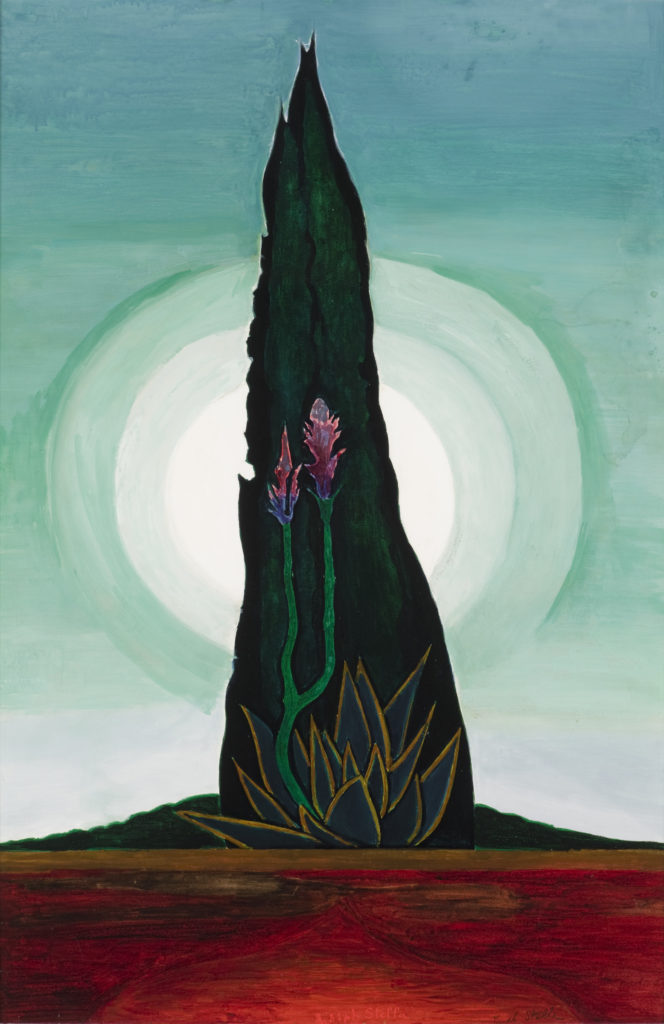
5.“Desert Blossoming” by Amit Majmudar: A reflection on the messianic promise of Isaiah 35:1–2, this poem celebrates how, through the deserts of Israel, Jesus “scattered his verses on the secretly gravid ground,” causing the wilderness to blossom. Majmudar mentions red, the color of fire (an image he connects to the light of faith), rhyming it with “bled.” Although he uses this final word in the sense of spreading into or through—oases bleeding into one another as dry land becomes water—one can’t help but think of Jesus’s sacrificial death, his blood extraordinarily fertile, producing life.
Joseph Stella (American, 1877–1946), Tree, Cactus, Moon, ca. 1928. Gouache on paper, 104.1 × 68.6 cm. Reynolda House Museum of American Art, Winston-Salem, North Carolina.
6.“Name One Thing New”by Seth Wieck: This six-line poem takes the Teacher of Ecclesiastes to task, responding to his cynical claim that “there is nothing new under the sun” (Eccles. 1:9) with a counterexample.
7.“For My Mother at Advent” by Brian Volck: The poet recalls a simple Advent tradition his mother established in his childhood and reflects on her spiritual legacy, her lifetime of Christ-inspired kindnesses that continue to pillow him. How might we soften the hardness of the world for others?
8. “Advent” by Suzanne Underwood Rhodes: This stunning poem makes unlikely intertextual connections, bringing Matthew 19:24 (one of Jesus’s hard sayings regarding wealth) to bear on John 1. Its unique angle on the Incarnation and its evocative imagery have inspired an experimental jazz composition and several paintings.
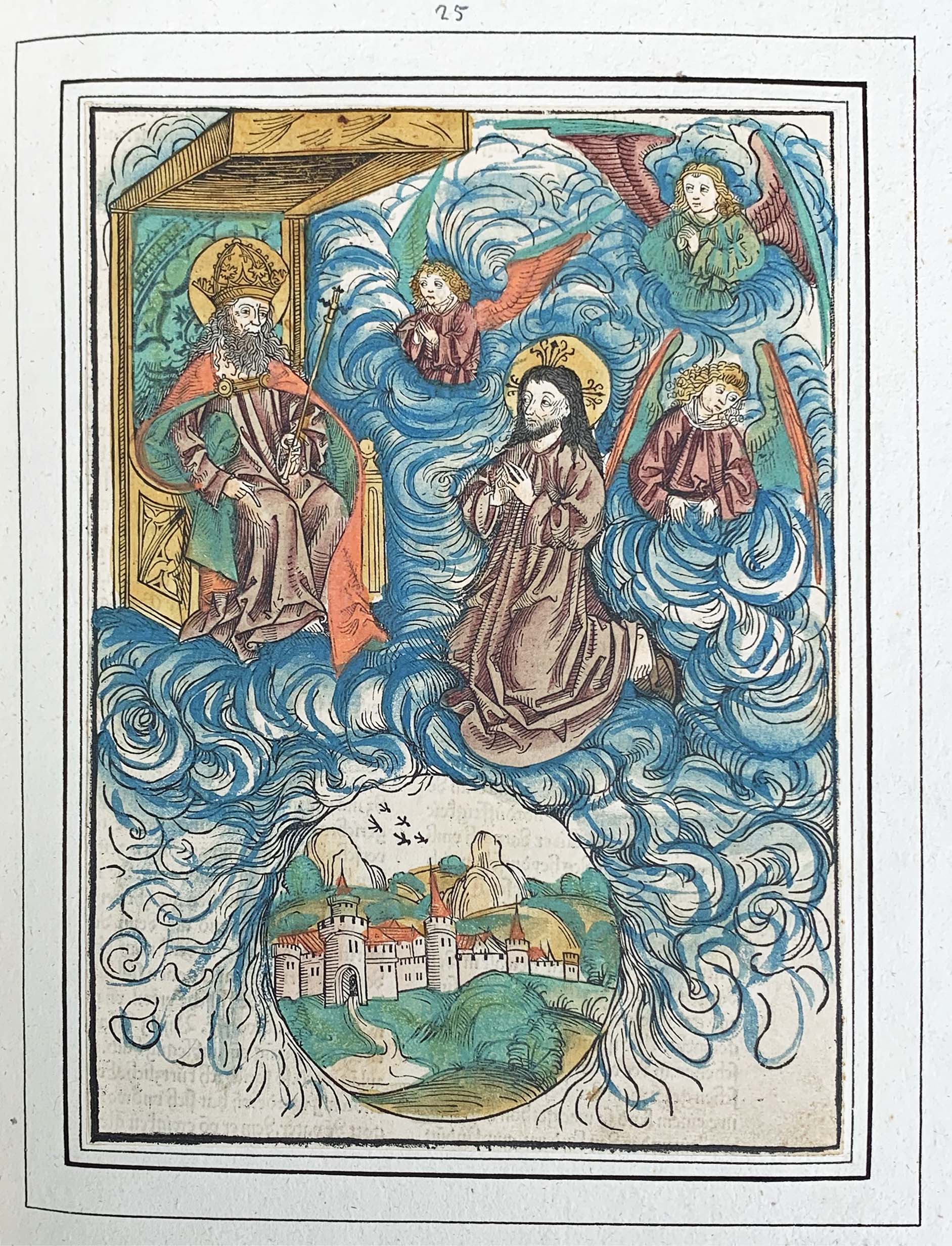
9. “An Hymn to Humanity” by Phillis Wheatley: “Lo! for this dark terrestrial ball / Forsakes his azure-pavèd hall / A prince of heav’nly birth!” So begins this poem on the Incarnation by Phillis Wheatley (ca. 1753–1784), the first African American to publish a book of poetry. In stanzas 2 and 3, God the Father dispatches the Son to establish his throne on earth, “enlarg[ing] the close contracted mind, / And fill[ing] it with thy fire.” The “languid muse” in stanza 5 refers to Wheatley herself, whereas the “celestial nine” are the ancient Greek inspirational goddesses of literature, science, and the arts. The “smiling Graces” is another classical reference.
Michael Wolgemut (German, 1434–1519), The Father sending the Son into the world, 1491. Hand-colored woodcut from the Schatzbehalter (published by Anton Koberger, Nuremberg), 43.7 × 27.5 cm. British Museum, London.
10. “In My Hand” by Sarah Robsdottir: Mary remembers the moment she conceived Jesus, one ordinary day when sitting down to a bowl of lentil stew.
Source: Aleteia, April 9, 2018
11. “The Risk of Birth, Christmas, 1973”by Madeleine L’Engle: Best known for her children’s novel A Wrinkle in Time, Madeleine L’Engle was also a poet. Here she compares our era to the one in which Jesus was born—both are characterized by violence and hate, and yet Jesus, the embodiment of divine love, willingly entered the peril.
12. “On Another’s Sorrow” by William Blake: Through the Incarnation, God lovingly, humanly, entered the world of human woe to experience it firsthand. “He doth give His joy to all,” Blake writes: “He becomes an infant small, / He becomes a man of woe, / He doth feel the sorrow too.” I featured this poem about Emmanuel, God-with-us, in a musical setting by singer-songwriter David Benjamin Blower in 2023 but was surprised that Blower omitted Blake’s final stanza, whose closing couplet I find striking, as it conveys Jesus’s continued identification with and compassion for humanity, how he moans alongside us in our suffering. For a different musical interpretation, also in an acoustic indie folk mode, see the one by Portland-based artist Michael Blake, from his 2021 album Songs of Innocence and Experience:
Source: Songs of Innocence and Experience (London, 1794). Public Domain.
13.“Missing the Goat”by Lorna Goodison: An immigrant from Kingston, Jamaica, to Toronto, Ontario, Goodison writes of the heightened feeling of exile but also of creative adaptations during the holidays as she tries to carry out the food traditions of her native country on a foreign soil where some of the ingredients are in more limited supply. For the sorrel wine, traditionally made with roselle (Hibiscus sabdariffa) petals, tropically grown, she has to make do with redbuds. And the local shops have run out of goat meat—“the host of yardies” (people of Jamaican origin) who’ve moved to the area have already bought it all up—so “we’ll feast then on curried some-other-flesh.” Despite the differences from home, Christmas is still Christmas, and she raises her “hybridized wassail cup” to her new place, her new neighbors (many of them, like her, also recent arrivals from the Caribbean), and the creation of new rituals in multicultural Toronto.
Source: Controlling the Silver (University of Illinois Press, 2010); compiled in Collected Poems (Carcanet, 2017)
14. “Word Made Flesh”by Kathleen Raine: Awarded the CBE (Commander of the Order of the British Empire) for her significant contributions to literature and culture, Raine has been described as a mystical and visionary poet. Here is her revoicing of John 1. What a powerful last two lines!
15.“Nativity”by Barbara Crooker: In the heavy dark, in the windy cold, “love is born in the world again” every December when we retell the story of Christ’s birth.
Gary Kuehn (American, 1939–), Straw Pillow, 1963. Straw, plaster. Ludwig Museum, Cologne, Germany, Inv. ML/SK 5185. Photo: Victoria Emily Jones.
16. “First Miracle”by A. E. Stallings: The first miracle Jesus performed, according to the Gospel of John, was turning water into wine. Stallings reflects on an earlier miracle performed by his mother’s body, and all birth-giving mothers’: turning nutrients from her blood into milk.
17.“What Sweeter Music Can We Bring” (or “A Christmas Carol, sung to the King in the Presence at Whitehall”)by Robert Herrick: “The Darling of the world is come”! Originally written as a song for soloists (each number corresponds to a different singer) and chorus, this poem reverses the typical seasonal imagery of Christmas, remarking how, at Jesus’s birth, “chilling Winter’s morn / Smile[s] like a field beset with corn” and “all the patient ground [is turned] to flowers.” The original music by Henry Lawes is lost, but many contemporary composers have written settings of the text, most famously John Rutter.
Source: Hesperides: Or, Works Both Human and Divine (London, 1648). Public Domain.
18.“Sharon’s Christmas Prayer”by John Shea: A five-year-old recounts the Christmas story, and when she reaches the clincher, she can’t hold back her glee.
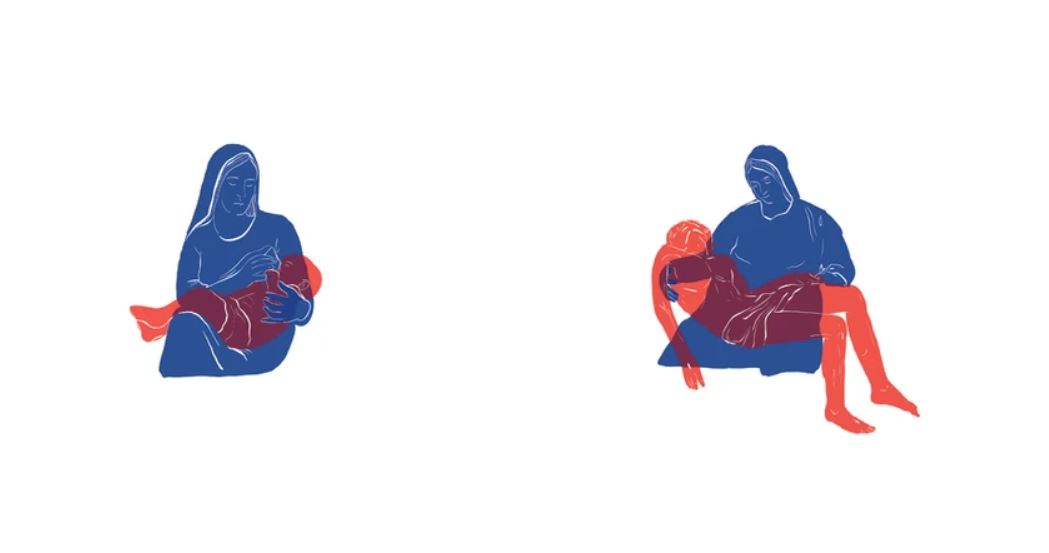
19.“God”by D. A. Cooper: Riffing on Williams Carlos Williams’s “The Red Wheelbarrow,” this spare poem attends to the birth and death of the incarnate God, upon which so much depends.
Source: Reformed Journal, September 3, 2024
Katarzyna Malinowska (Polish, 1989–), Juxtapose (diptych), 2021. Digital painting, 20 × 30 cm.
20. “Lullaby after Christmas”by Vassar Miller: The speaker wishes sweet sleep for the newborn Christ child, wishes to keep him innocent of his fate for as long as possible—for “even God has right to / Peace before His pain.” Consisting of four sestets whose second, fourth, and sixth lines rhyme, the poem has a sing-songy quality that is jarring for the juxtaposition of words like “soft,” “warm,” and “tinkling” with the likes of “blood,” “gore,” and “die.”
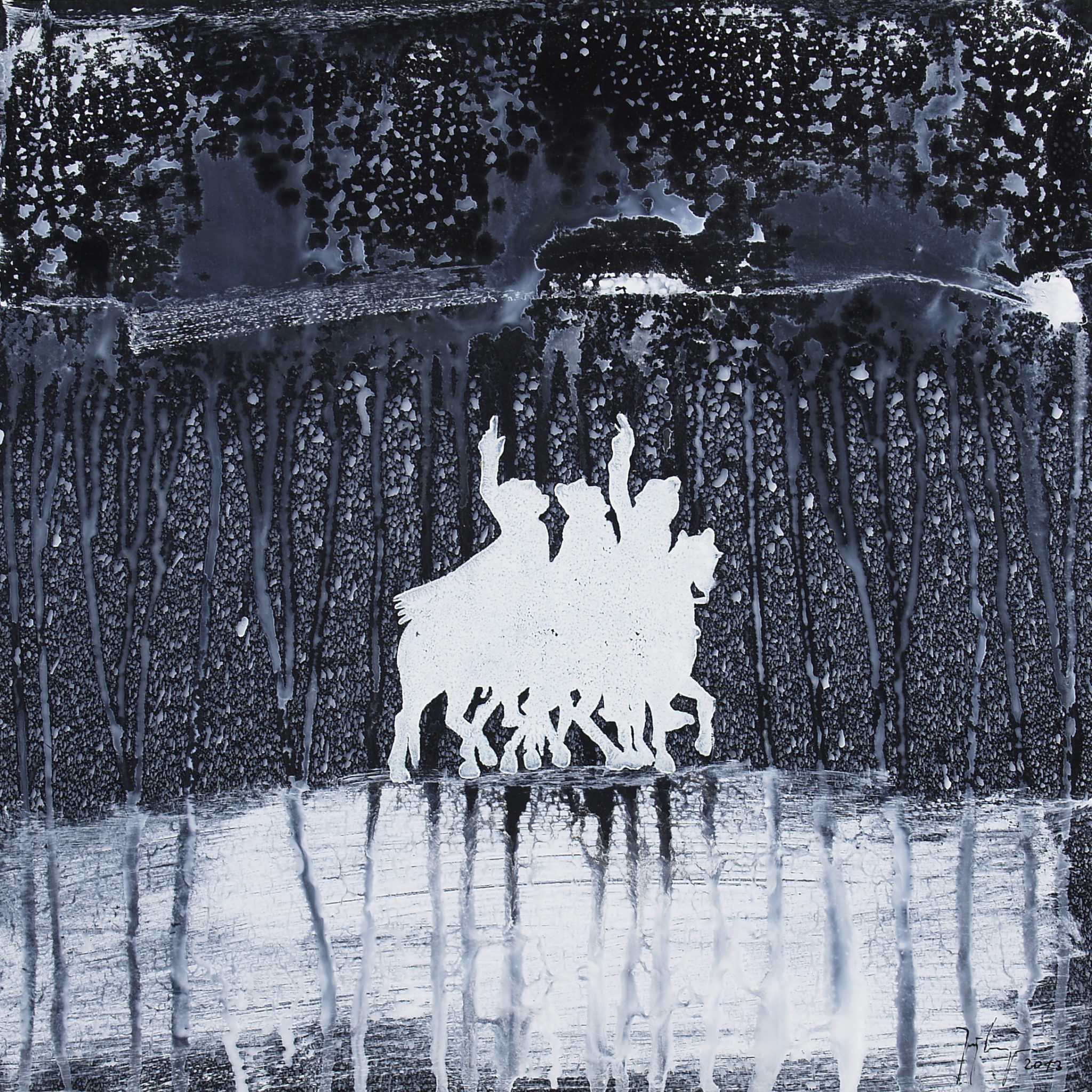
21. “Journey of the Magi”by T. S. Eliot: Eliot wrote this poem shortly after his conversion to Christianity in 1927. Opening with a passage from a Christmas sermon by the seventeenth-century Anglican bishop Lancelot Andrewes, it is from the perspective of one of the magi, who made a long, toilsome journey in search of the meaning of a mysterious guiding star. After the magi’s encounter with the Christ child, they would never be the same; their paganism would no longer satisfy. The poem is about the transformative impact Christ has on those with humility enough to see him for who he is (having followed the light of revelation) and to worship him accordingly. And that transformation is in some ways painful, as it involves giving up some of the things one once held dear.
“Were we led all that way for / Birth or Death?” the magus asks. Jesus’s wasn’t the only birth they witnessed; they, too, were (re)born in Bethlehem. But spiritual rebirth is also a sort of death—the magi died to their old selves and false loves and loyalties. Thus, when they returned to Babylon, they felt like strangers in a strange land. They were now citizens of a different kingdom, and filled with a longing for its consummation.
Source: Journey of the Magi (Ariel Poems) (Faber & Gwyer, 1927). Public Domain.
Jörg Länger (German, 1964–), The Three Kings, 2013. Linocut and gesso on aluminum dibond, 38 × 38 cm. The linocut is after a 12th-century illumination from the St Albans Psalter, held at the Dombibliothek, Hildesheim, Germany.
22. “Twelfth Night”by Sally Thomas: (Scroll to second poem.) As the Christmas season draws to a close, holly berries shrivel and drop, the “candles drown themselves in waxen lakes,” “the tree’s a staring corpse,” and a spider has built a web across the mantel nativity. Thomas uses the passing of the season to reflect more broadly on the passing of time and our own dustiness and desiccation—and by contrast, the unchangeability of God.
23. Untitled poemby S. E. Reid: Most reflections on the New Year are full of enthusiastic goal-setting and go-getting, but Reid, gardening in her greenhouse in the crisp cold of January, describes a “fall[ing] backwards,” “dropping into the dark,” “shivering,” herself a seed, latent in the soil, trusting God that growth will come.
24. “Anna the Prophetess” by Tania Runyan: Forty days after Jesus’s birth, Mary and Joseph presented him in the Jerusalem temple. Runyan imagines this event from the perspective of Anna, a woman who was widowed young and thenceforth lived at the temple into old age, devoted to prayer, fasting, praise, and prophecy.
25. “The Work of Christmas”by Howard Thurman: Drawing on Jesus’s mission statement in Luke 4, the great African American theologian and civil rights leader Howard Thurman urges us to continue the work of Christmas—finding, healing, feeding, etc.—throughout the year. Listen to the simple yet vigorous choral setting by Elizabeth Alexander.
Jacob Lawrence (American, 1914–2000), The Life of Harriet Tubman (Panel #4), 1940. Casein tempera on hardboard, 30.5 × 45.4 cm.
Ephesians 2:1–10 (two translations):
ESV: And you were dead in the trespasses and sins in which you once walked, following the course of this world, following the prince of the power of the air, the spirit that is now at work in the sons of disobedience—among whom we all once lived in the passions of our flesh, carrying out the desires of the body and the mind, and were by nature children of wrath, like the rest of mankind. But God, being rich in mercy, because of the great love with which he loved us, even when we were dead in our trespasses, made us alive together with Christ—by grace you have been saved—and raised us up with him and seated us with him in the heavenly places in Christ Jesus, so that in the coming ages he might show the immeasurable riches of his grace in kindness toward us in Christ Jesus. For by grace you have been saved through faith. And this is not your own doing; it is the gift of God, not a result of works, so that no one may boast. For we are his workmanship, created in Christ Jesus for good works, which God prepared beforehand, that we should walk in them.
The Message: It wasn’t so long ago that you were mired in that old stagnant life of sin. You let the world, which doesn’t know the first thing about living, tell you how to live. You filled your lungs with polluted unbelief, and then exhaled disobedience. We all did it, all of us doing what we felt like doing, when we felt like doing it, all of us in the same boat. It’s a wonder God didn’t lose his temper and do away with the whole lot of us. Instead, immense in mercy and with an incredible love, he embraced us. He took our sin-dead lives and made us alive in Christ. He did all this on his own, with no help from us! Then he picked us up and set us down in highest heaven in company with Jesus, our Messiah.
Now God has us where he wants us, with all the time in this world and the next to shower grace and kindness upon us in Christ Jesus. Saving is all his idea, and all his work. All we do is trust him enough to let him do it. It’s God’s gift from start to finish! We don’t play the major role. If we did, we’d probably go around bragging that we’d done the whole thing! No, we neither make nor save ourselves. God does both the making and saving. He creates each of us by Christ Jesus to join him in the work he does, the good work he has gotten ready for us to do, work we had better be doing.
This post belongs to the weekly series Artful Devotion. If you can’t view the music player in your email or RSS reader, try opening the post in your browser.
To view all the Revised Common Lectionary scripture readings for the Fourth Sunday of Lent, cycle B, click here.
The poet laureate of the United Kingdom from 1930 until his death in 1967, John Masefield occasionally turned to Christian themes in his writing. In 1911 he wrote “The Everlasting Mercy,” a long poem that tells the tale of a man’s conversion from a life of sin to life in Christ. Masefield takes us down into the darkness felt by the poem’s antihero and speaker, Saul Kane—a belligerent drunk and a womanizer—and then up into the light he experiences when, in his own words, “the Lord took pity on me” and “brought me into grace.”
The bulk of the poem takes place during one of Saul’s drinking binges: he has just clobbered one of his friends in a boxing match, defending his (knowingly false) claim to a piece of land, and is celebrating at the Lion, a local pub. As is his custom, he starts flirting with a barmaid and then makes a sexual pact with her. He feels a sting of moral conviction about this—
And while we whispered there together I give her silver for a feather And felt a drunkenness like wine And shut out Christ in husks and swine. I felt the dart strike through my liver. God punish me for’t and forgive her.
—but not enough to stop him from carrying out the deed. To ease his conscience, he issues a direct address to his fellow males, urging them away from such behavior:
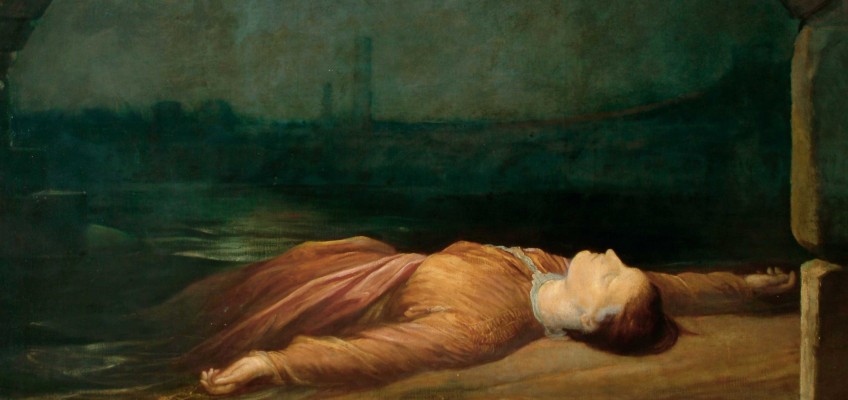
O young men, pray to be kept whole From bringing down a weaker soul. Your minute’s joy so meet in doin’ May be the woman’s door to ruin; The door to wandering up and down, A painted whore at half a crown. The bright mind fouled, the beauty gay All eaten out and fallen away, By drunken days and weary tramps From pub to pub by city lamps Till men despise the game they started Till health and beauty are departed, And in a slum the reeking hag Mumbles a crust with toothy jag, Or gets the river’s help to end The life too wrecked for man to mend.
George Frederic Watts (British, 1817–1904), Found Drowned, 1850. Oil on canvas. Watts Gallery, Guildford, Surrey, England.
Throughout the poem Saul’s narration is shot through with this sort of guilty awareness of his own depravity. It disgusts him, but he represses that disgust while he’s in the act of perpetrating whatever sin is at hand, whether it be lying, stealing, poaching, punching, speaking irreverently, or taking sexual advantage of young women. Continue reading “Excerpts from “The Everlasting Mercy” by John Masefield”→



 Art & Theology