
Roundup: “Heaven and Earth” performance for Psalms-based exhibition, pay-what-you-can film seminar, Doris Salcedo’s “A Flor de Piel,” and more

EXHIBITION: Sing a New Song: The Psalms in Medieval Art and Life, Morgan Library and Museum, New York, September 12, 2025–January 4, 2026: Sing a New Song traces the impact of the Psalms on people in medieval Europe from the sixth to sixteenth centuries, showing how this poetic book of the Bible suffused daily life, church liturgies, and art. The exhibition features, of course, numerous illuminated Psalters, as well as other art objects influenced by the Psalms, culled from the Morgan’s own collection and some two dozen institutions around the world.
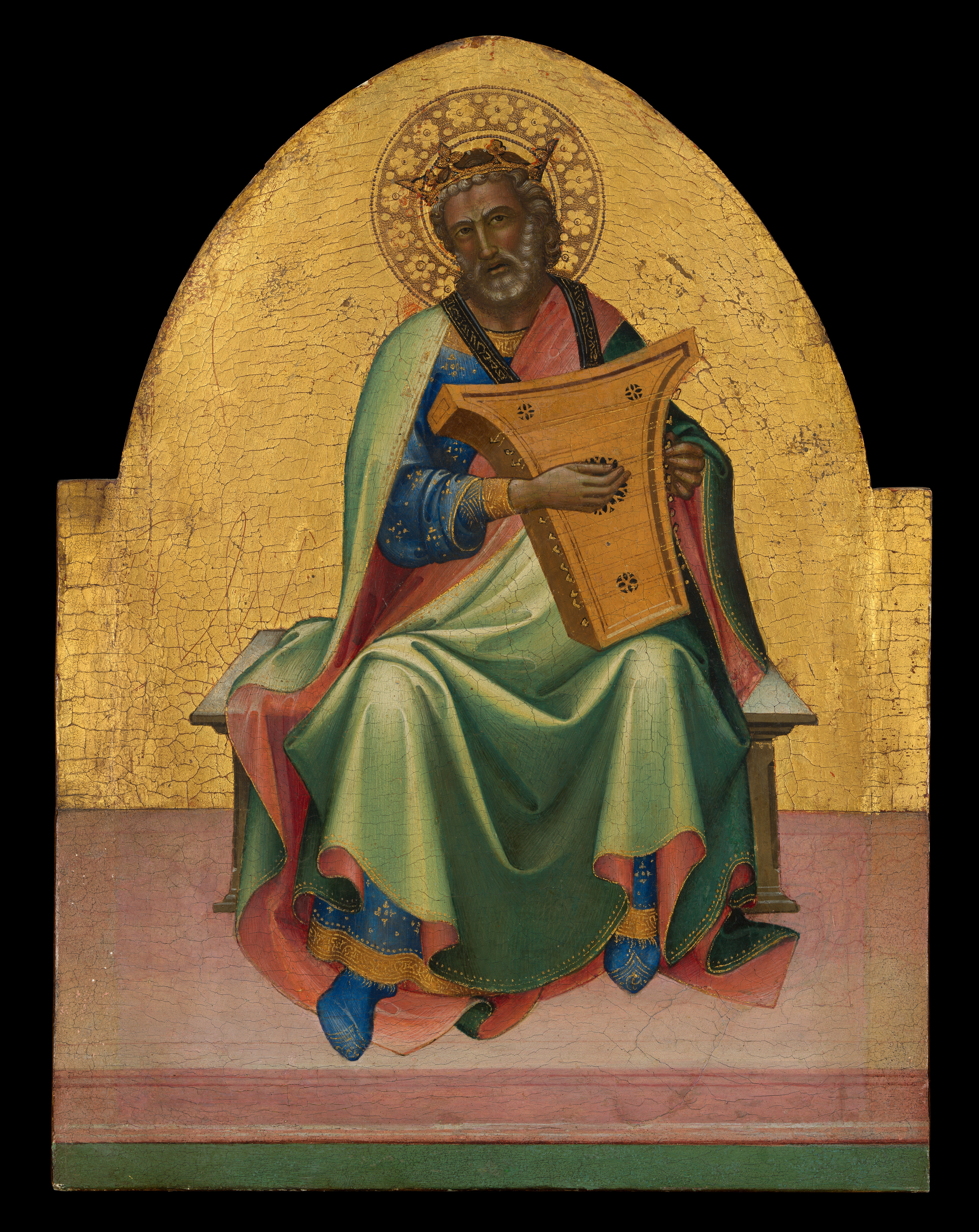
Monaco, Lorenzo_David
Lorenzo Monaco (Italian, ca. 1370–ca. 1425), David, ca. 1408–10. Tempera on wood, gold ground, 22 3/8 × 17 in. (56.8 × 43.2 cm). Metropolitan Museum of Art, New York.

To coincide with the exhibition, on October 10 at 2 p.m. and 3 p.m., the Beijing-based artist Bingyi will be premiering a site-specific performance work in the Morgan’s garden (free with museum admission), made possible in part by the Foundation for Spirituality and the Arts. Titled Heaven and Earth: The Garden of Cosmos, the processional performance is “inspired by Psalm 104 and its reverence for creation, divine order, and cosmic harmony that transcend cultural boundaries.” Drawing on her longstanding engagement with both Abrahamic scriptures and Chinese philosophical traditions, Bingyi will be clad in a flowing, ink-painted garment and be joined by the Tibetan ritual master Nanmei and the Yi singer Aluo.
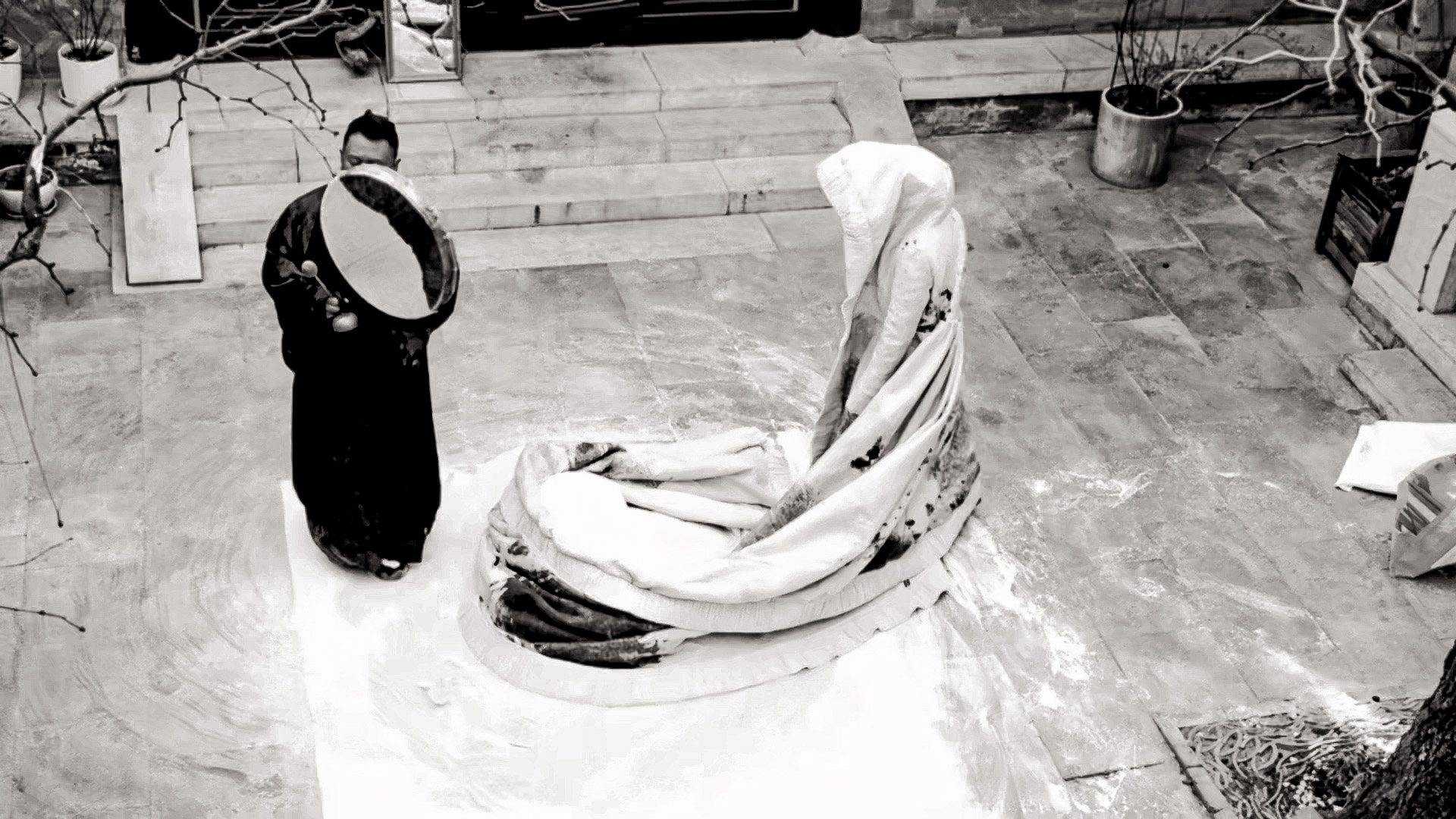
Bingyi_Heaven and Earth
Rehearsal for Heaven and Earth: The Garden of the Cosmos by Bingyi, to premiere October 10, 2025, at the Morgan Library and Museum in New York City

+++

ONLINE FILM SEMINAR: Dreaming the World: Looking at the World through the Eyes of the Other with Gareth Higgins, September 30–November 11, 2025: “We live in anxious times, with our vision often limited to suspicion of others, concern about the future, and withdrawing into enclaves of the familiar. It can become a self-fulling prophecy, a vicious cycle which does not nurture the security, never mind the happiness we seek. It’s becoming clearer by the day that we need to be dislodged from the narrow circles of self-oriented, tribal thinking. There is a more expansive universe, characterized by connection, sharing, and taking responsibility for co-creating the next good day.”

Sponsored by Image journal and The Porch, Dreaming the World is a seven-week course in which participants will watch seven movies—one from each continent—and learn a more global way of thinking. Leader Gareth Higgins [previously] will share a short video introduction and written essay for each film, and registrants are invited to join a members’ Facebook page for conversation, as well as a weekly video call to discuss the movie and its implications for how we might live better. Those video calls will take place on Tuesdays from 7:00 to 8:15 p.m. ET on September 30, October 7, October 14, October 21, October 28, November 4, and November 11, 2025, but will also be recorded for asynchronous viewing.

The seminar is valued at $195, but the organizer is generously allowing registrants to pay what they can. I will be participating. Join me?

+++

CALLS FOR PAPERS:

>> From the Association of Scholars of Christianity in the History of Art: ‘And Who is My Neighbor?’: Refuge, Sanctuary, and Representation: “The parable of the Good Samaritan (Luke 10:25–37) endures as a powerful meditation on compassion, hospitality, and the boundaries of moral responsibility. In an age marked by geopolitical instability, mass displacement, and deepening social divides, the question ‘And who is my neighbor?’ acquires renewed urgency. We welcome proposals that consider the ways in which visual culture has interpreted, challenged, or reimagined the ideals of refuge and hospitality within religious and intercultural frameworks. How have artistic practices responded to religious calls to welcome the stranger? In what ways do images negotiate the tensions between inclusion and exclusion, faith and politics, identity and alterity? How do modern and contemporary artworks embody, resist, or reinterpret Christian and other religious conceptions of community, care, and obligation? Proposals that engage Catholic visual cultures or interpretive frameworks, perspectives from the Global South, or comparative interreligious approaches are especially encouraged.” To be presented February 17, 2026, at ASCHA’s day-long symposium at DePaul University Chicago, or February 18–21 2026, at the 114th annual CAA Conference. Proposal submission deadline: October 15, 2025.

>> From the Raclin Murphy Museum of Art at the University of Notre Dame: The Art of Encounter: Exploring Spiritual Engagement with Art Objects”: This museum is seeking papers exploring the relationship between art, spirituality, and museum spaces, to be presented April 24, 2026, at the museum’s spring symposium. Proposals that investigate how encounters with art can shape spiritual understanding, foster theological insight, or deepen contemplative practice are all welcome. Proposal submission deadline: November 3, 2025.

+++

SONGS:

September 15 through October 15 is Hispanic Heritage Month. One of the many ways Latinos have contributed to Christian artistic culture has been through the writing and singing of coritos: short, rhythmic, Spanish-language choruses used in worship. Here are two examples, the first one traditional and the second one new.

>> “Montaña” (Mountain), led by Josue Avila: Recorded live on November 29, 2020, from Calvary Orlando’s Unity Sunday Service, this corito is based on Matthew 17:20. The lyrics translate to: “If you have faith like a mustard seed, thus says the Lord: you can tell the mountain, ‘Move, move,’ and that mountain will move!”

Watch another performance, from a concert context, by the Austin, Texas–based band Salvador.

>> “Sal 22 / Te Amo” (Psalm 22 / I Love You) by Israel and New Breed with Aaron Moses: These two coritos, which released this summer as a single track, were written by Israel Houghton, Meleasa Houghton, Ricardo Sanchez, Aaron Lindsey, Rene Sotomayor, and Aaron Moses. The first is based on Psalm 22:3, which says that God is enthroned on the praises of his people, and is sung by Moses on lead; Houghton sings lead on the second.

Aaron Moses, of Dominican and Ecuadorian descent, is best known for his work with Maverick City Música.

Israel Houghton is not himself Latino (his mother is white, his biological father Black), but he was significantly influenced by his upbringing in a Hispanic neighborhood and church, a culture reflected in his musical output and that he remains connected to, not least through his wife, Adrienne Bailon (whom I know from The Cheetah Girls!).

+++

VIDEO: “In the Studio: Doris Salcedo making ‘A Flor de Piel’”: Produced by White Cube, this fourteen-minute documentary charts the collaborative, scientifically informed, labor-intensive process of making Doris Salcedo’s A Flor de Piel, an enormous shroud made of real rose petals as a memorial for a nurse who was brutally captured and murdered in Colombia. (“The title,” explains Lauren Hinkson, “is a Spanish idiomatic expression used to describe an overt display of emotions.”) The film includes footage from Salcedo’s Bogotá studio as well as interviews with the team of people who produced the work. I found this peek into the technical aspects of the piece fascinating.
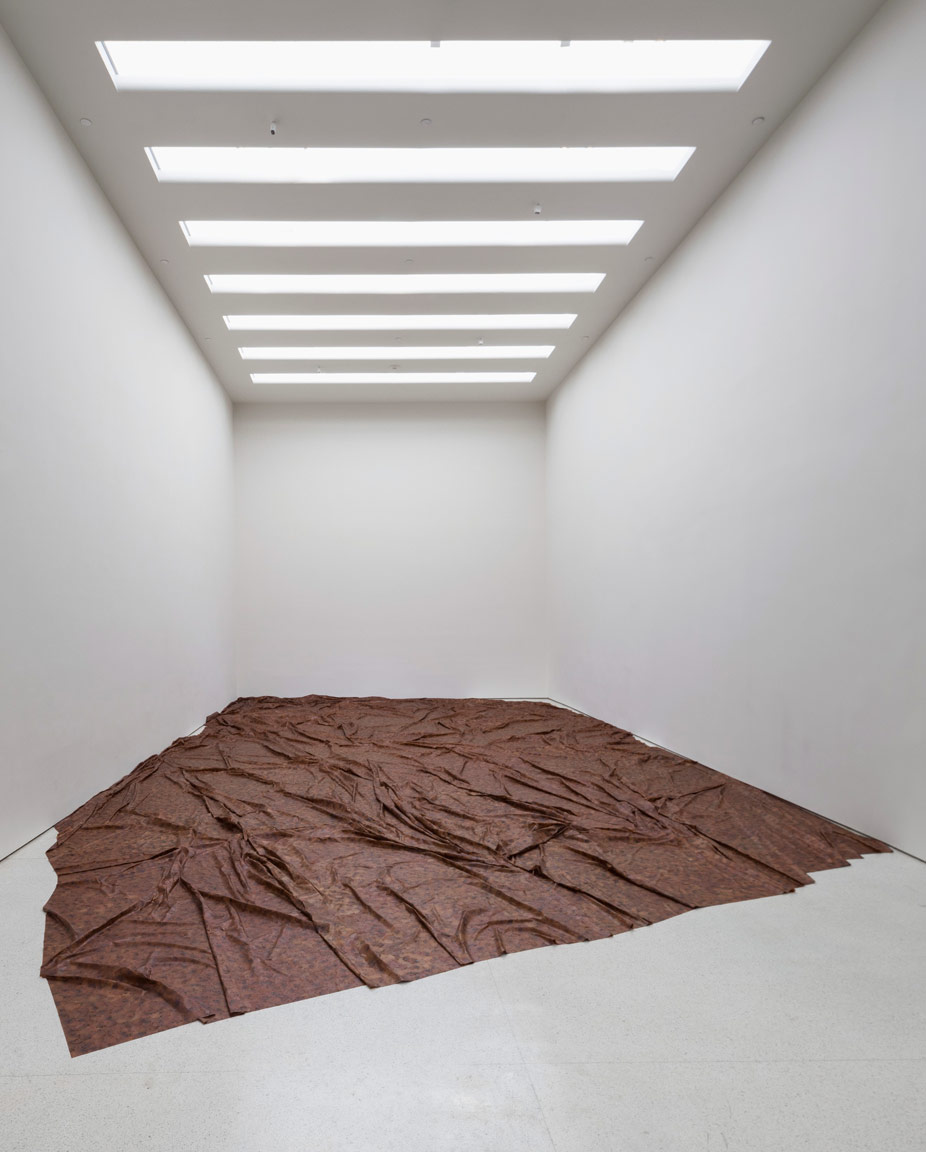
Salcedo, Doris_A Flor de Piel
Doris Salcedo (Colombian, 1958–), A Flor de Piel, 2011–12. Rose petals and thread, approx. 246 7/8 × 433 1/8 in. (627 × 1100 cm). Photo © Solomon R. Guggenheim Foundation, New York, from the work’s installation at the Guggenheim in 2015.

However, the video doesn’t venture into the inspiration behind or meaning of the work. For a bit of that, see this audio clip from the Guggenheim (where A Flor de Piel was exhibited in 2015), and also Jonathan A. Anderson, The Invisibility of Religion in Contemporary Art, pages 123–24.
Roundup: Ambai praise medley, ArtStories, Visually Sacred, and more

Each item in a roundup represents hours of combing through and evaluating other possibilities to feature, to find that one I deem will be of most value to readers of Art & Theology. None of these spots are ever bought or coerced, but rather represent sincere recommendations on my part. If you appreciate the resources I curate, would you consider making a donation to make this continued work possible? Or buying me a book from my Amazon wish list (to support my research)? Regardless, I really appreciate you being here!

+++

SONGS:

>> Ambai Praise Medley: This summer Palmer Keen, an American ethnomusicologist based in Yogyakarta who runs the online repository Aural Archipelago, visited the Christian village of Kawipi in the Ambai Islands of Papua, Indonesia, to learn more about songgeri, a worship music tradition indigenous to that area. When he arrived, the villagers formed a welcome party to greet him at the church steps with much music making! That is what this clip is from:

Palmer writes,

Songgeri is a gospel string band tradition from the Ambai archipelago of Papua. The Ambai people, fervent Pentecostals since mass conversion in the mid-20th century, have taken the string band format popular across Melanesia . . . and embraced it as a vehicle for a unique gospel sound unlike anything else in Indonesia.

The name songgeri itself means “joy” in the Ambai language, and every bit of the music is designed to channel a particularly Pentecostal religious ecstasy: handmade lutes (four-string “ukulele” and five string “gitar”) stick to just three easy chords, while giant double bass-like stembas are turned towards the players and plucked with both hands and hand-carved wooden picks to get a thunderous sound. Musicians play a non-stop medley of “praise and worship” verses sung in Ambai and Indonesian—in one piece, “Nemunu Doana Kamia Wowong,” for example, they sing: “His house is built on coral / The gates of heaven are open / He awaits us!”

For more on the history, form, and instruments of songgeri, including additional videos, see Palmer’s recent blog post. (Shout-out to Sam Connour for alerting me to this fantastic music!)

>> “Campfire Coritos,” performed by Israel and New Breed: This corito [previously] medley features the songs “Con mis manos y mi vida” (With My Hands and My Life), “Alabaré” (Oh, Come and Sing), “Te alabarán oh Jehová” (They Will Praise You, O Jehovah), “Quién como tú” (Who Is Like You?), “Hay poder” (There Is Power), and “Ven, ven, ven, Espíritu Divino” (Come, Come, Come, Holy Spirit). The first female soloist is Israel Houghton’s wife, Adrienne Bailon-Houghton, and the second female soloist (with dark hair) is Adrienne’s sister, Claudette Bailon.

And here’s another corito medley sung by the same group:

+++

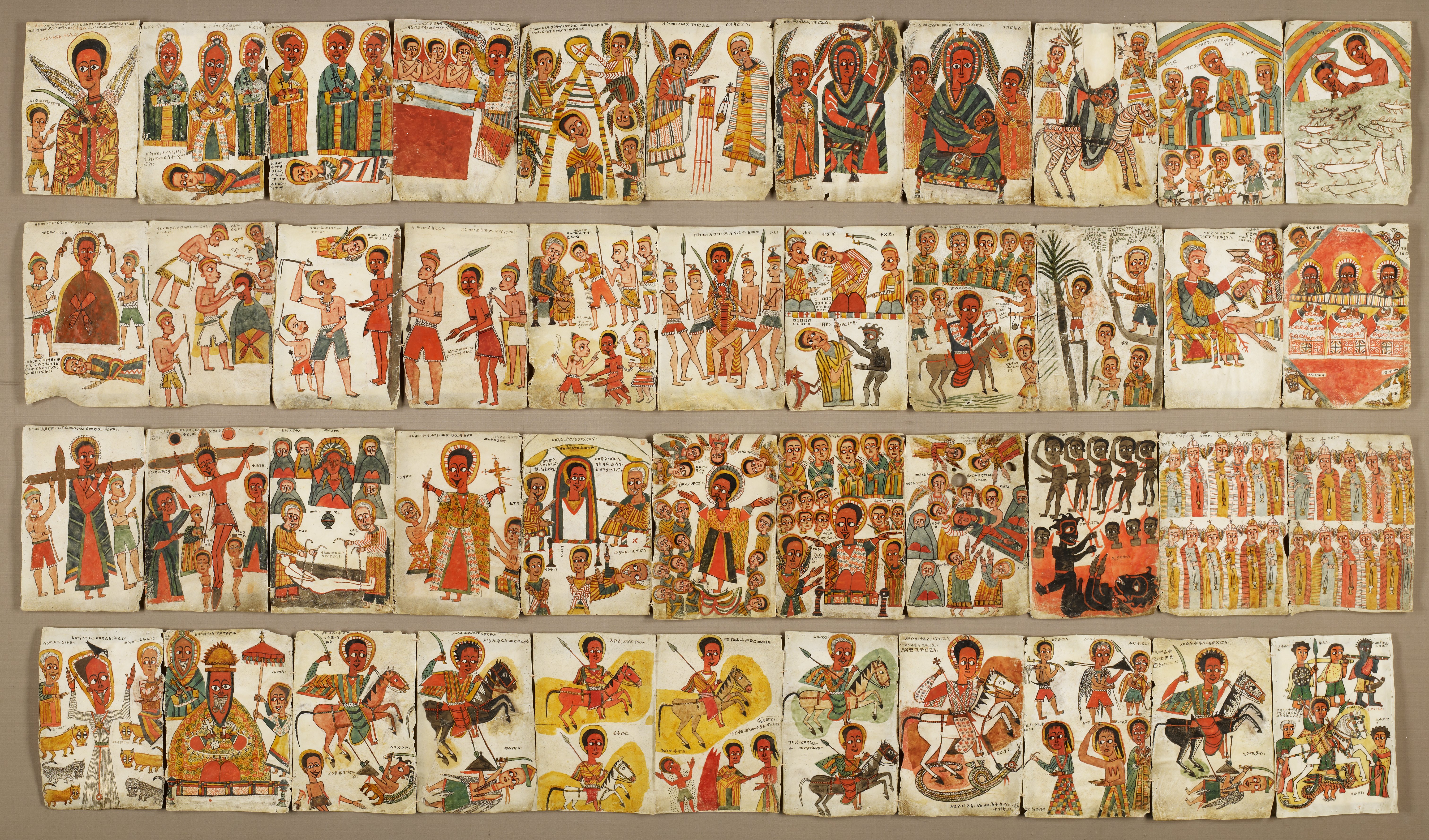
ART: 44 Plates from a Christian illuminated album, Ethiopia: When I was at the Minneapolis Institute of Art a few years ago, I saw on display three paintings on vellum from seventeenth-century Ethiopia, in the First Gondarene style, featuring Ethiopian saints and Bible stories. They are from a set of forty-four pages that were at one time sewn together and used as a prayerbook. The inscriptions are in Ge‘ez, an ancient language that originated in northern Ethiopia and is now only used in religious ceremonies.

Ethiopian album
Ethiopian saints and scenes from the Hebrew scriptures and the Christian Bible, from a disbound album, Ethiopia, late 17th century. Collection of the Minneapolis Institute of Art, Minneapolis, Minnesota.

Learn more about this illuminated album through ArtStories, an interactive multimedia feature on MIA’s website that allows for in-depth exploration of select objects from the museum’s collection. On the “More” tab is a video on “Connecting with World Religions,” a photo of each individual page with accompanying descriptions, and a behind-the-scenes video with Ethiopian manuscript cataloger Getatchew Haile.

I encourage you to further peruse ArtStories, which spotlights art objects from around the world in all sorts of media, including an ancient Egyptian instrument, an Islamic prayer mat, a Somali wedding basket, an Osage friendship blanket, a snake jug that pokes fun of the Confederacy, a brass leopard-shaped water pitcher from Nigeria, a pair of folding screens from Japan, an illusionistic marble sculpture, El Greco’s Expulsion of the Money-Changers, Rembrandt’s Lucretia, one of Monet’s grain stacks, and more. The interface directs you to specific details of the work and teaches about content, context, technique, and influences.

+++

PODCAST EPISODES: The first season of the podcast Visually Sacred: Conversations on the Power of Images, hosted by Arthur Aghajanian, wrapped this summer, altogether featuring conversations with thirteen luminaries in the field of religion and the arts. These were two of my favorite episodes:

>> “William Dyrness: Protestant Aesthetics, Modernism, and Theopoetics”: Theologian William Dyrness from Fuller Theological Seminary discusses the importance of art to spirituality, and the history and theology of images in Protestantism versus Catholicism. He also shares how Christianity influenced many canonical modern artists, and introduces theopoetics, a Christian movement that seeks to broaden our understanding of orthodoxy by bridging art forms and connecting art to daily life.

>> “Natalie Carnes: Iconoclasm, Beauty, and Aesthetics”: Theologian Natalie Carnes [previously], a professor at Baylor University, discusses iconoclasm, particularly the controversy around public monuments; the ambivalence of images as mediators of the Divine (giving us access and blocking access); suffering and beauty; feminist theology; and Christian asceticism as a form of abundance.

Roundup: Paula Rego’s Life of the Virgin; corito medleys; more

EXHIBITION: Paula Rego: Secrets of Faith, Victoria Miro Venice, April 23–June 18, 2022: Portuguese-born British artist Paula Rego died last Wednesday, June 8, after a seven-decade career, and in the midst of four solo exhibitions of her work—including this one at Victoria Miro’s gallery in Venice, which explores her small but significant body of religious art. [HT: Jonathan Evens]

In 2002 Jorge Sampaio, then president of Portugal, commissioned Paula Rego to create eight pastel drawings based on episodes from the life of the Virgin Mary, to be installed permanently in the chapel of the presidential palace (Palácio de Belém) in Lisbon. Titled Nossa Senhora (Our Lady), the cycle comprises Annunciation; Nativity; Adoration; Purification at the Temple; Flight into Egypt; Lamentation; Pietà; and Assumption. Rego had such fun with the commission that she produced additional works on the subject, which she decided to keep for herself. It is these, along with her watercolor studies, that are currently on display in Venice. (The original eight pastels are not allowed to leave the chapel for which they were made.)

Rego, Paula_The Flight to Egypt
Paula Rego (Portuguese British, 1935–2022), The Flight to Egypt, 2002. Watercolor and ink on paper, 8 1/4 × 11 3/4 in. (21 × 29 cm).

Rego, Paula_Descent from the Cross
Paula Rego (Portuguese British, 1935–2022), Descent from the Cross, 2002. Pastel on paper mounted on aluminum, 29 1/2 × 28 3/8 in. (75 × 72 cm).

I learned about Rego’s Marian cycle a few years ago and became enthralled by it, though I’ve never seen it in person, and most of these supplemental works are new to me. It’s unique, in part because of Mary’s corporeality. In a 2003 interview with Richard Zimler, Rego said, “If there is anything new about these representations of the Virgin, it is the fact that they were done by a woman, which is very rare. . . . It always used to be men who painted the life of the Virgin, and now it is a woman. It offers a different point of view, because we identify more easily with her.”

While the president praised the cycle and Rego insisted that “these pictures were created with admiration and respect,” an open letter to Sampaio referred to it as an “outrage done to the vast majority of the Portuguese people,” an “outrage against their religious beliefs and an offence to the Virgin Mary.” In brief: “blasphemous and scandalous.” I can see why Rego’s larger oeuvre, with its often menacing and/or transgressive imagery (not least of which is her Abortion Series), would scandalize conservative viewers, but I am a bit confused by the outrage at Nossa Senhora, which to me seems very honoring. The objectors, it sounds like, are those who prefer Mary to be more ethereal and sedate; they don’t want to see her, for example, slouching or wincing or expressing astonishment, or awkwardly struggling to hold the weight of her son’s corpse. There will always be those who resist any kind of updating of religious art. If the scenes are restaged in an unfamiliar way or rendered in an unfamiliar style or introduce a new element or the figures don’t look like how we have always pictured them, then some will oppose them outright—which is a shame, because such art often invites us more deeply into the story, helping us to see it afresh.

Definitely check out the boldface link above to view more pieces from the exhibition, as well as a video that shows Nossa Senhora in situ. For further reading, see “Paula and the Madonna: Who’s That Girl?” by Maria Manuel Lisboa and the transcript from Zimler’s interview with Rego.

+++

PODCAST EPISODE: “Past Hymns for the Present Moment,” Tokens, May 26, 2022: “Hymns are often sentimentalized in the American church, cast aside as merely retired songs with dated language, bearing no real appeal or relevance. But of course it may be that our old hymnals have some crucial things to say to us in our current cultural moment. This is the challenge I [Lee C. Camp] posed to Odessa Settles, Phil Madeira, and Leslie Jordan: find and perform some old hymns which might be both indicting and encouraging to the modern church, and to the world at large. Beautiful conversation and moving performances, taped at Nashville’s Sound Emporium.”

+++

POETRY UNBOUND EPISODES:

In each episode of this podcast from On Being Studio, host Pádraig Ó Tuama unpacks a contemporary poem in fifteen minutes. Here are two from season 5 (which just came to an end) that I particularly liked.

>> “Looking for The Gulf Motel” by Richard Blanco: “What happens when we remember?” Ó Tuama asks. “Why do we remember? Is it sweet or sad? Is it both? If you particularly associate warm memories, romantic memories, nostalgic memories with a place, and then that place is changed, does that mean that all those memories are gone?” In this poem from a collection of the same title (which I checked out from my local library at Ó Tuama’s recommendation, and it’s excellent!), Cuban American poet Richard Blanco, at age thirty-eight, reminisces about a family beach vacation from his childhood. Read the poem here.

If I were writing this poem, it would be called “Looking for The Blockade Runner,” as that’s the name of the Wrightsville Beach hotel in North Carolina that my family and I used to stay at for four days or so each summer. My little brother and I should still be running around on the waterfront lawn as our parents watch us from inside the giant window of the dining room, finishing up their breakfast. My dad should still be riding in a wave on a boogie board, teaching me technique. My mom should still be lounging at the pool in her black one-piece with sunglasses and a Vanity Fair, I feeling so grown up beside her sipping my virgin piña colada. My brother should still be exhilarated by the live hermit crabs at Wings, and I by the dried starfish and sand dollars. We should all still be walking back from the Oceanic, our bellies filled with she-crab soup and hush puppies and catch-of-the-day, down the shore at dusk.

>> “The change room” by Andy Jackson: A poet who’s interested in difference and embodiment, here Andy Jackson, who has severe spinal curvature due to Marfan syndrome, “is looking at the attention that he gets in his body and is refocusing it, extending it wider, looking at the deeper question of, what does it mean for any of us to be in a body, and how do we in bodies relate to others in bodies?” Read the poem here, from the collection Human Looking.

+++

CORITO VIDEOS: A corito (literally “short song”) is a type of Latino Christian worship song. Coritos have “fairly simple tunes, often with repetitive words, that the people sing by heart,” writes Justo L. González in ¡Alabádle!: Hispanic Christian Worship. “Most of them are anonymous, and pass by word of mouth from one congregation to another. For that reason, the tune or the words of a particular corito may vary significantly from one place to another. They are often sung to the accompaniment of clapping hands, tambourines, and other instruments.” To learn more about this genre, see the Calvin Institute of Christian Worship interview with Rosa Cándida Ramírez and Analisse Reyes and the entry in the Encyclopedia of Christianity in the Global South, vol. 2.

>> Joseph Espinoza sings a corito medley consisting of “Cuando el pueblo del Señor” (When the People of the Lord), “No puede estar triste” (The Heart That Worships Christ Cannot Be Sad), “Ven, ven, Espiritu divino” (Come, Come, Holy Spirit), “Cantaré al Señor por siempre” (I Will Sing to the Lord Forever), and “El Poderoso de Israel” (The Mighty One of Israel). Aaron Barbosa is on keyboard, Fabian Chavez is on percussion, and Yosmel Montejo is on bass.

>> The video below was shared March 25, 2020, in the Multicultural Worship Leaders Network Facebook group that I belong to, and it’s pure joy! The performers string together three coritos: “Le canto aleluya” (I Sing Alleluia), “Hay victoria” (There’s Victory), and “Los que esperan en Jesus” (Those Who Wait in Jesus).

Federico Apecena provides the following translation. (The slashes indicate the number of times that line or passage is sung.)

//The heart that worships Jesus cannot be sad
The heart that worships God cannot be sad//

//That’s why I sing, I sing hallelujah
The heart that worships God cannot be sad//

//There’s victory, there’s victory, there’s victory in the blood of Jesus//
The enemy will not be able to defeat our souls
//Because there is victory, because there is victory, because there is victory in the blood of Jesus//

//That’s why I sing, I sing hallelujah
The heart that worships God cannot be sad//

///Those that wait, that wait in Jesus///
//Like eagles, like eagles, their wings will open//

They will walk and will not get tired, they will run and will not stop
//New life they will have, new life they will have, those that wait, that wait in Jesus//

//That’s why I sing, I sing hallelujah
The heart that worships God cannot be sad//