
As I watched in the night visions,
I saw one like a son of man
coming with the clouds of heaven.
And he came to the Ancient One
and was presented before him.—Daniel 7:13
“Immediately after the suffering of those days
the sun will be darkened,
and the moon will not give its light;
the stars will fall from heaven,
and the powers of heaven will be shaken.“Then the sign of the Son of Man will appear in heaven, and then all the tribes of the earth will mourn, and they will see ‘the Son of Man coming on the clouds of heaven’ with power and great glory. And he will send out his angels with a loud trumpet call, and they will gather his elect from the four winds, from one end of heaven to the other.”
—Matthew 24:29–31
“. . . you will see the Son of Man
seated at the right hand of Power
and coming on the clouds of heaven.”—Matthew 26:64
Look! He is coming with the clouds;
every eye will see him,
even those who pierced him,
and all the tribes of the earth will wail on account of him.So it is to be. Amen.
—Revelation 1:7 (cf. Zech. 12:10)
(Related post: https://artandtheology.org/2023/12/12/advent-day-10-lo-he-comes/)
LOOK: Apse mosaic, Basilica of Saints Cosmas and Damian, Rome
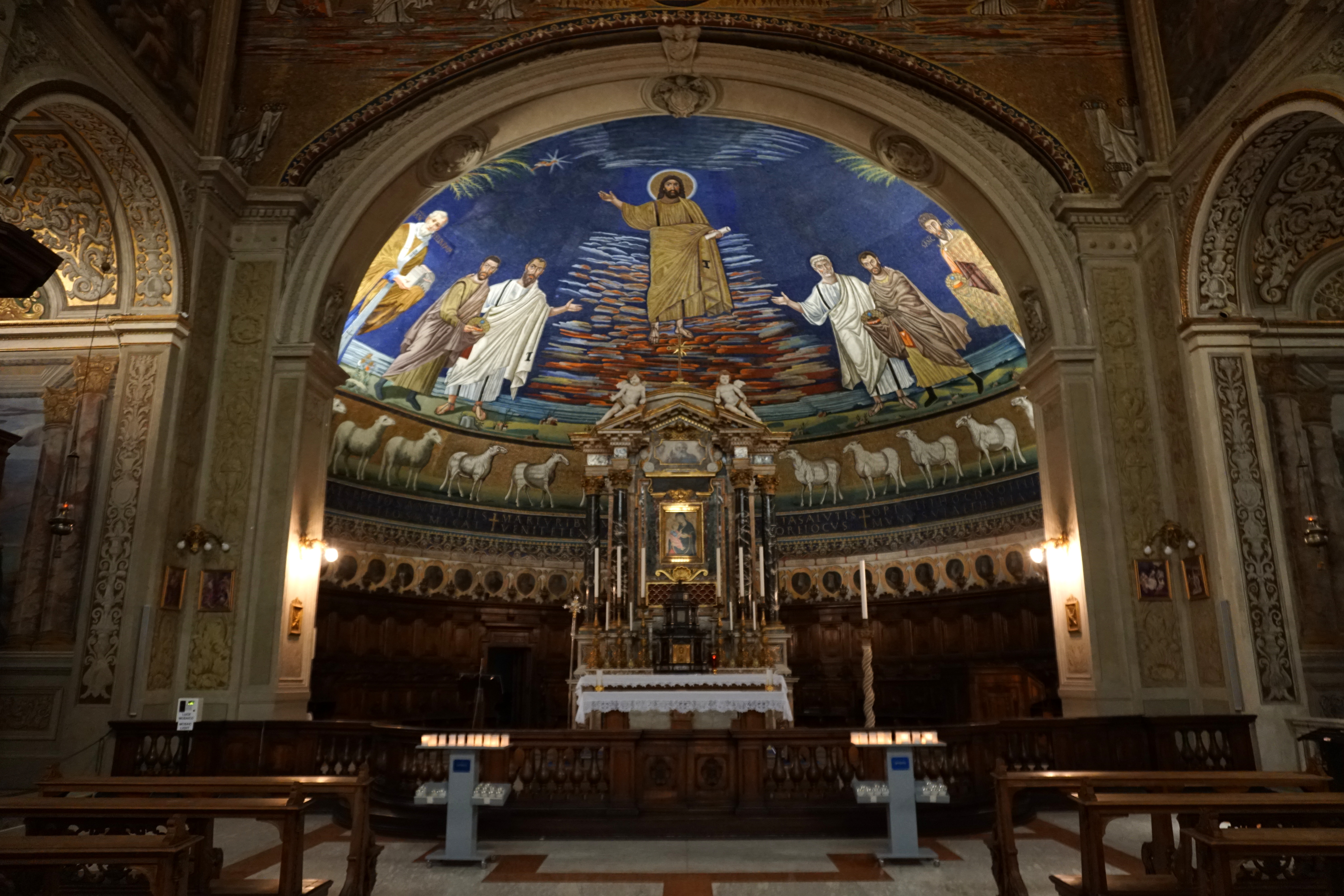
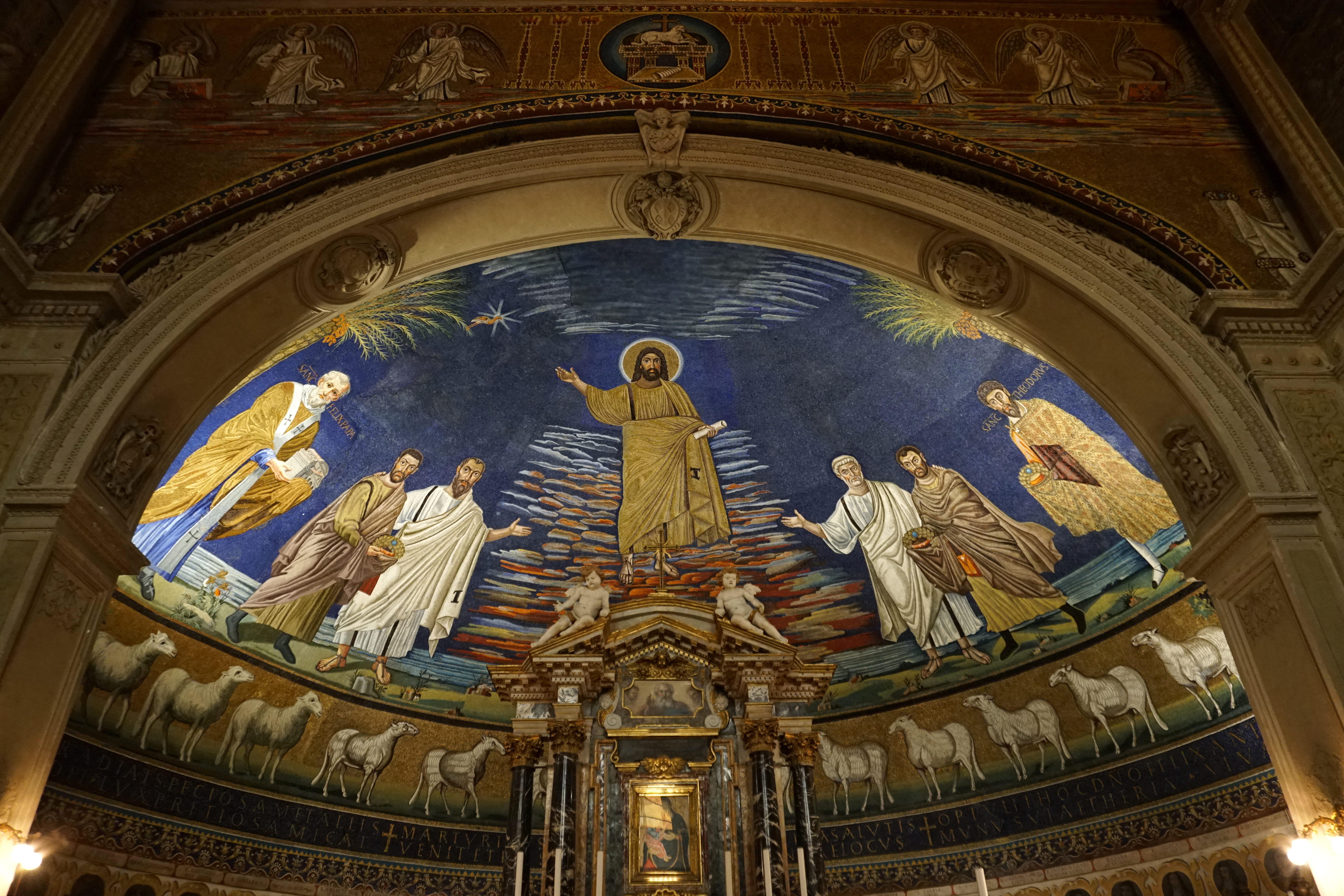
This Roman-Byzantine mosaic decorates the apse (large semicircular recess at the east end of a church) of a basilica in Rome dedicated to the Christian martyr-saints Cosmas and Damian, twin brothers from third-century Arabia. Cosmas and Damian (Cosma and Damiano in Italian) were physicians who, out of love for Christ and humanity, treated their patients free of charge. They were killed in the Diocletian persecution, one of the Roman Empire’s attempts to squelch Christianity.
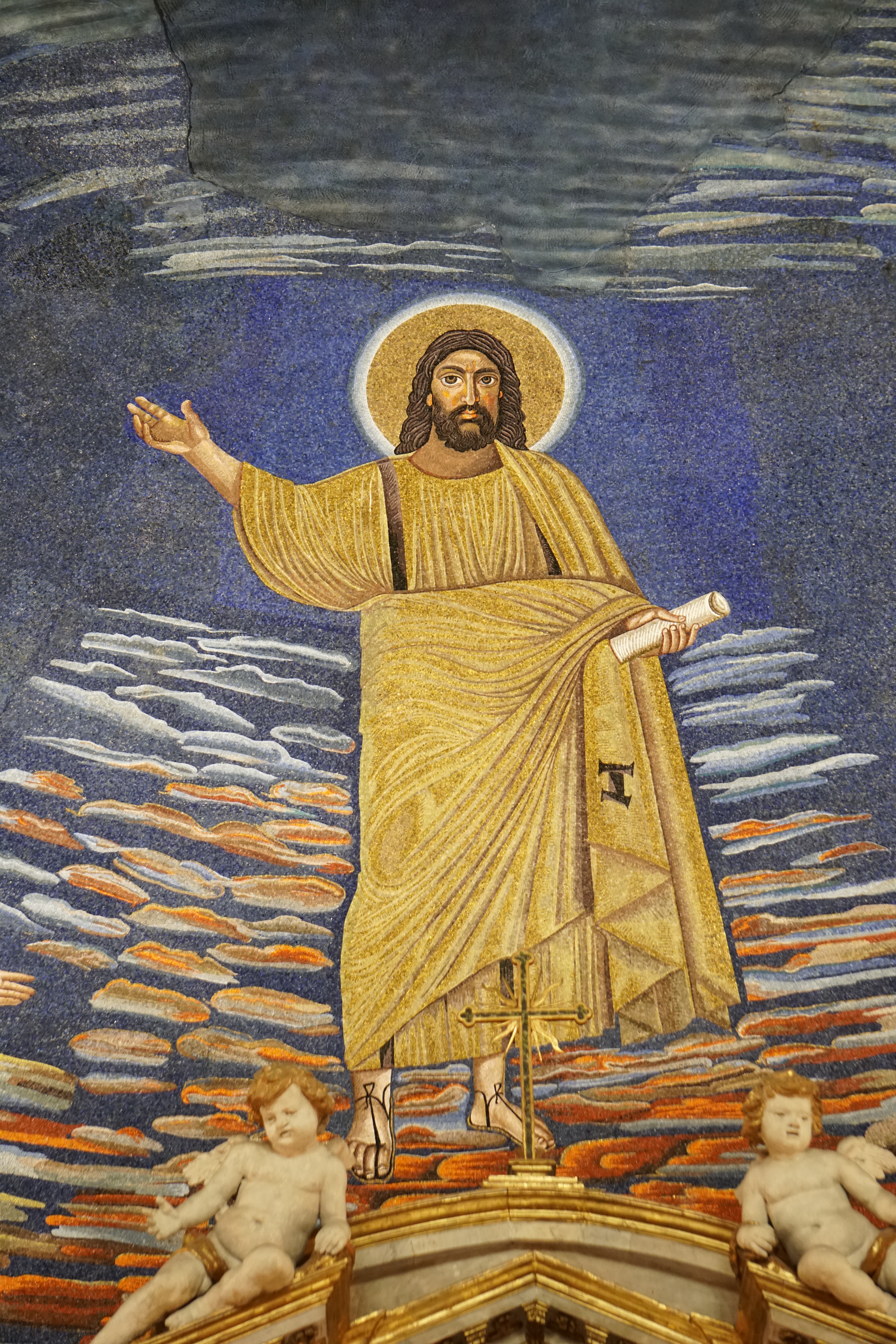
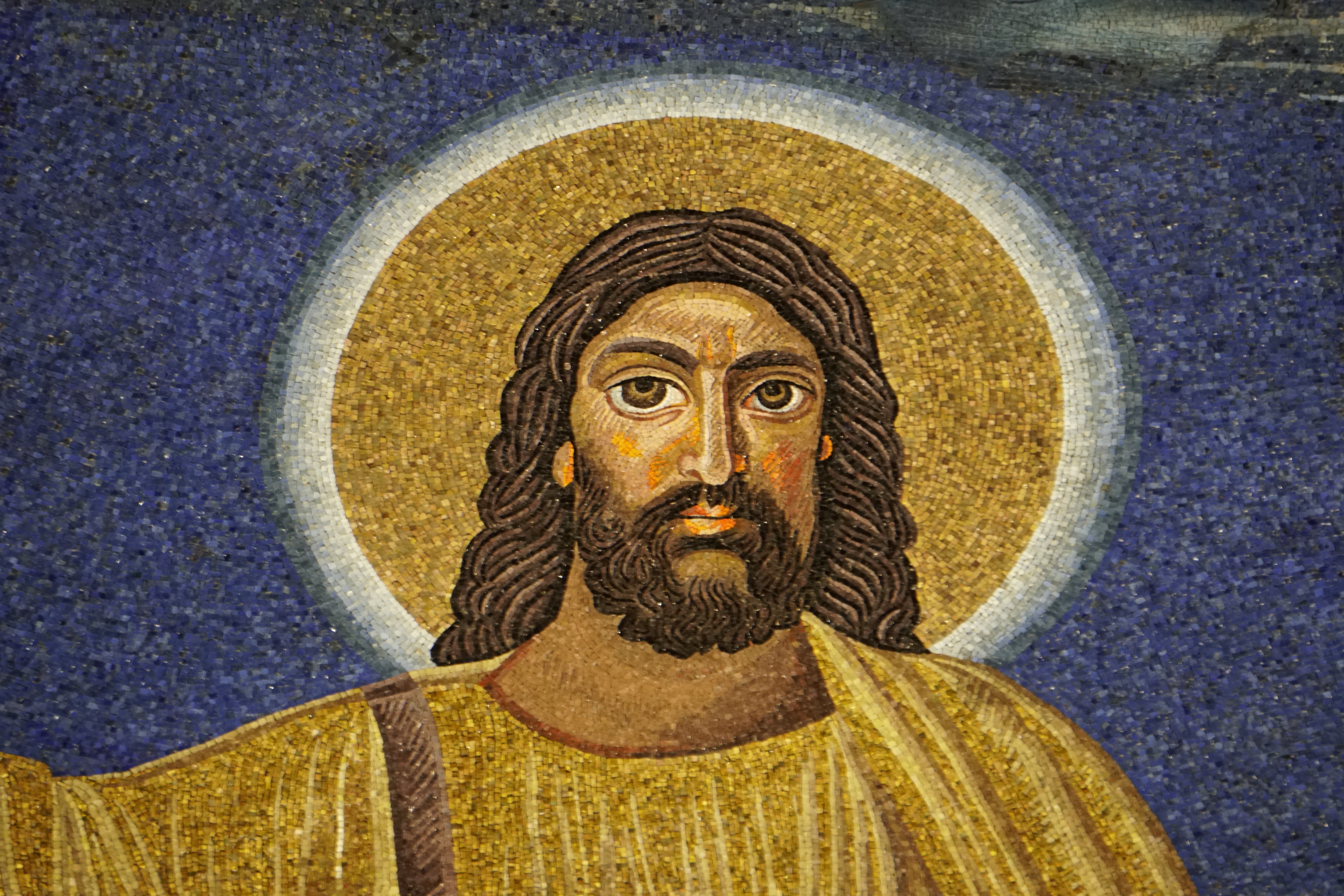
Situated behind the altar—and partially obscured by a hideous Baroque altarpiece with putti that was added in the seventeenth century—the mosaic depicts the parousia, the second coming of Christ. Christ is bearded and notably dark-skinned, and he wears a golden toga edged with purple. In his left hand he holds a rolled-up scroll, and his right hand he raises to indicate a phoenix in a palm tree—a mythological bird that rose from its own ashes, a potent symbol of resurrection that was adopted by the early Christians.
Descending from the heavens on dramatically colored clouds, Christ is portrayed as a triumphant ruler worthy of worship.
He is flanked by Peter and Paul, who present Cosmas and Damian. The figures on the extreme left and right are Pope Felix IV (r. 526–30), who paid to convert a pagan temple into the present church and to have it decorated with mosaics, and Theodore, another martyr under Diocletian. Cosmas, Damian, and Theodore lay down the crowns of their martyrdom before Christ, and Felix does the same with a model of the church he built.
The inscription at the base of the mosaic tells us that “Felix has offered this gift worthy of the lord bishop so that he may live in the highest vault of the airy heavens.” (If you balk at that, I do too; that you can buy your way to heaven, that you can earn favor with God or remit your punishment for sin through expensive gifts, is a false belief that still persists today in some corners of popular culture and even the church. I’m grateful for wealthy donors to the church throughout history, whose funds have enabled, among other things, the creation of beautiful art—but I must reckon with the fact that sometimes their motives were misguided and self-serving.)
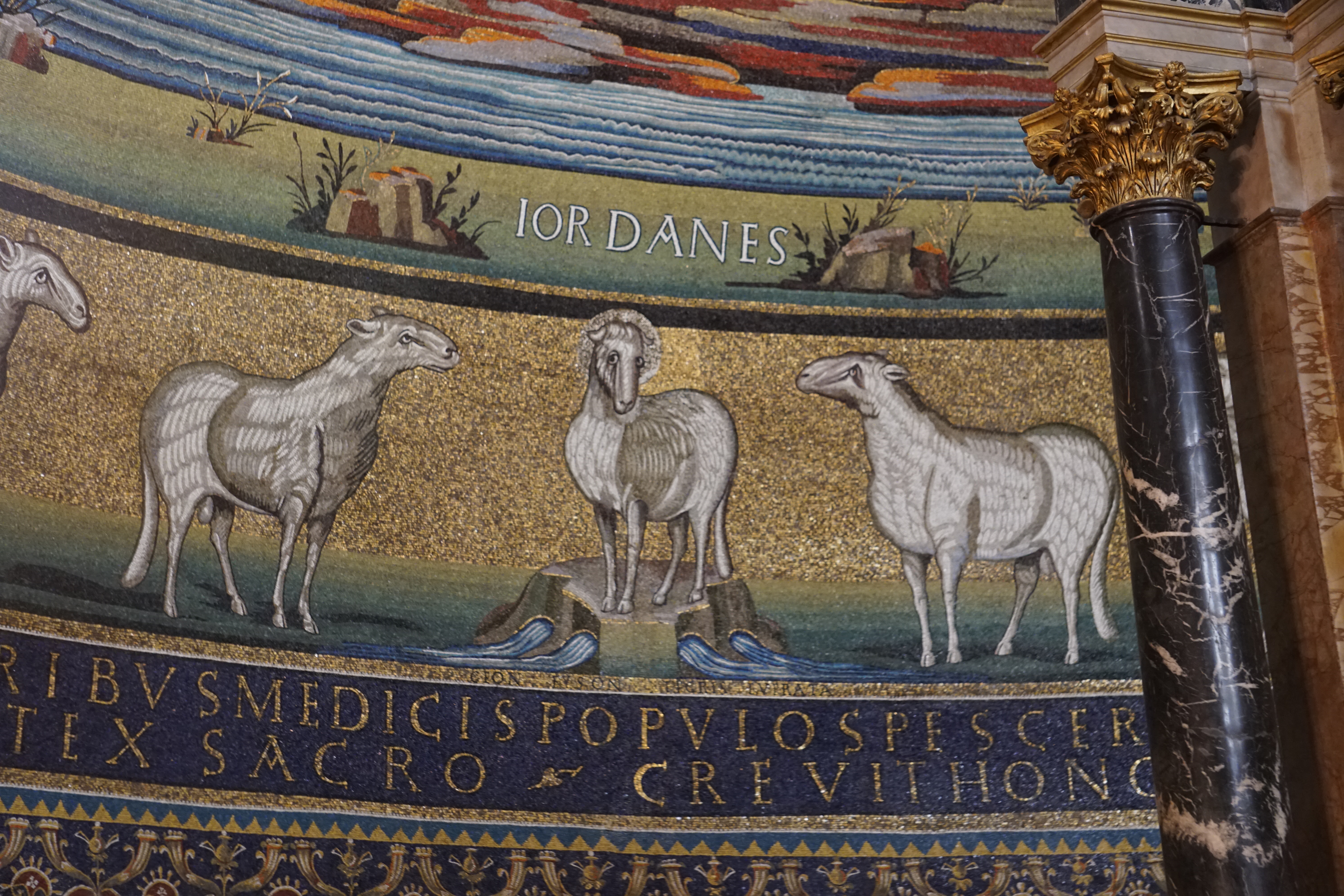
Below the primary scene is a band of twelve sheep, which represent the apostles, or the Christian flock more generally. They process toward the Agnus Dei (Lamb of God), who stands on a rock from which flow the four rivers of paradise.
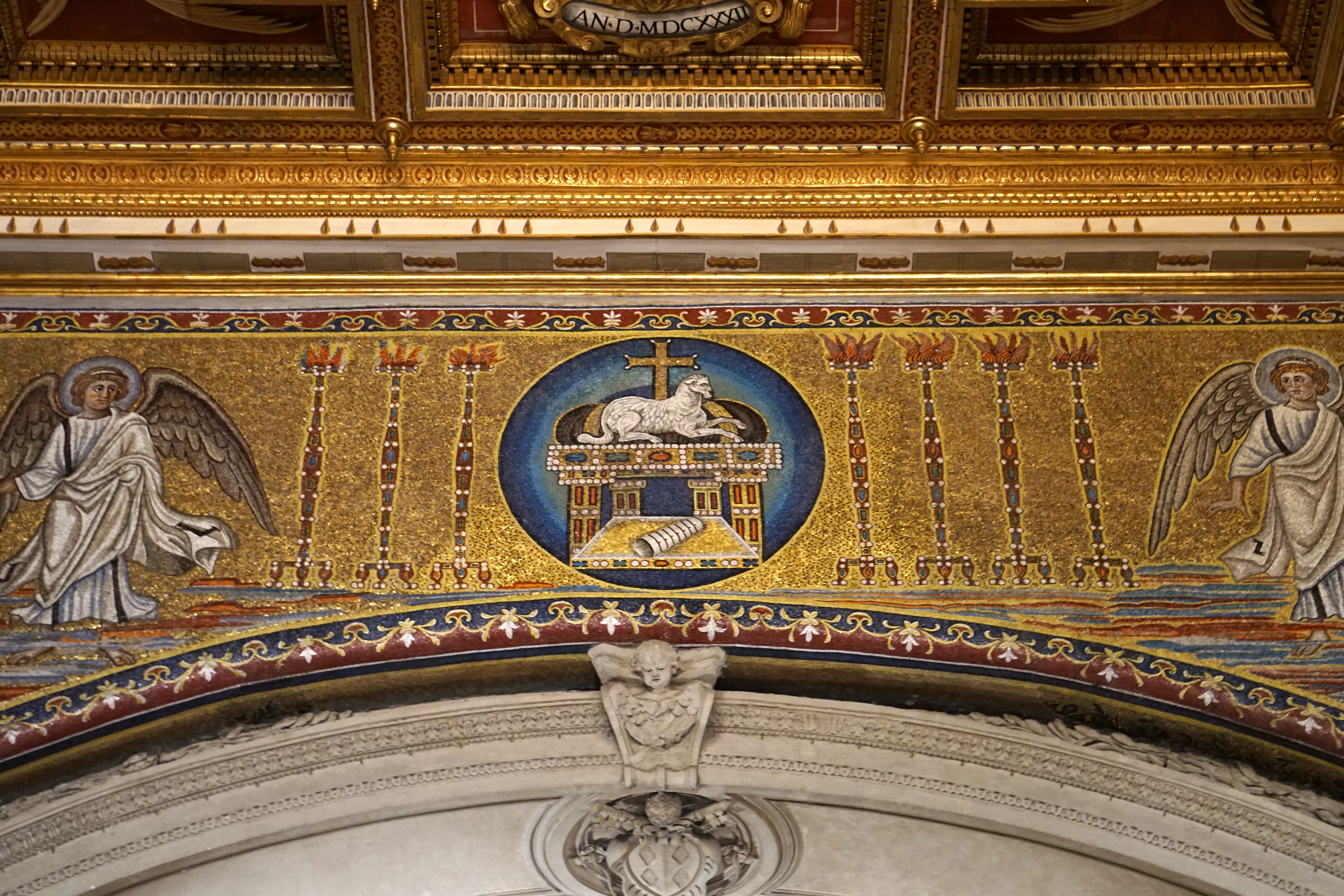
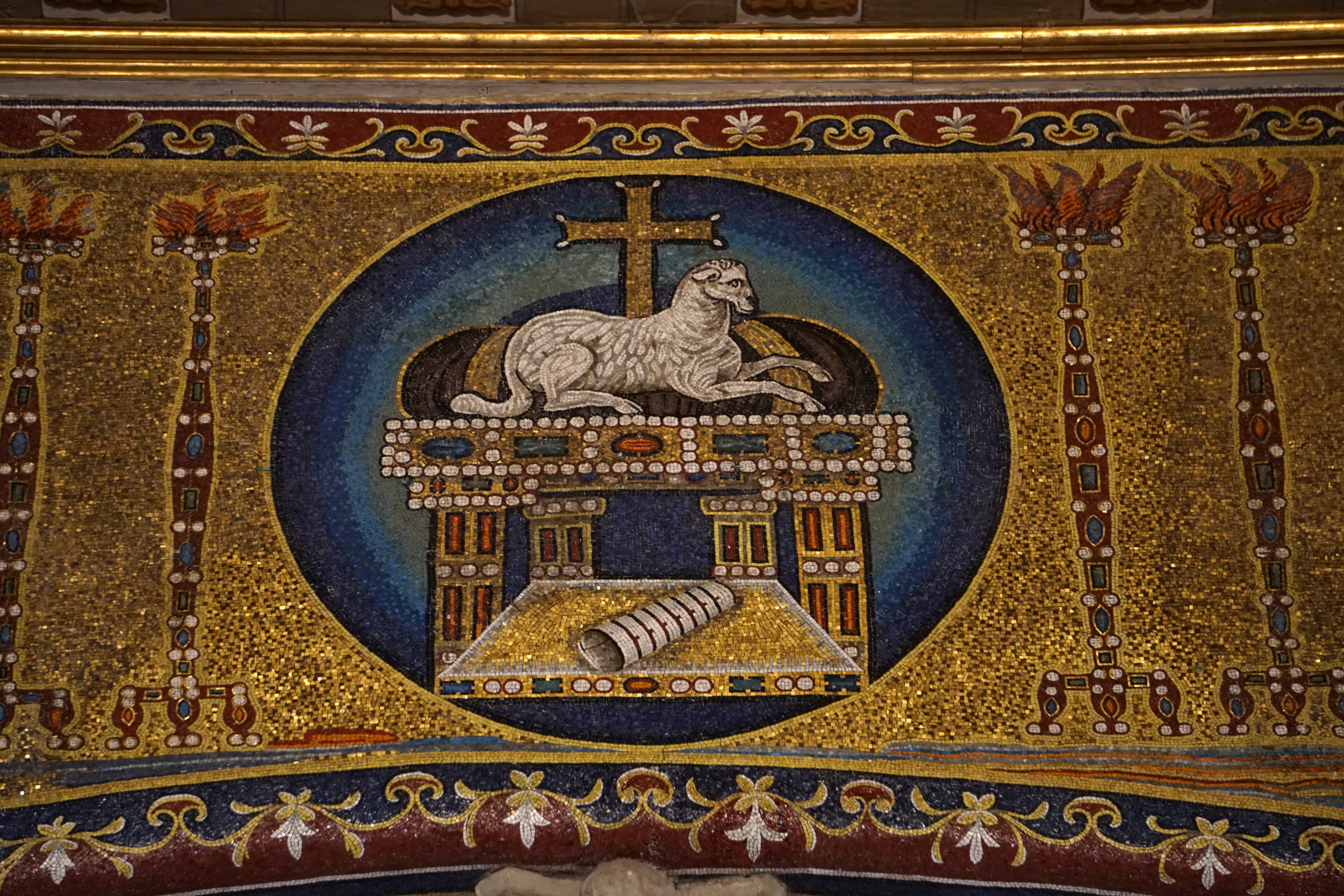
Based on further imagery from the book of Revelation, the arch that frames the apse depicts the Lamb seated upon the throne, a scroll with seven seals laid before him. He is flanked by seven lampstands, angels, and (not pictured) symbols of the Four Evangelists.
LISTEN: “God Is Coming on the Clouds” by Brother John Sellers, on Baptist Shouts! and Gospel Songs (1959)
Refrain:
God is coming on the clouds
Yes, he said
God is coming on the clouds
Yes, he said
May be morning, noon, or night
Better get all your business right
God is coming on the clouds
Yes, he saidWhen the clouds turn dark as night
And there ain’t no light in sight
When the world begins to tremble
Won’t that be an awful night
You better get in a hurry
My Lord is coming soon
Oh, he’s coming on the clouds
Yes, he said [Refrain]Oh Lord, please give me power
Stay with me every hour
I just been waiting here praying
For your Holy Ghost power
God, you been my friend
I know you freed me from sin
Yeah, you coming on the clouds
Yes, he said [Refrain]
 Art & Theology