Timber Timbre is the moniker of the Canadian folk blues singer-songwriter Taylor Kirk. The opening track on his 2009 self-titled album, “Demon Host,” establishes the album’s haunted tone. The song is mournful and mystical, and it references God, religion, sin, death, and repentance.
Death, she must have been your will A bone beneath the reaper’s veil With your voice my belly sunk And I began to feel so drunk
Candle, candle on my clock Oh Lord, I must have heard you knock Me out of bed as the flames licked my head And my lungs filled up black in their tiny little shack It was real and I repent All those messages you sent Clear as day, but in the night Oh, I couldn’t get it right
Here is a church and here is a steeple Open the doors, there are the people And all their little hearts at ease For another week’s disease
And eagle, eagle talons scream I never once left in between I was on the fence and I never wanted your two cents Down my throat, into the pit, with my head upon the spit Oh Reverend, please, can I chew your ear? I’ve become what I most fear And I know there’s no such thing as ghosts But I have seen the demon host
There are several different ways to interpret this song, but at its core, it seems to me it’s about an agnostic facing death. In the first four lines he hears death calling to him—personified, atypically, as a woman. The “your,” I think, is God, whom the speaker names a few lines later. (Alternatively, “death” could be a noun of direct address and “your” its pronoun, in which case “she” may refer to a female friend who has died, inciting the crisis that follows.) Unprepared for this sudden confrontation, the speaker feels woozy with shock.
Candles and clocks serve as memento mori, reminders of death. As the wax burns down and time ticks on, he’s jolted out of a nightmare about the flames of judgment. Awake now to the reality of God’s holiness, he repents, realizing that God has been pursuing him all along.
He enters a church, but he’s turned off by the apparent easiness with which the people greet “another week’s disease.” I’m not sure what that means—the horrors and suffering of the world? personal sin? If these Christians struggle with either, they mask it. He is not able to feel the same sense of peace and victory they do.
“Eagle, eagle talons scream” is an elusive yet evocative line that may refer to the feeling of being pierced or gutted, perhaps having one’s sin revealed by the Holy Spirit. Or maybe it expresses a more indefinable sense of anxiety and distress.
The speaker admits he had always been perfectly comfortable sitting on the fence, “in between” faith and no-faith, not committing to this or that system of belief and practice. He never wanted God to intervene with his “two cents” on what is real and how to live. He resents the church’s teachings on eternal punishment and hellfire. And yet he’s ambivalent about Christianity. He cherishes his indecision, but he’s also restless. He seeks out the pastor to talk with.
“I’ve become what I most fear,” he confesses. And what is that? Being sold out to Jesus? Engulfing wickedness?
Even the title of the song, taken from the last line, is ambiguous, as the word “host” has multiple meanings. The “demon host” could refer to an army of demons, to a body that’s possessed by a demon, or to a parody of the Eucharist (in Christian liturgies, the consecrated bread, the body of Christ, is called the host). It seems the speaker has either experienced a stark vision of evil, or some evil has taken hold of him. Or maybe it’s death that he’s characterizing as demonic, but if so, it’s manifesting supernaturally, as he calls it ghostly.
In the music video there’s a menacing hooded figure that stands outside the shed in which Kirk performs, looking very much like the Grim Reaper. This entity listens, then gradually approaches, then even holds the microphone for Kirk, but his face is always in shadow. In some shots we see a second figure, dressed in the same garb, holding a guitar.
Lyrically, the song is unresolved, and musically, the last minute is unsettling.
Is this a song about damnation? Or dying to self, crucifying the ego, part of the conversion process? What about addiction? Or surviving a near-death experience and living in light of that? Whatever the particulars, the song is in the voice of someone who is shaken from his equivocation into seriously considering faith; someone who wrestles with God, mortality, and evil.
I’m eager to hear what you make of it or what stands out to you.
Great Spirit of the God who is alive, Whose risen Son I seek before the dawn, Who makes the black and gold sunflower thrive, The earthworm loosen soil beneath the lawn; Great Spirit, grant my great-grandmother’s looks Attend me while I rub her cherry hutch. Great Spirit, grant my late grandfather’s books Preserve his signature I love to touch. Surround and show to me that massive cloud Of witnesses—undauntable or docile. Allow their countenances to enshroud My shoulders, spoken of by Your Apostle. Send generous Nunnehi to my steeple, Returning me, at last, to my dark people.
Note: Nunnehiare spirit people in Cherokee mythology. The Cherokee word has been translated as “The People Who Live Anywhere” or “The People Who Live Forever.”
Jennifer Reeser (born 1968) is a formalist poet of Anglo-Celtic and Native American descent. Her seven poetry collections are Strong Feather (2022), Indigenous (2019), Fleur-de-Lis (2016), The Lalaurie Horror (2013), Sonnets from the Dark Lady and Other Poems (2012), Winterproof (2005), and An Alabaster Flask (2003), and she is anthologized in Christian Poetry in America since 1940 (2022). In addition to writing original poems, she also translates poetry from Russian, French, and Cherokee. A member of the Cherokee Nation, she divides her time between Louisiana, where she was born and raised, and the Cherokee Reservation in Indian Country near Tahlequah, Oklahoma.
This November near where I live in Maryland there are at least two concerts by Christian artists I’d like to invite you to:
>> Matthew Clark, November 1, 2025, Crownsville, MD: The Eliot Society, an organization I volunteer with, is hosting Matthew Clark, a singer-songwriter from Mississippi, for an evening of music and stories this Saturday. Tickets are $10; wine, coffee, and refreshments will be served. Here’s Clark’s song “Ordinary Artists”:
>> Ordinary Time, November 22, 2025, St. Moses Church, Baltimore: Longtime friends Peter La Grand (Vancouver), Jill McFadden (Baltimore), and Ben Keyes (Southborough, Massachusetts) make up the acoustic folk trio Ordinary Time. They’re performing a free concert at McFadden’s church in a few weeks, which will be followed by Q&A around the role of music in the communal life of the church. Here’s their song “I Will Trust (Isaiah 12)”:
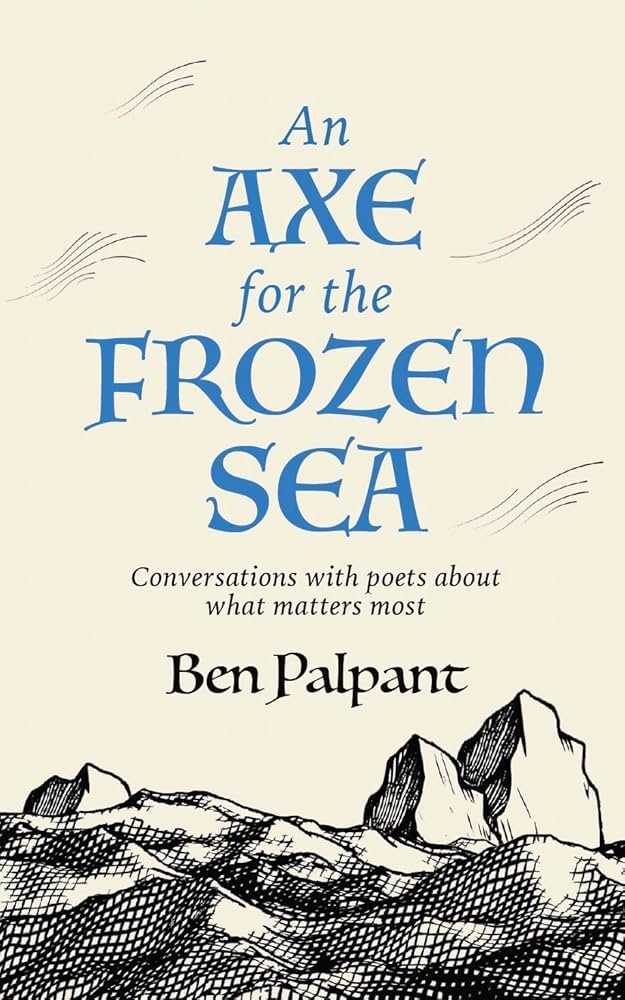
FREE AUDIOBOOK: An Axe for the Frozen Sea: Conversations with Poets about What Matters Most by Bel Palpant: “A book must be the axe for the frozen sea within us,” Franz Kafka wrote in a letter to his friend Oskar Pollak in 1904. That quote is the source of the title of Ben Palpant’s new book, one of my favorites of this year. An Axe for the Frozen Sea is a collection of one-on-one interviews Palpant conducted with seventeen acclaimed poets of faith, exploring the human experience, especially everyday joys and struggles, and the writing life. Featured poets include Scott Cairns, Marilyn Nelson, Robert Cording, Li-Young Lee, and Jeanne Murray Walker. I was really compelled by the conversations.
An Axe for the Frozen Sea is available for purchase in print, but it also kicked off the new podcast Rabbit Room Press Presents, serialized audiobooks of select titles from the publisher. All the book’s content, read by the author, can be listened to for free in this format. Highly recommended!
+++
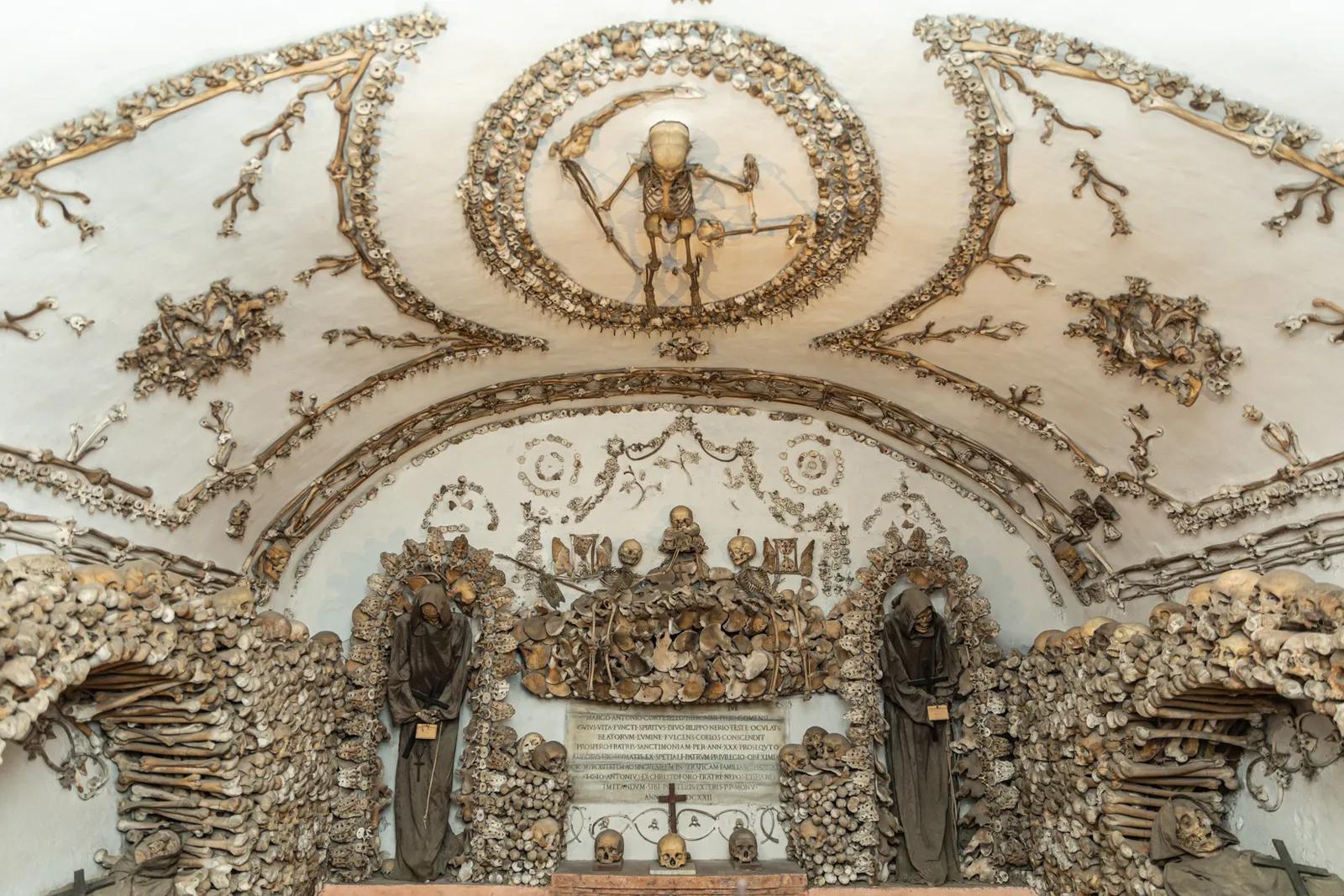
ARTICLE: “Bone chapels and their strange art” by Lanta Davis, Christian Century: If my last blog post piqued your interest in Christian bone chapels, you’ll want to read this article Lanta Davis wrote last November about her visit to the crypt of Santa Maria della Concezione dei Cappuccini in Rome. With a scythe-wielding skeleton overhead and arches, garlands, chandeliers, and mock clocks made of human bones, you’d be forgiven for thinking you mistakenly wandered into a haunted house. But in fact this is a sacred space, its unusual decoration the devotional labor of a seventeenth-century friar. Davis reflects on how the bone installations transform the ugliness of death into something beautiful, rearranging death into surprising forms—such as a skull with butterfly wings made from shoulder blades—that culminate in the Crypt of the Resurrection.
SONG: “Bones” by Mark Shiiba: The title track of Mark Shiiba’s debut album from last year references the placard that greets visitors to Rome’s Crypt of the Three Skeletons (see previous roundup item): “What you are now we used to be; what we are you will be.” This saying was a common memento mori, which I first learned when studying Renaissance art in Florence as a junior in college: Io fu già quel che voi siete, e quel chi son voi ancor sarete, reads the inscription above the fictive cadaver tomb that Masaccio painted inside Santa Maria Novella.
Shiiba’s song is jaunty in tone, and when he shared an excerpt on Instagram, he set it to the similarly sprightly animated short The Skeleton Dance (1929) by Walt Disney, which is based on medieval “danse macabre” imagery. Perhaps that seems to you unbefitting of such a serious subject as death—but since its inception, the church has proclaimed Christ’s ultimate defeat of death. “Where, O death, is your victory?” the apostle Paul taunts. “Where, O death, is your sting?” Death is lamentable, but it’s not the end of the story. The playfully arranged “bones at the bottom of a church in Rome” anticipate the resurrection of our bodies on the last day.
LENT SERIES: “Let go of unlove this Lent: Let’s practice love together—a new and improved Lenten reflection series starting March 5th” by Tamara Hill Murphy: I’ve been nurtured for years by Murphy’s gentle spiritual writing and curated beauty and wisdom, and I especially appreciate her annual Advent and Lent Daybook series. This Lent, she’ll be exploring four postures of cruciform love given to us in 1 Corinthians 13, providing daily scripture readings, prayers, and art, along with weekly practices. You can gain access for just $16. (She uses the Substack platform.)
Forgive Thy Other by Scott Erickson
I like how Murphy frames the season: “Lent is a significant time for us to seek a deeper understanding of God’s heart and recognize the gaps in our experiences of His love. Through its beautiful stories, prayers, and practices, Lent also invites us to reflect on our own expressions of love and unlove. The Book of Common Prayer encourages us to let go of our unloving ways so we can love what (and who) God loves. Let’s joyfully embrace this transformative season together, reflecting God’s love with compassion and understanding.”
+++
NEW PLAYLIST: God’s Love (Art & Theology): Related to Tamara Hill Murphy’s 2025 Lent Daybook theme: here’s a new playlist I put together of songs about the abounding, ever-present love of God the Father, Son, and Holy Spirit, a love that seeks, heals, and transforms.
The cover photo is of an early twentieth-century relief sculpture from the exterior of Holy Trinity Church in the town of St Andrews, Scotland, taken by Joy Marie Clarkson; it shows a pelican pecking her breast to feed her young with her own blood, a medieval symbol of Christ’s self-giving love.
There’s some overlap between this playlist and my dedicated Lent Playlist. I hope it uplifts you in the knowledge of the depths and riches of God’s love for you.
+++
SONGS:
>> “And Am I Born to Die?”: Lent opens with a call to “remember you are dust, and to dust you shall return.” A reflection on human mortality, this somber hymn was written by the great English Methodist hymnist Charles Wesley (1707–1788) and set to music—a shape-note tune—by Ananias Davisson (1780–1857), a Presbyterian elder from Virginia. In this video from January 2023, it’s performed by the Appalachian folk musician Nora Brown, with Stephanie Coleman on fiddle and James Shipp on harmonium.
And am I born to die? To lay this body down? And must my trembling spirit fly Into a world unknown?
Awaked by trumpet sounds, I from my grave shall rise, And see the Judge, with glory crowned, And see the flaming skies.
Soon as from earth I go, What will become of me? Eternal happiness or woe Must then my portion be.
>> “Nunc tempus acceptabile” (Now Is the Accepted Time): Second Corinthians 5:20b–6:10 is traditionally read on Ash Wednesday, a passage that includes the adjuration, “Behold, now is the acceptable time; behold, now is the day of salvation!” (2 Cor. 6:2). There’s a beautiful tenth-century Latin hymn for Lent, from the Liber Hymnarius, that opens with this line. In 2013, the Chicago-based composer and conductor Paul M. French set it to music for SSA a cappella choir, its unison opening unfolding into an increasingly expressive three-part harmony. It’s performed here by the Notre Dame Magnificat Choir under the direction of Daniel Bayless.
Nunc tempus acceptabile
Fulget datum divinitus,
Ut sanet orbem languidum
Medela parsimoniae.

Christi decoro lumine
Dies salutis emicat,
Dum corda culpis saucia
Reformat abstinentia.

Hanc mente nos et corpore,
Deus, tenere perfice,
Ut appetamus prospero
Perenne pascha transitu.

Te rerum universitas,
Clemens, adoret, Trinitas,
Et nos novi per veniam
Novum canamus canticum.

Amen.
Today is the accepted time. Christ’s healing light, the gift divine, shines forth to save the penitent, to wake the world by means of Lent.
The light of Christ will show the way that leads to God’s salvation day. The rigor of this fasting mends the hearts that hateful sinning rends.
Keep all our minds and bodies true in sacrifice, O God, to you, that we may join, when Lents have ceased, the everlasting Paschal feast.
Let all creation join to raise, most gracious Trinity, your praise. And when your love has made us new, may we sing new songs, Lord, to you.
LECTURE: “Embracing the Ephemeral: How Art Honors Creaturehood” by James K. A. Smith, Duke Divinity School, February 17, 2022: Mortality means something more than being a creature who will someday die, says philosopher James K. A. Smith; it is a way of being, not defined solely by its terminus. “To be created is to be ephemeral, fugitive, contingent. To be a creature is to be a mortal, subject to the vicissitudes of time.” Part of the Duke Initiatives in Theology and the Arts Distinguished Lecture Series, this talk about developing a Christian temporal awareness is based on chapter 4 of Smith’s then-forthcoming, award-winning book How to Inhabit Time (Brazos, 2022), titled “Embrace the Ephemeral: How to Love What You’ll Lose.”
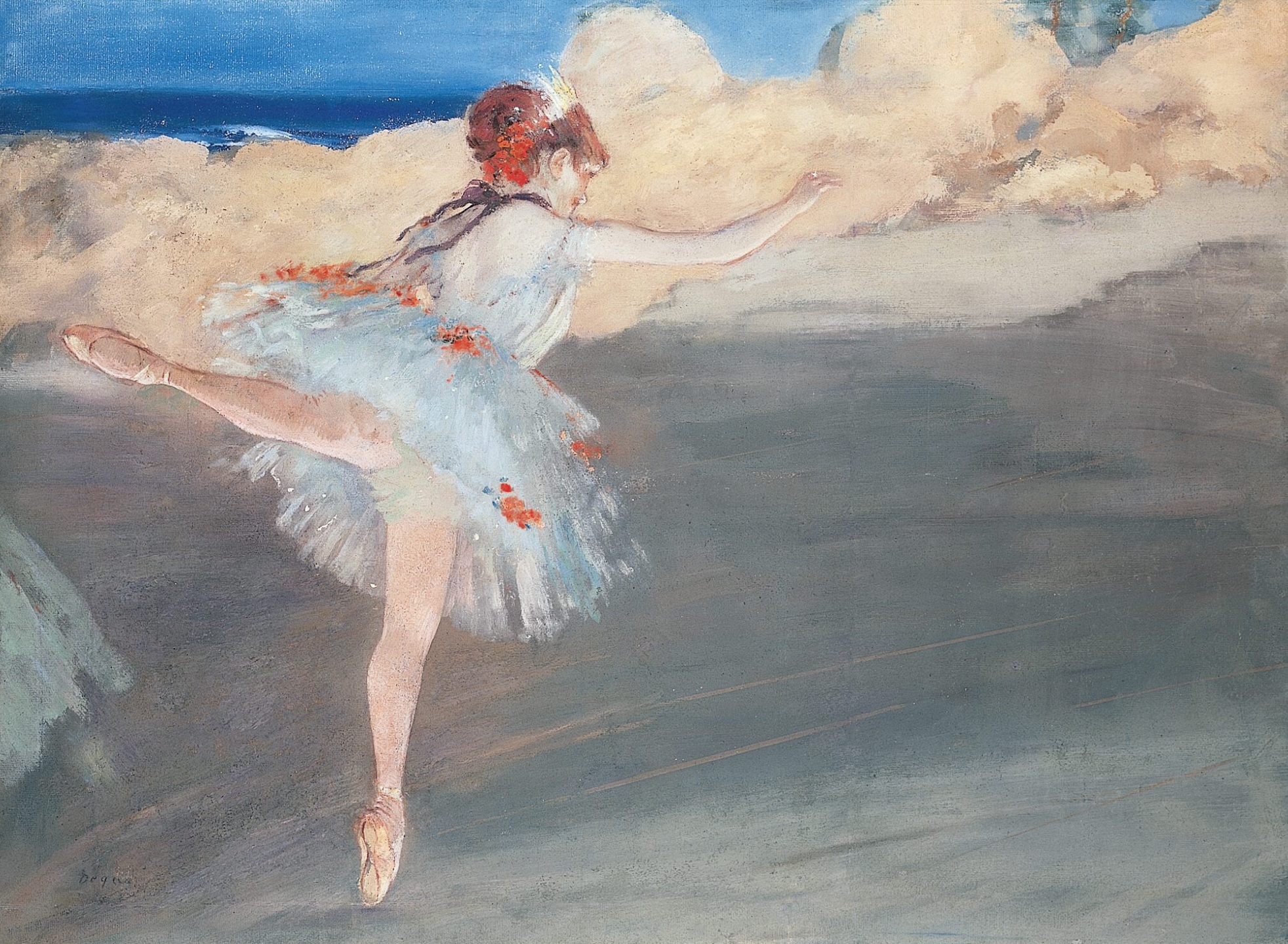
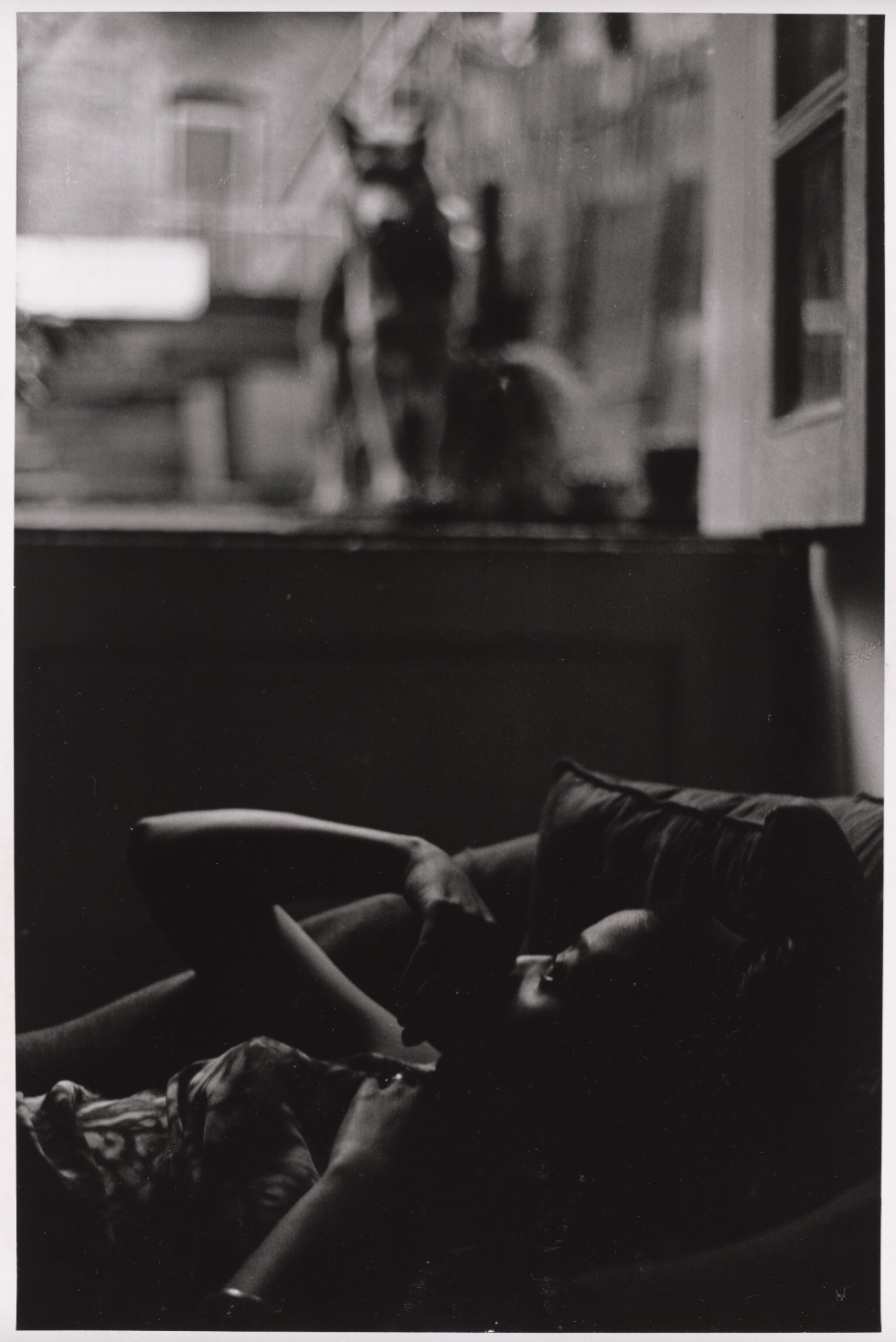
Edgar Degas (French, 1834–1917), The Star: Dancer on Pointe, ca. 1878–80. Gouache and pastel on paper, mounted on board, 22 1/4 × 29 3/4 in. (56.5 × 75.6 cm). Norton Simon Museum, Pasadena, California.Herbert Randall (American, 1936–), Untitled (Lower East Side, New York), 1960s. Gelatin silver print, 13 7/16 × 8 7/8 in. (34.2 × 22.5 cm). J. Paul Getty Museum, Los Angeles.
Some notes I took:
“We need not only memento mori, but also memento tempore—reminders of our temporality, not just our mortality.”
“Imagine embracing the ephemeral as a discipline of not only conceding our mortality as a condition but also receiving our mortality as a gift.”
“Our finitude is not a fruit of the fall, even if it is affected by the fall. Contingency is not a curse. . . . Aging is not a curse. Autumn is not a punishment. Not all that is fleeting should be counted as loss. The coming to be and passing away that characterize our mortal life are simply the rhythms of creaturehood.”
Resting in our mortality instead of resenting it
Theologian Peter Leithart says hebel means not “emptiness,” “vanity,” or “meaninglessness” but, literally, “mist” or “vapor.” The Teacher in Ecclesiastes uses that word repeatedly to describe human life: it’s vaporous, elusive, escapes our efforts to hold on to it, to manage it.
How to sift tragedy from good creaturely rhythms in which good things fade?
“To dwell faithfully mortally is to achieve a way of being in the world for which not all change is loss and not all loss is tragic, while at the same time naming and lamenting those losses that ought not to be. . . . To be faithfully mortal is a feat of receiving and letting go, celebrating and lamenting. Being mortal is the art of living with loss, knowing when to say thank you and knowing when to curse the darkness.”
“One Art” by Elizabeth Bishop: “The art of losing isn’t hard to master . . .”
A Q&A takes place from 39:00 onward. The first question, asked by theologian Jeremy Begbie, is the one I had, and it recurs with different phrasing at 58:17.
Mortality is one of the main themes in Silver’s poetry, including the physicalities of being human, as reflected in “Ash Wednesday,” in which she, the speaker, muses on the shared Christian ritual of the imposition of ashes at the beginning of Lent. Silver, who died of breast cancer eight years after writing this poem, was used to practicing memento mori (“remember you must die”): her mastectomy scar and silicone breast prosthesis are constant reminders of the fact, she writes. She wants to touch the body of God, wants to wrap her fingers around some tangible promise of healing, but both remain elusive. Instead she resolves to embrace the finiteness of her present form, taking the burnt remains of those Hosanna palms from last year and wearing them with repentance and praise, knowing that what is sown in perishability will be raised in imperishability (1 Cor. 15:42).
I’m compelled by how Silver both laments her fragility and owns it. There’s a defiant quality to the tone, the ash-and-oil mixture that’s thumbed into her forehead in the shape of a cross evoking a football player applying eye black in front of a locker room mirror before the big game. Wearing the mark of Christ, she’s ready for the face-off between herself and death.
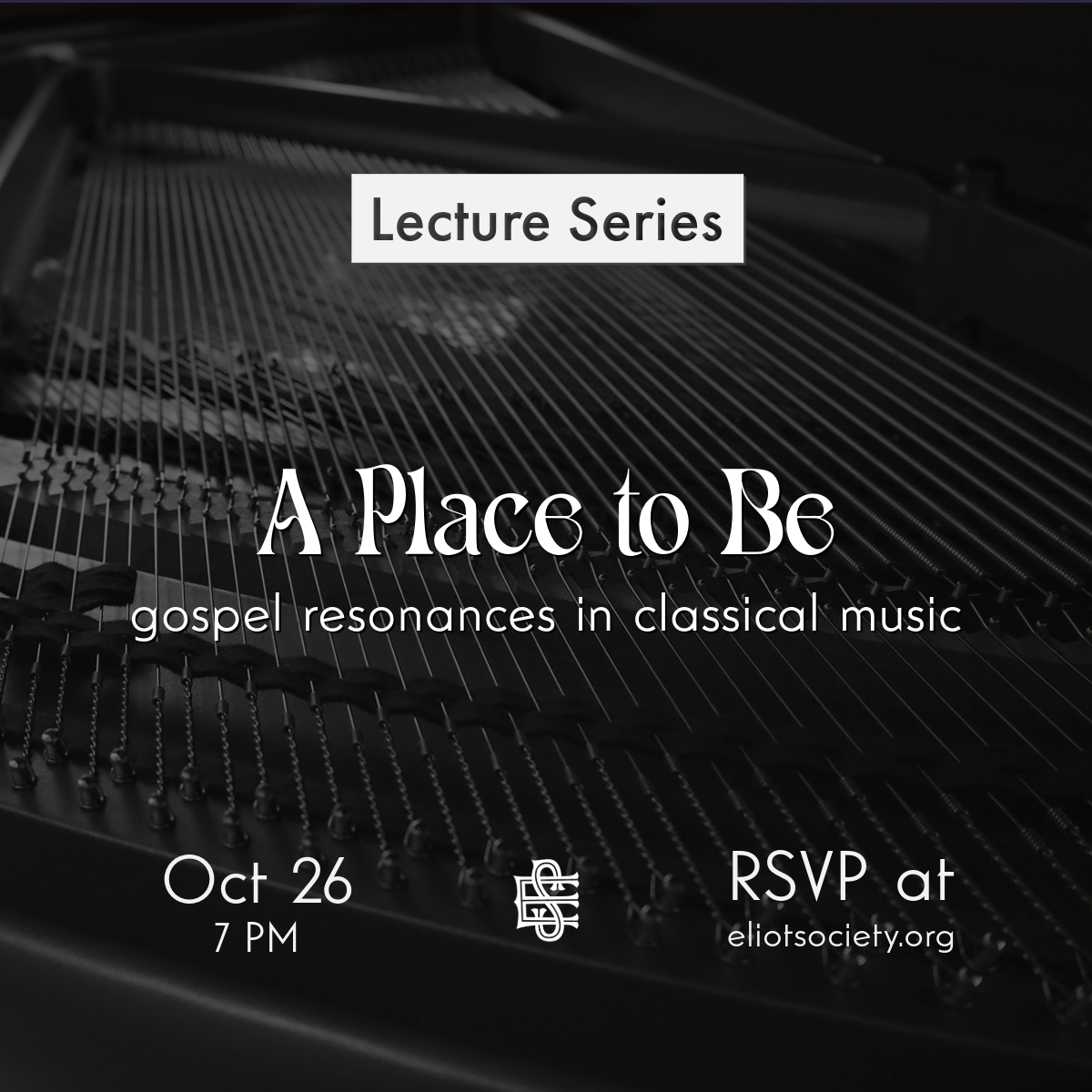
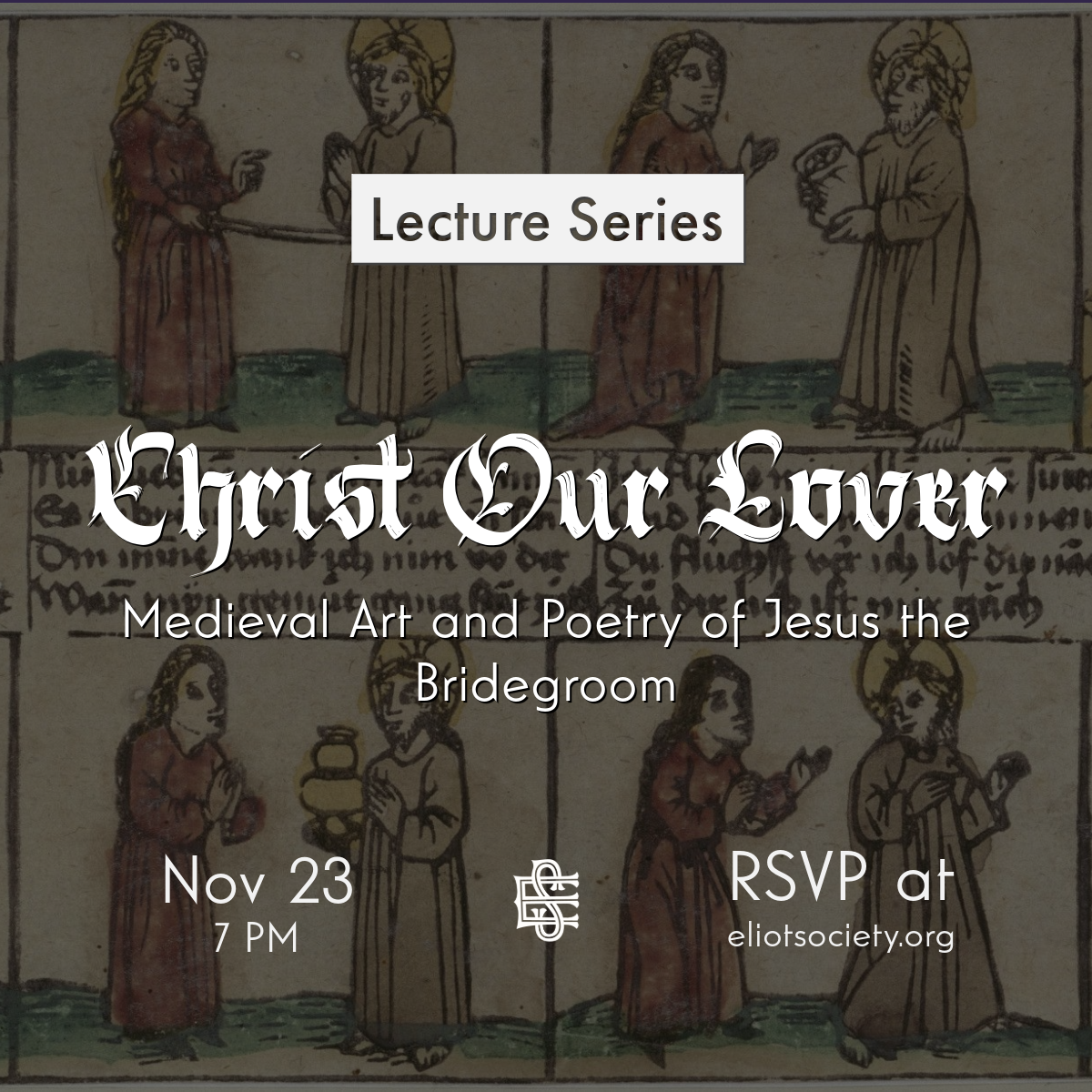
I’m one of the artistic directors of the Eliot Society, a faith-based arts nonprofit in Annapolis. I’m really looking forward to our next two events this fall! If you’re in the area, I’d love for you to come out to these talks by a musician and a medievalist. They’re both free and include a time of Q&A and a small dessert reception afterward.
>> “A Place to Be: Gospel Resonances in Classical Music” by Roger Lowther, October 26, 2024, Redeemer Anglican Church, Annapolis, MD: “At its most basic, music is a collection of sounds. How those sounds are organized varies by country and culture and reflects their values, history, and heart-longings. Join Tokyo-based American musician Roger W. Lowther on a journey through the landscapes of Western and Japanese classical music and explore their unique and fascinating differences. Roger will lead from the piano as he demonstrates the musical languages of each tradition and show how they contain hidden pointers to gospel hope in a world full of suffering and pain.”
I’ve heard Roger speak before, and he’s very Jeremy Begbie-esque in that he does theology through instrumental music. As a bicultural person, a New Englander having lived in Japan for almost twenty years (ministering to and through artists of all disciplines), he brings a unique perspective. In addition to discussing the defining features of the Western versus Japanese classical traditions, he’ll be performing a few piano pieces from each.
>> “Christ Our Lover: Medieval Art and Poetry of Jesus the Bridegroom” by Dr. Grace Hamman, November 23, 2024, St. Paul’s Anglican Church, Crownsville, MD: “If there was a ‘bestseller’ book of the Bible in the European Middle Ages, it would be the Song of Songs. When read allegorically, in the manner of medieval theologians like St. Bernard of Clairvaux, the book tells the story of the romance between Christ and the soul that culminates in Christ’s love shown on the cross. This is a story of mutual pursuit, the pain of desire and sacrifice, sensual delight, and true union. The idea of Jesus as a longing lover of each individual soul appeared everywhere by the later medieval period, in art, poetry, sermons, and the devotional writings of men and women alike.
“These themes and images can strike us as strange, even uncomfortable. An illustrated poem for nuns depicted the Song of Songs like a cartoon strip. Prayer books of wealthy nobles portrayed Christ’s wounds intimately. Poets wrote Christ in the role of a chivalric, wounded knight weeping and waiting for his lady. And yet, examining this ancient imagery of Jesus our Lover together can challenge us to greater vulnerability with our Savior, to refreshed understandings of God’s hospitality, and, in the words of Pope Gregory the Great, can set our hearts ‘on fire with a holy love.’”
Grace is a fabulous teacher of medieval poetry and devotional writing, one whom I’ve mentioned many times on the blog before. Her Jesus through Medieval Eyes was my favorite book of 2023; read my review here. She has encouraged me to move in toward the strange and imaginative in medieval theology and biblical interpretation, because there’s often beauty and wisdom to be found there if we give it a chance. She has a keen awareness of the body of Christ across time and an appreciation for the gifts they’ve bequeathed the church of today, be they words, art, or whatever else.
+++
VIDEO: “Poet and Pastor: Christian Wiman and Eugene Peterson”: In this four-minute video from Laity Lodge, poet and essayist Christian Wiman and pastor and spiritual writer Eugene Peterson (best known for his Bible translation The Message) talk about prayer and spirituality. They each share a poem they’ve written: Wiman’s “Every Riven Thing” and Peterson’s “Prayer Time.” “People who pray need to learn poetry,” Peterson says. “It’s a way of noticing, attending.”
ARTICLE + PLAYLIST: “Latin American Fiesta!” by Mark Meynell: I always appreciate the selections and knowledge Mark Meynell [previously] brings to his 5&1 blog series for the Rabbit Room, each post exploring five short pieces and one long piece of classical music. This Latin American installment features Kyries from Peru and Argentina, a candombe air, a four-part Christmas anthem in Spanish creole from Mexico (I found an English translation!), an Argentine tango, and a dance chôro (Portuguese for “weeping” or “cry”) from Brazil. What diverse riches!
“Classical music, as conventionally understood, is not often associated with Latin America,” Meynell writes, “though, as we will see, this is a situation that needs rectifying. Some extraordinary soundworlds were being created long before the Conquistadores arrived from European shores, and together with the cultural impact of the transatlantic slave trade from Africa, the musical mix that resulted is unique. To put it at its most simplistic, we could say that the two key musical influences were the Catholic Church and the complex rhythms of percussion and dance; and often, it’s hard to tell where one ends and the other begins.”
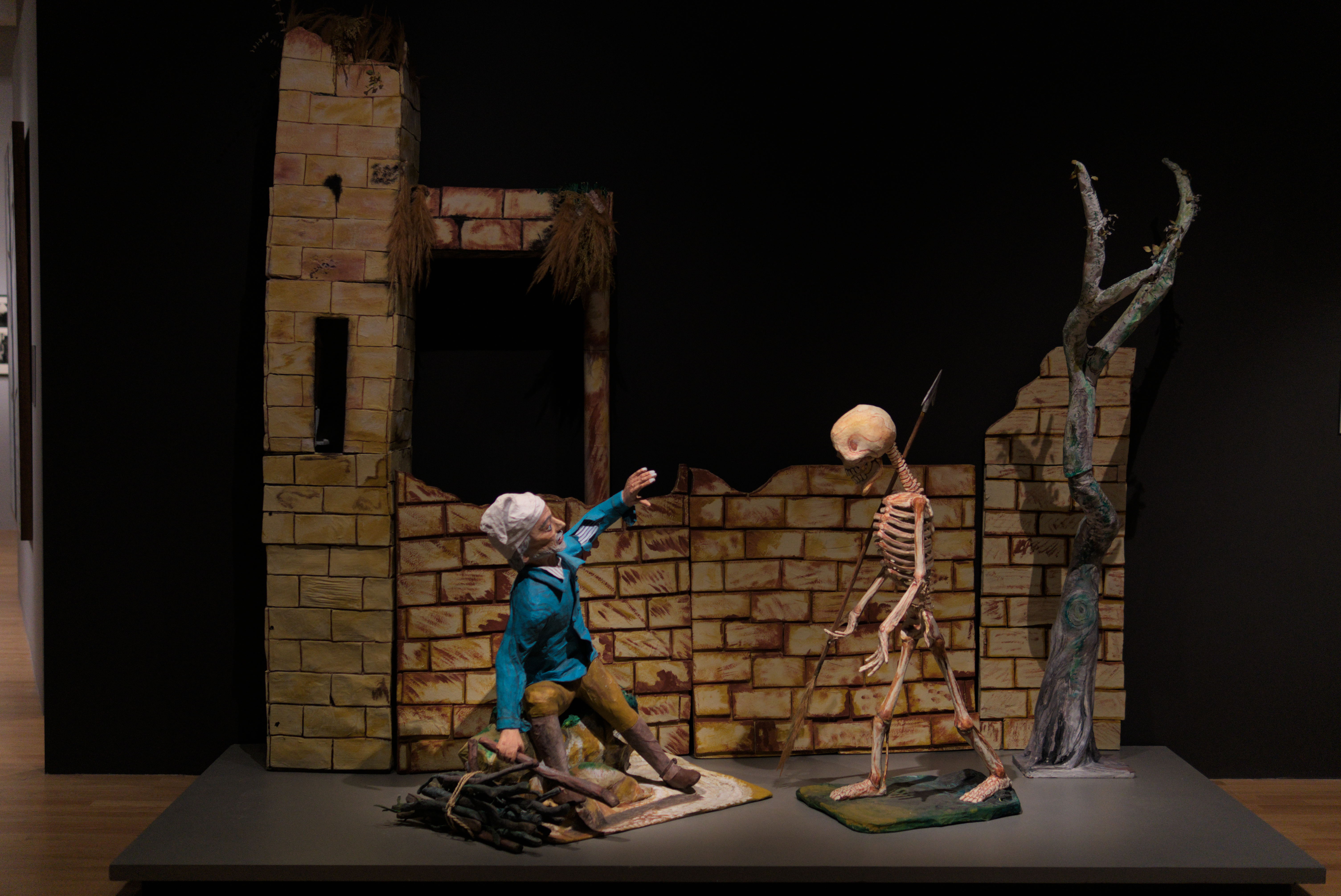
ARTWORK: The Old Man and Death by Pedro Linares: Last month I visited the Wadsworth Atheneum Museum of Art in Hartford, Connecticut, for the first time and was delighted to stumble upon an exhibition that had just been put up, Entre Mundos: Art of Abiayala. On view through December 15, it highlights collection works made by artists with personal or ancestral ties to Mexico, the Caribbean, and Central and South America. The title translates to “Between Worlds,” and “Abiayala,” I learned, is a Guna (Kuna) word that means “land in its full maturity” or “land of vital blood”; it’s used by the Guna and some other Indigenous peoples to refer to the Americas.
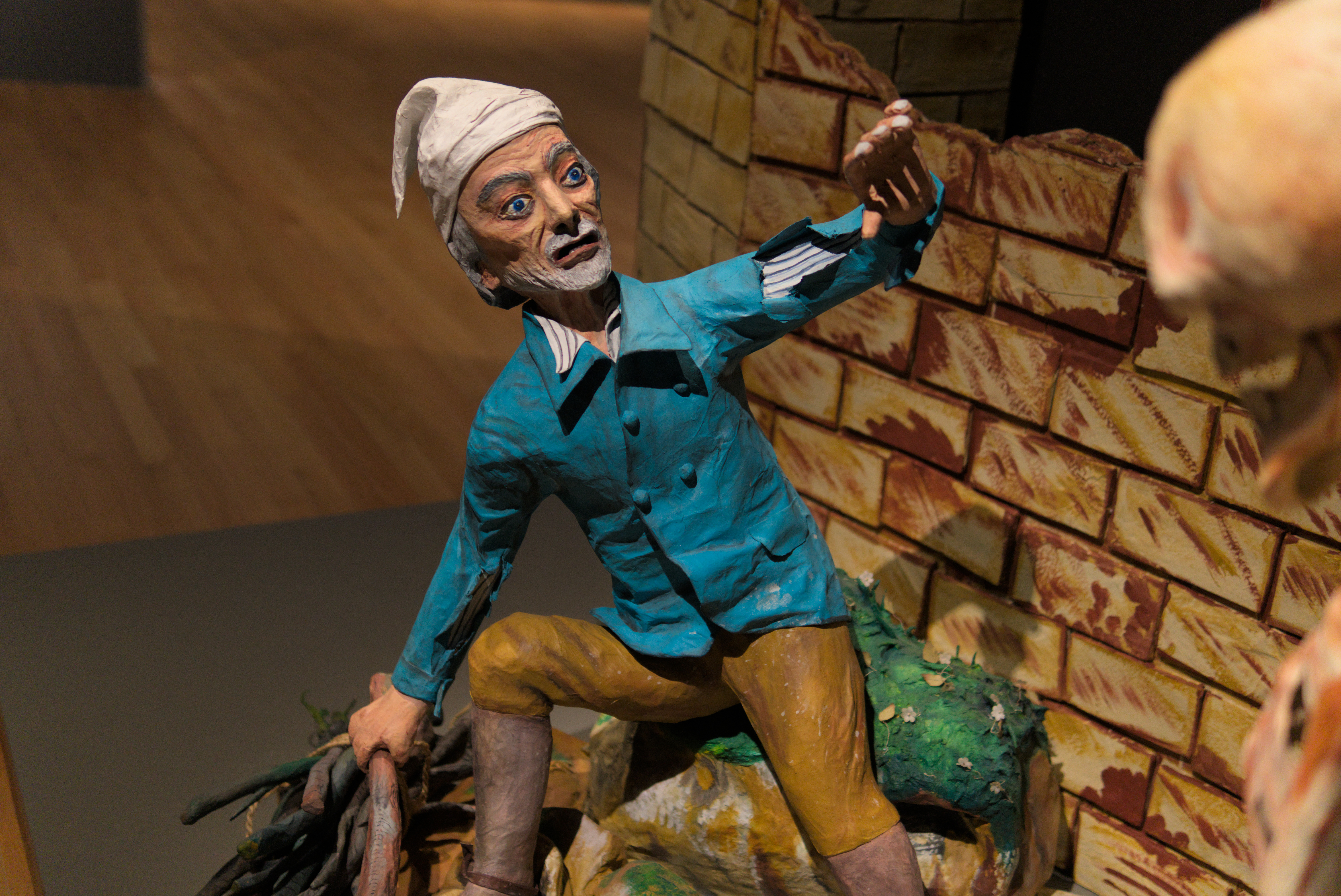
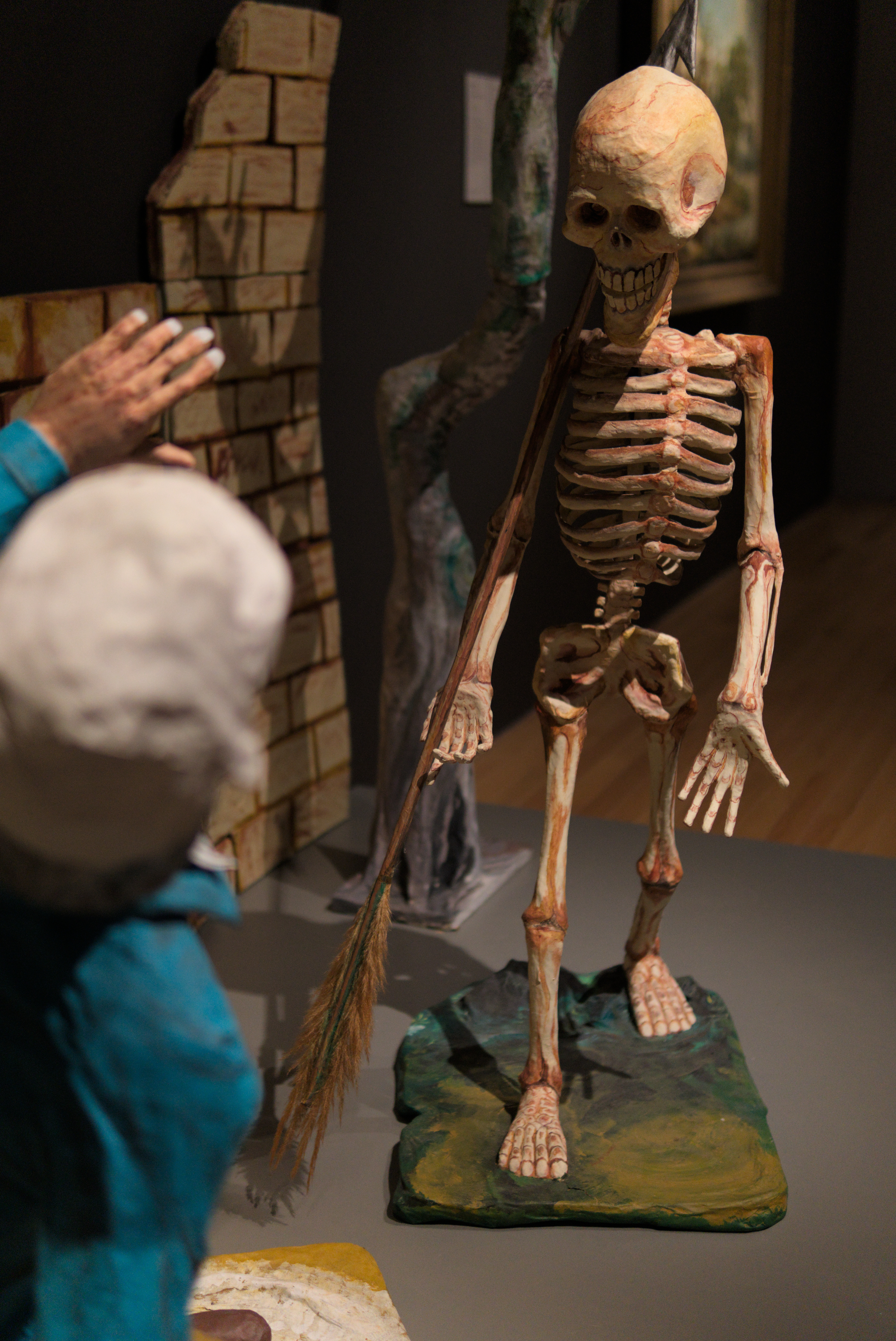
Pedro Linares (Mexican, 1906–1992), El viejo y la muerte (The Old Man and Death), 1986. Papier-mâché and mixed media. Wadsworth Atheneum Museum of Art, Hartford, Connecticut. Photo: Victoria Emily Jones.
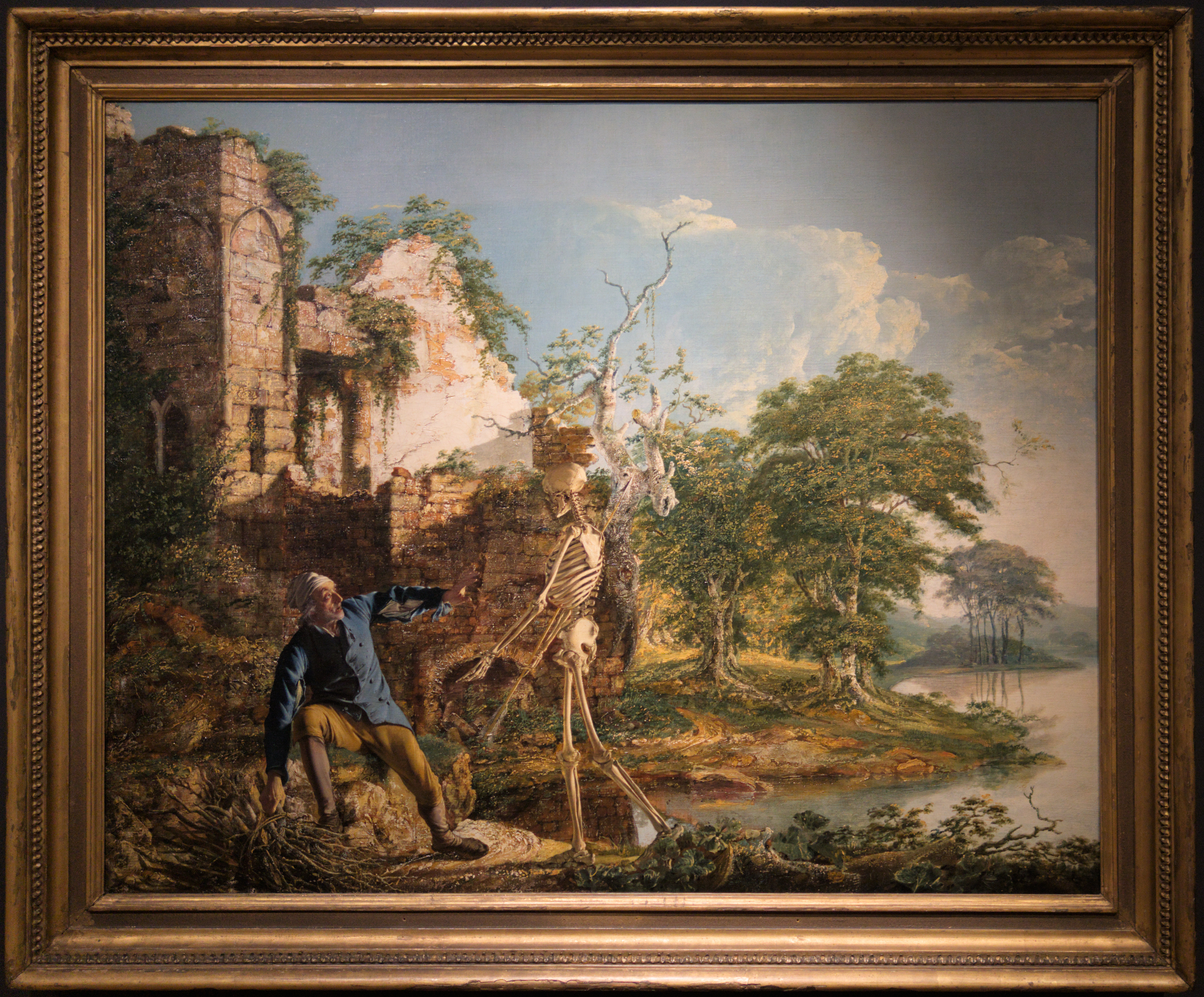
For me the standout piece from the exhibition is The Old Man and Death by Pedro Linares, a dramatic tableau in the medium of cartonería (papier-mâché sculpture), a traditional handcraft of Mexico. Commissioned by the Wadsworth in 1986 for the artist’s MATRIX exhibition, it reinterprets Joseph Wright of Derby’s 1773 painting of the same name, one of the most popular works in the museum’s collection.
Joseph Wright of Derby (English, 1734–1797), The Old Man and Death, 1773. Oil on canvas, 40 × 50 1/16 in. (101 × 127 cm). Wadsworth Atheneum Museum of Art, Hartford, Connecticut. Photo: Victoria Emily Jones.
masterfully combines Wright’s ability to depict a literary narrative with his skill in rendering a natural setting with accuracy and keenly observed detail. The subject of this painting is based on one of Aesop’s Fables or possibly a later retelling by Jean de la Fontaine. . . . According to the tale, an old man, weary of the cares of life, lays down his bundle of sticks and seats himself in exhaustion on a bank and calls on Death to release him from his toil. Appearing in response to this invocation, Death arrives. Personified here as a skeleton, Death carries an arrow, the instrument of death. Illustrating the moral of the tale that it is “better to suffer than to die,” the startled old man recoils in horror and instinctively waves him off, reaching for the bundle as he clings to life.
The Linares piece and its inspiration are placed side-by-side in the gallery, which also displays an alebrije by the same artist, papel picado, painted skulls, an ofrenda, and Diego Rivera’s Young Girl with a Mask.
Emily Dickinson (1830–1886) of Amherst, Massachusetts, is one of America’s most celebrated poets. There are hundreds of musical settings, from various genres, of her poems. Here are ten I really like.
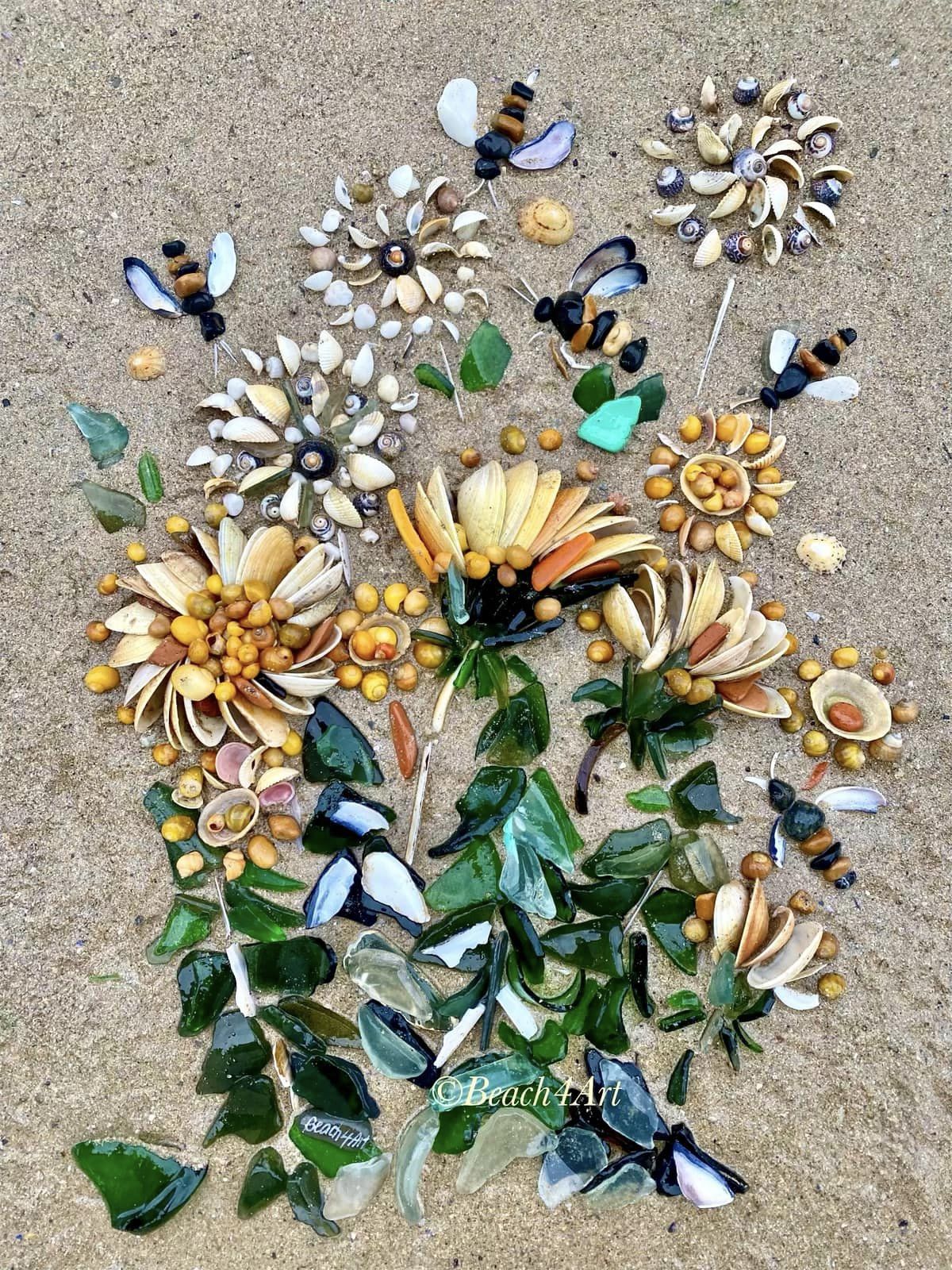
Created by Beach4Art, a family of four who assemble rocks and shells into images on the beaches of Devon, England
1. “I’m Nobody” by Emma Wallace: This is the first poem I ever read by Dickinson—in sixth grade. I was hooked, and I relished the assignment to memorize it and recite it to the class. The idea of being famous was apparently distasteful to Dickinson, and though she was a prolific writer of almost 1,800 poems, only ten were published during her lifetime, and those anonymously; some she sent in letters to friends, but most she kept private. She wrote this one in 1861, and it has contributed to her mystique. Singer-songwriter Emma Wallace turned it into a lovely, understated, minor-key waltz for The Thing with Feathers (2021), one of her several literary-themed albums.
I’m Nobody! Who are you? Are you – Nobody – too? Then there’s a pair of us! Don’t tell! they’d advertise* – you know!
How dreary – to be – Somebody! How public – like a Frog – To tell your name – the livelong June – To an admiring Bog!
* Dickinson often provided alternative words in the margins of her pages, which some editors have favored; “advertise” she marked as a possible substitute for “banish us.”
2.“I Shall Not Live in Vain” by Bard and Ceilidh (Mary Vanhoozer): Mary Vanhoozer’s debut album, Songs of Day and Night(2015), comprises original settings of classic poems by the likes of Emily Dickinson, Christina Rossetti, Henry Wadsworth Longfellow, and others. “Music has a unique ability to transform ordinary things into special things—the mundane into the extraordinary,” she writes. “This song cycle is all about exploring that further. Each song roughly represents an hour of the day. The CD begins at dawn and ends at dusk. As we travel through the day, we learn to perceive familiar objects and situations in a new light, infusing joy and a sense of mystery into the everyday experience.” For this track she is joined by her husband, Josh Rodriguez, on guitar. The text is a sort of purpose statement, committing to a life of love, kindness, and compassionate outreach.
If I can stop one Heart from breaking I shall not live in vain If I can ease one Life the Aching Or cool one Pain
Or help one fainting Robin Unto his Nest again I shall not live in vain.
3. “His Feet Are Shod with Gauze” by Emily Lau: The natural world, especially bees, was one of Dickinson’s favorite topics to write about. I think of her as a poet of summer. (Other great bee poems: “Bee! I’m expecting you!” and “Bees are Black, with Gilt Surcingles –.”) “His Feet are shod with Gauze –,” a panegyric, praises bees’ delicacy, might, and beauty. This musical setting is part of the suite Seven Dickinson Songs by composer and vocalist Emily Lau, which appears on her album Isle of Majesty (2019). Be sure to check out the other songs, including “I Can Wade Grief” and “I Never Saw a Moor,” in which Lau is joined by her chamber music ensemble, The Broken Consort.
His Feet are shod with Gauze – His Helmet, is of Gold, His Breast, a single Onyx With Chrysophras, inlaid –
His Labor is a Chant – His Idleness – a Tune – Oh, for a Bee’s experience Of Clovers, and of Noon!
4. “Some keep the Sabbath going to Church” by Michael McGuane: Dickinson was raised as a Congregationalist but never officially joined the church and by 1868 had stopped attending altogether. Her poems vary in tone toward Christianity, with some expressing devout sentiments and others irreverence. One thing that’s clear is that she often encountered God in nature. In this poem the fruit trees create a sanctuary for her and the birds serve as choir—an elevating, worshipful experience. Christians throughout history have spoken of how the “book of nature” complements the book of scripture, both revealing God’s truth. Here Dickinson acknowledges the same, emphasizing the goodness of creation, our enjoyment of which is sacred. On YouTube, the Americana musician Michael McGuane performs a guitar-picked, folk-rock tune he wrote for the poem.
Some keep the Sabbath going to Church – I keep it, staying at Home – With a Bobolink for a Chorister – And an Orchard, for a Dome –
Some keep the Sabbath in Surplice – I, just wear my Wings – And instead of tolling the Bell, for Church, Our little Sexton – sings.
God preaches, a noted Clergyman – And the sermon is never long, So instead of getting to Heaven, at last – I’m going, all along.
5. “Split the Lark” by Drum & Lace (Sofia degli Alessandri-Hultquist) and Ian Hultquist, feat. Ella Hunt: This pop music setting of “Split the Lark” was written by husband-and-wife composing duo Drum & Lace and Ian Hultquist for the Apple TV+ comedy-drama Dickinson (which I have mixed feelings about). It’s featured in season 2, episode 6, where it’s sung by Ella Hunt, the actress who plays Emily’s sister-in-law (and in the show, secret lover), Susan Huntington Gilbert Dickinson. Emily is attending an opera performance in Boston and imagines—in place of the soprano—Sue, singing her own words to her.
Split the Lark – and you’ll find the Music – Bulb after bulb, in Silver rolled – Scantily dealt to the Summer Morning Saved for your Ear, when Lutes be old –
Loose the Flood – you shall find it patent – Gush after Gush, reserved for you – Scarlet Experiment! Sceptic Thomas! Now, do you doubt that your Bird was true?
Containing echoes of William Wordsworth’s “We murder to dissect,” this poem derides empiricism as the sole method of arriving at truth. The addressee wants to better comprehend the lark’s song, to observe the internal apparatus that enables it to make such beautiful music. Go ahead, the speaker exasperatedly tells him: take up your scalpel and dissect the bird. You’ll unleash a flood of blood and guts (“bulb after bulb” could refer to globular anatomical structures—e.g., the aortic bulb, the jugular bulb—or organs, or to musical notes). But would such prying really bring you closer to knowing the lark? Your experiment will have only caused the song to stop. The poem references the apostle Thomas, who demanded physical proof of Christ’s resurrection (personally, I think he’s unfairly maligned for this; his probing does, in fact, lead him to a deeper level of knowledge).
Dickinson was very much a supporter of science, but she also recognized its limitations when it comes to explaining certain mysteries or trying to produce physical evidence of the invisible. On one level, this poem may describe Dickinson’s stance on poetry, which, once you start to pick it apart, can sometimes lose its magic. I’m all for poetic analysis, but there’s something to be said for simply letting the sounds and musicality of poetic verse wash over you without going at it with a scalpel.
6. “I Had No Time to Hate” by Gerda Blok-Wilson: Look what Dickinson can do with the cliché “Life is too short to be angry”! She had a dark wit, which you get a glimmer of here. The poem is structured in two stanzas, the first about hate, so we might expect the second to wax rhapsodic about the virtues of love. But instead we get a matter-of-fact admission that life is also too short to complete the work of love. However, because we must choose either hate or love, she chooses love—it’s for us to fill in why it’s the superior choice. I like the interplay of littleness and largeness, suggesting that even in small caring acts, there’s a substantiality and a sufficiency, no matter how imperfect our love may be. The following recording, from June 2021, is of the premiere performance of Gerda Blok-Wilson’s choral setting of “I had no time to Hate –” by the Vancouver Chamber Choir, directed by Kari Turunen.
I had no time to Hate – Because The Grave would hinder me – And Life was not so Ample I Could finish – Enmity –
Nor had I time to Love – But since Some Industry must be – The little Toil of Love – I thought Be large enough for Me –
7. “I felt a Funeral, in my Brain” by Andrew Bird, feat. Phoebe Bridgers: This is another Dickinson poem that made a strong impression on me when I read it in school—what a fabulous first line. Though some have interpreted the poem as Dickinson imagining her own funeral, I see the funeral as a metaphor—for, possibly, the loss of a cherished friendship, long-held belief, or hope or dream, any of which would take a heavy psychological toll, or for the temporary loss of sanity, a mental breakdown, due to some stressor. The mood is oppressive, and the speaker grows increasingly unraveled. The singer-songwriter, violinist, and whistler Andrew Bird set the poem to “a simple two-note melody,” he said, and, in collaboration with the Emily Dickinson Museum in Amherst, made a music video featuring Dickinson’s handwriting and footage of her lifelong home.
I felt a Funeral, in my Brain, And Mourners to and fro Kept treading – treading – till it seemed That Sense was breaking through –
And when they all were seated, A Service, like a Drum – Kept beating – beating – till I thought My mind was going numb –
And then I heard them lift a Box And creak across my Soul With those same Boots of Lead, again, Then Space – began to toll,
As all the Heavens were a Bell, And Being, but an Ear, And I, and Silence, some strange Race Wrecked, solitary, here –
And then a Plank in Reason, broke, And I dropped down, and down – And hit a World, at every plunge, And Finished knowing – then –
8. “Because I Could Not Stop for Death” by Susan McKeown: From the 2002 album Prophecy by Susan McKeown, a Grammy-winning musical artist from Ireland, this song takes as its lyrics one of Dickinson’s most famous poems, one that promotes a gentle, welcoming attitude toward death. It personifies Death as a kindly gentleman driving a carriage, transporting the speaker at a casual pace past the final traces of her mortal life and into eternity. (Note: Emma Wallace, from the first entry, also wrote a compelling setting!)
Because I could not stop for Death – He kindly stopped for me – The Carriage held but just Ourselves – And Immortality.
We slowly drove – He knew no haste And I had put away My labor and my leisure too, For His Civility –
We passed the School, where Children strove At Recess – in the Ring – We passed the Fields of Gazing Grain – We passed the Setting Sun –
Or rather – He passed Us – The Dews drew quivering and Chill – For only Gossamer, my Gown – My Tippet – only Tulle –
We paused before a House that seemed A Swelling of the Ground – The Roof was scarcely visible – The Cornice – in the Ground –
Since then – ’tis Centuries – and yet Feels shorter than the Day I first surmised the Horses’ Heads Were toward Eternity –
9. “Hope’s the Thing with Feathers” by Julie Lee: Another classic poem, this one about the warmth and persistence of hope. Julie Lee gives it an uplifting banjo tune.
“Hope” is the thing with feathers – That perches in the soul – And sings the tune without the words – And never stops – at all –
And sweetest – in the Gale – is heard – And sore must be the storm – That could abash the little Bird That kept so many warm –
I’ve heard it in the chillest land – And on the strangest Sea – Yet – never – in Extremity, It asked a crumb – of me.
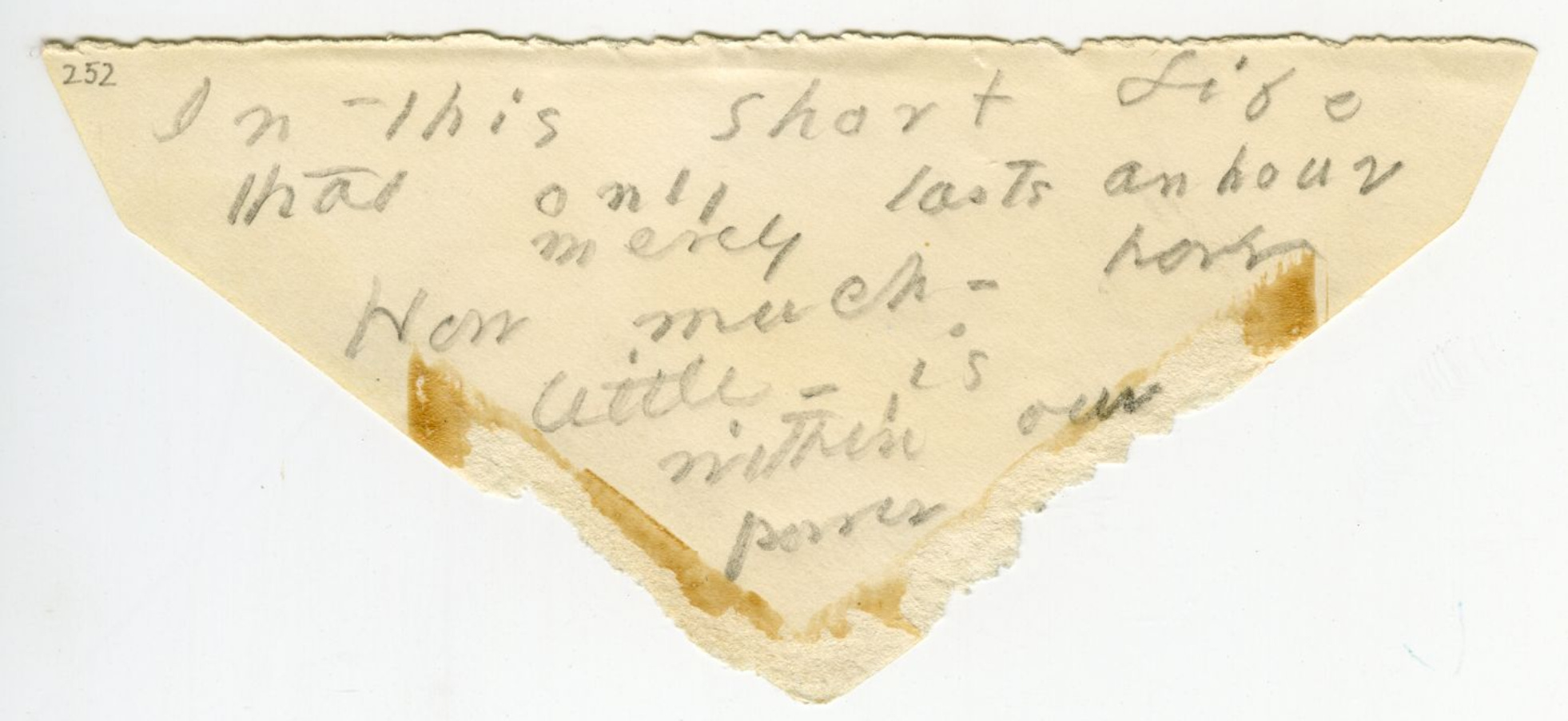
10. “In this short Life” by Scott Joiner: Dickinson wrote this compact poem of just two lines on an upcycled envelope flap, as she was wont to do, around 1873 and saved it. It expresses the paradox that we humans possess free will, a potent trait, and yet so many things are beyond our control. Composer Scott Joiner wrote a piece for voice and piano for this text, performed by Jessica Fishenfeld and Milena Gligić on the album Emily that released just this month (it features settings by Joiner of five poems by Dickinson and five by her near contemporary from across the pond, Emily Brontë). The tone is contemplative and resigned.
In this short Life that only lasts an hour How much – how little – is within our power
Envelope poem by Emily Dickinson, ca. 1873, from the Emily Dickinson Collection, Amherst College (Amherst Manuscript #252, Box 3, Folder 88)
Be still and know that I am God Be still and know that I am Be still and know Be still Be
Rev. Dr. Cynthia Bourgeault, an Episcopal priest, writer, and retreat leader, mentions this chant in her book Chanting the Psalms. “Each time the line is repeated,” she writes, “key words are taken away. The result is a funnel-like effect that leads straight down into silence. . . . Each phrase expresses its own unique meaning and understanding as the prayer moves toward utter simplicity” (185). Bourgeault recommends working with the recording “Be Still and Know” found on the album Songs of Presence: Contemplative Chants for the New Millennium from Praxis Publishing House; I couldn’t find the audio online, but I did find a song by The River’s Voice (Trish and Richard Bruxvoort Colligan) that’s also based on this exercise of Fr. Rohr’s: “Be (Still and Know That I Am God)”:
+++
PODCAST EPISODES: Here are two podcast episodes I caught up with recently and enjoyed. Both links include transcripts.
>> “Jan Richardson: Stubborn Hope,”Everything Happens with Kate Bowler, October 27, 2020:Kate Bowler, a historian and cancer survivor who has done much academic work on the prosperity gospel, talks with spiritual writer Jan Richardson [previously], whose husband died unexpectedly in 2013, about the hidden rooms of grief, being disciplined by hope, and how the concept of blessing in the Jewish and Christian traditions differs from the #blessed culture of social media. Don’t miss the three discussion questions in the show notes.
POEM COMMENTARY:“Learning about Constellations” by Saddiq Dzukogi, commentary by Pádraig Ó Tuama: On this episode of On Being’s Poetry Unbound podcast, host Pádraig Ó Tuama unpacks a poem written by Saddiq Dzukogi in the aftermath of his one-year-old daughter’s death. It’s from his 2021 collection Your Crib, My Qibla.
George MacDonald (1824–1905) was a Scottish preacher, poet, essayist, and writer of both realist and fantasy fiction. He was a great influence on J. R. R. Tolkien and C. S. Lewis, the latter of whom published, in 1946, a compilation of MacDonald’s theological writings excerpted from his sermons, novels, and other sources. “I know of hardly any other writer who seems to be closer, or more continually close, to the Spirit of Christ Himself,” Lewis wrote in the preface to George MacDonald: An Anthology.
MacDonald is best known for his fairy tales, such as The Princess and the Goblin (my entrée to the author as a child, via a 1991 animated film adaptation from Wales) and Phantastes. But more recently I have been appreciating his devotional poetry.
George MacDonald, as photographed by his friend and fellow writer Lewis Carroll, 1863
While in his fifties, MacDonald published A Book of Strife in the Form of the Diary of an Old Soul (1880), a collection of 366 short, original, untitled devotional poems, one for each day of the year. (Read it for free online.) Addressed to God, these poems voice discouragement, weariness, restlessness, desire, doubt, and trust. MacDonald asks God for healing and refreshment; for a vulnerable, stripped-down soul, clothed anew in Christ; for salvation from his stubbornness and folly; for guidance through his dark night of the soul; for rightly ordered loves; for Christian growth. He searches for God, confesses his sinful tendencies, praises God for God’s love and faithfulness, and prays for words when words fail him.
Below are my favorite selections—some full poems, some just single lines or excerpts—from MacDonald’s Diary of an Old Soul, which is in the public domain. The headings are my own, to aid in navigating more easily to different topics, and the trifold dividers mark separate entries.
When the book was printed privately in 1880, all the left-hand pages were left blank to encourage thoughtful reader responses; “Let your white page be ground, my print be seed,” MacDonald wrote in the dedication. I’d encourage you, too, to grab a journal and record your own prayers and reflections prompted by any of these verses, or simply to copy out the lines that resonate. And songwriters and composers: I can see potential for musical settings here!
A New Song
Barb thou my words with light, make my song new.
Seeing with the Inner Eye
That thou art nowhere to be found, agree
Wise men, whose eyes are but for surfaces;
Men with eyes opened by the second birth,
To whom the seen, husk of the unseen is,
Descry thee soul of everything on earth.
Who know thy ends, thy means and motions see:
Eyes made for glory soon discover thee.
+++
Lord, in the land of things that swell and seem,
Help me to walk by the other light supreme,
Which shows thy facts behind man’s vaguely hinting dream.
God Transcends All Imagining
What the heart’s dear imagination dares,
Thou dost transcend in measureless majesty
All prayers in one—my God, be unto me
Thy own eternal self, absolutely.
+++
Oh, let me live in thy realities,
Nor substitute my notions for thy facts,
Notion with notion making leagues and pacts;
They are to truth but as dream-deeds to acts,
And questioned, make me doubt of everything.—
“O Lord, my God,” my heart gets up and cries,
“Come thy own self, and with thee my faith bring.”
Be My All
Be thou the well by which I lie and rest;
Be thou my tree of life, my garden ground;
Be thou my home, my fire, my chamber blest,
My book of wisdom, loved of all the best;
Oh, be my friend, each day still newer found,
As the eternal days and nights go round!
Nay, nay—thou art my God, in whom all loves are bound!
In Him and by Him All Things Consist
Thy fishes breathe but where thy waters roll;
Thy birds fly but within thy airy sea;
My soul breathes only in thy infinite soul;
I breathe, I think, I love, I live but thee.
Oh breathe, oh think,—O Love, live into me;
Unworthy is my life till all divine,
Till thou see in me only what is thine.
Practicing the Presence of God at Work
Two things at once, thou know’st I cannot think.
When busy with the work thou givest me,
I cannot consciously think then of thee.
. . . . . . . . . . . . . . . . . . . . . . . . . . . . . . . . . .

Therefore I make provision, ere I begin
To do the thing thou givest me to do,
Praying,—Lord, wake me oftener, lest I sin.
Amidst my work, open thine eyes on me,
That I may wake and laugh, and know and see,
Then with healed heart afresh catch up the clue,
And singing drop into my work anew.
“The life is more than meat, the body more than raiment”
Thy will be done. I yield up everything.
“The life is more than meat”—then more than health;
“The body more than raiment”—then than wealth;
The hairs I made not, thou art numbering.
Thou art my life—I the brook, thou the spring.
Because thine eyes are open, I can see;
Because thou art thyself, ’tis therefore I am me.
On Prayer
Sometimes, hard-trying, it seems I cannot pray—
For doubt, and pain, and anger, and all strife.
Yet some poor half-fledged prayer-bird from the nest
May fall, flit, fly, perch—crouch in the bowery breast
Of the large, nation-healing tree of life;—
Moveless there sit through all the burning day,
And on my heart at night a fresh leaf cooling lay.
+++
In my dead moments, master, stir the prayers.
+++
My prayer-bird was cold—would not away,
Although I set it on the edge of the nest.
Then I bethought me of the story old—
Love-fact or loving fable, thou know’st best—
How, when the children had made sparrows of clay,
Thou mad’st them birds, with wings to flutter and fold:
Take, Lord, my prayer in thy hand, and make it pray.
Prayers in Times of Spiritual Destitution
When I no more can stir my soul to move,
And life is but the ashes of a fire;
When I can but remember that my heart
Once used to live and love, long and aspire,—
Oh, be thou then the first, the one thou art;
Be thou the calling, before all answering love,
And in me wake hope, fear, boundless desire.
+++
There is a misty twilight of the soul,
A sickly eclipse, low brooding o’er a man,
When the poor brain is as an empty bowl,
And the thought-spirit, weariful and wan,
Turning from that which yet it loves the best,
Sinks moveless, with life-poverty opprest:—
Watch then, O Lord, thy feebly glimmering coal.
A Prayer for Joy in All Circumstances
Do thou, my God, my spirit’s weather control;
And as I do not gloom though the day be dun,
Let me not gloom when earth-born vapours roll
Across the infinite zenith of my soul.
Should sudden brain-frost through the heart’s summer run,
Cold, weary, joyless, waste of air and sun,
Thou art my south, my summer-wind, my all, my one.
A Prayer for Victory over Temptation
Haste to me, Lord, when this fool-heart of mine
Begins to gnaw itself with selfish craving;
Or, like a foul thing scarcely worth the saving,
Swoln up with wrath, desireth vengeance fine.
Haste, Lord, to help, when reason favours wrong;
Haste when thy soul, the high-born thing divine,
Is torn by passion’s raving, maniac throng.

Fair freshness of the God-breathed spirit air,
Pass through my soul, and make it strong to love;
Wither with gracious cold what demons dare
Shoot from my hell into my world above;
Let them drop down, like leaves the sun doth sear,
And flutter far into the inane and bare,
Leaving my middle-earth calm, wise, and clear.
A Prayer for Endurance through Trials
Thou wouldst not have thy man crushed back to clay;
It must be, God, thou hast a strength to give
To him that fain would do what thou dost say;
Else how shall any soul repentant live,
Old griefs and new fears hurrying on dismay?
Let pain be what thou wilt, kind and degree,
Only in pain calm thou my heart with thee.
A Prayer for Sanctification
Lord, in my silver is much metal base,
Else should my being by this time have shown
Thee thy own self therein. Therefore do I
Wake in the furnace. I know thou sittest by,
Refining—look, keep looking in to try
Thy silver; master, look and see thy face,
Else here I lie for ever, blank as any stone.

But when in the dim silver thou dost look,
I do behold thy face, though blurred and faint.
Oh joy! no flaw in me thy grace will brook,
But still refine: slow shall the silver pass
From bright to brighter, till, sans spot or taint,
Love, well content, shall see no speck of brass,
And I his perfect face shall hold as in a glass.
A Prayer against Workaholism
Help me to yield my will, in labour even,
Nor toil on toil, greedy of doing, heap.
“My yoke is easy, and my burden is light”
I cannot see, my God, a reason why
From morn to night I go not gladsome, free;
For, if thou art what my soul thinketh thee,
There is no burden but should lightly lie,
No duty but a joy at heart must be:
Love’s perfect will can be nor sore nor small,
For God is light—in him no darkness is at all.
God Our Mother
. . . Weary and worn,
Why not to thee run straight, and be at rest?
Motherward, with toy new, or garment torn,
The child that late forsook her changeless breast,
Runs to home’s heart, the heaven that’s heavenliest . . .
Faith and Doubt
Doubt swells and surges, with swelling doubt behind!
My soul in storm is but a tattered sail,
Streaming its ribbons on the torrent gale;
In calm, ’tis but a limp and flapping thing:
Oh! swell it with thy breath; make it a wing,—
To sweep through thee the ocean, with thee the wind
Nor rest until in thee its haven it shall find.
+++
Ever above my coldness and my doubt
Rises up something, reaching forth a hand:
This thing I know, but cannot understand.
Is it the God in me that rises out
Beyond my self, trailing it up with him,
Towards the spirit-home, the freedom-land,
Beyond my conscious ken, my near horizon’s brim?
New Life
If thou hadst closed my life in seed and husk,
And cast me into soft, warm, damp, dark mould,
All unaware of light come through the dusk,
I yet should feel the split of each shelly fold,
Should feel the growing of my prisoned heart,
And dully dream of being slow unrolled,
And in some other vagueness taking part.

And little as the world I should foreknow
Up into which I was about to rise—
Its rains, its radiance, airs, and warmth, and skies,
How it would greet me, how its wind would blow—
As little, it may be, I do know the good
Which I for years half darkling have pursued—
The second birth for which my nature cries.
+++
“Wake, thou that sleepest; rise up from the dead,
And Christ will give thee light.” I do not know
What sleep is, what is death, or what is light;
But I am waked enough to feel a woe,
To rise and leave death. Stumbling through the night,
To my dim lattice, O calling Christ! I go,
And out into the dark look for thy star-crowned head.
+++
Lord, wake me up; rend swift my coffin-planks;
I pray thee, let me live—alive and free.
Rooted in Christ
Thou in my heart hast planted, gardener divine,
A scion of the tree of life: it grows;
But not in every wind or weather it blows;
The leaves fall sometimes from the baby tree,
And the life-power seems melting into pine;
Yet still the sap keeps struggling to the shine,
And the unseen root clings cramplike unto thee.
Dying to Self
Lord, I have fallen again—a human clod!
Selfish I was, and heedless to offend;
Stood on my rights. Thy own child would not send
Away his shreds of nothing for the whole God!
Wretched, to thee who savest, low I bend:
Give me the power to let my rag-rights go
In the great wind that from thy gulf doth blow.
+++
Lord of essential life, help me to die.
To will to die is one with highest life,
The mightiest act that to Will’s hand doth lie—
Born of God’s essence, and of man’s hard strife:
God, give me strength my evil self to kill,
And die into the heaven of thy pure will.—
Then shall this body’s death be very tolerable.
+++
With every morn my life afresh must break
The crust of self, gathered about me fresh;
That thy wind-spirit may rush in and shake
The darkness out of me, and rend the mesh
The spider-devils spin out of the flesh—
Eager to net the soul before it wake,
That it may slumberous lie, and listen to the snake.
Lost Sheep
Things go not wrong when sudden I fall prone,
But when I snatch my upheld hand from thine,
And, proud or careless, think to walk alone.
Then things go wrong, when I, poor, silly sheep,
To shelves and pits from the good pasture creep;
Not when the shepherd leaves the ninety and nine,
And to the mountains goes, after the foolish one.
“Forgive us our debts, as we forgive our debtors”
Keep me from wrath, let it seem ever so right:
My wrath will never work thy righteousness.
Up, up the hill, to the whiter than snow-shine,
Help me to climb, and dwell in pardon’s light.
I must be pure as thou, or ever less
Than thy design of me—therefore incline
My heart to take men’s wrongs as thou tak’st mine.
Spiritual Riches
Lord, in thy spirit’s hurricane, I pray,
Strip my soul naked—dress it then thy way.
Change for me all my rags to cloth of gold.
Who would not poverty for riches yield?
A hovel sell to buy a treasure-field?
Who would a mess of porridge careful hold
Against the universe’s birthright old?
The Prodigal God
Gloriously wasteful, O my Lord, art thou!
Sunset faints after sunset into the night,
Splendorously dying from thy window-sill—
For ever. Sad our poverty doth bow
Before the riches of thy making might:
Sweep from thy space thy systems at thy will—
In thee the sun sets every sunset still.
God’s Stability
Father of me, thou art my bliss secure.
Make of me, maker, whatsoe’er thou wilt.
Let fancy’s wings hang moulting, hope grow poor,
And doubt steam up from where a joy was spilt—
I lose no time to reason it plain and clear,
But fly to thee, my life’s perfection dear:—
Not what I think, but what thou art, makes sure.
God’s Universality
Where should the unknown treasures of the truth
Lie, but there whence the truth comes out the most—
In the Son of man, folded in love and ruth?
Fair shore we see, fair ocean; but behind
Lie infinite reaches bathing many a coast—
The human thought of the eternal mind,
Pulsed by a living tide, blown by a living wind.
Searching for Pleasure
Ah, me, my God! in thee lies every bliss
Whose shadow men go hunting wearily amiss.
+++
I see a little child whose eager hands
Search the thick stream that drains the crowded street
For possible things hid in its current slow.
Near by, behind him, a great palace stands,
Where kings might welcome nobles to their feet.
Soft sounds, sweet scents, fair sights there only go—
There the child’s father lives, but the child does not know.
Perfect Love
Thou dost demand our love, holy Lord Christ,
And batest nothing of thy modesty;—
Thou know’st no other way to bliss the highest
Than loving thee, the loving, perfectly.
Thou lovest perfectly—that is thy bliss:
We must love like thee, or our being miss—
So, to love perfectly, love perfect Love, love thee.
+++
Lord, with thy breath blow on my being’s fires,
Until, even to the soul with self-love wan,
I yield the primal love, that no return desires.
Surrender
O Christ, my life, possess me utterly.
Take me and make a little Christ of me.
+++
O Master, my desires to work, to know,
To be aware that I do live and grow—
All restless wish for anything not thee
I yield, and on thy altar offer me.
Let me no more from out thy presence go,
But keep me waiting watchful for thy will—
Even while I do it, waiting watchful still.
+++
My Lord, I have no clothes to come to thee;
My shoes are pierced and broken with the road;
I am torn and weathered, wounded with the goad,
And soiled with tugging at my weary load:
The more I need thee! A very prodigal
I stagger into thy presence, Lord of me:
One look, my Christ, and at thy feet I fall!
Freedom
So bound in selfishness am I, so chained,
I know it must be glorious to be free
But know not what, full-fraught, the word doth mean.
By loss on loss I have severely gained
Wisdom enough my slavery to see;
But liberty, pure, absolute, serene,
No freest-visioned slave has ever seen.
+++
So shall abundant entrance me be given
Into the truth, my life’s inheritance.
Lo! as the sun shoots straight from out his tomb,
God-floated, casting round a lordly glance
Into the corners of his endless room,
So, through the rent which thou, O Christ, hast riven,
I enter liberty’s divine expanse.
Receptivity to the Spirit
Faith opens all the windows to God’s wind.
Aging
O Life, why dost thou close me up in death?
O Health, why make me inhabit heaviness?—
I ask, yet know: the sum of this distress,
Pang-haunted body, sore-dismayed mind,
Is but the egg that rounds the winged faith;
When that its path into the air shall find,
My heart will follow, high above cold, rain, and wind.
+++
Thou, healthful Father, art the Ancient of Days,
And Jesus is the eternal youth of thee.
Our old age is the scorching of the bush
By life’s indwelling, incorruptible blaze.
O Life, burn at this feeble shell of me,
Till I the sore singed garment off shall push,
Flap out my Psyche wings, and to thee rush.
+++
My harvest withers. Health, my means to live—
All things seem rushing straight into the dark.
But the dark still is God. I would not give
The smallest silver-piece to turn the rush
Backward or sideways. Am I not a spark
Of him who is the light?—Fair hope doth flush
My east.—Divine success—Oh, hush and hark!
Death
God, thou from death dost lift me. As I rise,
Its Lethe from my garment drips and flows.
Ere long I shall be safe in upper air,
With thee, my life—with thee, my answered prayer,
Where thou art God in every wind that blows,
And self alone, and ever, softly dies,
There shall my being blossom, and I know it fair.
+++
I was like Peter when he began to sink.
To thee a new prayer therefore I have got—
That, when Death comes in earnest to my door,
Thou wouldst thyself go, when the latch doth clink,
And lead him to my room, up to my cot;
Then hold thy child’s hand, hold and leave him not,
Till Death has done with him for evermore.
The Diary of an Old Soul represents only a fraction of the poetry George MacDonald wrote. To explore more, see The Poetical Works of George MacDonald, vols. 1 and 2 (1893). Seeing as next year is the bicentenary of his birth, I expect to be hearing his name a lot more!
Agnes Pelton (American, 1881–1961), Translation, 1931. Oil on canvas, 26 × 21 in. (framed). Collection of Fairfax Dorn and Marc Glimcher. Source: Agnes Pelton: Desert Transcendentalist, p. 105.
Great Nature clothes the soul, which is but thin,
With fleshly garments, which the Fates do spin;
And when these garments are grown old and bare,
With sickness torn, Death takes them off with care,
And folds them up in peace and quiet rest,
And lays them safe within an earthly chest:
Then scours them well and makes them sweet and clean,
Fit for the soul to wear those clothes again.
This poem was published in its earliest form under the title “Soule, and Body” in Poems and Fancies by the Right Honourable Lady Margaret, Countess of Newcastle (1653), and appears as above in the book’s second edition (1664). It is in the public domain.
Margaret Lucas Cavendish (1623–1673), duchess of Newcastle-upon-Tyne, was a prolific English writer across the genres of poetry, science fiction, drama, letters, biography, and natural philosophy. A pioneering feminist, she wrote in her own name in a period when most women writers remained anonymous. She spent three years as a lady-in-waiting to Queen Henrietta Maria (wife of King Charles I) at the royal court in Oxford and then in exile in France; it’s there that she met her soon-to-be husband, William Cavendish, then marquis of Newcastle, who remained a great influence throughout her life, encouraging her intellectual pursuits. Cavendish moved in circles that included Thomas Hobbes and René Descartes and, in 1667, was the first woman to be formally invited to visit the Royal Society. She is buried in Westminster Abbey.
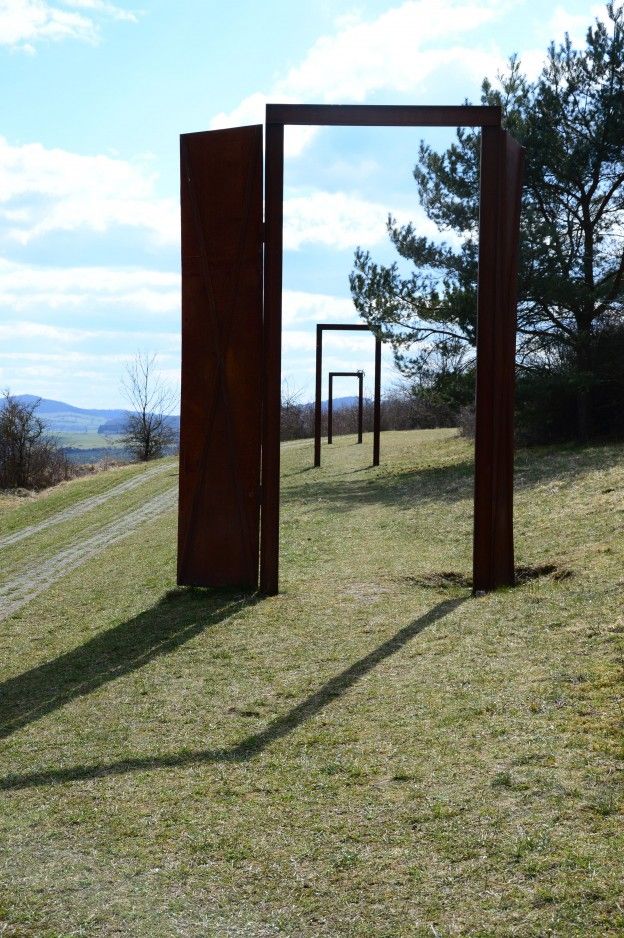
Ulrich Barnickel (German, 1955–), Hoffnung (Hope), fourteenth station from the cycle Weg der Hoffnung (Path of Hope), 2009–10. Iron sculpture, Geisa, Germany.
This is the last of fourteen monumental sculptures situated along the former inner German border that separated Soviet-occupied East Germany and Allied-occupied West Germany from 1952 to 1990. Stretching from Hesse to Thuringia, this highly militarized frontier consisted of high metal fences, barbed wire, alarms, watchtowers, and minefields, a literal iron curtain that divided families, friends, and neighbors.
In 2009, the Point Alpha Foundation, founded to preserve the historic site as a memorial, commissioned German metal sculptor Ulrich Barnickel to create an artwork as part of the memorial. He decided to draw on the traditional fourteen Stations of the Cross, connecting the suffering of Jesus to that of the people on the inner German border under Communism. Collectively titled Path of Hope, his fourteen iron sculptures cover 1,400 meters of ground (scaling down the 1,400 kilometers of the former border). All but the last are figurative, representing Jesus falling, meeting his mother, being nailed to the cross, and so on. They contain artifacts from or references to German Cold War era history, such as a vintage steel helmet hanging on Pilate’s chair, or the grenade and the trench that Jesus stumbles over.
The final station, titled Hope, is a threefold open doorway. After all the heaviness of the previous thirteen stations, we get this breather. Here’s what the doors say to me: Invitation. Possibility. The fourteenth station of the cross is traditionally where Christ is buried in his tomb. But instead of a dead body on a slab or a sealed-up cave, Barnickel gives us an open frame, a door ajar, a view of sky. It alludes to resurrection. Jesus walked through death and came out the other side. And so can we.
While the Path of Hope is a vehicle for remembering, lamenting, and healing from the collective traumas of war and political violence and oppression, it can also speak to personal losses, to any individual’s journey of grief. It’s an invitation to acknowledge the pain we carry but also to see beyond it to the Better Day that is coming, as well as to embrace the life before us here and now. The doors ask us to unburden ourselves of whatever weight is crushing us and to be renewed. (Notice the crown of thorns, an emblem of suffering, left hanging on the corner of the final threshold.) To follow the Man of Sorrows, who walks beside us in our own sorrow, from death into life.
For those accompanying a loved one to the door of death, or who have had a loved one suddenly snatched through, may Barnickel’s Hope meet you in your grieving, filling you with soft consolations of a Love stronger than death, a Love who, once buried, became on the third day the firstfruits of the resurrection harvest.
Waking up to tragic dawn Not comprehending what is going on Alleluia, Christ is risen once again
And it frames a hollow place Lost dreams and accolades Alleluia, Christ is risen once again
Alleluia, Christ is risen Though the walls of castles fall Alleluia, he is risen for us all
From these sights the shadows light In an overwhelming night Alleluia, Christ is risen once again
Hopes fly from us every day Fear reigns far and so does hate Alleluia, Christ is risen once again
Alleluia, Christ is risen Though the gates of all this war Alleluia, Christ is risen evermore
Alleluia, God is able To complete the life you led Alleluia, Christ is risen from the dead
Alleluia, he is risen once again
From the sorrow you have fled You have joy around your head Alleluia, Christ is risen once again
And as from earthly trials you fly You leave sadness when you die Alleluia, Christ is risen once again
Alleluia, Christ is risen And the life you’re living now Alleluia, all’s forgiven somehow
Alleluia, there is beauty When I think of you, joy I feel Alleluia, in my sadness, faith is real
Alleluia, Christ is risen once again Alleluia for you, my friend
Tara Ward [previously] wrote this song during the 2007 Easter season when two tragedies struck within a week of each other. On April 16, a mass shooter opened fire at Virginia Tech, killing thirty-two people, and on April 21, Ward’s friend Liz Duncan was fatally struck by a car while jogging. In the second half of the song, Ward addresses Duncan in the second person, rejoicing through tears that she has entered a state of joy and rest and will one day be raised, body and soul.
Ward returned to the song for Easter 2020 following the death that March of another friend and the initial outbreak of COVID-19. “I was trying to think of what I would sing if I was still working at a church, looking for honest songs to sing on Easter, and this one came up,” she writes on the YouTube video description.
The Nashville community, and America at large, is still reeling from the March 27 shooting at Covenant School that left seven dead, the 131st mass shooting in the US this year. I can only imagine the absolute devastation and rage a parent would feel upon learning that the child they dropped off at school that morning would not be coming home because they were gunned down with an assault rifle.
As I listen to this song, I think, too, of Leslie Bustard, a writer and book publisher, a luminary in the art and faith sphere, who, less than two months after hosting an amazing Square Halo conference on the theme of “ordinary saints,” is now in hospice with late-stage cancer.
Sometimes all the exuberance of Easter can seem disjunctive with the bleak state of the world or our own present circumstances. Christ is risen, but death is still a reality, and it’s still painful. Quiet and aching, this song gives space to grief while also confessing this central Christian doctrine: that Jesus rose from the dead, giving life to all who will receive it. Of course, that doesn’t mean Christians are exempt from experiencing physical death—we will all one day go to the grave—nor from the grief that follows in the wake of a loved one’s passing.
But what Ward’s song helps us do is sing “alleluia” in our sadness, because Christ’s resurrection life is at work in those who have passed on in him, and it’s at work in those of us who walk through the valley of death’s shadow here on earth. The “once again” language—“Christ is risen once again”—indicates that Jesus’s historical rising has ongoing implications, its efficacy extending to every new place of death.




 Art & Theology
