
CHILDREN’S BOOK: Let There Be Light by Desmond Tutu, illustrated by Nancy Tillman: I saw this enchanting little book at my local library recently—a retelling of the creation narrative from Genesis 1 by the late South African Anglican bishop, theologian, and Nobel Peace Prize laureate Desmond Tutu. Published by Zonderkidz in 2014, it opens, “In the very beginning, God’s love bubbled over when there was nothing else . . .” Hear it read aloud, and view the illustrations, in this video from the Seuss’s Gooses YouTube channel:
+++
ARTICLES:
>> “Artist Traveled to Over 30 Cities to Perform Tea Ceremony with Strangers,” an interview with Pierre Sernet by Jessica Stewart: From 2001 to 2008, artist Pierre Sernet (French-born and residing in Japan) traveled to over thirty countries to spontaneously enact abbreviated Japanese tea ceremonies, inviting passersby to come sit and drink the cup of matcha he prepared in front of them. From deserts and beaches to villages and construction sites, he would set up a portable, open-air wooden cube that denoted the “tea room,” and the ensuing encounters were documented with photography. Called One (and nicknamed Guerrilla Tea), the series was meant to promote respect across cultures and “to emphasize to viewers the importance of each moment we live in.”

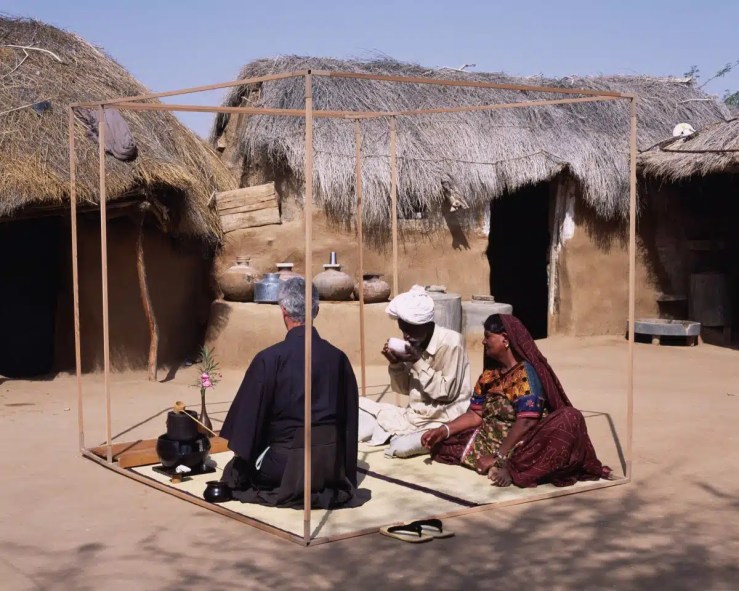
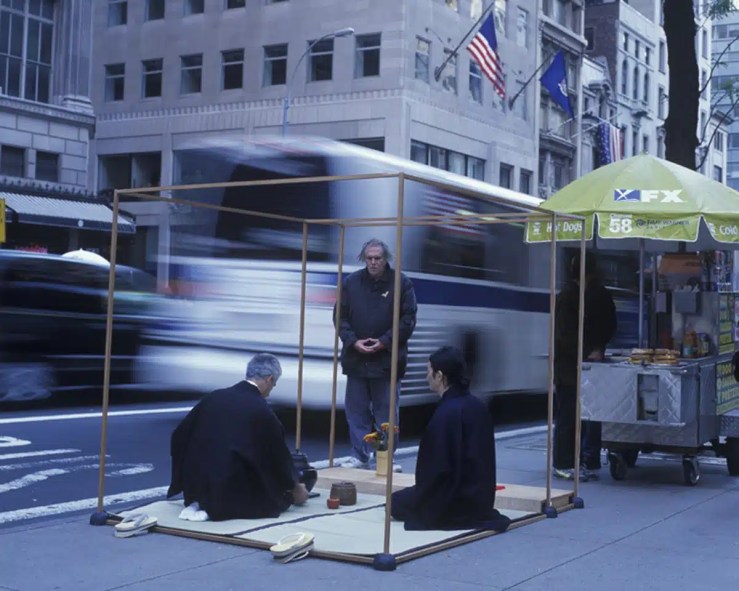
View more photos at https://pierresernet.com/one/.
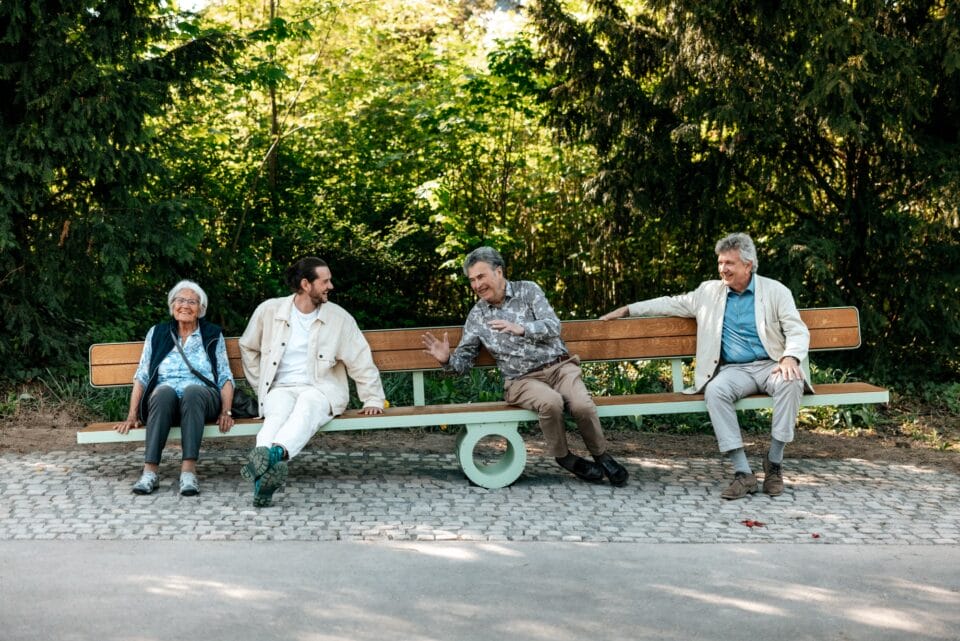
>> “A Teeter-Totter Style Bench Invites Sitters to Find Common Ground” by Grace Ebert: “In the Garden of Generations in Einbeck, Germany, a playful new installation asks park goers to find equilibrium with their neighbors. ‘Balance Bench” is the latest project of Berlin-based artist Martin Binder. Installed in his hometown, the interactive artwork rests on a central cylinder rather than four legs, requiring that at least two people sit on either side to level. ‘It cannot be used alone—it demands awareness, consensus, and cooperation between people to become a functional public space,’ he says.”
+++
PHOTO SERIES: Hierotopia by Kieran Dodds: “Kieran Dodds (Scottish, b. 1980) is a non-fiction photographer known for his research-driven photo stories and portraiture. His personal work considers the interplay of environment and culture, and the importance of spiritual belief in global conservation.” In his Hierotopia series (from the Greek for “sacred place”), carried out from 2015 to 2018, he explores the green “church forests” east of Lake Tana in Ethiopia—little islands of biodiversity scattered throughout the region’s desert landscape. “To its guardians,” Dodds writes, “each forest resembles a miniature Garden of Eden and is essential to the dignity of the building. . . . The air inside the forests is cool, fragrant and filled with a cacophony of life. This is in stark contrast to the arid silence of the surrounding land which is feeling the strain of centuries of human activity and agriculture.”
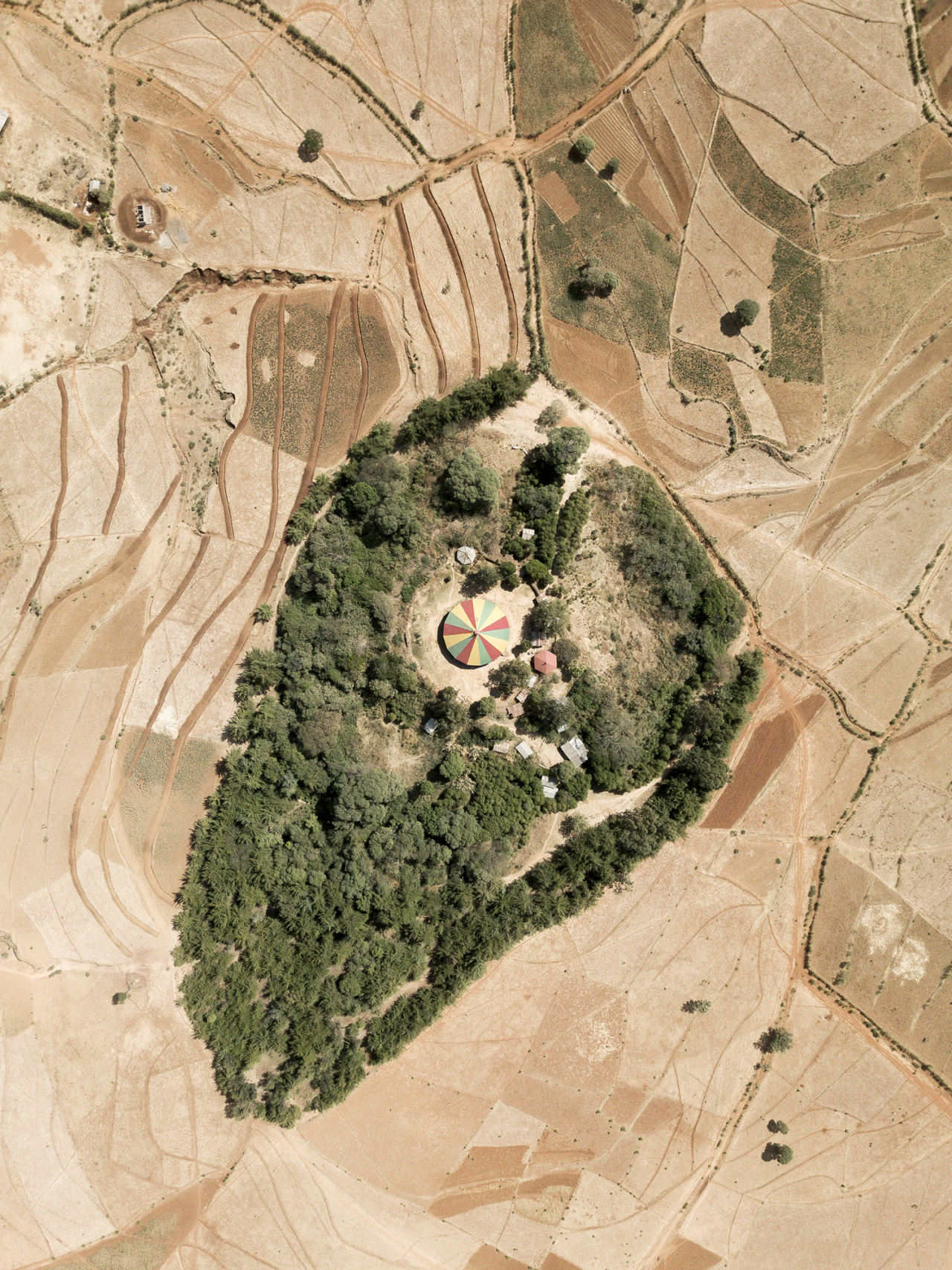
“The core Christian belief in stewardship for the environment is a powerful concept,” Dodds continues, remarking on the Ethiopian Orthodox Tewahedo Church’s commitment to conservation, “and, if applied globally by people who are at least nominally Christian, could transform the world for better.”
+++
SONGS:
>> “Hold You in Our Circle” by Emily Roblyn: This simple song of blessing by UK-based singer-songwriter and retreat leader Emily Roblyn has been sung at the bedsides of the sick or dying, over women about to be released from prison, and through myriad other life transitions and trials, by friends and communities seeking to voice their support. “We hold you in our circle, hold you in our love.” [HT: Nadia Bolz-Weber]
>> “The Lord Bless You and Keep You” by Peter C. Lutkin: Performed by the Capital University Chapel Choir in 2020, this song is a choral setting by the Midwestern composer Peter C. Lutkin (1858–1931) of the Aaronic Blessing from Numbers 6:24–26: (in Lutkin’s rendering) “The LORD bless you and keep you; the LORD lift his countenance upon you, and give you peace; the LORD make his face to shine upon you, and be gracious unto you.” God instructed the Levitical priests of ancient Israel to pronounce these words over the people, and though the Levitical priesthood is no more, this particular benediction is still used regularly in Jewish and Christian liturgies.

 Art & Theology