
SPOTIFY PLAYLIST: November 2024 (Art & Theology)
+++
SONGS:
In addition to the new, nonthematic playlist above, I also have a Thanksgiving Playlist that I published in 2021 and have been adding to sporadically. Here are three new songs, among others, that you can hear on it:
>> “I Just Want to Thank You, Lord” by Lynda Randle: Singer-songwriter Lynda Randle has been performing on the Gaither Homecoming videos and tours since 1993. Here she sings one of her original gospel songs with Gayle Mayes and Angela Primm.
>> “Thanks a Lot” by Raffi: Raffi Cavoukian, who goes by his first name only, is an Armenian Canadian children’s singer-songwriter and book author, best known for his song “Baby Beluga.” “Thanks a Lot” expresses gratitude—presumably to God, though God is not named—for the sun, clouds, wind, birds, stars, “the wondering me,” and so on. This live recording is on the 1984 release A Young Children’s Concert with Raffi. I’m guessing he told the kids in the audience to close their eyes, to help cultivate a prayerful state.
>> “Herraa Hyvää Kiittäkää” (Thank the Good Lord) by Herännäisnuorten kuoro: This hymn was originally written in Swedish by Jesper Swedberg in 1694 and was translated into Finnish six years later. It uses an older (1640) tune—nice and hearty! and in a minor key—by the German composer Heinrich Albert. You can follow along with the Finnish lyrics here.
+++
VIDEO: Jazz Vespers Worship Service, Duke Chapel, November 19, 2019: Duke University in Durham, North Carolina, has hosted a Jazz Vespers worship service nearly every March and November since 2014, a collaboration between Duke Chapel and the Duke Jazz Program. In this recorded service from the fall 2019 semester, Rev. Dr. Luke Powery (the chapel dean) leads the liturgy and Rev. Joshua Lawrence Lazard (the chapel’s minister for student engagement) delivers the sermon, which is from 1 Thessalonians 5:16–18: “Rejoice always, pray without ceasing, give thanks in all circumstances, for this is the will of God in Christ Jesus for you.” The music is led by Duke music professor John Brown, a Grammy-nominated jazz bassist and composer, and his Little Big Band. I can’t find the names of the two vocalists.
List of songs:
- “Every Day Is a Day of Thanksgiving” by Shelby Wills
- “Glory, Glory (Since I Laid My Burden Down)”
- “Because of Who You Are” by Vicki Yohe
- “I Feel Like Praising Him” by Shirley Caesar
- “Amazing Grace” by John Newton
- “Perfect Love Song” by Anita Wilson
- “You Can’t Beat God Giving” by Billy Preston
- “Thank You, Lord, for All You’ve Done for Me” by Walter Hawkins
Duke’s next Jazz Vespers service is Thursday, November 14, 2024, at 7 p.m. at Duke Chapel.
+++
LITANY: “Celebrating the Gifts of Immigrants” by Rev. Maren C. Tirabassi: “A prayer for the United States which has come to a time of conflict, when the discussion of immigration seems to be limited to a choice of two – fears of burden or pity for the vulnerable – ignoring the third truth – deep gratefulness.”
+++
VIRTUAL WORKSHOP: “Evocations: Advent Responsive Writing” with Marilyn McEntyre, Nov 26, Dec 3, Dec 10, Dec 17, 2024: Each Tuesday over the course of a month, from 7:00 to 8:30 p.m. ET, Marilyn McEntyre will be leading an online gathering of writers in reflecting on and working with words and images gleaned from centuries of song, poetry, and paintings that celebrate Advent, the season of waiting. Participants will engage in lectio divina and visio divina as a foundation for writing personal reflections, memoir, and poetry. Hosted by Image journal. Registration cost: $195.
+++
ART EXHIBITIONS:
I don’t know that I’ll be able to make it up to New York City before these two exhibitions close in January, but I will try! They both look excellent.
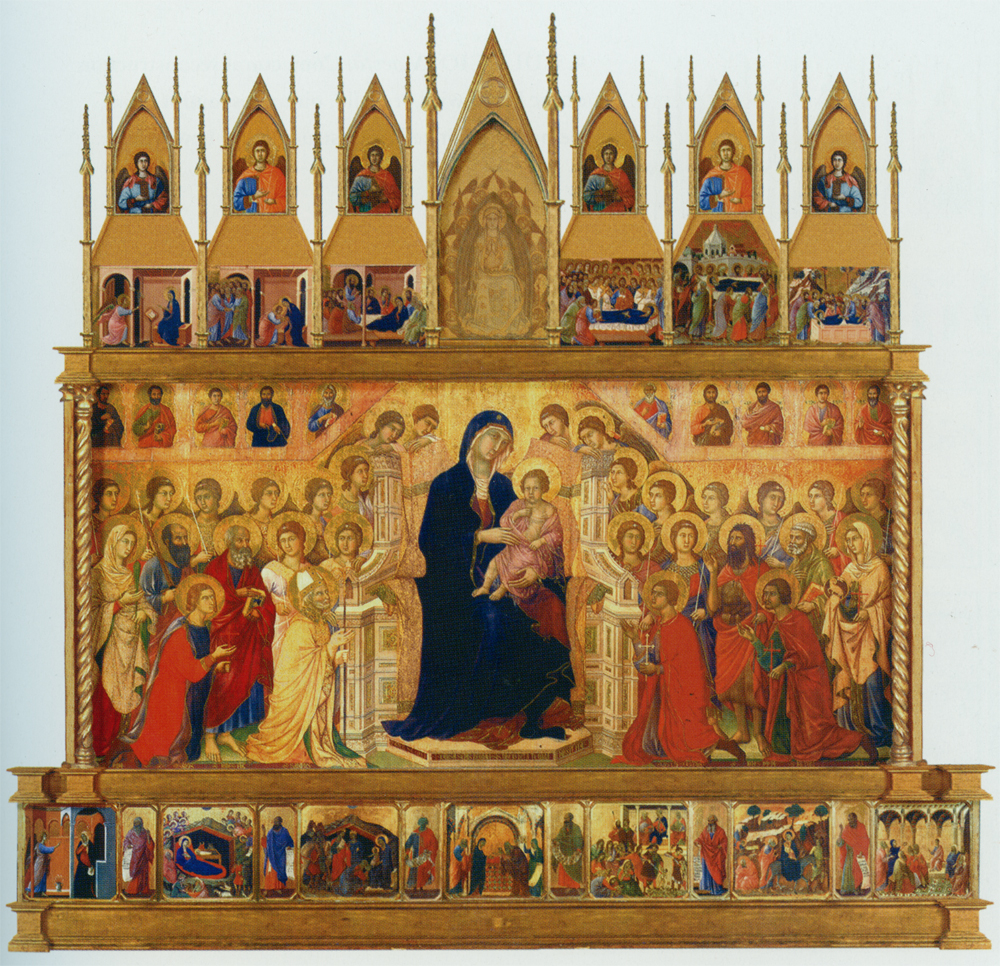
>> Siena: The Rise of Painting, 1300–1350, Metropolitan Museum of Art, October 13, 2024–January 26, 2025: “Siena: The Rise of Painting, 1300–1350 examines an exceptional moment at the dawn of the Italian Renaissance and the pivotal role of Sienese artists—including Duccio, Pietro and Ambrogio Lorenzetti, and Simone Martini—in defining Western painting. In the decades leading up to the catastrophic onset of the plague around 1350, Siena was the site of phenomenal artistic innovation and activity. While Florence is often positioned as the center of the Renaissance, this presentation offers a fresh perspective on the importance of Siena, from Duccio’s profound influence on a new generation of painters to the development of narrative altarpieces and the dissemination of artistic styles beyond Italy.”
The New York Times published a glowing review of the exhibition, calling it “revelatory . . . the art show of the season.” Here’s a video tour:
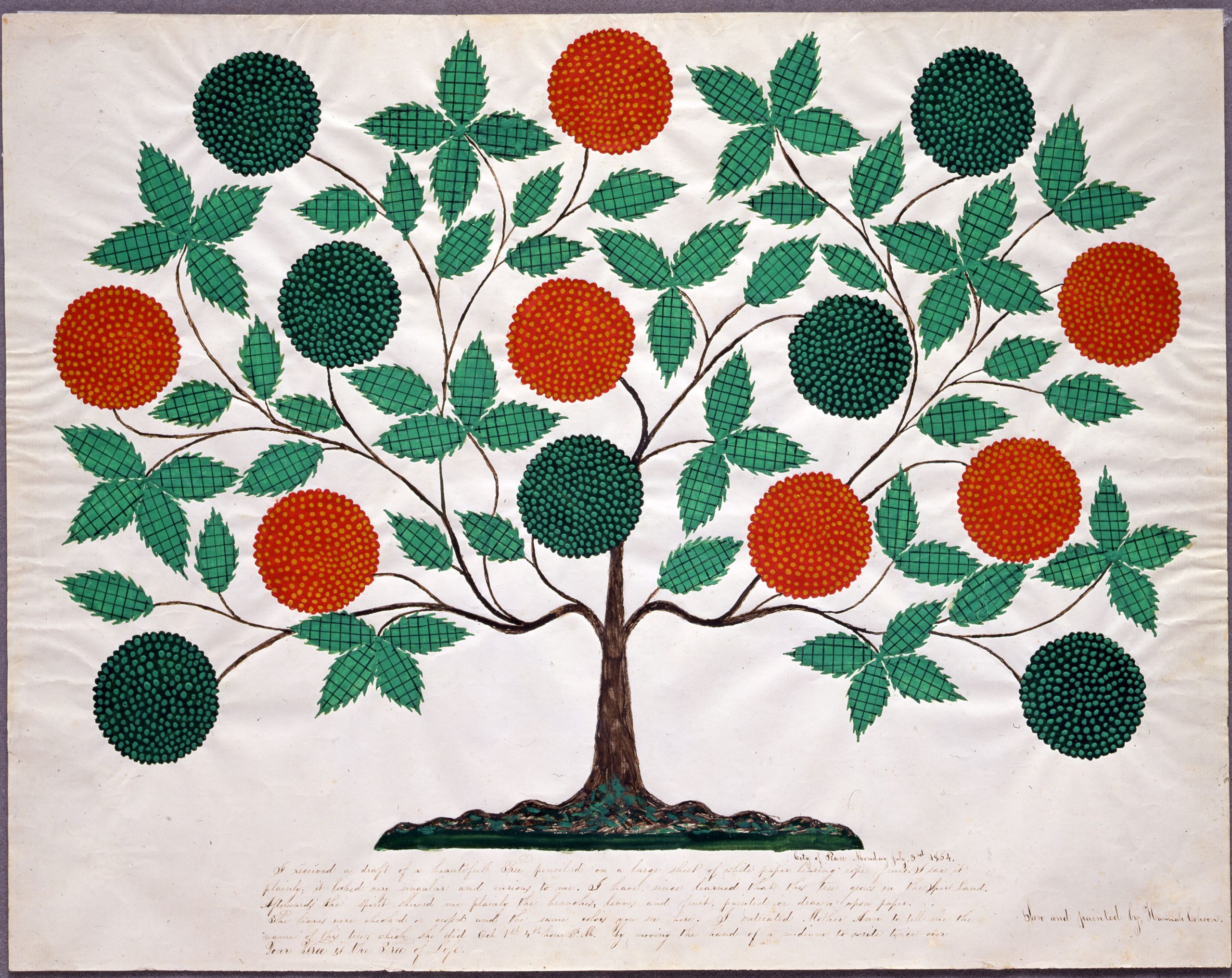
>> Anything but Simple: Gift Drawings and the Shaker Aesthetic, American Folk Art Museum, September 13, 2024–January 26, 2025: “The Shakers, often celebrated for their minimalist approach to design, will be showcased in a new light with the exhibition Anything but Simple: Gift Drawings and the Shaker Aesthetic. Made by women in the mid-19th century and believed to represent divine messages, the ‘gift’ drawings on display represent a departure from the simplicity typically associated with Shaker material culture.
“Opening during the 250th year of Shakerism in the United States, the exhibition features drawings widely considered to be among the finest surviving examples of this rare type. These symbols of love and nature were often given as ‘tokens’ to other Shakers during meetings. Brightly colored and replete with intricate ornamentation, they represent a stunning world of celestial imagery. Compared to examples of Shaker clothing and furniture that will also be included in the exhibition, the vibrancy of the drawings will mark a distinct contrast with the clean lines typically associated with Shaker design.”


 Art & Theology