25 Poems for Christmas, vol. 2

Following the popularity of last year’s “25 Poems for Christmas,” I’ve decided to publish a brand-new installment, and will perhaps make this a yearly tradition! All the selections can be read online—just follow the links.

Despite the pithy title of this post, not all the poems are “Christmas” poems, strictly speaking, but rather they encompass the season of Advent too, as well as Epiphany. Advent is a four-week season leading up to Christmas that is characterized by a mood of longing and expectation; it is oriented not only toward Jesus’s first coming but also toward his second. Christmas, of course, celebrates the birth of Jesus, the Word of God made flesh. And Epiphany, on January 6, commemorates the visit of the magi to the crib, representing God’s self-revelation to the wider world.

Each poem is accompanied by a micro-commentary or short descriptive blurb, which I suggest you read after reading the poem itself. There’s a benefit to first entering a poem without having any context—then after registering your initial impressions and questions, to consider another person’s framing or analysis or highlights, and reread. And then a third time! Each reading can potentially reveal new meaning.
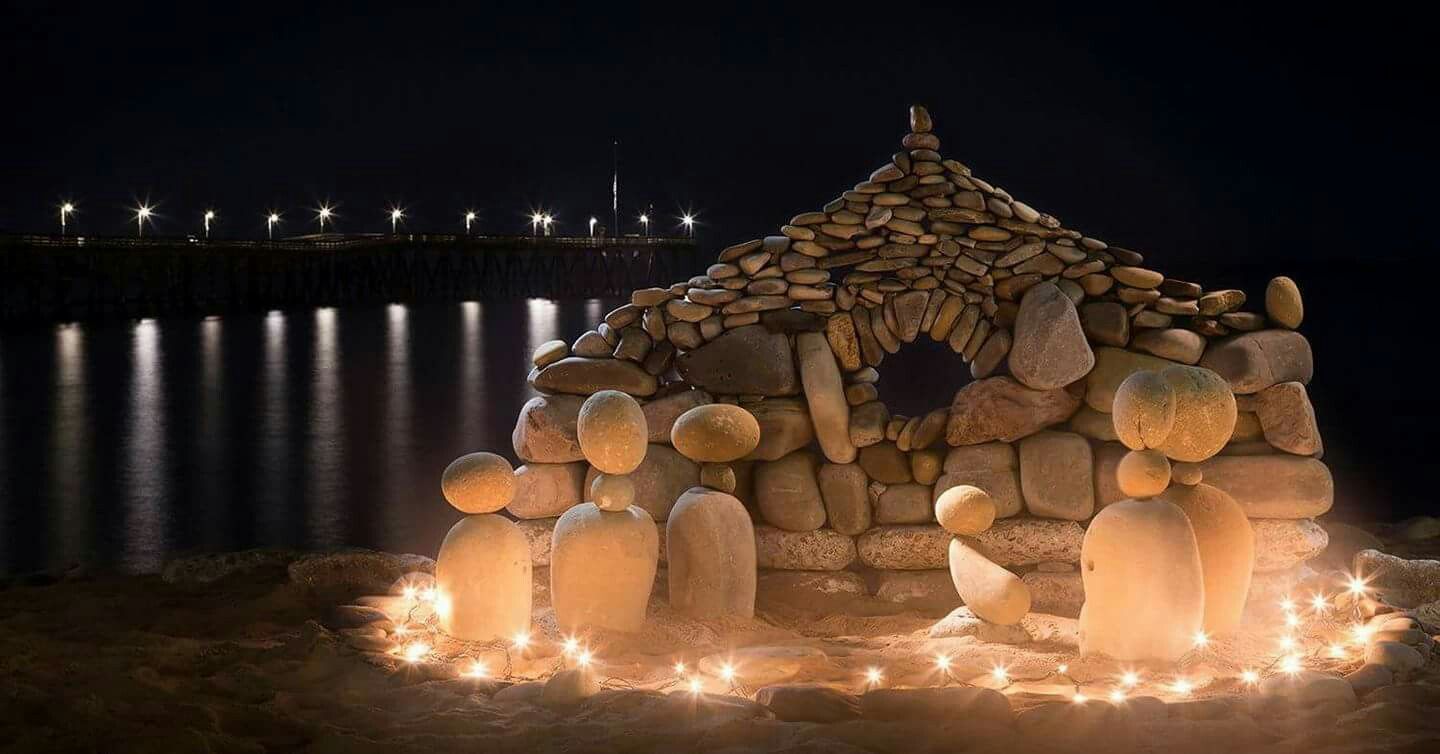
Ventura Stone Nativity
Stone Nativity by Juan Manuel Cisneros, Ventura, California, December 2016 [learn more]

1. “Haiku for an Advent Calendar” by Richard Bauckham: Church services during Advent tend to focus on messianic prophecies from the Hebrew Bible, rumblings of a coming savior. In this sequence of twenty-four haiku, Richard Bauckham pulls a detail from each book of the Jewish scriptures, finding anticipations of Christ. For example, Isaiah: “In the wilderness / a voice cries for centuries / seeking an echo.” Or Job: “God answered Job but / not his question. Maybe he / will do that again.”

Source: Tumbling into Light: A Hundred Poems (London: Canterbury Press Norwich, 2022) | https://richardbauckham.co.uk/

2. “How Christ Shall Come” (anonymous): The cosmological Christ blew in from the four cardinal directions, coming as lover, knight, merchant, and pilgrim. So says this fourteenth-century Middle English lyric, rich in metaphor, compiled in a book of preaching aids and sermons by John Sheppey (d. 1360), bishop of Rochester. (It is unclear whether he is the author of the poem.) The great medieval literature scholar Carleton Brown gave it the title “How Christ Shall Come” in his landmark Religious Lyrics of the XIVth Century (1924), and Grace Hamman brought it to my attention recently in her wonderful monthly Substack, Medievalish, providing a modern English translation and commentary.

Source: Merton College MS 248, fol. 139b. Public Domain.

3. “Hawk Lies Down with Rabbit” by Seth Wieck: What would it look like for death to no longer have dominion in the animal world? Grappling with Isaiah’s end-time vision of a peaceable kingdom void of predation, this poem describes in graphic terms a bird of prey making its kill, feeding on flesh, and wonders how a hawk could still be itself with rewired impulses. Hear the author read and provide context for the poem on the Reformed Journal Podcast.

Source: Reformed Journal, January 31, 2023 | https://www.sethwieck.com/

4. “john” by Lucille Clifton: Written in the voice of John the Baptist, this poem is part of an extraordinary sixteen-poem sequence titled “some jesus,” which features a range of biblical characters. In her retelling of his ministry as forerunner to the Messiah, Lucille Clifton casts John as a Black Baptist preacher, preparing his listeners to receive the one who “com[es] in blackness / like a star.” Clifton’s larger body of work would suggest that “blackness” here is multivalent, describing what Jesus comes into and as: the word suggests the darkness of the world that Christ entered, on the one hand, but also functions as a positive racial identifier. In Clifton’s revisioning, Christ comes as a Black man, wearing “a great bush / on his head”—which, again, could be read as an Afro, and/or as a mystical reference to the site at which God revealed himself to Moses in the Sinai desert. Luminous with truth, Christ comes, “calling the people brother.”

Source: Good News About the Earth (New York: Random House, 1972); compiled in The Collected Poems of Lucille Clifton (Rochester: BOA Editions, 2012)
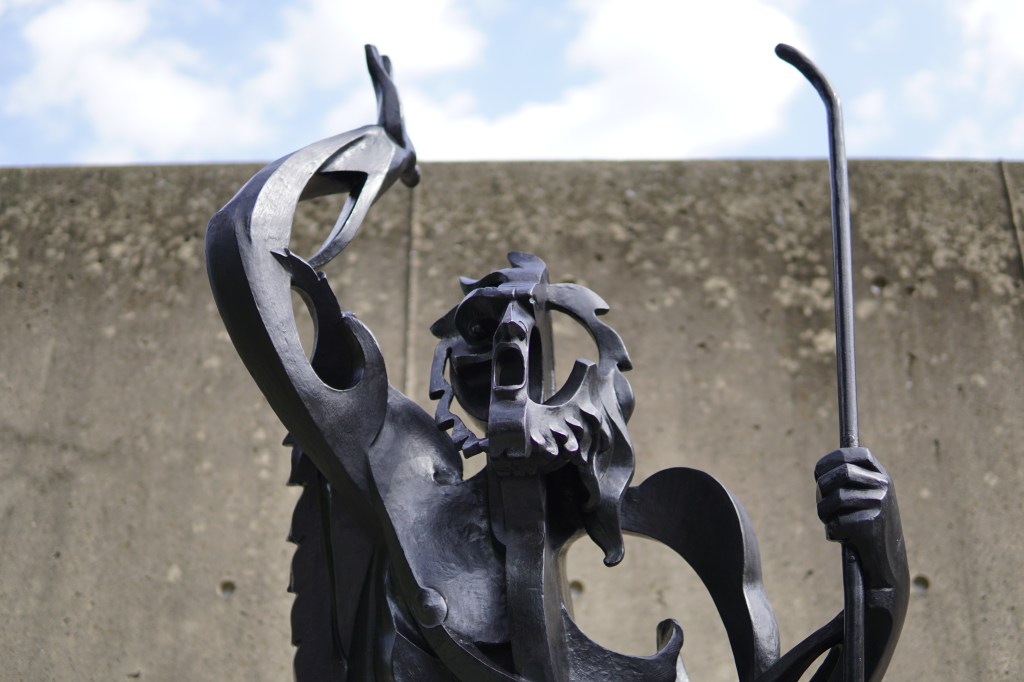
Gargallo, Pablo_The Prophet
Pablo Gargallo (Spanish, 1881–1934), The Prophet (St. John the Baptist) (detail), 1933. Bronze, 91 3/4 × 29 1/2 × 19 in. Wurtzburger Sculpture Garden, Baltimore Museum of Art. Photo: Victoria Emily Jones.

5. “Christmas Mail” by Ted Kooser: Every December the story of an ancient birth comes alive again in couriers’ mailbags, in tin boxes at the ends of driveways, on mantels and fridges. This poem honors those postal workers who deliver good tidings in the form of Christmas cards, the magic spilling out the envelopes to make even the most tiresome routes sparkle a bit.

Source: Poetry Foundation | https://www.tedkooser.net/

6. “December 25” by George MacDonald: Through the mid-nineteenth century, denominations influenced by the Reformed tradition, including the Church of Scotland in which George MacDonald was raised, typically did not observe Christmas, the rationale being that no one day should be thought of as holier than any other. But in his book-length dramatic poem Within and Without, MacDonald refers to December 25 as “this one day that blesses all the year”—and in this seven-liner from his Diary of an Old Soul, he describes Christmas as a gleaming blue sapphire, a structural center, around which all the other jewels of the church calendar are oriented.  

Source: The Diary of an Old Soul (privately published, 1880). Public Domain.

7. “On a Cardinal Climbing Down a Manhole to Restore Power to 400 Homeless People” by Michael Stalcup: On May 11, 2019, Cardinal Konrad Krajewski, the papal almoner (Pope Francis’s special appointee to distribute charity), crawled into a manhole and broke a police seal to personally restore power to a homeless shelter in Rome whose electricity had been shut off due to its failure to pay its bills. The shelter was occupied by some 450 people at the time, 100 of them children, who had been without electric light, hot water, and refrigeration for nearly a week. In this poem, which can be read Christologically, Michael Stalcup celebrates this defiant humanitarian act that brought light to a people living in darkness.

Source: Commonweal, April 2020 | https://www.michaelstalcup.com/

8. “Incarnation” by Amit Majmudar: “Inheart yourself, immensity. Immarrow, / Embone, enrib yourself.” So begins the five-poem sequence “Seventeens.” Musical and witty, this first poem is a plea to the great I AM to take on a body and “be all we are, and all we aren’t.”

Source: Heaven and Earth (West Chester, PA: Story Line Press, 2011) | http://www.amitmajmudar.com/

9. “The Lord Is with Thee” by Micha Boyett: Written in 2010 as the third in a five-poem sequence commissioned by John Knox Presbyterian Church in Seattle, this poem centers on the Visitation episode described in Luke 1:39–58. It’s about Mary finding belonging in God’s story, especially through the companionship of her elder cousin Elizabeth, who has nurtured Mary’s faith since infancy and continues to do so in this her moment of crisis. “How easily she spoke of God, / as if he were a neighbor, a fish vendor on the street,” Mary admires. Elizabeth supports Mary physically, emotionally, and spiritually, holding her hair back as she vomits, protecting her from vicious rumors, affirming the work of God in her life, and accompanying her at the start of this wild path God has set them both on.

Source: The By/For Project | https://www.michaboyett.com/

Redon, Odilon_Mystical Conversation
Odilon Redon (French, 1840–1916), Mystical Conversation, ca. 1896. Oil on canvas, 65 × 46 cm. Museum of Fine Arts, Gifu, Japan.

10. “Our Lady” by Mary Elizabeth Coleridge: The great-grandniece of the Romantic poet Samuel Taylor Coleridge, Mary Elizabeth Coleridge (1861–1907) grew up in a home visited by family friends Alfred Lord Tennyson, Anthony Trollope, John Ruskin, and Robert Browning, among others. In this poem she marvels at how God chose the common-born Mary for such a task as mothering the Christ, singing along with Mary’s Magnificat about how God raises up the lowly.

Source: Fancy’s Following (privately published, 1896). Public Domain.

11. “Traveling Man” by Marjorie Maddox: With his pregnant wife alongside, Joseph plods down south to Bethlehem, “convinced of the predestined / roll of dice chrismated with Miracle.” An epigraph from a Leonard Cohen song sets the tone.

Source: Begin with a Question (Brewster, MA: Paraclete, 2022) | http://www.marjoriemaddox.com/

12. “Sonnet in the Shape of a Potted Christmas Tree” by George Starbuck: This charming shape poem contrasts the extravagance of our popular celebrations of Christmas with the poverty of the first-century event it marks. The first half describes the furious wind of decorative activity that uproots evergreens from their natural habitats to bring them indoors and deck them with baubles and ribbon. I don’t know how to interpret “no scapegrace of a sect,” but “Daughter-in-Law Elect” refers to a duet from the Gilbert and Sullivan opera The Mikado. The turn comes with “a son born / now / now,” the latter two lines styled as the visible trunk of the tree; here the scene shifts to the simple stable of old, where Mary lies “spent” next to her newborn along with a cow and donkey, a sole “firework” guiding the magi and us all to the spot.

Source: The Works: Poems Selected from Five Decades (Tuscaloosa: University of Alabama Press, 2003)

13. “Christmas (I and II)” by George Herbert: George Herbert (1593–1633) is one of the most celebrated poets of the English language. In part 1, a sonnet, of this two-part poem, he imagines himself a weary traveler who chances upon a humble inn where he unexpectedly finds his Lord, the infant Christ. It’s the inn of Bethlehem. Having then received rest from Christ his host, in the closing couplet he expresses his desire to reciprocate—to offer his own soul, lowly though it is, as a residence for Christ, praying that God first adorn it to make it hospitable. In the second part of the poem, Herbert uses a metaphysical conceit (extended metaphor) comparing his soul to a shepherd whose flock of thoughts, words, and deeds pastures on God’s word and who, like the shepherds of Bethlehem, sings glory to God. His shepherd-soul seeks eternal daylight, which he finds in the Son/sun, whose beams so intertwine with his song that the beams sing and his song shines.

Source: The Temple: Sacred Poems and Private Ejaculations (Cambridge, 1633). Public Domain.

14. “Descending Theology: The Nativity” by Mary Karr: The physicality of childbirth, from the contractions (which pierce the Virgin like a star, Karr writes) to the bodily fluids, is heavily featured in this poem. Jesus emerges from his mother “a sticky grub” with a “lolling head” and “sloppy mouth” that seeks out her breast for food. And as she feeds him physically, he feeds her spiritually. Then he falls asleep. His first nap, Karr writes, is a foretaste of the sleep of death he will eventually come to taste. But for now, he wakes up crying—as all babies do.

Source: Sinners Welcome (New York: HarperCollins, 2006) | https://www.marykarr.com/
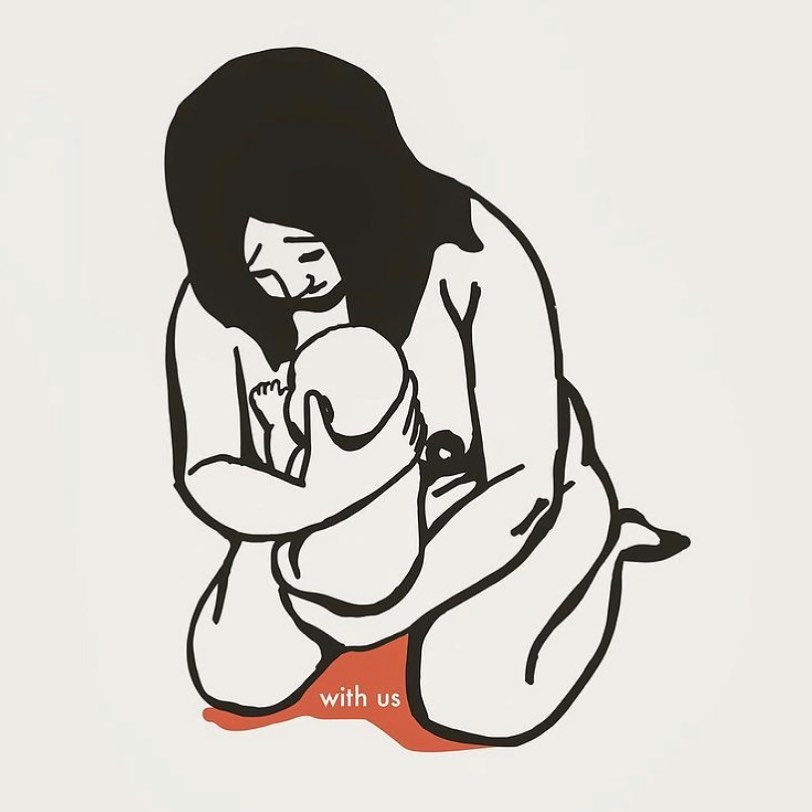
Erickson, Scott_With Us, Face to Face
Scott Erickson (American, 1977–), With Us, Face to Face, 2016. Digital art. [available for purchase]

15. from spiralling ecstatically this by E. E. Cummings: What a fantastic opening line! The heavenly spheres whirling, twirling, down into the “proud nowhere”—Bethlehem—“of earth’s most prodigious night.” Heretofore living in mundanity, the domestic animals, hungry for miracle, for newness, are vouchsafed to be witnesses of this supernatural event, before which they kneel “humbly in their imagined bodies.” Overhead floats the “perhapsless mystery of paradise,” a phrase suggesting that heaven is beyond human understanding but not without certainty; it’s a declarative reality, not subjunctive, even if it can’t quite be put into words. Mary herself has no words—she silently, knowingly smiles, while the created world erupts in song around her. The “mind without soul” is a reference to Herod, who seeks to snuff out this new life, but to no avail.

The omission of spaces after punctuation marks (e.g., “a newborn babe:around him,eyes”) is not a mistake; that’s how E. E. Cummings liked it. Scholars say it’s to create a faster rhythm, but in this poem I don’t think that choice is as effective, as pauses and slow savoring seem more appropriate to its contemplative mood.

Source: Atlantic, December 1956; compiled in E. E. Cummings: Complete Poems, 1904–1962, exp. ed., ed. George J. Firmage (New York: Liveright, 2016)

16. “How the Natal Star Was Born” by Violet Nesdoly: Narrated by the angel Gabriel, this poem imaginatively describes heaven’s nervously awaiting the birth of Jesus during the nine months following Gabriel’s dispatch to Mary, and then busting out in celebration when at last they hear his infant-cry. When his Son is born, instead of cigars, the Father passes out trumpets to his company of friends, who sound them all the way to Bethlehem’s fields, and pops open a bottle of champagne whose bubbles spray far and wide.

Source: Calendar (Surrey, BC: SparrowSong Press, 2004) | https://violetnesdoly.com/

17. Sections 9–10 of “The Child” by Rabindranath Tagore: Hinduism was the religion of Rabindranath Tagore’s birth and upbringing, but he also held deep respect for Jesus Christ. (For more on the influence of Christianity on Tagore’s thought and writing, see chapter 4 of Rabindranath Tagore and Interfaith Dialogue by Manas Kumar Ghosh [DMin thesis, Charles Sturt University, 2010].) “The Child” is a free-verse poem that Tagore wrote in English in 1930 after seeing a passion play in Germany and then translated into Bengali in 1932 with the title “Sishutirtha” (Pilgrimage to Childhood). In it a “Man of faith” gathers people from all walks of life to join him on a “pilgrimage of fulfilment,” to “struggle [through the dark] into the Kingdom of living light.” Initially met with enthusiasm, the Man later becomes a target of the people’s anger and distrust, and they kill him. Disorientation ensues. But a man in the crowd is able to rally the others to repent and resume their quest, following the spirit of “the Victim.”

The final two sections, 9 and 10, are the selection I’ve chosen. (Scroll right to read the last.) At “the first flush of dawn,” when the time is ripe, the pilgrims arrive at a thatched hut in a palm grove, where they finally meet the eternal Light they’ve been seeking: “the mother . . . seated on a straw bed with the babe on her lap, / . . . the morning star.” Here is the Child of the title, humanity’s redeemer.

Source: The Child (London: George Allen and Unwin, 1931)
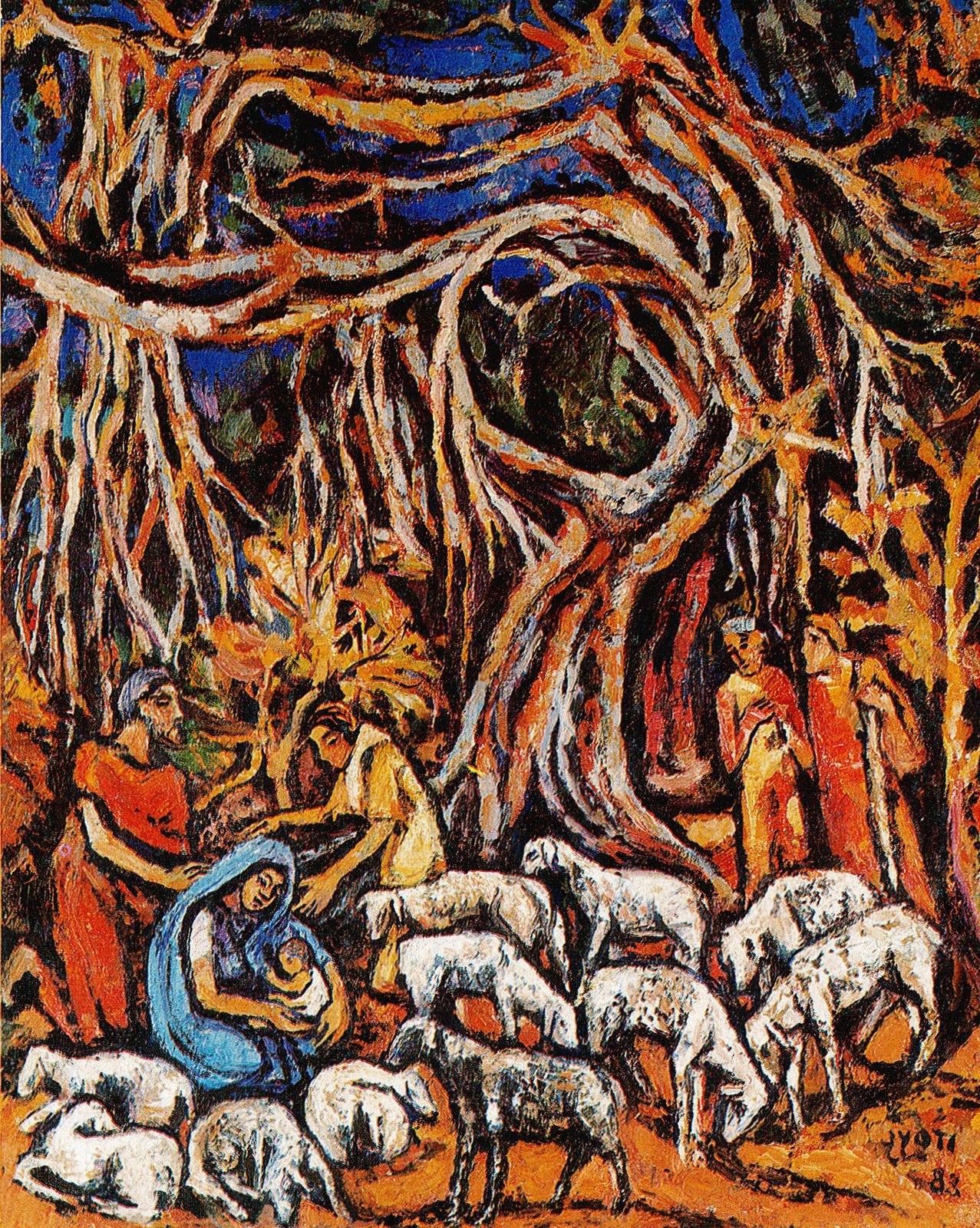
Sahi, Jyoti_Adoration of the Shepherds
Jyoti Sahi (Indian, 1944–), Adoration of the Shepherds, 1983. Oil and acrylic on canvas.

18. “Love’s Bitten Tongue (11)” by Vassar Miller: This poem, “You, my God, lonesome man, Love’s bitten tongue,” is from a crown of twenty-two sonnets, a type of sequence in which the last line of each sonnet is repeated as the first line of the next, but each time with a new twist of syntax and sense. The crown as a whole expresses the poet-speaker’s struggle against her ego, and her desire for Christ (whom she gives such an evocative name in the title!). In this particular sonnet she describes waiting at the edge of her bed every Christmas Eve as a child in anticipation of both Santa’s arrival with gifts and the holy mystery of Christ’s birth, an admixture of sacred and profane longings that fill her still as an adult.

Source: Struggling to Swim on Concrete (New Orleans: New Orleans Poetry Journal Press, 1984); compiled in If I Had Wheels or Love: Collected Poems of Vassar Miller (Dallas: Southern Methodist University Press, 1991)

19. “Gloria in Profundis” by G. K. Chesterton: G. K. Chesterton’s poems are of variable quality, but this one is brilliant, emphasizing God’s descent from the rich heights of heaven into an obscure cave in a simple town. “Glory to God in the lowest!” it exclaims, a clever inversion of the angels’ song to the shepherds in Luke 2:14. The poem was originally published in a 1927 Christmas pamphlet with wood engravings by Eric Gill. The Latin title translates to “Glory in the Depths.”

Source: Gloria in Profundis by G. K. Chesterton (Ariel series pamphlet) (London: Faber and Gwyer, 1927); compiled in The Spirit of Christmas (New York: Dodd, Mead, 1985)

20. “Silent Night” by Bonnie Bowman Thurston: Rev. Dr. Bonnie Thurston invokes a tradition that says the night of Christ’s birth, there was a whole hour in which time stood still and all was silent. What a fascinating legend! Thurston told me its origin is northern European, said she remembers reading it in some scholarly Celtic studies; I wasn’t able to locate any such mentions, but the second-century Protoevangelium of James, chapter 18, probably written in Egypt or Syria, does describe everything momentarily freezing in place around Joseph as he steps out to find a midwife for Mary. Anyway, the poem ends with a striking metaphor! Word, flesh: fire. (Reminds me of this digital artwork by Scott Erickson.)

Source: Remembering That It Happened Once: Christmas Carmen for Spiritual Life All Year Long, ed. Dennis L. Johnson (Eugene, OR: Wipf & Stock, 2021)

21. “After Luke 2:19” by Michelle Ortega: When the shepherds recounted to Mary what the angels had told them in the fields about Jesus being the promised Messiah, “Mary treasured all these words and pondered them in her heart,” Luke narrates in his Gospel. Poet Michelle Ortega expounds on this verse, emphasizing the relationship of Mary’s body to her son’s from conception to birth and now postpartum—an intimacy known well by mothers across the centuries. As wondrous as it was to be part of a cosmic story writ large in the skies, Ortega suggests that Mary treasured just as much as the grand pronouncements those small moments of being just an ordinary mama.

Source: Mary, Mary: Contemporary Poets and Artists Consider Mary (Arlington, VA: St. Michael’s Episcopal Church, 2021), a free e-book accompanying an art exhibition

22. “Christmas: 1924” by Thomas Hardy: “We the civilized world have given Christianity a fair trial for nearly 2000 years, & it has not yet taught countries the rudimentary virtue of keeping peace,” lamented the British novelist and poet Thomas Hardy (1840–1928) in a letter to Florence Henniker dated February 25, 1900, during the Boer War. World War I only increased his cynicism, which is on display in this sour little epigram that opens with an ironic quotation of the angels’ proclamation to the shepherds the night of Jesus’s birth.

Source: Winter Words in Various Moods and Metres (New York: Macmillan, 1928). Public Domain.
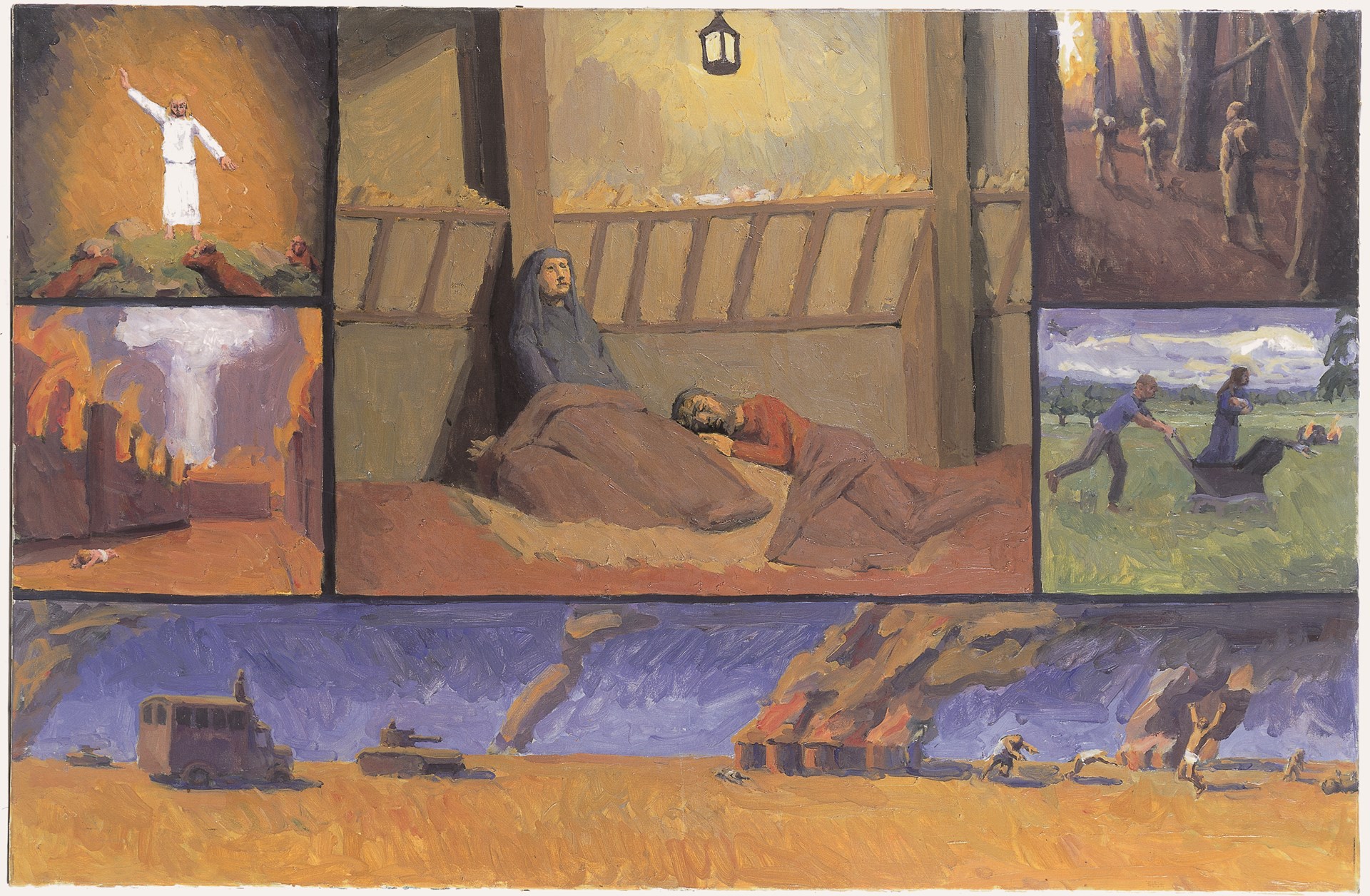
Hoyland, Francis_Nativity polyptych
Francis Hoyland (British, 1930–), Nativity, 1961. Oil on canvas, 90 × 120 cm. Methodist Modern Art Collection, HOY/1963/1.

23. “Eating Baklava on New Year’s Eve” by Anya Krugovoy Silver: Poet Anya Silver (1968–2018) reads a spiritual benediction in her piece of baklava, layered and sweet and consumed on the eve of a new year.

Source: Second Bloom (Eugene, OR: Cascade Books, 2017)

24. “A Ballad of Wise Men” by George M. P. Baird: Jesus so often confounds the wisdom of the wise, starting with his birth. With gentle humor and in iambic rhythm and rhyme, this poem celebrates the simple access we all have to Christ.  

Source: Rune and Rann (Pittsburgh: Aldine Press, 1916). Public Domain.

25. “Excrucielsis” by Hannah Main-van der Kamp: Originally published at ArtWay.eu as a response to the contemporary Romanian sculpture The Spring by Liviu Mocan, this poem alternates between the weary journeying toward truth of one of the biblical magi and that of a modern-day seeker similarly “longing for / the something more.” It can be a trudge, finding the Light—it involves risk, a willingness to follow the signs, and the tenacity to hold on to your “vision burden,” “clutch[ing] the weight” of it all the way over rough and varied terrain. But the epiphanic moment awaits, to sound like a trumpet blast. The title of the poem is a neologism combining the words “excruciating” and “excelsis” (Latin for “the heights”); “every excelsis contains something excruciating, that’s how we get to genuine excelsis,” the poet told me in an email. Read a related prose reflection by Main-van der Kamp here.

Source: The Slough at Albion (Victoria, BC: Ekstasis Editions, forthcoming)


Disclosure: This post contains Amazon affiliate links, meaning I earn a small commission from qualifying Amazon purchases originating from clicks on this site.

25 Poems for Christmas

Hawkins, William L._Nativity Scene
William L. Hawkins (American, 1895–1990), Nativity Scene, 1987. Oil on canvas, 48 × 48 in. Newark Museum of Art, Newark, New Jersey.

1. “Remembering that it happened once” by Wendell Berry: For the last forty-plus years, Kentucky farmer Wendell Berry has been writing what he calls “Sabbath poems,” which emerge from his spiritual practice of walking outdoors on Sundays without any to-do’s. “I go free from the tasks and intentions of my workdays,” he says, “and so my mind becomes hospitable to unintended thoughts: to what I am very willing to call inspiration.” This Sabbath poem from 1986 explores how the sacred permeates the mundane and how Christ is, in a sense, always being born. For an SATB choral setting by Doug Brandt, see here.

Source: A Timbered Choir: The Sabbath Poems 1979–1997 (Washington, DC: Counterpoint, 1998); compiled in This Day: Collected and New Sabbath Poems (Washington, DC: Counterpoint, 2014)

2. “BC:AD” by U. A. Fanthorpe: Ursula Askham Fanthorpe (1929–2009), CBE, FRSL, was an English poet who is well loved by both critics and the general public. She was also a practicing Quaker. Each year she wrote a new Christmas poem to send to friends, of which “BC:AD” is the best known. It considers Jesus’s birth as the pivotal point in history, dividing time into epochs, into “before” and “after.” At this nativity, kairos invaded chronos—and we’re still singing about it millennia later.

Source: Christmas Poems (London: Enitharmon, 2002)

3. “Making the House Ready for the Lord” by Mary Oliver: For many of us who succumb to cultural pressures, December is a time of rushing around, making sure the house is decorated like a magazine, the Christmas cards sent out, the cookies baked to perfection, the gifts individually selected and bought and wrapped. But in all this flurry of activity, are we missing “the better part” (Luke 10:42)? The speaker of this poem, Martha-like, is busy making preparations for Jesus, who’s coming to visit, but as she’s cleaning, outdoor critters keep popping in. At first she bemoans their presence—they’re not on the guest list!—but eventually she comes to accept, even welcome, them, surrendering her fussy desire for orderliness to a charitable embrace of whatever is. And on another level, this poem is about how all of creation longs for Christ (Rom. 8:19–22); the animals, too, want to see him, want to join the party.

Source: Thirst (Boston: Beacon Press, 2006)

4. [It’s all so messy] by Kelly Belmonte: A haiku for Advent.

Source: https://allninemuses.wordpress.com/

5. “Second Advent” by Anya Krugovoy Silver: Memorializing a friend (Ishiuan Hargrove) who died of metastatic brain tumors, “Second Advent” unsettlingly combines stark hospital-room and anatomical language with language that is soft, gentle, lyrical. Recounting one of Ishiuan’s several neurosurgeries, the poet remarks how her head was nimbed by surgical lights and then swaddled in gauze. The title refers to Ishiuan’s waking up on the second Sunday of Advent, but also to the hope of Christ’s second coming, when pain, disease, and sorrow will be done away with. Anya Silver was herself a cancer patient, an experience she wrote much about in her four volumes of poetry, before dying of breast cancer in 2018.

Source: Second Bloom (Eugene, OR: Cascade Books, 2017)

6. “The Nativity” by Henry Vaughan: “Peace!” rang the angels’ song the night of Christ’s birth—and yet what irony, that he who came to bring peace was himself no beneficiary of it in this life, being born among animals in a borrowed stable, then made a refugee, then later disbelieved, betrayed, mocked, tortured, and crucified. The darkness that bred such unwelcome of the Son of God still persists—violence, ignorance. Referencing the Genesis 1 creation narrative as well as the journey of the magi, the poem ends with an invocation for God’s light to manifest once again, leading us to Christ.

Source: Thalia Redivina: The Pass-Times and Diversions of a Countrey-Muse (London: Robert Pawlet, 1678). Public Domain.

7. [little tree] by E. E. Cummings: One of E. E. Cummings’s earliest published poems (it came out in the January 1920 issue of The Dial), “little tree” was intended to appear as one of five “chansons innocentes” in Cummings’s first book of verse, Tulips and Chimneys, but his editor, Thomas Seltzer, cut it (along with sixty-five others!). In it a young child consoles a recently felled evergreen tree—enlisted for the holiday festivities—with promises of glory and love. Though it runs the danger of being read as twee, Cummings remained fond of the poem and even had it printed and sent it as his family Christmas card in 1960, two years before he died.

Source: XLI Poems (New York: The Dial Press, 1925); compiled in E. E. Cummings: Complete Poems, 1904–1962 (New York: Liveright, 2016). Public Domain.

8. “Messiah (Christmas Portions)” by Mark Doty: The speaker of this poem is unexpectedly transported by a local community choir performance of Handel’s Messiah. He marvels at how these ordinary, flawed neighbors of his can produce such beauty with their collective voices. The last line is probably a reference to the accompagnato and air sung by the bass toward the end of the oratorio, taken from 1 Corinthians 15:51–54—about how we will all be changed in a moment at the last trump, and the corruptible will put on incorruption.

Source: Sweet Machine (New York: HarperFlamingo, 1998); compiled in Fire to Fire: New and Selected Poems (New York: Harper Perennial, 2008)

9. “What the Body Knows” by Jean Janzen: The anonymous scribes and illuminators of the Book of Kells spent countless hours copying and beautifying God’s word amid Viking raids. In this ekphrastic poem, Jean Janzen reflects on the Gospel-book’s five whimsically painted folios of Luke’s genealogy of Christ, commenting on the continual inbreaking of God into our world and the “wild safety” of God’s love.

Source: What the Body Knows (Telford, PA: DreamSeeker Books, 2015)

10. “Confession” by Leila Chatti: The Tunisian American poet Leila Chatti was raised by a Muslim father and a Roman Catholic mother, and both religious traditions have shaped her faith and her writing. Islam and Christianity hold many sacred figures in common, including Mary (Maryam), whose conception and delivery of Jesus (Isa) are narrated in the Quran 19:16–34. Chatti confesses to being more compelled by the Islamic characterization of Mary as grunting and sweating in the pangs of labor (in contrast to Catholic teaching, which says her birthing experience was effortless, her contractions painless, though the Bible itself doesn’t specify). Chatti finds comfort in picturing Mary not as someone exempt from the effects of the fall and set apart on a pedestal of supreme virtue, but as one who suffered the same physical and emotional toll as other childbearing women—and who probably did have the occasional selfish thought, which, in moments of intensity and vulnerability, she deigned to vocalize!

Source: Deluge (Port Townsend, WA: Copper Canyon Press, 2020) | https://www.leilachatti.com/

11. “Two Carols” by Evelyn Underhill: An English Anglo-Catholic writer and mystic, Evelyn Underhill meditates in this double poem on how Christ set foot on the long, hard road we travel to be a balm for our wounds and those of the earth. The epigraph to part 1 is from the Latin Vulgate of Song of Solomon 2:12: “The flowers appear on the earth.” What follows are several Catholic titles for Mary: rose without thorn, queen, generatrix. The epigraph to part 2 is a quotation of Romans 8:22: “The whole creation groaneth and travaileth in pain together until now.” The refrain, Dominus tecum!, translates to “The Lord is with you!,” words spoken by the angel Gabriel to Mary and, by virtue of the Incarnation, to all humanity. The other Latin phrases translate to “He who is in the heavens,” “A King is born,” and “Let the kingdom come!” Adveniat regnum!

Source: Immanence: A Book of Verses (London: J. M. Dent, 1912). Public Domain.

12. “The Christmas Babe” by Fr. John Banister Tabb: Written by a Catholic priest from Virginia, this simple quatrain marvels at the paradox of God’s simultaneous largeness and smallness.

Source: Poems (London: John Lane, 1894). Public Domain.

13. “Snowflakes” by Jennifer Grotz: When the world is viewed through a sacramental lens, we recognize God in commonplace wonders like falling snow, and such things can be a sort of wordless prayer that we offer back to God through our enjoyment of them.

Source: Window Left Open (Minneapolis, MN: Graywolf Press, 2016) | https://www.jennifergrotz.com/

14. [The Savior must have been a docile Gentleman] by Emily Dickinson: In these two compact stanzas, Dickinson reflects on how kind Jesus was (an understatement!) to have made the far journey to Bethlehem, “a rugged billion Miles” from heaven, especially in the cold month of December, all “for little Fellowmen.” She refers to him as “docile”—obedient, submissive—harking to Philippians 2, to his yielding to the will of the Father in the Incarnation, taking on human limitations, suffering, and death for the life of the world.

Source: The Complete Poems of Emily Dickinson, ed. Thomas H. Johnson (Cambridge, MA: The Belknap Press of Harvard University Press, 1976)

15. [Wilt thou love God, as he thee? Then digest] (Holy Sonnet No. 15) by John Donne: A self-address to the soul, this poem by the English poet-priest John Donne, first published in 1633, two years after this death, celebrates the Triune God’s salvific workings: we’re adopted by the Father, redeemed by the Son, indwelt and regenerated by the Spirit. The closing couplet, referencing the imago Dei, packs a wallop: “’Twas much, that man was made like God before, / But, that God should be made like man, much more.”

Source: Poems (London: M.F. [Miles Fletcher], 1633). Public Domain.

16. “The Little Towns of Bethlehem” by John Terpstra: All over Canada, Christ is being reborn this Christmas, in the sense that the Story has taken root, is retold, and continues to have impact. The speaker imagines the Christ child “wrapped in cast-off flannel” in a boxcar stopped on the tracks in Esther, Alberta, or feeding at his mother’s breast in a broken-down car on the shoulder of a road in Englehart, Ontario—actual sights that one might encounter today. Localizing the Story can help us to see it afresh, and to see the sacred humanity of families experiencing homelessness or other hardships.

Source: Two or Three Guitars (Kentville, Nova Scotia: Gaspereau Press, 2006) | http://johnterpstra.com/

17. “Song of the Shepherds” by Richard Bauckham: Richard Bauckham, FRSE, FBA, is best known as a biblical scholar—he’s one of today’s tops, in fact—but he also writes poetry! (I featured one of his poems last year.) In this poem, the shepherds on Bethlehem’s hillsides recall an ancient tale about the stars singing at the creation of the universe, which they thought merely a poetic embellishment, until they experienced something of the like for themselves: “a song of solar glory” eclipsing the lesser lights and exorcising the dark, creating the world anew. Unforgettable.

Source: Tumbling into Light: A Hundred Poems (London: Canterbury Press, 2022) | https://richardbauckham.co.uk/

18. “Those Magi” by Kathleen O’Toole: What exactly were the magi seeking? What compelled them to leave their treasure behind in that cattle shed? Whence their strength to defy Herod? Besides musing on these questions, the poem also contains a passing metaphor that I found striking and new: cow breath as incense.

Source: Christian Century, January 18, 2019 | https://kathleenotoolepoetry.com/

19. “Carol of the Brown King” by Langston Hughes: Tradition names one of the wise men who visited the Christ child “Balthazar” and says he’s from Africa. Langston Hughes, a preeminent poet of the Harlem Renaissance, exults that there was “one dark like me—part of His Nativity.” This poem is included in Hughes’s musical play Black Nativity and is one of six Nativity poems by Hughes that make up a children’s book illustrated by Ashley Bryan.

Source: Crisis (Dec. 1958), p. 615; compiled in The Collected Poems of Langston Hughes (New York: Knopf, 1994)

20. “Mosaic of the Nativity: Serbia, Winter, 1993” by Jane Kenyon: I couldn’t find the particular church mosaic program that Kenyon is writing about, but here’s my interpretation. Set inside a Serbian Orthodox church during the Bosnian War, this poem imagines a mosaic of Christ Pantocrator hovering in the dome, lamenting the violence that goes on beneath. Under the gaze of the I AM is another mosaic, portraying Jesus’s birth, but also, in a way, Mary’s, as she herself is being reborn in Christ, her mind increasingly shaped in accordance to his. Nativity icons often show Mary framed by a red blanket that she’s reclining on at the mouth of a cave, which Kenyon reads as embryonic.

Source: Otherwise (Minneapolis, MN: Graywolf Press, 1996); compiled in Collected Poems (Minneapolis, MN: Graywolf Press, 2005)

21. “Breath” by Luci Shaw: This poem reflects on the contraction of the infinite God who breathed the universe into existence into a finite human being needing oxygen, who, as is foreshadowed at his birth, will finally ex-pire (“breathe out” his last) on a cross before entering his “next dark cave,” a prelude to resurrection.

Source: Accompanied by Angels: Poems of the Incarnation (Grand Rapids, MI: Eerdmans, 2006) | https://lucishaw.com/

22. “Mary’s Vision” from medieval Ireland: Mary foresees the future suffering of her infant son and dialogues with him about it in this poem translated from Middle Irish by Eleanor Hull (the same woman who, through her translation and versification, gave us the hymn “Be Thou My Vision”!).

Source: The Poem-Book of the Gael (London: Chatto & Windus, 1912). Public Domain.

23. “Joseph at the Nativity” by Tania Runyan: Staring at the “shriveled pod” that Mary just birthed, Joseph grapples with his complicated feelings—doubt, embarrassment, jealousy, helplessness, confusion, pride—and with figuring out what role he should play in the life of this child going forward.

Source: Simple Weight (Lexington, KY: FutureCycle, 2010) | https://taniarunyan.com/

24. “Waiting in Line After Christmas” by Sharron Singleton: (Scroll down to fourth poem) Rather than exchanges of refunded money for unwanted items, Singleton ponders what a mutually life-giving exchange of intangibles might look like.

Source: Our Hands a Hollow Bowl (Hartford, CT: Grayson Books, 2018)

25. “Burning the Old Year” by Naomi Shihab Nye: Through the act of forgetting, we must destroy the worthless trivialities of the year, and we must let that which is solid, that which matters—the “stones”—be revealed and remain.

Source: Words Under the Words: Selected Poems (Portland, OR: Far Corner Books, 1995)

Roundup: Prayers for a violent world, sad church songs, Climate Vigil Songs, and more

PRAYER COMPILATION: “Prayers for a Violent World” by W. David O. Taylor: “How exactly do we pray in the aftermath of violence? What words should we put on our lips? What can the whole people of God say ‘amen’ to and what might only one of us be able to say amen to in good conscience? These questions are, of course, far from easy to answer, but over the past couple of years I have attempted to give language to such matters and I have included here a number of those prayers, in the hope that they might prove useful, and perhaps comforting, to people who face the terrors and traumas of violent activities on a regular basis.” Included are prayers After a Mass Shooting, Against Bloodthirstiness, For Loving a Hurting Neighbor, For Enemies, For Bitter Lament, For Peace in a Time of War, For Those Who Weary of Doing Justice, and more.

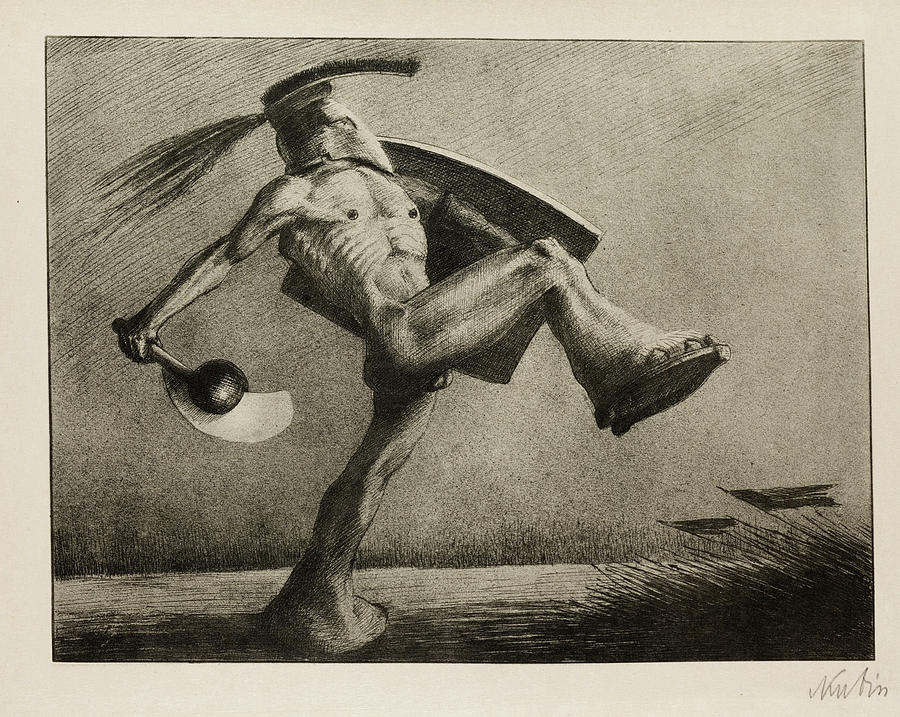
Kubin, Alfred_War
Alfred Kubin (Austrian, 1877–1959), War, 1903

Here’s Taylor’s Prayer of Allegiance to the Prince of Peace:

O Lord, you who deserve all our loyalties, we pledge allegiance this day to the Lamb of God and to the upside-down Kingdom for which he stands, one holy nation under God, the Servant King and the Prince of Peace, with liberty and justice for all without remainder. We pray this in the name of the Holy Trinity. Amen.

+++

NEW ALBUMS:

>> Sorrow’s Got a Hold on Me by Paul Zach: On May 20, singer-songwriter Paul Zach wrote on his Instagram, “My new album of thirteen sad church songs is out today! Many of these songs were written right after one of my weekly EMDR therapy sessions, as I have been working through the sorrow, trauma, and grief of the past few years. I’m learning to bring all of myself to God in prayer and songwriting, which includes my sorrow and anger. I’ve always heard that God shows up in a unique way in times of grief but that has not been my experience. These songs are an invitation for the ‘man of sorrows’ to join me in my grief.”

Below is a demo of the first verse of my favorite song on the album, “We Bring You All Our Sorrows,” followed by the album link from Spotify. It includes a newly revised version of one of my favorite songs by Zach, “When Your Kingdom Comes” [previously].

Zach often writes collaboratively (including as part of the Porter’s Gate! see below), and the cowriters on some of the songs here are Kate Bluett, Latifah Alattas (Page CXVI), Nick Chambers, Orlando Palmer (IAMSON), Jessica Fox, Alex Johnson, and Philip Zach. There are also a few guest vocalists.

>> Climate Vigil Songs by the Porter’s Gate: The Porter’s Gate is a collective of fifty-plus songwriters, musicians, scholars, pastors, and music industry professionals from a variety of Christian worship traditions and cultural backgrounds, making music for churches. This sixth album of theirs, made in partnership with the #ClimateVigil movement, is themed around environmental justice and creation care. Below are videos for “Brother Son (Giving Glory!)” and “Jubilee.”

Besides “Brother Sun,” my favorite tracks are “Satisfied,” a prayer that we would stop seeking to build our wealth (a motive that drives a lot of environmental injustices) and instead be grateful for God’s provision; “The Kingdom Is Coming,” a marchlike call-and-response song that rallies us to pray, wait, and work for an end to creation’s groaning; and “Water to Wine,” which wonders at the miraculous process of planting and growing grapes for harvest. There’s also “All Creatures Lament,” a minor-key arrangement of “All Creatures of Our God and King” with new lyrics that enjoin the animals to mourn habitat loss, air pollution, and other results of humans’ power abuses and irresponsible stewardship.

To learn more about the album, listen to this great interview with Porter’s Gate cofounder and producer Isaac Wardell; it’s from the RESOUNDworship Songwriting Podcast, hosted by Joel Payne. Wardell discusses the vision for Climate Vigil Songs, and especially the difficulty, with thematic albums, of avoiding the pitfalls of being too heavy-handed with the messaging on the one hand, and on the other, being so vague that people don’t see the connection. There’s also a need for tonal balance, and for songs that fill different functions.

We wanted to write for this album at least three different kinds of songs. One kind is essentially songs of lament—songs lamenting the state of creation because of human sin and the brokenness of the world. Secondly, we wanted to write hopeful, you might even call them eschatological, songs—songs that are joyful, that are about this is the world that God has made, this is God’s creative work, this is how God calls us into his creative work. . . . And lastly, we wanted to write mobilization songs—songs that have some kind of an ethical component of calling people to action in some way. . . . We want to make sure the record is not too much of a downer, like all lament songs; we want to make sure that it’s not too much of a happy-clappy “Isn’t creation beautiful!”; and we also don’t want to let it just delve into being a 100 percent political action record. . . . We want to balance those things.

Wardell also talks about the group’s collaborative songwriting approach (including all the theological and editorial work that’s put in), Te Fiti’s stolen (and later, restored) heart in Disney’s Moana, personified nature in the Psalms, creation as an experiencer of the fall and redemption, the role of provocation in church, and biblical imagery he wishes they could have included on the album but had to leave out for length.

+++

POEM + CHORAL SETTING: “when god decided to invent” by E. E. Cummings: “Here’s a brief powerhouse of a poem from E. E. Cummings, two stanzas that draw a sharp distinction between God’s inventive, joyful creativity on the one hand, and our too-frequent turn toward violence on the other. As the mass shootings in Buffalo, Uvalde, and elsewhere continue to reverberate, Cummings’ poem helps us feel and think about what’s at stake – and what the way forward looks like.”

SALT Project reproduces the poem, provides brief commentary, and links to a musical setting by Joshua Shank—a composition for SATB, soprano saxophone, and finger cymbals that premiered in 2005. Shank says the arc of his piece is creation-destruction-recreation. “This final chord is the creator taking control of the creation again.”

+++

RADIO EPISODE: “Belief in Poetry: John Donne”: John Donne (1572–1631) is one of my favorite poets, and looking back on the blog, I can’t believe I’ve not yet featured any of his poems! (I’ll have to rectify that . . .) In this BBC Radio 4 segment from March 13, poet and theologian Pádraig Ó Tuama considers Donne’s complex faith life through his poetry. He speaks with Julie Sanders, professor of English literature and drama at Newcastle University; Mark Oakley, writer and dean of St. John’s College, Cambridge; and Michael Symmons Roberts, poet and professor of poetry at Manchester Metropolitan University. Sir Simon Russell Beale reads the four featured Donne poems: “Death, be not proud” and “Batter my heart, three-person’d God” from his Holy Sonnets series, “Hymn to God, My God, in My Sickness,” and “A Hymn to God the Father.”

Here are two of the quotes that stood out to me:

  • “It’s easy to think of John Donne’s life falling neatly into two parts: the worldly man, and the spiritual seeker; the lover of women, and the lover of God; Catholic, then Protestant; before Anne, and after Anne; love poet, and religious poet. But life is rarely that clear. And rather, it’s the tension between these dynamics of him that gives birth to so much of his work.”—Pádraig Ó Tuama
  • “There’s an assumption that a poet working in this territory is sure of their ground and knows what they’re writing about. I don’t think that’s ever true, because why would you write the poems, if that were true? You’d just bathe in your certainty! The whole act of sitting down to write a poem is not to dress up something you already know in a way that makes it an enticing package for other people to be convinced by—and if you attempted that, it’s going to fall like the deadest thing on the page. Making a poem is an exploratory process. You don’t know where it’s going to end when you start it.”—Michael Symmons Roberts

Roundup: Visual Theology CFP; E. E. Cummings song cycle; Babette’s Feast; art-lending libraries; exhibitions of lament

UPCOMING CONFERENCE / CALL FOR PAPERS: “Visual Theology I: Transformative Looking Between the Visual Arts and Christian Doctrine (1850–Now),” October 19–20, 2018, The Palace, Chichester, Sussex, England: The inaugural conference of the Visual Theology Symposium will take place this fall, and paper proposals are now being accepted (deadline June 15). “The divide between confessional and critical positions has long impoverished and polarised the academic analysis of the arts,” and this conference seeks to help bridge that divide. Click on the link to learn more, including eight possible paper approaches. Not only are scholars of art history, visual culture, and theology encouraged to submit but also clergy and artists. Jonathan A. Anderson and Ayla Lepine are among the several confirmed speakers so far.

+++

ALBUM: the rain is a handsome animal by Tin Hat (2012): I’ve really been enjoying these seventeen “classical gypsy jazz” settings of the poetry of E. E. Cummings. They’re so dreamsome. Tin Hat consists of violinist and vocalist Carla Kihlstedt, guitarist Mark Orton, clarinetist Ben Goldberg, and accordionist and pianist Rob Reich, and all four are involved in composing. Below is Kihlstedt’s “sweet spring.” For a PDF of the album lyrics, click here. To further engage with Cummings, check out my analysis of his poem “i thank You God for most this amazing,” which also features a musical setting and happens to be the most visited post on this blog.

+++

PLAY: Babette’s Feast, Theatre at St. Clement’s, New York City: I’ve heard Babette’s Feast cited many times in Christian literature and addresses, and now it’s been adapted into a stage play, currently running off-Broadway and starring Michelle Hurst (Orange Is the New Black) in the titular role. “Based on Isak Dinesen’s short story made famous by the 1987 Academy Award-winning [Danish] film, this new stage adaptation of Babette’s Feast premiered in January 2018 in Portland, Maine to rave reviews. The play tells the story of Babette, a French refugee, who finds asylum in a pious Norwegian village. With boundless generosity, she throws a lavish feast that becomes an agent of transformative grace, healing a fractured community.” (Update 5/1: Just after I published this post, Image journal published a great interview with director Karin Coonrod.)

Babette's Feast (play)
Photo: Carol Rosegg/National Review

+++

ARTICLE: “Can Art Lending Libraries Empower a New Generation of Collectors?” by Kealey Boyd: “For centuries, those who lacked the space or resources to collect artworks really only had one option—experiencing whatever fine art they could find in public spaces like museums. But in many cities, it’s now possible to borrow art for free. All you need is a local ‘art lending library’—an innovation in art sharing that could, just maybe, help democratize an activity that was once considered inaccessible.”

MIT art lending library
An MIT student peruses some of the 600 works available for free borrowing through the school’s Student Loan Art Program, established in 1969 and including pieces by Louise Bourgeois, Cindy Sherman, and others. Photo: John Kennard, courtesy MIT List Visual Arts Center.

+++

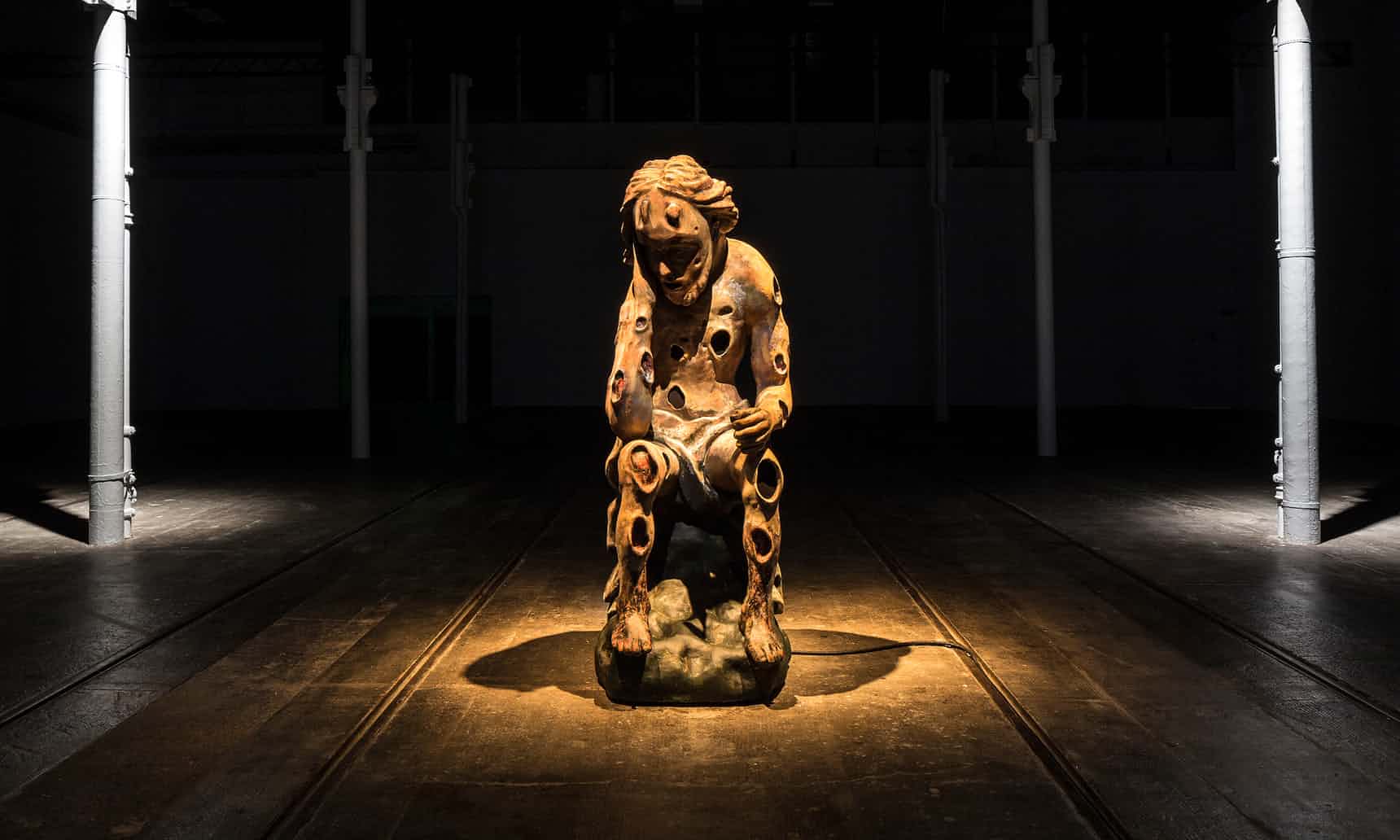
INSTALLATION: “Nobodaddy” by Mark Leckey, Tramway, Glasgow, Scotland, April 20–July 1, 2018: The wounds of Job speak in this solo exhibition by Turner Prize-winning artist Mark Leckey, part of the Glasgow International contemporary art festival. “Nobodaddy”—the title a reference to a William Blake poem about God’s seeming absence—features a spotlit, oversize Job figure that’s based on an eighteenth-century wooden statuette from Germany; he is covered in boils and excrescences and sitting in melancholy contemplation. The open wounds of the figure are embedded with speakers, and they broadcast a monologue of grief, voiced by Leckey and accompanied by horrible gurglings and rumblings. A video screen opposite Job projects a CGI apparition of the same figure and images of his hollowed-out insides. [HT: Jonathan Evens]

Nobodaddy by Mark Leckey
Mark Leckey (British, 1964–), Nobodaddy, 2018. Installation view at Tramway in Glasgow. Photo: Keith Hunter.

+++

PERFORMANCE ART: An Occupation of Loss by Taryn Simon, Corner of Islington Green, Essex Road, London, April 17–28, 2018, co-commissioned by Park Avenue Armory and Artangel: I’m late on this one, unfortunately. For this work, reprised from its 2016 premiere in New York City, artist Taryn Simon brought together professional mourners from around the world (Albania, Armenia, Azerbaijan, Bhutan, Burkina Faso, Cambodia, China, Ecuador, Ghana, Greece, India, Kyrgyzstan, Romania, Russia, and Venezuela) to simultaneously enact their rituals of grief over the course of a half hour. The result is a cacophony of culturally diverse lamentations that reach a sustained climax and then fall away to a single voice and, eventually, a deep silence. Performed inside an underground concrete auditorium in Central London, balconied and three levels deep, the work is concerned not with the mourning of any one event or person in particular but with the phenomenon of loss itself.

An Occupation of Loss (Azerbaistan)
Haji Rahila Jafarova and Lala Ismayilova are professional Yezidi mourners from Azerbaijan. Photo: Hugo Glendinning, courtesy Artangel and Taryn Simon Projects.

In a New York Times review, William L. Hamilton explains that

traditionally, professional mourners are hired by families of the deceased to mark the occasion and to guide the dead to the place where they will lead their afterlife. Mourners are [also] called upon to mark larger losses within their communities, like displacement or exile, in a cultural role that is part witness, part historian and part poet. . . . Their laments, wails and cries are also testament to their own bereavements. They can be political testimony, too.

Simon describes the purpose of professional mourners this way: “The bereaved solicit the authority of professional mourners to occupy, negotiate, and shape their loss. The mourners control a psychological experience by directing and embodying the emotion of others.” An Occupation of Loss is the culmination of her seven years of research into professional mourning, which relied heavily on interviews with anthropologists, historians, linguists, musicologists, and other experts. Finding these performers, and then securing visas for them, was itself a herculean task. Listen to the artist discuss the project at more length in this Channel 4 news segment. [HT: Jonathan Evens]

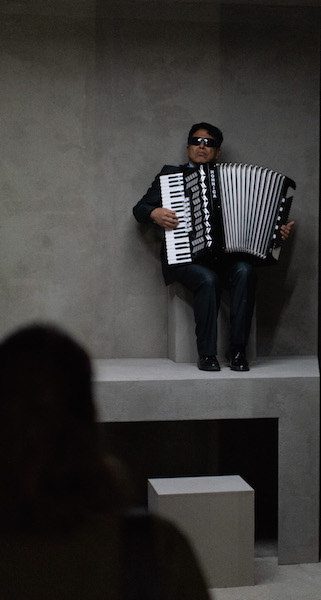
An Occupation of Loss (Ecuador)
Hugo Aníbal González Jiménez is an Ecuadorian mourner who sings accordion-accompanied laments known as yaravíes and who is blind.

“i thank You God for most this amazing” by E. E. Cummings

Chocorua Landscape by E. E. Cummings
E. E. Cummings (American, 1894–1962), Chocorua Landscape. Watercolor, 12 × 18 in.

i thank You God for most this amazing
day:for the leaping greenly spirits of trees
and a blue true dream of sky;and for everything
which is natural which is infinite which is yes

(i who have died am alive again today,
and this is the sun’s birthday;this is the birth
day of life and of love and wings:and of the gay
great happening illimitably earth)

how should tasting touching hearing seeing
breathing any—lifted from the no
of all nothing—human merely being
doubt unimaginable You?

(now the ears of my ears awake and
now the eyes of my eyes are opened)

This poem was originally published in Xaipe1 (New York: Oxford University Press, 1950), reissued in 2004 by Liveright, an imprint of W.W. Norton & Company. Reprinted here by permission of the publisher. Copyright expires 2045.


Edward Estlin Cummings (1894–1962), known as E. E. Cummings,2 is one of America’s most famous twentieth-century poets. Born in Cambridge, Massachusetts, he was raised, a pastor’s son, in the Unitarian faith, which emphasizes the oneness of God. As an adult he wed this spiritual framework to Emersonian transcendentalism, a philosophical movement that celebrates humanity and nature. Elements from these two complementary traditions can be detected in his praise poem “i thank You God for most this amazing,” in which the natural world triggers an awakening to Truth. And for Cummings, Truth is a person, a “You” with a capital Y.

Humanities students are always introduced to Cummings as a poet, but actually, painting is the endeavor he invested most of his time in.3 One of his favorite subjects to paint was the landscape surrounding his summer home at Joy Farm in Silver Lake, New Hampshire (see image above). The elation he felt in this environment of wooded hills, fields, and lake he worked into several of his poems. I wonder if the phrases “leaping greenly spirits of trees” and “blue true dream of sky” were inspired by a view from his farmstead one August day.

Cummings is notorious for his idiosyncratic poetic style, which is marked especially by unconventional syntax—that is, a nonlogical ordering of words. This device is at play in the awkward first line of our present poem, which dislocates “most”: instead of “i thank You God for this most amazing / day” (this day is so amazing) or even “i thank You God most for this amazing / day” (this day is what I’m most thankful for), we have “i thank You God for most this amazing / day.” By inverting the word order, Cummings draws attention to the word “most,” traditionally an adverb but in this position an indeterminate part of speech.  Continue reading ““i thank You God for most this amazing” by E. E. Cummings”