
The poet laureate of the United Kingdom from 1930 until his death in 1967, John Masefield occasionally turned to Christian themes in his writing. In 1911 he wrote “The Everlasting Mercy,” a long poem that tells the tale of a man’s conversion from a life of sin to life in Christ. Masefield takes us down into the darkness felt by the poem’s antihero and speaker, Saul Kane—a belligerent drunk and a womanizer—and then up into the light he experiences when, in his own words, “the Lord took pity on me” and “brought me into grace.”
The bulk of the poem takes place during one of Saul’s drinking binges: he has just clobbered one of his friends in a boxing match, defending his (knowingly false) claim to a piece of land, and is celebrating at the Lion, a local pub. As is his custom, he starts flirting with a barmaid and then makes a sexual pact with her. He feels a sting of moral conviction about this—
And while we whispered there together
I give her silver for a feather
And felt a drunkenness like wine
And shut out Christ in husks and swine.
I felt the dart strike through my liver.
God punish me for’t and forgive her.
—but not enough to stop him from carrying out the deed. To ease his conscience, he issues a direct address to his fellow males, urging them away from such behavior:
O young men, pray to be kept whole
From bringing down a weaker soul.
Your minute’s joy so meet in doin’
May be the woman’s door to ruin;
The door to wandering up and down,
A painted whore at half a crown.
The bright mind fouled, the beauty gay
All eaten out and fallen away,
By drunken days and weary tramps
From pub to pub by city lamps
Till men despise the game they started
Till health and beauty are departed,
And in a slum the reeking hag
Mumbles a crust with toothy jag,
Or gets the river’s help to end
The life too wrecked for man to mend.
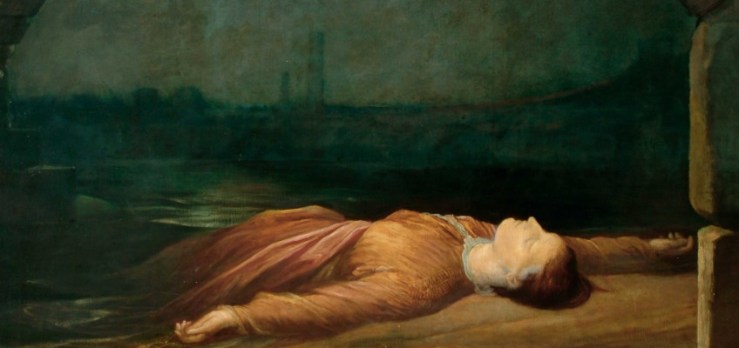
Throughout the poem Saul’s narration is shot through with this sort of guilty awareness of his own depravity. It disgusts him, but he represses that disgust while he’s in the act of perpetrating whatever sin is at hand, whether it be lying, stealing, poaching, punching, speaking irreverently, or taking sexual advantage of young women. Continue reading “Excerpts from “The Everlasting Mercy” by John Masefield”
 Art & Theology