Roundup: “Poetry for All” podcast, startling Crashaw poem, despair and grace, and more

SPOTIFY PLAYLIST: October 2025 (Art & Theology)

+++

PODCAST: Poetry for All, hosted by Joanne Diaz and Abram Van Engen: Poetry for All “is for those who already love poetry and for those who know very little about it. In this podcast, we read a poem, discuss it, see what makes it tick, learn how it works, grow from it, and then read it one more time.” I’ve consistently enjoyed this podcast since its launch in 2020, having learned about it through cohost Abram Van Engen [previously], an academic who often writes and speaks about poetry for general Christian audiences. Here are some of my favorite episodes of the ninety-seven that have been released to date:

  • Three haiku by Kobayashi Issa, translated from the Japanese by Robert Hass: The first: “The snow is melting / and the village is flooded / with children.” Learn the characteristics of what Joanne Diaz calls “the perfect poetic form.”
  • “spring song” by Lucille Clifton: One of my favorite poems by one of my favorite poets. “This joyful poem caps a sequence of sixteen poems called ‘some jesus,’ which walks through biblical characters (beginning with Adam and Eve) and ends on four poems for Holy Week and Easter. [Clifton] wrote other poems on the Bible as well, including ‘john’ and ‘my dream about the second coming,’ which reimagine a way into biblical characters to make their stories fresh.”
  • “Elegy for My Mother’s Mind” by Laura Van Prooyen: This episode is unique in that it has the poet herself on to read and discuss the poem, which in this case navigates the complexities of memory, loss, and familial relationships.
  • “View but This Tulip” by Hester Pulter: Ashamedly, I had never heard of this seventeenth-century female poet before listening to this episode, so I’m grateful to guest Wendy Wall, cocreator of the award-winning Pulter Project website, for introducing me to her! “In this episode we discuss [Pulter’s] work with emblems, her scientific chemistry experiment with flowers, and her wonderment (both worried and confident, doubtful and awestruck) about the resurrection of the body and its reunification with the soul after death.”
  • “From Blossoms” by Li-Young Lee: A much-anthologized poem ostensibly about eating summer peaches, but more deeply, it’s about joy. “One of the things that draws me to this poem,” says Van Engen, “is that joy is actually very hard to write about . . . without it sounding naive or sentimental or withdrawn or unaware.”
  • “Primary Care” by Rafael Campo: Dr. Rafael Campo is both a poet and a practicing physician. Here he uses blank verse to explore the experience of illness and suffering.

+++

POEMS:

>> “For V. the Bag Lady, Great in the Kingdom of Heaven,” “Damascus Road,” “The Sower,” and “Crosses” by Paul J. Pastor: The Rabbit Room received permission to reproduce four poems from Paul J. Pastor’s [previously] new poetry collection, The Locust Years, which “explores a world of mystery and sorrow, desolation and love. Rooted in the Pacific Northwest, these poems offer readers an invitation to walk along a path pebbled with profound joy and deep loss.” I’ll be sharing another on the blog next week, courtesy of Wiseblood Books.

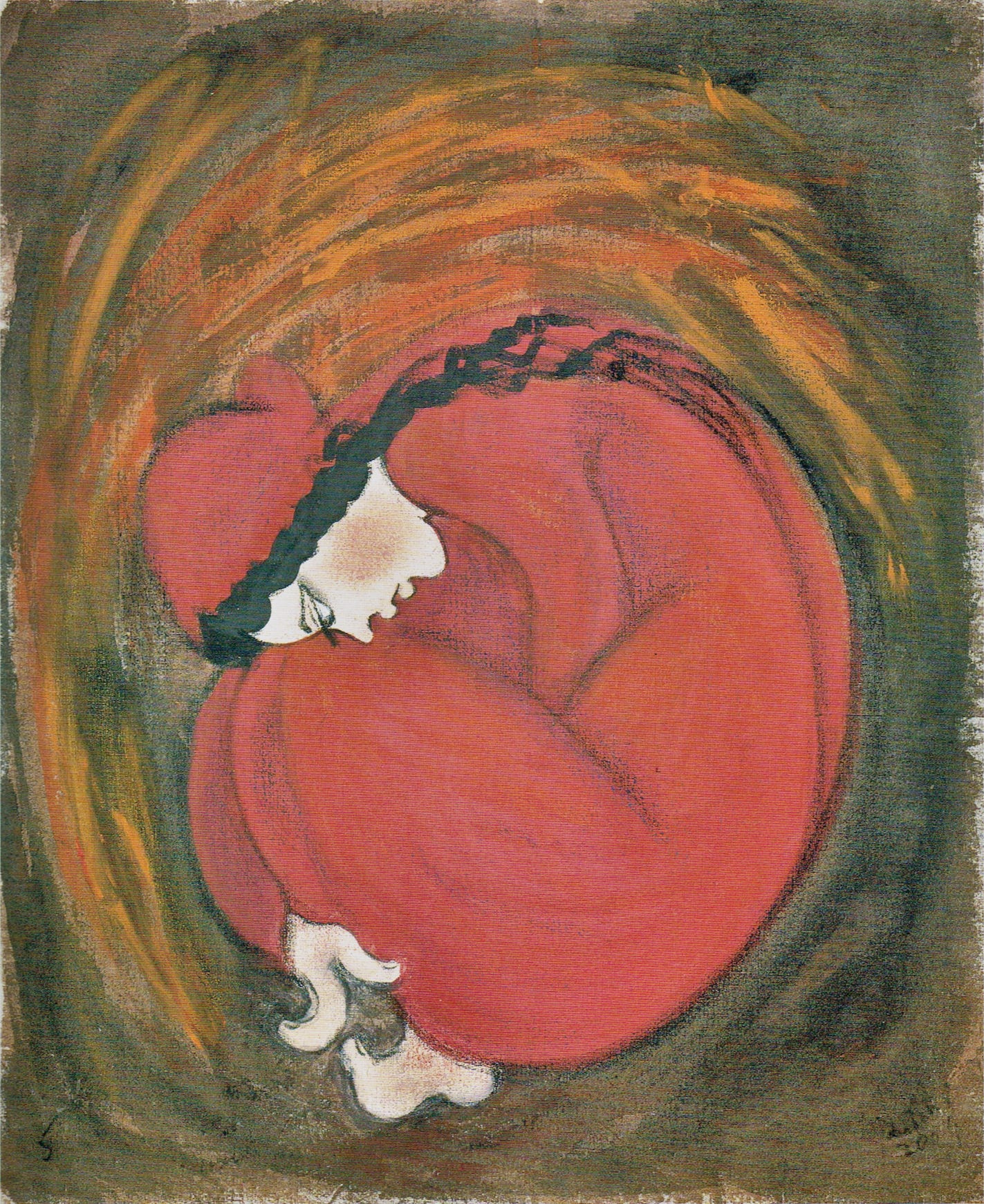
>> “Undone” by Michael Stalcup: The rise of blogging in the aughts and its descendant, Substacking, in the last few years has meant that poets and other writers can share their work directly with their reading publics and give them insight into their creative process if they wish. On his Substack, the Thai American poet Michael Stalcup [previously] recently shared one of his new poems that’s based on the story of the woman caught in adultery in John 8:1–11. He explains how the poem’s form, a blend of the Petrarchan sonnet and the chiasmus, contributes to its meaning.
Jayasuriya, Nalini_Go, Sin No More
Nalini Jayasuriya (Sri Lankan, 1927–2014), Go, Sin No More, 2004. Mixed media on cloth, 23 × 19 in. Published in The Christian Story: Five Asian Artists Today, ed. Patricia C. Pongracz, Volker Küster, and John W. Cook (Museum of Biblical Art, 2007), p. 119.

+++

POEM COMMENTARY: “The Crèche and the Brothel: The Poetic Turn in Crashaw’s Infamous Epigram” by Kimberly Johnson, Voltage Poetry: The seventeenth-century Anglican-turned-Catholic poet Richard Crashaw [previously] was a master of the epigram, and this is one of my favorites of his:

Blessed be the paps which Thou hast sucked.
    —Luke 11:27

Suppose he had been Tabled at thy Teats,
Thy hunger feels not what he eats:
He’ll have his Teat ere long (a bloody one).
The Mother then must suck the Son.

Scholar Kimberly Johnson [previously] unpacks these four lines about the body of Christ, who as an infant drank milk from his mother’s breast, and whose sacrificial death opened up his own breast whence flows the blood that nourishes us all. Johnson teases out the overlap of physical and spiritual in the poem, highlighting the maternal sharing of one’s own substance that links both couplets. At the eucharistic table, we are bidden to come and eat; or, in the stark metaphorical language of Crashaw, come and suck Christ’s bloody teat.

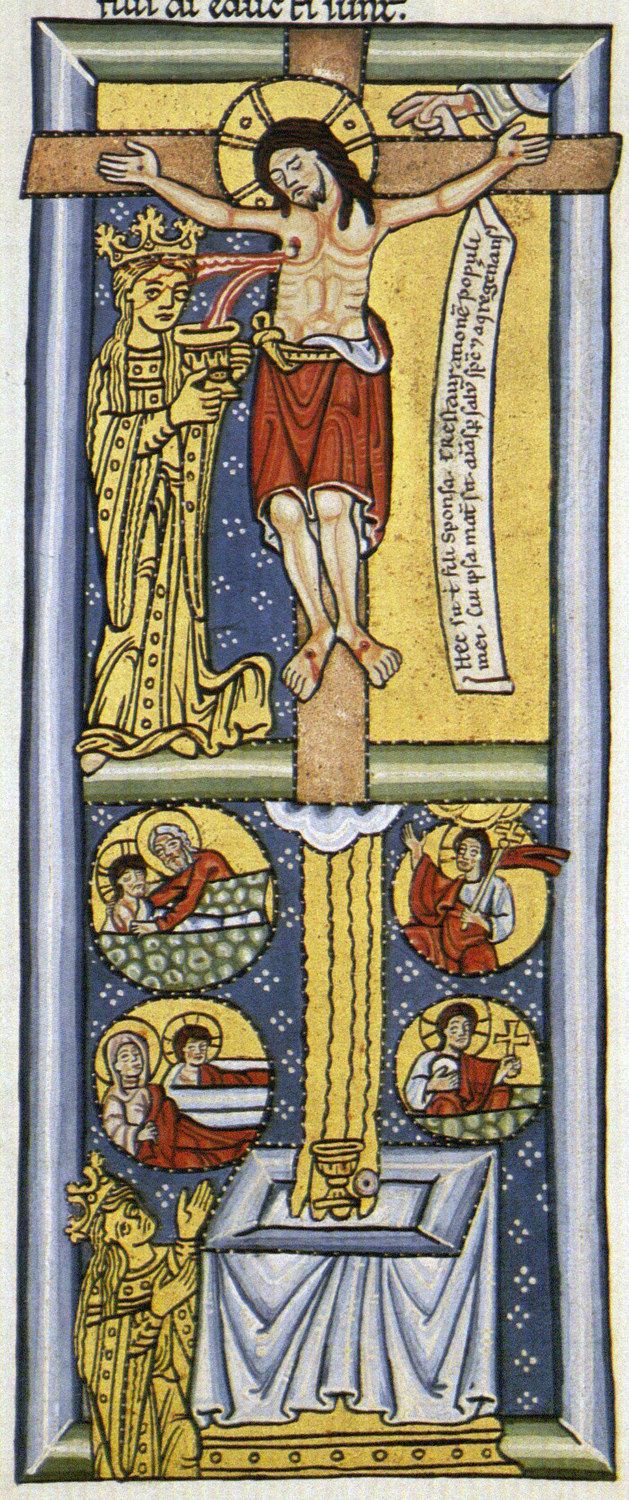
I plan to write an essay sometime about Christ as a nursing mother, as I’ve seen the image pop up in medieval writings and some visual art, including from Kongo and Ethiopia. In the meantime, here’s an illumination of the sixth vision in part 2 of Hildegard of Bingen’s Scivias (Know the Ways), painted under the supervision of Hildy herself. It shows the crucified Christ feeding Ecclesia (his bride, the church) with blood from his breast.
Hildegard of Bingen_Crucifixion
“The Crucifixion and the Eucharist,” from Scivias (Know the Ways) II.6, Rupertsberg Abbey, Germany, before 1179. Rupertsberg Codex, fol. 86r, Hildegard Abbey, Eibingen, Germany. The original manuscript from Hildegard’s lifetime was lost in 1945, but a faithful copy was made in 1927–33, which is the source of the color reproductions now available.

+++

ESSAY: “Only One Heart: The Poetry of Franz Wright as Emblem of God’s Grace” by Bonnie Rubrecht, Curator: “Are You / just a word? // Are we beheld, or am I all alone?” These three lines typify the poetry of Franz Wright (1953–2015), the Pulitzer Prize–winning author of Walking to Martha’s Vineyard, God’s Silence, and other collections. “Wright’s work is often described as confessional, colored by irony and humor. His irreverence, juxtaposed with honesty and humility, make his poetic voice unique in addressing God. Writers and poets often traffic in spiritual themes, but few modern poets echo the prophetic Old Testament tradition of crying out, approaching God with the concision and raw emotion that Wright does. He excels in voicing the concerns and ruminations of the human experience of suffering, while simultaneously shifting towards his own embodiment of grace.”

Roundup: Thurman’s “Meditations,” documentary on African Christian history, and more

BOOK: Meditations of the Heart by Howard Thurman (1953): I’ve just finished reading this book, and I think it would make an excellent companion for Lent. Written by Rev. Dr. Howard Thurman, a minister, theologian, professor, and civil rights leader, it consists of 152 one- to two-page meditations that he originally wrote for use by the congregation of Fellowship Church in San Francisco, a racially integrated, interdenominational church he cofounded in 1944. Some of the entries are prayers, some anecdotes, some reflections on scripture or spiritual topics, some expressions of desire or intent. For me, the book really started picking up in the second half. In part 5, several of the meditations begin and/or end with a mantra-like saying, such as “I will keep my heart open to truth and light” or “Teach me to affirm life this day!”—something short and memorizable to keep in the pocket of your heart and turn over and over.

Here’s an example of one of the meditations:

I want to be more loving. Often there are good and sufficient reasons for exercising what seems a clean direct resentment. Again and again, I find it hard to hold in check the sharp retort, the biting comeback when it seems that someone has done violence to my self-respect and decent regard. How natural it seems to “give as good as I get,” to “take nothing lying down,” to announce to all and sundry in a thousand ways that “no one can run over me and get away with it!” All this is a part of the thicket in which my heart gets caught again and again. Deep within me, I want to be more loving—to glow with a warmth that will take the chill off the room which I share with those whose lives touch mine in the traffic of my goings and comings. I want to be more loving!

I want to be more loving in my heart! It is often easy to have the idea in mind, the plan to be more loving. To see it with my mind and give assent to the thought of being loving—this is crystal clear. But I want to be more loving in my heart! I must feel like loving; I must ease the tension in my heart that ejects the sharp barb, the stinging word. I want to be more loving in my heart that, with unconscious awareness and deliberate intent, I shall be a kind, a gracious human being. Thus, those who walk the way with me may find it easier to love, to be gracious because of the Love of God which is increasingly expressed in my living.

Included in the volume are prayers for a gracious spirit in dealing with injustice, for placing our “little lives” and “big problems” on God’s altar, for laying ourselves bare to God’s scrutiny, for “when life grows dingy,” for the kindling of God’s light within us, “to be more holy in my words,” to learn humility from the earth, and for an enlarged heart that makes room for Peace.

+++

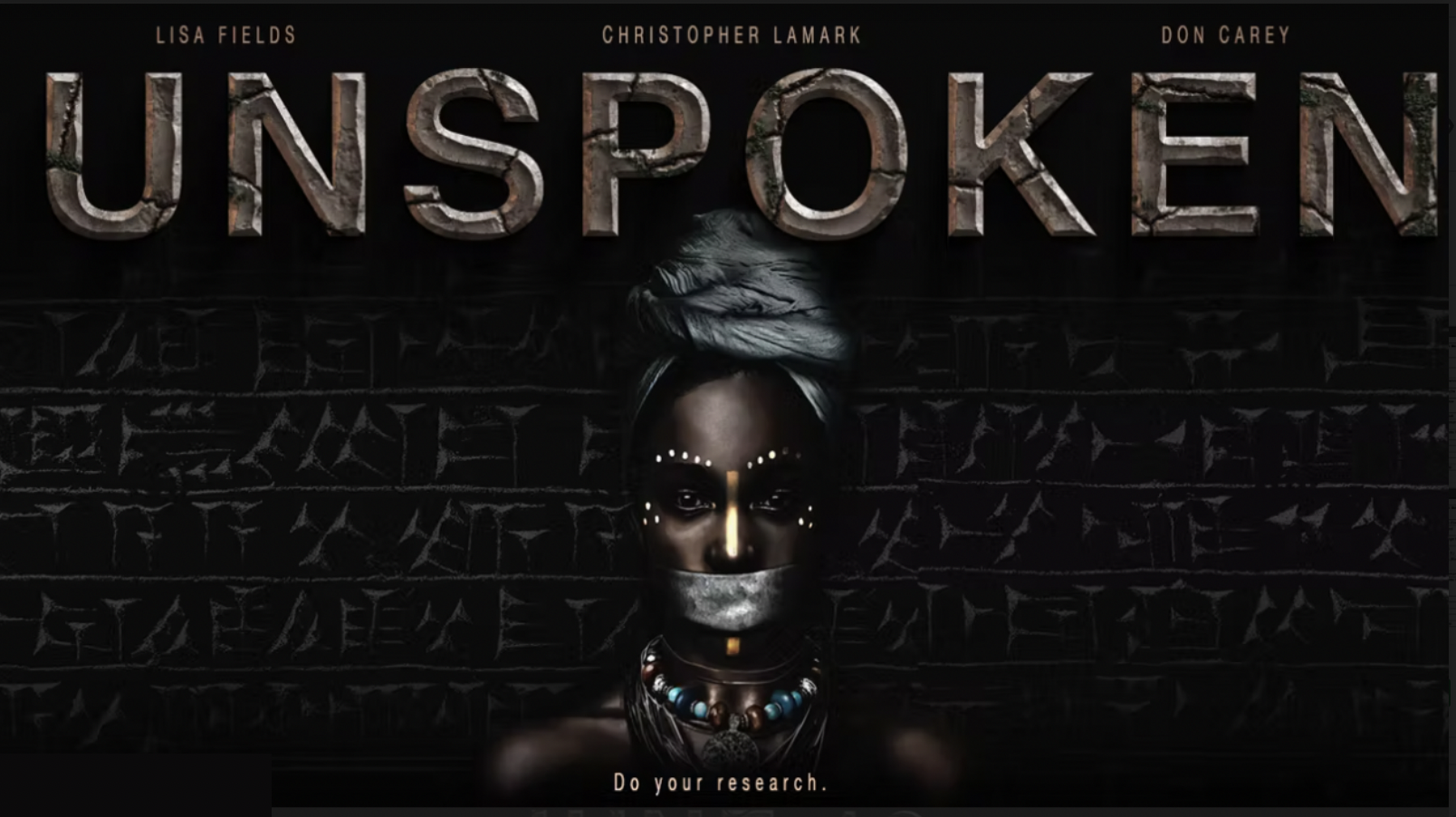
DOCUMENTARY: Unspoken, dir. Christopher Lamark (2022): This feature-length film takes an in-depth look at early African Christianity and its enduring heritage in African diaspora communities in America, dispelling the notion that Christianity is exclusively a white man’s religion. Director Christopher Lamark and his team interview historians, religious scholars, and cultural influencers, including Dr. Vince Bantu, Rev. Dr. Esau McCaulley, Rev. Dr. Charlie Dates, Lecrae Moore, and Sho Baraka, who reveal that Africans accepted Christianity of their own agency long before colonization or the slave trade, not just in the North but in sub-Saharan Africa as well. Bantu even points out that the Reformation was well underway in Africa a hundred years before Martin Luther, as the Ethiopian Christian monk Estifanos led a movement to bring the church’s practices more in line with scripture and to challenge abuses.

The false narrative that the Black church was born from those who drank the Kool-Aid served to them by their white oppressors has done a lot of damage, imposing shame and deterring young Black people from the Christian faith. That’s why it’s so important to correct this misinformation, to let people know that colonialism and slavery didn’t bring Christianity; it mutated it. At a time when much of white America was corrupting the gospel, Blacks preserved it, their ancient religious heritage, for subsequent generations.

Unspoken was produced by Lisa Fields of the Jude 3 Project, and Don Carey. It is streaming for free on TUBI.

Unspoken movie poster

+++

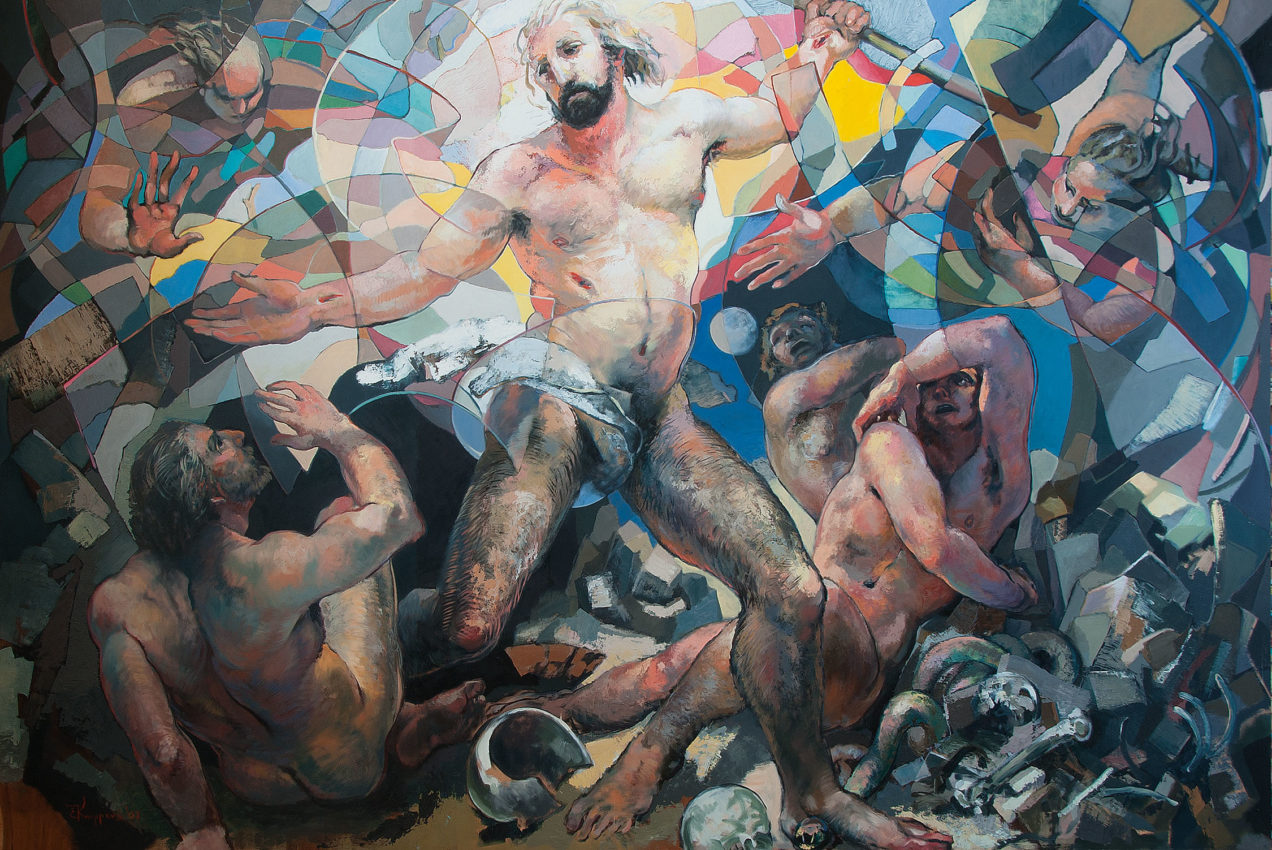
SYMPOSIUM: Embodied Faith and the Art of Edward Knippers, September 20–21, 2024, Gordon-Conwell Theological Seminary, Charlotte, NC: Sponsored by the Leighton Ford Initiative in Theology, the Arts, and Gospel Witness, this year’s Gordon-Conwell theology and arts symposium will center on the paintings of Edward Knippers, from Arlington, Virginia. In addition to an exhibition of over two dozen of Knippers’ works, there will be talks by artists Steve Prince, Bruce Herman, and Rondall Reynoso and theologians Natalie Carnes, W. David O. Taylor, and Kelly Kapic, as well as a dance performance by Sarah Council and a drum circle led by Olaniyi Zainubu and David Drum.

Knippers, Edward_Resurrection
Edward Knippers (American, 1946–), The Resurrection of Our Lord, 2007. Oil on panel, 8 × 12 ft.

“‘Disembodiment is not an option for the Christian.’ This statement by visual artist Edward Knippers is a guiding principle in his work, which features the human body, often in connection with biblical scenes. Disembodiment is not an option for those who believe that human beings are created in God’s image with beautiful bodies, that everything from sin to salvation are embodied experiences, and that God’s redemption comes through the broken and risen body of Jesus. The paintings of Edward Knippers invite us to consider the goodness, brokenness, mystery, and glory of Christ’s body as well our own, urging us to grapple with the temptation to avoid, sexualize, downplay, or disparage bodies along with a fully embodied faith.”

I signed up! The early-bird discount is $20 off and ends March 1.

+++

SONGS:

>> “Give Me a Clean Heart” by Margaret Douroux, sung by Everett Harris and friends: Written in 1970 by Dr. Margaret Pleasant Douroux, this song of penitence based on Psalm 51:10 is a gospel classic. In the 2020 video below, it’s sung a cappella by a six-person virtual choir, using an arrangement by Adoration ’N Prayze. To hear it sung in a Black church context, led by Rev. Dr. E. Dewey Smith Jr., click here.

>> “Psalm 50” (Psalm 51) in Aramaic by Seraphim Bit-Kharibi: Father Seraphim Bit-Kharibi is an Assyrian Orthodox monk who is the archimandrite (head) of the Monastery of the Thirteen Holy Assyrian Fathers in Dzwell Kanda, Georgia. He is Assyrian by ethnicity, and his native language is Aramaic, the language of Jesus. Here he chants Psalm 51 (Psalm 50 in the Greek numbering system) in Aramaic with his church choir, which appears on his 2018 album Chanting in the Language of Christ. In the following video, the singing starts fifty-one seconds in.

There is also a video recording of him chanting this psalm with a young identified girl during the visit of Pope Francis to Georgia on September 30, 2016.

In a 2014 interview, Father Seraphim said:

My people, Assyrians, . . . still pay with their lives for their worship of Christ. In Eastern countries such as Iraq, Iran, Syria, and other warzones, Assyrians get attacked in their churches and beheaded if they refuse to convert to Islam. They are being destroyed en masse.

As for Assyrians in Georgia, there are about 4,000 of them. The Assyrian language is basically Neo-Aramaic, which is about 2,500 years old. The wonderful thing is that this language allows us insight into what people living centuries ago sounded like. Out of 4,000 Assyrians living in Georgia, 2,000 of them live in my village of Kanda and comprise 95 percent of its population. Almost 90 percent of these people speak Neo-Aramaic.

+++

ART COMMENTARIES: Lent Stations: Vices and Virtues: To promote art-driven contemplation around Lenten themes, this Lent the Visual Commentary on Scripture is spotlighting fourteen artworks from its archives based on the seven deadly sins and seven virtues. So far they’ve featured a pair of medieval statues personifying the Synagogue and the Church, a diamond-encrusted skull by Damien Hirst, a Rubens painting of Cain murdering Abel, and an Egyptian textile roundel depicting scenes from the life of Joseph.

Hirst, Damien_For the Love of God
Damien Hirst (British, 1965–), For the Love of God, 2007. Platinum, diamonds, and human teeth, 17.1 × 12.7 × 19 cm.

Roundup: Paula Rego’s Life of the Virgin; corito medleys; more

EXHIBITION: Paula Rego: Secrets of Faith, Victoria Miro Venice, April 23–June 18, 2022: Portuguese-born British artist Paula Rego died last Wednesday, June 8, after a seven-decade career, and in the midst of four solo exhibitions of her work—including this one at Victoria Miro’s gallery in Venice, which explores her small but significant body of religious art. [HT: Jonathan Evens]

In 2002 Jorge Sampaio, then president of Portugal, commissioned Paula Rego to create eight pastel drawings based on episodes from the life of the Virgin Mary, to be installed permanently in the chapel of the presidential palace (Palácio de Belém) in Lisbon. Titled Nossa Senhora (Our Lady), the cycle comprises Annunciation; Nativity; Adoration; Purification at the Temple; Flight into Egypt; Lamentation; Pietà; and Assumption. Rego had such fun with the commission that she produced additional works on the subject, which she decided to keep for herself. It is these, along with her watercolor studies, that are currently on display in Venice. (The original eight pastels are not allowed to leave the chapel for which they were made.)

Rego, Paula_The Flight to Egypt
Paula Rego (Portuguese British, 1935–2022), The Flight to Egypt, 2002. Watercolor and ink on paper, 8 1/4 × 11 3/4 in. (21 × 29 cm).

Rego, Paula_Descent from the Cross
Paula Rego (Portuguese British, 1935–2022), Descent from the Cross, 2002. Pastel on paper mounted on aluminum, 29 1/2 × 28 3/8 in. (75 × 72 cm).

I learned about Rego’s Marian cycle a few years ago and became enthralled by it, though I’ve never seen it in person, and most of these supplemental works are new to me. It’s unique, in part because of Mary’s corporeality. In a 2003 interview with Richard Zimler, Rego said, “If there is anything new about these representations of the Virgin, it is the fact that they were done by a woman, which is very rare. . . . It always used to be men who painted the life of the Virgin, and now it is a woman. It offers a different point of view, because we identify more easily with her.”

While the president praised the cycle and Rego insisted that “these pictures were created with admiration and respect,” an open letter to Sampaio referred to it as an “outrage done to the vast majority of the Portuguese people,” an “outrage against their religious beliefs and an offence to the Virgin Mary.” In brief: “blasphemous and scandalous.” I can see why Rego’s larger oeuvre, with its often menacing and/or transgressive imagery (not least of which is her Abortion Series), would scandalize conservative viewers, but I am a bit confused by the outrage at Nossa Senhora, which to me seems very honoring. The objectors, it sounds like, are those who prefer Mary to be more ethereal and sedate; they don’t want to see her, for example, slouching or wincing or expressing astonishment, or awkwardly struggling to hold the weight of her son’s corpse. There will always be those who resist any kind of updating of religious art. If the scenes are restaged in an unfamiliar way or rendered in an unfamiliar style or introduce a new element or the figures don’t look like how we have always pictured them, then some will oppose them outright—which is a shame, because such art often invites us more deeply into the story, helping us to see it afresh.

Definitely check out the boldface link above to view more pieces from the exhibition, as well as a video that shows Nossa Senhora in situ. For further reading, see “Paula and the Madonna: Who’s That Girl?” by Maria Manuel Lisboa and the transcript from Zimler’s interview with Rego.

+++

PODCAST EPISODE: “Past Hymns for the Present Moment,” Tokens, May 26, 2022: “Hymns are often sentimentalized in the American church, cast aside as merely retired songs with dated language, bearing no real appeal or relevance. But of course it may be that our old hymnals have some crucial things to say to us in our current cultural moment. This is the challenge I [Lee C. Camp] posed to Odessa Settles, Phil Madeira, and Leslie Jordan: find and perform some old hymns which might be both indicting and encouraging to the modern church, and to the world at large. Beautiful conversation and moving performances, taped at Nashville’s Sound Emporium.”

+++

POETRY UNBOUND EPISODES:

In each episode of this podcast from On Being Studio, host Pádraig Ó Tuama unpacks a contemporary poem in fifteen minutes. Here are two from season 5 (which just came to an end) that I particularly liked.

>> “Looking for The Gulf Motel” by Richard Blanco: “What happens when we remember?” Ó Tuama asks. “Why do we remember? Is it sweet or sad? Is it both? If you particularly associate warm memories, romantic memories, nostalgic memories with a place, and then that place is changed, does that mean that all those memories are gone?” In this poem from a collection of the same title (which I checked out from my local library at Ó Tuama’s recommendation, and it’s excellent!), Cuban American poet Richard Blanco, at age thirty-eight, reminisces about a family beach vacation from his childhood. Read the poem here.

If I were writing this poem, it would be called “Looking for The Blockade Runner,” as that’s the name of the Wrightsville Beach hotel in North Carolina that my family and I used to stay at for four days or so each summer. My little brother and I should still be running around on the waterfront lawn as our parents watch us from inside the giant window of the dining room, finishing up their breakfast. My dad should still be riding in a wave on a boogie board, teaching me technique. My mom should still be lounging at the pool in her black one-piece with sunglasses and a Vanity Fair, I feeling so grown up beside her sipping my virgin piña colada. My brother should still be exhilarated by the live hermit crabs at Wings, and I by the dried starfish and sand dollars. We should all still be walking back from the Oceanic, our bellies filled with she-crab soup and hush puppies and catch-of-the-day, down the shore at dusk.

>> “The change room” by Andy Jackson: A poet who’s interested in difference and embodiment, here Andy Jackson, who has severe spinal curvature due to Marfan syndrome, “is looking at the attention that he gets in his body and is refocusing it, extending it wider, looking at the deeper question of, what does it mean for any of us to be in a body, and how do we in bodies relate to others in bodies?” Read the poem here, from the collection Human Looking.

+++

CORITO VIDEOS: A corito (literally “short song”) is a type of Latino Christian worship song. Coritos have “fairly simple tunes, often with repetitive words, that the people sing by heart,” writes Justo L. González in ¡Alabádle!: Hispanic Christian Worship. “Most of them are anonymous, and pass by word of mouth from one congregation to another. For that reason, the tune or the words of a particular corito may vary significantly from one place to another. They are often sung to the accompaniment of clapping hands, tambourines, and other instruments.” To learn more about this genre, see the Calvin Institute of Christian Worship interview with Rosa Cándida Ramírez and Analisse Reyes and the entry in the Encyclopedia of Christianity in the Global South, vol. 2.

>> Joseph Espinoza sings a corito medley consisting of “Cuando el pueblo del Señor” (When the People of the Lord), “No puede estar triste” (The Heart That Worships Christ Cannot Be Sad), “Ven, ven, Espiritu divino” (Come, Come, Holy Spirit), “Cantaré al Señor por siempre” (I Will Sing to the Lord Forever), and “El Poderoso de Israel” (The Mighty One of Israel). Aaron Barbosa is on keyboard, Fabian Chavez is on percussion, and Yosmel Montejo is on bass.

>> The video below was shared March 25, 2020, in the Multicultural Worship Leaders Network Facebook group that I belong to, and it’s pure joy! The performers string together three coritos: “Le canto aleluya” (I Sing Alleluia), “Hay victoria” (There’s Victory), and “Los que esperan en Jesus” (Those Who Wait in Jesus).

Federico Apecena provides the following translation. (The slashes indicate the number of times that line or passage is sung.)

//The heart that worships Jesus cannot be sad
The heart that worships God cannot be sad//

//That’s why I sing, I sing hallelujah
The heart that worships God cannot be sad//

//There’s victory, there’s victory, there’s victory in the blood of Jesus//
The enemy will not be able to defeat our souls
//Because there is victory, because there is victory, because there is victory in the blood of Jesus//

//That’s why I sing, I sing hallelujah
The heart that worships God cannot be sad//

///Those that wait, that wait in Jesus///
//Like eagles, like eagles, their wings will open//

They will walk and will not get tired, they will run and will not stop
//New life they will have, new life they will have, those that wait, that wait in Jesus//

//That’s why I sing, I sing hallelujah
The heart that worships God cannot be sad//