“Those Who Saw the Star” by Julia Esquivel (poem)

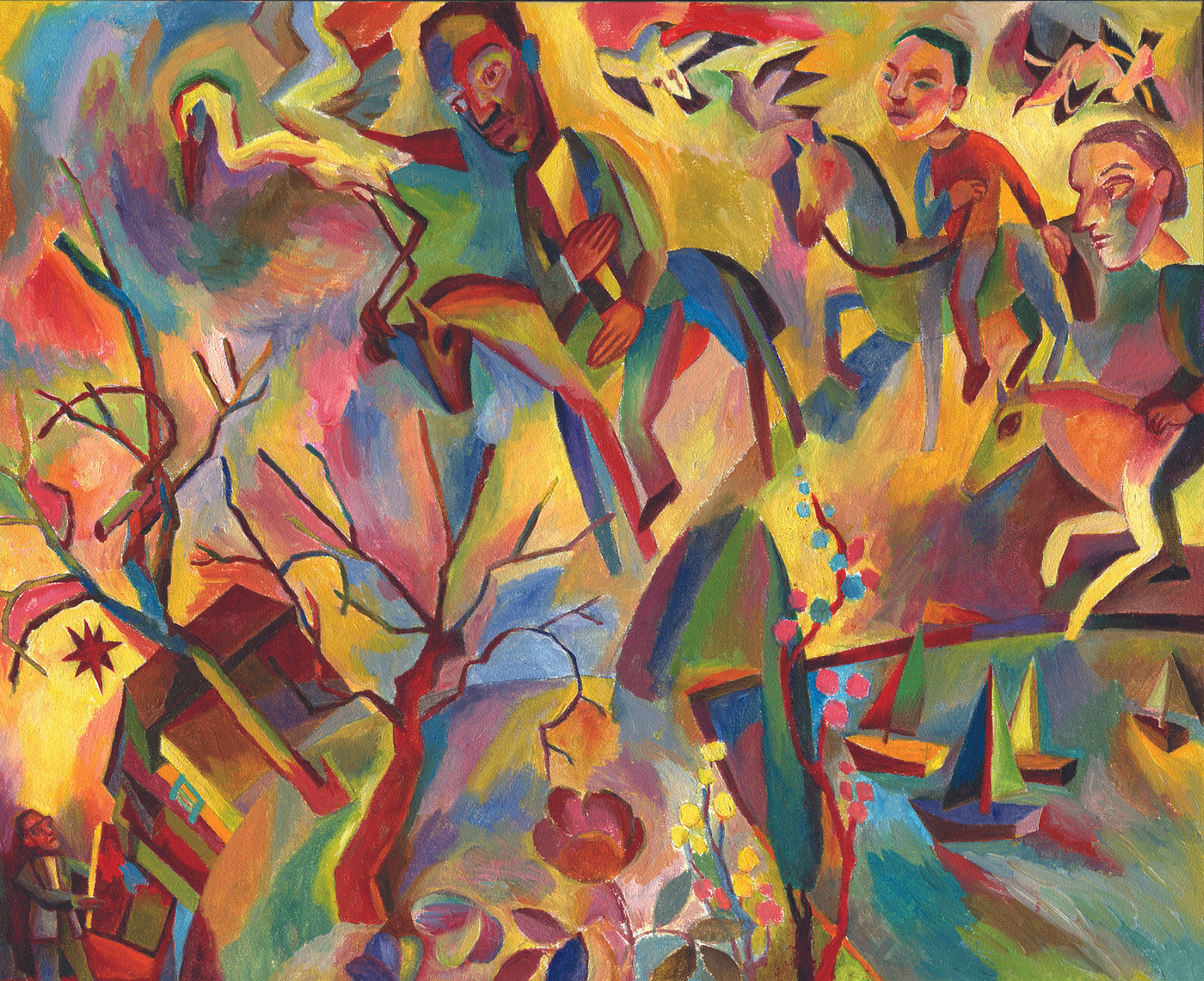
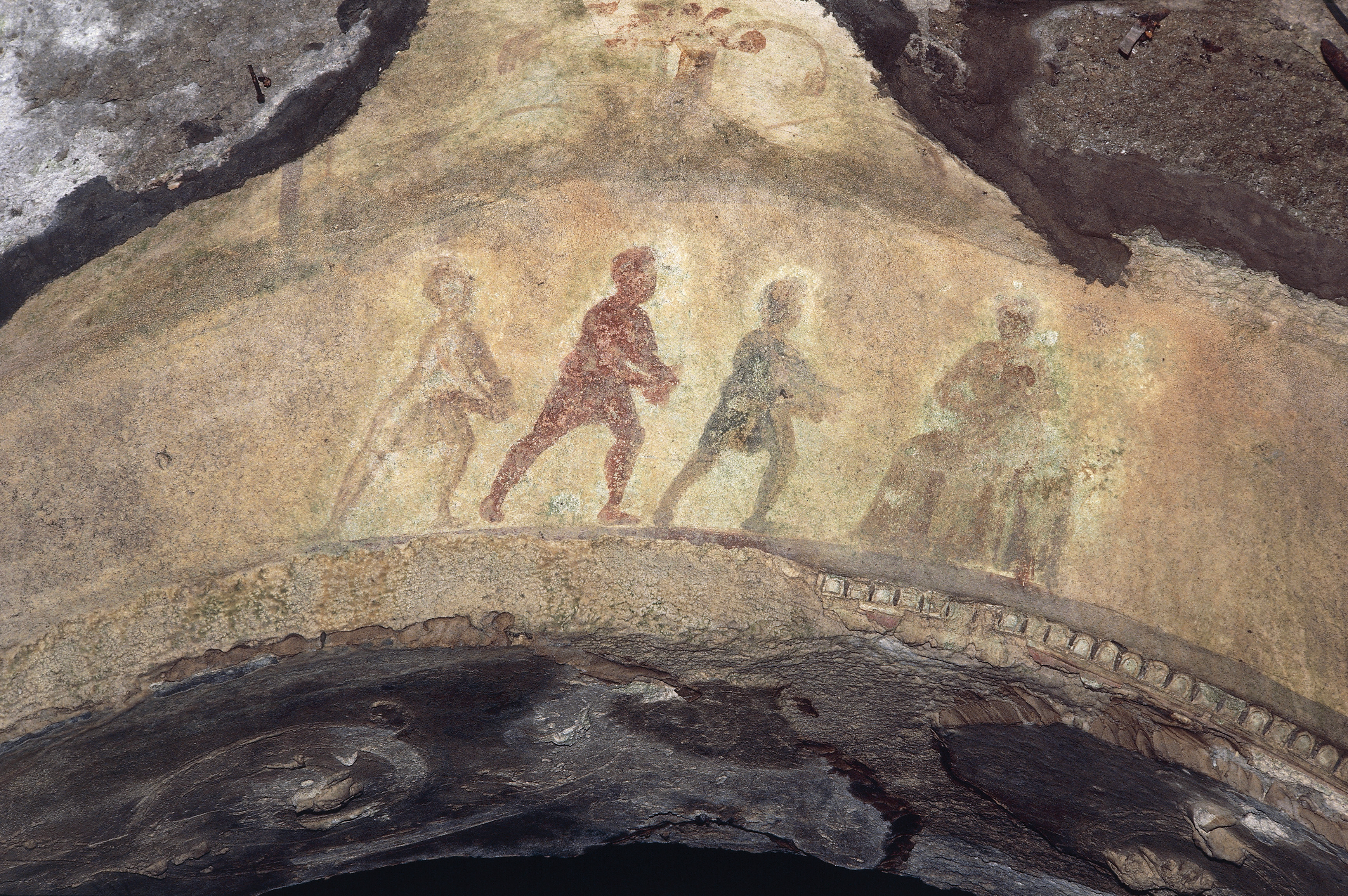
Sanchez Cerron, Josue_Christmas in the Andes
Josué Sánchez Cerrón (Peruvian, 1945–), Navidad en los Andes (Christmas in the Andes)

The Word, for our sake, became poverty clothed as the poor who live off the refuse heap. 

The Word, for our sake, became agony in the shrunken breast of the woman grown old by the absence of her murdered husband.

The Word, for our sake, became a sob a thousand times stifled in the immovable mouth of the child who died from hunger.

The Word, for our sake, became rebellion before the lifeless body of Gaspar Sanchez Toma, “scientifically” murdered.

The Word, for our sake, became danger in the anguish of the mother who worries about her son growing into manhood.

The Word became an ever-present absence among the 70,000 families torn apart by death.

The Word, for our sake, became an inexorable accusation arising from the blazing craters which swallowed up their tortured bodies.

The word-knife cut us deeply in that place of shame: the painful reality of the poor.

The Word blew its spirit over the dried bones of the Mummified-Churches, guardians of silence.

The Word, that early-morning-bugle, awoke us from the lethargy which had robbed us of our Hope.

The Word became a path in the jungle, a decision on the farm, love in women, unity among workers,
and a Star for those few who can inspire dreams.

The Word became Light,
The Word became History,
The Word became Conflict,
The Word became Indomitable Spirit,
and sowed its seeds
upon the mountain,
near the river, and in the valley,

and those-of-good-will heard the angels sing.

Tired knees were strengthened,
trembling hands were stilled,
and the people who wandered in darkness
saw the light!

Then,

The Word became flesh in a nation-pregnant-with-freedom,
The Spirit strengthened the arms which forged Hope,
The Verb became flesh in the people who perceived a new day, and for our sake became life in Mary and Joseph who embrace Righteousness and bury the people’s ignominy.

The Word became the seed-of-justice
and we conceived peace.

The Word cried out to the world the truth about the struggle against the anti-man.

The Word made justice to rain
and peace came forth from the furrows in the land.

And we saw its glory in the eyes of the poor converted into true men and women.

Grace and Truth celebrated together
in the laughter of the children rescued by life.

And those-who-saw-the-star
opened up for us
the path we now follow.

Meanwhile,
Herod, slowly dying,
is eaten by worms.

The Word became judgment
and the anti-men ground their teeth.

The Word became forgiveness
and human hearts
learned to beat with love.

And the Word shall continue sowing futures
in the furrows of Hope.

And on the horizon,
the Word made light
invited us to relive a thousand dawns
toward the Kingdom that comes.

The Word will gather us round her table.
And they will come from the East and the West,
from the North and the South,
and dressed in incorruption
we-will-finally-be-happy.

Translated from the Spanish by Maria Elena Acevedo, René Calderón, Maria Elena Caracheo, Sister Caridad Inda, and Philip Wheaton in the bilingual Threatened with Resurrection / Amenazado de Resurreción: Prayers and Poems from an Exiled Guatemalan (The Brethren Press, 1982).

Julia Esquivel (1930–2019) was a Guatemalan poet, theologian, lay preacher, biblical studies teacher, social worker, and human rights activist. In 1953 she moved to Costa Rica to study at the Seminario Biblico Latinoamericano, returning to Guatemala to work at the Instituto Evangélico América Latina. After speaking out against the massacres, assassinations, torture, and forced disappearances being carried out by the Guatemalan military and police, she received death threats and survived two kidnapping attempts and thus went into forced exile in 1980, finding refuge in the monastic Communauté de Grandchamp in Switzerland. She studied at the Ecumenical Institute at Château de Bossey, run by the World Council of Churches. She returned to her home country in 1996 after the signing of the Peace Accords, helping document over two hundred thousand civilian deaths and disappearances for the Recovery of Historical Memory Project and working with women traumatized by violence. She is the author of several books, including the poetry collections Threatened with Resurrection (1982) and The Certainty of Spring (1993).

“The Purpose of the Incarnation” by LeighAnna Schesser (poem)

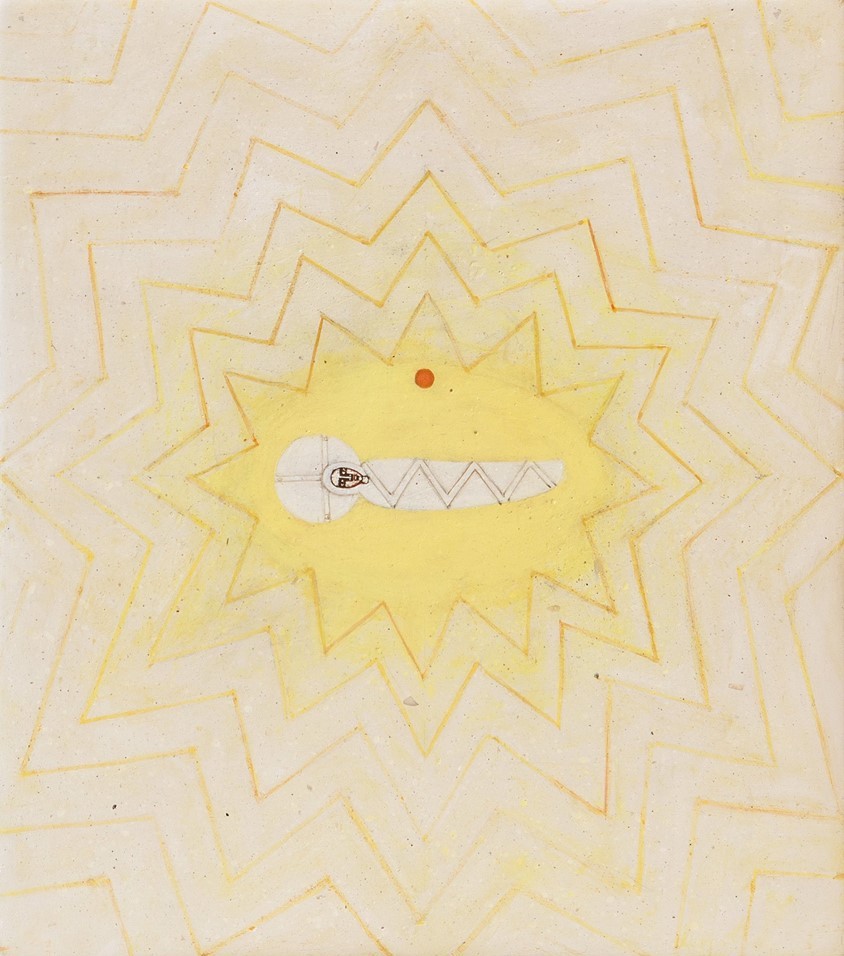
Rusetska, Natalya_Nativity
Natalya Rusetska (Ukrainian, 1984–), Nativity, 2016. Tempera on gessoed wood, 17.5 × 15.5 cm.

Gravity’s maker, spinner of spheres and spiraling matter,
made into weight, to sweat. His own feet vulnerable,
drawn flat and close against the punishing ground.

Star-strayed infant, wrapped in weight, heavy heaven.
In the hollow of the years, long and narrow as a well,
he waits suspended, bucket-drawn, clapper in a bell.

Ringing and ringing in the heatfolds of gravity, lines and lines
of weight leaning us into each other, caught up, tumbled
open-face roses in a blue bolt of thorn-pricked cloth.

God made known, fleshly God, Godlight bodied, bleeding
out into wood, over stone. God from God, telluric God,
shadowcast God, lightstricken God, bloodwritten. The pull

electric of low, deep center. God flesh, corpus God, Verbum
corpse, light-riven. Inscribed, blooded, God-heft falling death-
bitten into weighted rising, made and given; the miracle of leaven.

From Struck Dumb with Singing (Lambing Press, 2020). Used by permission of the author.

LeighAnna Schesser is a Catholic writer from south-central Kansas whose poetry collections include Struck Dumb with Singing (2020) and Heartland (2016).

Epiphany: Nothing but a Child

LOOK: The Nativity of Christ by Irakli Parjiani

Parjiani, Irakli_The Nativity of Christ
Irakli Parjiani (Georgian, 1950–1991), The Nativity of Christ, 1990. Oil on canvas, 100 × 132 cm.

LISTEN: “Nothing but a Child” by Steve Earle, on Copperhead Road (1988)

From the compilation album To: Kate—A Benefit for Kate’s Sake, sung with Allison Moorer, 2005:

Once upon a time in a far-off land
Wise men saw a sign and set out across the sand
Songs of praise to sing, they traveled day and night
And precious gifts to bring, guided by the light

They chased a brand-new star, ever towards the west
Across the mountains far, but when they came to rest
They scarce believed their eyes, they’d come so many miles
And this miracle they prized was nothing but a child

Refrain:
And nothing but a child could wash those tears away
Or guide a weary world into the light of day
And nothing but a child could help erase those miles
So once again we all can be children for a while

Now all around the world, in every little town
Every day is heard a precious little sound
And every mother kind and every father proud
Looks down in awe to find another chance allowed [Refrain]

Outro:
Nothing but a little baby
Nothing but a child


This is the final post in my 2024/25 Advent–Christmas series. Thanks for journeying with me! If you feel so led, please consider donating; I’ve been having trouble with the embedded Stripe form often rejecting credit cards and then WordPress disabling it (do any of you know of a secure but reliable credit card processor that does not require donors to make an account and that integrates well with WordPress?), but PayPal and Amazon are still options.

I wish you all a very happy Epiphanytide!

Christmas, Day 12: The Brown King

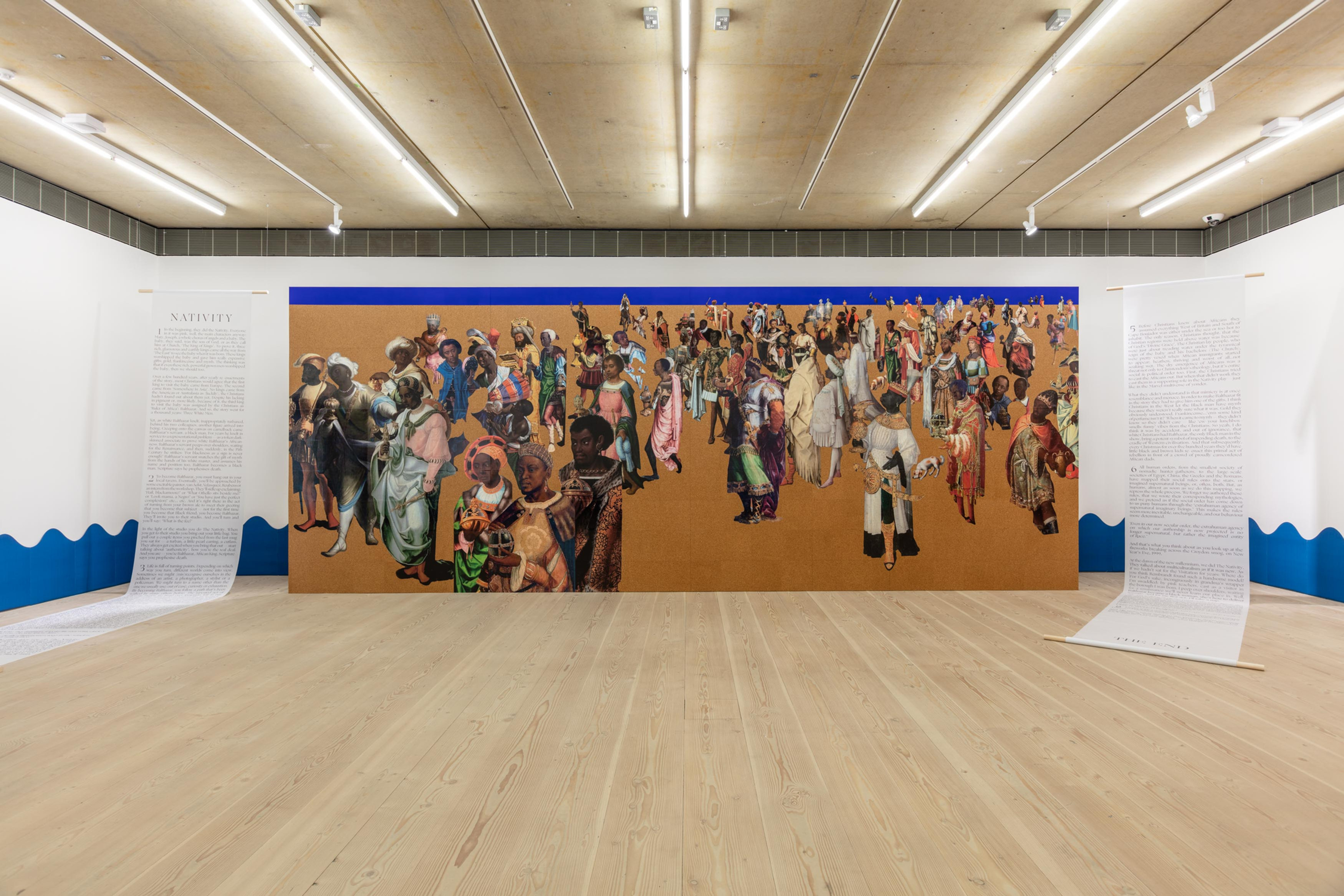
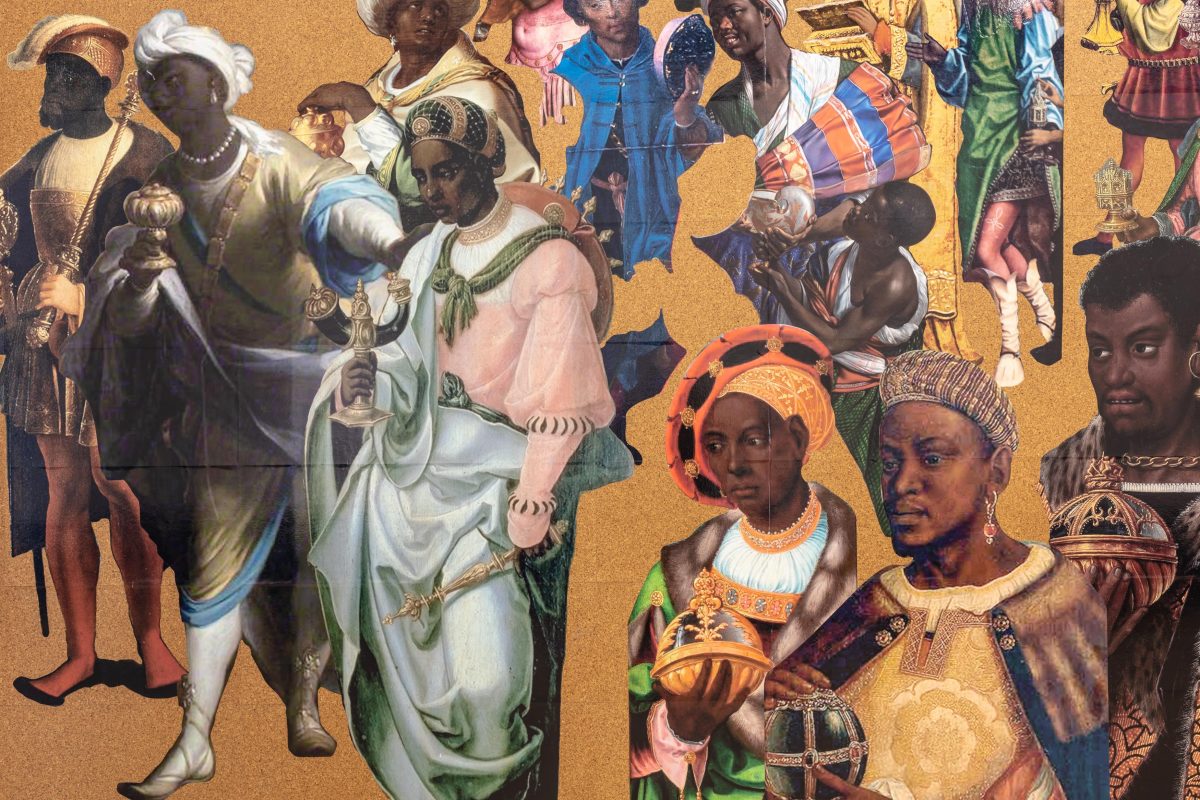
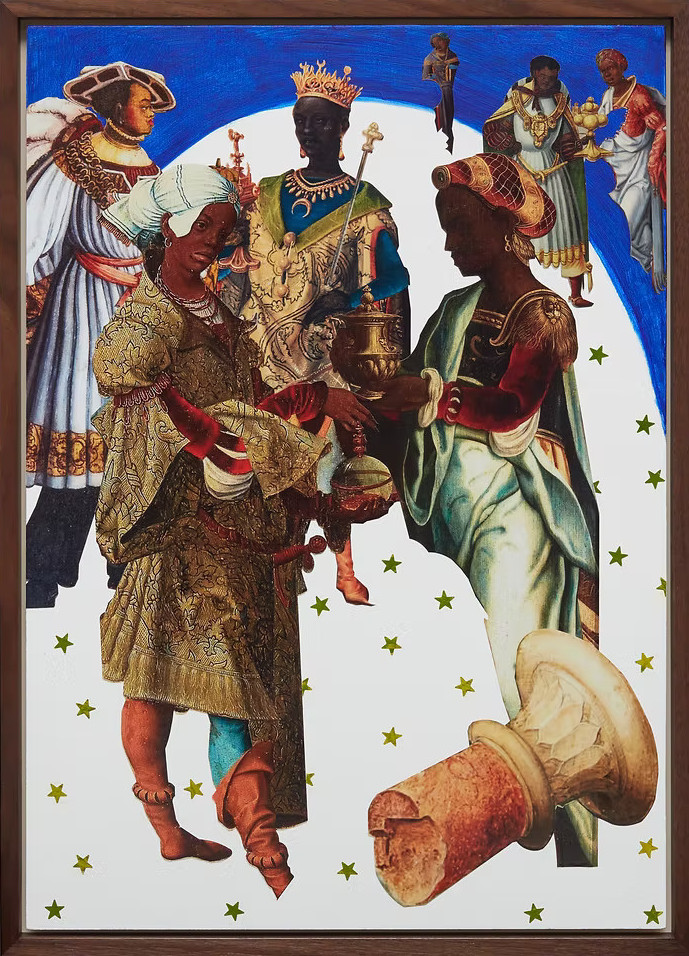
LOOK: Breaking Point, etc., by Rosa-Johan Uddoh

Uddoh, Rosa-Johan_Breaking Point
Rosa-Johan Uddoh (British, 1993–), Breaking Point, 2021. Billboard-style collage. Photo: Anna Lukala, from Practice Makes Perfect, Focal Point Gallery, Southend-on-Sea, England, May 18–August 28, 2021.

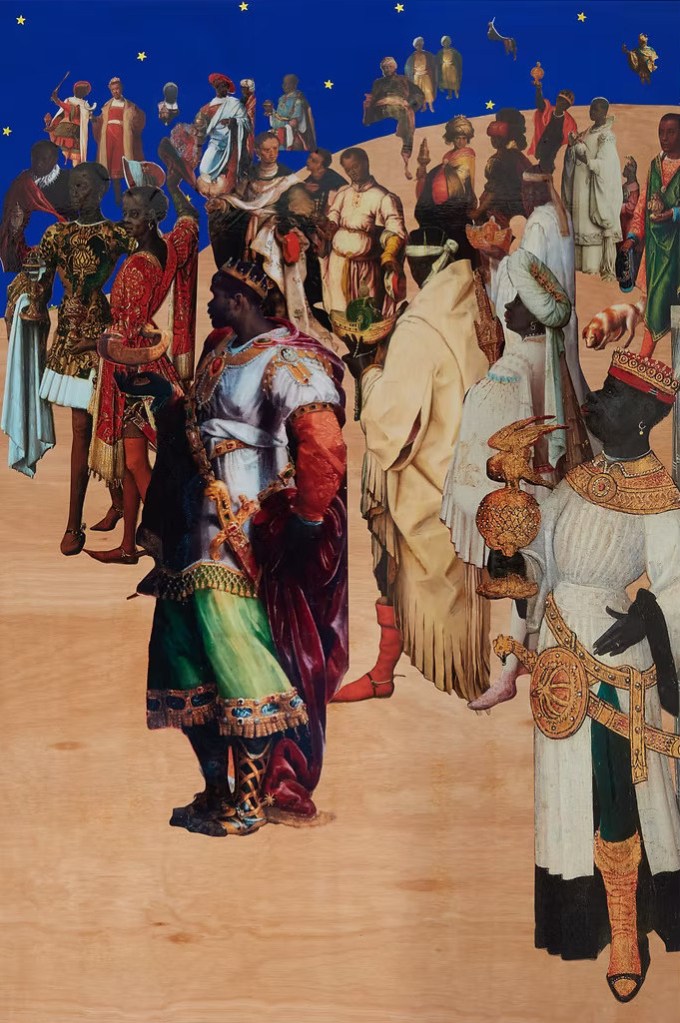
Uddoh, Rosa-Johan_Breaking Point (detail)
Rosa-Johan Uddoh, Breaking Point (detail)

Rosa-Johan Uddoh is an interdisciplinary artist based in London who, “through performance, writing and multimedia installation, . . . explores places, objects and celebrities in British popular culture, and their effects on self-formation,” she writes on her website.

In her first institutional solo show, Practice Makes Perfect at Focal Point Gallery in Southend-on-Sea, she explored how the white European imagination constructed Blackness through the figure of Balthazar, who according to Christian tradition was one of the three magi who visited the infant Jesus, offering him the gift of myrrh. Since the fifteenth century Balthazar has typically been depicted as Black, as it was imagined that he came from Africa (whereas the other two magi were supposedly from Europe and Asia, the three known continents at the time). Uddoh notes that Balthazar is one of the first Black people of importance that British schoolchildren encounter, and in fact the first public performance she ever gave was as Balthazar in a primary-school Nativity play, a role she had been cast in by her teacher.

The centerpiece of the Practice Makes Perfect exhibition was Breaking Point, a billboard-sized mural that depicts 150 Black Balthazars extracted from European paintings from the late Middle Ages onward and rearranged into friendship groups. These groupings “allow Balthazar to escape the isolation associated with being the only Black character of importance in Christian iconography whilst also highlighting that the Black figures behind the artistic imagery were real sitters, which is also a testament to early African immigration into Europe, a phenomenon often overlooked in mainstream history.”

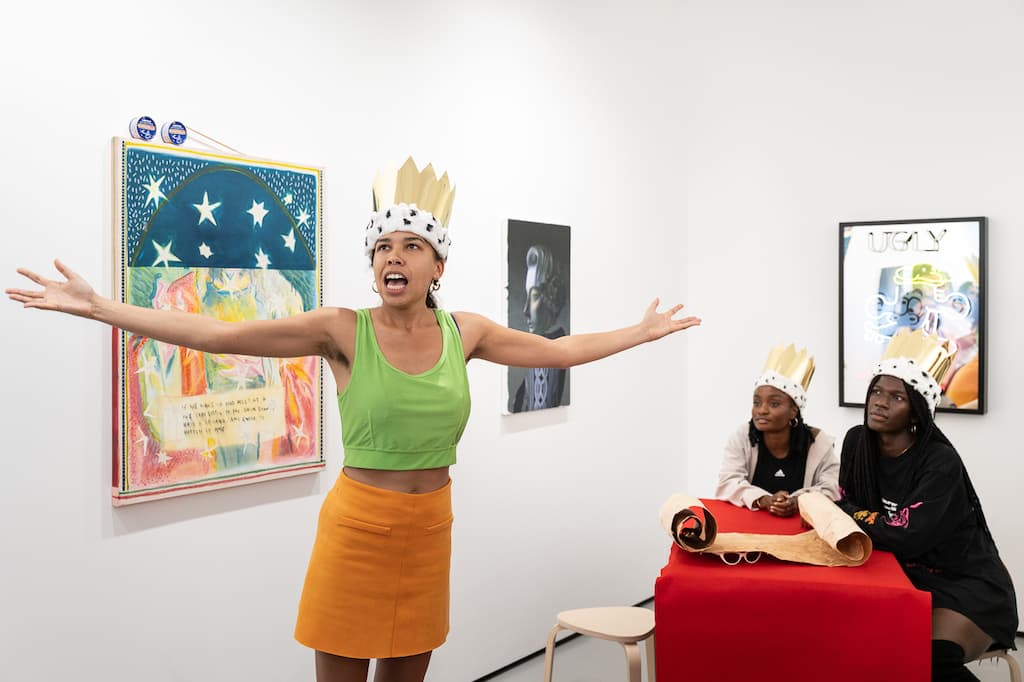
Installed on either side of Breaking Point was a scroll bearing a piece of experimental writing by Uddoh, titled Nativity. (She later performed this text in 2022 at the London art gallery Workplace, with Adeola Yemitan and Ebunoluwa Sodipo.) It opens, “In the beginning, they did the Nativity. Everyone in it was pink; well, the main characters anyway . . .”

Uddoh, Rosa-Johan_Nativity
Nativity, 2022, performance by Rose-Johan Uddoh with Adeola Yemitan and Ebunoluwa Sodipo at Workplace, London. Photo: Damian Griffiths.

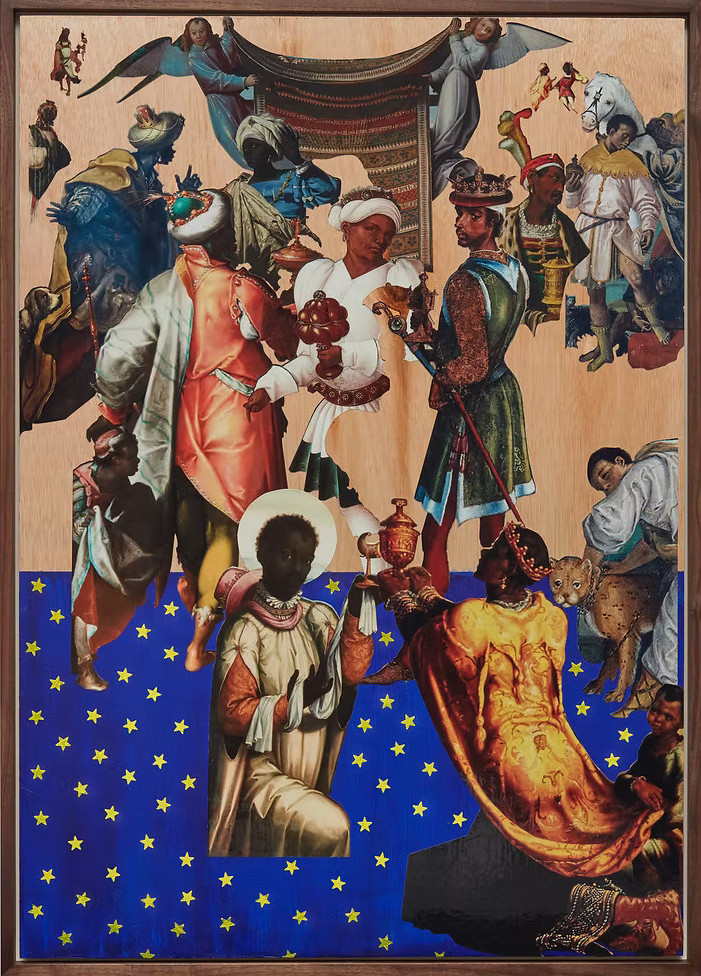
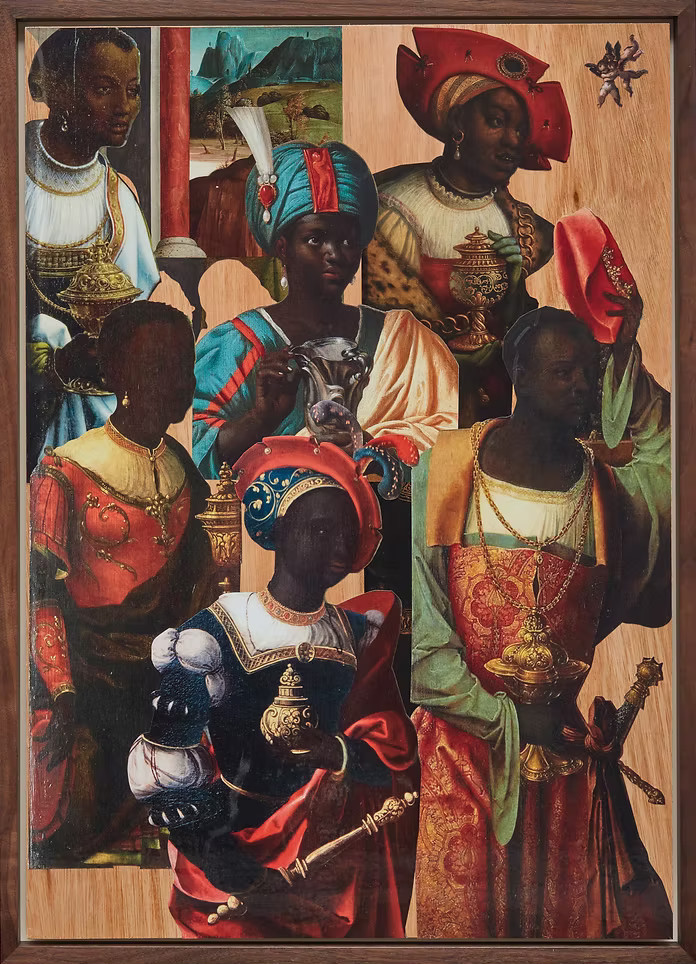
In 2022 Uddoh expanded this body of work with another solo show, Star Power at Workplace. It featured the series You Can Go Ahead and Talk Straight to Me and I Sell the Shadow to Support the Substance (scroll through select images below), the artworks made of acrylic and vinyl on board. The former title is a quote from Toni Morrison’s 1975 speech “A Humanist View,” given at Portland State University as part of a public forum on the theme of the American Dream. The latter is a quote from Sojourner Truth—she wrote the phrase on the bottom of a self-portrait she took, selling copies of it across America to raise funds for her abolitionist activism.

  • Uddoh, Rosa-Johan_Star Power
  • Uddoh, Rosa-Johan_Star Power
  • Uddoh, Rosa-Johan_Star Power
  • Uddoh, Rosa-Johan_Star Power

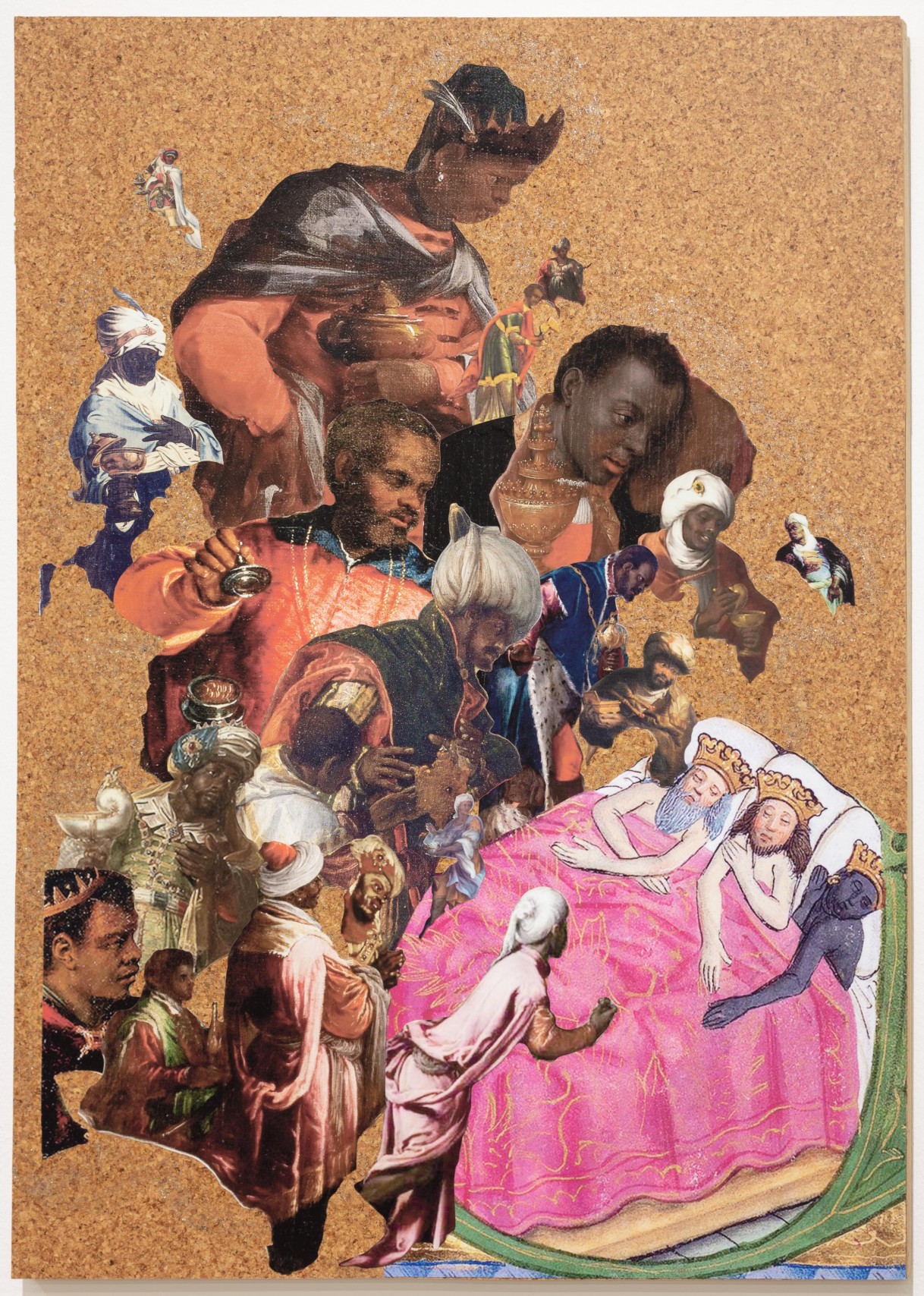
Lastly, here’s an amusing collage from Practice Makes Perfect:

Uddoh, Rosa-Johan_Get up mate, we're going to the protest
Rosa-Johan Uddoh, Get up mate, we’re going to the protest, 2021

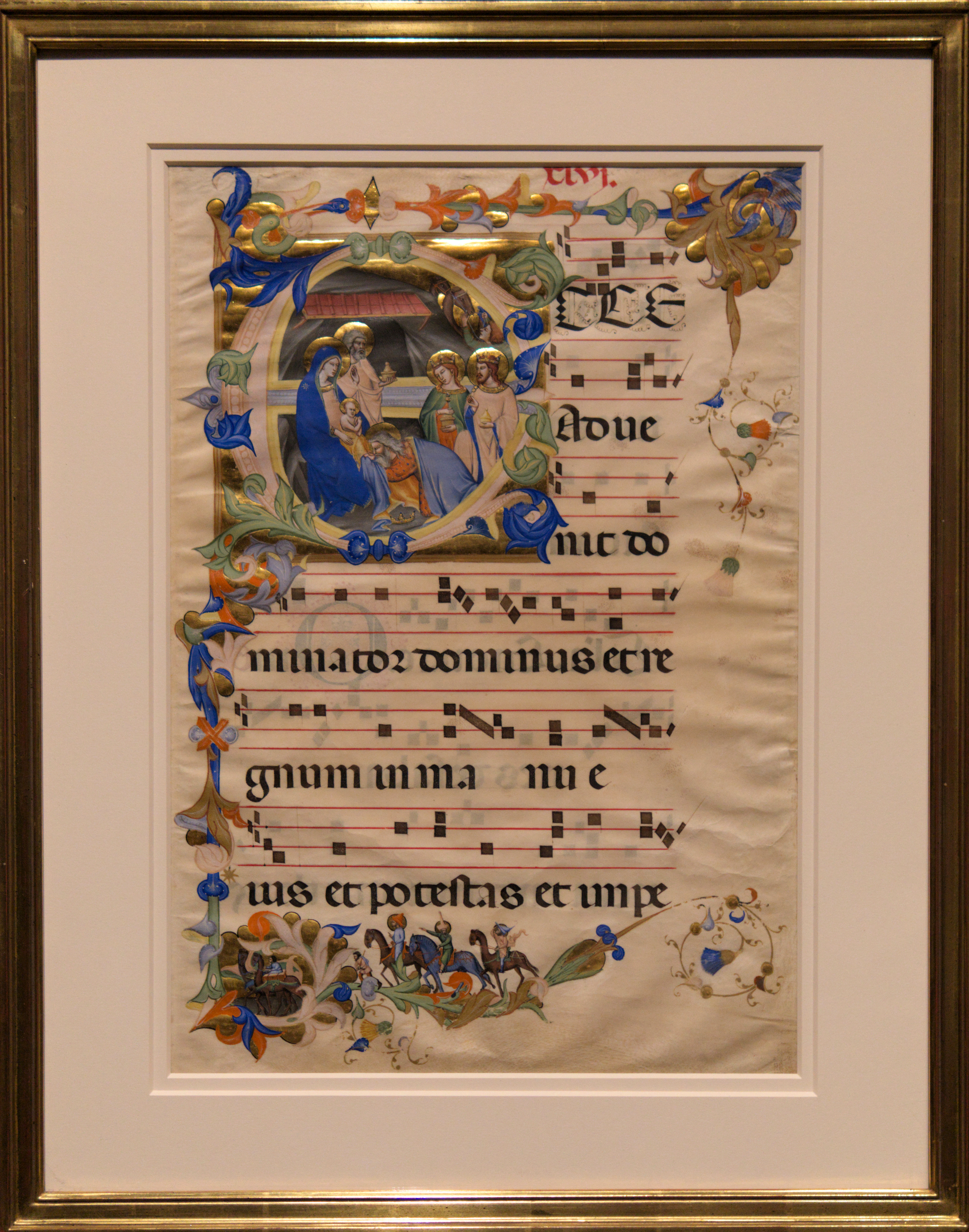
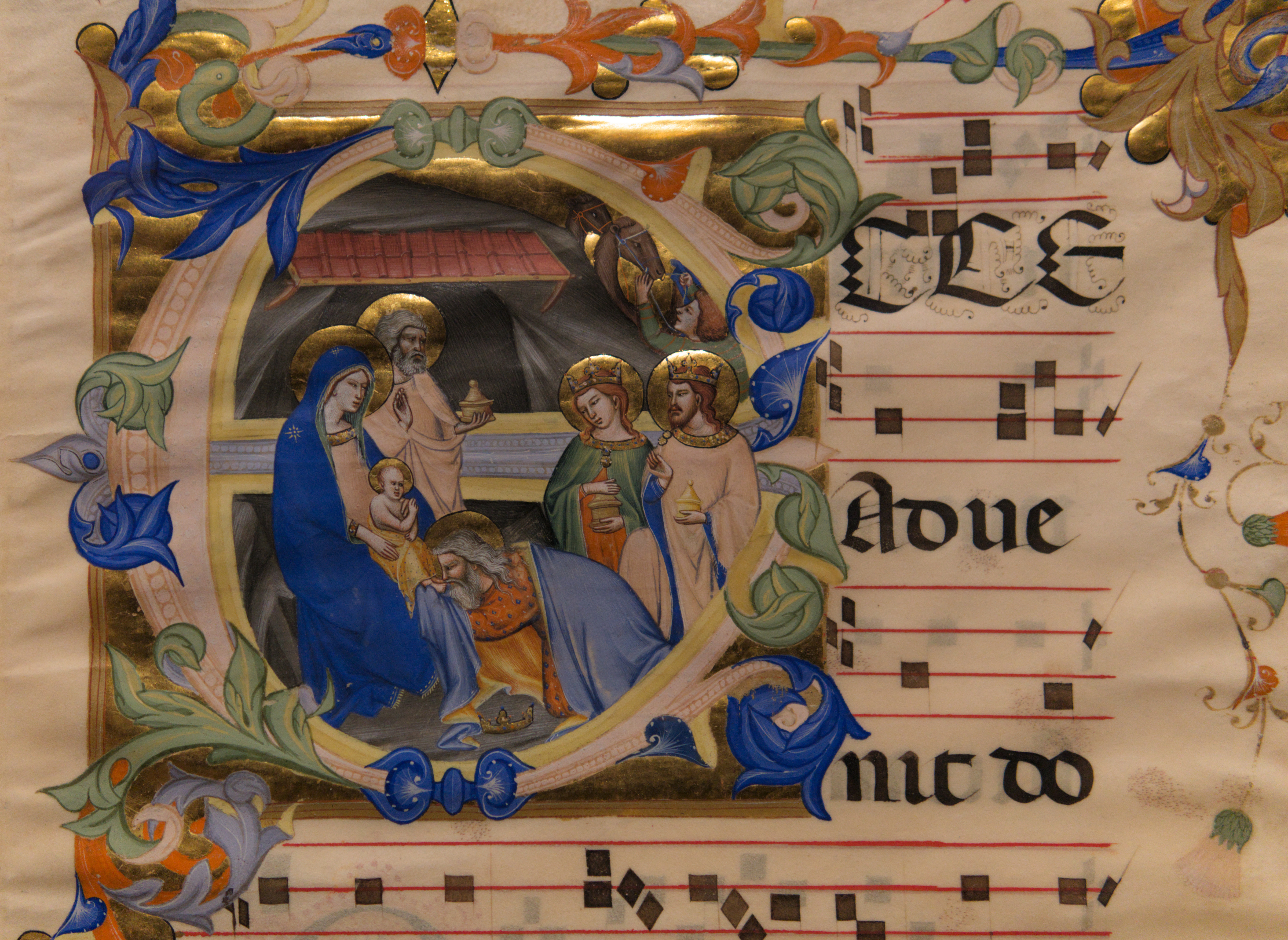
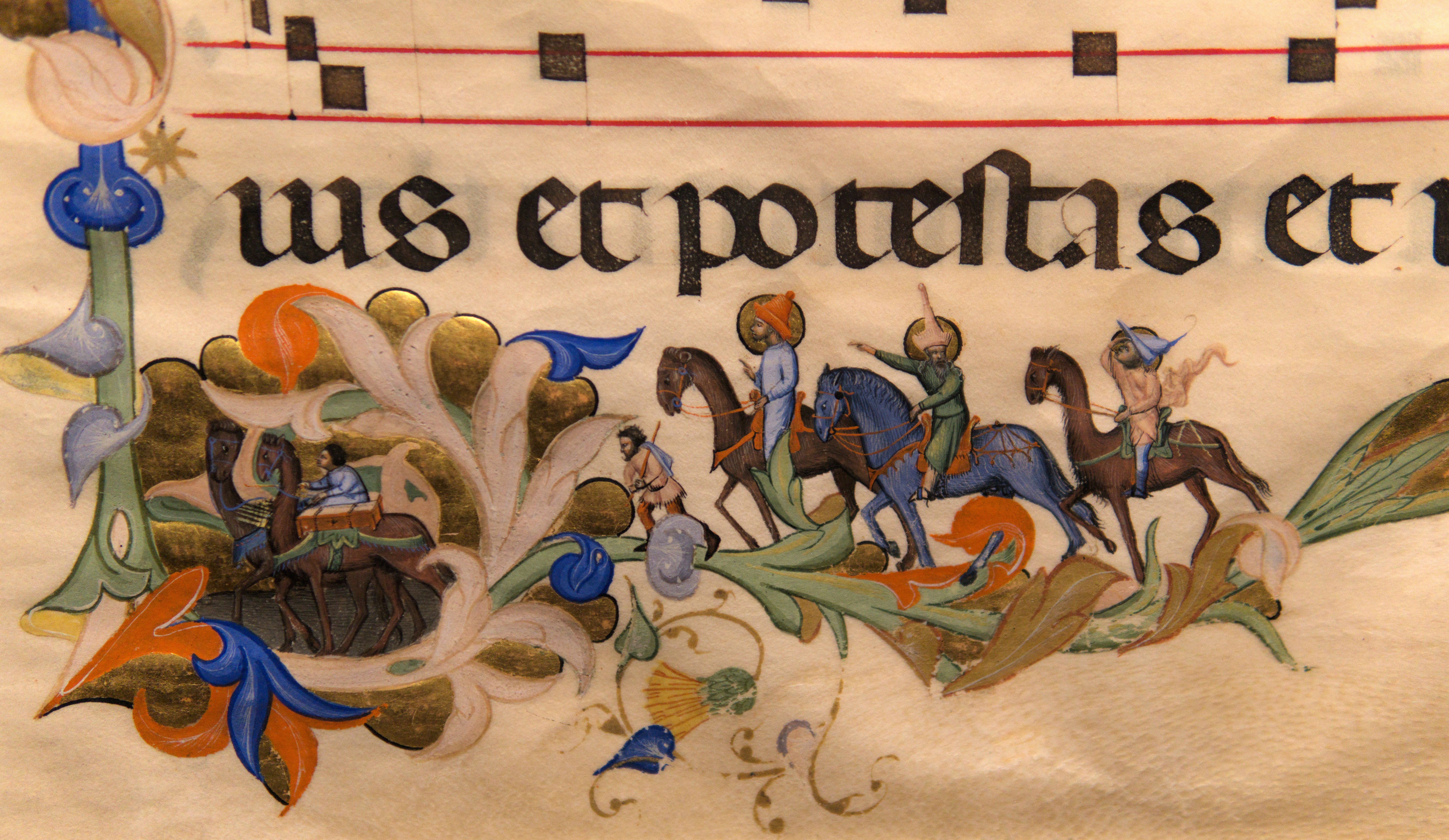
The image of the three kings in bed is taken from the ca. 1480 Salzburg Missal. (In the original they’re inside an initial E, which introduces the text for the introit for the Feast of Epiphany, “Ecce advenit dominator dominus.”) In the Middle Ages it was common for artists to depict the magi in bed together when they receive the angelic warning not to reveal the location of the baby Jesus to King Herod, who intends to harm him (Matt. 2:12). There’s nothing sexual about it—it’s just a compositional practicality, to show the three men in one space, having the same dream at the same time.

In Uddoh’s playful remix, she has a slew of Balthazars leaning over the bed to wake up their sleeping comrade so that he can join them in a protest for racial justice.

LISTEN: The Ballad of the Brown King by Margaret Bonds, 1954, rev. 1960 | Words by Langston Hughes, 1954/60 | Arranged by Malcolm J. Merriweather for strings, harp, and organ, 2018 | Performed by the Dessoff Choirs and Orchestra, dir. Malcolm J. Merriweather, on Margaret Bonds: The Ballad of the Brown King and Selected Songs, 2019 (soloists: Laquita Mitchell, soprano; Noah Stewart, tenor; Lucia Bradford, mezzo-soprano; Ashley Jackson, harpist)

I encourage you to listen to all nine movements! (The piece is twenty-five minutes long.) But if you want just a taste for now, here are two selections: movements 1 and 7.

I. Of the Three Wise Men

Of the three wise men who came to the King
One was a brown man, so they sing
Alleluia, Alleluia

Of the three wise men who followed the star
One was a brown king from afar
Alleluia, Alleluia

. . .

VII. Oh, Sing of the King Who Was Tall and Brown

Oh sing of the king who was tall and brown
Crossing the desert from a distant town
Crossing the desert on a caravan
His gifts to bring from a distant land
His gifts to bring from a palm tree land
Across the sand by caravan
With a single star to guide his way to Bethlehem
To Bethlehem where the Christ child lay

Oh sing of the king who was tall and brown
And the other kings that this king found
Who came to put their presents down
In a lowly manger in Bethlehem town
Where the King of kings a babe was found
The King of kings a babe was found
Three kings who came to the King of kings
And one was tall and brown

Margaret Bonds (1913–1972) was an African American composer, pianist, arranger, and teacher, best remembered for her popular arrangements of African American spirituals and her frequent collaborations with her friend Langston Hughes, especially the cantata The Ballad of the Brown King.

Dedicated to Rev. Dr. Martin Luther King Jr., The Ballad of the Brown King honors the African king Balthazar of Christian tradition, a figure extrapolated from the Gospel of Matthew’s account of the “wise men from the east” who came to worship the Christ child and bestow gifts. Bonds wanted to celebrate the wisdom and devotion of this dark-skinned brother, and his active presence at the Nativity, giving “the dark youth of America a cantata which makes them proud to sing,” she wrote in a letter.

She commissioned Hughes to write the libretto. She wrote to him, “It is a great mission to tell Negroes how great they are.” Remember, this was at the burgeoning of the civil rights movement. There were very few images of Black wealth and admirability being projected by mainstream culture at the time. Balthazar was an exception.

The Grammy-nominated conductor Malcolm J. Merriweather, who fueled a revival of interest in Bonds’s work (more on him below), said in an interview with Presto Music:

Regardless of the racial accuracy, this narrative [of an African king participating in the story of Christ’s birth] gives African Americans a positive image rarely portrayed in history, books, and art. A brown sovereign, traveling in majesty and splendor? It is unheard of. African Americans are not just descendants of slaves; we come from great kings or queens that ruled kingdoms with sophisticated political and economic systems on the continent of Africa.

The initial version of The Ballad of the Brown King premiered in December 1954, but Bonds and Hughes later revised and expanded it. The new version premiered December 11, 1960, at the Clark Auditorium of the YWCA in New York, sung by the Westminster Choir of the Church of the Master. The concert was presented as a benefit for the Southern Christian Leadership Conference.

The cantata is made up of nine movements with parts for soprano, tenor, baritone, and choir. Stylistically, the work has been described as neo-Romantic, but it also draws on gospel, jazz, blues, and calypso traditions.

The only commercial recording ever made of it is the one released by Avie Records in 2019. Newly arranged by Malcolm J. Merriweather, the piece is performed there by the Dessoff Choirs and Orchestra under Merriweather’s direction.

Bonds had scored the cantata for full orchestra—brass, woodwinds, strings (including harp), and percussion. But because hiring an orchestra of that size is expensive and he wants to see this work more widely performed, including in church contexts, Merriweather arranged the piece for a pared-down ensemble of harp, strings, and organ, omitting the winds and brass (whose parts he essentially absorbed into the new organ part). He also enlivened the harp part to add texture.

For more context on Bonds and on this most popular cantata of hers, here’s a great thirty-minute conversation between John Banther and Evan Keeley from a 2022 episode of the Classical Breakdown podcast, produced by WETA Classical in Washington, DC:

Epiphany roundup: 12+ ways to celebrate, Ted Nash’s “We Three Kings,” and more

BLOG POST: “On the Twelfth Day of Christmas: 12+ ways to keep celebrating with the rest of the world (loads of links!)” (Watch & Do for Twelfth Night and Epiphanytide) by Tamara Hill Murphy: In this blog post from 2019, spiritual director and writer Tamara Hill Murphy has compiled a wonderful roundup of resources for Twelfth Night (January 5) and the Feast of Epiphany (January 6), on such things as chalking the door, stargazing, making origami Christmas stars, baking a Three Kings Cake, Three Kings Day parades, Christmas tree bonfires, and more. She shares several videos, including this one of Denis Adide reading “The Journey of the Magi” by T. S. Eliot, shot in locations around Bristol:

+++

INSTRUMENTAL JAZZ: “We Three Kings,” arr. Ted Nash: This Grammy-nominated arrangement by Ted Nash of “We Three Kings” is performed by the Jazz at Lincoln Center Orchestra, directed by Wynton Marsalis (the trumpeter in the Santa hat), featuring Nash on soprano sax.

I really love this unique rendition, which, with all its dissonance, is different from all the others I’m familiar with. James Johnson, one of the YouTube commenters on the video, writes: “I think this rendition is transporting. Listen to it. Close your eyes and you can feel the hot dry wind of the desert blowing in your face. You may wonder why make this trip at all, and then, that star. That amazing star. Yep, we can make it past a few more dunes, beyond Herod, and on to . . . ‘a manger’? And the rhythm section just pushes me on. . . . This earthly trinity, Melchior, Caspar, and Balthazar, are the hippest trio in Jerusalem and I want to go where they go, know what they know.”

This performance appears on the orchestra’s live album Big Band Holidays (2015) [previously].

+++

NEW ARTWORK: Christmas in the Air Raid Shelter by Olya Kravchenko: For Christmas 2024, with Russia still deploying cruise missiles and suicide drones against Ukraine, Ukrainian iconographer Olya Kravchenko constructed a three-dimensional painting that shows the Holy Family huddled in the basement of an apartment complex, hiding out from air raids. A large, bright star hovers overhead, showing the three magi to the spot where Jesus lies.

Kravchenko, Olya_Christmas in the Air Raid Shelter
Olya Kravchenko (Ukrainian, 1985–), Christmas in the Air Raid Shelter, 2024. Plywood, tempera, and gilding, 67 × 40 × 25 cm.

This piece can be seen through January 26 at the eighty-fourth annual Krippenausstellung (Nativity Scene) exhibition at RELiGIO: Westfälisches Museum für religiöse Kultur (Westphalian Museum of Religious Culture) in Telgte, Germany, whose theme is “Heller Stern” (Bright Star).

+++

SONG: “Magi, Kings of Persia” by Michael Adamis, from the suite 4 Christmas Idiomela: Performed by Cappella Romana under the direction of Alexander Lingas, this choral piece by the Greek composer Michael Adamis (1929–2013) is a setting of an Eastern Orthodox liturgical text for Christmas that translates to:

The magi, kings of Persia, manifestly recognizing the King of heaven who was born on earth, arrived in Bethlehem, led by the radiant star, bearing choice gifts of gold, frankincense and myrrh; and falling down, they offered worship, for they beheld the Timeless One lying in the cave as a babe.

The video is from Cappella Romana’s 2020 Christmas concert.

+++

BLOG POST: “‘So glorious a gleam, over dale and down’” by Eleanor Parker: Medievalist Eleanor Parker shares two medieval English carols (text only; the original music does not survive) about the visit of the magi, a popular theme in that era. She translates them into modern English and provides commentary.

Epiphany: Die Könige

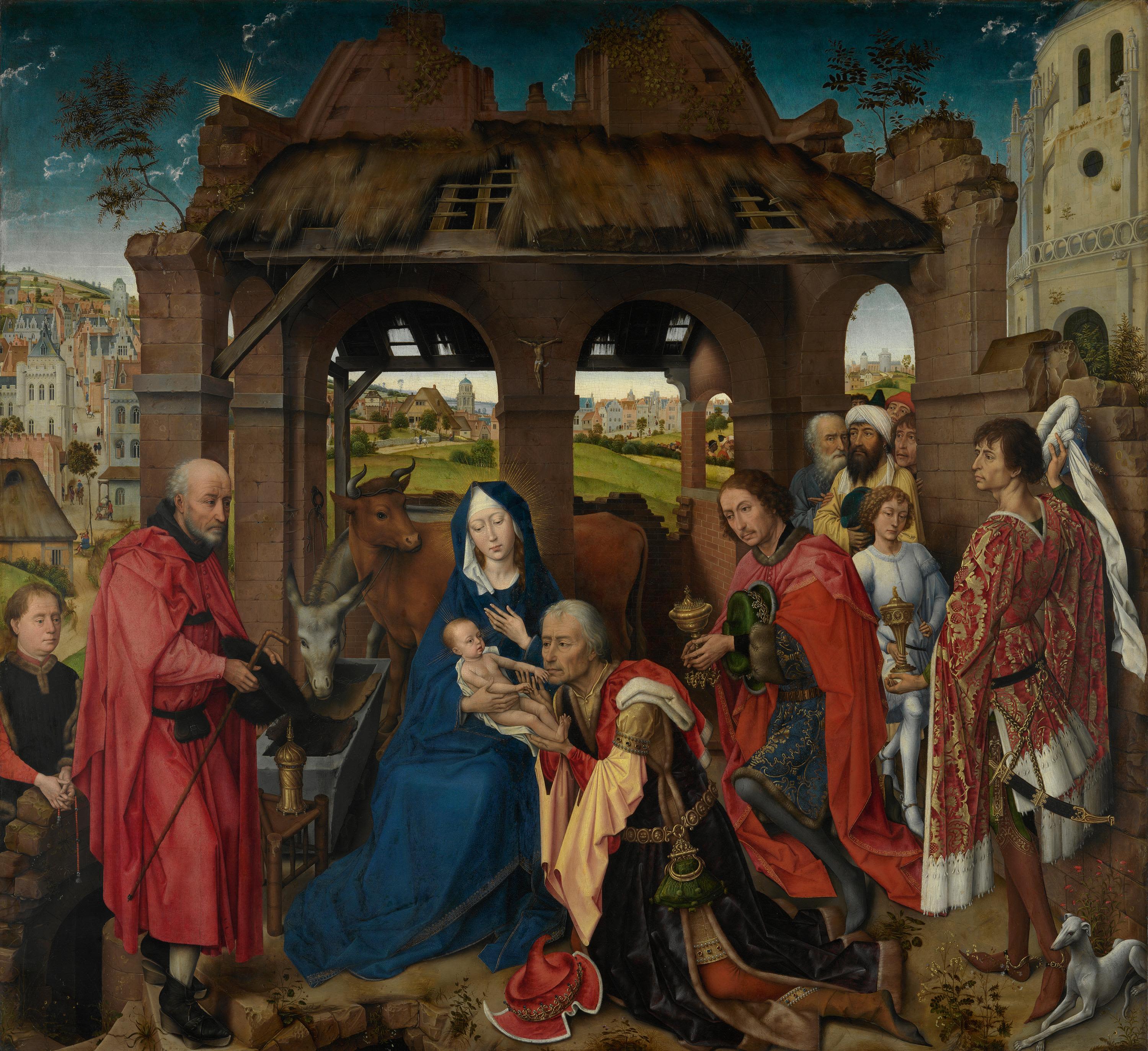
LOOK: Adoration of the Magi by Rogier van der Weyden

van der Weyden, Rogier_Adoration of the Magi
Rogier van der Weyden (Netherlandish, 1399–1464), Adoration of the Magi, ca. 1455. Painting on oak wood, 139.5 × 152.9 cm. Alte Pinakothek, Munich, Germany.

This remarkable painting by the early Northern Renaissance master Rogier van der Weyden shows three kings arriving from afar to worship the Christ child. All the splendor of foreign courts comes to the dilapidated stable of Jesus’s birth, which is relocated to the Low Countries of the fifteenth century. (Notice the contemporary cityscape in the background.)

The most senior king greets the child first, humbly removing his hat and crown and kneeling on the ground, his fur-lined velvet robe rubbing the dirt. He supports the child’s feet with one hand and with the other gently lifts the child’s hand to kiss. Two fellow sovereigns stand behind him, followed by their entourage and various locals.

Standing on the left, in red, is Joseph, hat and staff in hand. He looks reflectively on the visitors, taking it all in. Leaning against the stone wall behind Joseph, a rosary between his fingers, is the painting’s donor. While it’s true that sometimes the practice of painting donors into biblical scenes was done for flattery or, if a condition of the commission, out of arrogance, more often the motivation or purpose was to imaginatively place yourself into the sacred scene as a witness, making yourself present to an event that was in time and yet that also transcends time, in that its impact is ongoing. Seeing oneself as a participant in Christ’s story, a devotee alongside those who walked with him in the flesh, can aid in spiritual contemplation.

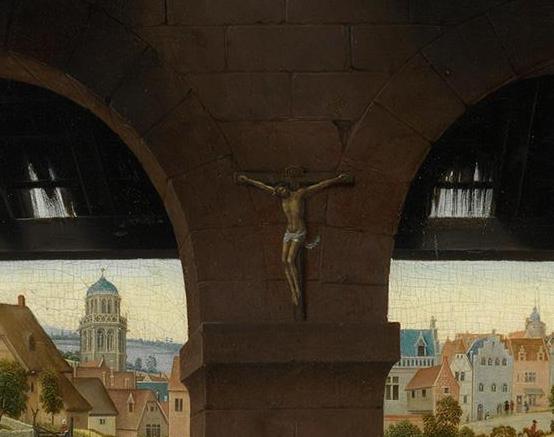
Another anachronism—or rather, a collapsing of chronos and kairos—is the crucifix hung on the central pillar of the stable! This of course alludes to the cruel death Christ would face some thirty years later.

van der Weyden, Rogier_Adoration of the Magi (crucifix detail)

This painting is the centerpiece of a triptych originally made for St. Mary’s Chapel in the church of St. Columba in Cologne. The wings depict the Annunciation and the Presentation of Christ in the Temple.

van der Weyden, Rogier_Columba Altarpiece
Rogier van der Weyden (Netherlandish, 1399–1464), Saint Columba Altarpiece, ca. 1455. Painting on oak wood, 139.5 × 152.9 cm (central), 139.5 × 72.9 cm (each wing). Alte Pinakothek, Munich, Germany.

LISTEN: “Die Könige” (The Kings) from Weihnachtslieder (Christmas Songs), Op. 8, by Peter Cornelius, 1870 | Arranged for a cappella choir by Ivor Atkins, 1957 | Performed by VOCES8, the VOCES8 Scholars, the VOCES8 Foundation Choir, and Apollo5, dir. Barnaby Smith, feat. Jonathan Pacey, 2023

Drei Könige wandern aus Morgenland;
Ein Sternlein führt sie zum Jordanstrand.
In Juda fragen und forschen die drei,
Wo der neugeborene König sei?
Sie wollen Weihrauch, Myrrhen und Gold
Dem Kinde spenden zum Opfersold.

Und hell erglänzet des Sternes Schein:
Zum Stalle gehen die Kön’ge ein;
Das Knäblein schaun sie wonniglich,
Anbetend neigen die Könige sich;
Sie bringen Weihrauch, Myrrhen und Gold
Zum Opfer dar dem Knäblein hold.

O Menschenkind! halte treulich Schritt!
Die Kön’ge wandern, o wandre mit!
Der Stern der Liebe, der Gnade Stern
Erhelle dein Ziel, so du suchst den Herrn,
Und fehlen Weihrauch, Myrrhen und Gold,
Schenke dein Herz dem Knäblein hold!

English translation:

Three kings journey from the East;
A little star leads them to Jordan’s banks.
In Judaea the three of them seek and inquire
Where the newborn king might be.
They wish to make offerings to the child:
Gold, frankincense, and myrrh.

And brightly shines the light of the star.
The three kings enter the stable;
They gaze in rapture at the child,
Bowing low in adoration.
Gold, frankincense, and myrrh
They bring to the child as offering.

O child of man! Follow them faithfully.
The kings are journeying; oh, journey too!
Let the star of love, the star of grace,
Light your way as you seek the Lord,
And if you lack gold, frankincense, and myrrh,
Give your heart to that sweet child.

The German composer and poet Peter Cornelius (1824–1874) was a friend of Franz Liszt’s and Richard Wagner’s. “Die Könige” (The Kings) is the third, and most popular, song in a Christmas cycle he wrote for voice and piano, the others being “Christbaum” (Christmas Tree), “Die Hirten” (The Shepherds), “Simeon,” “Christus der Kinderfreund” (Christ the Friend of Children), and “Christkind” (Christ Child). Cornelius began writing his Weihnachtslieder cycle—both text and music—in 1856, and it underwent several rounds of revision, incorporating input from others, before being published in 1870.

From VOCES8’s Live From London Christmas 2022 broadcast, the performance of “Die Könige” above features as the baritone soloist Jonathan Pacey, who sang bass for VOCES8 from 2015 to 2022. He chose this song as the encore in his final concert. Pacey’s voice is absolutely gorgeous!


This post concludes our journey through the cycle of light, Advent-Christmas-Epiphany. Thanks for walking the road with me! I encourage you to keep journeying, keep following the light, throughout the rest of the church year. May love and grace, as “Die Könige” says, light your way as you seek the Lord.

If you’d like to leave a donation to help offset the costs of running Art & Theology, which I’d really appreciate, you may do so through PayPal or this secure Stripe form. You can expect many more new posts in 2024! Just not at a daily frequency.

Christmas, Day 12: Following the Signs

LOOK: Three Travelers by Elena Markova

Elena Markova (Russian, 1967–), Three Travelers, 2015. Acrylic on canvas, 10 × 10 in.

I’m not sure whether Elena Markova [previously] meant for the “three travelers” of this visionary painting to represent the wise men of Matthew’s Gospel, but that’s who they remind me of. They appear to be divining, reading signs. They are on a journey of truth discovery.

Here, three robed figures of indeterminate gender are encased in mystic light as they peer upward at one of the bodiless angels that wing around them. They stand beside a cistern that shows, reflected in the water, a lone lamb under a crescent moon. Floating nearby in a sea of embers are a nest of eggs, suggesting new birth, and a ladder, reminiscent of the one the Jewish patriarch Jacob encountered, connecting the heavenly and earthly realms (Gen. 28:10–22).

LISTEN: “Inkanyezi Nezazi” (The Star and the Wise Men) by Joseph Shabalala of Ladysmith Black Mambazo, on Inkanyezi Nezazi (1992)

Kuye kwamemeza abaprofethi emandulo
Kumemeza abantu abadala kangaka
Webantwana, kanisalaleni ngani
Umbiko wokuzalwa kenkosi uJesu?

Nantso ke inkanyezi
Enhle kunazo zonke
Eyalandelwa izazi
Zivela empumalanga

Baba, Baba wami
Baba, bhinc’ibeshu lakho
Simemeza ngazwi linye
Sithi izelwe
INkosi yamakhosi

Mama, Mama wami
Mama, bhinc’isidwaba sakho
Vunula uphelele
Sisho ngaphimbo linye
Sithi izelwe
INkosi yamakhosi

Uqinsile umprofethi
Yinhle kunazo zonke
Masiyilandeleni
Khona sizophumelela
(Repeat)

Saqala sabezwa besho
Saze sabona nathi embhalweni
Sabe sesiyakholwa
Yiloko esikufundayo lithini iBhayibheli?
(Repeat)

Amen, hallelujah, amen

English translation:

There was a proclamation by the prophets of old
A proclamation by such senior elders
Children, why are you not listening
To the report of the birth of the Lord Jesus?

There was a star
Most glorious of all
Followed by the wise men
Coming from the east

Father, my father
Gird up your loins
Let’s proclaim with one voice
That the King of kings
Has been born

Mother, my mother
Gird up your loins
Put on your best clothes
Let’s proclaim with one voice
That the King of kings
Has been born

The prophet was right
It [the star] is the most glorious of all
Let’s follow it
That we may prosper
(Repeat)

We first heard them tell us
Then we saw it ourselves in the scriptures
Then we believed what we read
What does the Bible say?
(Repeat)

Amen, hallelujah, amen

* This English translation by Lwazi Mbambi was commissioned by Art & Theology.

Ladysmith Black Mambazo [previously] is a South African male choral group that sings in Zulu in the local vocal styles of isicathamiya and mbube. The group was founded in 1960 by Joseph Shabalala, who led it until his death in 2020.

“Inkanyezi Nezazi,” the title track of one of their 1992 albums, recalls the ancient biblical prophecies of a rising light that would herald a new age (e.g., Num. 24:17; Isa. 9:2; 60:1–3). The speaker enjoins father and mother and all the village to listen to the good news of Jesus’s birth and, like the magi, to follow where the light of revelation leads.


This post is part of a daily Christmas series that goes through January 6. View all the posts here, and the accompanying Spotify playlist here. There’s also a distinct playlist for Epiphany.

Roundup: Unique Nativity from Burgundy, Jamaican choral work for Epiphany, Vatican-sponsored art contest, and more

I’ve just published a new Spotify playlist for January (thirty spiritual songs on no particular theme), and I want to also remind you of my Epiphany Playlist.

+++

ANNOUNCEMENT: Vatican to hold Stations of the Cross art contest: Artists from across the globe are encouraged to participate in the Vatican-sponsored contest for fourteen new Stations of the Cross paintings. The winner will be announced September 30, 2024, awarded €120,000 (about $131,000), given a year to complete the commission, and then have their set of paintings exhibited in St. Peter’s Basilica during Lent 2026. The first step is to fill out an online application, which will become available January 8, with a deadline of January 31. Learn more at the link. (Update: The registration link is now live at https://contest.viacrucis2026.va/en/registration.)

+++

ART OBJECT: Burgundian Crèche, ca. 1450: In researching depictions of Joseph at the Nativity, I came across this charming little limestone-carved crèche from fifteenth-century Burgundy, France, acquired by the Metropolitan Museum of Art. Set inside a dilapidated brick interior patched with wattled matting, the scene portrays the infant Christ lying in a wattled manger that rests on a crumbling wall ledge. Such an unusual composition! I’m not sure why the infant is placed so precariously and at a height when there’s a carved cradle available on the ground, where angels kindly fluff his pillow, but I suppose it was to avoid overcrowding and for visual balance.

Burgundian creche
Circle of Antoine Le Moiturier (French, 1425–1495), Nativity, Burgundy, France, ca. 1450. Limestone with later paint and gilding, 17 3/4 × 25 7/8 × 7 1/4 in. (45.1 × 65.7 × 18.4 cm). Metropolitan Museum of Art, New York.

A donkey licks Christ’s feet while an ox licks his hand, which he appears to delight in, as he lifts his arm for better access. To the left and right of him are a trio of angels and shepherds, respectively, excitedly leaning in from outside to get a better look. Mary gazes up at her son in adoration while Joseph dutifully tends to a parental chore: drying one of Jesus’s freshly washed linens at the fire. (Dad doing laundry—huzzah!)

To learn more about this sculpture, see the journal article “Popular Imagery in a Fifteenth-Century Burgundian Crèche” by William H. Forsyth.

+++

ART COMMENTARY: On The Adoration of the Magi by Domenico Veneziano: From the Visual Commentary on Scripture comes this 2022 video, one in a series filmed on-site at the Gemäldegalerie in Berlin. Theologian Ben Quash and art historian Jennifer Sliwka discuss an early Italian Renaissance tondo depicting the Adoration of the Magi.

+++

SONGS:

>> “Rejoice with Exceeding Great Joy”: Written by Lanny Wolfe in 1978 and performed by Reggie Smith, Charlotte Ritchie, and Ladye Love Smith at Bill and Gloria Gaither’s Homecoming Christmas 2006:

>> “Star of Bethlehem”: Written by Noel Dexter, arranged by C. S. (Cedron) Walters, and performed by the Jamaica Youth Chorale at their 2019 Christmas concert. Noel Dexter (1938–2019) was a Jamaican composer, choir director, and music educator, and this is probably his best-known work. It’s set to a Nyabinghi rhythm.

When the star of Bethlehem arise, hallelujah
When the star of Bethlehem arise
Come show me where the young child born!

There were wise men coming from the east, hallelujah
There were wise men coming from the east
Come show me where the young child born!

They brought gold, frankincense, and myrrh . . .

Not a man can save my soul . . .
But Jesus!
Show me where the young child born!

+++

VIDEO: “#NatZooZen: Giant Pandas Mei Xiang and Tian Tian in the Snow”: This Smithsonian’s National Zoo cam footage from January 2021 shows two giant pandas at play, sliding down a snowy hill! So adorable. Tian Tian and Mei Xiang arrived at the National Zoo in 2000 and in 2020 produced a cub, Xiao Qi Ji. All three pandas returned to Beijing in November, having been lent to the US by China as part of a cooperative research program whose contract has expired.

Advent, Day 11: Watchman, Tell Us

LOOK: Golden Binoculars by Namdoo Kim

Kim, Namdoo_Golden Binoculars
Namdoo Kim (Korean, 1985–), Golden Binoculars, 2013. Glass, ceramic, mixed media, each figure 42 × 20 × 20 in. Installation at the 2018 SOFA Chicago art fair (now Intersect Chicago).

LISTEN: “Watchman, Tell Us of the Night” | Words by John Bowring, 1825 | Music by Seth Thomas Crissman, 2016 | Performed by Seth Thomas Crissman and Rachel Yoder of The Walking Roots Band, 2016 (also on Hark! A Walking Roots Band Christmas, 2017)

Watchman, tell us of the night,
what its signs of promise are.
Traveler, o’er yon mountain’s height,
see that glory-beaming star.
Watchman, does its beauteous ray
aught of joy or hope foretell?
Traveler, yes; it brings the day,
promised day of Israel.

Watchman, tell us of the night;
higher yet that star ascends.
Traveler, blessedness and light,
peace and truth its course portends.
Watchman, will its beams alone
gild the spot that gave them birth?
Traveler, ages are its own;
see, it bursts o’er all the earth.

Watchman, tell us of the night,
for the morning seems to dawn.
Traveler, darkness takes it flight;
doubt and terror are withdrawn.
Watchman, let thy wanderings cease;
hie thee to thy quiet home.
Traveler, lo! the Prince of Peace,
lo! the Son of God is come!

Unfolding in alternating couplets, this nineteenth-century hymn from England presents a dialogue between a traveler and a watchman—that is, someone stationed at a vantage to look out for coming invasions or things out of the ordinary. The traveler asks the watchman what he sees and what its meaning is; the watchman responds that he sees a glorious star ascending up over the mountains, portending blessing and peace not just for the land of its rising but for all peoples. A beneficent invasion!

Lowell Mason wrote a tune specifically for this text in 1830, but I much prefer the newer one by The Walking Roots Band, featured above.


This post is part of a daily Advent series from December 2 to 24, 2023 (with Christmas to follow through January 6, 2024). View all the posts here, and the accompanying Spotify playlist here.

Roundup: Epiphany Playlist, thread installation, and more

In the church calendar, the linked seasons of Advent, Christmas, and Epiphany are sometimes referred to as the “cycle of light.” “Since earliest times the Christian community has utilized light as a primary symbol to convey the meaning of the Christ-event,” writes Wendy M. Wright in The Vigil: Keeping Watch in the Season of Christ’s Coming. “The power of the symbol was not lost on most generations of believers who lived closer than we do to the truth that we are all ultimately dependent upon the light of the sun for warmth, vision, and life itself” (152). Light imagery permeates scripture and the writings of the church fathers.

The capstone of the cycle of light, celebrated each year on January 6, is Epiphany, which means “manifestation” or “appearance.” In the West, this feast commemorates the visit of the magi, to whom the divinity of Christ was revealed, and who brought back the light they received to their homelands, an early spreading of the gospel. Epiphany is exactly one month away, but I wanted to provide a few resources in advance. For those in the DC metro area: note that there are just two weeks left to see the Anne Lindberg exhibition!

+++

NEW PLAYLIST: Epiphany (Art & Theology): I put together a playlist of nearly a hundred Epiphany songs that celebrate Jesus as the light of the world and that mark the magi’s transformative encounter with him.

Besides the classic “We Three Kings,” it also includes a few versions of the ancient hymn “Phos Hilaron” (originally written in Koine Greek and translated into English as “Gladsome [or Gladdening] Light”), a Provençal carol popularized by Bizet, a shape-note hymn from Appalachia, aguinaldos from Puerto Rico, Arabic hymns from Syria and Lebanon, plainchant scripture settings, Renaissance motets, traditional and contemporary Black gospel songs, indie songs (including retuned hymns) from the past decade, and choral works from the UK, Jamaica, and Argentina. Some of the selections are quieter, more reflective, whereas others are very exuberant, like “Jesus Is the Light” by Hezekiah Walker and the Love Fellowship Crusade Choir:

And “Los Reyes Magos,” the fifth movement of Ariel Ramirez’s folk drama Navidad Nuestra (lyrics here); the song was written as a taquirari, a type of Bolivian folk song that has a syncopated rhythm and that is danced to, and features a charango (small guitar) and siku (Andean panpipe):

+++

ART COMMENTARIES: The VCS Advent Calendar 2023: Every Advent, the Visual Commentary on Scripture sends out a daily image from its online archives to its email list around a seasonal theme. This year’s theme is “light.” The images are keyed to particular scripture passages having to do with light and are accompanied by commentary from a range of contributors. So far the VCS has featured a Genesis 1–inspired Sistine Chapel fresco, John Piper and Patrick Reyntiens’s extraordinary Baptistery Window at Coventry Cathedral, a Trinitarian miniature from an English book of hours, a heliotropic landscape sculpture by David Wood, a light installation by Dan Flavin at a church in Milan, and Vincent van Gogh’s Starry Night.

Baptistery Window, Coventry
Baptistery Window, Coventry Cathedral. Designed by John Piper and made by Patrick Reyntiens, 1957–61. Stained glass, 85 × 56 ft.

+++

EXHIBITIONS:

>> What color is divine light? by Anne Lindberg, January 5–December 22, 2023, Textile Museum at George Washington University, Washington, DC: I saw this installation last month, and it is striking! About four thousand strands of complementary yellow and blue cotton thread (and some white and green), stretching across the gallery against a backdrop of lavender-painted walls, evoking light. The artist describes the work as a drawing made of textile material in the air. It was inspired by a 1971 essay of the same title by the art historian Patrik Reuterswärd (see The Visible and Invisible in Art: Essays in the History of Art), and it opened adjacent to an exhibition of prayer carpets, titled Prayer and Transcendence.

Lindberg, Anne_What color is divine light
Anne Lindberg (American, 1962–), What color is divine light?, 2023. Cotton thread, staples, 5 × 55 × 14 ft. Solo exhibition at the Textile Museum, George Washington University, Washington, DC. Photo: Derek Porter.

In addition to the video above, you can view gorgeous photos of the installation on Lindberg’s website.

>> Bubble Universe: Physical Light, Bubbles of Light, Wobbling Light, and Environmental Light by teamLab, opens early February 2024, Borderless (museum), Azabudai Hills, Tokyo: teamLab is an international collective of “ultra-technologists” consisting of artists, programmers, engineers, CG animators, mathematicians, and architects who collaborate on immersive art projects. One of their upcoming installations is a room with hundreds of glowing spheres, each containing unique changing lights that interact with guests and the environment itself. [HT: My Modern Met]

Bubble Universe
teamLab, Bubble Universe, 2023 (work in progress). Interactive installation, Borderless, Azabudai Hills, Tokyo.

+++

NEW ALBUMS:

>> The Light by Sarah Sparks: A four-song EP by a Christian singer-songwriter from Hawaii. Here’s the first track:

>> Morning Star: Music for Epiphany Down the Ages by the Gesualdo Six: Released November 3, this wonderful album comprises twenty-one choral pieces for Epiphany—a mix of plainchant propers for Mass, hymns, Renaissance motets, and twenty-first-century works. One of the contemporary works is a setting by Owain Park of Psalm 43:3: “O send out thy light and thy truth, that they may lead me; let them bring me unto thy holy hill, and to thy dwelling”: