
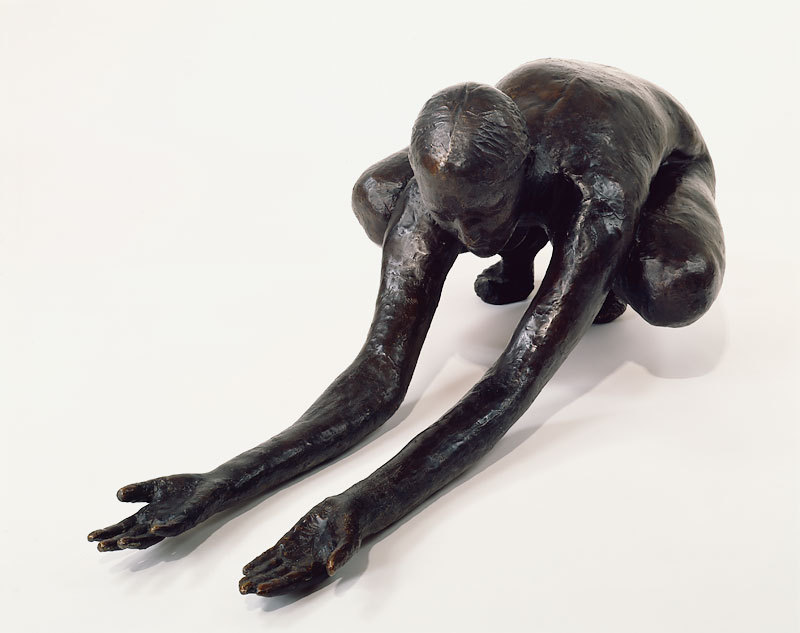
LOOK: Untitled by Kiki Smith
LISTEN: “Advent ‘O’ Carol” by Joanna Forbes L’Estrange, 2018 | Performed by London Voices, dir. Ben Parry, on Winter Light, 2024
Refrain:
O, O, O, O, O, O, O
O, O, O, O, O, O, OWe long for your coming, O Wisdom;
we long for your coming, O Lord.
Come and teach us the way of understanding;
you are the living Word. [Refrain]We long for you, O Lord and Ruler;
we long for your coming, O Lord.
Come and stretch out your arms and redeem us;
you are the living Word. [Refrain]We long for you, O Root of Jesse;
we long for your coming, O Lord.
Come to deliver us and do not tarry;
you are the living Word. [Refrain]We long for you, O Key of David;
we long for your coming, O Lord.
Come and bring forth the captive from his prison,
who sits in the shadow of death. [Refrain]Dawn of the East,
we long for your coming, O Lord.
Come and lighten those who sit in darkness
and in the shadow of death. [Refrain]We long for you, O King of the Gentiles;
we long for your coming, O Lord.
Come and deliver man, whom you formed
out of the dust of the earth. [Refrain]O Emmanuel!
When will you come?
Come to save us, O Lord our God. [Refrain]Tomorrow I will come.
Revealing different titles of the Messiah based on Isaiah’s prophecies, the seven so-called O Antiphons have been sung, one each from December 17 to 23, since at least as far back as the eighth century. For Christians outside the Roman Catholic Church, these antiphons are probably most familiar as the basis of the Advent hymn “O Come, O Come, Emmanuel.”
The British composer Joanna Forbes L’Estrange has lightly adapted them and set them to music for unaccompanied SATB choir. She offers the following note:
“Advent ‘O’ Carol” is inspired by the text and chants of the seven “O” Antiphons which traditionally would have been sung in the days immediately preceding Christmas (known as the Greater Ferias). The “O” refrain, which opens the piece and reoccurs between each of the seven verses, is based on the opening melodic chant of the Medieval antiphons, its 7/8 time signature reinforcing the piece’s connection to the number seven.
Ignoring the “O,” the first letter of each verse forms an acrostic which, when reversed, spells ERO CRAS, Latin for “I shall be (with you) tomorrow.” I have reworded this as “Tomorrow I will come” for the final resolution of the piece.
- Sapientia (Wisdom)
- Adonai (Lord and Ruler)
- Radix Jesse (Root of Jesse)
- Clavis David (Key of David)
- Oriens (Dawn of the East)
- Rex Gentium (King of the Gentiles)
- Emmanuel
 Art & Theology